



Abstract
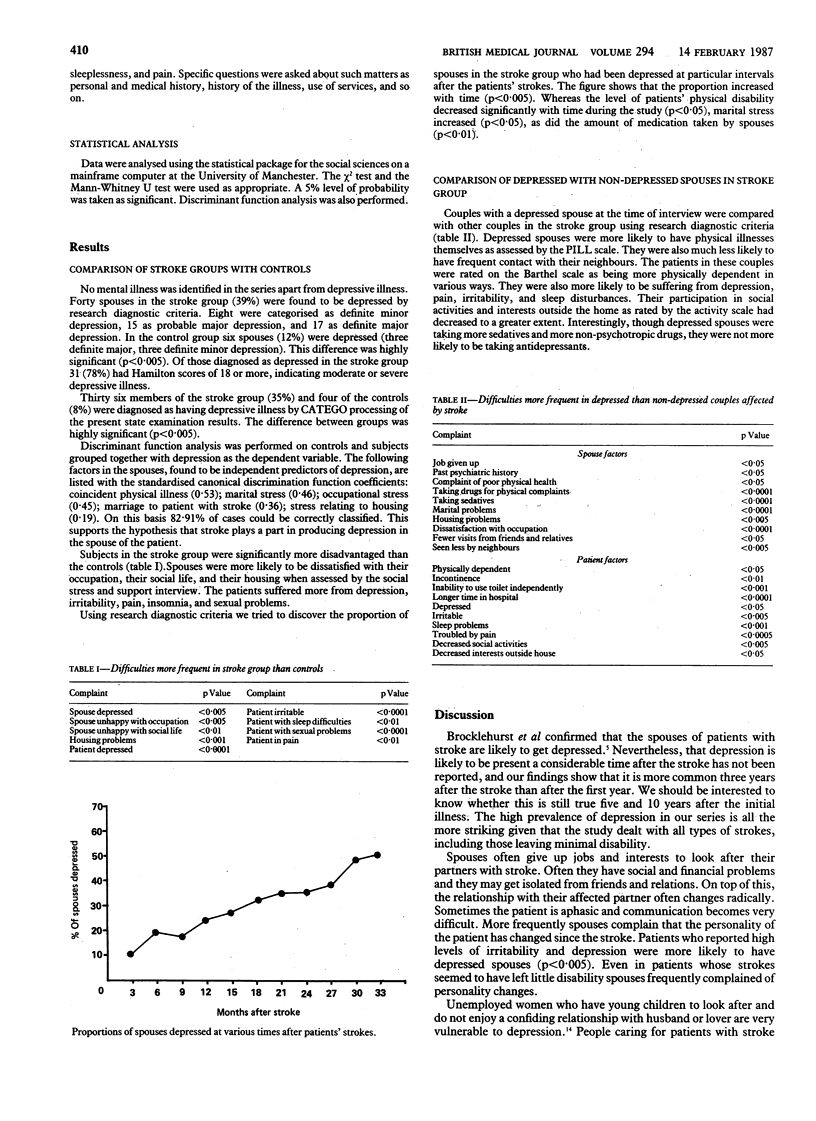
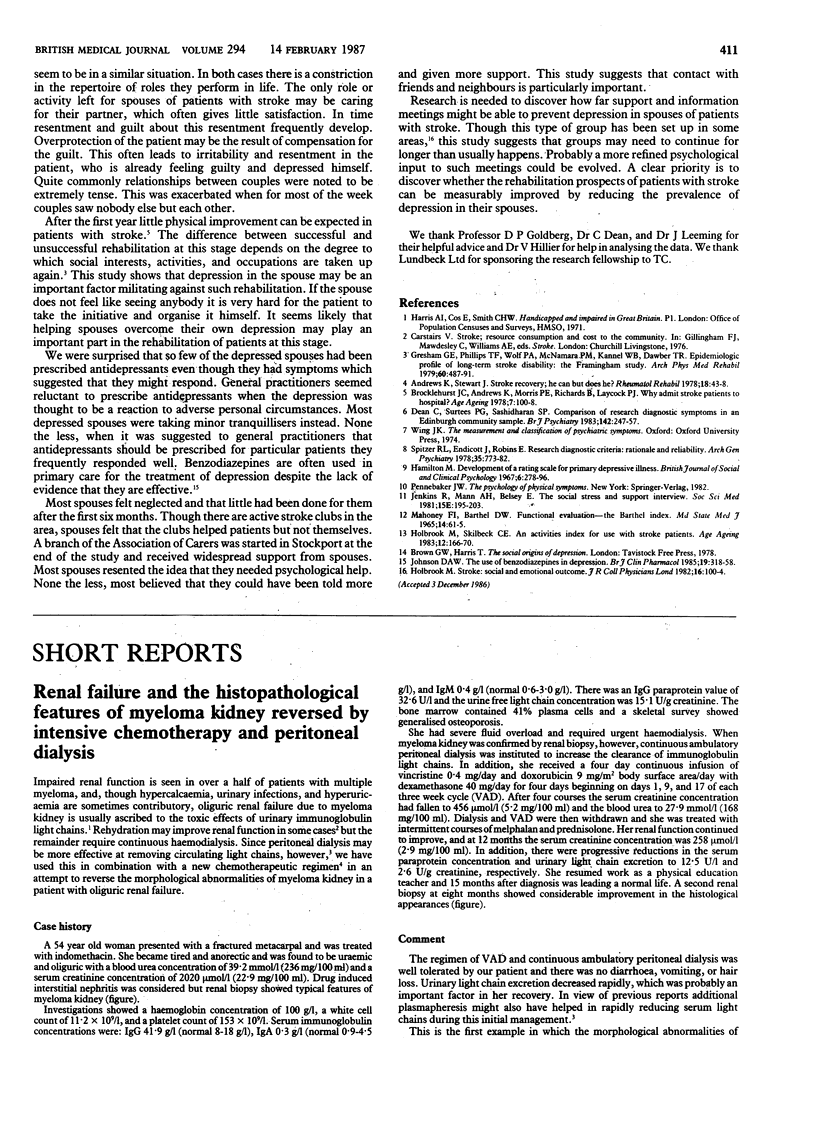
The medium term psychiatric morbidity of spouses of patients with stroke was evaluated one to three years after the event. Compared with a control group the spouses were more likely to be depressed (p less than 0.005) and had more physical symptoms (p less than 0.01). Depression increased with the severity of the stroke in the spouse (p less than 0.05) and with time during the three years. Regular contact with friends and neighbours protected spouses (p less than 0.005). Depressed spouses were more likely to be taking tranquillisers than non-depressed spouses (p less than 0.0001) but no more likely to be taking antidepressants. Social rehabilitation after stroke was less successful when the spouse was depressed. Proper attention paid to spouses of patients with stroke might improve the prospects of these patients.
Full text
PDF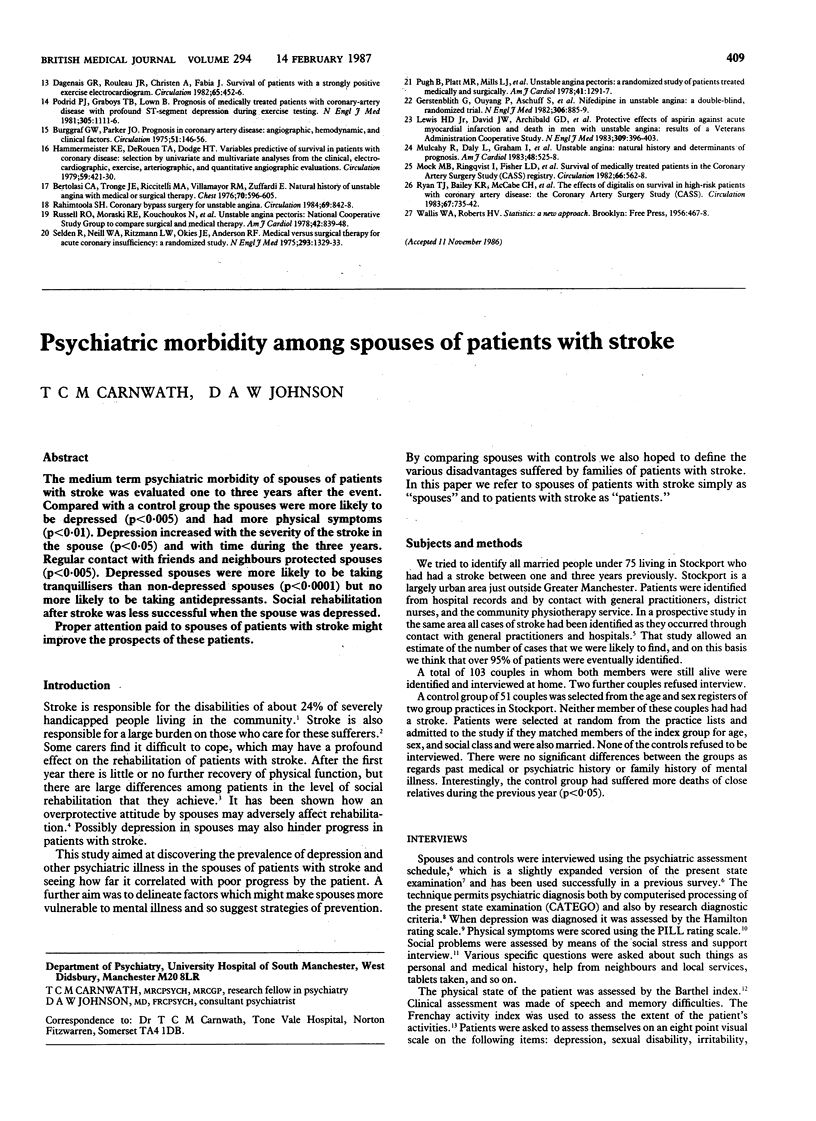
Selected References
These references are in PubMed. This may not be the complete list of references from this article.
- Andrews K., Stewart J. Stroke recovery: he can but does he? Rheumatol Rehabil. 1979 Feb;18(1):43–48. doi: 10.1093/rheumatology/18.1.43. [DOI] [PubMed] [Google Scholar]
- Brocklehurst J. C., Andrews K., Morris P., Richards B. R., Laycock P. L. Why admit stroke patients to hospital? Age Ageing. 1978 May;7(2):100–108. doi: 10.1093/ageing/7.2.100. [DOI] [PubMed] [Google Scholar]
- Dean C., Surtees P. G., Sashidharan S. P. Comparison of research diagnostic systems in an Edinburgh community sample. Br J Psychiatry. 1983 Mar;142:247–256. doi: 10.1192/bjp.142.3.247. [DOI] [PubMed] [Google Scholar]
- Gresham G. E., Phillips T. F., Wolf P. A., McNamara P. M., Kannel W. B., Dawber T. R. Epidemiologic profile of long-term stroke disability: the Framingham study. Arch Phys Med Rehabil. 1979 Nov;60(11):487–491. [PubMed] [Google Scholar]
- Hamilton M. Development of a rating scale for primary depressive illness. Br J Soc Clin Psychol. 1967 Dec;6(4):278–296. doi: 10.1111/j.2044-8260.1967.tb00530.x. [DOI] [PubMed] [Google Scholar]
- Holbrook M., Skilbeck C. E. An activities index for use with stroke patients. Age Ageing. 1983 May;12(2):166–170. doi: 10.1093/ageing/12.2.166. [DOI] [PubMed] [Google Scholar]
- Holbrook M. Stroke: social and emotional outcome. J R Coll Physicians Lond. 1982 Apr;16(2):100–104. [PMC free article] [PubMed] [Google Scholar]
- Jenkins R., Mann A. H., Belsey E. The background, design and use of a short interview to assess social stress and support in research and clinical settings. Soc Sci Med E. 1981 Aug;15(3):195–203. doi: 10.1016/0271-5384(81)90013-2. [DOI] [PubMed] [Google Scholar]
- Spitzer R. L., Endicott J., Robins E. Research diagnostic criteria: rationale and reliability. Arch Gen Psychiatry. 1978 Jun;35(6):773–782. doi: 10.1001/archpsyc.1978.01770300115013. [DOI] [PubMed] [Google Scholar]