



Abstract
MicroRNAs (miRNAs) associate with Argonaute (AGO) proteins to serve as guides, directing binding to partially complementary sites in mRNAs, ultimately causing post-transcriptional repression. Complementarity to the miRNA seed (miRNA nucleotides 2–7) is typically necessary and sufficient for repression. Here, we investigate unusual sites with extensive complementarity to the miRNA 3′ region (nucleotide 9 and onwards) but without complementarity to the seed. The top examples of these 3′-only sites bind as well as top canonical sites and impart similar repression, which can be further boosted by as few as 2–3 additional pairs to the miRNA seed. Despite these similarities, 3′-only sites have slower association and dissociation rates than seed-matched sites. They also impart different conformations to bound AGO–miRNA complexes than do seed-matched sites, and individual miRNAs differ substantially with respect to how well they bind their respective 3′-only sites. Thus, pairing to the seed is not always required for binding and repression, or for a target to gain access to the 3′ region of the guide. For miRNAs that recognize 3′-only sites, those sites are estimated to constitute <1% of the set of endogenous target sites, a proportion resembling that of other rare but functional site types such as 3′-compensatory sites.
Graphical Abstract
Graphical Abstract.

Introduction
MicroRNAs (miRNAs) are short (21- to 24-nt) regulatory RNAs that direct the post-transcriptional repression of target RNAs [1]. After being processed from precursor hairpins, miRNAs associate with Argonaute (AGO) proteins to form AGO–miRNA complexes (AGO–miRs) [2]. Within the AGO–miR, the miRNA acts as a guide RNA to bind partially complementary target sites, which in animal cells are most often in mRNA 3′ UTRs [1]. Meanwhile, AGO binds the adapter protein TNRC6, which in turn binds the PAN2/3 and CCR4–NOT deadenylase complexes, which accelerate shortening of the mRNA poly(A) tail [3]. CCR4–NOT can also recruit inhibitors of translation initiation, which reduce translational efficiency of AGO–miR-bound mRNAs [3], although most post-transcriptional repression of the mRNA is due to accelerated deadenylation, which reduces translational efficiency in early embryos and destabilizes the mRNA in other contexts [4–10].
The target sites that are bound by AGO–miRs typically have perfect Watson–Crick complementarity to the miRNA seed (nucleotides 2–7), with either an additional pair to nucleotide 8 (creating what is called a 7mer-m8 site), or an adenosine (A) across from nucleotide 1 (creating a 7mer-A1 site), or both (creating an 8mer site) [1] (Fig. 1). Pairing to the seed is favored because the miRNA is spatially organized by contacts to AGO such that seed nucleotides 2–5 are accessible for pairing and pre-organized into a helical conformation that reduces the entropic penalty associated with duplex formation between miRNA and target in that region [11–17]. Nonetheless, additional pairing to the miRNA 3′ region, which extends from position 11 to the end of the miRNA, can also play a role. For example, some pairing to the 3′ region can augment seed pairing to enhance targeting efficacy; such sites are called 3′-supplementary sites [18–23] (Fig. 1). Alternatively, particularly extensive pairing to the 3′ region can compensate for a mismatch or wobble in the seed pairing; such sites are called 3′-compensatory sites [18, 19, 21–27] (Fig. 1).
Figure 1.

Types of miRNA target sites.
Comparative sequence analyses focusing on seed matches to broadly conserved miRNAs indicates that most mammalian mRNAs are evolutionarily conserved targets of miRNAs [26]. Among the conserved seed-matched sites, only about 5% have signal for conserved 3′-supplementary pairing [19, 20, 26]. The fraction of 3′-compensatory sites is even lower, estimated to comprise only 1–1.5% of conserved sites [20, 26]. Experimental measurement of the binding affinities of different site architectures, and experimental measurement of changes in mRNA abundance and ribosome-protected fragments after induction or perturbation of a miRNA both support and extend the results of these evolutionary analyses [4, 6, 8–10, 21–23, 27, 28]. Canonical target sites, which feature perfect complementarity to the seed, constitute most consequential miRNA target sites, with site efficacy typically matching the expected hierarchy, with 8mer > 7mer-m8 > 7mer-A1 > 6mer [28]. Across all types of target sites, the experimentally determined binding affinity between a target site and its cognate AGO–miR is highly predictive of the repression observed in cells [27, 28].
AGO RNA-bind-n-seq (AGO-RBNS) can simultaneously measure the relative AGO–miR binding affinities of all possible 8–12-nt RNA sequences (k-mers) [28]. Such measurements have been acquired for human AGO2 associated with eight different miRNAs [28, 29], which have revealed the relative binding affinities of many different target-site architectures of each miRNA. These affinity measurements can then be incorporated into a biochemical model that predicts mRNA repression as a function of total AGO–miR occupancy across all target sites present in the mRNA coding sequence and 3′ UTR [28].
In an AGO-RBNS experiment, a library of RNA molecules is mixed with purified AGO–miR, allowed to reach binding equilibrium, and then bound molecules are isolated on a nitrocellulose filter that captures the AGO–miR and any associated RNAs [28]. Bound RNA is extracted from the membrane, and libraries are prepared for high-throughput sequencing of both bound and input RNA samples. This procedure is repeated across a range of AGO–miR concentrations. For each AGO–miR concentration, the enrichment of a given site is calculated as the proportion of reads assigned to that site in the bound sample divided by the proportion of reads assigned to that site in the input sample. From the enrichment profile of a given site across the multiple AGO–miR concentrations, a relative Kd value is inferred that indicates how much better AGO–miR binds to the site compared to the no-site background [28].
For two of the six miRNAs initially analyzed by AGO-RBNS, namely miR-155 and miR-124, 10–11-nt k-mers matching the miRNA 3′ region were highly enriched in bound samples [28]. Relative Kd values inferred from the enrichment profiles indicated that they bound their cognate AGO–miR with affinity comparable to that of 7-nt canonical sites. Binding to 10-nt 3′-only sites has also been detected in RBNS experiments with Drosophila Ago1 loaded with let-7, bantam, miR-184 and miR-11, with affinities depending on the miRNA and the register of 3′ complementarity, and the best sites binding about as well as 6mer canonical sites [30]. However, for RBNS with either human or Drosophila AGO–miRs, whether these 10–11-nt k-mers were acting autonomously as 3′-only sites or whether they were only enriched because they were part of longer compound sites featuring both 3′ pairing and imperfect seed pairing could not be determined, because molecules with a given 10–11-nt match to the miRNA 3′ region but no contiguous downstream complementarity to the miRNA seed were too rare in the input library to calculate enrichments.
Other biochemical analyses report AGO–miR-21 and AGO–let-7 binding to targets with full 3′ complementarity but mismatches throughout the seed region. For the miR-21 seed-mismatched target, the affinity (Kd ∼ 1 nM [23]) is >250-fold greater than background (Kd > 250 nM [22]); whereas for the let-7 seed mismatched target, the affinity is lower (22 nM [22]), consistent with the marginal but detectable AGO-RBNS enrichment of k-mers matching the 3′ region of let-7 [28]. As for the highly enriched k-mers matching the 3′ regions of miR-155 and miR-124 [28], it is unclear whether short (e.g., 3-nt) matches to the seed in other registers contribute to this weak-to-moderate binding of let-7 and miR-21 sites that lack more extensive seed complementarity [22, 23]. In cells, studies that aim to measure AGO–miR association with endogenous targets using cross-linking and sequencing report cross-linking to species with 3′ complementarity and little-to-no seed complementarity [31]. However, because primary sequence context and pairing architectures strongly influence cross-linking efficiency, cross-linking cannot be used to accurately infer binding affinity or site efficacy of non-canonical sites [32].
We used modified AGO-RBNS, standard binding assays, and massively parallel reporter assays to determine binding affinities and cellular activities of 3′-only sites of miR-155 and miR-124 acting autonomously, which revealed 3′-only pairing configurations that bind with high affinity and confer repression in cells. Because functional 3′-only sites are substantially longer than seed-matched sites and do not occur for all miRNAs, they are relatively rare in the transcriptome. Despite the reduced scope compared to seed-based targeting, important 3′-only targeting interactions might ultimately be identified, especially as more miRNAs are identified for which this targeting mode is operative.
Materials and methods
Purification of AGO–miRs
Plasmid encoding either 3X-FLAG-tagged human AGO2 (pcDNA3.3–3xFLAG-AGO2, Addgene, 136687) [28], 3X-FLAG-SUMOEu1-tagged human AGO2 (pcDNA3.3–3xFLAG-SUMOEu1-AGO2, Addgene, 231372) [33] or 3X-FLAG-SUMOEu1-tagged human AGO2D669A (pcDNA3.3–3xFLAG-SUMOEu1-AGO2(D669A), Addgene, 231371) [33] were transiently transfected into either adherent HEK293T cells or suspension Expi293F cells (Gibco, A14527), along with pMaxGFP (Lonza, discontinued) to assess transfection efficiency. Transfected cells were lysed and AGO-overexpressing S100 cytoplasmic extracts were prepared. For preparation of AGO–miR-155 and AGO–miR-124 for AGO-RBNS experiments, AGO–miR-124 for hydroxyl radical probing experiments, and AGO–miRs for periodate probing experiments, eight 15-cm plates of adherent cells were transfected, lysed, and used to prepare S100 extract, as described [28]. For all other AGO–miR preps, 250 mL of suspension cells were transfected, lysed, and used to prepare S100 extract, as described [33].
Preparation of purified AGO loaded with an individual miRNA of interest from AGO-overexpressing S100 extracts was accomplished by a capture–competitor workflow [34], modified as described [33, 35]. In brief, synthetic miRNA guide–passenger duplex was added to an aliquot of S100 extract (amounts of extract and duplex varied based on the amount of purified AGO–miR that was required) and incubated with agitation for 1–2 h before addition to streptavidin beads (Dynabeads MyOne Streptavidin C1, Invitrogen, 65002) that had been pre-coated with a 3′-biotinylated capture 2′-O-methylated RNA oligonucleotide (IDT) that contained an 8mer site to the miRNA being loaded. After capture of AGO loaded with the guide of interest, saturating 3′-biotinylated competitor DNA oligonucleotide (IDT) was added, which was fully complementary to the capture oligonucleotide and competed AGO–miR off of the capture beads. The eluent from this competition step was then incubated with magnetic anti-FLAG beads (Anti-FLAG M2 magnetic beads, Milipore, M8823) to affinity purify tagged AGO–miR. Elution from the anti-FLAG beads was accomplished either by competition with free 3X-FLAG peptide (Sigma-Aldrich, F4799) for preps that began with adherent cells [28], or by proteolytic cleavage using SENPEuB protease (purified as described [36]) for preps that began with suspension cells [33]. Final eluent was flash frozen in liquid nitrogen in 10 μL single-use aliquots, which were stored at −80°C. AGO–miR preps were quantified at time-of-use by saturation filter binding to a target RNA containing a canonical 7mer-m8 site, as described in online methods.
For AGO–miR preps intended for hydroxyl radical and periodate probing experiments, this workflow was conducted with guide RNAs that had been radiolabeled (as described in online methods), glycerol was omitted from all buffers throughout the purification process to avoid glycerol in the AGO–miR prep reacting with Fenton’s reagent or periodate during probing [35], and the AGO2D669A active-site mutant was employed in place of wild type AGO2 to prevent slicing of target RNAs that were fully complementary to the loaded guide.
AGO-RBNS
AGO-RBNS was conducted as described [28], with two modifications. First, instead of using 100 nM of random-sequence molecules, the library contained 50 nM of random-sequence molecules combined with 50 nM of programmed molecules that each had 8 nucleotides of complementarity to the 3′ region of the cognate miRNA. Second, libraries were pre-incubated with a 1.1-fold molar excess of a blocking DNA oligonucleotide (IDT) complementary to the 3′ constant region of the libraries, to prevent participation of the constant region in the binding reaction [29], as is commonly done for ribozyme selections [37].
Single-target equilibrium binding assays
Target RNAs that had been radiolabeled (as described in online methods) were diluted in Buffer R (18 mM HEPES pH 7.4, 100 mM potassium acetate, 1 mM magnesium acetate, 0.01% IGEPAL-630 (Sigma-Aldrich, I3021), 0.01 mg/mL yeast tRNA (Life Technologies, AM7119), 5 mM DTT (Invitrogen, 15508–013), and 1 U/μL SuperaseIn (Invitrogen, AM2694)) to 1.67-times the desired final concentration in the binding reactions (1–5 pM). A single-use aliquot of AGO–miR prep was thawed and dilutions were prepared in Buffer DB (18 mM HEPES pH 7.4, 100 mM potassium acetate, 1 mM magnesium acetate, 0.01% IGEPAL CA-630, 0.1 mg/mL BSA (New England Biolabs, B9000), 0.01 mg/mL yeast tRNA, 0.1 μg/μL 3X FLAG peptide, 5 mM DTT, 20% glycerol) to 2.5-times the desired final concentration for each binding reaction. Binding reactions were then initiated by adding 6 μL of the RNA in Buffer R to 4 μL of AGO–miR in Buffer DB. After incubating the binding reactions at 37°C for 4 h, AGO–miR-bound target RNA was separated from free target RNA by nitrocellulose filter binding. Nitrocellulose disks (Amersham Protran 45 um Nitrocellulose (Cytiva, GE10600002) and nylon disks [either Amersham Hybond-XL (Cytiva, discontinued), Hybond-NX (Cytiva, discontinued) or Hybond-N+ (Cytiva, RPN303B)] were cut from membrane sheets using a hole punch with a diameter of 0.5 cm and pre-incubated in Buffer FB (18 mM HEPES pH 7.4, 100 mM potassium acetate, 1 mM magnesium acetate) at 37°C for at least 15 min prior to filter binding. A membrane stack (Hybond on the bottom, nitrocellulose on top) was assembled on a pedestal (Whatman filter holder, Sigma-Aldrich, WHA420100) on a Visiprep vacuum manifold (Sigma-Aldrich, 57250-U). After applying vacuum and checking the membrane stack had sealed to the pedestal by adding 10 μL of Buffer FB to the stack and observing it flow through, the contents of the 10 μL binding reaction were pipetted onto the membrane stack and allowed to flow through for a few seconds, before washing with 100 μL of ice-cold Buffer FBW (1X Buffer FB supplemented with 5 mM DTT. Washed membrane stacks were removed from vacuum, air-dried, and separated, and radioactivity was quantified by phosphorimaging (Amersham Typhoon Phosphorimager). The fraction of AGO–miR-bound RNA in each binding reaction was quantified by measuring the background-normalized intensity of the signal from the RNA captured on the nitrocellulose filter, and dividing that by the total background-normalized intensity from both the RNA captured on the nitrocellulose filter and that captured on the Hybond filter. Fraction bound (θB) was plotted against the concentration of AGO–miR in the binding reaction and fit to the fractional saturation equation (equation 1) to extract Kd values.
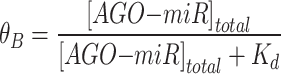 |
(1) |
Association rate assays
Equimolar mixtures of multiple 5′-32P-labeled target RNAs (radiolabeled as described in online methods), each at 1.67-times their final reaction concentration of 10 pM, were prepared in Buffer R. As for the equilibrium binding assays, a dilution series of AGO–miR was prepared in Buffer DB, with each dilution at 2.5-times the desired final concentration of AGO–miR in the binding reaction. Binding reactions were initiated by mixing 60 μL of the target RNA mixture with 40 μL of the AGO–miR dilution. To maintain pseudo-first-order conditions, the lowest concentration of AGO–miR for which these binding reactions were conducted was always ≥80 pM. At each incubation time, a 10 μL aliquot of reaction mixture was subjected to filter binding. After air-drying of membranes and quantification of the total fraction of RNA bound at each timepoint, bound RNAs were eluted from the nitrocellulose membranes by Proteinase K (Invitrogen, 25530049) digestion in 420 μL Proteinase K Buffer (50 mM Tris-HCl, pH 7.4, 50 mM sodium chloride, 10 mM EDTA, 1% SDS) for 45 min at 60°C. The eluted RNA was then phenol-chloroform extracted (Phenol:chloroform:isoamyl alcohol (25:24:1), Sigma-Aldrich, P2069), ethanol precipitated, and re-suspended in 10 μL Gel Loading Buffer II (Invitrogen, AM8547). In parallel, some input RNA mixture was subjected to the same Proteinase K digestion, phenol-chloroform extraction, and ethanol precipitation. Input RNAs and eluted RNAs from each time point were resolved on a denaturing 15% polyacrylamide gel and quantified by phosphorimaging. The target RNAs (which differed from each other by ≥4 nucleotides) were well-resolved.
 |
(2) |
The background-normalized intensity of each band was plotted against time to track the appearance of each ternary AGO–miR–target complex as the reaction progressed. The signal for each band was further normalized to its input value and to the total fraction bound at that timepoint as quantified by phosphorimaging of the membranes before Proteinase K digestion. Because AGO–miR was in excess over the mixture of target RNAs (and therefore over each individual target), pseudo-first-order conditions were assumed, and the production of each AGO–miR–target complex over time was fit to the integrated rate equation for pseudo-first-order irreversible bimolecular association (equation 2), in which AR(t) is the molar concentration of AGO–miR–target complex at time t, AReq is the molar concentration of AGO–miR–target complex once the reaction has reached equilibrium, AT is the total molar concentration of AGO–miR in the reaction, and kon is the elemental rate constant for association (units of M–1s–1).
Hydroxyl radical probing
Because AGO–miR preps produced for hydroxyl radical probing experiments featured radiolabeled guides, their concentration could not be easily quantified by measuring binding to a radiolabeled 7mer-m8 target as described in online methods. Thus, quantification was performed by running an aliquot of AGO–miR prep on a denaturing 20% polyacrylamide gel, alongside standards with known amounts of radiolabeled guide. 6 μL aliquots of AGO–miR at 1–3 nM were prepared in Buffer S– (18 mM HEPES pH 7.4, 100 mM potassium acetate, 1 mM magnesium acetate, 0.01% IGEPAL-630, 0.01 mg/mL yeast tRNA, 5 mM DTT, and 0.1 mg/mL BSA), and 9 μL aliquots of target RNAs at 50 nM were prepared in Buffer R– (Buffer R without glycerol). AGO–miR and target RNA (or buffer-only control) aliquots were mixed and pre-incubated at 37°C for 30 min before hydroxyl radical probing. To initiate probing, 2 μL of Mix F (13.33 mM ammonium ferrous (II) sulfate (Sigma-Aldrich, 09719), 14.667 mM EDTA pH 8, 100 mM DTT) was added to the 15 μL binding reaction mixture, followed by 3 μL of Mix X (1% hydrogen peroxide (Hydrogen Peroxide (30%), Sigma-Aldrich, 216763) in 2.5 X Buffer RF (Buffer R with 9 mM magnesium acetate instead of 5mM magnesium acetate)). After 2 min at 37°C, probing reaction mixtures were quenched by the addition of 5 μL of ice-cold 500 mM sodium sulfite (Sigma-Aldrich, S0505). After at least 5 min of quenching on ice, samples were phenol:chloroform extracted, and RNA was ethanol precipitated. Cleavage products were resolved on a denaturing 20% polyacrylamide sequencing gel. Negative-control pre-quenched samples were also included to establish a baseline for non-specific cleavage of the guide RNA during post-probing workup. For pre-quenching, mixes X and F were combined, reacted for 2 min, and quenched for 5 min before being added to the binding reaction. Positive-control samples of free guide were used to establish a ceiling for the degree to which each position along the guide could be cleaved when it was maximally solvent accessible. For probing free guide, aliquots of AGO–miR were extracted with phenol:chloroform, ethanol precipitated (with no co-precipitants), resuspended in Buffer S– and subjected to hydroxyl radical probing. For each band, the fraction of signal in the lane attributed to the band was measured, and relative •OH reactivity at each position was calculated by the formula (S – Q)/(N – Q), in which S is that fraction of total signal attributed to the band, and Q and N are the equivalent values for that cleavage product in the pre-quenched negative-control and free-guide positive-control, respectively. Relative •OH reactivity could not be reliably calculated for all positions of all guides, as discussed in the online methods.
Periodate probing of 3′-end accessibility
Periodate probing of guide 3′-end accessibility in AGO–miR complexes was conducted according to a protocol modified from those used for complete conversion of 3′-ends [38], with the goal of achieving partial reactivity and compatibility with protein−RNA complexes. 1 nM AGO–miR (or free guide that had been extracted with phenol:chloroform, as was done for hydroxyl radical probing experiments) in Buffer S– was incubated with 4 nM target RNA (or water) in a borate-supplemented reaction buffer (22.5 mM HEPES pH 7.4, 62.5 mM borate pH 8.9, 125 mM potassium acetate, 1.25 magnesium acetate, 6.25 mM DTT, 0.025 mg/mL BSA, 0.0125 mg/mL yeast tRNA, and 0.0125% IGEPAL CA-630) that provided a final pH of 8.5. After 30 min pre-incubation at 37°C, 25% volume of pre-warmed sodium periodate (Sigma-Aldrich, 71859–25G) was added (to a final concentration of 10 mM) to initiate probing, which was allowed to proceed at 37°C for 20 seconds. The reaction was then quenched for at least 5 min at 4°C with 100% volume of ice-cold quenching solution (100 mM sodium sulfite, 200 mM Tris pH 7.5). For pre-quenched negative controls, the periodate solution was mixed with the quenching solution for 5 min before adding AGO–miR. 20 μL of each quenched reaction was mixed with 380 μL of cold 0.3 M sodium chloride and 5 μL of 15mg/mL GlycoBlue co-precipitant (Invitrogen, AM9515), and precipitated with 1 mL of ethanol. Dried pellets were resuspended in 10 μL of β-elimination buffer (100 mM borate pH 9.5) by incubation at 37°C for 15 minutes, then incubated at 45°C for 90 min. 10 μL of 200 mM Tris-HCl and 25 nM non-radiolabeled guide in 0.75X Gel Loading Buffer II was added to each sample, and samples were resolved on a denaturing 20% polyacrylamide sequencing gel, which was then phosphorimaged. Relative periodate reactivity was quantified as described above for relative •OH reactivity in hydroxyl radical probing experiments.
Massively parallel reporter assays (MPRA)
Guide and passenger strand RNA oligos (IDT) were annealed to make miRNA duplexes for miR-155, miR-124, and miR-1. For miR-155, 10 μM duplex was annealed in Low-Salt Annealing Buffer (20 mM Tris-HCl pH 7.5, 40 mM sodium chloride, 2 mM EDTA) to avoid G-quadruplex formation, but for the other two miRNAs, annealing was conducted in Annealing Buffer (60 mM Tris-HCl pH 7.5, 200 mM sodium chloride, 2 mM EDTA). Annealing reactions were incubated for 4–5 min at 100°C on a benchtop metal heat block, then slowly cooled by removing the block from heat and allowing it to cool to ∼30°C, at which point, tubes were transferred to ice for 1 h, then stored at –20°C. Annealing was confirmed by analysis on native polyacrylamide gels, run in a cold room (5.5°C) and stained with SYBR gold (Invitrogen, S11494).
HeLa or F9 cells were grown in 10-cm plates to ∼50% confluence before being co-transfected with plasmid and miRNA duplex using Lipofectamine 2000 (Invitrogen, 11668019) according to manufacturer′s instructions. Each transfection had 5.8 μg of plasmid library (for single-site experiments, 5.8 μg of single-site library; for dual-site experiments, 2.9 μg of single-site library and 2.9 μg of dual-site library) along with 28.9 μg of carrier DNA (pUC19, New England Biolabs, N3041) and miRNA duplex, such that the final concentration of miRNA duplex in the media was 25 nM. Plasmid libraries were prepared as described in online methods. For mock-transfected samples, the procedure was the same, except an identical volume of annealing buffer was added instead of miRNA duplex. After 24 h, media was aspirated, and cells were washed twice with 5 mL ice-cold PBS before being lysed by resuspension in 362 μL of lysis buffer (10 mM Tris-hydrochloride pH 7.5, 5 mM magnesium chloride, 100 mM potassium chloride, 1% v/v Triton X-100 (Invitrogen, HFH10), 2 mM DTT, 0.02 U/μL SuperaseIn, 1 tab / 10 mL cOmplete mini EDTA-free protease inhibitor cocktail (Roche, 11836170001)) and gentle shearing by passing four times through a 26 G needle. Debris was removed by centrifugation for 10 min at 1300 g at 4°C, and the supernatant from each plate was split into three 150 μL aliquots for RNA extraction with Trizol-LS (Invitrogen, 10296010) according to the manufacturer′s instructions, after which the three samples from each plate of cells were pooled. For each plate, 10 μg of extracted RNA sample was treated with TURBO DNase (Invitrogen, AM2238) according to manufacturer’s instructions, phenol:chloroform extracted, ethanol precipitated, and resuspended in 10 μL water. 5 μL of each sample was then reverse transcribed using Superscript III Reverse Transcriptase (Invitrogen, 18080093) and an RT primer specific to the 3′ constant region of the reporter mRNA, in a 32 μL reaction, after which RNA was hydrolyzed using 1 M sodium hydroxide at 90°C for 10 min before neutralization with 1M HEPES pH 7.4. 8 μL of each cDNA was amplified using Phusion polymerase (New England Biolabs, M0530) and barcoded sets of primers containing Illumina P5 and P7 sequences that were complementary to the 5′ and 3′ constant regions of the MPRA libraries, to generate libraries for sequencing on an Illumina NovaSeq SP flow cell. Amplified libraries were size-selected on 2.5% Metaphor agarose gels (Lonza, 50181) and extracted (QIAquick Gel Extraction Kit, Qiagen, 28704). Each replicate of an MPRA experiment began with four plates of cells, respectively, co-transfected with either miR-155, miR-124, or miR-1 (a negative control), or mock-transfected with annealing buffer in place of a miRNA duplex. The second replicate for an experiment was started a few days later with another four plates of the same cell line grown from the same early-passage frozen stock.
Luciferase reporter assay
Three individual sets of context sequences were chosen from analysis of dual-site MPRA data, and dual site regions plus flanking context were appended end to end, with SacI (upstream) and SpeI (downstream) restriction sites for cloning into the 3′ UTR of the backbone Renilla Luciferase vector pIS2 (Addgene, 12177). Inserts containing six tandem sites were generated from 360 bp DNA fragments, each constructed from two 200-nt ssDNA oligonucleotides that had 40 bp of complementarity, which was extended by overlap extension PCR (KAPA HiFi, 30 cycles) to generate the full 360-bp dsDNA fragment, which was restriction cloned into pIS2. miR-155 and miR-124 duplexes were annealed as described. 40 ng of the pIS2-derived RLuc reporter plasmid, 100 ng control FLuc reporter plasmid (pIS0, Addgene, 12178), 5ug pUC19, and 100pmol miRNA duplex were co-transfected into HeLa cells in 24-well plates at ∼50% confluence using Lipofectamine 2000, according to manufacturer′s instructions. After 24 h, cells were washed once with PBS, lysed, transferred to a 96-well plate, and their RLuc and FLuc expression was measured with the Nano-Glo Dual-Luciferase Reporter Assay system (Promega, N1610) on a GloMax Discover (Promega, GM3000) microplate reader. RLuc and FLuc expression values were normalized to control wells containing only the provided lysis buffer, then RLuc values were normalized to FLuc values for each well. For each site-containing reporter, a mutant reporter was also cloned which was otherwise identical to the site-containing reporter except that the sites were each disrupted by a 3-nt substitution in the seed match (8mer sites) or a 4-nt substitution in the region of 3′ complementarity (m9_23 3′-only sites). RLuc/FLuc values for each site-containing reporter were normalized to those of the corresponding negative-control mutant and the reciprocal was taken to yield a fold-repression value.
Analysis of AGO-RBNS data
Reads were filtered to remove those with uncertain base calls and those for which the last four nucleotides did not match the 3′ constant region of AGO-RBNS libraries. For each sample, reads were assigned to individual miRNA sites as described in online methods. Reads that did not contain any sites to the relevant miRNA were assigned to the no-site background. Tables of numbers of reads assigned to each site and the no-site background across the different concentrations of AGO–miR and in input libraries were used to fit relative Kd values as described [28]. Relative Kd values describe how much better a site was bound compared to the no-site background. Negative log-transformed relative Kd values for the many compound sites that featured both 3′ complementarity and seed complementarity were fit to a multiplicative model (equation 3) wherein independent 3′ complementarity, seed complementarity, and offset coefficients summarized the typical contribution to binding of individual patterns of 3′ complementarity, seed complementarity, and offset, across the many different combinations in which they appear.
 |
(3) |
Analysis of MPRA data
Reads from single-end sequencing of final libraries from HeLa cell single-site MPRA experiments were filtered to just those reads with no uncertain base calls, then quality-filtered. Reads were assigned to library variants if the entire sequence of the variable region was a perfect match to one of the library variants. Counts per million (CPM) values were calculated for each site across the multiple contexts in which it appeared, and fold-change values for each site were calculated for the miRNA-transfected versus mock-transfected samples, normalized to the fold-change values observed for no-site variants. Reads from paired-end sequencing of final libraries from F9 cell single-site MPRA experiments were joined before being identically filtered, assigned, and quantified. For the F9 cell dual-site MPRA experiment, despite paired-end sequencing, read 1 alone was used to assign reads if the first 150 nucleotides of the read matched the first 150 nucleotides of the variable region of one of the library variants.
Survey of endogenous miRNA target sites
Representative isoforms for human 3′ UTR sequences from TargetScan 7.2 [32] were searched for sites to the guide strands of the 183 confidently annotated human miRNAs from the 108 seed families that are conserved to zebrafish according to TargetScan 8 [28], using the same logic employed to assign AGO-RBNS reads to different miRNA sites described in the online methods. Site identities and positions within 3′ UTRs were recorded for all miRNAs and all UTRs, even for sites for which it was difficult to unambiguously assign site identity. Canonical sites with 6mer, 7mer-A1, 7mer-m8 or 8mer seed matches (with or without supplemental 3′ complementarity) were counted, as were 3′-only sites with at least 10 nucleotides of contiguous 3′ complementarity and less than three nucleotides of contiguous seed matching, and 3′+microseed sites with at least 10 nucleotides of contiguous 3′ complementarity and 3–5 contiguous nucleotides of seed matching at an offset of between −4 and +6.
Analysis of mRNA-seq data from miRNA transfections
Analysis was on RNA-seq data measuring the response of endogenous mRNAs following transfection of one of 16 miRNAs into HeLa cells [28]. Reads were filtered to remove any with uncertain base calls before aligning to hg19 using STAR, providing splice junction and transcript annotations [39]. Read counts per gene were determined using featureCounts [40], and converted to batch-normalized log10-transformed transcripts per million (logTPM) values as described [28]. Log2(fold-change) values for each gene were calculated for each miRNA relative to the mean of its logTPM value in the other 15 miRNA-transfected samples. For each miRNA, cohorts of genes for which the dominant 3′ UTR isoform (see online methods) contained a single 8mer site or a single ≥8-nt 3′-only site were assembled, along with a cohort of UTR length-matched no-site controls (see online methods). Cumulative distribution functions (CDFs) for the log2(fold-change) values for those cohorts for each miRNA were constructed. CDFs for 8mer and 3′-only cohorts were compared to CDFs for no-site control cohorts by the one-sided Kolmogorov–Smirnov (KS) test, to determine whether single 8mer and 3′-only sites imparted repression to their respective mRNAs. This process was then repeated for transcripts containing a single 8mer, 6mer, or ≥10-nt 3′-only site, respectively, but aggregating results for site-containing transcripts and UTR length-matched no-site controls for all 16 miRNAs.
Results
AGO–miR-155 and AGO–miR-124 bind 3′-only sites
To determine whether the k-mers identified in previous AGO-RBNS experiments corresponded to bona fide 3′-only sites, we conducted AGO-RBNS for miR-155 and miR-124 using a modified library design wherein half of the library molecules were programmed to contain an 8-nt match to the 3′ region of the corresponding miRNA (Fig. 2A). The other half of the library molecules had a fully random-sequence region, which provided a diverse no-site background and a source of canonical and some noncanonical sites (Fig. 2A). The presence of the programmed library molecules increased coverage of species with extensive 3′ complementarity, which allowed us to identify sufficient reads that featured stretches of 3′ complementarity not accompanied by any downstream seed complementarity and thereby determine relative Kd values for 3′-only sites acting autonomously, without the help of more than one nucleotide of contiguous pairing to the seed.
Figure 2.

AGO-RBNS reveals high-affinity binding of AGO–miR-155 and AGO–miR-124 to 3′-only sites. (A) AGO-RBNS experimental workflow using a programed library to increase coverage of sites with extensive 3′ complementarity. The programed library had an 8-nt segment (green) that matched an 8-nt segment within the 3′ region of the miRNA (green). In the library, this segment was flanked by random-sequence positions (black), which were in turn flanked by primer-binding sites (grey) suitable for reverse transcription (RT) and amplification. See text for additional description of the RBNS procedure. (B) Relative Kd values inferred from AGO-RBNS enrichment profiles. Plotted are relative Kd values for canonical sites (purple), 3′-only sites (green), and select compound sites (blue) of miR-155 (left) and miR-124 (right). Error bars indicate 95% confidence intervals calculated as described [28]. (C) Relative Kd values for different 3′-only site architectures. Heatmaps depict log10-transformed relative Kd values of different 3′-only sites of miR-155 (top) and miR-124 (bottom). (D) Relative affinities of compound sites of miR-155 and miR-124 are well fit by a multiplicative model in which negative log10-transformed relative Kd is a function of 3′ complementarity, seed complementarity, and offset. Shown are the model-predicted negative log10-transformed relative Kd plotted as a function of experimental negative log10-transformed relative Kd for sites of miR-155 (top) and miR-124 (bottom). Dashed black line shows y = x. Pearson (Rp) and Spearman (Rs) correlation coefficients for experimental versus model-predicted relative Kd are shown. (E) The influence of 3′ complementarity, seed complementarity, and offset coefficients on relative affinities of compound sites, as indicated by a multiplicative model for miR-155 (top) and miR-124 (bottom). At the left, heatmaps depict the relative magnitude of coefficients for different patterns of 3′ complementarity. In the middle, heatmaps depict the relative magnitude of coefficients for different patterns of seed complementarity. At the right, graphs plot the relative magnitude of coefficients for different offsets.
Each member of our programmed library for miR-155 had an 8-nt segment complementary to positions 13 through 20 of miR-155, as pairing to these positions of miR-155 appears to be more effective than pairing to other 8-nt segments of the miR-155 3′ region [28]. Thus, the minimal 8-nt 3′-only site contributed by this library was complementary to nucleotides 13–20 of miR-155, designated as an m13_20 site. Likewise, our programmed library for miR-124 had a segment complementary to nucleotides 11–18, generating the minimal 3′-only site m11_18. For both miR-155 and miR-124, these 8-nt 3′-only sites did not bind detectably above background (Fig. 2B). Nonetheless, when the 8-nt sites were extended by two or three additional nucleotides recruited from the random-sequence segments on either side of the programmed match, binding was detected. These 3′-only sites of 10–11 nucleotides bound about as well as 6-nt canonical sites for the respective miRNAs, and longer 3′-only sites with ≥12 nucleotides of perfect 3′ complementarity bound about as well as 7-nt canonical sites (Fig. 2B). Longer 3′-only sites were generally stronger binders, and for 3′-only sites of equivalent length, the site with a more distal register was the stronger binder (Fig. 2C). For example, m13_23 sites of miR-155 bound 4-fold better than m10_20 sites even though they were both 11-nt sites. This trend wherein sites of equivalent length but more distal register display stronger binding is also observed for other miRNAs in AGO-RBNS analyses using random-sequence libraries [28] and for the 10-nt 3′-only sites of fly Ago1–miRs analyzed by AGO-RBNS and conventional target-binding assays [30].
Despite their longer contiguous 3′ complementarity, sites that could pair to position 9 (e.g., m9_20) did not appear to bind better than otherwise identical sites that could not pair to position 9 (e.g., m10_20) (Fig. 2C). For miR-124, sites beginning at position 9 (e.g., m9_20) were no better than equivalent sites beginning at position 10 (e.g., m10_20), and for miR-155, sites beginning at position 9 initially appeared to be worse binders than equivalent sites beginning at position 10. Others also observe that extending 3′ complementarity into the central region appears to be thermodynamically disfavored [23]. We investigated this result by examining the flanking sequence preferences around 3′-only sites. If central pairing is indeed unfavorable, presumably due to steric hindrance because nucleotide 9 (and perhaps 10) of the miRNA are occluded by the central gate of AGO [41], then the thermodynamically most favored state for the guide–target duplex would be to leave nucleotide 9 unpaired, in which case, whether or not the nucleotide could potentially pair would be of no consequence. Therefore, an m9_20 site of miR-155 can instead be considered as an m10_20 site with a U residue flanking the m10_20 site (because nucleotide 9 of miR-155 is an A). When we re-ran our RBNS analysis pipeline focusing on the influence of the upstream flanking nucleotide on the relative affinity of m10_20 and other sites that started at position 10, miR-155 displayed a strong preference for A nucleotides immediately upstream of those 3′-only sites, whereas U and G nucleotides were particularly disfavored (Supplementary Fig. S1A). We conclude that 3′-only sites such as m9_20 of miR-155 appear to have worse affinity not because unfavorable central-region pairs actually form, but instead because to be classified as an m9_20 site, the nucleotide opposite position 9 must be a U, which is contextually disfavored, whereas the equivalent site with a contextually favored A opposite position 9 would be classified as an m10_20 site.
In sum, miR-155 and miR-124 bound 3′-only sites with at least 10 nucleotides of contiguous complementarity about as well as they bound 6-nt canonical sites, whereas longer and stronger 3′-only sites with more than 12 nucleotides of contiguous complementarity bound about as well as 7-nt canonical sites. This strong binding occurred even in the absence of complementarity to the miRNA seed, and longer and more distal 3′ pairing was associated with stronger binding, although position 9 remained unpaired.
A match to the seed region as short as three contiguous nucleotides enhances affinity
Due to our increased coverage of sites with extensive 3′ complementarity, we were able to determine relative Kd values for many individual combinations of 3′ complementarity and seed complementarity. These different compound sites were classified based on three parameters: 3′ complementarity (e.g., m13_20), seed complementarity (e.g., m2_7) and the offset between the two (e.g., +2). Offset is calculated by comparing the number of nucleotides bridging the segments of 3′ complementarity and seed complementarity in the target site to the number of nucleotides bridging the corresponding segments of the miRNA [27] (Fig. 1). Positive offset values indicate that, compared to the miRNA, the target site has more nucleotides bridging the two complementary segments, whereas a negative offset value indicates that the miRNA has more nucleotides bridging the two complementary segments. For example, if a read featured m13_20 3′ complementarity, 8 nt upstream of m2_7 seed complementarity, the offset would be +2 nt (8 minus the distance between nucleotides 13 and 7 of the miRNA; 8 – (13 – 7) = +2) (Fig. 1). In our naming convention, this site would be designated as m13_20|+2|m2_7, to indicate the 3′ complementarity, offset, and seed complementarity, respectively.
We found that downstream seed complementarity generally resulted in sites that bound better than the analogous 3′-only site acting autonomously, even when that seed complementarity was quite short. To illustrate this finding, representative compound sites are included in Fig. 2B. For miR-155, these compound sites had 3′ complementarity from positions 13–22, offsets of +2 nt, and seed complementarity beginning at position 2 and ranging from positions 3 to 8, whereas for miR-124, they had seed complementarity over the same range, but 3′ complementarity from 9 to 19 and offsets of +3. (Fig. 2B). The relative affinities of these compound sites revealed that as few as three nucleotides of contiguous seed complementarity on top of m13_22 3′ complementarity for miR-155 or m9_19 3′ complementarity for miR-124 was sufficient to detectably improve binding (for miR-155, compare m13_22 with m13_22|+2|m2_4; for miR-124, compare m9_19 with m9_19|+3|m2_4). Extending these analyses to additional sites with extended 3′ complementarity and a broad range of offset and seed pairing possibilities confirmed that 3-nt stretches of additional seed complementarity often enhanced affinity, particularly when this involved positions 2 through 4 (Supplementary Figs S2 and S3). Seed complementarity of more than three nucleotides substantially improved affinity. For example, the affinity of a miR-155 compound site with 10 nucleotides of 3′ complementarity and four nucleotides of seed complementarity (m13_22|+2|m2_5) matched that of a canonical 7mer-A1 site (Fig. 2B), and the affinity of the analogous miR-124 site (m9_19|+3|m2_5) exceeded that of a canonical 7mer-A1 site (Fig. 2B). For both miRNAs, the degree to which seed complementarity boosted affinity was influenced by offset, with slightly positive offsets resulting in a greater boost to affinity than negative offsets for all possible seed pairing architectures (Supplementary Figs S2 and S3).
In pursuit of a global analysis that would highlight the respective contributions of 3′ complementarity, seed complementarity, and offset to the relative affinities of compound sites, we fit log-transformed relative Kd values to a multiplicative model in which a compound site negative log10(Kd) was equal to the product of coefficients denoting the contributions of 3′ complementarity, seed complementarity, and offset (A3′, B5′, Coffset, respectively). Coefficients were globally fit for the Kd values of over 5,000 compound sites, such that each coefficient value represented the typical contribution of a particular pattern of 3′ complementarity, pattern of seed complementarity, or offset to overall site Kd across the many sites in which it appeared. Values of coefficients A, B, and C were each scaled to range from 0 to 1. The model fit our data well (Fig. 2D). Although the absolute magnitude of the fitted coefficients had no biochemical significance, comparing relative magnitudes of coefficients predicted the difference in relative affinity. For compound sites of both miRNAs, longer and/or more distal 3′ complementarity typically contributed greater affinity, matching the trends observed for 3′-only sites (Fig. 2E, left). In this analysis, 2–3 nucleotides of contiguous seed complementarity provided little-to-no boost to overall site affinity, especially when that seed complementarity occurred outside of the subseed region (nucleotides 2–5 of the miRNA), which is poised to nucleate target pairing [11–17, 22, 42–44] (Fig. 2E, middle). However, 4–5 nucleotides of contiguous seed complementarity typically did provide a detectable boost to compound-site affinity and was perhaps more impactful when it included the subseed region (Fig. 2E, middle). Sites with at least six nucleotides of contiguous seed complementarity were considered 3′-supplementary sites because the seed complementarity matched that of other canonical sites. For these sites, the relative contribution of different patterns of seed complementarity to overall site affinity matched the relative affinities of the equivalent seed-only sites acting autonomously (Fig. 2E, middle). Positive offsets were favored for both miRNAs; offsets of 0–2 were optimal for miR-155, and offsets of 1–4 were optimal for miR-124 (Fig. 2E, right). These offset preferences matched those reported for miR-155 and miR-124 in the context of 3′-compensatory sites [27].
AGO–miR-155 and AGO–miR-124 bind 3′-only sites with high affinity
To measure AGO–miR binding to 3′-only sites in a single target context and determine absolute Kd values for the binding interactions, we conducted equilibrium binding assays between purified AGO–miR and trace (1–5 pM) radiolabeled target RNA that featured a single target site flanked by poly(U) sequence. Binding reactions were incubated for 4 h at 37°C before filtering through stacked nitrocellulose and nylon membranes that captured bound and free target RNAs, respectively. Fraction bound as a function of AGO–miR concentration was fit to the fractional saturation equation to determine an absolute Kd value. We also determined affinities for mutant miR-155 and miR-124 sequences in which any A residues in the seed region were mutated to avoid incidental mono- or di-nucleotide pairing between the miRNA seed and poly(U) flanking sequence.
For all four guide sequences (miR-155 (wt), miR-155 (mut), miR-124 (wt), and miR-124 (mut)) Kd values were determined for multiple 3′-only targets, 7mer-m8 canonical targets, and no-site negative-control targets (Fig. 3A). The 8-nt 3′-only sites (m13_20 for miR-155, m11_18 for miR-124) did not bind detectably above no-site negative controls, whereas the 10–11-nt 3′-only sites (m13_22 for miR-155, m9_19 for miR-124) bound with intermediate affinities, with Kd values ranging from 70 to 600 pM, and the 13–14-nt 3′-only sites (m11_23 for miR-155, m9_22 for miR-124) bound with high affinity, with Kd values ranging from 10 to 70 pM—similar to those of the 7mer-m8 sites (Fig. 3A). These results concurred with relative affinities measured by AGO-RBNS.
Figure 3.

Binding assays confirm high-affinity binding of AGO–miR-155 and AGO–miR-124 to 3′-only sites. (A) Binding curves and absolute Kd values for AGO–miR-155 and AGO–miR-124 binding to 3′-only sites. Shown are binding curves from single-target equilibrium-binding assays with wild-type guide sequence (top) or mutant guide sequence (bottom) AGO–miR-155 (left) or AGO–miR-124 (right). Targets each contained the indicated single site flanked by poly(U) sequence. Curves were fit to the fractional saturation equation to determine absolute Kd values reported in the key next to each plot, with 95% confidence interval of each fit. For targets with negligible binding at the highest AGO–miR concentrations, a lower bound of Kd of 10 nM is reported. For targets that saturated binding at the lowest AGO–miR concentrations, an upper bound of Kd of 5 pM is reported. (B) Absolute Kd values for AGO–miR-155 (mut) binding to compound sites. Kd values and 95% confidence intervals were determined as in (A) for seed-only (7mer-m8, purple), 3′-only (m11_23, green) and various compound (blue) sites binding to AGO–miR-155 (mut). Sequences of guide and target RNAs are provided below the plot. For targets with negligible binding at the highest AGO–miR concentrations, a lower bound of Kd of 10 nM is reported and plotted. For targets that saturated binding at the lowest AGO–miR concentrations, an upper bound of Kd of 5 pM is reported. (C) Absolute Kd values for AGO–miR-124 (mut) binding to compound sites. Otherwise, this panel is as in (B). (D) Binding curves and absolute Kd values for AGO–miR-124 (top) and AGO–let-7a (bottom) binding to 3′-only sites. Otherwise, this panel is as in (A).
We also measured absolute Kd values for target RNAs with different combinations of 3′ complementarity and seed complementarity at offsets predicted to be favorable (+2 and +3 nt, for miR-155 and miR-124, respectively). For miR-155 (mut), we designed targets with m11_23 3′ complementarity augmented by 1–8 nucleotides of seed complementarity (m2, m2_3, m2_4, m2_5, m2_6, m2_7, m2_8, m1_8). We found that although 1–3 nucleotides of contiguous seed complementarity did not detectably boost affinity over that of m11_23 3′-only sites (Fig. 3B), 4–5 nucleotides of seed complementarity modestly boosted affinity (Fig. 3B). Sites with six or more nucleotides of seed complementarity were very strong binders such that fraction bound was already near saturation at the lowest concentrations of AGO–miR (∼5–10 pM), and thus we could report only an upper bound of ∼5 pM for the absolute Kd of these sites (Fig. 3B). Surprisingly, m2_5 seed complementarity initially appeared to result in a compound site that bound at least as well as one with m2_6 seed complementarity (Fig. 3B), but this was attributed to that target RNA having a longer region of poly(U) flanking sequence, which mildly improved binding. After matching the length of poly(U) sequence around the site, absolute Kd values for the two sites were more similar, with m2_6 seed complementarity causing slightly stronger binding, as expected (Supplementary Fig. S4).
For miR-124 (mut), we designed an analogous series of targets with compound sites that combined m9_22 3′ complementarity with 1–8 nucleotides of contiguous seed complementarity. Unfortunately, targets with ≥5 nucleotides of seed complementarity were predicted to be highly structured due to unavoidable sequence complementarity between the 3′ region and seed region of miR-124 (mut). Because structure in and around a target site can interfere with AGO–miR binding, particularly if it occludes the portion of the target that pairs to the miRNA seed [23, 28, 32, 45], we limited our investigation to those targets with 1–4 nucleotides of seed complementarity. Again, 1–2 nucleotides of seed complementarity produced no detectable boost to overall site affinity, but 3–4 nucleotides imparted a modest effect (Fig. 3C). As in RBNS experiments, less seed complementarity was necessary to boost compound site affinity for miR-124 than for miR-155 (Fig. 3B and C), presumably because the seed region (especially the subseed) of miR-124 is more GC-rich.
We also conducted binding assays with AGO–let-7a, which has only marginal enrichment of 3′ k-mers in AGO-RBNS analyses [28] and found that let-7a binds its m11_22 3′-only site only weakly (Kd ∼ 400 pM)—more than 80-fold worse than it binds its 7mer-m8 site (Kd < 5 pM), consistent with let-7a being substantially less capable of binding 3′-only sites than either miR-155 or miR-124 (Fig. 3D).
Reporter mRNAs containing 3′-only sites are repressed
Having measured strong binding of AGO–miR-155 and AGO–miR-124 to their respective 3′-only sites, we set out to determine whether that strong binding results in effective repression of site-containing reporter mRNAs in mammalian cells. These reporter assays were conducted in a massively parallel format, inserting many different target sites of the two miRNAs into the 3′ UTR of an EGFP reporter mRNA in multiple sequence contexts (Fig. 4A and Supplementary Fig. S5A). For miR-155, all six canonical sites (6mer-A1, 6mer-m8, 6mer, 7mer-A1, 7mer-m8, 8mer) were represented, each with five different upstream sequences that were designed to avoid 3′ pairing that might supplement those canonical sites (Fig. 4A and Supplementary Fig. S5A). In addition to these 30 canonical site architectures, we included the 20 3′-only sites of miR-155 for which we had determined relative affinities by AGO-RBNS. Also included were a selection of 168 compound sites for miR-155, which covered three different patterns of 3′ complementarity (weak (m13_20), intermediate (m13_22), and strong (m11_23)) in combination with 28 different patterns of seed complementarity (all possible patterns of seed complementarity of 2–8 nucleotides) at two different offsets (zero offset and +2 nt offset) (Fig. 4A and Supplementary Fig. S5A). Five no-site architectures with no more than three nucleotides of contiguous base pairing to miR-155 were also included as negative controls (Fig. 4A and Supplementary Fig. S5A). Each of these 223 miR-155 sites (30 canonical sites, plus 20 3′-only sites, plus 168 compound sites, plus five negative controls) and each of a similarly designed set of 218 miR-124 sites (30 canonical sites, plus 15 3′-only sites, plus 168 compound sites, plus five negative controls), was placed into 20 different sequence contexts, using the same set of 20 50-nt upstream flanking sequences and 20 50-nt downstream flanking sequences for all sites, yielding a total of 8,820 reporter variants in our massively parallel reporter assay (MPRA) (Fig. 4A and Supplementary Fig. S5A).
Figure 4.

3′-only sites impart repression to reporter mRNAs in F9 cells. (A) Library of variants for massively parallel reporter assay designed to assess the relative repression efficacy of canonical, 3′-only, and compound sites of miR-155 and miR-124, more fully described in Supplementary Fig. S5A. (B) Correspondence between repression of site-containing reporter mRNAs in response to miR-155 transfection and the relative Kd values of the sites measured by AGO-RBNS (green: 3′-only sites, purple: canonical sites, blue: compound sites). The grey line shows the predicted steady-state repression of sites as a function of relative Kd from a thermodynamic model of target repression [28]. At the right is a zoomed-in view of the top left region of main plot. N = 4 replicates per site. (C) Repression efficacy of canonical (purple) and 3′-only (green) sites of miR-155. N = 4 replicates per site (error bars, standard error of the mean). (D) Correspondence between repression of site-containing reporter mRNAs in response to miR-124 transfection and the relative Kd values of sites measured by AGO-RBNS (green: 3′-only sites, purple: canonical sites, blue: compound sites, red: probable slicing sites). Otherwise, this panel is as in (B). Details of how probable slicing sites were identified are provided in the text and in online methods. (E) Repression efficacy of canonical (purple) and 3′-only (green) sites of miR-124. Otherwise, this panel is as in (C).
The reporter library in plasmid form was co-transfected along with guide–passenger duplex for either miR-155, miR-124, or miR-1 into either HeLa or F9 cells. Mock-transfected samples were treated identically except no miRNA duplex was added. After 24 h, cells were harvested, total RNA was extracted, and library mRNAs were reverse transcribed and amplified for high-throughput sequencing. Two replicates were conducted. Reads that exactly matched one of the 8,820 library members were assigned to that member, and for each site, summed CPM values across the 20 contexts in which it appeared were used to calculate fold-change values for each site in the presence of the cognate miRNA compared to mock-transfected samples, normalizing to negative-control values.
We also generated a dual-site library, which was identical to the single-site library except the site region of each mRNA contained two copies of the relevant site, separated by a 20-nt spacer sequence that varied along with the 50-nt flanking sequences that were appended to either side of the site region (Supplementary Fig. S5B). For experiments involving the dual-site libraries, these dual-site libraries were co-transfected together with single-site libraries and miRNA duplexes into F9 cells. Fold-change values for single sites in these experiments correlated extremely well with those of the initial experiments in which only the single-site library was transfected (Supplementary Figs S6 and S7), and thus these single-site fold-change values were analyzed as replicates, bringing the total number of replicates for the single-site libraries in F9 cells to four for each miRNA. Repression efficacies of sites were generally slightly higher in HeLa cells than in F9 cells, especially for the strongest sites (Supplementary Figs S8 and S9). In both cell lines, repression efficacies of miR-155 sites for miR-155-transfected samples were generally slightly higher than those of miR-124 sites for miR-124-transfected samples, perhaps because either transfection or loading of miR-155 into AGO was more efficient.
For some 3′-only sites, particularly those with stronger relative affinity as measured by AGO-RBNS, repression was detected in cells, thereby demonstrating the intracellular activity of this site type (Fig. 4B–E). Indeed, for all sites for which we had determined relative affinities by AGO-RBNS, repression efficacy scaled with binding affinity, regardless of whether the site was canonical, 3′-only, or compound (Fig. 4B and D). Our data fit well to a simple biochemical model that predicts repression as equal to (1 + bN) for each site, where N is the fractional AGO–miR occupancy of that site as modelled by the fractional saturation equation, AGO–miRfree / (AGO–miRfree + relative Kd), b is the unit increase in repression for a unit increase in fractional occupancy, and AGO–miRfree is the absolute concentration of AGO–miR-155 or AGO–miR-124 not bound to any RNA [28]. Because we could not experimentally determine AGO–miRfree or b, these parameters were fit globally (Fig. 4B and D).
For both miRNAs, many ≥10-nt 3′-only sites repressed at least as well as canonical 6mer sites (Fig. 4C and E). However, only the few longest and highest-affinity 3′-only sites repressed at least as well as 7-nt canonical sites (7mer-A1 and 7mer-m8) (Fig. 4C and E). At least 12 nucleotides of contiguous 3′ complementarity were required for this strong repression (Fig. 4C and E). This concurred with our binding-affinity data, which showed that 12 nucleotides of contiguous 3′ complementarity was required for 3′-only sites to bind as well as top canonical sites.
An orthogonal luciferase reporter assay further confirmed repression by m9_23 3′-only sites of miR-155 in HeLa cells. Inserting six m9_23 sites into the reporter 3′ UTR resulted in 2.1-fold repression, or log2(fold-change) of –1.08, relative to a control reporter in which each of the sites was mutated (Supplementary Fig. S10). These six m9_23 sites were 2.7-times more effective than two m9_23 sites in the dual-site MPRA in F9 cells, which had a log2(fold-change) value of –0.4.
Reporter mRNAs containing compound sites are more repressed
Compound sites that had extensive 3′ complementarity and seed complementarity were very efficacious (Fig. 5A and B). The strongest compound sites of miR-155 had log2(fold-change) values less than –2.0, which equated to a >75% reduction in steady-state mRNA abundance, whereas a single 8mer canonical site imparted only a ∼25% reduction (Fig. 5A). For sites with the longest 3′ complementarity (m11_23 for miR-155, m9_22 for miR-124) and seed complementarity of at least 5–6 nucleotides, additional seed complementarity did not necessarily increase efficacy, suggesting that these sites were saturated with AGO–miR under our assay conditions (Fig. 5A and B). For sites with only 8 nucleotides of 3′ complementarity, additional seed complementarity of 6 nucleotides or more was required to generate detectable repression (Fig. 5A and B). For sites with intermediate 3′ complementarity of 10–11 nucleotides, 4–5 nucleotides of additional seed complementarity were required to improve repression efficacy of the compound site compared to that observed for the corresponding 3′-only site (the site with the same 3′ complementarity but no additional seed complementarity) acting autonomously (Fig. 5A and B). For sites with the longest 3′ complementarity, as few as 2–3 nucleotides of additional seed complementarity were sufficient to improve repression efficacy beyond that observed for the corresponding 3′-only site acting autonomously (Fig. 5A and B). Note that our ability to observe the activity of as few as 2–3 nucleotides of additional seed complementarity in the reporter assay but not in AGO-RBNS was attributed to the inclusion of compound sites with particularly extensive 3′ complementarity in the MPRA, whereas our AGO-RBNS analysis was not powered to derive relative Kd values for these particularly long compound sites because they were insufficiently abundant in the input library. For compound sites of miR-155 that did not appear saturated, and for compound sites of miR-124 with m13_20 3′ complementarity, repression efficacy was better for positive offset (miR-155: +2, miR-124: +3) compared to zero-offset (+0) versions of equivalent sites (Fig. 5A and B), in line with previous results for 3′-compensatory sites [27].
Figure 5.

Repression efficacy of compound sites depends on 3′ complementarity, seed complementarity, and offset. (A) Repression efficacy of reporter mRNAs containing miR-155 target sites (purple: canonical sites, blue: compound sites) in response to miR-155 transfection. Top, middle, and bottom panels show compound sites with m13_20, m13_22, and m11_23 3′ complementarity, respectively. As an example of site nomenclature, +0|m1_3 indicates that in addition to the 3′ complementarity, the site featured m1_3 seed complementarity at an offset of +0. N = 4 replicates per site (error bars, standard error of the mean). (B) Repression efficacy of reporter RNAs containing miR-124 target sites (purple: canonical sites, blue: compound sites, red: probable slicing sites). Otherwise, this panel is as in (A). Details of how probable slicing sites were identified are provided in the text and in online methods.
Unfortunately, the analogous comparison could not be made for compound sites of miR-124 with m9_19 or m9_22 3′ complementarity, because zero-offset versions of these sites were often suitable substrates for slicing by AGO2–miR-124, especially when seed pairing extended to position 8. Slicing of these miR-124 reporters was inferred by comparing the repression observed for a site with zero offset to that observed for the analogous site with a positive (+3) offset. A positive offset corresponds to a 3-nt bulge in the target, between positions that pair to nucleotides 8 and 9 of the guide, which typically precludes efficient slicing [23]. Thus, greater repression for the zero-offset version of the site, compared to the +3-offset version of the site, is diagnostic of slicing, especially when considering the observation that for non-slicing sites positive offsets of +2 to +4 improve AGO–miR binding and repression efficacy. Therefore, if for a site architecture the zero-offset variant (e.g., m9_22|+0|m2_8) repressed better (Tukey’s post-hoc test, Bonferroni-corrected, p < 0.05) than the positive-offset variant (e.g., m9_22|+3|m2_8), then that zero-offset version of the site (e.g., m9_22|+0|m2_8) was identified as a probable substrate for slicing by AGO–miR-124 in this assay.
This detection of reporter sites that were sliced provided an opportunity to compare slicing results observed in cells for miR-124 to those observed previously in vitro for other miRNAs [23]. In the context of intermediate-strength (m9_19) 3′ complementarity, m6_8 or m5_8 seed complementarity (creating contiguous complementarity from positions 6–19 and 5–19, respectively) was sufficient to create a weak slicing site (Fig. 5B). If complementarity through nucleotides 3–7 of the seed was intact, a single mismatch at position g8 was well-tolerated (Fig. 5B). In the context of strong (m9_22) 3′ complementarity, a double mismatch at positions 7–8 was insufficient to completely abrogate slicing, and as little as m7_8 seed complementarity (creating contiguous complementarity from positions 7–22) was sufficient to generate at least some slicing, demonstrating that miR-124 had relaxed seed complementarity requirements for slicing when there was more extensive 3′ complementarity (Fig. 5B). These results were consistent with those observed in vitro for miR-21 and let-7a, for which partial seed mismatches do not completely abrogate slicing as long as perfect central and 3′ complementarity are preserved [23]. Because more replicates were acquired for the single-site MPRAs in F9 cells (Fig. 5B), more sites passed the statistical significance threshold for identification as slicing substrates, and we suspect that with more replicates those sites would likewise be identified as slicing substrates in other MPRAs (Supplementary Figs S7 and S9).
Overall, long stretches of contiguous 3′ complementarity imparted repression to reporter mRNAs according to their measured binding affinity, whether acting autonomously as 3′-only sites, or supplemented by additional pairs to the seed region. Eight nucleotides of 3′ complementarity was insufficient for detectable repression, unless supplemented by canonical 6–8-nt seed complementarity. Ten–11 nucleotides of contiguous 3′ complementarity imparted detectable but modest repression similar to that imparted by a 6-nt canonical site, but 4–5 nucleotides of additional seed complementarity could boost that repression and create more efficacious compound sites. Twelve or more nucleotides of contiguous 3′ complementarity imparted effective repression similar to that imparted by a 7-nt canonical site, and as few as 2–3 nucleotides of additional seed complementarity further boosted that repression, creating sites that repressed better than 8mer canonical sites.
3′-only sites have slower association rates than canonical sites
The pairing of miRNAs to extended target sites is thought to be an ordered process. Pairing nucleates at the subseed and then propagates to the remainder of seed region [22, 42–44, 46]. Pairing to the full seed is then proposed to promote conformational changes in AGO that open the 3′-supplementary chamber to make pairing to the 3′ region more accessible [46]. Pre-organization of the subseed into a helical conformation results in rapid association rates for nucleation—often approaching diffusion-limited bimolecular association [21–23, 35, 42–44], raising the question of how rapidly AGO–miRs might associate with 3′-only sites, which lack seed pairing and consequently, the benefits of both the pre-organized guide and the widened supplementary chamber proposed to make 3′ pairing more accessible [46]. Previous analyses using AGO–let-7 found that this miRNA had an elementary rate constant for target association (kon) of 3.6 ± 0.2 × 10⁷ M–1s–1 for the 3′-only site m11_21, compared to 2.4 ± 0.1 × 10⁸ M–1s–1 for a canonical 8mer site [22]. However, let-7 is not prone to undergo stable 3′-only pairing (Fig. 3D), and thus we set out to measure the kon for a 3′-only site of miR-155, which underwent stable 3′-only pairing in AGO-RBNS (Fig. 2B and C) and single-target equilibrium-binding assays (Fig. 3A).
To measure association rates of AGO–miRs with different target sites, we conducted binding reactions with single-site target RNAs wherein the site was flanked by poly(U) sequence (Fig. 6A and B). To increase the number of sites tested at once, we used targets with different lengths of flanking poly(U) sequence (Fig. 6A and B), such that when using a single binding reaction containing multiple targets, the amount of each target that was bound at each timepoint could be resolved on a denaturing gel. For each target, the bound fraction was fit to the integrated rate equation for pseudo first-order bimolecular association, and a kon value was determined. Experiments were repeated with two other concentrations of AGO–miR, and kon values from these replicates were generally very similar (Fig. 6B). Experiments were also performed for two different guide sequences: miR-155 (wt) and miR-155 (mut) (Fig. 6B).
Figure 6.

AGO–miR-155 and AGO–miR-124 engage 3′-only sites by an alternative seedless mechanism. (A) Schematic and examples of assays measuring pseudo-first-order association rates. (B) Association rates for wild-type and mutant miR-155 binding to canonical, compound, and 3′-only sites. Plotted are kon values for wild-type AGO–miR-155 (panels 1–2) and AGO–miR-155 (mut) (panels 3–4) binding to targets with either the canonical 7mer-m8 site (purple), a 3′-only site (green), or one of two compound sites [light blue: compound site with partial (m2_5) seed complementarity, dark blue: compound site with full (m1_8) seed match]. Panels 1,3 feature a first set of targets; panels 2,4 feature a second set of targets with the dinucleotide upstream of seed pairing altered to reduce structuredness. N = 3 replicates (error bars, 95% confidence interval). Sequences of guide and target RNAs are depicted below plot. (C) Schematic of hydroxyl radical probing assays. (D) Backbone accessibility patterns observed for miRNA guides within AGO–miRs bound to either no target or to targets containing different types of site. Plotted are relative backbone accessibilities at each informative position along the miRNA guide for AGO–miRs pre-saturated with either buffer-only negative control (grey), a target with an 8mer canonical site (purple), a target with a 3′-only site (green), or a target with extensive 3′ complementarity and full (m1_8) seed match (3′+seed, dark blue). Results are shown for miR-155 (left), miR-124 (middle), and let-7a (right). N = 2 replicates for miR-155 and let-7a (error bars, range). N = 3 replicates for miR-124 (error bars, 95% confidence interval). N.D., not determined. (E) 3′-only sites and canonical sites bind with divergent energetics. ΔG° values calculated from experimentally determined relative Kd values are plotted as a function of the ΔG° values predicted for the analogous pairing in solution for miR-155 (top) and miR-124 (bottom). Results are shown for canonical sites (purple), 3′-only sites (green), compound sites with m2_4 seed complementarity (light blue), and compound sites with m2_7 seed complementarity (dark blue). Grey line shows y = x.
Association rates of 7mer-m8 canonical sites were fast, with kon values of 108.5–8.6 M–1s–1 and 107.4–7.5 M–1s–1 for miR-155 (wt) and miR-155 (mut), respectively (Fig. 6B). These values were within range of those reported previously for seed-based target engagement of other guides [21–23, 35, 42–44]. For m11_23 3′-only sites, kon values were 106.6–7.2 M–1s–1 and 106.4–6.5 M–1s–1 for miR-155 (wt) and miR-155 (mut), respectively (Fig. 6B), similar to the previously reported kon value of the let-7 m11_21 site [22]. These association rates for 3′-only sites were 10–100-fold slower than those of 7mer-m8 sites, consistent with the hypothesis that seedless engagement with 3′-only sites would be slower than seed-based engagement with canonical sites. These slower association kinetics of 3′-only sites implied correspondingly slower dissociation of 3′-only sites, compared to seed-matched sites of the same affinity, which explained why 3′-only site binding appeared slightly stronger in our single-target equilibrium binding assays than in our AGO-RBNS experiments; the shorter incubation time for our AGO-RBNS experiments (1–2 h compared to 4 h for our single-target assays) was likely insufficient for these sites with slower association and dissociation rates to approach binding equilibrium, and thus our AGO-RBNS experiments slightly under-estimated the relative affinity of the strongest 3′-only sites.
Compound sites with both 3′ complementarity and seed complementarity were expected to have fast association rates, resembling those of 7–8-nt canonical sites, because their seed pairing should allow them to engage AGO–miRs through the fast, seed-based mechanism. However, for compound sites with m11_23 3′ complementarity and a full 8mer seed site (m11_23|+2|m1_8 sites, also classified as 3′-supplementary sites), we initially observed association rates falling between those of 3′-only sites and 7mer-m8 sites (Fig. 6B, panels 1,3). These kon values were 107.9 M–1s–1 and 106.8 M–1s–1 for miR-155 (wt) and miR-155 (mut), respectively. We investigated the possibility that these association rates were slower than expected because RNA structure might be obstructing accessibility of the sites, as structure in miRNA targets, particularly structure involving the portion of a target that pairs with the miRNA seed, can substantially slow AGO–miR association [23, 35, 42, 45] and thereby impair site binding and repression efficacy [20, 28, 32, 47]. Accordingly, we predicted the secondary structures of these target RNAs, recording for each base along the target the predicted probability of being involved in a base pair, as an indicator of structural occlusion. For both guides, the targets with 3′-supplementary sites (m11_23|+2|m1_8) appeared to be more structurally occluded than those with 7mer-m8 sites, especially in the seed region (Supplementary Fig. S11). Some of this occlusive pairing depended on the dinucleotide immediately upstream of the seed pairing; changing this UU dinucleotide to AA in targets with the compound sites resulted in targets predicted to be less structured, particularly for the one with the compound site for miR-155 (wt) (Supplementary Fig. S11). Indeed, this modified 3′-supplementary site for miR-155 (wt) (designated m11_23|+2|AA-m1_8) had a kon value of 108.4 M–1s–1—nearly identical to that of the 7mer-m8 site (Fig. 6B, panel 2). The target with the modified 3′-supplementary site for miR-155 (mut), which was still predicted to be slightly more structured than that with the 7mer-m8 site, had a kon value of 107.1 M–1s–1, which was also faster than the original target (106.8 M–1s–1) but not quite as fast as that with the 7mer-m8 canonical target (107.4–7.5 M–1s–1) (Fig. 6B, panel 4). Thus, on the whole, after accounting for target structure, compound sites with full seed pairing had association rates indistinguishable from those of 7–8-nt canonical sites, consistent with previous reports for other guides [23].
More intriguing was the case of compound sites with 3′ complementarity and only partial seed complementarity (also classified as 3′-compensatory sites). We focused on m11_23|+2|m2_5 sites to miR-155 (wt) and miR-155 (mut), which featured complementarity to seed nucleotides 2–5 in addition to 3′ complementarity to nucleotides 11–23. This pattern of seed complementarity was chosen because the subseed (guide nucleotides 2–5) is the region of the miRNA thought to first contact incoming targets and is thus primarily responsible for the fast association rates of AGO–miRs with seed-matched sites [22, 23, 43, 44]. We found that these m11_23|+2|m2_5 compound sites had kon values of 107.0 M–1s–1 and 106.6 M–1s–1 for miR-155 (wt) and miR-155 (mut), respectively, which were 10–40-fold slower than those of the 7mer-m8 sites. Indeed, these values for m11_23|+2|m2_5 compound sites were only 2–3-fold faster than the those of m11_23 3′-only sites (Fig. 6B, panels 1,3). Unlike compound targets with full seed matches, these compound targets with only m2_5 seed complementarity were not predicted to be more structured than 7mer-m8 targets (Supplementary Fig. S11), arguing against structural occlusion as an explanation for their surprisingly slow association rates. Others have reported that mismatches at positions 6–8 in the context of otherwise perfectly complementary targets minimally affect association rate for miR-21 but substantially decreases association rate for let-7a [23]. Thus, our results show that miR-155 (wt) and miR-155 (mut) behave more like let-7a, in that pairing to the distal part of the seed region appears to make a substantial contribution to the fast association of sites that contain seed pairing.
Association with 3′-only sites involves release of the miRNA 3′ end from the PAZ domain of AGO
To characterize the conformation of AGO–miR bound to 3′-only sites, we conducted chemical probing experiments to measure changes in the conformation of the miRNA guide backbone upon binding to 3′-only sites, as well as canonical sites and 3′-supplementary sites. Purified AGO–miR, with radiolabeled guide, was incubated with a saturating target RNA, and then Fe(II)–EDTA and hydrogen peroxide were added to generate hydroxyl radicals, which cleave RNA at solvent-accessible backbone positions, with the degree of cleavage corresponding to the relative solvent accessibility of the backbone ribose (Fig. 6C). After quenching, the ensemble of cleavage products was resolved on denaturing gels, and the relative abundance of each radiolabeled cleavage product, which indicated the solvent accessibility of the respective guide RNA backbone position, was quantified.
Although relative •OH reactivity could not be determined for every position of all guides, clear patterns were observed (Fig. 6D). First, for all three guide sequences (miR-155, miR-124, let-7a), binding to only the seed had minimal impact on the pattern of backbone accessibility, with the results observed for AGO–miR incubated with a target with a canonical 8mer site closely matching those observed for AGO–miR incubated with no target (Fig. 6D). These results concurred with probing results for other miRNAs [35] and expectations based on crystal structures, which show minimal changes in guide-RNA solvent accessibility upon pairing to the seed region [46]. In contrast, for targets containing a compound site with extensive 3′ complementarity, increased backbone accessibility of the guide 3′ region was observed (Fig. 6D), as expected, because pairing beyond nucleotides 17–18 of the guide disrupts backbone contacts to PAZ and other regions of the protein [48]. Moreover, because the guide 3′ region and target wrap around each other to form the 3′ helix, some periodicity in guide backbone accessibility was also expected when pairing to these compound sites, due to decreased accessibility of the backbone positions facing inwards towards the wall of the 3′-supplementary chamber [35, 48]. Indeed, for both miRNAs for which sufficient probing data could be acquired, a dip in accessibility centering on position 16 was observed (Fig. 6D). Very similar patterns of backbone accessibility were observed when pairing to 3′-only sites, which featured 3′ complementarity identical to that of the compound sites but no seed complementarity (Fig. 6D). These results indicate that when bound to 3′-only sites, the 3′ end of the guide is released from PAZ and forms a 3′ helix indistinguishable from that of a 3′-supplementary site.
3′-only sites and canonical sites bind AGO–miR with divergent energetics
AGO re-shapes the energetics of target binding for the miRNA guide [22, 23, 27, 28]. For instance, for seed-matched sites, the pre-organization of the miRNA seed pre-pays the entropic cost of duplex formation, and thus experimental ΔG° values are more negative than predicted for the equivalent helix forming between two RNA molecules free in solution [22, 23, 27, 28]. On the other hand, segments of 3′ pairing within extensively complementary sites are typically less stable than predicted for equivalent RNA molecules free in solution [22, 27]. To extend this type of analysis to the 3′-only sites of miR-155 and miR-124, we transformed relative Kd values from AGO-RBNS to experimental ΔG° values, using the relationship of ΔG° = RTln(Kd) for 6–7-nt canonical sites (not including 6mer-A1, 7mer-A1 or 8mer sites, which have a non-pairing interaction at position 1), 3′-only sites, and compound sites, and compared those to ΔG° values predicted for the equivalent pairing calculated using nearest-neighbor rules for RNA molecules free in solution [49]. As expected, 6–7-nt canonical sites had more negative ΔG° values in the context of AGO than predicted for equivalent pairing in solution (Fig. 6E). In contrast, 3′-only sites and compound sites with 3′ complementarity and m2_4 or m2_7 seed complementarity all had less negative ΔG° than predicted for equivalent pairing in solution (Fig. 6E). These results supported the idea that AGO imparts an energetic penalty for pairing to the 3′ region [27, 50]. The sources of this inferred penalty are multiple favorable contacts between AGO and guide, including binding of the guide 3′ terminus by the PAZ domain of AGO, which must all be disrupted in order for 3′ pairing to propagate to the 3′ end of the guide [48, 50]. Thus, the net ΔG° for a stretch of 3′ pairing is less negative than for pairing of equivalent RNAs free in solution because the penalty associated with disrupting AGO–guide interactions imposes a competing positive ΔG°. The slopes of the lines of best fit for 3′-only and compound sites were also more gradual than that of seed sites, indicating that individual 3′ region base pairs contribute less to overall site affinity than individual seed-region base pairs (Fig. 6E). Compound sites with m2_7 seed pairing had the most gradual slope, although we suspect this result is attributable to the possibility that binding to compound sites with extensive 3′ complementarity and m2_7 seed complementarity had not reached equilibrium, due to their very slow dissociation rates, and thus AGO-RBNS relative Kd values underestimated their affinity.
3′-only sites are a minor but potentially important part of the set of endogenous target sites of some miRNAs
Because 3′-only sites require more contiguous complementarity to the miRNA than do canonical sites, they are expected to be rarer in endogenous 3′ UTRs. For example, a 10-nt 3′-only site, expected to occur every 410 nucleotides by chance, is expected to be >200-fold less common than a 6-nt canonical site, expected to occur every 46 nucleotides by chance (46/410 = 1/256). To examine the relative abundance of 3′-only sites in more detail, we searched endogenous human 3′ UTR sequences for predicted target sites of the 183 human miRNAs from the 108 seed families conserved to zebrafish (Supplementary Fig. S12). We first searched for 6mer, 7mer-A1, 7mer-m8, and 8mer canonical sites (with or without 3′-supplementary pairing). We excluded offset 6mer sites (6mer-A1, 6mer-m8; Fig. 1) from this analysis because they are only marginally, if at all, effective in cells. We also searched for sites that featured at least ten nucleotides of contiguous 3′ complementarity. If contiguous seed complementarity of 3–5 nucleotides was present at an offset of between –4 and +6, the site was counted as a “3′+microseed” compound site. If no contiguous seed complementarity of three or more nucleotides was present at an offset of between –4 and +6, the site was counted as a 3′-only site.
We focused on 3′-only and 3′+microseed sites with ≥10 nucleotides of contiguous 3′ complementarity because 10-nt 3′-only sites of miR-155 and miR-124 generally bound and repressed about as well as 6mer canonical sites. We found substantial inter-miRNA differences in the relative abundance of canonical (6mer, 7mer-A1, 7mer-m8, and 8mer) versus noncanonical (3′+microseed and 3′-only) sites in 3′ UTRs (Supplementary Fig. S12A–C). Whereas for some miRNAs, almost 100% of assignable sites were canonical sites (e.g., miR-375, 99.96%), for others, less than 90% were canonical (e.g., miR-191, 85.78%). For some miRNAs, 3′-only sites (e.g., miR-126, 9.26%) and 3′+microseed sites (e.g., miR-126, 2.31%) together constituted an appreciable portion of the set of endogenous target sites, whereas for other miRNAs, 3′-only sites were very lowly abundant (e.g., miR-137, 0.05% 3′-only, 0.03% 3′+microseed). The median values for broadly conserved miRNAs were 60 3′-only sites (range: 0–277) (Supplementary Fig. S12B) and 28 3′+microseed sites (range: 0–167) (Supplementary Fig. S12C), compared to 9,573 canonical sites (range: 726–20,873) (Supplementary Fig. S12A). In sum, the median proportion of the set of endogenous target sites contributed by 3′-only sites was about 0.6%, with another ∼0.3% contributed by sites with equivalent 3′ complementarity supplemented by 3–5-nt contiguous seed complementarity.
This proportion of 0.6% of the endogenous miRNA target sites resembles that estimated for 3′-compensatory sites, which is 1–1.5% [26]. Individual 3′-compensatory sites can mediate important miRNA–target interactions [25, 51], underlining the fact that comparative rarity of a particular site type does not preclude its functional importance. For all site types, some instances of that type are functional whereas others occur in unfavorable sequence contexts and therefore do not mediate repression. We do not expect the proportion of 3′-only sites occurring in favorable sequence contexts to differ from that of canonical sites occurring in favorable sequence contexts, and thus the relative abundance of 3′-only site sequences compared to canonical site sequences in the 3′ UTRome (0.6% for a typical miRNA) can be considered a reasonable estimate of the percentage of the functional miRNA targetome that is contributed by 3′-only sites. However, 3′-only sites to those miRNAs that lack the ability to engage in high-affinity 3′-only binding (e.g., let-7a in this work, in contrast to miR-155 and miR-124) are unlikely to be functional, even if located in favorable sequence contexts, and thus 0.6% of the targetome can be considered an upper bound on the contribution of 3′-only sites to endogenous miRNA-mediated regulation.
The contribution of 3′-only sites to endogenous miRNA-mediated regulation
Having identified the features of 3′-only sites that function in cells and the set of endogenous sites with those features, we searched for evidence of repression mediated by these endogenous sites. However, examination of mRNA-seq data from HeLa cells that had been transfected with either miR-155 or miR-124 [28] revealed that too few (1–10) transcripts matched our criteria for analysis, which required 1) a single ≥10-nt 3′-only site to the miRNA in the mRNA 3′ UTR, 2) lack of a canonical site to the same miRNA in the 3′ UTR, 3) suitable read coverage, and 4) a single unambiguously assignable dominant 3′ UTR isoform. A more permissive search for ≥8-nt 3′-only sites was conducted, but although enough 3′-only site-containing transcripts were now represented to test for repression compared to no-site controls, most of those transcripts featured only 8-nt of contiguous pairing to the miRNA 3′ region, which is insufficient for binding and repression even for miRNAs like miR-155 and miR-124, for which longer 3′-only sites can bind and function in cells. As a result, and as expected, no statistically significant repression was observed for these transcripts containing 8-nt 3′-only sites for either miR-155, miR-124, or any of the other 14 miRNAs that had been transfected (Supplementary Fig. S13).
Another approach for acquiring sufficient data to detect repression is to aggregate the result from multiple miRNAs, as has been done for other lowly abundant site types, such as 3′-compensatory sites [26]. Accordingly, we aggregated the results for ≥10-nt 3′-only sites of 16 miRNAs that had been transfected into HeLa cells [28]. Although this provided enough examples of mRNAs with ≥10-nt 3′-only sites (96 transcripts) to compare repression to that of no-site controls, a statistically significant signal for repression by these sites was not observed (Fig. 7). Perhaps only some of the 16 miRNAs (e.g., miR-155, miR-124, and presumably some others) recognize 3′-only sites with sufficient affinity to mediate effective repression, and thus the signal for repression by sites to those miRNAs was diluted by the absence of signal from the sites to other miRNAs that did not recognize 3′-only sites.
Figure 7.

The comparative rarity of 3′-only sites complicates measurement of endogenous 3′-only site-mediated repression. Response of endogenous mRNAs containing either no site (black), a canonical 8mer site (purple), a canonical 6mer site (blue), or a ≥10-nt 3′-only site (green) to a transfected miRNA [28]. Cumulative distributions plot log2(fold-change) values after miRNA transfection for endogenous mRNAs containing a site to the transfected miRNA in their 3′ UTR, comparing to control mRNAs with similar 3′ UTR length but no sites to the transfected miRNA. Log2(fold-change) values of site-containing versus no-site transcripts are aggregated across 16 miRNA transfection datasets [28] to collect enough examples of ≥10-nt 3′-only sites to enable the analysis. Purple asterisk (top-left corner) indicates that the distribution of fold changes for mRNAs containing 8mer canonical sites was statistically different from that for the mRNAs containing no site (one-sided Kolmogorov–Smirnov test, P < 0.05). Blue asterisk (top-left corner) indicates the same finding for mRNAs containing 6mer canonical sites. Green asterisk (top-left corner) would indicate the same finding for mRNAs containing ≥10-nt 3′-only sites.
Discussion
When monitoring binding in vitro and reporter repression in cells, our analysis of 3′-only sites revealed that pairing to the miRNA seed is not always required for binding and repression; 3′-only sites with as few as one contiguous pair to the seed can bind and mediate repression in cells. However, the comparative rarity of 3′-only sites, compounded by the fact that we know of only a few miRNAs that recognize 3′-only sites, hampered our ability to detect repression of mRNAs with endogenous 3′-only sites. Once a larger set of miRNAs that recognize 3′-only sites has been compiled, focusing on sites to only these miRNAs might enable repression from endogenous 3′-only sites to be detected in RNA-seq data. Compilation of a larger number of miRNAs that recognize 3′-only sites might also enable preferential evolutionary conservation of 3′-only sites to be detected. In any event, our attempts to assess repression mediated by endogenous 3′-only sites underscore the primacy of canonical, seed-matched sites and the importance of stringent assessment of any candidate 3′-only site posited to mediate regulation in vivo, which we suggest should consider only sites with at least 10-nt of contiguous complementarity to the miRNA 3′ region, and for which the miRNA is one of those that recognizes 3′-only sites.
The affinity and efficacy of 3′-only sites also shows that pairing can initiate between a guide RNA and a target site for which there is no seed pairing. This result contrasts with the proposal that the guide RNA 3′ region is inaccessible and improperly oriented for base pairing prior to conformational changes that are brought about by seed pairing [46]. In this previous proposal, which is based on crystal structures of AGO2–miRs with-and-without seed-paired target RNA, seed pairing promotes conformational shifts both in the protein and the guide RNA, which widen the channel between the PAZ and the N domains to allow access to the miRNA 3′ region and orientation of the bases for more facile pairing. Based on our finding that 3′ pairing can initiate at sites without seed pairing and form a 3′ helix indistinguishable from that of a 3′-supplementary site (Fig. 6D), we suggest that in the absence of target, AGO–miR populates multiple conformational states, including the state that is more open and favorably oriented for 3′ pairing, and that it dynamically interconverts between these states. Then, upon seed pairing, it more frequently populates that more open, more optimally oriented state. In support of this structurally dynamic model, the 3′ region of the guide is disordered and thus poorly defined in the crystal structure of AGO2 associated with a single guide RNA but no target—implying multiple conformations of the 3′ region [15]. Moreover, studies using single-molecule fluorescence resonance energy transfer and cryogenic electron microscopy show that AGO2 is conformationally flexible [33, 52], consistent with the idea that the crystal structures that suggest inaccessibility of the 3′ region prior to seed pairing might not capture the more open conformations that enable 3′ pairing.
In this dynamic model, one explanation for why some miRNAs bind their cognate 3′-only sites better than others is that those guides have 3′ regions that are more frequently accessible or suitably organized for 3′ pairing. Indeed, the 3′ region of the guide is poorly defined in the crystal structure of AGO2 associated with multiple guide RNAs but no target [17], implying that different guide RNAs can indeed have different conformations of their 3′ regions, some of which may be more frequently accessible and better oriented for target pairing, ultimately resulting in different association rates for binding to 3′-only sites for different guides. One conformational change that might be particularly consequential for nucleation or propagation of 3′ pairing is the release of the guide-RNA 3′ end from the PAZ domain. Dissociation of the 3′-end–PAZ interaction, even in the absence of bound target, might make the 3′ region transiently accessible, with the fraction of molecules populating this dissociated state likewise affecting the association rate. Although we did not detect inter-guide differences in the degree of PAZ dissociation, as measured by periodate probing (Supplementary Fig. S14), others have measured binding between purified AGO2 PAZ domain and mono- and poly-nucleotides and observed nucleotide identity preferences [53, 54]. If the 3′ ends of certain guides are less strongly bound by PAZ, then those guides would be expected to more frequently populate the dissociated state, perhaps resulting in faster association with 3′-only targets, akin to (and perhaps in combination with) inter-guide differences in 3′ region accessibility.
Taken together, conformational states that impart either accessibility or favorable nucleotide orientation within the 3′ region, or dissociation of the 3′-end–PAZ interaction, are all expected to enhance the association rate of 3′-only sites, with the partial occupancy of these states explaining the slower association rates of 3′-only compared to seed-matched sites, and differential population of these states for different 3′ sequences explaining inter-guide differences in 3′-only site binding affinity. In addition to inter-guide differences in association rates, we expect inter-guide differences in 3′-only site dissociation rates, with more stably paired 3′ sequences resulting in slower dissociation rates and concomitantly higher affinity (lower Kd) for 3′-only sites for that guide.
For a 3′-only site and a canonical site with similar Kd values, the 3′-only site had at least a 10-fold slower kon value than the seed-matched site (Fig. 6B), implying, based on the relationship Kd = koff/kon, that the dissociation rate (koff) for the 3′-only site was also at least 10-fold slower. Slower rates imply an increase in the time required to reach binding equilibrium for 3′-only sites as a group compared to canonical sites, which would cause a delay in 3′-only sites reaching steady-state repression after induction of a miRNA, which could facilitate additional temporal regulation of target repression in vivo.
The release of the guide 3′-end from the PAZ domain, which accompanies 3′-only site binding, might cause the miRNA 3′-end to be more accessible to tailing and trimming [48]. However, we did not observe evidence of consequential trimming and tailing in our MPRA, which might manifest as a reduced efficacy of 3′-only sites with a more distal register, as 3′-end trimming would remove terminal guide nucleotides that would otherwise participate in pairing. We instead observed the opposite result; when comparing two 3′-only sites of identical length, the site with the more distal register was more efficacious. We also did not observe evidence of 3′-only sites triggering target-directed miRNA degradation [55], which would manifest as sites being less efficacious than predicted by their Kd due to binding events resulting in miRNA turnover instead of mRNA turnover.
In sum, 3′-only sites of miR-155 and miR-124 that feature extensive 3′ complementarity (10–12 nucleotides or more) can bind with high affinity and impart effective repression to mRNAs in cells, despite their lack of seed pairing, making 3′-only sites a minor but potentially important part of the endogenous targetome of certain miRNAs. The next steps will be to determine for which miRNAs the 3′-only targeting mode is operative and why, which will enable more precise estimates of the contribution of 3′-only sites to endogenous miRNA-mediated regulation.
Supplementary Material
Acknowledgements
We thank S.E. McGeary for original AGO-RBNS analysis code. We thank S.E. McGeary, K. Xiang, R. Muller, J. Smith and other former and current Bartel laboratory members for helpful discussions. We thank the Whitehead Genome Technology core for help with sequencing experiments.
Author contributions: M.H.H. and D.P.B. conceived the project, designed the study, and wrote the manuscript. M.H.H. performed experiments and associated data analysis. P.Y.W. and T.M.P. contributed to project conceptualization, interpretation of results, editing of the manuscript, and contributed new code for use in data analysis. P.Y.W. conducted and analyzed periodate probing experiments and conducted miR-124 hydroxyl radical probing experiments.
Contributor Information
Matthew H Hall, Howard Hughes Medical Institute, Cambridge, MA 02142, USA; Department of Biology, Massachusetts Institute of Technology, Cambridge, MA 02139, USA; Whitehead Institute for Biomedical Research, Cambridge, MA 02142, USA.
Peter Y Wang, Howard Hughes Medical Institute, Cambridge, MA 02142, USA; Department of Biology, Massachusetts Institute of Technology, Cambridge, MA 02139, USA; Whitehead Institute for Biomedical Research, Cambridge, MA 02142, USA.
Thy M Pham, Howard Hughes Medical Institute, Cambridge, MA 02142, USA; Department of Biology, Massachusetts Institute of Technology, Cambridge, MA 02139, USA; Whitehead Institute for Biomedical Research, Cambridge, MA 02142, USA.
David P Bartel, Howard Hughes Medical Institute, Cambridge, MA 02142, USA; Department of Biology, Massachusetts Institute of Technology, Cambridge, MA 02139, USA; Whitehead Institute for Biomedical Research, Cambridge, MA 02142, USA.
Supplementary data
Supplementary data are available at NAR online.
Conflict of interest
D.P.B. has equity in Alnylam Pharmaceuticals, where he is a co-founder and an advisor.
Funding
This work was supported by the National Institutes of Health [grant number GM118135]. D.P.B. is an investigator of the Howard Hughes Medical Institute. Funding to pay the Open Access publication charges for this article was provided by the National Institutes of Health.
Data availability
Sequencing data have been deposited at National Center for Biotechnology Information Gene Expression Omnibus (accession number GSE290589). New code generated for this study is deposited at Zenodo (doi: 10.5281/zenodo.14766495). For additional relevant resources and help with implementation, please contact first author Matthew Hall (mhall98@wi.mit.edu).
References
- 1. Bartel DP Metazoan MicroRNAs. Cell. 2018; 173:20–51. 10.1016/j.cell.2018.03.006. [DOI] [PMC free article] [PubMed] [Google Scholar]
- 2. Ha M, Kim VN Regulation of microRNA biogenesis. Nat Rev Mol Cell Biol. 2014; 15:509–24. 10.1038/nrm3838. [DOI] [PubMed] [Google Scholar]
- 3. Jonas S, Izaurralde E Towards a molecular understanding of microRNA-mediated gene silencing. Nat Rev Genet. 2015; 16:421–33. 10.1038/nrg3965. [DOI] [PubMed] [Google Scholar]
- 4. Baek D, Villén J, Shin C et al. The impact of microRNAs on protein output. Nature. 2008; 455:64–71. 10.1038/nature07242. [DOI] [PMC free article] [PubMed] [Google Scholar]
- 5. Hendrickson DG, Hogan DJ, McCullough HL et al. Concordant Regulation of Translation and mRNA Abundance for Hundreds of Targets of a Human microRNA. PLoS Biol. 2009; 7:e1000238. 10.1371/journal.pbio.1000238. [DOI] [PMC free article] [PubMed] [Google Scholar]
- 6. Guo H, Ingolia NT, Weissman JS et al. Mammalian microRNAs predominantly act to decrease target mRNA levels. Nature. 2010; 466:835–40. 10.1038/nature09267. [DOI] [PMC free article] [PubMed] [Google Scholar]
- 7. Bazzini AA, Lee MT, Giraldez AJ Ribosome Profiling Shows That miR-430 Reduces Translation Before Causing mRNA Decay in Zebrafish. Science. 2012; 336:233–7. 10.1126/science.1215704. [DOI] [PMC free article] [PubMed] [Google Scholar]
- 8. Eichhorn SW, Guo H, McGeary SE et al. mRNA destabilization is the dominant effect of mammalian microRNAs by the time substantial repression ensues. Mol Cell. 2014; 56:104–15. 10.1016/j.molcel.2014.08.028. [DOI] [PMC free article] [PubMed] [Google Scholar]
- 9. Subtelny AO, Eichhorn SW, Chen GR et al. Poly(A)-tail profiling reveals an embryonic switch in translational control. Nature. 2014; 508:66–71. 10.1038/nature13007. [DOI] [PMC free article] [PubMed] [Google Scholar]
- 10. Eisen TJ, Eichhorn SW, Subtelny AO et al. The Dynamics of Cytoplasmic mRNA Metabolism. Mol Cell. 2020; 77:786–99. 10.1016/j.molcel.2019.12.005. [DOI] [PMC free article] [PubMed] [Google Scholar]
- 11. Ma J-B, Yuan Y-R, Meister G et al. Structural basis for 5′-end-specific recognition of guide RNA by the A. fulgidus Piwi protein. Nature. 2005; 434:666–70. 10.1038/nature03514. [DOI] [PMC free article] [PubMed] [Google Scholar]
- 12. Parker JS, Roe SM, Barford D Structural insights into mRNA recognition from a PIWI domain–siRNA guide complex. Nature. 2005; 434:663–6. 10.1038/nature03462. [DOI] [PMC free article] [PubMed] [Google Scholar]
- 13. Parker JS, Parizotto EA, Wang M et al. Enhancement of the Seed-Target Recognition Step in RNA Silencing by a PIWI/MID Domain Protein. Mol Cell. 2009; 33:204–14. 10.1016/j.molcel.2008.12.012. [DOI] [PMC free article] [PubMed] [Google Scholar]
- 14. Wang Y, Juranek S, Li H et al. Structure of an argonaute silencing complex with a seed-containing guide DNA and target RNA duplex. Nature. 2008; 456:921–6. 10.1038/nature07666. [DOI] [PMC free article] [PubMed] [Google Scholar]
- 15. Elkayam E, Kuhn C-D, Tocilj A et al. The structure of human argonaute-2 in complex with miR-20a. Cell. 2012; 150:100–10. 10.1016/j.cell.2012.05.017. [DOI] [PMC free article] [PubMed] [Google Scholar]
- 16. Nakanishi K, Weinberg DE, Bartel DP et al. Structure of yeast argonaute with guide RNA. Nature. 2012; 486:368–74. 10.1038/nature11211. [DOI] [PMC free article] [PubMed] [Google Scholar]
- 17. Schirle NT, MacRae IJ The crystal structure of human argonaute2. Science. 2012; 336:1037–40. 10.1126/science.1221551. [DOI] [PMC free article] [PubMed] [Google Scholar]
- 18. Brennecke J, Stark A, Russell RB et al. Principles of MicroRNA–target recognition. PLoS Biol. 2005; 3:e85. 10.1371/journal.pbio.0030085. [DOI] [PMC free article] [PubMed] [Google Scholar]
- 19. Lewis BP, Burge CB, Bartel DP Conserved seed pairing, often flanked by adenosines, indicates that thousands of human genes are MicroRNA targets. Cell. 2005; 120:15–20. 10.1016/j.cell.2004.12.035. [DOI] [PubMed] [Google Scholar]
- 20. Grimson A, Farh KK-H, Johnston WK et al. MicroRNA targeting specificity in mammals: determinants beyond seed pairing. Mol Cell. 2007; 27:91–105. 10.1016/j.molcel.2007.06.017. [DOI] [PMC free article] [PubMed] [Google Scholar]
- 21. Wee LM, Flores-Jasso CF, Salomon WE et al. Argonaute divides its RNA guide into domains with distinct functions and RNA-binding properties. Cell. 2012; 151:1055–67. 10.1016/j.cell.2012.10.036. [DOI] [PMC free article] [PubMed] [Google Scholar]
- 22. Salomon WE, Jolly SM, Moore MJ et al. Single-molecule imaging reveals that argonaute reshapes the binding properties of its nucleic acid guides. Cell. 2015; 162:84–95. 10.1016/j.cell.2015.06.029. [DOI] [PMC free article] [PubMed] [Google Scholar]
- 23. Becker WR, Ober-Reynolds B, Jouravleva K et al. High-throughput analysis reveals rules for target RNA binding and cleavage by AGO2. Mol Cell. 2019; 75:741–55. 10.1016/j.molcel.2019.06.012. [DOI] [PMC free article] [PubMed] [Google Scholar]
- 24. Doench JG, Sharp PA Specificity of microRNA target selection in translational repression. Genes Dev. 2004; 18:504–11. 10.1101/gad.1184404. [DOI] [PMC free article] [PubMed] [Google Scholar]
- 25. Vella MC, Choi E-Y, Lin S-Y et al. The C. elegans microRNA let-7 binds to imperfect let-7 complementary sites from the lin-41 3′UTR. Genes Dev. 2004; 18:132–7. 10.1101/gad.1165404. [DOI] [PMC free article] [PubMed] [Google Scholar]
- 26. Friedman RC, Farh KK-H, Burge CB et al. Most mammalian mRNAs are conserved targets of microRNAs. Genome Res. 2009; 19:92–105. 10.1101/gr.082701.108. [DOI] [PMC free article] [PubMed] [Google Scholar]
- 27. McGeary SE, Bisaria N, Pham TM et al. MicroRNA 3′-compensatory pairing occurs through two binding modes, with affinity shaped by nucleotide identity and position. eLife. 2022; 11:e69803. 10.7554/eLife.69803. [DOI] [PMC free article] [PubMed] [Google Scholar]
- 28. McGeary SE, Lin KS, Shi CY et al. The biochemical basis of microRNA targeting efficacy. Science. 2019; 366:eaav1741. 10.1126/science.aav1741. [DOI] [PMC free article] [PubMed] [Google Scholar]
- 29. Jouravleva K, Vega-Badillo J, Zamore PD Principles and pitfalls of high-throughput analysis of microRNA-binding thermodynamics and kinetics by RNA Bind-n-Seq. Cell Reports Methods. 2022; 2:100185. 10.1016/j.crmeth.2022.100185. [DOI] [PMC free article] [PubMed] [Google Scholar]
- 30. Vega-Badillo J, Zamore PD, Jouravleva K Biochemical principles of miRNA targeting in flies. bioRxiv16 November 2024, preprint: not peer reviewed 10.1101/2024.11.16.623948. [DOI]
- 31. Helwak A, Kudla G, Dudnakova T et al. Mapping the human miRNA interactome by CLASH reveals frequent noncanonical binding. Cell. 2013; 153:654–65. 10.1016/j.cell.2013.03.043. [DOI] [PMC free article] [PubMed] [Google Scholar]
- 32. Agarwal V, Bell GW, Nam J-W et al. Predicting effective microRNA target sites in mammalian mRNAs. eLife. 2015; 4:e05005. 10.7554/eLife.05005. [DOI] [PMC free article] [PubMed] [Google Scholar]
- 33. Mohamed AA, Wang PY, Bartel DP et al. The structural basis for RNA slicing by human Argonaute2. Cell Rep. 2025; 44:115166. 10.1016/j.celrep.2024.115166. [DOI] [PMC free article] [PubMed] [Google Scholar]
- 34. Flores-Jasso CF, Salomon WE, Zamore PD Rapid and specific purification of argonaute-small RNA complexes from crude cell lysates. RNA. 2013; 19:271–9. 10.1261/rna.036921.112. [DOI] [PMC free article] [PubMed] [Google Scholar]
- 35. Wang PY, Bartel DP The guide-RNA sequence dictates the slicing kinetics and conformational dynamics of the Argonaute silencing complex. Mol Cell. 2024; 84:2918–34. 10.1016/j.molcel.2024.06.026. [DOI] [PMC free article] [PubMed] [Google Scholar]
- 36. Vera Rodriguez A, Frey S, Görlich D Engineered SUMO/protease system identifies Pdr6 as a bidirectional nuclear transport receptor. J Cell Biol. 2019; 218:2006–20. 10.1083/jcb.201812091. [DOI] [PMC free article] [PubMed] [Google Scholar]
- 37. Ekland EH, Bartel DP The secondary structure and sequence optimization of an RNA ligase ribozyme. Nucl Acids Res. 1995; 23:3231–8. 10.1093/nar/23.16.3231. [DOI] [PMC free article] [PubMed] [Google Scholar]
- 38. Horwich MD, Li C, Matranga C et al. The drosophila RNA methyltransferase, DmHen1, modifies germline piRNAs and single-stranded siRNAs in RISC. Curr Biol. 2007; 17:1265–72. 10.1016/j.cub.2007.06.030. [DOI] [PubMed] [Google Scholar]
- 39. Dobin A, Davis CA, Schlesinger F et al. STAR: ultrafast universal RNA-seq aligner. Bioinformatics. 2013; 29:15–21. 10.1093/bioinformatics/bts635. [DOI] [PMC free article] [PubMed] [Google Scholar]
- 40. Liao Y, Smyth GK, Shi W featureCounts: an efficient general purpose program for assigning sequence reads to genomic features. Bioinformatics. 2014; 30:923–30. 10.1093/bioinformatics/btt656. [DOI] [PubMed] [Google Scholar]
- 41. Sheu-Gruttadauria J, Xiao Y, Gebert LF et al. Beyond the seed: structural basis for supplementary microRNA targeting by human Argonaute2. EMBO J. 2019; 38:e101153. 10.15252/embj.2018101153. [DOI] [PMC free article] [PubMed] [Google Scholar]
- 42. Chandradoss SD, Schirle NT, Szczepaniak M et al. A dynamic search process underlies MicroRNA targeting. Cell. 2015; 162:96–107. 10.1016/j.cell.2015.06.032. [DOI] [PMC free article] [PubMed] [Google Scholar]
- 43. Jo MH, Shin S, Jung S-R et al. Human Argonaute 2 has diverse reaction pathways on target RNAs. Mol Cell. 2015; 59:117–24. 10.1016/j.molcel.2015.04.027. [DOI] [PubMed] [Google Scholar]
- 44. Klum SM, Chandradoss SD, Schirle NT et al. Helix-7 in Argonaute2 shapes the microRNA seed region for rapid target recognition. EMBO J. 2018; 37:75–88. 10.15252/embj.201796474. [DOI] [PMC free article] [PubMed] [Google Scholar]
- 45. Ameres SL, Martinez J, Schroeder R Molecular basis for target rna recognition and cleavage by human RISC. Cell. 2007; 130:101–12. 10.1016/j.cell.2007.04.037. [DOI] [PubMed] [Google Scholar]
- 46. Schirle NT, Sheu-Gruttadauria J, MacRae IJ Structural basis for microRNA targeting. Science. 2014; 346:608–13. 10.1126/science.1258040. [DOI] [PMC free article] [PubMed] [Google Scholar]
- 47. Nielsen CB, Shomron N, Sandberg R et al. Determinants of targeting by endogenous and exogenous microRNAs and siRNAs. RNA. 2007; 13:1894–910. 10.1261/rna.768207. [DOI] [PMC free article] [PubMed] [Google Scholar]
- 48. Sheu-Gruttadauria J, Pawlica P, Klum SM et al. Structural basis for target-directed microRNA degradation. Mol Cell. 2019; 75:1243–55. 10.1016/j.molcel.2019.06.019. [DOI] [PMC free article] [PubMed] [Google Scholar]
- 49. Lorenz R, Bernhart SH, Höner zu Siederdissen C et al. ViennaRNA Package 2.0. Algorithms Mol Biol. 2011; 6:26. 10.1186/1748-7188-6-26. [DOI] [PMC free article] [PubMed] [Google Scholar]
- 50. Tomari Y, Zamore PD Perspective: machines for RNAi. Genes Dev. 2005; 19:517–29. 10.1101/gad.1284105. [DOI] [PubMed] [Google Scholar]
- 51. Ecsedi M, Rausch M, Großhans H The let-7 microRNA directs vulval development through a single target. Dev Cell. 2015; 32:335–44. 10.1016/j.devcel.2014.12.018. [DOI] [PubMed] [Google Scholar]
- 52. Willkomm S, Jakob L, Kramm K et al. Single-molecule FRET uncovers hidden conformations and dynamics of human Argonaute 2. Nat Commun. 2022; 13:3825. 10.1038/s41467-022-31480-4. [DOI] [PMC free article] [PubMed] [Google Scholar]
- 53. Kandeel M, Al-Taher A, Nakashima R et al. Bioenergetics and gene silencing approaches for unraveling nucleotide recognition by the human EIF2C2/Ago2 PAZ domain. PLoS One. 2014; 9:e94538. 10.1371/journal.pone.0094538. [DOI] [PMC free article] [PubMed] [Google Scholar]
- 54. Kandeel M, Kitade Y Molecular dynamics and binding selectivity of nucleotides and polynucleotide substrates with EIF2C2/Ago2 PAZ domain. Int J Biol Macromol. 2018; 107:2566–73. 10.1016/j.ijbiomac.2017.10.145. [DOI] [PubMed] [Google Scholar]
- 55. Buhagiar AF, Kleaveland B To kill a microRNA: emerging concepts in target-directed microRNA degradation. Nucleic Acids Res. 2024; 52:1558–74. 10.1093/nar/gkae003. [DOI] [PMC free article] [PubMed] [Google Scholar]
Associated Data
This section collects any data citations, data availability statements, or supplementary materials included in this article.
Supplementary Materials
Data Availability Statement
Sequencing data have been deposited at National Center for Biotechnology Information Gene Expression Omnibus (accession number GSE290589). New code generated for this study is deposited at Zenodo (doi: 10.5281/zenodo.14766495). For additional relevant resources and help with implementation, please contact first author Matthew Hall (mhall98@wi.mit.edu).