


Abstract
Background
Armed conflict is becoming a major public health threat in contemporary society with both immediate and long-term consequences. In Ethiopia, recurrent and protracted internal conflicts have severely disrupted health systems and affected vulnerable populations. However, a comprehensive synthesis of the health impacts of armed conflict in the Ethiopian context has been lacking.
Method
We conducted a scoping review using the Arksey and O’Malley framework, guided by Preferred Reporting Items for Systematic Reviews and Meta-Analyses extension for Scoping Reviews (PRISMA-ScR). Comprehensive searches were conducted in PubMed and Google Scholar, supplemented by targeted searches of organizational websites. Studies published in English up to December 2023 that assessed the impacts of armed conflict on health in Ethiopia were included. Data were charted and thematically analyzed.
Results
Of 230 identified, 19 studies met the inclusion criteria. The studies addressed six thematic areas. Maternal and reproductive health (n = 5), mental health (n = 5), health system disruption (n = 4), nutrition (n = 4), chronic diseases (n = 2), and malaria outbreak (n = 1). Health system disruption (51%), gender-based violence (40%), post-traumatic stress disorder (40%), depression (66.5%), anxiety (63%), chronic diseases treatment disruption (80%), and malaria outbreak; 26.5/1000 attack rate and 43% slide positive rate were key findings.
Conclusion
This scoping review revealed that armed conflict in Ethiopia has had a profound and interrelated impact on public health, disproportionately affecting women, children, and internally displaced populations. The findings underscore the urgent need for coordinated, multisectoral interventions that restore essential health services, strengthen mental health support, and ensure continuity of care for chronic and infectious diseases. Future research should focus on underexplored areas such as nutrition, malaria, and chronic disease management using diverse and longitudinal study designs.
Supplementary Information
The online version contains supplementary material available at 10.1186/s12889-025-25365-6.
Keywords: Armed conflict, Health system, Sexual and reproductive health, Malnutrition, Chronic disease, Mental health, Malaria, Ethiopia
Introduction
Armed conflict is increasingly recognized as a major public health threat in modern society. One of the most disruptive consequences of armed conflict is forced population displacement, which exposes the affected population to devastating health outcomes [1]. Internal displacement reached a global record in 2022, with 71.1 million people living in displacement at the end of the year [2]. The impact of armed conflict on health can be direct or indirect. Death and disability due to armed conflict, either of combatants or non-combatants, have a direct impact, while the negative effect on the health system, economic system, and social system is an indirect impact of armed conflict [1]. Evidence indicated that armed conflict is the leading cause of disability- adjusted life years (DALYs) lost [3]. Moreover, conflict and humanitarian crises were among the top ten global public health challenges in 2022, next to COVID-19, human resources for health, and health financing [4].
Economically, armed conflict exerts further indirect pressure on public health by diverting resources. As of 2023, global military spending reached $ 2443 billion, accounting for 2.3% of the world’s Gross Domestic Product (GDP) [5].
Beyond immediate effects, armed conflict can impose long-term and intergenerational consequences. Prolonged displacement, poverty, and lack of access to health and education can have a cascading effect on the health of children and future generations [6]. These conditions exacerbate existing inequalities, hinder development, and create cycles of poor health outcomes that can persist long after conflict has ended [1].
Ethiopia is one of the countries severely affected and currently being affected by armed conflict. The country continues to face a chronic and escalating internal displacement [7]. In the country, the outbreak of internal displacement started in 2018 when Ethiopia recorded the third highest new displacements worldwide, with more than 3 million IDPs for the first time [8]. Then, the number of displaced persons has escalated during the Northern Ethiopian conflict, which erupted in early November 2020 and increased the number of IDPs to more than 5 million in the country [9]. As of 2023, more than 20 million crises affected people were in need of humanitarian assistance in the country [10]. According to Office of the United Nations High Commissioner for Human Rights (UNOCHA) Ethiopia situation report 2023, humanitarian partners continue to mobilize resources to increase the humanitarian response in Northern Ethiopia and elsewhere in the country, prioritizing the most urgent needs, including health needs [10]. Among the affected populations, 20.5 million people were in need of basic needs, 7.4 million were in need of nutrition, and 17.4 million were in need of health services [10].
Armed conflict in Ethiopia caused multitudes of challenges for displaced persons, the host community, and the general population in the war-affected areas of the country, including health challenges [10, 11]. Evidence based on a complex emergency database indicated that excess mortality was observed among Ethiopian IDPs [12]. A review study on the health of conflict-induced internally displaced women in Africa, including Ethiopia, also revealed that mental health, sexual and reproductive health, and malaria were major health problems among internally displaced women [13]. Tesfaw et al., in their work, showed that degradation in the livelihood and housing conditions, socio-cultural confusion, loss of identity, family disintegration, and limited access to basic services, including health care services were identified as challenges faced by Ethiopian IDPs [11]. An unpublished thesis work by Arbouw et al. revealed that IDPs are exposed to undernutrition, lack of access to safe drinking water, and health services and shelter [14]. Recent evidence also showed that armed conflict has had a negative impact not only on the conflict-affected areas of the country but also the whole social, economic, health and developmental aspects of the country [10]. The armed conflict in northern Ethiopia damaged the health system in Tigray Regional State [15], as well as Afar and Amhara [16] Regional States of the country. As a result, community access to health care has been severely compromised, and many people, including IDPs, face death, disability, and poor health outcomes [17–19].
To date, there is limited evidence on the impact of armed conflict on health in Ethiopia. To our knowledge, no study has comprehensively compiled this evidence. This scoping review aims to fill this evidence gap by synthesizing existing research on the topic. Beyond addressing the existing evidence gap, the findings will inform stakeholders such as humanitarian agencies, government bodies, and health practitioners to guide targeted interventions, policy decisions, and health services planning in conflict-affected settings.
Objective
This scoping review aims to identify and synthesize the existing evidence on health impacts of armed conflict in Ethiopia.
Methodology
A scoping review study design was employed to establish and map what literature is emerging. The scoping review used a framework developed by Arksey and O’Malley (2005), scoping review methodology [20]. The framework follows a five-stage approach: (1) develop research question, (2) article search, (3) article selection, (4) data extraction, and (5) data analysis [20]. The review was reported following the Preferred Reporting Items for Systematic Review and Meta-Analysis (PRISMA-ScR), Extension for Scoping Review Guidelines [21].
Literature search strategy
Although we planned to include grey literatures during our first plan, we did not get grey literatures relevant to our review. As a result, we only included the published articles for this review. Publications were searched primarily using PubMed and Google Scholar. Other sources like the Internal Displacement Monitoring Center (IDMC) and United Nations Human Rights Commission for Refugees (UNHCR) websites were also searched, particularly to find grey literature relevant to the topics of interest. However, we did not find grey literature relevant to the topics of interest in the current review. We tried to identify grey sources through targeted searches of organizational websites such as IDMC, UNCR, WHO (World Health Organization), and IOM. However, many potentially valuable documents were not indexed, lacked searchable metadata, or were inaccessible through standard databases. The populations of interest for this review are all populations affected by armed conflict in Ethiopia. We used the following search strings for PubMed search by combining with MeshTerms: (“Armed Conflicts” OR “War” OR “Conflict” OR “Civil Unrest” OR “War zone” AND (“Health” OR “Health Impact” OR “Health Services” OR “Maternal Health” OR “Mental Health” OR “Sexual and Reproductive Health” OR “Malnutrition” OR “Health System Disruption” OR “Malaria” AND (“Ethiopia”) and (“Armed conflict” OR “war” OR “civil unrest” OR “ethnic violence”) AND (“health outcomes” OR “maternal health” OR “reproductive health” OR “mental health” OR “malnutrition” OR “health system disruption” OR “malaria” OR “health services”) AND “Ethiopia” for Goggle Scholar. Moreover, the broad initial search targeted armed conflict in general with the search terms that are combined with words related to health needs, health problems, and the impact of war conflict on health and Ethiopia. Reference lists of selected articles were scanned for additional sources to include in the review.
Article screening and selection
The articles’ screening process was undertaken using the Preferred Reporting Items for Review and Meta-Analysis (PRISMA-ScR) flow chart for the selection of literature for this scoping review study. Initially, an independent search was conducted based on the aftermentioned search terms by two authors (TA and SA). Secondly, titles and abstracts were screened using the inclusion and exclusion criteria to identify potentially relevant articles. Then, the full texts of selected articles were reviewed to confirm that the studies met the predetermined inclusion criteria. Finally, the titles and contents of the articles were screened to assess their eligibility for inclusion in the review. The articles that need clarity were assessed, and a decision was made to include the eligible articles. When disagreements arose, they were resolved by agreement or the arbitration of the third author (DD). To be clear about the article screening and selection, look at the PRIMA flow chart in Fig. 1. As shown in Fig. 1 (PRIMA Flow Chart), the total number of documents (i.e., 230 documents) was identified and retrieved via databases and other sources. Then, duplicates were removed using EndNote. The titles and the abstracts were reviewed for the remaining documents and articles that were unrelated to themes or did not provide information about the health in the context of conflict in Ethiopia were discarded. Full text assessment was done for the screened articles, and some articles were again excluded for justifiable reasons. Finally, the remaining 19 articles were included in this scoping review (Fig. 1).
Fig. 1.

PRISMA Flow Chart
Quality appraisal
The mixed method quality appraisal tool (MMAT) version 2018 [22] was used to assess the methodological quality and potential risk of bias in the included studies. This tool was employed to evaluate the clear presentation of research question, whether the collected data address the research question, the appropriateness of the study design, participants’ recruitment process, data collection procedure, data analysis methods, and the presentation of findings/results. To determine the quality of studies we used the sum of items rated in the tool and a quality score based on established criteria in the MMAT tool, where a sum of items rated 0–3 or ≤ 50% indicated low quality, 4–5 or 51–75% indicated average quality, and 6–7 or 76–100% indicated high quality. We calculated the total percentage score by adding all the items rated, divided by seven, and multiplied by hundred. We assigned one for items rated as “Yes” and zero for items rated as “No” or “Can’t tell”. Two authors (TA and SA) independently conducted the quality appraisal, and any disagreement was resolved by third author (DD). Based on the quality appraisal, among the included studies, 12(63, 2%) studies are high quality, 5(26.3%) are average quality, and 2 (10.5%) are low quality (Supplementary 1 & Table 1).
Table 1.
Summary of methodological quality appraisal of included studies using MMAT (2018)
| Study type | No. of studies | High quality (6–7 “Yes”) | Average quality (4–5 “Yes”) | Low quality (0–3 “Yes”) | Common weakness identified |
|---|---|---|---|---|---|
| Qualitative | 4 | 4 | 0 | 0 | Weakness in data interpretation and coherence (Sect. 1.4 and 1.5) |
| Quantitative descriptive | 14 | 7 | 5 | 2 | Common is revealed in the sample representation of the target population(Sect. 4.2) across studies |
| Mixed methods | 1 | 1 | 0 | 0 | Weakness in the adequate integration of outputs of qualitative and quantitative components (Sect. 5.3) |
| Total | 19 | 12(63.2%) | 5(26.3%) | 2 (10.5%) |
Study eligibility criteria
The population of interest in the articles is persons affected by armed conflict in Ethiopia. Peer-reviewed articles with different study designs (qualitative, quantitative, and mixed method) on health and conflict in the context of Ethiopia, published till the end of 2023, and published in the English language were included in this review. Nevertheless, articles with no relevant data on the health and conflict in the context of Ethiopia, focusing on conflict-affected persons who migrated outside Ethiopia and published in languages other than English, were excluded from the review process. Grey literature were not included in this review due to lack of empirical evidence relevant to the review. We used PCC (population, concept and context) frame work to identify eligible studies for this scoping review (Table 2).
Table 2.
Study eligibility criteria
| Eligibility criteria | Inclusion criteria | Exclusion criteria |
|---|---|---|
| Population |
✔ Civilians in Ethiopia affected by armed conflict/war (2018–2023) ✔ Vulnerable groups such as women (including pregnant and lactating mothers), children, adolescents, elderly people, internally displaced persons (IDPs), health workers, and people with chronic disease. |
✔ Military populations ✔ Populations outside Ethiopia ✔ Studies not specifying conflict/war affected populations ✔ Refugees |
| Concept |
✔ Any health impacts of armed conflict, including: − Health system disruption − Maternal, reproductive and child health outcomes − Mental health and psychological outcomes − Nutrition − Communicable and non-communicable diseases including malaria − Sexual and gender-based violence(SGBV) − Injuries and mortality |
✔ Studies not involving health and health outcomes(example, purely political, military, or economic without health outcomes) ✔ Studies without health impacts |
| Context | ✔ Ethiopia during the period of armed conflict from 2018 to 2023. |
✔ Studies not related to armed conflict/war in Ethiopia ✔ Studies published outside of 2018 to 2023 time period ✔ Articles on refugees residing in Ethiopia |
| Study designs | ✔ Peer-reviewed articles (quantitative, qualitative and mixed method. | ✔ Review studies such as rapid review, review literature and expert review. |
| Publication type | ✔ Peer-reviewed articles |
✔ Commentary editorials papers, abstract-only, conference documents, reports, and dissertations ✔ Grey literatures were not included due to lack of empirical evidence relevant to the review. |
Data extraction and charting
Information about each article was first extracted and recorded on a Microsoft Excel Spreadsheet, which was prepared for this review purpose. The information recorded in the extraction sheet includes author name, year of publication, title, research questions or objectives, method, sample size, data source, study area of focus, study period, summary of findings, and summary of conclusion, recommendation, and implications (Supplementary 2). The extracted information was re-charted in a Microsoft Word table for reporting purposes in the manuscript. The information included in this table were author, year of publication, purpose of the study, study setting or region, population and summary of results (Table 3).
Table 3.
Summary of studies included in the review
| Author, publication year and region | Purpose of the study | Design | Population | Summary of results and implication for vulnerable groups |
|---|---|---|---|---|
|
Abebaw et al. (2022) [16] Amhara |
Assess health impacts war in Amhara region. | Cross-sectional | Conflict affected populations |
50% of facilities looted or damaged; 10,333 chronic patients disrupted; 7,000 + women lost maternal care; 934 SGBV cases; $27 M in health system losses. Chronic disease patients, women and girls disproportionately affected |
|
Arage et al. (2023) [23] Amhara |
Explore health consequences of northern conflict | Qualitative | General population |
Death, food insecurity, supply chain interruptions and forced displacement, sexual violence, health system breakdown, supply chain interruption, health care system damage, and health care provider displacement Both the affected population and health care providers disproportionately affected |
|
Fisseha et al. (2023) [3] Tigray |
Assess war- related SGBV in Tigray | Cross-sectional | Women |
Nearly 40% of women have experienced SGBV; young women are the most affected. 89.7% of SGBV survivors received no support. Young women were the most vulnerable group |
|
Gedef et al. (2023) [24] Amhara |
Assess institutional delivery in conflict zones | Cross-sectional | Women |
48.1% gave birth in facilities; ANC follow-up and displacement influenced delivery choice. Maternal care services disrupted, women experienced reduced ANC, skilled birth attendance reduced, women and newborns disproportionately affected |
|
Gebeyaw et al. (2023) [18] Amhara |
Assess PTSD among children | Cross-sectional | Children |
70% experienced mental trauma; 36.45% developed PTSD. High prevalence of mental disorder occurred among IDP children. Conflict-induced stress leads to long term mental health problems among affected children. |
| Gebrehiwet et al. (2023) [19] Tigray | Assess chronic diseases during conflict | Cross-sectional | Chronic diseases patients |
Only 21% continued care; TB, hypertension, and diabetes mellitus were most affected. Chronic diseases patients are most affected. Treatment interruption occurred |
| Gebretsadik et al. (2023) [25] Tigray | Assess malnutrition in children | Cross-sectional | Children 6–59 months |
Severe, moderate, and global acute malnutrition are 5.1%, 21.8%, and 26.9%, respectively. Malnutrition rate increased affecting children disproportionately Food insecurity linked to armed-conflict results in stunting and underweight among children |
|
Gesesew et al. (2021) [15] Tigray |
Assess health system before and during the war. | Analytical quantitative | Health system |
Collapse of MCH services within 90 days; 100% of health posts are nonfunctional. Attrition of health workers, reduction of maternal and health and child health care services, increased rate of malnutrition, burden of communicable and non-communicable illness and gender-based violence were observed. |
|
Gutema et al. (2023) [26] Oromia |
Impact of conflict on health infrastructure. | Analytical quantitative | Health system | Over 1000 facilities and 159 vehicles damaged, and acute malnutrition observed. |
| Debash, et al. (2023) [27] Amhara | Investigate malaria outbreaks | Case–control | General population | 13,136 confirmed cases, a 26.5 per 1000 attack rate, and a 43% positivity rate were recorded |
|
O’Connell et al. (2022) [28] Somali |
Evaluate SRH needs of IDPs | Qualitative | IDPs |
Fragile security, limited access to GBV services, and provider shortages. Women and girls were disproportionately affected. |
|
Kemei et al. (2023) [29] Oromia |
Explore insecurity among IDP children | Qualitative | IDP children |
Children faced academic, economic, physical, and mental health challenges. Children also faced lack of access to adequate basic needs such as clothing, food, clean water, and health care services due to financial constraint. |
| Makango et al. (2023) [30] Amhara | PTSD among IDPs in camps | Cross-sectional | IDPs |
67.5% screened positive for PTSD; there was high mental distress in the camp. Witnessing the destruction of property, facing trauma during displacement, distress, frequent displacement, and unemployment were factors significantly associated with PTSD. Children were disproportionately affected by conflict induced displacement. |
|
Mengstie et al. (2023) [31] Amhara |
Undernutrition among lactating mothers | Cross-sectional | IDP mothers |
54.8% of undernourished mothers are linked to low dietary diversity and large family size. Very high maternal malnutrition was observed. Lactating mothers are disproportionately affected by malnutrition |
| O’Connell et al. (2021) [32] Somali | Factors associated with SGBV | Qualitative | IDPs |
SGBV is linked to culture, religion, displacement, and inequality. IDP women faced disproportionate vulnerability |
|
Teshome et al. (2023) [33] Amhara |
PTSD among war survivors | Cross-sectional | War survivors |
40% had PTSD, 65.5% depressive symptoms, and 63.1% anxiety symptoms. Females were disproportionately affected. Also, participants who those witness their family injury or death, have chronic diseases, poor social support, high perceived stress were disproportionately affected by PTSD. |
|
Titiyos et al. (2020) [34] Somali |
Assess SRHR needs of IDPs | Cross-sectional | IDP women |
50% had 5 + births, 78.3% received ANC, and SRHS access was limited. High incidence of sexual and gender-based violence was recorded. |
| Weldegiargis et al. (2023) [35] Tigray | Assess food insecurity in conflict zones | Cross-sectional | Households |
Food insecurity increased by 43.3% points post-conflict. Three-fourth of families had worries about food supply and eat undesired monotonous diet due to lack of resource. Household food insecurity and hunger status was very high |
|
Yigzaw et al. (2023) [2] Amhara |
Deliver mental health and psychological support | Mixed-method | War survivors |
Common diagnoses: PTSD, MDD, grief, and females are more affected. War-survivors faced acute mental problems Significant property damage, loss of life stocks, and disengagements from basic services were commonly occurred. |
Data synthesis
The articles included in the review were coded and summarized based on areas of focus and were thematically analyzed based on their content. We used Arksey and O’Malley (2005) [20], to identify, map, and synthesize the available evidence on health and armed conflict and to forward recommendations for policy change and further research.
Results
As illustrated in the PRISMA diagram (Fig. 1), a total of 230 documents were initially identified through database searching (150 from PubMed and Google Scholar and 80 from other sources). After removing duplicate records (n = 50), 180 records remained for title and abstract screening. Of these, 140 records were excluded due irrelevance to the health impact of armed conflict in Ethiopia. The remaining 40 full-text articles were assessed for eligibility based on the pre-demined eligibility criteria. Among these, 21 articles were excluded-15 focused on refugees/populations outside Ethiopia, and 6 were excluded for other reasons, such as insufficient data on health outcomes. Finally, 19 articles met the inclusion criteria and were included in the review. Articles were charted in Microsoft Word using a table based on the studies’ characteristics of author, publication year, purpose of the study, design of the study, location/region of the study, and summary of the results (Table 1). After the detailed review of each article, we grouped articles under the following themes: health system disruptions, maternal and reproductive health, mental health, nutrition, chronic disease, and malaria. Based on the classified themes, four (n = 4) studies assessed health system disruption, five (n = 5) studies assessed maternal and reproductive health conditions, another five (n = 5) studies assessed mental health conditions, four (n = 4) studies assessed nutritional problems, two (n = 2) study assessed chronic diseases and one (n = 1) assessed malaria in the context of armed conflict (Fig. 2). The result shows that the most frequently studied themes were maternal and reproductive conditions and mental health, followed by health system disruption and malnutrition.
Fig. 2.
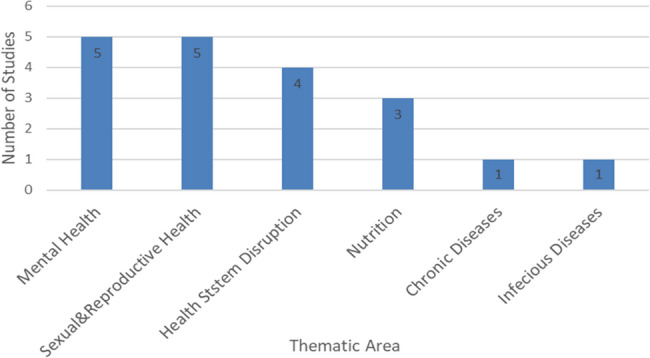
Distribution of reviewed studies by thematic area: maternal and reproductive health (n = 5), mental health (n = 5), health system interruption (n = 4), nutrition (n = 4), chronic disease (n = 2), and malaria (n = 1)
The methodology used in the studies varied, and most studies (n = 14) used quantitative methodology, four (n = 4) studies used qualitative method, and one (n = 1) study used mixed method (Table 3). Regarding to study location/region, nine (n = 9) studies were conducted in Amhara Region, five (n = 5) studies were conducted in Tigray Region, three (n = 3) studies were conducted in Somali Region, and two (n = 2) studies were conducted in Oromia Region (Fig. 3). The results show that highest number of studies were conducted in Amhara Region followed by Tigray Region. The cumulative result indicated that the highest number of studies was conducted in Amhara Region and Tigray Region indicating that the health consequences of armed conflict are mostly documented in northern Ethiopia.
Fig. 3.

Distribution of reviewed studies by geographic region: Amhara Region (n = 9), Tigray Region (n = 5), Somali (n = 3), and Oromia (n = 2)
Health system disruptions
One of the themes discussed in this review is the impact of armed conflict on the health system and delivery of health care. Four studies investigated the impact of armed conflict on the public health system and services in this review. A study conducted in armed conflict-affected zones of the Amhara Region revealed that more than half (51%) of health facilities and their infrastructure have been destroyed due to the northern Ethiopian armed conflict that began in November 2020 in the Tigray Region and expanded into Amhara and Afar regions in 2021 [16]. The study revealed that all groups of population in the region were severely affected by the armed conflict. A significant number of (10,333) patients with chronic disease follow-up were interrupted, nearly 30 thousands civilians death occurred, more than 70 thousands pregnant and lactating mothers had interrupted their follow up-care, 1035 unwanted pregnancies occurred during the conflict period., and 934 cases of sexual and gender-based violence (SGBV) were reported [16]. The study revealed that chronic disease patients, women and girls including pregnant women and lactating mothers were disproportionately affected by the health system disruptions. A qualitative study in the same region found that conflict-related deaths, famine, supply chain disruptions, displacement, health system collapse, and lack of transportation and medications severely hampered access to and delivery of health care services [23]. The study also reported the long-term impact of the armed conflict, including destruction of health facilities, disrupted immunization services, post-traumatic stress disorders, lifelong disabilities, and significant economic loss. The armed conflict in the Amhara Region resulted in a loss of US$27,015,585.98 to the health care system, creating nearly the same amount of money for its recovery and rehabilitation [16]. Another study in the Tigray Region revealed that health care systems were destroyed and services were disrupted due to the armed conflict [15]. At six months of the armed conflict, nearly three-fourth of hospitals, four-fifth of health centers, and 89% of ambulances were non-functional. Moreover, all health posts (712) in the region were not functional. The study reported that prior to conflict, antenatal care, skilled birth attendance, postnatal care, and child vaccination coverage were very high, 94%, 73%, 63% and 73%, respectively. However, delivery of these services was halted in the first 90 days of the armed conflict. Widespread destruction of livelihoods occurred along with physical damage to health facilities and functional breakdown of the health care system, including disrupted services, workforce shortages, and limited access to essential supplies. The health system was severely collapsed during the armed conflict period [15]. The findings showed that women and children are disproportionately affected due to breakdown of health care system. Similarly, a study conducted in the Oromia region found that health care facilities and vehicles, including ambulances, were damaged during the armed conflict. As a result, essential services such as inpatient and outpatient were severely disrupted [23]. The study reported that 1,072 public health facilities were destroyed or looted during the armed conflict. Moreover, 159 vehicles, including ambulances, were damaged [26]. The overall results from reviewed articles revealed that women, children and other affected populations are severely affected due to the collapse of the health care system because of armed- conflict in Ethiopia.
Maternal and reproductive health
Maternal and reproductive health emerged as one of the key themes in this review, with five studies examining the issues in the context of armed conflict in Ethiopia. A study assessing institutional delivery service utilization in the context of armed conflict in Amhara Region reported that only 48.1% of mothers gave birth at health facilities, and displacement was negatively associated with institutional delivery use [24]. Another study conducted in Tigray Region revealed that nearly 40% of women experienced at least one type of gender-based violence (GBV). Sexual, physical, and psychological violence, including rape, was reported among women of reproductive age. Trauma, sexually transmitted infections including Human Immuno-Deficiency Virus (HIV), and unwanted pregnancy were the most common reported poor SRH outcomes [3]. Another study conducted in the Somali region among IDPs showed that nearly 90% of respondents reported ever hearing about SRH and nearly 70% reported receiving family planning information [34]. Among participants, 64% did not know where SRH services were available, and nearly 60% approved the use of family planning [34]. A qualitative study among IDPs in the same region revealed that GBV was a common SRH problem, and misconceptions, stigma and discrimination, the need for spousal permission, religious beliefs, and fear of side effects were some of the persistent barriers to using SRH services [28]. The study uncovered that knowledge on GBV among the communities surveyed was limited, and several types of GBV, including early and forced child marriage, domestic violence, and female genital mutilation and cutting, were common cultural practices. The study also indicated that many GBV cases were unreported due to fear of stigma and bad consequences, lack of trust in the justice system, and the preference for family and community-level arbitration [28]. Another similar study conducted among IDPs also revealed that knowledge of sexual and gender-based violence (SGBV) was limited among the surveyed communities [32]. Like that of the above study [28] SGBVs, are common cultural practices among the surveyed communities [32]. In this study, it was reported that socioeconomic inequalities, discriminatory cultural and religious beliefs, harmful traditional practices, and conflict and displacement were risk factors for SGBV and the patriarchal norm also perpetuates certain forms of violence against women, including socializing domestic, economic, and emotional violence as acceptable, while limiting the opportunities of women for self-empowerment and collective action [32]. Abebaw N et al. in their descriptive study added that 1035 and 934 women and girls experienced unwanted pregnancies and SGBVs respectively as a result of the armed conflict in Amhara region [16]. The cumulative findings indicated that women and girls are disproportionately affected by maternal and reproductive health problems that are linked with armed conflict and internal displacement.
Mental health
The included studies revealed that mental health problems are a major health challenge among conflict-affected populations. Prior researches report high levels of post-traumatic stress disorder (PTSD) among conflict affected populations [36]. In this review, we identified five studies addressing mental health problems among conflict affected populations in Ethiopia. A study conducted among conflict-affected children and adolescents in Amhara Region revealed that nearly 70% of children had experienced trauma and over one-third developed PTSD [18]. Another study in the same region also publicized that 45% of participants reported various mental health problems such as PTSD, major depressive disorder (MDD), adjustment disorder, protracted bereavement disorder, and insomnia. PTSD was the most common reported diagnosis (38 cases), followed by MDD (4 cases), prolonged grief (3 cases), and neurological disorder (2 cases). Females were more vulnerable to PTSD compared to males [2]. Moreover, a study conducted among war survivors in the region showed that nearly 40% of participants developed PTSD, 66.5% experienced depressive symptoms, and 63.1% had experienced anxiety symptoms. Witnessing the death or serious injury of close family members, high perceived stress, symptoms of depression and anxiety, chronic illness, physical assault, exposure to combatant situations, and being female were risk factors associated with PTSD [33]. Furthermore, a qualitative study exploring the lived experience of IDP children highlighted the psychological consequences of insecurity and lack of protection in IDP camps. The study found that children faced numerous challenges related to poor socio-economic conditions, which contributed to physical and emotional distress and increased vulnerability to mental health problems. Socio-economic and contextual factors were found to interact and influence the overall well-being of children in IDP settings [29]. Lastly, a study conducted among IDPs in Debre Berhan reported that two-thirds of the conflict-affected participants screened positive for PTSD. Witnessing property destruction, experiencing trauma, repeated displacement, psychological distress, and unemployment were contributing factors [30]. The overall findings under this thematic area revealed that war survivors and children living in the IDPs camps are disproportionately affected by mental health problems that are related to armed conflict and displacement.
Nutrition
Nutrition is one of the key thematic areas explored in this review. Four studies examined the impact of armed conflict on nutritional outcomes in Ethiopia. A study conducted in Sekota IDP camps, located in Wagehmra Zone of Amhara Region, among lactating mothers found that 54.8% of IDP mothers were undernourished [31]. Having a large family size, short birth interval, low maternal daily meal frequency, and low dietary diversity score were more contributing factors for undernutrition [31]. Similarly, another study assessing the broader health impact of armed conflict revealed that around 17,764 pregnant or lactating women had been screened for malnutrition in a conflict-affected setting [16]. Moreover, a study conducted among internally displaced children in Tigray Region demonstrated that the prevalence of severe, moderate, and global acute malnutrition was very high (5.1%,21.8%, and 26.9%, respectively) [25]. Child age, child sex, vitamin-A supplementation, and history of diarrhea were found to be individual-level predictors of malnutrition, while poor drinking water source, poor toilet facility, and severe food insecurity were predictors of malnutrition at the community level [25]. Besides, a study done to assess the status of household food insecurity in the conflict-affected population [35] highlighted that 75% of households experienced food insecurity. The findings under this thematic area indicated that children, pregnant women, and lactating mothers are disproportionately affected by malnutrition. The results suggested that food insecurity and undernutrition are highly prevalent among the armed conflict-affected population in Ethiopia.
Chronic diseases
Chronic disease is another key thematic area explored in this review. Two studies examined the impact of armed conflict on chronic disease management in Ethiopia. A study conducted in Tigray Region reported that among 4645 patients who were receiving treatment before the conflict, only 21% continued their care during the conflict period [19]. The highest rate of treatment interruption was observed among type 1 diabetes, with 80% discontinuing their treatment and care [19]. Another study in Amara Region also indicated that more than 10,000 patients with chronic disease have interrupted their treatment and follow-up [16]. Cumulatively, the evidence suggests a substantial disruption in chronic disease management among conflict-affected populations in Ethiopia. It also underscored that the severe breakdown in the continuity of care for chronic diseases during armed conflict putts affected individuals at heightened risk of complications and mortality.
Malaria
The least discussed theme in this review in the context of conflict is malaria. Surprisingly, only one study investigated malaria outbreaks in the context of armed-conflict. The findings demonstrated that a total of 13,136 confirmed cases of malaria were detected with an overall attack rate of 26.5 per 1000, and slide positivity rate was 43.0% [27]. This study also revealed that under-five children were severely affected by the malaria outbreak, and the presence of mosquito breeding sites, staying outside overnight, and lack of awareness on malaria transmission and prevention were the main contributors to the malaria outbreak in the study area.
Discussion
This scoping review explored a wide range of impacts of armed conflict on health in Ethiopia. It has synthesized the findings across six thematic areas: health care system disruption, maternal and reproductive health, mental health, nutrition, chronic diseases, and malaria. The results show that the effects of armed conflict are multifaceted and interlinked on vulnerable population, women, children, and the internally displaced population, bearing the greatest burden. Across all thematic areas, women and girls in general, pregnant women, lactating mothers, children, and IDPs are found disproportionately affected by health challenges caused by armed conflict.
Health system disruption: a foundational challenge
The reviewed evidence highlights the devastating effect of armed conflict on Ethiopia’s health care system. Over half of health facilities were reported to be destroyed, result in an estimated economic loss of $27 million and widespread service interruptions, including for chronic diseases and maternal health care [16]. The findings also highlighted that war-related fatalities, famine, disruptions of supply chains, and forced displacement, violence and rape, health workers displacement, and dearth of medication, together with insecurity and lack of transportation occurred, and significantly affected the provision and utilization of health services were common problems occurred as a consequences of armed conflict [16, 23]. Furthermore, findings under this theme demonstrated that previously well-functioning health care delivery systems in were partially or completely damaged, and health service delivery was negatively impacted [15, 26]. Previous evidence from other similar settings reinforced the findings [37]. The evidence from the World Health Organization report on social determinants of health in conflict-affected countries revealed that health systems in conflict situations are usually immediately disrupted at the start of the conflict [37]. Another evidence from Sudan revealed that the country’s health system collapsed immediately after the occurrence of the armed conflict. Attacks on the health care system and health care workers, closure of hospitals, and occupation of health facilities by armed groups have suspended critical services such as immunization, nutrition, and emergency care [38, 39]. It compromises maternal and reproductive health services, limits access to mental health support, exacerbates malnutrition and food insecurity, and interrupts chronic disease management and malaria control, thereby having a cascading effect that severely undermines overall population health. For example perinatal stress during periods of war/armed conflict has a short and long-lasting negative effect on maternal and fetal outcomes such as miscarriage, low birth weight, impinged length, prematurity, altered neurodevelopment, mental disorders, and pathophysiological diseases [40].
The findings of included studies demonstrated that the health impacts of armed conflict in Ethiopia are not isolated but deeply interconnected. The collapse of the health system underpins disruptions across all health domains, causing widespread interruptions of essential health services [15, 16, 23, 26]. The disruptions lead to the collapse of all essential health services, including maternal and reproductive health, mental health, chronic disease care follow up, nutritional interventions programs, infectious disease surveillance including malaria.
Maternal and reproductive health: disproportionate impact
The findings in this review indicated that maternal and reproductive health services have been significantly compromised due to armed conflict. Disrupted maternal and reproductive health care increases risks during pregnancy and childbirth and limits access to family planning and safe delivery [41]. Evidence in the reviewed articles revealed that less than half of mothers delivered in a health facility, and displacement was negatively associated with the use of institutional delivery services [24]. The evidence supported by studies from other similar settings, which revealed maternal and child health services are negatively affected during armed conflict [42, 43]. For example, a review study done on internally displaced women in Africa revealed that internally displaced women faced a multitude of maternal and reproductive health problems [13]. Also, a study in northeastern Nigeria revealed that lower reproductive, maternal, neonatal, and child health (RMNCH) status [44]. A recent Lancet series on the health of women and children in the context of conflict added that women and children shoulder a significant burden of morbidity and mortality during armed conflicts [42]. Reproductive-age women living close to high-intensity conflicts are three times more likely to die than their counterparts [42]. The ongoing conflicts in different parts of the word have severely weakened the healthcare system, limiting access to maternal and reproductive health services and leading to poor maternal and fetal health outcomes [40, 45].
Maternal and reproductive health outcomes are closely connected to a broader health system disruptions, mental health, and nutritional status. Conflict-related service disruptions and displacement increase women’s vulnerability to poor maternal outcomes such as stillbirths, preterm births, and neonatal deaths, maternal complications [3, 16], maternal malnutrition [46], and the lack of adequate psychological support which perpetuates poor maternal and child health outcomes. Particularly, the disruptions of health system has a detrimental and cascading effect on the mothers, infants, children, families and the entire community. It led to lack of antenatal care follow up, perinatal care utilization, postnatal care follow up, family planning services and safe abortion care which in turn leads to maternal mortality, child mortality, and unintended pregnancy [16, 41]. A recent study from Gaza Strip publicized that the war related instability in Gaza had exposed pregnant women and their children to a catastrophic condition. The study revealed that the war affected pregnant women experienced low ANC attendance, lack of sufficient quality of food, moderate to high level stress, and high level of low birth weight [46]. This shows that armed conflict/war has a cascading effects on the health of pregnant women, including maternal health, nutritional status, and mental health. The compromised health of pregnant women in turn leads to unfavorable birth outcomes [41].
Sexual and gender-based violence is one of the problem discussed in this review. Evidence from conflicted affected regions of Ethiopia shows a widespread use of sexual violence as a weapon of war [3, 16]. The findings are supported by a review article on ‘reproductive health in conflict’ which revealed that SGBV was a common sexual and reproductive problem faced by the women and girls in conflict situations [47–49] in Ethiopia, Bangladesh, Lebanon, Jordan, Rwanda, the Gaza Strip, and other conflict affected countries [50]. Survivors of SGBV lack vital medical, psychological, and legal support, worsening their trauma. Sigma and fear surrounding SGBV can lead to reduced antenatal care follow up, less skilled birth attendance and post-natal care follow up, low family planning uptake, unsafe abortion, which worsen poor pregnancy outcomes such as maternal complications, adverse birth outcomes (stillbirth, preterm birth, newborn death), maternal and child mortality [51]. Unsupported and untreated SGBV leads to mental and physical health problems like depression, PTSD, anxiety, and infections such as HIV and other STIs, which leads to poor maternal health outcomes [49]. Women and girls experience brutal SGBV in different armed conflict-affected countries including Ethiopia [3, 52].
Conflict -related displacement and food insecurity severely compromise maternal nutrition, which has a negative consequence on maternal and child health outcomes [25, 31]. Evidence showed that impaired maternal nutrition due to armed conflict is highly related to poor birth outcomes such as low birthweight and prematurity [1]. Maternal nutritional deficiency has an intergenerational impact, as newborns born from malnourished mothers are more likely to suffer neonatal morbidity (low birth weight and prematurity) and mortality (stillbirth and perinatal death). Maternal undernutrition weakens immunity and exposed mothers and their offspring to infectious disease [1, 46].
The evidence in this review shows that maternal health care disruption is not occurred in isolation rather it as part of a cascading chain. Health system disruption leads to loss of antenatal care, skilled birth attendance and postnatal care, which results in maternal and neonatal mortality and morbidity [16, 42]. Conflict related displacement leads to food insecurity and maternal malnutrition which further exacerbate maternal and neonatal morbidity and mortality [16, 25, 31, 35]. Inaccessibility of family planning combined with SGBV leads to unwanted/unintended pregnancies and unsafe delivery which exacerbates maternal and neonatal mortality and birth complications [15, 16]. Moreover, psychological trauma from SGBV leads to poor health seeking behaviors and underutilization of maternal health services which ultimately affects the maternal and child health outcomes [49]. This interrelationship highlights how conflicts intensifies the vulnerabilities across the continuum of maternal health care. The findings suggest that the urgent need for conflict-sensitive reproductive health interventions that encompasses emergency maternal services, comprehensive SGBV responses, access to family planning and nutritional intervention programs.
Mental health. An overlooked emergency
The evidence the reviewed articles shows a significant raise of psychological distress in conflict affected regions of Ethiopia, particularly depression, anxiety, and PTSD [2, 18, 30, 33]. Kemei et al. documented that IDP children experienced mental health problems due to a lack of protection in IDP camps, implying that children are vulnerable to physical and emotional health problems, which provoke mental health disorders [29]. This implies that children are among the vulnerable groups of the population during armed conflicts. A study conducted among camped IDPs revealed that more than two-thirds of the affected population had developed PTSD [30]. Moreover, a study included in this review showed that nearly 40% of participants experienced PTSD [33]. The findings are supported by evidence from similar settings [53]. A review study has documented that the prevalence of mental disorder symptoms has ranged from 32% to 52% [54]. Another review study indicated that war-affected populations, including IDPs, are prone to various mental health problems, including PTSD [36]. Additional studies revealed that displaced women were vulnerable to an array of mental health disorders [13, 55].
Mental health problems are not standalone problems. They are interrelated with other health problems in the context of armed conflict. They are amplified by trauma from SGBV, displacement, food insecurity, and the burden of chronic diseases [3, 35]. The inadequate health infrastructure further limits access to care, creating a complex web of interrelated vulnerabilities affecting recovery and resilience. The disruption of health system and displacement of health care workers make mental health care inaccessible exacerbation the mental health problems. Unlike physical health problems, mental health problems are often invisible and under reported, usually neglected in humanitarian response planning [49]. Addressing this impacts needs integrated, conflict sensitive interventions, including psychological support, survivor-centered SGBV support, and integrating mental health care into primary health care settings. Future researchers should explore the intergenerational effects of trauma and develop context-appropriate models of care for conflict-affected communities in conflict settings.
Nutrition: conflict-driven malnutrition and hunger
Armed conflict in Ethiopia disrupts food production; increases food insecurity, leading to malnutrition and famine [56]. It has been the main driver of food insecurity, hunger, and malnutrition in the conflict-affected areas of the country [42]. The situation is exacerbated by high inflation of food prices. As of October 2021, the inflation has reached 34.2% [56]. Studies included in this review indicated that conflict-affected population are severely affected by malnutrition and food insecurity [16, 25, 31, 35]. Displaced lactating mothers and children are particularly vulnerable as insufficient food intake leads to maternal malnutrition, anemia, low body mass index and micronutrient deficiency [31]. Evidence in this review shows that a high prevalence of malnutrition with severe, moderate, and global acute malnutrition all reported at concerning levels [25]. The findings are supported by the evidence from previous studies [57, 58]. Evidence from previous studies showed that neonatal morbidity and mortality are higher in war conflict-affected regions due to in part to maternal malnutrition, which is caused by armed-conflict nutritional status is not compromised by food shortages only. Other factors such as food production disruption, uprooting of the population due to conflict, destruction of livelihood, and other factors fueled food insecurity, reduced food intake and diversity, which primarily leads to maternal malnutrition [11, 59]. Unless appropriate interventions are taken, maternal malnutrition leads to adverse birth outcomes such as low birth weight, stillbirth, neonatal deaths, and maternal complications [46, 60]. Malnutrition exacerbates susceptibility to infections such as malaria and worsens maternal and child health outcomes [61, 62]. It also interacts bidirectionally with mental health and chronic diseases, highlighting a critical need for coordinated nutrition and health interventions in conflict-affected settings.
Chronic disease: a hidden crisis
Despite being less studied, the included studies demonstrated that armed conflict profoundly affected the chronic diseases follow up care in conflict affected regions. Studies investigated the issue of chronic diseases in the context of armed conflict and revealed significant number of patients with chronic diseases interrupted the follow-up care during the armed conflict. In one study, only one-fifth of patients continued their treatment during the armed conflict period. The study revealed that most dramatic interruption was reported among type 1 diabetic patients [19]. Evidence from other conflict-affected settings showed similar findings. For example, a study from Syria revealed that access to and utilization of health care services, including outpatient consultation, were limited in conflict-affected areas of the country [43]. Another study included in this review also revealed that more than two-thirds of patients faced treatment interruption [63]. Chronic disease treatment interruption is not a standalone problem. It is linked to poor health service availability and the perceived stress of the affected population [16]. It also increases the risk of complications that are worsened by coexisting malnutrition [64], psychological stress, and reduced access to comprehensive health services [43], illustrating the compounded health challenges faced by conflict-affected populations.
Malaria: underreported yet ongoing threat
Malaria is one of the themes discussed in this review. Notably, only one study investigated the malaria outbreak. The study indicated a higher number of confirmed cases with an overall attack rate of 26.5 per 1000, and a 43.0% slide positivity rate [27]. It also disclosed that under five children were severely attacked, and the presence of mosquito breeding sites, staying outdoors overnight, and lack of awareness on malaria transmission and prevention were the main contributors of the malaria outbreak [27]. Ethiopia is one of 41 countries experiencing rising malaria rates exacerbated by armed conflict and humanitarian crises [65]. Evidence indicated that armed conflict disrupts health care services, hampering surveillance and control of vector-born disease including, malaria [66]. In contrast to our finding, evidence from the conflict-affected settings showed an inverse relationship between the frequency of malaria cases and armed conflict [66, 67]. For instance, a study from Sri Lanka revealed that the country has eliminated malaria despite being affected by a protracted armed conflict [68]. Malaria outbreak during armed conflict is related to other problems. It is influenced by disrupted health services, population displacement, and malnutrition, which together heighten vulnerability to infection and complicate disease surveillance and control efforts.
Integrated thematic insights
Our findings demonstrated that the health impacts of armed conflict in Ethiopia are not isolated but deeply interconnected. The collapse of the health system is a primary disruptor, causing widespread interruptions of essential health services [15, 16, 23, 26]. All thematic areas included in this review are affected by the disruption of health care system. The disruption of health care system leads to the collapse of all essential health services, including maternal and reproductive health, mental health, chronic disease care follow up, nutritional interventions, infectious disease surveillance including malaria.
Disrupted maternal and reproductive health care increases risks during pregnancy and childbirth and limits access to family planning and safe delivery [3, 16, 27, 34]. Survivors of SGBV lack vital medical, psychological, and legal support, worsening their trauma [3, 28, 32]. Disrupted maternal and reproductive health services can lead to reduced antenatal care follow up, skilled birth attendance, and post-natal care follow up, family planning, safe abortion care, which in turn leads to poor pregnancy outcomes such as maternal complications, adverse birth outcomes (such as stillbirth, preterm birth, newborn death), maternal and child mortality. Unsupported and untreated SGBV leads to mental and physical health problems like depression, PTSD, and infections such as HIV and other STIs [40, 60].
Mental health problems worsen due to direct conflict exposure and indirect effects like displacement and loss of care [2, 18, 29, 30, 33]. Disrupted nutrition programs increase undernutrition, especially among children and lactating mothers, which further harms mental and physical health [25, 31, 35]. Malnutrition weakens immunity, increasing vulnerability to infections like malaria [27], while disease surveillance breakdowns hinder timely response [27, 66].
Chronic diseases, requiring consistent care, are neglected during conflict, leading to treatment gaps and complications [16, 19, 63]. These chronic conditions interact with malnutrition and stress, creating a vicious cycle [19, 25, 31]. SGBV, mental illness, malnutrition, and chronic diseases worsen without functional health systems and are intensified by conflicts and socioeconomic impacts [3, 16, 28, 32, 35].
These findings show that the conflict-related health effects in Ethiopia are interlinked and reinforcing. Addressing them separately limits effectiveness [13, 42, 45]. A coordinated, integrated multi-sectoral approach is essential to mitigate these complex health challenges in armed conflict settings.
Conclusion
This scoping review revealed that armed conflict imposed widespread and interconnected challenges in Ethiopia. Health system disruption was the most documented theme, showing many facilities damaged, services interrupted, and health care workers displaced. Maternal and reproductive health services were more significantly affected, showing reduced institutional deliveries and a high rate of SGBV. Mental health issues like PTSD, depression, and anxiety were common among the conflict-affected populations, especially women and children. Although less frequently studied, nutritional problems such as undernutrition and food insecurity were prevalent, especially among displaced mothers and children. Chronic disease management was also severely impacted, with treatment interruption increasing the risk of complications. Malaria outbreaks were reported in conflict-affected areas, exacerbated by poor living conditions and reduced access to preventive services.
To address these challenges, a coordinated and multi-sectoral response is essential. Policymakers should prioritize restoring health infrastructures, integrating mental health into the primary health care, and implementing service-oriented SGBV interventions. Humanitarian organizations must deploy mobile health units, support community-based psychosocial services, and ensure continuity of care for chronic disease. Local authorities should facilitate access to essential SRH services, strengthen community-led SGBV response systems, and scale up targeted nutrition programs for high-risk populations. Future researchers should focus on underexplored areas such as nutrition, chronic disease, and malaria within conflict settings, using diverse study designs including longitudinal and mixed-method approaches to generate actionable evidence that can guide effective policy and humanitarian response.
Limitation
This paper has some limitations. The exclusion of articles with languages other than English leads to language bias. Many of included studies used cross-sectional designs, limiting causal inference. Several studies relied on self-reported data, which may lead to recall and reporting biases, especially in sensitive areas such as SGBV and mental health. Despite a comprehensive search strategy based on predefined inclusion and exclusion criteria, there remains the possibility that some relevant studies were inadvertently missed. This is an inherent limitation in scoping reviews, particularly in conflict settings where research may be unpublished, inaccessible, or inconsistently indexed in major databases. Another limitation of this review is lack of grey literature in the included studies. Despite we searched organizational and humanitarian databases, we could not find relevant documents based on our predefined criteria. This may lead to missing important documents from government reports, NGOs, and humanitarian organizations working in Ethiopia during conflict. Exclusion of studies refugees who migrated outside Ethiopia could impose another limitation in this review. Future researchers could employ a better search strategy to retrieve grey literatures, such as a systematic searching of organizational repositories, humanitarian platforms such as Relief-Web and consulting directly with agencies in conflict-affected regions and include studies on refuges outside Ethiopia. These limitations should be considered when interpreting the findings.
Supplementary Information
Acknowledgements
We would like to acknowledge the Bahir Dar University College of Medicine and Health Sciences researchers for their invaluable expert evaluation of this work.
Abbreviations
- IDPs
Internally Displaced Persons
- AU
African Union
- TPLF
Tigray People Liberation Front
- ENDF
Ethiopian National Defense Force
- OCHA
United Nations Office for the Coordination of Humanitarian Affairs
- WASH
Water, Sanitation and Hygiene
- SRH
Sexual and Reproductive Health
- WHO
World Health Organization
- GDP
Gross Domestic Product
- IOM
International Organization for Migration
- IDMC
Internal Displacement Monitoring Center
- UNHCR
United Nations Higher Commissioner for Refugees
- PRISMA
Preferred Reporting Items for Systematic Review And Meta-Analysis
- SGBV
Sexual Gender-Based Violence
- GBV
Gender Based Violence
- HRP
Humanitarian Response Plan
- HIV
Human Immune Deficiency Virus
- SGBV
Sexual and Gender Based Violence
- IAWG
Inter Agency Working Group
- SRHR
Sexual and Reproductive Rights
- MISP
Minimum Initial Services Package
- PTSD
Post-traumatic stress disorder
- MDD
Major Depressive Disorder
- AIDS
Acquired Immune Deficiency Syndrome
Authors’ contributions
TA conceived the study and the design. TA and SA undertook the review to gather the included studies. TA wrote the first draft. All authors revised the second draft. All authors contributed to the final manuscript. All authors approved the final manuscript.
Funding
We did not receive any funding for this review paper.
Data availability
All data generated and analyzed during this study are included in this article.
Declarations
Ethical approval and consent to participate
Not applicable.
Consent for publication
Not applicable.
Competing interests
The authors declare no competing interests.
Footnotes
Publisher’s Note
Springer Nature remains neutral with regard to jurisdictional claims in published maps and institutional affiliations.
References
- 1.Garry S, Checchi F. Armed conflict and public health: into the 21st century. J Public Health. 2020;42(3):e287–98. [DOI] [PubMed] [Google Scholar]
- 2.Yigzaw N, et al. Comprehensive mental health and psychosocial support for war survivors at Chenna Kebele, Dabat woreda, North Gondar, Ethiopia. BMC Psychiatry. 2023;23(1):172. [DOI] [PMC free article] [PubMed] [Google Scholar]
- 3.Fisseha G, et al. War-related sexual and gender-based violence in Tigray, Northern Ethiopia: a community-based study. BMJ Glob Health. 2023;8(7):e010270. 10.1136/bmjgh-2022-010270. [DOI] [PMC free article] [PubMed] [Google Scholar]
- 4.Shomuyiwa DO. Top 10 public health challenges to track in 2023: shifting focus beyond a global pandemic. Public Health Challenges. 2023;2:e86. [DOI] [PMC free article] [PubMed] [Google Scholar]
- 5.Tian N, et al. Trends in world military expenditure, 2023. Stockholm; 2024.
- 6.Limaj E, et al. The trauma of war: implications for future generations in Ukraine (comparison with the Eastern European countries that were at war at the end of the 20th century). Int J Environ Stud. 2023;81(1):111–24. [Google Scholar]
- 7.Ethiopia U. UNHCR Ethiopia factsheet for response to internal displacement in Ethiopia. UNHCR Ethiopia: Addis Ababa; 2022. [Google Scholar]
- 8.DTM (Displacement Tracking Matrix), Ethiopia national displacement report 14: Site Assessment Round 31 & Village Assessment Survey Round 14: August — September 2022. IOM (International Organization for Migration). 2022.
- 9.United Nations Office for the Coordination of Humanitarian Affairs (OCHA). Response to internal displacement in ethiopia: fact sheet (January–March 2022). New York; 2022.
- 10.United Nations Office for the Coordination of Humanitarian Affairs (OCHA), Ethiopia Humanitarian Response Plan Summary 2023. New York: 2023.
- 11.Tesfaw TA. Internal displacement in ethiopia: A scoping review of its Causes, trends and consequences. J Intern Displace. 2022;12(1):2–31. [Google Scholar]
- 12.Heudtlass P, Speybroeck N, Guha-Sapir D. Excess mortality in refugees, internally displaced persons and resident populations in complex humanitarian emergencies (1998–2012) - insights from operational data. Confl Health. 2016;10:15. [DOI] [PMC free article] [PubMed] [Google Scholar]
- 13.Amodu O, Richter M, Salami B. A scoping review of the health of Conflict-Induced internally displaced women in Africa. Int J Environ Res Public Health. 2020;17(4). 10.3390/ijerph17041280. [DOI] [PMC free article] [PubMed]
- 14.Arbouw MA. The Role of the African Union in Addressing the Lack of Legal Protection Afforded to Internally Displaced Persons in Ethiopia. Unpublished thesis. 2018.
- 15.Gesesew HA, et al. The impact of war on the health system of the Tigray region in Ethiopia: an assessment. BMJ Glob Health. 2021;6(11):e007328. [DOI] [PMC free article] [PubMed] [Google Scholar]
- 16.Abebaw N, et al. Narrative descriptive reports on public health impact of conflict among War-Affected zones at Amhara Region, 2022. Open Access J Gynecol. 2022;7(2):1–7. [Google Scholar]
- 17.Eba Yaregal Fufa and Shifa Jemal Ebrahim. Psychiatric Morbidity among Internally Displaced People in Ethiopia. Unpublished preprint. 2020 10.21203/rs.3.rs-116775/v1. Posted Date: 11th Dec 2020.
- 18.Gebeyaw Biset. Post-traumatic stress disorders among children and adolescents in conflict-affected zones of Amhara region, February 2022. Front Psychol. 2023;13:1052975. [DOI] [PMC free article] [PubMed] [Google Scholar]
- 19.Gebrehiwet TG, et al. War and health care services utilization for chronic diseases in rural and semiurban areas of Tigray, Ethiopia. JAMA Netw Open. 2023;6(8):e2331745. [DOI] [PMC free article] [PubMed] [Google Scholar]
- 20.Arksey H, O’Malley L. Scoping studies: towards a methodological framework. Int J Soc Res Methodol. 2005;8(1):19–32. [Google Scholar]
- 21.Tricco A, et al. PRISMA extension for scoping reviews (PRISMA–ScR): checklist and explanation. Ann Intern Med. 2018;169(7):467–73. [DOI] [PubMed] [Google Scholar]
- 22.Hong QN, et al. The mixed methods appraisal tool (MMAT) version 2018 for information professionals and researchers. Educ Inf. 2018;34(4):285–91. [Google Scholar]
- 23.Arage MW et al. Exploring the health consequences of armed conflict: the perspective of Northeast Ethiopia, 2022: a qualitative study. BMC Public Health. 2023;23(2078). 10.1186/s12889-203-16983-z. [DOI] [PMC free article] [PubMed]
- 24.Gedef GM, et al. Institutional delivery service utilization and associated factors in fragile and conflict-affected situations in Sekota town, Northern Ethiopia, 2022: a community-based cross–sectional study. Heliyon. 2023;9(5):e16239. [DOI] [PMC free article] [PubMed] [Google Scholar]
- 25.Gebretsadik GG, et al. Prevalence and multi-level factors associated with acute malnutrition among children aged 6–59 months from war-affected communities of Tigray, Northern Ethiopia, 2021: a cross-sectional study. Confl Health. 2023;17:10. [DOI] [PMC free article] [PubMed] [Google Scholar]
- 26.Gutema G, et al. Impact of armed conflicts on public health infrastructure and services in Oromia, Ethiopia. Cureus. 2023;15(6):e40653. [DOI] [PMC free article] [PubMed] [Google Scholar]
- 27.Debash H, et al. Malaria surveillance, outbreak investigation, response and its determinant factors in Waghemra Zone, Northeast Ethiopia: unmatched case–control study. Sci Rep. 2023;13(1):9938. [DOI] [PMC free article] [PubMed] [Google Scholar]
- 28.O’Connell KA, et al. Meeting the sexual and reproductive health needs of internally displaced persons in Ethiopia’s Somali region: a qualitative process evaluation. Glob Health Sci Pract. 2022;10(5):e2100818. [DOI] [PMC free article] [PubMed] [Google Scholar]
- 29.Kemei J, et al. The forms and adverse effects of insecurities among internally displaced children in Ethiopia. BMC Public Health. 2023;23(1):200. [DOI] [PMC free article] [PubMed] [Google Scholar]
- 30.Makango B, et al. Prevalence and factors associated with post-traumatic stress disorder among internally displaced people in camps at Debre Berhan, Amhara Region, Ethiopia: a cross-sectional study. BMC Psychiatry. 2023;23(1):81. [DOI] [PMC free article] [PubMed] [Google Scholar]
- 31.Mengstie MA, et al. Undernutrition and associated factors among internally displaced lactating mothers in Sekota camps, Northern Ethiopia: a cross-sectional study. Front Nutr. 2023;10:1108233. [DOI] [PMC free article] [PubMed] [Google Scholar]
- 32.O’Connell KA et al. Factors Associated with Sexual and GenderBased Violence in the Somali Region of Ethiopia: Results from a Qualitative Assessment. Washington, DC and Addis Ababa: EngenderHealth; 2021.
- 33.Teshome AA, et al. Post-traumatic stress disorder and associated factors among adult war survivors in Northwest Ethiopia: community-based, cross-sectional study. Front Psychiatry. 2023;14:1083138. 10.3389/fpsyt.2023.1083138. [DOI] [PMC free article] [PubMed] [Google Scholar]
- 34.Titiyos A, et al. Sexual and reproductive health Knowledge, Attitudes, and practices among internally displaced persons in the Somalia region of ethiopia: baseline assessment. Washington, DC & Addis Ababa: EngenderHealth; 2020.
- 35.Weldegiargis A et al. Armed conflict and household food insecurity: evidence from war-torn Tigray, Ethiopia. Confl Health. 2023;17(22). 10.1186/s13013-02300520-1. [DOI] [PMC free article] [PubMed]
- 36.Cantor D, et al. Understanding the health needs of internally displaced persons: a scoping review. J Migr Health. 2021;4:100071. [DOI] [PMC free article] [PubMed] [Google Scholar]
- 37.Neilson M, Leatherman S, Syed SB. The quality–of–care agenda in fragile, conflict–affected and vulnerable settings. Bull World Health Organ. 2021;99(3):170-A170. [DOI] [PMC free article] [PubMed] [Google Scholar]
- 38.Alhadi Khogali, Homeida A. Impact of the 2023 armed conflict on Sudan’s healthcare system. Public Health Challenges published by John Wiley & Sons Ltd.; USA. 2023. [DOI] [PMC free article] [PubMed]
- 39.Elsharief RIM, Elhadi MEAY, Abd AERE. The effect of armed conflict on public health and strengthening of healthcare system during and post-armed conflict in Sudan. GSC Adv Res Reviews. 2023;17(01):122–6. [Google Scholar]
- 40.Riquelme-Gallego B, et al. Adverse fetal and neonatal impact of war conflicts during pregnancy: a systematic review. IUBMB Life. 2025;77(2):e70006. [DOI] [PubMed] [Google Scholar]
- 41.Kodo TK, et al. The impact of armed conflict on services and outcomes related to maternal and reproductive health in North Wollo, Amhara, ethiopia: A qualitative study. Int J Womens Health. 2024;16:1055–66. [DOI] [PMC free article] [PubMed] [Google Scholar]
- 42.Bendavid E, et al. The effects of armed conflict on the health of women and children. Lancet. 2021;397(10273):522–32. [DOI] [PMC free article] [PubMed] [Google Scholar]
- 43.Ekzayez A, et al. The impact of armed conflict on utilisation of health services in north-west Syria: an observational study. Confl Health. 2021;15:91. [DOI] [PMC free article] [PubMed] [Google Scholar]
- 44.Tyndall J, et al. The relationship between armed conflict and reproductive, maternal, newborn and child health and nutrition status and services in Northeastern Nigeria: a mixed–methods case study. Conflict Health. 2020;14(1):75. [DOI] [PMC free article] [PubMed] [Google Scholar]
- 45.UNFPA/ETH I OP I A, Human i tar i an response. P Lan 2021–2022., United nations populations fund, Editor. 2023: Addis Abeba. [Google Scholar]
- 46.Aldabbour B, et al. Exploring maternal and neonatal health in a conflict-affected setting: cross-sectional findings from Gaza. Confl Health. 2025;19(1):45. [DOI] [PMC free article] [PubMed] [Google Scholar]
- 47.Marlow HM, et al. The sexual and reproductive health context of an internally displaced persons’ camp in Northeastern nigeria: narratives of girls and young women. Front Reprod Health. 2021;3:779059. [DOI] [PMC free article] [PubMed] [Google Scholar]
- 48.Shahali S. The health effects of gender-based violence in conflict. J Social Behav Community Health. 2024;8(2):1344–6. [Google Scholar]
- 49.Kuupiel D, et al. Injuries and /or trauma due to sexual gender-based violence among survivors in sub-Saharan Africa: a systematic scoping review of research evidence. Arch Public Health. 2024;82(1):78. [DOI] [PMC free article] [PubMed] [Google Scholar]
- 50.Jones NA, Pincock K, Abu Hamad BA. Adolescents in humanitarian crisis: Displacement, gender and social inequalities. Abingdon, Oxon & New York, NY: Routledge, Taylor & Francis Group; 2021. [Google Scholar]
- 51.Okeke SR, et al. Collateral damage: the overlooked reproductive health crisis in conflict zones. Reprod Health. 2024;21(1):198. [DOI] [PMC free article] [PubMed] [Google Scholar]
- 52.Webster P, Neal K. War and public health. J Public Health. 2022;44(2):215–6. [DOI] [PMC free article] [PubMed] [Google Scholar]
- 53.Mootz JJ, et al. Armed conflict, intimate partner violence, and mental distress of women in Northeastern Uganda. Confl Health. 2022;16:58.36357892 [Google Scholar]
- 54.Moreno–Chaparro J, et al. Mental health consequences of armed conflicts in adults: an overview. Actas Esp Psiquiatr. 2022;50(2):68–91. [PMC free article] [PubMed] [Google Scholar]
- 55.Owoaje ET, et al. A review of the health problems of the internally displaced persons in Africa. Niger Postgrad Med J. 2016;23(4):161–71. [DOI] [PubMed] [Google Scholar]
- 56.ACAPS. Understanding humanitarian concerns across the country thematic report of ACAPS in Ethiopia. 2022.
- 57.Lokot M, et al. Health system governance in settings with conflict–affected populations: a systematic review. Health Policy Plann. 2022;37(5):655–74. [DOI] [PubMed] [Google Scholar]
- 58.Charlson F, et al. New WHO prevalence estimates of mental disorders in conflict settings: a systematic review and meta-analysis. Lancet. 2019;394(10194):240–8. [DOI] [PMC free article] [PubMed] [Google Scholar]
- 59.Lange IL, Amsalu R, Firoz T. Editorial: maternal health in conflict settings: II. Front Glob Womens Health. 2025;6:1647567. [DOI] [PMC free article] [PubMed] [Google Scholar]
- 60.Firi P, Ihunwo P. Stillbirths and Neonatal Deaths in Conflict Zones: A 10 Year Review of Health System Disruption and Collapse. Global Journals. 2025.
- 61.Abu-Saad K, Fraser D. Maternal nutrition and birth outcomes. Epidemiol Rev. 2010;32:5–25. [DOI] [PubMed] [Google Scholar]
- 62.Bauserman M, et al. An overview of malaria in pregnancy. Semin Perinatol. 2019;43(5):282–90. [DOI] [PMC free article] [PubMed] [Google Scholar]
- 63.Mesfin B, et al. The effect of armed conflict on treatment Interruption, its outcome and associated factors among chronic disease patients in North East, Amhara, Ethiopia. Patient Relat Outcome Measures (PROM). 2023;14:243–51. [DOI] [PMC free article] [PubMed] [Google Scholar]
- 64.Ayele K. Impacts of armed conflicts on healthcare and nutrition services in Ethiopia: a narrative review. Public Health Challenges. 2025;4(3):e70099. [DOI] [PMC free article] [PubMed] [Google Scholar]
- 65.Malaria B. World Malaria Report 2023: What You Need to Know. 2023.
- 66.Galindo-Buitrago JI, et al. Malaria and armed conflict: the situation in the rural areas of the Pacific Coast of Nariño, Colombia, 2003–2017. Salud UNINORTE. 2021;37(2):358–74. [Google Scholar]
- 67.Levy BS, Sidel VW. Documenting the effects of armed conflict on population health. Annu Rev Public Health. 2016;37:205–18. [DOI] [PubMed] [Google Scholar]
- 68.Ahmed A, et al. Eliminating malaria in conflict zones: public health strategies developed in the Sri Lanka civil war. BMJ Glob Health. 2021;6(12):e007453. [DOI] [PMC free article] [PubMed] [Google Scholar]
Associated Data
This section collects any data citations, data availability statements, or supplementary materials included in this article.
Supplementary Materials
Data Availability Statement
All data generated and analyzed during this study are included in this article.