



WITH the death of John Robert Stanley Fincham in February 2005, genetics lost one of its most thoughtful and talented practitioners. His many research contributions, together with his other writings, were a guiding framework for the field of fungal genetics and biology in the twentieth century.
John was born in 1926, attended Hertford Grammar School, and went on to Cambridge University where he graduated with a degree in botany in 1946. He stayed on to obtain his Ph.D. in 1950 for work on mutants of Neurospora crassa deficient in the assimilation of ammonium, working under David G. Catcheside. His last year of doctoral study was spent at the California Institute of Technology, where he met and married Ann Emerson, the daughter of pioneer fungal geneticist Sterling Emerson and the granddaughter of R. A. Emerson, one of the founders of maize genetics (Nelson 1993). The Finchams had one son and three daughters.
John was appointed first as lecturer in botany (1950–1954) and then as reader (1954–1960) at Leicester University. He moved on to become head of the genetics department of the John Innes Institute until 1966, taking leave during his first year to go to the Massachusetts Institute of Technology as visiting associate professor of genetics (Fincham 1988).
John was appointed as professor and head of the new department of genetics at Leeds University in 1966. After a decade at Leeds and a sabbatical year at Caltech, John moved to new pastures, first as Buchanan Professor of Genetics at the University of Edinburgh from 1976 to 1984 and then to Cambridge as Arthur Balfour Professor of Genetics from 1984 to 1991. He then “retired” and moved back to Edinburgh, but continued working actively and publishing until 2000. He was elected a fellow of the Royal Society in 1969 and was a member of its council from 1974 to 1976. In 1977, he received the Emil Christian Hansen medal (Copenhagen), and he was elected to the Royal Society of Edinburgh in 1978. John served as editor of Heredity from 1971 to 1978 and as president of The Genetical Society from 1978 to 1981.
THE RESEARCH
John's greatest contributions were to fungal genetics. His work on the biochemical and molecular genetics of Neurospora was early, varied, and profound. He started this work in the late 1940s, shortly after Beadle and Tatum had developed the one gene, one enzyme hypothesis and the technical groundwork for modern research on the organism (see Horowitz 1991 and Perkins 1992). John's thesis on amination-deficient mutants of Neurospora initiated a clear line of work that continued for the rest of his career.
His work on the am gene of Neurospora, which encodes the hexameric NADP-glutamate dehydrogenase, was fundamental to progress in several areas of biochemical genetics (see Davis 2000). The most important was the mechanism by which allelic mutations could complement one another. At the time, the debate over the nature of “pseudoalleles” (alleles that failed to complement, but nevertheless could recombine with one another) had been resolved by the powerful demonstrations of intragenic recombination in bacteriophage (Benzer 1955). However, the resulting new definition of the gene—a segment of DNA whose mutant forms could not complement one another—had become an article of faith. John's laboratory was among the first to demonstrate “intragenic complementation,” a phenomenon that created quite a stir in the late 1950s. His discovery came in a roundabout way, through finding “pseudowild” progeny from am1 × am2 crosses (Fincham and Pateman 1957). These progeny were complementing heterokaryons arising from disomic ascospores that in turn arose from meiotic nondisjunction of homologous chromosomes. John observed more directly that a number of allelic pairs of am mutants could complement one another in heterokaryons, despite the fact that only one gene and one enzyme were involved (Fincham 1959). His group probed more deeply into the phenomenon, showing that complementation could take place in vitro. They finally demonstrated the physical existence of hybrid oligomers constituted of differently mutated, mutually correcting polypeptides (Coddington and Fincham 1963). This, together with parallel studies in Norman Giles' laboratory (Woodward et al. 1958), laid the mystery of intragenic complementation largely to rest and turned geneticists' attention to the subtleties of protein-protein interactions. The spare, now classic treatise on all forms of complementation followed this work (Fincham 1966), endowing this area of study with order and clarity.
Because allelic complementation implied that precise physical interactions prevailed among the polypeptides of a (homo)multimeric protein, John and his collaborators wished to study the am gene product more directly. Their efforts began with the direct, complete amino acid sequencing of the wild-type gene product, 452 amino acids long—all before the days of gene isolation and sequencing (Wootton et al. 1974). Clever selection schemes were developed for direct isolation of many more am mutants (Kinsey et al. 1980). The work was informed by extensive genetic analysis of the am locus, which had previously yielded a map of mutational sites based on polarized gene conversion (Smyth 1973; Fincham and Baron 1977). Even at this stage, his group could show that excellent colinearity prevailed between the genetic map and the amino acid replacements in the protein, in both order and distance (summarized in Fincham et al. 1979, p. 325).
By that time, the need to isolate the am gene had become clear, and with characteristic deftness, John isolated a form of the polypeptide arising from a frameshift mutation and its closely linked, intragenic suppressor. The sequence of amino acids between the two points of mutation allowed him to infer unambiguously the sequence of the corresponding oligonucleotide (Siddig et al. 1980). With the latter as a probe, John's group managed to detect and to isolate the wild-type gene from a Neurospora gene library. This early cloning effort, followed by sequencing (Kinnaird and Fincham 1983), rendered the am gene prime material for fundamental advances in the techniques of cloning and the characterization of the complex transformation process in Neurospora (Fincham 1989). Even in retirement, he continued an avid effort to develop a three-dimensional structure for NADP glutamate dehydrogenase in the hope of visualizing the polypeptide interactions suggested by complementation studies.
When transformation and cloning began in Neurospora in 1979, a process called repeat-induced point mutation (RIP) came to light and was studied intensively by Eric Selker's laboratory (Selker 1990). The phenomenon arises when transformants carrying an ectopic copy of a gene (integrated at a nonhomologous site) in addition to the resident copy were used as parents in crosses. Among the progeny, a variable proportion suffer hypermutation (C-to-T transitions) of both copies of the gene. Selker showed that this process occurs in the last divisions of the haploid transformant nucleus prior to nuclear fusion in fertilized perithecia. The mechanism was wholly novel, and John became quite interested in it. With the am gene, his laboratory was able to show that pairing of the two copies was probably involved. John's laboratory did so by introducing two and three copies of the am gene and finding that RIP largely affected only two copies of the gene if three were present and that it was never confined to only one copy (Fincham et al. 1989). This study emphasizes John's awareness of novel developments and a passion for clever, genetic solutions to molecular problems. In the same year as the RIP study, he published a wide-ranging and influential review on transformation in fungi (Fincham 1989). It dealt with both the highly developed yeast studies and the far more confusing problems of cloning and transformation in the filamentous fungi, Neurospora and Aspergillus. In these fungi, no autonomous plasmids had been discovered; ectopic integration of DNA sequences was the norm, and sib-selection strategies were essential for cloning of genes. The review was on the desk of every worker in the field for some years thereafter.
John worked on several other aspects of Neurospora. One was the analysis of the glyoxylate shunt and its regulation, an area greatly extended by his students (Flavell and Fincham 1968a,b; Thomas et al. 1988). In the course of his early work on the am gene, he became familiar with gene conversion and theories of meiotic recombination. His interest in the developing picture of meiotic recombination was embodied in his own work and in an early article with Holliday on the effect of excision repair during meiosis (Fincham and Holliday 1970). John continued to review and to comment on recombination in later years.
While the center of gravity of Neurospora work lay in the United States, John's laboratory became an early center of European work on the organism. As John completed his graduate studies in the laboratory of David G. Catcheside, Guido Pontecorvo's development of Aspergillus as a genetic model was coming to maturity in Glasgow (Cohen 2000). Fungal genetics profited from the migration of John's student John Pateman into Aspergillus biochemical genetics. Pateman's associates and intellectual descendants added considerably to those of Pontecorvo. In this way, a fungal genetics community developed, with the Aspergillus-Neurospora groups in the United Kingdom becoming a counterpart to the Neurospora community in America. The close connections between the two fungal communities became even stronger over time until they merged in the Fungal Genetics Conferences in the mid-1980s. John was a vital transatlantic intermediary in the relations of the two groups.
Curiously, in the 1960s John took up a study of mutable anthocyanin pigment genes in the snapdragon, Antirrhinum majus (e.g., Harrison and Fincham 1968). This probably reflects his respect for and fascination with unsolved problems of the classical era of genetics. By showing that the mutability of several genes was influenced by temperature and genetic stabilizers, his laboratory and others suggested that controlling elements such as those described by Barbara McClintock in maize were involved (see Schwartz-Sommer et al. 2003). The work equipped John to explore deeply McClintock's older publications on maize. The most important product of this effort was a highly influential review (Fincham and Sastry 1974). The authors could by that time relate controlling elements to the transposons of prokaryotes and emphasize McClintock's leading role in the discovery of mobile genetic elements. McClintock regarded John as the person who made her own work accessible to others (G. R. K. Sastry, personal communication). As McClintock said in a letter to John, “your capacity to comprehend and to integrate is conspicuously demonstrated in your Antirrhinum studies. They are sharply focused, clearly executed, and they come right to the point—no fuzziness!” (McClintock to Fincham, letter of May 16, 1973). John did not publish on Antirrhinum thereafter, although he may have continued his studies as a sideline.
David Perkins reports a visit to Edinburgh in 1981, where John showed him a compost heap in his garden. “There,” John said, “are the results of my research.”
THE WRITINGS
Robin Holliday observes that writing was almost a form of relaxation to John. He would go home after a hard day at the laboratory and appear the next day with a handwritten draft of a section of one of his books done the previous evening. He had a clear grasp of many areas of science and a mastery of fluent prose. These talents flourished in books, articles, and commentaries.
John's treatise with Peter Day, Fungal Genetics (1963), began to define this area in its modern form. Until then, mycologists had explored life cycles, cytology, and the genetics of particular attributes of fungi, especially mating systems (Ainsworth 1976). The domestication of Neurospora, Aspergillus, and budding yeast in the early days of biochemical genetics had given major impetus to fungal genetics in general by 1960. The first edition of Fungal Genetics gathered existing knowledge of basic biology, recombination, tetrad analysis, mating systems, and extranuclear inheritance together with a single chapter on biochemical genetics. The book had 475 references from diverse sources and provided a common background to a growing community of scientists. The fourth edition, by Fincham et al. (1979), expanded its coverage to new areas, among others, development, mutagenesis, and gene action, including genetic approaches to macromolecular structure and regulation. This edition has 1640 references, indicating a continuing effort to remain up to date. The 1979 edition remains influential in bringing together many organisms, investigations, and strands of discovery, united since by the common discourse of molecular biology. In addition, the book preserves a record of more obscure information that may prove important as the molecular study of fungi moves into comparative biology.
John's textbook, Genetics (Fincham 1983), met with less success with the intended reader. One reviewer thought it rather too “meaty” for upper undergraduates. This is no surprise to those aware of John's encyclopedic knowledge of the field (and the wayward minds of undergraduates). He lamented modestly to one of us (R. H. Davis) about its low rate of adoption by American universities, but I often consult it for material not to be found in the slick products of the twenty-first century.
John, a man known more for privacy and modesty than for gregariousness, nevertheless had a very public voice. He was often asked by Nature to review books and to comment on current research. Moreover, he did not hesitate to inject himself into discussions of public affairs in doing so. His wide range of knowledge led him to offer commentary on subjects as diverse as the impact of biotechnology, genetically modified organisms, and the sad story of the Russian anti-Lysenkoist, Nicolai Vavilov (see Crow 1993). He could review with inside knowledge the several books that appeared in the 1990s on Barbara McClintock and her work, current advances in recombination theory, fungal transformation, mutational silencing, and self-incompatibility in plants. He took part in a little dust-up in BioEssays about the relevance of Karl Popper's philosophy to the biological sciences, initiated by Holliday in a disparaging letter (Fincham 1999; Holliday 1999). This inconsequential controversy offered eight biologists a welcome arena for agreeable or misguided or savage opinion. John's comment, characteristically, was balanced and gracious. Finally, he rebuked Nature for an editorial earlier the same year suggesting that scientific organizations without specific expertise in the area were deceitful in attempting to influence the direction of nuclear weapons research in the United Kingdom. In his response, he said, “Apparently it is all right for groups of bought scientists, operating mainly in secret, to promote the development of the instruments of mass murder, but somehow deceitful for groups of free scientists, meeting in public, to take the contrary stance” (Fincham 1982). This letter, also balanced in its way, betrays his left-liberal political sensibility that he solidified in his early Cambridge days and maintained throughout his life. In all his public comments, scientific or otherwise, he injected common sense into polarized arguments and did so with an authority based on solid information.
John's sense of the history of genetics in the United Kingdom since 1945 was embodied in an informative account of how it developed in various academic and agricultural institutions (Fincham 1993). His wish to preserve a thorough historical record emerged in two other valuable publications. One is an update of fungal genetic research (Fincham 1998) since the publication of the 1979 treatise. The other is a biographical account of his work on the am gene (Fincham 1988). Its value lies in John's wish to describe his and his associates' understanding of problems at critical points on the path of discovery. Here we see him in 1950 puzzling over whether the am gene controlled the physical properties of the enzyme (very few examples had yet been documented), over the discovery of intragenic complementation (see above), and, in 1964, over whether complementation maps were a legitimate guide to the tertiary structure of proteins.
THE MAN
John was informal and somewhat shy. He was much more comfortable in small meetings and the outdoors than in formal settings. At meetings, he dressed without pretension. His love of hiking led to a dislocated hip while climbing Ben Nevis in Scotland. This and later hip replacements left him with a pronounced limp thereafter. (He wore out the first new hip after four years by resuming mountaineering.) His love of sports dated from his youth and, after arriving at Leeds, he followed the rugby league team as a spectator. He even listed “watching rugby league,” a distinctly blue-collar pastime in northern England, among his hobbies in his entry in “Who's Who.” He was mechanically ingenious. Peter Day reports John fitting a washing machine with an autoclavable tank and impeller suitable for growing large quantities of Neurospora. He lived austerely and sought the least expensive accommodations and restaurants at meetings. One of us (R.H. Davis) visited and stayed with him and Ann briefly in Leeds in 1966, just after John had arrived there. Hardly moved in, he evinced not the slightest discomfort with rugless floors, shadeless bulbs, and an unseasonable chill. It led me to wonder whether these surroundings might, in his view, be preferable to anything more comfortable. Once settled, however, his house was a warm and informal environment, doubtless more through the efforts of his wife, Ann, than of John himself.
John's informality did not mask an energetic quest for substance and precision in thought and conversation. He said little that failed to improve on silence. He would listen carefully to what someone might say, and after an extended (often awkward) interval, answer with extraordinary insight. His advice gained considerable depth by his direct involvement in laboratory work. Jim Kinghorn reports a visit as a student to the cold room during the Christmas vacation, where he encountered John “huddled over a fraction collector, collecting precious samples of purified mutant glutamate dehydrogenase.” These qualities, combined with his large range of scientific interests, rendered his counsel valuable to both younger investigators and seasoned professionals. Bob Metzenberg refers to John's “unflamboyant and relentlessly logical” conversations and presentations that “made better scientists of all of us.” Bob felt John was wrong only when he objected to compliments.
The other side of these traits emerged in formal settings. As Michael Ashburner recounts, he was more than suspicious of administrators and suffered without gladness some of the traditions of academic life. Late to his first meeting of the Council of Biological Sciences in 1984 after taking the chair of genetics at Cambridge, John explained that he was delayed by an experiment he was doing. The august body, whose members had long abandoned benchwork, was speechless in wonder that he still did experiments with his own hands.
John Fincham was a prominent figure among those who led fungal genetics, and to some extent general genetics, from the classical to the molecular era.
Figure 1.
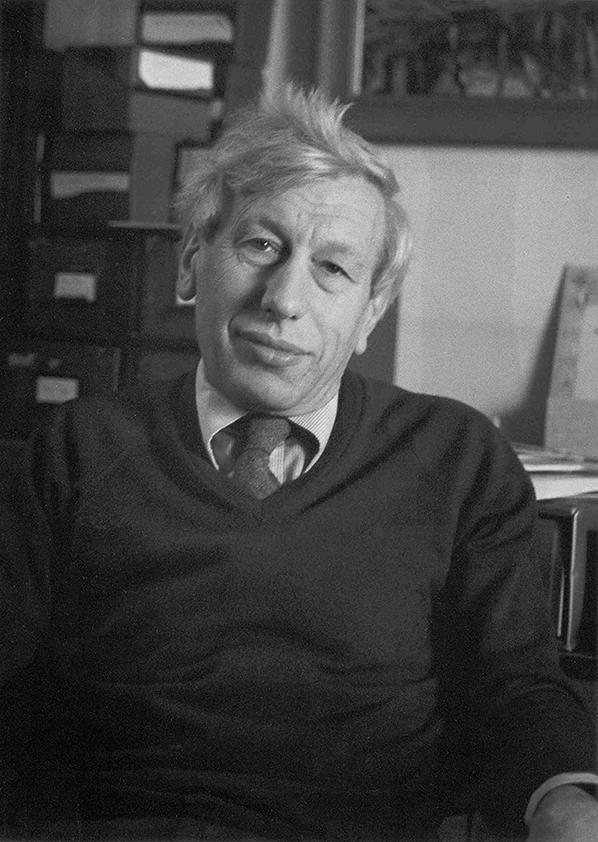
John Fincham in 1984 upon his return to Cambridge University as Arthur Balfour Professor of Genetics. Photograph by Dona Haycraft, graciously provided by Philip Pattenden, Peterhouse, Cambridge University.
Acknowledgments
We thank Herb Arst, Michael Ashburner, Jeff Bond, David E. A. Catcheside, Alan Coddington, Ian Connerton, Peter Day, Robin Holliday, Jim Kinghorn, Jack Kinsey, Robert Metzenberg, John Pateman, David Perkins, G. R. K. Sastry, and John Wootton for their comments and contributions to the manuscript. We are particularly indebted to David Perkins for urging us to expand the treatment well beyond a brief obituary.
References
- Ainsworth, 1976. Introduction to the History of Mycology. Cambridge University Press, Cambridge, UK.
- Benzer, S., 1955. Fine structure of a genetic region in bacteriophage. Proc. Natl. Acad. Sci. USA 41: 344–354. [DOI] [PMC free article] [PubMed] [Google Scholar]
- Coddington, A., and J. R. S. Fincham, 1963. Proof of hybrid enzyme formation in a case of inter-allelic complementation in Neurospora crassa. J. Mol. Biol. 123: 152–161. [DOI] [PubMed] [Google Scholar]
- Cohen, B. L., 2000. Guido Pontecorvo (“Ponte”): 1907–1999. Genetics 154: 497–501. [DOI] [PMC free article] [PubMed] [Google Scholar]
- Crow, J. F., 1993. N. I. Vavilov: martyr to genetic truth. Genetics 134: 1–4. [DOI] [PMC free article] [PubMed] [Google Scholar]
- Davis, R. H., 2000. Neurospora: Contributions of a Model Organism. Oxford University Press, New York.
- Fincham, J. R. S., 1959. On the nature of the glutamic dehydrogenase formed by inter-allelic complementation at the am locus of Neurospora crassa. J. Gen. Microbiol. 21: 600–611. [DOI] [PubMed] [Google Scholar]
- Fincham, J. R. S., 1966. Genetic Complementation. W. A. Benjamin, New York.
- Fincham, J. R. S., 1982. Professional pride. Nature 296: 192.6801525 [Google Scholar]
- Fincham, J. R. S., 1983. Genetics. Jones & Bartlett, Boston.
- Fincham, J. R. S., 1988. The Neurospora am gene and allelic complementation. BioEssays 9: 169–172. [DOI] [PubMed] [Google Scholar]
- Fincham, J. R. S., 1989. Transformation in fungi. Microbiol. Rev. 53: 148–170. [DOI] [PMC free article] [PubMed] [Google Scholar]
- Fincham, J. R. S., 1993. Genetics in the United Kingdom—the last half-century. Heredity 71: 111–118. [Google Scholar]
- Fincham, J. R. S., 1998. Fungal genetics—past and present. J. Genet. 77: 55–63. [Google Scholar]
- Fincham, J. R. S., 1999. More on Popper and biology: the utility of induction. BioEssays 22: 684. [DOI] [PubMed] [Google Scholar]
- Fincham, J. R. S., and A. J. Baron, 1977. Negative interference and the use of flanking markers in fine-structure mapping in fungi. Heredity 33: 116–121. [Google Scholar]
- Fincham, J. R. S., and P. R. Day, 1963. Fungal Genetics. Blackwell, Oxford.
- Fincham, J. R. S., and R. Holliday, 1970. An explanation of fine structure map expansion in terms of excision repair. Mol. Gen. Genet. 109: 309–322. [DOI] [PubMed] [Google Scholar]
- Fincham, J. R. S., and J. A. Pateman, 1957. Formation of an enzyme through complementary action of mutant alleles in separate nuclei of a heterokaryon. Nature 179: 741–742. [DOI] [PubMed] [Google Scholar]
- Fincham, J. R. S., and G. R. K. Sastry, 1974. Controlling elements in maize. Annu. Rev. Genet. 8: 15–50. [DOI] [PubMed] [Google Scholar]
- Fincham, J. R. S., P. R. Day and A. Radford, 1979. Fungal Genetics. University of California Press, Berkeley, CA.
- Fincham, J. R. S., I. F. Connerton, E. Notarianni and K. Harrington, 1989. Premeiotic disruption of duplicated and triplicated copies of the Neurospora crassa am (glutamate dehydrogenase) gene. Curr. Genet. 15: 327–334. [DOI] [PubMed] [Google Scholar]
- Flavell, R. B., and J. R. S. Fincham, 1968. a Acetate-nonutilizing mutants of Neurospora crassa. I. Mutant isolation, complementation studies, and linkage relationships. J. Bacteriol. 95: 1056–1062. [DOI] [PMC free article] [PubMed] [Google Scholar]
- Flavell, R. B., and J. R. S. Fincham, 1968. b Acetate-nonutilizing mutants of Neurospora crassa. II. Biochemical deficiencies and the roles of certain enzymes. J. Bacteriol. 95: 1063–1068. [DOI] [PMC free article] [PubMed] [Google Scholar]
- Harrison, B. J., and J. R. S. Fincham, 1968. Instability at the Pal locus in Antirrhinum majus. III. A gene controlling mutation frequency. Heredity 23: 67–72. [Google Scholar]
- Holliday, R., 1999. The incompatibility of Popper's philosophy of science with genetics and molecular biology. BioEssays 21: 8890–8891. [DOI] [PubMed] [Google Scholar]
- Horowitz, N. H., 1991. Fifty years ago: the Neurospora revolution. Genetics 127: 631–635. [DOI] [PMC free article] [PubMed] [Google Scholar]
- Kinnaird, J. H., and J. R. S. Fincham, 1983. The complete nucleotide sequence of the Neurospora crassa am (NADP-glutamate dehydrogenase) gene. Gene 26: 253–260. [DOI] [PubMed] [Google Scholar]
- Kinsey, J. A., J. R. S. Fincham, M. A. M. Siddig and M. Keighren, 1980. New mutational variants of Neurospora NADP-specific glutamate dehydrogenase. Genetics 19: 305–316. [DOI] [PMC free article] [PubMed] [Google Scholar]
- Nelson, O. E., 1993. A notable triumvirate of maize geneticists. Genetics 135: 937–941. [DOI] [PMC free article] [PubMed] [Google Scholar]
- Perkins, D. D., 1992. Neurospora: the organism behind the molecular revolution. Genetics 130: 687–701. [DOI] [PMC free article] [PubMed] [Google Scholar]
- Schwartz-Sommer, Z., B. Davies and A. Hudson, 2003. An everlasting pioneer: the story of Antirrhinum research. Nat. Rev. Genet. 4: 657–666. [DOI] [PubMed] [Google Scholar]
- Selker, E. U., 1990. Premeiotic instability of repeated sequences in Neurospora crassa. Annu. Rev. Genet. 24: 579–613. [DOI] [PubMed] [Google Scholar]
- Siddig, M. A. M., J. A. Kinsey, J. R. S. Fincham and M. Keighren, 1980. Frameshift mutations affecting the N-terminal sequence of Neurospora NADP-specific glutamate dehydrogenase. J. Mol. Biol. 137: 125–135. [DOI] [PubMed] [Google Scholar]
- Smyth, D. R., 1973. A new map of the amination-1 locus of Neurospora crassa, and the effect of the recombination-3 gene. Aust. J. Biol. Sci. 26: 1355–1370. [DOI] [PubMed] [Google Scholar]
- Thomas, G. H., I. F. Connerton and J. R. S. Fincham, 1988. Molecular cloning, identification and transcriptional analysis of genes involved in acetate utilization in Neurospora crassa. Mol. Microbiol. 2: 599–606. [DOI] [PubMed] [Google Scholar]
- Woodward, D. O., C. W. H. Partridge and N. H. Giles, 1958. Complementation at the ad-4 locus in Neurospora crassa. Proc. Natl. Acad. Sci. USA 44: 1237–1244. [DOI] [PMC free article] [PubMed] [Google Scholar]
- Wootton, J. C., G. K. Chambers, A. A. Holder, A. J. Baron, J. G. Taylor et al., 1971 Amino acid sequence of NADP-specific glutamate dehydrogenase of Neurospora crassa. Proc. Natl. Acad. Sci. USA 71: 4361–4365. [DOI] [PMC free article] [PubMed]