



A 52-year-old man was admitted to the emergency department of our institution with a 20-day history of fasting. On admission, he stated that he had no history of heart disease. Electrocardiography (ECG) performed before the patient began fasting did not indicate any abnormalities. The physical examination revealed nothing unusual. Laboratory tests showed no evidence of electrolyte disturbances. His blood pressure was 100/60 mmHg, and his pulse rate was 62 beats/min. The ECG on admission showed normal sinus rhythm, nonspecific T wave changes, and a prolonged heart-rate-corrected QT interval (QTc) of 0.58 sec (QTc = QT/R − R0.5), which is far above normal (Fig. 1). Two hours after admission, the patient suddenly lost consciousness. Electrocardiographic monitoring (Fig. 2) revealed uninterrupted torsades de pointes, which we were able to terminate by use of direct current (DC) countershock. Four days later, the QTc had decreased to 0.44 sec, which was nearly as low as the pre-diet state (Fig. 3).

Fig. 1 Electrogram on admission shows sinus rhythm, nonspecific T wave changes, and prolonged QTc (0.58 sec).
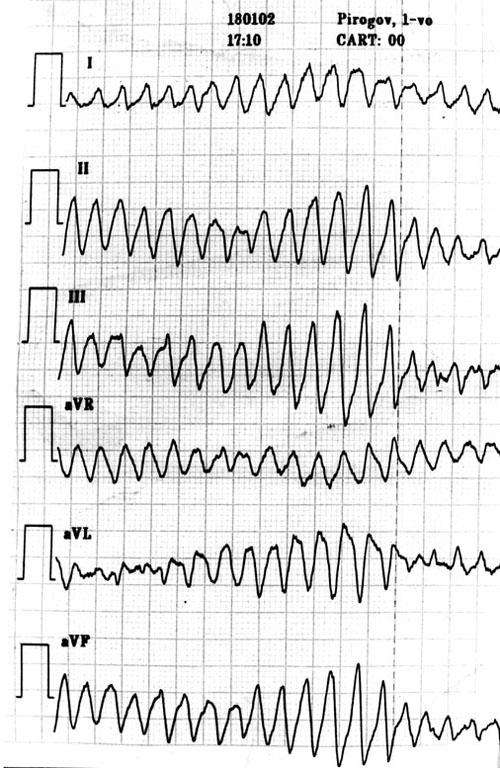
Fig. 2 Electrocardiogram during cardiac arrest shows an episode of torsades de pointes.
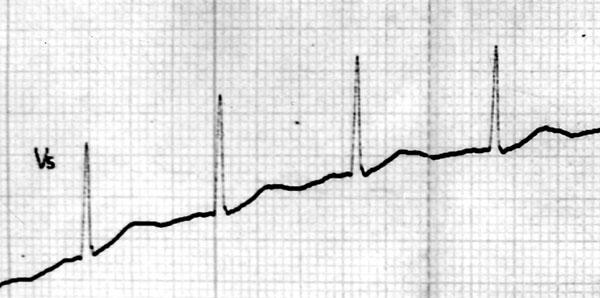
Fig. 3 Four days after the episode of torsades de pointes, an electrocardiogram shows a QTc of 0.44 sec, which is nearly as low as that of the patient's pre-diet state.
The association of torsades de pointes and a prolonged QT interval is well described. There are several reports of prolonged electrocardiographic QT intervals resulting from protein-sparing diets and starvation 1–3 and associated torsades de pointes. 1,4 Because prolongation of the heart-rate-adjusted QT length or QTc is associated with an elevated risk of sudden death, 5 regular electrocardiographic studies are necessary in patients who are fasting, regardless of their reasons for doing so.
In summary, QT interval lengthening after fasting can be complicated by an attack of torsades de pointes, which carries a risk of degeneration to ventricular fibrillation and, thereby, a risk of sudden cardiac death. An ECG examination is an important part of the evaluation of a fasting patient for timely diagnosis and prevention of life-threatening arrhythmias such as the torsades de pointes.
Footnotes
Address for reprints: Daniel Bogdanov Petrov, MD, Department of Emergency Cardiology and Acute Internal Diseases, “Pirogov” Emergency Hospital, 21 Macedonia Ave., Sofia 1606, Bulgaria
E-mail: dpetrov@techno-link.com
References
- 1.Thwaites BC, Bose M. Very low calorie diets and pre-fasting prolonged QT interval. A hidden potential danger. West Indian Med J 1992;41(4):169–71. [PubMed]
- 2.Swenne I, Larsson PT. Heart risk associated with weight loss in anorexia nervosa and eating disorders: risk factors for QTc interval prologation and dispersion. Acta Paediatr 1999; 88(3):304–9. [DOI] [PubMed]
- 3.Nagy D, DeMeersman R, Gallagher D, Pietrobelli A, Zion AS, Daly D, Heymsfield SB. QTc interval (cardiac repolarization): lengthening after meals. Obes Res 1997;5(6):531–7. [DOI] [PubMed]
- 4.Ahmed W, Flynn MA, Alpert MA. Cardiovascular complications of weight reduction diets. Am J Med Sci 2001;321 (4):280–4. [DOI] [PubMed]
- 5.Dekker JM, Feskens EJ, Schouten EG, Klootwijk P, Pool J, Kromhout D. QTc duration is associated with levels of insulin and glucose intolerance. The Zutphen Elderly Study. Diabetes 1996;45(3):376–80. [DOI] [PubMed]