



Abstract
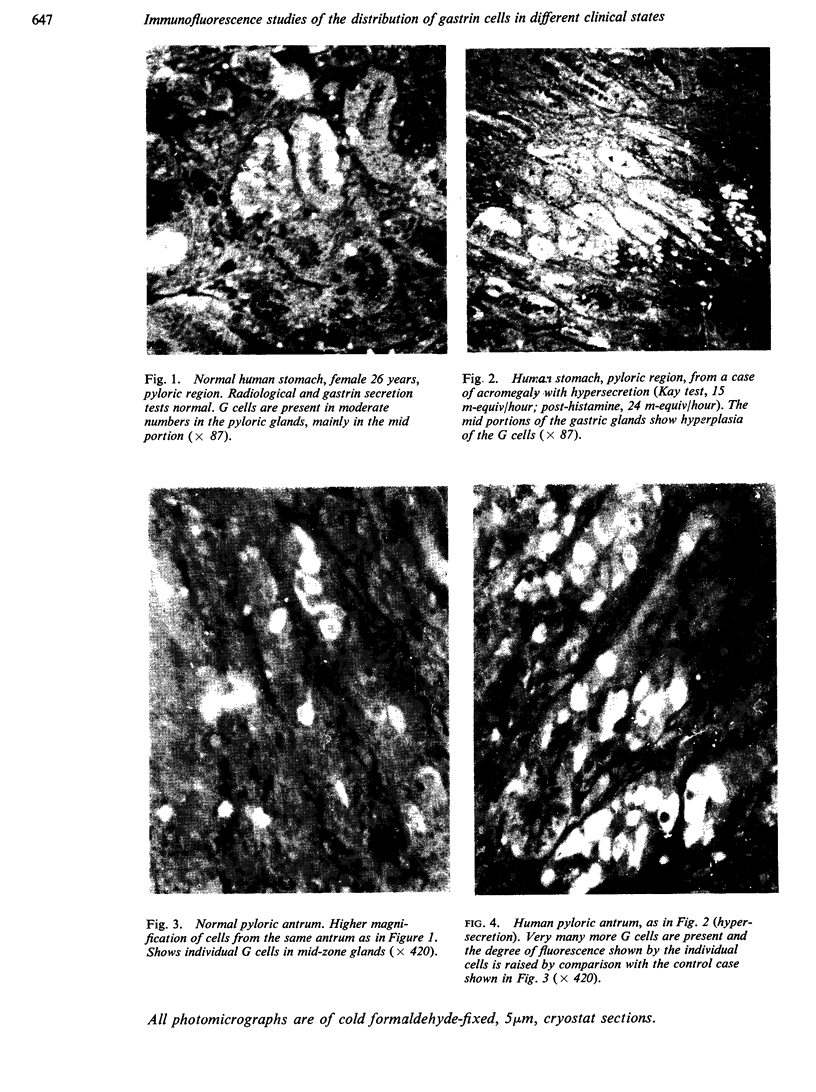
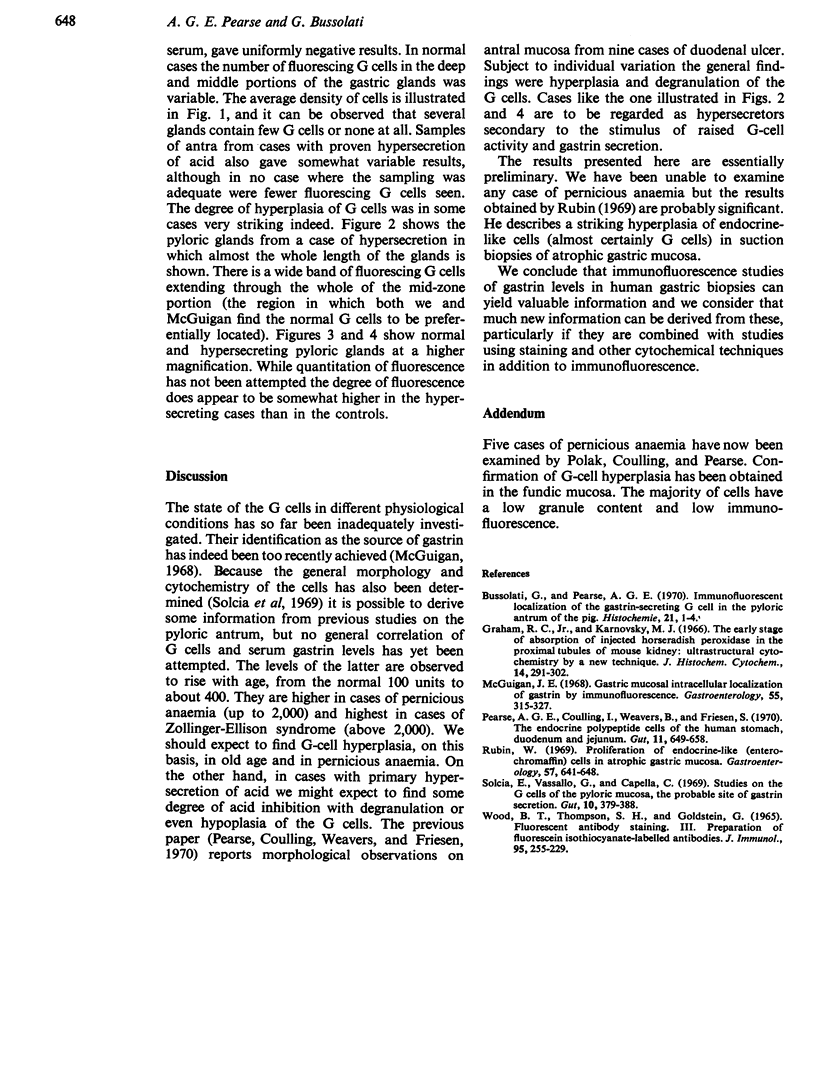
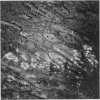
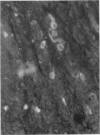
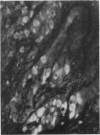
Examination of human gastric biopsies by an indirect immunofluorescence technique using antihuman gastrin confirms the variability in distribution and number of gastrin-secreting (G) cells (Solcia, Vassallo, and Capella, 1969) observed by morphological, cytochemical, and electron microscopical studies. In cases with presumed secondary hypersecretion a profound degree of G-cell hyperplasia is observed. Immunofluorescence with. antigastrin can provide valuable information on the state of the G cells in different physiological states, particularly if used in conjunction with other cytochemical techniques.
Full text
PDF
Images in this article
Selected References
These references are in PubMed. This may not be the complete list of references from this article.
- Graham R. C., Jr, Karnovsky M. J. The early stages of absorption of injected horseradish peroxidase in the proximal tubules of mouse kidney: ultrastructural cytochemistry by a new technique. J Histochem Cytochem. 1966 Apr;14(4):291–302. doi: 10.1177/14.4.291. [DOI] [PubMed] [Google Scholar]
- McGuigan J. E. Gastric mucosal intracellular localization of gastrin by immunofluorescence. Gastroenterology. 1968 Sep;55(3):315–327. [PubMed] [Google Scholar]
- Pearse A. G., Coulling I., Weavers B., Friesen S. The endocrine polypeptide cells of the human stomach, duodenum, and jejunum. Gut. 1970 Aug;11(8):649–658. doi: 10.1136/gut.11.8.649. [DOI] [PMC free article] [PubMed] [Google Scholar]
- Solcia E., Vassallo G., Capella C. Studies on the G cells of the pyloric mucosa, the probable site of gastrin secretion. Gut. 1969 May;10(5):379–388. doi: 10.1136/gut.10.5.379. [DOI] [PMC free article] [PubMed] [Google Scholar]
- Wood B. T., Thompson S. H., Goldstein G. Fluorescent antibody staining. 3. Preparation of fluorescein-isothiocyanate-labeled antibodies. J Immunol. 1965 Aug;95(2):225–229. [PubMed] [Google Scholar]