



Abstract
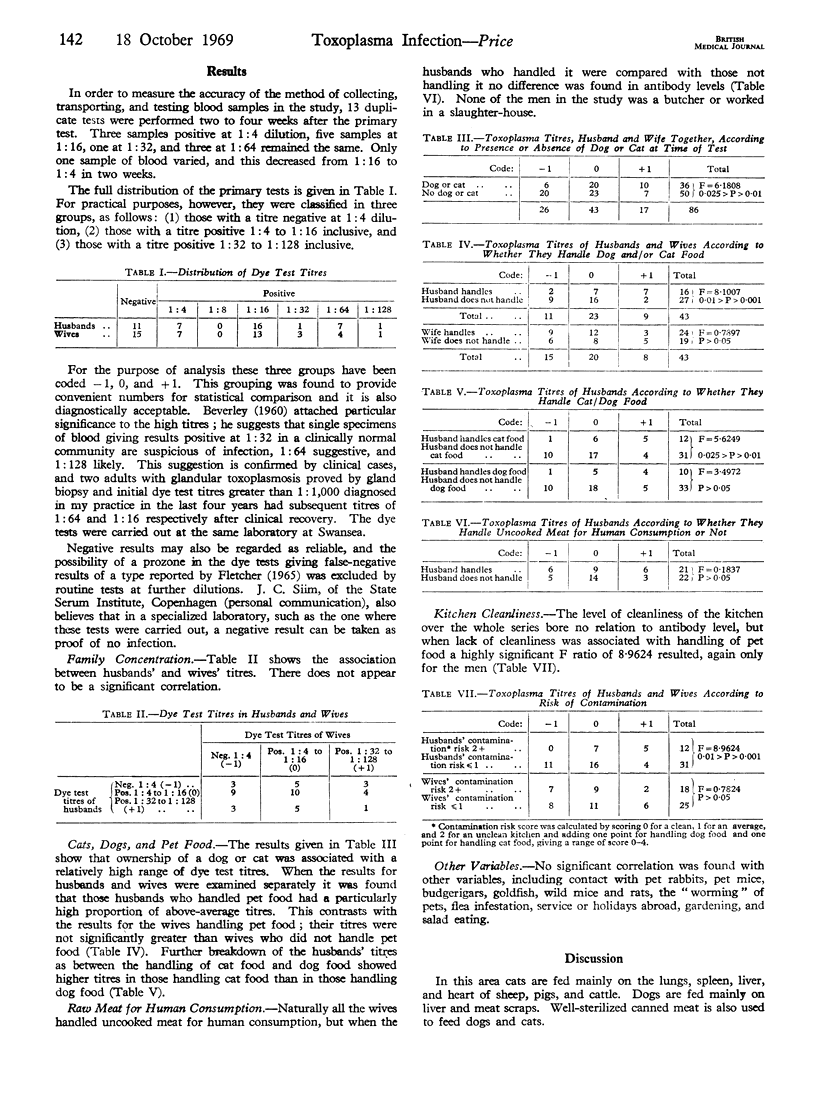
A survey was undertaken in an urban community to examine the intrafamilial epidemiology of toxoplasma infection and its relation to a set of environmental variables. Statistically significant relations were found with (a) ownership of a dog or cat; (b) the handling of pet food, particularly cat food; and (c) a “risk” score compounded from the handling of pet food and lack of cleanliness in the kitchen.
Full text
PDF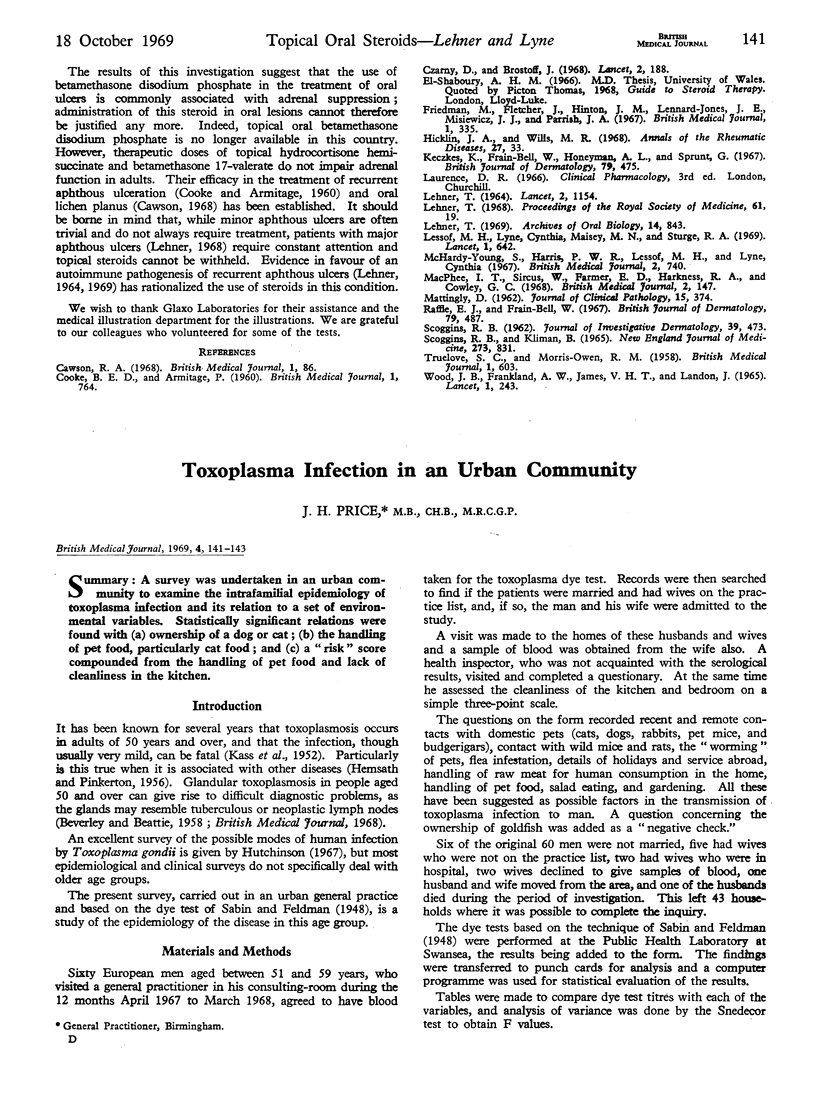
Selected References
These references are in PubMed. This may not be the complete list of references from this article.
- BEVERLEY J. K., BEATTIE C. P. Glandular toxoplasmosis; a survey of 30 cases. Lancet. 1958 Aug 23;2(7043):379–384. doi: 10.1016/s0140-6736(58)90109-0. [DOI] [PubMed] [Google Scholar]
- Hutchison W. M. The nematode transmission of Toxoplasma gondii. Trans R Soc Trop Med Hyg. 1967;61(1):80–89. doi: 10.1016/0035-9203(67)90056-9. [DOI] [PubMed] [Google Scholar]
- KASS E. H., ANDRUS S. B., ADAMS R. D., TURNER F. C., FELDMAN H. A. Toxoplasmosis in the human adult. AMA Arch Intern Med. 1952 May;89(5):759–782. doi: 10.1001/archinte.1952.00240050073006. [DOI] [PubMed] [Google Scholar]
- Sabin A. B., Feldman H. A. Dyes as Microchemical Indicators of a New Immunity Phenomenon Affecting a Protozoon Parasite (Toxoplasma). Science. 1948 Dec 10;108(2815):660–663. doi: 10.1126/science.108.2815.660. [DOI] [PubMed] [Google Scholar]