



Abstract
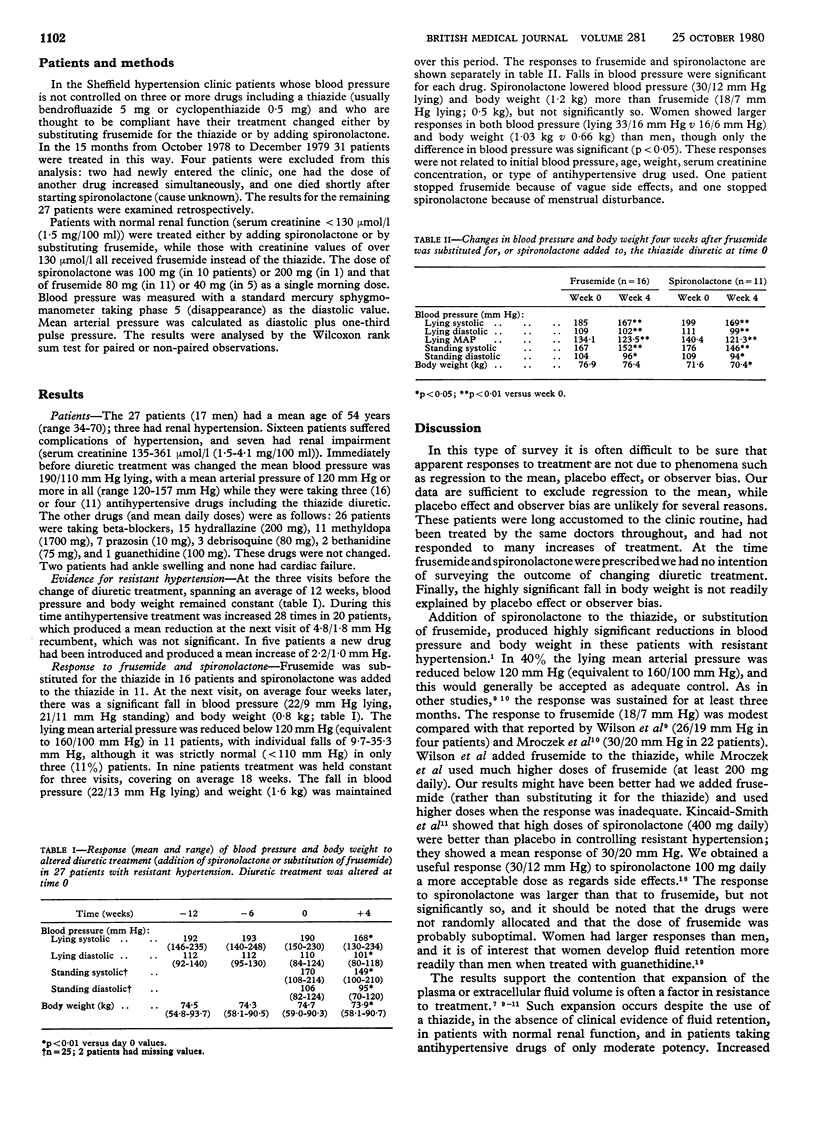
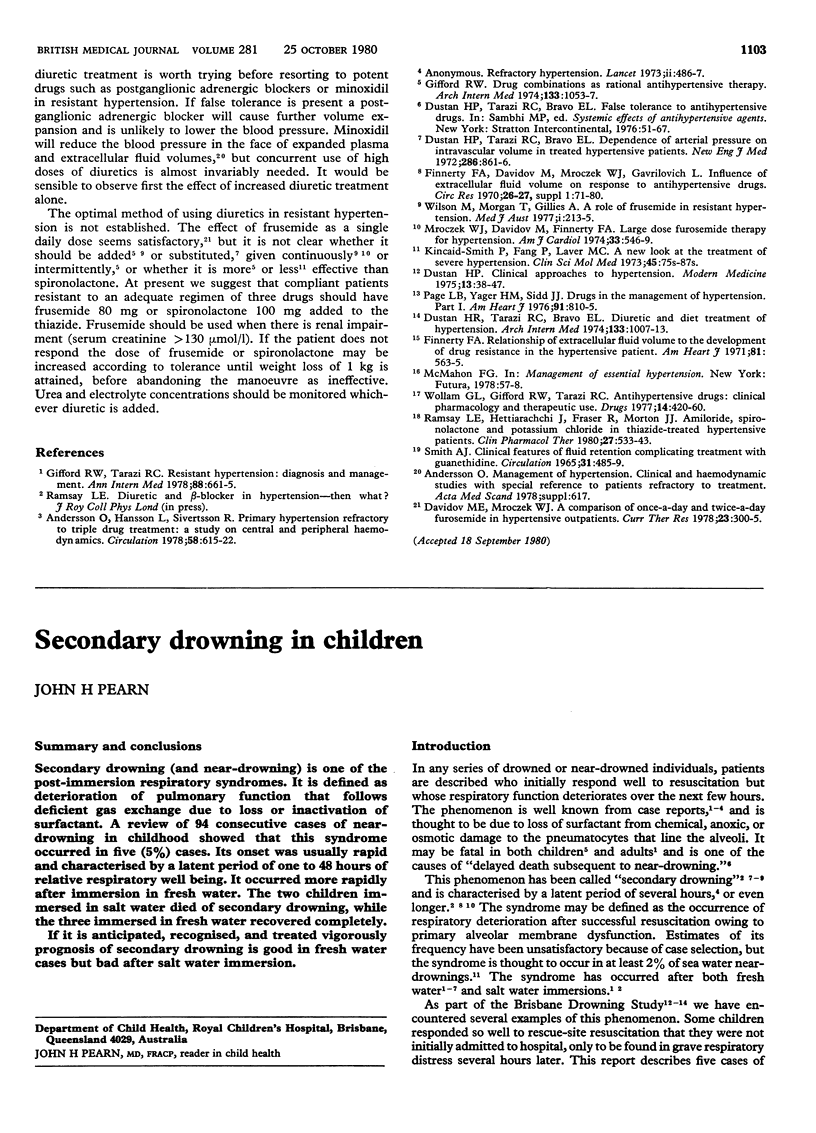
In patients with hypertension resistant to three or four drugs including a thiazide diuretic substitution of frusemide for the thiazide, or the addition of spironolactone, produced significant reductions in blood pressure and body weight. The response did not depend on the presence of overt fluid retention, renal impairment, or the use of antihypertensive drugs of high potency. Women had larger responses than men. Expansion of the plasma or extracellular fluid volume is an important cause of resistance to treatment even when a thiazide diuretic is used. An increase in diuretic treatment should be tried before using the postganglionic adrenergic blockers or minoxidil in resistant hypertension.
Full text
PDF
Selected References
These references are in PubMed. This may not be the complete list of references from this article.
- Andersson O., Hansson L., Sivertsson R. Primary hypertension refractory to triple drug treatment: a study on central and peripheral hemodynamics. Circulation. 1978 Oct;58(4):615–622. doi: 10.1161/01.cir.58.4.615. [DOI] [PubMed] [Google Scholar]
- Dustan H. P., Tarazi R. C., Bravo E. L. Dependence of arterial pressure on intravascular volume in treated hypertensive patients. N Engl J Med. 1972 Apr 20;286(16):861–866. doi: 10.1056/NEJM197204202861603. [DOI] [PubMed] [Google Scholar]
- Dustan H. R., Tarazi R. C., Bravo E. L. Diuretic and diet treatment of hypertension. Arch Intern Med. 1974 Jun;133(6):1007–1013. [PubMed] [Google Scholar]
- Finnerty F. A., Jr Relationship of extracellular fluid volume to the development of drug resistance in the hypertensive patient. Am Heart J. 1971 Apr;81(4):563–565. doi: 10.1016/0002-8703(71)90374-7. [DOI] [PubMed] [Google Scholar]
- Gifford R. W., Jr Drug combinations as rational antihypertensive therapy. Arch Intern Med. 1974 Jun;133(6):1053–1057. [PubMed] [Google Scholar]
- Gifford R. W., Jr, Tarazi R. C. Resistant hypertension: diagnosis and management. Ann Intern Med. 1978 May;88(5):661–665. doi: 10.7326/0003-4819-88-5-661. [DOI] [PubMed] [Google Scholar]
- Mroczek W. J., Davidov M., Finnerty F. A., Jr Large dose furosemide therapy for hypertension. Long-term use in 22 patients. Am J Cardiol. 1974 Apr;33(4):546–549. doi: 10.1016/0002-9149(74)90615-8. [DOI] [PubMed] [Google Scholar]
- Page L. B., Yager H. M., Sidd J. J. Drugs in the management of hypertension. Part I. Am Heart J. 1976 Jun;91(6):810–815. doi: 10.1016/s0002-8703(76)80548-0. [DOI] [PubMed] [Google Scholar]
- Ramsay L. E., Hettiarachchi J., Fraser R., Morton J. J. Amiloride, spironolactone, and potassium chloride in thiazide-treated hypertensive patients. Clin Pharmacol Ther. 1980 Apr;27(4):533–543. doi: 10.1038/clpt.1980.75. [DOI] [PubMed] [Google Scholar]
- SMITH A. J. CLINICAL FEATURES OF FLUID RETENTION COMPLICATING TREATMENT WITH GUANETHIDINE. Circulation. 1965 Apr;31:485–489. doi: 10.1161/01.cir.31.4.485. [DOI] [PubMed] [Google Scholar]
- Wilson M., Morgan T., Gillies A. A role of frusemide in resistant hypertension. Med J Aust. 1977 Feb 12;1(7):213–215. doi: 10.5694/j.1326-5377.1977.tb130634.x. [DOI] [PubMed] [Google Scholar]
- Wollam G. L., Gifford R. W., Jr, Tarazi R. C. Antihypertensive drugs: clinical pharmacology and therapeutic use. Drugs. 1977 Dec;14(6):420–460. doi: 10.2165/00003495-197714060-00002. [DOI] [PubMed] [Google Scholar]