



Abstract
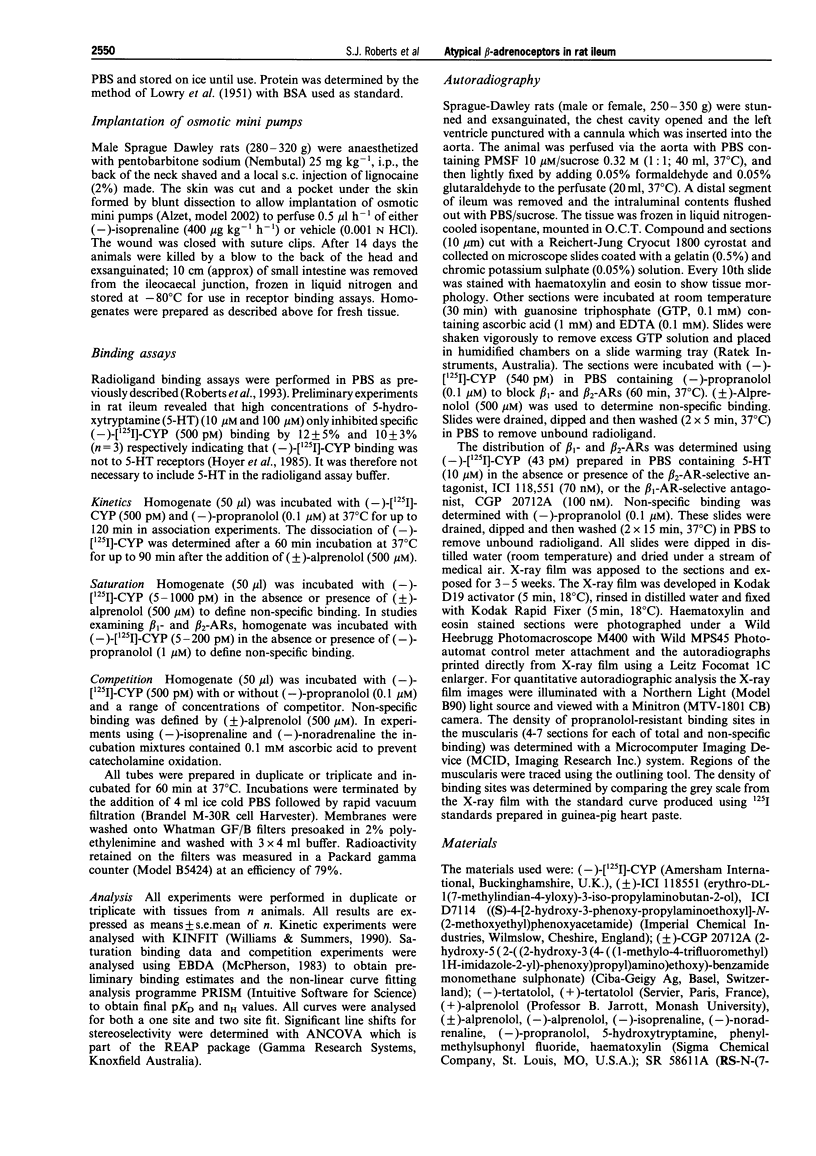
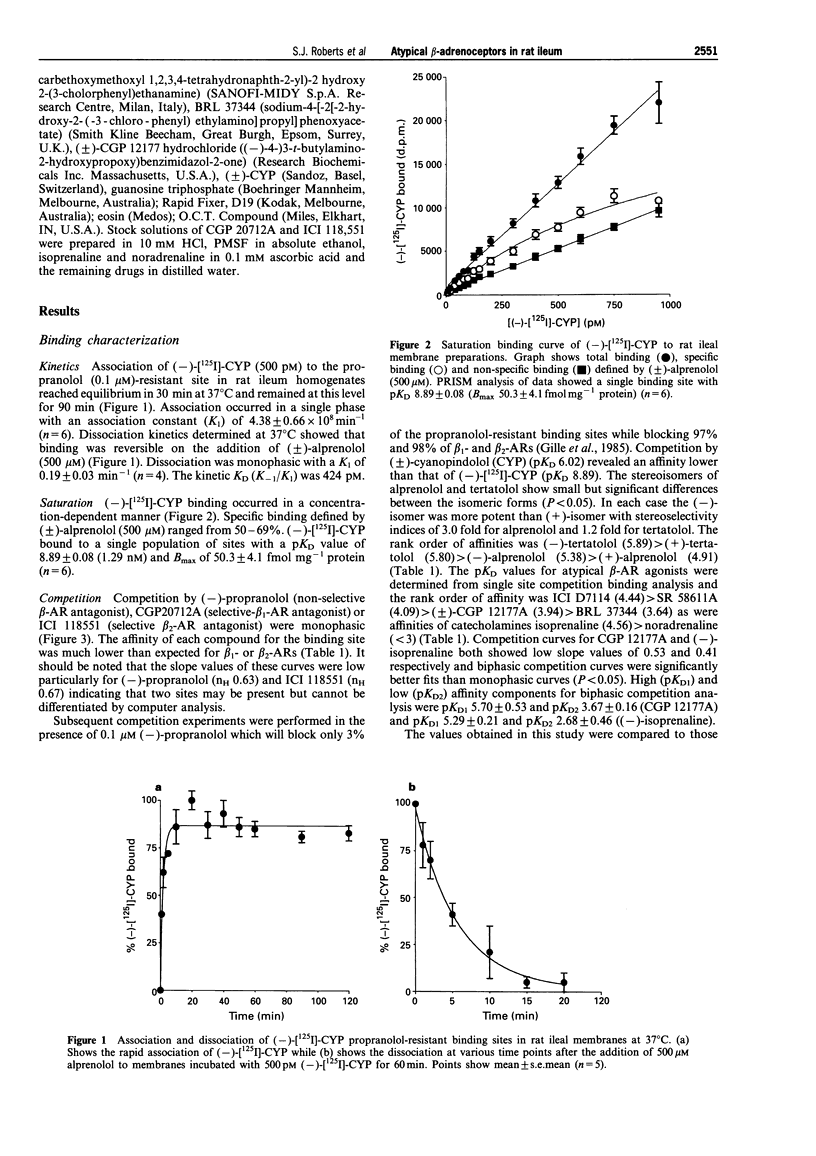
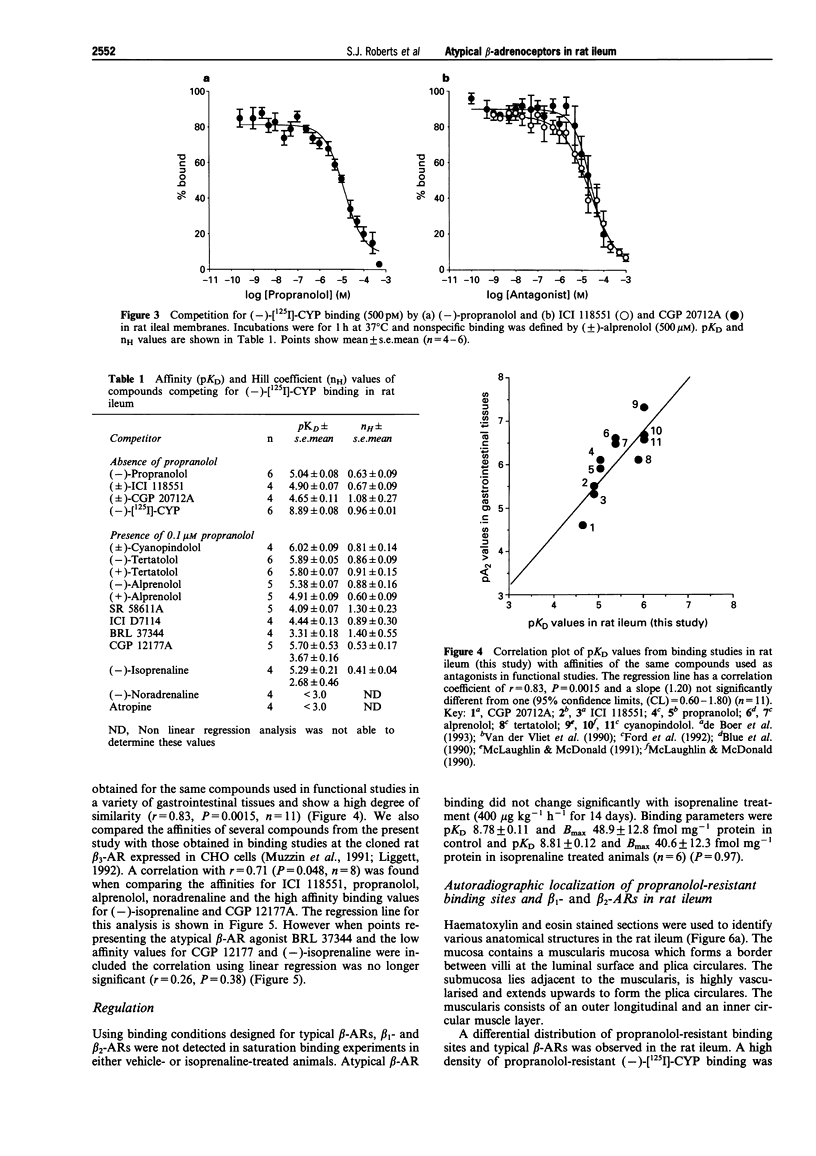
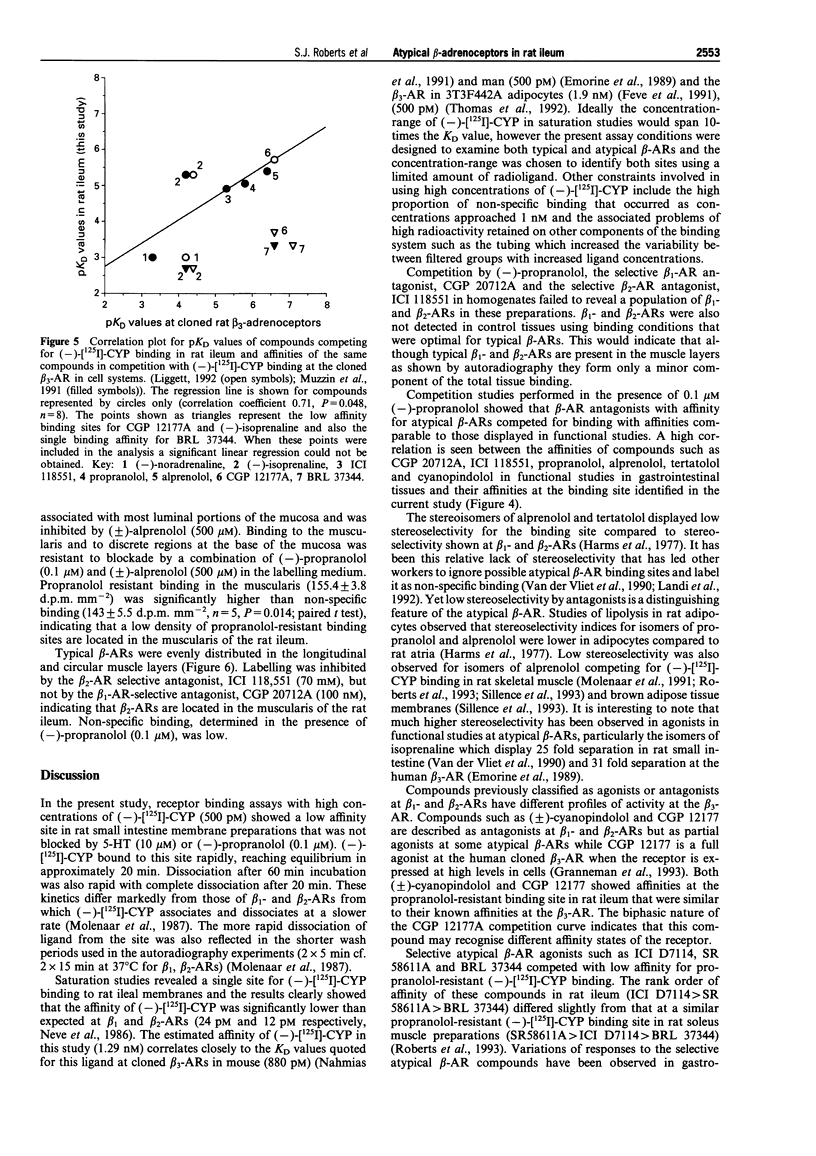
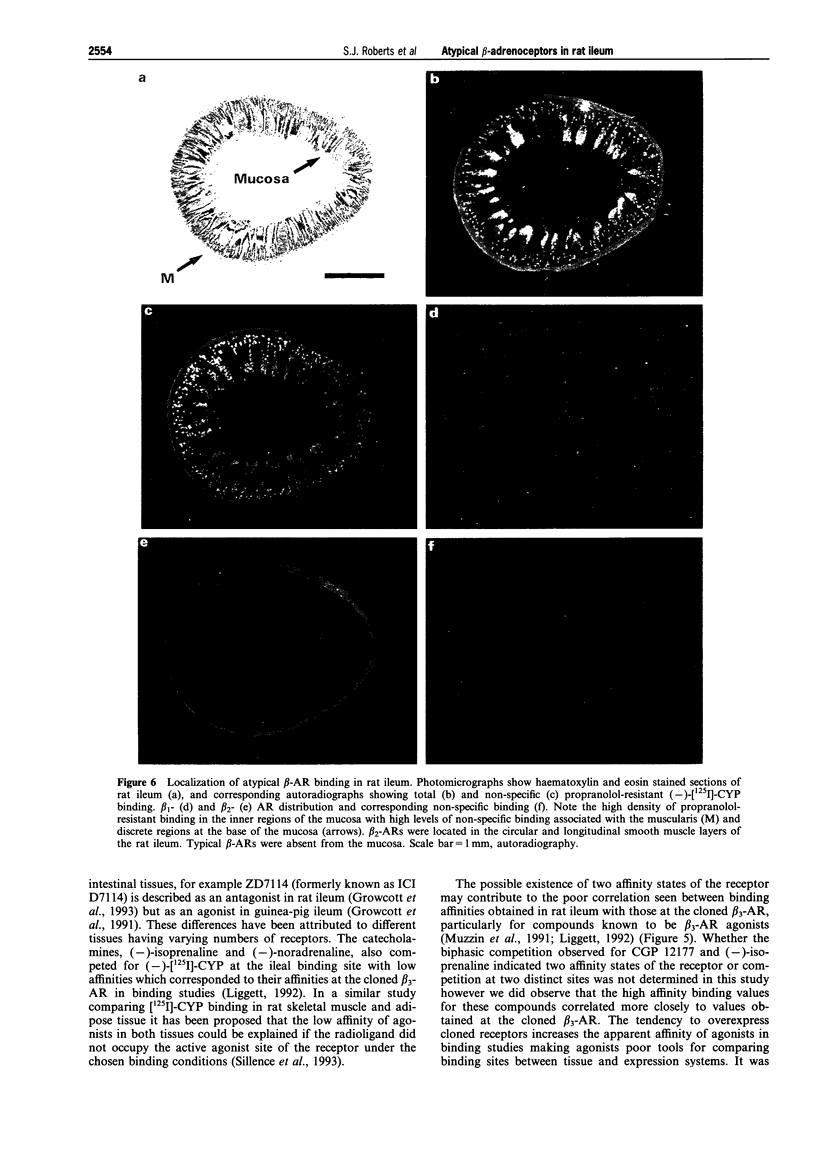
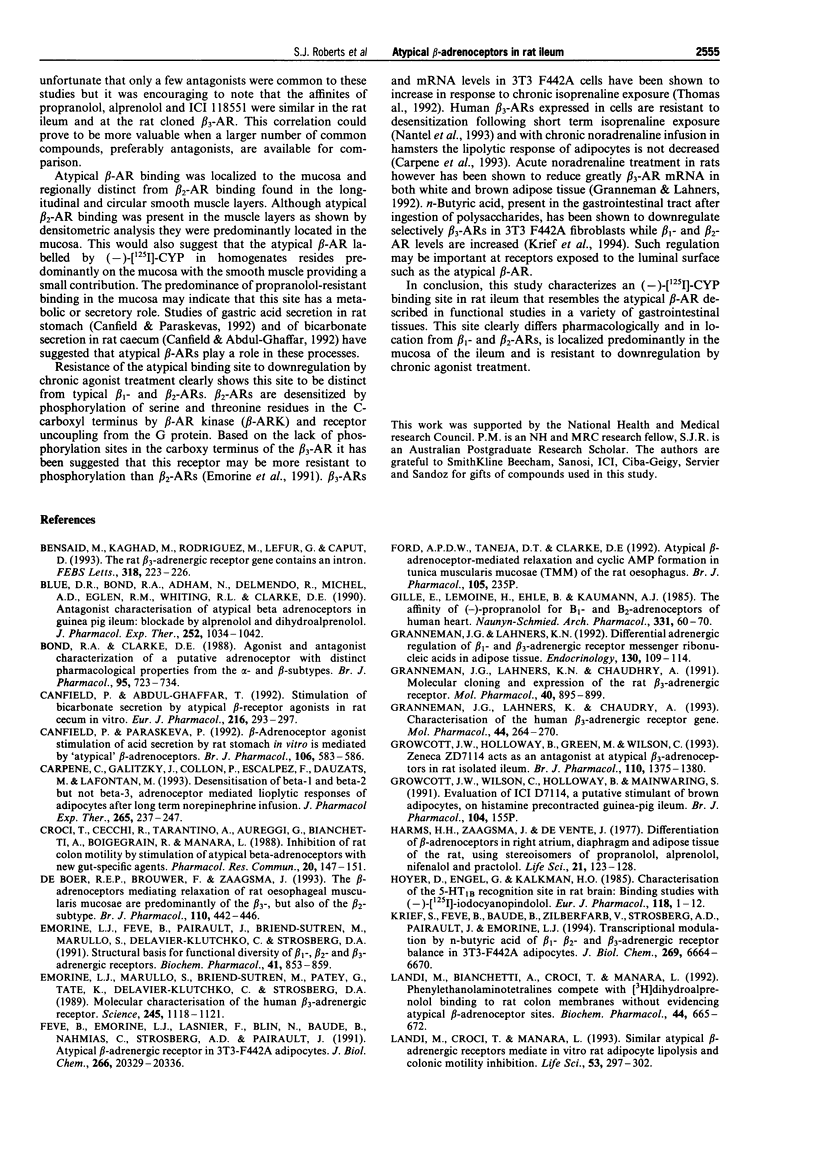
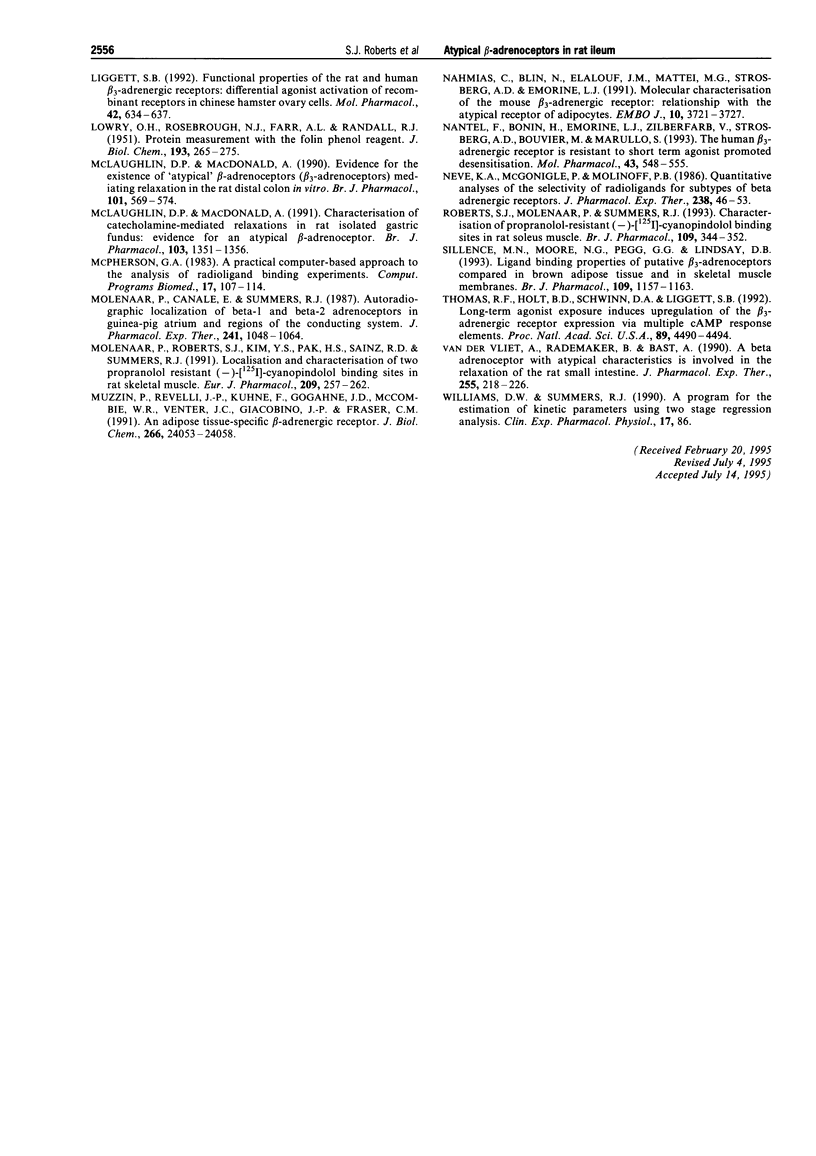
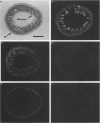
1. Homogenate binding studies and receptor autoradiography have been used to examine the binding characteristics and localization of propranolol-resistant (-)-[125I]-cyanopindolol (CYP) binding sites in rat ileum. 2. Saturation studies with (-)-[125I]-CYP and homogenates of rat ileum identified a site with pKD 8.89 +/- 0.08 and Bmax = 50.3 +/- 4.1 fmol mg-1 protein (n = 6). Both beta 1- and beta 2-adrenoceptors (AR) were not detected in these preparations. 3. (-)-Isoprenaline infusion (400 micrograms kg-1 h-1) for 14 days caused no significant change in the density of (-)-[125I]-CYP binding which was 48.9 +/- 12.8 and 40.6 +/- 12.3 fmol mg-1 protein in control and isoprenaline-treated animals respectively (n = 6) (P = 0.97). 4. Competition for (-)-[125I]-CYP binding in the presence of 0.1 microM (-)-propranolol gave affinity values for CYP, tertatolol, alprenolol, ICI 118551 and CGP 20712A that correspond to known affinities at atypical beta-ARs. Stereoselectivity ratios for tertatolol and alprenolol were low. 5. Autoradiographic localization of propranolol resistant (-)-[125I]-CYP binding showed sites associated with the mucosa and to a lesser extent to the muscularis. A small population of beta 2-ARs were detected located predominantly in the longitudinal and circular smooth muscle layers. 6. This study identifies an (-)-[125I]-CYP binding site in rat ileum that is resistant to blockade by propranolol (0.1 microM), is located predominantly in the mucosa, shows resistance to downregulation by isoprenaline and has binding characteristics of the atypical beta-AR.
Full text
PDF
Images in this article
Selected References
These references are in PubMed. This may not be the complete list of references from this article.
- Bensaid M., Kaghad M., Rodriguez M., Le Fur G., Caput D. The rat beta 3-adrenergic receptor gene contains an intron. FEBS Lett. 1993 Mar 8;318(3):223–226. doi: 10.1016/0014-5793(93)80516-w. [DOI] [PubMed] [Google Scholar]
- Blue D. R., Bond R. A., Adham N., Delmendo R., Michel A. D., Eglen R. M., Whiting R. L., Clarke D. E. Antagonist characterization of atypical beta adrenoceptors in guinea pig ileum: blockade by alprenolol and dihydroalprenolol. J Pharmacol Exp Ther. 1990 Mar;252(3):1034–1042. [PubMed] [Google Scholar]
- Bond R. A., Clarke D. E. Agonist and antagonist characterization of a putative adrenoceptor with distinct pharmacological properties from the alpha- and beta-subtypes. Br J Pharmacol. 1988 Nov;95(3):723–734. doi: 10.1111/j.1476-5381.1988.tb11698.x. [DOI] [PMC free article] [PubMed] [Google Scholar]
- Canfield P., Abdul-Ghaffar T. Stimulation of bicarbonate secretion by atypical beta-receptor agonists in rat cecum in vitro. Eur J Pharmacol. 1992 Jun 5;216(2):293–297. doi: 10.1016/0014-2999(92)90373-c. [DOI] [PubMed] [Google Scholar]
- Canfield P., Paraskeva P. Beta-adrenoceptor agonist stimulation of acid secretion by rat stomach in vitro is mediated by 'atypical' beta-adrenoceptors. Br J Pharmacol. 1992 Jul;106(3):583–586. doi: 10.1111/j.1476-5381.1992.tb14379.x. [DOI] [PMC free article] [PubMed] [Google Scholar]
- Carpéné C., Galitzky J., Collon P., Esclapez F., Dauzats M., Lafontan M. Desensitization of beta-1 and beta-2, but not beta-3, adrenoceptor-mediated lipolytic responses of adipocytes after long-term norepinephrine infusion. J Pharmacol Exp Ther. 1993 Apr;265(1):237–247. [PubMed] [Google Scholar]
- Croci T., Cecchi R., Tarantino A., Aureggi G., Bianchetti A., Boigegrain R., Manara L. Inhibition of rat colon motility by stimulation of atypical beta-adrenoceptors with new gut-specific agents. Pharmacol Res Commun. 1988 Feb;20(2):147–151. doi: 10.1016/s0031-6989(88)80007-9. [DOI] [PubMed] [Google Scholar]
- Emorine L. J., Feve B., Pairault J., Briend-Sutren M. M., Marullo S., Delavier-Klutchko C., Strosberg D. A. Structural basis for functional diversity of beta 1-, beta 2- and beta 3-adrenergic receptors. 1991 Mar 15-Apr 1Biochem Pharmacol. 41(6-7):853–859. doi: 10.1016/0006-2952(91)90188-b. [DOI] [PubMed] [Google Scholar]
- Emorine L. J., Marullo S., Briend-Sutren M. M., Patey G., Tate K., Delavier-Klutchko C., Strosberg A. D. Molecular characterization of the human beta 3-adrenergic receptor. Science. 1989 Sep 8;245(4922):1118–1121. doi: 10.1126/science.2570461. [DOI] [PubMed] [Google Scholar]
- Fève B., Emorine L. J., Lasnier F., Blin N., Baude B., Nahmias C., Strosberg A. D., Pairault J. Atypical beta-adrenergic receptor in 3T3-F442A adipocytes. Pharmacological and molecular relationship with the human beta 3-adrenergic receptor. J Biol Chem. 1991 Oct 25;266(30):20329–20336. [PubMed] [Google Scholar]
- Gille E., Lemoine H., Ehle B., Kaumann A. J. The affinity of (-)-propranolol for beta 1- and beta 2-adrenoceptors of human heart. Differential antagonism of the positive inotropic effects and adenylate cyclase stimulation by (-)-noradrenaline and (-)-adrenaline. Naunyn Schmiedebergs Arch Pharmacol. 1985 Oct;331(1):60–70. doi: 10.1007/BF00498852. [DOI] [PubMed] [Google Scholar]
- Granneman J. G., Lahners K. N., Chaudhry A. Characterization of the human beta 3-adrenergic receptor gene. Mol Pharmacol. 1993 Aug;44(2):264–270. [PubMed] [Google Scholar]
- Granneman J. G., Lahners K. N., Chaudhry A. Molecular cloning and expression of the rat beta 3-adrenergic receptor. Mol Pharmacol. 1991 Dec;40(6):895–899. [PubMed] [Google Scholar]
- Granneman J. G., Lahners K. N. Differential adrenergic regulation of beta 1- and beta 3-adrenoreceptor messenger ribonucleic acids in adipose tissues. Endocrinology. 1992 Jan;130(1):109–114. doi: 10.1210/endo.130.1.1309320. [DOI] [PubMed] [Google Scholar]
- Growcott J. W., Holloway B., Green M., Wilson C. Zeneca ZD7114 acts as an antagonist at beta 3-adrenoceptors in rat isolated ileum. Br J Pharmacol. 1993 Dec;110(4):1375–1380. doi: 10.1111/j.1476-5381.1993.tb13972.x. [DOI] [PMC free article] [PubMed] [Google Scholar]
- Harms H. H., Zaagsma J., de Vente J. Differentiation of beta-adrenoceptors in right atrium, diaphragm and adipose tissue of the rat, using stereoisomers of propranolol, alprenolol, nifenalol and practolol. Life Sci. 1977 Jul 1;21(1):123–128. doi: 10.1016/0024-3205(77)90432-5. [DOI] [PubMed] [Google Scholar]
- Hoyer D., Engel G., Kalkman H. O. Characterization of the 5-HT1B recognition site in rat brain: binding studies with (-)[125I]iodocyanopindolol. Eur J Pharmacol. 1985 Nov 26;118(1-2):1–12. doi: 10.1016/0014-2999(85)90657-0. [DOI] [PubMed] [Google Scholar]
- Johnson J. A. Racial differences in lymphocyte beta-receptor sensitivity to propranolol. Life Sci. 1993;53(4):297–304. doi: 10.1016/0024-3205(93)90748-r. [DOI] [PubMed] [Google Scholar]
- Krief S., Fève B., Baude B., Zilberfarb V., Strosberg A. D., Pairault J., Emorine L. J. Transcriptional modulation by n-butyric acid of beta 1-, beta 2-, and beta 3-adrenergic receptor balance in 3T3-F442A adipocytes. J Biol Chem. 1994 Mar 4;269(9):6664–6670. [PubMed] [Google Scholar]
- LOWRY O. H., ROSEBROUGH N. J., FARR A. L., RANDALL R. J. Protein measurement with the Folin phenol reagent. J Biol Chem. 1951 Nov;193(1):265–275. [PubMed] [Google Scholar]
- Landi M., Bianchetti A., Croci T., Manara L. Phenylethanolaminotetralines compete with [3H]dihydroalprenolol binding to rat colon membranes without evidencing atypical beta-adrenergic sites. Biochem Pharmacol. 1992 Aug 18;44(4):665–672. doi: 10.1016/0006-2952(92)90401-4. [DOI] [PubMed] [Google Scholar]
- Liggett S. B. Functional properties of the rat and human beta 3-adrenergic receptors: differential agonist activation of recombinant receptors in Chinese hamster ovary cells. Mol Pharmacol. 1992 Oct;42(4):634–637. [PubMed] [Google Scholar]
- McLaughlin D. P., MacDonald A. Characterization of catecholamine-mediated relaxations in rat isolated gastric fundus: evidence for an atypical beta-adrenoceptor. Br J Pharmacol. 1991 Jun;103(2):1351–1356. doi: 10.1111/j.1476-5381.1991.tb09792.x. [DOI] [PMC free article] [PubMed] [Google Scholar]
- McLaughlin D. P., MacDonald A. Evidence for the existence of 'atypical' beta-adrenoceptors (beta 3-adrenoceptors) mediating relaxation in the rat distal colon in vitro. Br J Pharmacol. 1990 Nov;101(3):569–574. doi: 10.1111/j.1476-5381.1990.tb14122.x. [DOI] [PMC free article] [PubMed] [Google Scholar]
- McPherson G. A. A practical computer-based approach to the analysis of radioligand binding experiments. Comput Programs Biomed. 1983 Aug-Oct;17(1-2):107–113. doi: 10.1016/0010-468x(83)90031-4. [DOI] [PubMed] [Google Scholar]
- Molenaar P., Canale E., Summers R. J. Autoradiographic localization of beta-1 and beta-2 adrenoceptors in guinea pig atrium and regions of the conducting system. J Pharmacol Exp Ther. 1987 Jun;241(3):1048–1064. [PubMed] [Google Scholar]
- Molenaar P., Roberts S. J., Kim Y. S., Pak H. S., Sainz R. D., Summers R. J. Localization and characterization of two propranolol resistant (-) [125I]cyanopindolol binding sites in rat skeletal muscle. Eur J Pharmacol. 1991 Dec 17;209(3):257–262. doi: 10.1016/0014-2999(91)90179-t. [DOI] [PubMed] [Google Scholar]
- Muzzin P., Revelli J. P., Kuhne F., Gocayne J. D., McCombie W. R., Venter J. C., Giacobino J. P., Fraser C. M. An adipose tissue-specific beta-adrenergic receptor. Molecular cloning and down-regulation in obesity. J Biol Chem. 1991 Dec 15;266(35):24053–24058. [PubMed] [Google Scholar]
- Nahmias C., Blin N., Elalouf J. M., Mattei M. G., Strosberg A. D., Emorine L. J. Molecular characterization of the mouse beta 3-adrenergic receptor: relationship with the atypical receptor of adipocytes. EMBO J. 1991 Dec;10(12):3721–3727. doi: 10.1002/j.1460-2075.1991.tb04940.x. [DOI] [PMC free article] [PubMed] [Google Scholar]
- Nantel F., Bonin H., Emorine L. J., Zilberfarb V., Strosberg A. D., Bouvier M., Marullo S. The human beta 3-adrenergic receptor is resistant to short term agonist-promoted desensitization. Mol Pharmacol. 1993 Apr;43(4):548–555. [PubMed] [Google Scholar]
- Neve K. A., McGonigle P., Molinoff P. B. Quantitative analysis of the selectivity of radioligands for subtypes of beta adrenergic receptors. J Pharmacol Exp Ther. 1986 Jul;238(1):46–53. [PubMed] [Google Scholar]
- Roberts S. J., Molenaar P., Summers R. J. Characterization of propranolol-resistant (-)-[125I]-cyanopindolol binding sites in rat soleus muscle. Br J Pharmacol. 1993 Jun;109(2):344–352. doi: 10.1111/j.1476-5381.1993.tb13576.x. [DOI] [PMC free article] [PubMed] [Google Scholar]
- Sillence M. N., Moore N. G., Pegg G. G., Lindsay D. B. Ligand binding properties of putative beta 3-adrenoceptors compared in brown adipose tissue and in skeletal muscle membranes. Br J Pharmacol. 1993 Aug;109(4):1157–1163. doi: 10.1111/j.1476-5381.1993.tb13743.x. [DOI] [PMC free article] [PubMed] [Google Scholar]
- Thomas R. F., Holt B. D., Schwinn D. A., Liggett S. B. Long-term agonist exposure induces upregulation of beta 3-adrenergic receptor expression via multiple cAMP response elements. Proc Natl Acad Sci U S A. 1992 May 15;89(10):4490–4494. doi: 10.1073/pnas.89.10.4490. [DOI] [PMC free article] [PubMed] [Google Scholar]
- de Boer R. E., Brouwer F., Zaagsma J. The beta-adrenoceptors mediating relaxation of rat oesophageal muscularis mucosae are predominantly of the beta 3-, but also of the beta 2-subtype. Br J Pharmacol. 1993 Sep;110(1):442–446. doi: 10.1111/j.1476-5381.1993.tb13830.x. [DOI] [PMC free article] [PubMed] [Google Scholar]
- van der Vliet A., Rademaker B., Bast A. A beta adrenoceptor with atypical characteristics is involved in the relaxation of the rat small intestine. J Pharmacol Exp Ther. 1990 Oct;255(1):218–226. [PubMed] [Google Scholar]