



Abstract
Records of 75 patients with syringomyelia are reviewed. Their clinical course fell into one of three main groups: (1) those with a long history of a steadily progressive disability; (2) those with a long history but little or no progression of their disability; and (3) those with a short, fairly rapid downhill course.
On the basis of this study, x-ray therapy seems to be of little value in the treatment of this disease. Surgical treatment on the other hand appears to offer more hope for a selected group of patients who are progressing at the time of examination. In this group surgery is recommended (1) in the presence of a foramen magnum anomaly with signs and symptoms related to this deformity; (2) in the presence of a distended cord with pain and evidence of a spinal fluid block; and (3) when the possibility of an ependymoma exists.
Full text
PDF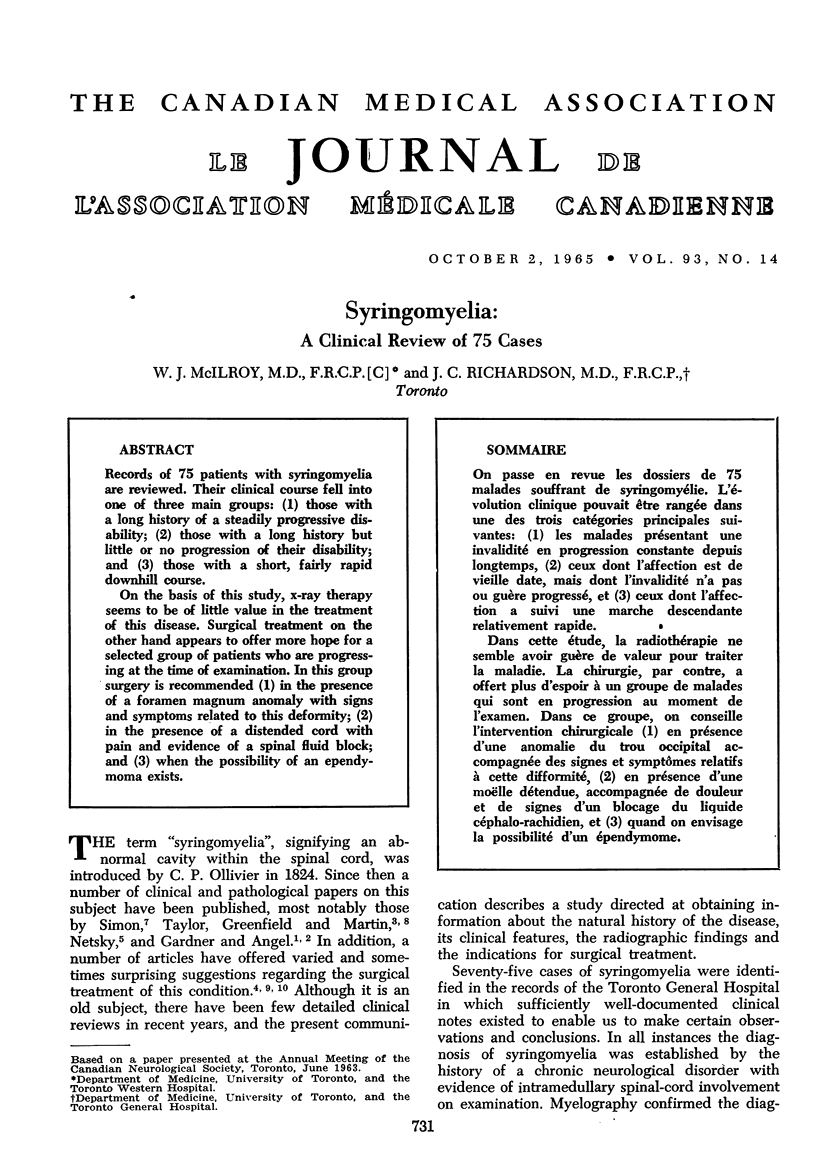
Selected References
These references are in PubMed. This may not be the complete list of references from this article.
- GARDNER W. J., ANGEL J. The cause of syringomyelia and its surgical treatment. Cleve Clin Q. 1958 Jan;25(1):4–8. doi: 10.3949/ccjm.25.1.4. [DOI] [PubMed] [Google Scholar]
- NETSKY M. G. Syringomyelia; a clinicopathologic study. AMA Arch Neurol Psychiatry. 1953 Dec;70(6):741–777. [PubMed] [Google Scholar]