


1266 A WESTERN EXPERIENCE WITH CHOLANGIOCARCINOMA: SURVIVAL BASED ON SURGICAL INTENT
Joseph F Buell, Chris R Schneider, Mark Thomas, Steve Rudich, Douglas Hanto, Michael Hanaway, Manish Gupta, Todd Merchen and Steve Woodle, University of Cincinnati, Cincinnati, OH, USASupplementary
BACKGROUND: Cholangiocarcinoma is an insidious and often fatal malignancy seen more commonly in Eastern populations. Thsi study aimed to examine the experiences of Western surgeons in the management of this disease. METHODS: 107 cases of intrahepatic and extrahepatic cholangiocarcinoma resected from to 12/93 to 12/03 were examined. Pt demographics, tumor characteristics and survivals were compared based on surgical intent, nodal involvement, and path margin. RESULTS: In the entire group the distribution of tumors was: intrahepatic (IH) n=26 (24%); Klatskin's n=63 (59%); mid-duct n=13 (12%); distal n=5 (5%). The mean age of the pts was 60 years (range 21–88) and the gender distribution was 47 female and 60 male. 20 pts (19%) were deemed unresectable, 37 (35%) were explored for diagnosis and found to be unresectable, 19 (18%) were resected with positive margins, and 22 (20%) pts underwent curative resection. Of all explored pts 16 (18%) patients were found to have nodal involvement. Survival was highest in low bile duct (60%) and intrahepatic lesions (62%), while mid and bifurcation lesions had the lowest survival 38% (p<0.04). Mean survival of all patients was 699 days (23.3 months). Mean survival for those with curative resection was 1129 days (37.6 months) with a 5-year survival of 72%. Mean survival in the palliative group was 573 days (19.1 months) with a 5-year survival of 28%. Those undergoing diagnostic surgery alone achieved a mean survival of 680 days (22.6) with a 10% 3-year survival while unresectable patients had a mean survival of 436 days (14.5 months). 19 pts (22%) had positive surgical margins, majority proximal (79%). Overall survival was greatly improved by resection of the bile duct. Curative resection appeared to be the most favorable compared to palliative and diagnostic resections (p < 0.004), and those with palliative resection fared no better than those with diagnostic explorations (p = 0.12). Aside from operative intent positive surgical margins did not significantly impact overall patient survival: 695 days (23.2 months) vs 700 days (23.3 months) (p = 0.2). Ten pts with vascular invasion were identified. Nine pts identified with major vascular invasion 6/9 (67%) are alive at 1-year follow-up. CONCLUSION: Cholangiocarcinoma continues to be an aggressive malignancy with high mortality rates. These data demonstrate that location of the primary tumor (intrahepatic or distal bile duct) and the intent (curative) of surgical excision translates into long-term patient survival. Conversely, palliative bile duct resections appear not to improve long-term survival, as did the presence of positive bile duct margins.
1267 LIVER HANGING MANEUVER DURING RIGHT HEPATECTOMY: WHERE ARE THE LIMITS?
Daniele Sommacale, Fédérica Dondéro, A Maeda, Réza Kianmanesh, Alain Sauvanet, Satoshi Ogata and Jacques Belghiti, Beaujon, Clichy, France
BACKGROUND: Liver hanging (LH) (maneuver of passing a tape in the retrohepatic avascular space) was proposed by our unit in order to control bleeding in the deeper parenchymal plane during right hepatectomy (RH). The aim of this study was to review our experience during right hepatectomy. METHODS AND RESULTS: Since June 2000, LH was systematically considered by 3 experienced hepatobiliary surgeons in 115 consecutive patients who underwent RH including 20 cases with cirrhosis. The feasibility and complications encountered were collected prospectively. LH was considered dangerous, not feasible and therefore was not attempted in 15 patients (13%). The clinical reasons were: involvement of the vena cava by a voluminous tumor (n = 3), collateral circulation in an inflammatory tumor (1), adherences due to previous surgery with mobilization of right liver (6), anatomical distortion observed in dysmorphic/atrophic liver parenchyma (3) and absence of surgeon's confidence at the early study's phase (2). Among the 100 cases where LH was attempted, it was interrupted in 10 cases because of difficulties in introducing the clamp in the appropriate plan due to voluminous tumors (n = 3), presence of a dysmorphic cirrhotic liver or atrophic liver after portal vein embolization (5). In two cases, LH was abandoned because of transient hemorrhage (estimated to 100 and 120 ml). In these two cases bleeding stopped spontaneously. In the remaining 90 cases (78% of all cases) LH was feasible, including 17 cirrhotic livers. In 70 cases this maneuver was easy without bleeding while in 20 cases LH was difficult with a small blood loss in 20 cases (up to 50 ml). In all of these difficult cases, patients had dystrophic/atrophic livers and/or adhesion of the retrohepatic caval plane due to previous chemoembolization, biliary disease and or portal embolization. CONCLUSION: LH during RH is a safe technique feasible in both cirrhotic and normal liver with tumors not involving the vena cava and the confluence of right and middle hepatic veins. Although bleeding always stopped spontaneously, we consider that this maneuver remains hazardous in patients with anatomical severe modifications induced by cirrhosis and/or inflammatory adhesions due to previous surgery or vascular embolization.
1268 IN-LINE RADIOFREQUENCY ABLATION – EFFECT ON BLOOD LOSS DURING TRANSECTION OF LIVER KIDNEY AND SPLEEN IN SHEEP
Koroush S Haghighi, Peter Kam, Steven A Daniel and David L Morris, University of New South Wales, Sydney, Australia and Resect Medical, Inc., Fremont, CA, USA
Blood loss during parenchymal transection of solid organs is still a problem. In patients with trauma to the spleen or kidney or during a partial nephrectomy or splenectomy, control of bleeding can sometimes be achieved only by total splenectomy or nephrectomy. In liver surgery for malignancy, the volume of blood loss is associated with morbidity, mortality and the rate of recurrence in malignancy. We have developed an in-line radio frequency ablation (ILRFA) device that is 5 cm long with six variably deployable electrodes. This device uses bipolar radiofrequency energy to form a plane of coagulated tissue for bloodless or near bloodless transection of solid organs. After use of this device on the spleen, kidney and liver in sheep, transection was performed with diathermy. This area was then matched with a corresponding resection on the same organ without the benefit of the ILRFA device. The amount of blood loss was measured by weighing swabs. A total of eight splenic, five hepatic and five kidney resections were performed that compared the use of ILRFA and diathermy resection with diathermy resection alone. Table demonstrates the results of ILRFA. We have demonstrated that ILRFA deployed in these solid organs is associated with significantly reduced blood loss. Currently, we are applying ILRFA to liver resection in man.
| Mean blood loss using ILRFA (ml) | Mean blood loss control (ml) | p value | |
|---|---|---|---|
| Liver, n = 5 | 43.2 | 221.8 | 0.005 |
| Kidney, n = 5 | 86.4 | 388.2 | 0.02 |
| Spleen, n = 8 | 33.1 | 124.4 | 0.005 |
1269 CYSTADENOMA AND CYSTADENOCARCINOMA OF THE LIVER: A SINGLE–CENTER EXPERIENCE AND REVIEW OF THE LITERATURE
David P Vogt and J Michael Henderson, Cleveland Clinic, Cleveland, OH, USA
PURPOSE: Review the long-term outcome of all patients who had surgery for a cystadenoma or cystadenocarcinoma at our institution. METHODS: A retrospective review of 22 patients (18 cystadenomas, 4 cystadenocarcinomas) who had surgery at our hospital from 7/85 to 11/02 was performed. Age, gender, race, symptoms, physical findings, imaging studies, operative notes, and pathology slides and/or reports were analysed. Follow-up (F/U) was obtained by clinic visits and/or phone interviews. All patients who were available for F/U had an imaging study. RESULTS: All 18 cystadenoma patients were female; the mean age was 48 years. Preoperative CT scans demonstrated septated cysts in all patients. Ten (55%) patients had undergone 17 prior intervention(s) and were referred because of recurrence/persistence of the cystic mass. None of the 13 patients who had complete excision of the cystadenoma, either by enucleation or resection, recurred (F/U range 1–132 months; mean 37 months). One of the cystadenocarcinoma patients was male; the mean age was 60 years. All patients had symptoms. Preoperative CT scans revealed masses with both cystic and solid components. All cystadenocarcinomas were treated with a liver resection. Two patients died at 6 and 12 months from metastatic disease. One patient is disease-free at 16 years and one is alive with metastases 10 years after resection. CONCLUSIONS: Cystadenomas are frequently misdiagnosed as simple liver cysts. If septations are seen on an imaging study, the diagnosis of a cystic neoplasm should be strongly considered. Intra-operative biopsy and frozen section are essential to guide the appropriate surgical procedure for a cystic liver mass. Cystadenomas require complete resection to prevent recurrence and possible malignant transformation. Cystadenocarcinomas carry a high risk of recurrence and mortality in spite of complete resection.
1270 SURGERY FOR COLORECTAL LIVER METASTASES: HEPATIC RESECTIONS OF MULTIPLE LESIONS AND MULTIPLE TIMES, AND RESECTION OF LUNG METASTASES
Zenichi Morise, Atsushi Sugioka, Junko Fujita, Akitake Hasumi, Akihiko Horiguchi, Shuichi Miyakawa, Kotaro Maeda and Morito Maruta, Fujita Health University, Toyoake, Aichi, Japan
BACKGROUND: Hepatic resection for the colorectal metastases was performed for 177 patients, 203 times since 1974 in our department. Among them, there were 87 patients with multiple metastases, 28 patients who underwent 2nd hepatectomy for recurrence in the residual liver (3rd in 3 patients) and 14 patients who underwent resection of the recurrence in the lung. We evaluate the impact of hepatectomies of multiple lesions and multiple times, and the resection of lung metastases. PATIENTS AND RESULTS: Overall survival rates of the cases with the first hepatectomy are 39.1%, 27.5% at 5 and 10 years, respectively. There are 117 cases with uni-lobular hepatic metastases (HI, including 26 cases with multiple metastases: Hl-multi), 38 cases with 4 or less bi-lobular hepatic metastases (H2) and 22 cases with more than 4 bi-lobular metastases (H3). The survival rates of HI cases are 48.7% and 41.4% at 5, 10 years, respectively, and they are significantly higher than for H2 and H3 cases. However, the differences between the survival rates for HI-multi, H2 and H3 are not significant, although that from H3 cases is lower than the other two groups. The number of metastases was not a significant prognostic factor. Among 121 cases past more than 5 years after the hepatectomies, 33 cases actually survived more than 5 years. They include 10 cases with multiple metastases from a total of 57 cases. Although 4 cases of H3 survived more than 5 years, 2 of them died of recurrence past after 5 years. There are 15 and 11 cases with multiple hepatectomies and resection for the recurrences in the lung past more than 5 years after the first hepatectomies. 7 and 8 of them actually survived more than 5 years. However, the outcome of the surgery for the patients with lung metastases before or at the time of liver metastases was poor. The survival rate of the patients with multiple liver metastases from colorectal carcinoma is significantly lower than that of the patients with solitary metastasis, regardless of the numbers and the locations. However, the fact that quite a few patients with multiple metastases actually survived more than 5 years (and there is no other modality with comparable outcomes for this disease) encourages the application of the procedure. Multiple hepatic resections and the resection of lung metastases after the first hepatectomy contribute to improving prognosis. The patients with resection for lung metastases after the first hepatectomy had an extremely good prognosis.
1271 SURGICAL OUTCOME OF HEPATECTOMY FOR INTRAHEPATIC STONES
Sung Wha Hong Sr and Soon DO Park Jr, Kyunghee University Hospital, Seoul, Republic of Korea
BACKGROUND: Biliary stones located above the confluence level of right and left hepatic duct are considered to be intrahepatic stones. The exact etiology of this condition is not known and it causes serious problems like cholangitis, liver abscess, obstructive jaundice and so on. With improving surgical technique and postoperative management, the results of surgical treatment have improved. METHODS: 77 patients with intrahepatic stones underwent hepatic resection at Kyung-Hee University Hospital from Jan. 1996 to Dec. 2002. Clinical analysis was done retrospectively. RESULTS: Male to female ratio was 1 : 9 and mean age was 54 years. The most common preoperative symptom was RUQ pain (81.8%). Associated diseases were CBD stones (53.2%),GB stones (23.4%), liver abscess (7.8%), malignant neoplasm (6.5%), choledochal cyst (5.2%) and so on. 19 patients (24.7%) had a history of cholecystectomy and 2 patients (2.6%) had undergone hepatectomy because of intrahepatic stones at another hospital. The location of the stones was right hemi-liver 18.2%, left hemi-liver 66.2% (left lateral section 44.2%) and bilateral liver 15.6%. The types of resections were as follows: right hemihepatectomy 11(14.3%), posterior sectionectomy 3 (3.9%), left hemi-hepatectomy 14 (18.2%), lateral sectionectomy 42 (54.5%), bilateral segmentectomy 7 (9.1%) and biliary enteric bypass 24 (31.2%). The most common surgical complication was wound infection (26%). 2 patients had remained stones and a patient had recurrent stones 4 years later after operation. Postoperative complication rate was 42.9%. One patient died of cerebral infarction and gastric ulcer bleeding. During the follow-up period (mean follow-up; 49.6 months), 59 patients (76.6%) are symptom-free, 15 patients (19.5%) had mild to moderate abdominal pain but intrahepatic stones were not detected on imaging studies. 3 patients had severe abdominal pain and one of them had recurrent stones. CONCLUSIONS: Hepatic resection still has high morbidity but good surgical outcome of intrahepatic stone treatment could be achieved.
1272 HEPATIC RESECTION PERFORMED IN AN OUTPATIENT SETTING
Peter A Learn, Steven P Bowers and Kevin T Watkins, Wilford Hall USAF Medical Center, San Antonio, TX, USA
BACKGROUND: Improvements in anesthesia, understanding of hepatic anatomy and advances in instrumentation have led to significantly reduced morbidity and mortality in hepatic resections. Laparoscopic techniques for liver resection are hampered by the fact that in laparoscopy even minimal hemorrhage can obscure adequate visualization. Technological advances leading to nearly bloodless parenchymal transection have made laparoscopic liver resections feasible. Here we report our single institution experience with laparoscopic liver resection. METHODS: Laparoscopic liver resection was performed utilizing a saline enhanced electrocautery hook as the primary instrument for parenchymal transection. Major vascular structures were divided utilizing a six row linear stapler. RESULTS: 14 patients, 8 males and 6 females, underwent resection utilizing this approach. Mean age was 53 years (range 24–85). There were 5 major and 9 minor resections, major resections being defined as resection of at least one complete Couinaud segment. Mean tumor size was 3.7 cm (range 1.6–10 cm). Minor resections were performed solely with the saline enhanced electrocautery hook. Two patients underwent additional laparoscopic procedures (APR for rectal cancer and distal pancreatectomy and RFA for neuroendocrine tumor). Excluding these two patients, minor resections were discharged on the night of surgery and major resections were discharged the next morning. No patient required transfusion. No drains were placed and there was no evidence of a biliary fistula. There have been no complications to date. CONCLUSIONS: Laparoscopic liver resection is feasible for lesions in accessible areas of the liver and can be performed with short hospital stays and minimal morbidity. Further investigation is required to determine if laparoscopic approaches for lobar resections can diminish patient morbidity.
1273 LAPAROSCOPIC-ASSISTED LIVER RESECTION: SINGLE-CENTRE EXPERIENCE OF 23 CASES
Joe PY Ha, CN Tang and MKW Li, Pamela Youde Nethersole Eastern Hospital, China, Hong Kong Special Administrative Region of China
BACKGROUND: Liver resection is the treatment of choice for both primary and metastatic colorectal liver secondary and this is also the preferred treatment option in patients with atrophic segment secondary to recurrent pyogenic cholangitis (RPC). The recent advances in laparoscopic instrumentation and techniques have made laparoscopic-assisted liver resection feasible. AIM: This study aimed to assess the technical feasibility, safety and adequacy of laparoscopic-assisted liver resection in a single center. PATIENTS AND METHODS: From October 1998 onwards, patients were selected for laparoscopic-assisted liver resection based on the location and number of tumors as well as the stone distribution in cases of RPC. Pathologies (primary tumor, colorectal liver secondary and hepatolithiasis) located at anterolateral segments (Couinaud segments 2, 3, 4b, 5 and 6) were suitable for laparoscopic-assisted resection. Satisfactory liver reserve and absence of coagulopathy were prerequisites and the preoperative investigations included percutaneous US, ERCP, CT scan liver and hepatic arteriogram. Pathologies were outlined by laparoscopic ultrasound (LUS) and resection plane was then marked with electrocautery. Either total laparoscopic resection or hand-assisted resection was carried out using ultrasonic shears and ultrasonic surgical aspirator. Hemostasis was secured with argon plasma coagulator and tissue glue. All patients have regular follow-up with liver function test and imaging study if required. RESULTS: There were 12 female and 11 male patients of median age 60 years (29–81) undergoing laparoscopic-assisted liver resection during the study period. Pathologies included HCC (9), colorectal liver metastasis (3), biliary cystadenocarcinoma (1), haemangioma (1) and RPC (9). There were 4 total laparoscopic resections and 19 patients had hand-assisted liver resections. 22 patients could have the laparoscopic resection successfully performed. There was 1 open conversion due to bleeding from left hepatic vein. The median operating time was 180 minutes (60–290). Median blood loss was 300 ml (10–1000). Median postoperative stay was 8 days (4–60). Complications included wound infection (4), incisional hernia (3) and bile leak (2). Median margin of 2.1 cm was obtained for malignant cases and the 1- and 2-year survival rates were 88.8% and 45.7%, respectively, for the 9 HCC patients. On median follow-up of 35 months, there was no recurrent cholangitic attack among those RPC patients after hand-assisted left lateral segmentectomy. CONCLUSION: The results confirm the feasibility of laparoscopic-assisted liver resection and compare favorably with the open approach.
1274 HAND-ASSISTED LAPAROSCOPIC VERSUS OPEN LIVER RESECTION FOR RECURRENT PYOGENIC CHOLANGITIS
Joe PY Ha, CN Tang and MKW Li, Pamela Youde Nethersole Eastern Hospital, China, Hong Kong Special Administrative Region of China
BACKGROUND: Recurrent pyogenic cholangitis (RPC) is a common disease in our locality. Stones situated in the peripheral intrahepatic ducts cause repeated cholangitis and stricture formation and in the long term, atrophy of the liver segments. The definitive treatment for this particular group of patients is liver resection. Recent advances in laparoscopic instrumentation and techniques have made laparoscopic-assisted liver resection feasible. AIM: This study aimed to compare the clinical results of hand-assisted laparoscopic and open left lateral segmentectomy for recurrent pyogenic cholangitis. PATIENTS AND METHODS: From July 1998 to July 2003, patients with recurrent pyogenic cholangitis and left intrahepatic ductal stones which were not amenable to endoscopic treatment were recruited for left lateral segmentectomy. Cholecystectomy and exploration of common bile duct were also performed for concomitant gallbladder stones or common bile duct stones. Suitable patients would also have a drainage procedure. Preoperative investigations included transabdominal US, ERCP, CT scan liver and EHIDA scan. Operation was done by either hand-assisted laparoscopic or open approach using ultrasonic shears or ultrasonic surgical aspirator. All patients have regular follow-up. RESULTS: Sixteen patients underwent left lateral segmentectomy for RPC during the study period. Nine of them received hand-assisted laparoscopic resection and seven had open resection. There was no difference in age and sex distribution between the two groups. The median blood loss was similar in both groups [400 ml (IQR 300) vs 400 ml (IQR 160), p = 0.787]. The median operating time was shorter in the open group [150 minutes (IQR 80) vs 225 minutes (IQR45), p=0.011] but the median postoperative stay was shorter in the hand-assisted laparoscopic group [8 days (IQR 3) vs 14 days (IQR 16), p = 0.031]. There was one open conversion in the laparoscopic group. Complications included one bile leak in each group, which were treated conservatively. There were one incisional hernia and one wound infection in the hand-assisted laparoscopic group, whereas three wound infections happened in the open group. There were no recurrent symptoms in both groups of patients upon a median follow-up of 36 months. CONCLUSION: The preliminary results show the feasibility of hand-assisted laparoscopic liver resection for recurrent pyogenic cholangitis. It shortens the hospital stay compared with open resection without significant increase in the risk for patients. However, it takes a longer time to accomplish the procedure. Skill refinement and improvement of ancillary technology might further improve the results.
1275 FACTORS AFFECTING OUTCOME IN LIVER RESECTION
Cedric S Lorenzo, Whitney Limm, Fedor Lurie and Linda L Wong, University of Hawaii, Honolulu, HI and St Francis Medical Center, Honolulu, HI, USA
PURPOSE: Studies show that high-volume centers are able to perform hepatic resections more safely and with decreased length of stay (LOS) compared with low-volume centers. They recommend that hepatic resections be referred to these high-volume centers. Factors that determine such outcomes are not clear. We intended to identify these factors. METHODS: Retrospective review of 114 liver resections by a single surgeon from 1993 to 2003. Patient charts were reviewed for demographics; diagnosis; type and year of surgery; anesthesiologist; ASA score; OR time; intraoperative transfusion requirements; epidural use; intraoperative hypotension; preoperative albumin; creatinine; and bilirubin. Postoperative morbidities, mortalities and LOS were the main outcome measures. Analysis was done using a linear regression model with SPSS v10.1. RESULTS: Primary indications for resections were hepatocellular carcinoma (n = 57), metastatic colorectal cancer (5), and benign disease (18). There were no intraoperative mortalities and 3 perioperative (30-day) mortalities (3.4%). Mortality did not occur in any patient with benign disease or age <50 years. Morbidity was higher in malignant (15.6%) than in benign (5.5%) disease. Complications included bile leak/stricture (n = 6), liver insufficiency (3), postoperative bleeding (2), myocardial infarction (2), aspiration pneumonia (1), renal insufficiency (1), and cancer implantation into the wound (1). Average LOS for all resections was 8.6 days. Longer OR time (p = 0.04), lower albumin (p < 0.001), higher ASA score (p < 0.001), no epidural use (p = 0.04), and higher creatinine (p < 0.001) positively correlated with a longer LOS. ASA score and creatinine were the strongest predictors of LOS. For every increase of 1 mg/dl in creatinine, LOS increased by 4.4 days. For every increase in ASA score of 1, LOS increased by 1.5 days. LOS was not affected by patient age, sex, diagnosis, malignancy, intraoperative transfusion requirements, anesthesiologist, epidural use, intraoperative hypotension, preoperative bilirubin, case volume per year or year of surgery. CONCLUSIONS: Liver resections can be performed with low mortality/morbidity and with good LOS by an experienced liver surgeon; however, outcome as measured by LOS is most influenced by patient comorbidities when entering into surgery. The strongest predictors were creatinine and ASA score. Preoperative albumin influenced LOS but to a lesser degree. Annual case volume did not influence LOS and had no impact on patient safety. LOS may not adequately reflect surgeon/hospital performance, as LOS is multifactorial and likely related to patient population, patient selection and increased high-risk cases with a surgeon's experience.
1276 LONG-TERM SURVIVAL AFTER HEPATIC RESECTION FOR HEPATOCELLULAR CARCINOMA WITH TUMOR THROMBI EXTENDING TO THE PORTAL TRUNK AND/ORTHE INFERIOR VENA CAVA WITH A SINGLE-DOSE TRANSARTERIAL INFUSION THERAPY USING CBDCA, MMC, AND ADM
Atsushi Sugioka, Fujita Health University, Aichi, Japan
The prognosis of hepatocellular carcinoma (HCC) with tumor thrombi extending to the major vessels remains extremely poor. Herein, we report long-term survival after hepatic resection for HCC with tumor thrombi extending to the portal trunk and/or the inferior vena cava (IVC) with a single-dose transarterial infusion therapy (TAI) using calboplatin (CBDCA), mitomycin C (MMC), and adriamycin (ADM). Among 297 resected cases of HCC at our institute, 20 cases were affected with such extended tumor thrombi; 8 cases in the ipsilateral major portal branch, 7 cases in the portal trunk, one case in the bilateral major portal branches, 3 cases in the major hepatic vein, and 4 cases in the IVC. Twelve cases were treated with hepatic resection combined with TAI, whereas eight cases were treated with hepatic resection alone. We examined changes in tumor markers (AFP, PIVKA-II), findings of abdominal computed tomography (CT), survival time, disease-free survival time, and histopathological findings. Among 12 cases treated with combination therapy, decrease in tumor markers <50% were observed in 6 cases (group A), whereas no change or increase was observed in 6 cases (group B). In group A, enhancement of tumor thrombi in CT during hepatic arteriography and reduction in tumor thrombi was shown in 4 cases (66.7%). 5-year survival rate in group A was significantly higher than in group B: 53.3% vs 0%. In group A, 4 cases (66.7%) survived for >5 years. 5-year disease-free survival rate in group A was also higher than in group B: 55.6% vs 0%. Histopathological study revealed complete necrosis including tumor thrombi in 2 cases and 95% necrosis in 2 cases. Three cases in group A had had a previous history of transarterial infusion chemotherapy using other regimens and resulted in elevation of tumor markers. This fact suggested that our transarterial infusion protocol had a specific effect on advanced HCC with extended tumor thrombi. In conclusion, some cases with HCC with extended tumor thrombi would be sensitive for transarterial infusion therapy using CBDCA, MMC, and ADM. A preoperative single-dose transarterial infusion therapy is minimally invasive and effective to determine appropriate operative indication for advanced HCC with extended tumor thrombi.
1277 EFFECT OF INFRA-HEPATIC INFERIOR VENA CAVA CLAMPING ON BLEEDING AMOUNT DURING HEPATIC DISSECTION: RANDOMIZED, CONTROLLED STUDY
Masato Kato, Keiichi Kubota, Junji Kita, Mitsugi Shimoda, Kyu Rokkaku and Takehiko Nemoto, Second Department of Surgery, Dokkyo University Hospital, Tochigi Prefecture, Japan
BACKGROUND: The success of hepatic resection can be associated with intra-operative blood loss because massive blood loss causes a poor prognosis. We hypothesized that decrease in central venous pressure (CVP) contributes to reducing the bleeding amount during hepatectomy. The aim of this study was to evaluate the effect of infra-hepatic inferior vena cava (IVC) clamping on the bleeding amount during hepatectomy. PATIENTS AND METHODS: 64 patients who were scheduled to undergo hepatectomy were assigned to either IVC clamping or non-clamping group according to age (≥60 or <60 years), indocyanine green retention rate at 15 minutes (≥20% or <20%), operative procedure (resection of less or larger than one Couinaud's segment) and tumor number (single or multiple) by prospective, randomized method. Pringle's maneuver was employed for 15 minutes and was released for 5 minutes. The infra-hepatic IVC was clamped for 15 minutes simultaneously. All analyses were compared by Mann-Whitney U test. RESULTS: 32 patients were assigned to the IVC clamping group and 32 to the non-clamping group. Background characteristics (IVC clamping group vs non-clamping group) were as follows. Diseases: HCC – 25, metastatic disease – 6, cholangiocarcinoma 1 vs HCC – 24, metastatic disease – 7, gallbladder cancer – 1, ICGR15 (<20% or ≥20%) 7; 25 vs 7; 25, number (single, multiple) 18; 14 vs 20; 12, hepatectomy procedure (minor, major) 17; 15 vs 16; 16. Age 66 (28–76) vs 67 (38–79). There were no significant differences in any factors. Surgical results (IVC clamping group vs non-clamping group) were as follows. Total blood loss: 480 ml (60–1254) vs 575 ml (28–2226) (p = 0.69): bleeding amount during hepatectomy: 170 ml (40–875) vs 249 ml (8–1397) (p = 0.86); dissection area: 48 cm2 (7.5–119) vs 52.5 cm2 (6.0–162.2) (p = 0.44); bleeding amount during hepatectomy/cm2: 4.6 ml/cm2 (1.1–14.9) vs 5.3 ml/cm2 (0.3–19.5) (p = 0.27). Liver transection time: 56 min (15–108) vs 48 min (15–157) (p = 0.15). There were no differences between the two groups. However, the CVP was significantly decreased in the IVC clamping group compared with the non-clamping group (−3 cmH2O (−6 − l) vs-1 cmH2O (−5 − 2) (p<0.01)). The RHV diameter during Pringle's maneuver was significantly decreased in the IVC clamping group compared with the non-clamping group (−2.2 cm (−4 − 0.1) vs 0 cm (p < 0.01)). The hospitalization length was similar in the 2 groups (26 days (17–89) vs 30 days (13–79) (p=0.92)). CONCLUSION: Although infra-hepatic IVC clamping decreased the CVP significantly, it did not significantly reduce the bleeding amount during hepatectomy. However, our study suggests that IVC clamping is a possible method for decreasing the bleeding amount during hepatectomy.
1218 DECREASED ATP CONTENT IN THE OLD MOUSE LIVER RESULTS IN INCREASED REPERFUSION INJURY: A NOVEL MECHANISM OF INJURY
Markus Selzner, Nazia Selzner and Pierre Alain Clavien, University of Zurich, Zurich, Switzerland
BACKGROUND: The effect of age on ischemic injury of the liver is unknown. METHODS: 60 minutes ischemia of 70% of the liver with or without ischemic preconditioning was performed in C57BL/6 mice of 6 weeks and 60 weeks of age. Some old mice were pretreated with 0.3 ml glucose 10% prior to ischemic preconditioning. Glycogen and ATP content of the liver was determined by bioluminescence and liver injury was evaluated by AST. Apoptosis was determined by Tunel staining and caspase 3 activity. Necroses were quantified by H&E staining. RESULTS: Young mice had 4-fold higher glycogen content in the liver than old mice prior to surgery (6 mcg/ml vs 1.5 mcg/ml) and at the end of reperfusion (1.84 mcg/ml vs 0.25 mcg/ml). Livers from young mice had significantly higher ATP content when compared with the old group prior to surgery (0.85 vs 0.4 nM/mg) and 4 h after reperfusion (0.6 vs 0.23 nM/ml). Old mice had significantly higher AST levels after 60 minutes ischemia and 4 h of reperfusion than young mice (12500 vs 8200 U/L; p < 0.05). Caspase 3 activity was higher in old mice than in young animals (98 vs 67 AUF/mg, p = 0.04). In addition, old mice had significantly more Tunel-positive hepatocytes 4 h after reperfusion when compared with the young control mice (55% vs 77%; p < 0.05). Ischemic preconditioning in young mice resulted in a decrease of AST release (3200 vs 8200U/L), Caspase 3 activity (39 vs 67 AUF/mg) and Tunel staining (15% vs 55%). In contrast, ischemic preconditioning did not protect the old mice with unchanged AST release (13200 vs 12500 U/), Caspase 3 activity (125 AUF/mg vs 98 AUF/mg) and Tunel staining (72% vs 77%). While young mice and old mice with ischemia alone had only minimal necrosis (10–20%), old mice with preconditioning developed massive necrosis 4 h after reperfusion (60%). Injecting glucose prior to preconditioning into old mice significantly increased the intrahepatic ATP levels (0.5 vs 0.25 nM/mg). In addition, glucose application to old mice prior to preconditioning resulted in a dramatic AST decrease (1800 vs 13200 U/L), a reduction of Caspase 3 activity (41 vs 125 AUF/mg) and a decrease of Tunel staining (5% vs 72%). Furthermore, old mice with glucose treatment prior to preconditioning developed less necrosis than old mice without glucose application (15% vs 60%). CONCLUSION: Old livers have a lower energy state than young livers. While ischemic preconditioning protects young livers against reperfusion injury, old livers develop increased necrosis after preconditioning. Pretreatment of old mice with glucose prior to preconditioning increases the hepatic energy state and results in strong protection of preconditioning against reperfusion injury.
1279 WHOLE BODY PROTEIN SYNTHESIS AND BREAKDOWN ARE UNCHANGED AFTER MAJOR HEPATECTOMY FOR MALIGNANCIES IN MAN
Marcel C Van De Poll, Yvette C Luiking, Stephen J Wigmore, Doris N Redhead, Regina G Beets-Tan, O James Garden, Jan-Willem G Greve, Nicolaas E Deutz, Kenneth C Fearon and Cornelis H Dejong, Maastricht University, Maastricht, The Netherlands and Royal Infirmary, Edinburgh, UK
BACKGROUND: In the fasted state, the rate of appearance of the essential amino acid phenylalanine (Qphe) is a measure for whole body protein breakdown. Phe is either used for protein synthesis or hydroxylated to tyrosine (Qphe-tyr). Hitherto, it was assumed that Qphe-tyr only took place in the liver but recently it was suggested that there is a role for the kidney as well. Using stable isotopes, Qphe and Qphe-tyr (as a semi-specific liver function) can be measured. From these data protein synthesis can be calculated. The aim of this study was to measure changes in metabolic liver function immediately following major hepatectomy and to relate these to functional liver volume. METHODS: 9 patients undergoing laparotomy aiming for major hepatectomy for malignancies in otherwise normal livers were studied. During surgery a 6-h primed continuous i.v. infusion of 2H5-Phe en 2H2-Tyr was administered and arterial blood was sampled hourly. Isotopic enrichment in plasma was measured by LC-MS. Results were related to functional liver volume (FLV) assessed by CT-volumetry and calculated as total liver volume minus tumor volume. 4 patients were irresectable, 2 patients underwent metastasectomy (<2% FLV resected) these 6 patients served as controls. RESULTS: Mean (SEM) resected volume in the remaining 3 patients was 62.7 (11.8)%. Protein breakdown prior to resection per kg body weight in the total group (n = 9) was 39.4(2.0) µmol/kg bw/h. During surgery no significant differences were observed between resected patients and controls. Qphe-tyr before resection in the total group was 3.23 (0.27) µmol/kg bw/h and did not change following resection. Consequently, whole body protein synthesis (baseline 36.2 (1.92) µmol/kg bw/h) is unchanged by major hepatectomy. Assuming that renal hydroxylation is unaffected by hepatectomy, hepatic Qphe-tyr per gram functional liver tissue increases 2.5-fold after resection (p < 0.005). CONCLUSION: Whole body protein breakdown and synthesis are unaffected by major (>60%) resection of normal liver. Following hepatectomy an adaptation occurs keeping whole body phenylalanine hydroxylation unchanged.
1280 CLINICAL SIGNIFICANCE OF ANATOMICAL RESECTION FOR A SINGLE HEPATOCELLULAR CARCINOMA
Kiyoshi Hasegawa, Norihiro Kokudo, Hiroshi Imamura, Taku Aoki, Keiji Sano, Masami Minagawa, Yasuhiko Sugawara, Tadatoshi Takayama and Masatoshi Makuuchi, Division of Hepato-Biliary-Pancreatic Surgery, Graduate School of Medicine, University of Tokyo, Tokyo and Third Department of Surgery, Nihon University School of Medicine, Tokyo, Japan
In spite of potential efficacy of anatomical resection for HCC, its clinical significance remains to be confirmed. The aim of this retrospective study was to evaluate the effects of anatomical resection for a single HCC. The study population consisted of 210 patients undergoing initial and curative hepatic resection for a single HCC, who were classified into anatomical resection (n = 156) and non-anatomical resection (n = 54) groups. The clinical data for the 210 patients were analysed retrospectively. The 1-, 3-, and 5- year overall survival rates were 95%, 84%, and 67% in the anatomical resection group, and 93%, 66%, and 35% in the non-anatomical resection group, respectively, while the 1-, 3-, and 5- year disease-free survival rates were 80%, 52%, and 27% in the anatomical resection group, and 69%, 20%, and 16% in the non-anatomical resection group, respectively. Anatomical resection is a significant favorable factor for overall and disease-free survivals: hazard ratios with 95% confidence intervals and p values are 0.51 (0.30–0.87, p = 0.01), and 0.56 (0.38–0.82, p = 0.003), respectively. Anatomical resection is an effective surgical approach for a single HCC.
1281 SUCCESSFUL HEPATIC RESECTION IN 123 CONSECUTIVE PATIENTS WITH HEPATOCELLULAR CARCINOMA
Keiichi Kubota, Junji Kita, Mitsugi Shimoda, Takehiko Nemoto, Kyu Rokkaku and Masato Kato, Second Department of Surgery, Dokkyo University Hospital, Tochigi Prefecture, Japan
BACKGROUND: Most hepatocellular carcinomas (HCC) develop in patients with damaged livers suffering from chronic hepatitis (CH) or liver cirrhosis (LC), consequently contributing to high postoperative morbidity and mortality rates. Since April 2000, we have extirpated HCCs in 123 consecutive patients with zero mortality. Herein, we present our results, paying particular attention to the surgical technique and postoperative management. PATIENTS AND METHODS: 123 of 231 patients who underwent hepatic resection at our department between April 2000 and November 2003 had HCCs. Their median age was 66 years (28–81 years). HBV or HCV antibodies were detected in 105 patients, whereas in the remaining 18 patients, they were negative. Their median ICG15 rate was 16% (4–40.6%). Eight patients previously underwent abdominal surgery including gastrectomy and cholecystectomy. In 9 patients, right lobectomy was preceded by portal embolization. Three patients underwent second resection at our department. One patient underwent hepatic resection 3 times and one underwent resection twice. When a HCC was located in segment 6, 7 or 8, the right thoracic cavity was also opened. In principle, hepatic resection was performed using CUSA or Pean fructure method under Pringle's maneuver. RESULTS: In all the patients, hepatic resections were performed successfully: partial resection, 54 cases; systematic sub-segmentectomy, 33; segmentectomy, 16; right or left lobectomy, 20. The median duration of Pringle's maneuver, bleeding amount and operation time were 57 min, 525 ml and 340 min, respectively. Red blood cells were transfused only in 7 patients. Gastrectomy, rectal resection, esophageal resection and hysterectomy were simultaneously performed in 2, 1, 1 and 1 patients, respectively. Postoperative morbidity included bile leakage in 7 patients, intractable ascites or pleural effusion in spite of administration of diuretics in 18, drain infection in 6 and pneumonitis or atelectasis in 3. Finally postoperative mortality was zero. Histology showed CH in 44 and LC in 77. In 2 patients, the liver was normal. CONCLUSION: Meticulous surgical technique enables reduction of the bleeding amount during surgery, contributing to less morbidity and zero mortality. However, intractable ascites or pleural effusion through drainage tubes is a serious problem in patients with LC, resulting in a longer hospital stay.
1282 INFLUENCE OF SURGEON WORKLOAD AND PATTERNS OF TREATMENT ON OUTCOME FROM HEPATIC RESECTION FOR METASTATIC COLORECTAL CANCER
Aali J Sheen, Andrew Renehan, Daren Subar, Hemant Vadeyar and David Sherlock, North Manchester General Hospital, Manchester and Christie Hospital, Manchester, UK
INTRODUCTION: We tested whether surgeon workload and patterns of treatment, as surrogate markers of cancer specialisation, influence outcome following hepatectomy for metastatic colorectal cancer. METHODS: We systematically searched for published reports using MEDLINE and EMBASE, supplemented by hand-searching of selected articles and reviews, from 1990 to 2001. Inclusion criteria were studies (i) metastatic colorectal cancer, (ii) single institute, (iii) a hepatic resection, and (iv) with data on 5-year survival. Main outcomes were 5-year survival, peri-operative mortality, and morbidity. Workload was defined as the number of cases per year; treatment was either resection alone or combined therapy. Data were pooled using averages weighted for study size. Associations were tested adjusting for study size using meta-regression models. RESULTS: Thirty-four studies (5816 patients) were identified that fulfilled the inclusion criteria. All studies were retrospective. All but six were in English. The pooled means for 5-year survival, peri-operative mortality, and morbidity were 33%, 2.7%, and 21%, respectively, but there were wide variations. The association between workload and survival was non-linear with no suggesstion of a threshold effect. The peri-operative mortality decreased significantly with increasing workload (p < 0.001). Against expectations, morbidity increased with increasing workload. There were only five studies that routinely employed combined therapy – there were no differences in their outcomes and resection alone studies. DISCUSSION: Within the limitations of a systematic review compiled from uncontrolled studies, this study has shown that surgeon workload may influence survival and morbidity. These findings justify prospective national/multi-centered audit on outcome from individual centres/surgeons following hepatectomy for metastatic colorectal cancer.
1283 LEFT HEMI-HEPATECTOMY RATHER THAN LEFT LATERAL SECTIONECTOMY IS FEASIBLE FOR THE SURGERY OF LEFT INTRAHEPATIC DUCT STONES
Koo Jeong Kang, Yong Hoon Kim, Tae Jin Lim and Jung Hyuk Kwon, Keimyung University, Dong-San Medical Center, Daegu, Republic of Korea
BACKGROUND: Understanding of the segmental anatomy of liver by CT cholangiography allowed consideration of the feasibility of left lateral sectionectomy. Recent studies of anatomical drainage areas and points of confluence of the medial segmental bile duct show interesting variations. The medial segmental duct joins to the left hepatic duct (35%), the confluence of the lateral inferior (B3) and superior (B2) branches (25%) and B3 (20%). With this knowledge of detailed anatomical variation, we can imagine that the bile duct of the medial segment may be injured in 45% of cases during lateral sectionectomy. Injury of the medial semental duct may cause inflammatory pseudotumor by obstruction of the remnant duct as well as bile leakage. Another possibility is that remnant stone (s) in the medial segmental duct may be retained in the duct. Most patients who have intrahepatic stones have a non-cirrhotic liver, therefore a little bit more hepatic resection including left medial segment does not cause small for volume for the patient. We analysed the results of 30 consecutive patients from 3 recent years who had lateral sectionectomy and left hepatectomy for treatment of stones in the left intrahepatic bile duct. Our study focused on the postoperative complications that may be caused by biliary injury. RESULTS: Seven of 12 patients who had left lateral sectionectomy developed complications postoperatively: bile leakage in 5 patients and pseudotumors in 2 patients. No complications developed in 17 patients who had left hepatectomy except in one patient with mild stricture of the caudate and right hepatic duct. One of the inflammatory pseudotumors that developed in the remnant segment 4 was improved by re-excision of the tumor, another pseudotumor caused chronic epigastric pain and was improved by antibiotic therapy for several months. CONCLUSION: Standard left hepatectomy rather than left lateral sectionectomy results in less complications such as remnant stones, bile leakage and inflammatory pseudotumor that may be caused by injury of the bile duct. For any kind of disease that is located in the left lateral or medial segment, standard left hepatectomy rather than left lateral sectionectomy is feasible with less complications.
1284 LIVER RESECTION BY USING STAPLE LINE REINFORCEMENT WITH AN ABSORBABLE MEMBRANE REDUCES BLEEDING AND BILE LEAKS
Esther C Consten, Michel Gagner, Sergio Bardaro and Luca Milone, New York Presbyterian Hospital, Weill Cornell University, New York, NY, USA
BACKGROUND: Liver resections, performed open or laparoscopically, may be complicated by perioperative bleeding and/or bile leaks. Bile leakage rates are reported to range from 1 to 16%. Available data on bleeding rates may even vary from 6 to 55%. AIM: A novel surgical stapling technique used for liver transection was tested. An absorbable polymer membrane integrated in the stapler for buttressing may reduce perioperative complications like hemorrhage and bile leakage after (laparoscopic) liver resections. MATERIALS AND METHODS: Twenty female 40-kg pigs were consecutively operated laparoscopically to remove the left lateral segments of the liver. The novel staple line reinforcement technique with an absorbable polymer membrane was used for transection in 10 consecutive animals (group A). A conventional stapler system was used to transect the left lateral segments of the liver in a control group of 10 animals (group B). After 6 weeks animals were sacrificed and analysed. Hepatic tissues at the transected planes were sent for histopathology. RESULTS: Operative data, including operative time were similar in both groups (avg group A: 64±8 minutes, avg group B: 68±11 minutes). Peroperative blood loss (25±5 ml vs 185±9 ml) was significantly higher in group B (p < 0.04). Mortality was 0% in both groups. Morbidity (10%) was encountered in 2 animals (all group B), including 2 subphrenic bilomas. At necropsy, results showed minimal adhesions in both groups. The absorbable material was absorbed and thus not found in group A. Histopathology results after 6 weeks showed fibrotic abnormalities and tears to vascular structures and bile ducts, only in group B. Methylene blue leakage was visualized in 4 cases in group B. No leaks or damage to vessels or bile ducts were encountered in group A. CONCLUSION: The results of this prospective survival animal study show that the novel staple line reinforcement technique with absorbable polymer membranes reduces staple line hemorrhage. Bile duct leakage was decreased too. This may contribute to decrease of bleeding and bile duct leakage after human (laparoscopic) liver resections.
1285 EARLY EXPERIENCE WITH TISSUELINK™ RADIOFREQUENCY TECHNOLOGY IN LIVER RESECTION
Duncan R Spalding, Satya Bhattacharya and Rob R Hutchins, HPB Surgery Unit, Royal London Hospital, London, UK
BACKGROUND: Intra-operative blood loss during liver resection remains a major concern because of its association with higher postoperative complications and shorter long-term survival. The aim of this study was to assess the feasibility and safety of TissueLink™ technology for anatomical and non-anatomical liver resection of hepatic tumours with specific reference to blood loss and adequate resection margins. METHODS: From August 2003 to December 2003, TissueLink™ assisted liver resection was performed on 14 patients with various hepatic tumours. Blood loss, transfusion requirements, morbidity and resection margins were reviewed prospectively. The TissueLink™ probe was applied along the resection edge. Liver parenchyma and vessels up to 5 mm were pre-coagulated and divided with scissors. Larger vessels were suture ligated. RESULTS: There were 7 men and 7 women of median age 57 (range 36–81). There were 12 malignant neoplasms (hepatocellular carcinoma 2, metastatic colorectal cancer 9, metastatic squamous cell carcinoma 1), and 2 benign neoplasms (haemangioma 2). Median operation time was 4.2 h (range 2.25–7.5) and median blood loss 464 ml (range 0–2000). 8 patients had a Pringle manoeuvre performed for a median time of 29 min (range 13–38). 3 patients were transfused, mean blood product requirement was 0.5 units per patient (SEM±0.291), no patient required clotting correction and mean difference in pre- and post-operative haemoglobin was 2.56 gm/dl (SEM±0.41). There was no mortality and morbidity was 21% (wound infection 2, chest infection 1, heparin-induced thrombocytopenia 1). There were no bile leaks and median resection margin for curative resection was 15 mm (range 2–20). CONCLUSION: Anatomical and non-anatomical liver resection assisted by TissueLink™ technology is feasible and safe. Potential advantages of this technique include reduced blood loss, lowering the incidence of bile leaks and adequate resection margins.
1286 INITIAL EXPERIENCE AND EVOLUTION OF LAPAROSCOPIC LIVER SURGERY
Joseph F Buell, Travis Doty, Chris R Schneider, Mark Thomas, K Gershin, Steve Rudich, Todd Merchen, Manish Gupta and Steve Woodle, University of Cincinnati, Cincinnati, OH, USA
BACKGROUND: The laparoscopic approach to the removal of the gallbladder and other solid organs (spleen and kidney) has revolutionized modern surgery. Only recently has such an approach been introduced to hepatic surgery. This study examines our initial experience with laparoscopic liver surgery. METHODS: Patient demographic, tumor characteristics, operative techniques and patient outcomes were examined for all procedures performed between 7/02 and 7/03. All procedures were performed in a supine position with a 4-port distribution with the use of the laparoscopic hand-assist device. RESULTS: Twenty-one resections were performed in 17 patients. The mean patient age was 55.4 years (range 24–82) with the majority (14/17) of patients Caucasians and 3 African American. The majority of patients (10/17) were female. Three resections were performed in cirrhotics. Five patients were resected for malignancy: HCC (n = 3), colorectal metastasis (1), lymphoma (1). The remaining 12 patients had symptomatic benign disease: cyst (n = 7), hemangioma (2), adenoma (1), FNH (1) and granuloma (1). Symptoms included: pain (n = 9), bleeding (2), and early satiety (1). The mean number of lesions was 1.4 (range 1–5). The average size was 7.6 cm (range 2–30). The mean operative time was 2.8 h (2–5). The majority of resections were non-anatomical but all encompassed one or multiple Couinaud segments: R lobe (n = 1), L lat segmentectomy (7), three segments (4), two segments (5), and single segment (4). Technology utilized included endoraticulating staplers (17) ultrasonic scalpel (12), and hemostatic/occlusive glue (17). The mean blood loss was 288 ml (50–1500). There were 4 complications including: laparoscopic take-back for bleeding (n = 2), bile leak (1), and death from hepatic failure (1). Two patients requiring ICU admission were both cirrhotics. The mean LOS was 2.9 days (1–14). In our comparable open hepatic resection series for benign tumors the mean blood loss (485 ml), operative time (4.5 h) and length of stay (6.5 days) were longer (p < 0.05). CONCLUSIONS: Laparoscopic hepatic surgery is complex but can be performed safely and efficaciously. The impact of minimally invasive techniques appears to provide several distinct advantages over traditional open hepatic surgery. However, the management of bleeding and bile leak are still in their infancy and will require significant modifications in technology and technique to minimize complications.
1287 CLINICAL APPLICATION OF MICROWAVE TISSUE COAGULATOR FOR LAPAROSCOPIC HEPATECTOMY IN CIRRHOTIC PATIENTS
Hironori Kaneko, Y Otsuka, M Tsuchiya, A Tamura, K Yamazaki,
N Joubara, S Takagi and T Shiba, Toho University School of Medicine Omori Hospital S, Tokyo, Japan
BACKGROUND: Microwave tissue coagulator (MTC) is known not only for ablation therapy of hepatic malignant tumor but also to provide satisfactory hemostasis in hepatic parenchymal dissection even in cirrhotic patients. Recent development has made the MTC feasible for laparoscopic use. METHODS AND RESULTS: 30 of 38 cases underwent LH with MTC. In 9 cases of liver cirrhosis, all cases had MTC for LH. Three different lengths of needle (10 mm, 15 mm and 30 mm) were used in the marking of dissection lines and less blood loss was achieved simultaneously. Safe hepatectomy with less blood loss was accomplished even in cirrhotic liver. Blade type MTC or ultrasonically activated scalpel use with MTC are very effective for parenchymal transection. Postoperative liver abscess or bile leakage was almost comparable with hepatectomy without MTC. The important technical consideration is to avoid the puncture of intrahepatic structures using intraoperative ultrasound. CONCLUSION: The critical determinant for safe laparoscopic hepatectomy is thorough familiarity with laparoscopic instruments and equipment. MTC is effective and essential equipment for laparoscopic hepatectomy, especially for non-anatomical partial hepatectomy in cirrhotic patients.
1288 ANATOMIC SEGMENTAL RESECTION COMPARED TO MAJOR HEPATECTOMY IN THE TREATMENT OF LIVER NEOPLASMS
Thomas S Helling Sr and Benoit Blondeau Sr, University of Missouri-Kansas City School of Medicine, Kansas City, MO, USA
Familiarity with liver anatomy and refinements in operative technique have led to interest in liver conservation when dealing with hepatic tumors. There is thought to be less morbidity, less blood loss (EBL), a shorter hospital stay (LOS), and no penalty for long-term survival with segmental hepatectomy. To test this hypothesis 198 patients who underwent segmental (seg group) (n = 71) or major (major group) (n = 127) hepatectomy for liver neoplasms were retrospectively reviewed. There was no difference in age or gender between the two groups. There were no deaths among 64 non-cirrhotics in the seg group and 4 deaths among 124 (3.2%) non-cirrhotics in the major group (p = 0.19). There were 4 postoperative complications in the seg group (5.6%) and 22 in the major group (17.3%) (p < 0.05). The EBL for the seg group was 912±842 ml compared to 3675±3110 ml in the major group (p<0.001). The LOS for the seg group was 9.4±6.4 days and for the major group 10.2±5.9 days (p=0.32). Life table analysis of survival for resection of colorectal metastases showed 2-year survival of 40% in the seg group (n = 17) and 45% for the major group (n = 46). Segmental resections trend towards less blood loss and operative morbidity and mortality with no apparent penalty in 2-year survival for colorectal metastases and, for those reasons, is preferable where possible. However, hospital LOS is not significantly shorter following segmental resection. In conclusion, segmental resections are preferable where feasible and should be utilized in efforts to conserve liver parenchyma.
1289 LIVER RESECTION OF COLORECTAL METASTASES IN PATIENTS OVER 75 YEARS: IS IT WORTHWHILE?
René Adam, Massimo Del Gaudio, Enrique Canepa, Sandrine Lelong, Gérard Pascal, Daniel Azoulay, Denis Castaing and Henri Bismuth, Paul Brousse Hospital, HepatoBiliary Center, Villejuif, France
BACKGROUND: With ageing of the population, surgery is increasingly proposed to more elderly patients. While the risk is expected to increase with age, operative risk and carcinological outcome of digestive surgery compare similarly to that of younger patients provided a good selection of patients. However, little is known of major surgery such as hepatic surgery. The aim of the study was to compare the outcome of liver resection for colorectal metastases (CRM) in patients of ≥75 years to that of younger patients and to assess their long-term survival. METHODS: From February 1980 to December 2000, 610 patients with CLRM were consecutively resected at a single institution. From these, 25 (4%) were ≥75 years at the time of liver resection. Preoperative characteristics were similar to those of the 585 patients <75 years, in terms of sex ratio, stage of the primary, timing of appearance of liver metastases, their tumor size, CEA levels and the presence of concomitant extrahepatic metastases. The mean number of metastases was however lower in patients ≥75 years (2.1 vs 3.1, p < 0.05). Fifteen of the 25 elderly pts (60%) received preoperative chemotherapy compared to 406 (75%) in the younger group (NS) and 3 had portal embolization (13%) compared to 34 (7%) in the control group (NS). RESULTS: Two patients died post operatively (8%) in the aged group compared to 9 (1.5%) in the control group (p=NS). Postoperative morbidity was similar in both groups either in terms of local (14% vs 21%) or general complications (13% vs 17%) (p = NS). Hospital stay was also similar (17±11 vs 14±11 days, p = NS). After a mean follow-up of 23±23 months, hepatic recurrence developed in 13 pts (52%), 7 of whom were treated by a repeat hepatectomy (28%), a proportion similar to that of younger pts (53% hepatic recurrence and 31% repeat hepatectomy, respectively, p=NS). Fourteen pts were alive (56%), 10 without recurrence (40%) and 1-, 3- and 4-year survival was similar to that of younger patients (87%, 56% and 46% vs 90%, 60% and 48%, respectively, p = NS). CONCLUSION: Outcome of liver resection for colorectal metastases in patients ≥75 years compares similarly to that of younger patients both in terms of risk and of survival. Surgery in these patients is warranted provided that they are fit for major surgery.
1290 COAGULATION FUNCTION AFTER PARTIAL HEPATECTOMY
Anthony MH Ho, Manjo K Karmakar, Anna Lee, Winnie Samy, Jie Yi, Amy Cho and Paul BS Lai, Chinese University of Hong Kong, Hong Kong, Hong Kong Special Administrative Region of China
INTRODUCTION: Patients undergoing hepatectomy may have underlying liver dysfunction due to hepatitis, cirrhosis, and carcinoma. Liver resection, intraoperative ischemia and blood loss may further compromise liver function and lead to coagulopathy. Coagulopathy may influence postoperative management and the decision whether to institute neuraxial blockade. We sought to determine the degree of postoperative coagulopathy in hepatectomy patients. METHODS: After securing institutional ethics approval, we reviewed the charts of all patients who had undergone partial hepatectomy at the Prince of Wales Hospital between Jan 1999 and Oct 2003. Patients requiring re-exploration for bleeding were excluded. Only patients who had complete INR data up to the third postoperative day were included. Patient demographics, comorbidity, and operative data were also recorded. RESULTS: There were 220 adult hepatectomies during the study period. Three patients were excluded due to early re-exploration. 67 patients were excluded due to incomplete data. The data of 150 patients were analysed. Bonferroni correction was applied when comparing postoperative data to preoperative data. Figure are mean and 95% confidence intervals (95%CI). The INR peaked around the second postoperative day with a peak of 1.69 (1.62–1.76). Thereafter, it started to improve. The INR was above 1.40 between days 1 and 3. There was an overall significant difference in the INR values over time (F4,l44=87.06, p < 0.001). All postoperative INR were higher than preoperative values. All 150 patients received patient-controlled morphine and had satisfactory recovery. DISCUSSION: The results suggest that there was major postoperative coagulopathy. Insertion or removal of an epidural catheter between the first and third postoperative days may be associated with an increased risk of spinal hematoma. Clinicians should balance the risks and benefits that could be derived from this form of anesthesia and analgesia.
1291 PRINCIPLES OF TREATMENT OF NON-PARASITIC LIVER CYSTS
Mikhail F Zarivchatskiy, Oleg V Gavrilov, Oleg Yu Pirozhnikov and Ildar N MuGatarov, Academy of Medicine, Perm, Russian Federation
115 patients with cystic liver injuries, among them 100 with non-parasitic and 15 with echinococcous cysts, were observed. Women (88) aged 41–72 prevailed (71). In 72 cases the cysts proceeded from the right lobe of the liver, in 23 from the left lobe, 20 patients had cysts in both lobes. The diameter of cysts varied from several millimeters to 15–20 cm. In order to diagnose cysts the complaints (heaviness and dull pain in epigastric and right subcostal areas, nausea, loss of appetite) were studied and palpation, percussion, auscultation, ultrasound investigation (USI), computer tomography (CT) were performed. Roentgenoscopy of stomach and duodenum and laparoscopy were fulfilled in cases when it was necessary. Laboratory investigations consisted of general analysis of blood and urine, examination of homeostasis system, content of bilirubin and its fractions, glucose, cholesterol, study of alanine aminotranspherase (ALT) and aspartate aminotranspherase (AST) levels, alkaline phosphatase, urea, creatinine and other biochemical blood constants. Echinococcosis was confirmed by reactions of indirect hemagglutination or latex agglutination with echino-coccus antigen. The size of cysts, number, character and location, patient's age and concomitant diseases were taken into account in choice of treatment method. Among the most frequently met concomitant diseases were chronic pancreatitis (13.9%), chronic cholecystitis (11.3%), hypertension (10.4%) and others. Open interventions (75%), laparoscopic operations (17%) and transdermic punctures under USI control with aspiration of cyst content and injection of 98% ethanol (8%) were used in treatment of non-parasitic cysts. In echinococcosis patients resection of liver cyst was performed in 13%, partial pericystectomy in 20%, total pericystectomy in 7%, closed echinococcectomy in 13%, half-closed echinococcectomy in 34%, open echinococcectomy in 13%. Postoperative complications occurred in 22 patients (19.13%). The most frequent complicaitons were wound suppuration (6.9%), pneumonia (5.22%), suppuration of residual cavity (2.61%), hemorrhage (1.74%). Subphrenic (0.87%) and subhepatic (0.87%) abscesses, biliary fistulization (0.87%) were met rarely.
1292 HEPATECTOMIES WITHOUT BLOOD TRANSFUSION: POSTOPERATIVE ANEMIA DOES NOT JUSTIFY BLOOD TRANSFUSION
Guido Torzilli, Andrea Gambetti, Daniele Del Fabbro, Piera Leoni and Natale Olivari, Hepatobiliary Surgery Unit, Chirurgia Generale 1, Azienda Ospedaliera Provincia di Lodi, Lodi, Italy
AIMS: There is a wide variation among different series about blood transfusion rates after liver resection: this is probably due to a different interpretation of postoperative anemia. With the goal of limiting blood transfusion, we are convinced that postoperative anemia is in part a physiological phenomenon. To verify the natural course of the postoperative anemia, we analysed serum hemoglobin and hematocrit values in patients who underwent liver resection without blood transfusion. MATERIAL AND METHODS: 46 consecutive patients with primary and metastatic liver tumors were prospectively enrolled. Surgical treatment consisted of dissection technique performed under intermittent warm ischemia, using intraoperative ultrasonography, and without blood transfusion. The hematocrit and hemoglobin concentration in serum were sampled preoperatively and on the 1st, 3rd, 5th and 7th postoperative days. RESULTS: No postoperative mortality and major morbidity were observed. No patient received blood transfusion. The hematocrit and hemoglobin concentration in serum were significantly lower on the 3rd postoperative day than on the 1st, 5th and 7th postoperative days: differences among the 1st, 5th and 7th postoperative days were not significant. CONCLUSIONS: The fluctuations of hemoglobin and hematocrit levels after liver resection showed a steady and significant decrease until the 3rd postoperative day and then an increase. Therefore, a decrease in the hemoglobin and hematocrit levels between the 1st and 5th postoperative day without evidence of active bleeding from drain discharge or any other possible source of bleeding does not justify blood administration.
1293 EXPERIENCES OF HEPATECTOMY USING TL-90 LINEAR STAPLER
Yuichiro Otsuka, Hironori Kaneko and Masaru Tsuchiya, Toho University Omori Hospital, Tokyo, Japan
AIM: Introduction of mechanical devices in the field of gastrointestinal surgery has simplified the operative manipulation and shortened the operative duration. However, stapling devices have been rarely used in liver surgery. We present a unique technique in hepatectomy using TL-90 linear stapler (TL-90). PATIENTS: We performed 18 hepatectomies using TL-90 from 1995 to 2002. Surgical indications were primary hepatic cancer in 6, metastatic liver cancer in 9 and liver laceration in 2 patients. Surgical procedures were left lateral segmentectomy in 12 patients, partial hepatectomy including caudate lobe in 3, right lobectomy in 2 and left lobectomy in 1. OPERATIVE METHOD: Operative exposure is acquired in necessity ascending the insertion of TL-90 on the resection line. In left lateral segmentectomy, the falciform ligament, the left triangular ligament and the left coronary ligaments are divided in order to expose the left lateral segment and the left hepatic vein. The linear stapler TL-90 is applied at the left lateral segment to form a maximum angle between the anvil and the cartridge, with its ventral aspect at the left edge of the falciform ligament and its dorsal aspect at the left edge of the fossa ductus venosi. In partial resection of the caudate lobe, after the mobilization of the caudate lobe with division of short hepatic veins from the vena cava, TL-90 is applied, obtaining good surgical margin. In right or left lobectomy, after the division of Glisson's sheath at hepatic hilum, approximately a half thickness of liver parenchyma is divided in the conventional manner, then TL-90 is applied on the resection line. Hepatic parenchyma is gradually compressed by screwing the cartridge equipped with staples. When the gap setting is in a safe position, staples are fired. Liver parenchyma with vasculatures is divided by electrocautery. The staple line is reinforced by running sutures in order to secure hemostasis. RESULTS: A safe, reliable and immediate liver parenchymal transection with this maneuver took only about 10 minutes with minimum blood loss. What should be noted about this procedure concerned the need for reinforcement by suturing to maintain hemostasis given the risk of incomplete closure of bile duct and occasional arterial bleeding with two rows of staplers by TL-type. CONCLUSION: It is considered that employing the TL-90 linear stapler is a safe and useful technique for hepatic resection in order to simplify the transection of liver parenchyma.
1294 AN ALTERNATIVE APPROACH TO LIVER RESECTION: SALINE ENHANCED THERMAL SEALING BY TISSUELINK DEVICE
Paul BS Lai, Kit Fai Lee, Bertrand CH Leung, John Wong, Frances KY Cheung, Jeff SW Wong and Agnes MY Yu, Chinese University of Hong Kong, Hong Kong, Hong Kong Special Administrative Region of China
BACKGROUND: We report on the feasibility study of a new device (monopolar Dissecting Sealer 3.0; TissueLink Medical Inc, Dover, NH, USA) that incorporated the technology of saline-enhanced thermal sealing in liver resection. METHODS: From February 2003 to July 2003, 20 patients (mean age, 56.7 years) undergoing hepatectomy for various indications (hepatocellular carcinoma or colorectal liver metastases) were studied. In replacement of the monopolar diathermy, the technique of Dissecting Sealer (TissueLink Medical Inc.) was used to assist hemostasis during transection of liver parenchyma. No inflow occlusion (Pringle's maneuver) was employed and the perfusion of the remnant liver was maintained throughout the operation. RESULTS: All 20 hepatectomies were completed without resorting to inflow occlusion and hemostasis were satisfactory in most cases. Mean operating time was 267 minutes. Median length of stay in the intensive care unit was 1 day and the median hospital stay was 10 days. There were no mortality or major intraoperative complications. Four patients developed pleural or subphrenic collections requiring USG-guided drainage procedure. No post-operative hemorrhage or bile leakage were noted. CONCLUSIONS; The Dissecting Sealer is technically safe and easy to apply. It has advantages over conventional diathermy in better hemostasis without charring during cirrhotic liver resection. The use of this device allows cirrhotic liver resection to proceed without the need for inflow occlusion. Further studies are warranted to further define the role of this new for cirrhotic and non-cirrhotic liver resection.
1295 SAFETY AND EFFICACY OF BIOGLUE IN PREVENTING BILE LEAKAGE AFTER MAJOR LIVER RESECTIONS
Marwan S Abouljoud, Atsushi Yoshida, Dean Kim and John Jerius, Henry Ford Health System, Detroit, MI, USA
PURPOSE: Bioglue has not been described previously as a liver sealant after major resections. We describe our experience with using Bioglue to coat the liver resection surface and compare it to a fibrin sealant (Tisseal). METHODS: Chart review of prospectively collected data on major liver resections. Enucleations were not included. All procedures were done by one surgeon (MSA) using a combination of CUSA and electrocautery. Cut liver surface was managed initially with Tisseal and more recently with Bioglue. Bile leak was noted if seen in the drainage fluid or as cut-surface fluid collection on CT/MRI. Groups were compared using Fisher's exact test or Student's t-test where appropriate. RESULTS: From December 2000 to November 2003, 68 major liver resections were performed; 56 had coating of the cut liver surface and are summarized in this report. There were 32 resections for malignant disease, 13 for benign disease and 11 living donor right lobectomies. Clinically significant bile leaks occurred in 2 patients (3.7%). Tisseal was used in 31 patients and Bioglue was used in 25 patients. Groups were comparable in age and sex and magnitude of resections. There were no adverse events due to coating of the cut liver surface. There were 2 bile leaks in the Tisseal group (2/31, 6.5%). One presented as an infected biloma 10 days after resection and required surgical intervention due to associated wound complications; the second was noted as bilious drainage in the JP drain 3 days after the operation. Both required 4–6 weeks of drainage to complete resolution. There were no clinically significant leaks in the Bioglue group (0/25, 0%); however, on follow-up CT scans 2 patients (8%) had an asymptomatic fluid collection (3–5 cm) adjacent to the resection surface and were presumed to be bilomas. Neither required any intervention and continue to shrink on follow-up. CONCLUSIONS: 1 – Fibrin sealant (Tisseal) and Bioglue can be used safely to coat the cut surface after major liver resections. 2- Bioglue resulted in no clinically significant bile leaks after major liver resections. 3-This experience warrants further study and larger investigation of the potential value of Bioglue in reducing the incidence of clinically significant bile leaks after major liver resections.
1296 A STRATEGY OF PULMONARY METASTASIS OF HEPATOCELLULAR CARCINOMA AFTER HEPATECTOMY
Satoshi Katagiri, Ken Takasaki, Masakazu Yamamoto, Takehito Otsubo, Kenji Yoshitoshi, Mie Hamano, Yoshihito Kotera, Shunichi Ariizumi and Hideo Katsuragawa, Tokyo Women's Medical University, Tokyo, Japan
BACKGROUND: The medication of hepatocellular carcinoma (HCC) in Japan has been established with various methods. As a result, cumulative survival rate of HCC has been improved. Therefore, extrahepatic metastases of HCC have increased, but the medication is not established. We studied the strategy for pulmonary metastasis of HCC after hepatectomy. METHODS: A total of 1256 patients were resected for HCC during 1985–2000 in our institute. Of these patients, pulmonary metastasis was detected as first recurrence of the extrahepatic metastasis after curative hepatectomy in 42. We analysed cumulative survival rate and prognostic factors for survival. Prognostic factors are 24 factors. RESULTS: The 1- and 5-year survival rates after hepatectomy were 77.4% and 47.8%. The 1- and 5-year survival rates after diagnosis of pulmonary metastasis were 48.1% and 22.6%. The results of multivariate analysis for survival showed histopathologic portal vein invasion, operation and oral chemotherapy using tegafur uracil (p = 0.0308, p = 0.0201, p = 0.0040, respectively). These 3 factors that were selected in multivariate analysis were studied for survival rate. There was a statistically significant difference (p < 0.0001) in 5-year survival rate between the any 2 factors group and less than 1 factor group (49.4%, 0%). CONCLUSIONS: As a strategy for pulmonary metastasis of HCC after hepatectomy, the cases without histopathologic portal vein invasion of resected HCC, or an aggressive resection of pulmonary lesion or oral chemotherapy were remarkably effective in improving the survival rates.
1297 COMPLICATIONS IN HEPATIC SURGERY IN A SPECIFIC HIGH VOLUME CENTER: 12 MONTHS EXPERIENCE
Gustavo Stork, Juan Pekolj, Martin Palavecino, Mariano Moro, Emilio Quinoñez, Francisco Bonofiglio and Eduardo De Santibañes, Hospital Italiano, Buenos Aires, Argentina
BACKGROUND: Surgical treatment indications in benign and malignant hepatic tumors have changed in the last 20 years. The total number of hepatic resections has increased in reference centers. OBJECTIVE: To evaluate complications after hepatic resections in a specific high volume Hepato-Pancreato-Biliary Center, during a 12-month period. METHODS: 80 patients with hepatic resection were included in a cohort retrospective analysis, between January 2001 and January 2002. Mean age was 55 years (14–79), females comprised 55%. We analysed: tumor specifications, hepatic resection performed, transfusions, vascular clamping, duration of surgery, associated procedures, length of hospital stage, postoperative complications (using Clavien score) and mortality. For each variable, the odds ratio (95% confidence interval) for postoperative complications was calculated. RESULTS: 61 patients (76.2%) were treated because of malignant pathology (51 with secondary and 10 with primary tumors) and 19 (including 11 living-related liver donors) were treated for benign pathology. 30 patients (37.5%) had major resections (≥3 Couinaud's segments), 50 patients (62.5%) had minor resections. 16 patients (20%) required blood transfusions (13 with autologous blood and 3 with bank blood). Vascular intermittent clamping was used in 66 patients (82.5%). Associated procedures were carried out in 46 patients (58%). Mean duration of surgery was 200 minutes. Mean hospital stay was 6 days (3–12). Morbidity occurred in 15 patients (18.7%). 10 patients (66.6%) were Clavien I or Ha (considered as minor complications) and 5 (33.3%) were Clavien lib or more (considered as major complications). Complications were significantly higher in patients with major hepatic resections than in patients with minor hepatic resections (odds ratio 10.4, CI 95% 2.6–25.6, p = 0.002); primary hepatic tumors than in secondary tumors (odds ratio 7.5, CI 95% 1.6–23.4, p=0.01); mean surgical duration >200 min vs <200 min (odds ratio 11.9, CI 95% 3.3–29.7, p = 0.00007). There was no mortality associated with the procedure. CONCLUSIONS: 1- Hepatic resections performed in high volume centers have a low complication risk and have almost no mortality. 2- Major hepatic resection, primary malignant tumors and mean surgical duration >200 min, were risk factors associated with postoperative complications. 3- Most complications can be treated with non-surgical or minimally invasive procedures.
1298 SEGMENT DISTRIBUTION OF THE ECHINOCOCCUS OF LIVER
Veselin M Stanisic, M Milicevic and M Radunovic, General Hospital, Berane and Institut for Digestive Diseases of Medical School University in Belgrade, Serbia and Montenegro, Yugoslavia
INTRODUCTION: Echinococcosis is a cosmopolitan parasitic zoonotic disease that appears by invasion of the larval form of the echinococcus in animals and humans. The most common localization of the cystic echinococcus cyst is in liver (65–75%), lungs (25%) and it can be localized even in any other segment of the human organism (5–10%). In the right liver lobe segments IV–VIII, 4/5 echinococcus cysts are localized. By its own complications (rupture, compression, infection, allergy) it can imperil the life of a patient. Treatment could be surgical (radical) and medicamentous. The best results of surgical treatment are in patients operated in the asymptomatic period (state of clinical latency). Most patients are operated in a status of manifested clinical symptoms and the mortality of sick and operated patients is 2–5%. The aim of this work is to show the results of the segmental distribution of the echinococcus of liver in the course of our 5-year search in operated patients by either conservative or radical procedures. METHODS AND MATERIALS: In a prospective study during the 5-year search (1995–2000) we operated on 42 patients with echinococcus cyst of the liver. This disease had been arising in men and women at approximately the same ratio (1.33:1). The average age of the patients was 41.35±20.35 years. Farmers dominated (21–50%). Most of the operated patients were in adolescence and in early senility (58%). There was positive familial anamnesis in 5% of patients. 38/90 (48%) patients were operated by conservative operative procedures and 4 (9.52%) by radical procedures. The average size of the echinococcus cyst was 10.19 cm (the smallest was 5 cm, the biggest 28 cm). The solitary (73.80%), multivesicular (57.14%) echinococcus cysts of middle size of 5–10 cm (64.28%) dominated, edged localization (48%), normal perycysts (93%), localized in the right liver lobe (76%). 42.85% of patients had a complicated echinococcus cyst. The most frequent complications were cystobiliary ruptures (33.33%) and infection of the cyst (16.66%). The average length of the postoperative hospitalization was 10.88 days, preoperative 3.02 days. Total mortality was 4.76% (2 patients), specific 2.38% (1 patient). We had a recidivation in 2.38% (1 patient). RESULTS: In a series of 42 operated patients, the involvement of one segment of liver by echinococcus cyst was 52.38% and multisegmental involvement was 47.62%. The prevalent involved single segment of liver was VIII (19.04%), then VII (14.28%), V (7.14%), VI (4.76%), III (4.76%), IVa (2.38%). At multisegmental localization, the three prevalent involved segments were VI (23.80%), VII (21.42%) and V (21.42%). The inclusion of two liver segments occurred in 65% of patients, three segments 15%, four 5%, five segments 10% and six segments 5% of patients. The most common combinations of the two involved liver segments were II and III (30.76%), V and VI (23.07%), VI and VII (15.38%). Postoperative complications were 2.01 times more frequent in patients with multisegmental localization of the echinococcus cyst. The average length of the postoperative hospitalization with single segmental localization of the echinococcus cyst amounted to 8.76 days (SD 1.3 days, med. 8) and with multisegmental localization 14.23 days (SD 6.24, med. 12 days). The segmental distribution of the echinococcus cyst did not influence the appearance of recidivation and mortality in our series. DISCUSSION: In our series, single segmental localization of the echinococcus cyst dominated with 52.38% in segments VII and VIII of the liver. The diameter of the most frequent bifurcate type of the portal vascularization of segment VIII of liver of 4.5–9 mm and accessory 2.5–2.8 mm then portal venous branches of segment VII of 5.0–8.0 mm that are bigger than diameters of portal branches of the other liver segments as well as smaller angulated corner of their course in relation to intrahepatic portal branches of the other segments are anatomical assumption for such as this distribution of the echinococcus cyst. CONCLUSION: The smaller angulation of the right portal vein and bigger venous diameters of the right sectorial (anteromedial, posterolateral), then segmental venous portal branches for segments VIII, VII, VI and V of a liver lead to higher frequency of inclusion of these segments by echinococcus cyst in relation to I, II, III, IVa and IVb as well as a higher frequency of localization of this cyst in segments VII and VIII at the individual segmental involvement of a liver parenchyma. At multisegmental localization of the echinococcus cyst for the segments of liver of II–VIII, except IVa subsegment, there is no statistically significant distinction in distribution of the localization of the echinococcus cyst between the one concrete segment and localization in other segments.
1299 LAPAROSCOPIC PARENCHYMAL DIVISION OF THE LIVER. COMPARING EFFICACY AND SAFETY OF CUSA, AUTOSONIX AND LIGASURE
Ulf Jersenius, Diddi Fors, Sten Rubertsson and Dag Arvidsson, Karolinska Hospital, Stockholm and Uppsala University Hospital, Uppsala, Sweden
Laparoscopic liver resections could potentially reduce morbidity of liver surgery by reducing the abdominal incision. Gas embolism has been described as a potential risk. The aim was to compare 3 different techniques for parenchymal division, namely ultrasonic dissection (CUSA), ultrashears (Autosonix) and Ligasure. 18 standardized lobe dissections were performed in six pigs. Cardiovascular and ventilatory parameters were extensively monitored including on-line videotaping of the right heart by esophageal echography. Arterial blood gases were continuously monitored by a Paratrend probe. Operation time was longer and there was somewhat more bleeding for CUSA. Gas bubbles (grade I) were seen going through the right heart into the pulmonary artery occasionally with all techniques; however, there were significantly more with Ligasure (0–38% of dissection time) and CUSA (0–20%) as compared with Autosonix (0–3%). In only one episode of gas bubbling was it associated with any changes in hemodynamics or blood gases. This episode occurred during one of the Ligasure dissections. The esophageal echo showed a prolonged period of dense bubbling (grade II) in conjunction with an immediate increase in arterial pCO2, a drop of pO2 and an increase of pulmonary artery pressure. In conclusion, all three techniques are feasible for use. Slight echographic gas bubbling in the right heart is innocent. More extensive bubbling could indicate significant gas embolism with clinical implications. This potential risk factor warrants further studies.
1300 INFLUENCE OF SIMULTANEOUS HEPATIC RESECTION ON LEFT-SIDED COLONIC ANASTOMOSES
Hideki Sasanuma, Yoshikazu Yasuda, Frank Viborg Mortensen, Masaki Okada, Keisuke Yamashita and Hideo Nagai, Department of Surgery, Jichi Medical School, Tochigi, Japan and Department of Surgical Gastroenterology, Aarhus University, Aarhus, Denmark
BACKGROUND: The surgical strategy for the treatment of colorectal cancer and synchronous hepatic metastases remains controversial. Many surgeons fear postoperative complications if performing a one-step procedure. Our goal was to investigate the influences of resected liver volume on the healing of left-sided colonic anastomoses in rat model. METHODS: 54 Sprague-Dawley rats were divided into 3 groups (n = 18 in each): group I, resection of 1 cm of the left side colon (control); group II, resection of 1 cm of the left side colon and simultaneous 40% hepatic resection; group III, resection of 1 cm of the left side colon and simultaneous 70% hepatic resection. We measured changes in body weight on postoperative day (POD) 3,5,7, respectively. We calculated the rate of weight gain using the weight of POD 0, 7. Rats were killed 7 days after surgery. The following parameters were determined: presence of anastomotic leakage, obstruction, intra-abdominal abscess, and wound infection. We measured the bursting pressure and hydroxyproline concentration at the anastomotic site. Remnant liver function was investigated using branched-chain amino acids to tyrosine ratio. Liver regeneration was evaluated using hepatic regeneration rate. RESULTS: Remnant liver function measured by branched-chain amino acids to tyrosine ratio was decreased according to the extent of liver resection. The regeneration rate in group II was significantly higher than that of group III. Although enough hepatic resection was performed, no significant differences were found in postoperative complications, anastomotic bursting pressure, and hydroxyproline concentration. CONCLUSIONS: Within 70% hepatic resection does not affect the healing of left-sided colonic anastomoses. Combined colon and hepatic resection is a safe procedure with acceptable morbidity and mortality in this rat model.
1301 SIGNIFICANCE OF PERIOPERATIVE FACTORS ON MORBIDITY AND MORTALITY OF LIVER RESECTION FOR COLORECTAL METASTASES
Rudolf B Mennigen, Matthias Bruewer, M Albuquerque, Norbert Senninger and Christian F Krieglstein, University of Muenster, Muenster, Germany
INTRODUCTION: Liver resection offers the only curative therapy for patients with liver metastases from colorectal carcinoma. Some studies report 5-year survival rates ranging between 20 and 50%. However, extensive liver surgery can be associated with significant complications. In this study morbidity and mortality of liver resection for colorectal metastases were studied retrospectively. Laboratory parameters were examined to identify possible predictors of perioperative morbidity/mortality. PATIENTS AND METHODS: During 3 consecutive years, 70 patients with liver metastases from colorectal carcinoma [mean age: 62 years (43–82), median: 61, SD: 9.1] underwent resection with curative intent (total number of liver resections in this period: 189). For each patient surgical data, preoperative laboratory parameters, morbidity and mortality were recorded. The influence of perioperative factors on morbidity and mortality was tested with the Chi-square test (p < 0.05). RESULTS: Perioperative morbidity was 36% (25/70), with minor complications (wound infection, pleuritis) occuring in 18.6% (13/70) and major complications (bleeding, abscess, liver failure, peritonitis, bile leakage) occuring in 17.1% (12/70), respectively. Perioperative mortality was 2.9% (2/70). The mean postoperative hospital stay was 15.6 days (SD 10.7). Morbidity was correlated with the extent of liver resection. Morbidity of minor resections (up to 2 liver segments, n = 46) was significantly lower than that of major resections (3 and more liver segments, n = 24): 26.1% vs 54.2% (p < 0.05), respectively. Preoperative laboratory parameters (hemoglobin, bilirubin, AST, ALT, GGT, albumin, PT, PTT) and liver function measured by 13 C-methacetin breath test showed no correlation with morbidity and mortality. CONCLUSIONS: Resection of liver metastases from colorectal carcinoma is recommended, offering a potentially curative therapy with low mortality. Morbidity and mortality closely depend on the extent of necessary liver resection. Predictors of perioperative morbidity could not be identified among the preoperative laboratory parameters. Indication for liver resection must therefore be evaluated considering individual patient-related risk factors.
1302 METASTATIC DISEASE OF CARCINOID TUMORS: OUR APPROACH
Pablo Sisco, Gustavo Pagliarino and Nora Perrone, Pirovano Hospital, Buenos Aires, Argentina
BACKGROUND: The presence of hepatic metastases of carcinoid tumors has attracted much attention lately, as shown in the bibliography. Its slow growth contrasts with its ability to produce hormones causing incapacitating symptoms and heart diseases that alter the patient's life quality and expectancy. The use of curative or palliative invasive treatments allowed us to control the symptoms and improve survival. PATIENTS AND METHODS: From January 1995 to December 2003, we have treated 7 patients, 6 females (85.7%) and 1 male (14.3%), mean age 48.7 years (range 32–66), with midgut carcinoid tumors and hepatic metastases. Four patients had extrahepatic disease. The primary tumor was localized: 3 in the jejunum, 1 in the ileum, and 3 in the cecum. All patients presented abdominal pain, as bowel obstruction in one case, and accompanied by diarrhea in another. The carcinoid syndrome was observed in six patients. Diagnostic method: 5HIAA, plasma serotonin, US, multislice CT, octreotide scintigraphy, and in one case, an hepatic percutaneous biopsy. The clinical diagnosis was rendered in only 1 patient before any treatment, based on the clinical assessment and 5HIAA. In one patient, despite prior studies (negative false octreotide), diagnosis of the primary tumor was performed in the postoperative period, based on a jejunum lesion of <5 mm in size. Four patients received hepatic chemoembolization, and one of them underwent three procedures. Five patients in this series were referred to our institution for specialized assistance; three patients had received chemotherapy. RESULTS: The response to chemoembolization was satisfactory, but they were included in the surgical protocol due to their lesion enlargement. We performed 2 right trisectionectomies, 2 left lateral sectionectomies, 1 segmentectomy (SI), 5 multiple and 2 single metastasectomies. We combined major resections and metastasectomies in 3 cases. No intraoperative mortality was registered although the hemodynamic management was complex. Survival ranged from 65 to 2920 days. A patient died in the long- term postoperative period due to sepsis and cardiopathy with uncontrollable hemodynamic management (carcinoid crisis). The short-term-survival patients had received systemic chemotherapy before referral to our institution. CONCLUSIONS: We found it difficult to perform preoperative diagnosis in our series despite the methodology used, as reported in the literature. The octreotide scintigraphy detects tumors when they are larger than 5 mm. Carcinoid heart disease is one of the main causes of morbi-mortality in these patients. In our series, resection allowed us to control 100% of neuroendocrine symptoms with no postoperative heart disease.
1303 A CASE OF GIANT HEPATIC HEMANGIOMA WITH SPONTANEOUS INTRATUMORAL BLEEDING
Takayuki Nobuoka, Sapporo Medical University School of Medicine, Sapporo, Japan
Giant hemangiomas are sometimes symptomatic and severe complications such as jaundice, Kasabach-Merritt syndrome, and spontaneous rupture may occur. Spontaneous rupture of hemangiomas can result in shock and anemia, and needs emergency operation. Most cases of ruptured hemangioma rupture in the subcapsule, and intratumoral bleeding is very rare. Recently, we encountered a case of giant hepatic hemangioma with spontaneous intratumoral bleeding accompanied by severe pain, shock and anemia. The patient was a-51 -year-old woman who suffered from right upper quadrant abdominal pain and vomiting and visited our department for further examination on 1999. The radiological results led to a diagnosis of a hemangioma of the liver 10 cm in diameter. Transcatheter hepatic arterial embolization (TAE) with a gelatin sponge was performed for the right branch of the hepatic artery. After TAE, she was asymptomatic and the size of the hemangioma showed no change in radiological examination. After 3.5 years, she suddenly had severe abdominal pain and radiating pain to the right shoulder. Laboratory studies revealed severe anemia and hypovolemic shock. CT demonstrated intratumoral hemorrhage of the liver hemangioma. However, the anemia had not progressed and she recovered from shock after blood transfusion. Enucleation of the hemangioma was performed 14 days after the rupture episode because of the risk of re-rupture. On a cut section, the tumor consisted of a sponge-like substance and a huge hematoma due to the intracavity bleeding. Cavernous hemangioma is one of the most common benign tumors of the liver, and it is usually small, asymptomatic and found incidentally. The majority of patients are managed conservatively without specific treatment. However, symptomatic hemangioma is usually large, and needs to be treated by operation or TAE. Although our case showed displacement and compression of the right and middle hepatic vein by the tumor, we could carry out enucleation without damage to the hepatic vein. In resected cases, recurrences of hemangioma are rare, and the outcome of surgery is satisfactory. TAE for giant hemangioma in our case seemed not to reduce the risk of spontaneous hemorrhage in the long term. Therefore, surgery for hepatic giant hemangioma should be considered to avoid the risk of rupture in 'healthy' patients.
1304 A CASE OF 5-YEAR SURVIVAL FOLLOWING HEPATO-LIGAMENTO-PANCREATODUODENECTOMY AGAINST CHOLANGIOCARCINOMA WITH VASCULAR INVOLVEMENT
Yuji Kaneoka, Akihiro Yamaguchi and Masatoshi Isogai, Ogaki Municipal Hospital, Ogaki, Japan
A 70-year-old man presenting with abdominal discomfort was admitted to our hospital in September 1998. With a preoperative diagnosis of perihilar cholangiocarcinoma with vascular involvement, extended left hepatic lobectomy with total caudate lobectomy and en bloc ligamentectomy with pylorus-preserving pancreatoduodenectomy, i.e. hepato-ligamento-pancreatoduodenectomy (HLPD), was carried out on October 16, 1998. Based on the preoperative cholangiographic findings, the right hepatic ducts were anastomosed to the jejunum at the point where four right anterior ducts and at the trunk of the posterior duct. Portal reconstruction was performed using a right external iliac vein graft, 4 cm in length, and the right anterior hepatic artery was sacrificed while the right posterior hepatic artery was anastomosed microsurgically to the middle colic artery. Histologically, actual vascular involvement (both portal vein and hepatic artery) and peripancreatic lymph node metastases were proved; however, all stumps of the resected specimen including the right hepatic ducts were free of cancer invasion, and no para-aortic lymph nodes contained histologically evident metastases. Although liver abscess and pancreatic fistula occurred postoperatively, the patient is now healthy and still alive 5 years and 2 months after surgery without recurrence. We consider that absence of para-aortic lymph node metastases and hepatic invasion that does not involve beyond the second-order of hepatic ducts in the future remnant liver (corresponding to Bismuth-Corlette type III) might be essential for satisfactory outcome by HLPD.
1305 RESULTS OF LOCOREGIONAL CHEMOTHERAPY FOR LIVER METASTASES OF MALIGNANT MELANOMA
Emile Rijcken, Peter Gassmann, Andrea Meiers, D Kamanabrou, Norbert Senninger and Christian F Krieglstein, University of Muenster, Muenster and Fachklinik Hornheide, Muenster, Germany
INTRODUCTION: Patients with liver metastases of malignant melanoma (MM) have a poor prognosis. The only curative approach, surgery, is limited to a few patients since liver metastases are often multifocal. Using a surgically implanted arterial hepatic port system, a locoregional high-dose chemotherapy can be applied. The aim of this study was to review results of this procedure critically. PATIENTS AND METHODS: Data of patients, in which a hepatic port system (Celsite T 302, B. Braun) was implanted in our institution, were retrospectively analysed. Furthermore, the prospectively collected data of the oncological treatment were analysed. Statistics were performed with ANOVA. RESULTS: During 2/1992–4/2002 50 patients (28 f, 22 m; mean age 51 (24–70)) with unresectable metastases of MM received a liver port. Primary tumor location was skin (25), uvea (22), mucosa (1) or unknown in 2 patients. Further metastases were abdominal lymph nodes (16),pulmonal (6), bone (3), renal (2), splenic (3) and jejunal (2). The catheter was implanted in the gastroduodenal artery (43) or in the hepatic artery (7). A central venous port system was implanted in 4 patients and 6 times a limited atypical liver resection was performed simultaneously. Mean hospital stay was 8.4 days (3–20). Mortality was 6% (multi-organ failure 2, myocardial infarction 1). Twice relaparotomy was performed for bowel obstruction or dislocated catheter. Severe late complications occurred in 4% (gastric perforation, central liver necrosis). Three times a revision was neccessary. 47 patients received 2–8 cycles of locoregional chemotherapy using cisplatin, fotemustine or a combination of both. 46 patients had a parallel systemic chemotherapy and 29 patients had immunotherapy. 46% (22/47) of the patients had tumor progress despite therapy, 10% (5/47) had a temporary no-change status. In 36% (17/47) treatment resulted in a partial remission and in 4% (2/47) in a total remission. 57% (27/47) developed extrahepatic metastases. Mean survival after liver port implantation was 250 days (23–2486), with 4 patients being alive today. In presence of extrahepatic tumor the mean survival rate was significantly shorter (194 vs 332 days, p < 0.05). CONCLUSION: 5-year survival rate in metastatic MM (stadium IV) is 4%, survival time after diagnosis of liver metastases of MM is limited to 5–7 months. By locoregional chemotherapy using a hepatic port system a median survival of 250 days was achieved. Due to the poor prognosis without therapy the implantation of a hepatic port is justified. We can expect that at least some patients will benefit from this procedure.
1306 ANESTHESIOLOGICAL AND TRANSFUSIOLOGICAL SAFETY IN RESECTIONAL SURGERY OF LIVER
Mikhail F Zarivchatskiy and Arkadiy P Kolevatov, Academy of Medicine, Perm and Regional Hospital N 1, Perm, Russian Federation
The use of minute-volume monitoring of blood circulation in our country is the almost exceptional prerogative of cardio-anesthesiology in spite of the fact that the problem of adequate estimation of heart pumping function is much wider. It is urgent not only for every surgical patient with cardiovascular pathology, but also in all situations fraught with the progress of acute circulatory disorders during the operation. Big and top big hepatectomies are typical surgical examples of possible development of critical hemodynamical oscillations. The reason for their appearance can be both hemorrhage and the application of tourniquet of hepatoduodenal ligament. The aim of an anesthesiologist is operative prognosis and effective therapy of circulatory disorders, which lead to posterior tissue hypoxia and inclusion of a vicious circle: hypoxia – acidosis – vasospasm – hypoxia. The following regulations of prophylaxis, operative control of possible beginning and deficit of perfused therapy are accepted at our clinic: systemic hemodynamic control is realized due to the application of integral tetrapolar body rheography with calculation of cardiac output quantity according to Kubichek's formula with computer signal processing in a realtime regime. Conduction of hypervolemic hemodilution at the operation table in volumes equal to 70–80% of circulating blood volume and preoperative autoblood reservation are considered to be the obligatory components of anesthesiological ensuring of operation safety. This tactic was changed by us in case of liver resection of 68 patients aged 30–63 (28 right-side hemihepatectomy, 31 left-side hemihepatectomy, 9 atypical resection) with hemangiomatosis, polycystosis, initial and metastatic malignant lesions. Hypervolemic hemodilution, creating a reserve of liquid volume in the blood channel, makes it possible to maintain stable hemodynamics at the peak of hemorrhage that forms reserve of time for its compensation. Analysis of hemorrhage therapy during hepatectomy with the application of hypervolemic hemodilution, analysis of autoblood reservation and systemic hemodynamic non-invasive monitoring allow the clinician to completely or almost completely except transfusion of allogenic blood in case of hemorrhage from 1 to 4 liters as well as to reduce application of donor blood in case of massive hemorrhage.
1307 LONG-TERM DRAIN PLACEMENT IN LIVER RESECTION: A SAFE APPROACH
Guido Torzilli, Daniele Del Fabbro, Andrea Gambetti, Piera Leoni and Natale Olivari, Hepatobiliary Surgery Unit, Chirurgia Generale 1, Azienda Ospedaliera Provincia Di Lodi, Lodi, Italy
AIMS: Need for abdominal drains after liver resection is debated. However, unrecognized bile leak is relatively frequent: to prevent bile collection we adopted the use of long-term drains. The aim of this study was to validate this policy by checking the bilirubin concentration in the drain discharge and serum along the postoperative course. MATERIALS AND METHODS: A prospective cohort study enrolling 50 consecutive patients with liver tumors has been carried out. All patients underwent liver resection and received abdominal drains, which were maintained for at least 7 days postoperatively. The bilirubin concentration in serum and drain discharge was sampled on the 3rd, 5th and 7th postoperative days. RESULTS: No postoperative mortality and major morbidity were observed. The bilirubin level in drain discharge was higher on the 5th postoperative day than on the 3rd and 7th postoperative days: the difference between the 3rd and 5th postoperative days was significant. No differences were observed among serum bilirubin levels in 3rd, 5th and 7th postoperative days. CONCLUSIONS: The bilirubin level in drain discharge increases late in the postoperative course. Therefore, bile leakage should be evaluated between the 5th and 7th postoperative days. The use of long-term drains helps protect against undiscovered collections and thus impacts the postoperative course.
1308 SAFE HEPATECTOMY IN A NON-TRANSPLANT CENTER
Mario A Secchi Sr, Lisandro Quadrelli Sr and Leonardo Rossi Sr, Surgical Division B, Hospital Italiano, Rosario, Argentina
INTRODUCTION: During the last two decades, hepatic surgery has developed dramatically and today hepatic resections can be performed safely. Safe hepatectomy implies no intraoperative blood loss, a reasonable rate of morbidity (10–20%), no mortality and a short hospital stay. Thus, in order to achieve this, it must be performed in well-trained and well-equipped surgical units. AIM: To evaluate prospective data from hepatectomies carried out at the Hospital Italiano, Rosario as from May 1993 (these hepatic resections were re-defined following the new IHPBA Terminology: Brisbane 2000), and to point out and set indications, technical aspects and results obtained. SETTING: Surgical Division 'B' andlUNIR, Hospital Italiano, Rosario, Argentina. POPULATION: 86 patients underwent 86 primary resections; 2 required another hepatic resection and 1 a two-step resection (89 liver resections were performed). There were 48 men and 38 women, the mean age was 58±14 years. METHODS: Terminology: we used the French school, adapted to the new 'IHPBA-Brisbane 2000' one. 41 major hepatectomies (3 or more segments) and 48 minor hepatectomies were performed for several diseases. Standard techniques were used. RESULTS: In major hepatectomies (n = 41), surgery time was 4.40 h±2.3 h. The hospital stay was 6±2 days, 54% morbidity. Mortality has been nil since 1993. Intraoperative blood transfusion required the use of 3 U (±2) from 1993 to 2003 (traumas excluded). In minor hepatectomies (n = 48) surgery time was 3.10 h±1.3 h, Hospital stay: 4±2 days, 16% morbidity, and 0% mortality. Intraoperative blood transfusion required the use of 1 (±1) U from 1993 to 2003 (traumas excluded). CONCLUSION: After our learning curve (1984–1992) a safe hepatectomy can be performed in our non-transplant surgical center, with no operative mortality in the last 89 consecutive liver resections.
1309 EVALUATION OF POSTOPERATIVE COMPLICATIONS AFTER HEPATECTOMY FOR HEPATOCELLULAR CARCINOMA IN PATIENTS WITH AND WITHOUT LIVER CIRRHOSIS
Hisashi Nakayama, Nobuhiko Aoki and Takayuki Masuko, First Department of Surgery, Nihon University School of Medicine, Tokyo, Japan
The incidence of postoperative complication after hepatectomy is generally decreasing. However, it still remains high in patients undergoing hepatectomy for hepatocellular carcinoma (HCC), especially in patients with liver cirrhosis. We reviewed a series of hepatectomies at our hospital and evaluated risk factors for complications in patients with liver cirrhosis compared with those without liver cirrhosis. From 1992 to 2002, 52 hepatectomies for HCC were performed. We did a comparative study of postoperative complications in 2 groups: patients with liver cirrhosis (n = 32) and patients without liver cirrhosis (n = 20). Patients without liver cirrhosis comprised 18 patients with chronic hepatitis and 2 patients with normal liver. The type of hepatectomy was decided according to the presence of ascites, serum total bilirubin level, and indocyanine green retention rate after 15 minutes. Wound infection occurred in 7 patients (6 in cirrhosis vs 1 in normal liver), pleural effusion in 6 patients (5 vs 1 patients), intra-abdominal infection in 4 patients (3 vs 1 patients), pneumonia in 4 patients (4 vs 0 patients), ascites in 4 patients (3 vs 1 patients), postoperative hemorrhage in 3 patients (3 vs 0 patients), hepatic insufficiency in 3 patients (1 vs 2 patients), hyperbilirubinemia in 2 patients (2 vs 0 patients), ileus in 2 patients (2 vs 0 patients), bile leakage occurred in 2 patients (1 vs 1 patients), delirium in 1 patient (0 vs 1 patient), cerebral infarction in 1 patient (0 vs 1 patient), and pulmonary thromboembolism in 1 patient (0 vs 1 patient). The mean postoperative hospital stay was 30.3 days (33.7 vs 25.0 days). There was no statistically significant difference between the 2 groups. By appropriately deciding the indication for hepatectomy, hepatectomy of HCC with liver cirrhosis would be a safe procedure.
1310 INTRAHEPATIC BILE DUCT APPROACH THROUGH CENTRAL HEPATIC DISSECTION (SEGMENT IVA) FOR TYPE IV HILAR CHOLANGIOCARCINOMA
Kyeong Geun Lee Jr, Dongho Choi Jr, Hwon Kyum Park Jr and Kwang-Soo Lee Sr, Hanyang University, Seoul, Republic of Korea
OBJECTIVE: To evaluate the usefulness of central hepatic dissection in type IV hilar cholangiocarcinoma, a clinicopathologic study was performed on 16 resected patients. Curative resection depends on negative surgical margin of bile duct, and hepatic resection is necessary to achieve this. METHODS: Between 1994 and 2001, 16 patients with Bismuth-Corlette type IV hilar cholangiocarcinoma underwent a radical resection, which in all was combined with a hepatic resection. Central hepatic dissection was applied to patients for negative surgical margin. According to pathologic reports, we reviewed the surgical margin status. RESULTS: Curative resection (R0) involving negative surgical margin was possible in 12 (75%) of the 16 patients, and all patients underwent various types of hepatectomy with caudate lobe resection for a 30-day operative mortality rate of 6.2% (1 patient). Combined pancreaticoduodenectomy was performed in 2 patients. According to TNM staging system, 10 (62%) of 16 patients were stage IV, 3 were stage III and 3 were stage II. CONCLUSION: Curative surgical resection (R0) provides the best survival for hilar cholangiocarcinoma. If central hepatic dissection was applied to the surgical procedure before hepatic resection, negative surgical margin could obtained by the least hepatic resection, which could reduce the postoperative morbidity and mortality.
1311 SAFE APPROACH FOR THE LIMITED RESECTION OF THE HEPATIC TUMOR IN THE RIGHT CAUDATE PROCESSUS
Kazuto Inoue, Tadatoshi Takayama, Takuichi Oikawa, Kazunari Madoo, Yuki Kimura, Masamichi Moriguchi, Yoshihiro Watanabe and Komei Kato, Nihon University School of Medicine, Tokyo, Japan
Hepatectomy is the only curative treatment modality for the malignant liver tumor; however, resection of the tumor in the right caudate processus is the challenge when the patient's liver function is impaired. We present our approach for safe and sure surgery for this kind of tumor.
1312 HAND-ASSISTED LAPAROSCOPIC LEFT LATERAL SECTIONECTOMY
Eduardo De Santibañes, Juan Pekolj, Rodrigo Sánchez Clariá and Gustavo Stork, Hospital Italiano, Buenos Aires, Argentina
BACKGROUND: Currently, the indications for liver resection through laparoscopy are benign liver lesions located in the anterior segments of the liver. However, these indications are being enlarged and the procedures made possible through this method are increasing. OBJECTIVE: The aim of the following presentation is to show the surgical technique used for the treatment of a big benign liver tumor using the laparoscopic and hand-assisted method in a left sectionectomy. METHODS: Case report. A 23-year-old female patient with a big liver mass located in segments II, III and IV of Couineaud classification, without any kind of previous illness and the background of taking oral contraceptives. Four months before, an epigastric pain and early satiety determined the beginning of the work-up. The lab tests only showed a duplicate CA 19.9. The CT scan showed a hyper-vascularized image located in the left liver, with a central scar. This liver mass pushed the middle hepatic vein to the right. As the patient was symptomatic, and with the probable diagnosis of focal nodular hyperplasia the patients was operated on. During the procedure we reproduced the same maneuvers that we used in the open hepatectomy: left liver mobilization, left pedicle isolation, Pringle maneuver, isolated ligation of the vascular structures, use of the CUS A device, ultrasound, etc. The liver segments resected were: II, III and IVa. RESULTS: The patient was discharged at the 7th postoperative day without complications. CONCLUSION: Laparoscopic liver resection is a procedure that can be performed with the same technical tips employed in open liver surgery.
1313 MORBIDITY AND MORTALITY OF MAJOR HEPATIC RESECTIONS IN A SINGLE REFERRAL UNIT
Surendra K Mathur and Mahesh Goel, Bombay Hospital and Medical Research Centre, Mumbai, India
INTRODUCTION: Historically, major hepatic resections have been associated with a high risk of morbidity and mortality. It has decreased with improvements in patient selection, instrumentation and technology, surgical techniques, anesthesia and critical postoperative care. To date, no Indian literature on morbidity and mortality of major hepatic resection is available. AIMS AND OBJECTIVE: A clinical audit of patients subjected to major hepatic resections in terms of postoperative complications, mortality, factors and co-morbid conditions responsible for morbidity and mortality. PROTOCOL: Retrospective analysis of collected data with inclusion criteria as all patients who underwent liver resection in a tertiary single referral unit. Work-up of patients included detailed clinical evaluation, investigations and assessment of resectability. A total of 37 patients was studied over a period of 5 years between December 1997 and June 2003. 13 patients were <40 years of age with an almost equal female: male ratio of 0.85. RESULTS: The maximum patients who underwent major liver resection had HCC (17 patients), whereas 6 patients had cholangiocarcinoma. Major resection for benign disease was restricted mainly to large symptomatic hemangiomas (3 patients). 3 patients underwent preoperative chemoembolisation, whereas 2 patients underwent preoperative portal vein embolisation to induce hypertrophy of the normal liver. Pre-operative PTBD was done in 5 patients, all of whom had cholangiocarcinomas. Major hepatic resections included extended right hepatectomy, 3 patients; extended left hepatectomy, 4 patients; right hepatectomy, 11 patients; left hepatectomy, 4 patients. Important co-morbid issues were: age of the patient >60 years (in 6 patients), preoperative stenting (5 patients), poor nutritional status – low Hb and albumin levels (3 patients) and diabetes (8 patients). Complications were in the form of localized biliary leak (managed conservatively) in 3 patients. 3 patients had signs of liver cell failure, 2 patients had pulmonary complications and 2 diabetic patients had major wound infection. The overall morbidity was ∼ 32%. The average hospital stay of patients who had morbidity was 27 days, whereas patients without any complications went home on the 12th day. There were 2 postoperative mortalities; one secondary to pulmonary complication and the other secondary to portal vein thrombosis. Overall mortality was ∼ 5.4%. We did not have any mortality in the last 3 years. CONCLUSION: Our morbidity and mortality rates are comparable with the rest of the world. Careful patient selection and extensive work-up is essential.
1314 LOCAL ABLATION THERAPY FOR METASTATIC LIVER TUMORS FROM COLORECTAL CANCER
Yasuhiko Nagano, Shinji Togo, Daisuke Morioka, Kenichi Matsuo, Mitsutaka Sugita, Yasuhiko Miura, Kuniya Tanaka, Itaru Endo, Hitosshi Sekido and Hiroshi Shimada, Yokohama City University Graduate School of Medicine, Yokohama City, Japan
AIM: The aim of this study was to evaluate the effectiveness of local ablation therapy for hepatic metastases from colorectal carcinoma. METHODS: Fifteen patients with a total of 21 liver metastases from colorectal carcinoma were treated with local ablation therapy between January 1992 and March 2003. The reasons for ablation therapy were as follows: non-resectable bilateral multiple liver metastases, 15 lesions; refused resection, 4 lesions; and respiratory insufficiency, 2 lesions. RESULTS: Sixteen lesions were treated with MCT and 6 with RFA. The mean maximal diameter was 1.7 (range 0.3–4.0) cm. The rate of local recurrence was 19% during 8.3 months in an average observation period; however, local recurrence was 0% limiting to <2 cm in diameter. Hepatic abscess was found in one lesion. Four of 7 patients with bilateral multiple liver metastases which were treated with ablation and resection did not develop recurrence in the liver. CONCLUSION: Local ablation therapy is a safe and effective treatment for small metastatic liver tumors <2 cm in diameter. When bilateral multiple liver metastases were not resectable for surgery alone, combination therapy of resection and ablation should be preferable.
1315 MULTICENTRIC RECURRENCE OF HEPATOCELLULAR CARCINOMA IN A PATIENT SUCCESSFULLY TREATED WITH INTERFERON FOR HCV – RELATED CHRONIC HEPATITIS – A CASE REPORT
Ryota Higuchi, Satoshi Katagiri, Ken Takasaki, Masakazu Yamamoto, Takehito Otsubo, Hideo Katsuragawa, Kenji Yoshitoshi, Mie Hamano, Shunichi Ariizumi and Yoshihito Kodera, Tokyo Women's Medical University, Tokyo, Japan
The patient is a 72-year-old man with a multicentric recurrence of hepatocellular carcinoma (HCC) even though he had been treated successfully with interferon (IFN) for HCV-related chronic hepatitis. He underwent right lobectomy of the liver for HCV-related HCC in June 1996. Pathological findings show well differentiated HCC. Postoperatively he underwent IFN therapy for chronic hepatitis C from September 1996. The therapy was successful. He had retained loss of HCV RNA, normal asparatate and alanine transaminase (AST and ALT). However, multi-centric HCC recurred in segment 4 of the liver. He underwent resection of segment 4 of the liver in January 2001. The pathological findings showed moderately differentiated HCC. Postoperatively he had retained loss of HCV RNA, normal AST and ALT, too. But the new lesion was detected again by ultrasonography for screening in October 2003. Ultrasonography and CT show a 20-mm diameter lesion in segment 3 of the liver. Based on the diagnosis of multicentric recurrence of HCC, he underwent partial resection of segment 3 of the liver in October 2003. We think it is necessary to observe patients for a long time even in successfully treated cases with IFN for HCV hepatitis.
1316 A 13-YEAR EXPERIENCE WITH HEPATIC RESECTION IN 90 PATIENTS
Gennady I Vorobiev, Zaven S Zavenyan, Petr V Tsarkov, Nikolay N Bagmet, Garnik A Shatveryan, Arkady L Bedzhanyan and Oleg G Skipenko, Scientific Center of Coloproctology, Moscow, Russian National Research Center of Surgery, Moscow and State Scientific Center of Coloproctology, Moscow, Russian Federation
BACKGROUND: Hepatic resection is now well established as a safe and effective treatment for primary and secondary malignancies, as well as for benign diseases of the liver. AIM: This study reviews the experience of a single institution in hepatic resection. METHODS: Demographics, extent of resection, operative and transfusion data, complications, and hospital stay were analysed for 90 consecutive patients undergoing hepatic resection from October 1990 to November 2003. RESULTS: A total 90 patients (33 men and 57 women; median age 46.7±14 years (range 15–81) underwent hepatic resection. The principal indication for surgery was malignant disease (50 patients, 56%); of these cases, metastatic cancer accounted for 70% (n = 35). Forty resections (44%) were performed for benign disease: 11 hemangioma, 4 FNH, 3 cystadenoma, 3 polycystic disease, 10 alveococcosis, 5 echinococcosis, 4 other. Anatomical resections were performed in 79 patients (87.8%) and included 16 extended hepatectomies, 38 hepatectomies, 23 segmental resections, and 16 (18%) had additional procedures (10 radiofrequency ablation of colorectal liver metastases, 6 intra-arterial port placement for regional chemotherapy). The median operation time was 341.4±131 min, median blood loss was 1052±690.5 ml and 83% of patients were transfused (median volume 582.6±492 ml). Water-jet and ultrasound dissectors were used for liver parenchyma dissection in 24 and 7 patients, respectively. Hemostatic agent TachoComb was applied in 51 resections for achievement of secondary hemostasis of liver cut surface. Pringle's maneuver was performed in 31 (34%) resections. Operative mortality was 0%, morbidity 26.7%. Median hospital stay was 22±15 days (7–92 days). Over the study period, there was a significant decline in blood loss, the use of blood products and frequency of Pringle's maneuver application. CONCLUSION: This experience has demonstrated a high role for hepatic resection in a wide variety of hepatobiliary pathologies. Modern surgical equipment makes it possible to reduce significantly the operative blood loss, volume of hemotransfusion, and necessity for Pringle's maneuver application. The low mortality and complications rates could be achieved only if such surgery is undertaken in specialist centers.
1317 HEPATIC RESECTION USING RADIOFREQUENCY ENERGY
Hoon Hur, Se Jeung Oh and Il Young Park, Catholic University of Korea, Bucheon-City, Kyunggi-do, Republic of Korea
Radiofrequency (RF) ablation has been widely accepted as an effective modality for the treatment of liver tumors. It can be deliverd either percutaneously or by open operation for destroying unresectable liver tumor. But, it is only one of the palliative modalities. Recently, the role of radiofrequency energy in liver surgery was expanded in some reports. We made a plane of coagulation necrosis for parenchymal transection by using RF energy in 2 patients with hepatic mass. The first patient was a 49-year-old male who was admitted for treatment of hepatic mass. He underwent segmentectomy VI with RF. The second patient was a 63-year-old female who was admitted for removal of a bilobar mass in the liver. She underwent segmentectomy III and V. She was discharged on the 11th postoperative day without any complication. RF energy was applied along the margin of each segment. In these two patients, no blood transfusion was required and blood loss during operation was minimal. No postoperative bile leakage or liver failure occurred. Liver resection using RF energy is a safe, effective method to avoid intraoperative hemorrhage during parenchymal resection of the liver. This technique will offer additional improvements in outcome after hepatic resection and will be used for segmental resections in patients with liver mass. However, the number of our cases was small and further evaluation is needed.
1318 LAPAROSCOPIC LIVER SURGERY: EARLY EXPERIENCE
Sudeep R Shah, Manoj Bharucha and Chirag Desai, PD Hinduja Hospital, Mumbai, India
BACKGROUND: Minimal access surgery is rapidly replacing laparotomy in the management of various abdominal disorders. Experience with laparoscopic liver resection is limited. AIM: To present our early experience with laparoscopic liver resection in the management of liver disease. CASE 1: A 56-year-old man presented with epigastric discomfort and a large epigastric lump. Imaging revealed multiple large cystic lesions almost replacing segments 2 and 3 of the liver. Laparoscopic biopsy of the cyst wall obtained after sterilizing the cyst with povidone iodine was suggestive of polycystic liver disease. A laparoscopic left lateral sectionectomy was successfully accomplished without need for transfusion, with the patient being discharged 72 h after surgery. CASE 2: A 50-year-old man with chronic abdominal pain for 2 years and persistent eosinophilia had multiple small hyperechoic lesions scattered in segments 4 and 5 on ultrasonography. As these were too small to target by liver biopsy, laparoscopic wedge resection was carried out. Histopathology revealed multiple eosinophilic granulomas suggestive of visceral larva migrans. CONCLUSION: Laparoscopic liver resections can replace laparotomy in the management of some benign liver diseases.
1319 SYSTEMIZED LIVER RESECTION PREVENTS RELAPSE OF LIVER TUMOR FOR METASTATIC LIVER CANCER FROM COLORECTAL CANCER
Yoshihito Kotera, Takehito Ohtsubo, Satoshi Katagiri, Kenji Yoshitoshi, Mie Hamano, Shunich Ariizumi, Masakazu Yamamoto and Ken Takasaki, Tokyo Women's Medical University, Tokyo, Japan
In the case of hepatocellular carcinoma (HCC), systemized liver resection is performed to prevent intrahepatic metastasis depends on its liver function. And by using this method, a lot of reports have been published about the efficacy of preventing secondary metastasis to the liver. Also to prolong survival rate after the operation for metastatic liver cancer from colorectal cancer (described as metastatic liver tumor after this), control of secondary metastasis is crucial. It has been well known that the pathway to the liver metastasis from colorectal cancer is via the portal vein. We focus on this fact and try to make clear whether systemized liver resection prevents secondary liver metastasis or not. We selected 50 consecutive cases, that underwent liver resection for metastatic liver tumor from 1990 to 1999 in our institute. All cases had a single tumor, which was <60 mm in diameter. 16 cases were synchronous metastasis, we performed colon resection and liver resection at the same time, and 34 cases were asynchronous metastasis. In the 16 cases of synchronous metastasis, 55% (5 cases) of systemized resection had relapsed tumor while 85% (6 cases) of partial resection cases had relapsed tumor. However, tumor-free (in the liver) survival is almost same level. On the other hand, in 34 cases of asynchronous metastasis, only 20% (4 cases) of systemized resection relapsed while 72% (10 cases) of partial resection had relapsed tumor. Furthermore, tumor-free (in the liver) survival rate was prolonged significantly longer in cases of systemized resection than partial resection (p<0.03). In the 56% (9 cases) of partial resection, recurrent tumor appeared in the same portal area where primary tumor was located. In 25% of all cases, tumors were infiltrated in the Glisonian area. Satellite lesions could be seen in 4 cases. Based on these facts, we should perform systemized liver resection for metastatic liver tumor from colorectal cancer.
1320 PSYCHO-MORBIDITY AND THE NEEDS OF PATIENTS AND CARERS AFFECTED BY HPB CANCER
Clare H Byrne, GJ Poston, C Cunningham and K Booth, Royal Liverpool University Hospital Trust, Liverpool, Liverpool John Moores University, Liverpool and Macmillan Practice Development Unit, Manchester, UK
INTRODUCTION: In HPB cancer, boundaries between diagnosis, treatment and palliation can be blurred. Time is limited. Only 20% of individuals will be suitable for potentially curative surgery, and then only 5–10% of these will survive to 5 years. Most individuals die within 6–12 months of diagnosis. Research into the needs of patients with HPB cancer and their carers is scarce. PATIENTS AND METHODS: 27 patients, 27 carers and 17 bereaved carers completed the Hospital Anxiety and Depression Scale (HADS) and were interviewed. Patients also completed the Concerns Checklist. Carers and bereaved carers also completed the General Health Questionnaire 12 (GHQ12). RESULTS AND DISCUSSION: Using a threshold score of >11 on the HADS, probable cases of anxiety and depression were surprisingly low in patients (6 and 1, respectively), but higher in both carers (18 and 3, respectively), and bereaved carers (11 and 4, respectively). Using a threshold score of >4 on the GHQ12, 18 carers and 13 bereaved carers demonstrated high levels of psychological distress. Cross-case analysis of data indicated that anxiety in 5 patients was associated with concerns about insensitive communication such as disclosure of prognosis when not requested, but not with concerns expressed by 16 patients about the future, fatigue and dependence on their carer. Anxiety in 14 carers and 9 bereaved carers was associated with uncertainty and lack of information. Depression in 3 carers and 3 bereaved carers and psychological distress in 10 carers and 11 bereaved carers was associated with insensitive communication, poor co-ordination of care, and carer exclusion when patients adopted an avoidance strategy. Physical burden of caring did not contribute to psycho-morbidity in carers but fatigue increased psycho-morbidity in the bereaved. Those with low levels of psycho-morbidity acknowledged the significance of a key nurse for influencing coping strategies adopted, anticipating need, sensitive disclosure and co-ordinating care. CONCLUSION: The study highlights how patients and carers affected by HPB cancer have different individual needs. There was a clear link between unmet needs and increased psycho-morbidity in carers, with unresolved consequences when bereaved. Effectively meeting needs through inclusion of a key nurse case-manager in the HPB cancer team is identified. From a methodological perspective, and despite its frequent use in many cancer populations, use of the HADS may be less valid and reliable for measuring psycho-morbidity in patients at this stage of HPB cancer.
1321 LAPAROSCOPIC SPLENECTOMY FOR HYPERSPLENISM; COMPARED WITH HAND-ASSISTED LAPAROSCOPIC SPLENECTOMY
Takashi Hama, Katsunari Takifuji, Kazuhisa Uchiyama, Masaji Tani, Hiroshi Terasawa, Manabu Kawai and Hiroki Yamaue, Wakayama Medical University, School of Medicine, Wakayama, Japan
We compared the clinical benefits of standard laparoscopic splenectomy (LS) and hand-assisted LS (HALS) in patients with hypersplenism. Patients underwent splenectomy due to hypersplenism between September 1994 and November 2003. Eleven patients (range 44–67 years) with hypersplenism were enrolled into this study: 8 underwent standard LS and 3 underwent HALS following preoperative splenic artery embolization. There were 3 males and 8 females. 7 patients had hypersplenism included liver cirrhosis, 3 had idiopathic portal hypertension and 1 had portal thrombosis. All patients had esophago-gastric varices and 2 had a concomitant hepatocellular carcinoma. There was no conversion to open surgery. The HALS group had significantly later food intake than the LS group (3.7 vs 2.0 days; p=0.02). Mean operative time (200 vs 194 minutes; p = 0.54), estimated blood loss (118 vs 368 ml; p = 0.99), length of drainage (4.7 vs 3.8 days; p = 0.68), usage of analgesics (0.3 vs 0.5 times; p = 0.84), and postoperative hospital stay (11 vs 11 days; p = 0.84) were similar between the HALS and the LS groups. No perioperative mortality occurred. LS is an effective procedure in hypersplenism resulting in early food intake, and is as safe as HALS.
1322 TRAINING, PRACTICE, AND REFERRAL PATTERNS IN HEPATOBILIARY AND PANCREATIC SURGERY: SURVEY OF GENERAL SURGEONS
Elijah Dixon, Charles M Vollmer Jr, Oliver Bathe and Francis Sutherland, University of Calgary, Calgary, AB, Canada and Harvard University, Boston, MA, USA
OBJECTIVE: Sub-specialization has changed the way that general surgery is practiced. Hepatobiliary and pancreatic surgery (HPB) is maturing as a sub-specialty. The objective of this study was to identify the current levels of practice, self-assessments of adequacy of training, referral patterns, and perceptions regarding regionalization of HPB care to high volume centers. METHODS: 240 non-stratified general surgeons from across Canada were randomly selected to receive a survey developed by an expert work-group. A reference group of 10 HPB specialists were also polled for a total of 250 respondents. The overall response rate was 73% (182 responders). RESULTS: Sub-specialty training had been completed by 65% of respondents. This included: surgical oncology (15%), HPB (15%), HPB and transplant (8%), laparoscopy (7%), liver transplantation (5%), and other (50%). This training was obtained in: Canada (51%), USA (35%), Europe (11%), and Australia (3%). 95% of responders felt that some HPB services should be regionalized. Similarly, the majority felt that they were not adequately trained to perform these procedures. The following were especially considered sub-specialty procedures: major hepatectomy (93%), Whipple resection (90%), and biliary reconstruction (79%). CONCLUSIONS: The majority of non-HPB surgeons do not feel adequately trained to perform complex HPB procedures. Furthermore, most surgeons feel that major hepatectomy, Whipple resection, and biliary reconstruction should be referred to HPB specialists at high volume centers.
1323 THE UMBILICAL VEIN FOR VASCULAR RECONSTRUCTION IN HEPATOBILIARY-PANCREATIC SURGERY
Souichi Kobayashi, Masayuki Ohtsuka, Hiroshi Ito, Fumio Kimura, Satoshi Ambiru, Hiroaki Shimizu, Hiroaki Shimizu, Akira Togawa, Hiroyuki Yshidome, Atsushi Kato, Yasuhito Shimizu and Masaru Miyazaki, Department of General Surgery, Graduate School of Medicine, Chiba University, Chiba, Japan
PURPOSE: In surgical resection for advanced hepatobiliary-pancreatic malignancies involving the portal vein, hepatic vein and inferior vena cava, vascular reconstruction is usually required. We utilized umbilical vein for vascular reconstruction in some cases of these malignancies, and their clinical significance is evaluated. METHODS: Umbilical vein graft was used for reconstruction of the portal vein in a patient with pancreatic carcinoma, and patch repair of the middle hepatic vein and of the inferior vena cava was performed in 2 patients with hepatic malignancies (metastatic cancer and intrahepatic chorangiocarcinoma). Postoperative graft patency was assessed, and histological examination of the umbilical vein was performed in 3 surgical cases and 2 autopsied cases with normal liver function and normal portal vein pressure. RESULTS: Although, in cases with patch repair, patency of repaired veins was maintained during the follow-up period, a complete obstruction due to the thrombus was observed in the interposed umbilical vein graft. Histological examination revealed that no or a very few endotherial cells distributed in the umbilical vein. CONCLUSIONS: The lack of endotherial cells of the umbilical vein might be more susceptible to the formation of thrombus than other veins such as the external and internal iliac veins, the gonadal vein, the inferior mesenteric vein, and the left renal vein, which have been used for vascular reconstruction. Therefore, the umbilical vein might not be suitable for the interposed venous graft, especially under the circumstances in which administration of anticoagulant is not preferable, while patch repair only could be performed with care.
1324 DIFFERENTIAL DIAGNOSIS OF THE GALLBLADDER CARCINOMA USING POSITRON EMISSION TOMOGRAPHY WITH FLUORINE-18-LABELED FLUORO-DEOXYGLUCOSE (FDG-PET) FDG-PET
Hidehiro Kudo, Shinichi Okazumi, Haruhumi Makino, Kiyohiko Shuto, Akihiro Cho, Ryousuke Mochiduki, Takayuki Toma, Katsuhiko Matsubara, Hisashi Gunji and Takenori Ochiai, Chiba University, Chiba and Research Center for Frontier Medical Engineering, Chiba University, Chiba, Japan
OBJECTIVE: The purpose was to evaluate the utility of positron emission tomography (PET) with 18 F-fluorodeoxyglucose (FDG) in the preoperative differential diagnosis of gallbladder tumors. MATERIALS AND METHODS: 16 patients with gallbladder diseases underwent FDG-PET. A histological or clinical diagnosis was adenocarcinoma in 11 patients and cholecystitis in 4. The degree of FDG uptake of tumor was expressed by the Ci/Cp ratio calculated from the radioactivities of tumor (Ci) and plasma (Cp). The criterion of malignancy was designated to be FDG uptake of Ci/Cp >2.0. RESULTS: In all 11 patients with adenocarcinoma, Ci/Cp was beyond 2.0. In 4 of 5 patients with cholecystitis, Ci/Cp was below 2.0. Sensitivity of FDG-PET was 100% (11/11 patients). Specificity was 80% (4/5 patients). Accuracy was 93.8% (15/16 patients). A case with severe chronic cholecystitis was the only false-positive case. CONCLUSION: FDG-PET may be able to provide important information for evaluating the malignancy of gallbladder tumors.
1325 THE VALUE OF F18-FLUORODEOXYGLUCOSE PET SCANNING IN THE EVALUATION OF PATIENTS FOR RESECTION OF COLORECTAL LIVER METASTASES
Emmanuel L Huguet, Raaj Praseedom, Paul Gibbs, KK Balan, Sally Old and Neville Jamieson, Addenbrookes Hospital, Cambridge, UK
Liver resection is the only treatment that offers long-term survival for patients with colorectal liver metastases. However, the significant mortality and morbidity associated with hepatectomy makes accurate patient selection paramount. Current staging by CT and MRI has limitations, with these modalities delivering a sensitivity and specificity of only 70–80%. Thus some patients may be deprived of long-term survival, and others subjected to futile surgery. We report our experience of the influence of F18-fluorodeoxyglucose (F18FDG) PET scanning in the management of 31 patients with colorectal liver metastases referred for liver resection. F18FDG PET scanning detected liver and pulmonary metastases with a sensitivity of 96% and 100%, respectively, in comparison to figures of 70% and 83% for CT. Furthermore, the sensitivity of F18FDG PET scanning in identifying extrahepatic and extrapulmonary disease was 100% in comparison to 20% for CT. Overall, F18FDG PET scanning resulted in a significant alteration of management in 29% of patients.
1326 ASSESSMENT OF RETROPERITONEAL INVASION OF PANCREATIC CARCINOMA USING THIN-SECTION HELICAL CT
Kosei Maemura, Sonshin Takao, Hiroyuki Shinchi, Yoshihiko Fukukura, Masayuki Nakajou and Takashi Aikou, Department of Surgical Oncology and Department of Radiology, Kagoshima University School of Medicine, Kagoshima, Japan
PURPOSE: Local invasion of pancreatic carcinoma is the important factor for the assessment of surgical resectability and survival. The purpose of this study was to evaluate of CT criteria for retroperitoneal invasion of pancreatic carcinoma, with surgical histopathological correlation. METHODS: Between January 1999 and December 2002, 22 patients with pancreatic carcinoma underwent preoperative thin-section multiphase helical CT and surgical resection. Contrast-enhanced CT was performed 30 s after injection of contrast material at 3 ml/s as arterial dominant phase. Retroperitoneal invasion (RP) was evaluated in 3 mm thickness of the image, and classified according to the following four grades: type 1A, tumor had >5 mm margin of normal pancreas tissue; type IB, tumor had <5 mm margin of normal pancreas tissue; type 2A, an edge of tumor reached the surface of the pancreas; and type 2B, tumor reached peripancreatic tissue. We assessed this classification compared with histopathological results and general rules for the study of pancreas cancer of Japan (the 5th edition). RESULTS: The distribution of classification is: type 1A, n = 2; type IB, n = 6; type 2A, n = 2; type 2B, n = 12.1) Thirteen (86%) of type 2 had histological retroperitoneal invasion. 2) Eleven (80%) of type 2 were f-stage IVa. Ten (73%) of type 2 were pathological T4. This classification correlated with conclusive stage of progression and the local progression. 3) In the regional lymph node metastases, only type 1A was negative. Pathological N2 metastases were seen in only type 2B. There was a correlation between this classification and grade of lymph node metastases. 4) The degree of type was correlated with the grade of lymphatic vessel invasion. CONCLUSION: We classified retroperitoneal invasion of pancreatic carcinoma to four types in the arterial phase of thin-section CT. This classification has good accuracy to diagnose retroperitoneal invasion, and is well correlated with conclusive stage of progression and local progression. Our grading system is useful to evaluate pathological findings and predict tumor progression.
1327 THE ARTERIAL COMMUNICATION BETWEEN THE RIGHT AND LEFT HEPATIC ARTERIES EVALUATED BY IN VIVO ANALYSIS OF THE HUMAN LIVER
Hisashi Gunji, Takayuki Toma, Akihiro Cho, Shinichi Okazumi, Harufumi Makino, Keisuke Mochizuki, Kiyohiko Shuto, Hidehiro Kudo, Katsuhiko Matsubara and Takenori Ochiai, Chiba University, Chiba, Japan
BACKGROUND: The arterial communication between the right and left hepatic arteries is often encountered during surgical or interventional procedures. Some earlier reports using orthotopic liver described the importance of this communication not only as a source of collateral supply to the liver but also as a major contribution to the blood supply of right and left hepatic ducts. However, few reports have clarified the detailed anatomy of this communication. OBJECTIVE: To clarify the detailed anatomy of the communication between the right and left hepatic arteries by in vivo analysis of the human liver. METHODS: Nine patients underwent left hepatic arteriography with temporary occlusion of the right hepatic artery. Subsequently, CT during hepatic arteriography (CTA) was performed in 6 of them. We designated this communication as communicating arcade (CA), and assessed the existence of CA, the communicating points, and pattern of distribution. The study protocol was approved by the institutional review board, and written informed consent was obtained from all patients before starting the procedure. RESULTS: Neither serious nor minor complications occurred during and after procedures in all patients. In all 9 cases, CA was recognized. The right communicating point was detected at right anterior branch in 4 cases, right hepatic artery in 3 cases, both in 2 cases, and left point was segment artery (A4) in 5 cases and the left hepatic artery in 4 cases. In all 6 cases who underwent CTA, CA was running extrahepatically, surrounding the hilar bile ducts. CONCLUSION: The communicating arcade exists in any normal livers. The communicating arcade is expected to be related with the blood supply of hilar bile ducts.
1328 INFLAMMATORY PSEUDOTUMOR OF THE SPLEEN: REPORT OF THREE CASES
Haruaki Murakami, Atsushi Urakami, Yoko Hirabayashi, Masaharu Ikeda, Masahiro Yamamura, Tadahiko Kubozoe, Kazuki Yamashita and Tsukasa Tsunoda, Department of Gastroenterological Surgery, Kawasaki Medical School, Kurashiki, Japan
BACKGROUND: Inflammatory pseudotumors are benign lesions which occur in a variety of organs. Inflammatory pseudotumor of the spleen is a very rare entity characterized by histological features of non-specific inflammatory cell infiltration and mesenchymal proliferation. It is difficult to diagnose preoperatively, because it mimics a splenic neoplasm both clinically and radiographically. This report describes 3 cases of inflammatory pseudotumor of the spleen that were difficult to diagnose before surgery. METHODS: From 1995 to 2003, 3 cases of inflammatory pseudo-tumor of the spleen were treated in our hospital. Medical records and radiographic images were reviewed. RESULTS: In case 1, a splenic mass was incidentally detected by abdominal ultrasonography in a 53-year-old man during follow-up of the postoperative course of distal gastrectomy for gastric cancer. An abdominal CT scan revealed a well-encapsulated splenic mass, and only the capsule was enhanced. Solitary splenic metastasis of the gastric cancer and splenic hamartoma were considered in the differential diagnosis, and splenectomy was performed. In case 2, a 40-year-old woman who had undergone total hysterectomy 6 years before was also incidentally found to have a splenic mass by abdominal ultrasonography during observation of a gastric submucosal tumor. An abdominal CT scan revealed an isodensity mass in the spleen, and MRI showed a low intensity mass. Based on our experience in the first case, we diagnosed the mass as an inflammatory pseudotumor or a hamartoma and performed splenectomy. In case 3, a 65-year-old women was also incidentally found to have a splenic mass by abdominal ultrasonography during follow-up of the postoperative course of right breast cancer 8 years before. An abdominal CT scan revealed an isodensity mass in the spleen, and MRI showed a low intensity mass. We diagnosed the mass as an inflammatory pseudotumor or a hamartoma of the spleen and performed laparoscopic splenectomy. All three tumors were histologically diagnosed as inflammatory pseudotumor of the spleen. Laparotomy had been performed previously in two cases, and right mastectomy had been performed in one case. These operative procedures might be associated with the pathogenesis of the inflammatory pseudotumors. CONCLUSIONS: Preoperative diagnosis is difficult by radiographic images. Laparoscopic splenectomy is considered to be a useful diagnostic and/or operative procedure for splenic tumors.
1329 PROSPECTIVE EVALUATION OF MULTI-DETECTOR CT FOR TREATMENT DECISION MAKING OF PANCREATIC ADENOCARCINOMA
Hiroyoshi Furukawa, Katsuhiko Uesaka and Narikazu Boku, Shizuoka Cancer Center Hoipital, Shizuoka-ken, Japan
OBJECTIVE: The aim of this study was to prospectively evaluate the usefulness of multi-detector computed tomography (MDCT) in selecting the treatment for patients with pancreatic carcinoma. METHODS: When a new patient suspicious for pancreatic carcinoma was referred to our hospital, MDCT and laboratory tests were performed at first. A pancreatic disease conference consisting of surgeons, medical oncologists, endoscopists and diagnostic radiologist was held to discuss the treatment plan. Conference members evaluated MDCT images to determine the stage of the disease. Upon diagnosis, stage III or more on TNM classification were categorized as 'certainly unresectable'. Encasement of the portal vein was not considered a deterrent to resection. When stage IIB or less, the tumor was classified as 'probably resectable'. When equivocal unresectable findings appeared, the case was considered as 'probably unresectable'. When additional information was required at the conference, necessary examinations were performed for further discussion. We verified whether the intended treatment, especially surgical procedure planned according to the MDCT images, was completed or not. We used an MDCT scanner with 16 detectors, which were set at 1 mm thickness. The study protocol was a triple-phase acquisition begun at 20, 50, and 70 s after the start of contrast medium injection. Image data were reconstructed at 2-mm intervals. All scan data were then transferred to a freestanding workstation, and 3D CT angiography was obtained by means of the volume-rendering method. RESULTS: Between September 2002 and August 2003, 71 patients with pancreatic adenocarcinoma were enrolled in this prospective study. Of the 71 tumors, 23 were classified as 'probably resectable', 47 as 'certainly unresectable', and 1 as 'probably unresectable', respectively. All 23 tumors classified as probably resectable were in fact resectable, confirmed at surgery. In the case MDCT indicated suspicious of a minute liver metastasis thus considered as 'probably unresectable', liver metastases were found at surgery. Non-surgical treatment was performed for the other 47 patients. 30 magnetic resonance cholangiopancreatography procedures were recommended as an additional preoperative diagnosis. Both EUS and ERCP were simultaneously performed in 4 cases of 'probably resectable'. Angiography was performed in only 1 case of 'probably resectable'. CONCLUSION: MDCT provides reliable information for the staging of pancreatic carcinoma. This non-invasive technique will replace other invasive staging methods.
1330 RECORDING OF HEPATO-PANCREATO-BILIARY SURGERY WITH MULTI ANGLE VIDEO CAMERAS
Hisashi Nakayama, Nobuhiko Aoki and Takayuki Masuko, First Department of Surgery, Nihon University School of Medicine, Tokyo, Japan
At medical meetings, a video recorded surgical procedure can be more persuasive than an oral or poster presentation. And the videotape is useful for training residents to operate. Since operating rooms generally have limited space, video set-ups must be efficient and effective. We employed 2 sets of video cameras on the crane-type tripod and 1 set of laparoscopic CCD camera suitable for multi-angle recordings. Patients undergoing hepatobiliary and pancreatic surgeries were recorded using 2 video cameras with sectional crane-type tripods placed in different positions and a laparoscopic CCD camera. The video cameras used were: DXC-D30 + PVV-3 (cam 1, a professional betacam, Sony Corporation, Tokyo, Japan); DCR-VX1000 (cam 2, a home digital camera, Sony Corporation, Tokyo, Japan); and Endovision TRICAM (cam 3, laparoscopic CCD camera, Karl Storz GMBH & Co., Tuttlingen, Germany). Cam 1 was placed on tripod 1, Eazy-Jib (Grip Control AB, Stockholm, Sweden); and cam 2 was placed on tripod 2, SK-1000 (GPATEC Inc., Tokyo, Japan). Both small crane-type tripods and video cameras could record surgical procedures from different angles and were easily controlled. A laparoscopic CCD camera could record the surgical field in close proximity. Surgical procedures by surgeon and first assistant were recorded independently. When hepatectomy was performed, cam 1 was useful for recording the skin incision, dissection of hepatic hilum, and transection of the liver. Cam 2 gave an excellent recording of detachment of bare area with the right side of the liver, division of the right hepatic vein, and transection of the right side hepatic parenchyma. Cam 3 recorded the division of short hepatic veins. With regard to pancreatectomy, cam 1 was useful for recording the mobilization by the Kocher maneuver, division of pancreas. Cam 2 recorded the traction technique of gastrointestinal tract by the assistant. When we performed laparoscopic cholecystectomy, cam 1 recorded the procedures by the surgeon. Cam 2 gave a recording of manipulation by assistant, and cam 3 recorded operative procedures in the abdominal cavity. Videotaping surgical procedures with multi-angle video cameras can make presentations at medical meetings more effective.
1331 HEPATIC ARTERY INFUSION PUMP THERAPY AT A SINGLE URBAN INSTITUTION: 3-YEAR EXPERIENCE
Evan S Ong, W Scott Helton and Joseph Espat, UIC, Chicago, IL, USA
INTRODUCTION: The role of hepatic artery infusion pump (HAIP) chemotherapy for the treatment of metastatic colorectal cancer confined to the liver has been well established through series reported from large established cancer referral centers. These results have demonstrated HAIP to be a reliable and effective drug delivery system with low morbidity. The purpose of our study was to review the frequency of technical and surgical complications associated with HAIP placement in the setting of an urban hospital without a prior established HAIP program. METHODS: All patients with hepatic metastasis from colorectal cancer who underwent HAIP insertion for chemotherapy between May 2000 and October 2003 were identified and their electronic charts were retrospectively reviewed. Complications following HAIP placement were analysed. RESULTS: A total of 32 patients underwent HAIP placement. 7 patients had HAIP placement alone, 6 had HAIP placement and ablative treatment, 10 patients had HAIP placement and liver resection and 9 had HAIP placement, ablative treatment and liver resection. At the time of the analysis, follow-up ranged from 3 to 36 months and no patient was lost to follow-up. There was no operative mortality. During the follow-up interval, 7 patients died (22%) from either progression of disease or unrelated causes. Complications in general were infrequent with 6 total complications. 2 early complications (<30 days) were due exclusively to wound infection (6%) resulting in pump removal in only one case. The other early complication was secondary to an intimal dissection of the gastroduodenal artery requiring pump removal (3%). The 3 other complications were mainly due to chemotherapy-related biliary toxicity leading to termination of therapy (9%). CONCLUSION: HAIP chemotherapy is a reliable drug delivery system with a minimal technical failure rate. HAI can be safely initiated and performed in an urban tertiary care center with comparable results to those reported from the referral cancer centers.
1332 OUTCOME OF PARTIAL HEPATECTOMY FOR LARGE (>10 CM) HEPATOCELLULAR CARCINOMA (HCC)
Kui-Hin Liau, William Ronald Jarnagin, Leslie Harold Blumgart, Jinru Shia, Yuman Fong and Ronald Paul Dematteo, Memorial Sloan Kettering Cancer Center, New York, NY, USA
INTRODUCTION: Surgical resection of large (>10 cm) HCC is commonly perceived to be ineffective. Our objective was to review the peri-operative and long-term outcome of patients with large HCC who were treated with partial hepatectomy. METHODS: We identified from our prospective database 193 patients who underwent partial hepatectomy for HCC between 1985 and 2002. The 82 patients with tumors >10 cm were compared to the remaining 111 patients with tumors ≤10 cm. Clinicopathologic features were analysed and prognostic factors were evaluated by univariate and multivariate analysis. Actuarial survival was calculated by the Kaplan-Meier method. RESULTS: There was no difference in operative mortality (2% vs 6%, p = 0.3) or the 2-year recurrence-free survival (44% vs 52%, p = 0.4) between patients with >10 cm or <10 cm HCC, respectively. Patients with >10 cm HCC had significantly higher median intraoperative blood loss (1.0 vs 0.5 L, p = 0.002), but the proportion of patients requiring peri-operative blood replacement was the same (18% vs 17%, p = 0.8). The 5-year overall survival for patients with >10 cm HCC was 33% with a median of 32 months. Patients with ≤10 cm tumors had similar survival, 39% and a median 40 months, respectively (p = 0.6). When the ≤10 cm tumor group was further divided, those with tumors <5 cm had significantly better 5-year overall survival (62%, p=0.04) while those with 5–10 cm tumors had survival comparable to those with >10 cm HCC (Figure). Furthermore, there was no difference in overall survival (34% versus 32%, p = 0.7) between patients with 10–15 cm tumors (n = 50) or >15 cm tumors (n = 3 2). On multivariate analysis of patients with > 10 cm HCC, vascular invasion by tumor (p = 0.04) and operative blood loss >2 L (p = 0.001) predicted overall survival (Table). Operative blood loss >2 L alone predicted disease-free survival. CONCLUSION: In selected patients with large (>10 cm) HCC, partial hepatectomy is safe and achieves similar overall and recurrence-free survival to that of patients with ≤10 cm tumors.
1333 RESECTING LIVER WITHOUT HILAR OCCLUSION –IS IT FEASIBLE?
Frances Ka-Yin Cheung, John Wong, Kit Fai Lee, Agnes M YYu and Paul Bo-San Lai, Chinese University of Hong Kong, Hong Kong, Hong Kong Special Administrative Region of China
BACKGROUND AND AIM: Hepatic hilar inflow occlusion or Pringle's maneuver is widely used for liver resection to decrease operative bleeding. Haemostasis is particularly difficult in cirrhotic patients. On the other hand, they are more prone to ischaemic insult of hilar occlusion. With advances in surgical techniques and instruments, we tried to evaluate the feasibility of liver resection without portal clamping (no clamp technique). METHODS: We performed 26 liver resections without inflow occlusion between February 2003 and October 2003. Clinical and pathological data were collected prospectively. Clinical outcomes including complications or mortalities were also noted. RESULTS: Fifteen patients had hepatocellular carcinoma (58%), 4 patients had colorectal metastasis while 7 patients had other pathologies. Ten patients (39%) were grossly cirrhotic while 11 patients (42%) had chronic hepatitis with fibrosis on pathology. Five patients (20%) were non-cirrhotic. Major hepatectomy was performed in 6 (23%) and segmentectomy was performed in 14 (54%), while non- anatomical resection was performed in 6 (23%) patients. Parenchymal transaction was peformed by CUSA. Haemobiliostasis was obtained by bipolar diathermy, Tissuelink device, suture ligation and metal clips. Mean operative time was 262 min (SD 85 min). Only 4 patients required blood transfusion (15%) with mean transfusion of 3 units in these patients. Mean hospital stay was 14 days (median = 10 days). All patients except one had good recovery of liver function and there was no operative mortality or 30 days mortality. There was no reoperation and there was no bile leakage. Fourteen patients (54%) developed complications including ascites, pleural effusion, intra-abdominal sepsis, wound infection. Five patients required radiological guided drainage of abdominal collections or pleural effusion. CONCLUSION: No-clamp technique is a safe and feasible method for liver transection in both cirrhotic and non-cirrhotic patients. With the theoretical advantage of lesser ischaemic insult to liver parenchyma, it would be worthwhile to compare this technique with routine inflow occlusion in terms of early postoperative end-points as well as longer-term oncological end-points.
1334 LAPAROSCOPIC HEPATIC SURGERY FOR BENIGN AND MALIGNANT DISEASES
Giulio Belli, Corrado Fantini, Alberto D'agostino, Angelo Ferrara, Andrea Belli and Nadia Russolillo, General and Hepato-Pancreato-Biliary Surgery, Naples, Italy
Even though more than 10 years have already passed since the first laparoscopic hepatic resection (Gagner 1991) the spread of this technique is still limited and controversial. In fact a recent review of the literature (Gagner 2002) reveals only 186 laparoscopic procedures performed for liver surgery, half of them were for malignant diseases. There are many reasons that have slowed down the spread of this technique, such as the technical difficulties connected with the laparoscopic approach, the difficulty of management of the bleeding, the lack of dedicated tools for this kind of surgery and the fear of gas embolism. Nevertheless, the advantages connected with a mini-invasive approach are important and significant, expecially in cirrhotic patients. This is why, thanks to the development of new technologies dedicated to laparoscopic surgery since 2000, we started to perform laparoscopic surgery for both benign and malignant liver diseases in all the patients in accordance with our inclusion criteria. We performed laparoscopically 15 resections for HCC on cirrhosis, 3 resections for metastasis, 10 thermoablations with RF for HCC, 1 angioma resection and 6 fenestrations for symptomatic cysts. The liver was always examined using laparoscopic US to confirm the extension of the lesions and their relationships to the vasculature. We always start our operations with a laparoscopic US even if we plan to perform the resection by a open approach. We have never performed Pringle's manouevre and the blood loss was always inferior to 300 ml. We have been compelled to convert only in two cases: for an HCC of segment VII (incorrectly staged in segment VI at the preoperatory imaging study) and for severe bleeding in a patient with the angioma. One patient affected by an HCC on cirrhosis died on the third postoperative day from an severe respiratory distress. Major morbidities included 1 biliary leakeage treated with papillosphincterotomy (patient with a biliary cyst), 1 recurrence (patient with symptomatic cyst) and 2 cases of moderate postoperative ascites (patients with HCC on cirrhosis). In our opinion laparoscopic liver surgery is feasible and safe but it has to be performed only in highly specialized centres by surgeons assisted by new technologies and expert in both liver and advanced laparoscopic surgery.
1335 THE ROLE OF SURGERY IN THE MANAGEMENT OF CARCINOID TUMOURS
Louise Jones, Clare Byrne, Saxon Connor, Sobhan Vinjamuri, Jiten Vora and Graeme Poston, Royal Liverpool University Hospital, Liverpool, UK
Because of the wide spectrum of origin of carcinoid tumors, the treatments of primary and metastatic disease are diverse. The modern treatment of this condition is multi-modal, but the purpose of this study was to identify the surgeon's position within this multi-disciplinary team. Data were analysed from a prospectively collected database, active in a single institution since 1994 (see Table on page 145). It is quite clear that following resection of the primary tumour, most patients (except those with appendix tumors) will develop recurrent disease during the course of their illness. Surgery remains the mainstay of management of primary carcinoid tumours (100% of cases), and plays a major role in the management of metastatic disease (30% of cases). Our data confirm the central role of the surgical team in the management of this disease.
1336 RISK FACTORS OF EARLY AND LATE INTRAHEPATIC RECURRENCE AFTER HEPATIC RESECTION FOR HEPATOCELLULAR CARCINOMA
Sang Beom Kim, Dong Wook Choi, Sunhoo Park, Jin Kim, Sook-Hyang Jeong, Chul Ju Han, You Cheoul Kim and Byung Hee Lee, Korea Cancer Center Hospital, Seoul, Republic of Korea
AIM: Partial hepatic resection is considered as the best treatment option in selected hepatocellular carcinoma patients. But, postoperative recurrence is still high and the management of intrahepatic recurrence is a major challenge in hepatocellular carcinoma patients. Recurrence in liver remnant could originate from either intrahepatic metastasis from primary tumor or multicentric occurrence, but distinct characteristics of intrahepatic recurrence have not been entirely elucidated so far. Recently it was proposed that the prognosis after recurrence was dependent on the time of recurrence. So we investigated recurrence patterns and analysed each prognostic factor related to early and late intrahepatic recurrence after partial hepatic resection for hepatocellular carcinoma. PATIENTS AND METHODS: From September 1987 to July 2003, 255 cases of hepatic resection for hepatocellular carcinoma were performed in Korea Cancer Center Hospital. We reviewed the medical records retrospectively. The male to female ratio was 4:1, and mean age was 52.0±10.2 years. 91.7% of patients belonged to Child-Pugh classification A group and 80.6% of patients had hepatitis B surface antigenemia. Median follow-up periods was 30 months. According to the recurrence time, we classified two types of recurrence group: recurrence within 2 years as early recurrence and recurrence later than 2 years as late recurrence. Also we analysed prognostic factors for recurrence in each group. Statistical analysis including multivariate analysis was performed using the SPSS 11.0 for Windows. RESULTS: In-hospital mortality occurred in 3 cases. 5-year overall survival rate and disease-free survival rate were 60.5% and 39.9%, respectively. Postoperative recurrences developed in 128 cases, in whom the initial recurrence site was remnant liver in 93 cases. Among them, there were 67 early recurrences and 26 late recurrences. Pathological venous invasion (p=0.013), preoperative serum AFP level >50 ng/ml (p = 0.007) and resection margin < 1 cm (p = 0.020) were independent prognostic factors in the early recurrence group. In the late recurrence group, Child-Pugh classification was the only independent prognostic factor (p = 0.009). CONCLUSION: Early and late intrahepatic recurrence after resection of hepatocellular carcinoma were associated with different risk factors. Further studies based on genetic analysis of clonal origins of tumors are required to clarify the mechanism of early and late recurrence after resection of hepatocellular carcinoma.
1337 EVALUATION OF CELL DEATH AND POST PROCEDURAL IMAGING DIAGNOSIS USING A NEW GENERATION CONTRAST AGENT (YH-56) AFTER RFA
Satoshi Yoshihara, Kouji Okuda, Masafumi Yasunaga and Kei Fujiki, Kurume University, Kurume City, Japan
RFA (radiofrequency ablation therapy) is indicated of that affected by blood flow, so ablation unbalance and imperfect, because of ablation tissue from low temperature. But RFA has tissue fixation and as for hematoxylin and eosin staining is not decided evaluation of cell death, also it is difficult to imaging diagnosis exactly evaluation of cell death and post procedural during operation. We evaluated cell death and post procedural imaging diagnosis using a new generation contrast agent (YH-56) after RFA. METHODS: 10 dogs (about 15–20 kg) underwent general anesthesia, laparotomy and ablation in two places – peripheral part from vessel and vascular around part – using normal liver parenchyma using RFA 2000 TM and a 2-cm LeVeen needle electrode. After 10 minutes, we used contrast agents and evaluated an image of the ablated part and reviewed on ultrasound examination. After sacrifice, we examined H&E staining and NADH staining. RESULTS: Viable cells remained in the most crust of ablation part by NADH staining, and it became clear that most of the lining and intermediate layer part were cell death ranges. In addition, the image with new generation contrast agents visualized a cell death range. CONCLUSION: The new generation contrast agent was useful for a RFA therapy cell death range judgement.
1338 OUTCOME OF LIVER RESECTION IN PATIENTS OVER 75 YEARS OLD
Marcella Arru, Luca Aldrighetti, Marco Catena, Renato Finazzi and Gianfranco Ferla, Scientific Institute H San Raffaele, Milan, Italy
PURPOSE: To assess the safety of hepatic resective surgery in the very old patient, by comparing the outcome of liver resections performed in patients younger and those older than 75 years, independently of the presence of concomitant diseases and the extent of the resection. METHODS: Twenty-two resections performed in 22 patients aged 75 years or older (over-75 group) were compared with 133 resections in 131 patients younger than 75 years (control group). The two groups were first compared to evaluate the distribution of the variables potentially affecting the postoperative course including: indication for resection, concomitant diseases, previous abdominal surgery, type of resection (major or minor resection), associated surgical procedures, use and length of portal clamping, intra-operative blood losses and transfusions [packed red blood cells (PRBC) and fresh frozen plasma (FFP) ], and length of operation. The evaluation of the outcome of liver resection included the comparative analysis of: perioperative complications and mortality (within 30 days of the operation), need for postoperative transfusions (PRBC and FFP), and length of postoperative hospitalization. RESULTS: Mean age was 77.8±1.9 years (range 75–82) in the over-75 group and 57.7±11.0 years (range 23–74) in the control group. The over-75 group included more hepatomas (45.4% versus 26.3%, p = 0.11), chronic liver (31.8% versus 29.3%, p = 0.4) and cardiovascular diseases (22.7% versus 3.7%, p = 0.004). The two groups were comparable (p = ns) when evaluated for all other above listed variables. The 30-day overall mortality rate was 1.9%, with 2.3% in the control group and none in the over-75 group. Postoperative complications occurred in 39 patients (25.6%) [38 cases (29.2%) in the control group and 1 case (4.5%) in the over-75 group] with statistically significant differences (p = 0.03). Median postoperative hospitalization and postoperative transfusions were not statistically different in the two groups. CONCLUSIONS: Liver resection in patients older than 75 years is not a surgical hazard and may be carried out relatively safely as long as an accurate selection of the patient is performed. The age factor itself should not be a contraindication to liver resection, but it entails more stringent selection of the elderly patient to be considered for surgery.
1339 LIVER RESECTION UTILIZING BIPOLAR SCISSORS: AN EXPERIENCE OF 164 CASES
Takanobu Hoshino and Daijo Hashimoto, Saitama Medical Center, Saitama Medical School, Kawagoe-City, Saitama Prefecture, Japan
BACKGROUND: The usefulness of bipolar scissors (BS) for liver resection was examined in this study. MATERIALS AND METHODS: Our technique of liver resection is as follows. 1) Intraoperative ultrasonography (IOUS) for identification of tumors and vessels. 2) Control of vascular pedicles of the segment (or lobe) to be resected. 3) Division of liver parenchyma by combined forceps fracture method and BS. 4) Ligation is applied only for large vessels and bile ducts (>3 mm in diameter). RESULTS: We have performed 164 cases of liver resection by this method (December 2000 to December 2003. Operations perfomed were (A) segmentectomy (89 cases), (B) lobectomy/bi-segmentectomy (52 cases), and (C) extended lobectomy (23 cases). The rate of blood trnsfusion was 17% (A, 4%; B, 23%; C, 56%). The frequency of ligation was substantially reduced by utilizing BS (88 times without BS vs 37 times with BS for right lobectomy). CONCLUSIONS: Liver resection utilizing BS could well contribute to shortening of operating time, reduction of blood loss, and relief of surgeons' fatigue.
| Site of primary | Number | Surgery for primary | Number with metastatic disease | Sites of metastases | Surgery for metastases |
|---|---|---|---|---|---|
| Foregut | |||||
| Lung | 8 | 4 pneumoectomies | 7 | 6 liver, 2 bone | 1 # fixation |
| Stomach | 8 | 5 gastrectomies, 1 antrectomy | 4 | 3 liver, 1 lymph node | 0 |
| Pancreas | 3 | 1 bypass, 1 distal pancreatectomy | 2 | 1 liver, 1 local | 1 local re-resection |
| Midgut | |||||
| Small bowel | 29 | 24 resections, 3 by-passes, 2 colectomies | 21 | 21 liver | 8 hepatectomies |
| Appendix | 13 | 12 appendicectomies 3 hemicolectomies | 1 | 1 ovary | 1 oophorectomy |
| Hindgut, ovary and unknown | 19 | 6 hemicolectomies, 6 local resections | 16 | 9 liver, 2 local, 1 bladder | 1 hepatectomy, 2 local resections |
| Total | 75 | 68 surgical procedures | 51 | predominantly liver | 15, including 9 liver resections |
1340 LAPAROSCOPIC FENESTRATION FOR THE TREATMENT OF PATIENTS WITH SEVERE ADULT POLYCYSTIC LIVER DISEASE: CORRELATION WITH MIDTERM CLINICAL OUTCOME
Pantelis T Antonakis, Manousos M Konstadoulakis, Vasilios Paizis, Elias Gomatos and Emanuel Leandros, Hippocrateion, Athens, Greece
BACKGROUND: We present our experience of laparoscopic fenestration for patients with severe symptomatic adult polycystic liver disease (APLD), analyse its feasibility and evaluate its immediate and mid-term outcome. METHODS: Between January 2000 and January 2002, 9 patients underwent laparoscopic fenestration for symptomatic APLD in our laparoendoscopic unit. All patients had both liver lobes affected with multiple cysts, while type II disease (present in 8 patients) was not a contraindication for the procedure. The results were retrospectively evaluated. RESULTS: Conversion to laparotomy was required in one patient who was submitted to a second laparoscopic procedure (2 years postoperatively) after being admitted to our department with sepsis. Complete regression of symptoms was achieved in 7 of our patients (77.8%). One death occurred due to acute renal failure established 5 weeks after the patient was discharged. During a mean follow-up of 25.8 months, two patients presented with recurrence of their symptoms (22.2%). One of them was re-operated, while both of them remain symptom-free 14 months postoperatively. CONCLUSIONS: Laparoscopic fenestration appears to be a useful and effective approach for severe APLD. It is associated with short hospital stay, and a significant symptom-free period. Despite the reported morbidity, aggressive and meticulous deroofing of as many cysts as possible can be successfully applied for carefully selected patients with type II disease.
1341 TREATMENT OF LIVER METASTASES IN WELL-DIFFERENTIATED ENDOCRINE TUMORS IN RELATION TO THE DIFFERENT TYPES OF METASTATIC GROWTH
Andrea Frilling, Frank Weber, Massimo Malago and Christoph Broelsch, University Hospital, Essen, Germany
OBJECTIVE: Liver metastases (LM) occur in 60–75% of patients with well-differentiated endocrine tumors (WDET). The treatment has to consider symptoms related to hormonal secretion, the reduction of the tumor volume and the protracted natural course of WDET. The aim of the study was to define the clinicopathologic growth characteristics of LM in WDET and to evaluate different treatment options. METHODS: A database of patients with LM of WDET was created in 1992. Demographics, clinicopathologic growth characteristics of LM and treatment modalities were studied prospectively. Three different growth types of hepatic deposits were identified and adjusted treatment was selected. RESULTS: Of 110 patients treated, 92% had synchronous and 8% had metachronous LM. Type I (solitary metastasis) growth pattern of LM was found in 50% of the patients, type II (prominent bulk in combination with disseminated deposits) in 14%, and type III (disseminated smaller metastases) in 36%. While in type I situation no extrahepatic metastases were detectable, lymph node or additional distant metastases were found in 70% and 85% of type II and type III LM, respectively. All type I metastases were resected. Perioperative mortality was 0% and morbidity was 1%. Five-year tumor-free survival was 99%. Patients with type II LM underwent chemoembolisation. Five-year survival was 65%. Of those with type III LM, 25 patients underwent systemic either native or radiolabeled somatostatin therapy and in 12 patients liver transplantation was performed. CONCLUSION: Liver metastases of WDET present with three different growth types. Curative hepatectomy is feasible in type I LM. Differentiated treatment options have to be considered for type II and III tumors.
1342 THE PROBLEM IN THE TREATMENT OF YOUNG PATIENTS WITH HEPATITIS B VIRUS-RELATED HEPATOCELLULAR CARCINOMA
Yuki Kimura, Kazuto Inoue, Tadatoshi Takayama, Masamichi Moriguchi, Yoshihiro Watanabe and Komei Kato, Nihon University School of Medicine, Tokyo, Japan
Young patients with hepatitis B virus infection sometimes suffer from hepatocellular carcinoma and treatment selection is under discussion. We present our results and discuss this problem.
1343 LIMITED LIVER RESECTION BY MINI-LAPAROTOMY FOR THE TREATMENT OF HEPATOCELLULAR CARCINOMA IN CIRRHOTIC PATIENTS
Yao-Li Chen Sr, Changhua Christian's Hospital, Changhua, Taiwan Republic of China
BACKGROUND: Liver resection has been considered the best choice for the treatment of hepatocellular carcinoma (HCC). In patients with cirrhotic liver, limited liver resections are performed more and more frequently, while wide hepatic resections are still controversial. With laparoscopic-assisted approach and microwave coagulation, we can achieve liver resection with mini-wound in selected patients. METHODS: We present a method of performing limited hepatectomy in patients with hepatocellular carcinoma and cirrhosis. The site of the tumor is localized through a laparoscope, and then a small skin incision is made over that site to facilitate removal of the portion of liver containing the tumor. The parenchyma division was performed by Kelly crush after microwave coagulation without inflow control. RESULTS: Eleven patients underwent limited hepatic resection by mini-laparotomy. The tumors were on the margin of the liver – segment VI (5), segments VI and VII (1), segment V (1), segment IV (1) and segment III (3). The mean operating time was 111 minutes (range 75–145 minutes). The mean intraoperative blood loss was 282 ml (range 50–500 ml). The average length of wound was 7.6 cm (range 5–12 cm). There was no hospital mortality or serious complication. The average length of hospital stay was 6.4 days. CONCLUSIONS: The procedure of limited hepatectomy with mini-wound can be safely performed for hepatocellular carcinoma in cirrhotic patients. It decreases the operating time, length of stay in hospital, and blood loss. The indications for this method include limited liver resection, small HCC (<4 cm) and peripheral liver location.
1344 [WITHDRAWN]
1345 MASS-FORMING CHOLAGIOCARCINOMA (MFC): A FAVORABLE SUBTYPE
Chris R Schneider, Steve Rudich, Steve Woodle and Joseph F Buell, University of Cincinnati, Cincinnati, OH, USA
BACKGROUND: Mass-forming cholangiocarcinoma (MFC) is a subvariant of cholangiocarcinoma described in the Japanese literature with favorable outcomes. Cholangiocarcinoma is more predominant in eastern populations. This study seeks to identify the importance of this mass-forming variant in a western-based population. METHODS: We utilized a study cohort of 107 cholangiocarcinomas evaluated from 12/93 tol2/03 at a single tertiary institution. The patient demographics, tumor characteristics and patient outcomes were examined for all patients with this variant. RESULTS: There were 58 patients with radiologically confirmed mass-forming cholangiocarcinomas. The mean age of this group was 61 and identical to the non-MFC group. The gender distribution was 31 males and 27 females. The distribution of these lesions was intrahepatic 22 (38%), hepatic bifurcation (Klatskin tumor) 31 (53%), mid-duct 2 (3%) and distal 3 (5%). Tumor size varied from 1.5 cm to 8 cm with a mean of 4 cm. The mean survival for the MFC group was 754 days with a 5-year survival of 43% compared to the non-MFC group with 633 days with a 5-year survival of 34% (p = 0.37). However, when survival was evaluated by tumor location, MFC patients had higher survivals when their tumors were isolated intrahepatically or in the distal duct. Four of the nine (44%) patients with gross vascular invasion were MFC Klatskin tumors (Table). CONCLUSIONS: MFC in the intrahepatic location or in the distal duct are positive prognostic indicators of survival. The poorer survival of bifurcation MFC maybe linked to the higher incidence of gross vascular invasion. Overall in this large western series MFC appears to be a favorable variant of cholangiocarcinoma.
| 5-year survival rate | MFC | Non-MFC | p value |
|---|---|---|---|
| Intrahepatic | 13/22 (59%) | 0/4 (0%) | 0.03 |
| Klatskin | 7/31 (23%) | 14/32 (44%) | 0.07 |
| Mid-duct | 2/2 (100%) | 2/11 (18%) | 0.02 |
| Distal | 3/3 (100%) | 0/2 (0%) | 0.02 |
1346 GALANIN IS LOCATED IN NERVES ASSOCIATED WITH THE PANCREATIC VASCULATURE AND REDUCES PANCREATIC VASCULAR PERFUSION
Mark E Brooke-Smith, James Toouli, Colin J Carati and Gino TP Saccone, Flinders University, Bedford Park SA, Australia
BACKGROUND: Necrosis in severe acute pancreatitis (AP) is associated with high morbidity and mortality and a compromised pancreatic microcirculation. The role galanin plays in the regulation of pancreatic perfusion is unclear; however, it is known to have vasoactive effects in other organs and may be important in the development of necrosis in AP. METHODS: To determine the presence and location of galanin in the pancreas, tissue was harvested from Australian possums (n = 5), fixed and polyethylene glycol sections were prepared. Immunohistochemical labelling of galanin and qualitative assessment were undertaken. To examine the functional role of galanin in the possum, animals were anaesthetised and the pancreas was exposed. Blood pressure (BP) and pancreatic vascular perfusion (PVP), using laser Doppler flowmetry in the head, body and tail of the pancreas, were continuously measured. Galanin (n = 5) and the galanin antagonist, galantide (n = 5), were given in increasing intravenous (IV) bolus doses, 0.001 to 10 nmol and 0.003 to 30 nmol respectively. IV infusions of both drugs (n = 4) were evaluated at concentrations of 1 and 10 nmol and 3 and 30 nmol, respectively. RESULTS: Galanin was found to be most prominent in fibres surrounding blood vessels in the pancreas. Galanin caused a maximum rise in BP of 177% of baseline, with a 30-minute duration at the 10-nmol dose. The maximum pressor response and duration of effect were dose-dependent. Galantide caused the opposite effect, with a maximal decrease in blood pressure to 73% of baseline, with recovery by 3 minutes and, at the 3- and 30-nmol doses, a further fall to 84% followed this recovery. In contrast to the rise in BP, PVP fell with galanin administration to a maximum of 75% of baseline, while galantide caused a biphasic effect with an initial maximal increase to 178%, followed by a maximal fall to 56% at the highest dose. CONCLUSION: The fall in PVP associated with galanin administration, and the initial increase in PVP achieved by blocking endogenous galanin, suggest that galanin may be important in the regulation of PVP. Thus, galanin may have a role in the development of necrosis in AP.
1347 HYPERTONIC SOLUTION (NACL 7.5%) REDUCES MORTALITY IN EXPERIMENTAL ACUTE PANCREATITIS
Marcel CC Machado, André S Matheus, Ana Maria M Coelho, Vera Pontieri, Sandra N Sampietre, Nilza AT Molan, Francisco G Soriano and Irineu T Velasco, Department of Surgery, University of São Paulo, São Paulo, Brazil
BACKGROUND: In spite of advances in the understanding of the pathophysiologic mechanisms of acute pancreatitis (AP), the therapeutic interventions have not significantly changed clinical evolution and mortality. Previous studies have demonstrated that treatment of hemor-rhagic shock with hypertonic saline solutions significantly reduces mortality through an improvement in the hemodynamic conditions and possibly by an antinflammatory effect. Therefore hypertonic solutions could be effective in AP. The aim of this study was to evaluate the effects of hypertonic solution treatment on rats with acute pancreatitis. METHODS: We used 31 male Wistar rats weighing 230–270 g. The left femoral artery and vein were cannulated 24 h prior to AP induction by the injection of 2.5% sodium taurocholate into the pancreatic duct. The animals were divided in two groups: NS (n = 17) received 34 ml/kg of normal saline solution (NaCl 0.9%) i.v. and HS (n = 14)-received 4 ml/kg of hypertonic saline solution (NaCl 7.5%) i.v. The solutions were administered 1 h after AP induction in both groups. Arterial blood pressure and cardiac rate were recorded before (baseline), 24 and 48 h after AP. In the mortality study the animals were followed for 4 days. RESULTS: Hypertonic solution prevents hypotension at 48 h when compared to saline treatment, as shown in (Table). A significant reduction in mortality was observed in HS (0/14) compared to NS (6/17, 35%) (χ2, p < 0.013). CONCLUSION: Administration of HS attenuates the hemodynamic insults in experimental acute pancreatitis, reducing the mortality rate. However, many other known effects of hypertonic saline solution administration need to be evaluated in this model. Hypertonic solutions may represent a novel therapeutic strategy in the treatment of acute pancreatitis.
| MAP (mmHg) NS | MAP (mmHg) HS | CR (bpm) NS | CR (bpm) HS | |
|---|---|---|---|---|
| Baseline | 105±2 | 110±2 | 381±11 | 398±14 |
| 24 h after AP | 96±3 | 101±2* | 366±9 | 375±27 |
| 48 h after AP | 91±3* | 102±2*# | 377±10 | 360±28 |
*p < 0.05 compared to baseline; #p < 0.05 compared to saline group (mean±SD).
1348 EICOSAPENTANOIC ACID (EPA) ATTENUATES LOCAL INFLAMMATORY RESPONSE AND MACROPHAGE INFILTRATION IN A MODEL OF EXPERIMENTAL ACUTE EDEMATOUS PANCREATITIS (AEP)
Suhail Sharif, Michael Broman, Tricia Babcock, Evan Ong, David Jho, Marek Rudnicki and N Joseph Espat, University of Illinois at Chicago, Chicago, IL, USA
INTRODUCTION: Acute pancreatitis is often complicated by multi-organ dysfunction postulated to occur following a local peritoneal Mϕ-mediated response. EPA, an n-3 fatty acid is the principal biological component offish oil, has clinically and experimentally been demonstrated to be anti-inflammatory. HYPOTHESIS: Based on clinical and experimental evidence, we hypothesized that dietary EPA supplementation a priori to the induction of pancreatitis would attenuate local Mϕ mediated inflammatory response in an in vivo model of AEP. METHODS: AEP was induced in male Sprague-Dawley rats by 5-hourly SC injections of caerulein, a cholecystokinin analog. Animals were pretreated with b.i.d. oral gavage EPA (5 g/kg/dose) or n-6 fatty acid control (5 g/kg/dose) or saline (equal volume) for 2 weeks (n = 5 for each group). Pancreas and serum were collected 3 h after the last caerulein injection. Pancreatitis was confirmed by serum amylase (Phadebas test), and histopathological score. Pancreatic mϕ infiltration was documented by confocal fluorescent microscopy (FM). RESULTS: There was no treatment-associated mortality. All experimental animals demonstrated acute pancreatitis (hyperamy-lasemia – Table) and histopathological examination (data not shown). Confocal analysis demonstrated significantly lower mϕ infiltration in the n-3-treated group as compared to the n-6 group and the pancreatitis group. CONCLUSIONS: Caerulein-induced AEP was confirmed by serum amylase and histopathology. FM demonstrated decreased mϕ infiltration in the treatment group. EPA treatment resulted in a treatment-specific response. Attenuation of the local MΦ inflammatory response in AEP by EPA supports further investigation into the potential role for EPA dietary supplementation in the progression of pancreatitis-associated sequelae.
| Serum amylase after 3 h (IU/L) | |
|---|---|
| Control | |
| Caerulein pancreatitis | 7031± (65.49) |
| With n-3 fatty acid | 51 563± (573.47)* |
| With n-6 fatty acid | 46 445± (2798.21)* |
| With saline | 53 125± (1027.36)* |
Results are expressed as mean (SEM), *p < 0.001 vs control.
1349 COMPLICATIONS FOLLOWING SURGICAL DEBRIDEMENT OF INFECTED PANCREATIC NECROSIS
Peter Shamamian and Peter Kingham, New York University School of Medicine, New York, NY, USA
Surgical debridement and sump lavage are indicated in patients who develop pancreatic abscess or infected pancreatic necrosis after an episode of pancreatitis. Post-surgical complications require aggressive multi-disciplinary management to successfully sustain patients through the postoperative period. We reviewed our experience in patients who had pancreatic necrosectomy to determine the management outcomes of surgical complications. Twenty-nine patients required operative debridement following necrotizing pancreatitis, including 12 females and 17 males. The etiology of pancreatitis was gallstones in 12 (42%), alcohol abuse in 5 (17%), idiopathic in 7 (24%), post-ERCP in 1 (3%), tumor in 1 (3%) and post-CABG in 3 (10%). Patients underwent pancreatic debridement with postoperative closed suction lavage of the pancreatic bed for the following indications: FNA demonstrating bacteria and/or CT findings indicative of abscess 9 (31%), septic shock 12 (42%), 4 patients (14%) were transferred from other institutions with infected pancreatic necrosis following failed percutaneous catheter placement and 4 patients (14%) underwent surgical debridement because of persistent pain or GI symptoms. The average peak APACHE score was 31 prior to surgery. There were 34 surgical complications in 22 of the 29 patients. Early (<3 weeks postoperative) complications included 6 patients with intra-abdominal abscesses (2 required re-operation and 4 had percutaneous drainage), 6 colon perforations (3 required colostomy and 3 were managed non-operatively), and 4 episodes of hemorrhage, all were successfully controlled with angiographic interventions. Late complications (>3 weeks) included 7 patients with pancreatico-cutaneous fistulae (3 required operative repair, 4 resolved spontaneously), 1 patient had a transhepatic biliary drainage catheter placed for bile duct obstruction, 3 patients developed incisional hernias, and 2 patients developed symptomatic splenic vein thrombosis and were managed expectantly. There were deaths 4 (14%), one from trachoeo-innominate fistula, and 3 from multi-system organ failure. Two of these patients had bowel perforations and one had postoperative hemorrhage. There were no associations with complication risk and etiology, indication for surgery, or pre-operative APACHE score. Patients requiring pancreatic necrosectomy are at risk for developing life-threatening complications because of the extent of the procedure and their overall debilitated state following severe pancreatitis. Patients can be salvaged by anticipation of these adverse events, and early recognition. Management of post-necro-sectomy complications should include operative and non-operative interventions.
1350 PREDICTORS OF CHOLEDOCHOLITHIASIS IN PATIENTS WITH ACUTE PANCREATITIS
Jose Gustavo Parreira, Ronaldo Elias Carnut Rego, Tercio De Campos, Cristina Hachul Moreno, Adhemar Monteiro Pacheco Jr and Samir Rasslan, Santa Casa School of Medicine, Sao Paulo, Brazil
PURPOSE: To assess the role of alkaline phosphatase (AP), γ glutamyl-transferase (γGT) and abdominal ultrasound (US) as predictors of choledocholithiasis in patients sustaining biliary acute pancreatitis. METHODS: Data were prospectively collected over a period of 31 months. Forty patients were included, 30 were female and the mean age was 49±16. All patients sustaining biliary acute pancreatitis were enrolled. Patients with clinical jaundice and severe pancreatitis were excluded. Serum content of AP and γGT as well as US were assessed 48 h before the cholecystectomy. All patients underwent intra-operative cholangiography (IOC) or preoperative endoscopic retrograde cholangiography (ERCP), which was indicated based on the odds of choledocholithiasis. In order to identify the predictors of choledocholithiasis, variables were compared between patients sustaining or not such alteration in cholangiography. Student's t-test, Fisher's and chi-squared tests were used for statistical analysis, considering p < 0.05 as significant. Positive (PPV) and negative predictor values (NPV) were calculated for each variable. RESULTS: Upon admission, 15 (37%) patients sustained biliary tract dilatation and 5 (12%) choledocholithiasis in the US. 48 h before the operation, 34 (85%) patients had altered levels of γGT and 16 (40%) of AP. Preoperative US showed biliary tract dilatation in 9 patients and choledocholithiasis in 3. ERCP was performed in 15 (37%) cases. Higher PPV (55%) was attributed to preoperative US, which had also a NPV of 96%. CONCLUSION: The best predictor of choledocholithiasis in patients sustaining mild acute pancreatitis was the biliary tract dilatation in preoperative US.
1351 FUNGAL COLONIZATION OF PANCREATIC NECROSIS IN PATIENTS UNDERGOING NECROSECTOMY FOR ACUTE PANCREATITIS: A 10-YEAR OBSERVATIONAL STUDY
Nicolas KK King, Priyantha Siriwardana and Ajith K Siriwardena, HPB Unit, Department of Surgery, Manchester Royal Infirmary, Manchester, UK
INTRODUCTION: Fungal colonization of pancreatic necrosis complicating acute pancreatitis may be a determinant of adverse outcome. Evidence from randomized trials has resulted in the widespread use of antibiotic prophylaxis in severe acute pancreatitis. This has led to concerns that antibiotic-resistant organisms and in particular, fungi, may be isolated more often. The aim of this study was to undertake a 10-year overview of fungal colonization of pancreatic necrosis in patients undergoing necrosectomy. METHODS: The charts of all patients with acute pancreatitis who underwent surgical necrosectomy in a tertiary referral hepatobiliary service from January 1992 to December 2001 were examined. Three patients were excluded as microbiology results were unavailable, giving a study population of 30. All had severe disease by Atlanta criteria. There were 18 men with a median (range) age of 42 (20–69) years. Aetiology was alcohol in 16 (53%) and gallstone in 10 (33%). Sixteen (53%) underwent surgery because of positive fine needle aspirates and the remainder underwent surgery on clinical grounds. Principal end-points were: use of antibiotic prophylaxis, incidence of sterile necrosis, infected necrosis and fungal colonization. RESULTS: There was widespread use of antibiotic prophylaxis (Table). Fungal colonization occurred in 5 (17%)patients. When analysed chronologically, the annual incidence of fungal colonization was between 0 and 22%. There were 4 deaths in patients with sterile necrosis, 3 in patients with (bacteria-only) infected necrosis and none in the 5 patients with fungal necrosis, giving an overall mortality of 23%. CONCLUSIONS: This is thought to be the first long-term observational study of fungal colonization in patients undergoing surgery for pancreatic necrosis complicating acute pancreatitis. Taken by year, the numbers in each group are small. Nonetheless, the trend across the decade of the study period is clear: there was no evidence of an increase in fungal colonization of pancreatic necrosis despite widespread and consistent use of antibiotic prophylaxis.
| Year | 1992–1993 | 1994–1995 | 1996–1997 | 1998–1999 | 2000–2001 |
|---|---|---|---|---|---|
| Number of patients (%) | 6 | 2 | 5 | 8 | 9 |
| Antibiotic prophylaxis (%) | 5 (83) | 2 (100) | 5 (100) | 8 (100) | 1 9 (100) |
| Sterile necrosis (%) | 3 (50) | 0 | 3 (60) | 3 (38) | 2 (22) |
| Necrosis (bacteria only) (%) | 2 (33) | 2 (100) | 1 (20) | 4 (50) | 5 (55) |
| Necrosis (fungi +/− bacteria) (%) | 1 (17) | 0 | 1 (20) | 1 (13) | 2 (22) |
1352 INFLAMMATORY PROCESS AS A TARGET TO PREVENT BACTERIAL TRANSLOCATION AND PANCREATIC INFECTION IN ACUTE PANCREATITIS
André S Matheus, Cintia Y Morioka, Renato S Godoy, Lourenilson J Souza, Ana Maria M Coelho, Sandra N Sampietre, Jose Jukemura, Jose Eduardo Monteiro Cunha and Marcel CC Machado, Department of Surgery, University of São Paulo, São Paulo, Brazil
BACKGROUND: Acute pancreatitis (AP) is considered one of the typical conditions causing systemic inflammatory response (SIRS). The gut is a target organ of the SIRS causing gut barrier dysfunction allowing translocation of bacteria and toxin. Bacterial translocation (BT) has been implicated in the development of multiple organ failure and is one of the major causes of pancreatic infection in patients with pancreatic necrosis. Generalized sepsis and septic complications are a sequel of pancreatic infection and the major cause of deaths. The prevention and treatment of pancreatic infection remains a challenge. AIM: To determine the effect of anti-inflammatory drugs such as indomethacin and pentoxifylline in the occurrence of bacterial translocation and pancreatic infection. METHODS: An experimental model of severe AP produced by injection of 0.5 ml of 2.5% sodium taurocholate into the pancreatic duct was utilized. Forty male Wistar rats were divided into 4 groups: sham (surgical procedure without AP induction), pancreatitis (AP induction), indomethacin (AP induction plus intraperitoneally administration of 3 mg/kg indomethacin), and pentoxifylline (AP induction plus intraperitoneal administration of 25 mg/kg pentoxifylline). We analysed the occurrence of BT to the pancreas, mesenteric lymph nodes, liver, blood, and peritoneal cavity, BT was evaluated with bacterial cultures performed 24 h after the AP induction. The numbers of organisms were expressed in colony forming units (CFU) per gram. The occurrence of pancreatic infection was also analysed and considered positive when the CFU/g was >105. RESULTS: Bacterial translocation was not observed in the sham group. We observed bacterial translocation and a higher bacterial accumulation in the pancreas, mesenteric lymph nodes, blood, and peritoneal cavity in pancreatitis group (p < 0.05). The indomethacin group did not show reduction of BT and pancreatic infection. The pentoxifylline group had a statistically significant reduction of BT in all analysed tissues and the occurrence of pancreatic infection (p < 0.05). CONCLUSIONS: Severe AP increased BT. BT in AP is a complex process and involves many variables as a hematogenic, lymphatic, and transperitoneal bacterial dissemination. The administration of pentoxifylline reduces bacterial translocation and pancreatic infection in this acute pancreatitis experimental model. These findings provide a possible improvement in treatment of acute pancreatitis.
1353 SURGERY FOR ACUTE NECROTIZING PANCREATITIS
Vladimir Visokai, Ludmila Lipska, Vasilis Jatagandzidis and Juraj Dutka, Surgical Department and Department of Radiology, Faculty Thomayer Hospital, Prague 4, Czech Republic
BACKGROUND: The diagnosis, staging and management of severe necrotizing pancreatitis can still be a controversial topic. CT examination and fine needle aspiration are essential in confirming infected pancreatic necrosis, but CT scan is not obligatory in all patients with necrotizing pancreatitis. METHODS: 104 patients with severe acute pancreatitis were treated in the Department of Surgery. The level of CRP (C reactive protein) above 200 mg/1 was the main criterion for staging of acute pancreatitis. All 104 patients (100%) had ultrasound, 64 patients (61.5%) had CT scan, 17 patients (16.3%) ERCP, 17 patients (16.3%) CT guided-fine needle aspiration. All 104 patients had total parenteral nutrition, 40 patients (38.5%) had early enteral nutrition via nasojejunal tube, 74 patients (71.2%) were treated with antibiotics, 20 patients (19.2%) underwent surgery for infected pancreatic necrosis confirmed with fine needle aspiration or for increasing multi-organ failure. In all operations necrectomy and postoperative irrigation of lesser sac was performed lavage. Relaparotomy was indicated in 2 patients. RESULTS: Out of all 104 patients treated for severe acute pancreatitis 12 patients died (11.5%). Among 20 operated 7 patients died (35%). CONCLUSION: Our policy in the treatment of severe acute pancreatitis is conservative. In our Surgical Department there are only two indications for surgical intervention: infected pancreatic necrosis and/or progressive multi-organ failure in spite of maximal intensive care lasting minimally 3 days.
1354 PANCREATIC REGENERATION AND MICROCIRCULATORY DERANGEMENT IN THE DEVELOPMENT OF EXPERIMENTAL SEVERE PANCREATITIS IN RATS BY A NEW PROCEDURE OF INCOMPLETE CLOSED DUODENAL LOOP MODEL (ICDL)
Maki Sugimoto and Tadahiro Takada, Teikyo University School of Medicine, Tokyo, Japan
PURPOSE: The aim of this study was to investigate the influence of tissue microcirculation derangement on the morphological changes of pancreatitis. We developed a new model of acute pancreatitis, as an incomplete closed duodenal loop (ICDL) model. This permitted us to demonstrate the process of progressing severity of acute pancreatitis, its transition to chronic pancreatitis and pancreatic regeneration after pancreatitis. METHODS: An ICDL model was prepared in Wistar rats according to the following procedure. The duodenum was ligated over half its circumference at 2 cm either side of the duodenal entry of the bilio-pancreatic duct. RESULTS: 1) The pancreatic wet weight ratio in the ICDL was higher than control after model preparation. 2) The survival rate in the ICDL group was significantly longer than that in the CDL group (80.0% vs 10.0% at 48 h). 3) Tissue blood flow in the pancreas and duodenal loop decreased over time after model preparation, and the decline in ICDL occurred and remained at a plateau in chronic pancreatitis phase. Duodenal blood flow was under detectable value immediately after producing CDL. 4) Pancreatic histology in the ICDL consisted of edema, parenchymal necrosis, appeared after 2–3 days of that in CDL. From 2–3 weeks onward, periductal and interlobular fibrosis and tubular complex spread to the parenchyma in ICDL, presenting pancreatic regeneration after pancreatitis. Duodenal histology appeared degenerative change at 24 h in CDL and stable in ICDL. CONCLUSIONS: Impairment of microcirculation due to tissue ischemia played a role in the increasing severity of pancreatitis. This simple procedure of ICDL may contribute to elucidating the mechanism of the histological development of pancreatitis to pancreatic cancer.
1355 NECROTIZING PANCREATITIS – THE APPROACH AND RESULTS OF TREATMENT
Wlodzimierz Otto, Komorzycki K and Krawczyk M, Medical University of Warsaw, Warsaw, Poland
Aim: The evaluation of the results of prophylactic antibiotherapy and surgery in patients treated from 1996 to 2002, in reference to the casual antibiotherapy and surgery in patients treated from 1988 to 1995. MATERIALS AND METHODS: Prospective evaluation of 92 patients with acute necrotizing pancreatitis (M 55, F 37, m.a. 48 years) treated from 1996 to 2002 (A). Antibiotherapy started on admittance and maintained up to 14th day of treatment. Retrospective evaluation of 87 patients (M 62, F. 25, m.a. 47 years) treated from 1988 to 1995 (B). Antibiotics were applied according to the symptoms of infection. Surgery was advocated in peritonitis, suppuration and inflammatory remnants. RESULTS: 18 patients (19%) in (A) and 14 patients (16%) in (B) failing to death during 72 h after admittance due to toxemia (NS); 57 patients (61%) in (A) and 67 patients (77%) in (B) required operation within 5–21 days due to peritonitis and pancreatic necrosis (p < 0.01) – bacteriological examination confirmed aseptic necrosis in 18 patients (32%) in (A) and 24 patients (35%) in (B) (NS); 43% in (A) and 57% in (B) of patients operated primarily required additional operations (p<0.01);14 patients (24%) in (A) and 24 patients (36%) in (B) deceased in the postoperative period due to sepsis (p < 0.01). Conservative treatment was successful in 17 patients (20%) in (A) and in 6 patients (7%) in (B) (p < 0.001). The overall mortality was 35% and 43% in (A) and in (B), respectively (p<0.05). CONCLUSIONS: Prophylactic antibiotherapy provides for less complications and better outcome in patients with necrotizing pancreatitis. The difference is slight from the clinical point of view, however. Surgery remains irreplaceable for the treatment of infected necrosis and inflammatory remnants.
1356 ABDOMINAL SEPSIS IN THE COURSE OF SEVERE ACUTE PANCREATITIS
Jerzy R Ladny, Zbigniew Puchalski and Jadwiga Snarska, Medical University of Bialystok, 15–276 Bialystok, Poland, Poland
BACKGROUND: Some of 10–20% patients with acute pancreatitis develop a severe necrohaemorrhagic type, usually associated with a complicated course, i.e. increase of life-threatening local and systemic complications. This report details our experience with diagnosis and management of abdominal sepsis in the course of severe pancreatitis. PATIENTS AND METHODS: During the last 20 years at our department we operated on 179 patients with severe pancreatitis. 50% of them showed clinical signs of sepsis. Besides clinical symptoms, biochemical and radiological investigations, the diagnosis was also based on guided needle aspiration technique with gram staining of aspirate. The major pathogens found were: E. coli (54%), Enterobacter spp. (31%), Pseudomonas aeruginosa, Proteus spp. and Kkbsiella (each about 11–14%), fungi (ca. 10%). The highest rates of infection occurred in groups of patients who received surgical treatment in the 3rd or 4th week (61%) after onset of acute pancreatitis. RESULTS: Patients suffering from septic syndrome, cardiovascular shock, MOF or surgical acute abdomen were treated according to a common procedure based on conservative treatment and surgical management of pancreatic infected collections. Surgical procedures included: necrosectomy, lavage, drainage or open abdomen and repeated laparostomy. 52.6% of the patients with severe pancreatitis had pulmonary (ARDS) and 36.8% renal insufficiencies. Some 25% patients with infected necrosis died. CONCLUSION: According to our experience early diagnosis, prevention of recurrent septic states and frequent complications in the treatment of abdominal sepsis in the course of severe pancreatitis give the possibility of reducing the pancreatic infection and mortality in patients with abdominal sepsis in the course of severe pancreatitis.
1357 IMAGES OF PEPTIDE EXTRACTS AS A PROGNOSTIC FACTORS OF PANCREATITIS ACUTA
Jadwiga Snarska and Zbigniew Puchalski, Medical University, Bialystok, Poland
Pathogenesis of acute pancreatitis (AP) is still based on untimely and intensified activation of trypsinogen and other pancreatic proenzymes. The aim of the present study was to evaluate chromatographic images of peptide extracts obtained from the serum and urine of patients with AP, and to determine the content of β-endorphins in these body fluids as a diagnostic marker of the disease severity and course. The study included 75 patients treated for AP, who were divided into groups according to Beger's classification and the APACHE II scale. Control group included healthy subjects with normal biochemical blood and urine parameters. In all the groups examined, peptides were extracted from serum and urine by Halwarker's method. Piotrowski's biuret test was used to confirm the presence of peptides in the extracts obtained. Chromatograms were developed using ninhydrin reagent. Distribution of peptide extracts was also performed by a high-performance liquid chromatography method (HPLC). Immunoreactive β-endorphin was determined in peptide extracts of blood serum and urine using the radioimmunological assay (RIA). Analysis of chromatographic distribution of peptide extracts of serum in patients with oedematous AP was similar to those of the control group. Statistically significant differences in the number of peptide fractions were found between patients with mild AP and severe course. Analysis of chromatographic distribution of urine peptide extracts in patients with oedematous AP group was similar to the control group. Chromatograms of peptide extracts obtained from patients with severe aseptic and infected necrosis of AP revealed twice as few fractions, compared to the oedematous type. The number of fractions in patients with oedematous AP in serum is twice as low as in patients with aseptic and infected necrosis. Proportional to the degree of AP severity, the number of peptide fractions increases twice in serum and decreases twice in the urine. These relations suggest reduced secretion of peptides with urine in severe forms of AP, despite normal functioning of the kidneys. The content of β-endorphins in peptide extracts of serum and urine is AP type-dependent. The present findings seem to prove that severe forms of AP induce changes in the peptide map images, thus indicating that this type of investigation can be included in differential diagnostics of mild and severe AP forms.
1358 ACUTE BILIARY PANCREATITIS: TIMING OF THE ENDOSCOPIC SPHINCTEROTOMY AND OF THE VIDEOLAPAROCHOLECYSTECTOMY
Vincenzo Neri, Antonio Ambrosi, Alberto Fersini, Nicola Tartaglia, Tiziano Pio Valentino and Caterina Santacroce, University of Foggia, Foggia, Italy
PURPOSE: There is no uniformity in the literature about the times of execution of the endoscopic sphincterotomy (ES) and subsequent video-laparocholecystectomy (VLC) in the course of acute biliary pancreatitis (ABP). The aim of the study was to suggest the optimal timing. METHODS: In the period September 1997-November 2003, 47 patients were treated for ABP in our institution. Five cases were severe ABP and 42 were mild ABP: 31 females and 16 males, the mean age was 56 years (range 38–76 years). In 40 patients an ES was executed within 48–72 h from the beginning of the symptomatology, instead in 7 cases the ES was delayed for a second examination after 10 days because of the impossibility of execution. After 8–10 days, during the same admission, 44 patients were submitted to a VLC; 3 patients had an open cholecystectomy: one patient was operated for sepsis of the retroperitoneal necrotic gatherings, one for post-ERCP duodenal perforation and one for previous surgery of the sovramesocolic region. RESULTS: The endoscopic notice of the removal of a choledochal stone was in 22 cases (46.8%); in the remaining 24 patients (51%) there was no evidence of the removal of stones, but only of biliary sand or sludge. In 7 cases the ES was delayed because of papillary edema. The immediate results were the following: 1 case (2%) of a further pancreatitis episode, 5 cases (10.6%) of a further rising of the only laboratoristic lipase and amylase, 2 (4.2%) duodenal perforations: one treated conservatively and one with urgent surgical therapy. The acute pancreatitis had a favourable clinic, laboratoristic and morphologic (imaging) evolution. Cholecystectomy, both laparoscopic and open, did not have relevant complications: no conversions, the mean operative time was 120 minutes (range 70–180 minutes), the mean hospital stay was 5 days; there was a delayed but favourable resolution for both the patients operated for sepsis of the retroperitoneal necrotic gatherings and the patient operated for post-ERCP duodenal perforation. Later we have registered the development of 3 post-necrotic pancreatic pseudocysts treated consequently with surgical therapy. CONCLUSIONS: ES in the course of severe and mild ABP has the double goal of cleaning the principal biliary duct of the lithiasic obstacle, when it is present, and moreover of removing the papillary obstacle because of stenosis, biliary sand or sludge. In our experience, the therapeutic timing of choice foresees the ES within 48–72 h from the beginning of the symptomatology and the VLC consequently within 8–10 days, because of the need to establish the absence of the progression of the acute pancreatitis.
1359 INTESTINAL GANGRENE AND NONOCCLUSIVE MESENTERIC ISCHEMIA IN ACUTE PANCREATITIS
Maki Sugimoto, Tadahiro Takada, Hideki Yasuda, Ikuo Nagashima, Hodaka Amano, Masahiro Yoshida, Fumihiko Miura, Takahiro Isaka, Naoyuki Toyota, Keita Wada, Kenji Takagi and Kenichirou Kato, Teikyo University School Of Medicine, Tokyo, Japan
PURPOSE: Acute pancreatitis is occasionally associated with pancreatic and intestinal necrosis. Mesenteric vasoconstriction is one of the most probable types of pathogenesis of these complications. Non-occlusive mesenteric ischemia (NOMI) is a disorder with an extremely high mortality, and has been defined as diffuse intestinal ischemia that often results in intestinal gangrene. Therapy and prognosis depend upon the length of time elapsed between primary clinical manifestation and the time of definitive diagnosis and treatment. According to the retrospective study, the nature of intestinal gangrene and NOMI in acute pancreatitis was investigated. METHODS: A total of 76 consecutive patients with acute pancreatitis managed in the Department of Surgery, Teikyo University School of Medicine, from January 1997 through December 2003, were investigated retrospectively. Among them, 28 patients had the severe form. RESULTS: The overall mortality of acute pancreatitis patients was 2.6% (2/76). The prevalence and mortality of acute pancreatitis associated with intestinal gangrene were 2.6% (2/76) and 100.0% (2/2), while those of patients with NOMI-associated intestinal gangrene were 2.6% (2/76) and 100% (2/2), respectively. The mortality of patients with severe acute pancreatitis who did not develop intestinal gangrene or NOMI was 0% (0/28). Intestinal gangrene was diagnosed in one patient by intestinal endoscopy, NOMI was diagnosed in one patient by selective intra-arterial angiography (6.7%, 1/15 in those undergoing angiography). In severe acute pancreatitis that underwent continuous regional arterial infusion (CRAI), the prevalence and mortality of acute pancreatitis associated with NOMI were 6.7% (1/15) and 6.7% (1/15). All patients with NOMI-associated intestinal gangrene quickly progressed and subsequently died of multiple organ failure. CONCLUSION: Acute pancreatitis associated with NOMI-associated intestinal gangrene was extremely severe, even under optimal circumstances and standardized diagnostic and therapeutic procedures maximum survival rates do not exceed 50%. Angiography is not always effective for diagnosing NOMI, intestinal endoscopy may be the option of investigation for intestinal gangrene. Clinicians should develop a high index of suspicion for NOMI. The literature is reviewed.
1360 SERUM AMINO ACID PROFILE IN PATIENTS WITH ACUTE PANCREATITIS
Per Sandstrom, Thomas Gasslander, Tommy Sundqvist, Lena Trulsson and Joar B Svanvik, Department of Biomedicine and Surgery and Department of Medical Microbiology, Linköping, Sweden
BACKGROUND: We have recently shown that patients with acute pancreatitis have reduced serum L-arginine and L-citrulline and a reduced formation of nitric oxide (NO) (Pancreas 2003; 27: 261–6). NO formation is important in the relaxation of sphincter of Oddi and in regulation of local blood supply and it may thus be involved in the pathophysiology of acute pancreatitis. Methods: Three patients with acute pancreatitis attending the emergency ward were examined with regard to serum amino acid concentrations and nitrate and nitrite in the urine. Amino acids were determined with HPLC and the sum of nitrate and nitrite in the urine was measured with a colorimetric method. RESULTS: The amino acid patterns in the patients demonstrate high levels of aspartate and glutamate, normal levels of ornithine and low levels of citrulline and arginine. This profile indicates a defect in mitochondrial production of citrulline. Normally ornithine is transported into the mitochondria by a transport protein, ornithine carrier (ORC), where it is converted to citrulline by ornithine transcarbamylase. Ornithine transcarbamylase deficiency is the most common urea cycle defect and acute pancreatitis has been reported as a complication of this defect (J Pediatr 2001; 138: 123). CONCLUSION: One reason for the depletion of serum arginine and citrulline in patients with acute pancreatitis may be a defect mitochondrial production of citrulline.
1361 A CASE OF ACUTE NECROTIZING PANCREATITIS, COMPLICATED WITH SEVERE INFECTIOUS OSTEOMYELITIS OF LUMBAR VERTEBRAE
Yoshikura Haraguchi, Yutaka Itoh, Yozo Tomoyasu, Junichi Inoue and Toshisada Ueda, National Hospital Tokyo Disaster Medical Center, Tokyo, Japan
CASE: Male, middle fifties. HISTORY: In April 1997 he complained of abdominal pain. He was diagnosed to have a mild degree of acute pancreatitis. Examination revealed fusion anomaly between pancreatic and bile duct, for which operative therapy was performed. In July 1998 he was admitted, suffering from severe necrotizing pancreatitis. COURSE AFTER ADMISSION: Intensive care was provided; however, his general condition did not improve. A large pancreatic abscess with retroperitoneal abscess had formed, for which interventional drainage (percutaneuous, trans-stomach drainage) was carried out. Bacterial culture from pus revealed MRSA (methicillin-resistant Staphylococcus aureus) infection. A few weeks after drainage, colonic perforation was found, which necessitated transverse colectomy. However, after colectomy his septic condition persisted. Endotoxin removal therapy was applied, which seemed to be effective. 3 months after admission, he was discharged. Four months after he left the hospital, he complained of severe back pain and fall in septic condition. Orthopedically, he was diagnosed to have infectious osteomyelitis of lumbar vertebrae with MRSA. Operation for vertebrae was successfully done. He recovered. DISCUSSION: The high mortality of acute necrotizing pancreatitis is usually believed to be caused mainly by infectious complications. So-called saponization or spotty necrosis of fatty tissue is often found, within the abdominal cavity as well as the remote organ. We report a rare case of infectious osteomyelitis with MRSA, which was suspected to be caused by the adjacent retroperitoneal abscess. Although the exact infectious process and the route of progress of infection were not clearly analysed, several routes such as direct contact, lymphatic extension or vascular extension should be considered. Among the important infectious complications during treatment of acute necrotizing pancreatitis, infectious osteomyelitis should be borne in mind.
1362 AUTOIMMUNE PANCREATITIS PRESENTING WITH OBSTRUCTIVE JAUNDICE
Sun-Whe Kim, Yoo-Seok Yoon, Min Gew Choi, Jin-Young Jang, Woo Ho Kim, Kuhn Uk Lee and Yong-Hyun Park, Department of Surgery and Department of Pathology, Seoul National University College of Medicine, Seoul, Republic of Korea
PURPOSE: The fact that obstructive jaundice by autoimmune pancreatitis (AIP) involving pancreatic head can be improved by steroid therapy is important in that an unnecessary pancreatic resection may be avoided. However, the differentiation between AIP and malignancy presenting with obstructive jaundice is actually difficult. The purpose of this study was to analyse the clinical features and outcome of AIP presenting with obstructive jaundice and to define the factors that are useful for differentiation from malignancy. METHODS: The subjects of this study were 2 patients who showed pathologic features resembling AIP after pancreatoduodenectomy for suspicion of pancreatic head cancer (pathologic AIP) and 3 patients who had the clinical features of AIP and subsequently underwent steroid therapy instead of resection (clinical AIP). RESULTS: Mean age of patients was 52 years old (17–73 years). There were 4 men and 1 woman. None of the patients had a history of alcohol consumption or other autoimmune diseases. Tumor markers (CEA, CA 19–9) were within normal limits. Patients with pathologic AIP had a mass on CT and particularly high level of bilirubin (>20 smg/dl), whereas patients with clinical AIP showed a diffuse or focal swelling without mass and relatively low level of bilirubin (<10 smg/dl). Increased level of IgG was detected in 2 cases of clinical AIP and autoantibodies such as antinuclear antibody, rheumatoid factor, and anticarbonic anhydrase-II in all of clinical AIP. Patients with clinical AIP were treated successfully with oral steroid therapy except one, who finally required a bypass surgery because of recurrent pancreatitis. CONCLUSION: In case of AIP presenting with a mass, although its response to steroid therapy was not confirmed in this study, resection should be performed preferably because it cannot be accurately discriminated from malignancy unless autoimmunity was demonstrated. In contrast, in case of obstructive jaundice associated with pancreatic swelling without a discrete mass, the possibility of AIP should be considered and then steroid therapy should be attempted along with check of autoimmune study such as IgG4 and autoantibodies.
1363 SURGICAL TREATMENT FOR CHRONIC PANCREATITIS: RESULTS OF PANCREATIC DUCT DRAINAGE OPERATION AND PANCREATIC RESECTION
Hisafumi Kinoshita, M Hara, T Kodama, M Odo, H Horiuchi, H ImayamA, S Aoyagi and K Shirouzu, Kurume University Schoool of Medicine, Kurume, Japan
86 patients with chronic pancreatitis were surgically treated at the Surgical Department of Kurume University Hospital. Of these patients, 30 were treated by pancreatic duct drainage operation (drainage operation), while 40 were treated by pancreatic resection, and the results were compared between the two groups. In patients who underwent drainage operation, pain disappeared in 85.7%, was slightly relieved in 10.7%, and not relieved in 3.6%. In patients who underwent pancreatic resection, pain disappered in 73.4%, slightly relieved in 13.3%, and not relieved in 13.3%. Therefore, there was no significant difference in the pain-relieving effect between the two groups. However, the pain-relieving effect was poorer in patients who underwent pancreatic resection than in those who underwent drainage operation. In addition, all patients who showed poor results for pain relief had alcoholic pancreatitis. Endocrine and exocrine functions of the pancreas were improved in 6, maintained in 2, and exacerbated in 4 patients who underwent drainage operation. In patients who underwent pancreatic resection, endocrine and exocrine function of the pancreas were improved in 3, maintained in 3, and exacerbated in 13. Therefore, endocrine and exocrine function of the pancreas was poorer in patients who underwent pancreatic resection than in those who underwent drainage operation. These findings suggest that surgical techniques that preserve functions of the pancreas should be selected during surgical treatment for chronic pancreatitis. We consider that the presence or absence of main pancreatic duct dilation and the site of pancreatic lesions are important indices for selecting surgical techniques. Therefore, a drainage operation consisting of pancreaticojejunostomy should be indicated for patients with main pancreatic duct dilation, while pancreatic resection should be indicated for those without main pancreatic duct dilation, those with localized pancreatic lesions, and those with suspected pancreatic cancer.
1364 REGENERATION OF PANCREATIC POLYPEPTIDE CELLS AFTER THE EXCISION OF THE VENTRAL PANCREAS IN THE ADULT HOUSE MUSK SHREW, SUNCUS MURINUS
Shuang Qin Yi, Tetsuo Ohta, Keiichi Akita, Takashi Shimokawa and Shigenori Tanaka, University of Kanazawa, Kanazawa, Japan, Tokyo Medical and Dental University, Tokyo, Japan
BACKGROUND: A morphologic study of the pancreas in the house musk shrew (Suncus murinus), a species in the order Insectivora, was performed in our previous study. It indicated that the right and left lobes of the pancreas in Suncus were completely separated, and showed clearly different blood supply and innervation patterns. Moreover, further study indicated that the pancreatic polypeptide-immunoreactive cells (PP cells) were extremely abundant in the right lobe, occupying 50–70% of the islet cell population, and distributed throughout almost all the islets of Langerhans in the right lobe similar to that of the PP cells in the uncinate process of human pancreas. By contrast, in the left lobe, PP cells were almost absent in the islets of Langerhans, and only very few PP cells were scattered in the exocrine parenchyma in part of the specimens. It was suggested that the right lobe of the Suncus pancreas corresponded to the ventral pancreas, and the left lobe related to the dorsal pancreas. The pancreatic polypeptide, inhibiting exocrine pancreatic secretion, is an indispensable pancreatic hormone. In this present study, we aimed to confirm the transformation of the distribution of the endocrine cells after the ventral pancreas was resected. ANIMALS AND METHODS: In 35 male and female adult Suncus, the ventral pancreas was resected while the dorsal pancreas was preserved. After 1, 2, 3 weeks or 1, 2, 3 months the animals were sacrificed. The dorsal pancreas, duodenum and stomach were collected for immunocytochemical analysis, stained for insulin, glucagon, somatostatin and pancreatic polypeptide, and subjected to Western analysis for the endocrinal hormones. RESULTS AND CONCLUSION: One month after resection of the ventral pancreas, the PP cells appeared, widely distributed within the Langerhans islets of the dorsal pancreas remained as the A cells. The other endocrine cells did not show any significant transformation. The results implied that the PP cells can be regenerated after the PP cells are damaged or lost, and the PP-converted cells exist in the dorsal pancreas, whether it could be termed ‘stem cells’ concerned with producing the PP cells, although the PP cells develop from the embryo ventral pancreas.
1365 COMPLICATIONS OF BILIARY DRAINAGE IN OPERABLE PANCREATIC AND PERIAMPULLARY MALIGNANCY
Stephen D Mansfield, Gourab Sen, Bryon C Jaques, Chris B O'Suilleabhain, Derek M Manas and Richard M Charnley, Freeman Hospital, Newcastle-upon-Tyne, UK
AIMS: To assess the use and complications of preoperative biliary drainage procedures in patients with suspected pancreatic and periampullary malignancy. INTRODUCTION: Biliary drainage is often performed in patients with pancreatic and periampullary tumours but is associated with a significant risk of complications. The proportion of patients in whom these complications adversely influence patient management is not known. METHODS: All cases of suspected pancreatic and periampullary cancer referred to a large cancer centre were prospectively identified over a 3-year period. The presence of resectable disease on staging, the presence of jaundice as well as details of biliary drainage procedures and their complications were noted. In patients undergoing surgery, if the procedure performed differed from that planned the reason for this was recorded. RESULTS: Of the 345 patients included, 230 (66.7%) presented with obstructive jaundice. Resectable disease on staging was found in 191/345 (55%), of whom 146 (76%) underwent at least one biliary drainage procedure. In 68/146 (47%) more than one procedure was required to achieve adequate drainage. At least one complication of biliary drainage occurred in 19 (13%) patients with resectable disease. The breakdown of complications was: pancreatitis – 13; biliary sepsis – 3; pleural empyema – 1; pneumonia – 1; intra-abdominal collection – 2; peritoneal seeding – 1; death – 1. Of the 146 patients who had resectable disease on staging 43 (29.4%) either developed complications of biliary drainage or developed recurrent jaundice prior to definitive surgery. A further 25 patients (17.1%) underwent multiple procedures because of at least one failed attempt at biliary drainage. In 5 patients (3.4%), resectional surgery was either abandoned or modified because of complications of biliary drainage: one death prior to surgery, one patient with peritoneal tumour seeding at a drain site who had a palliative bypass and 3 patients requiring total pancreatectomy rather than pancreaticoduodenectomy because of pancreatic necrosis secondary to ERCP induced pancreatitis. CONCLUSIONS: Almost half of the patients undergoing biliary drainage with resectable pancreatic or peri-ampullary tumours experienced complications of the procedure, recurrent jaundice prior to surgery or required multiple procedures. A lower threshold for operating on the jaundiced patient, prompt referral and investigation and the minimization of delays may lead to a reduction in these complications. Where biliary drainage is considered necessary, surgery should be expedited to avoid stent occlusion.
1366 PREOPERATIVE BILIARY DRAINAGE BEFORE RESECTION IN OBSTRUCTIVE JAUNDICE
Marie Peskova and Robert Gurlich, 1st Surgical Department, Charles University, Prague 2, Czech Republic
OBJECTIVE: This study evaluated preoperative biliary drainage (PBD) in the early outcome following pancreaticoduodenectomy (PD). BACKGROUND: Surgery for patients with malignant obstructive jaundice carries high morbidity and mortality rates. Preoperative biliary drainage (PBD) has been used in an attempt to improve the outcome in these patients. This study was performed in order to determine the role of PBD in obstructive jaundice. METHOD: In a retrospective study we evaluated the role of preoperative endoscopic drainage for patients with malignant obstructive jaundice. We studied a cohort of 304 patients undergoing pancreaticoduodenectomy from January 1990 up to and including December 2002 in the 1st Surgical Department of Charles University in Prague. Of this cohort 144 patients had received preoperative internal biliary drainage (group A). 160 patients were operated without PBD. RESULTS: Both groups had no significant differences for sex distribution, medical risk factors, duration of surgery, operative blood loss and stage of disease. Patients in group 'A' had a higher age (p = 0.01), higher preoperative plasmatic level of bilirubin (118 vs 81, p = 0.01), overall complications (61 vs 40; p = 0.05), incidence of overall infective complications (43 vs 28; p = 0.05) compared to patient group 'B'. Wait for the operation, hospitalisation and mortality rates were not significantly different between the groups. CONCLUSION: Patients with PBD have more infective complications and overall complications in comparison both groups. On the other hand, patients with PBD had a higher age and higher preoperative plasmatic level of bilirubin. ERCP and endoscopic drainage for patients with distal obstruction and higher serum level of bilirubin is indicated only when early surgery is not feasible. In other situations the MRCP without PBD is preferable.
1367 PANCREAS GRAFT ACCEPTANCE BY T-CELL COMPETITION BETWEEN REVERSE AND DONOR-DERIVED CHIMERISM
Masayuki Tori, Osaka Police Hospital, Osaka University Medical School, Osaka, Japan
In a DR-BB/Wor to DP-BB/Wor recurrent combination, all of the pancreaticoduodenal grafts (n = 6) were accepted with systemic proliferation of donor-derived RT6.1+ T cells including NKT cells which showed significantly increased intracellular IL–4+ population on 2w postgrafting. On the other hand, without any immunosuppressive drugs, WF to DP/Wor MHC-compatible pancreaticoduodenal transplantation was found by chance to have resulted in three ways. (I) Graft acceptance with systemic macrochimerism, (II) graft acceptance with systemic microchimerism (≤1%, no macrochimerism), (III) graft failure (recurrence and rejection) without chimerism. Time-course analysis of recipient spleens (representative of recipient systemic environment), recipient para-aortic lymph nodes (AoLN) (recipient local environment around the graft), and graft peripancreatic lymph nodes (PLN) (graft environment) showed dynamic competition and localization between donor-derived RT7.2+ T cells and recipient-derived RT7.1+ T cells. Namely, to maintain pancreas graft acceptance, donor-derived stable in situ chimerism should be necessary involving low rate (RT7.1 /T+≤15%) of reverse chimerism in the graft PLN without proliferation of recipient-derived NKT cells. This stablility may be further represented by chimeric status of recipient AoLN as sentinel. Although, remarkable in situ reverse chimerism with proliferation of recipient-derived NKT cells induced graft failure. And it is also suggested that protection or destruction of the pancreas graft might be determined by delicate Thl/Th2 balance around the graft in which donor-derived intracellular IL4+ or recipient-derived intracellular IFN-gamma+ NKT cells are involved.
1368 OUTCOMES OF SURGICAL, NON-SURGICAL AND CONSERVATIVE TREATMENT IN THE MANAGEMENT OF PANCREATIC PSEUDOCYST
Ian M Pope, J Sharkey, KK Madhavan, OJ Garden and RW Parks, Royal Infirmary of Edinburgh, Edinburgh, UK
AIMS: To determine outcomes of conservative, non-surgical and surgical treatment of pancreatic pseudocyst (PPC). METHODS: A retrospective case note review of 71 consecutive patients presenting with PPC between May 1995 and June 2002. RESULTS: 53 patients with acute and 18 patients with chronic pancreatitis were identified. All patients were symptomatic. Initial management was conservative in 29, non-surgical in 15 and surgical in 27 patients for PPCs with a mean size of 7 cm, 10.2 cm and 12.8 cm, respectively. Mean follow-up was 54 months (3–240 months). Conservative treatment failed in 26 patients (90%) with 3 ruptures and only 1 of 9 PPCs <6 cm resolved spontaneously (11%). Primary treatment was successful in only 6 non-surgical patients (40%) and 22 surgical patients (82%). Secondary intervention was frequently required and overall success rates for endoscopic, percutaneous and surgical treatments were 39%, 60% and 87%, respectively. Bleeding occurred in 4 patients following endoscopic drainage (17%). Surgical morbidity was 17%. CONCLUSIONS: Conservative treatment has little role in the management of symptomatic PPCs even if less than 6 cm. Surgery remains an effective treatment (Table).
| Procedure | n | Resolution | Failure | Recurrence |
|---|---|---|---|---|
| Endoscopic cystgastrostomy | 16 | 7 (44%) | 6 (38%) | 3 (19%) |
| Endoscopic transpapillary | 6 | 1 (17%) | 3 (50%) | 2 (33%) |
| Endoscopic cystduodenostomy | 1 | 1 (100%) | ||
| Percutaneous drainage | 5 | 3 (60%) | _ | 2 (40%) |
| Cystgastrostomy | 24 | 21 (88%) | 1 (4%) | 2 (8%) |
| Cystjejunostomy | 17 | 14 (82%) | – | 3 (18%) |
| Laparoscopic cystgastrostomy | 1 | 1 (100%) | ||
| Distal pancreatectomy | 8 | 8 (100%) | – | – |
| External drainage | 3 | 2 (67%) | – | 1 (33%) |
1369 INFLUENCE OF PREOPERATIVE DIAGNOSIS AND FROZEN SECTION ON OPERATIVE MANAGEMENT OF PANCREATIC PSEUDOCYSTS
Melissa R Stade, Aaron Sasson, Kurt Matthews, D Oleynikov, J Gulizia, J Stothert and Jon Thompson, University of Nebraska Medical Center, Omaha and Department of Surgery, University of Nebraska, Omaha, NE, USA
BACKGROUND: Preoperative diagnosis often dictates surgical management of pseudocysts and has reduced or eliminated the necessity of frozen section to confirm diagnosis. The aim of this study was to investigate the role and accuracy of frozen section in the operative management of pancreatic pseudocysts and cystic neoplasms. METHODS: A retrospective chart review was performed from the years 1994–2002 for patients who underwent surgical intervention for a cystic lesion of the pancreas. RESULTS: A total of 37 patients were analysed according to preoperative diagnosis including pseudocyst in 19 patients, cystic neoplasm in 12, or uncertain in 6 patients. Of the 19 patients with a clinical diagnosis of pseudocyst, five patients had frozen section intra-operatively, and all were positive for pseudocyst. Seventeen (89%) patients had final pathology demonstrating pseudocyst, one had a final diagnosis of a true cyst and one had a final diagnosis of mucinous cystadenoma. Thirteen patients with a preoperative diagnosis of pseudocyst underwent an internal drainage procedure and six underwent distal pancreatectomy. Resection was performed when there were multiple cysts, thick-walled cysts not amenable to drainage, or distal pancreatic ductal stricture. When considering the 12 patients with a clinical diagnosis of cystic neoplasm, 8 patients had frozen sections intra-operatively and 4 frozen sections were positive cystic neoplasm. The remaining frozen sections did not specify a diagnosis and only showed normal epithelium or negative for malignancy. Eleven of the 12 patients had final pathology demonstrating cystic neoplasm and one patient had a final diagnosis of pseudocyst. All patients with a preoperative diagnosis of cystic neoplasm underwent distal pancreatectomy or Whipple procedure. The false-negative rate of frozen section in the management of cystic lesions of the pancreas was 17%. When comparing frozen section to final pathology, the sensitivity was 64% and specificity was 88%. CONCLUSIONS: Preoperative diagnosis seems to influence operative management to a greater extent than frozen section pathology. Therefore, routine frozen section analysis may not be required for all pseudocysts.
1370 BIFID PANCREAS PRESENTING AS RECURRENT PANCREATITIS IN A 17-YEAR-OLD FEMALE: A CASE REPORT AND LITERATURE REVIEW
James R Manazer, Jimmy J Pak, James Bordley and Randall S Zuckerman, Mary Imogene Bassett Hospital, Cooperstown, NY, USA
The purpose of this paper is to describe a case of bifid tail of the pancreas and review the current literature regarding this rare problem. Congenital pancreatic abnormalities are uncommon and symptoms related to these abnormalities are exceedingly rare. Bifid pancreas (BP) is a rare abnormality which results from altered development of a bilobed ventral pancreatic bud. This development can result in ductal abnormalities, some of which can lead to chronic abdominal pain and pancreatitis. This case report describes a 17-year-old non-alcoholic female without gallstones who presented with multiple episodes of recurrent pancreatitis. The patient underwent endoscopic retrograde cholangiopancreatography (ERCP) as part of her diagnostic work-up and it failed to reveal an anatomic abnormality. Serial computed tomography (CT) scans revealed a cystic lesion in the pancreatic tail, which prompted exploration and a distal pancreatectomy. Pathologic examination revealed a bifid pancreatic tail. The main tail showed chronic pancreatitis with ductal ectasia. The main pancreatic duct traveled out a bifid limb that ended in a duplication cyst containing gastric and esophageal mucosa. A review of the literature reveals only sporadic case reports regarding bifid pancreas. Given the rarity of this abnormality, management is not clearly defined. Distal ductal abnormalities associated with BP can be difficult or impossible to diagnosis with ERCP and CT scanning. Untreated symptomatic BP is likely to progress to chronic pancreatitis. Therefore pancreatic exploration and possible resection may be indicated.
1371 PANCREATICODUODENECTOMY FOR A JEJUNAL GASTROINTESTINAL STROMAL TUMOUR (GIST)
Rafael O Albagli Sr, Marciano Anghinoni Sr, Jorge Mali Jr Sr, Gustavo Pierro Sr, Gustavo Stoduto Sr, Rodrigo Santos Lugão Sr, Eduardo Linhares Sr, Carlos Eduardo Santos, Marco Antonio Guimarães Sr, Antonio Kneipp Castro and Daniel De Matos, INCA, Rio de Janeiro, Brazil
BACKGROUND: Gastrointestinal stromal tumours (GISTs) are the most common mesenchymal tumours of the gastrointestinal tract. Recent studies have shown that the tumours are immunohistochemically positive for c-kit (CD117) and CD34. They constitute 5% of all sarcomas and occur predominantly in middle-aged and old persons. GISTs are not always identifiable as benign or malignant, and many are reported as low malignancy potential tumours. Surgical resection is the treatment of choice. CASE REPORT: We present a case of a 57-year-old woman submitted to a exploratory laparotomy in December 2001 for an intra-abdominal tumour suspected to be a colonic stromal tumour. During operation, a jejunal tumour was found and it infiltrated right colon and the second portion of duodenum. There was also a liver implant in segment III. We performed an enterectony with pancreaticoduodenectomy (‘en bloc’ resection) and liver implant resection. Initially the histopathology showed a stromal tumour with low grade differentiation. Fifteen months later the patient presented with hepatic recurrence (diffuse nodes). An immunohistochemical study (not available at the time of surgery) was performed, being positive for c-kit. Treatment with Imatinib (Gleevec®) 400 mg daily was initiated. At 6 moths of treatment the patient had a significantly symptomatic benefit with improvement in perfomance status. Radiologic response also was observed with significant reduction in node diameters. The patient is still receiving Imatinib with periodical evaluations. CONCLUSION: This is a rare tumour presentation treated with a radical uncommon surgery (pancreaticoduodenectomy) that had a hepatic recurrence and was initially considered untreatable. After the immunohistochemistry findings showing a GIST diagnosis and treatment with Imatinib, the patient had clinical and radiological improvment.
1372 HEMOSUCCUS PANCREATICUS: AN UNUSUAL CASE OF UPPER GASTROINTESTINAL BLEEDING
Matthew D Vrees, Dionisios Vrochides, Paul Akerman, Basam Aswad and David A Iannitti, Brown Medical School, Providence, RI, USA
The patient is a 78 y.o female who was followed for a chronic UGI bleed for 2 years requiring multiple hospitalizations and a total of 40 units of blood. Her first presentation was painless hematemesis. Subsequently she was admitted for either hematemesis and fatigue associated with anemia along with chronic abdominal pain. Prior to her referral she had multiple EGDs as well as CT scans of the abdomen which were normal. The patient also underwent capsule endoscopy, which did not reveal the source of bleeding. During an acute upper GI bleed, an EGD was repeated with normal findings of the esophagus, stomach and duodenum. The major papilla was identified and small amounts of blood dripping from the papilla suggested a biliary or pancreatic source of the bleeding (all photos available). ERCP demonstrated that the biliary system appeared normal but upon injection of contrast into the pancreatic duct, it was eliminated through a vascular structure. With a presumptive diagnosis of a hemosuccus pancreaticus from a fistula to a neighboring vessel selective angiography was performed for diagnosis and possible selective embolization. The fistula could not be re-demonstrated by angiography nor were any aneurysms or psuedoanuerysms appreciated. High suspicion based on the ERCP prompted plans for elective exploration and distal pancreatectomy. Two days prior to her planned exploration she re-presented to the emergency room with an UGI bleed. After rescuscitation she was taken to the OR and explored. Her pancreas was fibrotic and adherent to the retroperitoneum, eliminating plans for splenic preservation. The splenic artery was ligated at its celiac origin and a distal pancreatectomy-splenectomy was performed to the pancreatic neck proximally. The resected pancreas was opened along the length of the pancreatic duct. Organized clot and a splenic artery to pancreatic duct fistula were clearly demonstrated. Interestingly, unlike other reported cases of hemosuccus pancreaticus, the fistula was not associated with a splenic artery psuedoaneurysm. The patient recovered from surgery and was discharged home on postoperative day 5. She has had no subsequent bleeding.
1373 ROLE OF CA 19-9 ASSAY IN THE ASSESSMENT OF SUSPECTED HEPATOPANCREATOBILIARY MALIGNANCY
Ron P Coggins, Abdo Sattout, Hemant Vadeyar and David Sherlock, North Manchester General Hospital, Manchester, UK
BACKGROUND: CA 19-9 is widely used in the assessment of hepato-pancreato-biliary (HPB) malignancy, although false-positive and -negative results are common, particularly in the presence of jaundice. This study examines the diagnostic value of CA 19-9 assay in patients with suspected malignancy. METHODS: All requests for CA 19-9 assay received at the authors' institution between January 2002 and June 2003 were analysed. Using computerized biochemistry, radiology and histopathology records, the role of CA 19-9 in detecting HPB malignancy, particularly in the presence of jaundice, was assessed. RESULTS: 514 requests for CA 19-9 assay were received during the study period. 305 (59.3%) were normal (reference <39 KU/L). 209 assays were reported >39 KU/L (median 210 KU/L, range 40–90,000). 95 (18.5%) patients were significantly jaundiced (bilirubin >50). 91 patients were subsequently diagnosed with HPB malignancy (cholangiocarcinoma, n=30; pancreatic adenocarcinoma, n=47; ampullary adenocarcinoma, n = ll; carcinoma of gallbladder, n = 3). Additionally, 8 primary liver cancers and 42 metastatic liver cancers were diagnosed. Sensitivity and specificity of elevated CA 19-9 (>39 KU/L) in predicting HPB malignancy were 75.8% and 62.4%, respectively, and were not improved by raising the diagnostic threshold. Using multivariate logistic regression, CA 19-9 level >39 KU/L predicted subsequent diagnosis of HPB cancer (OR 5.2, 95% CI 3.02–8.97, p < 0.0001). The presence of significant liver dysfunction (bilirubin >50, alkaline phosphatase >200) had little effect on the predictive value of CA 19-9 (OR 4.53, 95% CI 2.60–7.92, p < 0.0001). CA 19-9 was frequently elevated with non-HPB cancer (ovary, stomach), and with benign conditions (pancreatitis, liver abscess, hepatitis). In benign disease, elevated alkaline phosphatase, and not bilirubin, was seen to accurately predict CA 19-9 >39KU/L (OR 8.10, 95% CI 2.72–24.08, p < 0.0001). CONCLUSION: CA 19-9 assay is a useful adjunct in the assessment of suspected HPB cancer, but poor sensitivity dictates that it should be used in conjunction with other diagnostic modalities. Cholestasis appears to have little effect on CA 19-9 levels in HPB cancer. Raised ALP, but not bilirubin, was associated with elevated CA 19-9 in benign disease.
1374 DOES METHYLENE BLUE REDUCE ADHESION FORMATION IN SYRIAN GOLDEN HAMSTERS THAT UNDERGO SURGICAL PROCEDURES?
Cíntia Yoko Morioka, Marcel Cerqueira Cesar Machado, Seiji Saito, André Siqueira Matheus, Keichiro Kita, Jose Jukemura and Akiharu Watanabe, University of São Paulo, São Paulo, Brazil, Toyama University, Toyama and Toyama Medical and Pharmaceutical University, Toyama, Japan
BACKGROUND: Tissue ischemia, mechanical or thermal trauma, infection and foreign bodies are known to predispose to adhesion formation, an inflammatory reaction, which is part of a process of wound healing. However, it may cause small bowel obstruction. Methylene blue (MB) is known to inhibit the generation of oxygen radicals. Therefore, it may be used as an antioxidant reducing adhesion formation. AIMS: The objective of these experiments was to elucidate the effectiveness of MB to prevent adhesion formation in an experimental hamster model. MATERIALS AND METHODS: Animals were divided in 6 groups: 1. Partial pancreatectomy with splenectomy (PPS), 2. PPS + MB (PPS-MB), 3. Partial hepatectomy (PH), 4. PH + MB (PH-MB), 5. sham operation (SO), and 6. sham operation + MB (SO-MB). MB solution was administered before closing the abdomen. Side effects were observed. Animals were sacrificed 10 days later and adhesions were quantified. RESULTS: Adhesions were present in 100% of the PH group and 60% of the PPS group. Administration of MB reduced adhesisons to 20% in the PH-MB group. The SO group showed 20% of adhesions. No adhesions were found in PPS-MB and SO-MB treated group. CONCLUSIONS: MB administration was shown to be effective in preventing adhesion formation in hepatectomy and pancreatectomy associated with splenectomy (Table).
| No. of animals | f (%) | |
|---|---|---|
| PPS (n = 5) | 3 | 60% |
| PPS-MB (n=5) | 0 | 0 |
| PH (n=5) | 5 | 100% |
| PH-MB (n=5) | 1 | 20% |
| SO (n=5) | 1 | 20% |
| SO-MB (n=5) | 0 | 0% |
1375 LPS AND TNF-α INDUCE SOCS-3 MRNA EXPRESSION IN PANCREATIC ACINAR CELLS
Linda Vona-Davis, Krista Frankenberry, R Erik Peterson and David W McFadden, West Virginia University, Morgantown, WV, USA
INTRODUCTION: The suppressor of cytokine signaling 3 molecule (SOCS-3) is a cellular protein that inhibits intracellular signaling through a variety of mechanisms. In response to a septic challenge, SOCS-3 is upregulated in both splenic and peritoneal macrophages and neutrophils. The pancreatic SOCS-3 response to sepsis (LPS) or inflammation (TNF-α) is unknown. We hypothesized that the pro-inflammatory agents TNF-α and LPS would induce SOCS-3 mRNA in the pancreas in vitro. METHODS: Rat pancreatic acinar cells (AR42J) received either E. coli lipopolysaccharide (LPS, O55:B5, 10 µg/ml) or rat recombinant TNF-α (10 ng/ml) for 1, 3, 6, 8, 12 and 24 h. At each time point, total RNA was purified and analysed via RT-PCR reactions for SOCS-3 mRNA expression. Values were compared with 18S rRNA as an internal control using densitometry to determine the relative changes in mRNA expression. RESULTS: In pancreatic acinar cells, SOCS-3 mRNA expression was increased by treatment with either LPS or TNF-α. By 24 h, LPS increased SOCS-3 expression by 5-fold when compared with controls. The response to TNF-α was significant and biphasic as SOCS-3 expression was increased by 2-fold early (1 h) and late (8 h) post treatment. CONCLUSIONS: We have shown for the first time that LPS and TNF-α are potent mediators of SOCS-3 expression in the pancreas. These data raise the possibility that SOCS-3 expression is one mechanism involved in the development of the pancreatic response to either a septic or inflammatory stimulus. Further studies and new therapeutic strategies may result from these findings.
1376 HETEROTOPIC GASTROINTESTINAL MEMBRANE AND PANCREATIC TISSUE IN A RETROPERITONEAL TUMOR
Naoki Hashimoto, Kenichi Hakamada, Shunji Narumi, Eishi Totsuka, Kazunori Aoki, Yoshimasa Kamata and Mutsuo Sasaki, Second Department of Surgery, Hirosaki University School of Medicine, Hirosaki and Department of Pathology, Hirosaki University Hospital, Hirosaki, Japan
INTRODUCTION: The present report describes a rare case of heterotopic gastrointestinal membrane and pancreatic tissue in a retroperitoneal tumor, which presented a difficult diagnostic challenge. CASE REPORT: The patient was 19-year-old woman with chief complaints of occasional back pain lasting for approximately 16 years. The pain had no relevance to her menses. A review of her family and personal case histories revealed nothing remarkable. Abdominal computerized tomography demonstrated a 3.1×2.5×3.2 cm low density solid and cystic lesion adjoining the left renal vein between the aorta and inferior vena cava. Angiography revealed that the inferior vena cava was displaced by the hypovascular tumor, while no invasive findings were found. Neither abnormalities in hemogram and biochemical examination including hepatorenal functions and hormone-secretion, nor tumor markers such as carcinoembryonic antigen, alpha-fetoprotein, and carbohydrate antigen 19-9 could be obtained. The retroperitoneal lesion was diagnosed as a benign tumor such as neurogenic neoplasm or lymphangioma. However, it was possible that her back pain was caused by the tumor, consequently excision of the tumor was scheduled. At laparotomy, it was found that the cystic tumor, which existed behind the inferior vena cava and renal vessels, contained reddish brown fluid, suggesting hemorrhage in the past. The tumor could be excised and the vena cava and renal vessels were successfully preserved, in spite of severe fibrous adhesions between the tumor and these vessels. The cut surface of the tumor showed monolocular cyst with partially hypertrophic wall. Histopathological examination surprisingly revealed a cystic tumor lining with heterotopic gastric membrane containing duodenal membrane and pancreatic tissue in the muscularis propria, which were well differentiated. In addition, bleeding from the gastric membrane was observed in the cystic tumor. The excision of the tumor relieved her from the back pain. The patient made an uneventful recovery and was discharged 8 days after the operation. CONCLUSIONS: This presentation should be the first to report heterotopic gastrointestinal membrane and pancreatic tissue in a retroperitoneal tumor. External secretion from these tissues could trigger the hemorrhage and expand the tumor, possibly, resulting in the back pain.
1377 OBSTRUCTIVE JAUNDICE IN A CASE OF VON RECKLINGHAUSEN'S DISEASE
Sashidhar V Yeluri, Dipesh D Dutta Roy, Siddharth Karanth, Nirav Desai and Brijesh M Madhok, Sir Sayajirao General Hospital & Medical College, Baroda, India
The occurrence of Von Recklinghausens’ disease (VRD), periampullary neoplasm, intestinal neurofibromas and neurofibrosarcoma all in the same patient is uncommon. However, patients with VRD are at an increased risk of developing periampullary neoplasms both of neural crest and non-neural crest origin. We report the case of an elderly female patient with VRD who presented with obstructive jaundice. Exploration revealed a periampullary neoplasm, and multiple neurofibromas and neurofibrosarcoma in the proximal jejunum, for which the patient underwent pancreato-duodenectomy with resection of the proximal jejunum. We review literature and present a systematic analysis. We suggest a strong clinical suspicion and a thorough aggressive evaluation of any patient of VRD with GI symptoms.
1378 SUCCESSFUL INTERVENTIONAL THERAPY WITH METALLIC COILS FOR STOPPING A HEMORRHAGE WHICH CAUSED RUPTURE OF A PSEUDOANEURYSM AT THE STUMP OF THE SPLENIC ARTERY AFTER DISTAL PANCREATECTOMY FOR PANCREATIC CARCINOMA; A CASE REPORT
Takashi Hatori, Akira Fukuda, Hideo Katsuragawa, Kenji Furukawa, Shunsuke Onizawa and Ken Takasaki, Tokyo Women's Medical University, Tokyo, Japan
BACKGROUND: Hemorrhage after pancreatectomy sometimes occurs when a pseudaneurysm related to a leak of pancreatic juice from the anastomosis between the gastrointestinal tract and pancreas or the stump of the pancreas is ruptured. Interventional therapy using metallic coils is well known as a useful method to stop these hemorrhages after pancreatectomy. We report a case where it was successful in stopping a hemorrhage from a large pseudoaneurysm at the stump of the pancreas after distal pancreatectomy. CASE REPORT: The patient was a 68-year-old man who had a carcinoma of the tail of the pancreas 35 mm in diameter. He underwent distal pancreatectomy with left adrenal gland and transverse colon on 1 September 2003. The pathological findings revealed moderately differentiated tubular adenocarcinoma 35×33×87 mm in diameter at the tail of the pancreas with involvement of the splenic artery and vein and multiple lymph node metastases (pT3, pNl, M0, pStage IIB, R0 by UICC classification). The leak of the pancreatic juice lasted through the drain placed at the stump of the pancreas for a month after surgery. On 11 October, a massive hemorrhage from the drain happened suddenly and his blood pressure was going down. Angiography was performed as soon as possible and revealed a large pseudoaneurysm 3 cm in diameter at the stump of the splenic artery. This massive hemorrhage was considered to be caused by a rupture of this large pseudoaneurysm. Then, interventional therapy was performed with metallic coils which filled the pseudoaneurysm because there was little length of the stump of the artery. It was successful in stopping the hemorrhage by embolization of the pseudoaneurysm. His condition improved gradually and he could leave our hospital 2 months after surgery without re-hemorrhage. This case is considered to be an interesting case in that the interventional therapy for a large pseudoaneurysm at the stump of the splenic artery after distal pancreatectomy was completely successful.
1379 PANCREATOJEJUNOSTOMY AFTER PANCREATODUODENECTOMY: A SAFE METHOD OF PANCREATIC RECONSTRUCTION
SV Shrikhande and PJ Shukla, Tata Memorial Hospital, Mumbai, India
The single most important factor for the high morbidity of pancreatoduodenectomy is the development of pancreatic anastomotic dehiscence with resultant pancreatic fistula. A number of methods for management of pancreatic remnant have been described in the literature. The most common methods being the construction of pancreatogastrostomy or pancreatojejunostomy, these two methods can be performed either by dunking of the pancreatic remnant or by a duct to mucosa anastomosis. This video demonstrates the technique of end-to-side duct to mucosa pancreatojejunostomy after pancreatoduodenectomy in a step-wise fashion. The ease of reconstruction, the possible advantages and the results from the Division of Gastrointestinal Surgical Oncology of the Tata Memorial Hospital of this recently adopted technique are also provided in this video to support the opinion of the authors regarding the safety of this technique.
1380 USE OF THE ROUND LIGAMENT OF THE LIVER TO DECREASE PANCREATIC ANASTOMOTIC LEAKS: A NOVEL TECHNIQUE
David A Iannitti, Natalie G Coburn, Jack Monchik, Joy Somberg and William G Cioffi, Brown Medical School, Providence, RI, USA
OBJECTIVE: The reported pancreatic anastomosis leak rate for pancreatoduodenectomy and distal pancreatectomy is 2–27%. We hypothesized that reinforcement of pancreatic anastomoses with a vascular pedicle will decrease the number of leaks. We report a novel technique: the use of the round ligament of the liver to reinforce the pancreatic anastomosis. DESIGN: Retrospective cohort study. SETTING: Tertiary referral center. PATIENTS: Patients undergoing distal pancreatectomy, pancreatoduodenectomy, or insulinoma resection from Jan 2000–Dec 2003. METHODS: The round ligament (ligamentum teres) of the liver is disconnected from the abdominal wall, from the umbilicus to the liver. Following pancreatic resection the round ligament is sutured to the anastomosis or pancreatic closure with 5-0 monofilament absorbable suture. Fibrin sealant, enhanced with high-dose aprotinin 10,000 iu/ml, is used to adhere and cover the flap to the pancreas. MAIN OUTCOME MEASURES: The patients were studied regarding the type of pancreatic resection and the use of the round ligament. Patients were considered to have a leak if they had >50 ml/day with amylase >3 times serum level, or persistent drainage on POD #10. RESULTS: In 60 patients we were able to mobilize the round ligament and use it as a vascular pedicle. The pancreatic resections were distal pancreatectomy (n=21), pancreatoduodenectomy (n=34), and resection of insulinoma (n=5). One leak was documented in a patient who underwent a pancreaticoduodenectomy. There was no mortality from pancreatic leak in the studied patients. CONCLUSIONS: The use of the round ligament as a vascular pedicle for reinforcing the pancreatic anastomoses and closures with high dose aprotinin-enhanced fibrin glue may decrease the number of pancreatic leaks.
1381 OBSTACLES TO R0 SURGERY FOR PANCREATIC CANCER
Ryo Hosotani, Michihiko Wada and Tatehiro Kajiwara, Kobe City General Hospital, Kobe, Japan
BACKGROUND: Since pancreatic cancer is highly invasive and meta-static, resection surgery may fail to obtain tumor-free margin (R0). For years, we have adopted pancreatic resection surgery with nerve plexus and para-aortic lymph node dissection for potentially resectable tumors. Portal vein resection was performed when invaded. In this retrospective study, we analysed clinical and pathological factors that affect tumor margin positive, and verified the acceptable indication for this type of extended resection. PATIENTS AND METHODS: 142 patients (UICC stage I: 15, II: 64, III: 30, IV: 33). Survival analysis was done according to the R-classification. 24 variables with the potential to result in Rl or R2 surgery (with microscopic or macroscopic residual tumor) were first analysed with standard univariate test, then with logistic regression multivariate test. RESULTS: There were 85 patients with R0 surgery who showed significantly better prognosis than others (5 yr survival: 30%, median survival: 1.5 yr). 5-yr survivors were 11 and all of them underwent R0 surgery. There were no 3-yr survivors in patient groups of Rl (31 pts) and R2 (26 pts). When the risk for residual tumor (Rl or R2) was analysed, type of pancreatic resection, portal vein resection, tumor size, duodenal and bile duct invasion and histopathological grading of the tumor were not significantly associated. Eight parameters were identified as significant by means of univariate analysis: invasion to serosa, retroperitoneum, portal vein, artery, nerve plexus and the adjacent organs, and peripancreatic or para-aortic lymph node metastasis. A multivariate analysis revealed that para-aortic lymph node metastasis, arterial invasion and retroperitoneal invasion turned out to be independent risk factors (odds ratio: 24.2, 8.2 and 6.6, respectively). CONCLUSIONS: R0 surgery is the clue to obtaining long survivors. Tumors with para-aortic lymph node metastasis, arterial or retroperitoneal invasion are indications for extended surgery, because of the high risk of residual tumors. Tumor size, peripancreatic lymph node metastasis, nerve plexus and portal vein invasion are less significant risk factors.
1382 A NEW RECONSTRUCTION METHOD TO PREVENT DELAYED GASTRIC EMPTYING AFTER PYLORUS-PRESERVING PANCREATODUODENECTOMY
Akira Fukuda, Takashi Hatori, Shunsuke Onizawa, Toshihide Imaizumi and Ken Takasaki, Tokyo Women's Medical University, Tokyo and Tokai University, Kanagawa-ken, Japan
INTRODUCTION: No effective measure against delayed gastric emptying after pylorus-preserving pancreatoduodenectomy (PpPD) as a characteristic early complication has been established. We adopted a new reconstruction method in 1994 because we considered it important to straighten the gastrointestinal route to prevent delayed gastric emptying. METHODS: To clarify the effectiveness of the new construction method we analysed the number of days after removal of the nasogastric tube and start of oral liquid and solid diet in 392 cases of PpPD with and without the new reconstruction technique divided into the preserved right gastric artery (RGA) group and the dissected RGA group, and the benign group and malignant group. RESULTS: The mean number of days until removal of the nasogastric tube was 7.5 and 2.3 with the new reconstruction in the benign group, 6.9 and 1.9 in the malignant group, 7.0 and 2.0 in the preserved RGA group, and 8.8 and 1.8 in the dissected RGA group, respectively. The mean number of days until the start of oral liquid diet was 9.5 without and 5.7 with the new reconstruction technique in the benign group, 10.4 and 5.6 in the malignant group, 8.3 and 6.0 in the preserved RGA group, and 10.4 and 5.6 in the dissected RGA group, respectively. The mean number of days until the start of solid diet was 18.1 without and 8.9 with the new reconstruction technique in the benign group, 20.9 and 8.8 in the malignant group, 17.7 and 9.4 in the preserved RGA group, and 20.8 and 8.5 in the dissected RGA group. There was no significant difference between the benign and malignant group, nor between the preserved RGA group and dissected RGA group. However, the number of days until removal of the nasogastric tube and start of oral liquid and solid diet in cases treated with the new reconstruction technique was significantly lower than that in cases treated without the new reconstruction technique. CONCLUSION: Straightening of the gastrointestinal route is very effective against delayed gastric emptying after PpPD.
1383 THE OUTCOME OF PANCREATIC SURGERY IN A RURAL COMMUNITY TEACHING HOSPITAL
Jose Raul Monzon, Stephanie Strauss, James Bordley and Randall S Zuckerman, Mary Imogene Bassett Hospital, Cooperstown, NY, USA
BACKGROUND: Pancreaticoduodenectomy (PD) is associated with high rates of morbidity and mortality. The reported improved outcomes from centers with high volumes of pancreatic surgery has led to proposed regionalization of such procedures. We report the outcome of the patients treated with pancreaticoduodenectomy from 1988 to 2003 at the Mary Imogene Bassett Hospital (MIBH), a small 140-bed, rural, teaching institution. METHODS: A retrospective chart review was done on all the patients who underwent pancreatic surgery at MIBH from 1988 to 2003. The following information was obtained from the charts: age, gender, pre- and post-operative diagnosis, operation performed, length of operation, transfusion requirement, postoperative morbidity, length of intensive care unit (ICU) and hospital stay, and 30-day mortality. Using the MIBH Cancer Registry the following information was obtained: stage of cancer at operation, rates of adjuvant therapy and survival rate. RESULTS: From 1988 to 2003, 54 pancreatic resections were performed at MIBH. Operations included 43 pancreaticoduodenectomies, 10 distal pancreatectomies, and 1 total pancreatectomy. The mean age of the patients was 64.7 years. 54% of patients were male and 46% female. The most common preoperative diagnosis was solid pancreatic tumor (66%) and the most common postoperative diagnosis was pancreatic cancer (37%). Analysing the PD group an average of 2.8 operations per year were done, with a mean operative time of 8.4 h. 72% of the patients were transfused with a mean of 3 units per patient. The postoperative morbidity rate was 52% with the most common complications being pneumonia and delayed gastric emptying. The pancreatic anastomotic leak rate was 12.5%. The 30-day mortality rate was 6.9% (3 patients). The mean ICU stay was 3 days and mean hospital stay was 17.2 days. Of the cancer patients, most had stage II or III disease and 50% received adjuvant therapy. The actuarial survival rates are 52% at 1 year and 27% at 5 years. No patients were lost to follow-up. CONCLUSION: The data reported here show that over a period of 15 years, our low volume center had a mortality rate much lower than expected according to current volume standards and a 5-year survival rate comparable to high volume centers. Beginning in 1997 pancreatic surgery was centralized so that a single experienced fellowship-trained surgeon performed all pancreatic surgery. This has resulted in a mortality rate of 0% over the last 5 years, suggesting a threshold effect related to cumulative surgeon experience. Pancreatic resection is complex, but can be done with acceptable morbidity and mortality and excellent long-term survival in a small, rural hospital.
1384 NEW TECHNICAL METHOD OF PROXIMAL STUMP CLOSURE AFTER DISTAL PANCREATECTOMY
Attila Olah and Akos Issekutz, Petz Aladar County Teaching Hospital, Gyor, Hungary
BACKGROUND: The optimal management of the stump of the pancreas after distal pancreatectomy remains unresolved. The overall incidence of pancreatic fistula can reach even 20–30%. Neither the closing techniques (to oversew or to staple the parenchymal tissue), nor the drainage of the stump into a Roux-en-Y loop could decrease the real fistula rate under 10%. PATIENTS AND METHODS: The authors compared the conventional stapling technique with a new method, in which the proximal stump was covered after the stapling by the first jejunal loop with seromuscular stitches, without opening the intestinal wall. Altogether 30 patients were randomised into two groups and evaluated in this prospective study between 2002 and 2003. The level of resection was at or to the left of the superior mesenteric vein. The pancreatic stump was closed with mechanical stapler and the main pancreatic duct was ligated with non-absorbable suture in group A (15 pts). In group B (15 pts) the remnant was stapled and covered with jejunal loop. The groups were statistically comparable in each parameter (age, sex ratio and diagnosis). Procedures were performed for pancreatic adenocarcinoma (4 pts), pancreatic cystadenocarcinoma (2 pts), pancreatic cystadenoma (6 pts), chronic pancreatitis (8 pts), pancreatic neuroendocrine tumor (3 pts) and gastric cancer (7 pts). RESULTS: The authors considered pancreatic fistula whenever any pancreatic juice emerges via a surgical drain for a period exceeding more than 7 days, or the fistular output was higher than 100 ml/day. According to this definition the authors could not detect pancreatic fistula after the combined (stapled + covered) procedure, while after the stapling technique alone fistula developed in 4 cases. The difference is considerable – although due to the small patient numbers statistically not significant. CONCLUSION: Based on the preliminary results this modified technique seems to be simple, easy and safe to prevent fistula formation.
1385 MOLECULAR DETECTION OF SPREADING CANCER CELLS IN THE PERITONEAL CAVITY CAUSED BY SURGERY FOR BILIARY-PANCREATIC CARCINOMA
Sonshin Takao, Koki Tokuda, Shoji Natsugoe, Hiroyuki Shinchi, Kousei Maemura and Takashi Aikou, Kagoshima University, Kagoshima, Japan
Biliary-pancreatic carcinoma frequently occurs after peritoneal dissemination and local retroperitoneal recurrence after curative operation. In the present study, we detected spreading cancer cells in the peritoneal cavity caused by surgery for biliary-pancreatic cancer using CEA-specific reverse transcriptase-polymerase chain reaction (RT-PCR). 40 patients with biliary-pancreatic carcinoma and 31 patients with benign disease were examined. Although cytological examination of 3 patients with peritoneal metastases at the time of laparotomy showed negative results, RT-PCR of the patients' lavage revealed CEA mRNA. In the patients without peritoneal metastasis macroscopically and cytologically, CEA mRNA was detected in 5 (13.5%) of 37 patients with biliary-pancreatic carcinoma but no patients with benign disease. After the surgical procedure, positivity of CEA mRNA was increased to 61.9% (n=13) in 21 patients with biliary-pancreatic carcinoma. Although CEA mRNA of 20.8% (n=5) in 24 patients with benign disease showed positive, the positive rate of the CEA mRNA in peritoneal lavage after the surgical procedure for biliary-pancreatic carcinoma was significantly higher than that of benign disease (p = 0.012). Among 9 patients who were positive after the surgical procedure and have undergone curative resection, 2 patients had peritoneal dissemination or local retroperitoneal metastases. These results suggest that the detection of CEA mRNA in the peritoneal lavage after surgery is a useful method of investigation of the spread of cancer cells caused by surgery for biliary-pancreatic carcinoma.
1386 CONSERVATIVE MANAGEMENT OF PANCREATIC FISTULA FOLLOWING PANCREATICO-DUODENECTOMY
Nicolas Munoz Bongrand, Alain Sauvanet, Alban Denys, Annie Sibert, Valérie Vilgrain and Jacques Belghiti, Beaujon, Clichy, France
BACKGROUND: Pancreatic fistula (PF), which is a major complication of pancreaticoduodenectomy (PD), can be treated conservatively or by reoperation. The development of interventional radiology, including percutaneous drainage of postoperative collections, and the use of pancreatico-gastrostomy, which allows aspiration of digestive secretions at the level of PF, led us to treat this complication by a conservative approach. The aim of the present study was to evaluate this strategy, which was instaured whenever possible as a first-intent treatment in a large series of PD. STUDY DESIGN: From 1990 to 2000, among 242 patients who underwent PD with pancreaticogastrostomy, a PF was observed in 31 (13%) cases. After exclusion of 2 patients in whom PF was revealed on day 7 and 22 respectively by severe haemorrhage and who were urgently reoperated, 29 patients were evaluated for conservative management which included total parenteral nutrition, nasogastric suction, imaging-guided percutaneous drainage of abdominal collection when necessary, and somatostatin or analogues. RESULTS: PF was symptomatic in 20 patients (69%). Amylase level in surgical drainage fluid was elevated in 23 patients (79%); in the 6 other patients, PF was diagnosed by amylase level in drainage fluid obtained through percutaneous drainage (n = 4), or by a perianastomotic collection containing air bubbles on CT scan (n = 2). Conservative management was impossible in 2 cases (7%) due to an abdominal collection not accessible through percutaneous approach and needing surgical drainage. Conservative management was successful in the 27 other patients (93%) in whom it was instaured, including 10 (34%) who required percutaneous drainage. In the 23 patients with amylase-rich fluid in surgical drainage, drains were left in place for a mean duration of 24±10 days (range: 14–50). In the 10 patients who required percutaneous drainage, drains was placed on average on postoperative day 14±9 (range: 5–38) for a mean duration of 17±8 days (range: 4–41). Two patients needed several drainages. None of the patients treated percutaneously required further surgical drainage. The only death (3%) occurred after massive hemorrhage complicating PF. Mean hospital stay was 36±12 days (range: 18–71) after successful conservative management. CONCLUSIONS: Except in patients with haemorrhage, conservative management of PF complicating PD with pancreaticogastrostomy must be routinely considered since it is applicable in 93% of patients and successful in all patients in whom it is applicable. This approach needs percutaneous drainage of abdominal collections in one-third of patients.
1387 LAPAROSCOPIC DISTAL PANCREATECTOMY; A PREFERRED OPTION FOR BENIGN PANCREATIC LESIONS
Kaare J Weber, Scott Wilhelm and Richard A Prinz, Rush University Medical Center, Chicago, IL, USA
This study reports our early experience with laparoscopic distal pancreatectomy. Over the last year, five patients (four women, one man) underwent laparoscopic pancreatic resections (mean age 56.6 years, range 32–74 years). Indications for surgery included the presence of a cystic lesion at the tail of the pancreas in three patients. One patient was suspected of having an intraductal papillary mucinous tumor localized to the tail of the pancreas (IPMT) on preoperative imaging, and one patient presented with diarrhea who had laboratory and imaging studies consistent with a VIPoma. Patients were placed in a modified right lateral decubitus position. A 10-mm Hasson trocar was placed at the umbilicus for the camera. Two 5-mm working ports were placed below the costal margin triangulated from the umbilical port. A 12-mm trocar was placed between the two working ports for the endoscopic linear stapler. Four patients underwent splenic-sparing laparoscopic distal pancreatectomy. One of these patients required conversion to open surgery for bleeding from the pancreatic staple line. The patient with IPMT underwent laparoscopic distal pancreatectomy and splenectomy for concern of malignancy. Intra-operative ultrasound was used to define the extent of ductal involvement. However, the resection margin was positive on frozen section. A mini-incision was made to facilitate dissection and transection of the pancreas to the right of the superior mesenteric vein. Mean operative time was 357 minutes (range 254–480 minutes), and mean operative blood loss was 490 ml (range 250–1200). No blood transfusions were required. Complications included a urinary tract infection (n = 1) perioperatively and pancreatitis (n = 1) 2 months postoperatively. There were no postoperative pancreatic fistulas, abscesses, or deaths. The mean length of stay was 5 days (range 3–7 days). Laparoscopic distal pancreatic resection is safe. Splenic-preserving resections are facilitated by the laparoscopic approach in patients with benign disease. Laparoscopic ultrasound can be used to define the extent of the lesion and its relationship to the pancreatic duct. Open conversion is justified in the presence of technical difficulties such as bleeding or positive resection margins.
1388 SURGICAL, ENDOSCOPIC, AND PERCUTANEOUS INTERVENTIONS FOR PANCREATIC PSEUDOCYSTS
Frank J Quayle, Riad R Azar, Dan D Brown, Jeffrey A Drebin, Steven M Strasberg and David C Linehan, Washington University School of Medicine, St Louis, MO, USA
INTRODUCTION: Pancreatic pseudocysts complicate a significant minority of cases of acute pancreatitis. Symptomatic pancreatic pseudocysts have classically required open surgical internal drainage, but recent advances have led to endoscopic and percutaneous techniques. The aim of this study is to characterize and compare results of these different treatment modalities for pancreatic pseudocysts. METHODS: Patients undergoing surgical, endoscopic, or percutaneous internal pseudocyst drainage at our institution from 1997 to 2003 were identified and clinical data were obtained by chart review. Primary success was defined by cyst resolution with a single procedure. Statistical analysis was performed using SAS software. RESULTS: 34 patients (14 men, 20 women) with a mean age of 51 underwent some form of internal pseudocyst drainage. 23 patients (68%) had experienced recent episodes of acute pancreatitis. 16 patients (47%) underwent open surgical cyst-enteric drainage, 13 (38%) underwent endoscopic drainage, and 5 (14%) underwent percutaneous transgastric drainage. Primary and overall success rates, respectively, were 85% and 93% for surgical patients, 41% and 70% for endoscopic patients, and 25% and 75% for percutaneously drained patients (p = 0.02 and p=ns). Complication rates were 53% for surgical patients, 25% for endoscopic patients, and 75% for percutaneously drained patients (p=ns). One surgical mortality was observed. Four (30%) endoscopic patients ultimately required open surgery (two urgently), and two (40%) percutaneously drained patients required open surgery (one urgently). Two patients who recurred after surgery and two who failed percutaneous drainage were successfully treated endoscopically. For patients whose interval between onset of acute pancreatitis and subsequent drainage procedure was >4 months, primary success was observed in 8/8 (100%) surgical patients, 1/4 (25%) endoscopic patients, and 0/2 (0%) percutaneously drained patients (p<0.01). CONCLUSIONS: Surgical, endoscopic, and percutaneous techniques complement each other in the treatment of pancreatic pseudocysts. Our results suggest that patients with mature cysts who are candidates for an elective procedure may be best served by open surgical internal drainage. In acute or urgent situations, patients may be better served by less invasive techniques.
1389 DOES SURGICAL MARGIN STATUS AFFECT PATIENT SURVIVAL IN PANCREATIC ADENOCARCINOMA?
Nicolas Villanustre, Seth A Moore, Thomas J Howard, Justin Miller, Joanne K Daggy, James A Madura, Thomas A Broadie, Robert Goulet Jr, Eric A Wiebke, Pancreas Research Group, Indiana University, Indianapolis, IN, USA
BACKGROUND: Adenocarcinoma of the pancreas has a poor overall survival. Patients with resectable tumors have a mean survival of 18–22 months while patients with unresectable tumors have a mean survival of 6 months. Surgical resection is the only therapeutic option available proven to increase survival. Current trends advocate aggressive en bloc resections with regional lymphadenectomy aiming to achieve negative surgical margins. The goal of this study was to analyse the influence of surgical margins on overall patient survival after resection. METHODS: 165 patients with pathologically confirmed pancreatic adenocarcinoma who underwent surgery with curative intent at our institution over a 9-year period (1993–2002) were retrospectively analysed. A positive surgical margin was defined as microscopic identification of tumor at the bile duct, pancreatic neck, and/or retroperitoneal soft tissue margins on final pathology. Patients who died <30-days postoperatively (n=10) or had <1 month follow-up (n=11) were excluded, leaving 144 patients for analysis. Overall survival was assessed using the Kaplan–Meier method and tested by the log-rank test. Data are expressed as median survival with 95% confidence intervals. RESULTS: 104 (72%) patients had negative surgical margins after a Whipple procedure (n=83), distal pancreatectomy (n=13) or total pancreatectomy (n=8). Forty (28%) patients had a positive surgical margin following a Whipple procedure (n=31), distal pancreatectomy (n=8) or total pancreatectomy (n=1). Overall median survival for the entire series was 12.4 months (10.9–15.2 months). Median survival for patients with negative surgical margins was 14.0 months (11.1–16.8 months), while median survival for patients with a positive surgical margin was 10.9 months (8.4–11.6 months) (p = 0.013). CONCLUSION: A negative surgical margin significantly improves overall survival after resection for pancreatic adenocarcinoma, although this improvement was meager. These results support the current trends toward achieving a negative surgical margin.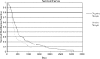
1390 CENTRAL PANCREATECTOMY IS A SUITABLE PROCEDURE FOR LESIONS OF THE NECK OF THE PANCREAS
Kimberly M Brown, Margo Shoup, Adam Abogdeely, Pamela Hodul, John Brems and Gerard V Aranha, Loyola University Medical Center, Maywood, IL, USA
INTRODUCTION: Lesions of the neck of the pancreas have traditionally been treated by pancreaticoduodenectomy (PD) or distal pancreatectomy (DP). Enucleation of such tumors is not always possible due to pancreatic duct involvement. Central pancreatectomy (CP) is an option and avoids unnecessary removal of normal pancreatic tissue or the spleen in patients with benign disease. METHODS: Between May 1999 and June 2003, 8 patients underwent CP at our institution. There were 6 females and 2 males with a mean age of 57 years. The presenting symptoms were abdominal pain in 6 patients with weight loss in 2, 1 patient had hypoglycemia, and 1 tumor was found incidentally. CT was diagnostic in 7/8 (87.5%) and MRCP in 1 (12.5%). The proximal pancreas was stapled or oversewn in all patients. The distal remnant was anastomosed to the stomach in 2 (PG) and a roux limb of jejunum in 6 (PJ). RESULTS: There was no 30-day mortality. Mean operative time was 4 h 20 minutes (3.4–6.5 h). Mean estimated blood loss was 860 ml. Blood transfusions were given in 2 patients. Median hospital stay was 9 days (8–14). Pancreatic fistulae occurred in 3/8 (37.5%) patients, all in PJ group. All fistulae closed spontaneously. No patient required reoperation. Pathologic diagnosis was serous cystadenoma in 3 cases, mucinous cystadenoma in 2 cases, and 1 each with insulinoma, pseudo-papillary tumor, and focal pancreatitits. All patients are alive with no pancreatic insufficiency. CONCLUSIONS: CP is a safe procedure for benign lesions of the neck of the pancreas. It can be performed with no mortality, and the main morbidity of pancreatic fistula resolves spontaneously. CP allows for preservation of normal pancreatic tissue and the spleen and should be considered an option in appropriately selected patients with tumors located in the neck of the pancreas with ductal involvement.
1391 PANCREATIC RESECTION IN 2003. A SNAPSHOT OF A HIGH-VOLUME EUROPEAN HOSPITAL
Alessandro Zerbi, Gianpaolo Balzano, Francesca Scaltrini, Aldo Alberto Beneduce, Marco Cristallo and Valerio Di Carlo, Pancreas Unit, Department of Surgery, San Raffaele Hospital, Milan, Italy
BACKGROUND: In recent years pancreatic surgery has been assembling in high-volume centers, which are claimed to offer better results in terms of operative and long-term outcome. The aim of this work is to report the surgical results of a European high-volume center in the present year. PATIENTS: From January 1 to November 30, 106 pancreatic resections were performed: 65 pancreaticoduodenectomy (PD); 32 left pancreatectomy (5 cases with spleen preservation); 3 total pancreatectomy; 5 enucleations; 1 median pancreatectomy. Four patients (3 distal pancreatectomy and 1 enucleation) underwent a laparoscopic resection. Indications for surgery were: pancreatic cancer 62.3%, other periampullary tumor 11.4%, endocrine tumor 8.5%, chronic pancreatitis 6.6%, cystic tumor 6.6%, uncommon histology 4.6%. SURGICAL RESULTS: Overall mortality was 0.9%, morbidity was 48%, re-laparotomy rate was 4.7%. The operative death was due to septic complications in a cirrhotic patient who underwent PD. Different operations had the following results. PD: mortality 1.5%, morbidity 51.6%, median postoperative stay 15 days (7–53). Main complications were: pancreatic fistula 21.5%, delayed gastric emptying 18.5%, wound infection 9.2%, abdominal fluid collection 7.7%. Left pancreatectomy: mortality 0%, morbidity 43.7%, median postoperative stay 10 days (7–45). Main complications were: pancreatic fistula 34.3%, fluid collection 3.2%, intra-abdominal bleeding 3.2%, duodenal perforation 3.2%. Enucleation: mortality 0%, pancreatic fistula 40%, median stay 8 days (6–15). The most common complication was pancreatic fistula – it was defined as: drain output >5 ml, with amylase 5 times higher than serum, after day 5. Mean output of fistula at discharge was 65 ml (0–300 ml), median duration was 33 days (10–182). CONCLUSIONS: In 2003 mortality after major pancreatic resections in a high-volume hospital should be confined to around 1%. Pancreatic fistula rate is still high, but the experience in managing this complication allows low re-laparotomy rate and short hospital stay.
1392 REDUCTION OF INTRINSIC INHIBITORY ENTERIC NEURONS IN THE ANTROPYLORIC AREA IN TWO PPPD PATIENTS WITH DELAYED GASTRIC EMPTYING
Shao-Chieh Lin, Yan-Shen Shan, Edgar D Sy, Hui-Ling Tung, Mei-Ling Tsai and Pin-Wen Lin, National Cheng Kung University Hospital, Tainan, Taiwan Republic of China
BACKGROUND: Intrinsic inhibitory enteric neurons are considered to play an important role in the regulation of antropyloroduodenum coordination for the gastric emptying. This study aimed to investigate the change of enteric neurons in the pylorus and antrum muscle in PPPD patients who have delayed gastric emptying. PATIENTS AND METHODS: Muscle strips of the pylorus and antrum from 6 normals and 2 PPPD patients with delayed gastric emptying were used for contraction study, immunohistochemical staining for enteric neurons, and Western blotting for expression of neuropeptides. RESULTS: Under the stimulation of carbachol, the contraction profile of the muscle strip from patients who had PPPD was different from those of normal: muscle power of the ED50 of the pylorus/antrum were 1270 mg/1400 mg in normals, 400 mg/1000 mg in case 1, and 5Omg/5OOmg in case 2. The frequency of muscle contraction was 3 times per minute in normals, but 2.5 and 2 times per minute in case 1 and case 2. From immunohistochemical staining, the density of inhibitory enteric neurons – nNOS-, CGRP-, and SST-containing nerve fibers and cells of Cajal – were significantly reduced in the pylorus and antrum muscle from the patients having delayed gastric emptying after PPPD. The protein content of inhibitory enteric neuropeptides, nNOS and CGRP, was also significantly decreased. CONCLUSIONS: These results suggest that the early loss of inhibitory enteric neurons in the preserved pylorus and antrum may be correlated with delayed gastric emptying in patients receiving PPPD.
1393 A COMPARISON OF DIFFERENT TECHNIQUES IN HIGH-RISK PANCREATICODUODENCTOMY
Gianpaolo Balzano, Alessandro Zerbi, Paolo Veronesi, Francesca Scaltrini, Marco Cristallo and Valerio Di Carlo, Pancreas Unit, Department of Surgery, San Raffaele Hospital, Milan, Italy
BACKGROUND: ‘Pancreatic’ surgeons know the difficulties of managing a tender pancreatic stump with a non-dilated Wirsung duct during pancreaticoduodenectomy (PD). In recent years we introduced variations of the standard reconstruction to reduce the rate of postoperative pancreatic fistula in high-risk pancreas. DESIGN AND PATIENTS: From January 2000 to October 2003, 205 patients underwent PD at our institution. Perioperative data (including pancreas consistency and main duct diameter) were prospectively collected in our pancreatic surgery database. The pancreatic stump was considered at high risk of fistula in case of non-dilated duct (1–4 mm) and soft parenchyma (3 degrees: soft, normal and hard). 38 patients with such characteristics were identified. Overall mortality was 2.4%, pancreatic fistula was 20% (drain output >5 ml with amylase 5 times higher than serum after day 5). Mortality and fistula rate in 38 high-risk patients were significantly higher than in the remaining patients (7.9% vs 1.2%, p < 0.05, and 47.4% vs 13.8%, p < 0.001, respectively). The reconstruction modalities we applied in high-risk patients were: A. standard reconstruction with pancreatic, biliary and gastric/duodenal anastomosis in sequence on the same loop (12 patients); B. pancreatico-jejunostomy on a separate Roux-en-Y loop with external Wirsung stenting (14 patients); C. duct occlusion with prolamine (Ethibloc®) without pancreatic anastomosis (12 patients). The choice of the operation was not randomised. The outcome of different reconstructions was compared. RESULTS: Mortality and incidence of pancreatic fistula were 16% and 50% in group A, 0% and 35% in group B and 8% and 58% in group C, respectively. Besides the rough fistula rate, we considered the severity of fistula by evaluating its association with mortality and relaparotomy. Fistula-related mortality and fistula-related relaparotomy rates in different groups were: 33% and 50% (A); 0% and 0% (B); 14% and 43% (C). The reduction of fistula-related relaparotomies in group B was significant (p < 0.05). CONCLUSION: In case of a tender pancreatic stump with non-dilated duct the risk of postoperative fistula is high. In these patients, duct occlusion with prolamine does not improve the results of standard PD, whereas Roux-en-Y pancreatic anastomosis with external diversion of pancreatic juice may reduce the dramatic sequelae of an anastomotic leak.
1394 PORTAL VEIN THROMBOSIS AND ENTEROCOCCAL BACTEREMIA FOLLOWING PANCREATECTOMY AND ISLET AUTOTRANSPLANTATION IN A PATIENT WITH PANCREATIC DUCTAL STENTING
Scott T Johnson, David Bigam, Jonathan Lakey, Breay Paty and James Shapiro, University of Alberta, Edmonton, AB, Canada
We report a case of a 32-year-old female with chronic pancreatitis secondary to pancreas divisum. Medical management including pancreatic stenting had proved increasingly futile. Refractory to incremental doses of demerol, the pain was severely impacting the patient's quality of life. She elected to proceed with total pancreactectomy with islet autotransplant (IAT). Preoperative investigations revealed: fasting glucose 4.6 mmol/L, HbAl C 5% and a mildly impaired OGTT. The splenic-preserving pancreatectomy was uneventful. The processed pancreas weighed 69.98 g. Undigested it was 23.3 g. Initial gram stain and endotoxin screen were negative. 180,000 unpurified islets were infused slowly into the portal vein over 40 minutes with intermittent portal pressure monitoring. The portal pressure rose from 11 to 24 mmHg. 2000 U of heparin were given during the autotransplant and an infusion continued postoperatively. 30 hours postoperatively the patient developed respiratory distress. Fever and hypotension ensued. Doppler ultrasound revealed thrombosis of the main portal vein. 48 h postoperative cultures from both the islet preparation and peripheral blood grew Enterococcus faecalis. Islet anaerobic, fungal and mycoplasma cultures were negative. Antibiotic therapy was initiated with ampicillin, gentamicin and flagyl. The patient's clinical condition gradually improved. A CT scan 14 days postoperatively confirmed complete portal vein thrombosis. Basal C-peptide levels 18 days postoperatively were 0.65 nmol/L. The patient was discharged on insulin and coumadin. At 5 months basal C-peptide levels were 0.35 nmol/L. 2 hours post-prandial the C-peptide levels rose to 1.06 nmol/L indicating some residual islet function. At 6 months the patient no longer required narcotics. CT scan revealed cavernous transformation with portal vein recanalization and reformation of the left and right portal veins. While portal vein thrombosis is a recognized complication of IAT, to our knowledge there are no reports of autograft-induced sepsis. In this case it is likely that pancreatic stenting led to pancreatic colonization. Extensive dilution of the washed pancreatic digest may have contributed to the initial negative gram stain and endotoxin screen. IAT remains a viable option for patients with chronic pancreatitis; however, patient selection is paramount. We propose that pancreatic stents are contraindicated in IAT, and should be removed ahead of total pancreatectomy. Alternatively, patients with stents should not undergo immediate IAT, but rather islets should be stored in culture until the final gram stain and bacteria plates are available.
1395 FAILURE OF CURATIVE RESECTION FOR PANCREATIC ADENOCARCINOMA
Nicolas Villanustre, Seth A Moore, Thomas J Howard, Justin Miller, Emre Yedidag, Joanne Daggy, James A Madura, Thomas A Broadie, Robert Goulet Jr, Eric A Wiebke, Pancreas Research Group, Indiana University, Indianapolis, IN, USA
PURPOSE: Pancreatic adenocarcinoma has a mortality rate roughly equivalent to its incidence. Despite resection with curative intent, the majority of patients with this tumor develop recurrence and ultimately die. The aim of this study was to define the impact of resections on initial tumor recurrence and overall patient survival. METHODS: Fifty consecutive patients with pathologically confirmed pancreatic adenocarcinoma treated by operation with curative intent were retrospectively reviewed. Local recurrence was defined as tumor in the retroperitoneum, pancreatic bed, or regional peripancreatic lymph nodes. Systemic recurrence was defined as metastases to the liver, bone, lung, or thyroid. Synchronous local and systemic recurrence was classified as systemic. Direct or indirect evidence was used to determine recurrence. Direct evidence included biopsy or reoperation (n=20), while indirect evidence included both abnormal radiograph and corroborating clinical and/or laboratory data (n=30). Categorical variables were analysed by Fisher's exact test and survival data using the Kaplan – Meier method. RESULTS: Thirty-seven (74%) patients had a Whipple operation, 9 (18%) had a distal pancreatectomy, and 4 (8%) had a total pancreatectomy. Forty (80%) patients had a margin negative (R0) resection and 10 (20%) had a microscopic margin positive (R1) resection. Tumor recurred at a mean of 12.7 months from the time of operation. Site of initial failure was local in 21 (42%) patients and systemic in 29 (58%). We found no statistically significant effect of tumor size, histology, vascular invasion, perineural invasion, margin status, tumor location, type of surgery, or the use of adjuvant therapy on the pattern of initial tumor recurrence. There was no significant difference in estimated survival between patients who recurred locally versus systemically (p = 0.266). Median survival for all patients was 14.9 months (95% confidence interval = 12.0–18.1 months.) CONCLUSIONS: Curative resection of pancreatic adenocarcinoma does not eliminate eventual tumor recurrence and results in a median survival of 14.9 months. Novel treatment strategies should address both local and systemic recurrence.
1396 MASSIVE HEMORRHAGE AFTER DUODENOPANCREATECTOMY: PROMPT REOPERATION AFTER SENTINEL BLEEDING COULD PREVENT EXSANGUINATION
Olivier Turrini, Vincent Moutardier, Jérome Guiramand, Bernard Lelong, Antoine Sannini, Erwann Bories, Marc Giovannini and Jean Robert Delpero, Institut Paoli-Calmettes, Marseille, France
BACKGROUND: Massive hemorrhage (MH) after duodenopancreatectomy (DP) is not rare and frequently lethal. The aim of this study was to delineate precise guidelines of management. STUDY DESIGN: Between August 1994 and July 2003, 172 patients underwent DP for cancer. Thirty patients (17%) had a history of preoperative chemoradiation (CRT). RESULTS: Sixteen patients (9.3%) were reoperated for postoperative MH including 7 patients who received preoperative CRT. MH occurred in 23% of irradiated patients and 6% of non-irradiated patients (p = 0.03). Sentinel bleeding (SB), defined as brutal hemorrhagic drain fluid with or without digestive hemorrhage, was noted in 8 patients (50%) with a mean delay of 10 days after DP. Overall mortality after MH was 56%. No patients had tentative of radiologic embolization because no active bleeding was shown by helical dual phase scanning. Mortality rates of patients with or without preoperative CRT were similar. Mortality rates of patients with or without SB were similar but mortality rates of patients with SB with and without secondary shock were respectively 75% and 25% (p = 0.02). Mortality rates of axial (hepatic artery, mesenteric vessels) or lateral (pancreas remnant, splenic vessels) bleeding were respectively 88% and 25% (p = 0.03). CONCLUSIONS: Preoperative CRT could increase risk of postoperative MH after DP. However, mortality after MH appears similar between irradiated and non-irradiated patients. Since SB occurs before MH and shock in half of patients, prompt reoperation in patients with SB after DP could reduce mortality. Axial bleeding supports a very high mortality.
1397 RECONSTRUCTION AFTER PYLORUS-PRESERVING PANCREATODUODENECTOMY: ROUX-EN-Y ANASTOMOSIS WITH PANCREATOGASTROSTOMY
Joji Yamamoto, Motoki Nagai, Akiko Tanabe, Satoshi Tamaki and Kiyotaka Maeda, Chibanishi General Hospital, Matsudo-City, Chiba, Japan
Since 1978, pylorus-preserving pancreatoduodenectomy (PPPD) has been accepted as a radical surgical treatment for malignant periampullary neoplasm. The reconstruction after this surgery is technically complicated. The anastomotic leakage of the pancreatic juice and the delayed gastric emptying are the major complications in this procedure. To solve these problems, we have performed Roux-en-Y anastomoisis with pancreatogastrostomy. Herein, we describe these techniques and present a case using this reconstruction. 1. Pancreatogastrostomy. An incision is made in the posterior wall of the stomach, and the invaginate a pancreatic remnant. An incision is also made in the anterior wall of the stomach and the interrupted sutures are placed between the gastric wall and the pancreas parenchyma through inside of the stomach. A stent tube is indwelled and the gastrostomy tube will be placed through the anterior incision. 2. Hepaticojejunostomy. Approximately 30 cm of the jejunum is separated with its pedicle. The jejunal limb is brought and sutured to the proximal hepatic duct. A stenting tube in not inserted when the duct is dilated over 1 cm. 3. Gastrojejunostomy. The end-to-end anastomosis is made between the remnant jejunum and the pylorus of the stomach. 4. Jejunojejunostomy: The end-to-end anastomosis between the separated and the remnant jejunum. The position of this anastomosis is approximately 20 cm downstream from the gastrojejunostomy. The importance of this reconstruction is to avoid the kink of the stomach and the anastomosed jejunum. This may help the smooth passage of digestive contents. We have performed this procedure for 14 cases of periampullary neoplasms. 2 cases suffered from minor leakage of the pancreatic juice, however, as yet we have never experienced fatal complications. Another 12 cases showed no complications including the delayed gastric emptying. The reconstruction after PPPD using Roux-en-Y anastomosis with pancreatogastrostomy is a simple and safe method. To avoid complications, especially delayed gastric emptying, the smoothness of the passage without a kink in the digestive tract seems to be important.
1398 ENUCLEATION OF JUXTADUCTAL ENDOCRINE TUMORS IN THE PANCREATIC HEAD. PROTECTION OF THE MAIN DUCT WITH ULTRASONIC DISSECTION AND NASOPANCREATIC DRAINAGE
Anne Waage, Carl-Eric Leijonmarck and Dag Arvidsson, Karolinska Hospital, Stockholm, Sweden
The aim of this presentation is to describe a technique used in two patients where three endocrine tumors were enucleated from the pancreatic head. All tumors were localized in close proximity to the main duct (0, 2 and 4 mm from the duct wall). A nasopancreatic drain was endoscopically positioned (confirmed by fluoroscopy) at the start of each operation. An intraoperative sonography was performed in order to localize the tumors. The dissection was performed with an ultrasonic dissector, CUSA, in combination with bipolar diathermy. At the resection where the tumor was immediately adjacent to the duct a small lesion occured on the main duct. The parenchyma was closed over this lesion in combination with Flowseal. Sandostatin was given postoperatively. The nasopancreatic drain was kept postoperatively draining the pancreatic juice. A ductogram was performed in both patients before removal of the drain in the duct showing no leakage. The postoperative course was uneventful for both patients. In conclusion, juxtaductal dissection carries a risk of ductal injury with leakage of pancreatic fluid leading to fistulation and inflammation. Ultrasonic dissection allows a very precise dissection with full control of hemostasis. A nasopancreatic drainage could facilitate the localization of the duct during surgery and potentially reduce the pressure and leakage from the duct postoperatively, in case a lesion of the duct should still occur.
1399 EFFECT OF CONTINUOUS SUTURE BETWEEN PANCREATIC PARENCHYMA AND JEJUNUM AFTER DUCT-TO-MUCOSA ANASTOMOSIS : ONE SURGEON'S EXPERIENCES OF PANCREATODUODENECTOMY
Ki Hun Kim, SG Lee, YJ Lee, KM Park, S Hwang, CS Ahn, DB Moon, TY Ha, SH Cho, KB Oh, KK Kim, YD Kim and PC Min, Asan Medical Center, Seoul, Republic of Korea
INTRODUCTION: Anastomotic failure at the pancreaticojejunostomy, defined as fistula, is a serious complication of pancreatoduodenectomy. The most influential factors of the mortality are pancreatic fistula and its complications: after the operation, frequency of pancreatic fistula or pancreatic juice leakage reach 13.5% (6–25%) and the mortality related to pancreatic fistula is 7.9%. A good result of clinical data is reported – an operation by one surgeon, the single-layer continuous suture of pancreatic parenchyma and jejunum after pancreaticojejunostomy is performed for pancreatoduodenectomy. PATIENTS AND METHODS: From March of 2002 to July of 2003, in Asan Medical Center, 29 cases of pancreatoduodenectomy and 1 case of hepatopancreatoduodenectomy which were done with single layer continous suture of pancreatic parenchyma and jejunum after pancreaticojejunostomy performed by one surgeon were the objects for retrospective study. The operative method was that a hole was made at jejunum as the size of pancreatic duct with a needle tip of electrocautery for pancreaticojejunostomy, and then Prolene 5–0 or 4–0 of a loose single-layer continuous suture of pancreatic posterior side and lower part of the hole at the jejunum was done. For pancreaticojejunostomy, interrupted suture was done using Prolene 6-0, single-layer continuous thread which was extended to the lower part of the hole at jejunum was strained to both sides to adhere pancreatic parenchyma and jejunum. One thread was fixed and the other thread was to adhere pancreatic parenchyma and jejunum by doing single-layer continuous suture of the upper part of pancreatic parenchyma and the upper part of the jejunum. RESULTS: The final pathological diagnoses were 8 cases of ampulla of Vater cancer, 5 cases of pancreatic head cancer, 3 cases of duodenal cancer, 3 cases of distal common bile duct cancer, 3 cases of pancreatic intraductal papillary mucinous tumor, and others. The methods of the operations were 25 cases of pyloric-preserving pancreatoduodenectomy, 4 cases of pancreatoduodenectomy, and 1 case of hepatopancreatoduodenectomy. As regards complications, there was no pancreatic juice leakage and no mortality, but there were 3 cases of wound infection and 1 case of stressful gastric ulcer bleeding. CONCLUSION: Even though it is a report for short period of time, single-layer continuous suture of pancreatic parenchyma and jejujum after pancreaticojejunostomy is performed for pancreatoduodenectomy is a good method to prevent the complications of pancreatic juice leakage using a tight close adherence of pancreas and jejunum.
1400 DELAYED GASTRIC EMPTYING AFTER PYLORUS-PRESERVING PANCREATICODUODENECTOMY: AN ANALYSIS OF 63 CONSECUTIVE PATIENTS
Shen-Shin Chang, Yan-Shen Shan, Yu-Hsiang Hsieh, Edgar D Sy and Pin-Wen Lin, National Cheng Kung University Hospital, Tainan, Taiwan Republic of China
BACKGROUND: Pylorus-preserving pancreaticoduodenecomy is associated with a high incidence of delayed gastric emptying. The aim of this study was to identify the risk factors for delayed gastric emptying. STUDY DESIGN: From July 1993 to Dec. 2002, 63 consecutive patients who received pylorus-preserving pancreaticoduodenectomy were divided into two groups based on the presence of delayed gastric emptying. Preoperative indices, postoperative morbidity, nasogastric intubation, and hospital stay were compared. The risk factors for delayed gastric emptying were analysed. RESULTS: The incidence of delayed gastric emptying was 44% (28/63 patients). Hospital mortality was 1.6% for delayed rupture of pseudoaneurysm with bleeding. No preoperative drainage for jaundice, no cholestatic liver, and blood loss >400 ml were significant factors for delayed gastric emptying. The length of duodenal stump <2 cm was a marginal significant factor. CONCLUSIONS: Pylorus-preserving pancreaticoduodenectomy is a safe procedure with high incidence of delayed gastric emptying. The risk factor analysis shows that more delayed gastric emptying occurs in normal anatomical patients. Delicate technique to reduce decrease blood loss and to preserve the duodenal stump as long as possible may be the key factor to prevent DGE.
1401 IMPROVED OUTCOME FOLLOWING PANCREATOJEJUNAL RECONSTRUCTION AFTER PANCREATODUODENECTOMY
SV Shrikhande and PJ Shukla, Tata Memorial Hospital, Mumbai, India
BACKGROUND: Despite improved results, pancreatoduodenectomy remains a formidable procedure. While mortality rates have remarkably decreased, the morbidity remains considerable. The single most important factor responsible for increased morbidity is pancreatic anastomotic dehiscence that depends on skilled pancreatic remnant reconstruction. AIM: To assess early trends and results of pancreatoduodenectomy following pancreatogastrostomy (PG) (2001–2002) and compare with those of a recently adopted technique of pancreatojejunostomy (PJ) (2002–2003) in an Indian tertiary referral center. PATIENTS AND METHODS: Prospective data of previously performed PG (2001–2002) and prospective data of currently performed PJ (2002–2003) following pancreatoduodenectomy for carcinoma of the ampulla. 40 patients were evaluated and various features associated with anastomosis such as pancreatic fistula, sepsis, wound infection and delayed gastric emptying and duration of hospitalization were recorded. Statistical analysis was performed by SPSS 11.0 program. RESULTS: The overall morbidity was in 14/40 patients (35%). 20 patients underwent PG and PJ each. 5/20 patients who underwent PG developed pancreatic anastomotic dehiscence and fistula (25%), while 2/20 patients who underwent PJ developed pancreatic anastomotic dehiscence and fistula (10%). The mean drain amylase levels on postoperative day three were 2738.1 units following PG, while they were 1189.6 units following PJ. The mean drain amylase levels on postoperative day seven were 476.1 units following PG, while they were 428.5 units following PJ. The mean preoperative bilirubin levels were 1.7 mg% in the PG group, while they were 2.6 mg% in the PJ group. The morbidity in the PG group was 9/20 (45%), while in the PJ group it was 5/20 (25%). The duration of hospitalization was a median 17.5 days in the PG group compared to 15.0 days in the PJ group. The mortality in the PG group was 2/20 (10%). One patient died as a result of pancreatic fistula while the other died of cardiac complications. The mortality in the PJ group was 0/20 (0%). The overall mortality was 5%. CONCLUSION: Our early experience indicates that compared to the previously performed PG, a duct to mucosa end-to-side PJ is at least in part responsible for improved outcomes of pancreatoduodenectomy undertaken for carcinoma of the ampulla.
1402 MEASURES TO REDUCE THE INCIDENCE AND IMPACT OF PANCREATIC LEAKS FOLLOWING PANCREATODUODENECTOMY
DR Spalding, RR Hutchins and S Bhattacharya, Royal London Hospital, London, UK
BACKGROUND: Pancreatic anastomotic leaks following pancreatic resection greatly increase surgical morbidity and mortality. We aimed to identify factors that predispose to pancreatic leaks and evaluate the efficacy of measures that surgeons may adopt to reduce the incidence and clinical impact of such leaks. METHODS: 93 consecutive pancreatic resections performed over a 4-year period were included in this study. The degree of gland fibrosis (soft/normal/hard), and pancreatic duct size (normal/dilated) were recorded during surgery. In addition, the underlying pathology, the type of anastomosis (pancreas anastomosed to an isolated loop of jejunum or to the same loop as the bile duct and duodenum), the technique of anastomosis (end-to-side duct-to-mucosa or end-to-end invaginating) and the use of a plastic stent across the anastomosis were documented. The incidence and outcomes of pancreatic leaks were retrospectively correlated to the above factors. All patients received peri-operative octreotide. RESULTS: 72 resections involved a pancreatojejunal anastomosis (64 pylorus-preserving pancreatoduodenectomies, 6 duodenum-preserving resections of the head of pancreas, 2 Puestow pancreatojejunostomies). 9 patients suffered pancreatic leaks. Of them, 6 had ampullary tumours and 7 had normal ducts. There were 3 deaths attributable to pancreatic leaks – all 3 patients had ampullary tumours and normal ducts, 2 had a soft pancreas, none had a stent placed across the anastomosis. A majority of the 6 patients with low-volume pancreatic leaks who recovered with conservative measures had a soft pancreas, normal ducts, and an anastomosis on an isolated jejunal loop. 15 patients had distal pancreatectomies and 6 underwent enucleations. 3 leaks occurred in patients undergoing distal pancreatectomies. All had a normal pancreas, none had their duct visualised and all had stumps oversewn. CONCLUSIONS: The overall leak rate in this series is low (12.9%). Among patients undergoing pancreatoduodenectomy, those with an ampullary neoplasm, a soft pancreas and a normal duct are more predisposed to leak. Placing the pancreatojejunal anastomosis on an isolated jejunal loop tends to reduce the clinical significance of leaks, with an attendant decrease in mortality. Placing an indwelling plastic stent across the duct-mucosa anastomosis may have a beneficial effect. In distal pancreatectomy, a failure to visualise the pancreatic duct predisposes to a leak.
1403 THE EFFICACY OF DUCT-TO-MUCOSAL PANCREATICOJEJUNOSTOMY IN EARLY COMPLICATIONS OF PANCREATICODUODENECTOMY
Masaji Tani, Manabu Kawai, Hiroyuki Kinoshita, Hironobu Onishi, Masaki Ueno, Takashi Hama, Hiroshi Terasawa, Takayuki Nakase, Kazuhisa Uchiyama and Hiroki Yamaue, Wakayama Medical University, School of Medicine, Second Department of Surgery, Wakayama, Japan
BACKGROUND: We retrospectively reviewed the results of a duct-to-mucosal anastomosis for pancreaticojejunostomy. METHODS: Seventy-six patients with pancreatic head resection were performed between 1994 and 2002 in Wakayama Medical University Hospital. It was performed by two kinds of end-to-side pancreaticojejunostomy in pancreatic head resection. Thirty-one patients underwent the complete total drainage method without duct-to-mucosal anastomosis between 1994 and 1998. Forty-five patients underwent the duct-to-mucosal anastomosis with a drainage tube inserted into the pancreatic duct, for incomplete partial drainage, between 1999 and 2002. RESULTS: Pancreatic fistula as a minor complication in total drainage occurred in 2 of the 31 patients (6.5%). These pancreatic fistulas were successfully cured by conservative therapy. However, two consequent complications occurred after pancreatic fistula in total drainage. Two patients had major leakage of pancreaticojejunostomy, caused by aggressive hemorrhage, and another patient had pseudocyst of the pancreatic remnant at the pancreaticojejunostomy after severe acute pancreatitis. On the other hand, the pancreatic fistula as an early minor complication occurred in 5 of 45 patients (11.1%) with duct-to-mucosal anastomosis, which shows no significant difference between two kinds of procedures. In the duct-to-mucosal anastomosis group, there was no complication including major leakage of pancreaticojejunostomy, intra-abdominal hemorrhage requiring interventional treatment, and pseudocyst of the pancreatic remnant. There was a significant difference in the occurrence of major complications between the total drainage and duct-to-mucosal anastomosis groups (p < 0.05). In early postoperative status, the rate of pancreatic fistula by duct-to-mucosal anastomosis was similar to that by total drainage, and soft pancreas is a risk factor of pancreatic fistula compared with hard pancreas (p < 0.05). CONCLUSION: The duct-to-mucosal anastomosis was a more safe and effective surgical procedure than total drainage in terms of prevention of major complications of pancreatic head resection.
1404 LATE COMPLICATIONS OF PANCREATICODUODENECTOMY IN PANCREATICOJEJUNOSTOMY
Masaji Tani, Hiroyuki Kinoshita, Manabu Kawai, Hironobu Onishi, Takashi Hama, Hiroshi Terasawa, Kazuhisa Uchiyama, Tetsuya Shimamoto and Hiroki Yamaue, Wakayama Medical University, School of Medicine, Second Department of Surgery, Wakayama, Japan
BACKGROUND: We retrospectively reviewed the results of a duct-to-mucosal anastomosis after 6 months of pancreaticojejunostomy. METHODS: Seventy-six patients underwent pancreatic head resection between 1994 and 2002 in Wakayama Medical University Hospital. It was performed by two kinds of end-to-side pancreaticojejunostomy in pancreatic head resection. Thirty-one patients underwent the complete total drainage method without duct-to-mucosal anastomosis between 1994 and 1998. Forty-five patients underwent the duct-to-mucosal anastomosis with a drainage tube inserted into the pancreatic duct, for incomplete partial drainage, between 1999 and 2002. The remnant pancreas was followed postoperatively by CT at 3, 6, and 12 months, respectively. Postoperative digestive status was followed using the body weight ratio to preoperative body weight and diarrhea at 6 months postoperatively. Diarrhea with pancreatic resection was estimated using the National Cancer Institute-common toxicity criteria (NCI-CTC) version 2 score. RESULTS: The body weight ratio was 0.80±0.71 (mean±SD) at 6 months postoperatively, and no patient had diarrhea (≥grade 2) with the total drainage. On the other hand, with the duct-to-mucosal anastomosis, the body weight ratio was 0.88±0.09, and 2 patients had diarrhea ((≥grade 2). There were no significant differences between two surgical groups in body weight ratio or diarrhea. Fourteen of 29 patients with total drainage had postoperative pancreatic duct dilatation (48.3%), and those dilatations were detected within 6 months by CT. On the other hand, one patient with duct-to-mucosal anastomosis showed postoperative pancreatic duct dilatation by CT (p < 0.01). CONCLUSION: The duct-to-mucosal anastomosis was a more effective surgical procedure than total drainage in terms of prevention of remnant pancreatic duct dilatation after pancreatic head resection.
1405 MORBIMORTALITY RELATED TO PANCREATIC ANASTOMOSIS TECHNIQUE (DUCT-TO-MUCOSA VS INVAGINATING) AFTER WHIPPLE'S SURGERY
Rafael Oliveira Albagli Sr, Jorge Mali Junior Sr, Marciano Anghinoni Sr, Gustavo S Stoduto Carvalho Sr, Gustavo Pierro Sr, Rodrigo Santos Lugão Sr, Antonio Kneipp Castro Sr, Eduardo Linhares Sr and Daniel De Matos, INCA, Rio de Janeiro, Brazil
BACKGROUND: Pancreaticoduodenectomy has been used as a safe and appropriate surgery option in selected patients with malignant and benign disorders of the pancreas and periampullary region. Among the complications of pancreatoduodenectomy, pancreatic anastomosis failure is the most important and is sometimes fatal. According to recent reports, the incidence of leakage of the pancreatic anastomosis after PD is high at between 5% and 25%. OBJECTIVES: To analyse a morbimortality rate related to pancreatic anastomosis technique (duct-to-mucosa vs invaginating) and to compare the results. METHODS: Between January 1987 and December 2002, 64 patients underwent pancreaticoduodenal resection at the Brazilian National Cancer Institute. Data were recorded retrospectively on all patients. Forty-two patients underwent pancreatojejunostomy duct-to-mucosa and the invaginating technique was performed in 22 patients. Statistical analyses were performed using the Fischer's test. RESULTS: The pancreatic fistula rate after pancreatojejunostomy duct-to-mucosa and invaginating technique was l2% and 36%, respectively (p=0.02). The operative mortality rate after duct-to-mucosa technique was 12% and 36% after pancreatojejunostomy invaginating (p = 0.4). CONCLUSIONS: The leakage rate was significantly less in patients who underwent pancreatojejunostomy duct-to-mucosa; however, the operative mortality rate was not significantly different between the two groups.
1406 EARLY COMPLICATIONS OF PYLORUS-PRESERVING PANCREATODUODENECTOMY
Korniak Boris, A.Vishnevsky Institute of Surgery, Moscow, Russian Federation
AIM: The purpose of the study was the comparative analysis of complications of pylorus-preserving pancreatoduodenectomy depending on the type of anastomosis with pancreas. MATERIALS AND METHODS: Sixty-eight patients underwent pylorus-preserving pancreatoduodenectomy because of periampullar cancer (47–69, 1%) and cancer of the pancreatic head (21–30, 9%) from 1996 to 2002. The patient age varied from 25 to 75 years (mean age 58.6±11.6 years). Thirty-eight (55.8%) were males and 30 (44.2%) were females. Eight patients were excluded from the analysis (pancreatojejunoanastomosis was performed with an external drainage of duct). Pancreatogastric anastomosis was applied in 20 patients (group I), and terminal pancreatojejunoanastomosis in 40 patients (group II). Pancreatogastroanastomosis was carried out when the diameter of pancreatic duct was <2 mm. The anastomosis insufficiency was determined when >500 ml of liquid with the high amylase level leaked from drainages for > 1 week, and the formation of the pancreatic fistula when the period was >2 weeks. RESULTS: The postoperative mortality was 5.8% (n=4). In group I one patient died on the third postoperative day from acute heart failure, anastomosis insufficiency was diagnosed in 4 (20%) patients, pancreatic fistula in 2 (10%) (fistulas closed spontaneously), and gastrostasis in 9 (45%) patients. In group II, 3 patients died due to pancreatojejunoanastomosis insufficiency. Anastomosis insufficiency was revealed in 10 (25%) patients, pancreatic fistula in 4 (10%), abdominal abscess in (10%), intra-abdominal bleeding in 2 (5%), gastrostasis in 23 (57.5%) patients. CONCLUSION: The absence of significant distinction in the frequency of the development of pancreatogastroanastomosis insufficiency and terminal pancreatojejunoanastomosis insufficiency was determined (Yates corrected Chi-square = 0.01, p = 0.9180). The insufficiency of the terminal pancreatojejunoanastomosis proceeds with expressed clinical symptoms and frequently results in complications. The pancreatogastric anastomosis has relative technical simplicity, especially in patients with the diameter of the pancreatic duct <2 mm.
1407 THE SIGNIFICANCE OF DRAIN AMYLASE LEVEL FOR DIAGNOSIS OF PANCREATIC LEAKAGE AFTER PANCREATODUODENECTOMY
Dongeun Park, Kwonmook Chae, O Jungtaek O, Department of Surgery, Wonkwang University Colledge of Medicine, Iksan, Republic of Korea
PURPOSE: Pancreatoduodenectomy is a common procedure for periam-pullary cancer; however, pancreatic leakage is the most dreaded complication after pancreatoduodenectomy. The aim of our study was to evaluate the correlation between the level of drain amylase and pancreatic leakage after pancreatoduodenectomy. METHODS: Clinical data of 51 patients who underwent pancreatododenectomy in our hospital between January 1998 and August 2002 were collected retrospectively. We divided patients into complication group and non-complication group. Various clinical data were compared. We performed the pancreatojejunostomy using intussus-cepting end-to-end anastomosis with internal stent. The drain amylase level was chekced by 2 days. Synthetic somatostatin was infused in all patients for postoperative 7 days. RESULTS: Morbidity and mortality were 47% and 2%, respectively. Drain amylase level in the complication group was higher significantly than in the non-complication group since postoperative 5 days (p>0.05). Fever and persistent leukocytosis were more developed in the complication group (p > 0.01). Serum amylase level was insignificant for diagnosis of pancreatic leakage. CONCLUSION: The development of complications related to pancreatojejunostomy leakage may be suspected if drain amylase level is higher than normal serum level since postoperative 5 days and fever, leukocytosis or abdominal tenderness occur simultaneously.
1408 OUTCOME OF PANCREATICO-DUODENECTOMY FOR PANCREAS AND BILE DUCT TUMORS: 3 YEARS EXPERIENCE
Mitsugi Shimoda, Keiichi Kubota, Masato Katoh and Takehiko Nemoto, Second Department of Surgery, Dokkyo University Hospital, Tochigi, Japan
BACKGROUND: Pancreatico-duodenectomy (P-D) is still a high-risk procedure among the gastrointestinal surgeries. We tried to analyse the complications, length of hospital stay, survival and disease-free survival after P-D. METHODS: From April 2000 to November 2003, 41 cases of the P-D were performed at our Department of Surgery: 12 for cancer of the pancreas head, 11 for lower bile duct cancer, 8 for cancer of the papilla of Vater, 3 for middle bile duct cancer, 2 for chronic pancreatitis, 2 for duodenal cancer, 1 for metastatic pancreatic tumor, 1 for cancer of the gallbladder and 1 for chronic cholangitis, respectively. There were 26 males and 15 females, with a mean age of 66.4 years. In all patients reconstruction was performed by the modified Child method with omental graft covering the stump of the gastroduodenal artery. Three of 34 cases underwent P-D with hepatectomy. Three patients, who had liver cirrhosis and extended right lobectomy, underwent second-stage pancreatico-jujunostomy. In four cases with other organ such as right kidney, left adrenal, transverse colon, and descending colon, rectal and liver were resected. RESULTS: There were three patients who had complications: abdominal bleeding, pancreatic juice leakage and bile leakage, respectively. These patients had reoperation. There was no postoperative mortality in this series. Twenty-six of 41 patients were still alive (63.4%), mean survival month was 16.4 after surgery. In the 16 of 38 patients, malignancy had recurred: liver, 9; local recurrence, 4; lung, 1; lung and liver, 1; unknown, 1; respectively). The mean disease-free survival was 14.7 months after surgery. CONCLUSION: By employing the omental graft technique, fatal complications can be avoided, contributing to no mortality.
1409 MANAGEMENT OF DELAYED INTRA-ABDOMINAL HEMORRHAGE AFTER PANCREATODUODENECTOMY
Keita Wada, Tadahiro Takada, Hideki Yasuda and Hodaka Amano, Teikyo University School of Medicine, Tokyo, Japan
INTRODUCTION: Owing to developments in the operative technique and postoperative management, the morbidity and mortality rate after pancreatoduodenectomy (PD) has been improved. However, delayed intra-abdominal hemorrhage is still a most life-threatening complication after PD. In this study we reviewed the institutional experiences of delayed intra-abdominal hemorrhage after PD and discuss the management. METHODS: We reviewed our medical records and collected 6 out of 203 cases (2.96%) who had delayed intra-abdominal hemorrhage after PD from January 1993 to December 2002. The operative procedure, postoperative course, site of hemorrhage, diagnostic and therapeutic procedures, and the clinical outcome were discussed. RESULTS: The primary disease was 3 pancreatic cancer, 2 cancer of the ampulla of Verter, and 1 bile duct cancer. These hemorrhages occurred during postoperative days 9 to 31. All patients received extended PD, including portal vein resection and reconstruction for 3 patients and extended lymphadenectomy for all patients simultaneously with PD. The site of hemorrhage was superior mesenteric artery (SMA) for 3 patients, gastroduodenal artery (GDA) for 2 patients, right hepatic artery (RHA) for 1 patient. Urgent angiography was performed for 4 of 6 patients, and 3 patients who had hemorrhage from either GDA or RHA received subsequent transcatheter arterial emboliza-tion (TAE). All patients who received TAE could recover, but one patient showed the complete hepatic infarction of the lateral lobe after TAE. The urgent laparotomy was performed for 3 patients who had hemorrhage from SMA; however, all but one patient died of uncontrollable hemorrhage. CONCLUSION: Delayed intra-abdominal hemorrhage after PD is likely to occur in patients who received extended PD and had anastomotic leakage after PD. Urgent angiography is useful not only for the diagnosis of the site of hemorrhage, but also for the treatment of the subsequent TAE. The outcomes after the hemorrhage from the SMA were wretched, so further strategies are required.
1410 SURGICAL TREATMENT OF OF PANCREAS AND PANCREATODUODENAL REGION CANCER
Mukhtar A Aliev, Bolatbek B Baimakhanov, Manas Ramazanov and Yermek A Akhmetov, Scientific Center of Surgery, Almaty, Kazakhstan
AIM: To study the results of surgical treatment in pancreatic and periampullary region cancer. METHODS: From 1993 to 2003, 94 pancreatoduodenal resections (PDR) were carried out for malignant tumors of the pancreas and the pancreatoduodenal region. The classical version of PDR was performed in 75 patients, and lethality was 8.8%. PDR with preservation of the pylorus was performed in 17 patients with a tumor of the major duodenal papilla (MDP) in the terminal part of common bile duct (TPCBD), lethality was 10%. RESULTS: Risk of postoperative pancreatitis is highest in non-dilated pancreatic duct and small-changed pancreatic parenchyma. In these cases terminolateral pancreatojejunostomy with external drainage of pancreatic duct (12 patients) and pancreatogastrostomy (5) was preferable. PDR with pylorus salvage allowed us to use wider pancreato-, bilio- and duodeno-jejunoanastomosis on one loop of the jejunum. Gastrostasis was seen in 40% patients after PDR with pylorus salvage. Lifetime was studied in 72 patients with cancer of the pancreas (PS) and periampullary zone (PAZ) using the Kaplan-Meier method. Median lifetime of patients with cancer of PS was 14 months, MDP 37 months, TPCBD 30 months, duodenum 30 months. 1-, 3-, and 5-year survival in cancer of PS was 53%, 11%, and 3%, respectively; in cancer of the MDP 80%, 50%, and 31%, respectively; in cancer of the TPCBD 80%, 20%, and 0%, respectively; in duodenal cancer 80%, 50%, and 33%, respectively. Prognostic factors correlating with the survival rate were following: 1) primary location of tumor; 2) size of tumor; 3) radicality of surgery; 4) regional lymphatic metastases; 5) invasion of vessels by tumor; 6) index of oncomarker CA 19–9. CONCLUSION: We can expect that the number of PDRs is bound to grow as this procedure is the only radical method to treat these tumors.
1411 THE NEW TECHNIQUE OF THE INTRAPARENCHMATOUS PANCREATIC HEAD RESECTION
El Galperin, GG Akhaladze and El Ljovkin, Moscow Medical Academy, Moscow, Russian Federation
BACKGROUND: 10–20% of chronic pancreatitis patients develop inflammatory mass in the head of pancreas accompanied by indigestion, upper abdominal pain and distal bile duct and duodenal obstruction. Existing surgical operations (duodenum-preserving resection of the head of the pancreas or biliodigestive and gastroenteroanastomoses) are too complex or have non-curative character. Our aim was to develop a new simple method of pancreatic head resection. METHODS: A new original technique of pancreatic head resection (El Gal'perin-the registration of the invention # 2003113340 from 12.05.03) has been created. The technique of operation implies longitudinal dissection of anterior surface of the head of the pancreas simultaneously dividing and dissecting the anterior pancreatoduodenal arcade. The inflammatory mass from the head of a pancreas is excised through this cut preserving the outer shell of the pancreatic head, containing anterior and posterior arterial arcades of superior and inferior pancreatoduodenal arteries. Intraparenchymatous excision of fibrous and cystous inflammatory masses from the head of a pancreas is carried out cautiously, preserving the intrapancreatic portion of the common bile duct and the superior mesenteric vein. While removing the inflammatory masses, decompression of the duodenum, distal parts of the common bile and pancreatic ducts is achieved. At the end of the resection phase a hole or a 'sack' is left of the pancreatic head. Reconstruction is completed with pancreatojejunostomy between the Roux-en-Y jejunal loop and the orifice of the pancreatic head 'sack', in which pancreatic juice collects. RESULTS: The technique was carried out in 6 patients (4 men and 2 women) with chronic pancreatitis. Good results were achieved in all 6 patients (terms of observation from 1 to 8 months). The pain, a nausea and a vomiting, attributes of a biliary, portal and pancreatic hypertension have disappeared.
1412 EVALUATION OF MINIMIZED PANCREATECTOMY FOR NON-INVASIVE INTRADUCTAL PAPILLARY-MUCINOUS CARCINOMA OF THE PANCREAS
Takashi Hatori, Akira Fukuda, Shunsuke Onizawa and Ken Takasaki, Tokyo Women's Medical University, Tokyo, Japan
BACKGROUND: Intraductal papillary-mucinous carcinoma of the pancreas (IPMC) is an unique tumor which grows slowly and has a favorable prognosis. When the tumor invasion is within pancreas, lymph node metastasis is not seen. So minimized pancreatectomy – e.g. duodenum-preserving pancreatic head resection (DPPHR), middle pancreatectomy (MP), partial pancreatectomy of the pancreatic head (PR) and spleen preserving distal pancreatectomy (SPDP) – can be chosen for non-invasive IPMC instead of conventional pancreatectomy – e.g. pylorus-preserving pancreatoduodenectomy (PPPD) or distal pancreatectomy with spleen (DP). OBJECTIVE: To evaluate minimized pancreatectomy for non-invasive IPMC from the viewpoint of safety and curability. METHODS: We investigated 71 patients without extrapancreatic tumor invasion among 115 patients who underwent pancreatectomy for IPMC between 1981 and 2002 retrospectively in this study. 56 patients who underwent conventional pancreatectomy were classified as the conventional group and 15 patients who underwent minimized pancreatectomy as the minimized group. RESULTS: PPPD (35), pancreatoduodenectomy (PD) (7), DP (11) and total pancreatectomy (TP) (3) were included in the conventional group, and DPPHR (6), SPDP (3), MP (3) and PR (3) were included in the minimized group. The tumor spread was seen much in both of the main duct and the branch duct in the conventional group, but it was seen much in the branch duct in the minimized group. There were no differences in the operating time, blood loss and morbidity between two groups. The complications noted in the minimized group were one leakage of pancreatico-jejunostomy after DPPHR and one pancreatic fistula after PR. No residual tumor was seen in either group histologically. The metachronous tumor recurrences were seen in 2 patients in the conventional group, but no tumor recurrence was seen in the minimized group. CONCLUSION: It was considered that SPDP and MP were placed as a minimized procedure for the IPMC; however, safety should be established completely in DPPHR and PR to be placed as a minimized procedure.
1413 PANCREATIC ANASTOMOSIS AFTER PANCREATODUODENECTOMY – SINGLE-CENTER EXPERIENCE
Yoshikazu Toyoki, Kenichi Hakamada, Shunji Narumi, Eishi Totsuka and Mutsuo Sasaki, Hirosaki University School of Medicine, Hirosaki, Japan
AIM: Leakage of pancreaticojejunal anastmosis is one of the serious problems that can bring on life-threatening complications and lead to operative mortality. On the other hand, it is very important to clarify whether the pancreatic duct remaims patent during long-term follow-up of patients after pancreaticojejunal anastmosis. The aim of this study was to determine the incidence, management, and factors that influence the leakage of pancreaticojejunal anastmosis and pancreatic patency during long-term follow-up. PATIENTS: Records of 202 patients who underwent pancreatoduodenectomy between January 1989 and February 2002 at our center were reviewed retrospectively. Results: 17 cases (8.4%) developed a pancreatic anastomotic leak as determined by increased amylase in drainage fluid, radiographic documentation, and purulent discharge from drainage tube. Pancreatic anastomotic leaks in patients with normal remnant pancreas were more frequent than in patients with hardened remnant pancreas (13.2% vs 3.3%). Leakages of submucosal anastomosis were very few (6.7%). However, pancreatic patency during long-term follow-up of submucosal anastomosis still had problems (dilatation of pancreatic duct after operation, etc.). CONCLUSION: Submucosal anastomosis produces good results as regards leakage, but pancreatic patency during long-term follow-up still had some problems.
1414 TECHNICAL REFINEMENTS TO REDUCE MORBIDITY AND MORTALITY FOLLOWING PANCREATICODUODENECTOMY
Ronald Pace, St Mary's Hospital, Kitchener, ON, Canada
A prolonged and complicated recovery following the 'classical' Whipple resection has been a major criticism of the procedure. Delayed gastric emptying with protracted bilious vomiting or prolonged nasogastric tube drainage exacerbates pulmonary dysfunction and is demoralising for patients and staff alike. Pancreatic anastomotic dehiscence leads to retroperitoneal soiling with bile and pancreatic juice, creating an environment rich for retroperitoneal sepsis. Many of these problems can be minimized through a combination of surgical reconstructive techniques which foster a trouble-free postoperative recovery and promote an early hospital discharge, usually by 2 weeks post-operatively. The native duodenal bed is never utilized for reconstruction; instead the proximal end of the jejunum is brought through the window in the right transverse mesocolon and the end of the pancreas is anastomosed to the side of the jejunum using the 'dunking' technique. A one-layer absorbable stitch is used with no effort made to stent or suture the pancreatic duct open. This anastomosis is guarded with a 22 Fr Foley catheter coming through the end of the loop, with the tip in close proximity to the pancreas. The biliary anastomosis is performed slightly distally to the pancreatic anastomosis, and the Foley catheter serves to prevent the build up of pressure of both bile and pancreatic juice in this portion of the jejunum that may otherwise lead to a breakdown of the pancreatic anastomosis. A loop gastrojejunostomy is never used; instead we perform a Roux-en-Y reconstruction by dividing the jejunum 20 cm below the transverse mesocolon and bring the distal end up to create the gastrojejunostomy. The small bowel is reconstructed with an entero-enterostomy approximately 30 cm distal to the gastrojejunostomy. A 24 Fr Foley catheter is placed as a gastrostomy tube, and a nasogastric tube is omitted. Drains are placed near the pancreatic anastomosis, and care is taken to close mesenteric defects, especially in the region of the ligament of Treitz. Antibiotics and early postoperative total parenteral nutrition are employed routinely. Our favourable experiences with a trouble-free recovery following this technique of reconstruction after pancreaticoduodenectomy are so superior to the results following the 'classical' method of reconstruction, that we feel that others who perform the Whipple operation may benefit by adopting some, if not all of these technical suggestions.
1415 DISSECTION OF THE NEURAL PLEXUS AROUND THE SUPERIOR MESENTERIC ARTERY BY DIVISION OF THE SPLENIC VEIN
Yasuhiko Miura, Michio Ueda, Koichiro Misuta, Itaru Endo, Hitoshi Sekido, Shinji Togo and Hiroshi Shimada, Yokohama City University Graduate School, Yokohama, Japan
BACKGROUND: It is necessary to remove the neural plexus around the superior mesenteric artery (SMA) because pancreatic carcinoma often invades the extra-pancreatic neural plexus. However, it is difficult to remove the left side of the neural plexus of the SMA completely and safely because the origin of the SMA is hidden by the splenic vein (SpV). PURPOSE: We perform pancreaticoduodenectomy with total or subtotal resection of the neural plexus of the SMA after division of the SpV. In this report, we introduce the technique of the resection of the neural plexus of the SMA under division of the SpV and show the efficacy of this technique. PATIENTS AND METHODS: Between May 1992 and September 2001, 42 patients with pancreas head carcinoma had undergone resection and dissection of lymph nodes in our institute. 22 patients underwent the dissection of the neural plexus of the SMA under division of the SpV and 20 patients underwent that under non-division of the SpV. The technique is as follows. The pancreas was divided after the lymph node dissection of the hepatoduodenal ligament and along the common hepatic artery. After that, the SpV was divided in order to see the origin of the SMA under the direct visual field. Therefore, we are certain of definite dissection of the neural plexus of the SMA. The neural plexus of the SMA was dissected totally for locally advanced cancer and partially for early cancer. Between the 2 groups, we compared the number of the dissected lymph nodes, complications and the survival time. RESULTS: With regard to the number of resected lymph nodes around the SMA, the mean value was 2.17 in the divided group of 22 patients and 1.5 in the non-divided group of 20 patients (not significant). The complications were splenomegaly, venous dilatation around the stomach, and fatty change of the liver. Only 11 cases underwent the SpV reconstruction; however, there were no esophageal varices in all cases. Only 3 cases had splenomegaly and venous dilatation, which were all mild and not critical. 13 cases had fatty changes of the liver detected by CT scan, and there was no significant difference between 2 groups. Considering the venous flow of the SpV and the inferior mesenteric vein (IMV), some complications occurred in patients with the flow from the SpV to the IMV. The survival time of both groups was not significantly different (SpV division group vs non-division group: MST 11 months vs 17 months, p = 0.2610). CONCLUSION: In conclusion, this procedure is safe and useful; however, we cannot find the survival benefit.
1416 LAPAROSCOPIC SUBTOTAL PANCREATECTOMY FOR PANCREATIC CYSTADENOMA IN A 32-YEAR-OLD WOMAN
William S Helton, Robert Berger and N Joseph Espat, University of Illinois at Chicago, Chicago, IL, USA
A 32-year-old woman presented with abdominal pain and was found to have a cystic mass in the mid pancreatic body extending to the SMV/portal confluence. She had no history of pancreatitis or trauma. Serum amylase, lipase and CA 19–9 were all normal. ERCP demonstrated communication with the pancreatic duct. Endoscopic ultrasound-guided cyst aspiration demonstrated a cyst fluid amylase of 5000 units, a CEA of 450, normal cytology and no mucin. She underwent complete resection of the mass along with the body, tail and neck of the pancreas. The splenic artery and vein were taken with the mass and body of the pancreas but the spleen was preserved on the short gastric and gastroepiploic vessels. Pathology demonstrated a cystadenoma of the pancreas without dysplasia and with good margins. This video presentation discusses the difficulty in diagnosing pancreatic cystadenoma from pseudocyst in some patients and shows for the first time, a complete laparoscopic spleen-preserving subtotal pancrea-tectomy, similar to the 'living-related pancreas transplant'. The utility of laparoscopic ultrasound in facilitating the resection will also be included.
1417 HIGH EXPRESSION OF NEUROTROPHIN RECEPTOR TRKA INHIBITS ANGIOGENESIS IN HUMAN PANCREATIC CANCER
Yong Zhang, Qing Yong Ma and Cheng Xue Dang, Xi'an Jiaotong University China, Xi'an, China
BACKGROUND: Although angiogenesis is essential for tumor growth and metastases, mechanisms regulating the process of angiogenesis in tumor are largely unknown. The process whereby endothelial cells divide and migrate to form new blood capillaries has been assessed in tumours by measuring microvessel density (MVD). High expression of the neurotrophin receptor TrkA has been associated with favorable prognosis in several human cancers. Therefore, we set out to clarify whether the high expression of TrkA correlates with vascular endothelial growth factor (VEGF) expression and MVD, and to estimate the relationships between TrkA and MVD and VEGF according to the prognosis in pancreatic cancer patients. PATIENTS AND METHODS: We measured TrkA levels in 56 human pancreatic cancers by using real time RT-PCR and assessed the findings in relation to VEGF and MVD. TrkA and VGEF expression were studied with use of polyclonal antibody and the MVD quantification was performed immunohistochemically with use of a monoclonal antibody to CD34. The correlations among TrkA levels and VEGF and MVD outcome were then statistically analysed. RESULTS: A significant difference between TrkA, VEGF and MVD expression were found in human pancreatic cancer according to their pathological grade (p < 0.05). Statistical analysis showed a significant positive correlation between VEGF expression and the height of MVD and their pathological grades (p < 0.05). There are significant negative correlations between the expression of TrkA and VEGF and the height of MVD in human pancreatic cancer (p < 0.05). Kaplan-Meier analyses revealed that the expression of VEGF and TrkA and MVD had a statistically significant correlation with survival after curative resection (p < 0.05). Among them, high expression of TrkA is closely correlated to a favorable prognosis (p < 0.05), whereas high expression of VEGF and MVD are correlated with a poor prognosis (p < 0.05). Furthermore, multivariate analysis indicated that VEGF expression is an independent prognostic marker for poor prognosis after curative surgery (p = 0.003). CONCLUSIONS: Our results show that high expression of TrkA may inhibit the expression of VEGF and decrease the level of MVD. This maybe one of the reasons that high expression of TrkA in human pancreatic cancer is associated with favorable prognosis. Then TrkA is a potential target for new pancreatic cancer therapies, a further more important conclusion from this investigation is that the augmentation of TrkA can be applied as a potential remedy in pancreatic cancer.
1418 FR901228, A NOVEL HISTONE DEACETYLASE INHIBITOR, INDUCES APOPTOSIS ACCOMPANIED BY CASPASE-3 ACTIVATION, SURVIVIN DEGRADATION, AND P21WAF-1 CLEAVAGE IN THE REFRACTORY HUMAN PANCREATIC CANCER CELL LINE, MIAPACA-2
Tetsuo Ohta, Nariatsu Sato and Koichi Miwa, Department of Gastroenterologic Surgery, Kanazawa University Hospital, Kanazawa, Japan
BACKGROUND: Histone deacetylase (HDAC) inhibitors have been shown to have antiproliferative activity against various human cancer cells through cell cycle arrest, differentiation, and/or apoptosis. However, no report has focused on the apoptotic potential of HDAC inhibitors in the refractory human pancreatic cancers. AIMS AND MATERIALS: This study was designed to examine the apoptotic potential and the mechanism of FR901228, a novel HDAC inhibitor in human pancreatic cancer cell line, MIAPaCa-2. RESULTS: FR901228 markedly inhibited the proliferation of MIAPaCa-2 pancreatic cancer cells (IC50: 1 nM). According to flow cytometric analysis, treatment of cancer cells with the indicated concentrations of FR901228 (10–100 nM) caused the cell cycle arrest at G2 M phase, and the subsequent apoptosis. According to Western blot analysis, FR901228 induced the expression of hyperacetylated histone H3 and H4 after 3 h of treatment and the overexpression of p21Waf-l after 6 h. In addition, FR901228 induced apoptosis by activating caspase-3 after 24 h, which in turn led to the cleavage of p21Waf-l into a 15-kDa breakdown product and drove cancer cells from cell cycle arrest into apoptosis. Interestingly, FR901228 also decreased the protein level of survivin dramatically. CONCLUSION: Our results show that FR901228 markedly inhibits the growth of MIAPaCa-2 pancreatic cancer cells not only through cell cycle arrest but also through the subsequent apoptosis accompanied by caspase-3 activation, survivin degradation, and p21Waf-l cleavage. FR901228 may prove clinically useful as an anticancer agent for the refractory pancreatic cancers.
1419 THE ROLE OF NEURAL INVASION IN PANCREATIC CARCINOMA
Takashi Hatori, Akira Fukuda, Shunsuke Onizawa and Ken Takasaki, Tokyo Women's Medical University, Tokyo, Japan
BACKGROUND: Neural invasion is a special metastatic route in pancreatic carcinoma and the prognosis of pancreatic carcinoma with neural invasion is known to be worse than that without neural invasion. OBJECTIVE: To evaluate the characteristics and mechanisms of neural invasion in pancreatic carcinoma for revealing the malignancy of this tumor. METHODS: A total of 557 patients who underwent pancreatect-omy for the pancreatic carcinoma without distant metastasis between 1968 and 2002 were chosen retrospectively in this study. 123 of them had no neural invasion (neural invasion(-)) and 454 of them had neural invasion (neural invasion(+)), histologically. RESULTS: The 5-year survival rates were 28% in neural invasion(-), 13% in neural invasion(+), respectively (p < 0.001). Both groups had over 80% of moderately or poorly differentiated tubular adenocarcinoma and there was no difference between the two groups in histology. The rate of small sized tumor <2 cm in diameter was higher in neural invasion(-) with 23% than that in neural invasion(+) with 8%. Lymphatic invasion, venous invasion, serosal invasion, retropancreatic tissue invasion, portal venous system invasion, arterial system invasion and lymph node metastasis were seen 82%, 72%, 35%, 55%, 20%, 7%, 53% in neural invasion(-), and 98%, 94%, 53%, 93%, 49%, 15%, 80% in neural invasion(+), respectively. These data suggest that: 1) neural invasion is not seen in the early stage of pancreatic carcinoma despite a high incidence of lymphatic invasion and venous invasion, 2) the incidence of extrapancreatic invasion and lymph node metastasis are increased with neural invasion. CONCLUSION: Neural invasion is an important factor for the extension of pancreatic carcinoma. It dissection of the nerve system around the pancreas should be considered when pancreatic carcinoma >2 cm in diameter or with extrapancreatic invasion is removed.
1420 INTERACTION OF TRANSCRIPTION FACTOR GATA-3 AND TGV-15 SIGNALING PATHWAYS IN HUMAN PANCREATIC CANCER
Antanas Gulbinas, Pascal Oliver Berberat, Zilvinas Dambrauskas, Thomas Giese, Nathalia Giese, Frank Autschbach, Jorg Kleeff, Stefan Meuer, Markus W Buchler and Helmut Friess, Kaunas University of Medicine, Kaunas, Lithuania, Department of General Surgery, Institute of Immunology, University of Heidelberg, Department of General Surgery and Department of Pathology, University of Heidelberg, Heidelberg, Germany
BACKGROUND: Pancreatic cancer has redundant barriers to TGF-β signaling, which allow cancer cells to escape TGF-β-induced growth inhibition. Interaction between smad-3, intracellular substrate of TGF-β signaling, and transcription factor Gata-3, leads to cell-specific expression of specific target genes. METHODS: We analysed the significance of Gata-3 in pancreatic cancer pathogenesis and determined whether Gata-3 may have an interaction with TGF-β signalling pathway. RESULTS: 27 human pancreatic cancer samples in comparison to 20 normal pancreatic tissues were analysed by quantitative PCR. On average, a 69-fold up-regulation of Gata-3 mRNA (p<0.001) in pancreatic cancer samples, compared to normal pancreas samples, was observed. Analysis of protein content by Western blot analysis revealed marked up-regulation of Gata-3 protein levels. Through quantitative PCR and Western blot analysis, in all four human pancreatic carcinoma cell lines (BxPC-3, Colo 357, MiaPaCa-2, Panc-1), an abundant expression of Gata-3 mRNA and protein was observed. Immunohistochemistry revealed a strong Gata-3 signal in most of the cancer cells, which surprisingly was located in cytoplasm. Double staining with nuclear stain and Gata-3 by confocal microscopy demonstrated the same cytoplasmatic staining pattern in all four pancreatic cancer cell lines. None of the four tested pancreatic cancer cell lines revealed Gata-3 DNA binding in EMSA. These findings suggest that Gata-3 is blocked in the cytoplasm and is transcriptionally inactive. A moderate to strong correlation was found between Gata-3 expression and TGF-βs, TGF-β receptors and smad-3, in human pancreatic cancer samples. TGF-β-responsive cell lines (Colo 357, Panc-1), while exposed to exogenous TGF-β1, showed transient, but marked growth inhibition with p21 up-regulation, whereas Gata-3 expression was down-regulated. TGF-β1–resistant cell lines (MiaPaCa-2, BxPC-3), which showed no growth inhibition, p21 up-regulation and TGF-β1 auto-induction, also exhibited no alteration in Gata-3 expression. CONCLUSION: These findings suggest that barriers to TGF-β signalling in pancreatic cancer may be responsible for persisted Gata-3 up-regulation.
1421 NEOADJUVANT CHEMORADIATION FOR THE PATIENTS WITH LOCALLY ADVANCED PANCREATIC CANCER
Soichiro Takai, S Satoi, H Yanagimoto, K Takahashi, H Toyokawa, H Araki, Y Matsui and Y Kamiyama, Kansai Medical University, Moriguchi, Japan
BACKGROUND: Even with the recent advances in diagnostic and therapeutic methods, the prognosis of patients with pancreatic cancer remains dismal. Surgical resection traditionally has the most possible way to prolong the survival of patients with pancreatic cancer. Therefore, we have introduced preoperative chemoradiotherapy (CRT) as a more effective treatment modality in order to improve resectability and prognosis for the locally advanced pancreatic cancer. AIM: We reviewed 20 patients who have been treated with preoperative concurrent CRT since Dec. 2000 at Kansai Medical University. METHODS: Eligibility criteria were as follows. Pancreatic tumors were defined as locally advanced cancer based on radiographic findings before CRT. Patients were required to have stage II-III (TNM), a performance status of 80–100, age below 75 years, adequate bone marrow, renal and hepatic functions. Treatment protocol: all patients received external beam radiotherapy (total dose 40 Gy) in daily fraction of 2 Gy for 4 weeks. Concurrently, chemotherapy was performed with continuous intravenous infusion of 5-FU 300 mg/day and intermittent infusion of CDDP 5–10 mg/day for 4 weeks (arm A: n = 11) or weekly infusion of gemcitabine 400 mg/m for 3 weeks (arm B: n = 9). Patients were given a 3–4-week break before surgery. Evaluation: all patients were re-staged with radiographic examination 1–2 weeks after the completion of CRT. The aggression of the cancer was evaluated radiographically and histologically. The toxicity of the treatment was classified according to the WHO criteria. RESULTS: 1. 14 patients (70%) had stable disease on restaging and pancreatectomy (PD: 11, DP: 2 and TP:1) was performed. 2. After CRT, tumor marker levels reduced >50% in 9 patients (45%). 3. Surgical margins were negative in 10 (71%), and all lymph nodes were negative in 9 (64%) resected patients. 4. Degradation and necrosis in more than one-third of cancer tissues were found in 8 resected patients (57%). 5. Clinicopathological downstaging occurred in 7 patients (35%). 6. All but one patient were stable in PS among the regimens. 7. All patients complained of nausea and vomiting (grade 1 or 2) and two patients experienced grade 3 hematologic toxicity which required dose reduction and treatment interruption. 8. At this time, with 1 ldeaths recorded, 1-year survival rates were 53.3% on ARM A and 70% for pts on arm B. The longest survivor was alive at 22 months. CONCLUSION: This preoperative chemoradiotherapy regimen was well tolerated and might have the possibility to improve resectability and prognosis in patients with locally advanced pancreatic cancer.
1422 ASSESSMENT OF PATHOLOGICAL RESPONSE AFTER PREOPERATIVE CHEMORADIATION AND SURGERY IN PANCREATIC ADENOCARCINOMA
Vincent Moutardier, Valérie Magnin, Olivier Turrini, Frederic Viret, Jérome Guiramand, Bernard Lelong, Marc Giovannini, Geneviève Monges, Gilles Houvenaeghel and Jean Robert Delpero, Institut Paoli-Calmettes, Marseille, France
BACKGROUND: Benefits provided by preoperative chemoradiation (CRT) in pancreatic ductular adenocarcinoma (PDA) are still controversial. However, in most reports from referral centers, local control and survival improvement appears to be provided in selected patients. The aim of this retrospective study was to analyse radiation-induced pathologic effects of preoperative CRT in patients with resectable PDA and precise long-term outcome of responder patients. PATIENTS AND METHODS: From November 1996 to October 2003, 61 patients received a preoperative CRT for a resectable PDA. Pancreatic tumor location was head in 49 patients and body in 12 patients. 21 patients (34.5%) were not operated because of disease progression and 40 patients (65.5%) underwent a pancreatic resection including 32 pancreaticoduodenectomy (80%) and 8 distal pancreatectomy (20%). RESULTS: Major pathologic response was noted in 9 patients including 3 complete responses and was found only in patients with tumor of the pancreatic head. Local control rate was similar in patients with and without major pathologic response. Survival in patients with major response was significantly higher than in non-responder patients or those with minor response. CONCLUSIONS: Major tumor downstaging can be provided by preoperative CRT in patients with resectable cephalic PDA. Survival appears to be significantly improved in selected patients.
1423 A STUDY OF THERAPY FOR UNRESECTABLE STAGE IV PANCREATIC CANCER
Hiroyuki Horiuchi, Shinji Uchida, Katumi Hayashi, Hisahumi Kinoshita, Shigeaki Aoyagi and Kazuo Shirouzu, Kurume University School of Medicine, Kurume City, Japan
BACKGROUND: Pancreatic cancer frequently presents with locally advanced tumor and distant metastasis at the time of diagnosis. Gemcitabine (GEM) has been used for unresectable pancreatic cancer, and we achieved effects that alleviate symptoms and prolong survival. The aim of this study was to assess the feasibility and outcome in patients treated with intra-operative radiation therapy (IORT) combined with chemotherapy (GEM) for unresectable pancreatic cancer. SUBJECTS AND METHODS: Between May 1998 and November 2003, 50 patients with unresectable stage IV pancreatic cancer were treated at our institution. We evaluated the background and the efficacy of adjuvant therapy and survival rate for unresectable stage IV pancreatic cancer. This study consisted of background factors, adjuvant therapy and survival rate. RESULTS: According to the treatment modality, the study population was classified into five groups: group A, consisting of 21 patients in whom adjuvant therapy was not performed; group B, 7 patients with unresectable tumors treated with administration of GEM; group C, 14 patients administered GEM combined with IORT and/or external beam radiotherapy (EBRT); group D, 3 patients with chemotherapy other than GEM; and group E, 5 patients with localized unresectable tumors who had been treated with IORT or EBRT. The mean survival for groups A, B, C, D and E were 6.6, 9.0, 14.2, 9.7 and 8.0 months, respectively, while the 1-year survival rates were 5.6%, 21.4%, 80.0%, 0% and 0%, respectively. The mean survival and the 1-year survival rate were significantly better in group C than in the other groups. In group C, the tumor decreased in size, invasion of large vessels and pancreatic posterior progression were suppressed, and three cases survived for 20 months or more. Concomitant intra-arterial infusion of GEM was performed in three cases in group B, yielding a mean survival period of 10.3 months and 1-year survival rate of 333%. CONCLUSIONS: Prolongation of the survival period was obtained by concomitant IORT and administration of GEM for unresectable advanced pancreatic cancer. In conclusion, we suggest that IORT in combination with chemotherapy (GEM) may be advisable to patients with unresectable pancreatic carcinoma.
1424 PANCREATIC CYST: MANAGEMENT STRATEGIES
SMM De Castro, JT Houwert, NT Van Heek, ORC Busch, TM Van Gulik, H Obertop and DJ Gouma, Academic Medical Center, Amsterdam, The Netherlands
Surgeons are increasingly being asked to consult on patients who are discovered to have a pancreatic cyst. The aim of the study was to find the optimal management strategy for patients with pancreatic cysts. We performed retrospective analyses of 107 patients with pancreatic cysts referred to a tertiary center during January 1992 and November 2003. Mean patient age was 52 years (SD±13.9) and 59 patients (55%) were female. Symptoms were seen in 83 patients (78%) and consisted of abdominal pain (n = 81, 98%), nausea (n = 31, 37%) and vomiting (n = 30, 28%). The remaining 24 patients (22%) had no symptoms. Most patients underwent CT scanning (n = 85, 79%), US (n = 62, 58%) or ERCP (n = 36, 34%). Surgery consisted of a standard Whipple (n = 8, 7%), a pylorus-preserving Whipple (n = 26, 24%), internal drainage (n = 28, 26%), distal pancreatectomy (n = 22, 21%), external drainage (n = 19, 18%), palliative bypass (n = 3, 3%), and total pancreatectomy (n = 1, 1%). Postoperative complications occurred in 30 patients (34%). The most common complications were pulmonal (n = 25, 23%), pancreatic leakage (n = 18, 17%), bleeding (n = 14, 13%), abscess formation (n = 14, 13%) and miscellaneous (n = 29, 27%). A relaparotomy was performed in 8 patients (7%). Postoperative mortality occurred in 4 patients with an infected pseudocyst (3.7%) and 1 patient with a cystadenoma (1%). Histological examinations of symptomatic cysts found pseudocysts (n = 37, 44%), serous cystadenomas (n = 19, 23%), mucinous cystic neoplasm (MCN) (n = 16, 19%), intraductal papillary mucinous tumors (IPMT) (n = 5, 6%), Hamoudi (n = 3, 4%) tumors and miscellaneous tumors (n = 3, 4%). Asymptomatic cysts turned out to be pseudocysts (n = 10, 42%), serous cystadenomas (n = 6, 25%), MCN (n = 1, 4%), IPMT (n = 5, 21%) and miscellaneous tumors (n = 2, 8%). IPMT was limited to the pancreatic head in 9 of 10 patients (90%), MCN in 11 of 17 patients (65%), cystadenomas in 11 of 25 patients (44%), pseudocysts in 17 of 47 patients (36%), Hamoudi tumor in 2 of 3 patients (66%) and miscellaneous in all 5 patients (100%). The remainder were located in pancreatic body/tail. Overall, 2 of the 24 asymptomatic patients (8%) had an invasive cancer, and 5 patients (20%) had a premalignant lesion. Preoperative examinations accurately diagnosed cystadenomas in 23 patients (92%), MCN in 17 patients (100%) and pseudocysts in 40 patients (85%). Our experience suggests that 28% of the patients with incidental pancreatic cysts without symptoms eventually have a (pre) malignant lesion (cystadenomas not included). This combined with the high accuracy rate of the preoperative diagnostic examinations and low morbidity and mortality rate means that these patients can be managed safely by resection.
1425 SURGERY FOR INTRA-DUCTAL PAPILLARY MUCINOUS TUMOR (IPMT) OF THE PANCREAS: DEFINING THE INDICATION AND THE EXTENT OF RESECTION
Menahem Ben-Haim, Richard Nakache, Moshe Santo, Yoram Kluger and Joseph Klausner, Tel-Aviv Sourasky Medical Center, Tel-Aviv, Israel
INTRODUCTION: IPMT is a newly defined pre-malignant pancreatic pathology. Elderly population at risk, inability to predict malignancy and cases of multifocal distribution, raised controversy regarding the indications for surgery and the extent of the indicated resection. Pancreatography, pancreatoscopy, intra-operative frozen section examination and even mandatory total pancreatectomy were all suggested for the surgical management of IPMT. METHODS: Pre-operative diagnosis of IPMT was based on CT and endoscopic sonography (EUS) findings. EUS included FNA, cytology, mucin content, CA 19-9 and CEA levels in the aspirate. A single, highly experienced examiner preformed all EUS tests. Patients with reasonable operative risk were referred to surgery. The type and extent of resection was defined by EUS localization without application of pancreatography or routine frozen sections. Final diagnosis was confirmed based on clinical-pathological criteria with emphasis on differentiation from non-IPMT pancreatic cystic lesions. RESULTS: Between 1/2000 and 9/2003, 12 patients were diagnosed with IPMT (mean age 73, range 48–85). Eleven underwent EUS-guided resection: pancreaticoduodenectomy (n = 7), distal pancreatectomy (n = 3), total pancreatectomy (n = 1). In one patient, exploration revealed non-resectable pancreatic cancer. Of the 11 resected patients, 2 (18%) had invasive cancer within the IPMT and lymph node metastases in the examined specimen. In the other nine cases, the involved pancreatic segment was resected completely with clear histological margins. There were no cases of recurrence among the IPMT only patients (mean follow-up, 24 months). CONCLUSIONS: The type and extent of pancreatic resection for the treatment of IPMT can be defined precisely with preoperative EUS. In the absence of reliable predictors of malignant transformation, the incidence of metastatic invasive cancer mandated surgical resections in all patients with good operative risk.
1426 FURTHER DEVELOPMENT OF AN EX VIVO PORCINE MODEL BY DIGITAL QUANTIFICATION OF NADH STAINING, TO EVALUATE THE EFFECTS OF RADIOFREQUENCY ABLATION ON PANCREATIC PARENCHYMA
RS Date, J Biggins, I Paterson, J Denton, R McMahon and Ajith K Siriwardena, HPB Unit, Department of Surgery, Manchester Royal Infirmary, Manchester, UK
INTRODUCTION: Radiofrequency (RF) energy is increasingly used to ablate solid parenchymal tumours and ablation of non-resectable pancreatic tumours has been reported. However, the risk of thermal injury to important anatomical structures in the vicinity of the head of the pancreas has limited the application of this technique. Critically, to date there are no reliable models for the evaluation of RF ablation of the pancreas. Thus the aim of this study was to develop and validate a relatively simple, reproducible model that allows quantitative assessment of the effect of RF on pancreatic parenchyma and peri-pancreatic structures. MATERIALS AND METHODS: Fresh porcine pancreata were obtained from abattoir. RF was applied to a pre-marked area in the centre of the pancreatic head using a starburst multi-probe array incorporating probe-tip thermal sensors with central cooling. The probe was secured in place using an external J-clamp. Four temperature pre-sets were evaluated: 70–100°C in 10° increments. Immediately after ablation biopsies of the pancreatic head were cut to incorporate duodenum, portal vein and bile duct, respectively, and a portion of the tail of the pancreas as non-ablated control. The biopsies were snap-frozen in liquid nitrogen. Haematoxylin and eosin (H&E) and nicotinamide adenine dinucleotide (NADH) stained preparations were made. The NADH staining was quantified using light microscopy and Leica QWin continet software. An area of normal pancreas was selected; the dead spaces were eliminated from this area to give actual tissue area. Strongly stained area was selected as positive and the rest as negative. Using this data percentage normal area was calculated for each specimen. RESULTS: Control sections from the tail of the pancreas (n = 12) demonstrated normal pancreatic archictecture on H&E and strong NADH staining, indicating preserved tissue oxidative metabolism. RF produced a temperature-dependent destruction of parenchymal architecture (H&E) with a corresponding loss of NADH activity. There was no evidence of thermal injury to the duodenum although there was clear evidence of ablation of the common bile duct. The control tissue in all the 12 specimens showed >80% positive staining compared to <1% in ablated tissue. CONCLUSIONS: This study describes the development of a relatively simple, reliable and reproducible model for evaluation of radio-frequency ablation of pancreatic parenchyma. Quantification of NADH staining can reliably demonstrate the degree of damage. The findings encourage further study prior to clinical evaluation.
1427 SURGICAL OUTCOME OF DUCTAL ADENOCARCINOMA OF THE DISTAL PANCREAS
Sun-Whe Kim, Yoo-Seok Yoon, Min Gew Choi, Jin-Young Jang, Kuhn Uk Lee and Yong-Hyun Park, Department of Surgery, Seoul National University College of Medicine, Seoul, Republic of Korea
PURPOSE: The purpose of this study was to evaluate the clinical outcomes after surgical resection for ductal adenocarcinoma of the distal pancreas. METHODS: A total of 311 patients with ductal adenocarcinoma of the distal pancreas were admitted between 1985 and 2001, and of these, 54 patients were surgically treated: 29 distal pancreatectomy (with one or more other organs in 12 cases: colon, 5; stomach, 4; adrenal gland, 4; superior mesenteric vein, 2; celiac axis, 1), 9 palliative bypass, and 16 open biopsy. The clinical outcome of 29 patients who underwent surgical resection for adenocarcinoma of the distal pancreas was retrospectively analysed. RESULTS: Resectability rate was 9.3% (29/311). In resected cases, the median survival duration was 10.2 months, whereas in non-resected cases, it was 5.8 months (p=0.013). Moreover, a significant survival difference was found between curatively resected cases (n = 16, 15.6 months) and palliatively resected cases (n = 13, 5.7 months) (p = 0.003). However, there was no survival difference between palliatively resected cases and non-resected cases. Of 29 resected patients, only 3 patients survived more than 3 years (46, 74, and 56 months), of whom only one developed no recurrence. All of three long-term survivors underwent curative resection. They had 5 cm or less sized tumor with moderate differentiation, but had relatively advanced stage (stage IIA, 2; stage III, 1) and two patients had perineural invasion. Especially one patient with stage III who underwent an Appleby operation for the invasion of celiac axis, although recurrence occurred, survived 56 months. Size of tumor (≤5 cm vs >5 cm) and residual tumor (Ro vs R1,2) were identified as independent significant prognostic factors by multivariate analysis. CONCLUSION: Only curative resection can offer long-term survival as well as survival benefit in patients with ductal adenocarcinoma of the distal pancreas. In addition, an aggressive surgical approach will give some survival benefit to the patients with even advanced disease. However, adjuvant therapy, local or systemic, needs to be further developed because most patients develop recurrence after resection.
1428 THE ENDOTHELIN SYSTEM IN THE HAP-T1 SYRIAN HAMSTER PANCREATIC CANCER MODEL
Ajit T Abraham, Sudeep R Shah, Thomas Satyadas, Janice Tsui, Radhi Anand, Mick Dashwood and Brian R Davidson, Royal Free Hospital, London, UK
AIM: To study the expression of ET-1, ETA-R and ETB-R in the Hap-Tl Syrian hamster pancreatic cancer model, and correlation of (PPET-1) and VEGF in hamster pancreatic cancer. METHODS: Tumours were induced in 32 Syrian hamsters by intrapancreatic injection of (0.1 ml) 2×10⁶/ml HaP-Tl cells. Groups of animals (n = 4) were sacrificed at weekly intervals. Local invasion and distant spread were assessed at necropsy. Semi-quantitative RT-PCR for PPET-1 and VEGF mRNA were performed on frozen tumour tissue. Immunohistochemistry for ET-1 and ETA-R and ETB-R was done on paraffin embedded tumours. RESULTS: ET-1, ETA-R and ETB-R were present on immunohistochemistry in the hamster pancreatic cancers. Extrapancreatic tumour spread and metastases were noted from week 2 onwards. Incidence of metastasis increased with increasing tumour weight and size. 2/20 hamsters (10%) with tumour weight <2 g developed liver metastases, as opposed to 6/11(54%) with tumour weight ≥2 g (p = 0.012). PPET-1 and VEGF expression was raised in tumours ≥2 g in size (p = 0.0008 and 0.02, respectively). There was linear correlation between levels of expression of PPET-1 and VEGF mRNA (r = 0.80). CONCLUSION: ET-1 and ETA-R and ETB-R have been demonstrated for the first time in the Hap-Tl Syrian hamster pancreatic cancer. Tumour growth is associated with an increase in levels of expression of PPET-1 and VEGF mRNA. PPET-1 and VEGF correlation supports a link in expression of these factors. This experimental model may help to establish the role of the endothelin system in pancreatic cancer progression, and the possible therapeutic benefits of endothelin blockade.
1429 THE INDICATION FOR ADJUVANT THERAPY IN ADVANCED PANCREATIC CANCER, 5-FLUOROURACIL LIVER PERFUSION CHEMOTHERAPY VIA THE PORTAL VEIN VS GEMCITABINE
Shin Takeda, Tsutomu Fujii, Soichiro Inoue, Tetsuya Kaneko and Akimasa Nakao, Nagoya University, Nagoya, Japan
BACKGROUND/AIM: Most patients with advanced pancreatic cancer experienced recurrence such as locoregional, liver metaststasis, early after surgery, even if aggressive resection was performed. Since 1994, we performed treatment with adjuvant liver perfusion chemotherapy (LPC) via the portal vein using 5-fluorouracil (5-FU) 250 mg continuous infusion every day for 3 weeks just after pancreatectomy for advanced pancreatic cancer. Since 2001, gemcitabine (iv) has been used q2 weeks among 3 for 3 cycles. It is unclear which agents should be used to achieve a better outcome. To clarify the indications for adjuvant 5-FU LPC in pancreatic cancer patients, we assessed the effect of 5FU depending on TS and DPD expression immunohistochemically in resected pancreatic cancer tissues. METHODS: 78 resected specimens (IIA 21 cases, IIB 34 cases, IV 23 cases according to UICC, 6th edn) which we could study were enrolled between 1988 and 2001 from patients with advanced pancreatic cancer. Formalin-fixed paraffin-embedded tissues were immunostained with polyclonal anti-TS antibody and anti-DPD antibody. The relation between intratumoral TS, DPD expression and the prognoses of the pancreatic cancer patients was investigated retrospectively. RESULTS: Of the 66 tumors studied, 45 carcinomas (70%) were TS(+) and 21 (30%) were TS(−). Of the 69 tumors studied, 31 carcinomas (45%) were DPD(+) and 38 (55%) were DPD (−). In the TS (+) group or DPD (−) group, the LPC-treated subgroup showed a significantly higher survival rate than the no LPC subgroup (median survival, 16–17 vs 7–8 months). Moreover, in the LPC(+) group, overall survival in the TS(+)DPD (−) subgroup was significantly better than in the TS(−)DPD(+) or TS(+)DPD(−) subgroup (median survival, 26.0 vs 14.0 months), whereas, the group treated with gemcitabile does not seem to defeat TS(+)DPD(−) subgroup with 5FU. CONCLUSIONS: An immunohistochemical evaluation of intratumoral TS and DPD expression might be useful in predicting the effect of 5-FU-based chemotherapy in pancreatic cancer patients. In the TS(+)DPD(−) subgroup, liver perfusion chemotherapy using 5-FU via the portal vein is an effective adjuvant therapy for pancreatic cancer. In the TS(−)DPD(+) subgroup, gemcitabine might be effective in prolonging survival.
1430 PANCREATIC NEUROENDOCRINE TUMORS: IMPROVED OUTCOMES FOR FUNCTIONAL TUMORS
Clifford S Cho, Herbert Chen, David M Mahvi, John E Niederhuber, Layton F Rikkers and Sharon M Weber, University of Wisconsin Hospital and Clinics, Madison, WI, USA
INTRODUCTION: Neuroendocrine (NE) tumors of the pancreas are rare lesions with variable clinical presentations. Functional NE tumors result in symptomatic clinical syndromes, whereas non-functional NE tumors are often asymptomatic. The impact of functional tumor status on patient outcomes has remained controversial. We reviewed our recent institutional experience with pancreatic resections for primary NE tumors of the pancreas to determine postoperative outcomes, including long-term survival and control of hormonally referrable symptoms. METHODS: A retrospective database was reviewed to identify all patients undergoing pancreatic resection for NE tumors at the University of Wisconsin Hospital and Clinics between 1992 and 2002. Presenting symptoms, pathological features, and postoperative outcomes were analysed. RESULTS: A total of 35 patients was identified. The most common presenting symptoms were abdominal pain (43%), nausea (17%), diarrhea (11%), and presyncope (11%). One-third (11 of 35) had symptoms secondary to hormone overproduction. Operative procedures included distal pancreatectomy in 16 (46%), pancreaticoduodenectomy in 14 patients (40%), and other resections including enucleation and ampullectomy in 5 (14%). Nineteen patients (55%) had non-functional islet cell tumors, while the remaining 16 (45%) had functional tumors, including gastrinomas (18%), insulinomas (12%), and glucagonomas, VIPomas, and somatostatinomas (15%). Curative resection was performed in 72% of cases. Histologically positive lymph nodes were present in 29% of cases, and metastatic liver disease in 14%. After a median follow-up of 20.2 months, 82% of patients with functional NE tumors are symptom-free. Overall actuarial survival at 3 and 5 years is 90% and 80%; disease-free survival at 3 and 5 years is 59% and 45%. The presence of functional tumor (p=0.0096) and the absence of liver metastases (p = 0.0165) were associated with significantly improved disease-free survival. CONCLUSION: Pancreatic resection for primary pancreatic neuroendocrine tumors is associated with excellent long-term survival and symptom control, despite a significant rate of incompletely resectable disease. In our experience, patients with functional pancreatic NE tumors have an improved outcome over those with non-functional tumors. These findings support the aggressive use of surgical resection in the treatment of pancreatic NE tumors.
1431 ALTERED PROPROTEIN CONVERTASES PROFILE IN SPECIFIC SUBTYPES OF NEUROENDOCRINE TUMORS OF THE PANCREAS
Caroline Rochon, Geroges Tzimas and Peter Metrakos, McGill University, Montreal, PQ, Canada
INTRODUCTION: Proprotein convertases (PCs) recognize and cleave a multitude of precursor proteins into active proteins. Our laboratory has shown a decrease in cell growth and tumorigenicity of tumor cells treated with PC inhibitors. The objective of this work was to determine the PC profile that exists in various neuroendocrine tumors (NETs) (see Figure page 168). MATERIALS AND METHODS: Specimens were obtained from patients undergoing pancreatic or liver resections. A biopsy of the tumor and the unaffected liver/pancreas (uliver/upancreas) were snap-frozen. mRNA and protein extracts were analysed via semi-quantitative RT-PCR and Western blotting. RESULTS: Semi-quantitative RT-PCR: PC1 mRna: higher in glucagonma biospies. 7B2 mRNA: detected vin all except uliver, levels higher in secreting NETs than in non-functioning tumors (NF) or upancreas. Furin mRNA: no significant differences. Western blots: PCI: protein levels high in all tumor biopsies compared to uliver/upancreas; levels highest in glucagonomas. Active PC2 (68 kDa): found in all tumor biopsies, weakly in upancreas and not in uliver, protein levels higher in secreting tumors compared to NF tumors or upancreas. 7B2: levels higher in all secreting NETs. Furin: levels decreased in all tumors compared with upancreas, levels highest in NF. CONCLUSION: PC profiles are altered in NETs. The elevated PC2 and 7B2 protein levels in secreting tumors correlate well with their excessive hormone production. The decreased furin level in all NETs differs from other cancer profiles such as colon cancer. The role of PCs as diagnostic, prognostic or therapeutic tools is not clear at this time. Their role in cell growth suggests that they may be important therapeutic targets in these tumors.
1432 PHASE I STUDY OF GEMCITABINE, OXALIPLATIN, 5-FU AND DAILY ORAL THALIDOMIDE (GOFT) IN PATIENTS WITH ADVANCED OR METASTATIC PANCREATIC CARCINOMA
Yan-Shen Shan, YS Shan, SS Chang, C J Yen, WT Huang, CJ Tsao and PW Lin, National Cheng Kung University Hospital, Tainan, Taiwan Republic of China
PURPOSE: Combination of gemcitabine/oxaliplatin, oxliplatin/5-FU, and gemcitabine/5-FU has synergistic activity in pancreatic or colorectal malignancies in vitro. Thalidomide has significant effect on the chemotherapy-induced diarrhea, which is the common morbidity during treatment of oxaliplatin/5-FU. OBJECTIVES: The phase I study was conducted to determine the maximum tolerated dose (MTD) and dose-limiting toxicity (DLT) of gemcitabine/oxaliplatin/5-FU/thalidomide (GOFT) in patients with advanced/metastatic pancreatic cancer. METHODS: Gem-citabine was given in 1 -h infusion followed by oxaliplatin in 2-h infusion on day 1, and 5-FU in 24-h infusion on day 2, and oral thalidomide was given daily every 2 weeks. DLT was denned as NCI-CTC grade 3/4 toxicity. MTD was determined after the first two cycles in each patient. Dose levels of GOFT were as follows. Level I: gemcitabine 1000 mg/m2+oxaliplatin 60 g/m2+5-FU 1000 g/m2+thalidomide 100 g per day; level II: gemcitabine 1000 g/m2+oxaliplatin 70 g/m2+5-FU 1000 g/m2+thalidomide 100 g per day; level III: gemcitabine 1250 g/m2+oxaliplatin 60 g/m2+5-FU 1000 g/m2+thalidomide 100 g per day. RESULTS: 15 patients enrolled, 13 were evaluable: level I (6 patients), level II (6 patients), level III (1 patient), 2 patients who did not complete 2 cycles were excluded. Patient characteristics: M/F 6/7, median age 67 years (range 50–80), 5 patients with recurrent pancreatic cancer: 2 local recurrent with peritoneal seeding, 3 local recurrent with liver metastasis, 7 patients with locally advanced cancer proved by laparotomy, 1 patient with pancreatic cancer and liver metastasis. 8 patients received GOFT as a first-line therapy. There were 1 CR, 3 PR (1 patient received pancreaticoduodenectomy), 1 SD at level I and 4 PR (3 patients planned to receive relaparotomy), 1 SD at level II (1 patient each at level I and II progressed). The liver metastasis disappeared in 2 of 4 patients and size decreased in 1 of 4 patients. There were 1 of 6 patients with DLT in level I (grade 3 infection and vomiting), 2 of 6 patients with DLT in level II (grade 3 leukopenia) and 1 patient in level III with DLT (grade 3 leukopenia and stomatitis). Other toxicities at level 1/II were grade 1/2 leukopenia (7 episodes), grade 1/2 anemia (5), grade 1/2 nausea (5), grade 1 diarrhea (2), grade 1 alopecia (2), grade 1 skin (2), grade 1 allergy (1), weight gain >5% (3: 12%, 12%, 5.5%), and weight loss >5% (1: 6%). CONCLUSION: The GOFT regimen at dose level II is safe and may be recommended for further clinical investigation in patients with advanced/metastatic pancreatic cancer.
1433 PANCREATIC HEAD MASS: AN OVERVIEW
Rajeev M Joshi, Amit S Khithani, Jaideep H Palep, Tilakdas Sudhakar Shetty and Apurva S Sinha, Sion and Nair Hospitals, Mumbai, Mumbai, India
INTRODUCTION: The presence of a pancreatic head mass invariably presents a major diagnostic dilemma and subsequent therapeutic decision-making. A wide variety of lesions, benign or malignant, solid or cystic, can produce a mass in the head of the pancreas. In a solid pancreatic lesion correct preoperative differential diagnosis between chronic pancreatitis and pancreatic tumor is difficult clinically, surgically and even pathologically. While the treatment protocols for cystic head masses are well established, debate still persists in the case of solid tumors – especially in the case of an asymptomatic head mass seen on CT scan and in the case of a symptomatic head mass with negative cytology. OBJECTIVES: To delineate the incidence of pathologies, to avoid a misdiagnosis and to choose the correct therapeutic measures. PATIENTS AND METHODS: Records of 210 patients, with pancreatic head masses, in a single referral unit over a 7-year period from July 1997 to June 2003 were analysed. The diagnostic work-up was based on an algorithm of imaging modalities and biochemical studies. Pre-operative tissue diagnosis was desirable but not always mandatory. RESULTS: Adenocarcinoma of the pancreatic head was seen in 112 patients, pancreatic lymphoma in 2 patients, pancreatic head mass secondary to metastatic deposits in 3 patients, chronic pancreatitis in 51 patients, inflammatory head mass in 3 patients, pseudocyst of pancreas in 33 patients and cystic tumors in 6 patients. 27 of 112 cases of pancreatic head cancer underwent a pancreaticoduodenectomy with a curative intent, while 28 patients were palliated surgically, 42 palliated endoscopically and 13 were left alone. 16 of 51 patients with chronic pancreatitis underwent a Frey's procedure. In 13 patients a surgical bypass was done to alleviate the symptoms. The remainder were treated conservatively. Resection was done in patients with cystic tumors and in those with metastatic head masses. Patients with pancreatic lymphoma were subjected to chemotherapy. Cystoenterostomy was done in 12 patients with pseudocyst of pancreas, while endoscopic intervention or percutaneous catheter drainage was done in the remaining patients. CONCLUSIONS: No diagnostic method is capable of making a definitive diagnosis as to the nature of a solid pancreatic head mass. It may be difficult even intra-operatively and surgical resection must be done, where feasible, to avoid missing a suspected tumor. This approach is justified in a high volume, low risk unit. The debate on resection of a symptomatic head mass with a negative cytology should be in favor of resection rather than a nihilistic approach.
1434 PRESENTATION AND PROGNOSIS OF RESECTABLE SMALL (<20 mm) PANCREAS HEAD ADENOCARCINOMA: HOW DIFFERENT?
Reza Kianmanesh, Cedric Benbrahem, Alain Sauvanet, Anne Couvelard, Dominique Cazals-Hatem, Alexandre Cortes and Jacques Belghiti, Beaujon Hospital, Clichy, France
The aim of this study was to report the differences in terms of clinical, biological, morphological presentations, survival and prognosis factors between small (<20 mm) and larger resectable pancreas head adenocarci-moma. Analysis of pathologic specimens from 103 pancreatoduodenec-tomies (PD) in the past 10 years led to selection of the reports of 19 patients with small cancers (Sm group, histological diameter <20 mm). The Sm group were then matched (age, ASA score, creatinine plasma level, history of diabetes) and results compared to 19 other patients who underwent PD at the same period for larger tumors (Lg group, histological diameter >23 mm). The clinical presentation of both Sm and Lg groups were comparable: jaundice (84 vs 79%, ns), pain (21 vs 49%, ns), weight loss (7 vs 7%). The bilirubin level, gGT, Ale. phosphatase, and tumor marker (ACE, CA19-9) levels were similar in both groups. The main pancreatic duct was dilated in 26% in the Sm vs 79% in the Lg group (p = 0.001). CT scan showed the tumor in 53% of cases in Sm group vs 84% in Lg group (p = 0.036). Endoscopic US showed in 100% of cases the tumor in both groups. The mean tumor diameter on pathologic examination was 17.3 mm (10–20) in th eSm group vs 33.4 mm (23–55) in the Lg group. There was no cancer-related death in either group. The rate of pancreatic fistula in the Sm vs Lg group was respectively 32% vs 11% and other postoperative complications were not statistically different between the two groups. Sm vs Lg rates of lymph node meatstases were similar (63% vs 74%, ns). The rate of positive lymph nodes by contiguity in the Sm group was 92% vs 57% in the Lg group (p = 0.03). The retroperitoneal margin was negative in 100% of the patients in the Sm group vs 74% in the Lg group. The actuarial survival rate at 5 years related to cancer for Sm and Lg groups was respectively 58% vs 18% (p=0.045). Better prognosis was observed (after univariate analysis) in patients who had R0 resection (p = 0.002), negative lymph nodes (p = 0.056), and for patients with positive lymph node the presence of lymph node involvement by contiguity (p = =0.012). Small adenocarcinomas (<20 mm) of the head of pancreas compared to larger tumors have a similar clinico-biological presentation but they are less often visualized on CT scan. US endoscopy is more accurate for the detection of small pancreatic head tumors. The better prognosis after resection appears to be the quality of the resection (R0), negative lymph nodes and for those who have lymph node invasion, the absence of negative impact of lymph node invasion by contiguity.
1435 PANCREATICODUODENECTOMY FOLLOWING NEOADJUVANT TREATMENT FOR PANCREATIC HEAD AND DUODENAL CANCER WITH VASCULAR INVOLVEMENT
Menahem Ben-Haim, Richard Nakache, Yoram Kluger, Arie Figer, Felix Kovner and Joseph Klausner, Tel-Aviv Sourasky Medical Center, Tel-Aviv, Israel
INTRODUCTION: Encasement of the mesenterial vessels by pancreatic or duodenal cancer is a traditional contraindication to curative pancrea-ticoduodenectomy (PD). The effect of neoadjuvant treatment on resect-ability is controversial. METHODS: Preoperative evaluation was based on CT and EUS. Some of the patients underwent surgical exploration. Resection was avoided in the absence of dissection plan from the portal or mesenteric vessels and biliary-enteric and gastro-enteric bypasses were performed. Patients with good performance status in which the only limiting factor was the vascular involvement were referred to neoadjuvant treatment with three cycles of cisplatin and gemcitabine, followed by 10 days of focused external radiation (300 cGy/day). Based on re-evaluation, including the clinical course (weight loss, pain, marker level) and repeated imaging studies, selected patients were referred to completion PD. RESULTS: 18 patients (mean age, 61; range, 40–78) with pancreatic head (n = 16) or duodenal (2) adenocarcinoma were referred to neoadjuvant chemoradiation due to imaging findings alone (7) or exploration findings (11). 9 of these patients met the criteria for resection attempt following the treatment (mean interval from diagnosis, 6 months; range, 5–9). In 2 cases the tumor was still non-resectable and surgical bypass was accomplished. In 7 patients (38%), PD was achieved. PD was characterized by technical complexity due to severe fibrosis and impaired anatomy. There was one peri-operative death and 2 complications (resolving pancreatic fistula and hepatic infarct). Complete pathological response was documented in 2 cases and residual tumor with clear surgical margins and no lymph node metastases was found in the other 5. CONCLUSIONS: PD following previous bypass surgery and neoadjuvant surgery is feasible. Potentially curative PD can be accomplished in highly selected patients with non-resectable disease at time of diagnosis, following gemcitabine-based chemoradiation treatment.
1436 THE ROLE OF ENDOSCOPIC ULTRASONOGRAPHY IN THE ASSESSMENT OF RESECTABILITY OF CANCER HEAD OF THE PANCREAS: A MYTH OR A MUST?
Essam Salah Hammad, Amr Helmy, Ibrahim Marwan, Mazen Naga, Hussein Okasha, Gamal Abdel-Khalek and Shams Attwa, National Liver Institute, Menoufeya University, Menoufeya and Kasr El-Aini, Cairo University, Cairo, Egypt
BACKGROUND AND AIM: The management of patients with pancreatic head cancer is a challenging problem. Not uncommonly, the patient is prepared for radical surgery but during the operation the lesion turns out to be uncresectable. Current methods for staging pancreatic cancer are not very accurate. This study was designed to evaluate the role of endoscopic ultrasonography in the assessment of resectability of cancer of the head of pancreas in comparison with conventional US, CT scanning and ERCP. METHODS: 26 patients (19 males and 7 females), complaining of obstructive jaundice with suspected pancreatic head mass were submitted to this study. 26 patients were subjected to both conventional US and endoscopic ultrasonography, 21 patients underwent CT scanning and ERCP was performed in 19 patients. RESULTS: The accuracy of pancreatic head mass detection by EUS, US, CT and ERCP was 96%, 63%, 72% and 58%, respectively. The accuracy of EUS in detecting nodal involvement was 76%, while that of US and CT was 33% and 44%, respectively. The accuracy of assessment of vascular invasion by EUS, US, and CT was 90%, 52% and 72%, respectively. CONCLUSION: Endoscopic ultrasonography seems to be an accurate diagnostic tool for precise preoperative locoregional assessment of resectability of pancreatic head carcinoma.
1437 ADENOCARCINOMA OF THE PANCREATIC HEAD: A PARADIGM SHIFT FROM NIHILISM TO REALISM
Rajeev M Joshi, A Sinha, TS Shetty, JH Palep and AS Khitani, Department of Surgery, Sion & Nair Hospital, Mumbai University, Mumbai, India
INTRODUCTION: It is known that there is something special about the Whipple procedure and more so in the Indian context where it remains a formidable procedure with few high volume centers and even fewer published data highlighting the morbidity and mortality of the procedure. Additionally, the picture is dismal as far as adenocarcinoma of the pancreatic head is concerned. While many centers overseas have been following increasingly aggressive surgical and adjuvant treatment protocols, at home there has been a tendency to adopt an increasingly pessimistic approach wherein resectional surgery is not considered feasible and instead a palliative bypass or stenting is done. Obviously the truth lies somewhere in between the two extremes of activism and nihilism and one needs to think realistically to bridge the wide split between the two and offer something close to optimal in our set-up. PATIENTS AND METHODS: Records of 270 consecutive patients with periampullary carcinoma in a single referral unit over a 7-year period from July 1996 to June 2003 were analysed. 98 patients underwent a pancreaticoduodenectomy with a curative intent (overall resectability rate = 36.2%). 27 of 112 cases of pancreatic head cancer underwent a pancreaticodoudenectomy with a curative intent (resectability rate = 24%). 24 patients underwent the classical Whipple procedure and 3 patients, the Traverso-Longmire modification. A standard nodal clearance was done in 16 patients, whereas in 11 patients an extended nodal clearance was done. Adjuvant chemo-radiotherapy in the form of 4000 rads to the tumor bed and 5-FU (500 mgm/m ) as a radiosensitiser was given to 8 patients who were node and/or margin positive. RESULTS: The mortality rate was 7.4% (2/27). Morbidity due to postoperative complications was seen in 41% (11/27) of patients. Wound infection was the commonest complication in 26% (7/27) of patients. Pancreatic fistula was seen in 11% (3/27) of patients. The 2-and 3-year survival rates were 48% (13/27) and 33% (9/27) and the disease-free survival with a good quality of life at the end of 3 years was 26% (7/27). CONCLUSION: Our study, one of the first of its kind in the Indian context, clearly emphasizes that pancreaticoduodenectomy for adenocarcinoma of pancreatic head can be safely performed with a low morbidity and mortality and a good 3-year survival can be achieved, justifying the role of curative surgeries in these cases. The bridge to an optimal and effective line of treatment is definitely emerging following a coordinated multi-disciplinary approach with the oncotherapists, with adjuvant chemo-irradiation yielding better response rates and definite survival benefit justifying the role of resectional surgery in these cases.
1438 CONTRAST-ENHANCED SONOGRAPHY OF PANCREATIC MASS LESIONS: USEFULNESS IN DIFFERENTIAL DIAGNOSIS AND IN PREDICTION OF THE PATHOLOGY
Toru Kubota, Kazushi Numata, Yutaka Ozawa, Michio Ueda, Yasuhiko Miura, Itaru Endo, Hitoshi Sekido, Shinji Togo, Yukio Nakatani and Hiroshi Shimada, Department of Gastroenterological Surgery, Yokohama City University Graduate School of Medicine, Yokohama, Japan, Gastroenterological Center and Department of Pathology, Yokohama City University Medical Center, Yokohama, Japan
PURPOSE: We evaluated the usefulness of contrast-enhanced gray-scale sonography in differential diagnosis of pancreatic mass lesions and compared the sonographic findings with the pathological findings in resected specimens. METHODS: Forty-three patients with 43 pancreatic mass lesions (38 pancreatic carcinomas and 5 tumor-forming pancreatitis due to autoimmune pancreatitis) were examined. All patients held their breath from 20 to 50 s after the injection of Levovist (Schering AG, Berlin, Germany) while the vascularity of the lesion was examined by contrast-enhanced harmonic gray-scale sonography (early phase), and lesion enhancement was monitored at about 90 s after the injection while the patients held their breath for a few seconds (delayed phase). The pathological findings in the surgical specimens obtained from 14 patients were compared with the contrast-enhanced gray-scale sonography findings. RESULTS: 31 of the 38 pancreatic carcinomas (87%) showed no contrast enhancement in the early phase. Nineteen of the pancreatic carcinomas (50%) also showed no contrast enhancement in the delayed phase. The remaining 5 pancreatic carcinomas (13%) showed mild enhancement in the peripheral regions of the tumor in the both phases. On the contrary, the autoimmune pancreatitis lesions exhibited enhancement throughout almost the entire lesion in both the early and delayed phases. In carcinoma cases, hypervascular regions on contrast-enhanced gray-scale sonography corresponded to mild fibrosis with inflammation, whereas hypovascular regions corresponded to severe fibrosis, necrosis, or mucinous component. In pancreatitis cases, the grade of lesion vascularity correlated with the pathological grade of inflammation and inversely correlated with the grade of fibrosis. CONCLUSIONS: Contrast-enhanced gray-scale sonography is a useful tool for differentiating pancreatic carcinomas from tumor-forming pancreatitis. The grade of lesion vascularity on the contrast-enhanced harmonic gray-scale sonography images may be correlated with the pathological structure of the lesion.
1439 EXPRESSION OF CDX 1 AND CDX 2 AND OUTCOME IN CARCINOMAS OF THE AMPULLA OF VATER
Andrew V Biankin, Donna E Hansel, Anirban Maitra, John W Lin, Michael Goggins, Pedram Argani, Charles J Yeo, Hruban H Ralph and Steven D Leach, Johns Hopkins University, Baltimore, MD, USA
Adenocarcinomas of the ampulla of Vater demonstrate a characteristic histology, but vary significantly with respect to patient outcome. As a consequence prognostic factors for these cancers are poorly defined. The caudal-type homeodomain transcription factors 1 and 2 (CDX1, CDX 2) regulate axial development and intestinal differentiation. We assessed the expression of these putative intestinal epithelial-specific transcription factors and their influence on patient outcome. Fifty-three resected carcinomas of the ampulla of Vater, 31 pancreatic ductal adenocarcinoma and 15 extrahepatic biliary carcinomas were analysed for CDX 1 and CDX 2 expression using immunohistochemistry. Both CDX 1 (p = 0.0173) and CDX 2 (p=0.0217) expression were associated with a survival advantage on univariate analysis. Advanced T stage (p = 0.0151), lymph node metastases (p = 0.0041) and vascular space invasion (p=0.0009) were associated with a poor prognosis. Multivariate analysis revealed vascular space invasion (p = 0.0216) and CDX 2 expression (p = 0.0404) to be independent prognostic factors. CDX 1 expression was associated with lower T stage and lack of lymph node metastases. CDX expression was identified in <10% of pancreatic or biliary adenocarcinomas. CDX 1 expression is a surrogate marker of advanced disease, while CDX 2 is an independent marker of outcome in patients with resected adenocarcinoma of the ampulla of Vater. Expression of CDX 1 and CDX 2 distinguish good prognosis ‘intestinal-like’ tumors, which may arise within intestinal epithelium, from poorer-prognosis ‘pancreatobiliary’ tumors possibly arising in adjacent pancreatic and/or biliary ductal epithelium
1440 OILY CHEMOEMBOLIZATION FOR THE TREATMENT OF LOCALLY ADVANCED UNRESECTABLE PANCREATIC CANCER
Dmitry A Granov, Alexander V Pavlovskij and Pavel G Tarazov, Res. Inst. of Roentgenology, St Petersburg, Russian Federation
PURPOSE: To evaluate the first results of oily chemoembolization for locally advanced unresectable cancer of the pancreatic head. MATERIALS AND METHODS: Between 1999 and 2003, 32 patients (10 male, 22 female, ages 35–75 years) with morphologically proven ductal adenocarcinoma of the pancreatic head. Patients had tumor stages T3 (n=15) or T4 (n = 17), N0-X,M0. The procedure of chemoembolization was performed as follows. The angiographic catheter was placed in the tumor-feeding artery (usually branches of gastroduodenal artery). Then bolus injection of 200–400 mg/sq.m. Gemcitabine, emulsified in 3–5 ml Lipiodol Ultrafluid was prepared. Subcutaneous injections of octreotide 0.1 mg x 3/day was used during 2 days as a preventive measure against possible pancreatitis. Oily chemoembolizations were repeated with 1–2-month interval. RESULTS: In total, 32 patients received 98 courses of oily chemoembolization, 1–11 per patient. There were no treatment-related complications. On the 7th day, accumulation of gemcitabine-in-oil in the tumor was seen on CT in 24 patients, and that effect persisted to the 28th day in 12 patients. Clinical improvement was noticed in 25 (78%) patients. There were 6 partial and 10 minor tumor responses (50%). Of 16 remaining patients, 8 (25%) showed stable disease while the other 8 (25%) had tumor progression. At present, 10 patients are alive with the longest survivor who is asymptomatic for 54 months. 22 patients died from tumor progression within 6 and 24 (mean, 12.1±5.7) months. CONCLUSION: Intra-arterial oily chemoembolization is a safe and potentially effective treatment for locally advanced unresectable carcinoma of the pancreas.
1441 CLINICOPATHOLOGICAL FEATURES AND OUTCOMES OF INTRADUCTAL PAPILLARY MUCINOUS NEOPLASMS OF THE PANCREAS
Tsutomu Fujii, Tetsuya Kaneko, Katsumi Koshikawa, Hiroyuki Sugimoto, Soichiro Inoue, Shin Takeda and Akimasa Nakao, University of Nagoya, Nagoya, Japan
AIM: The aim of this study was to clarify the characteristics and prognosis of intraductal papillary mucinous neoplasm (IPMN) of the pancreas, and to evaluate surgical strategy for this tumor. METHODS: Fifty-five patients who underwent surgery for IPMN between 1991 and 2002 in Nagoya University Hospital were reviewed. We examined the clinicopathological features and surgical outcomes retrospectively. RESULTS: There were 40 men and 15 women, with a mean age of 61 years (range 29–77 years). Forty patients had benign IPMN, 6 had invasive IPM carcinoma, and 9 had non-invasive IPM carcinoma. Of the benign IPMNs, 8 tumors were the main pancreatic duct (MPD) type and 32 were the branch duct type in their principle location. Of the malignant IPMNs, on the other hand, 8 were the MPD type and 7 were the branch duct type (p = 0.022). Mural nodules were seen in 19 of 40 cases (48%) with benign tumors and in all cases (100%) with malignant tumors (p < 0.001). The mean MPD diameter was 6.2 mm in benign tumors and 8.2 mm in malignant tumors (p = 0.35). Maximal tumor diameter was 27.3 mm in benign tumors and 49.6 mm in malignant tumors (p = 0.032). Multivariate analysis revealed that positive symptoms, MPD type, and positive mural nodules were the independent prognostic factors for the risk of IPM carcinoma, and that only MPD type for the risk of invasive carcinoma. The operative procedures were the following: pancreaticoduodenectomy (3), pylorus-preserving pancreaticoduodenectomy (14), pancreatic head resection with segmental duodenectomy (PHRSD) (16), segmental resection of the pancreas (12), duodenum-preserving pancreatic head resection (1), distal pancreatectomy (7), and total pancreatectomy (2). The postoperative survival rate of patients with invasive IPM carcinoma (3.33%) was worse than that of patients with benign IPMNs (100%; p < 0.0001) or non-invasive IPM carcinoma (88.9%; p = 0.104). CONCLUSIONS: IPMN is a slow-growing tumor of low malignancy. If it progresses to invasive carcinoma, however, the prognosis is as poor as that with ordinary pancreatic ductal carcinoma. It is therefore very important to confirm the diagnosis preoperatively in order to determine the correct treatment. In cases with invasion, radical operation with dissection of lymph nodes is needed. In cases of benign IPMTs or non-invasive tumors, an operation that preserves pancreatic and digestive function, for example PHRSD, may be recommended.
1442 SOLID AND CYSTIC PAPILLARY EPITHELIAL NEOPLASMS OF THE PANCREAS: TATA MEMORIAL HOSPITAL EXPERIENCE
SV Shrikhande, TB Patil, HA Kanhere and PJ Shukla, Tata Memorial Hospital, Mumbai, India
BACKGROUND: Solid and cystic papillary neoplasm of pancreas (SPENP) is a rare entity. Due to a paucity of the number of cases seen, it is difficult to diagnose and understand their behaviour. For the same reason, formulating proper treatment protocols is difficult. The aim of the study was to study the clinical presentation, pathological features and treatment outcomes of patients with SPENP. MATERIALS AND METHODS: Retrospective analysis of 16 patients with a proven diagnosis of SPENP. All were documented and confirmed cases that presented to Tata Memorial Hospital in the last 10 years (1993–2003). RESULTS: There were 15 female patients and one male patient with a median age of 25.5 (range 12–56) years. The presenting symptom was epigastric pain in 10 patients, three had a painless abdominal lump, one presented with jaundice and two had symptoms of gastric outlet obstruction. 4 patients underwent a preoperative fine needle aspiration cytology (FN A). The only male patient with a preoperative diagnosis of SPENP on FNA turned out have tuberculosis on open biopsy. All patients had a CT scan of the abdomen. All showed a mass lesion in the pancreas and 12 were correctly diagnosed as SPENP. All patients were explored for resection. 14 underwent complete resection of the tumor with free margins. 7 patients underwent distal pancreatectomy with splenectomy, 2 underwent a pylorus-preserving pancreatoduodenectomy, while two required a right hemicolectomy along with a Whipple resection. 2 required subtotal distal pancreaticosplenectomy. One patient underwent an open biopsy. Two patients were unresectable due to locally advanced disease. None of the patients had distant metastases. All patients were free of disease on a median follow-up of 36 (2–96) months. Complications were seen in 2/14 patients. One patient had an intrapancreatic bile duct injury that was treated with T-tube drainage and later endoscopic stenting. The same patient also had symptoms of gastric outlet obstruction in the postoperative period. The other patient suffered a myocardial infarct, which responded to thrombolytics. There was no postoperative mortality. CONCLUSION: This rare pancreatic tumor almost exclusively occurs in young females. It has excellent prognosis after complete surgical resection with free margins. Hence surgery forms the cornerstone of treatment. An attempt to resect should always be made, as complete resection can ensure a prolonged disease-free survival even in bulky tumors. Awareness of this entity, clinical suspicion and radiological imaging, especially CT scanning, form the mainstay for diagnosis, staging and formulation of treatment plans for SPENP.
1443 METHYLENE BLUE REDUCES PERITONEAL CARCINOMATOSIS OF PANCREATIC DUCTAL CANCER CELL LINES IN SYRIAN GOLDEN HAMSTERS
Cíntia Yoko Morioka, Marcel Cerqueira Cesar Machado, Seiji Saito, André Siqueira Matheus, Marcel Autran Cesar Machado, Feng Xue, José Eduardo Cunha, Telesforo Bacchella and Akiharu Watanabe, University of São Paulo, São Paulo, Brazil, Toyama University, Toyama and Toyama Medical and Pharmaceutical University, Toyama, Japan
BACKGROUND: Methylene blue is known to inhibit the generation of oxygen radicals. This dye has been tried experimentally to prevent adhesion formation. However, it has never been reported regarding the prevention of tumoral cell adhesion. AIMS: The goal of the present study was to verify the effectiveness of methylene blue to prevent tumoral implantation in a hamster pancreatic cancer model. MATERIALS AND METHODS: HaP-Tl, a cell line derived from nitrosamine-induced tumor, was used for this study. Tumor cell suspensions were injected intraperitoneally. Animals were divided in two groups: A. only injection (positive control, n=10) and B. injection and administration of methylene blue after the injection (n=10). They were observed and weighed for 14 days, when they were sacrificed. After necropsy, ascites volume was quantified and number of implantations was measured. RESULTS: Hamsters in group A were shown to be more heavy throughout the experiments. After necropsy, group A had on average 7.4 ml of ascites and generalized peritoneal carcinomatosis including diaphragm and group B had on average 2.6 ml of ascites and on average 9.4 implants located mainly in the pelvic region. CONCLUSIONS: In the present study, methylene blue decreased the number of pancreatic cancer implants and volume of ascites. This substance may be used as an adjuvant therapy to decrease or even prevent the adhesion of possible metastatic cells in peritoneal wall.
1444 CLINICAL ANALYSIS OF RELATIONSHIP BETWEEN INTRADUCTAL PAPILLARY MUCINOUS TUMOR (IPMT) AND OTHER MALIGNANT TUMORS
Shunsuke Onizawa, Takasi Hatori, Akira Fukuda, Tosihide Imaizumi and Ken Takasaki, Tokyo Wemen's Medical University, Tokyo, Japan
BACKGROUND: IPMTs have a favorable prognosis, however, it is known that they have other malignant tumors. METHODS: The subjects were 114 patients who were pathologically given a diagnosis of IPMT and underwent a curative operation in our institution by 2001. In 19% of the patients with IPMT, synchronous or metachronous coexistence with common types of pancreatic or other organ cancers was recognized. We compared the background such as mean age, gender, lifestyle history, past history and the characteristics of the malignant tumors coexisting between either cohorts with or without coexisting malignant tumors. RESULTS: 18 and 4 out of 22 patients were men and women, respectively. The mean age was 69 years. As regards lifestyle history, patients who favored tobacco or alcohol were recognized in 17 cases. In the past history, diabetes mellitus was accepted in 10 cases, and cholelithiasis was accepted in 4 cases. Most of the items of 22 cases were digestive organ cancer in seven gastric cancers, five pancreatic cancers, three colon cancers, two esophagus cancers, in addition five examples. Synchronous cancer was present in 10 cases (9%), metachronous cancer in 12 cases (10%) of the total. Of the 22 cases, histopathological findings showed adenoma in 10 cases, non-invasive adenocarcinoma in 8 cases, minimally invasive adenocarcinoma in 1 case, and invasive adenocarcinoma in 3 cases. In the survival term, even if it compared with only IPMT case, when a coexistent neoplasm was advanced cancer, it had become the prognosis regulation factor. CONCLUSION: Since it was accepted by about 10% of IPMT by synchronous cancer, screening of a digestive organ system is ensured to before an operation of IPMT patient. Moreover, in the case in which a long period of time passed in follow-up of another organ's cancer after the operation, we should consider IPMT generating.
1445 CARCINOID TUMORS OF THE AMPULLA OF VATER: REPORT OF 3 CASES AND REVIEW OF LITERATURE
Deepak G Chhabra, Prashant M Mullerpatan, Nagesh Madnoorkar, Rajiv C Shah and P Jagannath, Lilavati Hospital and Research Centre, Mumbai and Asian Institute of Oncology, Mumbai, India
Carcinoid tumor of the ampulla of Vater is a rare entity with only 90 cases reported in the literature. Patients with ampullary carcinoid commonly present with jaundice. Though metastases to liver or lymph nodes are not uncommon, they usually have a good prognosis. The extent of resection depends on the size of the lesion. A local ampullary resection is recommended for tumors <2 cm and pancreaticoduodenectomy (PD) for larger lesions. Three cases of carcinoid tumor of the ampulla are reported. Case 1. A male aged 5 7 presented with malena; diagnosis was established by upper GI endoscopy and biopsy. A 1×1.5 cm tumor was identified at laparotomy and he subsequently underwent a local resection of the ampulla with re-implantation of the pancreatic and biliary ducts into the duodenum. Case 2. A 45-year-old female also presented with jaundice and a 2×3 cm ampullary carcinoid tumor. At laparotomy the hepatic artery proper was arising from the superior mesenteric artery. It was coursing along the posterior aspect of the head of the pancreas. Hence a pancreas preserving duodenectomy was performed to preserve this anomalous vessel. Case 3. A 48-year-old male who presented with jaundice and a 2.5-cm ampullary carcinoid underwent a pylorus-preserving pancreaticoduodenectomy. There was no evidence to suggest the presence of von Recklinghausen's disease in any of the patients. All three patients had a good postoperative recovery and are disease-free at a mean follow-up of 2 years/6, 9 and 48 months, respectively.
1446 RESECTED PANCREATIC HEAD ADENOCARCINOMA: HAVE WE IMPROVED OUTCOME?
Sharon M Weber, Jeff L Wild, John Niederhuber, David M Mahvi and Layton F Rikkers, University of Wisconsin Hospital, Madison, WI, USA
INTRODUCTION: Recent advances in preoperative staging, surgical technique, and adjuvant therapy have led to improvements in outcome for many cancers. We sought to evaluate outcome for patients with pancreatic head adenocarcinoma treated with curative intent over a decade at a single institution. METHODS: All patients undergoing pancreaticoduodenectomy from 1992 to 2002 with a pathologic diagnosis of pancreatic head adenocarcinoma were identified. Beginning in 1997, patients were evaluated in a multidisciplinary hepatobiliary clinic and subsequently discussed at a multidisciplinary conference in order to determine the need for neoadjuvant or adjuvant therapy. Survival of patients treated from 1992 to 1996 was compared to survival of those treated from 1997 to 2002. RESULTS: From January 1992 to December 2002, 169 pancreaticoduodenectomies were performed. Overall operative morbidity and mortality were 29% and 2%, respectively. Of these 169 cases, the pathologic diagnosis was pancreatic head adenocarcinoma in 85. Actuarial 3-year survival for these 85 patients was 21% (median survival = 13.4 months) and there were two actual 5-year survivors of a total of 38 at risk (5%, median F/U for surviving patients 9.5 months, 12.5 months for all patients). There was no difference in survival for those undergoing resection from 1992 to 1996 compared to 1997 to 2002 (Table, p = 0.6). There was no difference in the number of patients receiving either neoadjuvant or adjuvant therapy (Table, p > 0.05). For the overall group of 85 patients, there was no difference in survival based on lymph node or margin status, or whether patients received neoadjuvant or adjuvant therapy (p > 0.05, log rank). CONCLUSIONS: Despite some recent optimistic reports, in our experience patients with pancreatic head adenocarcinoma continue to have a poor overall survival. Despite the advances in staging and surgical techniques that have improved outcome for many types of cancer, there was no difference in outcome based on the date of resection. Improvements in adjuvant therapy are essential to improving outcome in patients with pancreatic head adenocarcinoma.
| Time | n | % Receiving neoadjuvant therapy | % Receiving adjuvant therapy | Median survival, months |
|---|---|---|---|---|
| 1992–1996 | 22 | 5% | 41% | 13.9 |
| 1997–2002 | 63 | 11% | 56% | 13.0 |
1447 ASYMPTOMATIC NEUROENDOCRINE TUMORS OF THE PANCREAS
Valery A Kubyshkin, Vladimir D Fedorov, Vladimir A Vishnevsky, Ilya M Buriev, Ilya A Kozlov and Alexandr I Schegolev., AVishnevsky Institute of Surgery, Moscow, Russian Federation
The majority of neuroendocrine tumors of a pancreas (NETP) belong to the category of ‘incidentalomas’, have no clinical signs of hormonal activity, can hardly be distinguished from adenocarcinomas, but have high survival rate after surgical excision. Our experience includes the treatment of 54 patients with NETP from 1975 to 2003. Forty-five were females and nine males. The patient age varied from 15 to 76 years. Irrespective of the tumor sizes, the majority of them were revealed casually or in connection with symptoms of biliary or duodenal obstruction. Tumors localized in the pancreatic head in one half of cases (27 pts, 50%), in the pancreatic body (12 pts, 22.2%) and in the pancreatic tail (15 pts, 27.8%). NETP were combined with multiple endocrine neoplasia type I in 10 cases. The mean tumor size was 7.5 cm, but metastases in a liver and regional lymph nodes were revealed only in 7 cases, and pulmonary metastases were detected in 1 case. However, tumor excision was possible in 50 patients. Pancreatoduodenectomy was performed in 21 patients, distal pancreatectomy in 17 patients and tumor enucleation in 12 cases. Immunohistochemical analysis of the tumor structure was performed in 28 patients only during the last decade. A wide spectrum of markers and monoclonal antibodies were used. Neuroendocrine differentiation of tumors was established in 26 cases and other histogenesis in 2 cases. The cumulative survival rate after operative interventions was authentically investigated only in 42 patients. The median of the survival was 58 months. It was very important that authentic correlation between the survival rate, the size and the stage of the tumor was not determined. These data specify exclusive importance of diagnostics or suspicion of NETP before the operation and prove the aspiration to tumor removal, frequently irrespective of its stage.
1448 A 5-YEAR MONO-INSTITUTIONAL EXPERIENCE WITH 65 DUODENOPANCREATECTOMIES FOR PERIAMPULLARY ADENOCARCINOMA
Stéphane Cherki, Vincent Moutardier, Olivier Turrini, Bernard Lelong, Erwann Bories, Jérome Guiramand, Marc Giovannini and Jean Robert Delpero, Institut Paoli-Calmettes, Marseille, France
BACKGROUND: Curative treatment of periampullary adenocarcinoma (PA) classically includes a pancreaticoduodenectomy (PD). Postoperative outcome and long-term survival are correlated with diagnosis and adjuvant therapy. Medical charts of patients with PA treated in a 5-year period by PD were retrospectively analysed to delineate precisely the specific evolution related to pathologic diagnosis. METHODS: From March 1997 to April 2002, 65 patients underwent a PD for PA in our institution: 12 (group I) with ampullary adenocarcinoma (AA), 13 (group II) with distal bile duct adenocarcinoma (DBDA). Among 40 patients with cephalic pancreatic ductular adenocarcinoma (CPDA), 17 underwent a PD without preoperative therapy (group III) and 23 patients underwent a PD after a preoperative fluorouracil-based chemoradiation (CRT) (group IV). RESULTS: Groups were statistically comparable for age, sex and prether-apeutic helical dual phase scanning tumor size measurement. Surgical morbidity and mortality were significantly higher in groups I and II than in groups III and IV. In group I, 2-year overall survival was 65% and median survival was not reached at the end of the study. Median survival and 2-year overall survival were respectively: 13 months and 16% in group II, 13.7 months and 31% in group III and 26.6 months and 51% in group IV. In group IV, pathologic examination found 8 major responses (35%) including 2 sterilized specimens. CONCLUSIONS: Pathologic response can be achieved by neoadjuvant CRT and PD in patients with CPDA. Prognosis of patients treated for DBDA and CPDA appears similar.
1449 RADIOFREQUENCY ABLATION OF LOCALLY ADVANCED PANCREATIC MALIGNANCY
Subodh Varshney, Sandesh Sharma, Saleem Naik, Nischal Tiwari, Ajit Sewkani, Vinod Narkhede and Kailash Patel, Bhopal Memorial Hospital and Research Centre, Bhopal, India
AIMS AND OBJECTS: Radiofrequency tissue ablation (RFTA) has been tried safely and effectively mainly for liver, lung and breast tumors. We present our experience of RFTA in patients with locally advanced inoperable cancer of the pancreas. METHODS: RFTA was done using a radiofrequency generator (Berchtold, Germany) generating 40–60 RF watts of power output. An RF needle was placed in the tumor under CT guidance (n=1), or at an open operation (n=2). Around 1500 W/s, RF energy/cubic cm of tumour was delivered to the tumor. Over 28 months, 3 patients with locally advanced inoperable carcinoma of pancreas underwent RFTA. Care was taken not to burn the normal pancreatic cancer beyond the tumour. RESULTS: Partial necrosis (upto 3 cm diameter) was achieved in all the cases with locally advanced cancer of pancreas. There was no mortality or major morbidity. We had two minor complications (ascites with normal ascitic fluid amylase and pseudocyst of the pancreas); neither required any treatment. CONCLUSION: RFTA is a local tissue ablative method with increasing applications and may be safely used for locally advanced inoperable pancreatic malignancy.
1450 DOES PANCREATIC TUMOR GRAFT GROW IN ANY DIFFERENT ORGANS REGARDLESS OF THE ‘SEED AND SOIL’ HYPOTHESIS MATCHED IN SYRIAN GOLDEN HAMSTERS?
Cíntia Yoko Morioka, Seiji Saito, Marcel Cerqueira Cesar Machado, Kouji Ohzawa, Renato Soares Godoy, André Siqueira Matheus, José Jukemura, Lourenilson Jose Souza and Akiharu Watanabe, University of São Paulo, São Paulo, Brazil, Toyama University, Toyama and Toyama Medical and Pharmaceutical University, Toyama, Japan
BACKGROUND: The process of metastasis is not random according to Paget. ‘Seeds’ are the tumoral and metastatic cells and ‘soil’ is the affinity for certain organs. The process of metastasis happens when ‘seed and soil’ are matched. Pancreas and liver are ‘soil’ organs for pancreatic cancer. On the contrary, in the clinical picture, direct invasion of colon and stomach happens, but tumoral cells do not colonize. Uterus is not a usual organ of metastasis in this type of tumor. AIMS: The goal of the present study was to elucidate the possibility of tumor growth in ‘non-soil’ organs such as colon, stomach, and uterus comparing with soil organs. MATERIALS AND METHODS: HaP-Tl, a continuous tissue cultured cell line derived from BHP-induced pancreatic ductal carcinoma was used in these experiments. Subcutaneously implanted tumors in exponential phase of growth were resected and one piece of tumor graft was implanted according to the group of study. Hamsters were divided into 6 groups: 1. subcutaneous implantation (ScI, n=5), 2. pancreas implantation (PI, n=5), 3. liver implantation (LI, n=5), 4. colon implantation (CI, n=5), 5. stomach implantation (StI, n = 5), and 6. uterus implantation (UI, n=5). Abdominal palpation and monitoring of weight were done. Survival was studied. After 80 days, living animals were sacrificed. Necropsy was performed and specimens were sent for histopathological study and for detection of K-ras point mutation by PCR/RFLP analysis. RESULTS: Pancreatic implanted hamsters survived on average 72 days. All other animals lived longer and were sacrificed for study. Success of implantation was of 100% in ScI, PI, and LI groups. Metastases were found in PI and LI groups. CI, StI and UI groups did not show local tumor growth or metastases. K-ras point mutation was found in implanted growing tumor of PI, ScI, and LI groups, whereas it was not found in CI, StI and UI groups. CONCLUSIONS: This study suggests that colon, stomach and uterus are not soil organs for pancreatic ductal cancer. This fact supports the reasons why pancreatic tumors show direct invasion of these organs but do not colonize
1451 SURGICAL BYPASS FOR UNRESECTABLE PERIAMPULLARYMALIGNANCY IS SAFE
Shivender Singh, Mukesh Gupta, Ashwin Galgali, PK Mishra and Anil K Agarwal, GB Pant Hospital & Maulana Azad Medical College, Delhi, India
PURPOSE: The study was conducted to assess the results of palliative surgical bypass for patients with unresectable periampullary (PACA) and cancer of head of pancreas (CAHOP) in our hospital, a tertiary referral centre of Northern India. METHODS: The study group comprised of 204 patients who underwent surgical bypass for advanced malignancy of the periampullary or pancreatic head region over the last 16 years. RESULTS: Between January 1987 and November 2003, 204 patients (128 males, 76 females) comprising 170 CAHOP and 34 PACA, underwent surgical bypass. The average age was 51 years (range: 20–78). Both biliary and gastric bypass was done in 158 (77.45%) patients, biliary bypass alone in 37 (18.13%) patients and gastric bypass alone in 9 (4.32%) patients. Biliary bypass was mostly in the form of choledocho/hepatico jejunostomy and gastric bypass was done by retrocolic gastrojejunostomy. Overall postoperative mortality and morbidity were 0.98% and 27%, respectively. Both the patients, who had died, had undergone prior endoscopic intervention. Complications included wound infection in 12%, bile leak in 5%, delayed gastric emptying in 4%, ascitic leak from drains in 8.6% and upper GI bleed in 2%. Wound infection and bile leak both were significantly higher in patients who had preoperative biliary stenting. CONCLUSION: Surgical palliation in carcinoma head of pancreas and periampullary carcinoma can be done with negligible mortality and an acceptable morbidity in good risk patients. Preoperative endoscopic intervention contributed significantly to the morbidity and mortality.
1452 PREDICTIVE FACTORS OF CANCERIZATION OF INTRADUCTAL PAPILLARY MUCINOUS TUMORS OF THE PANCREAS
Manabu Kawai, Kazuhisa Uchiyama, Masaji Tani, Hironobu Onishi, Hiroshi Terasawa, Hiroyuki Kinoshita, Takashi Hama and Hiroki Yamaue, Wakayama Medical University, School of Medicine, Wakayama, Japan
The accurate differential diagnosis of malignant intraductal papillary mucinous tumors (IPMT) of the pancreas from benign IPMT still remains unclear, because IPMT shows a wide spectrum of histological characteristics ranging from hyperplasia to invasive carcinoma. The aim of the present study was to determine preoperative factors to be predictive for the early diagnosis of malignant IPMT. 27 consecutive patients operated with IPMT (11 adenoma, 3 dysplasia, 5 adenocarcinoma, and 8 invasive adenocarcinoma) at Wakayama Medical University Hospital from January 1999 through May 2003 were retrospectively analysed in terms of clinicopathological features as follows: clinical data, preoperative imaging findings, cytology and tumor marker level including carcinoembryonic antigen (CEA) and carbohydrate antigen (CA 19-9) in serum and pure pancreatic juice. It was clarified that predictive factors for differentiating benign IPMT from malignant IPMT were tumor size, mural nodule size, and CEA levels in pure pancreatic juice. In preoperative imaging findings, the mean tumor size in the malignant IPMT group (81±18 mm) was significantly larger than the benign IPMT group (31±4 mm) (p = 0.0023). The mean mural nodule size in the malignant IPMT group (9.8±4.4 mm) was significantly larger than the benign IPMT group (3.3±5.7 mm) (p = 0.0025). CEA levels in pure pancreatic juice in malignant IPMT group (3051±7556 ng/ml) were significantly higher than in the benign IPMT group (41±80 ng/ml) (p = 0.0034), although no significant difference in cytology and CA 19-9 levels in pure pancreatic juice was found between two groups. The optimal cut-off levels for tumor size, mural nodule size, and CEA in pure pancreatic juice for differentiation between benign IPMT and malignant IPMT were sought by constructing receiver operating characteristics (ROC) curve. It was suggested that tumor size larger than 30 mm, mural nodule larger than 5 mm, and CEA levels higher than 110 ng/ml in pure pancreatic juice were predictive for the diagnosis of malignant IPMT.
1453 STENTING OR BYPASS: WHAT IS THE BETTER PROCEDURE IN JAUNDICED PATIENTS WITH NON-RESECTABLE PANCREATIC CANCER
Andreas Schwarz, University of Ulm, Germany, Ulm, Germany
SUMMARY: In patients with a non-resectable tumor of the pancreatic head the median survival usually ranges between <1 month and 12 months. Nevertheless, in most incurable patients there is a need for palliative treatment, which has to focus on jaundice, pain and prevention of gastric outlet obstruction. However, up to now, the question as to the best palliative treatment for those patients is still controversial. METHODS: We analysed the results of controlled clinical trials and large multicenter studies comparing biliary stent insertion and operative biliary bypass in non-resectable pancreatic tumors. RESULTS: Initial success rate in palliation of jaundice is similar after endoscopic stenting and biliary bypass operation (range: 90–95%). Morbidity (range: 11–36% vs 26–40%) and 30-day mortality (range: 8–20% vs 15–31%) are higher after bypass operation, whereas stent insertion is accompanied by a higher rate of hospital readmission and reintervention due to recurrent jaundice (range: 28–43%) and a later gastric outlet obstruction (up to 17%). CONCLUSION: Endoscopic biliary stent insertion is the procedure of choice if there is evidence of hepatic, peritoneal or pulmonary metastasis formation, in old patients with a high comorbidity, and if there are several laparotomies in the patient's history. Combined biliary and gastric operative bypass procedures should be performed in non-resectable periampullary carcinomas with accompanying gastric outlet obstruction, in the absence of metastatic spread, if a locally advanced tumor is the only reason for incurability, if exploratory laparotomy demonstrates an unresectable tumor, or if there is a failure of endoscopic treatment.
1454 EXPRESSION OF S100A4 IN INVASIVE ADENOCARCINOMA AND INTRADUCTALPAPILLARY MUCINOUS NEOPLASM OF THE PANCREAS
Sung Mo Hur, Hyounjong Moon, Jin Seok Heo, Seong Ho Choi, Kee Taek Jang and Yong II Kim, Samsung Medical Center, Seoul, Korea, Seoul, Republic of Korea
Pancreatic adenocarcinoma is considered one of the most fatal cancers, because the majority of patients present locally advanced or metastatic tumors in the late stages of the disease. However, there is no simple, sensitive, non-invasive, and inexpensive test to detect early pancreatic adenocarcinoma. In recent studies, S100A4 emerged as an important protein in the tumorgenesis of pancreatic adenocarcinoma. We confirmed the possibility of S100A4 as a new tumor marker of pancreatic adenocarcinoma by using immunohistochemistry to 32 pancreatic ductal adenocarcinomas, which consisted of 20 IPMN (intradeuctal papillary mucinous neopalasm), 8 serous cyst adenoma, 5 chronic pancreatitis and 3 neuroendocrine tumors. Thirty-one cases (96.9%) of ductal adenocarcinoma and 11 cases (55.5%) of IPMN expressed S100A4, whereas all normal pancreatic tissues (47 cases), chronic pancreatitis and endocrine tumor did not. We found that the expression of S100A4 was associated with degree of dysplasia in IPMN but not associated with the differentiation of adenocarcinoma. The overexpression of S100A4 in adenocarcinoma and early emerging in IPMN suggest its potential use as a diagnostic marker for early detection of pancreatic ductal adenocarcinoma.
1455 SURGICAL TREATMENT OF PANCREATIC CYSTIC TUMORS: OPERATIVE INDICATIONS BASED ON RETROSPECTIVE CLINICAL STUDY
Masayuki Tori, Masaaki Nakahara, Shigeru Imabun, Nobuyoshi Hatanaka, Hiroki Akamatsu, Katsuhide Yoshitome, Shigeyuki Ueshima, Takashi Deguchi and Kazuyasu Nakao, Osaka Police Hospital, Osaka, Japan
BACKGROUND AND PURPOSE: It is sometimes difficult to diagnose pancreatic cystic tumors and therefore careful evaluation of their operative indications is necessary. In our surgery, in cooperation with colleague physicians, our fundamental principles for those are as follows: (*) (1) malignancy is strongly suspected, (2) intraductal papillary mucinous tumors (IPMT) or mucinous cystic tumors (MCT), (3) (besides (1) and (2)) increasing tumors or cases of which tumorous characteristic are changing suggestive of malignant potential. The present study was undertaken to re-evaluate (*) retrospectively. METHODS: For the past 5 years, among the hundreds of pancreatic cystic tumors experienced in our institute, (a) 10 operative cases and (b) 5 long-term follow-up cases for over 6 months were examined, (a) Consisted of 4 IPMT (2 malignant and 2 benign) and 1 MCT (benign) and 5 serous cystadenoma. Tumor markers (CEA/CA 19-9), radiological imaging (USG, CT, MRCP, ERCP, and angiography), cytology, and clinical courses were fully examined and operative indications were discussed, (b) Consisted of 4 cases alive which are 2 IPMT and 2 serous cystadenoma (suspected) and of 1 death autopsy case. These clinical courses were examined retrospectively. RESULTS: In group A, preoperative diagnoses were successfully established in 4 IPMT cases, among which 3 cases came to the diagnoses by direct endoscopic visualization revealing mucus protruding from a patchulous papilla and its cytology. Both of the 2 malignant cases demonstrated increased levels of carcinoembryonic antigen (CEA) and papillary projections in the lesion with irregular contours by ultrasonography and CT scan. On the other hand, the other 6 benign cases were MCT and serous cystadenoma, showing no communications with main pancreatic duct. None of them seemed easy diagnose preoperatively. (b) Observation period for long-term follow-up cases were between 7 months and 4 years 5 months (average 2 years 3 months) and no cases showed any change in the size and feature of the lesion during the period. An autopsy case was a 69-year-old male finally diagnosed as anaplastic carcinoma of pancreas whose primary lesion was detected as a simple cyst and showed sudden and rapid increase with shortening of doubling time and appearance of papillary projections during the latter half period of 6 month follow-up. Conclusion: In addition to (*), pancreatic cystic of lesion with remarkable tendency of rapid growth; should be taken into consideration as another operative indication for pancreatic cystic tumors. In this study, no risk of long-term follow-up of IPMT was certified.
1456 PROGNOSTIC FACTORS IN THE OPERATIVE TREATMENT OF CANCER OF PANCREATIC HEAD REGION
Arkady L Bedzhanyan, Garnik A Shatveryan, Nikolay N Bagmet, Natalia P Ratnikova and Oleg G Skipenko, Russian National Research Center of Surgery, Moscow, Russian Federation
BACKGROUND: The prognosis for patients with carcinoma of the pancreatic head and periampullary adenocarcinoma (distal bile duct, papilla of Vater and duodenum) remains poor. Some recent studies revealed that the tumor size, histologic differentiation, lymph node meta-stases, and tumor-positive resection margins exert influence on the survival. Other studies showed that certain role play DNA ploidy, adjuvant therapy, and CA 19-9 level after surgery. AIM: This study analyses the possible prognostic factors of resected tumors of pancreatic head region through pancreaticoduodenectomy (PD). METHODS: From 1990 to October 2003, 86 patients with adenocarcinoma of pancreatic head (36, group A) and periampullary area (50, group B) underwent PD. The median age was 54.3±10.6 years. In 76 (88%) patients the course of disease was complicated by obstructive jaundice. Standard Whipple procedure was performed in 64 (74.4%), and pylorus-preserving in 22 (25.6%) patients. Preoperative symptoms (duration of obstructive jaundice), duration of abdominal cavity drainage, operation time, lymph node metastases, operative blood loss, hemotransfusion, tumor stage and size, tumor differentiation, extended lymphadenectomy, pylorus-preserving procedure, and adjuvant therapy (gemcitabine) were analysed with multivariate Cox analysis. RESULTS: The majority of the patients (75.6%) were in stage II or III, and only 3.5% had stage I. Median tumor diameter was 3.69 cm in group A and 3.03 cm in group B. 17 (47.2%) patients from group A and 14 (8%) patients from group B had metastasis to lymph nodes. The overall 5-year survival rate was 13% (mean survival time 8 month), and 42% (mean survival time 13 months) for group A and B, respectively. Multivariate analysis revealed that only lymph node metastases, tumor stage, size, and differentiation independently influenced prognosis in patients with adenocarcinoma of pancreatic head (A) (p < 0.05). In the group with periampullary cancer (B) only lymph node metastases had a significant impact on survival. CONCLUSION: 5-year survival is better for patients with periampullary cancer compared with pancreatic head cancer. Lymph node status, tumor stage, size and differentiation are independent prognostic factors. Early diagnosis is one of the ways to improve the survival of these patients.
1457 TREATMENT OF CANCER METATASTASIZING TO THE PANCREAS
Philip T Barron and Doumit Gaby, University of Ottawa, Ottawa, ON, Canada
Patients presenting with a mass in the pancreas are rarely found to have isolated metastases from a non-pancreatic primary. The purpose of this study was to identify the incidence of such lesions and review management. Between 01/04/96 and 01/01/2003 at the Ottawa Hospital a tertiary care centre associated with University of Ottawa, 388 patients presenting with a localized pancreatic mass (head 314, body 30, tail 44) causing obstructive jaundice or other abdominal complaints were identified. Patients presenting with pancreatic masses as part of a spectrum of widely metastatic disease were excluded from the study. 5 cases of isolated metastatic cancer to the pancreas were identified; 3 renal cell cancers, 1 breast cancer, and 1 carcinoid tumour. 3 tumours were located in the head of the pancreas, 1 in the body and 1 in the tail. One patient had two lesions, one in the head and the other in the tail. One renal cell cancer, the breast cancer and carcinoid tumour were resected for cure. All are alive at 54 mo, 66 mo, and 84 mo respectively. One renal cell cancer had invasion of the portal vein and received palliative radiation treatment only. Another renal cell cancer had significant co-morbidities and was judged unfit for surgery. The pathological diagnosis was made following surgery in the resected cases, as it is not our practice to perform preoperative biopsy in radiologically resectable pancreatic lesions. No postoperative adjuvant treatment was given. Our results show that such lesions are rare but should be suspected in patients with a history of previous malignancy, if operable long-term survival may be obtained. An isolated metastasis to the pancreas from a carcinoid tumour has not been reported previously.
1458 PANCREATIC SEROUS CYSTADENOCARCINOMA PRESENTED AS DUODENAL SUBMUCOSAL TUMOR – CASE REPORT
Ta-Ming Yang, Tainan Municipal Hospital, Tainan, Taiwan Republic of China
Serous cystadenoma of pancreas is believed to be benign in nature. Adjacent tissue or organ invasion is rare. We report a primary tumor of the pancreatic head in a 48-year-old woman that was histologically indistinguishable from serous cystadenoma, but clinically presented with duodenal and superior mesenteric-portal vein invasion. Patient received pancreaticoduodenectomy combined with SMV-PV resection and primary end-to-end anastomosis for reconstruction. Microscopically, the sections of pancreatic head tumor show a multilocular cystic tumor, composed of varying sized thin-walled cystic space filled with glycogen-rich fluid. Focal intracystic papillary projections and mild cellular atypia are seen. The tumor has invaded the duodenal wall and directly extended to the mucosa, causing mucosal ulceration. The tumor has also invaded the wall of SMV. Yet all 19 dissected lymph nodes reveal no evidence of metastasis. According to the above findings, we diagnose this rare tumor as serous cystadenocarcinoma of pancreatic head. This patient has been followed up for 18 months without evidence of liver metastasis or local recurrence. Aggressive radical resection can provide a better chance of cure.
1459 A MULTI-LOCULATED GIANT MUCINOUS CYSTIC TUMOR OF PANCREAS WHOSE FEATURES IMPLY ITS HISTOGENESIS FROM OVARY: CASE REPORT
Kaori Kumakura, Seiji Ohhigashi, Tomonori Kawasaki and Kohyu Suzuki, St Luke's International Hospital, Tokyo, Japan
Mucinous cystic tumors (MCT) contains ovarian-type stroma and there is a hypothesis that pancreatic MCTs are derived from the ectopic ovary. Here, we present one case of the MCT of pancreas tail which was large as a child's head and contained three separated cystic components. It was easy to dissect from pancreas as if it had extra-pancreatic origin. This case was an interesting one not only for its characteristic shape but also its feature that reminded us of the hypothesis about its histogenesis from ectopic ovary. A 65-year-old lady had it pointed out that her upper gastrointestinal imaging on the annual health check showed compressed stomach extramurally. She was asymptomatic. On physical examination, an elastic firm, 5 finger bases mass was palpable in the left upper quadrant of the abdomen. There were no abnormalities in the blood test. Tumor markers were negative. Ultrasound and CT scan showed a 15-cm diameter cyst which was attached to the pancreas tail and another two cysts which were continuing to the pelvis. The whole length of this tumor was 23.8 cm longitudinally. It had three cystic components which were separated by their own septum. There were no intracystic nodules. MRI revealed that its content was mucin. MRCP showed no connection between the cysts and pancreatic duct. From these findings, the diagnosis of pancreatic MCT was considered and laparotomy was scheduled. On laparotomy, the tumor was derived from the pancreatic tail but its attachment was very loose and easy to dissect. Distal pancreatectomy was performed. The content was grayish mucin. The pathological diagnosis was compatible with borderline mucinous adenoma. It had ovarian-type stroma, which was positive for the estrogen receptor and negative for the progesterone receptor. Patient was followed up by our clinic and no recurrence or complications were observed 1 year after operation. In 1978, Compagno et al reported that there was a dense, cellular stroma resembling that of the ovary in the MCT at the first time. And it became one of the definitions of pancreatic MCT. Afterwards, in 1998, Rigger et al advocated the histogenesis of pancreatic MCT from the ectopic ovary. Furthermore, Thompson et al hypothesized the embryological origin of MCT from ectopic ovary. This case's feature was thought to support such hypothesis.
1460 PANCRETICODUODENECTOMY FOR A BENIGN LESION MISDIAGNOSED AS PANCREATIC HEAD OR PERIAMPULLARY MALIGNANCY
Tae Jin Lim, Keimyung University Dong San Medical Center, Daegu, Republic of Korea
BACKGROUND: Pancreticoduodenectomy (Whipple resection) is an effective procedure for treatment of suspected malignancies of the pancreatic head and periampullary region. Because of the excessively high mortality, the role of this procedure was limited almost exclusively to malignant periampullary neoplasms. The differentiation between malignant and benign lesions in the pancreatic head is difficult sometimes. PATIENTS AND METHODS: A total of 79 pancreaticoduodenectomies were performed between December 1997 and September 2003 at the Department of Surgery, Keimyung University Dong San Medical Center. The final histopathologic diagnosis of resected specimens revealed a benign condition in 10 (12.7%) patients. RESULTS: Seven (70%) of these patients were men, and 3 (30%) were women. The majority of patients were symptomatic at the time of presentation. Only one patient was clinically jaundiced at first presentation. Serum levels of amylase were above the normal range in 3 of 10 patients, and CA 19-9 exceeded the cutoff value in 3 patients. Preoperative diagnosis was a pancreatic head cancer in 5 patients, a potentially malignant biliary stricture in 4 patients, and an ampullary tumor in 1 patients. Among 10 patients with a clinical suspicion of malignancy, indications for surgery included radiologic evidence of a mass in 4 patients (40%) and dilated common bile duct as well as pancreatic duct in 6 patients (60%). Perioperative mortality and morbidity were 3 (30%) and 8 (80%) patients, respectively. Final pathologic diagnosis of the resected specimen revealed histologic changes of inflammation in 8 of 10 specimens. Benign ampullary polyp and adenoma were identified in each patient, respectively. CONCLUSION: Only a careful selection of patients with suspected benign tumor would avoid unnecessary surgical resection because the differentiation between cancer and benign disease in the pancreatic head or periampullary area is very difficult.
1461 CLINICAL RESULTS OF TREATMENT FOR HEPATOLITHIASIS
Dongeun Park, Kwonmook Chae, O Jungtaek, Department of Surgery, Wonkwang University College of Medicine, Iksan, Republic of Korea
PURPOSE: Because of its complicated clinicopathologic features, the management of hepatolithiasis is difficult and there is no consensus for its proper treatment. This study aims to assess clinical results of treatment for hepatolithiasis. METHODS: The clinical records of 115 patients with hepatolithiasis who underwent surgical treatment between 1991 and 2003 were retrospectively reviewed. RESULTS: 70 patients (60.9%) had stones located in left intrahepatic duct and 20 patients (17.4%) in right intrahepatic duct, and 25 patients (21.7%) had stones in both intrahepatic ducts. 36 patients (31.3%) had undergone previous biliary surgery or procedure. 15 patients (41.7%) had udergone cholecystectomy and 9 patients (25%) had choledocholithotomy, and endoscopic and radiologic interventional procedure had been done in 12 patients (33.3%). The rate of residual stones after surgery was highest in patients with both intrahepatic duct stones and lowest in patients with left intrahepatic duct stones (p < 0.01). The rate of residual stones was 10.3% after hepatectomy and 80% after choledochoenterostomy, and 52.5% after choledocholithotomy with T-tube insertion (p < 0.01). The rate of recurrent stones was lowest (16.2%) after hepatectomy and highest (61.5%) after choledocholithotomy with T-tube insertion (p < 0.01). The most frequently used procedure for treatment of recurrent stones was hepatectomy (33.3%). CONCLUSION: According to our clinical results of treatment for hepatolithiasis, hepatectomy seems to be the most effective surgical procedure for selected patients with localized hepatolithiasis. In case of bilateral hepatolithiasis, partial resection of the left hemiliver and creation of access route for postoperative stone extraction (T-tube insertion) can effectively simplify problems in the treatment of bilateral hepatolithiasis.
1462 MIRRIZI SYNDROME – UNUSUAL ASSOCIATIONS AND THEIR CLINICAL SIGNIFICANCE
Ashok Kumar, Prasad Tlvd, Sadiq Saleem Sikora, Rajan Saxena and Vinay Kumar Kapoor, Department of Surgical Gastroenterology, Lucknow and SGPGIMS, Lucknow, India
Gallstones is a common biliary disease in North India, its incidence varies from 10% to 15%. The most common complications of gallstone disease are acute cholecystitis, pancreatitis, cholangitis and gangrene. Less frequent complication include Mirrizi syndrome and its variant (0.7–1.4%). We present our experience of this entity from a tertiary referral hospital from 1983 to 2003. A total of 4640 patients underwent cholecystectomy. 133 of these patients (2.8%) had Mirrizi syndrome. There were 41 males (32%) and 90 females (68%) with a mean age of 50 years. Sixty-three of these (48%, 19 males and 44 females) were found to have an associated enteric fistula (n=20, 15%), xanthogranulomatous cholecystitis (n=36, 27%) or gallbladder carcinoma (n=7, 5%). Clinical presentations in these patients were not different from the other Mirrizi patients without these associations. However, three patients had features of gastric outlet obstruction and one of diarrhea. One patient was preoperatively diagnosed to have gallbladder carcinoma (GBC). The different types of fistulae encountered during surgery were cholecystoduodenal in 12, cholecystocolonic in 3 and cholecystocholedochoduodenal in 8 patients. Out of the remaining 6 GBC cases one case was diagnosed intraoperatively and other 5 were diagnosed postoperatively (incidental). Types of Mirrizi were as follows: type I in 11, type II in 37, type III in 10 and type IV in 5 patients. Presence of enteric fistula, invasive nature of xanthogranulomatous cholecystitis (XGC) and gallbladder carcinoma posed many technical difficulties during surgery to the extent that out of 57 open cholecystectomies, in 39 patients (63%) only partial cholecystectomy could be performed. The remaining 6 patients in whom laparoscopic cholecystectomy was attempted were finally converted to open procedure. All fistulae were dismantled and repaired. The other additional procedures performed in these patients were bilioenteric anastamosis (BEA) in 10 (30%), choledochoplasty in 5 and cholecysto-choledochoplasty in 28. Major complications included fever, wound infection and duodenal fistula. There was no mortality. The presence of enteric fistula and associated XGC and GBC was found in a significant number of patients with Mirrizi syndrome in this study. Hence awareness of these findings and associated conditions is of much importance in surgical decision-making and to achieve optimum outcome.
1463 DETECTION AND MANAGEMENT OF CBD STONES – 8 YEARS EXPERIENCE
P Kumar, Mohan Narasimhan, Nivedita Chandran and Ramesh Ardhanari, Meenakshi Mission Hospital snd Research Centre, Madurai, India
10–15% patients with symptomatic GSD (gallstone disease) have CBDS (common bile duct stones). CBDS at the time of cholecysterctomy should be cleared. Stones left behind may cause pain, jaundice or acute pancreatitis. All patients for LC (laparoscopic cholecystectomy) are assessed with respect to a history of recurrent cholangitis, USG of biliary tree and LFT including serum alkaline phosphate and serum gamma glutamyl trans peptidase. Evidence on USG of bile duct dilatation (>8 mm) or stones in bile duct, raised serum bilirubin (above 3 mg% in cases of acute cholecystitis) or rise in SAP/GGTP 3 times above normal puts a patient in a high risk category. Such patients undergo preoperative ERCP. Absence of these factors puts patients in a low risk category and they proceed for LC. Intermediate findings put patients at medium risk. Such patients go for intra-operative cholangiogram (IOC) or MRCP. The data were retrospectively analysed from January 1995 to March 2003. During this period 1760 patients underwent LC. 370 patients underwent ERCP. 40 patients had previous history of cholecystectomy. The remaining 330 patients were analysed. The overall cannulation rate was 94%. 85% of all stone patients had the bile ducts cleared of all stones. 65 of 330 (19.6%) patients had normal ERCP. 18 patients had Mirrizzi syndrome. 12 patients had complications. 4 had mild pancreatitis (settled in 24 h), 5 had liver abscess and 3 had impacted baskets. Post ERCP 143 patients underwent LC (2 were converted). LCBDE (laparoscopic common bile duct exploration) was done in 18 patients with 3 conversions. Post LC 9 patients had mild bile leak. Of the 265 patients with CBDS 8 had acute renal failure and 6 had ARDS at presentation. 3 of the ARDS patients died giving 1.1% overall mortality. Of the 1760 patients undergoing LC only 3 came back for postoperative ERCP for CBD stones. 13 patients who were at medium risk had IOC/MRCP with no stones detected. Risk stratification leads to a high percentage of positive ERCPs and low failure rate for CBDS detection. A policy of ERCP + stone extraction with LC or LC with LCBDE for CBDS gives a high rate of success with a low mortality rate.
1464 MODIFIED TECHNIQUE OF DIFFICULT CYSTIC DUCT LIGATIONIN LAPAROSCOPIC CHOLECYSTECTOMY
Hyung-Chul Kim and Jong-Woo Chu, Soon Chun Hyang University Hospital, Bucheon, Gyeonggi Do, Republic of Korea
BACKGROUND: In the cases of acute complicated cholecystitis or chronic cholecystitis with severe fibrosis, we sometimes meet obscure anatomy of cystic pedicle or thickened cystic ducts that cannot be secured by just a large sized clip because they are too wide in diameter or too fragile. A biliary leakage after laparoscopic cholecystectomy is one of the serious problems. It can be caused by insufficient closure of cystic duct or injury of biliary tract including cystic duct as a result of technical errors. METHODS: The aim of this study was to evaluate the effectiveness and safety of a modified technique for a difficult cystic duct or pedicle. We defined that the case with difficult cystic duct was not to be secured by a large-sized endoclip. We used two modified techniques for closure of difficult cystic duct. One is fundus-first laparoscopic cholecystectomy (FFLC group). In cases of obscure anatomy of Calot's triangle due to dense adhesion, fundus of gallbladder was dissected and then cystic duct pedicle was secured by double ligation of endoloops. Another one is endo-ligation of cystic duct with vicryl 2-0 to reduce the size of cystic duct and then application of a large clip just below or just above endo-ligation (endoligation group). We experienced a total of 77 cases with difficult cystic duct among a total of 450 cases of laparoscopic cholecystectomy undertaken by one surgeon in this institute from Feb. 2001 to Dec. 2003. RESULTS: See Table above. CONCLUSION: Endoloop ligation and endoligation are feasible and safe for cases with severe inflammation and fibrous adhesion of gallbladder and cystic duct. Its use reduced the conversion rate (0.2%) and complications including postoperative bile leakage.
| Results | |||||
|---|---|---|---|---|---|
| Group | Mean operation time | CBD injury | Conversion to open cholecystectomy | Postoperative complications | Postoperative hospital stay |
| FFLC group (15 cases) | 85 min (65–15 min) | 0 | 1 (0.2%) | 0 | 5 days (5–10 days) |
| Endoligation group (62 cases) | 70 min (40–120 min) | 0 | 0 | 2 (bile leakage from cystic duct) | 5 days (2–24 days) |
1465 LAPAROSCOPIC MANAGEMENT OF COMPLICATED ACUTE CHOLECYSTITIS
Mohan Narasimhan, P Kumar, Nivedita Chandran and Ramesh Ardhanari, Meenakshi Mission Hospital and Research Centre, Madurai, India
Laparoscopic cholecystectomy (LC) is the standard treatment for elective treatment of gallstone disease. Acute cholecystitis (AC) is managed by early cholecystectomy. LC for acute cholecystitis is rapidly becoming accepted. Complicated AC refers to empyema, gangrenous cholecystitis, and perforated gallbladder with or without fistula and pericholecystic abscess. Complicated AC occurs in 30–50% of AC. LC in complicated AC is associated with a higher conversion rate, complications and morbidity. For this reason even today 2 stage treatments are recommended for this. 1153 patients underwent LC from January 1998 to March 2003. 302 of this group had AC. 146/302 had simple AC. Complicated AC occurred in 156 patients (empyema 63, perforated GB 23, gangrenous GB 58, internal fistula 12). During this period 4 patients underwent direct open cholecystectomy (2 AMI patients with AC, 1 cirrhosis patient with AC and 1 child with GSD for elective cholecystectomy). A 3-port technique was used for simple AC. 4 or 5 ports were used in complicated AC as needed. The operative duration ranged from 15 min to 1 h. 4/302 patients had conversion. This was due to an inability to dissect further in 3 and a patient with perforated GB and peritonitis with spilled stones. No conversion for fistula or bleeding occurred. There was 1 major bile duct injury but no other leaks. No intra-abdominal abscess occurred. It is thus possible to complete LC safely in the majority (>99%) of complicated AC.
1466 LAPAROSCOPIC TREATMENTS IN PATIENTS WITH CHOLEDOCHOLITHIASIS
Il Young Park, Hoon Hur, Sang Kwan Lee, Kee Hwan Kim, Se Jeung Oh and Sung Lee, Catholic University of Korea, Bucheon-City, Kyunggi-do, Republic of Korea
INTRODUCTION: There are various strategies to manage common bile duct (CBD) stones. Endoscopic management of the CBD stones is associated with high success rate. But recently, the skills of laparoscopic surgeons have improved, making the laparoscopic treatment of CBD stones feasible. We adopted several laparoscopic modalities, including transcystic duct exploration, choledochotomy and primary bile duct closure only or choledochotomy with T-tube choledochostomy or choledochotomy with antegrade stent. METHODS: Between March 1998 and August 2003, 38 patients with choledocholithiasis underwent laparoscopic treatment. 14 male patients and 24 female patients had a median age of 57.4 years (range 21–80 years). Transcystic duct exploration was performed in 6 patients. T-tube choledochotomy was performed in 6 patients. Choledocholithotomy and primary closure of bile duct was performed in 11 patients and choledochotomy with antegrade stenting in 15 patients. RESULTS: Antegrade stents were not visible in abdominal X-rays at 6.9±2.4 days postoperatively. Postoperative hospital stay was 7.5 days. Complications were two cases of recurrent stone, which were treated endoscopically, and one case of bile leakage. CONCLUSION: Various laparoscopic managements in patients with choledocholithiasis are safe and effective alternatives to the open method and have the advantage of resolving CBD stones as a single stage.
1467 CHOLECYSTOSTOMY AS A DEFINITIVE INTERVENTION IN PATIENTS WITH CHOLELITHIASIS. LONG-TERM OUTCOMES OF LAPAROSCOPIC CHOLECYSTOSTOMY
Valery V Hodakov, Ural State Medical Academy, Yekaterinburg, Russian Federation
GOAL: To evaluate long-term outcomes of cholecystolithostomy in patients with acute and chronic cholecystitis. SETTING: 13,018 patients with cholelithiasis were treated in our clinic from 1977 to 2002. A group of high-risk patients with complicated course or severe comorbid conditions underwent a two-stage intervention. During the first stage a decompressive procedure, predominantly laparoscopic cholecystostomy, was performed. During the second stage a definitive surgical procedure, mostly cholecystectomy, was performed if clinically indicated. A total of 769 patients were treated with such an approach. 436 (55%) patients presented acutely, 333 (45%) had chronic cholelithiasis. 486 (63%) patients had involvement of both gallbladder and biliary tracts, 283 (37%) had isolated cholecystolithiasis. METHODS: 565 patients who underwent laparoscopic cholecystostomy during the first stage did not require a second-stage procedure. 29 patients (5.13%) died in the early postoperative period. Long-term outcomes of the remaining 536 patients were evaluated by mail surveys and home visits and during follow-up in ambulatory and hospital settings. RESULTS: 98 patients did not return surveys. 107 patients died from unrelated causes. Information about long-term outcomes (range 1–16 years) was available for 331 patients. Average age at the time of intervention was 65.3 ±0.7 years, range 19–94 years. Average survival was 4.27±0.3 years, range 1–16 years. Good clinical results were achieved in 258 (78%) patients, acceptable results in 50 (15%) patients, poor results in 23 (7%) patients. The main reason precluding achievement of good results was retention of gallbladder stones. CONCLUSION: In patients with cholelithiasis, long-term outcomes of minimally invasive procedures are comparable with results of traditional surgical interventions. In the absence of randomized trials comparing these two approaches, our study supports the use of a minimally invasive approach in the treatment of high-risk patients with cholelithiasis.
1468 BILIARY MANOMETRY IN PATIENTS WITH COMMON BILE DUCT STONES
Il Young Park, Jong Min Baek, Hoon Hur and Gi Young Sung, Catholic University of Korea, Holy Family Hospital, Bucheon-City, Republic of KoreaThe conventional treatment of patients with common bile duct stones was to insert a T-tube via the duct after stone removal. But since the placement of T-tubes resulted in a lot of complications, a few alternative methods have been suggested lately, such as primary closure or intraductal drainage and so on. Deciding whether to perform primary closure or to insert a stent or T-tube is usually based on objective findings such as inspection, palpation or intra-operative cholangiogram. We made a study using intra-operative biliary manometry as an objective indicator in decision making among the procedures. The study was based on 23 patients (10 male, 13 female) who underwent common bile duct exploration for stone removal from March 2002 to May 2003. The basal pressure and frequency of phasic contraction of the sphincter of Oddi were measured intra-operatively by manometry. Primary closure after common bile duct exploration was performed in 15 cases, intraductal drainage in the remaining 8 cases. No complication such as bile leakage or postoperative obstructive jaundice was observed. Intra-operative biliary manometry is a simple and useful tool that can be used as an indicator in deciding whether to perform a drainage procedure after removal of common bile duct stones.
1469 CHOLECYSTOSTOMY FOR ACUTE CHLECYSTITIS IS EFFECTIVE FOR PATIENT WITH SEVERE COMPLICATIONS
Mie Hamano, Takehiro Ota, Masakazu Yamamoto, Tatuo Araoda, Yoshihito Kodera, Nobuhiro Takeshita and Ken Takasaki, Tokyo Womens Medical University, Tokyo, Japan
INTRODUCTION: We found that cholecystostomy and removal of the gallbladder stones is a good method of te treatment in patients with severe complications who had gallbladder stones and cholecystitis. We sought to examine the background in these patients. METHODS: There were 18 cases who had undergone cholecystostomy from 1998 to 2003 in our institute. We examined background, complications, and period of hospitalization after operation in these cases. RESULTS: Average age was 67.8 years. 13 cases were men and 5 cases were women. Average period of hospitalization after operation was 33 days. The reason we chose cholecystostomy was the impossibility of inducing general anesthesia, which made it possible to perform cholecystectomy. Most of the complications were severe heart disease (83%, 15 cases) such as myocardial infarction, chronic heart failure, cardiac myopathy and valvular disease. The other complications were obstructive pulmonary disease, liver cirrhosis, brain infarction and febris septica. The stones were located in the gallbladder (10 cases), bile duct (1 case) and both gallbladder and bile duct (2 cases). No stone could be found in 5 cases. All cases underwent cholecystostomy with local anesthesia. After the operation, stones were removed through the fistula. The stones which were located in the bile duct were removed endoscopically. CONCLUSION: We can perform cholecystostomy with local anesthesia and removed the gallbladder stones safely. Cholecystostomy for acute cholecystitis is effective for patients with severe complication
1470 LATE COMPLICATIONS OF RETAINED GALLSTONES SPILLED DURING LAPAROSCOPIC CHOLECYSTECTOMY
Gregory Heestand, Bryant Morrison, Nicolas Jabbour, Rod Mateo, Suzanne Palmer, Gagandeep Singh, Yuri Genyk, Rick Selby and Linda Sher, USC, Keck School of Medicine, Los Angeles, CA, USA
INTRODUCTION: Of the estimated 600,000 cholecystectomies performed in the USA every year, >80% are performed laparoscopically. Of these cases, up to 40% have been reported to be complicated by the spillage of gallstones into the abdomen. Traditionally, surgeons have been unconcerned with the intra-operative removal of these stones, as they were initially believed to pose minimal risk. However, over 100 cases of morbidity associated with retained, spilled gallstones have been reported in the literature, including abscess and fistula formation. Multiple recommendations to manage these stones have been reported, ranging from irrigation with antibiotic solution to laparoscopic techniques for stone collection. These methods are imperfect, however. Spilled gallstones can remain undetected and ultimately present late in the post-operative course, as was the case with 2 patients at our institution. PATIENTS: 2 patients with histories of laparoscopic cholecystectomies at outside hospitals presented to our institution as shown in the Table below. RESULTS: After initial surgical management of spilled gallstones, both patients are alive and well at 4 and 52 months respectively. CONCLUSION: Gallstones spilled during laparoscopic cholecystectomy have the potential to cause abscess formation or to fistulize into other organs. Late and unusual presentations may make diagnosis difficult. Definitive treatment requires control of infection, stone removal, and therapy directed at the specific complication. Diagnosis can be facilitated if the stones are visualized on radiographic imaging and the surgeon or treating physician is aware of the presence of spilled stones. Every effort should be made to retrieve them during the initial laparoscopic cholecystectomy, and the spillage should be documented in the operative note.
1471 LAPAROSCOPIC CHOLECYSTECTOMY IN ACUTE CHOLECYSTITIS – EARLY VERSUS DELAYED, PRECEEDING VERSUS NOT PRECEDING PGBD: A COMPARATIVE STUDY
Hyung-Chul Kim and Jong-Woo Chu, Soon Chun Hyang University Hospital, Bucheon, Gyeonggi Do, Republic of Korea
BACKGROUND: When laparoscopic cholecystectomy (LC) was introduced, acute cholecystitis (AC) was considered a relative contraindication to its use. As experience has been gained, LC is no longer a contraindication in AC. However, several debates are presented in its application in AC. This study aimed to prove the safety of LC, to compare the superiority of early and delayed LC, and to evaluate the necessity of PTGBD for the treatment of AC. METHODS: A total 182 patients of AC underwent LC by one surgeon in the Department of Surgery, Soon Chun Hyang University Hospital, Korea from Feb. 2001 to Dec. 2003. Their medical records were retrospectively reviewed. We compared PTGBD group and non-PTGBD group, and early group (LC within 7 days of admission) and delayed group (LC after 7 days of admission). RESULTS: There was no significant difference between the early group and delayed group in the patients’ profiles. The results of surgery in the two groups showed that delayed operation did not significantly affect operating time, conversion rate, complication rate, or postoperative hospital stay, but significantly increased total hospital stay and conversion to open surgery was required in only one case of early group and common bile duct injury was never developed. The patients who underwent PTGBD were somewhat complicated clinically compared with those who did not proceed to PTGBD. However, there was no significant difference between the two groups. The results of surgery in the two groups showed that PTGBD did not affect operating time, conversion rate, complication rate, or postoperative hospital stay, but significantly increased total hospital stay. CONCLUSION: LC for AC can be safe in experienced hands and should be done immediately after the diagnosis. PTGBD may be limited to higher risk groups of AC patients. Severity of cholecystitis should not be considered as the only indication of PTGBD.
1472 LAPAROSCOPIC MANAGEMENT OF CHOLECYSTECTOMY IN DIFFICULT CASES
Hironori Kaneko, S Takagi, N Joubara, T Katagiri, T Maeda, Y Kubota, T Suzuki and T Shiba, Toho University, School of Medicine, Omori Hospital, Tokyo, Japan
BACKGROUND: The benefit of laparoscopic approach has been demonstrated even in cholelithiasis patients with acute chocystitis, liver cirrhosis and previous history of abdominal surgery, although th conversion rate to open laparotomy is still high. Our techniques for management of difficults cases in laparoscopic cholecystectomy (LC) are presented. PATIENTS AND OPERATIVE METHOD: 28 of 442 patients in our institute were converted to laparotomy due to intra-operative complicationS. The major cause of the conversion were uncontrolled bleeding in liver cirrhotic case, dense adhesion for inflammation around gallbladder, and history of upper abdominal surgery. For the cirrhotic patients in our series, the abdominal wall lift was occasionally selected to avoid the risk of postoperative liver dysfunction caused by decreased portal blood flow under CO2 pneumoperitoneum. A meticulous dissection and strict hemostasis using argon beam were indispensable because pericystic tissue was extremely frangible. In case of acute cholecystitis, an immediate decompression for the swollen gallbladder was helpful to grasp and manipulate it. A prograde dissection and mucoclasis with C-tube drainage were essential to prevent bile duct injury for a case of Mirizzi syndrome. We have experienced a case of hand-assisted LC for a patient with a history of previous abdominal surgery 4 times. Dense adhesion between small bowel and abdominal wall or Calot's triangle could be dissected easily and safely without complications. CONCLUSION: LC is a useful treatment for difficult cases with appropriate management.
| Pt | Age | Sex | Cause of spilled gallstones | Elapsed time to presentation | Spilled gallstone presentation | Treatment |
|---|---|---|---|---|---|---|
| 1 | 68 | F | Laparoscopic cholecystectomy | 14 months | 1. RUQ pain | Exploration for presumed tumor revealed a fibrous, granulomatous mass containing 2 abscess cavities and 8 gallstones. |
| 2. CT showed an amorphic, calcified 6×6 cm mass involving the right liver lobe and kidney. Presumed to be malignant lesion | ||||||
| 2 | 69 | F | Laparoscopic cholecystectomy | 42 months | 1. Chronic, draining sinus tract at right posterior axillary line. | Retroperitoneal exploration showed extensive granulation tissue with 10 small gallstones in right psoas muscle |
| 2. CT showed right psoas myositis communicating with right flank fluid |
1473 SUBSTANTIATION OF CHOICE OF OPTIMUM TERMS OF OPERATIONS IN ACUTE CHOLECYSTITIS AND CHOLELITHIASIS COMPLICATED BY MECHANICAL JAUNDICE
Valentina M Lisienko, Ural State Medical Academy, Ekaterinburg, Russian Federation
Conservative therapy in acute cholecystitis within 72 h and emergency operation at progression of inflammatory process resulted in 5.6–7.0% mortality outcomes. Shortening of observation period to 8–10 h has lowered this data to 1–1.5%. At abating of an attack, the deferred operation performed on the 2nd to 3rd day had as a consequence mortality not exceeding those of selective operations (0–0.5%). Postoperative mortality in cholelithiasis complicated by mechanical jaundice reaches 16–23% and is sharply reduced in an anicteric period. The need to search for additional diagnostic criteria considering tendencies during the disease (progressing hepatic failure, multiple organ failure) is obvious. On the basis of research carried out in our clinic it is established that for evaluation of morpho-functional condition of a liver it is important to define parenchymatous enzyme leucinamidepeptidase and stromal enzyme glutamyltranspeptidase, level of general antioxidizing activity and concentration of malonic dialdehyde. The reason for progressing intoxication of patients with mechanical jaundice is purulent cholangitis against a background of obturation of hepaticocholedoch. There is decrease of general and effective concentration of albumin with reduction of their parameters (effective concentration of albumin/general albumin concentration) to 18% with increase of toxicity index in 3 times. We have proved the informative value of estimation of liquid crystals' condition of whey of blood. At the height of disease there is increase and variety of liquid crystals, reduction of their number at recovery. The index of refraction using refractometrical method rises up to 1.3488±0.0004 vs 1.3473±0.0005 optic measures in healthy people (p<0.01). All these methods are to be applied as criteria for estimation of efficiency of conservative treatment and timely operation. In most cases their one-orientation with clinical, immunological, biochemical data testified to the benefit of shortening of terms of observation. Mortality of operated patients after conservative treatment on 6–8 day was 27%, on 3–4 day 5%, on 2–3 day 1.2%. Complications after operations have decreased in 3.5 times. The express methods are informative, they reduce the number of mortality outcomes, complications, and result in economic and psychological effect.
1474 CHOLANGITIS: IMPORTANCE OF BLOOD CULTURES TO GUIDE ANTIBIOTIC THERAPY
Michael J Englesbe and Lillian G Dawes, University of Michigan, Ann Arbor VAMC, Ann Arbor, MI, USA
PURPOSE: Cholangitis, infection of the bile ducts, is a serious condition that necessitates prompt and efficacious treatment for a good clinical outcome. We have investigated the importance of blood culture data in the treatment of patients with cholangitis and the influence of biliary instrumentation on bacterial spectrum. METHODS: We studied all patients at our hospital that had cholangitis from Jan 1998 to June 2003. The cause of the cholangitis, the treatment and culture data were noted by review of the medical records. RESULTS: 27 patients presented with cholangitis as noted by the clinical symptoms of jaundice, fever and abdominal pain. The cause of the biliary obstruction was gallstones in 15, benign biliary strictures in 5 and malignant obstruction in 7. All the patients with malignant obstruction that presented with cholangitis had stents; there were no cases of cholangitis in malignant obstruction unless prior instrumentation had been performed. The most common isolates from bile and blood cultures were Enterococcus > E. coli = Enterobacter > Klebsiella. All but one of the bile cultures done at the time of biliary drainage grew organisms. The results of the blood culture data are listed in the Table. A large number of the isolates were resistant to one or more antibiotics and up to a third were resistant to 3 or more antibiotics. About 20% of isolates were resistant to commonly used cephalosporin antibiotics. CONCLUSIONS: For all causes of cholangitis, there is a high incidence of positive blood cultures and a high rate of antibiotic resistance. For optimal treatment blood cultures should be routinely performed to optimize antibiotic therapy. A broad-spectrum, multi-agent antibiotic regimen for the antibiotic therapy of cholangitis should be instituted until culture data become available. Presence of a biliary stent was not associated with more antibiotic resistance.
| % of patients with blood cultures | % of patients with positive blood cultures | % isolates resistant to 1 antibiotic | % isolates resistant to >3 antibiotics | |
|---|---|---|---|---|
| Gallstones | 80 | 58 | 80 | 27 |
| Benign stricture | 75 | 33 | 100 | 0 |
| Malignant stricture | 71 | 80 | 75 | 33 |
1475 EFFECTS OF OBSTRUCTIVE JAUNDICE ON THE PERIPHERAL NERVE: AN ULTRASTRUCTURAL STUDY IN RATS
Mehmet Caglikulekci, Aydin Saray, Belgin Can, Ahmet Dag and Yüks El Saran, Mersin University Faculty of Medicine, Mersin, Turkey
PURPOSE: Jaundice has been shown to affect wound healing adversely through induction of several cytokines in several clinical and experimental studies. The study evaluated the effect of obstructive jaundice (OJ) on the ultrastructure of the rat sciatic nerve. METHODS: In the OJ group, jaundice was created by ligation of common bile duct in Wistar-Albino rats. In the sham-operated control group, the same procedure was performed without ligation of the bile duct. On day 7, all rats were re-operated and the sciatic nerves were explored. Two-cm long segments of the sciatic nerve were harvested for electron microscopic evaluation. Bilirubin was measured on serum samples. RESULTS: Control nerves did not show anything other than the normal histology. However, in the OJ group, degenerative changes such as irregularities, thinning, ruffling and invaginations, and focal segmental demyelination were observed in the myelin sheath. Condensation of lipoprotein content of the myelin sheath resulted in dense and irregular-shaped bodies and vacuolizations. Myelin clusters were noted in the axoplasm. Varying degree of swelling was noted in the nucleus and cytoplasm of the Schwann cells. CONCLUSIONS: Obstructive jaundice results in a demyelinating process in the peripheral nerve of the rat. The ultrastructural alterations spotted in the present study are strikingly similar to findings of nerve damage after vitamin E deficiency and/or TNF-mediated demyelination in nervous system. Though etiology should be multifactorial, OJ seems to inflict an inflammatory demyelinating damage, which might explain the neuropathy in jaundiced patients.
1476 EXERCISE-INDUCED CHOLANGITIS AND PANCREATITIS
John G Touzios, Beth Krzywda, Attila Nakeeb and Henry A Pitt, Medical College of Wisconsin, Milwaukee, WI, USA
BACKGROUND: Cholangitis requires both bactibilia and increased biliary pressure. Similarly, acute pancreatitis may be initiated by elevated intraductal pressure usually from a gallstone impacted at the ampulla. Normally, the sphincter of Oddi regulates pancreatobiliary pressures and prevents reflux of duodenal contents. However, following biliary bypass or pancreatoduodenectomy, intra-abdominal pressure and jejunal contents may be directly transmitted into the intrahepatic bile ducts and/or residual pancreas. Therefore, the aim of this analysis is to document that cholangitis or pancreatitis may be caused by an exercise-induced increase in abdominal pressure in patients with a bypassed sphincter of Oddi in the absence of a strictured anastomosis. METHODS: The hospital and outpatient records of patients with one or more episodes of cholangitis or pancreatitis precipitated by exercise and documented to have patent hepatico- or pancreatojejunostomies over a 6-year period were reviewed. Cholangitis was defined as fever and chills with or without abdominal pain and transiently abnormal liver function tests. Pancreatitis was defined as abdominal pain associated with transient elevation of serum amylase and documented by peripancreatic inflammation on computerized tomography. RESULTS: Ten episodes of cholangitis occurred in five patients who had undergone hepaticojejunostomy for benign biliary strictures (n = 3) or type I choledochal cysts (n = 2). Three episodes of pancreatitis occurred in two patients who had undergone pancreatoduodenectomy for chronic pancreatitis or ampullary carcinoma. In all seven patients work-up at the time of the acute illness and subsequent follow-up for a median of 16 months has not documented an anastomotic stricture or bowel obstruction. The exercise that induced pancreatobiliary inflammation was unusual for these patients such as moving furniture or prolonged shoveling. Avoidance of this level of exercise has prevented future episodes. CONCLUSION: Following biliary bypass or pancreatoduodenectomy, significant exercise may increase intra-abdominal pressure and cause cholangitis or pancreatitis. Awareness of this entity, careful history taking, and behavior modification will avoid unnecessary procedures in patients with postoperative exercise-induced cholangitis or pancreatitis.
1477 MANAGEMENT OF GALLBLADDER TUBERCULOSIS
Subodh Varshney, Sandesh Sharma, Ajit Sewkani, Rashmi Jaiswal and KK Maudar, Bhopal Memorial Hospital and Research Centre, Bhopal, India
AIMS AND OBJECTS: Tuberculosis of gallbladder (GTB) is rare. GTB usually presents as chronic calculous or acalculous cholecystitis. Isolated (primary) tuberculosis of these organs is rarer. There are no clear guidelines regarding management of GTB. MATERIALS AND METHODS: We report 3 consecutive cases (2 primary and 1 secondary) of GTB, seen over a period of 28 months and discuss their diagnosis, management and outcome. CASE REPORTS: The first patient with GTB presented as calculous cholecystitis with cholecystoduodenal fistula. She had tuberculosis of lumbar vertebra also. She underwent cholecystectomy and closure of fistula. She had anti tubercular drug therapy (ATT) for 9 months. The second and third cases of primary GTB presented as calculous cholecystitis with thickened contracted gallbladder. They underwent open cholecystectomy. Both had ATT for 9 months and are doing well. In all the cases diagnosis of GTB was established in postoperative surgical specimen showing typical tubercular granuloma and by PCR. CONCLUSION: Most cases are diagnosed postoperatively at the histopathological examination or PCR. Rarely, acid-fast bacilli (AFB) could be isolated on microscopy or culture or newer tests like DNA probe or PCR are required. PCR was confirmatory in all patients where typical tubercular histology was not found. There are no typical clinical or radiological features of hepatic or gallbladder tuberculosis. High index of suspicion when concomitant evidence is present should raise the suspicion of tubercular involvement of gallbladder. We suggest that GTB should be treated with resection and full course of ATT.
1478 DIAGNOSIS AND SURGICAL MANAGEMENT OF CHRONIC, ADVANCED PANCREATITIS: QUALITY OF LIFE AFTER SURGERY
Jerzy R Ladny Sr and Zbigniew Puchalski Sr, Medical University of Bialystok, 15–276 Bialystok, Poland
INTRODUCTION: Chronic pancreatitis (CP) is well known as a chronic, progressive disease often accompanied by complications that may require surgical intervention. The affected patients should have adequate therapeutic planning and long-term follow-up. PATIENTS AND METHODS: Our observations are based on 286 cases of advanced CP seen at our department during the last 15 years. 251 (88%) were operated upon, 15 patients underwent repeat surgery and 114 (40%) amongst the operated had variable states of diabetes. Plain X-ray of the abdomen and ultrasonography, CT scan, ERCP and functional tests of exocrine and endocrine activity of pancreas were the mainstay in diagnosis. Indications for surgical management were: intensification of pain grade of dysfunction, quality, course and location of pathologic changes both in pancreas and surrounding organs. 128 patients underwent pancreatectomy or pancreato-duodenectomy (according to Child, Whipple, Traverso-Longmire and Beger methods), 24 (8.4%) underwent anastomotic procedures. Varied procedures for surgery of bile ducts were carried out in 99 (34.6%) patients. The presence and severity of pain was assessed using the Huskisson pain scale. Exocrine and endocrine pancreatic function were measured typically. The nutritional status of patients was also evaluated. Depressive disorders were tested using the Zung scale. RESULTS: Using the Huskisson visual analog scale to measure pain, 17 (5.9%) patients described their pain as moderate, 51 (17.8%) as mild, 218 did not complain of pain. The exocrine pancreatic function was evaluated as impaired in 194 patients (68%), mildly impaired in 37 (13%), and not impaired in 43 (19%). The endocrine function was normal in 143 (50%) patients. 34 (12%) were malnourished, 52 (18%) possibly malnourished, and the rest well nourished. CONCLUSION: It is not possible yet to prove that surgical treatment for chronic pancreatitis is either more or less likely to induce return to normal life with a high degree of patient satisfaction.
1479 TREATMENT OF PANCREATICOPLEURAL FISTULAS
Ákos Issekutz and Attila Olah, Petz Aladár County Hospital, Gyor, Hungary
BACKGROUND: Pancreaticopleural fistula is a rare but serious complication of chronic or recurrent inflammatory pancreatic disease. Increasing amounts of data have been published recently in the literature regarding the good results of nasojejunal feeding in the treatment of acute pancreatitis for reducing septic complications. The aim of this retrospective study was to evaluate the role of enteral nutrition in therapeutic strategies of internal pancreatic fistulas. PATIENTS AND METHODS: In the past decade the authors treated 10 patients with pancreaticopleural fistulas. Seven of the patients had a previous history of inflammatory pancreatic disease. Diagnosis was made by finding a markedly elevated amylase level in the pleural fluid. Pancreaticopleural fistula was successfully demonstrated by ERCP in six patients. Initial treatment was non-operative in each case. In the first part of the period (6 pts) conservative treatment contained total parenteral nutrition (TPN), whereas later on four patients received nasojejunal nutrition (NJN). Anti-secretory octreotide therapy and multiple thoracocentesis or thoracic drainage were used in all patients. RESULTS: Conservative treatment was successful in three patients (3/10). One in the TPN group and two in the NJN group. Septic complication occurred only in the TPN group, in one case. Unsuccessful medical therapy or septic complication recommended surgical intervention. Decompression procedure (3 pts) or distal resection (4 pts) were performed, based on the location of the fistula. Surgery was successful in all seven patients. No patients were lost in relation to pancreaticopleural fistulae, and none of them required subsequent surgical treatment. CONCLUSION: The authors suggest nasojejunal nutrition in the conservative treatment of pancreaticopleural fistulas. In case of septic complication or persistent fistula in spite of non-operative therapy after 2 weeks surgical procedure is highly recommended.
1480 LIVER SURGERY PLANNING IN 3D VIRTUAL SPACE
Valentin Sojar, Dragan Stanisavljevic, Marjana Hribernik, Tadej Fius, Darij Kreuh and Urban Velkavrh, University Medical Centre, Ljubljana, Medical Faculty, Institute of Anatomy, Ljubljana and Navidez Interactive Systems, Ljubljana, Slovenia
Liver surgery is still one of the most demanding fields in surgery. Planning and learning a liver resection always presents a challenge for a surgeon, despite the rapid developments in understanding liver internal anatomy and the production of technical aids for surgical procedures. The modern era offers another option–virtual reality supported by computer technology. The final goal of the surgical simulators is a virtual human or organ, reconstructed in 3D from 2D conventional imaging. Many authors have already attempted to develop a 3D reconstruction of the CT and MR scans, so as to enable precise surgery planning. And systemic computers, which are very expensive, do support the results; however, the process is very time-consuming. The reconstruction can be seen, although the user cannot yet simulate surgery and only liver veins and the portal system are viewable. Our group has developed a computer program that offers both: the option of learning liver internal anatomy and surgery planning in 3D virtual space by 3D reconstruction of the conventional CT scans. The program runs on high-capacity PCs. The anatomical and surgical basis of the computer program presents a huge amount of work, which was completed on corrosive casts of cadaveric livers. The first most important work done on liver casts was described in the book by E M Gadžijev and D Ravnik, Atlas of Applied Internal Liver Anatomy, published in 1996 by Springer. The liver, which was used as the basis of the program, is a 3D reconstruction of the corrosive cast of a cadaveric liver. The basis of the computer programming in 3D virtual space derives from many projects already completed for different applications in recent years. Virtual reality provides the opportunity to study the space relationship of internal structures of the liver. The program portrays a detailed liver segmentation. The most important function of the program is the occasion to perform the intra-operative US on a virtual liver. Surgery planning precedes the software development. The virtual liver has the capacity to be dissected, the vessels can be clipped, ligated and cut. Simulation of real surgical problems is the goal. The attempt has been to develop a space model with virtual liver tumors and anatomical variations. The rapid development of computer technology offers many possibilities in education and surgery planning. Many trials have been performed, and many constraints revealed. Our group developed a user-friendly application for learning purposes and surgery planning in 3D virtual space by 3D reconstruction of the conventional CT scans.
1481 DIFFICULT OPEN CHOLECYSTECTOMY: A DISSECTION TECHNIQUE MAKES THE PROCEDURE SAFER AND COMPLICATION-FREE FOR VIDEO PRESENTATION
Narendra N Ganguly Sr, Gauhati Medical College, Guwahati, India
BACKGROUND/AIM: Introduction of laparoscopic cholecystectomy (LC) has become the gold standard treatment for gallbladder diseases. The situation has become so intense that every rural township and places in our part in India boast facilities for LC. Many surgeons strongly proclaim that the superiority of LC is unmatched and unachievable by open technique. The reasons for such proclamations are many. We tried to improve the open procedure to match the advantages of LC surgery point by point and when we analysed our data we found that not only we could produce results comparable to LC but could even supercede the benefits of LC. This study analyses the experiences gained on difficult gallbladder surgery in the last 7 years. METHODOLOGY: In the last 7 years around 1000 patients were operated through a modified small incision open procedure. The patients were not randomized and were done serially. The patients were prepared for surgery as outpatients and taken for surgery when found to be fit for surgery. All underwent minilap procedure through a subcostal oblique incision. A pattern of dissection of the gallbladder was maintained in the procedure for evaluation purpose. Out of these 26 patients fitted the criteria of difficult gallbladder. The criteria were preoperative detection of severe adhesions by harmonic USG (18), preoperative presentations like not responding to conservative therapy thereby bringing the patient for surgery after 10 days of acute attack (4 patients), evidence of perforation of gallbladder presenting late for attention (2 patients) and intra-operative findings like Mirrizi's syndrome (type II) (3 patients), cholecysto-gastric/duodenal fistula (2 patients), cholecysto-colic fistula (2 patients). The present video shows the case with preoperatively assessed adhesions that needed early intervention for not responding to conservative therapy. RESULTS: No deaths, no retained calculi, no strictures and no hernia in the series. All were discharged within 3. days of operation. The commonest problem was wound seroma (in 6 patients) which could be managed by paramedics. CONCLUSION: This variant of dissection in open cholecystectomy can be compared with the claimed superiority of LC point by point in addition to generating less complications, especially in difficult gallbladder cases. The only significant differences were requirement of postoperative analgesia. In the open series the patients needed two to three extra doses of intramuscular analgesia.
1482 TREATMENT OF MULTIPLE PSEUDOCYSTS AFTER ACUTE PANCREATITIS
O Tomislav and HO Pejovic, Gornji Milanovac, Yugoslavia
The aim of this study is the review of the safety and efficiency of a surgical approach to the management of multiple post-necrotic pancreatic pseudocysts. The choice of surgical tactics depends on the size, the localization of pseudocysts, the state of their wall and connection with pancreatic duct. A 75-year-old woman was admitted to hospital with pain in the upper abdomen, vomiting and leucocytosis. Eight months ago the first operation was performed. At that time she had had acute cholecystitis and acute pancreatitis gallstones etiology. The diagnosis of pseudocyst of the pancreas was confirmed by clinical, biochemical, ultrasound and CT examination. CT revealed one large pseudocyst in body of the pancreas and one smaller pseudocyst near the hilus of the spleen. In this case cystogastrostomy is the choice of surgical treatment. Internal drainage provides secure anastomosis of the pseudocyst with the gastrointestinal tract and haemostasis, which may be vital in some cases. Operative management of pseudocyst after onset of acute pancreatitis is effective with low rates of morbidity and mortality.
1483 COSTS OF NEOADJUVANT CHEMOTHERAPY AND SURGERY IN PATIENTS WITH COLORECTAL LIVER METASTASES
Graeme J Poston, Irving Benjamin, John Primrose, David Sherlock and Merv Rees, RoyaL Liverpool University Hospital, Liverpool, Kings College Hospital, London, University of Southampton, Southampton, North Manchester University Hospital, Manchester and Royal North Hampshire Hospital, Basingstoke, UK
Surgery is the only treatment for colorectal liver metastases (CLM) with potential for long-term survival. Studies with oxaliplatin-based chemotherapy have reported significant responses sufficient to offer resection with curative intent to patients previously deemed unresectable. This study used a simple decision model to estimate average and incremental costs of chemotherapy and surgery in the treatment of patients with CLM thought unresectable at outset. No account is taken of further treatment costs following decision to offer liver resection (Table). To date, oxaliplatin combination therapy is the only first-line treatment to show a significant increase in resectabilty and long-term survival in patients with unresectable CLM. Assuming an increase in resectability rate from 4.1% with 5-FU/FA to 11.4% using oxaliplatin, then this improvement in long-term survival can be achieved at an acceptable cost to a modern health care system.
| Oxaliplatin combination therapy | 5-FU/FA alone | |
|---|---|---|
| Average survival gain – base case (years) | 9.0 | 1.7 |
| Average survival gain – high resection rate (years) | 9.0 | 1.7 |
| Average survival gain – 0.75 survival (years) | 7.3 | 1.7 |
| Average survival gain – benefits discounted (years) | 8.49 | 1.69 |
| Cost per life year gained – base case (£) | 11985 | |
| Cost per life year gained – high resection rate (£) | 5489 | |
| Cost per life year gained – 0.75 survival (£) | 15624 | |
| Cost per life year gained – benefits discounted (£) | 12867 |
1484 THE EVOLUTION OF SEVERE CHOLANGITIS IN A TERTIARY REFERRAL CENTER
Ilgin Ozden, Yaman Tekant, Orhan Bilge, Koray Acarli, Aydin Alper, Ali Emre, Izzet Rozanes and Orhan Ariogul, Istanbul University, Istanbul Faculty of Medicine, Istanbul, Turkey
OBJECTIVE: To evaluate the evolution in the etiology, treatment and outcome of severe cholangitis. PATIENTS AND METHODS: The records of patients who underwent treatment for severe cholangitis between 1977 and November 2003 (inclusive) were evaluated by comparing two time periods: between 1977 and 1995 (n = 27; subject of a previous report) and between 1996 and 2003 (n = 50). RESULTS: The most frequent underlying diseases were choledocholithiasis (15/27) and intrabiliary rupture of hydatid disease (9/27) in the first period, cholangiocarcinoma or gallbladder carcinoma involving the hilus (20/50) and periampullary tumors (16/50) in the second. Among the first 27 patients, choledochoduodenostomy was the drainage method of choice (16/27) and was followed by T-drainage (6/27); the mortality was 15% (4/27). Half of the subsequent patients (25/50) had a history of recent inappropriate endoscopic retrograde cholangiopancrea-tography (ERCP): no drainage or inadequate drainage due to the complex nature (hilar) of the biliary obstruction. Percutaneous transhepatic biliary drainage (PTBD) was the treatment of choice (34/50) and was followed by surgery (7/50). Mortality was 34% (17/50). CONCLUSIONS: ERCP complications have replaced choledocholithiasis as the leading cause of severe cholangitis. PTBD is the preferred emergency treatment method. Referrals after development of severe sepsis following inappropriate ERCP and the increased frequency of complex biliary obstruction resulted in the markedly increased mortality rate.
1485 RESULT OF SURGICAL TREATMENT FOR MULTIPLE (>5 NODULES) BILOBAR HEPATIC METASTASES FROM COLORECTAL CANCER
Hiroshi Shimada, Kuniya Tanaka, Hidenobu Masui, Yasuhiko Nagano, Kenichi Matuo and Miyuki Kijima, Department of Surgery II, Yokohama City University School of Medicine, Yokohama, Japan
BACKGROUND AND AIM: The surgical strategies in the treatment of multiple (>5) bilobar hepatic metastases from colorectal cancer are controversial. The purpose of this study was to attempt to develop suitable treatment guidelines for multiple (>5), bilobar tumors. PATIENTS AND METHODS: 186 consecutive patients who underwent liver resection with curative intent were classified into HI (unilateral), H2 (bilateral, <4 nodules), H3 (bilateral, >5 nodules). RESULTS: Overall cumulative survival rates of the resection patients were 46.7% at 5 years. There was no significant difference in survival between HI, H2, and H3 patients. Hepatectomy involved straightforward hepatectomy in 16 patients, portal embolization (PE) prior to hepatectomy in 10, two-step hepatectomy in 3, two-step hepatectomy combined with PE in 12 and downstaging by neoadjuvant chemotherapy followed by hepatectomy in 4. Two-step hepatectomy with or without PE was actively conducted in synchronous liver metastases patients. The operative mortality of H3 resection patients was 0% and the morbidity was 15.2%. The overall response rate of neoadjuvant chemotherapy (NAC) was 41.7% (5/12). Patients who responded to NAC (n = 5) showed better prognosis than non-responders (n = 10) (p < 0.05). CONCLUSIONS: Extended hepatectomy including PE prior to hepatectomy and multi-step hepatectomy combined with NAC for selected H3 patients provide the same survival benefit as in hepatectomy for HI or H2 patients, especially for patients who responded to NAC.
1486 CURETTAGE AND ASPIRATION DISSECTION TECHNIQUE IN HPB SURGERY
Shu You Peng, Ying Su, Ying Bin Liu, Jiang Tao Li, JianWei Wang, Bin Xu, Xin Bao Wang and Yu Lian Wu, Second Affiliated Hospital of Zhejiang University, Hangzhou, China
OBJECTIVES: Surgical dissection technique is an important factor in preventing intra-operative and postoperative complications; a variety of dissection technique are usually used such as CUSA,water-jet,ultrasonic scapel,argon beam coagulation (ABC), etc. Each of them has merits and demerits respectively. Aiming to overcome the demerits, we introduce a special dissection technique named 'curretage and aspiration dissection technique' using a versatile instrument called Peng's multifunctional operative dissector (PMOD). METHODS: The curretage and aspiration dissection technique is a maneuver that is composed of four principal surgical actions: curettage, aspiration, electrocoagulation and dissection by using the only instrument, PMOD. It allows the operator to perform all operative manipulations including cutting, haemostasis, suction and dissections, and these manipulation can be converted simultaneously or sequentially. RESULTS: From 1990 to 2002, a variety of HPB operations was carried out in our hospital, including 852 hepatectomies, 125 cases of radical resection of hilar cholangiocarcinoma,112 cases of extended resection of gallbladder carcinoma, 200 cases of PD with this technique. The important intrahepatic vessels or hilar structure were identified, isolated and dealt with individually (Figure). Intra-ooerative blood loss and postoperative complications were decreased significantly compared with other techniques. CONCLUSION: Due to the better effect for dissection and hemostasis with the ‘curretage and aspiration technique’, many difficult HPB surgical procedures can be performed safely.
1487 RESECTION AND PORTAL THROMBECTOMY FOR HEPATOCELLULAR CARCINOMA WITH MAIN PORTAL THROMBOSIS
Sasan Roayaie, Gabriel E Gondolesi, Sukru H Emre and Myron E Schwartz, Mount Sinai Medical Center, New York, NY, USA
BACKGROUND: The median survival reported in the literature of patients with hepatocellular carcinoma (HCC) and thrombosis of the main portal vein with tumor is approximately 2–3 months with conservative medical therapy. The results of surgical treatments are not known. METHODS: All patients with main portal thrombosis from tumor but otherwise technically resectable HCC were considered for resection if they had preserved liver function (Child's A or better) and platelets >100,000. Patients received no adjuvant therapy after resection. Recurrences were treated with re-resection, percutaneous ablation, and chemoembolization. No salvage transplants were performed. RESULTS: Between 4/1995 and 5/2003, we performed 13 hepatic resections with main portal thrombectomy. Underlying liver disease included HCV (6), HBV (6) and NASH (1). Mean tumor size was 8.7 cm. Differentiation included well (1), moderate (6), and poor (6). Resections included left lobectomy (4), right lobectomy (7), and right trisegmentectomy (2). Perioperative (90-day) mortality was 23%. Currently, 7 are alive and 2 are free of disease, and 5 are alive with recurrence with a median follow-up of 29.5 months. There were 6 recurrences in total. Median overall and disease-free survival were 13.9 and 6.1 months, respectively (Figure). CONCLUSIONS: Despite high perioperative mortality and postoperative recurrence rates, resection combined with portal thrombectomy can yield significant long-term survival for patients with HCC with main portal thrombosis from tumor who would otherwise have a very poor prognosis.
1488 A NEW METHOD OF DUODENO-JEJUNOSTOMY TO REDUCE DELAYED GASTRIC EMPTYING AFTER PYLORUS-PRESERVING PANCREATICODUODENECTOMY
Masahiro Suenaga, Y Takeuchi, T Miwa, K Kato, N Nomura and M Kanda, Nagoya Memorial Hospital, Nagoya, Japan
Pylorus-preserving pancreaticoduodenectomy (PpPD) is generally accepted as a proper treatment for peri-pancreatic disease. Delayed gastric emptying (DGE) occurs at a high incidence and is one of the most troublesome complications after PpPD. The etiology remains to be elucidated and satisfactory results have not been obtained in spite of much effort by pancreatic surgeons to overcome the complication. By using our method for duodeno-jejunostomy, early removal of naso-gastric tube and early passage of meal were achieved on day 8 or 9 after PpPD. The method does not contain a new technique and the key point consists of changing the angle in anastomosis between duodenum and jejunum. We present here the method by video. Resection of pancreas head, duodenum and bile duct was carried out in a customary manner. In the reconstruction step, pancreas, common bile duct and duodenum were anastomosed to jejunum in retrocolic position in order. Jejunum was clamped and positted on the posterior of duodenal stump. Then jejunum was cut vertically, namely transversely, in the anti-mesenteric side, and anastomosed in an end-to-side manner by the Gambee method. The final view of anastomosis looked like an end-to-end duodeno-jejunostomy. Naso-gastric tube was removed from postoperative day 4 to 8 and liquid diet usually started at posteoperative day 9. Endoscope was smoothly inserted into jejunum on postoperative day 28 examination. CONCLUSION: Our method for anastomosis in duodeno-jejunostomy after PpPD relieved DGE.
1489 MODULATIONS OF P53, FAS AND BCL-2 FAMILY PROTEINS IN HEPATOCELLULAR CARCINOMA, HEPATOBLASTOMA, AND LIVER ADENOCARCINOMA CELLS BY DOXORUBICIN
Ji Miao, Chen G George, Suk Ying Chun, Wan Yee Lau and Paul Bo-San Lai, Chinese University of Hong Kong, Hong Kong, Hong Kong Special Administrative Region of China
BACKGROUND: Doxorubicin (Dox) is widely used in the treatment of liver malignancies, including hepatocellular carcinoma (HCC) and hepatoblastoma (HB). However, the two tumours show a big difference in the response rates. Although induction of apoptosis is believed to be an important mechanism for its anti-tumour effects, the molecular basis of these differences is not well understood yet. MATERIALS AND METHODS: We investigated the effect of Dox treatment on cell lines derived from HCC (Hep3B and PLC/PRF/5), HB (HepG2) and liver adenocarcinoma (LA) (SK-Hep-1). Various molecular markers for apoptosis were studied. Results: Hep3B and PLC/PRF/5 cells were found to be more resistant to Dox-induced cytotoxicity than HepG2 and SK-Hep-1. By Western blot, Dox treatment in Hep3B caused up-regulations of p53, Bcl-xS and Bim; whereas the same treatment in Hep3B and PLC/PRF/5 induced Bim, but reduced Bcl-xL; while down-regulation of Bcl-xL, up-regulations of Bak and Bim, and activation of p5 J were observed in SK-Hep-1. Surprisingly, Dox treatment did not affect Fa: expression in HepG2 and SK-Hep-1, but regulated p53 level in PLC/PRF/f despite the gene shows an impaired function in this cell line. Furthermore Dox treatment activated caspase 8, 9 and 3 in Hep3B and PLC/PRF/5 while only caspase 8 and 9 were activated in HepG2 and SK-Hep-1 CONCLUSION: Our study indicated that modulations of p53, Bcl-1 family proteins and activation of caspases, rather Fas, contributed to Dox-induced apoptosis in liver cancer cells. However, HB, HCC and LA cell; show their unique characteristics in response to the stimuli, contributing tc the different sensitivities to chemotherapeutic treatment. These result! provide important information for development of clinical chemotherapy protocols in the management of different liver malignancies.
1490 LIVER REGENERATION
Leonidas G Koniaris, University of Miami, Miami, FL, USA
The liver, unlike most organs, possesses a remarkable ability to regenerate following injury or resection. The ability of the liver to regenerate is the basis of both liver resection and living-donor transplantation. Recovery o: liver mass is usually accomplished by proliferation of surviving hepatocyte; within the existing architecture – a compensatory hyperplasia rather thar true regeneration. Studies in human disease states and animal models have resulted in detailed description and increased comprehension of this remarkable phenomenon. This review details the current understanding o: the liver's regenerative capacity, the signals involved, and the effects o: certain medications and disease processes on the regenerative response Approaches that may facilitate human liver regeneration and the daK supporting these suggestions are discussed.
1491 PNEUMATIC LITHOTRIPSY USED IN A CASE OF MASSIVE HEPATOLITHIASIS
Zoran K Kekic Sr, Bozidar B Vavic Sr, Branka D Dapcevic Sr, Njegica Z Jojic Sr, Vlada V Cijan Jr, Milos B Brankovic Jr and Zarko P Pudar Jr, University Hospital Zvezdara, Belgrade, Yugoslavia
BACKGROUND: Pneumatic lithotripsy is one of the methods of contaci lithotripsy. The method is based on strikes of airwaves generated in an ail compressor. Ballistic energy is transferred to the stone by semi-rigid sound which causes the stone to disintegrate. CASE REPORT: S.M., 43 years o: age, a farmer, was admitted to the Department of Gastroenterology or January 25, 1988 for jaundice. After a detailed analysis, the diagnosis wa: established as being hepatolithiasis. The first operation was performed or February 2, 1988. The right hepatic artery crossing anterior to the commor hepatic duct. In our opinion, the artery position is the cause of a pathological constriction of the common hepatic duct. The second operation was performed on May 28, 1990 due to hepatolithiasis recurrence. During this operation, we used the variation of Roux-en-Y anastomosis with its blinc end performed like cutaneous jejunostomy. In this way we constituted < permanent percutaneous access to the biliary tract. The third operation was performed on February 20, 2003 due to hepatolithiasis recurrence anc suspected cholangiocarcinoma. Transjejunostomy exploration of hepatico-jejunostomy eliminated the idea of suspected cholangiocarcinoma. Since massive hepatolithiasis was found which could not have been solved in the course of the operation, we decided to use pneumatic lithotripsy to solve massive intrahepatic lithiasis. Pneumatic lithotripsy gave excellent results -the complete elimination of stones without any damage to the soft tissue The procedure was executed without any anesthesia in three, 30-mir sessions.
1492 NEARLY BLOODLESS PARTIAL LIVER RESECTION IN A PORCINE MODEL
Bram Fioole and Inne HM Borel Rinkes, University Medical Center Utrecht, Utrecht, The Netherlands
AIM: Floating Ball (Tissuelink FB3.0™) and Dissecting Sealer (Tissuelinl DS 3.0™) are two new techniques, which precoagulate liver parenchyma small veins, arteries and bile ducts, prior to transection. The aim of thi: study was to compare these two new dissecting techniques with conventional resection employing CUSA. Main end-points were blood loss duration of parenchymal transection and complications. Methods: A tota of 36 partial liver resections was performed in 18 pigs. Each of the three techniques was used to perform 12 partial liver resections in 6 pigs Anesthesia and surgical procedure were standardized. The left and right medial lobes were resected in each animal. Blood loss per cm2 and dissecting time per cm2 were the main outcome parameters. The animals were terminated on the fifth postoperative day and the abdomen was inspected for complications. RESULTS: Transected surface area was similar in all groups. DS and FB were associated with less blood loss compared to CUSA (1.30; 3.57 vs 11.9 ml/cm2, respectively, p = 0.002 and 0.009). Transection with FB was slower than CUSA (2.42 vs 1.76 min/cm2 ; p = 0.004), while the duration of transection using DS is similar to that with CUSA (1.85 vs 1.76 min/cm2; p = 0.71). In the CUSA group bile leakage was observed in 2 animals and a large hematoma on the dissection surface was observed in 1 animal after termination. In the DS group a gastric perforation was observed after termination. One pig operated on with FB died as a result of wound dehiscence. CONCLUSION: Pre-coagulating liver tissue before dissection is associated with less blood loss.
1493 LONG-TERM RESULTS OF BILATERAL THORACOSCOPIC SPLANCHNICECTOMY IN PATIENTS WITH CHRONIC PANCREATITIS
Hessel C Buscher, Jan B Jansen, Robert Van Dongen, Rob P Bleichrodt and Harry Van Goor, University Medical Center Nijmegen, Nijmegen, The Netherlands
BACKGROUND: The management of pain in patients with chronic pancreatitis is troublesome. The aim of this prospective study was to evaluate the early and long-term pain relief after bilateral thoracoscopic splanchnicectomy in these patients. METHODS: Forty-four patients with pain due to chronic pancreatitis underwent bilateral thoracoscopic splanchnicectomy. Thirty-six patients (82%) required opioids. Pain intensity was registered preoperatively and at regular intervals after operation by means of the Visual Analogue Score (VAS). Use of analgesics (opioids; NSAIDs and aminocetophen; no analgesics or only aminoceto-phen) was noted before and after splanchnicectomy. Median (range) follow-up was 36 months (12–60 months). RESULTS: The procedure was technically successful in 40 patients (92%). 36 patients (82%) had no complications. 11 of 24 patients who have been followed up for 24 months or more had a significantly reduced VAS score at 2 years (8.7±0.8 vs 2.6±1.4, p < 0.01). The cumulative rate of pain relief was 46% at 48 months after splanchnicectomy. CONCLUSION: Bilateral thoracoscopic splanchnicectomy alleviates pain in patients with chronic pancreatitis. This treatment carries a low morbidity. Pain recurs in approximately 50% in the long term. The cause of pain recurrence remains to be elucidated.
1494 LONG-TERM FUNCTION FOLLOWING PANCREATICODUODENECTOMY WITH PANCREATICOGASTROSTOMY FOR MALIGNANCY
Hariharan Ramesh, Lakeshore Hospital and Research Center, Cochin, India
AIM: The data of 71 patients who survived longer than 10 years following pancreaticoduodenectomy for malignancy were analysed. All patients had undergone pancreaticogastrostomy and all had received postoperative H2-receptor antagonists. METHODS: The parameters studied were: 1. body weight (comparison with preoperative and maximum weight); 2. diabetes mellitus (blood sugar and glucose tolerance tests); 3. symptomatic steatorrhea (fecal chymotrypsin) and 4. ability to eat a normal meal and perform normal work. Item 4 was answered in a quality-of-life questionnaire. RESULTS: Weight gain occurred in 47, remained stable in 14, and there was weight loss in 10 patients. 12 additional patients developed diabetes mellitus (3 – diet control, 5 – oral hypoglycemics, and 4 – insulin treatment). Symptomatic steatorrhea occurred in 7 patients. Fecal chymotrypsin levels remained stable in 41, and decreased gradually in 30 patients. 5 7 of 71 patients reported that they were entirely healthy and able to perform normal duties and eat a normal meal. In 14 cases, loss of general health and impairment of function was reported. CONCLUSIONS: The majority of patients with malignancy who had pancreaticogastrostomy for reconstruction following pancreaticoduodenecomy and survived in the long term enjoyed a good quality of life and maintained pancreatic function.
1495 PROGNOSTIC FACTORS OF SYNCHRONOUS COLORECTAL LIVER METASTASIS
Masami Minagawa, Masatoshi Makuuchi, Yasuhiko Sugawara and Norihiro Kokudo, University of Tokyo, Tokyo, Japan
OBJECTIVE: To determine the prognostic factors of synchronous metastasis from colorectal cancer and to elucidate the operative indication. SUMMARY BACKGROUND DATA: Prognostic factors of liver metastasis as a whole were fully evaluated, but attitude and distinctive prognostic nature of synchronous liver metastasis, which account for 23–50% of the total liver metastasis, are not fully analysed. METHODS: From 1980 to 2002, 329 patients received curative resection for liver metastasis from colorectal cancer, 164 had synchronous and 165 had metachronos metastasis. Clinicopathological factors which will determine the prognosis were analysed in each group. RESULTS: The 5-year survival rates of patients with synchronous and metachronous metastasis were 32% and 42%, respectively (p = 0.039). Lymph node metastasis from primary colorectal cancer significantly worsened the prognosis in synchronous metastasis (p = 0.0003), although it was not significant in metachronous metastasis (p = 0.07). Single metastasis at primary hepatectomy was a favorable factor in synchronous and metachronous metastasis, bur significant survival differences were observed among the patients with 2–3, 4–5, 6 or more nodules in each groups. In multivariate analysis by Cox proportional hazard model, lymph node metastasis of primary cancer (relative risk [RR]: 1.64, p = 0.0001) and delayed liver resection (chemotherapy or radiofrequency ablation followed by hepatectomy) (RR: 1.53, p = 0.0373) significantly worsened the prognosis of patients with synchronous metastasis, although in the metachronous group, lymph node metastasis at hepatic hilum (RR: 3.38, p = 0.0036), 6 months or less interval between primary and liver resection (RR: 1.72, p = 0.0127), 50 ng/ml or more of carcinoembryonic antigen level (RR:1.31, p = 0.0210) were significant factors of poor prognosis. CONCLUSION: Simultaneous resection of 6 or more multiple metastases in patients with synchronous metastasis is feasible and safe with favorable results. Delayed hepatectomy for synchronous liver metastasis significantly impaired patient prognosis. 'Wait and watch policy' may not be justified.