



Abstract
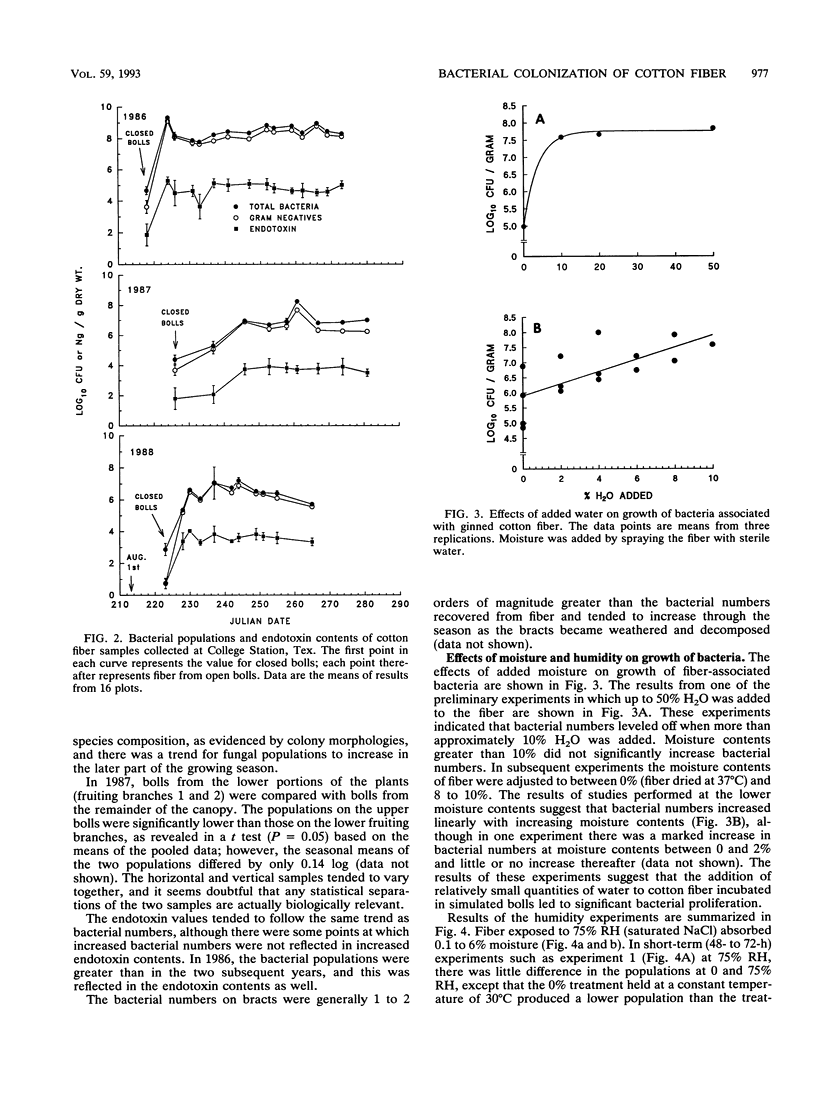
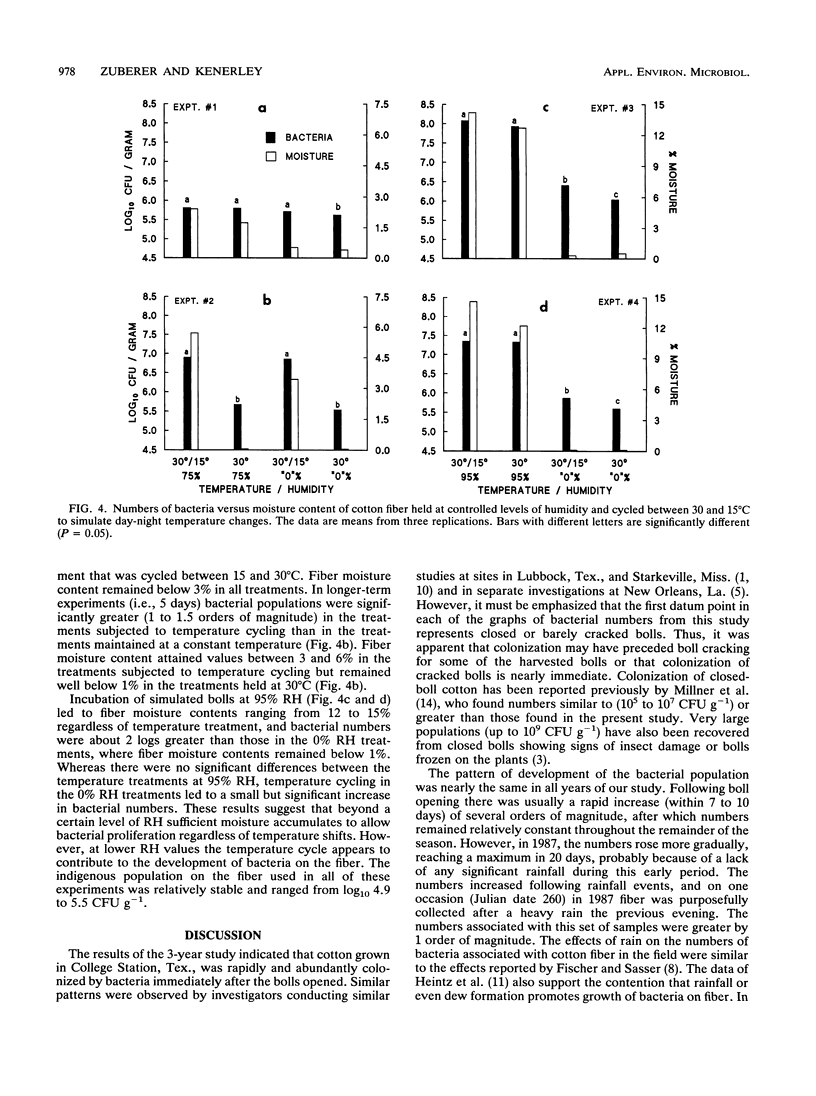
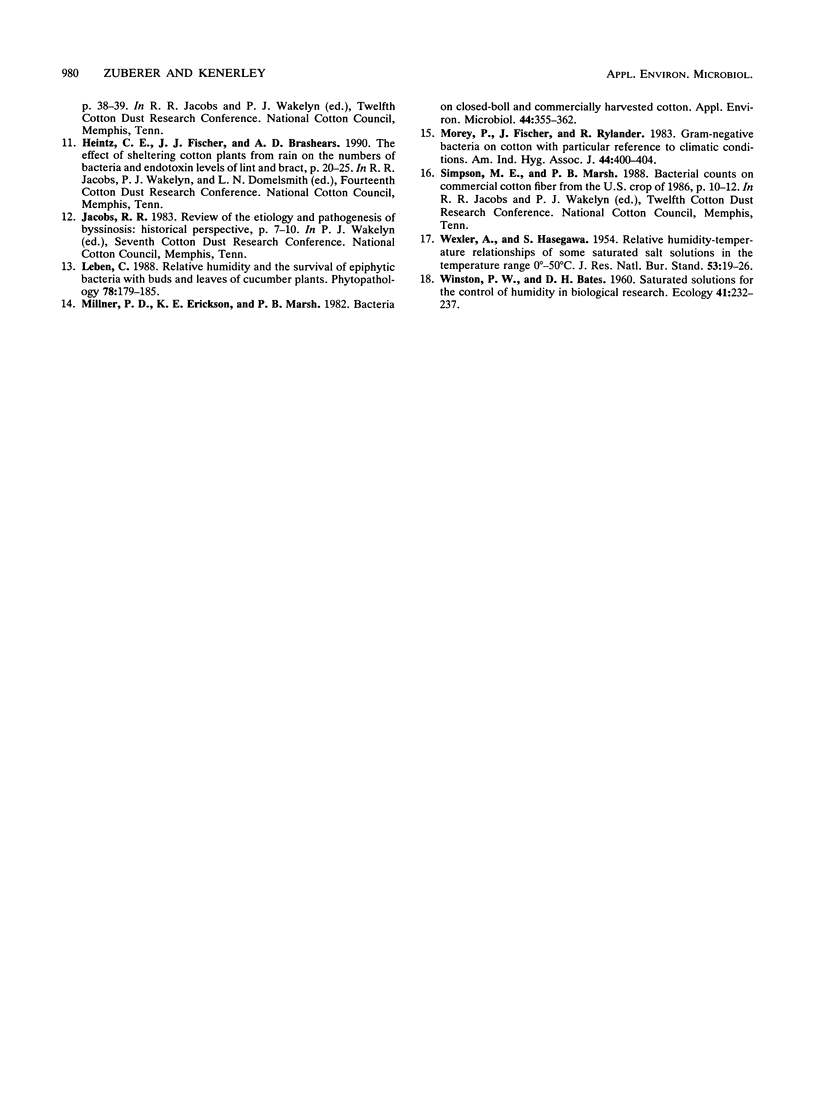
A highly replicated 3-year field study was conducted to determine the seasonal patterns of bacterial colonization of cotton fiber from the time of dehiscence of the bolls (the point at which the bolls just begin to open) through harvest and commercial ginning. Bacterial numbers on fiber samples from 16 plots were determined by dilution pour plating with tryptic soy agar containing cycloheximide, and numbers of gram-negative bacteria were determined by plating on tryptic soy agar containing vancomycin and cycloheximide. Populations of bacteria varied from year to year, but in all three seasons the pattern of colonization was generally a pattern consisting of a rapid increase following opening of the bolls and a more or less stable number thereafter throughout the growing season. Gram-negative bacteria accounted for 50% or more of the recoverable bacterial population. We hypothesized that the luxuriant bacterial flora developed as a result of the availability of sufficient free water in the bolls to allow bacterial proliferation with the carbon sources remaining after fiber maturation. Therefore, laboratory experiments were conducted to determine the threshold moisture level allowing growth of bacteria on fiber in the bolls. Bacterial proliferation occurred when as little as 2% moisture was added to air-dried fiber. Using simulated bolls, we demonstrated bacterial growth resulting from dew formation on fiber held in controlled-humidity chambers.
Full text
PDF


Selected References
These references are in PubMed. This may not be the complete list of references from this article.
- Castellan R. M., Olenchock S. A., Hankinson J. L., Millner P. D., Cocke J. B., Bragg C. K., Perkins H. H., Jr, Jacobs R. R. Acute bronchoconstriction induced by cotton dust: dose-related responses to endotoxin and other dust factors. Ann Intern Med. 1984 Aug;101(2):157–163. doi: 10.7326/0003-4819-101-2-157. [DOI] [PubMed] [Google Scholar]
- Millner P. D., Ericson K. E., Marsh P. B. Bacteria on closed-boll and commercially harvested cotton. Appl Environ Microbiol. 1982 Aug;44(2):355–362. doi: 10.1128/aem.44.2.355-362.1982. [DOI] [PMC free article] [PubMed] [Google Scholar]