



Abstract
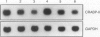
Cytochrome P450-dependent oxidation is a pathway for all-trans-retinoic acid (all-trans-RA) catabolism. Induction of this catabolic pathway was studied in MCF-7 breast cancer cells. MCF-7 cells showed low constitutive all-trans-RA catabolism. Concentration-dependent induction was obtained by preincubation of the cells with all-trans-RA (10(-9) to 10(-6) M). Onset of induction was fast, being detectable within 60 min, with maximal induction (45-fold) obtained after 16 h. Enzymatic characterization of induced all-trans-RA catabolism showed an estimated Km value (Michaelis-Menten constant) of 0.33 microM and a Vmax value (maximal velocity of an enzyme-catalysed reaction) of 54.5 fmol polar all-trans-RA metabolites 10(6) cells(-1) h(-1). These kinetic parameters represent the overall formation of polar metabolites from all-trans-RA. Induction of all-trans-RA catabolism was also obtained with other retinoids, CH55 >> 13-cis-RA = all-trans-RA > 9-cis-RA > 4-keto-all-trans-RA > 4-keto-13-cis-RA > retinol. The potency of the retinoids to induce all-trans-RA catabolism was correlated to their retinoic acid receptor affinity (Crettaz et al, 1990; Repa et al, 1990; Sani et al, 1990). Induction of all-trans-RA catabolism was inhibited by actinomycin D. Furthermore, all-trans-RA did not increase cytosolic retinoic acid-binding protein (CRABP) mRNA levels. These data suggest that induction of all-trans-RA catabolism in MCF-7 cells is a retinoic acid receptor-mediated gene transcriptional event. Induced all-trans-RA catabolism was inhibited by various retinoids with decreasing potency in the order: all-trans-RA > 4-keto-all-trans-RA > 13-cis-RA > 9-cis-RA > 4-keto-13-cis-RA > retinol > CH55. The antitumoral compound liarozole-fumarate inhibited all-trans-RA catabolism with a potency similar to that of all-trans-RA.
Full text
PDF


Images in this article
Selected References
These references are in PubMed. This may not be the complete list of references from this article.
- Allenby G., Bocquel M. T., Saunders M., Kazmer S., Speck J., Rosenberger M., Lovey A., Kastner P., Grippo J. F., Chambon P. Retinoic acid receptors and retinoid X receptors: interactions with endogenous retinoic acids. Proc Natl Acad Sci U S A. 1993 Jan 1;90(1):30–34. doi: 10.1073/pnas.90.1.30. [DOI] [PMC free article] [PubMed] [Google Scholar]
- Berggren Söderlund M., Johannesson G., Fex G. Expression of human all-trans-retinoic acid receptor beta and its ligand-binding domain in Escherichia coli. Biochem J. 1995 May 15;308(Pt 1):353–359. [PMC free article] [PubMed] [Google Scholar]
- Bhat P. V., Lacroix A. Metabolism of retinol and retinoic acid in N-methyl-N-nitrosourea-induced mammary carcinomas in rats. Cancer Res. 1989 Jan 1;49(1):139–144. [PubMed] [Google Scholar]
- Bollag W., Holdener E. E. Retinoids in cancer prevention and therapy. Ann Oncol. 1992 Jul;3(7):513–526. doi: 10.1093/oxfordjournals.annonc.a058252. [DOI] [PubMed] [Google Scholar]
- Brand N., Petkovich M., Krust A., Chambon P., de Thé H., Marchio A., Tiollais P., Dejean A. Identification of a second human retinoic acid receptor. Nature. 1988 Apr 28;332(6167):850–853. doi: 10.1038/332850a0. [DOI] [PubMed] [Google Scholar]
- Crettaz M., Baron A., Siegenthaler G., Hunziker W. Ligand specificities of recombinant retinoic acid receptors RAR alpha and RAR beta. Biochem J. 1990 Dec 1;272(2):391–397. doi: 10.1042/bj2720391. [DOI] [PMC free article] [PubMed] [Google Scholar]
- De Coster R., Wouters W., Van Ginckel R., End D., Krekels M., Coene M. C., Bowden C. Experimental studies with liarozole (R 75,251): an antitumoral agent which inhibits retinoic acid breakdown. J Steroid Biochem Mol Biol. 1992 Sep;43(1-3):197–201. doi: 10.1016/0960-0760(92)90208-z. [DOI] [PubMed] [Google Scholar]
- Dijkman G. A., Van Moorselaar R. J., Van Ginckel R., Van Stratum P., Wouters L., Debruyne F. M., Schalken J. A., de Coster R. Antitumoral effects of liarozole in androgen-dependent and independent R3327-Dunning prostate adenocarcinomas. J Urol. 1994 Jan;151(1):217–222. doi: 10.1016/s0022-5347(17)34920-0. [DOI] [PubMed] [Google Scholar]
- Duell E. A., Aström A., Griffiths C. E., Chambon P., Voorhees J. J. Human skin levels of retinoic acid and cytochrome P-450-derived 4-hydroxyretinoic acid after topical application of retinoic acid in vivo compared to concentrations required to stimulate retinoic acid receptor-mediated transcription in vitro. J Clin Invest. 1992 Oct;90(4):1269–1274. doi: 10.1172/JCI115990. [DOI] [PMC free article] [PubMed] [Google Scholar]
- Elder J. T., Cromie M. A., Griffiths C. E., Chambon P., Voorhees J. J. Stimulus-selective induction of CRABP-II mRNA: a marker for retinoic acid action in human skin. J Invest Dermatol. 1993 Apr;100(4):356–359. doi: 10.1111/1523-1747.ep12471816. [DOI] [PubMed] [Google Scholar]
- Fiorella P. D., Napoli J. L. Expression of cellular retinoic acid binding protein (CRABP) in Escherichia coli. Characterization and evidence that holo-CRABP is a substrate in retinoic acid metabolism. J Biol Chem. 1991 Sep 5;266(25):16572–16579. [PubMed] [Google Scholar]
- Frolik C. A., Roberts A. B., Tavela T. E., Roller P. P., Newton D. L., Sporn M. B. Isolation and identification of 4-hydroxy- and 4-oxoretinoic acid. In vitro metabolites of all-trans-retinoic acid in hamster trachea and liver. Biochemistry. 1979 May 15;18(10):2092–2097. doi: 10.1021/bi00577a039. [DOI] [PubMed] [Google Scholar]
- Frolik C. A., Roller P. P., Roberts A. B., Sporn M. B. In vitro and in vivo metabolism of all-trans- and 13-cis-retinoic acid in hamsters. Identification of 13-cis-4-oxoretinoic acid. J Biol Chem. 1980 Sep 10;255(17):8057–8062. [PubMed] [Google Scholar]
- Garrabrant T. A., End D. W. A rapid assay for measuring the metabolism of [3H]-retinoic acid in cell cultures. J Pharmacol Toxicol Methods. 1995 Dec;34(4):219–223. doi: 10.1016/1056-8719(95)00098-4. [DOI] [PubMed] [Google Scholar]
- Giguere V., Ong E. S., Segui P., Evans R. M. Identification of a receptor for the morphogen retinoic acid. Nature. 1987 Dec 17;330(6149):624–629. doi: 10.1038/330624a0. [DOI] [PubMed] [Google Scholar]
- Han I. S., Choi J. H. Highly specific cytochrome P450-like enzymes for all-trans-retinoic acid in T47D human breast cancer cells. J Clin Endocrinol Metab. 1996 Jun;81(6):2069–2075. doi: 10.1210/jcem.81.6.8964830. [DOI] [PubMed] [Google Scholar]
- Heyman R. A., Mangelsdorf D. J., Dyck J. A., Stein R. B., Eichele G., Evans R. M., Thaller C. 9-cis retinoic acid is a high affinity ligand for the retinoid X receptor. Cell. 1992 Jan 24;68(2):397–406. doi: 10.1016/0092-8674(92)90479-v. [DOI] [PubMed] [Google Scholar]
- Ho C. K. Synergistic anticellular effect of a combination of beta-interferon and retinoic acid against U937 cells. Cancer Res. 1985 Nov;45(11 Pt 1):5348–5351. [PubMed] [Google Scholar]
- Hänni R., Bigler F. Isolation and identification of three major metabolites of retinoic acid from rat feces. Helv Chim Acta. 1977 Apr 20;60(3):881–887. doi: 10.1002/hlca.19770600317. [DOI] [PubMed] [Google Scholar]
- Hänni R., Bigler F., Meister W., Englert G. Isolation and identification of three urinary metabolites of retinoic acid in the rat. Helv Chim Acta. 1976 Sep 29;59(6):2221–2227. doi: 10.1002/hlca.19760590636. [DOI] [PubMed] [Google Scholar]
- Jetten A. M., Anderson K., Deas M. A., Kagechika H., Lotan R., Rearick J. I., Shudo K. New benzoic acid derivatives with retinoid activity: lack of direct correlation between biological activity and binding to cellular retinoic acid binding protein. Cancer Res. 1987 Jul 1;47(13):3523–3527. [PubMed] [Google Scholar]
- Jones-Villeneuve E. M., McBurney M. W., Rogers K. A., Kalnins V. I. Retinoic acid induces embryonal carcinoma cells to differentiate into neurons and glial cells. J Cell Biol. 1982 Aug;94(2):253–262. doi: 10.1083/jcb.94.2.253. [DOI] [PMC free article] [PubMed] [Google Scholar]
- Kraft J. C., Slikker W., Jr, Bailey J. R., Roberts L. G., Fischer B., Wittfoht W., Nau H. Plasma pharmacokinetics and metabolism of 13-cis- and all-trans-retinoic acid in the cynomolgus monkey and the identification of 13-cis- and all-trans-retinoyl-beta-glucuronides. A comparison to one human case study with isotretinoin. Drug Metab Dispos. 1991 Mar-Apr;19(2):317–324. [PubMed] [Google Scholar]
- Krust A., Kastner P., Petkovich M., Zelent A., Chambon P. A third human retinoic acid receptor, hRAR-gamma. Proc Natl Acad Sci U S A. 1989 Jul;86(14):5310–5314. doi: 10.1073/pnas.86.14.5310. [DOI] [PMC free article] [PubMed] [Google Scholar]
- Lampron C., Rochette-Egly C., Gorry P., Dollé P., Mark M., Lufkin T., LeMeur M., Chambon P. Mice deficient in cellular retinoic acid binding protein II (CRABPII) or in both CRABPI and CRABPII are essentially normal. Development. 1995 Feb;121(2):539–548. doi: 10.1242/dev.121.2.539. [DOI] [PubMed] [Google Scholar]
- Leid M., Kastner P., Chambon P. Multiplicity generates diversity in the retinoic acid signalling pathways. Trends Biochem Sci. 1992 Oct;17(10):427–433. doi: 10.1016/0968-0004(92)90014-z. [DOI] [PubMed] [Google Scholar]
- Leo M. A., Lieber C. S. New pathway for retinol metabolism in liver microsomes. J Biol Chem. 1985 May 10;260(9):5228–5231. [PubMed] [Google Scholar]
- Levin A. A., Sturzenbecker L. J., Kazmer S., Bosakowski T., Huselton C., Allenby G., Speck J., Kratzeisen C., Rosenberger M., Lovey A. 9-cis retinoic acid stereoisomer binds and activates the nuclear receptor RXR alpha. Nature. 1992 Jan 23;355(6358):359–361. doi: 10.1038/355359a0. [DOI] [PubMed] [Google Scholar]
- Lotan R., Lotan D. Stimulation of melanogenesis in a human melanoma cell line by retinoids. Cancer Res. 1980 Sep;40(9):3345–3350. [PubMed] [Google Scholar]
- Mahler C., Verhelst J., Denis L. Ketoconazole and liarozole in the treatment of advanced prostatic cancer. Cancer. 1993 Feb 1;71(3 Suppl):1068–1073. doi: 10.1002/1097-0142(19930201)71:3+<1068::aid-cncr2820711427>3.0.co;2-5. [DOI] [PubMed] [Google Scholar]
- Mangelsdorf D. J., Borgmeyer U., Heyman R. A., Zhou J. Y., Ong E. S., Oro A. E., Kakizuka A., Evans R. M. Characterization of three RXR genes that mediate the action of 9-cis retinoic acid. Genes Dev. 1992 Mar;6(3):329–344. doi: 10.1101/gad.6.3.329. [DOI] [PubMed] [Google Scholar]
- Mangelsdorf D. J., Ong E. S., Dyck J. A., Evans R. M. Nuclear receptor that identifies a novel retinoic acid response pathway. Nature. 1990 May 17;345(6272):224–229. doi: 10.1038/345224a0. [DOI] [PubMed] [Google Scholar]
- Matsushima Y., Kawachi E., Tanaka H., Kagechika H., Hashimoto Y., Shudo K. Differentiation-inducing activity of retinoic acid isomers and their oxidized analogs on human promyelocytic leukemia HL-60 cells. Biochem Biophys Res Commun. 1992 Dec 15;189(2):1136–1142. doi: 10.1016/0006-291x(92)92322-o. [DOI] [PubMed] [Google Scholar]
- McCormick A. M., Napoli J. L. Identification of 5,6-epoxyretinoic acid as an endogenous retinol metabolite. J Biol Chem. 1982 Feb 25;257(4):1730–1735. [PubMed] [Google Scholar]
- Miller V. A., Rigas J. R., Muindi J. R., Tong W. P., Venkatraman E., Kris M. G., Warrell R. P., Jr Modulation of all-trans retinoic acid pharmacokinetics by liarozole. Cancer Chemother Pharmacol. 1994;34(6):522–526. doi: 10.1007/BF00685665. [DOI] [PubMed] [Google Scholar]
- Muindi J., Frankel S. R., Miller W. H., Jr, Jakubowski A., Scheinberg D. A., Young C. W., Dmitrovsky E., Warrell R. P., Jr Continuous treatment with all-trans retinoic acid causes a progressive reduction in plasma drug concentrations: implications for relapse and retinoid "resistance" in patients with acute promyelocytic leukemia. Blood. 1992 Jan 15;79(2):299–303. [PubMed] [Google Scholar]
- Napoli J. L. Biosynthesis and metabolism of retinoic acid: roles of CRBP and CRABP in retinoic acid: roles of CRBP and CRABP in retinoic acid homeostasis. J Nutr. 1993 Feb;123(2 Suppl):362–366. doi: 10.1093/jn/123.suppl_2.362. [DOI] [PubMed] [Google Scholar]
- Napoli J. L. Retinol metabolism in LLC-PK1 Cells. Characterization of retinoic acid synthesis by an established mammalian cell line. J Biol Chem. 1986 Oct 15;261(29):13592–13597. [PubMed] [Google Scholar]
- Ong D. E., Chytil F. Vitamin A and cancer. Vitam Horm. 1983;40:105–144. doi: 10.1016/s0083-6729(08)60433-1. [DOI] [PubMed] [Google Scholar]
- Parkinson D. R., Smith M. A., Cheson B. D., Stevenson H. C., Friedman M. A. Trans-retinoic acid and related differentiation agents. Semin Oncol. 1992 Dec;19(6):734–741. [PubMed] [Google Scholar]
- Petkovich M., Brand N. J., Krust A., Chambon P. A human retinoic acid receptor which belongs to the family of nuclear receptors. Nature. 1987 Dec 3;330(6147):444–450. doi: 10.1038/330444a0. [DOI] [PubMed] [Google Scholar]
- Ramp U., Gerharz C. D., Eifler E., Biesalski H. K., Gabbert H. E. Effects of retinoic acid metabolites on proliferation and differentiation of the clonal rhabdomyosarcoma cell line BA-HAN-1C. Biol Cell. 1994;81(1):31–37. doi: 10.1016/0248-4900(94)90052-3. [DOI] [PubMed] [Google Scholar]
- Repa J. J., Hanson K. K., Clagett-Dame M. All-trans-retinol is a ligand for the retinoic acid receptors. Proc Natl Acad Sci U S A. 1993 Aug 1;90(15):7293–7297. doi: 10.1073/pnas.90.15.7293. [DOI] [PMC free article] [PubMed] [Google Scholar]
- Roberts A. B., Lamb L. C., Sporn M. B. Metabolism of all-trans-retinoic acid in hamster liver microsomes: oxidation of 4-hydroxy- to 4-keto-retinoic acid. Arch Biochem Biophys. 1980 Feb;199(2):374–383. doi: 10.1016/0003-9861(80)90293-3. [DOI] [PubMed] [Google Scholar]
- Sani B. P., Singh R. K., Reddy L. G., Gaub M. P. Isolation, partial purification and characterization of nuclear retinoic acid receptors from chick skin. Arch Biochem Biophys. 1990 Nov 15;283(1):107–113. doi: 10.1016/0003-9861(90)90619-a. [DOI] [PubMed] [Google Scholar]
- Sietsema W. K., DeLuca H. F. Retinoic acid 5,6-epoxidase. Properties and biological significance. J Biol Chem. 1982 Apr 25;257(8):4265–4270. [PubMed] [Google Scholar]
- Smets G., Van Ginckel R., Daneels G., Moeremans M., Van Wauwe J., Coene M. C., Ramaekers F. C., Schalken J. A., Borgers M., De Coster R. Liarozole, an antitumor drug, modulates cytokeratin expression in the Dunning AT-6sq prostatic carcinoma through in situ accumulation of all-trans-retinoic acid. Prostate. 1995 Sep;27(3):129–140. doi: 10.1002/pros.2990270303. [DOI] [PubMed] [Google Scholar]
- Sporn M. B., Roberts A. B. Role of retinoids in differentiation and carcinogenesis. Cancer Res. 1983 Jul;43(7):3034–3040. [PubMed] [Google Scholar]
- Strickland S., Mahdavi V. The induction of differentiation in teratocarcinoma stem cells by retinoic acid. Cell. 1978 Oct;15(2):393–403. doi: 10.1016/0092-8674(78)90008-9. [DOI] [PubMed] [Google Scholar]
- Van Wauwe J. P., Coene M. C., Goossens J., Cools W., Monbaliu J. Effects of cytochrome P-450 inhibitors on the in vivo metabolism of all-trans-retinoic acid in rats. J Pharmacol Exp Ther. 1990 Jan;252(1):365–369. [PubMed] [Google Scholar]
- Van Wauwe J. P., Coene M. C., Goossens J., Van Nijen G., Cools W., Lauwers W. Ketoconazole inhibits the in vitro and in vivo metabolism of all-trans-retinoic acid. J Pharmacol Exp Ther. 1988 May;245(2):718–722. [PubMed] [Google Scholar]
- Van Wauwe J., Coene M. C., Cools W., Goossens J., Lauwers W., Le Jeune L., Van Hove C., Van Nyen G. Liarozole fumarate inhibits the metabolism of 4-keto-all-trans-retinoic acid. Biochem Pharmacol. 1994 Feb 11;47(4):737–741. doi: 10.1016/0006-2952(94)90137-6. [DOI] [PubMed] [Google Scholar]
- Van Wauwe J., Van Nyen G., Coene M. C., Stoppie P., Cools W., Goossens J., Borghgraef P., Janssen P. A. Liarozole, an inhibitor of retinoic acid metabolism, exerts retinoid-mimetic effects in vivo. J Pharmacol Exp Ther. 1992 May;261(2):773–779. [PubMed] [Google Scholar]
- Varani J., Gendimenico G. J., Shah B., Gibbs D., Capetola R. J., Mezick J. A., Voorhees J. J. A direct comparison of pharmacologic effects of retinoids on skin cells in vitro and in vivo. Skin Pharmacol. 1991;4(4):254–261. doi: 10.1159/000210959. [DOI] [PubMed] [Google Scholar]
- Williams J. B., Napoli J. L. Inhibition of retinoic acid metabolism by imidazole antimycotics in F9 embryonal carcinoma cells. Biochem Pharmacol. 1987 Apr 15;36(8):1386–1388. doi: 10.1016/0006-2952(87)90102-x. [DOI] [PubMed] [Google Scholar]
- Williams J. B., Napoli J. L. Metabolism of retinoic acid and retinol during differentiation of F9 embryonal carcinoma cells. Proc Natl Acad Sci U S A. 1985 Jul;82(14):4658–4662. doi: 10.1073/pnas.82.14.4658. [DOI] [PMC free article] [PubMed] [Google Scholar]
- Williams J. B., Shields C. O., Brettel L. M., Napoli J. L. Assessment of retinoid-induced differentiation of F9 embryonal carcinoma cells with an enzyme-linked immunoadsorbent assay for laminin: statistical comparison of dose-response curves. Anal Biochem. 1987 Feb 1;160(2):267–274. doi: 10.1016/0003-2697(87)90046-7. [DOI] [PubMed] [Google Scholar]
- Wolf G. Multiple functions of vitamin A. Physiol Rev. 1984 Jul;64(3):873–937. doi: 10.1152/physrev.1984.64.3.873. [DOI] [PubMed] [Google Scholar]
- Wouters W., van Dun J., Dillen A., Coene M. C., Cools W., De Coster R. Effects of liarozole, a new antitumoral compound, on retinoic acid-induced inhibition of cell growth and on retinoic acid metabolism in MCF-7 human breast cancer cells. Cancer Res. 1992 May 15;52(10):2841–2846. [PubMed] [Google Scholar]