



Abstract
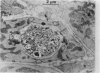
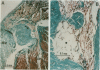
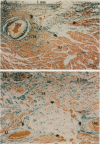
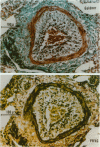
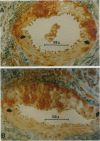
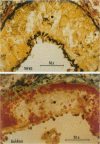
Apoptosis and necrosis are two distinctly different forms of cell death and both occur in the human heart. In contrast to necrosis, apoptosis is not associated with inflammation and there are two reasons for this. The apoptotic cell does not swell or rupture prior to its being engulfed by either a macrophage or even a neighboring like cell. And the phagocytosis occurs with unusual rapidity. Apoptosis, also thought of as cell suicide, is a tidy way of removing cells no longer useful, in essence a form of selective deletion. These features make apoptosis a valuable component of morphogenesis, mediation of hormonal and immunological responses, and the homeostatic balance between hypertrophy and atrophy or involution. In the human heart apoptosis has been found in the sinus node of patients with the long QT syndrome. It most likely participates in the important postnatal morphogenesis of the sinus node, AV (atrioventricular) node and His bundle. Apoptosis may also participate in the genesis and pathophysiology of cardiomyopathy, paroxysmal arrhythmias or conduction disturbances (some of which may be responsible for sudden death), focal fibromuscular dysplasia of small coronary arteries, hereditary medial degeneration of the tunica media of coronary arteries, and arrhythmogenic right ventricular dysplasia. The possible role of apoptosis in numerous other changes in the human heart merit future investigation, among them being the pathogenesis of atherosclerosis and mechanisms of ageing in the myocardium.
Full text
PDF


Images in this article



Selected References
These references are in PubMed. This may not be the complete list of references from this article.
- Alison M. R., Sarraf C. E. Apoptosis: a gene-directed programme of cell death. J R Coll Physicians Lond. 1992 Jan;26(1):25–35. [PMC free article] [PubMed] [Google Scholar]
- Anderson R. H., Bouton J., Burrow C. T., Smith A. Sudden death in infancy: a study of cardiac specialized tissue. Br Med J. 1974 Apr 20;2(5911):135–139. doi: 10.1136/bmj.2.5911.135. [DOI] [PMC free article] [PubMed] [Google Scholar]
- Araki S., Shimada Y., Kaji K., Hayashi H. Apoptosis of vascular endothelial cells by fibroblast growth factor deprivation. Biochem Biophys Res Commun. 1990 May 16;168(3):1194–1200. doi: 10.1016/0006-291x(90)91155-l. [DOI] [PubMed] [Google Scholar]
- Arends M. J., Wyllie A. H. Apoptosis: mechanisms and roles in pathology. Int Rev Exp Pathol. 1991;32:223–254. doi: 10.1016/b978-0-12-364932-4.50010-1. [DOI] [PubMed] [Google Scholar]
- Askew D. S., Ihle J. N., Cleveland J. L. Activation of apoptosis associated with enforced myc expression in myeloid progenitor cells is dominant to the suppression of apoptosis by interleukin-3 or erythropoietin. Blood. 1993 Oct 1;82(7):2079–2087. [PubMed] [Google Scholar]
- Bharati S., Dreifus L., Bucheleres G., Molthan M., Covitz W., Isenberg H. S., Lev M. The conduction system in patients with a prolonged QT interval. J Am Coll Cardiol. 1985 Nov;6(5):1110–1119. doi: 10.1016/s0735-1097(85)80317-x. [DOI] [PubMed] [Google Scholar]
- Blankenship D. C., Hug G., Balko G., van der Bel-Kann J., Coith R. L., Jr, Engel P. J. Hemodynamic and myocyte mitochondrial ultrastructural abnormalities in arrhythmogenic right ventricular dysplasia. Am Heart J. 1993 Oct;126(4):989–995. doi: 10.1016/0002-8703(93)90718-o. [DOI] [PubMed] [Google Scholar]
- Bokeriia L. A., Belokon' N. A., Buziashvili Iu I., Krugliakov I. V., Baturkin L. Iu. Sovremennyi podkhod k khirurgicheskomu lecheniiu sindroma Dzhervel-Lange-Nil'sena. Kardiologiia. 1988 Aug;28(8):105–106. [PubMed] [Google Scholar]
- Brechenmacher C. Atrio-His bundle tracts. Br Heart J. 1975 Aug;37(8):853–855. doi: 10.1136/hrt.37.8.853. [DOI] [PMC free article] [PubMed] [Google Scholar]
- Buchman T. G., Abello P. A., Smith E. H., Bulkley G. B. Induction of heat shock response leads to apoptosis in endothelial cells previously exposed to endotoxin. Am J Physiol. 1993 Jul;265(1 Pt 2):H165–H170. doi: 10.1152/ajpheart.1993.265.1.H165. [DOI] [PubMed] [Google Scholar]
- Burke A. P., Anderson P. G., Virmani R., James T. N., Herrera G. A., Ceballos R. Tumor of the atrioventricular nodal region. A clinical and immunohistochemical study. Arch Pathol Lab Med. 1990 Oct;114(10):1057–1062. [PubMed] [Google Scholar]
- Bursch W., Liehr J. G., Sirbasku D. A., Putz B., Taper H., Schulte-Hermann R. Control of cell death (apoptosis) by diethylstilbestrol in an estrogen-dependent kidney tumor. Carcinogenesis. 1991 May;12(5):855–860. doi: 10.1093/carcin/12.5.855. [DOI] [PubMed] [Google Scholar]
- CONNETT M. C., LANSCHE J. M. FIBROMUSCULAR HYPERPLASIA OF THE INTERNAL CAROTID ARTERY: REPORT OF A CASE. Ann Surg. 1965 Jul;162:59–62. doi: 10.1097/00000658-196507000-00010. [DOI] [PMC free article] [PubMed] [Google Scholar]
- Cappato R., Alboni P., Codecà L., Guardigli G., Toselli T., Antonioli G. E. Direct and autonomically mediated effects of oral quinidine on RR/QT relation after an abrupt increase in heart rate. J Am Coll Cardiol. 1993 Jul;22(1):99–105. doi: 10.1016/0735-1097(93)90822-i. [DOI] [PubMed] [Google Scholar]
- Carson D. A., Ribeiro J. M. Apoptosis and disease. Lancet. 1993 May 15;341(8855):1251–1254. doi: 10.1016/0140-6736(93)91154-e. [DOI] [PubMed] [Google Scholar]
- Cohen J. J. Programmed cell death in the immune system. Adv Immunol. 1991;50:55–85. doi: 10.1016/s0065-2776(08)60822-6. [DOI] [PubMed] [Google Scholar]
- Cotter T. G., Lennon S. V., Glynn J. G., Martin S. J. Cell death via apoptosis and its relationship to growth, development and differentiation of both tumour and normal cells. Anticancer Res. 1990 Sep-Oct;10(5A):1153–1159. [PubMed] [Google Scholar]
- Crawford M. H., Karliner J. S., O'Rourke R. A., Friedman W. F. Prolonged Q-T interval syndrome. Successful treatment with combined ventricular pacing and propanolol. Chest. 1975 Sep;68(3):369–371. doi: 10.1378/chest.68.3.369. [DOI] [PubMed] [Google Scholar]
- Curfman G. D. Molecular insights into hypertrophic cardiomyopathy. N Engl J Med. 1992 Apr 23;326(17):1149–1151. doi: 10.1056/NEJM199204233261709. [DOI] [PubMed] [Google Scholar]
- Debatin K. M., Goldman C. K., Waldmann T. A., Krammer P. H. APO-1-induced apoptosis of leukemia cells from patients with adult T-cell leukemia. Blood. 1993 Jun 1;81(11):2972–2977. [PubMed] [Google Scholar]
- Duvall E., Wyllie A. H., Morris R. G. Macrophage recognition of cells undergoing programmed cell death (apoptosis). Immunology. 1985 Oct;56(2):351–358. [PMC free article] [PubMed] [Google Scholar]
- Duvall E., Wyllie A. H., Morris R. G. Macrophage recognition of cells undergoing programmed cell death (apoptosis). Immunology. 1985 Oct;56(2):351–358. [PMC free article] [PubMed] [Google Scholar]
- ENGLE M. A. Wolff-Parkinson-White syndrome in infants and children. AMA Am J Dis Child. 1952 Dec;84(6):692–705. doi: 10.1001/archpedi.1952.02050060030002. [DOI] [PubMed] [Google Scholar]
- Eastman A., Barry M. A. The origins of DNA breaks: a consequence of DNA damage, DNA repair, or apoptosis? Cancer Invest. 1992;10(3):229–240. doi: 10.3109/07357909209032765. [DOI] [PubMed] [Google Scholar]
- Eldar M., Griffin J. C., Van Hare G. F., Witherell C., Bhandari A., Benditt D., Scheinman M. M. Combined use of beta-adrenergic blocking agents and long-term cardiac pacing for patients with the long QT syndrome. J Am Coll Cardiol. 1992 Oct;20(4):830–837. doi: 10.1016/0735-1097(92)90180-u. [DOI] [PubMed] [Google Scholar]
- Ellis R. E., Yuan J. Y., Horvitz H. R. Mechanisms and functions of cell death. Annu Rev Cell Biol. 1991;7:663–698. doi: 10.1146/annurev.cb.07.110191.003311. [DOI] [PubMed] [Google Scholar]
- Evan G. I., Littlewood T. D. The role of c-myc in cell growth. Curr Opin Genet Dev. 1993 Feb;3(1):44–49. doi: 10.1016/s0959-437x(05)80339-9. [DOI] [PubMed] [Google Scholar]
- Evan G. I., Wyllie A. H., Gilbert C. S., Littlewood T. D., Land H., Brooks M., Waters C. M., Penn L. Z., Hancock D. C. Induction of apoptosis in fibroblasts by c-myc protein. Cell. 1992 Apr 3;69(1):119–128. doi: 10.1016/0092-8674(92)90123-t. [DOI] [PubMed] [Google Scholar]
- FRASER G. R., FROGGATT P., JAMES T. N. CONGENITAL DEAFNESS ASSOCIATED WITH ELECTROCARDIOGRAPHIC ABNORMALITIES, FAINTING ATTACKS AND SUDDEN DEATH. A RECESSIVE SYNDROME. Q J Med. 1964 Jul;33:361–385. [PubMed] [Google Scholar]
- Fuchs B. A., Pruett S. B. Morphine induces apoptosis in murine thymocytes in vivo but not in vitro: involvement of both opiate and glucocorticoid receptors. J Pharmacol Exp Ther. 1993 Jul;266(1):417–423. [PubMed] [Google Scholar]
- Furman S. Prevalence, circumstances, mechanisms, and risk stratification of sudden cardiac death in artificial ventricular pacing. Circulation. 1992 Feb;85(2):843–844. doi: 10.1161/01.cir.85.2.843. [DOI] [PubMed] [Google Scholar]
- Fòntaine G. Arrhythmogenic right ventricular dysplasia. Br Heart J. 1993 Sep;70(3):293–294. doi: 10.1136/hrt.70.3.293. [DOI] [PMC free article] [PubMed] [Google Scholar]
- Gerschenson L. E., Rotello R. J. Apoptosis: a different type of cell death. FASEB J. 1992 Apr;6(7):2450–2455. doi: 10.1096/fasebj.6.7.1563596. [DOI] [PubMed] [Google Scholar]
- Golstein P., Ojcius D. M., Young J. D. Cell death mechanisms and the immune system. Immunol Rev. 1991 Jun;121:29–65. doi: 10.1111/j.1600-065x.1991.tb00822.x. [DOI] [PubMed] [Google Scholar]
- Gougeon M. L., Montagnier L. Apoptosis in AIDS. Science. 1993 May 28;260(5112):1269–1270. doi: 10.1126/science.8098552. [DOI] [PubMed] [Google Scholar]
- Grogg D., Hahn S., Erb P. CD4+ T cell-mediated killing of major histocompatibility complex class II-positive antigen-presenting cells (APC). III. CD4+ cytotoxic T cells induce apoptosis of APC. Eur J Immunol. 1992 Jan;22(1):267–272. doi: 10.1002/eji.1830220139. [DOI] [PubMed] [Google Scholar]
- HUNT J. C., HARRISON E. G., Jr, KINCAID O. W., BERNATZ P. E., DAVIS G. D. Idiopathic fibrous and fibromuscular stenoses of the renal arteries associated with hypertension. Proc Staff Meet Mayo Clin. 1962 Mar 28;37:181–216. [PubMed] [Google Scholar]
- Harrison E. G., Jr, Hunt J. C., Bernatz P. E. Morphology of fibromuscular dysplasia of the renal artery in renovascular hypertension. Am J Med. 1967 Jul;43(1):97–112. doi: 10.1016/0002-9343(67)90151-9. [DOI] [PubMed] [Google Scholar]
- Horne T. W. Fibromuscular hyperplasia of the iliac arteries. Aust N Z J Surg. 1975 Nov;45(4):415–417. doi: 10.1111/j.1445-2197.1975.tb05786.x. [DOI] [PubMed] [Google Scholar]
- JAMES T. N. AN ETIOLOGIC CONCEPT CONCERNING THE OBSCURE MYOCARDIOPATHIES. Prog Cardiovasc Dis. 1964 Jul;7:43–64. doi: 10.1016/s0033-0620(64)80029-3. [DOI] [PubMed] [Google Scholar]
- JAMES T. N. Observations on the cardiovascular involvement, including the cardiac conduction system, in progressive muscular dystrophy. Am Heart J. 1962 Jan;63:48–56. doi: 10.1016/0002-8703(62)90219-3. [DOI] [PubMed] [Google Scholar]
- JAMES T. N. On the cause of syncope and sudden death in primary pulmonary hypertension. Ann Intern Med. 1962 Feb;56:252–264. doi: 10.7326/0003-4819-56-2-252. [DOI] [PubMed] [Google Scholar]
- JAMES T. N., SCHATZ I. J. PATHOLOGY OF CARDIAC CONDUCTION SYSTEM IN MARFAN'S SYNDROME. Arch Intern Med. 1964 Sep;114:339–343. doi: 10.1001/archinte.1964.03860090073006. [DOI] [PubMed] [Google Scholar]
- JAMES T. N. THE CONNECTING PATHWAYS BETWEEN THE SINUS NODE AND A-V NODE AND BETWEEN THE RIGHT AND THE LEFT ATRIUM IN THE HUMAN HEART. Am Heart J. 1963 Oct;66:498–508. doi: 10.1016/0002-8703(63)90382-x. [DOI] [PubMed] [Google Scholar]
- James T. N. Anatomy of the sinus node, av node and os cordis of the beef heart. Anat Rec. 1965 Dec;153(4):361–371. doi: 10.1002/ar.1091530405. [DOI] [PubMed] [Google Scholar]
- James T. N. Cardiac conduction system: fetal and postnatal development. Am J Cardiol. 1970 Feb;25(2):213–226. doi: 10.1016/0002-9149(70)90581-3. [DOI] [PubMed] [Google Scholar]
- James T. N., Cobbs B. W., Coghlan H. C., McCoy W. C., Fisch C. Coronary disease, cardioneuropathy, and conduction system abnormalities in the cardiomyopathy of Friedreich's ataxia. Br Heart J. 1987 May;57(5):446–457. doi: 10.1136/hrt.57.5.446. [DOI] [PMC free article] [PubMed] [Google Scholar]
- James T. N. Congenital deafness and cardiac arrhythmias. Am J Cardiol. 1967 May;19(5):627–643. doi: 10.1016/0002-9149(67)90467-5. [DOI] [PubMed] [Google Scholar]
- James T. N., Drake E. H. Sudden death in Doberman pinschers. Ann Intern Med. 1968 Apr;68(4):821–829. doi: 10.7326/0003-4819-68-4-821. [DOI] [PubMed] [Google Scholar]
- James T. N., Galakhov I. De subitaneis mortibus. XXVI. Fatal electrical instabiltiy of the heart associated with benign congenital polycystic tumor of the atrioventricular node. Circulation. 1977 Oct;56(4 Pt 1):667–678. doi: 10.1161/01.cir.56.4.667. [DOI] [PubMed] [Google Scholar]
- James T. N., Hackel D. B., Marshall T. K. De subitaneis mortibus. V. Occluded A-V node artery. Circulation. 1974 Apr;49(4):772–777. doi: 10.1161/01.cir.49.4.772. [DOI] [PubMed] [Google Scholar]
- James T. N., Isobe J. H., Urthaler F. Correlative electrophysiological and anatomical studies concerning the site of origin of escape rhythm during complete atrioventricular block in the dog. Circ Res. 1979 Jul;45(1):108–119. doi: 10.1161/01.res.45.1.108. [DOI] [PubMed] [Google Scholar]
- James T. N., Marshall T. K. De subitaneis mortibus. XII. Asymmetrical hypertrophy of the heart. Circulation. 1975 Jun;51(6):1149–1166. doi: 10.1161/01.cir.51.6.1149. [DOI] [PubMed] [Google Scholar]
- James T. N., Marshall T. K. De subitaneis mortibus. XVII. Multifocal stenoses due to fibromuscular dysplasia of the sinus node artery. Circulation. 1976 Apr;53(4):736–742. doi: 10.1161/01.cir.53.4.736. [DOI] [PubMed] [Google Scholar]
- James T. N., Marshall T. K. XVIII. Persistent fetal dispersion of the atrioventricular node and His bundle within the central fibrous body. Circulation. 1976 Jun;53(6):1026–1034. doi: 10.1161/01.cir.53.6.1026. [DOI] [PubMed] [Google Scholar]
- James T. N., Puech P. De subitaneis mortibus. IX. Type A Wolff-Parkinson-White syndrome. Circulation. 1974 Dec;50(6):1264–1280. doi: 10.1161/01.cir.50.6.1264. [DOI] [PubMed] [Google Scholar]
- James T. N., Riddick L. Sudden death due to isolated acute infarction of the His bundle. J Am Coll Cardiol. 1990 Apr;15(5):1183–1187. doi: 10.1016/0735-1097(90)90262-n. [DOI] [PubMed] [Google Scholar]
- James T. N., Robertson B. T., Waldo A. L., Branch C. E. De subitaneis mortibus. XV. Hereditary stenosis of the His bundle in Pug dogs. Circulation. 1975 Dec;52(6):1152–1160. doi: 10.1161/01.cir.52.6.1152. [DOI] [PubMed] [Google Scholar]
- James T. N., Sherf L., Fine G., Morales A. R. Comparative ultrastructure of the sinus node in man and dog. Circulation. 1966 Jul;34(1):139–163. doi: 10.1161/01.cir.34.1.139. [DOI] [PubMed] [Google Scholar]
- James T. N. Small arteries of the heart. Circulation. 1977 Jul;56(1):2–14. doi: 10.1161/01.cir.56.1.2. [DOI] [PubMed] [Google Scholar]
- James T. N., Spencer M. S., Kloepfer J. C. De Subitaneis Mortibus. XXI. Adult onset syncope. with comments on the nature of congenital heart block and the morphogenesis of the human atrioventricular septal junction. Circulation. 1976 Dec;54(6):1001–1009. doi: 10.1161/01.cir.54.6.1001. [DOI] [PubMed] [Google Scholar]
- James T. N. Sudden death in babies: new observations in the heart. Am J Cardiol. 1968 Oct;22(4):479–506. doi: 10.1016/0002-9149(68)90154-9. [DOI] [PubMed] [Google Scholar]
- James T. N., Terasaki F., Pavlovich E. R., Vikhert A. M. Apoptosis and pleomorphic micromitochondriosis in the sinus nodes surgically excised from five patients with the long QT syndrome. J Lab Clin Med. 1993 Sep;122(3):309–323. [PubMed] [Google Scholar]
- James T. N. The Mikamo Lecture. Structure and function of the AV junction. Jpn Circ J. 1983 Jan;47(1):1–47. doi: 10.1253/jcj.47.1. [DOI] [PubMed] [Google Scholar]
- James T. N. The delivery and distribution of coronary collateral circulation. Chest. 1970 Sep;58(3):183–203. doi: 10.1378/chest.58.3.183. [DOI] [PubMed] [Google Scholar]
- James T. N. The sinus node. Am J Cardiol. 1977 Dec;40(6):965–986. doi: 10.1016/0002-9149(77)90048-0. [DOI] [PubMed] [Google Scholar]
- Keating M., Atkinson D., Dunn C., Timothy K., Vincent G. M., Leppert M. Linkage of a cardiac arrhythmia, the long QT syndrome, and the Harvey ras-1 gene. Science. 1991 May 3;252(5006):704–706. doi: 10.1126/science.1673802. [DOI] [PubMed] [Google Scholar]
- Keating M. Linkage analysis and long QT syndrome. Using genetics to study cardiovascular disease. Circulation. 1992 Jun;85(6):1973–1986. doi: 10.1161/01.cir.85.6.1973. [DOI] [PubMed] [Google Scholar]
- Kerr J. F., Wyllie A. H., Currie A. R. Apoptosis: a basic biological phenomenon with wide-ranging implications in tissue kinetics. Br J Cancer. 1972 Aug;26(4):239–257. doi: 10.1038/bjc.1972.33. [DOI] [PMC free article] [PubMed] [Google Scholar]
- Kyu B., Matsumori A., Sato Y., Okada I., Chapman N. M., Tracy S. Cardiac persistence of cardioviral RNA detected by polymerase chain reaction in a murine model of dilated cardiomyopathy. Circulation. 1992 Aug;86(2):522–530. doi: 10.1161/01.cir.86.2.522. [DOI] [PubMed] [Google Scholar]
- Lee K. K., Chan W. Y., Sze L. Y. Histogenetic potential of rat hind-limb interdigital tissues prior to and during the onset of programmed cell death. Anat Rec. 1993 Jul;236(3):568–572. doi: 10.1002/ar.1092360317. [DOI] [PubMed] [Google Scholar]
- Lennon S. V., Martin S. J., Cotter T. G. Dose-dependent induction of apoptosis in human tumour cell lines by widely diverging stimuli. Cell Prolif. 1991 Mar;24(2):203–214. doi: 10.1111/j.1365-2184.1991.tb01150.x. [DOI] [PubMed] [Google Scholar]
- Lev M., Leffler W. B., Langendorf R., Pick A. Anatomic findings in a case of ventricular pre-excitation (WPW) terminating in complete atrioventricular block. Circulation. 1966 Nov;34(5):718–733. doi: 10.1161/01.cir.34.5.718. [DOI] [PubMed] [Google Scholar]
- Lin C. Q., Bissell M. J. Multi-faceted regulation of cell differentiation by extracellular matrix. FASEB J. 1993 Jun;7(9):737–743. doi: 10.1096/fasebj.7.9.8330681. [DOI] [PubMed] [Google Scholar]
- MOE G. K., ABILDSKOV J. A. Atrial fibrillation as a self-sustaining arrhythmia independent of focal discharge. Am Heart J. 1959 Jul;58(1):59–70. doi: 10.1016/0002-8703(59)90274-1. [DOI] [PubMed] [Google Scholar]
- Macklis R. M., Lin J. Y., Beresford B., Atcher R. W., Hines J. J., Humm J. L. Cellular kinetics, dosimetry, and radiobiology of alpha-particle radioimmunotherapy: induction of apoptosis. Radiat Res. 1992 May;130(2):220–226. [PubMed] [Google Scholar]
- McCabe M. J., Jr, Orrenius S. Deletion and depletion: the involvement of viruses and environmental factors in T-lymphocyte apoptosis. Lab Invest. 1992 Apr;66(4):403–406. [PubMed] [Google Scholar]
- Meacham P. W., Brantley B. Familial fibromuscular dysplasia of the mesenteric arteries. South Med J. 1987 Oct;80(10):1311–1316. doi: 10.1097/00007611-198710000-00027. [DOI] [PubMed] [Google Scholar]
- Miyashita T., Reed J. C. Bcl-2 oncoprotein blocks chemotherapy-induced apoptosis in a human leukemia cell line. Blood. 1993 Jan 1;81(1):151–157. [PubMed] [Google Scholar]
- Obrador D., Ballester M., Carrió I., Augé J. M., López C. M., Bosch I., Martí V., Bordes R. Active myocardial damage without attending inflammatory response in dilated cardiomyopathy. J Am Coll Cardiol. 1993 Jun;21(7):1667–1671. doi: 10.1016/0735-1097(93)90385-e. [DOI] [PubMed] [Google Scholar]
- Pantaleo G., Graziosi C., Fauci A. S. New concepts in the immunopathogenesis of human immunodeficiency virus infection. N Engl J Med. 1993 Feb 4;328(5):327–335. doi: 10.1056/NEJM199302043280508. [DOI] [PubMed] [Google Scholar]
- Pavlovich E. R., Vikhert A. M., Bokeriia L. A., Krugliakov I. V. Ul'trastruktura sinoaurikuliarnoi oblasti serdtsa pri sindrome udlinennogo intervala Q-T. Arkh Patol. 1989;51(6):25–32. [PubMed] [Google Scholar]
- Pellegrino A., Ho S. Y., Anderson R. H., Hegerty A., Godman M. J., Michaelsson M. Prolonged QT interval and the cardiac conduction tissues. Am J Cardiol. 1986 Nov 15;58(11):1112–1113. doi: 10.1016/0002-9149(86)90127-x. [DOI] [PubMed] [Google Scholar]
- Petitier H., de Lajartre A. Y., Geslin P., Godin J. F., Victor J., Crochet D., Dupon H. Dysplasie fibreuse intimale coronaire et angor de Prinzmetal. Arch Mal Coeur Vaiss. 1978 Sep;71(9):1053–1059. [PubMed] [Google Scholar]
- Rao L., Debbas M., Sabbatini P., Hockenbery D., Korsmeyer S., White E. The adenovirus E1A proteins induce apoptosis, which is inhibited by the E1B 19-kDa and Bcl-2 proteins. Proc Natl Acad Sci U S A. 1992 Aug 15;89(16):7742–7746. doi: 10.1073/pnas.89.16.7742. [DOI] [PMC free article] [PubMed] [Google Scholar]
- Robaye B., Mosselmans R., Fiers W., Dumont J. E., Galand P. Tumor necrosis factor induces apoptosis (programmed cell death) in normal endothelial cells in vitro. Am J Pathol. 1991 Feb;138(2):447–453. [PMC free article] [PubMed] [Google Scholar]
- Saunders J. W., Jr Death in embryonic systems. Science. 1966 Nov 4;154(3749):604–612. doi: 10.1126/science.154.3749.604. [DOI] [PubMed] [Google Scholar]
- Searle J., Kerr J. F., Bishop C. J. Necrosis and apoptosis: distinct modes of cell death with fundamentally different significance. Pathol Annu. 1982;17(Pt 2):229–259. [PubMed] [Google Scholar]
- Sherf L., James T. N., Woods W. T. Function of the atrioventricular node considered on the basis of observed histology and fine structure. J Am Coll Cardiol. 1985 Mar;5(3):770–780. doi: 10.1016/s0735-1097(85)80411-3. [DOI] [PubMed] [Google Scholar]
- Stern M., Meagher L., Savill J., Haslett C. Apoptosis in human eosinophils. Programmed cell death in the eosinophil leads to phagocytosis by macrophages and is modulated by IL-5. J Immunol. 1992 Jun 1;148(11):3543–3549. [PubMed] [Google Scholar]
- Tamaru Y., Miyawaki T., Iwai K., Tsuji T., Nibu R., Yachie A., Koizumi S., Taniguchi N. Absence of bcl-2 expression by activated CD45RO+ T lymphocytes in acute infectious mononucleosis supporting their susceptibility to programmed cell death. Blood. 1993 Jul 15;82(2):521–527. [PubMed] [Google Scholar]
- Thiene G., Nava A., Corrado D., Rossi L., Pennelli N. Right ventricular cardiomyopathy and sudden death in young people. N Engl J Med. 1988 Jan 21;318(3):129–133. doi: 10.1056/NEJM198801213180301. [DOI] [PubMed] [Google Scholar]
- Thorball N., Moe H., Winther-Nielsen H. Progressive involution and physiological death of smooth muscle cells of rat incisal arterioles. Blood Vessels. 1985;22(4):157–169. doi: 10.1159/000158598. [DOI] [PubMed] [Google Scholar]
- Valdes-Dapena M. A., Greene M., Basavanand N., Catherman R., Truex R. C. The myocardial conduction system in sudden death in infancy. N Engl J Med. 1973 Nov 29;289(22):1179–1180. doi: 10.1056/NEJM197311292892207. [DOI] [PubMed] [Google Scholar]
- Watkins H., Rosenzweig A., Hwang D. S., Levi T., McKenna W., Seidman C. E., Seidman J. G. Characteristics and prognostic implications of myosin missense mutations in familial hypertrophic cardiomyopathy. N Engl J Med. 1992 Apr 23;326(17):1108–1114. doi: 10.1056/NEJM199204233261703. [DOI] [PubMed] [Google Scholar]
- Weissberg P. L., Grainger D. J., Shanahan C. M., Metcalfe J. C. Approaches to the development of selective inhibitors of vascular smooth muscle cell proliferation. Cardiovasc Res. 1993 Jul;27(7):1191–1198. doi: 10.1093/cvr/27.7.1191. [DOI] [PubMed] [Google Scholar]
- Williams G. T. Programmed cell death: apoptosis and oncogenesis. Cell. 1991 Jun 28;65(7):1097–1098. doi: 10.1016/0092-8674(91)90002-g. [DOI] [PubMed] [Google Scholar]
- Woods W. T., Urthaler F., James T. N. Spontaneous action potentials of cells in the canine sinus node. Circ Res. 1976 Jul;39(1):76–82. doi: 10.1161/01.res.39.1.76. [DOI] [PubMed] [Google Scholar]
- Wright S. C., Zhong J., Zheng H., Larrick J. W. Nicotine inhibition of apoptosis suggests a role in tumor promotion. FASEB J. 1993 Aug;7(11):1045–1051. [PubMed] [Google Scholar]
- Wyllie A. H. Apoptosis: cell death in tissue regulation. J Pathol. 1987 Dec;153(4):313–316. doi: 10.1002/path.1711530404. [DOI] [PubMed] [Google Scholar]
- Wyllie A. H. Apoptosis: cell death under homeostatic control. Arch Toxicol Suppl. 1987;11:3–10. doi: 10.1007/978-3-642-72558-6_1. [DOI] [PubMed] [Google Scholar]
- Wyllie A. H., Kerr J. F., Currie A. R. Cell death: the significance of apoptosis. Int Rev Cytol. 1980;68:251–306. doi: 10.1016/s0074-7696(08)62312-8. [DOI] [PubMed] [Google Scholar]
- Zehender M., Büchner C., Meinertz T., Just H. Prevalence, circumstances, mechanisms, and risk stratification of sudden cardiac death in unipolar single-chamber ventricular pacing. Circulation. 1992 Feb;85(2):596–605. doi: 10.1161/01.cir.85.2.596. [DOI] [PubMed] [Google Scholar]
- Zheng L. M., Zychlinsky A., Liu C. C., Ojcius D. M., Young J. D. Extracellular ATP as a trigger for apoptosis or programmed cell death. J Cell Biol. 1991 Jan;112(2):279–288. doi: 10.1083/jcb.112.2.279. [DOI] [PMC free article] [PubMed] [Google Scholar]