



Abstract
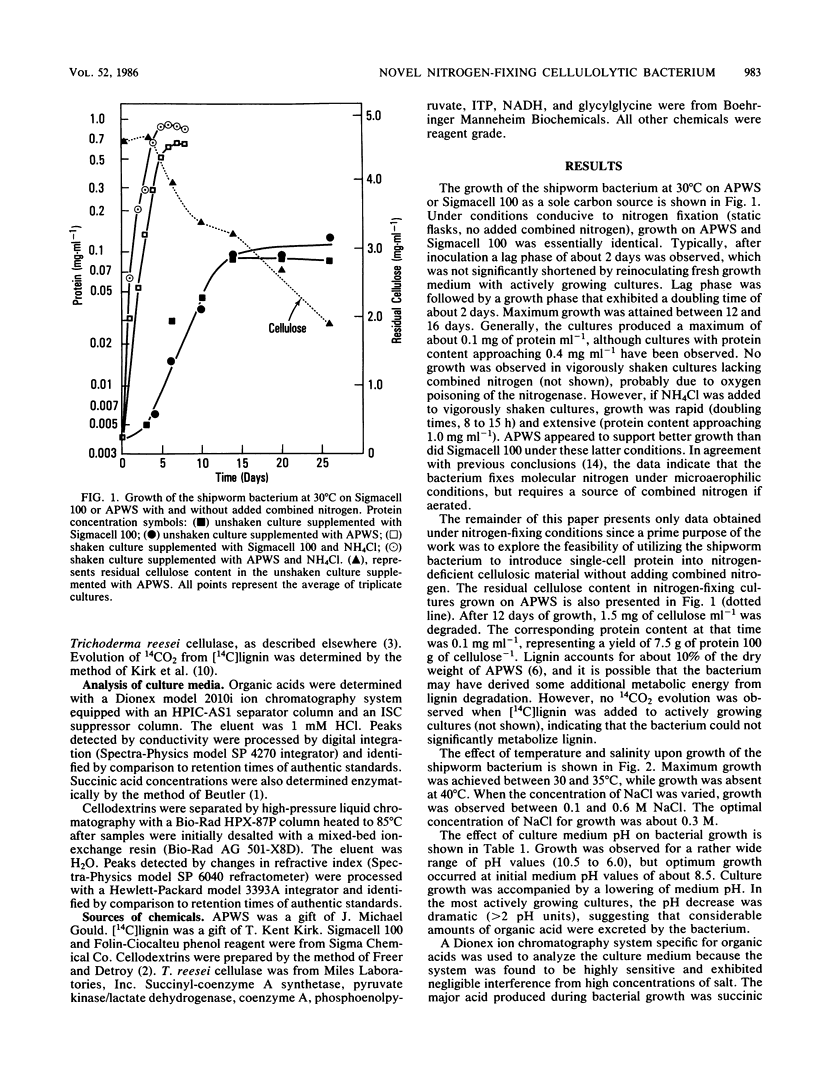
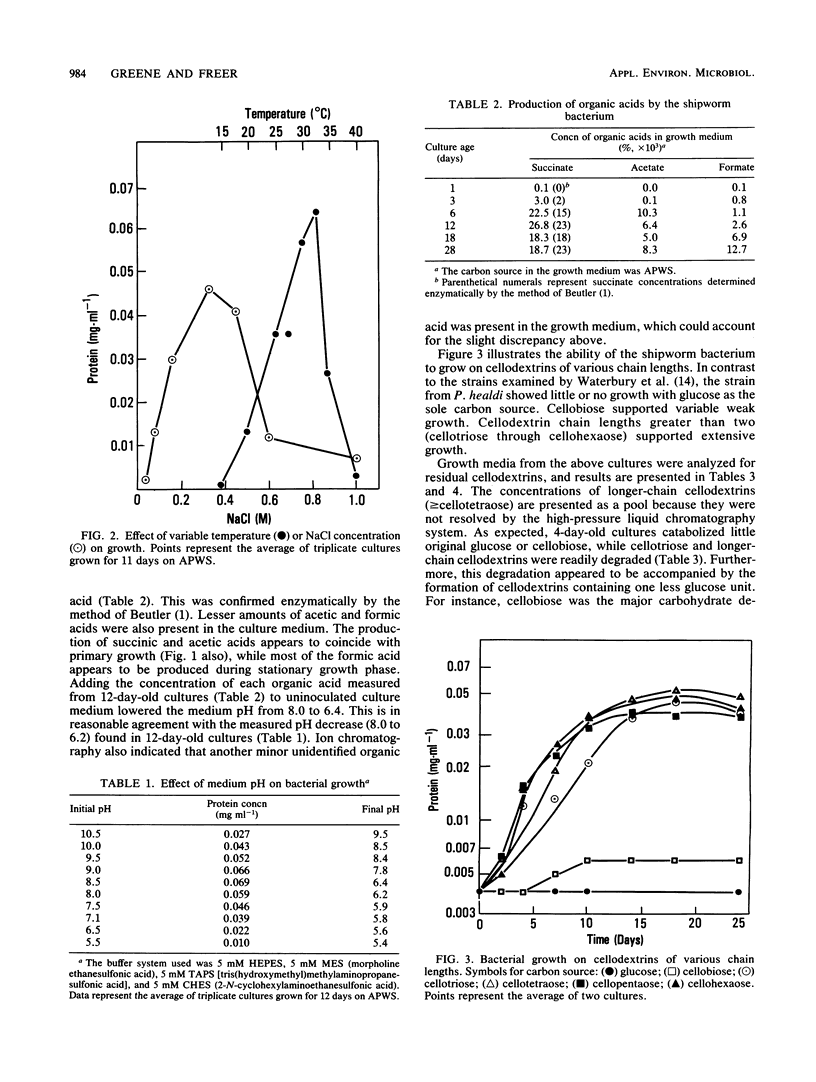
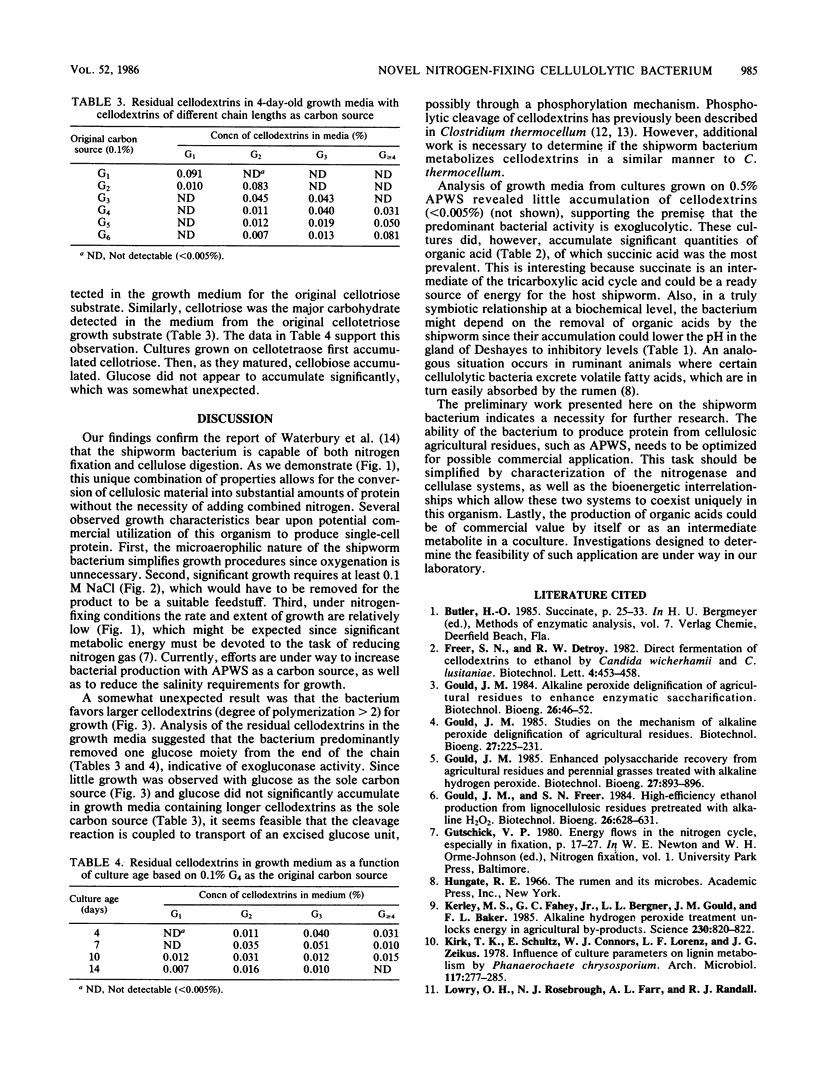
Growth characteristics of a cellulolytic nitrogen-fixing bacterium isolated from a marine shipworm by Waterbury et al. (J. B. Waterbury, C. B. Calloway, and R. D. Turner, Science 221:1401-1403, 1983) are described. When grown microaerobically, the bacterium exhibited doubling times of about 2 days in cellulose-supplemented synthetic medium devoid of combined nitrogen. Maximum growth was reached 12 to 16 days after inoculation. Growth optima for pH, temperature, and NaCl concentration were 8.5, 30 to 35°C, and 0.3 M, respectively. During growth the bacterium produced succinic acid (0.026%) and acetic acid (0.010%). Formic acid (0.010%) was produced during the stationary growth phase. No growth was observed when glucose was the sole carbon source. Cellobiose supported weak growth, while longer-chain-length cellodextrins supported extensive growth. Analysis of residual carbohydrates in the medium during growth indicated that the bacterium catabolized a terminal glucose moiety from the cellodextrin chain.
Full text
PDF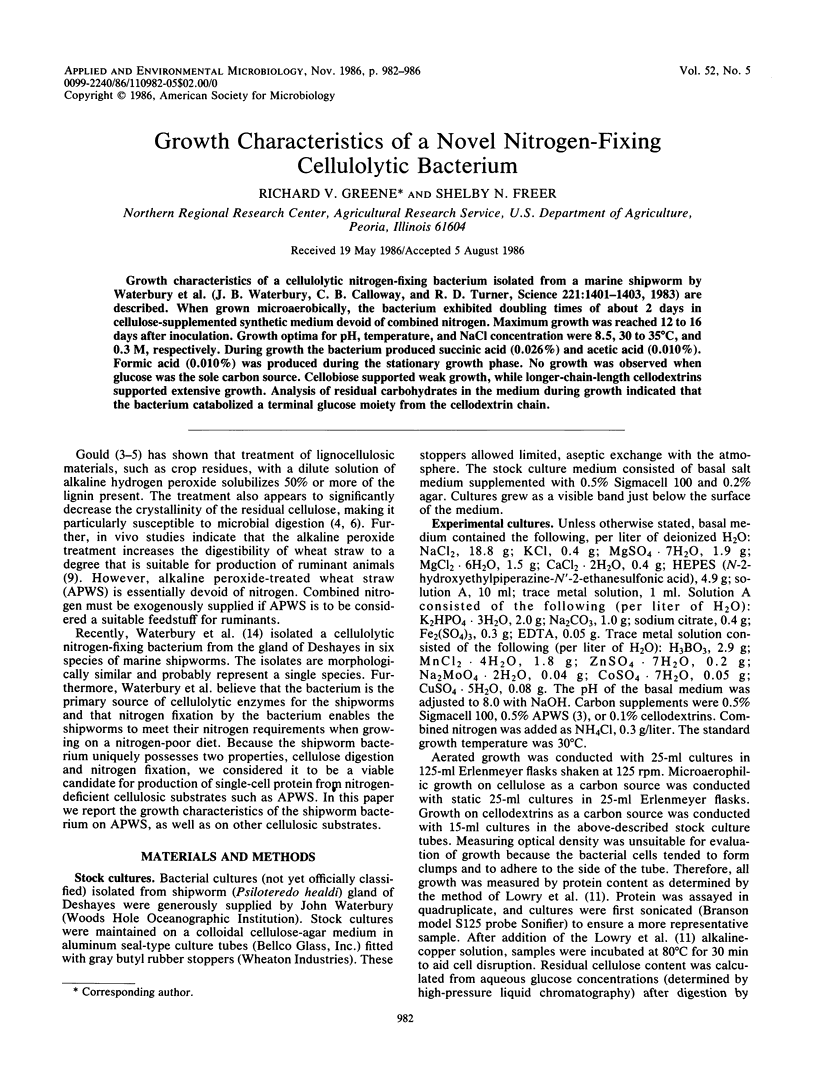
Selected References
These references are in PubMed. This may not be the complete list of references from this article.
- Kerley M. S., Fahey G. C., Jr, Berger L. L., Gould J. M., Lee Baker F. Alkaline hydrogen peroxide treatment unlocks energy in agricultural by-products. Science. 1985 Nov 15;230(4727):820–822. doi: 10.1126/science.230.4727.820. [DOI] [PubMed] [Google Scholar]
- Sheth K., Alexander J. K. Purification and properties of beta-1,4-oligoglucan:orthophosphate glucosyltransferase from Clostridium thermocellum. J Biol Chem. 1969 Jan 25;244(2):457–464. [PubMed] [Google Scholar]
- Waterbury J. B., Calloway C. B., Turner R. D. A cellulolytic nitrogen-fixing bacterium cultured from the gland of deshayes in shipworms (bivalvia: teredinidae). Science. 1983 Sep 30;221(4618):1401–1403. doi: 10.1126/science.221.4618.1401. [DOI] [PubMed] [Google Scholar]