



Abstract
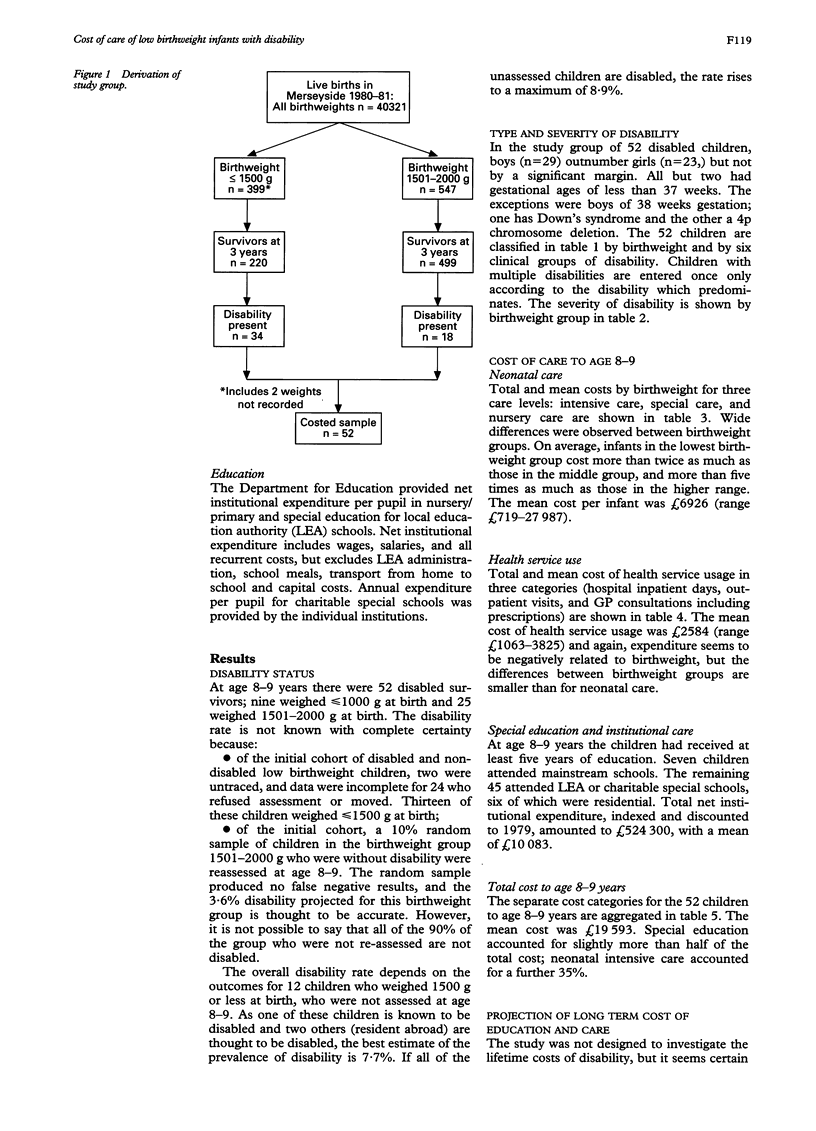
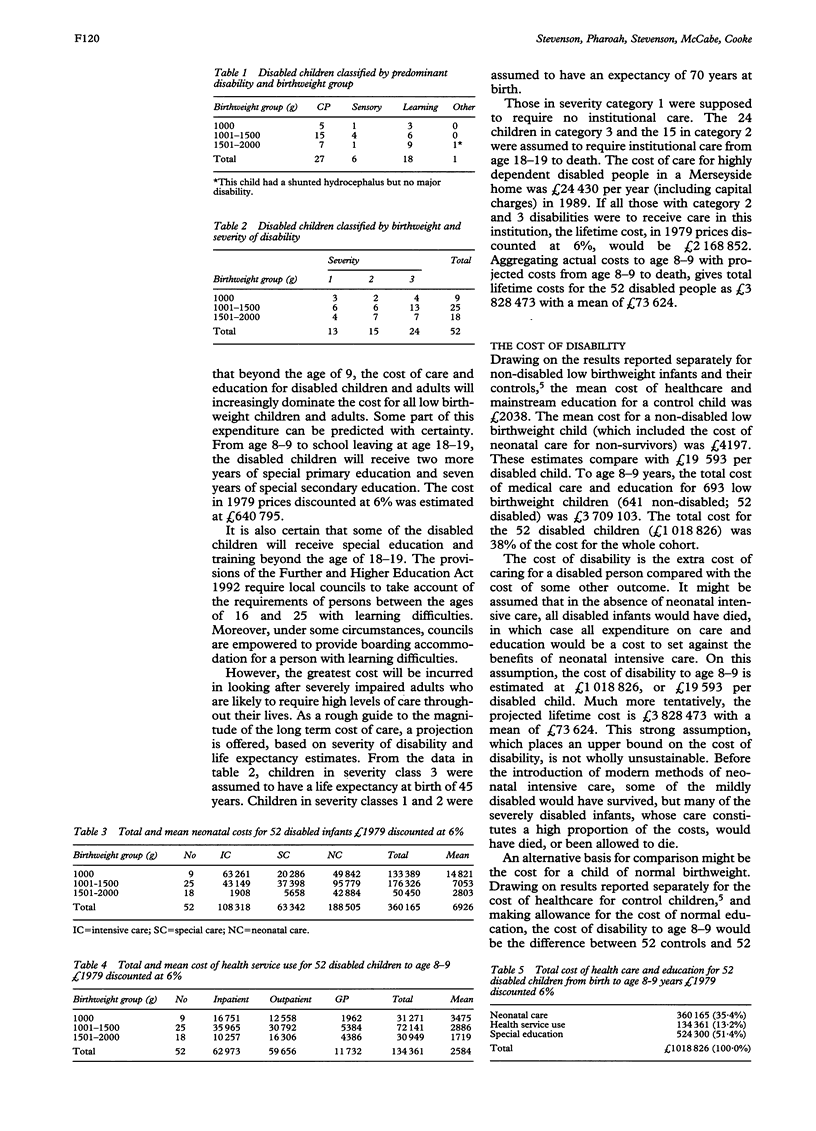
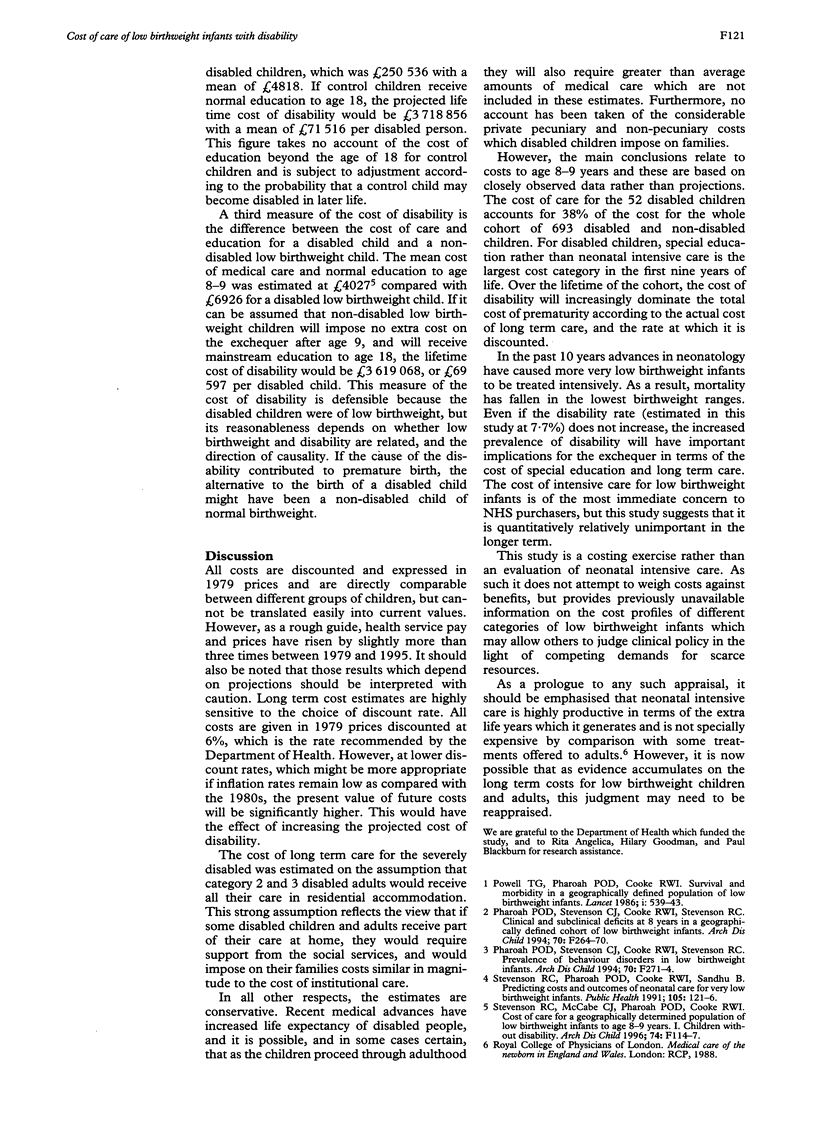
AIM: To determine the cost of health and educational service provision for low birthweight children with a clinical disability. METHODS: Cohort study of a geographically defined population in five health districts that comprise the County of Merseyside was undertaken. All children with a clinical disability born in 1980 and 1981 to mothers resident in the County of Merseyside were followed up to age 8-9 years. The cost of care associated with the initial admission to the neonatal special/intensive care unit and subsequent use of hospital, family practitioner, and special education services was assessed. RESULTS: There were 52 children with a disability; the disability rate in children of birthweight < or = 2000 g was estimated at 7.7%. Of the total expenditure to age 8-9 years, special education was the largest category (52%) and neonatal care accounted for 35%. The disabled children accounted for 38% of the cost of the whole cohort of 693 disabled and non-disabled children who weighed < or = 2000 g at birth. CONCLUSION: In a cohort of low birthweight children, those who are disabled account for a disproportionate amount of the total expenditure to age 8-9. The cost of long term care for disabled young persons and adults will increasingly dominate the cost of care for the whole cohort of low birthweight children.
Full text
PDF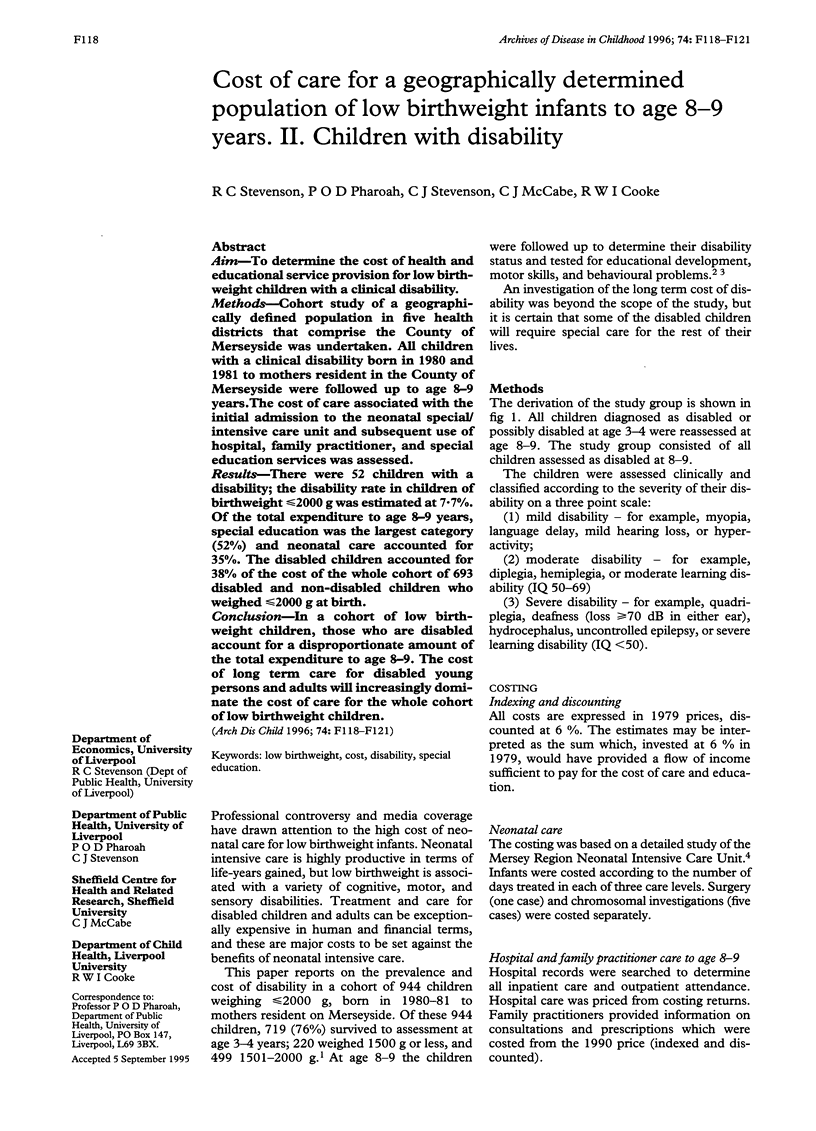
Selected References
These references are in PubMed. This may not be the complete list of references from this article.
- Powell T. G., Pharoah P. O., Cooke R. W. Survival and morbidity in a geographically defined population of low birthweight infants. Lancet. 1986 Mar 8;1(8480):539–543. doi: 10.1016/s0140-6736(86)90893-7. [DOI] [PubMed] [Google Scholar]
- Stevenson R. C., Pharoah P. O., Cooke R. W., Sandhu B. Predicting costs and outcomes of neonatal intensive care for very low birthweight infants. Public Health. 1991 Mar;105(2):121–126. doi: 10.1016/s0033-3506(05)80285-9. [DOI] [PubMed] [Google Scholar]