



Abstract
There is little available evidence regarding risk factors for rotator cuff tears. Cigarette smoking may be an important risk factor for rotator cuff disease. The purpose of this study was to determine if cigarette smoking correlates with an increased risk for rotator cuff tears in patients who present with shoulder pain. A questionnaire was administered to 586 consecutive patients 18 years of age or older who had a diagnostic shoulder ultrasound for unilateral, atraumatic shoulder pain with no history of shoulder surgery. Three hundred seventy-five patients had a rotator cuff tear and 211 patients did not. Data regarding cigarette smoking were obtained for 584 of 586 patients. A history of smoking (61.9% versus 48.3%), smoking within the last 10 years (35.2% versus 30.1%), mean duration of smoking (23.4 versus 20.2 years), mean packs per day of smoking (1.25 versus 1.10 packs per day), and mean pack-years of smoking (30.1 versus 22.0) correlated with an increased risk for rotator cuff tear. We observed a dose-dependent and time-dependent relationship between smoking and rotator cuff tears. We observed a strong association between smoking and rotator cuff disease. This may indicate smoking is an important risk factor for the development of rotator cuff tears.
Level of Evidence: Level III, prognostic study. See Guidelines for Authors for a complete description of levels of evidence.
Introduction
Risk factors that may lead to rotator cuff tears are largely unknown. There have been few studies that have identified demographic factors (increased age and increased body-mass index) that may contribute to progression of rotator cuff tears [8, 15, 19, 22]. Tobacco use reportedly occurs in association with musculoskeletal pain and dysfunction but has not been implicated specifically as a contributing factor to rotator cuff disease [9].
Based on an association with other musculoskeletal disorders, we hypothesized smoking is associated with the development of rotator cuff tears. The hypothesis that smoking increases a patient’s risk for a rotator cuff tear is biologically plausible. Nicotine is a potent vasoconstrictor and decreases the delivery of oxygen to tissues [12]. In addition, carbon monoxide decreases cellular oxygen tension levels necessary for cellular metabolism [10]. Jorgensen et al. showed the amount of collagen deposition and repair at surgical wound sites was negatively correlated with the consumption of tobacco [7].
Specifically, we hypothesized (1) a history of cigarette smoking is more prevalent in patients with rotator cuff tears compared with patients without rotator cuff tears, (2) a history of cigarette smoking within 10 years of presentation for shoulder pain is more prevalent in patients with rotator cuff tears compared with patients without rotator cuff tears, (3) patients with rotator cuff tears have a higher mean/pack per day tobacco exposure, (4) patients with rotator cuff tears have a longer duration of smoking than patients without tears, and (5) patients with rotator cuff tears have greater tobacco exposure as determined by mean pack/years compared with patients without rotator cuff tears.
We also sought to determine if a temporal relationship exists between cigarette smoking and the prevalence of rotator cuff tears, and if a dose-dependent relationship exists between cigarette smoking and the prevalence of rotator cuff tears.
Finally, we hypothesized that the increased risk for rotator cuff tears associated with smoking would be independent of age, which is a known risk factor for rotator cuff tears [8, 15, 19].
Materials and Methods
We retrospectively identified all 2356 consecutive patients referred for diagnostic ultrasound by two fellowship trained shoulder specialists for shoulder pain consistent with impingement syndrome (clinically evident shoulder pain with overhead activity, night pain, no evidence of cervical radiculopathy) from June 1996 to March 2002. The records of these patients were included in a database constructed to determine baseline demographic information for an NIH RO1 grant investigating the natural history of rotator cuff disease. Inclusion criteria were atraumatic, unilateral shoulder pain and a conclusive diagnosis after ultrasound interpretation by a board-certified radiologist (SAT, WDM) who specializes in musculoskeletal ultrasound. The radiologist was blinded to the patients’ demographic data concerning presence or absence of smoking history. Exclusion criteria included patients younger than 18 years, bilateral shoulder symptoms, prior shoulder surgery, and history of major shoulder trauma. Five hundred eighty-six patients met the inclusion criteria. The mean age of the patients enrolled was 57.8 years (range, 18–94 years), and their median age was 57 years. We obtained prior Institutional Review Board approval (HSC # 02-1120).
Diagnostic ultrasonography determined 375 patients had rotator cuff tears and 209 patients did not have a rotator cuff tear. Of the 375 patients with rotator cuff tears, 235 had full-thickness tears and 140 had partial-thickness rotator cuff tears. Criteria for determination of full thickness tears and partial thickness tears were defined by Teefey et al. [17]. The rotator cuff tear cohort was older (p < 0.0001) than the cohort with no rotator cuff tear (62.6 versus 49.2 years). However, there was no difference (p = 0.41) in the mean ages of patients with and without a history of smoking (58.2 versus 57.3 years of age). Among the patients with rotator cuff tears, the mean age of the patients with a history of smoking was similar (p = 0.10) to that of the mean age of patients without a history of smoking (61.8 years versus 63.8 years, respectively).
Because the rotator cuff tear group was older than the no tear group and age is an independent risk factor for rotator cuff tears [8, 15, 19], for subgroup analysis, the groups were stratified into three different age groups to determine if smoking was independent of age as a risk factor for rotator cuff tears. Patients were stratified into: (1) younger than 45 years; (2) 45 to 60 years; and (3) older than 60 years.
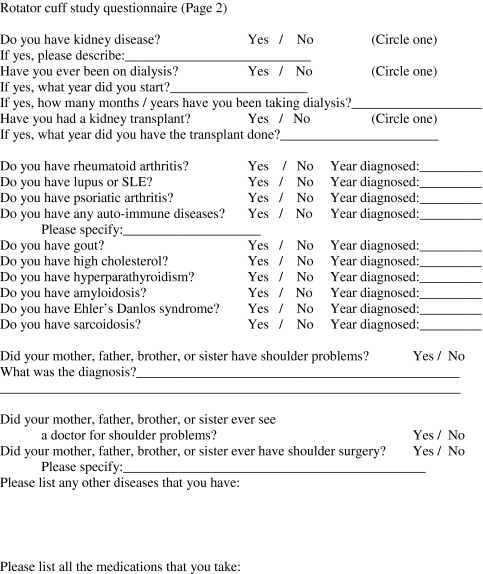
We attempted to contact all 586 patients to determine their cigarette smoking habits. Subjects were mailed a standardized, unvalidated questionnaire (Appendix 1). Data points that were recorded included patient age, hand dominance, current cigarette smoking, history of cigarette smoking, amount of tobacco used per day, and date of termination of smoking. Patients who did not respond to the questionnaire were contacted and interviewed by telephone if available. We reviewed the outpatient clinic charts for patients who were unavailable for phone interview. As per standard protocol, all patients who presented with shoulder pain to the senior authors’ (KY, LMG) clinic were required to complete a standardized, demographic questionnaire, which included the data points on the mailed questionnaire. These questionnaires were part of the chart record and only used for study purposes if completely filled out. Cigarette smoking data were available for 584 of the 586 patients (99.7%). Two hundred thirty-three patients answered the mailed questionnaire, 216 patients were interviewed by telephone, and 135 patients had clinical chart reviews performed.
We performed ultrasonography in real time using the Siemans Elegra scanner (Siemens Medical Systems, Issaquah, WA) and a variable high-frequency linear-array transducer (7.5–9 MHz). We used tissue harmonic imaging (with the use of the second harmonic frequency, which improved image quality) in all cases. Ultrasonography was performed in a standardized manner, as previously described [17].
One of two musculoskeletal radiologists (SAT, WDM) performed the ultrasonographic examination and interpretation. Each radiologist was fellowship-trained and had more than 10 years experience using musculoskeletal ultrasound.
We compared the questionnaire responses for patients with rotator cuff tears with those without rotator cuff tears to determine if there was a relationship between rotator cuff tears and cigarette smoking habits. To determine difference in prevalence of tobacco use between the rotator cuff tear and no rotator cuff groups, we performed chi square analysis when examining categorical variables (history of smoking, history of smoking within 10 years) and t-test analyses for continuous variables (mean packs/day, mean duration of smoking, mean pack/years of smoking). If the equality of variance test was significant, we performed the Satterthwaite t-test. Otherwise, pooled t-tests were used for data analysis. Odds ratios were obtained to determine a temporal relationship and a dose-dependent relationship between smoking and rotator cuff tears using logistic regression analysis. SAS 9.1 (SAS Institute, Cary, NC) was used for all analyses.
Results
The prevalence of a positive daily history of smoking in our study population was 57% (333/584). The prevalence of current smoking was (140/584) 24%. More patients (p = 0.002) with rotator cuff tears had a positive daily tobacco smoking history compared with patients without rotator cuff tears (61.9% versus 48.3%). Patients with rotator cuff tears also were more likely (p = 0.0006) to have smoked regularly within the 10 years before presentation to our clinic for evaluation of their shoulder pain compared with patients without rotator cuff tears (35.2% versus 29.9%). The rotator cuff tear cohort had a higher (p = 0.004) mean pack per day smoking history (1.25 packs/day) compared with the no rotator cuff tear cohort (1.10 packs/day). Finally, patients with a rotator cuff tear had a longer duration (p = 0.05) of smoking (23.4 versus 20.2 years) and larger (p = 0.0006) tobacco exposure (30.1 versus 22.0 mean pack-years) compared with patients without rotator cuff tears (Table 1).
Table 1.
Risk factors associated with an increased prevalence of rotator cuff tears
| Risk factor | Rotator cuff tears | No rotator cuff tears | Significance |
|---|---|---|---|
| Age (Years) | 62.5 | 49.0 | p < 0.001 |
| History of smoking (%) | 61.9 | 48.3 | p = 0.002 |
| History of smoking within 10 years of presentation (%) | 35.2 | 29.9 | p = 0.0006 |
| Mean packs per day of tobacco use | 1.25 | 1.1 | p = 0.004 |
| Mean years of smoking tobacco | 23.4 | 20.2 | p = 0.05 |
| Mean pack-years of smoking tobacco | 30.1 | 22.0 | p = 0.002 |
A temporal relationship was seen when analyzing the proximity of smoking history compared with presentation for evaluation of shoulder pain. The odds ratio for the presence of a rotator cuff tear in patients with a history of smoking was 1.74 (95% Wald confidence limits, 1.23–2.44), and the odds ratio for the presence of a rotator cuff tear in patients who smoked within 10 years of presentation was 4.24 (95% Wald confidence limits, 1.75–10.25) (Table 2).
Table 2.
Time-dependent and dose-dependent relationship between tobacco use and rotator cuff tears and tobacco use
| History | Odds ratio for rotator cuff tears | Significance |
|---|---|---|
| Smoking | 1.74 | CI (1.23-2.44) |
| Within 10 years of presentation | 4.24 | CI (1.75-10.25) |
| Less than 1 pack per day | 1.08 | p = 0.79 |
| Between 1 and 2 packs per day | 1.66 | p = 0.009 |
| Greater than 2 packs per day | 3.35 | p = 0.0007 |
We found a dose-dependent relationship when stratifying by amount of tobacco use. The odds ratio for risk of rotator cuff tear in patients who smoked less than one pack per day was 1.08 (p = 0.79), in patients who smoked between one and two packs per day, 1.66 (p = 0.009), and in patients who smoked greater than two packs per day, 3.35 (p = 0.0007) (Table 2).
When the age-stratified analysis was performed, a history of smoking was more prevalent in the rotator cuff tear group compared with the no tear group in all three age stratifications. A statistically significant difference (p = 0.004) in history of smoking was seen in patients younger than 45 years (78.6% positive history of smoking in the tear group versus 47.5% history of smoking in the no tear group) (Fig. 1). When evaluating for a history of smoking within the 10 years of presentation, smoking was more prevalent in the rotator cuff tear groups in all three categories. A statistically significant difference (p = 0.0004) in smoking within 10 years of presentation between the rotator cuff tear group (25.9%) and the no rotator cuff tear group (2.13%) was found in patients between the ages of 45 and 60 years (Fig. 2). Mean packs of tobacco used per day were examined and, again, the rotator cuff tear cohort had increased tobacco use compared with patients without a rotator cuff tear in all three age categories. For patients older than 60 years, the rotator cuff tear group smoked a greater (p = 0.04) amount of tobacco (1.29 mean packs per day) than the no rotator cuff tear group (1.07 mean packs per day) (Fig. 3). In the age-stratified subgroup analysis, no differences were found between the rotator cuff tear cohort and the no rotator cuff tear cohort when evaluating duration of smoking and pack-years of smoking.
Fig. 1.

The history of tobacco use based on ages ranging from 45 years or younger, 45 to 60 years, and older than 60 years is shown.
Fig. 2.

The history of smoking within 10 years of presentation (age-adjusted) in patients with tears and no tears is shown.
Fig. 3.

The mean pack per day of tobacco use (age-adjusted) in patients with tears and no tears is shown.
Discussion
Tobacco smoking has been associated with musculoskeletal pain and dysfunction [9]. In addition, nicotine has been implicated in delaying tendon to bone healing after rotator cuff repair surgery [3]. The hypotheses of this study were that patients with rotator cuff tears would have (1) a higher incidence of smoking, (2) a higher incidence of smoking within 10 years of presentation for shoulder pain, (3) higher mean/packs per day of tobacco use, (4) longer duration of tobacco use, and (5) higher mean/pack years compared with patients without rotator cuff tears. Additional hypotheses were that a temporal and a dose-dependent relationship exists between cigarette smoking and rotator cuff tears. We also hypothesized that this relationship between smoking and rotator cuff tears would be independent of the known risk factor of increased age.
There are several limitations of this study design that deserve consideration. This study was a retrospective case-control study, which can imply association but not causality. Patients were not polled for oral tobacco use. The method of data collection was not uniform. Patients who did not respond to the mailed questionnaire were interviewed by telephone. Data then were collected for patients who were unavailable for telephone interview by chart review. However, chart reviews did contain information on history of smoking, dates of cessation, and amount of tobacco use as determined by mean packs per day. Recall bias was a potential confounder of the data because patients were asked to recall dates of initiation and cessation and average amounts of tobacco use. The potential inaccuracies of dates recorded should not jeopardize the analysis of history of smoking and history of smoking within 10 years. The potential inaccuracies in recording of mean/packs per day, duration of tobacco use, and mean pack years of tobacco use may influence the data and conclusions of this study. However, a prospectively designed study comparing cigarette smokers with those who do not use tobacco examining the development of rotator cuff tears during their lifetimes would be necessary to minimize the potential for recall bias.
Ultrasonography was used in this study to diagnose a rotator cuff tear because it is reliable and accurate for imaging preoperative and postoperative rotator cuff tears [13, 17, 18]. Teefey et al. reported ultrasonography was 96% accurate, 100% sensitive, and 85% specific for diagnosing full-thickness rotator cuff tears when using arthroscopy as the gold standard [17]. However, the sensitivity and specificity of ultrasonography for diagnosing partial-thickness rotator cuff tears was 67% and 85%, respectively. The relatively decreased sensitivity and specificity of ultrasound in diagnosing partial-thickness rotator cuff tears might have confounded the data in our study. However, MRI has not been determined to be any more accurate than ultrasound in diagnosing partial-thickness tears [2, 14, 18, 20, 21]. Thus, the use of ultrasound to diagnose rotator cuff tears was justified in this study because no other noninvasive technique has proven to be more accurate in determining either full thickness or partial thickness rotator cuff tears.
In 2008, the national prevalence of smoking was 19.8% and the prevalence of smoking in the state of Missouri was 24.5% [5]. The prevalence of smoking in the population studied was 24% and representative of the catchment area of our institution.
Our data showed smoking is more prevalent in patients with rotator cuff tears compared with patients without rotator cuff tears. Patients with rotator cuff tears had an increased prevalence of history of smoking and history of smoking within 10 years of presentation to our clinic for evaluation of shoulder pain. Patients with rotator cuff tears also had increased tobacco exposure compared with patients without rotator cuff tears as determined by mean packs per day of tobacco use, mean pack-years of tobacco use, and duration of tobacco use. We found a dose-dependent relationship showing that with increasing amounts of tobacco use, the risk of rotator cuff tears increased concomitantly. In addition, a time-dependent relationship was found showing patients who smoked within 10 years of presentation had a higher risk of having a rotator cuff tear compared with those who smoked greater than 10 years from presentation.
Because increased age is a known risk factor for rotator cuff tears, an age-adjusted analysis of the two cohorts was performed to determine if the increased prevalence of smoking in the rotator cuff tear group was independent of age. This analysis revealed the percentage of patients with a history of smoking, the percentage of patients with a history of smoking within 10 years of presentation, and mean packs per day of tobacco use were increased in the rotator cuff tear group compared with the no rotator cuff tear group regardless of age stratification. For patients younger than 45 years, the prevalence of a history of smoking was higher in patients with rotator cuff tears compared with patients without rotator cuff tears. For patients between 45 and 60 years, the prevalence of smoking within 10 years of presentation was higher in the rotator cuff tear cohort compared with the no rotator cuff tear cohort. For patients older than 60 years, the mean packs of tobacco used per day was higher in patients with rotator cuff tears compared with those without rotator cuff tears. A post hoc power analysis determined that greater than 5000 patients would need to be studied to find a simultaneous statistically significant difference within the three age-stratified groups for history of smoking, history of smoking within 10 years of presentation, and mean packs per day of tobacco use.
Although no prior study has associated tobacco use with a higher prevalence of rotator cuff tears, the potential influences of tobacco use on the musculocutaneous system and specifically the shoulder have been described. Itoi et al. reported smoking was associated with an increased size of rotator cuff tears, but they did not find an association between smoking and prevalence of rotator cuff tears [6]. In analyzing postoperative results, Mallon et al. found cigarette smoking had an adverse effect on the postsurgical outcomes of rotator cuff repairs [11]. A study of 55-year-old residents in a Swedish town showed men with shoulder complaints were more often smokers compared with men without shoulder complaints [1]. Stenlund et al. noted a trend toward a relationship between smoking and shoulder tendinitis, but the study was underpowered to draw conclusions [16]. Hellsing and Bryngelsson reported back, neck, and shoulder pain were increased in those who smoked more than 10 cigarettes per day compared with those who never smoked [4]. One prospective study examined the relationship of smoking and musculoskeletal disorders in patients who worked in an industrial setting [9], and found patients who smoked tobacco at baseline and followup had more musculoskeletal findings develop than patients who never smoked. In addition, this study revealed a dose-response association between smoking intensity and subsequent musculoskeletal symptoms in patients with persistent tobacco use [9]. A time latency was necessary for symptoms to manifest in smokers: a smoking history greater than 10 pack-years was needed for associations between smoking and musculoskeletal symptoms, and greater than 20 pack-year history of smoking was necessary for objective clinical findings to manifest.
Our findings suggest smoking is associated with the development of rotator cuff tears. The data show a temporal relationship between smoking and rotator cuff tears and a time-dependent relationship with increasing risk for rotator cuff tears when smoking occurred within 10 years of development of shoulder pain compared with more distant tobacco exposure. The strength of associations and the consistencies also suggest causation. There were increases in rotator cuff tears in patients with a history of smoking, history of smoking within 10 years of presentation, and in patients with larger and longer tobacco exposures. A dose-response relationship also was found between tobacco use and rotator cuff tears. The results of this study are coherent with existing theory and knowledge, and the theory that smoking can cause rotator cuff tears is biologically plausible. In addition, alternate explanations of causative factors for rotator cuff tears (ie, increased age) have been ruled out in the population studied by performing the age-stratified analysis and finding no difference in the mean ages of patients with and without a history of smoking. The age-stratified analysis showed a consistent increase in rotator cuff tears in all age groups when analyzing history of smoking, smoking within 10 years of presentation, and mean packs per day of tobacco exposure.
Results of our study suggest clinicians should have increased suspicion for the presence of a rotator cuff tear in patients who present with shoulder pain with a current or recent history of smoking.
Acknowledgments
We thank Stephen Mandel and Hyun Min Kim in the Washington University School of Medicine Department of Biostatistics for providing statistical consultation for this manuscript.
Appendix 1. Rotator cuff study questionnaire

Footnotes
Each author certifies that he or she has no commercial associations (eg, consultancies, stock ownership, equity interest, patent/licensing arrangements, etc) that might pose a conflict of interest in connection with the submitted article.
Each author certifies that his or her institution has approved the human protocol for this investigation, that all investigations were conducted in conformity with ethical principles of research, and that informed consent for participation in the study was obtained.
This work was performed at Washington University School of Medicine, St Louis, MO.
References
- 1.Bergenudd H, Nilsson B. The prevalence of locomotor complaints in middle age and their relationship to health and socioeconomic factors. Clin Orthop Relat Res. 1994;308:264–270. [PubMed] [Google Scholar]
- 2.Fotiadou AN, Vlychou M, Papadopoulos P, Karataglis DS, Palladas P, Fezoulidis IV. Ultrasonography of symptomatic rotator cuff tears compared with MR imaging and surgery. Eur J Radiol. 2008;68:174–179. doi: 10.1016/j.ejrad.2007.11.002. [DOI] [PubMed] [Google Scholar]
- 3.Galatz LM, Silva MJ, Rothermich SY, Zaegel MA, Havlioglu N, Thomopoulos S. Nicotine delays tendon-to-bone healing in a rat shoulder model. J Bone Joint Surg Am. 2006;88:2027–2034. doi: 10.2106/JBJS.E.00899. [DOI] [PubMed] [Google Scholar]
- 4.Hellsing AL, Bryngelsson IL. Predictors of musculoskeletal pain in men: a twenty-year follow-up from examination at enlistment. Spine. 2000;25:3080–3086. doi: 10.1097/00007632-200012010-00016. [DOI] [PubMed] [Google Scholar]
- 5.http://www.americashealthrankings.org/2008/smoking.html. Accessed February 15, 2009.
- 6.Itoi E, Minagawa H, Konno N, Kobayashi T, Sato T, Sato K, Nishi T. Relationship between smoking and rotator cuff tears. J Shoulder Elbow Surg. 1996;5(2):S124. doi: 10.1016/S1058-2746(96)80516-7. [DOI] [Google Scholar]
- 7.Jorgensen L, Kallehave F, Christenens E, Siana J, Gottrup F. Less collagen production in smokers. Surgery. 1998;123:450–455. doi: 10.1016/S0039-6060(98)70167-9. [DOI] [PubMed] [Google Scholar]
- 8.Lehman C, Cuomo F, Kummer FJ, Zuckerman JD. The incidence of full thickness rotator cuff tears in a large cadaveric population. Bull Hosp Jt Dis. 1995;54:30–31. [PubMed] [Google Scholar]
- 9.Leino-Arjas P. Smoking and musculoskeletal disorders in the metal industry: a prospective study. Occup Environ Med. 199;55:828–833. [DOI] [PMC free article] [PubMed]
- 10.Leow YH, Maibach MI. Cigarette smoking, cutaneous vasculature, and tissue oxygen. Clin Dermatol. 1998;16:579–584. doi: 10.1016/S0738-081X(98)00042-X. [DOI] [PubMed] [Google Scholar]
- 11.Mallon WJ, Misamore G, Snead DS, Denton P. The impact of preoperative smoking habits on the results of rotator cuff repair. J Shoulder Elbow Surg. 2004;13:129–132. doi: 10.1016/j.jse.2003.11.002. [DOI] [PubMed] [Google Scholar]
- 12.Mosley LH, Fineseth F. Cigarette smoking: impairment of digital blood flow and wound healing in the hand. Hand. 1977;9:97–101. doi: 10.1016/S0072-968X(77)80001-6. [DOI] [PubMed] [Google Scholar]
- 13.Prickett WD, Teefey SA, Galatz LM, Calfee RP, Middleton WD, Yamaguchi K. Accuracy of ultrasound imaging of the rotator cuff in shoulders that are painful postoperatively. J Bone Joint Surg Am. 2003;85:1084–1089. doi: 10.1302/0301-620X.85B7.14758. [DOI] [PubMed] [Google Scholar]
- 14.Roberts CS, Walker JA 2nd, Seligson D. Diagnostic capabilities of shoulder ultrasonography in the detection of complete and partial rotator cuff tears. Am J Orthop. 200;30:159–162. [PubMed]
- 15.Sher JS, Uribe JW, Posada A, Murphy BJ, Zlatkin MB. Abnormal findings on magnetic resonance images of asymptomatic shoulders. J Bone Joint Surg Am. 1995;77:10–15. doi: 10.2106/00004623-199501000-00002. [DOI] [PubMed] [Google Scholar]
- 16.Stenlund B, Goldie I, Hagberg M, Hogstedt C. Shoulder tendinitis and its relation to heavy manual work and exposure to vibration. Scand J Work Environ Health. 1993;19:43–49. doi: 10.5271/sjweh.1505. [DOI] [PubMed] [Google Scholar]
- 17.Teefey SA, Hasan SA, Middleton WD, Patel M, Wright RW, Yamaguchi K. Ultrasonography of the rotator cuff: a comparison of ultrasonographic and arthroscopic findings in one hundred consecutive cases. J Bone Joint Surg Am. 2000;82:498–504. [PubMed] [Google Scholar]
- 18.Teefey SA, Rubin DA, Middleton WD, Hildebolt CF, Leibold RA, Yamaguchi K. Detection and quantification of rotator cuff tears: comparison of ultrasonographic, magnetic resonance imaging, and arthroscopic findings in seventy-one consecutive cases. J Bone Joint Surg Am. 2004;86:708–716. [PubMed] [Google Scholar]
- 19.Tempelhof S, Rupp S, Seil R. Age-related prevalence of rotator cuff tears in asymptomatic shoulders. J Shoulder Elbow Surg. 1999;8:296–299. doi: 10.1016/S1058-2746(99)90148-9. [DOI] [PubMed] [Google Scholar]
- 20.Holsbeeck MT, Kolowich PA, Eyler WR, Craig JG, Shirazi KK, Habra GK, Vanderschueren GM, Bouffard JA. US depiction of partial-thickness tear of the rotator cuff. Radiology. 1995;197:443–446. doi: 10.1148/radiology.197.2.7480690. [DOI] [PubMed] [Google Scholar]
- 21.Vlychou M, Dailiana Z, Fotiadou A, Papanagiotou M, Fezoulidis IV, Malizos K. Symptomatic partial rotator cuff tears: diagnostic performance of ultrasound and magnetic resonance imaging with surgical correlation. Acta Radiol. 2009;50:101–105. doi: 10.1080/02841850802600764. [DOI] [PubMed] [Google Scholar]
- 22.Wendelboe AM, Hegmann KT, Gren LH, Alder SC, White GL, Jr, Lyon JL. Associations between body-mass index and surgery for rotator cuff tendinitis. J Bone Joint Surg Am. 2004;86:743–747. doi: 10.1302/0301-620X.86B5.14725. [DOI] [PubMed] [Google Scholar]