



Abstract
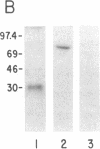
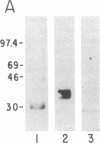
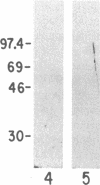
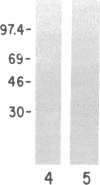
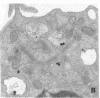
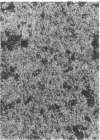
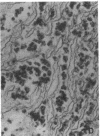
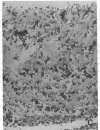
Nonenzymatic glycation of proteins occurs at an accelerated rate in diabetes and can lead to the formation of advanced glycation end products of proteins (AGEs), which bind to mononuclear phagocytes (MPs) and induce chemotaxis. We have isolated two cell surface-associated binding proteins that mediate the interaction of AGEs with bovine endothelial cells. One of these proteins is a new member of the immunoglobulin superfamily of receptors (termed receptor for AGEs or RAGE); and the second is a lactoferrin-like polypeptide (LF-L). Using monospecific antibodies to these two AGE-binding proteins, we detected immunoreactive material on Western blots of detergent extracts from human MPs. Radioligand-binding studies demonstrated that antibody to the binding proteins blocked 125I-AGE-albumin binding and endocytosis by MPs. Chemotaxis of human MPs induced by soluble AGE-albumin was prevented in a dose-dependent manner by intact antibodies raised to the AGE-binding proteins, F(ab')2 fragments of these antibodies and by soluble RAGE. When MP migration in response to N-formyl-Met-Leu-Phe was studied in a chemotaxis chamber with AGE-albumin adsorbed to the upper surface of the chamber membrane, movement of MPs to the lower compartment was decreased because of interaction of the glycated proteins with RAGE and LF-L on the cell surface. The capacity of AGEs to attract and retain MPs was shown by implanting polytetrafluoroethylene (PTFE) mesh impregnated with AGE-albumin into rats: within 4 d a florid mononuclear cell infiltrate was evident in contrast to the lack of a significant cellular response to PTFE with adsorbed native albumin. These data indicate that RAGE and LF-L have a central role in the interaction of AGEs with human mononuclear cells and that AGEs can serve as a nidus to attract MPs in vivo.
Full text
PDF


Images in this article




Selected References
These references are in PubMed. This may not be the complete list of references from this article.
- Ackerman G. A., Yang J., Wolken K. W. Differential surface labeling and internalization of glucagon by peripheral leukocytes. J Histochem Cytochem. 1983 Mar;31(3):433–440. doi: 10.1177/31.3.6186734. [DOI] [PubMed] [Google Scholar]
- Albrecht-Buehler G. The phagokinetic tracks of 3T3 cells. Cell. 1977 Jun;11(2):395–404. doi: 10.1016/0092-8674(77)90057-5. [DOI] [PubMed] [Google Scholar]
- Aznavoorian S., Stracke M. L., Krutzsch H., Schiffmann E., Liotta L. A. Signal transduction for chemotaxis and haptotaxis by matrix molecules in tumor cells. J Cell Biol. 1990 Apr;110(4):1427–1438. doi: 10.1083/jcb.110.4.1427. [DOI] [PMC free article] [PubMed] [Google Scholar]
- Brownlee M., Cerami A., Vlassara H. Advanced glycosylation end products in tissue and the biochemical basis of diabetic complications. N Engl J Med. 1988 May 19;318(20):1315–1321. doi: 10.1056/NEJM198805193182007. [DOI] [PubMed] [Google Scholar]
- Dyer D. G., Blackledge J. A., Thorpe S. R., Baynes J. W. Formation of pentosidine during nonenzymatic browning of proteins by glucose. Identification of glucose and other carbohydrates as possible precursors of pentosidine in vivo. J Biol Chem. 1991 Jun 25;266(18):11654–11660. [PubMed] [Google Scholar]
- Esposito C., Gerlach H., Brett J., Stern D., Vlassara H. Endothelial receptor-mediated binding of glucose-modified albumin is associated with increased monolayer permeability and modulation of cell surface coagulant properties. J Exp Med. 1989 Oct 1;170(4):1387–1407. doi: 10.1084/jem.170.4.1387. [DOI] [PMC free article] [PubMed] [Google Scholar]
- Esposito C., Gerlach H., Brett J., Stern D., Vlassara H. Endothelial receptor-mediated binding of glucose-modified albumin is associated with increased monolayer permeability and modulation of cell surface coagulant properties. J Exp Med. 1989 Oct 1;170(4):1387–1407. doi: 10.1084/jem.170.4.1387. [DOI] [PMC free article] [PubMed] [Google Scholar]
- Greenhalgh D. G., Sprugel K. H., Murray M. J., Ross R. PDGF and FGF stimulate wound healing in the genetically diabetic mouse. Am J Pathol. 1990 Jun;136(6):1235–1246. [PMC free article] [PubMed] [Google Scholar]
- Handley D. A., Witte L. D. Platelet-derived growth factor labeled to colloidal gold for use as a mitogenic receptor probe. Eur J Cell Biol. 1984 Jul;34(2):281–286. [PubMed] [Google Scholar]
- Horisberger M., Vonlanthen M. Ultrastructural localization of soybean agglutinin on thin sections of Glycine max (soybean) var. Altona by the gold method. Histochemistry. 1980 Feb;65(2):181–186. doi: 10.1007/BF00493167. [DOI] [PubMed] [Google Scholar]
- Hutchens T. W., Henry J. F., Yip T. T. Structurally intact (78-kDa) forms of maternal lactoferrin purified from urine of preterm infants fed human milk: identification of a trypsin-like proteolytic cleavage event in vivo that does not result in fragment dissociation. Proc Natl Acad Sci U S A. 1991 Apr 15;88(8):2994–2998. doi: 10.1073/pnas.88.8.2994. [DOI] [PMC free article] [PubMed] [Google Scholar]
- Kirstein M., Brett J., Radoff S., Ogawa S., Stern D., Vlassara H. Advanced protein glycosylation induces transendothelial human monocyte chemotaxis and secretion of platelet-derived growth factor: role in vascular disease of diabetes and aging. Proc Natl Acad Sci U S A. 1990 Nov;87(22):9010–9014. doi: 10.1073/pnas.87.22.9010. [DOI] [PMC free article] [PubMed] [Google Scholar]
- Laemmli U. K. Cleavage of structural proteins during the assembly of the head of bacteriophage T4. Nature. 1970 Aug 15;227(5259):680–685. doi: 10.1038/227680a0. [DOI] [PubMed] [Google Scholar]
- Lederman S., Yellin M. J., Cleary A. M., Gulick R., Chess L. Recombinant, truncated CD4 molecule (rT4) binds IgG. J Immunol. 1990 Jan 1;144(1):214–220. [PubMed] [Google Scholar]
- Makita Z., Radoff S., Rayfield E. J., Yang Z., Skolnik E., Delaney V., Friedman E. A., Cerami A., Vlassara H. Advanced glycosylation end products in patients with diabetic nephropathy. N Engl J Med. 1991 Sep 19;325(12):836–842. doi: 10.1056/NEJM199109193251202. [DOI] [PubMed] [Google Scholar]
- Moscicki R. A., Amento E. P., Krane S. M., Kurnick J. T., Colvin R. B. Modulation of surface antigens of a human monocyte cell line, U937, during incubation with T lymphocyte-conditioned medium: detection of T4 antigen and its presence on normal blood monocytes. J Immunol. 1983 Aug;131(2):743–748. [PubMed] [Google Scholar]
- Nawroth P. P., McCarthy D., Kisiel W., Handley D., Stern D. M. Cellular processing of bovine factors X and Xa by cultured bovine aortic endothelial cells. J Exp Med. 1985 Aug 1;162(2):559–572. doi: 10.1084/jem.162.2.559. [DOI] [PMC free article] [PubMed] [Google Scholar]
- Neeper M., Schmidt A. M., Brett J., Yan S. D., Wang F., Pan Y. C., Elliston K., Stern D., Shaw A. Cloning and expression of a cell surface receptor for advanced glycosylation end products of proteins. J Biol Chem. 1992 Jul 25;267(21):14998–15004. [PubMed] [Google Scholar]
- Quinn M. T., Parthasarathy S., Fong L. G., Steinberg D. Oxidatively modified low density lipoproteins: a potential role in recruitment and retention of monocyte/macrophages during atherogenesis. Proc Natl Acad Sci U S A. 1987 May;84(9):2995–2998. doi: 10.1073/pnas.84.9.2995. [DOI] [PMC free article] [PubMed] [Google Scholar]
- Radoff S., Vlassara H., Cerami A. Characterization of a solubilized cell surface binding protein on macrophages specific for proteins modified nonenzymatically by advanced glycosylated end products. Arch Biochem Biophys. 1988 Jun;263(2):418–423. doi: 10.1016/0003-9861(88)90654-6. [DOI] [PubMed] [Google Scholar]
- Rochard E., Legrand D., Mazurier J., Montreuil J., Spik G. The N-terminal domain I of human lactotransferrin binds specifically to phytohemagglutinin-stimulated peripheral blood human lymphocyte receptors. FEBS Lett. 1989 Sep 11;255(1):201–204. doi: 10.1016/0014-5793(89)81091-9. [DOI] [PubMed] [Google Scholar]
- Ross R. The pathogenesis of atherosclerosis--an update. N Engl J Med. 1986 Feb 20;314(8):488–500. doi: 10.1056/NEJM198602203140806. [DOI] [PubMed] [Google Scholar]
- Schmidt A. M., Vianna M., Gerlach M., Brett J., Ryan J., Kao J., Esposito C., Hegarty H., Hurley W., Clauss M. Isolation and characterization of two binding proteins for advanced glycosylation end products from bovine lung which are present on the endothelial cell surface. J Biol Chem. 1992 Jul 25;267(21):14987–14997. [PubMed] [Google Scholar]
- Sell D. R., Monnier V. M. Structure elucidation of a senescence cross-link from human extracellular matrix. Implication of pentoses in the aging process. J Biol Chem. 1989 Dec 25;264(36):21597–21602. [PubMed] [Google Scholar]
- Vlassara H., Brownlee M., Cerami A. High-affinity-receptor-mediated uptake and degradation of glucose-modified proteins: a potential mechanism for the removal of senescent macromolecules. Proc Natl Acad Sci U S A. 1985 Sep;82(17):5588–5592. doi: 10.1073/pnas.82.17.5588. [DOI] [PMC free article] [PubMed] [Google Scholar]
- Vlassara H., Brownlee M., Manogue K. R., Dinarello C. A., Pasagian A. Cachectin/TNF and IL-1 induced by glucose-modified proteins: role in normal tissue remodeling. Science. 1988 Jun 10;240(4858):1546–1548. doi: 10.1126/science.3259727. [DOI] [PubMed] [Google Scholar]
- Yang Z., Makita Z., Horii Y., Brunelle S., Cerami A., Sehajpal P., Suthanthiran M., Vlassara H. Two novel rat liver membrane proteins that bind advanced glycosylation endproducts: relationship to macrophage receptor for glucose-modified proteins. J Exp Med. 1991 Sep 1;174(3):515–524. doi: 10.1084/jem.174.3.515. [DOI] [PMC free article] [PubMed] [Google Scholar]