



Abstract
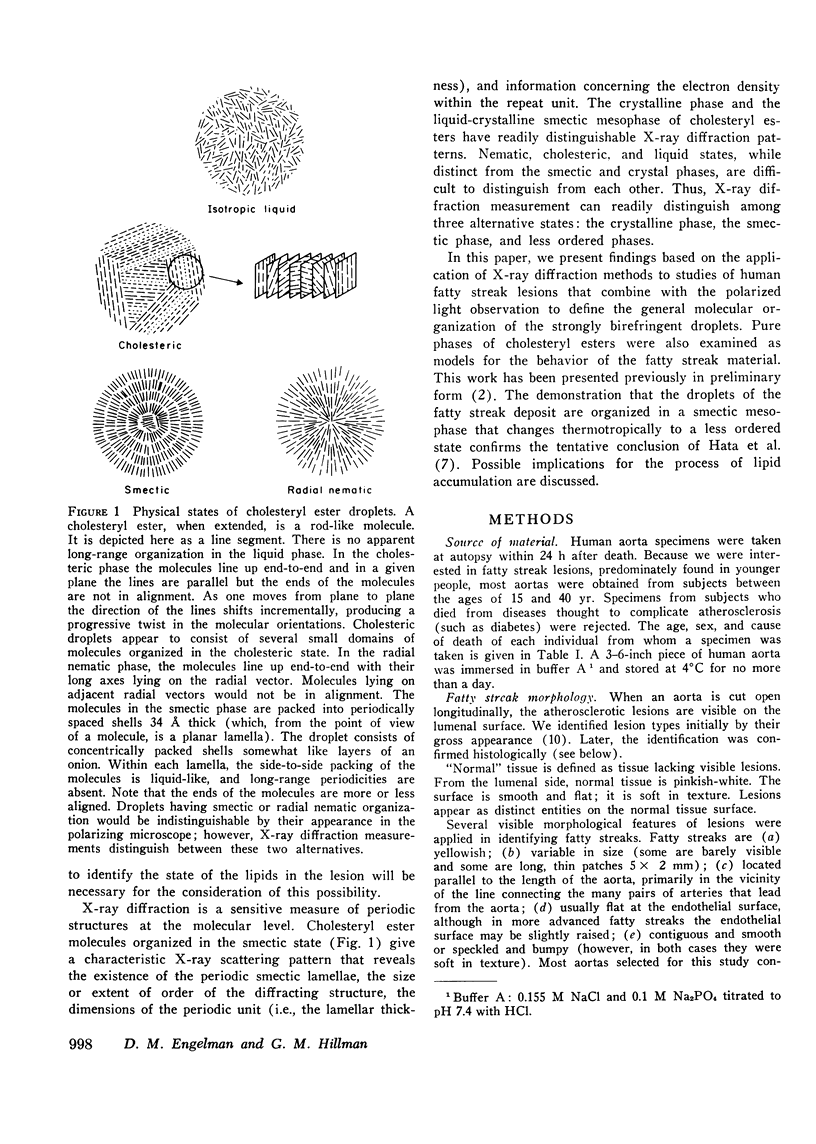
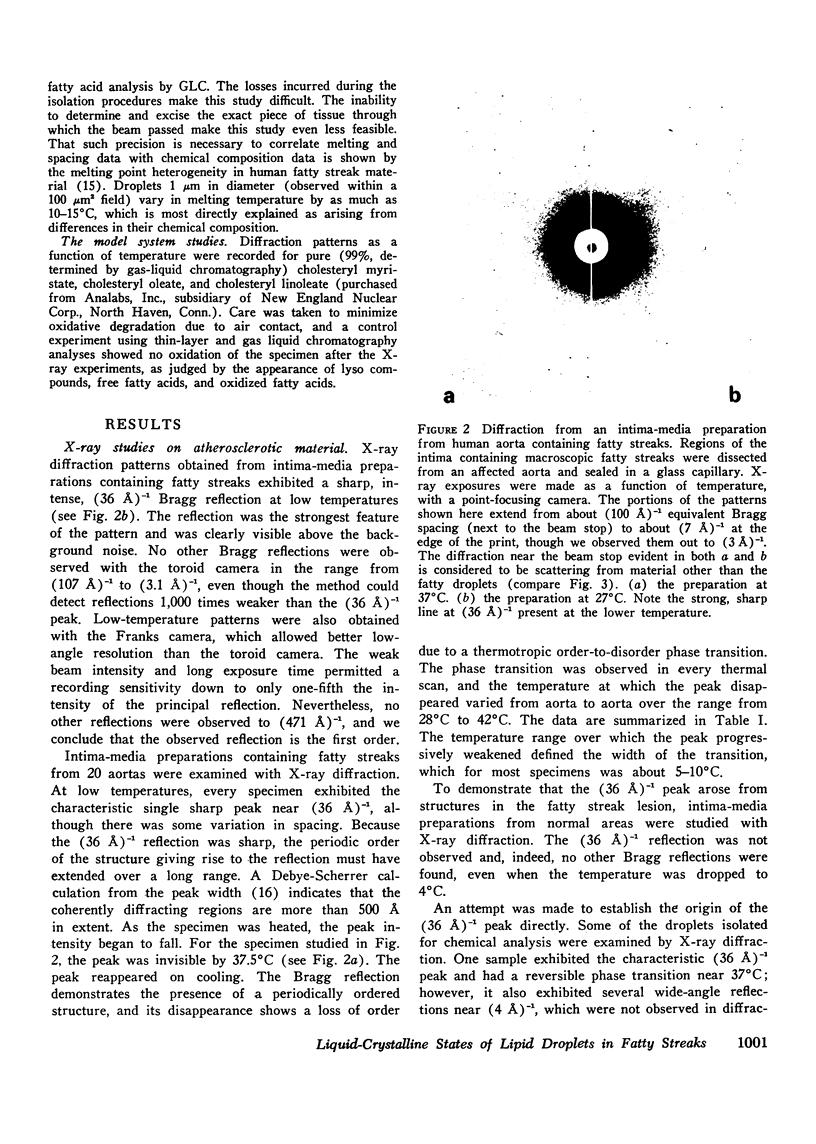
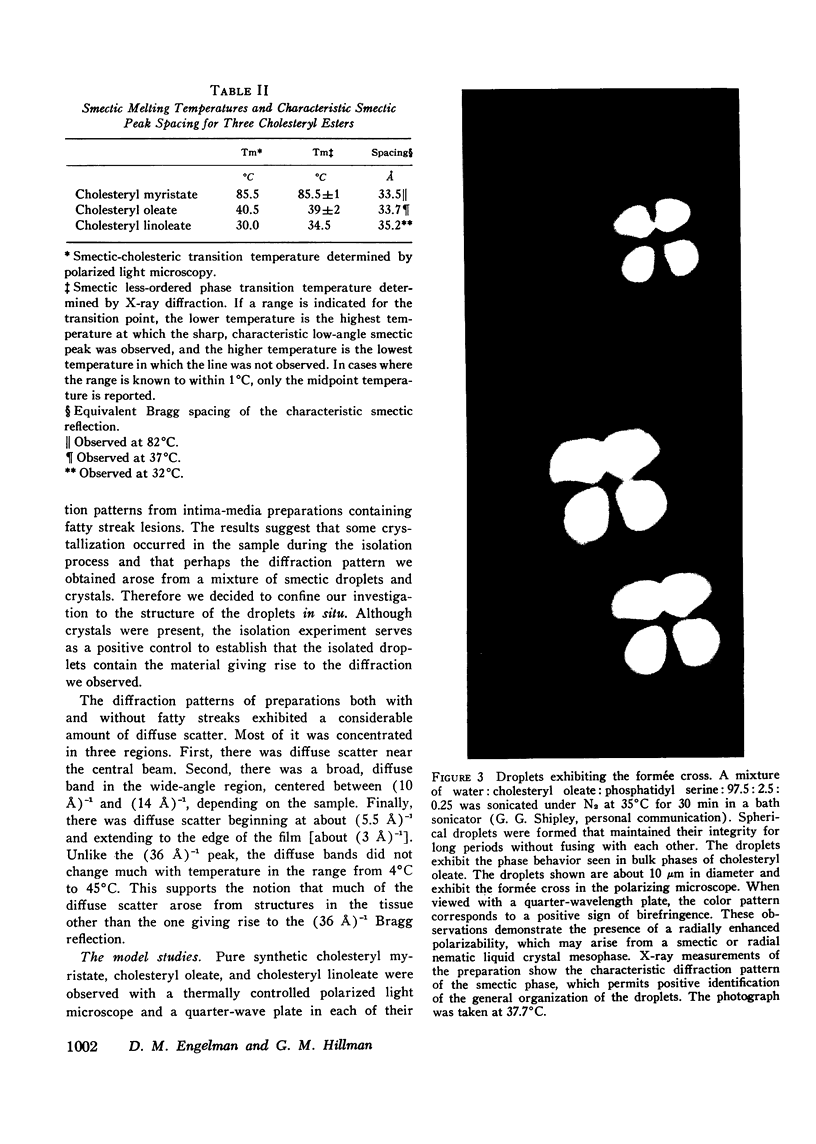
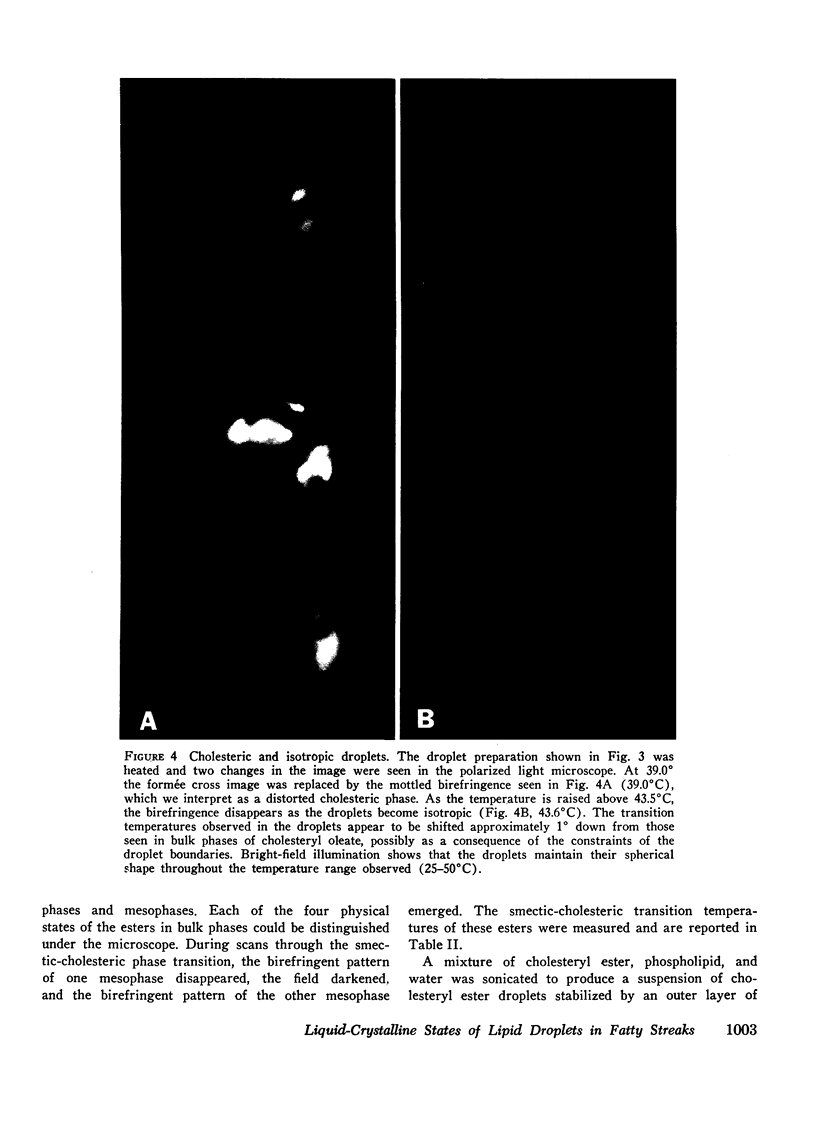
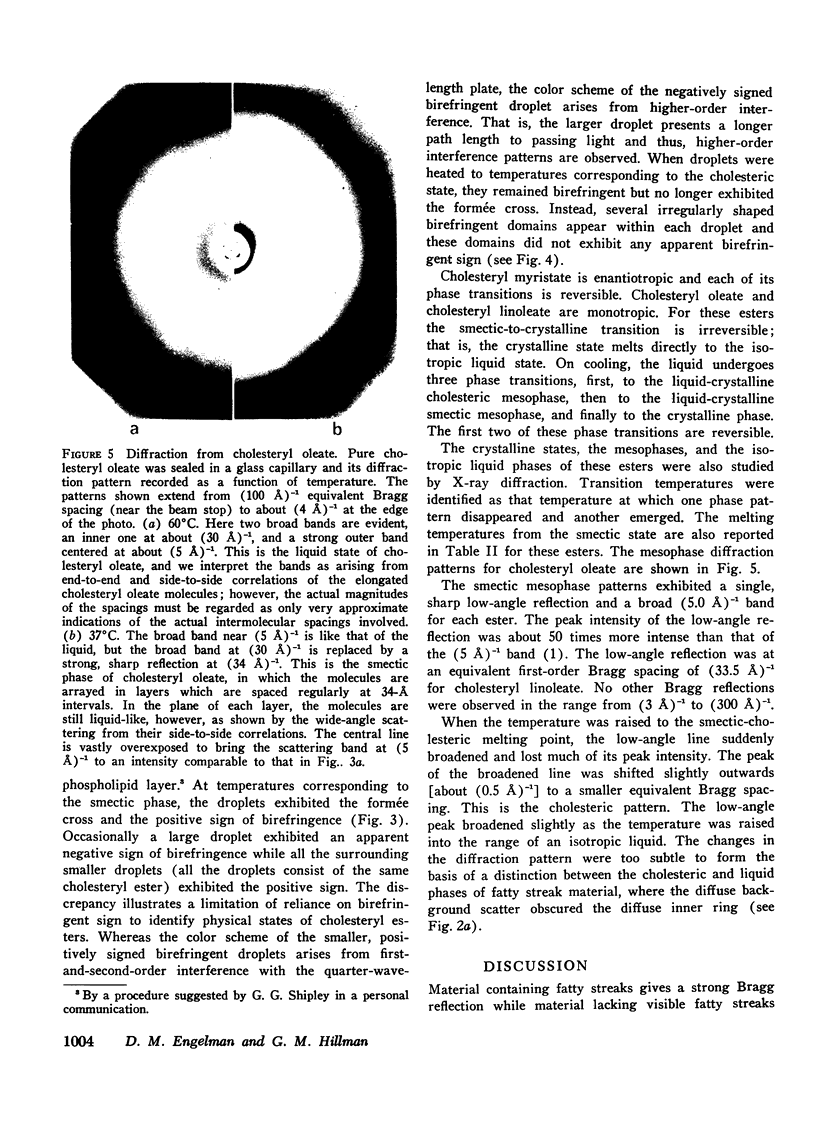
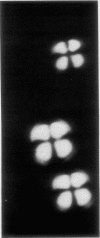
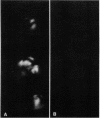
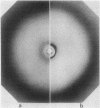
X-ray diffraction patterns from human arterial specimens containing atherosclerotic fatty streak lesions exhibited a single sharp reflection, corresponding to a structural spacing of about 35 A. Specimens without lesions did not. When specimens with fatty streaks were heated, an order-to-disorder phase transition was revealed by the disappearance of the sharp reflection. The transition was thermally reversible and its temperature varied from aorta to aorta over a range from 28 degrees to 42 degrees C. Since cholesteryl ester droplets are a major component of fatty streaks, comparison studies were made of the diffraction behavior from pure cholesteryl esters. We found that the diffraction patterns of the fatty streak material could be accounted for by the organization of the cholesteryl esters into a liquid-crystalline smectic phase that melts from the smectic to a less ordered phase upon heating. When combined with the conclusions of others from polarized light microscopy, our study shows that a droplet in the smectic phase has well-defined concentric layers of lipid molecules. In each layer, the long axes of the molecules have a net radial orientation with respect to the droplet, but the side-to-side organization is disordered. We suggest that the accessibility of portions of the lipids for specific binding to enzymes or transport proteins may be restricted when they are in the smectic state, and that exchange of lipids with surrounding membranes or other potential binding sites may likewise be inhibited. The restriction in the smectic phase should be greater than in the less ordered phases that exist at higher temperatures.
Full text
PDF
Images in this article
Selected References
These references are in PubMed. This may not be the complete list of references from this article.
- Deckelbaum R. J., Shipley G. G., Small D. M., Lees R. S., George P. K. Thermal transitions in human plasma low density lipoproteins. Science. 1975 Oct 24;190(4212):392–394. doi: 10.1126/science.170681. [DOI] [PubMed] [Google Scholar]
- Engelman D. M., Moore P. B. Determination of quaternary structure by small angle neutron scattering. Annu Rev Biophys Bioeng. 1975;4(00):219–241. doi: 10.1146/annurev.bb.04.060175.001251. [DOI] [PubMed] [Google Scholar]
- Hata Y., Hower J., Insull W., Jr Cholesteryl ester-rich inclusions from human aortic fatty streak and fibrous plaque lesions of atherosclerosis. I. Crystalline properties, size and internal structure. Am J Pathol. 1974 Jun;75(3):423–456. [PMC free article] [PubMed] [Google Scholar]
- Hillman G. M., Engelman D. M. Compositional mapping of cholesteryl ester droplets in the fatty streaks of human aorta. J Clin Invest. 1976 Oct;58(4):1008–1018. doi: 10.1172/JCI108524. [DOI] [PMC free article] [PubMed] [Google Scholar]
- Lang P. D., Insull W., Jr Lipid droplets in atherosclerotic fatty streaks of human aorta. J Clin Invest. 1970 Aug;49(8):1479–1488. doi: 10.1172/JCI106365. [DOI] [PMC free article] [PubMed] [Google Scholar]
- MORRISON W. R., SMITH L. M. PREPARATION OF FATTY ACID METHYL ESTERS AND DIMETHYLACETALS FROM LIPIDS WITH BORON FLUORIDE--METHANOL. J Lipid Res. 1964 Oct;5:600–608. [PubMed] [Google Scholar]
- PUTT F. A. Flaming red as a dye for the demonstration of lipids. Lab Invest. 1956 Jul-Aug;5(4):377–379. [PubMed] [Google Scholar]
- STEWART G. T. Liquid crystals of lipid in normal and atheromatous tissue. Nature. 1959 Mar 28;183(4665):873–875. doi: 10.1038/183873a0. [DOI] [PubMed] [Google Scholar]
- Weller R. O., Clark R. A., Oswald W. B. Stages in the formation and metabolism in intracellular lipid droplets in atherosclerosis. An electron microscopical and biochemical study. J Atheroscler Res. 1968 Mar-Apr;8(2):249–263. doi: 10.1016/s0368-1319(68)80061-4. [DOI] [PubMed] [Google Scholar]