



Abstract
This article highlights the central events of the EPMA World Congress 2011 - the strategic meeting of the European Association for Predictive, Preventive and Personalised Medicine (PPPM). European strategies related to PPPM have been discussed in specialised sessions dedicated to
Healthcare in overview across the globe
Collaboration with global organisations
Granting strategies in PPPM
Education in PPPM
Patient needs
Targeted prevention
PPPM in reproductive medicine & paediatrics
PPPM in diabetes care
PPPM in neurodegenerative diseases
PPPM in cancer
PPPM in cardiovascular diseases
Innovative PPPM-centres
Biomarker validation and standards
Patient-specific modelling and bioinformatics in PPPM
PPPM-related bio-preservation, biobanking & ethics
EPMA “expert recommendations” will be presented to Ministries of Health of 44 contributing countries, partner societies, associations, funding agencies and global organisations that participated in the congress. Full analysis of the outcomes will be provided during the next EPMA World Congress in September 2013.
Preface
Italian TV-cameraman team has eternalised EPMA World Congress 2011 for its entire four-day duration (Fig. 1). Experts came together from 44 countries worldwide representing almost all professional groups relevant for predictive, preventive and personalised medicine. Many of them have been interviewed with the central question, namely why this congress is of particular importance and interest to them. Indeed, why?
Fig. 1.
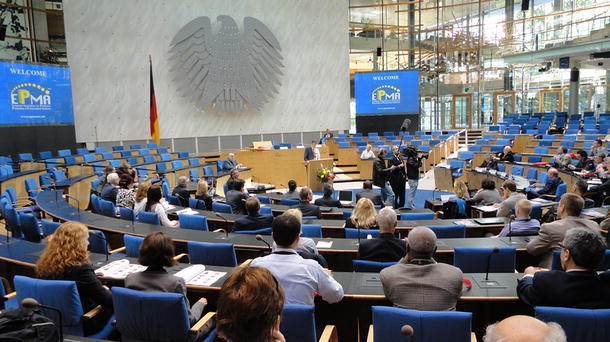
EPMA-President, Dr. Vincenzo Costigliola and EPMA-Secretary-General, Prof. Dr. Olga Golubnitschaja, opened the World Congress 2011. In the welcome address, Lord Mayor of Bonn, Mr. Jürgen Nimptsch and Rector of the University of Bonn, Prof. Dr. Jürgen Fohrman, stressed the importance of personalised medicine and innovation in healthcare for the scientific world and the general population. UNO-protected City Bonn and Friedrich-Wilhelms-University both have greatly supported our efforts to organise the congress, thereby emphasising that EPMA World Congress is a very welcome event in Bonn to promote innovative ideas and measures in medical fields
We will briefly highlight the events of the congress which took place in Bonn on September 15–18th this year.
Promotion of the EPMA J. by EPMA / Springer collaboration as the strategic priority in PPPM-related education
Up until inauguration of the EPMA Congress, only 16 articles have been dedicated to “predictive, preventive and personalised medicine” as registered worldwide, which is a clear indication that the EPMA J. Editorial Board has correctly identified a new niche for the journal in the field of innovative medicines.
Dr. Martijn Roelandse (Supervisor of the EPMA J. in Springer) described for the congress participants strategies adopted by Springer to promote the EPMA J. facilitate its coverage of the innovative niche in biomedical information and education (Fig. 2). New strategies foresee the “open access” as the future of the EPMA J.; new model is expected to be implemented in early 2012. This is intended by EPMA provide the EPMA J. readers with free of charge high quality scientific information in order to truly become a global resource to educate field-related professional groups and effectively promote the innovative niche of PPPM. Consequently, we expect that the currently available spectrum of PPPM-related topics will be permanently widening in the journal. In years 2010–2011, the EPMA J. published specialised issues dedicated to predictive diagnostics, targeted prevention and personalised medicine in “Diabetes”, “Neurodegenerative Diseases”, “Cancer”, “Cardiovascular Diseases”, “Reproductive Medicine”, “Paediatrics”, “Body Culture”, “Individualise Exercise Training” and “Healthcare overview around the globe”. We intend to keep the journal’s focus but will further expand to incorporate additional topics such as PPPM in “Rare Diseases”, “Inflammatory Diseases”, “Co-morbidities”, “Traditional Medicine”, etc. It is important to note that the EPMA J. does not duplicate topics of the field-related journals, which are traditionally focused on single pathologies or biomarkers, either prevention or prediction, etc. The particular mission of the EPMA J. is to bring together the relevant expertise from different professional fields and promote integrative approaches to predictive, preventive and personalised medicine aspects of major value for immediate (soon or potential) clinical application thereby advancing the healthcare (Fig. 3).
Fig. 2.
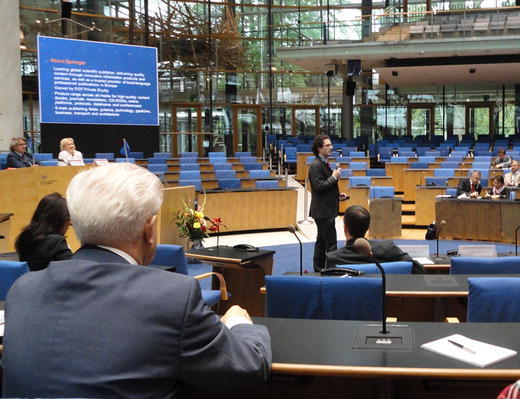
Dr. Martijn Roelandse, Springer, The Netherlands, explains the meaning of and Springer strategies in the promotion of the EPMA J. and book-series “Advances in PPPM” as highly requested educational and didactic materials in the field of innovative medicines
Fig. 3.
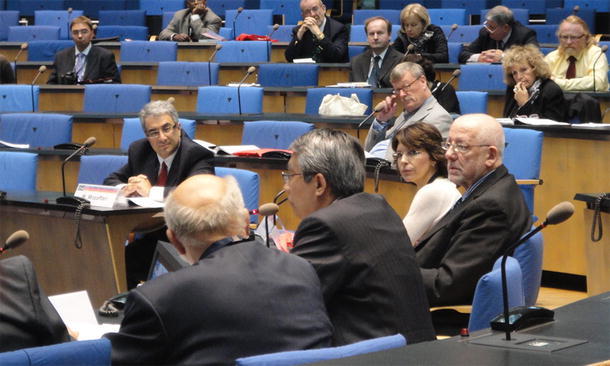
Analysis of the EPMA J. strategies: “round-table” discussion by Associate Editors, (left to right) Prof. Dr. Mahmood Mozaffari, USA (specialised journal-issue dedicated to “PPPM in Diabetes”), Dr. Silvia Mandel, Israel (specialised journal-issue dedicated to “PPPM in Neurodegenerative Diseases”, Prof. Dr. Dominic Desiderio, USA (specialised journal-issue dedicated to “PPPM in Cancer”), Prof. Dr. Hiroyasu Iso, Japan (specialised journal-issue dedicated to “PPPM in Cardiovascular Diseases”), and Prof. Dr. Ondrej Topolcan, National Representative of EPMA in Czech Republic
Importantly, the idea to create the concomitant book-series “Advances in Predictive, Preventive and Personalised Medicine” (Book-series Editor: Olga Golubnitschaja) as the follow-up action of the EPMA J. and the didactic material for Universities and specialised educational programmes in PPPM has been approved by the EPMA congress (Fig. 4). In 2012 first four volumes will be released:
Healthcare Overview: New Perspectives. Volume Editor Dr. Vincenzo Costigliola, Belgium
PPPM in Diabetes. Volume Editor Prof. Dr. Mahmood Mozaffari, USA
PPPM in Neurodegenerative Diseases. Volume Editor Dr. Silvia Mandel, Israel
Drug Delivery Systems: Advanced technologies potentially applicable in personalized treatment. Volume Editor Prof. Dr. Jorge Coelho, Portugal
Fig. 4.
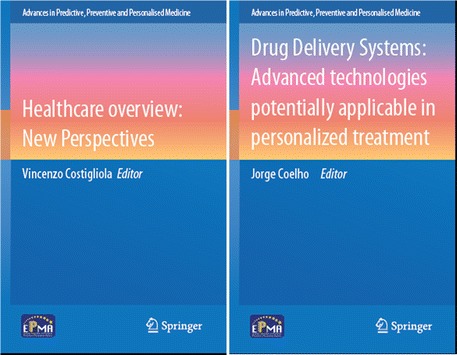
Book-series “Advances in Predictive, Preventive and Personalised Medicine” in preparation by EPMA / Springer to be released in the years 2012–2015 as the didactic material for specialised educational programmes dedicated to PPPM
It is evident that strong restrictions in the amount of education in general population lead to dramatic deficits and costs that have repercussions in several branches of the society resulting in increased pressure within healthcare systems. Advanced personalisation in medicine is achievable solely in the case of participative medicine. Both the EPMA J. and book-series will also be important to promote the idea of PPPM in the general population (Fig. 5). The reader will find a number of positive examples in each issue of the EPMA J. and single volumes of the book-series “Advances in PPPM” consistent with this statement. EPMA has experienced a fruitful collaboration in the matter with the German Federation of Diabetics that consistently overviews the articles of the EPMA J. for German diabetics.
Fig. 5.
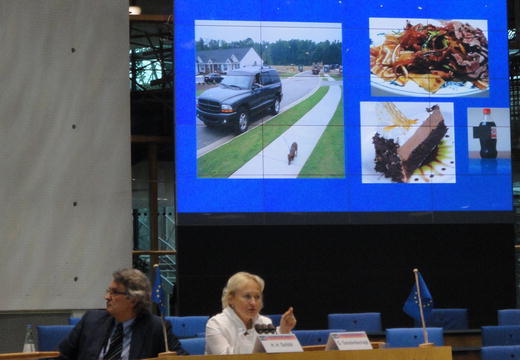
Moderator of the session and Editor-in-Chief of the EPMA J., Prof. Dr. Olga Golubnitschaja emphasising the EPMA tasks in education of general population to promote participative medicine, “patient-doctor” collaboration, as well as education for professional groups and educational courses for private companies, e.g. employing shift-workers, etc
It is important to mention that European Commission is interested to consider PPPM-related topics created by EPMA as the didactic material for its promotion at the European level to effectively enforce the education in innovative medical fields (Fig. 6).
Fig. 6.
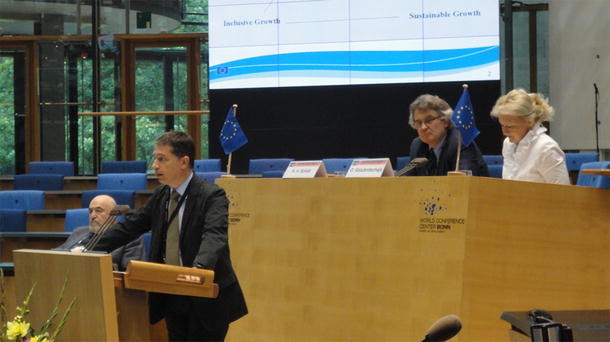
Well-created educational and training programmes are essential and urgent to prepare new generations of professionals in innovative bio/medical fields as elucidated by Mr. João Delgado, Head of Unit “Vocational Education and Training Policy”, Leonardo da Vinci Programme, EU-Commission in Brussels, Belgium; Chairman of the Session – Prof. Dr. Hans H. Schild, Germany
Educational symposia
Although the congress programme was extremely tight, the Association used the opportunity for educational measures - at the congress two educational symposia have been performed:
“Inflammation and Autoimmunity: Risk Assessment and Predictive Approaches” (Organiser: Prof. Dr. Sergei Suchkov, Russia) (Fig. 7)
“Individualised Nutrition in Preventive and Personalised Medicine” (Organiser: Prof. Dr. Guglielmo Trovato, Italy) (Figs. 8 and 9).
Fig. 7.
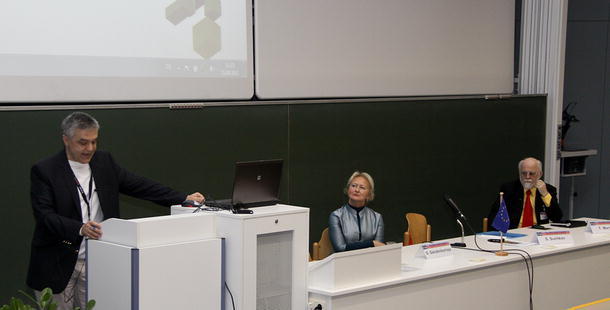
Inflammation and autoimmune diseases represent high risk for secondary complications and severe pathologies such as diabetes, cardiovascular diseases and cancer. The predisposition and individual risk factors should be diagnosed at the molecular level before the diseases manifestation to make targeted prevention and personalised treatments as effective as possible. This message has been well-justified by both speakers, Prof. Dr. Sergei Suchkov Russia (left), and Prof. Dr. Trevor Marshall, Australia / USA (rights)
Fig. 8.
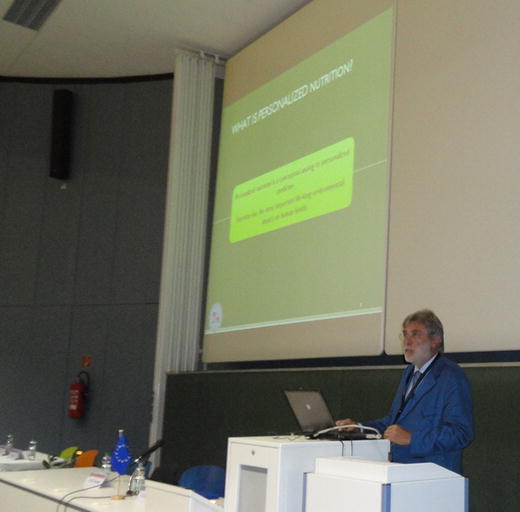
“What is personalised nutrition?” The crucial question for the educational symposium has been positioned by the chairman, Prof. Dr. Guglielmo Trovato, Italy
Fig. 9.
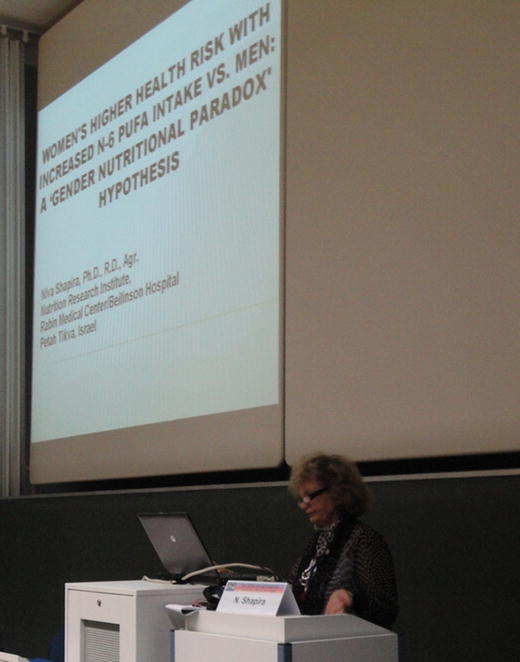
“Gender Nutritional Paradox” and risks by imbalanced diet with particular impacts for female health as demonstrated by Dr. Niva Shapira, Israel
Both topics chosen are highly relevant for early diagnostics, targeted preventive measures and personalised treatment approaches representing an important field for educational measures at both professional and population levels. Manuscripts from both Symposia are currently in preparation for publication in the EPMA J. and book-series “Advances in PPPM”.
Memorandum of understanding
EPMA strategies are shared by several European Associations and Societies focused in Predictive, Preventive and Personalised Medicine. At the EPMA World Congress new partner-organisations have signed the Memorandum of Understanding with EPMA, namely Hungarian Society of Personalised Medicine and The Italian Charity Association for Person Centred Medicine. Both documents are published at the EPMA-website: synergies among the partner-organisations and common objectives in promoting the field of predictive, preventive and personalised medicine are clearly demonstrated (Fig. 10).
Fig. 10.
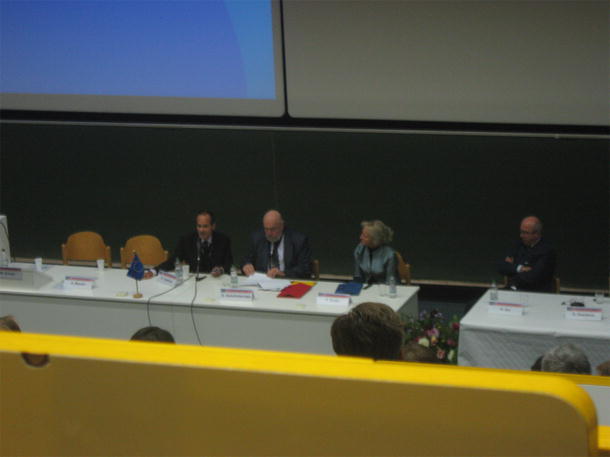
Dr. György Németh - the President of the Hungarian Personalised Medicine Association, HPMA (left) and Prof. Dr. Paolo Roberti di Sarsina - the President of the Italian Charity Association for Person Centred Medicine (right) providing a short introductory speech into signing ceremony. There was a great consensus in the message: to effectively promote PPPM in Europe and in the global scale, we need a consolidation of leading organisations. EPMA provides the robust umbrella for the consolidation in the field
Awarding ceremony for the best articles distinguished by the EPMA J.
Aside from the peer-review procedure, the EPMA J. evaluates the quality of published articles by selection of the best reviews in each category/specialised issue. The voting is regularly performed in the Editorial Board: 54 Editors from 30 countries worldwide. The criteria for the selection are as follows:
Outstanding review covers predictive diagnostics, targeted preventive measures and personalized treatment approaches in selected patient cohorts
Excellent scientific and technological qualities
Strong element of innovation with outlook in the field
High didactic quality and reader-friendly style of the article
Following articles have been distinguished:
in the category “PPPM in Diabetes 2010”
Diabetes mellitus: new challenges and innovative therapies. Sena CM, Bento CF, Pereira P, Seica R
Drug delivery systems: Advanced technologies potentially applicable in personalized treatments. Coelho JF, Ferreira PC, Alves P, Cordeiro R, Fonseca AC, Góis JR, Gil MH (Fig. 11)
Endothelial dysfunction in diabetes: potential application of circulating markers as advanced diagnostic and prognostic tools. Abebe W, Mozaffari M
Endothelial progenitor dysfunction in the pathogenesis of diabetic retinopathy: treatment concept to correct diabetes-associated defects. Li Calzi S, Neu MB, Shaw LC, Grant MB
Cancer predisposition in diabetes: risk factors considered for predictive diagnostics and targeted preventive measures. Cebioglu M, Schild HH, Golubnitschaja O
Fig. 11.
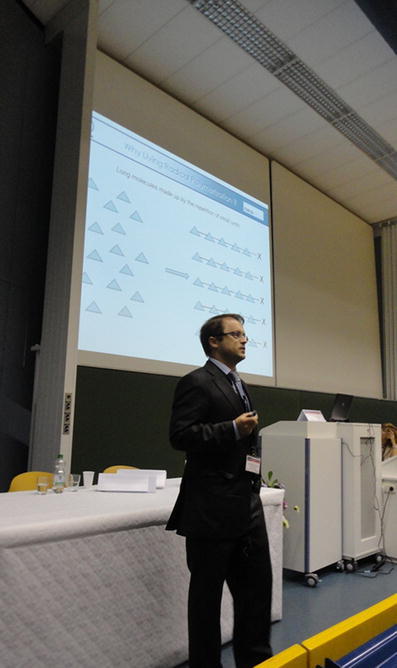
Prof. Dr. Jorge Coelho, Portugal presenting his awarded article, which is the best requested review (more than 1.000 requests in years 2010–2011) in the EPMA J. since 2010; Chairmen of the specialised session on “PPPM in Diabetes” – Prof. Dr. Mahmood Mozaffari, USA, and Prof. Dr. Tatjana Josifova, Switzerland
in the category “PPPM in Neurodegenerative Diseases 2010”
Key molecular pathways affected by glaucoma pathology: is predictive diagnosis possible? Golubnitschaja O, Yeghiazaryan K, Flammer J
Biomarkers for prediction and targeted prevention of Alzheimer’s and Parkinson’s diseases: evaluation of drug clinical efficacy. Mandel SA, Morelli A, Halperin I, Korczyn AD
Alzheimer’s disease: diagnostics, prognostics and the road to prevention. Grossman I, Lutz MW, Crenshaw DG, Saunders AM, Burns DK, Roses AD
Moving toward a predictive and personalized clinical approach in amyotrophic lateral sclerosis: novel developments and future directions in diagnosis, genetics, pathogenesis and therapies. Nefussi B and Drory VE
Recent advances in amyotrophic lateral sclerosis research: perspectives for personalized clinical application. Benkler C, Offen D, Melamed E, Kupershmidt L, Amit T, Mandel S, Youdim MBH, Weinreb O
Predictive molecular profiling in blood of healthy vasospastic individuals: clue to targeted prevention as personalised medicine to effective costs. Yeghiazaryan K, Flammer J, Golubnitschaja O
in the category “PPPM in Cancer 2010”
The use of variations in proteomes to predict, prevent, and personalize treatment for clinically nonfunctional pituitary adenomas. Zhan X and Desiderio DM
Prediction and prognosis: impact of gene expression profiling in personalized treatment of breast cancer patients. Mallmann MR, Staratschek-Jox A, Rudlowski C, Braun M, Gaarz A, Wolfgarten M, Kuhn W, Schultze JL
Moving from correlative science to predictive oncology. Simon R
Circulating nucleic acids in plasma and serum: diagnosis and prognosis in cancer. Gahan PB
in the category “PPPM in Healthcare Overview 2010”
An overview of the healthcare system in the Slovak Republic. Kapalla M, Kapallová D, Turecký L (Fig. 12)
Fig. 12.
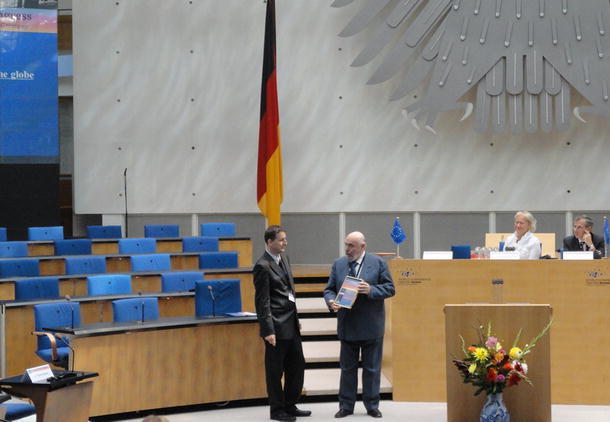
Dr. Marko Kapalla (left), National Representative of EPMA in Slovak Republic receiving the Diploma of the EPMA J. from the EPMA-President Dr. Vinceuzo Costigliola for the best review-article in the category “PPPM in Healthcare Overview 2010”; Chairman of the session – Dr. Wouter Spek, the Representative of EuroBioForum, The Netherlands
in the category “PPPM in Cardiovascular Diseases 2011”
Personalized cardiac regeneration by stem cells–Hype or hope? Becher UM, Tiyerili V, Skowasch D, Nickenig G, Werner N
Degenerative valve disease and bioprostheses: risk assessment, predictive diagnosis, personalised treatments. Yeghiazaryan K, Skowasch D, Bauriedel G, Schild HH, Golubnitschaja O
Lipoprotein associated phospholipase A2: role in atherosclerosis and utility as a biomarker for cardiovascular risk. Colley KJ, Wolfert RL, Cobble ME
Best poster presentation distinguished by the EPMA journal
Early in 2011, the congress-call has been created for Junior Researchers for the best poster presentation to be awarded by the EPMA Journal. Many junior researchers (medical, M.Sc. and PhD Students as well as graduated researchers below 35 y. old) working in innovative bio/medical fields related to integrative approaches in Predictive, Preventive and Personalised Medicine attended the congress in Bonn. The poster session was highly competitive as revealed by voting results of evaluators which was organised and chaired by Dr. Martine Pinçon-Raymond, Paris, France on the behalf of the Editorial Board. The criteria for the best presentation have been formulated as follows:
Criterion 1: Integrative approach in predictive diagnostics/prognosis, preventive medicine, personalised medicine
Criterion 2: Innovation
Criterion 3: Scientific & technological quality
Criterion 4: Potential implementation in medical practice
Criterion 5: Quality of design.
An independent observer, Dr. Okker van Batenburg, Representative of the EuroBioForum, guaranteed the validity of the voting procedure. Two winners have been nominated:
Nuclear matrix protein alterations in triple-negative breast cancer. Manuel Debald et al., University of Bonn, Germany (Supervisor: Dr. Michael Braun, Editor of the EPMA J.)
The economic challenge of predictive, preventive, and personalized medicine. Chiara Kertu and Andrea Kugler, University of Vienna, Austria (Supervisor: Dr. Kurt Krapfenbauer, Vice-President of EPMA).
Both presentations demonstrated an integrative PPPM-related approach of high scientific and didactic quality with great potential for healthcare application.
Creation of the Section of Young Professionals in PPPM under EPMA-umbrella, EPMA-SYP
At the world congress in Bonn, young professionals in PPPM have discussed the urgent need for and objectives of the specialised Section of Young Professionals in PPPM to be created under EPMA-umbrella (Fig. 13). EPMA-SYP is planned as the Parliamentary group of EPMA dedicated to the necessities of young professionals starting their career in PPPM. As agreed, the fundamental structural elements of the section will be as follows:
National Representatives / Boards of young professionals in country-members of EPMA
electable Senior Advisory Board to consult the activities of EPMA-SYP
Fig. 13.
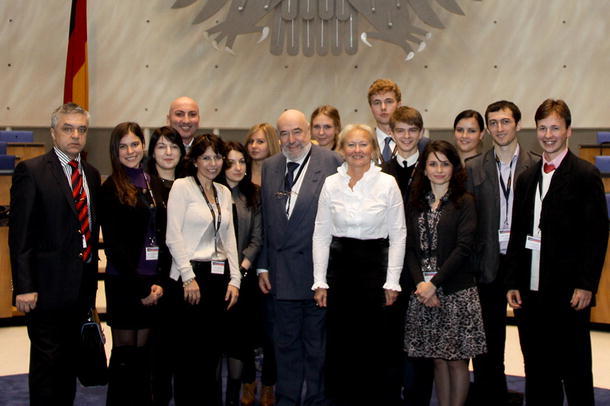
Russian Delegation of the EPMA-SYP with its Supervisor, Prof. Dr. Sergei Suchkov (left), and (in front of the group) EPMA-board Representatives – Dr. Silvia Mandel, Dr. Vincenzo Costigliola, Prof. Dr. Olga Golubnitschaja
An International Working Group has been created to elaborate the principles and attributes of the section. Nominated members of the Working Group (Fig. 14):
MD Dmitry Kostiushev, Medical University, Moscow, Russia
MD Maxim Sautin, People's Friendship University of Russia, Moscow, Russia
MD Anastasia Merkulova, Medical University, Moscow, Russia
M.Sc. Melanie Cebioglu, University of Bonn, Germany
Dr. Suzanne Hagan, Glasgow Caledonian University, Glasgow, Scotland, UK
Fig. 14.
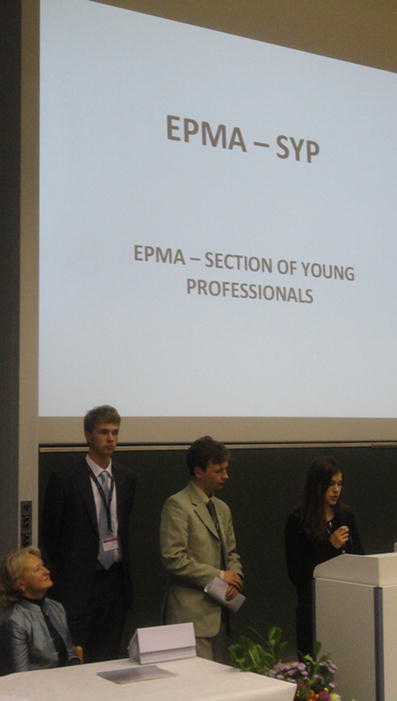
The first draft of the EPMA-SYP principles as elaborated by the nominated Working Group: the presentation is made by Speakers of the Working Group (from left to right): MD Dmitry Kostiushev, MD Maxim Sautin, and MD Anastasia Merkulova, Russia
The objectives of the EPMA-SYP as declared in Bonn:
Raising awareness and recognition of Predictive, Preventive and Personalised Medicine among young professionals,
Consolidating new generation of professionals for effective International Network in Predictive, Preventive and Personalised Medicine,
Promoting international standards in education on Predictive & Personalised Medicine,
Promoting high-quality research focused on predictive diagnostics and personalised patient treatment,
Motivating high-quality publications of young researchers,
Coordinating information exchange among and multidisciplinary efforts of young professionals in Predictive, Preventive and Personalised Medicine,
Having an advisory role for young professionals in issue-related inter/national projects as the official part of EPMA,
Making good use of high-quality supervision by senior professionals consolidated by EPMA and its strategic partners worldwide,
Navigating and cultivating a career of young professionals networked,
Preparing highly qualified new generations of professionals in Predictive, Preventive and Personalised Medicine,
Contributing to long-term strategies created by EPMA in the field of innovative medicines.
European strategies in PPPM granting
A great consensus has been reached in the matter: smart granting for innovative national, European and international programmes should create a robust platform for future developments in predictive, preventive and personalised medicine. Consequently, we have asked the representatives of the European funding bodies to present their statements positioning corresponding organisations in the global context. The most important issues presented in the statements were as follows:
vision of promising PPPM-related strategies
“health care” versus “disease care” – desirable ratio between corresponding programmes
tasks for European and global organisations to advance healthcare
innovative PPPM-related programmes under creation by corresponding organisation
coordination between national and European levels / global organisations in healthcare promotion.
Main contributions have been made by the Representatives of the EU-Commission in Brussels: Prof. Dr. Michel Goldman, Director of IMI (Fig. 15), and Dr. Jean-Luc Sanne, Directorate for Personalised Medicine (Fig. 16). Prof. Dr. Carol Longson, the Director of the National Institute for Health & Clinical Excellence in UK has presented the complementary programmes run and planned at the national level in global context of personalised medicine (Fig. 17). The field-related strategies by European Science Foundation in Strasbourg have been overviewed by its representative Dr. Lars Kristiansen. The speakers agreed to support EPMA initiative to elaborate “expert recommendations” for promising PPPM-related granting strategies that EPMA consortium is currently working on, in order to share innovative ideas with national and global funding bodies.
Fig. 15.
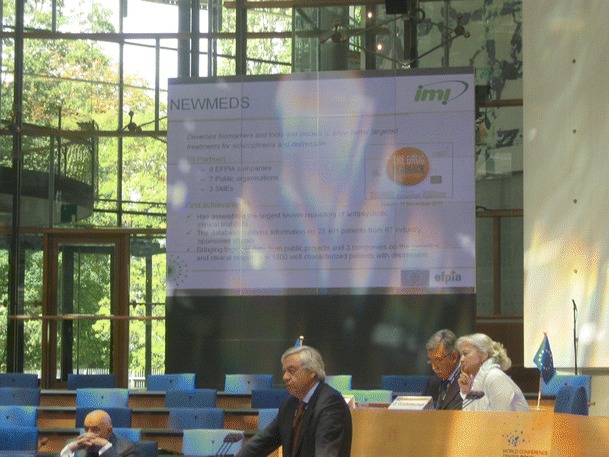
Prof. Dr. Michel Goldman introducing granting strategies of the Innovative Medicines Initiatives, EU-Commission in Brussels, Belgium
Fig. 16.
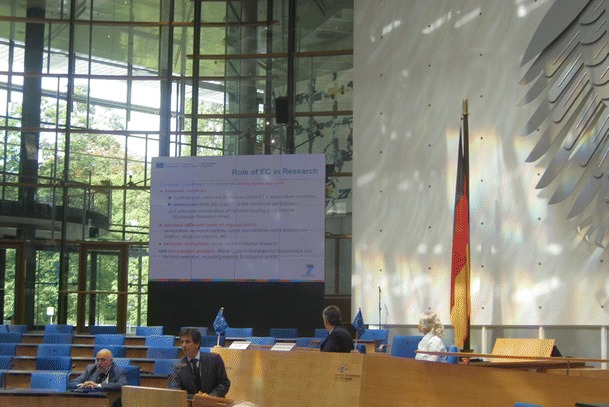
Dr. Jean-Luc Sanne comments on the granting strategies – the “Vision 2020” – elaborated by the EU-Commission for the new frame programme in personalised medicine starting effectively in 2013 and lasting during the next 10 years
Fig. 17.
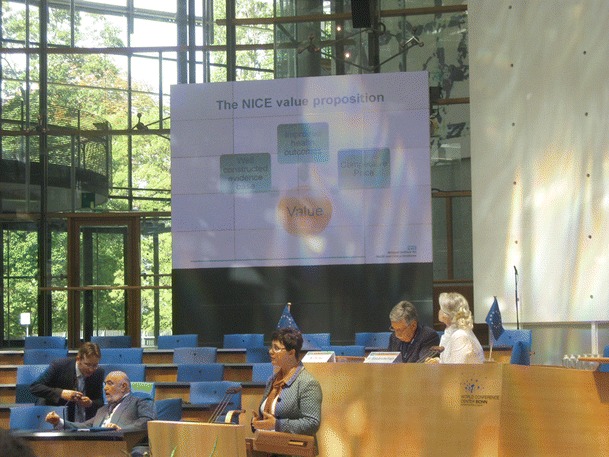
Prof. Dr. Carol Longson presenting the national programmes in global context of personalised medicine; Chairman of the Session – Prof. Dr. Olga Golubnitschaja, Germany; Moderator – Prof. Dr. Maurizio Ferrari, Italy
EPMA section dedicated to PPPM economics
Commonly formulated statements such as
“disease prevention is better than disease treatment”,
“predictive diagnostics are essential for targeted prevention”,
“personalised medicine is more effective than across-the-board treatments”
should be economically justified in order to motivate healthcare decision makers to adopt a PPPM approach. Unfortunately, robust economic models clearly demonstrating the value of prediction, prevention and personalised treatment hardly exist. Furthermore, the route from, e.g., biomarker identification and validation via development of a diagnostic test to, finally, a marketable product that benefits patients is filled with regulatory and financial hurdles.
The EPMA consortium intends to promote the development of adequate economic models for integrated PPPM-based disease management. Such models can support decision making concerning funding and reimbursement of PPPM products and services. The idea is to create an EPMA Section on PPPM economics as has been discussed by the EPMA-experts in the early post-congress phase. The responsibility for the specialised section will be given to the EPMA institutional member Bioscience Valuation BSV GmbH in Germany, represented in the EPMA expert consortium by Dr. Joachim Greuel who is Managing Director of Bioscience Valuation BSV and Adjunct Professor of Finance & Healthcare Management at IE Business School in Madrid, Spain.
The section will be dedicated to the economic and commercial aspects of PPPM. The goals and tasks of the section are considered to be as follows:
Initiation of economic studies able to demonstrate the value of PPPM to society,
Supporting researchers in finding partners for effective development of PPPM-related scientific projects, with a clear focus on application,
Encouraging researchers to start their own companies with the mid-term goal to take their PPPM projects to market,
Providing advice how to access public and private funds.
EPMA is currently implementing its economic section.
Innovative PPPM-centers
The new European programme in personalised medicine (FP-8 or ”Vision 2020”) is strongly focused on the
implementation of innovative bio/medical technologies in personalised medicine and
creation of a new type of medical centres dedicated to predictive diagnostics, targeted prevention and individualised treatment approaches.
Therefore, tightly linked to the previous session dedicated to economics of PPPM, the strategic discussions continued with the topic of “Innovative PPPM-Centres”. In accordance with this task a strong professional set-up of the experts for the specialised session has been created: medical imaging, laboratory medicine, bioinformatics, “omics”, practical clinicians, scientists, Bio/medical centres, companies.
In the session, the task was to present expert opinions concerning the status quo and new perspectives in healthcare from the view point of several (bio)medical fields and under consideration of both pessimistic versus optimistic scenarios. It has been well-documented in the session that currently we observe a strong resistance of professional groups against an implementation of complementary expertise, e.g. genomics towards other “omics” branches, mutual resistance between medical imaging and laboratory medicine, etc. However, a clear consensus has been reached that the most beneficial approach in creation of innovative PPPM-Centres would be to define current deficits, complementary expertise of stakeholders and common strategies for the next 5-10-20 years (Fig. 18). To define long-term strategies, the main issues treated in the panel discussion were
vision of “Innovative PPPM-Centres”, their particularities compared to currently existing medical units
expertise complementary to already existing to cover current deficits in the overall concept of PPPM-Centres
how realistic are social prices in advanced PPPM-Centres
tasks for governmental institutions
tasks for educators
tasks for industry
tasks for patient organisations
tasks for FP-8 and complementary national programmes.
Fig. 18.
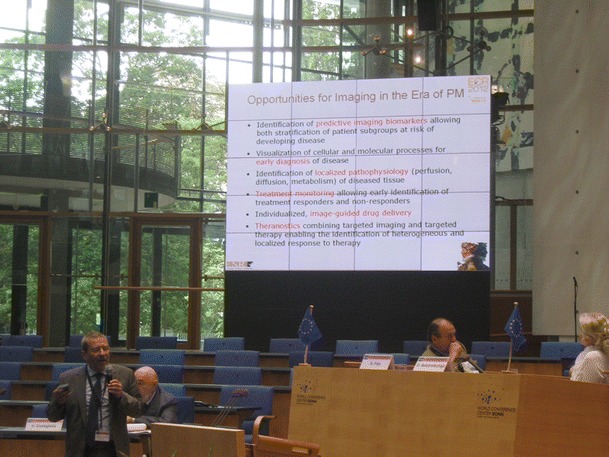
Prof. Dr. Gabriel Krestin, Vice-President of the European Society of Radiology presenting the concept of imaging technologies in predictive diagnostics, targeted drug delivery and personalised treatment approaches; Chairman of the Session – Prof. Dr. Guy Frija, France; Moderator – Prof. Dr. Olga Golubnitschaja, Germany
Effective process of VALIDATION of novel biomarkers / effective targets for predictive diagnostics and personalised treatments has been defined as the crucial deficit in responsible European structures that strongly handicap the process of implementation of innovative technologies. Consequently optimal ways have been discussed to improve the situation, such as closer collaboration between EPMA and EDRN, NIH / NCI – see corresponding chapter below.
Validation of innovative biomarkers: outlook for the collaboration between EPMA and National Institute of Health, USA
Current activities of the Early Detection Research Network of the National Cancer Institute, at the National Institute of Health in USA - EDRN, http://edrn.nci.nih.gov are focused on supporting collaborative efforts for the validation of cancer biomarkers for early detection, diagnostic, prognostic, predictive and monitoring applications. The chief of the organisation is Dr. Sudhir Srivastava, Cancer Biomarkers Research Group, Division of Cancer Prevention, National Cancer Institute, USA (Fig. 19). EPMA Secretary-General, Prof. Dr. Olga Golubnitschaja is the approved member of the Steering Committee of EDRN participating in regular meetings of the consortium, where EDRN validation approaches and granting strategies are discussed with the committee members, in order to force the implementation of biomarkers and support clinically attractive technologies in predictive / early diagnostic and treatment monitoring. Early in 2012 a meeting with Dr. Francis S. Collins, Director of National Institute of Health in USA, is planned to discuss further promising strategies in collaboration between EPMA and NIH.
Fig. 19.
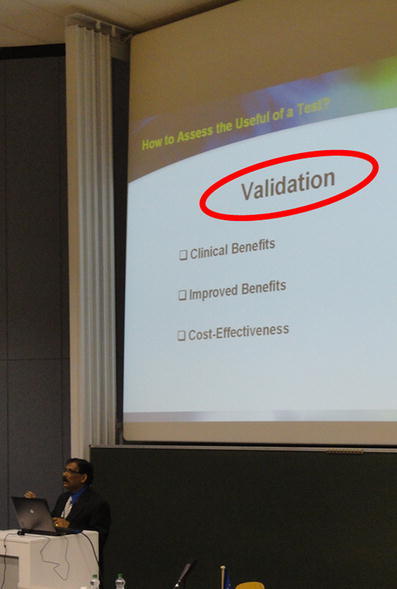
Dr. Sudhir Srivastava, chief of EDRN, NCI / NIH, USA presenting the concept of the network and validation procedure for novel biomarkers for diagnostics and treatment monitoring
Brainstorming in individual sessions
Specialised scientific sessions have been dedicated to innovative approaches in predictive diagnostics, targeted preventive measures and personalised treatments of single pathologies as well as future strategies of integrative medicine. The main issues discussed in corresponding panels were (Figs. 20, 21, 22, 23, 24):
overview and analysis of the session-related congress contributions published in the EPMA J. by the responsible Editor
innovative PPPM-related approaches to promote healthcare in the field
education at professional and population levels
tasks for industry
tasks for patient organisations
field-related research programmes
tasks for EPMA.
Fig. 20.
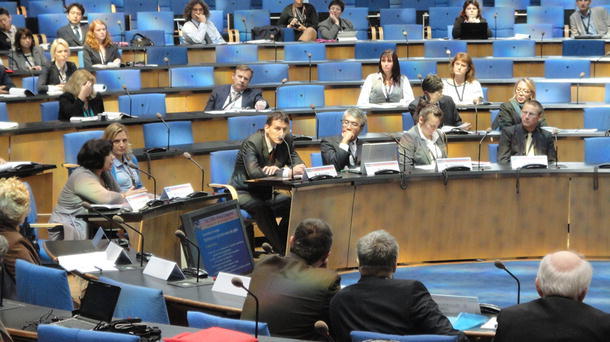
Panel discussion in the specialised session “Healthcare in overview across the globe”: (left to right) National Representatives – Ms. Tsveta Georgieva, Bulgaria; Prof. Dr. Kneginja Richter, Macedonia FYROM & Bavaria (Germany); Dr. Marko Kapalla, Slovakia; Prof. Dr. Hiroyasu Iso, Japan; Dr. Konstantina Grosios, UK; Prof. Dr. Friedemann Paul, Germany
Fig. 21.
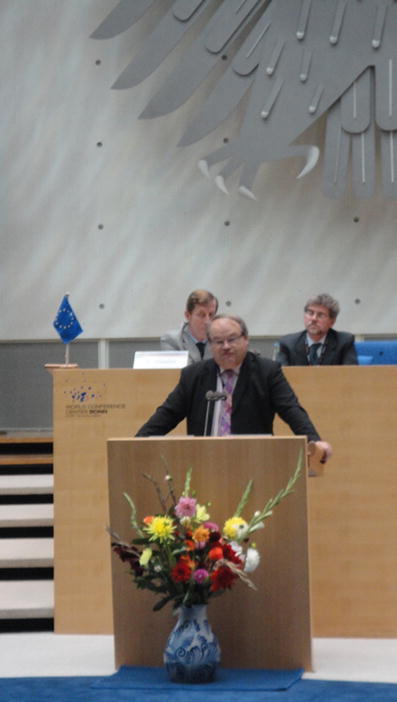
EPMA focuses on patient needs: exciting speech by John Bowis, OBI, former Minister of Health in UK; Chairmen – Prof. Dr. Maurizio Scarpa, Italy and Dr. Giorgio Vittadini, the Representative of Bracco Imaging, Italy
Fig. 22.
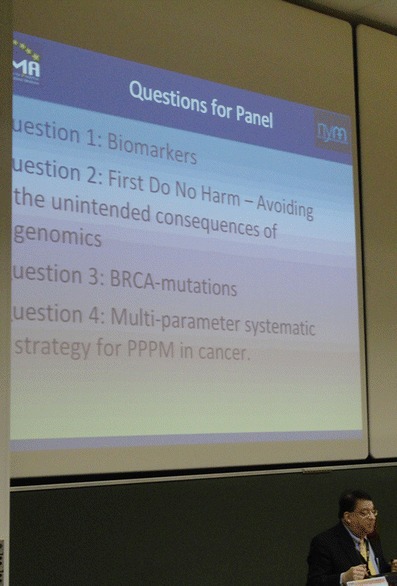
Prof. Dr. Leonard Berliner moderating the panel discussion in the specialised session “PPPM in Cancer”; Chairmen of the session - Prof. Dr. Dominic Desiderio, USA and Prof. Dr. Dainius Characiejus, Lithuania; responsible Editor – Dr. Suzanne Hagan, UK
Fig. 23.
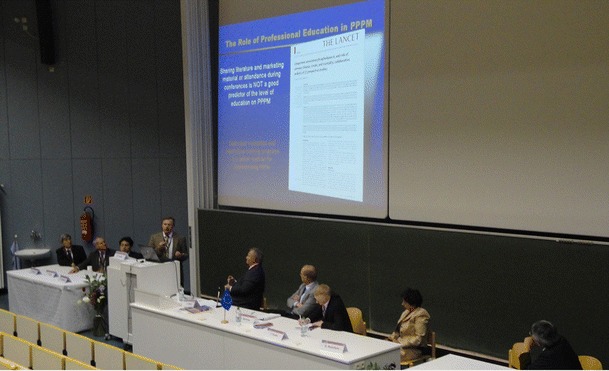
Dr. Anton Jansen, Director of Diadexus emphasising the role of education in PPPM, panel discussion in the specialised session “PPPM in Cardiovascular Diseases”; Chairmen – Prof. Dr. Hiroyasu Iso, Japan and Prof. Dr. Paul Evans, UK; Moderator – Dr. Christian Gluud, Denmark
Fig. 24.
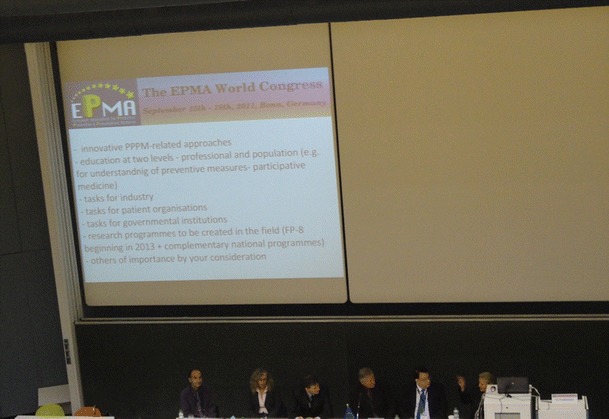
Panel discussion in the specialised session “Patient-specific Modelling and Bioinformatics in PPPM”; Chairmen – Prof. Dr. Heinz Lemke, Germany / USA and Dr. Marko Kapalla, Slovakia; Moderator – Prof. Dr. Halina Podbielska, Poland
Creation of “expert recommendations” – congress report
After the congress in Bonn, the follow-up activity of EPMA experts is the preparation of congress report in a form of “expert recommendations”. Since September the statements get collected from experts in individual sessions. The nominated session leaders are responsible for the creation of concomitant documents resulting from deep analysis of the recommendations (Fig. 25). The general report consisting of thematic reports is planned to be ready in January 2012. The elaborated “expert recommendations” will be presented by the responsible EPMA-Representative to the National Ministries of Health, funding bodies and global organisations agreed to consider the EPMA-document in creating field-related strategies of corresponding organisation.
Fig. 25.
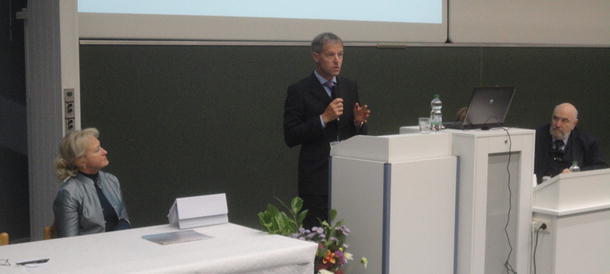
The very last hours of the EPMA World Congress 2011 in Bonn: Prof. Dr. Romano Danesi, National Representative of EPMA in Italy presenting his ideas already drafted for the “expert recommendations”
Next milestone – EPMA world congress in September 2013
The EPMA-President, Dr. Vincenzo Costigliola has closed the World Congress 2011 providing following information (Fig. 26):
The main product of the congress is considered to be the EXPERT COMMUNITY consolidated for comprehensive tasks in the promotion of PPPM at national levels, in Europe and the global scale,
EPMA elaborates “congress report” in a form of “expert recommendations”,
EPMA “expert recommendations” will be presented to Ministries of Health of 44 contributing countries, partner societies, association, funding bodies and global organisation participating in the congress,
Full analysis of the results achieved will be provided during the next EPMA World Congress in September 2013,
We thank to all contributors for their valuable input.
Fig. 26.
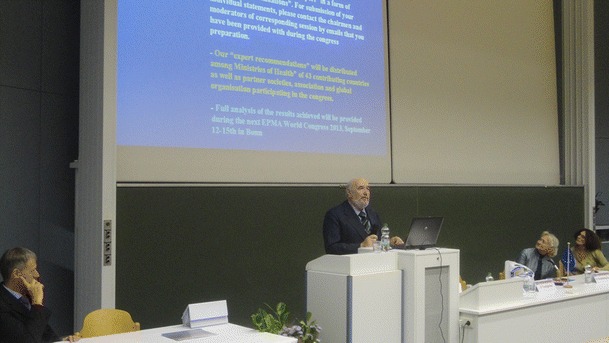
Closing ceremony: The EPMA-President, Dr. Vincenzo Costigliola presenting the milestones for the next EPMA World Congress 2013