



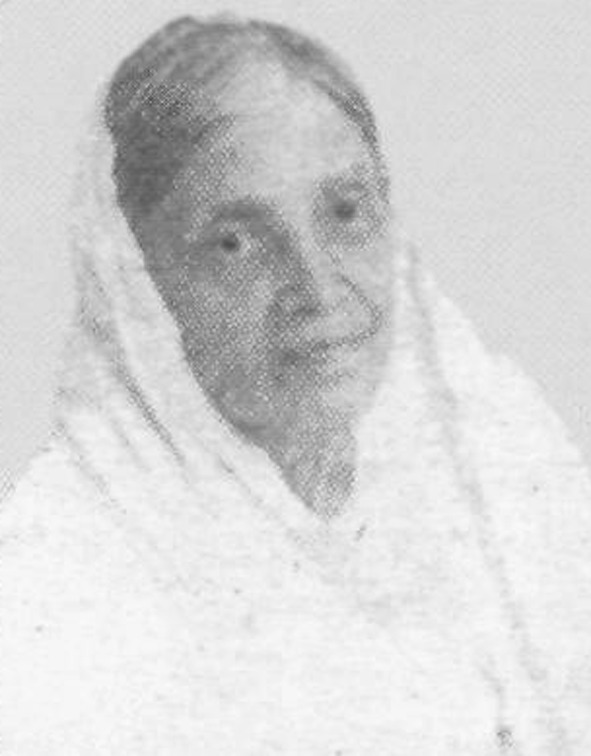
 Right from the very beginning, it was the late Dr. (Ms.) Jerusha Jhirad’s dream “to be a doctor, to take the London MD, and to be in charge of the Cama Hospital.” This yearning was apparently inspired by a story she was told about her elder sister’s serious illness and how one Dr. Benson, at the Cama Hospital, had saved her sister's life.
Her story, nonetheless, seems like the stuff that fairy tales are woven off. Born on March 21, 1891, in the state of Mysore, Dr. Jhirad was of Jewish origin. She had a chequered career in her early years. From the age of eleven, she educated herself on merit scholarships at school and right through her college career at Grant Medical College, Bombay. She graduated in 1912 and set up general practice. She applied for the Tata Loan Scholarship to go abroad. Thus, she proceeded to the UK fully conscious of debt on her return. However, just before she sailed, she was persuaded to apply to the Government of India for a postgraduate scholarship for studies abroad, which had so far been only to men. The Government sanctioned a special scholarship for women, and she was the first recipient. Within less than 6 months of her departure to the UK, the Government not only paid for those 6 months, but also her fare and expenses toward equipment. The first thing she did was to pay off Tata’s loan.
The First World War broke out in 1914 soon after her arrival in London. This proved a boon to her. One of the conditions for admission to MD (Ob-Gyn), University of London was at least a 6 months’ residential post. An Indian could hardly get this facility. However, with the outbreak of the War, men had to be enlisted. This provided her the much-longed-for opportunity. She was taken on at the Elizabeth Garrett-Anderson Hospital, founded by the first medical woman in the UK. She served there for nearly 2 years, gaining good practical experience with enough opportunities for operative work. This enabled her to finally apply for her MD, which she took in 1919, a real step toward realizing her childhood dream.
However, on her return to Bombay, she found no openings at the Cama Hospital. There were no Honorary posts in Cama at the time. After a short consulting practice in Bombay, she took up a locum at the Lady Hardinge Hospital, New Delhi, and then went over to Bangalore at the invitation of the Senior Surgeon. She returned to Bombay in 1925 and was appointed Honorary Surgeon at the Cama Hospital. Three years later, in 1928, Dr. Jhirad was selected as Medical Officer of the Hospital, and thus her childhood dream had transcended into reality.
A Founder Member of the Bombay Obstetric and Gynaecological Society, Dr. Jhirad was made the Society’s 8th President in 1948. Throughout her active days, she cooperated with her colleagues in the Bombay Society as also at the Federation of Obstetric and Gynaecological Societies of India (FOGSI) to develop and to keep up its academic standards.
Dr. Jhirad presided over the 6th All India Obstetric and Gynaecological Congress held at Madras in 1950, in which it was decided to form the Federation of Obstetric and Gynaecological Societies of India (FOGSI), as also to start the Journal of Obstetrics and Gynaecology of India. Dr. Jhirad was elected the first President of the Federation, and was, at the same time, requested to be the Editor of the journal. She retired as Editor in 1968. In appreciation of her services as Editor, the Federation decided to honour her as the Founder Editor.
Much of Dr. Jhirad’s interest in her active days was concentrated on Maternal and Child Welfare. One may say her life's dream fructified when she took charge of the Cama Hospital, Bombay. Antenatal, postnatal, and child welfare clinics were well organized, and the investigation of cases of sterility systematized. Honorary posts, with full responsibility for practical work were increased as also the number of resident posts. Postgraduate teaching was organized to give practical experience to Obstetrics and Gynaecology. To fulfil this objective, a hostel for postgraduates, the first one in Bombay at the time, was opened. This encouraged women postgraduates from all over India to avail of this facility.
Dr. Jhirad has been an Examiner for MD at Madras, Bombay, and Poona Universities for many years. She has worked on the Senate of Universities of Bombay and Poona as well as on the Syndicate in Bombay. She was invited by the Medical Council of India to inspect facilities for training in Obstetrics and Gynaecology at the Universities of East Punjab and Calcutta.
She was Chairperson of the Committee for Maternal and Child Welfare IRFA (now ICMR) for some years. She carried out a statistical inquiry into Maternal Mortality in Bombay in 1937–1938, under IRFA and was also invited to deliver Orations at Bombay, Baroda, and Calcutta, the last of these being the Dr. Dossibai Dadabhoy Memorial Oration.
Even today, Dr. Jhirad is spoken of with awe and respect. In the pre-Independence days, the Government of India bestowed the honour of M.B.E. on her. She was also the proud recipient of the Padmashree award. When she died on June 2, 1984, it was not just a loss for the Bombay Society, but for the Federation and entire country as well. As Dr. Vasant Patwandhan so aptly puts it, “It was like a light had gone out of our lives.”