



Cardiovascular diseases are one of the most common problems of human beings with a high occurrence rate of the total world population.[1] Epilepsy is the second most common neurologic disorder after stroke. An epileptic seizure is a transient paroxysm of uncontrolled discharges of neurons.[2,3] The incidence of epilepsy is highest in the first 10 years of life and declines thereafter through the age of 50 until the elderly years when the incidence increases again.[4,5] Dihydropyridine derivatives, Amrinone and Milrinone are showed important biological activities in cardiovascular disorders.[6–10] Both compounds act by inhibiting phosphodiesterase-III (PDE-III) enzyme. These compounds also showed effect on epilepsy.[11,12] Recently, much attention has been focused on PDE-III inhibitors, like Amrinone and Milrinone [Figure 1], which affect the epilepsy[13] and cardiovascular diseases. These compounds are PDE-III inhibitor and effect on both maximal electroshock seizures (MES) and chemical (isoniazid or INH) induced seizures in mice. This research letter aimed at utilizing PDE-III inhibitor in cardiovascular disorders, epilepsy and examined the role of cyclic PDE-III in the generation of seizures.
Figure 1.
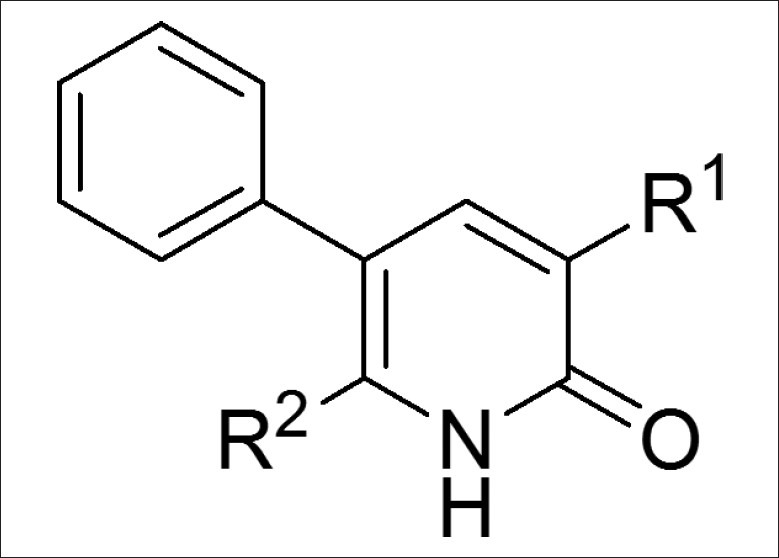
Amirinone - R1=NH2, R2=H, and Milrinone - R1=CN, R2=CH3
Epilepsy and Phosphodiesterase
Seizure is a characteristic feature in epilepsy and is associated with disorder and rhythmic high frequency discharge of impulses by a group of neurons in the brain. The pathophysiological basis for epileptic disorders is both complex and complicated. The antiepileptic drugs have focused on cellular signaling elements like cyto-skeletal structures, trans-membrane enzymes and ion channel modulators. The evidence showed that the effect of cyclic nucleotide PDE enzymes which exist in several molecular forms. These PDE-isozymes are unequally distributed in various tissues, by finding selective inhibitors of the different PDE-isozymes, one may be able to raise the concentration of cyclic nucleotides in discrete cell types.[14] Through the selective inhibition of the major PDE isozyme of a diseased tissue, it may then be possible to alter the course of diseases characterized by an abnormal metabolism of cyclic nucleotides. Twelve PDE isozymes have been identified and these can be further divided into a number of subtypes and splice variants. These PDEs are differing in their amino-acid sequence, substrate specificities, kinetic properties, allosteric regulators, inhibitor sensitivities and in their organ, tissue and sub cellular distribution.[15,16] The PDE-III is characterized by its high affinity for cAMP and cGMP. The cAMP is postulated to be anticonvulsant while cGMP is considered to be pro-convulsant.[17] PDE-III enzyme is highly expressed in the hippocampus, striatum and other discrete sites of the brain and may affect the influx of Ca2+ ions.[18,19] In mammals, PDE are encoded by at least 19 different genes and PDE isoforms are expressed differently in different tissues.[20]
Phosphodiesterase and seizures
Seizures were induced by chemical convulsant, Isoniazid (INH) at a dose of 500 mg/kg, s.c.) in mice. These convulsions are similar to petitmal or absence epilepsy. Chemo-convulsive agent Isoniazid (INH) is a gama amino butyric acid (GABA) synthesis inhibitor. The mice were pretreated with varying doses of Amrinone (0.5 mg/ kg, 0.6 mg/kg and 0.7 mg/kg, i.p.) and Milrinone (50 μg/kg, 100 μg/kg, 200 μg/kg and 300 μg/kg, i.p.). The MES (60 mA/0.2 sec) induced seizure by the corneal electrodes, which is similar to generalized tonic-clonic seizures. After induction of seizures, tonic limb flexion, tonic extensor, clonus, stupor and recovery/mortality phases were studied. In INH induced seizures, the result showed that Amrinone (0.5 mg/kg) significantly potentiated the onset of action, jerky movements and convulsions. Whereas dose level of Amrinone (0.6 mg/ kg) and (0.7 mg/kg), the rate of onset of action, jerky movements and convulsions time was reduced more significantly. Simultaneously, dose of Milrinone (300 μg/mg and 200 μg/mg), the rate of onset of action, jerky movements and convulsion time was reduced at the great extent even in the low doses. In MES induced seizures, the result showed that the Amrinone at doses (0.6 mg/kg and 0.7 mg/kg) produced a significantly gradual reduction in tonic limb flexion and in stupor phase of convulsion. Like-wise Milrinone at dose (200 μg/kg) and (300 μg/kg) showed a significant reduction in tonic limb tonic extensor and stupor flexion, phases of convulsion and produced the significant reduction of the clonus phases of convulsion.[15]
Phosphodiesterase and cardiovascular activity
Phosphodiesterase-III (PDE-III) inhibitor (such as Amrinone, Milrinone, and Enoximone) increase contractility by reducing the degradation of cyclic adenosine monophosphate (cAMP). In addition, they reduce both preload and after load via vasodilation. The hemodynamic consequences of this action are reduced left ventricular after load, increased cardiac output and reduced total peripheral resistance. Unlike sympathomimetic amines, PDE III inhibitors produce no tolerance and possess the distinct advantage of directly decreasing pulmonary vascular resistance.[21,22] Milrinone is the most widely used PDE III inhibitor. Two large prospective randomized studies have been conducted with Milrinone, one with an oral and the other with an intravenous formulation,[23–25] while Amrinone has been largely abandoned as treatment of heart failure, mainly due to its ability to cause thrombocytopenia; low-dose oral Enoximone has recently been evaluated in several small clinical trials, especially its effects during co-administration with beta-blockers. Another drug, Vesnarinone, a mixed PDE inhibitor and ion-channel modifier that has modest, dose-dependent, positive inotropic activity, but minimal negative chronotropic activity.[26,27]
Other dihydropyridine-type calcium antagonists
Calcium antagonists are a heterogeneous group of compounds inhibiting Ca2+ movement through channels in cardiac and smooth muscle membranes by blockade of voltage-sensitive L-type calcium channels. The efficacy of calcium antagonists in treatment of congestive heart failure is related to their ability to reduce myocardial oxygen demand and increase oxygen supply. They cause relaxation of vascular smooth muscle in both systemic arterial and coronary arterial beds. The blockade of the entry of calcium into myocytes results also in a negative inotropic effect.[28–30] There are three major classes of Ca2+ antagonists currently clinically used are: (i) dihydropyridine-type such as Nifedipine, Felodipine, Amlodipine, Lacidipine; (ii) phenylalkylamines such as Verapamil, Gallopamil and (iii) benzothiazepines such as Diltiazem.[31] Dihydropyridine-type Ca2+ antagonists are particularly effective in dilation of vascular smooth muscle. Negative inotropic, chronotropic, and dromotropic effects are rather small. In rare instances they can lower blood pressure excessively with subsequent reflex tachycardia. Dihydropyridine-type Ca2+ antagonists and their combination with β-blockers have been shown to be efficacious in the treatment of angina pectoris.[32–35] Recently some new evidence about the antioxidant properties of Ca2+ antagonists has been presented indicating that these drugs can reduce the rate of progression of atherosclerosis.[36,37] The co-administration of amlodipine or nifedipine with pravastatin caused a significant reduction in the appearance of new angiographic lesions.[38,39]
Discussion
The Phosphodiestrase (PDE-III) inhibitors potentiate the electro-shock similar to generalized tonic-clonic seizures and chemical induced similar to petit mal seizures. The dihydropyridine derivative, Amrinone and Milrinone is PDE-III inhibitor and showed positive inotropic effects that are chemically and pharmacologically distinct from digitalis and catecholamines.[40–42] The mechanism of PDE inhibitors is similar to that of β-adrenergic antagonist.[42–45] Milrinone has been used extensively as PDE-III inhibitor and it is currently used in the acute treatment of heart failure to diminish long term risk. The seizures induced with the accumulation of cellular levels of cAMP and cGMP. The cAMP accumulation is considered to be anticonvulsant and cGMP is considered to be pro-convulsant. The pre-treatment with PDE-III inhibitors potentiates the onset of action and various phases of convulsions against INH and MES induced convulsions. The results clearly suggested that rate of onset of convulsive time was significantly reduced with increasing the dose levels of both Amrinone and Milrinone against INH and MES induced seizures. Earlier studies suggested that the elevated level of cGMP was found in cortical structure in some experimental models of epilepsy,[46,47] and the neuronal excitability was regulated by cGMP and Ca2+/calmodulin dependent protein kinase and its phosphorylation process.[48,49] Apart from these findings, PDE-III inhibitors possess trans-membrane influx of Ca2+. This influx of Ca2+ is responsible for the phosphorylation process of intracellular proteins, such as ion channels, receptors, enzymes and transcription factors which exhibit significant neuronal excitability and epileptic seizures.[50,51] The results also correspond with the generation of seizure activity due to the breakdown of hydrolysis of cGMP which promotes protein kinase phosphorylation process. Thus, the study showed a definite relation-ship between the specific PDE-III inhibitors and increases the cellular level of cGMP and Ca2+ ions with the generation of seizures[52,53]. Therefore, it appears that non-nucleotide mechanism although not well defined could also be contributing significantly to the seizure activity of PDE-III inhibitors.[54,55]
In conclusion, dihydropyridine derivatives have diverse biological potential and their cardiotonic activities are one of the most encouraging activities. The dihydropyridine compounds are important and hold considerable interest in physiologically active compounds with multiple potential. Dihydropyridine compounds Amirinone and Milrinone are PDE-III inhibitors, have been effective in epilepsy and cardiovascular diseases. These derivatives focused our attention because of their fictionalization at various ring positions, which makes them attractive compounds for designing and development of novel compounds. By the present scenario it can be concluded that dihydropyridine have a great potential which remain to be disclosed till date.
Acknowledgment
The authors are thankful to Department of Pharmacy, GRD (PG) IMT, Dehradun, India, for providing infrastructural and technical facilities to carry out this work and our colleagues who helped directly and indirectly for this study.
References
- 1.Delgado-Escueta AV, Treiman DM, Walsh GO. The treatable epilepsies. N Engl J Med. 1983;308:1508–14. doi: 10.1056/NEJM198306233082506. [DOI] [PubMed] [Google Scholar]
- 2.Greene RJ, Harris ND. Pathology and Therapeutics for Pharmacists-A Basis for Clinical Pharmacy Practice. 2nd ed. 2003. pp. 449–62. [Google Scholar]
- 3.Walker R, Clive E. Clinical Pharmacy and Therapeutics. 3rd ed. 2003. pp. 465–81. [Google Scholar]
- 4.Herfindal ET, Gourley DR. Textbook of Therapeutics, Drug and Disease Management. 6th ed. 2001. pp. 1005–33. [Google Scholar]
- 5.Shafiee A, Rastkari N, Sharifzadeh M. Anticonvulsant activities of new 1,4-dihydropyridine derivatives containing 4-nitroimidazolyl substituents. DARU J Pharm Sci. 2004;12:81–5. [Google Scholar]
- 6.Bansal R, Kumar D, Carron R, de la Calle C. Synthesis and vasodilatory activity of some amide derivatives of 6-(4-carboxymethyloxyphenyl)-4,5-dihydro-3 (2H)-pyridazinone. Eur J Med Chem. 2009;44:4441–7. doi: 10.1016/j.ejmech.2009.06.006. [DOI] [PubMed] [Google Scholar]
- 7.Chen HZ, Cui XL, Zhao HC, Zhao LY, Lu JY, Wu BW. Inotropic effects of MCI-154 on rat cardiac myocytes. Sheng Li Xue Bao. 2004;56:301–5. [PubMed] [Google Scholar]
- 8.De Luca L, Proietti P, Palombaro GL, Battagliese A, Celotto A, Bucciarelli Ducci C, et al. New positive inotropic agents in the treatment of left ventricular dysfunction. Ital Heart J. 2004;5(Suppl 6):63S–7S. [PubMed] [Google Scholar]
- 9.Demirayak S, Karaburun AC, Beis R. Some pyrrole substituted aryl pyridazinone and phthalazinone derivatives and their antihypertensive activities. Eur J Med Chem. 2004;39:1089–95. doi: 10.1016/j.ejmech.2004.09.005. [DOI] [PubMed] [Google Scholar]
- 10.Allerton CM, Andrews MD, Blagg J, Ellis D, Evrard E, Green MP, et al. Design and synthesis of pyridazinone-based 5-HT(2C) agonists. Bioorg Med Chem Lett. 2009;19:5791–5. doi: 10.1016/j.bmcl.2009.07.136. [DOI] [PubMed] [Google Scholar]
- 11.Pattan SR, Purohit SS, Rasal VP, Mallaya S, Marihal SC, Khade SB, et al. Synthesis and pharmacological screening of some 1,4-dihydropyridine and their derivatives for anticonvulsant activity. Ind J Chem. 2008;27B:626–9. [Google Scholar]
- 12.Pattan SR, Dighe NS, Musmade DS, Tambe SK, Kale SH, Gaware VM, et al. Synthesis and evaluation of some new substituted 1,4-dihydro pyridine derivatives and their anticonvulsant activity. J Chem Pharm Res. 2010;2:246–52. [Google Scholar]
- 13.Nandhakumar J, Tyagi MG. Evaluation of cyclic nucleotide phosphodiesterase III inhibitors in animal models of epilepsy. Biomed Res. 2008;19:13–7. [Google Scholar]
- 14.Jeon YH, Heo YS, Kim CM, Hyun YL, Lee TG, Ro S, et al. Phosphodiesterase: Overview of protein structures, potential therapeutic applications and recent progress in drug development. Cell Mol Life Sci. 2005;62:1198–220. doi: 10.1007/s00018-005-4533-5. [DOI] [PMC free article] [PubMed] [Google Scholar]
- 15.Shakur Y, Holst LS, Landstorm TR, Movsesian M, Degermen E, Manganiello V. Regulation and function of the cyclic nucleotide phosphodiesterase (PDE3) gene family. Prog Nucleic Acid Res Mol Biol. 2001;66:241–77. doi: 10.1016/s0079-6603(00)66031-2. [DOI] [PubMed] [Google Scholar]
- 16.Smith CJ, Krall J, Manganiello VC, Movsesian MA. Cytosolic and sarcoplasmic reticulum-associated low Km, cGMP-inhibited cAMP phosphodiesterase in mammalian myocardium. Biochem Biophys Res Commun. 1993;190:516–21. doi: 10.1006/bbrc.1993.1078. [DOI] [PubMed] [Google Scholar]
- 17.Ray A, Gulati K, Anand S, Vijayan VK. Pharmacological studies on mechanisms of amninophylline-induced seizures in rats. Indian J Exp Biol. 2005;43:849–53. [PubMed] [Google Scholar]
- 18.Cho CH, Cho DH, Seo MR, Juhnn YS. Differential changes in the expression of cyclic nucleotide phosphordiesterase isoforms in rat brains by chronic treatment with electroconvulsive shock. Exp Mol Med. 2000;32:110–4. doi: 10.1038/emm.2000.19. [DOI] [PubMed] [Google Scholar]
- 19.Liu H, Maurice DH. Expression of cyclic GMP-inhibited phosphodiesterases 3A and 3B (PDE3A and PDE3B) in rat tissues: Differential subcellular localization and regulated expression by cyclic AMP. Br J Pharmacol. 1998;125:1501–10. doi: 10.1038/sj.bjp.0702227. [DOI] [PMC free article] [PubMed] [Google Scholar]
- 20.Beavo JA. Cyclic nucleotide phosphodiesterases: Functional implications of multiple isoforms. Physiol Rev. 1995;75:725–48. doi: 10.1152/physrev.1995.75.4.725. [DOI] [PubMed] [Google Scholar]
- 21.Levy JH, Bailey JM. Amrinone: Pharmacokinetics and pharmacodynamics. J Cardiothorac Anesth. 1989;3(6 Suppl 2):10–4. doi: 10.1016/0888-6296(89)90054-9. [DOI] [PubMed] [Google Scholar]
- 22.Colucci WS. Cardiovascular effects of milrinone. Am Heart J. 1991;121:1945–7. doi: 10.1016/0002-8703(91)90829-7. [DOI] [PubMed] [Google Scholar]
- 23.Vernon MW, Heel RC, Brogden RN. Enoximone. A review of its pharmacological properties and therapeutic potential. Drugs. 1991;42:997–1017. doi: 10.2165/00003495-199142060-00008. [DOI] [PubMed] [Google Scholar]
- 24.Leier CV, Binkley PF. Parenteral inotropic support for advanced congestive heart failure. Prog Cardiovasc Dis. 1998;41:207–24. doi: 10.1016/s0033-0620(98)80056-x. [DOI] [PubMed] [Google Scholar]
- 25.Ioannou N, Wyncoll DL. Management of heart failure and the role of the new inotrope levosimendan. Br J Cardiol (Acute Interv Cardiol) 2004;11:AIC24–AIC30. [Google Scholar]
- 26.Feldman AM, Baughman KL, Lee WK, Gottlieb SH, Weiss JL, Becker LC, et al. Usefulness of OPC-8212, a quinolinone derivative, for chronic congestive heart failure in patients with ischemic heart disease oridiopathic dilated cardiomyopathy. Am J Cardiol. 1991;68:1203–10. doi: 10.1016/0002-9149(91)90194-p. [DOI] [PubMed] [Google Scholar]
- 27.Feldman AM, Bristow MR, Parmley WW, Carson PE, Pepine CJ, Gilbert EM, et al. Effects of vesnarinone on morbidity and mortality in patients with heart failure. Vesnarinone Study Group. N Engl J Med. 1993;329:149–55. doi: 10.1056/NEJM199307153290301. [DOI] [PubMed] [Google Scholar]
- 28.Seki T, Nakao T, Masuda T, Hasumi K, Gotanda K, Ishimori T, et al. Studies on agents with vasodilator and beta-blocking activities. IV. Chem Pharm Bull (Tokyo) 1996;44:2061–9. doi: 10.1248/cpb.44.2061. [DOI] [PubMed] [Google Scholar]
- 29.Metra M, Nodari S, D’Aloia A, Muneretto C, Robertson AD, Bristow MR, et al. Beta-blocker therapy influences the hemodynamic response to inotropic agents in patients with heart failure: A randomized comparison of dobutamine and enoximone before and after chronic treatment with metoprolol or carvedilol. J Am Coll Cardiol. 2002;40:1248–58. doi: 10.1016/s0735-1097(02)02134-4. [DOI] [PubMed] [Google Scholar]
- 30.Karlsberg RP, DeWood MA, DeMaria AN, Berk MR, Lasher KP. Comparative efficacy of short-term intravenous infusions of milrinone and dobutamine in acute congestive heart failure following acute myocardial infarction. Milrinone-Dobutamine Study Group. Clin Cardiol. 1996;19:21–30. doi: 10.1002/clc.4960190106. [DOI] [PubMed] [Google Scholar]
- 31.Abernethy DR, Schwartz JB. Calcium-antagonist drugs. N Engl J Med. 1999;341:1447–57. doi: 10.1056/NEJM199911043411907. [DOI] [PubMed] [Google Scholar]
- 32.Allanore Y, Borderie D, Lemarechal H, Ekindjian OG, Kahan A. Acute and sustained effects of dihydropyridine-type calcium channel antagonists on oxidative stress in systemic sclerosis. Am J Med. 2004;116:595–600. doi: 10.1016/j.amjmed.2003.11.022. [DOI] [PubMed] [Google Scholar]
- 33.Beier N, Harting J, Jonas R, Klockow M, Lues I, Haeusler G. The novel cardiotonic agent EMD 53 998 is a potent “calcium sensitizer”. J Cardiovasc Pharmacol. 1991;18:17–27. doi: 10.1097/00005344-199107000-00004. [DOI] [PubMed] [Google Scholar]
- 34.Berkels R, Taubert D, Bartels H, Breitenbach T, Klaus W, Roesen R. Amlodipine increases endothelial nitric oxide by dual mechanisms. Pharmacology. 2004;70:39–45. doi: 10.1159/000074241. [DOI] [PubMed] [Google Scholar]
- 35.Chugh SK, Digpal K, Hutchinson T, McDonald CJ, Miller AJ, Lahiri A. A randomized, double-blind comparison of the efficacy and tolerability of once-daily modified-release diltiazem capsules with once-daily amlodipine tablets in patients with stable angina. J Cardiovasc Pharmacol. 2001;38:356–64. doi: 10.1097/00005344-200109000-00004. [DOI] [PubMed] [Google Scholar]
- 36.Cohn JN, Ziesche S, Smith R, Anand I, Dunkman WB, Loeb H, et al. Effect of the calcium antagonist felodipine as supplementary vasodilator therapy in patients with chronic heart failure treated with enalapril:V-HeFT III. Vasodilator-Heart Failure Trial (V-HeFT) Study Group. Circulation. 1997;96:856–63. doi: 10.1161/01.cir.96.3.856. [DOI] [PubMed] [Google Scholar]
- 37.Cuffe MS, Califf RM, Adams KF, Jr, Benza R, Bourge R, Colucci WS, et al. Short-term intravenous milrinone for acute exacerbation of chronic heart failure: A randomized controlled trial. JAMA. 2002;287:1541–7. doi: 10.1001/jama.287.12.1541. [DOI] [PubMed] [Google Scholar]
- 38.Rønnevik PK, Silke B, Ostergaard O. Felodipine in addition to beta-adrenergic blockade for angina pectoris. A multicentre, randomized, placebo-controlled trial. Eur Heart J. 1995;16:1535–41. doi: 10.1093/oxfordjournals.eurheartj.a060774. [DOI] [PubMed] [Google Scholar]
- 39.Hagemeijer F. Hemodynamic performance during exercise in patients with severe chronic congestive heart failure before and after a single dose of pimobendan. J Cardiovasc Pharmacol. 1994;23:741–6. doi: 10.1097/00005344-199405000-00008. [DOI] [PubMed] [Google Scholar]
- 40.Honerjäger P. Pharmacology of bipyridine phosphodiesterase III inhibitors. Am Heart J. 1991;121:1939–44. doi: 10.1016/0002-8703(91)90828-6. [DOI] [PubMed] [Google Scholar]
- 41.Cruickshank JM. Phosphodiesterase III inhibitors: Long-term risks and short-term benefits. Cardiovasc Drugs Ther. 1993;7:655–60. doi: 10.1007/BF00877818. [DOI] [PubMed] [Google Scholar]
- 42.Riazi K, Roshanpour M, Rafei-Tabatabaei N, Homayoun H, Ebrahimi F, Dehpour AR. The proconvulsant effect of sildenafil in mice: Role of nitric oxide-cGMP pathway. Br J Pharmacol. 2006;147:935–43. doi: 10.1038/sj.bjp.0706680. [DOI] [PMC free article] [PubMed] [Google Scholar]
- 43.Haikala H, Kaheinen P, Levijoki J, Lindén IB. The role of cAMP and cGMP-dependent protein kinases in the cardiac actions of the new calcium sensitizer, levosimendan. Cardiovasc Res. 1997;34:536–46. doi: 10.1016/s0008-6363(97)00057-6. [DOI] [PubMed] [Google Scholar]
- 44.Chen HZ, Cui XL, Zhao HC, Zhao LY, Lu JY, Wu BW. Inotropic effects of MCI-154 on rat cardiac myocytes. Sheng Li Xue Bao. 2004;56:301–5. [PubMed] [Google Scholar]
- 45.Korvald C, Nordhaug DO, Steensrud T, Aghajani E, Myrmel T. Vasodilation and mechanoenergetic inefficiency dominates the effect of the “Ca2+ -sensitizer” MCI-154 in intact pigs. Scand Cardiovasc J. 2002;36:131–5. [PubMed] [Google Scholar]
- 46.Walaas SI, Greengard P. Protein phosphorylation and neuronal function. Pharmacol Rev. 1991;3:299–349. [PubMed] [Google Scholar]
- 47.de Vries RJ, van Veldhuisen DJ, Dunselman PH. Efficacy and safety of calcium channel blockers in heart failure: Focus on recent trials with second-generation dihydropyridines. Am Heart J. 2000;139:185–94. doi: 10.1067/mhj.2000.101490. [DOI] [PubMed] [Google Scholar]
- 48.Deswal A, Petersen NJ, Feldman AM, White BG, Mann DL. Effects of vesnarinone on peripheral circulating levels of cytokines and cytokine receptors in patients with heart failure: A report from the Vesnarinone Trial. Chest. 2001;120:453–9. doi: 10.1378/chest.120.2.453. [DOI] [PubMed] [Google Scholar]
- 49.Goldbourt U, Behar S, Reicher-Reiss H, Zion M, Mandelzweig L, Kaplinsky E. Early administration of nifedipine in suspected acute myocardial infarction. The Secondary Prevention Reinfarction Israel Nifedipine Trial 2 Study. Arch Intern Med. 1993;153:345–53. [PubMed] [Google Scholar]
- 50.Kumar D, Carron R, La Calle CD, Jindal DP, Bansal R. Synthesis and evaluation of 2-substituted-6-phenyl-4,5-dihydropyridazin-3 (2H)-ones as potent inodilators. Acta Pharm. 2008;58:393–405. doi: 10.2478/v1007-008-0021-4. [DOI] [PubMed] [Google Scholar]
- 51.Butler LS, Silva AJ, Abeliovich A, Watanabe Y, Tonegawa S, McNamara JO. Limbic epilepsy in transgenic mice carrying a Ca2+/calmodulin-dependent kinase II alpha-subunit mutation. Proc Natl Acad Sci U S A. 1995;15:6852–5. doi: 10.1073/pnas.92.15.6852. [DOI] [PMC free article] [PubMed] [Google Scholar]
- 52.Francis SH, Turko IV, Corbin JD. Cyclic nucleotide phosphodiesterases: Relating structure and function. Prog Nucleic Acid Res Mol Biol. 2001;65:1–52. doi: 10.1016/s0079-6603(00)65001-8. [DOI] [PubMed] [Google Scholar]
- 53.Berry C, Murdoch DR, McMurray JJ. Economics of chronic heart failure. Eur J Heart Fail. 2001;3:283–91. doi: 10.1016/s1388-9842(01)00123-4. [DOI] [PubMed] [Google Scholar]
- 54.Cleland JG, McGowan J. Levosimendan: A new era for inodilator therapy for heart failure? Curr Opin Cardiol. 2002;17:257–65. doi: 10.1097/00001573-200205000-00008. [DOI] [PubMed] [Google Scholar]
- 55.Wang T, Dong Y, Wang LC, Xiang BR, Chen Z, Qu LB. Design, synthesis and structure-activity relationship studies of 6-phenyl-4,5-dihydro-3 (2H)-pyridazinone derivatives as cardiotonic agents. Arzneimittelforschung. 2008;58:569–73. doi: 10.1055/s-0031-1296558. [DOI] [PubMed] [Google Scholar]