



Abstract
Background
Mrs Francis Piggott proposed the Colonial Nursing Association in 1895 as a means of supplying Britain's colonies and dominions with trained professional nurses, who would support the health of white colonists abroad. Over 8400 nurses were placed between 1896 and the Association's end in 1966. Despite the burgeoning of scholarship on gender and empire over the last few decades, there is still more research to be done examining nurses as professional, working women, who present a fascinating variation on the figure of the woman traveler.
Methods
This essay focuses on 1896–1927, exploring how nurses were prepared for their labor abroad and how these skills were challenged and adapted within a foreign environment. We contextualize this discussion with examples from literary tales of exploration and adventure and discourses of empire.
Results/conclusions
Though the sources of disease against which nurses fought changed during this period, we assert that the underlying role of the nurse continued the same: she was meant to use the tools of personal as well as public ‘hygiene’ to create both physical and cultural boundaries around her white patients and herself, setting colonists apart from their colonial setting.
Keywords: history of empire, hygiene, nurses, travel, West Africa
Mrs Francis Piggott (1854–1949) proposed the Colonial Nursing Association (CNA) in 1895 as a means of supplying Britain's colonies and dominions with trained professional nurses, who would support the health of white colonists abroad. Over 8400 nurses were placed between 1896 and the Association's end in 1966. Despite the burgeoning of scholarship on gender and empire over the last few decades, few scholars have undertaken research on the role of British nurses sent out to work in colonial locations1–4. The topic still needs further exploration. Scholars in the humanities have explored the ways in which writing by turn-of-the-century women travelers both consolidates and disrupts imperial ideology5,6. Nurses, as professional, working women, present a fascinating variation on the traveling woman. Their duty as white women nursing the empire depended upon their ability to emulate the ‘angel in the house’ but the contingencies of their labour (extreme traveling and working conditions, physical proximity to white men and indigenous people) tested and transgressed the limits of conventional womanhood.
Though the sources of disease against which nurses fought changed during this period, 1896–1927, we believe that the underlying role of the nurse continued the same: she used the tools of personal as well as public ‘hygiene’ to create both physical and cultural boundaries around her white patients and herself, setting colonists apart from their colonial setting. The literature of empire and exploration sheds light upon certain anxieties around cultural and physical contact that nurses were meant to counteract through their hygienic influence. As Mark Harrison has observed, ‘The cultivation of personal hygiene’ can be a ‘means of accentuating individuality and social distinction’.7
As Alison Bashford has demonstrated, such uses of hygiene to accentuate difference were especially pronounced in the colonial context.8 In addition, by studying sources pertaining to nursing education, such as textbooks and the documentation of coursework offered by Schools of Tropical Medicine, one observes how these values of social separation and hierarchy through hygiene were inculcated.
The skills of nursing were commonly taught through nursing textbooks from their inception in the 1860s up to the 1930s and beyond. These textbooks stressed both the importance of the nurse's personal hygiene and the teaching of hygiene to patients. The growth of nursing textbooks was associated with the rise of training schools and the need not only to prescribe treatments but also to map the social relations of the sickroom. Textbooks tended to follow a similar template, which started with the management of the sickroom, emphasising behaviour and social conventions regulating relations between doctors, nurses and patients, followed by specific techniques and treatment for particular diseases [as examples, see Barwell (1857), Cullingworth (1876), Le Hardy (1863) and Marsh (1865)9–12]. The ‘ethical’ basis of nursing texts reflects the more widespread preoccupation with rules of conduct as enshrined in the many etiquette texts of the period. Thus, nursing textbooks were not only technical manuals but also pedagogical tools outlining the social niceties and role boundaries to be observed in dealings with patients and doctors.13
For nurses working in tropical locations, West Africa in particular, the demands made on them by the supposedly deadly climate meant that their moral integrity was put under further pressure. In order to protect the white man abroad, they had to maintain the strictest standards of personal and moral hygiene. Known as the ‘white man's grave’ or the ‘land of death’, the West African climate was thought to cause not only illness, but also moral degeneration, laxity and intemperance [other organizations, such as the West African Medical Service, were implemented both to decrease mortality in West Africa and also to recruit more medical officers by making West African service appear safer. For more on the WAMS, see Johnson (2010)].14
In Virginia Woolf's first novel, The Voyage Out (1915), the heroine, Rachel Vinrace, dies of fever after a river trip into the jungle in a fictional South American colony.15 Woolf draws on common depictions of malignant tropical locations: ‘These trees get on one's nerves—it's all so crazy. God's undoubtedly mad. What sane person could have conceived a wilderness like this, and peopled it with apes and alligators? I should go mad if I lived here—raving mad’ (321). After Rachel's death, one of her fellow travelers notes: ‘it was a foolish thing to do—to go up that river […] You can't expect Englishwomen to stand roughing it as the natives do who've been acclimatized’ (421).
Nursing textbooks displayed a similar concern with the effects of tropical environments on the white constitution. Textbooks on tropical nursing were relatively rare since tropical nursing was only ever a minority pursuit. Textbooks for tropical climates addressed how the environment of the tropics impacted nursing, the course of illness and the adverse conditions under which one had to work. Thus, the first rule for the nurse was to look after her own personal hygiene, for bringing health to others demanded that the nurse should first and foremost be healthy herself.16 The tropics were portrayed as a lush and luxuriant environment in which heat accelerated the processes of nature and thus the development of disease. Septic organisms were more prevalent and virulent; the slightest lapse or carelessness on the part of the nurse could have disastrous consequences. The nurses' role was to conserve energy by maximizing efficiency, be that of movement or the organization of work and avoiding friction with subordinates or the so-called ‘natives’. Thus, as with textbooks more generally, the premium was set on their self-control and restraint.
In travel narratives, tropical, colonial locations were seen as especially resistant to cleanliness, godliness and the ethics of hard work, efficiency and order so key to the nurse's mission. In Alone in West Africa (1912), Australian novelist and travel writer Mary Gaunt argues that if European men could practise ‘soberness and temperance’17 they would function perfectly well in the climate. ‘A sane and sober life in the open air day and night’, she argues, is ‘a more certain preventive against fever than all the quinine and mosquito-proof rooms that were ever dreamt of’ (390). She calls urgently for an increased female presence in the region. The antidote for the ‘reckless man’ is ‘quiet, brave, sensible women’ (391). Gaunt echoes the CNA's call to nurses: women who will purify (physically and morally), heal and domesticate.18
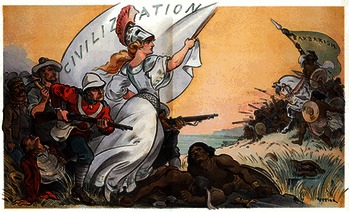
Keppler UJ.19
Especially during the early years of the CNA, the goal of preserving British values abroad was perceived as just as important as providing healing, and that these priorities were reflected in the fact that most CNA recruits received very little tropical nursing training. The CNA was generally reactive rather than proactive with regard to tropical training courses for nurses and in 1904 argued that nurses could gain relevant experience through fever nursing.20 In contrast, by 1905, colonial medical officers were usually expected to undertake tropical training before they embarked on their voyage.21 Although tropical training did not become a requirement for colonial nurses, several colonies were willing to pay allowances to nurses undertaking courses.22 The primary providers of this training were the Liverpool and London Schools of Tropical Medicine.
The Liverpool School offered a 3-month course with the nurses working on the wards of the Royal Southern Hospital, located at the docks, gaining experience of tropical diseases and receiving a series of lectures in the Tropical Ward. Ronald Ross (1857–1932), famous for discovering the transmission of malaria, provided a special lecture on ‘Nursing in the Tropics’. It is questionable whether the course was fully adapted for nurses as they undertook a 3-day course designed for missionaries and planters as part of this training. Yet, this short course did involve learning to distinguish between the principal tropical diseases, how to treat them and what medicines to use in ‘out-of-the-way places’, how to live in the tropics and ensure the observation of sanitary rules.23,24 In 1927, the Colonial Office argued that all nurses embarking for West Africa should undertake tropical training at either of the Schools, and by then the Liverpool course involved practical laboratory work and 3 months' work in the Tropical Ward of the Liverpool Royal Infirmary, followed by an examination.25,26 However, during the earliest years of the CNA, a lack of direct support and distance from the sphere of influence of the Colonial Office translated into erratic and sporadic provision of tropical nursing training From 1904, a more direct influence was exerted when Patrick Manson (1844–1922), medical adviser to the Colonial Office, was elected to the CNA Executive Committee in his capacity of founder of the London School of Tropical Medicine.27
So during the late nineteenth and early twentieth centuries, education and training in tropical nursing was the exception rather than the rule for nurses preparing to serve in the tropics. Further, it was advised that nurses should, above all else, maintain their own hygiene, health and self-control. When one reads historical evidence regarding nursing education alongside literary invocations of going ‘mad’ in the tropics, one realizes that as much priority was placed on nurses' role in maintaining cultural values and propriety within the colonial setting as was placed on treating geographically specific illnesses. The Association's own propaganda demonstrates this overriding concern with nurses' respectability and professionalism: in the February 1900 edition of the professional journal Nursing Notes, the CNA stated, ‘The nurses of the Association are pioneers; most of them are working where nurses have never worked before; they represent their profession, they represent the Society: they must determine to represent both worthily … Let them realize that climate and circumstance breed temptations that are only to be resisted by devotion to work and loyalty to the best traditions of their profession and of the Association to which they belong’.28 As we have argued, and as the foregoing quotation illustrates, if nurses were to be agents of imperial hygiene, both physical and cultural (keeping bodies clean, keeping cultures distinct), then their behavior needed to epitomize these values.
Funding
This work was supported by the Wellcome Trust [grant number 086071].
References
- 1.Jones M. Heroines of Lonely Outposts or Tools of Empire? British nurses in Britain's Model Colony: Ceylon, 1878–1948. Nurs Inquiry. 2004;113:148–60. doi: 10.1111/j.1440-1800.2004.00224.x. [DOI] [PubMed] [Google Scholar]
- 2.Choy C. Empire of Care: Nursing and Migration in Filipino American History. Durham, N.C: Duke University Press; 2003. Winifred Connerton. [Google Scholar]
- 3.Nestel S. (Ad)ministering angels: colonial nursing and the extension of empire in Africa. J Med Humanit. 1998;19.4:257–77. doi: 10.1023/a:1024908110021. [DOI] [PubMed] [Google Scholar]
- 4.Birkett D. The ‘White Woman's Burden’ in the ‘White Man's Grave. In: Chaudhuri N, editor. Western Women and Imperialism: Complicity and Resistance. New Jersey: John Wiley & Sons; 1992. [Google Scholar]
- 5.Blunt A. Travel, Gender and Imperialism: Mary Kingsley and West Africa. New York: The Guildford Press; 1994. [Google Scholar]
- 6.Pratt ML. Imperial Eyes: Travel Writing and Transculturation. London: Routledge; 1992. [Google Scholar]
- 7.Harrison M. Climates and Constitutions: Health, Race, Environment and British Imperialism in India. New Delhi, Oxford: Oxford University Press; 2002. p. 21. [Google Scholar]
- 8.Bashford A. Imperial Hygiene: A Critical History of Colonialism, Nationalism and Public Health. Houndsmills, New York: Palgrave Macmillan; 2004. [Google Scholar]
- 9.Barwell R. The Care of the Sick: A Course of Practical Lectures Delivered at the Working Women's College. London: Chapman and Hall; 1857. [Google Scholar]
- 10.Cullingworth C. The Nurse's Companion, a Manual of General and Monthly Nursing. London: J. & A. Churchill: 1876. [Google Scholar]
- 11.Le Hardy E. The Home Nurse and Manual for the Sick-Room. London: Robert Hardwicke: 1863. [Google Scholar]
- 12.Marsh JCL. Lectures on Nursing. W. Kent; 1865. [Google Scholar]
- 13.Rafferty AM. The Politics of Nursing Knowledge. London: Routledge; 1996. pp. 29–30. [Google Scholar]
- 14.Ryan J. The West African medical staff and the administration of imperial tropical medicine, 1902–1914. J Imperial Commonw Hist. 2010;38.3:419–39. doi: 10.1080/03086534.2010.503396. [DOI] [PubMed] [Google Scholar]
- 15.Woolf V. The Voyage Out. Lorna Sage, Oxford: Oxford University Press; 1992. [Google Scholar]
- 16.Gregg AL. Tropical Nursing: A Handbook. London: Cassell & Co.; 1929. vi. [Google Scholar]
- 17.Gaunt M. Alone in West Africa. London: T. Werner Laurie; 1911. p. 369. [Google Scholar]
- 18.Mary K. Nursing in West Africa. Chambers J. 1900;3:369–71. 393–6. [Google Scholar]
- 19.Keppler UJ. ‘From the Cape to Cairo’ (N.Y.: J. Ottmann Lith. Co., Puck Bldg., 1902 December 10. Library of Congress Prints and Photographs Division Washington, D.C. 20540 USA) http://www.loc.gov/pictures/item/2010652189/
- 20.CNA Executive Council Minutes , 1 June 1904 Colonial Nursing Association Archive, Mss Brit Emp s400 (CNAA), Oxford Rhodes House Library, Volume 2.
- 21.Anna C. Practising Colonial Medicine: The Colonial Medicine Service in British East Africa. London and New York: I.B. Tauris; 2007. 4, 20 and 26. [Google Scholar]
- 22. CNA Executive Council Minutes, 6 December 1905, CNAA, Volume 2.
- 23. Third Annual Report of the Liverpool School of Tropical Medicine, 1901, University of Liverpool Special Collections (hereafter ULSC), TM/2/3/3.
- 24. The Liverpool School of Tropical Diseases and Medical Parasitology in Connection with University College, Liverpool, and the Royal Southern Hospital Prospectus, 1899, ULSC, TM/13/18/1.
- 25.Adams CM. Secretary of the ONA, to the Secretary, Liverpool School of Tropical Medicine, 10 August 1927.
- 26. Under Secretary of State, Colonial Office, to the Secretary, Liverpool School of Tropical Medicine, 17 May 1928; Examination for Nurses, 15 December 1928, ULSC, TM/13/3/3/2.
- 27. CNA Executive Minutes, 27 July 1904, CNAA, Volume 2. [Google Scholar]
- 28.Colonial Nursing Association. 1900:25. Nursing Notes. [Google Scholar]