



Abstract
Marine organisms are potentially prolific sources of highly bioactive secondary metabolites that might represent useful leads in the development of new pharmaceutical agents. Algae can be classified into two main groups; first one is the microalgae, which includes blue green algae, dinoflagellates, bacillariophyta (diatoms)… etc., and second one is macroalgae (seaweeds) which includes green, brown and red algae. The microalgae phyla have been recognized to provide chemical and pharmacological novelty and diversity. Moreover, microalgae are considered as the actual producers of some highly bioactive compounds found in marine resources. Red algae are considered as the most important source of many biologically active metabolites in comparison to other algal classes. Seaweeds are used for great number of application by man. The principal use of seaweeds as a source of human food and as a source of gums (phycocollides). Phycocolloides like agar agar, alginic acid and carrageenan are primarily constituents of brown and red algal cell walls and are widely used in industry.
Keywords: Marine organisms; Microalgae (blue green algae, dinophalgelate, and diatomes); Macroalgae; Biological importance
1. Introduction
Marine organisms are potentially prolific sources of highly bioactive secondary metabolites that might represent useful leads in the development of new pharmaceutical agents (Iwamoto et al., 1998, Iwamoto et al., 1999, Iwamoto et al., 2001). During the last four decades, numerous novel compounds have been isolated from marine organisms and many of these substances have been demonstrated to possess interesting biological activities (Faulkner, 1984a, Faulkner, 1984b, Faulkner, 1986, Faulkner, 1987, Faulkner, 1988, Faulkner, 1990, Faulkner., 1991, Faulkner, 1992, Faulkner, 1993, Faulkner, 1994, Faulkner, 1995, Faulkner, 1996, Faulkner, 1997, Faulkner, 1998, Faulkner, 1999, Faulkner, 2000, Faulkner, 2001, Faulkner, 2002).
Algae are very simple chlorophyll-containing organisms (Bold and Wynne, 1985) composed of one cell or grouped together in colonies or as organisms with many cells, sometimes collaborating together as simple tissues. They vary greatly in size – unicellular of 3–10 μm (microns) to giant kelps up to 70 m long and growing at up to 50 cm per day (Hillison, 1977). Algae are found everywhere on earth: in the sea, rivers and lakes, on soil and walls, in animal and plants (as symbionts-partners collaborating together); in fact just about everywhere where there is a light to carry out photosynthesis.
Algae are heterogeneous group of plants with a long fossil history. Two major types of algae can be identified: the macroalgae (seaweeds) occupy the littoral zone, which included green algae, brown algae and red algae, and the micro algae are found in both bentheic and littoral habitats and also throughout the ocean waters as phytoplankton (Garson, 1989). Phytoplankton comprises organisms such as diatoms (bacillariophyta), dinoflagellates (dinophyta), green and yellow–brown flagellates (chlorophyta; prasino-phyta; prymnesiophyta, cryptophyta, chrysophyta and rhaphidiophyta) and blue–green algae (cyano-phyta). As photosynthetic organisms, this group plays a key role in the productivity of oceans and constitutes the basis of the marine food chain (Bold and Wynne, 1985, Hillison, 1977).
1.1. Interesting natural products from microalgae and their biological activities
Recently, microalgae metabolites are attracting to enormous attention, and the topics have been discussed by a number of authors (Shimizu, 1996).
The microalgal phyla have been recognized to provide chemical and pharmacological novelty and diversity, moreover microalgae are considered as the actual producers of some highly bioactive compounds found in marine resources (Shimizu, 1996).
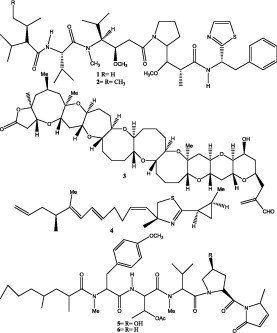
The true origins of compounds found in marine invertebrates have been a subject of discussion. They may vary from compound to another, but there are strong hints that dietary or symbiotic algae are one of the participants in the production of these metabolites. For example, as early as 1977, the blue–green algae, Lyngbya majusula was recognized as the source of aplysiatoxin found in the sea hares Aplysia that feed on this alga (Mynderse et al., 1997). Similarly, a series of highly active antitumor compounds, dollastatins 1 and 2, isolated from sea slugs are considered to be of blue–green algal origin (Shimizu, 2000). Also, eukaryotic algae and various dinoflagellate metabolites are found in shellfish and other invertebrates as toxins (Shimizu, 2000). Brevetoxins 3, ciguatoxins and dinophysistoxins are we-ll known examples of paralytic shellfish toxins (Hall and Strichartz, 1990).
1.1.1. Cyanophyta (blue–green algae or cyanobacteria)
The blue–green algae (cyanobacteria) show many structural features in common with bacteria (Garson, 1989). However, they are classified with algae because they contain chlorophyll a and related compounds. All prokaryotes convert atmospheric nitrogen into ammonia which may explain why nitrogenous compounds occur frequently in blue–green algae. The cyanobacteria possess an interesting secondary metabolism producing many nitrogenous compounds and cyclic polyethers that have potent biological activities (Moore and Entzeroth, 1988).
Morphologically, blue green algae appear in different shapes like filamentous, conical, unicellular, etc. Blue–green algae have very rich chemistry (Patters et al., 1994, Gerwick et al., 1994, Moore, 1996). The chemical diversity and novelty seen in blue–greens are comparable to those of Actino-mycetes which gave many important drugs. A single species of blue–greens produce many different chemotypes (Lyngbya majuscula is a good example). The variation in structures of the biologically isolated compounds from this filamentous algae is just incredible and most of them possess characteristic biological activity (Patters et al., 1994, Gerwick et al., 1994, Moore, 1996).
1.1.1.1. Anticancer and cytotoxic activities
Curacin A 4 isolated from the Curaso strain marine Cyanobacterium Lyngbya majuscula by Gerwick’s group in 1994. It is an important lead compound for a new type of anticancer drugs. It is an antimitotic agent (IC50 values in three cell line ranging from 7 to 200 nm) that inhibits microtubule assembly and binding of cholchicine to tubulin (Gerwick et al., 1994).
Two linear cytotoxic pentapeptides; majusculamide D 5 and deoxymajusuculamide D 6 were isolated from a deep-water variety of the marine blue–green alga Lyngby majuscula by and Entzeroth in 1988.
A highly interesting bioactive compounds have been isolated from blue–green algae including alkaloids (e.g. lyngbyatoxin) 7, polyketides (e.g. tolytoxin), cyclic peptide (e.g. microcystin), depsipeptide (e.g. majusculamide 8) etc. Many of these compounds showed a versatile biological activity (Shimizu, 2000). Cryptophycin-l 9 from Nostoc species shows a fungicidal activity and rediscovered by Smith’s group (Smith et al., 1994) as a microtubule depolymerizing agent. The compound and its analogues are very effective against solid tumors.
Lyngbyatoxin-A 7 identified in the blue green alga Lyngbya majuscula, the most thoroughly investigated from the biological point of view is responsible for a severe erythematous papulovesicular dermatitis (swimmer’s itch) Cardelina et al., 1979 Lyngbyatoxin and shows cytotoxicity against P388 leukemia, but also act as a co-carcinogen. It has been suggested that this substance may play a role in human stomach cancer among the Hawaiians who consume large quantities of edible seaweed on which Lyngbya majuscula grows epiphytically (Moore, 1982).
1.1.1.2. Tumor-promoting activity
Dihydroteleocidin B 10, which is a derivative of teleocidin B 11 from Streptomyces, showed potent tumor-promoting activity in vivo when painted on mouse skin. Although the chemical structure of 10 is entirely different from the phorbol esters, the tumor-promoting activity of 10 was comparable to that of 12-0-tetradecanoylphorbol 13-acetate (TPA) in vivo. Compounds 11, from Streptomyces, lyngbyatoxin A 12 and debromoaplysaxitoxin 13 isolated from the marine blue–green alga Lyngbya majuscula induced ornithine decarboxylase activity when painted on mouse skin, their effects being similar to those of 10 and TPA. 13-cis-Retinoic acid inhibited this ornithine decarboxylase induction when painted on the skin one hour before these natural products. Compounds 10, 11 and 13 produced adhesion of human promyelocytic leukemia cells (HL-60) to the flasks and inhibited differentiation of Friend erthroleukemia cells induced by DMSO. The in vitro biological potencies of 11 and 12 were almost as great as those of 10 and TPA, but that of debromoaplysiatoxin was much weaker (Fujiki et al., 1981).
1.1.1.3. Antibacterial activity
The γ-lactone malyngolide 14, an antibiotic effective against Mycobacterium smegmatis and Streptococcus pyogenes was isolated from the dichloromethane extract of a shallow-water variety of the blue–green alga Lyngbya majuscula (Cardllina et al., 1979).
The major antimicrobial constituents of Puerto Rican specimens of the blue green Lyngbya majuscula are the elemental sulphur and (−)-(4E,7S)-7 methoxytetradec-4-enoic acid 15 (Faulkner, 1987).
1.1.1.4. Antifungal activity
Majuscuiamide C 16 is a cyclic depsipeptide from the deep-water variety of Lyngby majuscula that inhibit the fungal plant pathogens (Carter et al., 1984).
1.1.1.5. Immunosuppressive activity
The potent immunosuppressive lipoproteins, microcolins A 17 and B 18 have been isolated from a Venezuelan sample of the blue green algae Lyngbya majuscula by Koehn et al. (1992). The microcolins are potent inhibitor of the murine mixed lymphocyte response and murine P388 leukemia in vitro (Koehn et al., 1992).

1.1.2. Pyrrhophyta (Dinoflagellates)
Dinoflagellates are unicellular organisms that are best classified as primitive algae (Garson, 1989). Massive concentrations of these organisms appear on the surface of the ocean, causing high mortality of the fish by asphyxia. Also large concentration of this algae in the sea give the water a brown to red coloration because of their pigmentation (Trease and Evanes, 1996). Certain dinoflagellate species produce toxin which when consumed by filter feeders, such as shellfish, are concentrated in the flesh of the animals. Consumption of contaminated shellfish by man can result in severe health problems including death. The toxins are usually classified into paralytic shellfish poisons or diarrhetic shellfish poisons. Despite of the toxicity of some species of dinoflagelates, some other species produced unique compounds not separated from other phyla most of them showed a very potent biological activity. Dinoflagelates lies taxonomically between prokaryotics and eukaryotics and sometimes called mesokaryotes (Dodge, 1965). This unique situation makes the organism very interesting to secondary metabolite production (Dodge, 1965).
The structural types of dinoflagellate metabolites spread widely from heterocyclic compounds, polycyclic ethers, oxygenated polyketides and macrolides (Shimizu, 1993, Yasumoto and Maurata, 1993). Many dinoflagellate metabolites show very potent biological activity such as saxitoxin 19, neosaxitoxin and gonyautoxins produced by Alexandrium and several other genera of dinoflagellates are highly selective sodium channel blockers (Hall and Strichartz, 1990). On the other hand, breve-toxins 3 produced by Gymnodinium breve are potent sodium channel activators. Another polycyclic ether, maitotoxin from Gambierdiscus toxicus, is a rare calcium channel activators (Yasumoto and Maurata, 1993).
A number of compounds are known to act on the signal transduction system in the cell. Okadaic acid 20 and its derivatives found in Prorocentrum species and Dinophysis species are very potent inhibitors of serine/threonine-specific protein phosphatase and 2A (Fujiki and Suganuma, 1993).
Kobayashi and Ishibashi (1993) reported that a symbiotic Amphidinium species from a flatworm contain a series of macrolides, amphidinolides most of them are very cytotoxic. They were also screened Amphidinium species From Caribbeans for antitumor agents, also isolated a series of compounds including amphidinolide B 21 reported by kobayashi’s group (Kobayashi and Ishibashi, 1993). The structure of amphidinolide B isomers as strongly cytotoxic macrolides produced by a free-swimming dinoflagellate, Amphidinum sp. was reported by Bauer group (Bauer et al., 1994). One of the compound carbenolide I 22 was extremely cytotoxic and active in vivo (Bauer et al., 1995).
Many of dinoflagellate metabolites have strong antifungal activity. Goniodomin A 23 from Goniodoma (Alexandrium) sp. is a strong antifungal agent isolated by Murakami et al. (1988).
A potent antifungal agent (gambieric acid 24) discovered by Yasumoto’s group Yasumoto and Maurata (1993) in the culture medium of Gambierdiscus toxicus.
The above data proved that the probability of finding bioactive compounds from dinoflagellates is very high.

1.1.3. Bacillariophyceae (diatoms)
Bacillariophyceae is a versatile and abundant family, which is probably the most important in the primary production in the oceans. Diatoms are fast growing and more easy to culture on a large scale. Unlike dinoflagellates, very few secondary metabolites have been reported from the diatoms (Shimizu, 2000).
Domic acid 25 has been isolated from Pseudonitzschia multiseries and other species; it is a harmful glutamate agonist which causes amnesic shellfish poising (Wright et al., 1989). It also produced a new type of cyclic eicosanoid bacillariolides 26, 27 (Wang and Shimizu, 1990, Wang et al., 1993). Bacillariolide I 26 has on inhibitory activity against phospholipase A2 (Shimizu, 1996).
1.2. Interesting natural products and their biological activities from macroalgae (seaweeds)
Marine macroalgae or seaweeds have been used as foods especially in China and Japan and crude drugs for treatment of many diseases such as iodine deficiency (goiter, Basedow’s disease and hyperthyroidism). Some seaweeds have also been used as a source of additional vitamins, treatment of various intestinal disorders, as vermifuges, and as hypocholesterolaemic and hypoglycemic agents. Seaweeds have been employed as dressings, ointments and in gynecology (Trease and Evanes, 1996).
Macroalgae can be classified into three classes; green algae (Chlorophyta), Brown algae (Phaeophyta) and red algae (Rhodophyta) (Garson, 1989).

1.2.1. Chlorophyta (green algae)
The characteristic green colour of green algae is mainly due to the presence of chlorophyl a and b in the same proportion like higher plants (Bold et al., 1985). There are few reports of novel secondary metabolites among the chlorophyta than the other algal division; the following are the most important natural products isolated from these algae and their biological activities.
1.2.1.1. Antiinflammatory substances
An anti-inflammatory, 3-0-β-d-glucopyranosy-lstigmasta-5,25-diene 28 have been isolated by Awad in (2000) from the green alga Ulva laetuea.
Habu is a deadly snake inhabit in Okinawa where 200–300 people are bitten by the snake every year. A patient must be given immediate medical treatment with the serum prepared from a horse-developed antibody by injection of snake toxin. However, about 20% of the patients are allergic to the serum.
In order to develop an alternative drug, Okinawa Prefectural Institute of Public Health has been conducting screening to find out a compound with antiinflammatory activity that can be measured by suppression of the inflammation caused by the injection of the toxin on a mouse limb. A diphenyl ether 29 isolated from an alga was found to be effective in this assay (Higa, 1989). The extract of the green alga Cladophora fascicularis was separated by different chromatographic methods to furnish 2-(2′,4′-dibromophenoxy)-4,6-dibromoanisol (Kuniyoshi et al., 1985), the first example of diphenyl ether from green algae. It was also active in inhibiting the growth of Escherichia coli, Bacillus subtilis and Staphylococcus aureus (Kuniyoshi et al., 1985).
1.2.1.2. Cytotoxic and immunosuppressive activities
Bioassy-guided fractionation utilizing the inhibitory activity against inosine-5′-monophos-phate dehydrogenase inhibitor (IMPDH) leads to isolation of new brominated diphenylmethane derivative. Isorawsonol 30 has been isolated from the tropical green alga Arrainvilla rawsonii by Chen et al. (1994). The activity of IMPDH has been linked with cellular proliferation and inhibition of that enzyme has been demonstrated to have anticancer and immunosuppressive effects (Chen et al., 1994).
Bioactivity-directed fractionation of the extract of the green alga Tydemania expeditionis using the protein tyrosine kinase pp60v-stc leads to the isolation of three new cycloartenol disulfates 31–33; they showed modest inhibition of this enzyme (Govindan et al., 1994).

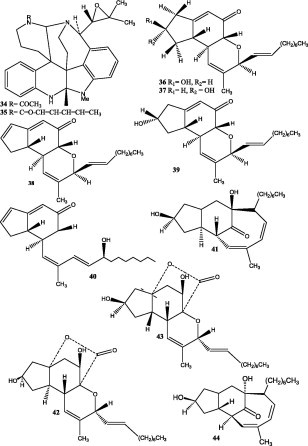
Communesins A 34 and B 35, exhibiting cytotoxic activity against the cultured P-388 lymphocytic leukemia cells, were isolated from the mycelium of a strain of Penicillium species stuck on the marine alga Enteromorpha intestinals (Numata et al., 1993).
Penostatins A 36, B 37, C 38, D 39 (Takahashi et al., 1996) and E 40 (Iwamoto et al., 1999) have been isolated from a strain of Penicillium species originally separated from the marine alga Enteromorpha intestinalis (Linne) Link (Ulvaceae). The compounds A–C and E exhibited a significant cytotoxicity against cultured P388 cell line (Iwamoto et al., 1999, Takahashi et al., 1996) Penostatins F,G,H 41–43 and I 44 were isolated from a strain of Penicillum originally separated from the marine alga Enteromorpha intestinalis (Linne) Link (Ulvaceae). All the compounds exhibit significant cytotoxicity against cultured P388 cells (Iwamoto et al., 1998).
The novel compounds cytochalasans, penochalasins A B,C 45–47 (Numata et al., 1996), D–H 48–52 and chaetoglobosin O 53 (Iwamoto et al., 2001) were isolated from a strain of Penicillium species originally separated from the marine alga Enteromorpha intestinalis. All these compounds exhibited potent cytotoxic activity against cultured P388 cells.
Halimedatrial 54 is a diterepene trialdhyde was separated from Halmida lamouroux (chlorophyta, Udoteaceae) species. This compound was found to be toxic towards reef fishes, significantly reduces feeding in herbivorous fishes and has cytotoxic and antimicrobial activities (Paul and Fenical, 1983).
Four new diterpenoid metabolites were isolated from several species of the green algae Halimeda (Udoteaceae). These new compounds show potent antimicrobial and cytotoxic properties in bioassays. Among these 4 compounds were halimediatrial 54 and halimedalactone 55 (Paul and Fenical, 1984).
The cyclic depsipeptide Kahalalide F 56 was originally isolated from both mollusc Elysia rufescenes and from the dietary source, the green alga Bryopsis sp. (Hamann and Scheuer, 1993) was introduced into Phase I trials by Pharma Mar as a lead compound against prostate cancer.


Green alga Bryopsis sp. was the source of the cyclic depsipeptides Kahalalides P 57 and Kahalalides Q 58 with moderate inhibition of the HL-60 cell lines (Dmitrenok et al., 2006).

1.2.1.3. Antibacterial activity
Cycloeudesmol 59 is an antibiotic cycloproane containing sesquiterpene; it was isolated from the marine alga Chondria oppositiclada Dawson (Fenical and Sims, 1974). Cycloeudesmol was found to be potent antibiotic against Staphylococcus aureus and Candida albicans.
Lyengaroside A 60 was isolated from the green alga Codium iyengarii and displayed a moderate antibacterial activity (Ali et al., 2002).
Geen algae extract of Caulerpa prolifera exhibited moderate to significant activity against unidentified strains of marine bacteria (Smyrniotopoulos, 2003).

1.2.1.4. Antiplasmodial activity
From the green alga Ulva species, the endophytic and obligate marine fungus Ascochyta salicorniae was isolated. Ascochyta salicorniae was found to produce the unprecedented and structurally unusual tetramiric acid contiguous metabolites ascosalipyrrolidinones A 61 and B 62. Ascosalipyrrolidinones A 61 has antiplasmodial activity toward Plasmodium falciarum strains Kl and NF 54, as well as showing antimicrobial activity and inhibiting tyrosine kinase p561ck (Osterhage et al., 2000).

1.2.1.5. Antiviral activity
Halitunal 63, is a novel diterpene aldehyde possessing a unique cyclopentadieno [c] pyran ring system; it has been isolated from the marine alga Halimeda tuna. Halitunal shows antiviral against murine coronavirus A59 in vitro (Koehn et al., 1991).
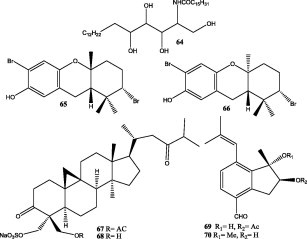
In 1992 Garg et al. (1992) isolated the antiviral derivative, sphingosin, N-palmitoyl-2-amino 1,3,4,5-tetyrahydroxyoctadecane 64 which demonstrated antiviral activity in vivo protection against Semeliki forest virus (SFV). This compound was isolated from Indian green alga Ulva fasciata.
1.2.1.6. Antimutagenic activity
Two new compounds, cymobarbatol 65 and 4-isocymobarbatol 66 were isolated from the marine green alga Cymopolia barbat. Both compounds were found to be nontoxic over a broad concentration range against Salmonella tybimurium strains T-98 and T-lOO. Both compounds exhibited strong inhibition of the mutagenicity of 2-aminoanthracene and ethylmethanesulphonate towards the T-98 strains plus a metabolic activator and T-100 (Wall et al., 1989).
1.2.1.7. Anti fungal activity
Capisterones A 67 and B 68 are triterpene sulphate esters isolated from green alga Panicillus capitatus. Both compounds exhibited potent antifungal activity against the marine algal pathogen Lindra thallasiae (Puglisi et al., 2004).
Two sesquiterpenes, caulerpals A 69 and B 70 were isolated from green alga Caulerpa taxifolia in addition to the known caulerpin (Aguilar-Santos, 1970); they were shown to be potent inhibitor of human protein tyrosine phosphatase 1 B (hPTP I B) Mao et al., 2006. Capisterones A and B, originally isolated from Penicillus capitatus (Garg et al., 1992), were re-isolated and absolute stereochemistry assigned using electronic CD. In addition, the capisterones have been shown to significantly enhance fluconazole activity in Saccharomyces cerevisiae (Li et al., 2006).
A new class of ether-linked glycoglycerolipids, nigricanosides A 71 and B 72 were isolated as methyl esters from the green alga Avrainvillea nigrans. Nigricanoside A dimethyl ester was found to be a potent antimitotic agent, acting by stimulating the polymerisation of tubulin and inhibiting the proliferation of both MCF-7 and HCT-116 cells (Williams et al., 2007).

1.2.1.8. Protein tyrosine phosphate 1B inhibitors (PTP1B)
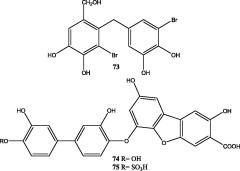
Hydroxyisoavrainvilleol 73 was originally isolated from the tropical green alga Avrainvillea nigrican (Colon et al., 1987) but has now been isolated from red alga Polysiphonia urceolata as a protein tyrosine phosphatase 1B inhibitor (PTP1B) Liu et al., 2008.
A vanillic acid biphenyl derivative 74 and the sulfate adduct 75 were isolated from the Australian green alga Cladophora socialis as a protein tyrosine phosphatase 1B (PTPa1B) inhibitors Feng et al., 2007.
1.2.2. Phaeophyta (brown algae)
The brown colour of these algae results from the dominace of the xanthophyll pigments and fucoxanthin; this masks the other pigments, chloro-phyll a and c, β-carotenes and other xanthophylls (Bold et al., 1985). Food reserves of brown algae are typically complex polysaccharides and higher alcohols. The principal carbohydrate reserve is laminarin. The cell walls are made of cellulose and alginic acid. Many bioactive metabolites have been isolated from brown algae with different pharmacological activities as shown below.
1.2.2.1. Cytotoxic and antitumor activity
A linear cytotoxic diterpene bifurcadiol 76 was isolated from the brown alga Bifurcaria bifurcata by Guardia et al. (1999) which exhibit cytotoxicity against cultured human tumor cell lines (A-549, SK-OV-3, SKL-2, XF 498 and HCT).
Meroterpenoids, Sargol, Sargol-I and sargol-ll 77–79 were isolated from the brown alga sargassum tortile and showed a cytoxic activity (Numata et al., 1991).

Leptosins A, B, C (I, X = 4, 3, 2 80), D, E and F (II, X = 2, 3, 4 81), belonging to a series of epipolythiodioxopiperazine derivatives, have been isolated from the mycelium of a strain of Leptsphaeria species attached to marine alga Sargassum tortile. All these compounds showed potent cytotoxicity against cultured P388 cells except leptosins A and C exhibited significant antitumor activity against Sarcoma 180 ascites (Takahashi et al., 1994a). Further investigation of the secondary metabolites of this fungus has led to the isolation of four additional cytotoxic compounds, named leptosins G, G1, G2 82–84 and H 85 (Takahashi et al., 1995a). Leptosins K, K1 86–87 and K2 88 were also isolated and showed a potent cytotoxic activity against P388 cell line (Takahashi et al., 1995b).

Leptosins I 89 and J 90 have been also isolated from the mycelium of a strain of Leptosphaeria species OUPS-4 attached to the marine alga Sargassum tortile. These compounds exhibited significant cytotoxic activity against cultured P388 cells (Takahashi et al., 1994b).
Leptosins M, MI, N and N1 91–94 that have been isolated from a strain of Leptsphaeria species were originally separated from the marine alga Sargassum tortile. All these compounds exhibited significant cytotoxicity against cultured P388 cells. In addition, leptosin M proved to exhibit significant cytotoxicity against human cancer cell lines, and to inhibit specifically two protein kinases, PTK and CaMKIII, and human topoisomerase II (Yamada et al., 2002).
Three cytotoxic diterpenes Dictyotins A, B and C 95–97 were isolated from brown alga Dictyota dichotoma by Wu et al. (1990).
Dolabellane type of diterpene 98 have been isolated from unidentified species of Dictyota exhibit significant cytotoxicity (Tringali et al., 1984).
A cytotoxic compound named as turbinaric acid 99 was isolated from Turbinaria ornate (Asari et al., 1989).

Four diterpene with xenicane and norxenicane 100–103 have been isolated from another species of Dityota dichotoma from Okinawa Island. In addition, showed antitumor activity.
24-Ethyl cholesta-4,24(28)-diene 3-one 104, 24-ethylcholesta-4,28(29)-diene-3-one 105, 24-ethylcholesta-4,24(2 8)-diene-3,6-di one 106, 24-β-hydroperoxy-24-ethylcho lesta-4,28 (29)-diene-3, 6-dione 107, 6-hydroxy-24-ethylcholesta-4,24(28)-diene-3-one 108, 24-hydroperoxy-6-β-hydroxy-24-ethylcholesta-4,28(29)-diene-3-one. 109 were isolated from the brown alga Turbinaria conoides. These oxygenated fucosterols exhibited cytotoxicity against various cancer cell lines (Sheu et al., 1999) including P-388, KB, A-549 and HT-29 cell lines.

Four arsenic-containing ribofuranosides 110–113 together with inorganic arsenic have been isolated from the brown alga Hizikia fusiforme which is eaten in Japan under the name hijiki (Edmonds et al., 1987).
Stypolactone 114, a diterpenoid of mixed biogenesis has been isolated from the brown algae Stypopdium zonale and showed weak cytotoxic activity in vitro against the A-549 and H-116 cell lines (Dorta et al., 2002a).
Four hydroazulene diterpenes, dictyone acetate 115, dictyol F monoacetate 116, isodictytriol monoacetate 117 and cystoseirol monoacetate 118 were isolated from the brown alga Cystoseira myrica collected in the Gulf of Suez canal showed a moderate cytotoxicity against the murine cancer cell line KA3IT, but reduced cytotoxicity against normal NIH3T3 (Ayyad et al., 2003).

Sterols B 119 isolated from Stypopdium carpophyllum exhibited cytotoxic activity against several cultured cancer cell lines (Tang et al., 2002a).
Two cytotoxic trihydroxylated diterpenes based on 12-hydroxygeranylgeraniol 120–121 were isolated from brown alga Bifurcaria bifurcate (Gulioli et al., 2004).

The tropical brown alga Styolpopdium zonale collected from the coast of Tenerife was the source of terpenoid C 122; the methyl ester of C exhibited in vitro cytotoxic activity against HT-29, H-116 and A-549 (Dorta et al., 2002b).

The brown alga Taonia atomaria was a source of meroditerpenes atomarianones A 123 and B 124, the cytotoxic agents against the NSCLC-N6 and A-549 cell lines (Abatis et al., 2005).

(+)-Yahazunol 125 (Ochi et al., 1979) and cyckozonarone 126 (Kurata et al., 1996) were showed cytotoxic activity against several human tumor cell lines, while zonarol 127, zonarone 128 and isozonarol 129 (Fenical et al., 1973) isolated from brown alga also displayed cytotoxicity against various human tumour cell lines (Laube et al., 2005).

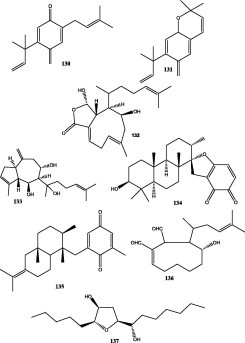
Brown alga Perithalia capillaris yielded new bis-prenylated quinones 130, 131, both are inhibitors of superoxide production in human neutrophils in vitro and of proliferation of HL-60 cells (Blackman et al., 1979).
Two diterpenes, 4,18-dihydroxydictyolactone 132 and 8α,11 dihydroxypachydictyol A 133, were isolated from a Dictyota sp. (Jongaramru, 2007). In bioassays, 4,18-dihydroxydictyolactone was strongly cytotoxic (NCI-H187) (Jongaramru, 2007).
1.2.2.2. Ichthyotoxins and feeding-deterrent substances from brown alga
Stypoldione 134 was isolated from the brown alga Stypodium zonale which showed an ichthyotoxins effect. When fresh S. zonala is placed in an aquarium, water soon turns to a rust colour and rendered extremely toxic to the reef-dwelling herbivorous dam selfish Eupomcentrus leucostictus. The fish immediately senses the toxins and attempts to jump out of the aquarium. This behavior is followed by erratic response to external stimuli, apparently difficulty in obtaining oxygen, loss of equilibrium, narcosis and eventually death. The toxic symptoms were then proved to be due to stypoldione isolated from S. zonale (Gerwick et al., 1979). Stypoquinonic acid 135 was isolated from the lipophilic extract of the same alga (Wessels et al., 1999) and showed inhibition of tyrosine kinase p56lck enzyme. Tyrosine kinase inhibitory activity was determined by ELISA using a commercial test kit (Wessels et al., 1999).
Brown alga Dictyota spinulosa appeared not to be eaten by herbivores so that its constituent was examined by Tanaka and Higa (1984) and they isolated a new diterepene, hydroxydictyodial 136 as a major component among several other related compounds. Hydroxydictyodial has also been isolated from Dictyota crenulata (Kirkup and Moore, 1983).
1.2.2.3. Nematocidal activity
Chemical analysis of the brown alga Notheia anomala collected from the rock platforms along the southern coast of Australia yielded cis dihydroxyte-trahydrofuran 137 derivatives. Tetrahydrofuran from Notheia anomala are reported for the first time as potent and selective inhibitor of the larval developments of parasitic nematodes Haemonchus contortus and Trichostrongylus colubriformis (Capon et al., 1998).
1.2.2.4. Antifungal activity
A meroditerpenoid has been isolated from the brown alga Cystoseira tamariscifolia and characterized as methoxybifurcarenone 138. It possesses antifungal activity against three tomato pathogenic fungi and antibacterial activity against Agrobacterium tumefaciens and Escherichia coli (Bennamara et al., 1999).
A 1,4-napthaquinone derivative (deoxy lapachol) 139, from a New Zealand brown alga Landsburgia quercifolia was isolated by the bioactivity-directed isolation method. It showed activity against P388 leukemic cells (IC50 0.6 μg/ml) and was also antifungal (Perry et al., 1991).
An antifungal compound named as (+)-zonarol 140 was isolated from the brown alga Dictyopteris zonaroides by Fenical et al. (1973).
Lobophorolide 141 was isolated from the common brown alga Lobophora variegate and displayed a potent and highly specific activity against the marine filamentous fungi Dendroyphiella salina and Lindra thalassiae and a potent activity against C. albicans and antineoplastic (Kubanek et al., 2003).

1.2.2.5. Antiinflammatory activity
Two new antiinflammtory macrolides, lopophorins A 142 and B 143 have been isolated from the fermented broths of a marine bacterium isolated from the surface of the Caribbean brown alga Lobophora variegata (Dictyotales). The new compounds are distantly related to antibiotics of Kijanimicin class and are potent inhibitors of tropical PMA-induced edema in the mouse ear assay when administered either topically or IP (Jiang et al., 1999).

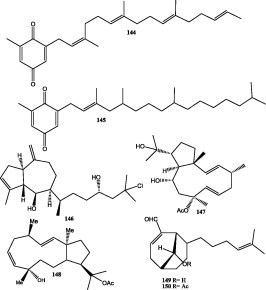
(Z)-Sargaquinone 144, the more saturated analogue 145, and the known sargaquinone (Ishitsuka et al., 1979) were isolated from the brown alga Taonia atomaria and were anti-inflammatory agents by inhibition of leukotriene biosynthesis (Tziveleka et al., 2005).
1.2.2.6. Algicidal activity
A chlorine-containing perhydroazulene diterpene, dictyol J 146, was isolated from the brown alga Dictyota dichotoma along with two known diterpenes, dictyolactone (Finer et al., 1979) and sanadaol (Ishitsuka et al., 1982). All three metabolites were algicidal to the bloom-forming species Heterosigma akashiwo and Karenia mikimotoi. Dictyolactone also displayed a moderate activity against the dinoflagellate Alexandrium catenella.
1.2.2.7. Hepatoprotective activity
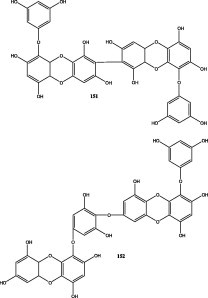
Phloroglucinol (Cross et al., 1907) and phloroglucinol derivatives eckstolonol, (Kang et al., 2003) eckol, phlorofucofuroeckol A (Fukuyama et al., 1990) and dieckol (Fukuyama et al., 1983) were isolated from the brown alga Ecklonia stolonifera as hepatoprotective agents (Kim et al., 2005).
1.2.2.8. Antiviral activity
A new dollabelladiene derivative 147 and the previously isolated 10,18-diacetoxy – 8-hydroxy 2,6-dollabeladiene 148 (Ireland and Faulknar, 1977) were characterized from the brown alga Dictyota pfaffi (Barbosa et al., 2004). Both compounds showed strong anti-HSV-1 activity in vitro but little inhibition of HIV-1 reverse transcriptase.
The diterpenes (6R)-6-hydroxy dichototomo 3,14-diene-1,17-dial 149, and the 6-acetate derivative 150, from the brown alga D. menstrualis (Pereira et al., 2004) exhibited antiretroviral activity in vitro.
The phlorotannin derivatives 8,8′-bieckol 151 (Fukuyama et al., 1989) and 8,4″-bieckol 152 from the brown alga Ecklonia cava, are inhibitors of HIV-1 reverse transcriptase (RT) and protease. Both compounds inhibited the RT more potently than the protease and the inhibitory activity of 8,8′-bieckol against HIV-I was comparable to that of a reference compound nevirapine.
1.2.2.9. Protection against herbivous animals
Dolabellane 1 153, originally isolated from the opistobranch mollusc Dolabella californica (Ireland and Faulknar, 1977) has been characterized as the major secondary metabolite and active chemical defence against herbivores (sea urchins and fish) in the brown alga Dictyota pfaffi (Barbosa et al., 2003).

1.2.2.10. Free radical scavenger and antioxidant activities
Several prenyl toluquinones were isolated from the brown alga Cystoseira crinita. Compounds 154–161 exhibited potent radical-scavenging effects while 162 and 163 were less active (Fisch et al., 2003).
The Brown alga Ecklonia stolonifera collected from S. Korea yielded a new phlorotannin, eckstolonol 164 which possessed a potent DEPP radical-scavenging activity (Kang et al., 2003).

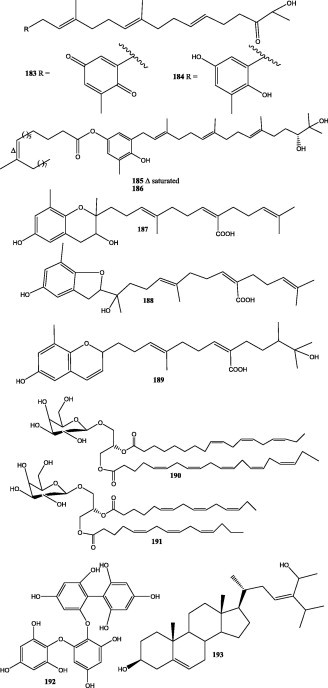
The sargachromanols A–P (compounds 165–180, meroterpenoids of the chromene class, were isolated from the brown alga Sargassum siliquastrum. All the isolated compounds exhibited significant activity in the DPPH assay while compounds 171 and 179 were also inhibitors of butyl choline esterase (Jang et al., 2005). The known plastiquinones (181 and 182) were isolated from brown alga S. micracanthum. Compound 181 displayed significant antioxidant activity while in contrast, 182 was potentely active against human cytomegalo virus (HCMV) in vitro (Iwashima et al., 2005). S. micracanthum (brown alga) was the source of strongly antioxidant plastoquinones 183–186, while compounds 184–186 showed antiproliferative effects against 26-L5 cells (Mori et al., 2005).

The tetraprenyltoluquinols, thunbergols 187 and B 188, were isolated from the brown alga Sargassum thunbergii and were scavengers of the DPPH radical and of ONOO from morpholino-sydnonimine (SIN-I) (Seo et al., 2006).
Brown alga Sargassum thunbergii afforded a novel chromene, sargothunbergol A 189, as a free radical scavenger (DPPH assay) (Seo et al., 2007). Two monogalactosyl diacylglycerols 190 and 191 were isolated from S. thunbergii (Kim et al., 2007). Fucodiphlorethol G 192, a tetrameric phlorotannin, was isolated from Ecklonia cava, and was a strong radical scavenger (DPPH assay) (Ham et al., 2007).
The known compounds taondiol (Gonzalez et al., 1971) isoepitaondiol (Rovirosa et al., 1992) stypodiol, (Gerwick and Fenical, 1981), stypoldione (Gerwick et al., 1979) and sargaol (Numata et al., 1992), isolated from brown alga Taonia atomaria exhibited free radical-scavenging activity (DPPH and chemiluminescence tests) (Nahas et al., 2007).
1.2.2.11. Anti-diabetic activity
In vivo testing fucosterol which was isolated from the brown alga Pelvetia siliquosa demonstrated that it is the main antidiabetic priciciple from Pelvetia siliquosa (Lee et al., 2004).
1.2.2.12. Antihypertensive activity
Some known phlorotannins isolated from the brown alga Ecklonia stolonifera, namely eckol (Fukuyama et al., 1983), phlorofucofuroeckol A (Fukuyama et al., 1990) and dieckol (Fukuyama et al., 1983) were shown to have marked inhibitory activity against angiotensin-converting enzyme (ACE) (Jung et al., 2006).
1.2.2.13. Morphological abnormality in the plant pathogen
Stypopdium carpophyllum from South China Sea was the source of two new bioactive sterols A 193 and B 119. These sterols induced morphological abnormality in the plant pathogenic fungus Pyricularia oryzae (Tang et al., 2002a).
1.2.2.14. Antifeedent activity
Two diterpenoids with a novel skeleton, dictyterepenoids A 194 and B 195 were isolated from the brown algae Dilophus okamurae displayed antifeedent activity against young abalone (Suzuki et al., 2002). 10,18-diacetoxy-8-hydroxy 2,6-dollabeladiene 148 (Ireland and Faulknar, 1977) was the antifeedent compound of brown alga D. pfaffi against the sea urchin Lytechinus variegates and generalist fishes (Barbosa et al., 2004).

1.2.2.15. Gamete-releasing, gamete-attracting and sperm-attractants pheromone from brown algae
Most of algae form some sort of spore, which is a cell that is often motile and serves to reproduce the organism. Algae also have sex, often a very simple kind of sex where the algae themselves act as gametes, but sometimes very complicated with egg and sperm-like cells.
(+)-Caudoxirene 196 is a new gamete-releasing and gamete-attracting pheromone isolated from brown alga Perithalia cudata (Muller et al., 1988). Giffordene 197 is another gamete-attractant of brown algae Giffordia (Hink sia mitchellae) (Boland et al., 1987) The female gametes of Chorda tomentosa secrete a mixture of multifidene 198, 3-butyl 4-vinylcyc!opentene 199, ectocarpene 200 and (−)-dictyopterene C 201 that triggers and explosive discharges of spermatozide from ripe antheridia prior to chemotaxis (Maier et al., 1984). Two sperm-attractants of Cystophora siiiquosa and Hormosira hanksii were identified as cystophorene 202 and hormosirene 203 (Muller et al., 1985).

1.2.3. Rhodophyta (red algae)
The red colour of these algae results from the dominace of the pigments phycoerythrin and phycothcyanin; this mask the other pigments, chlorophyll a (no chlorophyll b), β-carotene and a number of unique xanthophylls (Bold et al., 1985). The walls are made of cellulose, agars and carrgeenans. Several red algae are eaten, amongst these is dulse (Palmaria palmate) and carrageen moss (Chondrus crispus and Mastocarpus stellatus). However, “Nori” popularized by the Japanese is the single most valuable marine crop grown by aquaculture with a value in excess of 1US billion $.
The red algae kappaphycus and Betaphycus are now the most important sources of carrageenan, a commonly used ingredient in food, particularly yogurt, chocolate milk and prepared puddings. Gracilaria, Gelidium, Pterocladia and other red algae are used in manufacture of the all-important agar, used widely as a growth medium for microorganisms and biotechnological applications.
There are about 8000 species of red algae, most of which are of marine source. These are found in the intertidal and in subtidal to depths of up to 40, or occasionally, 250 m. Red algae are considered as the most important source of many biologically active metabolites in comparison to the other algal class.
1.2.3.1. Cytotoxic activity
Halmon 204 is a polyhalogenated monoterpene isolated from the red alga Portieria hornemanii is considered as a novel in vitro antitumor agent by National Cancer institute (NCl). The NCI Decision Network Committee selected halmon as a pre-clinical drug for development (Fuller et al., 1992, Fuller et al., 1994). Ten halogenated monoterpenes 205–214 related to the novel antitumor compound halomon 204 or to the carbocyclic analog (Fuller et al., 1992) have been isolated from different geographic collections of the red alga. These compounds were comparatively evaluated alongside compounds 204 and 210 in the US National Cancer Institute’s in vitro human cancer cell line screening panel. The results insights into structure/activity relationships in this series as follows: Compounds 204–207 exhibited similar cytotoxicity to that reported earlier for 204 (Fuller et al., 1992). These results suggested that halogen at C7 was not essential to the activity. In contrast, compound 211 was relatively weekly cytotoxic and the minimally differential activity showed no significant correlation to that of 204, indicating that a halogen at C6 was essential for the characteristic activity of 204–207. halogen at C2 was required for halomone like activity. Carbocyclic compounds like 208 and 215 were considerably less cytotoxic than 204–207. Compound 209 was more comparable to the overall (panel-averaged) potency to halomon. However, there was little differential response of the cell lines, and consequently no significant correlation to the profile of 204.

The polyhalogenated monoterpene content of six samples of the tropical marine red alga Plocamium hamatum, 216–226 collected from the southern, central and northern regions of The Great barrier Reef, Australia was assessed. The Biological activities of compounds 217–223 and 226 were assessed and indicated that compounds 219 and 221 have moderate Cytotoxic activity (Koing et al., 1999).
The invention of Laurinterol (LOEL) 227 which was isolated from Laurencia okamurai is considered as invention for the prevention and inhibition of melanoma (Moon-Moo et al., 2009) LOEL can effectively inhibit the growth of melanoma cells by inducing apoptosis therein without adverse effect as in synthetic medicines. Thus, LOEL exhibited a dose-dependent inhibitory effect on the growth of melanoma cells as it was observed that cells are treated with LOEL at 10 μg/ml and the growth of melanoma cells by was inhibited 50%. Addition of 1 μg/ml of LEOL exerted 30% inhibition on the growth of melanoma cells in the presence of fetal bovine serum (FBS) (Moon-Moo et al., 2009).
2-Acetoxy-15-bromo-6,17-dihydroxy3-palmitoyl-neoparguera-4(19), 9(11)-diene 228, a novel seco-parguerane skeletone have been isolated from the red alga laurencia obtuse from Okinawa and showed a cytotoxic activity (Cortes et al., 1990).

Two new cyclic ethers consisting of squalene carbon skeleton, teurilene 229 and thyrsiferyl 23-acetate 230, have been isolated from the red alga Laurencia obtuse (Suzuki et al., 1985). Thysiferyl 23-acetate 230 (bromo ether) showed remarkabaly cytotoxic property (EDso of 0.3 μg/ml) against P388 in vitro cell line.

Five new cytotoxic triterpenes: triterpenoids 28-anhydrothyrsiferyl diacetate [15,28-didehydro-15-deoxythyrsiferyl] diacetate 231, l5-anhy-drothyrsiferyl diacetate [15,16-didehydro-l5-deoxy-thyrisferyl] diacetate 232, magireol-A 233, magireol B 234 and magireol C 235 were isolated from Japanese red alga Laurencia obtuse (Suzuki et al., 1987).
Several cyclic monoterpenes 237–245 have been isolated from the Japanese red alga Desmia hornemanni, and some chemical modification have been done on these compounds to get the most active one for cytotoxic activity (Higa, 1985). Compound 236 exhibited relatively high activity against P388, A-549 lung carcinoma, and HCT-8 human colon adenocarcinoma.
Okianwa red alga Laurencia yonaguniensi was the source of neoirietetraol 246 a brominated diterpene based on the rare neoirieane skeleton was toxic to brine shrimp and was also active against marine bacteria Alcaligenes aquamarinus and E. coli (Takahashi et al., 2002).
Furoplocamioid C 247, perfuroplocamioid 248, pirene 249 and tetrachlorinated cyclohexane 250 from the red alga Plocumium carttilagineum (Argandona et al., 2002) exhibited selective cytotoxicity against human tumour cell lines with pirene showing a specific and irreversible effect on SW480 cells (de Ines et al., 2004).


Five sulfur-containing polybromoindoles 251–255 were isolated from the red alga Laurenda brongniartii, of which 254 and 255 were active against P388 cells and 254 against HT-29 cells (El Gamal et al., 2005). The cuparene sesquiterpenes 256–258, isolated from red alga L. microcladia were cytotoxic against the NSCLC-N6 and A-549 cancer cell lines (Kladia et al., 2005).
Plocaralides B 259 and C 260 isolated from Ploeamium species (Steierle et al., 1979, Higgs et al., 1977) and Aplysia ealiforniea (Ireland et al., 1976) displayed moderate activity against the human oesophageal cancer cell line WHCOI (Knott et al., 2005).
Red alga Callophyeus serratus was the source of three antibacterial and antifungal diterpene-benzoate compounds, bromophycolides A 261 and B 262, and a non-halogenated compound 263. Bromophycolide A 261 was cytotoxic against several human tumour cell lines by specific induction of apoptosis (Kubanek et al., 2005).
The alkaloids 2,7 naphthyridine lophocladines A 264 and B 265 were isolated from the red alga Lophocladia sp. Lophocladine A displayed affinity to N-methyl-d-aspartate (NMDA) receptors and was also a δ-opioid receptor antagonist, while lophocladine B 265 was moderately active against NCI-H460 human lung tumour and MDA-MB-435 breast cancer cell lines and shown to be an inhibitor of microtubules (Gross et al., 2006).

Three halogenated monoterpenes 266–268 were isolated from the red alga Portiera hornemannii along with the known compound halomon (Fuller et al., 1992). Both halomon 204 and 268 were moderate inhibitors of DNA methyl transferase-1 (Andrianasolo et al., 2006).
Bromophycolides C-I 269–275 are diterpene-benzoate macrolides isolated from the red alga Callophycus serratus with modest activity against a range of human tumor cell lines (Kubanek et al., 2006).

The red alga Laurencia obtuse was a source of sesquiterpenes 3,7-dihydroxydihydrolaurene 276, perforenol B 277 and 278, while L. microcladia yielded a dimeric sesquiterpene 279. Compounds 276–278 were tested against five human tumour cell lines and the Chinese hamster ovary (CHO) cell line. Perforenol B 277 exhibited strong activity while sesquiterpenes 276 and 278 exhibited weak activity. The sesquiterpene 279 was moderately cytotoxic against NSCLC-N6 and A-549 lung cancer cell lines (Kladi et al., 2006). The red alga Rhodomela confervoides was the source of four bromophenols 280–283. They exhibited moderate cytotoxicity against several human cancer cell lines (Ma et al., 2006).

The red alga Gracilaria asiatica was the source of three cyclopropyl derivatives, the cerebroside gracilarioside 284 and the ceramides gracilamides A 285 and B 286 which were mildly cytotoxic to the human A375-S2 melanoma cell line (Sun et al., 2006).
Four somewhat air-unstable halogenated monoterpene aldehydes 287–290 were characterised from red alga Plocamium corallorhiza of which 287 was significantly cytotoxic against an esophageal cell line (Mann et al., 2007).
Three sesquiterpenes, aplysin-9-ene 291, epiaplysinol 292 and debromoepiaplysinol 293, were isolated from red alga Laurencia tristicha. Debromo-epiaplysinol 293 displayed selective cytotoxicity to the HeLa cell line (Sun et al., 2007).
Diterpenes neorogioldiol B 294 and prevezol B 295 isolated from the red alga Laurencia obtusa displayed significant cytotoxicity against the human tumour cell lines MCF-7, PC3, HeLa, A431 and K562, while prevezol C 296 exhibited significant cytotoxicity against HeLa and A431 cell lines. Prevezol D 297 was moderately active against all cell lines (IIopoulou et al., 2003).

Two new polyether squalene derivatives, thyresenol A and B 299, 300 have been isolated from Laurencia viridis together with the previously isolated dehydrothyrsiferol. 298 (Norte et al., 1997, Pec et al., 2003). All these compounds showed a potent cytotoxic activity against P388 cell lines. The marine polyether triterpenoid dehydrothyrsiferol 298, originally isolated from the red alga Laurencia pinnatifida was shown to induce apoptosis in esterogen-dependent and independent breast cancer cells (Norte et al., 1997, Pec et al., 2003).

1.2.3.2. Antiviral activity
Sulquinovosyldiacylglycerol, KM043 301, a new sulfolipid KM043, which belongs to the 6-sulf-μ-d-quinovopyranosyl-(l → 3′)-1′,2′-diacylgly-cerol (SQDG) class of compounds has been isolated from the marine red algae Gigartina tenella (Ohata et al., 1998) as a potent inhibitor of eukaryotic DNA and HIV-l reverse transcriptase type 1. The inhibition was dose-dependent, and complete (more than 90%) inhibition of DNA polymerase μ (pol. μ), DNA polymerase μ (pol. μ) and HIV-reverse transcriptase type 1 (HIV-RT) was observed at concentrations 5, 10 and 30 μM, respectively.

2,3,6-Tribromo 4,5-dihydroxybenzyl methyl ether (Park et al., 1999) isolated from the red alga Symphyocladia latiuscula was active against wild type HSV-l, as well as APr HSV-I and TK-HSV-l and significantly delayed the appearance of lesions in infected mice without toxicity (Park et al., 2005).
The invasive species Caulerpa racemosa was the source of know sulfoquinovosyldiacylglycerol, previously isolated from a terrestrial plant (Amarquaye et al., 1994) and from the marine brown alga Ishige okamurai (Tang et al., 2002b), and displayed selective antiviral activity against Herpes simplex virus 2 (HSV-2) Wang et al., 2007.
Venustatriol 302, thyrsiferol 303 and thyrsiferyl 23-acetate 304 were isolated from the red alga Laurencia venusta and all displayed significant antiviral activity against Vesicular stomatitis virus (VSV) and Herps simplex virus type 1 (HSV-l) Sakemi et al., 1986.

During a survey of marine organisms for anti HIV RTs activities (reverse transcriptases of human immunodeficiency virus), two new sesquiterpene hydroquinone, peyssonol A 305 and B 306 have been isolated from the active anti HIV RTs extracts Red Sea alga Peyssonnelia species (Talpir et al., 1994).

1.2.3.3. Anthelmintic activity
Chondriamide C 307, a new bis (indole) amide and 3-indolacrylamide 308 have been isolated from the red algae Chondria atropurpurea and showed anthelmintic activity against Nippostrongylus brasiliensis (Davyt et al., 1998).

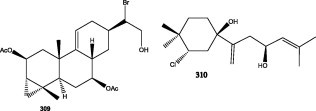
Brominated diterpenes of the parguerene and isoparguerene series were isolated from the red alga Jania rubens including the novel deoxyparguerol-7-acetate 309. All the isolated diterpenes had anthelmintic activity (Awad, 2004).
The red alga Laurencia scoparia was a source of halogenated β-bisabolene sesquiterpenes 310 (Awad, 2004, Davyt et al., 2006). It showed weak in vitro anthelmintic activity against Nippostrongylus brasiliensis (Davyt et al., 2006).
1.2.3.4. Antiinflammatory activity
Chemical investigation of the marine red alga Ceratodictyon spongiosum containing the symbiotic sponge Sigmadocia symbiotica collected from Indonesia, afforded two isomers of a new bioactive thiazole-containing cyclic heptapeptide: cis, cis-Ceratospongamide 311 and trans, trans-ceratospongamide 312 (Tan et al., 2000). Isolation of these peptides was assisted by bioassay-guided fractionation using a brine shrimp toxicity assay. trans, trans-ceratospongamide exhibits potent inhibition to sPLA2 expression in a cell-based model for antiinflammation (ED50 32 nM), whereas the cis, cis isomer is inactive. trans, trans-ceratospongamide was also shown to inhibit the expression of a human-sPLA2 (secreted phospholipase A2) promotor-based reporter by 90%. The degree of anti-inflammatory activity of compounds 311 and 312 was measured as the inhibition of secreted phospholipase A2 by hepatocellular carcinoma cells stimulated with 1L-1β. The tans, trans form is a potent inhibitor of sPLA2 expression with EDso 32 μM. Both compounds showed only moderate potency in the brine shrimp toxicity assay.
The anti-inflammatory bromophenolic metabolites named vidalols A 313 and B 314 were isolated from the Caribbean red alga Vidalia obtusaloba that acts through the inhibition of phospholipase enzyme (Wiemer et al., 1991). The new compounds were discovered as part of an organized effort to isolate new naturally occurring anti-inflammatory agents with a focus upon those which may function through inhibition of phosolipase A2.

1.2.3.5. Free radical scavenger activity
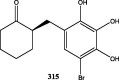
(2R)-2-(2,3,6-tribromo – 4,5-dihydroxybenzyl) cyclohexanone 315 was isolated from the red alga Symphyocladia latiussula whish has a free radical scavenger activity. The Antioxidant activity was expressed in terms of IC50 [μg/ml or μM required to inhibit l,1-dipheny l-2-picrylhydrazyl radical, (DPPH), formation by 50%] and calculated (Choi et al., 2000).
Three bromophenols 316–318 and the previously reported 1,2-bis (3-bromo-4,5-dihydroxyphenyl ethane (Kurata et al., 1976) were isolated from the red alga Polysiphonia urceolata. All compounds were potent DPPH radical scavengers (Li et al., 2007).

Five known bromophenols, bis (2,3,6-tribromo-4,5-dihydroxyphenyl) methane (Wang et al., 2005), bis (2,3,6-tribromo-4,5-dihydroxybenzyl) ether (Kurata and Amiya, 1980), 2,3,6-tribromo-4,5-dihydroxybenzyl methyl ether (Kim et al., 2002), 2,3,6-tribromo-4,5-dihydroxymethylbenzene (Li et al., 2007) and 2,3,6-tribromo-4,5-dihydroxybenzaldehyde (Kurata and Amiya, 1980) were co-isolated and were also potent free radical scavengers (Duan et al., 2007).
1.2.3.6. Neurophysiological activity
The amino acid (α-alkokainic acid 319 isolated from the red alga Digenea simplex showed a potent neurophysiological activity in mammals (Biscoe et al., 1975, Ferkany and Coyle, 1983). 5-Iodo-5′-deoxy-tubercidin 320 was isolated from the red alga Hypnea valendiae which causes pronounced relaxation of muscles and hypothermia in mice and it blocks polysynaptic and monosynaptic reflexes. This compound is one of the most interesting algal metabolites which is discovered by using a bioassay-directed isolation procedure (Kazlauskas et al., 1983).

1.2.3.7. Insecticidal activity
The insecticidal and acaricidal polyhalogenated monoterpenes 321–324 have been isolated from Chilean specimens of the red alga Plocamium cartilagineum. The insecticidal activity of these compounds proved to be effective against the Aster leafhopper (San-Martin et al., 1991). Laurepinacine 325 and isolaurepinnacin 326 are acetylinic sesquiterpene ethers isolated from the red alga Laurancia pinnata that demonstrated isecticidal activity (Fukuzawa and Masamune, 1981). (Z)-Laureatin 327, (Z)-isolaureatin 328 and deoxyprepacifenol 329 are other related compounds from the red alga Laurencia nipponica Yamada. They show strong isecticidal activity against the mosquito larvae Culex pipens pallens (Watanabe et al., 1989, El Sayed et al., 1997). Telfairine 330 is another related monoterepene reported from the red alga Plocamium telfairia, with strong insecticidal activity against the mosquito larvae Culex pipens pal/ens (Watanabe et al., 1988).
The new insecticidal amino acids namely, isodomic acid A 331, isodomic acid B 332 and isodomic acid C 333 were isolated from the red alga Chondria arnata. They show significant insecticidal activity when they are injected subcutanously into the abdomen of American cockroach (Maeda et al., 1986).
Laurencia obtuse, collected from off Symi Island in the Greece, Aegean Sea was the source of C15 acetogenins 13-epilaurencienyne (3Z) 334, 13-epinnatifidenyne (3E) 335 and two diaceto-xypentadec-3-en-1-yne derivatives (336–337). Compounds 334 and 335 exhibited strong toxicity against ants with considerable knockdown effect from the first day, while compounds 335 and 336 exhibited gradual toxicity that was escalated at the fourth day with >70% mortality (IIopulou et al., 2002).

1.2.3.8. Antimicrobial activity
The antimicrobial activity of the red alga Laurencia brongniarti against Bacillus subtilis (a gram positive bacteria) and Saccharomyces cerevisiae (yeast) has been traced to the four polybrominated indoles 338–341 (Carter et al., 1978).
From the air dried red alga Beckerella subcostatum, bromobeckerelide 342 epimer (the major fraction) and chlorobeckerelide 343 epimers (the minor fraction) were isolated. In lab tests, both compounds showed activity against Bacillus subtilis (Ohta, 1977).
From the MeOH extract of’ Marginisporum aberrans, showing antimicrobial activity against Bacillus subtilis, P-hydroxybenzaldhyde, dichloro-acetamide, and 3,5-dinitriguaiacol were obtained. All these compounds showed activity against Bacillus subtilis (Ohta and Takagi, 1977).
Elatol 344, a halogenated sesquiterepene alcohol from the red alga L. elata (Sims, 1974) inhibited six species of human pathogenic bacteria with significant antibacterial activities against Staphylococcus epidermis, Klebsiella pneumonia and Salmonella sp. (Vairappan, 2003). Iso-obtusol 345 from the red alga L. obtusa (Gonzalez et al., 1976, Gonzalez et al., 1979) exhibited antibacterial activity against four bacterial species with significant activity against K. pneumonia and Salmonella sp.
Halogenated metabolites from the red alga Laurencia species were tested for antibacterial activity against 22 strains of human pathogenic bacteria, including seven strains of antibiotic–resistant bacteria. Laurinterol 346 (Irie et al., 1966), isolaurinterol 347 (Irie et al., 1970), allo-laurinterol 348 (Kazlauskas et al., 1976), cupalaurenol 349 (Ichiba and Higa, 1986) and 2,3,5,6-tetrbromoindol 350 (Carter et al., 1978) displayed a wide spectrum of antibacterial activity against gram positive bacteria including methicillin-resistant Staphylococcus aureus, penicillin-resistant Streptococus pneumonia and vancomycin-resistant Enterococcus faecalis and E. faecium. Laurinterol and allo-laurinterol were particularly effective (Vairappan et al., 2004).

The red alga Laurencia mariannensis afforded a number of new metabolites: the brominated diterpene, 10-hydroxykahukuene B 351, two sesquiterpenes, 9-deoxyelatol 352 and isoda-ctyloxene A 353, one brominated C15-acetogenin, laurenmariallene 354, and two new naturally occurring halogenated sesquiterpenes 355 and 356 that were obtained previously as intermediates in a biomimetic synthetic study of rhodolaureol and rhodolauradiol (Gonzalez et al., 1982). Both 10-hydroxykahukuene B 351 and laurenmariallene 354 had modest antibacterial activity.
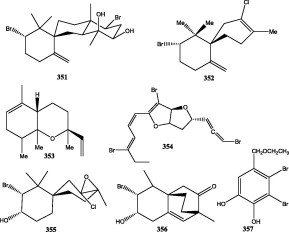
Lanosol enol ether 357, originally isolated from the brown alga Fucus vesiculosus has been shown to be an antibacterial and antifungal component of the brown alga Osmundaria serrata (Barreto and Meyer, 2006).
Eight novel diterpenebenzoic acids, callophycoic acids A–H 358–365, and two halogenated diterpene-phenols, callophycols A 366 and B 367, were isolated from red alga Callophycus serratus some of which displayed moderate antibacterial, anti-malarial, antitumour and antifungal activity (Lane et al., 2007).
Five new C15 eight-membered cyclic ethers (368, 370–373) (Kladi et al., 2008) with a characteristic terminal cis eneyne moiety in addition to the previously reported acetylenic chloro diol 369 (Blunt et al., 1981) were isolated from the red alga Laurencia glandulifera. All these metabolites were tested for their antistaphylococcal activity and the minimum inhibitory concentration (MICs) of 369–372 were in the range of 8–256 μg/ml.


1.2.3.9. Lipooxygenase inhibitor
The eicosanoids are biologically active arachidonic acid derivatives frequently found in marine organisms. Ptilodene 374 (new fatty acid) is an eicosanoid from the red alga Ptilotafilicina sp. that showed inhibitory activity to human 5-lipooxygenase, dog kidney Na+/K+ ATPase and the growth of several pathogenic gram positive and negative bacteria (Lopez and Gerwick, 1988). Another eicosanoid derivatives which is a potent inhibitor of platelet aggregation is 12-(S)-hydroxyeicosapentaenoic acid 375 isolated from the red alga Murrayella periclados (Bernari and Gerwick, 1994).
Three biologically active eicosanoids, (12R, 13R)-dihydroxy-eicsa-5(Z),8(Z),10(E), 14(Z) tetraeonic acid 376, (12R,13R)-dihydroxy eicosa-5(Z),8(Z), 10(E),14(Z),17(Z)-pentaenoic acid 377 and (10R,11R)-dihydroxyoctadeca-6(Z), 8(E), 12(Z) trienoic acid 378 were isolated from the red alga Farlowia mollis (Solem et al., 1989).

1.2.3.10. Antifeedent activity
Two phenylpropanoic acid derivatives, tichocarpols A 379 and B 380 were isolated from the red alga Tichocarpus crinitus. These two compounds along with floridoside 381 (Roh et al., 1994) which is also isolated from the alga, exhibited antifeedant activity against the sea urchin Strongylocentrotus intermedius (Ishii et al., 2004).
1.2.3.11. Aldose reductase inhibitors activity
The new bromophenols 382–384 and two bromophenols known previously only as synthetic compounds (Diers et al., 2004, Nishizawa and Satoh, 1975, Lightowler and Ry1ance, 1964) isolated from the red alga Symphyocladia latiuseula have significant aldose reductase inhibitors (Wang et al., 2005).

1.2.3.12. Antimalarial activity
Snyderol sesquiterpene 385 derivative isolated from the red alga Laurencia obtusa was active against D6 and W2 clones of the malarial parasite Plasmodium falciparum (Topeu et al., 2003).
1.2.3.13. Anti-elastase activity against porcine pancreas elastase (PEE)
3,6-Diketo steroid 386 was isolated from the red alga Hypnea musciformis collected on the Atlantic Coast of Morocco exhibited anti-elastase activity against porcine pancreas elastase (PEE) (Gosavi et al., 1995).
1.2.3.14. Inhbition of isocitrate lyase enzyme
A number of bromophenols isolated from the red alga Odonthalia corymbifera exhibited potent inhibitory activity against isocitrate lyase, an important enzyme in the rice fungal pathogen, Magnaporthe grisea.
The compounds 3,5-dibromo-4-hydroxyphe-nylethylamine (Diers et al., 2004) 2,20,3,30-tetrabromo-4,40,5,50-tetrahydroxydiphenylmethane (Craigie and Gruenig, 1967), 2,3-dibromo-4,5-dihydroxybenzyl alcohol (Hodgkin et al., 1966), 2,3-dibromo-4,5-dihydroxybenzyl methyl ether (Katsui et al., 1967), 2,20,3-tribromo-30,4,40,5-tetrahydroxy-60-hydroxyme-thyldiphenylmethane (Kurata and Amiya, 1977) and 3-bromo-4-(2,3-dibromo-4,5-dihydroxybenzyl)-5-methoxyme-thylpyrocatechol also protected rice plants from infection by Magnaporthe grisea (Lee et al., 2007). This was the first report of 3,5-dibromo-4-hydroxyphenyle-thylamine as a natural product (Lee et al., 2007).
References
- Abatis D., Vigias C., Galanakis D., Norris J.N., Moreau D., Roussakis C., Rousis V. Atomarianones A and B: two cytotoxic meroditerpenes from the brown alga Taonia atomaria. Tetrahedron Lett. 2005;46:8525–8529. [Google Scholar]
- Aguilar-Santos G. Caulerpin, a new red pigment from green algae of the genus Caulerpa. J. Chem. Soc. C. 1970:842–843. doi: 10.1039/j39700000842. [DOI] [PubMed] [Google Scholar]
- Ali M.S., Saleem M., Yammdagni R., Ali M.A. Steroid and antibacterial glycosides from marine green alga Codium iyengarii Borgesen. Nat. Prod. Lett. 2002;16:407–413. doi: 10.1080/10575630290034249. [DOI] [PubMed] [Google Scholar]
- Amarquaye A., Che C.T., Bejar E., Malone M.H., Fong H.H. A new glycolipid from Byrsonima crassifolia. Planta Med. 1994;60:85–86. doi: 10.1055/s-2006-959415. [DOI] [PubMed] [Google Scholar]
- Andrianasolo E.H., France D., Cornell-Kennon S., Gerwick W.H. DNA methyl transferase inhibiting halogenated monoterpenes from the Madagascar red marine alga Portieria hornemannii. J. Nat. Prod. 2006;69:576–579. doi: 10.1021/np0503956. [DOI] [PubMed] [Google Scholar]
- Argandona V.H., Rovirosa J., San-Martin A., Riquelme A., Diaz-Marrero A.R., Cueto M., Darias J., Santana O., Guadano A., Gonzalez-Coloma A. Antifeedant effects of marine halogenated monoterpenes. J. Agric. Food Chem. 2002;50:7029–7033. doi: 10.1021/jf025857p. [DOI] [PubMed] [Google Scholar]
- Asari F., Kusumi T., Kakisawa H. Turbinaric acid, a cytotoxic secosqualene carboxylic acid from the brown alga Turbinaria ornate. J. Nat. Prod. 1989;52:1167–1169. doi: 10.1021/np50065a045. [DOI] [PubMed] [Google Scholar]
- Awad N.E. Biologically active steroid from the green alga Ulva lactuca. Phytother Res. 2000;14:641–643. doi: 10.1002/1099-1573(200012)14:8<641::aid-ptr668>3.0.co;2-r. [DOI] [PubMed] [Google Scholar]
- Awad N.E. Bioactive brominated diterpenes from the marine red alga Jania Rubens (L.) Lamx. Phytother Res. 2004;18:275–279. doi: 10.1002/ptr.1273. [DOI] [PubMed] [Google Scholar]
- Ayyad S.-E.N., Abdel-Halim O.B., Shier W.T., Hoye T.R. Cytotoxic hydroazulene diterpenes from the brown alga Cystoseira myrica. Z. Natuforsch. C. Biosci. 2003;58:33–38. doi: 10.1515/znc-2003-1-205. [DOI] [PubMed] [Google Scholar]
- Barbosa J.P., Teixeira V.L., Villca R., Pereira R.C., Abrantes J.L., da Paixao Frugulhetti I.C.P. A dolabellane diterpene from the Brazilian brown alga Dictyota pfaffii. J. Biochem. Syst. Ecol. 2003;31:1451–1453. [Google Scholar]
- Barbosa J.P., Pereira R.C., Abrantes J.L., dos Santos C.C.C., Rebello M.A., Frugulhetti I.C.P.P., Teixeira V.L. In vitro antiviral diterpenes from the Brazilian brown alga Dictyota pfaffii. Planta Med. 2004;70:856–860. doi: 10.1055/s-2004-827235. [DOI] [PubMed] [Google Scholar]
- Barreto M., Meyer J.J.M. Isolation and antimicrobial activity of a lanosol derivative from Osmundaria serrata (Rhodophyta) and a visual exploration of its biofilm covering. S. Afr. J. Bot. 2006;72:521–528. [Google Scholar]
- Bauer I., Maranda L., Shimizu Y., Peters R.W., Cornell L., Steiner J.R., Clardy J. The structure of amphidinolide B isomers: strongly cytotoxic macrolides produced by a free-swimming dinoflagellate, Amphidinium sp. J. Am. Chem. Soc. 1994;116:2657–2658. [Google Scholar]
- Bauer I., Maranda L., Young K.A., Shimizu Y., Fairchild C., Comell L., MacBeth J., Huang S. Isolation and structure of caribenolide I, a highly potent antitumor macrolide from a cultured free-swimming Caribbean Dinoflagellate Amphidinium sp. J. Org. Chem. 1995;60:1084–1086. [Google Scholar]
- Bennamara A., Abourrichi A., Berrada M., Charrouf M’hamed, Chaib N., Boudouma M., Garneau X.F. Methoxybifurcarenone: an antifungal and antibacterial meroditerpenoid from the brown alga Cystoseira tamariscifolia. Phytochemistry. 1999;52:37–40. doi: 10.1016/s0031-9422(99)00040-0. [DOI] [PubMed] [Google Scholar]
- Bernari Matthew W., Gerwick William H. Eicosanoids from the tropical red alga Murrayella periclados. Phytochemistry. 1994;36:1233–1240. [Google Scholar]
- Biscoe T.J., Evans R.H., Headley P.M., Martin M., Watkins J.C. Domic and quisqualic acids as potent amino acids excitants of frog and rat spinal neurons. Nature. 1975;255:166–167. doi: 10.1038/255166a0. [DOI] [PubMed] [Google Scholar]
- Blackman A.J., Dragar C., Wells R.J. A new phenol from the brown alga Perithalia caudata containing a “reverse” isoprene unit at the 4-position. J. Aust. J. Chem. 1979;32:2783–2786. [Google Scholar]
- Blunt J.W., Lake R.J., Munro M.H.G., Yorke S.C. A new vinyl acetylene from the red alga Laurencia thyrsifera. Aust. J. Chem. 1981;34:2393–2400. [Google Scholar]
- Boland W., Jaenicke L., Muller D.G., Gassmann G. Giffordene, 2Z, 4Z, 6E, 8Z-undecatetraene, is the odoriferous principle of the marine brown alga Giffordia mitchellae. Experientia. 1987;43:466–468. [Google Scholar]
- Bold, H.C., Wynne, M.J., 1985. Introduction to the algae structure and reproduction, second ed., Prentice-Hall Inc., Englewood Cliffs, NJ, 07632, pp. 1–33.
- Capon R.I., Barrow R.A., Rochfort S., Jobling M., Skene C., Larcey E., Gill I.H., Friedel T., Wadsworth D. Marine Nematodes: Tetrahydrofuran from a southern Australian brown alga, Notheia Anomala. Tetrahdron. 1998;54:2227–2242. [Google Scholar]
- Cardelina I.H., Marner E.I., Moore R.E. Seaweed dermatitis: structure of lyngbyatoxin. Science. 1979;4:193–197. doi: 10.1126/science.107586. [DOI] [PubMed] [Google Scholar]
- Cardllina I.I., Moore R.E., Arnold E.V., Clardy I. Structure and absolute configuration of malyngolide, an antibiotic from the marine blue–green alga Lyngbya majuscula Gomont. J. Org. Chem. 1979;44:4039–4042. [Google Scholar]
- Carter G.T., Rinehart, Li L.H., Kuentzel S.L. Brominated indoles from Laurencia Brongniartii. Tetrahedron Lett. 1978;19:4479–4482. [Google Scholar]
- Carter D.C., Moore R.E., Mynderse J.S., Niemczura W.P., Todd J.S. Structure of majusculamide C a cyclic depsipeptide from Lyngbya majuscule. J. Org. Chem. 1984;49:236–241. [Google Scholar]
- Chen I.L., Gerwick W.H., Schatzman R., Laney M. Isorawsonol and related IMO dehydrogenase inhibitors from the tropical alga Avrainvillea rawsoni. J. Nat. Prod. 1994;57:947–952. doi: 10.1021/np50109a011. [DOI] [PubMed] [Google Scholar]
- Choi J.S., Park H.J., Jung H.A., Chung H.Y., Jung J.H., Choi W.C. A cyclohexanonyl bromophenol from the red alga Symphyocladia latiuscula. J. Nat. Prod. 2000;63:1705–1706. doi: 10.1021/np0002278. [DOI] [PubMed] [Google Scholar]
- Colon M., Guevara P., Gerwick W.H., Ballantine D. 5′-Hydroxyisoavrainvilleol, a new diphenylmethane derivative from the tropical green alga Avrainvillea nigricans. J. Nat. Prod. 1987;50:368–374. doi: 10.1021/np50051a005. [DOI] [PubMed] [Google Scholar]
- Cortes D., Yolanda T.M., D’Ocon M.P., Linz C.M., Care A., Hadi A., Hamid A. Norstephalagine Et Atherospermidine, Deux Aporphines D’ Artabotrys Maingayi Relxantes Du Muscle Lisse. J. Nat. Prod. 1990;53:503–508. doi: 10.1021/np50068a039. [DOI] [PubMed] [Google Scholar]
- Craigie J.S., Gruenig D.E. Bromophenols from red algae. Science. 1967;157:1058–1059. doi: 10.1126/science.157.3792.1058. [DOI] [PubMed] [Google Scholar]
- Cross C.F., Bevan E.J., Briggs J.F. Lignone-phloroglucid formation without a color reaction. Chem.-Ztg. 1907;31:725–727. [Google Scholar]
- Davyt D., Entz W., Fernandez R., Mariezcurrena R., Mombru A.W., Saldana I., Dominguez L., Coil J., Manta E. A new indol derivative from the red alga chondra atropurpurea isolation, structure determination, and anthelmintic activity. J. Nat. Prod. 1998;61:1560–1563. doi: 10.1021/np980114c. [DOI] [PubMed] [Google Scholar]
- Davyt D., Fernandez R., Suescun L., Mombrú A.W., Saldaña J., Domínguez L., Fujii M.T., Manta E. Bisabolanes from the red alga Laurencia scoparia. J. Nat. Prod. 2006;69:1113–1116. doi: 10.1021/np060235+. [DOI] [PubMed] [Google Scholar]
- de Ines C., Argandona V.H., Rivirosa J., San-Martin A., Diaz-Marrero A.R., Cueto M., Gonzalez-Coloma A. Cytotoxic activity of halogenated monoterpenes from Plocamium cartilagineum. Z. Naturforsch C. Biosci. 2004;59:339–344. doi: 10.1515/znc-2004-5-609. [DOI] [PubMed] [Google Scholar]
- Diers J.A., Pennaka H.K., Peng J., Bowling J.J., Duke S.O., Hamann M.T. Structural activity relationship studies of zebra mussel antifouling and antimicrobial agents from verongid sponges. J. Nat. Prod. 2004;67:2117–2120. doi: 10.1021/np040097t. [DOI] [PMC free article] [PubMed] [Google Scholar]
- Dmitrenok A., Iwashita T., Nakajima T., Sakamoto B., Namikoshi M., Nagai H. New cyclic desipeptides from the green alga species; application of a carboxypeptidase hydrolysis reaction to the structure determination. Tetrahedron. 2006;62:1301–1308. [Google Scholar]
- Dodge I.D. Chromosome structure in the dinoflagellates and the problem of the mesocaryotic cell. Prog. Protozool. 1965;2:264–266. [Google Scholar]
- Dorta E., Cueto M., Diaz-Marrero A.R., Darias J. Stypolactone an interesting diterpenoid from the brown alga Stypopodium zonale. Tetrahedron Lett. 2002;65:9043–9046. [Google Scholar]
- Dorta E., Cueto M., Bito I., Darias J. New terpenoids from the brown alga Stypopodium zonale. J. Nat. Prod. 2002;65:1727–1730. doi: 10.1021/np020090g. [DOI] [PubMed] [Google Scholar]
- Duan X.-J., Li X.-M., Wang B.-G. Highly brominated mono-and bis-phenols from the marine red alga Symphyocladia latiuscula with radical-scavenging activity. J. Nat. Prod. 2007;70:1210–1213. doi: 10.1021/np070061b. [DOI] [PubMed] [Google Scholar]
- Edmonds S.l., Morita M., Shibata Y. Isolation and identification of Arsenic containing ribfurnaoside and inorganic Arsenic from Japanes edible seaweed Hizikia fusiforme. J. Chem. Soc. Perkin. Trans. I. 1987:577–580. [Google Scholar]
- El Gamal A.A., Wang W.-L., Duh C.-Y. Sulfur-containing polybromoindoles from the Formosan red alga Laurencia brongniartii. J. Nat. Prod. 2005;68:815–817. doi: 10.1021/np058001y. [DOI] [PubMed] [Google Scholar]
- El Sayed K.A., Dunbar D.C., Perry T.L., Wilkins S.P., Hamann M.T. Marine natural products as prototype insecticidal agents. J. Agric. Food Chem. 1997;45:2735–2739. doi: 10.1021/jf0207880. [DOI] [PMC free article] [PubMed] [Google Scholar]
- Faulkner D.J. Marine natural products. Nat. Prod. Rep. 1984;1:251–280. [Google Scholar]
- Faulkner D.J. Marine natural products. Nat. Prod. Rep. 1984;1:551–598. [Google Scholar]
- Faulkner D.J. Marine natural products. Nat. Prod. Rep. 1986;3:1–33. doi: 10.1039/np9860300001. [DOI] [PubMed] [Google Scholar]
- Faulkner D.J. Marine natural products. Nat. Prod. Rep. 1987;4:539–576. doi: 10.1039/np9870400539. [DOI] [PubMed] [Google Scholar]
- Faulkner D.J. Marine natural products. Nat. Prod. Rep. 1988;5:613–663. doi: 10.1039/np9880500613. [DOI] [PubMed] [Google Scholar]
- Faulkner D.J. Marine natural products. Nat. Prod. Rep. 1990;7:269–309. doi: 10.1039/np9900700269. [DOI] [PubMed] [Google Scholar]
- Faulkner D.J. Marine natural products. Nat. Prod. Rep. 1992;9:323–364. [Google Scholar]
- Faulkner D.J. Marine natural products. Nat. Prod. Rep. 1993;10:497–539. doi: 10.1039/np9931000497. [DOI] [PubMed] [Google Scholar]
- Faulkner D.J. Marine natural products. Nat. Prod. Rep. 1994;11:355–394. doi: 10.1039/np9941100355. [DOI] [PubMed] [Google Scholar]
- Faulkner D.J. Marine natural products. Nat. Prod. Rep. 1995;12:223–269. doi: 10.1039/np9900700269. [DOI] [PubMed] [Google Scholar]
- Faulkner D.J. Marine natural products. Nat. Prod. Rep. 1996;13:75–125. doi: 10.1039/np9961300075. [DOI] [PubMed] [Google Scholar]
- Faulkner D.J. Marine natural products. Nat. Prod. Rep. 1997;14:259–302. [Google Scholar]
- Faulkner D.J. Marine natural products. Nat. Prod. Rep. 1998;15:113–158. doi: 10.1039/a815113y. [DOI] [PubMed] [Google Scholar]
- Faulkner D.J. Marine natural products. Nat. Prod. Rep. 1999;16:33–43. [Google Scholar]
- Faulkner D.J. Marine natural products. Nat. Prod. Rep. 2000;17:7–55. doi: 10.1039/a809395d. [DOI] [PubMed] [Google Scholar]
- Faulkner D.J. Marine natural products. Nat. Prod. Rep. 2001;18:1–49. doi: 10.1039/b006897g. [DOI] [PubMed] [Google Scholar]
- Faulkner D.J. Marine natural products. Nat. Prod. Rep. 2002;19:1–48. doi: 10.1039/b009029h. [DOI] [PubMed] [Google Scholar]
- Faulkner, D.J., 1991. Marine natural products. Nat. Prod. Rep., 8, 97–147. [DOI] [PubMed]
- Feng Y., Carroll A.R., Addepalli R., Fechner G.A., Avery V.M., Quinn R.J. Vanillic acid derivatives from the green algae Cladophora socialis as potent protein tyrosine phosphatase 1B inhibitors. J. Nat. Prod. 2007;70:1790–1792. doi: 10.1021/np070225o. [DOI] [PubMed] [Google Scholar]
- Fenical W., Sims J.J. Cycloeudesmol, an antibiotic cyclopropane conatinnin sequiterpene from the marine alga, Chondria oppositiclada Dawson. Tetrahedron Lett. 1974;13:1137–1140. [Google Scholar]
- Fenical W., Sims J.J., Squatrito D., Wing R.M., Radlick P. Marine natural products, VII Zonarol and isozonarol, fungitoxic hydroquinones from the brown seaweeds Dictyopteris zonarioides. J. Org. Chem. 1973;38:2383–2386. doi: 10.1021/jo00953a022. [DOI] [PubMed] [Google Scholar]
- Ferkany J.W., Coyle J.T. Kainic acid selectively stimulates the release of endogenous excitatory acidic amino acids. J. Pharmacol. Exp. Therapeut. 1983;225:399–406. [PubMed] [Google Scholar]
- Finer I., Clardy I., Fenical W., Minale L., Riecio R., Battaile I., Kirkup M., Moore R.E. Structures of dictyodial and dictyolactone, unusual marine diterpenoids. J. Org. Chem. 1979;44:2044–2047. [Google Scholar]
- Fisch K.M., Bohm V., Wrightand A.D., Konig G.M. Antioxidative meroterpenoids from the brown alga Cystoseira crinita. J. Nat. Prod. 2003;66:968–975. doi: 10.1021/np030082f. [DOI] [PubMed] [Google Scholar]
- Fujiki H., Suganuma M. Tumor promotion by inhibitors of protein phosphatases 1 and 2A: the okadaic acid class of compounds. Adv. Cancer Res. 1993;61:143–194. doi: 10.1016/s0065-230x(08)60958-6. [DOI] [PubMed] [Google Scholar]
- Fujiki H., Mori M., Nakayasu M., Terada M., Sugimura T., Moore R.E. Indole alkaloides: dihydroteleocidine B, eeleocidin, and lyngbyatoxin A as memmbers of a new class of tumor promoters. Proc. Nat. Acad. Sci. USA. 1981;78:3872. doi: 10.1073/pnas.78.6.3872. [DOI] [PMC free article] [PubMed] [Google Scholar]
- Fukuyama Y., Miura I., Kinzyo Z., Nakayama Y., Takahashi M., Kido, Tennen M. Anti-plasmine inhibitors, polyhydroxydibenzo-P-dioxins isolated from Ecklonia kurome Okamura. Yuki Kogobutsu Tornokai Koen Yoshishu. 1983;26:126–133. [Google Scholar]
- Fukuyama Y., Kodaama M., Miura I., Kinzyo Z., Mori H., Nakayama Y., Takahashi M. Anti-plasmin inhibitor V. Structures of novel dimeric eckols isolated from the brown alga Ecklonia kurome Okamura. Chem. Pharm. Bull. 1989;37:2438–2440. doi: 10.1248/cpb.37.2438. [DOI] [PubMed] [Google Scholar]
- Fukuyama Y., Kodama M., Miura I., Kinzyo Z., Kido M., Mori H., Nakayama Y., Takahashi M. Anti-plasmin inhibitor. VI. Structure of phlorofucofuroeckol A, a novel phlorotannin with both dibenzo-1, 4-dioxin and dibenzofuran elements, from Ecklonia kurome Okamura. Chem. Pharm. Bull. 1990;38:133–135. doi: 10.1248/cpb.38.133. [DOI] [PubMed] [Google Scholar]
- Fukuzawa A., Masamune T. Laurepinnacin and isolaurepinnacin: new acetylenic cyclic ethers from the marine alga Laurencia pinnata Yamada. Tetrahedron Lett. 1981;22:4081–4084. [Google Scholar]
- Fuller R.W., Cardellina J.H., Kato Y., Brinen L.S., Clardy J., Sander K.M., Boyad M.R. A pentahalogenated monoterepene frm the red alga Portieria hornemannii produced a novel cytotoxicity profile against a diverse panel of human tumor celllin. J. Med. Chem. 1992;35:3007–3011. doi: 10.1021/jm00094a012. [DOI] [PubMed] [Google Scholar]
- Fuller R.W., Cardellina J.H., Jurek J., Scheuer P.J., Alvarado-Linder B., McGuier M., Gray G.N., Steiner I.R., Clardy I., Menez E., Shoemaker R.H., Newman D.I., Sander K.M., Boyad M.R. Isolation and structure/activity features of halomon-related antitumor monoterpenes from the red alga Portieria hornemannii. J. Med. Chem. 1994;37:4407–4411. doi: 10.1021/jm00051a019. [DOI] [PubMed] [Google Scholar]
- Garg H.S., Sharma M., Bhakuni D.S., Pramanik B.N., Bose A.K. An antiviral sphingosine derivative from the green alga Ulva fasciata. Tetrahedron Lett. 1992;33:1641–1644. [Google Scholar]
- Garson J. Marine natural products. Nat. Prod. Rep. 1989;6:143–170. [Google Scholar]
- Gerwick W.H., Fenical W. Ichthyotoxic and cytotoxic metabolites of the tropical brown alga Stypopodium zonale (Lamouroux) Papenfuss. J. Org. Chem. 1981;46:22–27. [Google Scholar]
- Gerwick, W.H., Fenical, W., Fritsch, N., Clardy, J., 1979. Stypotriol and stypoldione; ichthyotoxins of mixed biogenesis from the marine alga Stypodium zonale. Tetrahedron Lett. 145–148.
- Gerwick W.H., Roberts M.A., Proteau P.J., Chen J.L. Screening cultured marine microalgae for anticancer-type activity. J. Appl. Phycol. 1994;6:143–149. [Google Scholar]
- Gerwick W.H., Proteau P.J., Nagle D.G., Hamel E., Blokhin A., Slate D.L. Structure of curacin A, a novel antimitotic, antiproliferative, and brine shrimp toxic natural products from the marine Cyanobacterium Lyngbya majuscula. J. Org. Chem. 1994;59:1243–1245. [Google Scholar]
- Gonzalez A.G., Darias J., Martin J.D. Taondiol a new component from Taonia atomaria. Tetrahedron Lett. 1971;12:2729–2732. [Google Scholar]
- Gonzalez A.G., Darias J., Diaz A., Fournero J.D., Martin J.D., Perez C. Evidence for the biogenesis of halogenated chamigrenes from the red alga Laurencia obtuse. Tetrahedron Lett. 1976;17(35):3051–3054. [Google Scholar]
- Gonzalez A.G., Delgado M.J., Martin V.S., Martinez-Ripoll M., Fayos J. X-ray study of sesquiterpene constituents of the alga L. obtusa leads to structure revision. Tetrahedron Lett. 1979;29:2717–2718. [Google Scholar]
- Gonzalez A.G., Martin J.D., Martıin V.S., Norte M., Perez R. Biomimetic approach to the synthesis of rhodolaureol and rhodolauradiol. Tetrahedron Lett. 1982;23:2395–2398. [Google Scholar]
- Gosavi K., Babu J.M., Mathur H.H., Bhadbhade M. Isolation and X-ray structure of a new 3, 6-diketo steroid from red alga Hypnea musciformis. Chem. Lett. 1995;7:519–520. [Google Scholar]
- Govindan M., Abbas S.A., Schmitz E.I., Lee R.H., Papkoff I.S., Slate D.L. New cycloartanol sulfates from the alga Tydemania expeditionis: inhibitor of the protein tyrosin kinase pp60. J. Nat. Prod. 1994;57:74–78. doi: 10.1021/np50103a010. [DOI] [PubMed] [Google Scholar]
- Gross H., Goeger D.E., Hills P., Mooberry S.L., Ballantine D.L., Murray T.F., Valeriote F.A., Gerwick W.H. Lophocladines, bioactive alkaloids from the red alga Lophocladia sp. J. Nat. Prod. 2006;69:640–644. doi: 10.1021/np050519e. [DOI] [PMC free article] [PubMed] [Google Scholar]
- Guardia S.D., Valls R., Mesguiche V., Brunei J.-M., Gulioli G. Enantioselective synthesis of (−)-bifuracadiol: a natural antitumor marine product. Tetrahedron Lett. 1999;40:8359–8360. [Google Scholar]
- Gulioli G., Oratalo-Magne A., Daoudi M., Thomas Guyon H., Vallis R., Piovetti L. Trihydroxylated linear diterpenes from the brown alga Bifurcaria bifurcata. Phytochemistry. 2004;65:2063–2069. doi: 10.1016/j.phytochem.2004.03.014. [DOI] [PubMed] [Google Scholar]
- Hall, S., Strichartz, O. (Eds.), 1990. Marine Toxins American Chemical Society, Washington D.C.
- Ham Y.M., Baik J.S., Hyun J.W., Lee N.H. Isolation of a new phlorotannin, fucodiphlorethol G, from a brown alga Ecklonia cava. Bull. Korean Chem. Soc. 2007;28:1595–1597. [Google Scholar]
- Hamann M.T., Scheuer P.J. Kahalalide F: a bioactive depsipeptide from the sacoglossan mollusk Elysia rufescens and the green alga Bryopsis sp. J. Am. Chem. Soc. 1993;115:5825–5826. [Google Scholar]
- Higa T. 2-(1-Chloro-2-hydroxyethyl)-4, 4-dimethylcy-clohexa-2, 5-dienone, precursor of 4, 5-dimethylbenzo[b] furan from red alga Desmia hornemanni. Tetrahedron Lett. 1985;26:2335–2336. [Google Scholar]
- Higa, T., 1989. Bioactive metabolites from marine organisms of Okinawa waters in studies in natural products chemistry, vol. 5 structure elucidation (Part B). In: Attaur-Rahman (Ed.), Publisher Elsevier, Amsterdam, Oxford, New York, Tokyo, p. 341.
- Higgs M.D., Vanderah D.J., Faulknar D.J. Polyhalogenated monoterpenes from Plocamium cartilagineum from the British coast. Tetrahedron. 1977;33:2775–2780. [Google Scholar]
- Hillison, C.I., 1977. Seaweeds, a color-coded, illustrated guide to common marine 1977. Plants of east coast of the United States, Keystone Books. The Pennsylvania State University Press, pp. 1–5.
- Hodgkin J.H., Craigie J.S., McInnes A.G. The occurrence of 2, 3-dibromobenzyl alcohol dipotassium salt in Polysiphonia lanosa. Can. J. Chem. 1966;44:74–78. [Google Scholar]
- Ichiba T., Higa T. New cuparene-derived sesquiterpenes with unprecedented oxygenation pattern from the sea hare Aplysia dactylomela. J. Org. Chem. 1986;51:3364–3366. [Google Scholar]
- IIopoulou D., Mihopoulos N., Vigias C., Papazafiri P., Roussis V. Novel cytotoxic brominated diterpenes from the red alga Laurencia obtuse. J. Org. Chem. 2003;68:7667–7674. doi: 10.1021/jo0342323. [DOI] [PubMed] [Google Scholar]
- IIopulou D., Vagias C., Harvala C., Roussis V. C15 Acetogenins from the red alga Laurencia obtuse. Phytochemistry. 2002;59:111–116. doi: 10.1016/s0031-9422(01)00407-1. [DOI] [PubMed] [Google Scholar]
- Ireland C., Faulknar D.J. Diterpenes from Dolabella californica. J. Org. Chem. 1977;42:3157–3162. doi: 10.1021/jo00439a010. [DOI] [PubMed] [Google Scholar]
- Ireland C., Stallar M.O., Faulknar D.J., Finer J., Clardy J. Some chemical constituents of the digestive gland of the sea hare Aplysia californica. J. Org. Chem. 1976;41:2461–2465. doi: 10.1021/jo00876a024. [DOI] [PubMed] [Google Scholar]
- Irie, T., Suzuki, M., Kurosawa, E., Masamune, T., 1966. Laurinterol and debromolaurinterol, constituents from Laurencia intermedia. Tetrahedron Lett. 1837–1840.
- Irie T., Suzuki M., Kurosawa E., Masamune T. Laurinterol, debromolaurinterol and isolaurinterol, constituents of Laurencia intermedia Yamada. Tetrahedron. 1970;26:3271–3277. [Google Scholar]
- Ishii T., OKino T., Suzuki M., Machiguchi M. Tichocarpols A and B, two novel phenylpropanoids with feeding-deterrent activity from the red alga Tichocarpus crinitus. J. Nat. Prod. 2004;67:1764–1766. doi: 10.1021/np0498509. [DOI] [PubMed] [Google Scholar]
- Ishitsuka T. Kusumi, Kakisawa H. Acetylsanadaol, a diterpene having a novel skeleton, from the brown alga, Pachydictyon coriaceum. Tetrahedron Lett. 1982;23:3179–3180. [Google Scholar]
- Ishitsuka M., Kusumi T., Nomura Y., Konno T., Kakisawa H. New geranylgeranybenzoquinone derivatives from Sargassum tortile. Chem. Lett. 1979:1269–1272. [Google Scholar]
- Iwamoto C., Minoura K., Hagishita S., Nomoto K., Numata A. Penostatins F–I novel cytotoxic metabolites from a Penicillium species from an Enteromorpha marine alga. J. Chem Soc. Perkin Trans. I. 1998;3:449–456. [Google Scholar]
- Iwamoto C., Minoura K., Hagishita S., Oka T., Ohta T., Hagishita S., Numata A. Absolute sterostructures of novel penostatins A–E from a Penicillium species from an Enteromorpha marine alga. Tetrahedron. 1999;55:14353–14368. [Google Scholar]
- Iwamoto C., Yamada T., Ito Y., Minoura K., Numata A. Cytotoxic cytochalasans from a Penicillium species separated from a marine alga. Tetrahedron. 2001;57:2904–2997. [Google Scholar]
- Iwashima M., Mori J., Ting X., Matsunaga T., Hayashi K., Shinoda D., Saito H., Sanakawa U., Hayashi T. Antioxidant and antiviral activities of plastoquinones from the brown alga Sargassum micracanthum, and a new chromene derivative converted from the plastoquinones. Biol. Pharm. Bull. 2005;28:374–377. doi: 10.1248/bpb.28.374. [DOI] [PubMed] [Google Scholar]
- Jang K.H., Lee H.B., Choi B.W., Lee H.-S., Shin J. Chromenes from the brown alga Sargassum siliquastrum. J. Nat. Prod. 2005;68:716–723. doi: 10.1021/np058003i. [DOI] [PubMed] [Google Scholar]
- Jiang Z.-D., Jensen P.R., Fenical W. Lobophorins A and B, new antiinflammatory macrolides produced by a tropical marine bacterium. Biog. Med. Chem. Lett. 1999;9:2003–2006. doi: 10.1016/s0960-894x(99)00337-6. [DOI] [PubMed] [Google Scholar]
- Jongaramruong J., Kongkam N. Novel diterpenes with cytotoxic, anti-malarial and anti-tuberculosis activities from a brown alga Dictyota sp. J. Asian Nat. Prod. Res. 2007;9:743–751. doi: 10.1080/10286020701189203. [DOI] [PubMed] [Google Scholar]
- Jung H.A., Hyun S.K., Kim H.R., Choi J.S. Angiotensin-converting enzyme I inhibitory activity of phlorotannins from Ecklonia stolonifera. Fish Sci. 2006;72:1292–1299. [Google Scholar]
- Kang H.S., Chang H.Y., Jung J.H., Son B.W., Choi J.S. A new phlorotannin from the brown alga Ecklonia stolonifera. Chem. Pharm. Bull. 2003;51:1012–1014. doi: 10.1248/cpb.51.1012. [DOI] [PubMed] [Google Scholar]
- Katsui N., Suzuki Y., Kitamura S., Irie T. 5, 6-Dibromoprotocatechualdehyde and 2, 3-dibromo-4, 5-dihydroxybenzyl methyl ether new dibromophenols from rhodomela larix. Tetrahedron. 1967;23:1185–1188. [Google Scholar]
- Kazlauskas R., Murphy P.T., Quinn R.J., Wells R.J. New laurene derivatives from Laurencia filiformis. Aust. J. Chem. 1976;29:2533–2539. [Google Scholar]
- Kazlauskas R., Murphy P.T., Wells R.J., Baired-Lambert J.A., Jamieson D.D. Halogenated pyrrolo(2, 3-d]pyrimidine nucclosides from marine organisms. Aust. J. Chem. 1983;83:165–170. [Google Scholar]
- Kim J.-K., Noh J.H., Lee S., Choi J.S., Suh H., Chung H.Y., Song Y.-O., Choi W.C. The first total synthesis of 2, 3, 6-tribromo-4, 5-dihydroxybenzyl methyl ether (TDB) and its antioxidant activity. Bull. Korean Chem. Soc. 2002;23:661–662. [Google Scholar]
- Kim Y.C., An R.B., Yoon N.Y., Nam T.J., Choi J.S. Hepatoprotective constituents of the edible brown alga Ecklonia stolonifera on tacrine-induced cytotoxicity in Hep G2 cells. Arch. Pharm. Res. 2005;28:1376–1380. doi: 10.1007/BF02977904. [DOI] [PubMed] [Google Scholar]
- Kim Y.H., Kim E.-H., Lee C., Kim M.-H., Rho J.-R. Two new monogalactosyl diacylglycerols from brown alga Sargassum thunbergii. Lipids. 2007;42:395–399. doi: 10.1007/s11745-007-3035-7. [DOI] [PubMed] [Google Scholar]
- Kirkup M.P., Moore R.E. Two minor diterpenes related to dictyodial A from the brown alga Dictyota crenulata. Phytochemistry. 1983;22:2539–2541. [Google Scholar]
- Kladi M., Xenaki H., Vagias C., Papazafiri P., Roussis V. New cytotoxic sesquiterpenes from the red algae Laurencia obtusa and Laurencia microcladia. Tetrahedron. 2006;62:182–189. [Google Scholar]
- Kladi M., Vagias C., Stavri M., Mukhlesu Rahman M., Gibbons S., Roussis V. C15 acetogenins with antistaphylococcal activity. Phytochem. Lett. 2008:31–36. [Google Scholar]
- Kladia M., Vagias C., Furnari G., Morreau D., Roussakis C., Roussis V. Cytotoxic cuparene sesquiterpenes from Laurencia microcladia. Tetrahedron Lett. 2005;46:5723–5726. [Google Scholar]
- Knott M.G., Mkwanazi H., Arendse C.E., Hendricks D.T., Bolton J.J., Beukes D.R. Plocoralides A–C, polyhalogenated monoterpenes from the marine alga Plocamium corallorhiza. Phytochemistry. 2005;66:1108–1112. doi: 10.1016/j.phytochem.2005.03.029. [DOI] [PubMed] [Google Scholar]
- Kobayashi I., Ishibashi M. Bioactive metabolites of symbiotic marine microorganisms. Chem. Rev. 1993;93:1753–1769. [Google Scholar]
- Koehn F.E., Gunasekera S.P., Niel D.N., Cross S.S. Halitunal, an unusual diterpene Aldehyde from the marine alga Halimeda Tuna. Tetrahedron Lett. 1991;32:169–172. doi: 10.1016/0040-4039(91)80845-W. [DOI] [PMC free article] [PubMed] [Google Scholar]
- Koehn F.E., Longley R.E., Reed J.K. Microcolins A and B, new immunosuppressive peptides from the blue–green alga Lyngbya majuscule. J. Nat. Prod. 1992;55:613–619. doi: 10.1021/np50083a009. [DOI] [PubMed] [Google Scholar]
- Koing G.M., Wright A.D., Linden A. Plocamium hamatum and its monoterpenes: chemical and biological investigations of the tropical marine red alga. Phytochemistry. 1999;52:1047–1053. doi: 10.1016/s0031-9422(99)00284-8. [DOI] [PubMed] [Google Scholar]
- Kubanek J., Jensen P.R., Keifer P.A., Sullards M.C., Collins D.O., Fenical W. Seaweed resistance to microbial attack: a targeted chemical defense against marine fungi. Proc. Nat. Acad. Sci. USA. 2003;100:6916–6921. doi: 10.1073/pnas.1131855100. [DOI] [PMC free article] [PubMed] [Google Scholar]
- Kubanek I., Prusak A.C., Snell T.W., Giese R.A., Hardcastle K.I., Fairchild C.R., Aalbersberg W., Raventos-Suarez C., Hay M.E. Antineoplastic diterpene-benzoate macrolides from the Fijian red alga Callophycus serratus. Org. Lett. 2005;7:261–264. doi: 10.1021/ol052121f. [DOI] [PMC free article] [PubMed] [Google Scholar]
- Kubanek J., Prusak A.C., Snell T.W., Giese R.A., Fairchild C.R., Aalbersberg W., Hay M.E. Bromophycolides C.-I. from the Fijian red alga Callophycus serratus. J. Nat. Prod. 2006;69:731–735. doi: 10.1021/np050463o. [DOI] [PMC free article] [PubMed] [Google Scholar]
- Kuniyoshi M., Yamada K., Higa T. A biologically active diphenyl ether from the green alga Cladophora fascicularis. Experientia. 1985;41:523–524. [Google Scholar]
- Kurata K., Amiya T. Two new bromophenols from the red alga Rhodomela larix. Chem. Lett. 1977;6:1435–1438. [Google Scholar]
- Kurata K., Amiya T. Bis(2, 3, 6-tribromo-4, 5-dihydroxybenzyl) ether from the red alga, Symphyocladia latiuscula. Phytochemistry. 1980;19:141–142. [Google Scholar]
- Kurata K., Amiya T., Nakano N. 3, 3′-Dibromo-4, 4′, 5, 5′-tetrahydroxybibenzyl, anew bromophenol from the red alga, Polysiphonia urceolata. Chem. Lett. 1976;5:821–822. [Google Scholar]
- Kurata K., Tanguchi K., Suzuki M. Cyclozonarone, a sesquiterpene-substituted benzoquinone derivative from the brown alga Dictyopteris undulate. Phytochemistry. 1996;41:749–752. [Google Scholar]
- Lane A.L., Stout E.P., Hay M.E., Prusak A.C., Hardcastle K., Fairchild C.R., Franzblau S.G., Le Roch K., Prudhomme J., Aalbersberg W., Kubanek J. Callophycoic acids and callophycols from the Fijian red alga Callophycus serratus. J. Org. Chem. 2007;72:7343–7351. doi: 10.1021/jo071210y. [DOI] [PMC free article] [PubMed] [Google Scholar]
- Laube T., Beil W., Seifert K. Total synthesis of two 12-nordrimanes and the pharmacological active sesquiterpene hydroquinone yahazunol. Tettrahedron. 2005;61:1141–1148. [Google Scholar]
- Lee Y.S., Shin K.H., Kim B.K., Lee S. Anti-diabetic activities of fucosterol from Pelvetia siliquosa. Arch. Pharmacal. Res. 2004;27:1120–1122. doi: 10.1007/BF02975115. [DOI] [PubMed] [Google Scholar]
- Lee H.-S., Lee T.-H., Lee J.H., Chae C.-S., Chung S.-C., Shin D.-S., Shin J., Oh K.-B. Inhibition of the pathogenicity of Magnaporthe grisea by bromophenols, isocitrate lyase inhibitors, from the red alga Odonthalia corymbifera. J. Agric. Food Chem. 2007;55:6923–6928. doi: 10.1021/jf071125r. [DOI] [PubMed] [Google Scholar]
- Li X.-C., Jaeob M.R., Ding Y., Agarwal A.K., Ismillie T., Khan S.I., Nagle D.G., Ferreira D., Clark A.M. Capisterones A and B which enhance fluconazole activity in Saccharomyces cerevisiae, from the marine green alga Penicillus capitatus. J. Nat. Prod. 2006;69:542–546. doi: 10.1021/np050396y. [DOI] [PMC free article] [PubMed] [Google Scholar]
- Li K., Li X.-M., Ji N.-Y., Wang B.-G. Natural bromophenols from the marine red alga Polysiphonia urceolata (Rhodomelaceae): structural elucidation and DPPH radical-scavenging activity. Bioorg. Med. Chem. 2007;15:6627–6631. doi: 10.1016/j.bmc.2007.08.023. [DOI] [PubMed] [Google Scholar]
- Lightowler J.E., Ry1ance H.J. On the anti-inflammatory activity of some substituted phenolic compounds. Br. J. Pharmacal. 1964;22:221–227. doi: 10.1111/j.1476-5381.1964.tb02027.x. [DOI] [PMC free article] [PubMed] [Google Scholar]
- Liu Q., Xu H., Zhang T., Fan X., Han I. Huaxue Tongbao, 2006, 69, 708. Nat. Prod. Rep. Marine. Nat. Prod. 2008;25:35–94. [Google Scholar]
- Lopez A., Gerwick H. Ptiollodene, a novel eicosanoid inhibitor of 5 lipoxygenase and Na+/K+ ATPase from the red marine alga Ptilota Filicina. Tetrahedron Lett. 1988;29:1505–1506. [Google Scholar]
- Ma M., Zhao J., Wang S., Li S., Yang Y., Shi J., Fan X., He L. Bromophenols coupled with methyl gamma-ureidobutyrate, bromophenol sulfates from the red alga Rhodomela confervoides. J. Nat. Prod. 2006;69:206–210. doi: 10.1021/np050343g. [DOI] [PubMed] [Google Scholar]
- Maeda M., Kodama T., Tanaka T., Yoshizumi H., Takemoto T., Nomoto K., Fujita T. Structures of isodomic acids A, B and C novel insecticidal amino acids from the red alga Chonria armata. Chem. Pharm. Bull. 1986;34:4892–4895. [Google Scholar]
- Maier I., Muller D.G., Gassmann G., Boland W., Marner E.I., Jaenicke L. Pheromone–triggered gamete release in Chorda tomentosa. Naturwissenschatien. 1984;71:48–49. [Google Scholar]
- Mann M.G., Mkwananzi H.B., Antunes E.M., Whibley C.E., Hendricks D.T., Bolton J.J., Beukes D.R. Halogenated monoterpene aldehydes from the South African marine alga Plocamium corallorhiza. J. Nat. Prod. 2007;70:596–599. doi: 10.1021/np060547c. [DOI] [PubMed] [Google Scholar]
- Mao S.-C., Guo Y.-W., Shen X. Two novel aromatic valerenane-type sesquiterpenes from the Chinese green alga Caulerpa taxifolia. Bioorg. Med. Chem. Lett. 2006;16:2947–2950. doi: 10.1016/j.bmcl.2006.02.074. [DOI] [PubMed] [Google Scholar]
- Moon-Moo, K., Sang-Hoon, L., Se-Kwon, K., 2009. Patent from PCT Int. Appl., WO 2009048195 A1 20090416. Language: English, Database: CAPLUS.
- Moore R.E. Toxins, anticancer agents and tumor promoters from marine prokaryotes. Pure Appl. Chem. 1982;54:1919–1934. [Google Scholar]
- Moore R.E. Cyclic peptides and despeptides from Cyanobacteria: a review. J. Ind. Microbiol. 1996;16:134–143. doi: 10.1007/BF01570074. [DOI] [PubMed] [Google Scholar]
- Moore R.E., Entzeroth M. Majusculamide D and deoxymajusculamide D two cytotoxins from Lyngbya majuscula. Phytochemistry. 1988;27:3101–3103. [Google Scholar]
- Mori J., Iwashima M., Wakasugi H., Saito H., Matsunaga T., Ogaswara M., Takahashi S., Suzuki H., Hayashi T. New plastoquinones isolated from the brown alga, Sargassum micracanthum. Chem. Pharm. Bull. 2005;53:1159–1163. doi: 10.1248/cpb.53.1159. [DOI] [PubMed] [Google Scholar]
- Muller D.G., Clayton M.N., Gassmann O., Boland W., Marner F.J., Schottes T., Jaenicke L. Cystophorene and hormosirene, sperm attractants in Australian brown algae. Naturwissenschatien. 1985;72:97–99. [Google Scholar]
- Muller D.G., Boland W., Becker U., Wahl T. Caudoxirene, the spermatozide-releasing and attracting factor in the marine brown alga Perithalia caudate (Phaeophyceae, Sporochnales) Biol. Chem. Hopper-Seyler. 1988;369:655–659. doi: 10.1515/bchm3.1988.369.2.655. [DOI] [PubMed] [Google Scholar]
- Murakami M., Makabe K., Yamaguchi K., Konosu S., Walehli M.R., Goniodomin A. A Novel polyether macrolide from the dinoflagellate Goniodoma pseudogonyaulax. Tetrahedron Lett. 1988;29:1149–1152. [Google Scholar]
- Mynderse I., Moore R., Kashiwagi M., Norton T. Antileukemic activity in the Oscillatoriaceae: isolation of debromoaplysiatoxin from Lyngbya. Science. 1997;196:538–540. doi: 10.1126/science.403608. [DOI] [PubMed] [Google Scholar]
- Nahas R., Abatis D., Anagnostopoulou M.A., Kefalas P., Vagias C., Roussis V. Radical-scavenging activity of Aegean Sea marine algae. Food Chem. 2007;102:577–581. [Google Scholar]
- Nishizawa K., Satoh Y. Reaction of cycloalkanones with copper (II) halides. Reacrion of cyclohexanones with copper (II) bromide. Bull. Chem. Soc. Jpn. 1975;48:1875–1877. [Google Scholar]
- Norte M., Fernandez J.J., Saouto M.L., Gavin J.A., Garcia-Gravalos M.D. Thyrsenols A and B two unusual polyether squalene derivatives. Tetrahedron. 1997;53:3173–3178. [Google Scholar]
- Numata A., Kambara S., Takahashi C., Fujiki R., Yoneda M., Fujita E., Nabeshima Y. Cytotoxic activity of marine algae and a cytotoxic principle of the brown alga Sargassum tortile. Chem. Pharm. Bull. 1991;39:2129–2131. doi: 10.1248/cpb.39.2129. [DOI] [PubMed] [Google Scholar]
- Numata A., Kanbara S., Takahashi C., Fujiki R., Yoneda M., Usami Y., Fujita E. A cytotoxic principle of the brown alga Sargassum tortile and structures of chromenes. Phytochemistry. 1992;31:1209–1213. [Google Scholar]
- Numata A., Takahashi C., Ito Y., Takeda T., Kawai K., Osami Y., Matsumura E., Imachi M., Ito T., Hasegawa T. Communesins, cytotoxic metabolites of a fungus isolated from a marine alga. Tetrahedron Lett. 1993;34:2355–2358. [Google Scholar]
- Numata A., Takahashi C., Ito Y., Minoura K., Yamada T., Matsuda C., Nomoto K. Penochalasins, a novel class of cytotoxic cytochalasans from a Penicillium species separated from a marine alga: structure determination and solution conformation. J. Chem. Soc. Perkin Trans. 1996;1:239–245. [Google Scholar]
- Ochi M., Kotsuki H., Muraoka K., Tokoroyama T. The structure of yahazunol, a new sesquiterpene-substituted hydroquinone from the brown seaweed Dictyopteris undulata Okamura Bull. Chem. Soc. Jpn. 1979;52:629–630. [Google Scholar]
- Ohata K., Mizushina Y., Hirata N., Sugawara F., Mutsukage A., Yoshida S., Sakaguchi K. Sulphoquinovosy-ldiacylglycerol, KM043 a new potent inhibitor of eukaryotic DNA polymerases and HIV-reverse transcriptase type from a marine red alga Gigartina tenella. Chem. Pharm. Bull. 1998;46:684–686. doi: 10.1248/cpb.46.684. [DOI] [PubMed] [Google Scholar]
- Ohta K. Antimicrobial compounds in the marine red alga Beckerella subcostatum. Agric. Biol. Chem. 1977;41:2105–2106. [Google Scholar]
- Ohta K., Takagi M. Antimicrobial compounds of the marine red alga Marginisporum aberrans. Phytochemistry. 1977;16:1085–1086. [Google Scholar]
- Osterhage C., Kaminsky R., Koeing G.M., Wright A.D. Ascosalipyrrolidinone A, An antimicrobial alkaloid, from the obligate marine fungus Ascochyta salicorniae. J. Org. Chem. 2000;65:6412–6417. doi: 10.1021/jo000307g. [DOI] [PubMed] [Google Scholar]
- Park H.J., Chung H.Y., Kim I., Choi I.S. Antioxidative activity of 2, 3, 6-tribromo-4, 5-dihydroxybenzyl methyl ether from Symphyocladia latiuscula. J. Fish. Sci. Technol. 1999;2:1–7. [Google Scholar]
- Park H., Kurokawa M., Shiraki K., Nakamura N., Choi I., Hattori M. Antiviral activity of the marine alga Symphyocladia latiuscula. Against herpes simplex virus (HSV-1) in vitro and its therapeutic efficacy against HSV-1 infection in mice. Biol. Pharm. Bull. 2005;28:2258–2262. doi: 10.1248/bpb.28.2258. [DOI] [PubMed] [Google Scholar]
- Patters G.M.L., Larsen L.K., Moore R.E. Bioactive natural products from blue–green algae. J. Appl. Phyco1. 1994;6:151–157. [Google Scholar]
- Paul V.J., Fenical W. Isolation of halimedtrial: chemical defense adaptation in the calcareous reef-building alga Halimeda. Science. 1983;221:747–749. doi: 10.1126/science.221.4612.747. [DOI] [PubMed] [Google Scholar]
- Paul Y.J., Fenical W. Novel bioactive diterpenoid metabolites from tropical marine algae of the genus Halimeda. Tetrahedron. 1984;40:3053–3062. [Google Scholar]
- Pec M.K., Aguirre A., Moser-Their K., Fernandez J.J., Souto M.L., Dota J., Diaz-Gonzalez F., Villar J. Induction of apoptosis in estrogen dependent and independent breast cancer cells by the marine terpenoid dehydrothyrsiferol. Biochem. Pharmacol. 2003;65:1451–1461. doi: 10.1016/s0006-2952(03)00123-0. [DOI] [PubMed] [Google Scholar]
- Pereira H.S., Leao-Ferreira L.R., Moussatche N., Teixeira V.L., Cavalcanti D.N., Costa L.J., Diaz R., Frugulhetti I.C.P.P. Antiviral activity of diterpenes isolated from the Brazilian marine alga Dictyota menstrualis against human immunodeficiency virus type 1 (HIV-1) Antiviral Res. 2004;64:69–76. doi: 10.1016/j.antiviral.2004.06.006. [DOI] [PubMed] [Google Scholar]
- Perry N.B., Bluent J.W., Munro M.H.G. A cytotoxic and antifungal l, 4-naphthoquinone and related compounds from A New Zealand brown alga Landsburgia Quercifolia. J. Nat. Prod. 1991;54:978–985. doi: 10.1021/np50076a009. [DOI] [PubMed] [Google Scholar]
- Puglisi M.P., Tan L.T., Jensen P.R., Fenical W. Capisterones A and B from the tropical green alga Penicillus capitatus: unexpected anti-fungal defenses targeting the marine pathogen Lindra thallasiae. Tetrahedron. 2004;60:7035–7039. [Google Scholar]
- Roh Y.S., Son B.W., Im K.S., Choi H.D. Structure of floridoside, a glycerol glycoside from the marine red alga Gracilaria verrucosa. Saengyak Hakhoechi. 1994;25:117–1120. [Google Scholar]
- Rovirosa J., Sepulveda M., Quezada E., San-Martin A. Isoepitaondiol, a diterpenoid of Stypopodium flabelliforme and the insecticidal activity of stypotriol Epitaondiol and derivatives. Phytochemistry. 1992;31:2679–2681. [Google Scholar]
- Sakemi S., Higa T., Jefford C.W., Bernardinelli G. Venustatriol: a new antiviral triterpene tetracyclic ether from Laurencia venusta. Tetrahedron Lett. 1986;27:4287–4290. [Google Scholar]
- San-Martin A., Negrete R., Rovirosa J. Insecticide and acaricide activities of polyhalogenated monoterpenes from Chilean Plocamium cartilagineum. Phytochemistry. 1991;30:2165–2169. [Google Scholar]
- Seo Y., Park K.E., Kim Y.A., Lee H.-I., Yoo I.-S., Ahn I.-W., Lee B.-J. Isolation of tetraprenyltoluquinols from the brown alga Sargassum thunbergii. Chem. Pharm. Bull. 2006;54:1730–1733. doi: 10.1248/cpb.54.1730. [DOI] [PubMed] [Google Scholar]
- Seo Y., Park K.E., Nam Bull T.J. Isolation of a new chromene from the brown alga Sargassum thunbergii. Korean Chem. Soc. 2007;28:1831–1833. [Google Scholar]
- Sheu J.-H., Wang G.-H., Sung P.-J., Duh C.-Y. New cytotoxic oxygenated fucosterols from the brown alga Turbinaria conoides. J. Nat. Prod. 1999;62:224–227. doi: 10.1021/np980233s. [DOI] [PubMed] [Google Scholar]
- Shimizu, Y., 1993. Dinoflagellates as sources of bioactive molecules. In: Attaway, D.H., Zaborsky, O.R. (Eds.), Marine Biotechnology, vol. 1: Pharmaceutical and Bioactive Natural Products, New York, Plenum, pp. 391–310.
- Shimizu Y. Microalgal metabolites: a new perspective. Ann. Rev. Microbiol. 1996;50:431–465. doi: 10.1146/annurev.micro.50.1.431. [DOI] [PubMed] [Google Scholar]
- Shimizu, Y., 2000. In: Fusetani, N. (Ed.), “Drugs from the Sea”, Karger, Basel, pp. 30–45.
- Sims J.J., Lin G.H.Y., Wing R.M. Marine natural products, elatol, a halogenated sesquiterpene alcohol from the red alga Laurencia elata. Tetrahedron Lett. 1974;39:3487–3490. [Google Scholar]
- Smith C.D., Zhang X., Moobery S.L., Patterson G.M.L., Moore R.E. Cryptophycin, a new microtubule depolymerizing agent from Cyanobacteria. Cancer Res. 1994;54:3779–3784. [PubMed] [Google Scholar]
- Smyrniotopoulos V., Abatis L.-A.D., Tziveleka C., Tsitsimpikou V., Roussis A. Loukis, Vagias C. Acetylene sesquiterpenoid esters from the green alga Caulerpa prolifera. J. Nat. Prod. 2003;66:21–25. doi: 10.1021/np0202529. [DOI] [PubMed] [Google Scholar]
- Solem M.L., Jiang Z.D., Gerwick W.H. Three new and bioactive icosanoids from the temperate red marine alga Farlowia mollis. Lipids. 1989;24:256–260. doi: 10.1007/BF02535159. [DOI] [PubMed] [Google Scholar]
- Steierle D.B., Wing R.M., Sims J.J. Marine natural products-XVI: Polyhalogenated acyclic monoterpenes from the red alga Plocamium of Antarctica. Tetrahedron. 1979;35:2855–2859. [Google Scholar]
- Sun Y., Xu Y., Liu K., Hua H., Zhu H., Pei Y. Gracilarioside and gracilamides from the red alga Gracilaria asiatica. J. Nat. Prod. 2006;69:1488–1491. doi: 10.1021/np060043e. [DOI] [PubMed] [Google Scholar]
- Sun J., Shi D.Y., Li S., Wang S.J., Han L.J., Fan X., Yang Y.C., Shi J.G. Chemical constituents of the red alga Laurencia tristicha. J. Asian Nat. Prod. Res. 2007;9:725–734. doi: 10.1080/10286020601103338. [DOI] [PubMed] [Google Scholar]
- Suzuki T., Furusaki A., Matsumoto T., Kato A., Lmanaka Y., Kurosawa E. Teurilene and thyrsiferyl 23 acetate, meso and remarkably cytotoxic compounds from the marine red alga Laurencia obtuse. Tetrahedron Lett. 1985;26:1329–1332. [Google Scholar]
- Suzuki, T., Takeda, S., Suzuki, M., Kurosawa, E., Kato, A., Imanaka, Y., 1987. Constituents of marine plants. Part 67 Cytotoxic squalene-derived polyethers from the marine red alga Laurencia obtusa (Hudson) Lamouroux. Chem. Lett., 361–364.
- Suzuki M., Yamada H., Kurata K. Dictyterpenoids A and B two novel diterpenoids with feeding-deterrent activity from the brown alga Dilophus okamurae. J. Nat. Prod. 2002;65:121–125. doi: 10.1021/np010234b. [DOI] [PubMed] [Google Scholar]
- Takahashi C., Numata A., Ito Y., Matsumura E., Araki H., Iwaki H., Kushida K. Leptosins, antitumor metabolites of a fungus isolated from a marine alga. J. Chem. Soc. Perkin Trans. 1. 1994;13:1859. [Google Scholar]
- Takahashi C., Numata A., Matsumura E., Minoura K., Eto H., Shingu T., Ito T., Hasegawa T. Leptosins I and J Cytotoxic substances produced by a Leptosphaeria species physico-chemical properties and structures. J. Antibiot. 1994;47:1242–1249. doi: 10.7164/antibiotics.47.1242. [DOI] [PubMed] [Google Scholar]
- Takahashi C., Takai Y., Kimura Y., Numata A., Shigematsu N., Tanaka H. Cytotoxic metabolites from fungal adherent of a marine alga. Phytochemistry. 1995;38:155–158. doi: 10.1016/0031-9422(94)00582-e. [DOI] [PubMed] [Google Scholar]
- Takahashi C., Minoura K., Yamada T., Numata A., Kushida K., Shingu T., Hagishita S., Nakai H., Sato T., Harada H. Potent cytotoxic from a Leptosphderia species structure determination and conformational analysis. Tetrahedron. 1995;51:3483–3498. [Google Scholar]
- Takahashi C., Numata A., Yamada T., Minoura K., Enomoto S., Konishi K., Nakai M., Matsuda C., Nomoto K. Penostatins, novel cytotoxic metabolites from a Penicillium species separated from a green alga. Tetrahedron Lett. 1996;37:655–658. [Google Scholar]
- Takahashi Y., Daitoh M., Suzuki M., Abe T., Masuda M. Halogenated metabolites from the new Okinawan red alga Laurencia yonaguniensis. J. Nat. Prod. 2002;65:395–398. doi: 10.1021/np010468v. [DOI] [PubMed] [Google Scholar]
- Talpir R., Rudi A., Kashman Y., Loya Y., Hizi A. Three new sesquiterpene hydroquinones from marine origin. Tetrahedron. 1994;50:4179–4184. [Google Scholar]
- Tan L.T., Williamson R.T., Gerwick W.H., Watts K.H., McGough K., Jacobs R. Cis, cis and trans, trans-ceratospongamide, new bioactive cyclic heptapeptides from the Indonesian red alga Ceratodictyon spongiosum and symbiotic spong Sigmadocia symbiotica. J. Org. Chem. 2000;65:419–425. doi: 10.1021/jo991165x. [DOI] [PubMed] [Google Scholar]
- Tanaka I., Higa T. Hydroxydictyodial, a new antifeedant diterpene from the brown alga Dictyota spinulosa. Chem. Lett. 1984;2:231–232. [Google Scholar]
- Tang H.-F., Yi Y.-H., Yao X.-S., Xu Q.-Z., Zhang S.-Y., Lin H.-W. Bioactive steroids from the brown alga Sargassum carpophyllum. J. Asian Nat. Prod. Res. 2002;4:95–101. doi: 10.1080/10286020290027362. [DOI] [PubMed] [Google Scholar]
- Tang H.F., Yi Y.H., Yao X.S., Wu J.H., Zhang S.Y., Xu Q.Z. Studies on the chemical constituents from marine brown alga Ishige okamurai. Zhongguo Zhongyao Zazhi. 2002;27:269–273. [PubMed] [Google Scholar]
- Topeu G., Aydogmus Z., Imre S., Goren A.C., Pezzuto J.M., Clement J.A., Kinghorn D.G. Brominated sesquiterpenes from the red alga Laurencia obtusa. J. Nat. Prod. 2003;66:1505–1508. doi: 10.1021/np030176p. [DOI] [PubMed] [Google Scholar]
- Trease, G.E., Evanes, W.C., 1996. Pharmacognosy. 14th ed., W.B Saunders Company Ltd., London, Philadelphia, Toronto, Sydney, Tokyo, pp. 18–27.
- Tringali C., Prattellia M., Nicols G. Structure and conformation of new diterpenes based on the dolabellane skeleton from Dictyota species. Tetrahedron. 1984;40:703–799. [Google Scholar]
- Tziveleka L.-A., Abatis D., Paulus K., Bauer R., Vigias C., Roussis V. Marine polyprenylated hydroquinones, quinones, and chromenols with inhibitory effects on leukotriene formation. Chem. Biol. 2005;2:901–909. doi: 10.1002/cbdv.200590066. [DOI] [PubMed] [Google Scholar]
- Vairappan C.S. Potent antibacterial activity of halogenated metabolites from Malaysian red algae, Laurencia majuscula (Rhodomelaceae, Ceramiales) Biomol. Eng. 2003;20:255–259. doi: 10.1016/s1389-0344(03)00067-4. [DOI] [PubMed] [Google Scholar]
- Vairappan C.S., Kawamoto T., Miwa H., Suzuki M. Potent antibacterial activity of halogenated compounds against antibiotic-resistant bacteria. Planta Med. 2004;70:1087–1090. doi: 10.1055/s-2004-832653. [DOI] [PubMed] [Google Scholar]
- Wall M.E., Wani M.C., Manikumar G., Taylor H., Gaetano K., Hughes T.J., Gerwick W.H., McPhail A.T., McPhail D.R. Plant antimutagenic agents, structure and antimutagenic properties of cymobarbatol and 4-isocymobarbatol, new symbols from green alga Cymopolia Barbata. J. Nat. Prod. 1989;52:1092–1099. doi: 10.1021/np50065a028. [DOI] [PubMed] [Google Scholar]
- Wang R., Shimizu Y. Bacillariolides I and N, a new type of cyclopentane eicosanoids from the diatom Nitzschia pungens. J. Chem. Soc. Chem. Commun. 1990:413–414. [Google Scholar]
- Wang R., Shimizu Y., Rios-Steiner J.R., Clardy J. The absolute configuration of bacillariolides I and N, a new type of cyclpentane eicosanoids from a marine diatom. J. Chem. Soc. Chem. Commun. 1993:379–381. [Google Scholar]
- Wang W., Okada Y., Shi H., Wang Y., Okuyama T. Tasipeptins A and B: structures and aldose reductase inhibitory effects of bromophenols from the red alga Symphyocladia latiuscula. J. Nat. Prod. 2005;68:620–622. doi: 10.1021/np040199j. [DOI] [PubMed] [Google Scholar]
- Wang H., Li Y.-L., Shen W.-Z., Rui W., Ma X.-J., Cen Y.-Z. Antiviral activity of a sulfoquinovosyldiacylglycerol (SQDG) compound isolated from the green alga Caulerpa racemosa. Bot. Marina. 2007;50:185–190. [Google Scholar]
- Watanabe K., Miyakado M., Ohno N., Okada A., Yanagi K., Moriguchi K.A. A polyhalogenated isecticidal monoterepene from the red alga Plocamium telfairiae. Phytochemistry. 1988;28:77–78. [Google Scholar]
- Watanabe K., Umeda K., Miyakado M. Isolation and identification of three insecticidal principles from the red alga Laurencia nipponica Yamada. Agric. Biol. Chem. 1989;53:2513–2515. [Google Scholar]
- Wessels M., Konig G.M., Wright A.D. A new tyrosine kinase inhibitor from the marine brown alga Stypopodium zonale. J. Nat. Prod. 1999;62:927–930. doi: 10.1021/np990010h. [DOI] [PubMed] [Google Scholar]
- Wiemer D.E., Idler D.D., Fenical W. Vidalols A and B, new antiinflammatory bromophenols from the Caribbean marine red alga Vidalia obtusaloba. Experientia. 1991;47:851–853. doi: 10.1007/BF01922471. [DOI] [PubMed] [Google Scholar]
- Williams D.E., Sturgeon C.M., Roberge M., Andersen R.J. Nigricanosides A and B antimitotic glycolipids isolated from the green alga Avrainvillea nigricans collected in Dominica. J. Am. Chem. Soc. 2007;129:5822–5823. doi: 10.1021/ja0715187. [DOI] [PubMed] [Google Scholar]
- Wright J.L.C., Boyd R.K., de Freitas A.S.W., Falk M., Foxall R.A. Identification of domic acid, a neuroexcitatory amino acid in toxic mussels from Eastern Pince Edward Island. Can. J. Chem. 1989;67:481–490. [Google Scholar]
- Wu C.X., Li Z.G., Li H.W. Effect of berbamine on action potential in isolated human atrial tissues. Asia Pac. J. Pharmacol. 1990;5:191–193. [Google Scholar]
- Yamada T., Iwamoto C., Yamagaki N., Yamanouchi T., Minoura K., Yamori T., Uehara Y., Andoh T., Umemura K., Numata A. Leptosins M–N Cytotoxic metabolites from a Leptosphaeria species separated from a marine alga, structure determination and biological activities. Tetrahedron. 2002;58:479–487. [Google Scholar]
- Yasumoto T., Maurata M. Marine toxins. Chem. Rev. 1993;93:1809–1897. [Google Scholar]