



Abstract
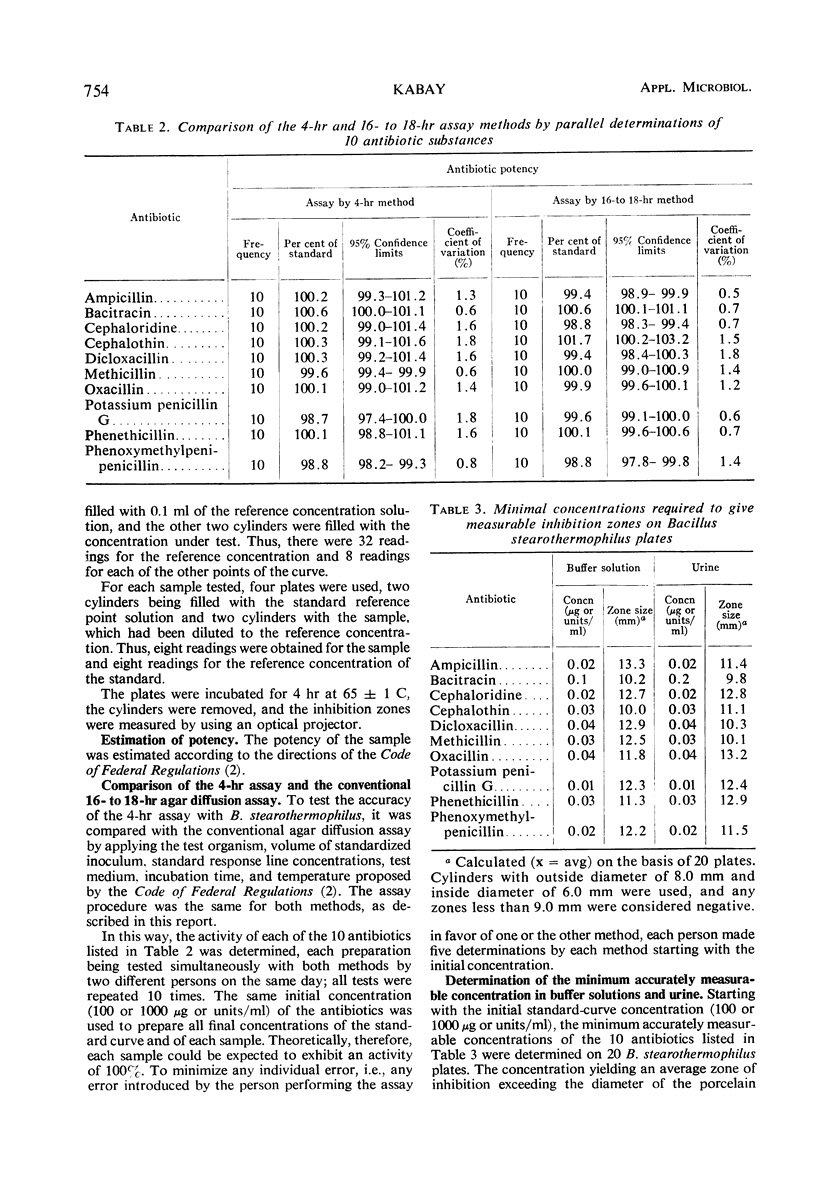
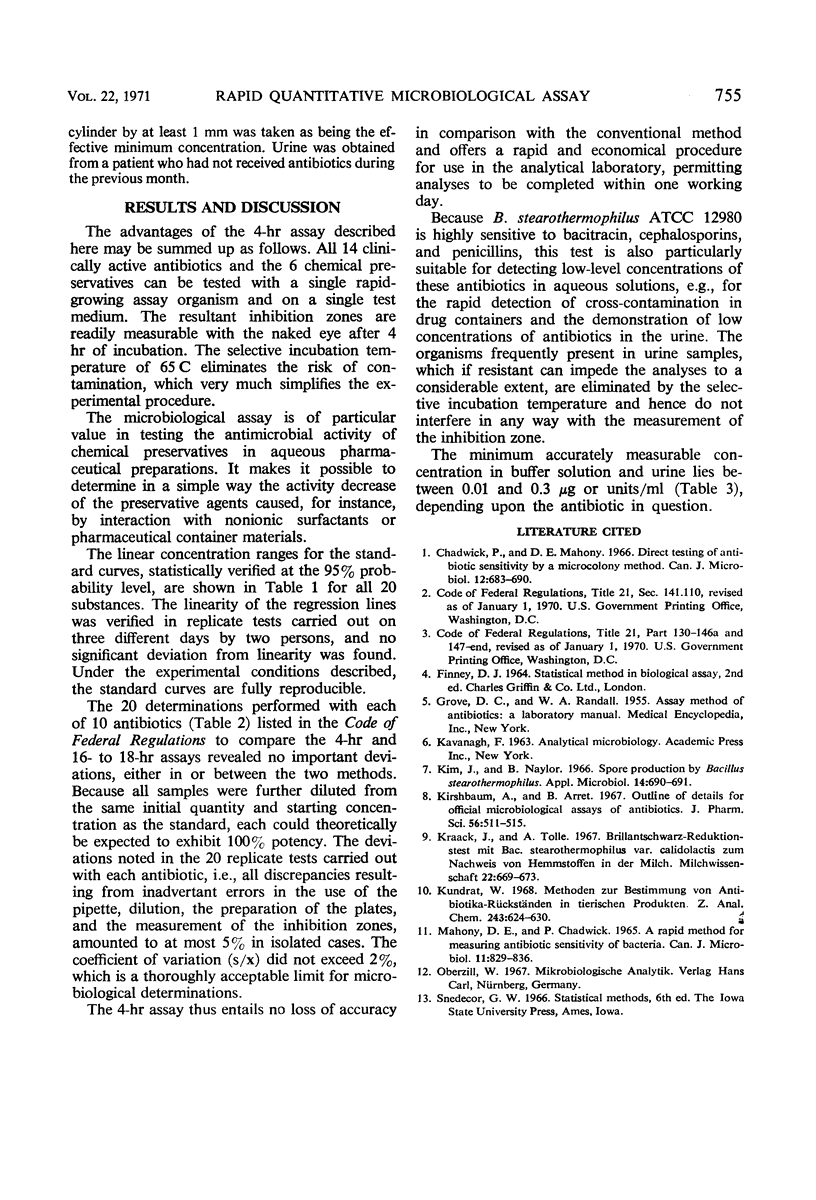
A rapid quantitative assay of 14 antibiotics and 6 chemical preservatives by the cylinder-plate diffusion method is described, in which Bacillus stearothermophilus ATCC 12980 was used as the test organism. After 4 hr of incubation at 65 C, the zones of inhibition can be read off easily with the naked eye. The 4-hr assay was compared under identical conditions with the conventional 16- to 18-hr agar diffusion assay, i.e., by using the test organisms and media proposed by the Code of Federal Regulations, and no difference in accuracy between the two methods was detected. In both cases, the coefficient of variation for replicate tests was less than 2%. The test strain is highly sensitive to penicillins, cephalosporins, and bacitracin and is consequently also particularly suitable for the determination of low-level concentrations of these substances in aqueous solutions and in urine.
Full text
PDF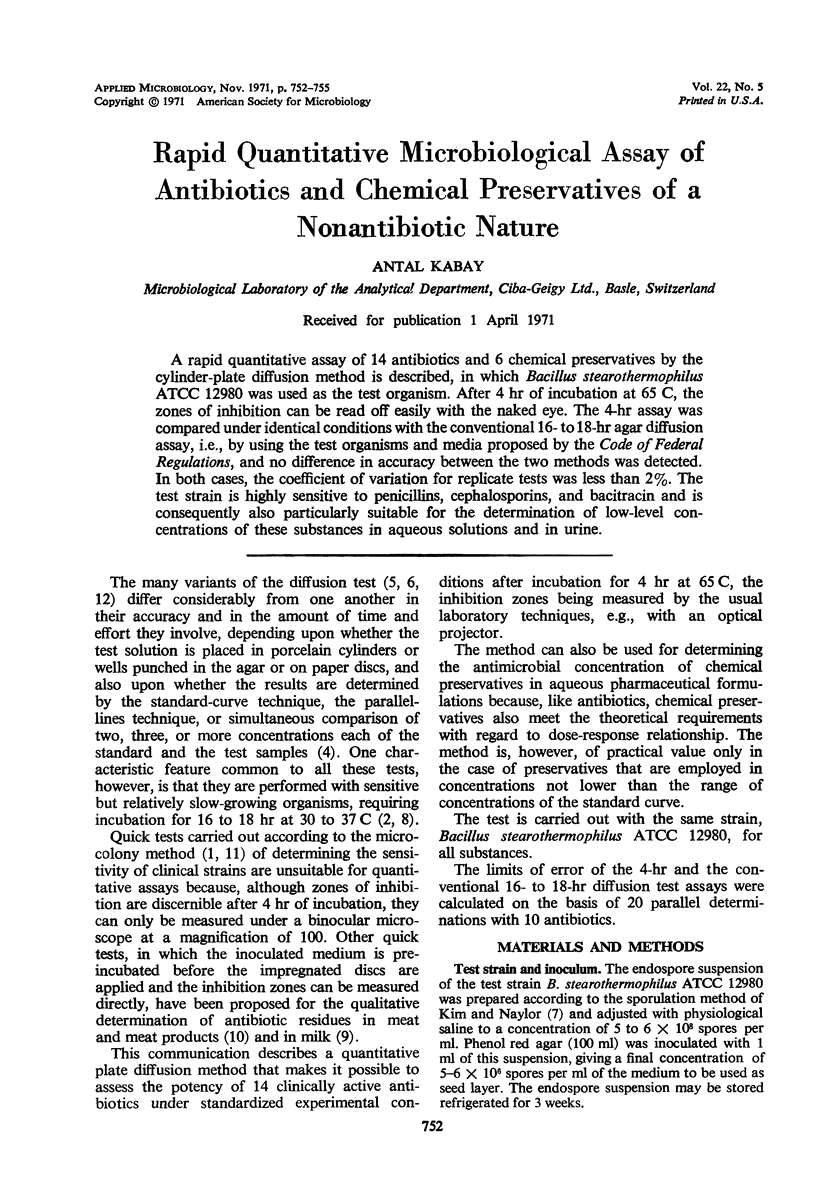

Selected References
These references are in PubMed. This may not be the complete list of references from this article.
- Chadwick P., Mahony D. E. Direct testing of antibiotic sensitivity by a microcolony method. Can J Microbiol. 1966 Aug;12(4):683–690. doi: 10.1139/m66-094. [DOI] [PubMed] [Google Scholar]
- Kim J., Naylor H. B. Spore production by Bacillus stearothermophilus. Appl Microbiol. 1966 Jul;14(4):690–691. doi: 10.1128/am.14.4.690-691.1966. [DOI] [PMC free article] [PubMed] [Google Scholar]
- Kirshbaum A., Arret B. Outline of details for official microbiological assays of antibiotics. J Pharm Sci. 1967 Apr;56(4):511–515. doi: 10.1002/jps.2600560418. [DOI] [PubMed] [Google Scholar]
- Mahony D. E., Chadwick P. A rapid method for measuring antibiotic sensitivity of bacteria. Can J Microbiol. 1965 Oct;11(5):829–836. doi: 10.1139/m65-112. [DOI] [PubMed] [Google Scholar]