


Abstract
Significance
A below-knee amputation (BKA) can be the most functional option for select patients with a diseased lower extremity and may offer a better quality of life than limb salvage in some patients.
Recent Advances
Because of advances in prosthetic technology, some patients may have a better quality of life with a BKA than a salvaged lower extremity. Those who cannot wear a prosthesis will do better with a poorly functioning leg. Understanding which patients will not benefit from an amputation helps ensure that a maximum of patients will continue ambulating.
Critical Issues
We lack a thorough understanding of which patients will be more functional with a BKA than a salvaged extremity. Some will do better with a prosthesis, whereas others will do better with a poorly functioning peg leg. This is because so many amputees never wear their prosthesis.
Future Directions
A better understanding of patient selection and optimal operative technique would allow us to better council patients as to how to optimize their functional outcome. Over the past 30 years, a number of useful studies have been published regarding the BKA. However, recent advances in wound care, prosthetics, and medical care in general require a re-evaluation of the BKA within the limb salvage concept.

Christopher E. Attinger, MD, FACS
Scope
Despite advances in vascular surgery and wound healing, our ability to heal a diseased lower extremity remains limited. Our efforts to salvage such extremities are usually associated with a decrease in function. Advances in prosthetic technology, on the other hand, have significantly increased the quality of life among patients with an amputated lower extremity. In some patients, their highest attainable function is often achieved with a properly performed below-knee amputation (BKA). Rather than focusing on “limb salvage,” we must start focusing on “life salvage” by taking the ultimate functional result as a key indicator.
Patient selection for limb salvage versus amputation remains subjective and based on anecdotal observations without clear guidelines from the old and recent literature. Many clinicians attempt limb salvage on nearly all patients, leaving amputation as a last resort, whereas others proceed immediately to amputation. Given the risks, duration of hospitalization, and costs associated with limb salvage, this approach can be dangerous for patients with multiple comorbidities and often leaves them with a nonfunctional leg. Because most studies focus on survival after BKA rather than functional outcome, many clinicians focus on the reported “decreased” survival after BKA when counseling their patients. Unfortunately, all studies describing survival rates following a BKA are confounded by the inconsistent timing of the amputation and the comorbid conditions inherent to this population.1–8 No study to date has demonstrated a BKA to be an independent variable that decreases survival.
Despite the recent improvements in lower extremity prosthetics, there has been a paucity of research regarding the best operative technique for performing a BKA. The BKA is performed over 100,000 times per year in the United States, yet there are few evidence-based guidelines.9 Optimization of operative technique will allow surgeons to complement the advances in prosthetic technology and ultimately improve the functional outcome of patients who receive a BKA.
Target Articles.
1. Sherratt MJ: Tissue elasticity and the ageing elastic fibre. Age 2009; 31: 305.
2. Sherratt MJ, Bayley CP, Reilly SM, Gibbs NK, Griffiths CEM, and Watson REB: Low-dose ultraviolet radiation selectively degrades chromophore-rich extracellular matrix components. J Pathol 2010; 222: 32.
3. Naylor EC, Watson REB, and Sherratt MJ. Molecular aspects of skin ageing. Maturitas 2011; 69: 249.
Translational Relevance
Patient selection: to salvage or amputate?
Tekin et al. compared the function and quality of life of patients who received a BKA with those who received salvage surgery after severe lower limb trauma.10 A limitation of this study is that mangled extremity severity scores were not reported, and therefore, the severity of the injuries in this sample are not clearly defined. However, their results demonstrated that reoperation rates, quality of life, and pain scores were better in patients who underwent amputation. It is important to note that these were otherwise healthy patients whose limbs were damaged by trauma as opposed to systemic disease. This etiology of injury may be useful in that there are fewer confounding medical variables to muddy the data. On the other hand, traumatic injuries to the lower extremity may represent an entirely different problem, making these data not applicable to a discussion of patients whose diseased lower extremity is a result of diabetes, peripheral vascular disease, and chronic renal failure.
Clinical Relevance
How do revascularization attempts affect the outcome of subsequent amputations?
Faglia et al. retrospectively reviewed 564 diabetic patients whom they admitted for critical limb ischemia. They found a significantly higher survival rate among amputees who had been previously revascularized.8 This finding is in contrast to multiple studies that have found the opposite to be true, that previous lower extremity bypass attempts lead to poorer outcomes following subsequent BKA.11–19 Keagy et al. reported an 83% BKA healing rate among patients without an ipsilateral vascular bypass and a 73% BKA healing rate among patients with an ipsilateral vascular bypass (p < 0.001).20 It is not surprising that these data are conflicting given the confounding variables that are difficult to account for. First, there is a selection bias such that those with more severe vascular disease are more likely to receive a bypass and that they are more likely to experience complications and overall poorer outcomes. Based on our observations, patients are more likely to experience wound healing complications if the tissues in the area of the future BKA stump are perfused by retrograde flow from a distal bypass conduit, and this conduit is transected during the BKA.
What is the survival following BKA?
Lavery et al. found that survival following BKA was significantly higher in patients with no renal impairment.7 This finding is in agreement with previous studies that have also explained the devastating effects of renal disease. Previous studies report that BKA patients face a 77%–86% 1-year survival rate, a 28%–58% 5-year survival rate, and a 35% 10-year survival rate.21–23 The survival of the cohort of patients with ESRD on dialysis is significantly less with a 51.9% 1-year survival rate and a 14.4% 5-year survival rate.22 The selection criteria for limb salvage versus amputation in patients with ESRD are very unclear and survival rates are confounded by the multiple comorbidities most dialysis patients suffer from. There is also a selection bias that favors an earlier BKA in ESRD patients, because the data suggest that vascular reconstructions are much more likely to fail in these patients.24 It is important to note that although the survival following a BKA in patients with renal disease is poor, these data do not suggest that these patients would live longer without an amputation. The goal of treatment in these patients is to maintain mobility and independence. Depending on the revascularization options available, the patient's preoperative activity level, and the extent of infection, many dialysis patients will have a better quality of life with a salvaged lower extremity that allows them to perform their activities of daily living without wearing a prosthesis or learning to safely ambulate with a prosthesis.
Experimental Model or Material: Advantages and Limitations
Most of our knowledge about limb salvage and the BKA is based on descriptive data from retrospective reviews and case series. There are two primary reasons that studying limb salvage and amputation is so difficult. One is that patients who are candidates for limb salvage and/or amputation are typically complicated and therefore introduce multiple confounding variables. To circumvent this problem one would need to randomize and control for these confounding variables. Ideally, the best way to study limb salvage and amputation would be to arrange a multicenter, randomized control trial wherein patients would be randomized to early amputation or limb salvage. However, it would be unethical to leave a patient's decision to amputate or salvage their leg to randomization.
Discussion of Findings and Relevant Literature
Like most advances in medicine, improving the outcomes of our patients relies on evidence that there is a better way to accomplish a goal. The ultimate goal of the clinician caring for a patient with a diseased lower extremity is to maximize their quality of life by preserving their independence via their ability to ambulate.25 Therefore, the question we must answer is “will this patient be more functional with a salvaged lower extremity or an amputation?” Ambulation rates following BKA have been reported to be anywhere from 16% to 77%.5,18,26,27 Given this variability in outcomes, patient selection becomes key. For healthy patients who would prefer a high-functioning prosthetic leg to their poorly functioning natural leg, a BKA is probably a more attractive option. If the ability to run and play sports is more important than being able to get from one's bed to the bathroom without wearing a prosthetic, a BKA may be a more attractive option. For patients with poor overall health who have no capacity to run and play sports, a poorly functioning natural leg that allows them to get from their bed to the bathroom without wearing a prosthetic may be more “functional” and provide them with a better quality of life than a BKA.
Taylor et al. evaluated the maintenance of ambulation and independence in a retrospective review of 533 consecutive lower extremity amputees. They found the rate of postoperative ambulation to be 51% and maintenance of independent living status to be 69%. They also investigated the relationship between a variety of preoperative clinical characteristics and postoperative functional outcomes in an effort to formulate treatment recommendations for patients requiring major lower limb amputation. About 70.2% and 91.5% of the patients in their analysis had diabetes mellitus and peripheral vascular disease, respectively. They concluded that younger healthy patients with BKAs achieved functional outcomes similar to what might be “expected” after successful lower extremity revascularization.28
Taylor et al. published an excellent article that defined a “successful outcome” after a BKA as follows: wound healing without the need for revision to a higher level, maintenance of ambulation with a prosthesis for at least 1 year or until death, and survival for at least 6 months postoperatively. The presence of coronary artery disease, cerebrovascular disease, and impaired ambulatory ability before BKA were each associated with a decreased likelihood for successful outcome. Patients with all three had a 10.4% probability of success, whereas patients who had none of the three had a 67.5% probability of successful outcome after BKA.29 Unfortunately, this study does not compare those results to the functional outcome of the patients who underwent limb salvage.
Over the past few decades, there have been a number of useful studies regarding operative timing and technique. In an effort to answer the question of whether or not patients with wet gangrene should be amputated in one or two stages, Fisher et al. randomized 47 patients with necrotizing wet gangrene of the foot to a one- or two-stage BKA. They found that 21% (5/24) of patients randomized to the one-stage procedure had wound healing complications compared with no wound healing complications in patients randomized to the two-stage procedure (0/23). Patients randomized to the two-stage procedure also had a shorter hospital stay, 37.6 versus 52.6 days.30
Many patients who receive a BKA have had a previous lower extremity bypass procedure. When the bypass was done with a PTFE graft, the surgeon performing the amputation must decide whether to transect and ligate the graft or remove the graft in its entirety. A prospective, randomized control trial comparing partial versus complete bypass graft removal during lower extremity amputation found that partial graft removal resulted in a significantly higher rate of delayed wound healing (47.8% vs. 7.7%) and secondary stump infection (39.1% vs. 7.7%).12
The ideal tibia length is a balance between torque and weight bearing. When an amputation is done through bone (trans-osseous), the load transfer must be indirect, as the transected diaphyseal bone does not bear weight well. Zhang and Lee have shown that the distal end of the fibula is the least load tolerant, whereas the patellar ligament is the most load tolerant.31 To shift weight to the patellar ligament, the knee must sit at approximately 10 degrees of flexion within the BKA prosthesis. When the tibia is too long, it cannot rest in the prosthesis in the appropriate degree of flexion. With increasing knee extension, force is shifted from the desirable location of the patellar ligament to the less desirable amputation stump. On the other hand, a tibia that is too short will generate less torque with ambulation because of the shorter lever arm and this decreases the efficiency of ambulation. For the average, a 6-ft.-tall patient, the optimal residual tibial length should be between 10 and 18 cm.32 It has also been suggested that tibia lengths shorter than 8 cm benefit from a total fibulectomy and peroneal nerve resection.33
Creation of a viable and durable soft-tissue envelope around the remaining tibia and fibula is typically the most challenging part of a BKA. The design of this soft-tissue envelope begins with thoughtful planning of incisions. Surprisingly, a 2004 Cochrane review found no consensus as to which surgical technique achieves the maximum rehabilitation potential.34 Despite this lack of consensus, we recommend thoughtful planning of incisions based on physical exam and angiographic data.
Take-Home Message.
Basic science advances
• None directly applicable to the study of amputation versus limb salvage.
Clinical science advances
• For the appropriate patient, their function and quality of life after a BKA can be better than that after limb salvage.
• For the patient with multiple comorbidities, a BKA may prevent them from walking, because they cannot or will not wear a prosthesis.
Relevance to clinical care
• When counseling a patient regarding limb salvage and amputation, one must consider the patient's functional needs, goals, and the condition of their extremity.
• Our goal is to maximize a patient's quality of life by optimizing their function through proper patient selection and thoughtful surgical technique.
• “Life salvage” is more important than “limb salvage.”
Innovation
Prosthetic devices for below-knee amputees have been and continue to evolve. With regard to surgical technique, some surgeons have started creating a tibio-fibular bone bridge at the time of BKA.35 The intent of this added step is to create a more solid and durable bony framework that will transmit rotational forces from the knee to the prosthetic device more effectively. To date, however, tibio-fibular bone bridging has not been shown to improve function or patient satisfaction.36
Summary Illustrations
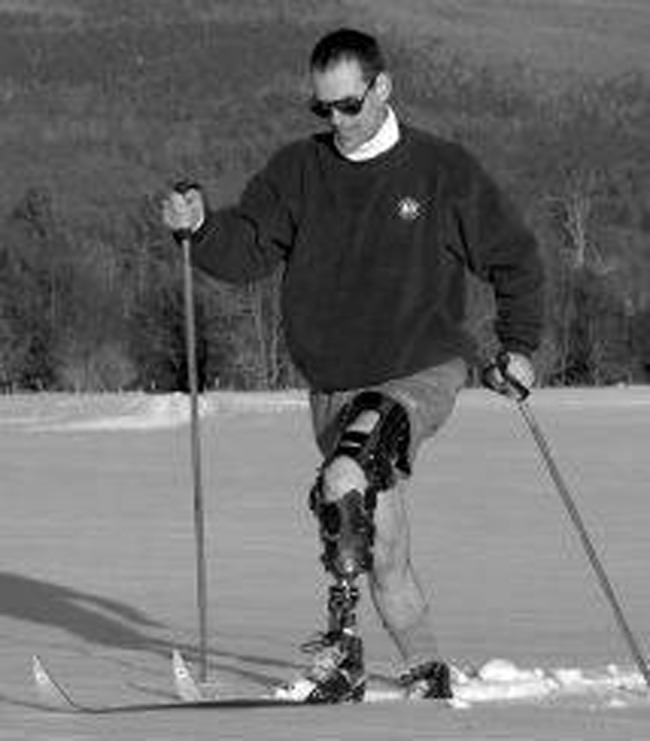
Limb salvage can leave patients with a burdensome lower extremity.

A BKA and prosthesis can provide patients with excellent function and a good quality of life.
Caution, Critical Remarks, and Recommendations
The clinician must avoid falling victim to the decision making bias known as “anchoring,” whereby one relies too heavily on one piece of information when making a decision. For example, clinicians either avoid performing a BKA for a patient with renal failure because of the reported poor survival rates or immediately amputate the limb because of complications normally associated with limb salvage in this population.
For clinicians to better understand which intervention is best for a given patient, they must first understand the patient's needs as well as evaluate their medical condition and limb at risk; clinicians can then intelligently discuss the risks and benefits of both limb salvage and amputation. Because of the lack of outcome data and guidelines for patient selection, the choice of limb salvage versus an earlier amputation is a difficult one with major consequences. The most important step is to assess the patient: a healthy patient who wants to return to normal function versus a patient who has comorbidities but wants to return to a sedentary life versus the patient who is severely compromised but wants to be able to carry out a bed-to-chair existence using assistive devices. Will salvage or BKA allow the patient to become more ambulatory? Less ambulatory? More functional? Less functional? Will they deteriorate to a life of inactivity? The ultimate goal is to improve the quality of life of our patients while being responsible stewards of our limited healthcare resources. In the future, accurate, patient-oriented outcome data are critical to generate better guidelines so as to better council our patients.
Future Development of Interest
More specific and accurate outcome data will allow clinicians to more accurately predict which patients will benefit most from limb salvage and which patients will benefit most from an amputation. More collaboration between surgeons and prosthetists may allow further improvement in functional outcomes.
Abbreviations and Acronyms
- BKA
below-knee amputation
- ESRD
end-stage renal disease
- PTFE
polytetrafluoroethylene
Acknowledgments and Funding Sources
The authors have not received funding for this work.
Author Disclosure and Ghostwriting
The authors have no disclosures relevant to this work and this article is wholly written by the authors.
References
- 1.Evans KK. Attinger CE. Al-Attar A. Salgado C. Chu CK. Mardini S, et al. The importance of limb preservation in the diabetic population. J Diabetes Complicat. 2011;25:227. doi: 10.1016/j.jdiacomp.2011.02.001. [DOI] [PubMed] [Google Scholar]
- 2.Mandrup-Poulsen T. Jensen JS. Mortality after major amputation following gangrene of the lower limb. Acta Orthop Scand. 1982;53:879. doi: 10.3109/17453678208992842. [DOI] [PubMed] [Google Scholar]
- 3.Inderbitzi R. Buttiker M. Pfluger D. Nachbur B. The fate of bilateral lower limb amputees in end-stage vascular disease. Eur J Vasc Surg. 1992;6:321. doi: 10.1016/s0950-821x(05)80327-5. [DOI] [PubMed] [Google Scholar]
- 4.Dormandy J. Heeck L. Vig S. Major amputations: clinical patterns and predictors. Semin Vasc Surg. 1999;12:154. [PubMed] [Google Scholar]
- 5.Cruz CP. Eidt JF. Capps C. Kirtley L. Moursi MM. Major lower extremity amputations at a Veterans Affairs Hospital. Am J Surg. 2003;186:449. doi: 10.1016/j.amjsurg.2003.07.027. [DOI] [PubMed] [Google Scholar]
- 6.Korzets A. Ori Y. Rathaus M. Plotnik N. Baytner S. Gafter U, et al. Lower extremity amputations in chronically dialysed patients: a 10 year study. Isr Med Assoc J. 2003;5:501. [PubMed] [Google Scholar]
- 7.Lavery LA. Hunt NA. Ndip A. Lavery DC. Van Houtum W. Boulton AJM. Impact of chronic kidney disease on survival after amputation in individuals with diabetes. Diabetes Care. 2010;33:2365. doi: 10.2337/dc10-1213. [DOI] [PMC free article] [PubMed] [Google Scholar]
- 8.Faglia E. Clerici G. Caminiti M. Curci V. Clerissi J. Losa S, et al. Mortality after major amputation in diabetic patients with critical limb ischemia who did and did not undergo previous peripheral revascularization: data of a cohort study of 564 consecutive diabetic patients. J Diabetes Complicat. 2010;24:265. doi: 10.1016/j.jdiacomp.2009.02.004. [DOI] [PubMed] [Google Scholar]
- 9.Dillingham TR. Pezzin LE. MacKenzie EJ. Limb amputation and limb deficiency: epidemiology and recent trends in the United States. South Med J. 2002;95:875. doi: 10.1097/00007611-200208000-00018. [DOI] [PubMed] [Google Scholar]
- 10.Tekin L. Safaz Y. Göktepe AS. Yazýcýodlu K. Comparison of quality of life and functionality in patients with traumatic unilateral below knee amputation and salvage surgery. Prosthet Orthot Int. 2009;33:17. doi: 10.1080/03093640802482542. [DOI] [PubMed] [Google Scholar]
- 11.Stone PA. Flaherty SK. Aburahma AF. Hass SM. Jackson JM. Hayes JD, et al. Factors affecting perioperative mortality and wound-related complications following major lower extremity amputations. Ann Vasc Surg. 2006;20:209. doi: 10.1007/s10016-006-9009-z. [DOI] [PubMed] [Google Scholar]
- 12.Rubin JR. Marmen C. Rhodes RS. Management of failed prosthetic grafts at the time of major lower extremity amputation. J Vasc Surg. 1988;7:673. [PubMed] [Google Scholar]
- 13.Kazmers M. Satiani B. Evans WE. Amputation level following unsuccessful distal limb salvage operations. Surgery. 1980;87:683. [PubMed] [Google Scholar]
- 14.Burgess EM. Marsden FW. Major lower extremity amputations following arterial reconstruction. Arch Surg. 1974;108:655. doi: 10.1001/archsurg.1974.01350290023002. [DOI] [PubMed] [Google Scholar]
- 15.Ramsburgh SR. Lindenauer SM. Weber TR. Kraft RO. Schmidt CM. Fry WJ. Femoropopliteal bypass for limb salvage. Surgery. 1977;81:453. [PubMed] [Google Scholar]
- 16.LoGerfo FW. Corson JD. Mannick JA. Improved results with femoropopliteal vein grafts for limb salvage. Arch Surg. 1977;112:567. doi: 10.1001/archsurg.1977.01370050027004. [DOI] [PubMed] [Google Scholar]
- 17.Naji A. Chu J. McCombs PR. Barker CF. Berkowitz HD. Roberts B. Results of 100 consecutive femoropopliteal vein grafts for limb salvage. Ann Surg. 1978;188:162. doi: 10.1097/00000658-197808000-00006. [DOI] [PMC free article] [PubMed] [Google Scholar]
- 18.Couch NP. David JK. Tilney NL. Crane C. Natural history of the leg amputee. Am J Surg. 1977;133:469. doi: 10.1016/0002-9610(77)90133-7. [DOI] [PubMed] [Google Scholar]
- 19.Schlenker JD. Wolkoff JS. Major amputations after femoropopliteal bypass procedures. Am J Surg. 1975;129:495. doi: 10.1016/0002-9610(75)90303-7. [DOI] [PubMed] [Google Scholar]
- 20.Keagy BA. Schwartz JA. Kotb M. Burnham SJ. Johnson G. Lower extremity amputation: the control series. J Vasc Surg. 1986;4:321. [PubMed] [Google Scholar]
- 21.Myers KA. King RB. Scott DF. Johnson N. Morris PJ. Surgical treatment of the severely ischaemic leg: I. Survival rates. Br J Surg. 1978;65:460. doi: 10.1002/bjs.1800650705. [DOI] [PubMed] [Google Scholar]
- 22.Aulivola B. Hile CN. Hamdan AD. Sheahan MG. Veraldi JR. Skillman JJ, et al. Major lower extremity amputation: outcome of a modern series. Arch Surg. 2004;139:395. doi: 10.1001/archsurg.139.4.395. discussion 399. [DOI] [PubMed] [Google Scholar]
- 23.Feinglass J. Pearce WH. Martin GJ. Gibbs J. Cowper D. Sorensen M, et al. Postoperative and late survival outcomes after major amputation: findings from the Department of Veterans Affairs National Surgical Quality Improvement Program. Surgery. 2001;130:21. doi: 10.1067/msy.2001.115359. [DOI] [PubMed] [Google Scholar]
- 24.Cox MH. Robison JG. Brothers TE. Elliott BM. Contemporary analysis of outcomes following lower extremity bypass in patients with end-stage renal disease. Ann Vasc Surg. 2001;15:374. doi: 10.1007/s100160010067. [DOI] [PubMed] [Google Scholar]
- 25.Pell JP. Donnan PT. Fowkes FG. Ruckley CV. Quality of life following lower limb amputation for peripheral arterial disease. Eur J Vasc Surg. 1993;7:448. doi: 10.1016/s0950-821x(05)80265-8. [DOI] [PubMed] [Google Scholar]
- 26.Castronuovo JJ., Jr Deane LM. Deterling RA., Jr O'Donnell TF., Jr O'Toole DM. Callow AD. Below-knee amputation: is the effort to preserve the knee joint justified? Arch Surg. 1980;115:1184. doi: 10.1001/archsurg.1980.01380100032007. [DOI] [PubMed] [Google Scholar]
- 27.Mooney V. Wagner W. Waddell J. Ackerson T. The below-the-knee amputation for vascular disease. J Bone Joint Surg Am. 1976;58:365. [PubMed] [Google Scholar]
- 28.Taylor SM. Kalbaugh CA. Blackhurst DW. Hamontree SE. Cull DL. Messich HS, et al. Preoperative clinical factors predict postoperative functional outcomes after major lower limb amputation: an analysis of 553 consecutive patients. J Vasc Surg. 2005;42:227. doi: 10.1016/j.jvs.2005.04.015. [DOI] [PubMed] [Google Scholar]
- 29.Taylor SM. Kalbaugh CA. Cass AL. Buzzell NM. Daly CA. Cull DL, et al. “Successful outcome” after below-knee amputation: an objective definition and influence of clinical variables. Am Surg. 2008;74:607. doi: 10.1177/000313480807400707. discussion 612. [DOI] [PubMed] [Google Scholar]
- 30.Fisher DF. Clagett GP. Fry RE. Humble TH. Fry WJ. One-stage versus two-stage amputation for wet gangrene of the lower extremity: a randomized study. J Vasc Surg. 1988;8:428. [PubMed] [Google Scholar]
- 31.Zhang M. Lee WCC. Quantifying the regional load-bearing ability of trans-tibial stumps. Prosthet Orthot Int. 2006;30:25. doi: 10.1080/03093640500468074. [DOI] [PubMed] [Google Scholar]
- 32.Pinzur MS. Gottschalk FA. Pinto MAGdS. Smith DG. Surgeons AAoO. Controversies in lower-extremity amputation. J Bone Joint Surg Am. 2007;89:1118. doi: 10.2106/00004623-200705000-00028. [DOI] [PubMed] [Google Scholar]
- 33.Spira E. Steinbach T. Fibulectomy and resection of the peroneal nerve for “short tibia stumps”. Acta Orthop Scand. 1973;44:589. doi: 10.3109/17453677308989096. [DOI] [PubMed] [Google Scholar]
- 34.Tisi PV. Callam MJ. Type of incision for below knee amputation. Cochrane Database Syst Rev. 2004:CD003749. doi: 10.1002/14651858.CD003749.pub2. [DOI] [PubMed] [Google Scholar]
- 35.Ertl J. Uber amputationsstumpfe. Chirurg. 1949:218. [Google Scholar]
- 36.Pinzur MS. Beck J. Himes R. Callaci J. Distal tibiofibular bone-bridging in transtibial amputation. J Bone Joint Surg Am. 2008;90:2682. doi: 10.2106/JBJS.G.01593. [DOI] [PMC free article] [PubMed] [Google Scholar]