



Abstract
We report a rare case of a patient with bilateral mirror clubfeet and bilateral hand polydactyly. The patient presented to our orthopaedic clinic with bilateral mirror clubfeet, each with eight toes, and bilateral hands with six fingers and a hypoplastic thumb. The pattern does not fit any described syndrome such as Martin or Laurin-Sandrow syndrome. Treatments by an orthopaedic pediatric surgeon and an orthopaedic pediatric hand surgeon are described. The patient achieved excellent functional and cosmetic outcomes at four year follow-up.
Introduction
Mirror polydactyly of the feet is a rare diagnosis with symmetrical duplications of the digits and is usually associated with deficiency of the thumb or hallux1,2. They can occur in isolation or as part of syndromes2-4. A thorough history and physical examination is paramount because there is a spectrum of associated anomalies involving face features and other extremities1-4. Treatments must be tailored individually to correct each deformity and restore functions for the patients. Coordination among different care teams should be pursued to ensure optimum care for patients.
Case Report
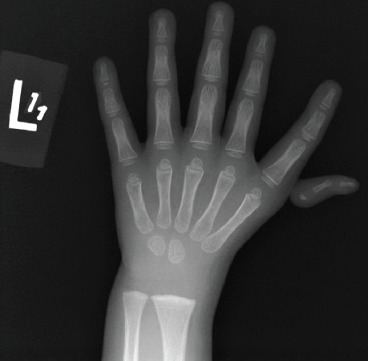
A two-year-old female was referred to our clinic for evaluation of bilateral hand and foot deformities. The patient was adopted from China and her family history was unknown. She was born full-term and weighed seven pounds at birth. Upper extremity examination revealed hands with six fingers including a Blauth type IIIB thumb hypoplasia with deficiency of carpometacarpal joint on the right and type IV thumb hypoplasia (Pouce Flottant) on the left (Figures 1 and Figure 2)5. She had six metacarpals on the right and five on the left. The long bones of the arms were normal. In her lower extremities she had bilateral hind foot equinovarus, metatarsal adductus, and cavus deformities consistent with clubfeet. Each foot had eight toes, and none appeared to be a hallux (Figure 3). She had large calluses laterally from weight bearing on the outside of her feet. Radiographic examination showed eight sets of phalanges with seven metatarsals; the central toe did not have an associated metatarsal (Figure 4). She had no other anomalies and growth and development were normal.
Figure 1a. Right hand at presentation.
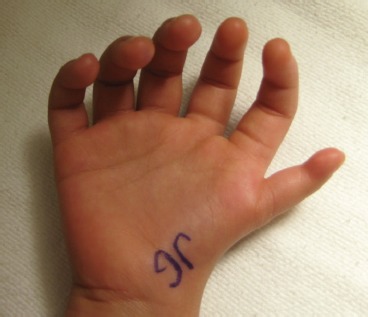
Figure 2a. Right hand with type IIIB thumb hypoplasia.
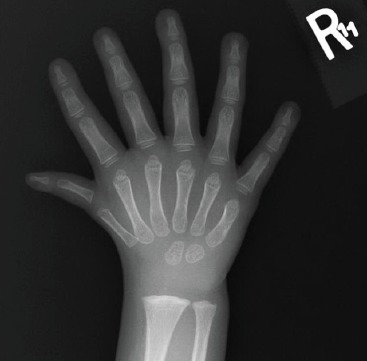
Figure 3. Bilateral mirror feet at presentation.
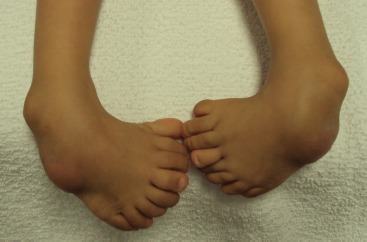
Figure 4. X-ray of bilateral feet at presentation.
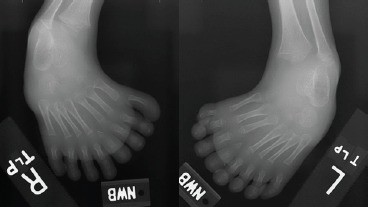
Figure 1b. Left hand at presentation.
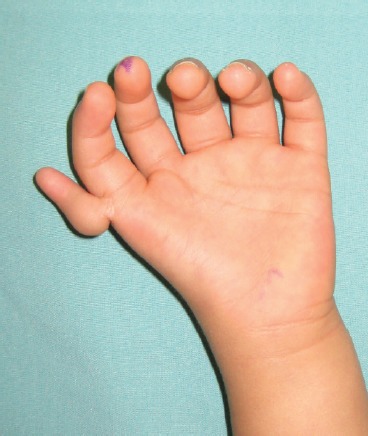
Figure 2b. Left hand with type IV thumb hypoplasia.
Treatment
The patient was evaluated by an orthopaedic pediatric specialist (JM) and an orthopaedic pediatric hand specialist (EL) to address her bilateral mirror feet and clubfoot deformities as well as her six fingered hands with bilateral hypoplastic thumbs. No other abnormalities were found. Surgeries were coordinated between the two surgeons to optimize care and minimize patient morbidity.
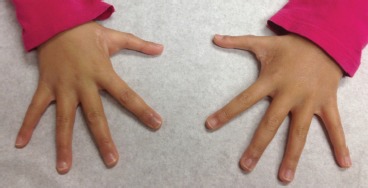
The patient was treated initially with the Ponseti clubfoot protocol6. After four months of serial casting, she underwent surgical intervention with bilateral extra digit resection, anterior tibialis tendon transfer (to the lateral cuneiform) and Achilles lengthening. The medial two rays, along with the central digit which had no metatarsal, were resected. The patient was placed in bilateral long leg casts and kept non-weight bearing with transitioning to a Mitchell brace at two months post-operatively. At the same time of her foot surgery, the patient's hands were treated with amputation of the hypoplastic and non-functional thumbs as well as pollicization of her adjacent accessory digit. The patient returned to the operating room three years later at age six for a left tibia derotational osteotomy for tibial torsion. She required no further surgery for the right leg. The patient was last seen in clinic four years after initiation of treatments. She wore normal shoes without pain or discomfort (Figure 5). She used her hands without limitations (Figure 6). Overall, she was doing well, was active at a level comparable to her peers, and was participating in all school events.
Figure 5. Appearance of bilateral feet at four year follow-up.
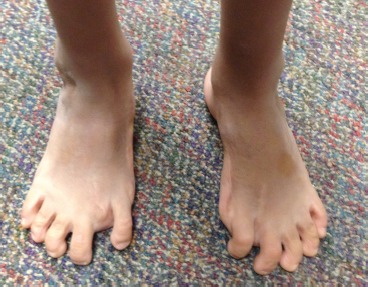
Figure 6. Appearance of bilateral hands last follow-up.
Discussion
In this report, we present a case of two-year old female with bilateral mirror clubfeet and polydactyly of the hands and feet. This case highlights several important topics which merit further discussion. Clubfoot or congenital talipes equinovarus is one of the most common congenital deformities involving the musculoskeletal system with a prevalence of 0.6 per 1000 to 6.8 per 10007. The Ponseti method with sequential manipulation and cast application has been accepted worldwide as the standard for non-operative management of clubfoot6,7. In contrary, mirror image duplication of the foot is a rare congenital anomaly. There are approximately only 30 case reports on this topic with even fewer described treatments and outcomes2,8-10. Mirror foot may occur as an isolated deformity or may be associated with a spectrum of other deformities such as fibula dimelia, tibia hypoplasia, nasal abnormalities, or upper extremities abnormalities 2, 8, 11, 12. The patient did not have any other anomalies associated with the known syndromes such as Laurin-Sandrow or Martin syndrome3,4.
Limb development occurs along three axes, proximal- distal, dorsal-ventral, and anterior-posterior. Mirror polydactyly appears to result from a disturbance of limb pattern formation in the anterior-posterior axis 1. Several genes have been shown to influence this process including the Sonic Hedgehog gene which is expressed by the zone of polarizing activity, the Homeobox genes, BMP- 21,13-15. Saunders and Gasseling demonstrated mirror image duplication in chicks by grafting a small piece of posterior border mesoderm (zone of polarizing activity) into an anterior position16. In humans, ectopic expression of the zone of polarizing activity and the Sonic Hedgehog gene has been linked to mirror image deformities10,17. There have been case reports of tetramelic mirror image deformities affecting all four extremities1. Since the anterior-posterior axis formation includes radial/ulnar axis formation for the upper extremities and tibia/fibula axis formation for the lower extremities, congenital abnormality of feet are sometimes associated with hand deformities such as the patient in this case. Interestingly, these deformities of the hands and feet are usually associated with missing of the hallux and thumb, similar to what was seen in this patient1.
This case report highlights the challenges that our orthopaedic surgeons face in treating patients with congenital deformities affecting all four extremities. There is no protocol for treatments of such complex deformities. Thus, an analysis of each limb is important in order to adequately address every deformity. While thumb reconstruction is crucial to improve upper extremity function, hallux restoration is not absolutely necessary. In contrast, the goals of foot reconstruction are more cosmetic, but also to allow for painless plantigrade feet that accept normal shoewear. The treatments may be staged, allowing the patient to recover while limiting anesthesia time and the number of return trips to the operating room. Outcomes have been reported to be fair to good with surgical intervention in the literature2,9,10. Treatments in patients with mirror feet require careful considerations of other associated anomalies and the best outcomes require collaboration between multiple surgeons.
References
- 1.Kim KC, Wakui K, Yamagishi A, et al. Tetramelic mirror-image polydactyly and a de novo balanced translocation between 2p23.3 and 14q13. American Journal of Medical Genetics. 1997;68:70. doi: 10.1002/(sici)1096-8628(19970110)68:1<70::aid-ajmg13>3.0.co;2-l. [DOI] [PubMed] [Google Scholar]
- 2.Fukazawa H, Kawabata H, Matsui Y. Mirror foot: treatment of three cases and review of the literature. J Child Orthop. 2009;3:277. doi: 10.1007/s11832-009-0186-5. [DOI] [PMC free article] [PubMed] [Google Scholar]
- 3.Laurin CA, Favreau JC, Labelle P. Bilateral absence of the radius and tibia with bilateral reduplication of the ulna and fibula. A case report. J Bone Joint Surg Am. 1964;46:137. [PubMed] [Google Scholar]
- 4.Martin RA, Jones MC, Jones KL. Mirror hands and feet with a distinct nasal defect, an autosomal dominant condition. Am J Med Genet. 1993;46:129. doi: 10.1002/ajmg.1320460205. [DOI] [PubMed] [Google Scholar]
- 5.Wassel HD. The results of surgery for polydactyly of the thumb. A review. Clin Orthop Relat Res. 1969;64:175. [PubMed] [Google Scholar]
- 6.Ponseti I. Treatment of Congenital Clubfoot. J Bone Joint Surg. 1992;74A:448. [PubMed] [Google Scholar]
- 7.Kasser JR. Lovell and Winter's Pediatric Orthopaedics. In: Morrissy RT, Weinstein SL, editors. 6th edition. Philadelphia: Lippincott Williams & Wilkins; 2006. p. p1262. [Google Scholar]
- 8.Verghese R, Shah H, Rebello G, et al. Pre-axial mirror polydactyly associated with tibial deficiency: a study of the patterns of skeletal anomalies of the foot and leg. J Child Orthop. 2007;1:49. doi: 10.1007/s11832-006-0001-5. [DOI] [PMC free article] [PubMed] [Google Scholar]
- 9.Sudesh P, Kumar V, Jain M, et al. Mirror foot and our surgical experience: A case report and literature review. The foot. 2010;20:44. doi: 10.1016/j.foot.2010.03.001. [DOI] [PubMed] [Google Scholar]
- 10.Mishra A, Nelson K, McArthur P. Mirror foot - a reflection on three cases. Journal of Plastic, Reconstructive & Aesthetic Surgery. 2010;63:2146. doi: 10.1016/j.bjps.2010.02.006. [DOI] [PubMed] [Google Scholar]
- 11.Rayram H, Herdem M, Temocin AK. Fibular dimelia and mirror foot without associated anomalies. Clin Genet. 1996;49:311. doi: 10.1111/j.1399-0004.1996.tb03795.x. [DOI] [PubMed] [Google Scholar]
- 12.Jose RM, Kamath AK, Vijayaraghavan S, et al. Tibial hemimelia with ‘mirror foot’. Eur J Plast Surg. 2004;27:39. [Google Scholar]
- 13.Morgan BA, Tabin CJ. The role of homeobox genes in limb development. Curr Biol. 1993;3:668. doi: 10.1016/0959-437x(93)90105-x. [DOI] [PubMed] [Google Scholar]
- 14.Rao VV, Loffler C, Wozney JM, et al. The gene for BMP2A islocalized to human chromosome 20p12 by radioactive and non-radioactive in situ hybridization. Hum Genet. 1992;90:299. doi: 10.1007/BF00220084. [DOI] [PubMed] [Google Scholar]
- 15.Riddle RD, Johnson RL, Laufer E, et al. Sonic hedgehog mediates the polarizing activity of the ZPA. Cell. 1993;75:1401. doi: 10.1016/0092-8674(93)90626-2. [DOI] [PubMed] [Google Scholar]
- 16.Saunders JW, Gasselind MT. Epithelial-mesenchy mal interactions. In: Fleishnajer R, Billingham RE, editors. Baltimore: Williams &Wilkins; 1968. p. 78. [Google Scholar]
- 17.Viljoen DL, Kidson SH. Mirror polydactyly: pathogenesis based on a morphogen gradient theory. Am J Med Genet. 1990;35:229. doi: 10.1002/ajmg.1320350217. [DOI] [PubMed] [Google Scholar]