



Abstract
The marked effects of ethylene on pea stem growth have been investigated. Low temperature and colchicine, both known microtubule depolymerization agents, reverse the effects of ethylene in straight growth tests. Low temperature (6 C) also profoundly reduces the effects of gas in terms of swelling, hook curvature, and horizontal nutation. Deuterium oxide, an agent capable of rigidifying microtubular structure, mimics the effects of ethylene. Electron microscopy shows that microtubule orientation is strikingly altered by ethylene. These findings indicate that some of the ethylene responses may be due to a stabilizing effect on microtubules in plant cells.
Full text
PDF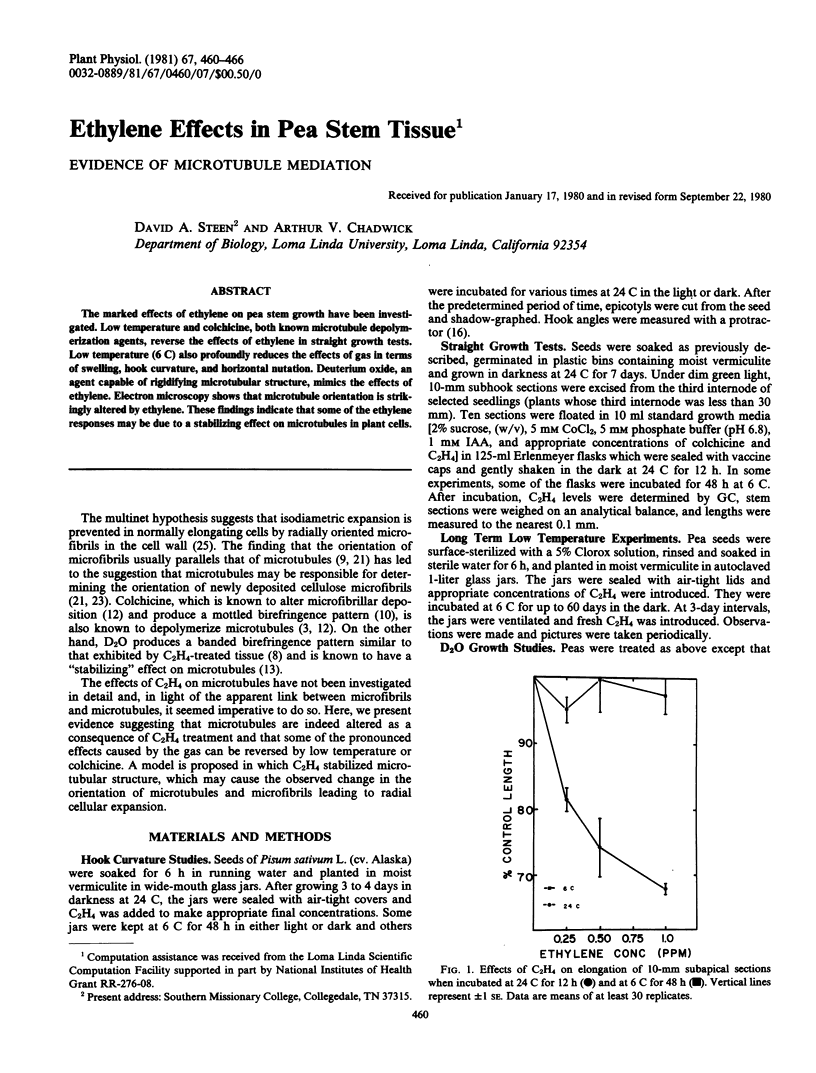
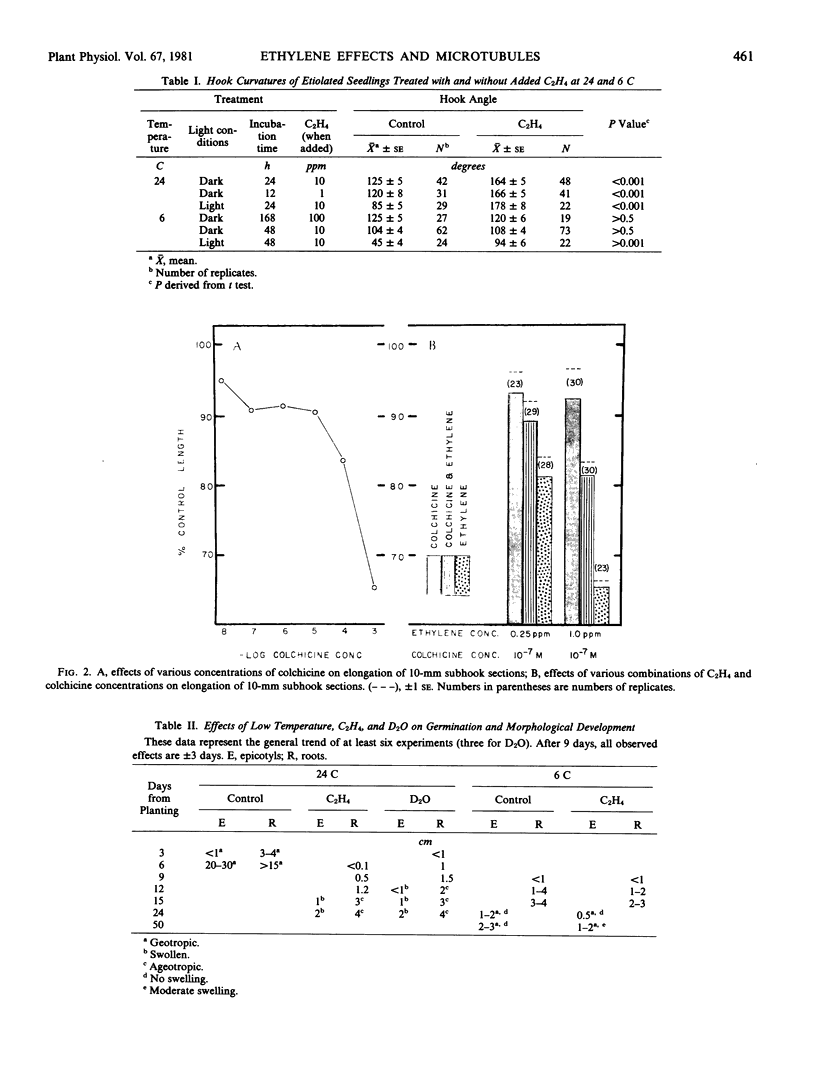
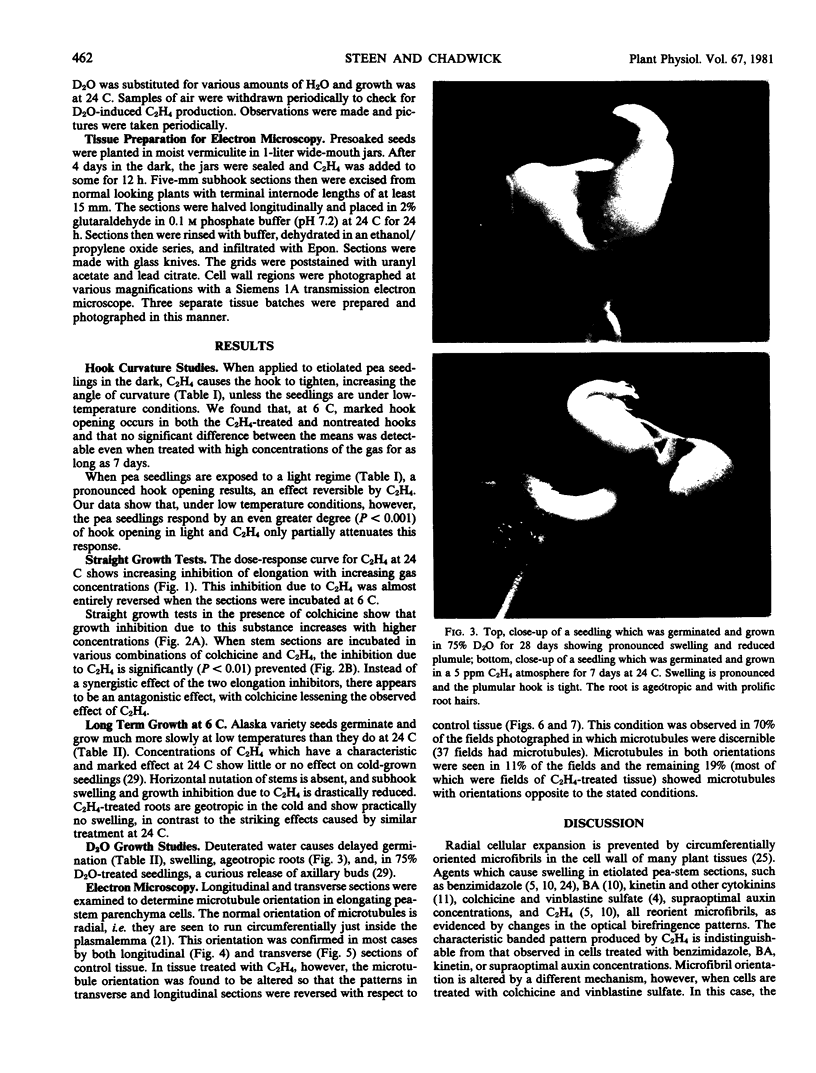
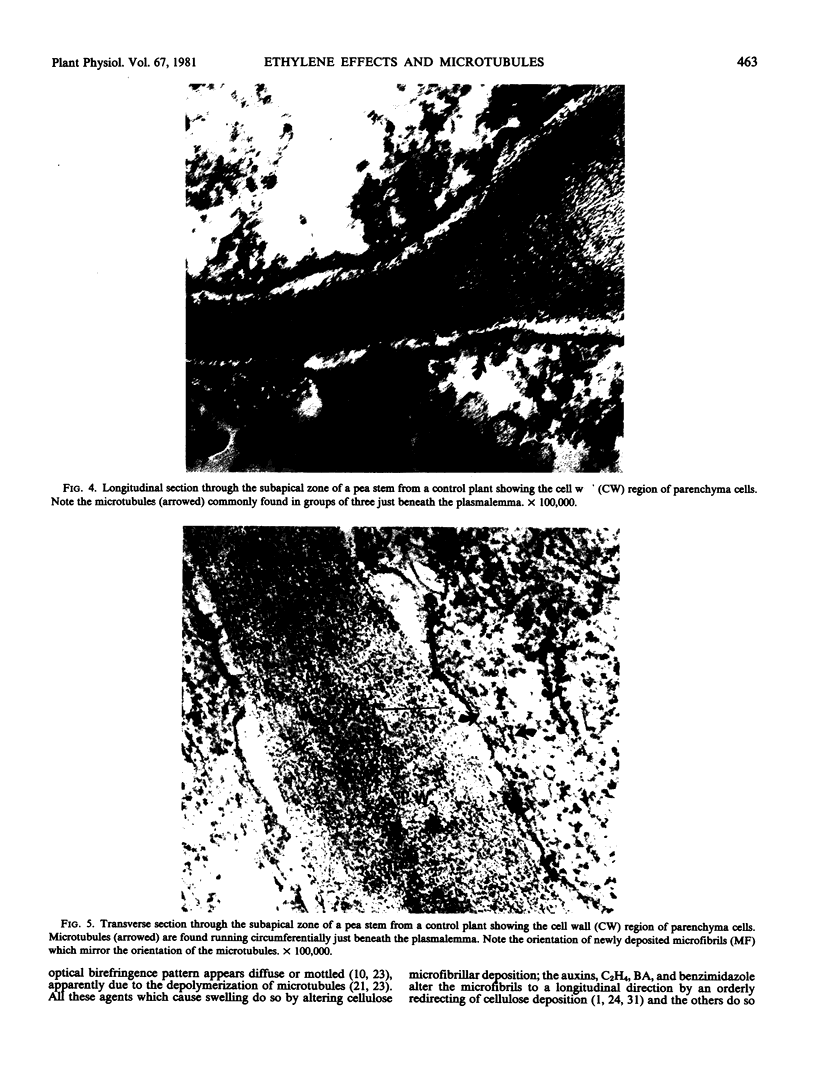
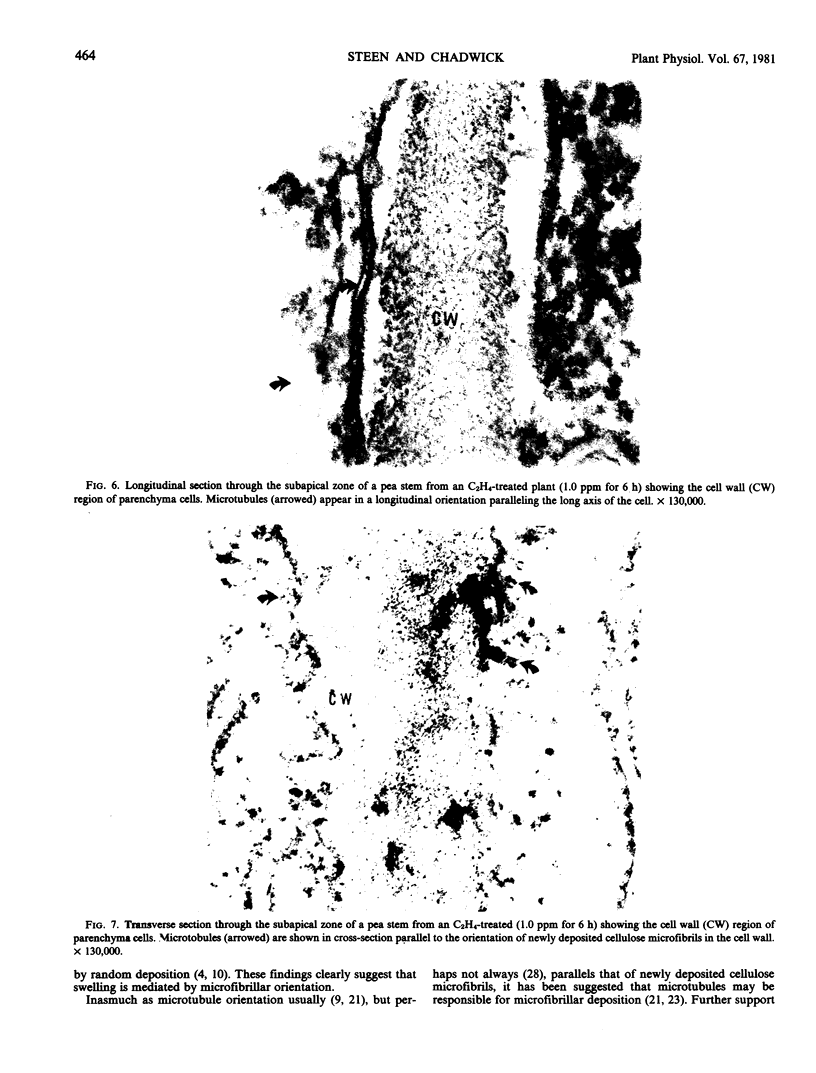
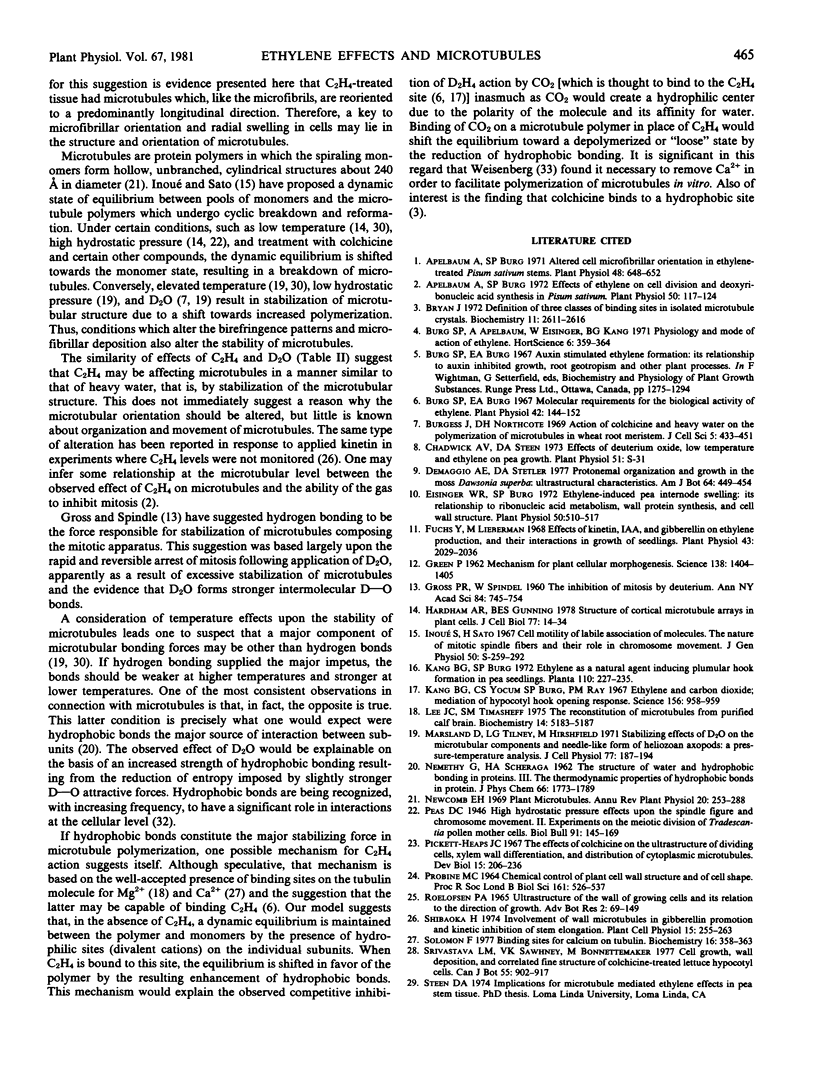

Images in this article
Selected References
These references are in PubMed. This may not be the complete list of references from this article.
- Apelbaum A., Burg S. P. Altered Cell Microfibrillar Orientation in Ethylene-treated Pisum sativum Stems. Plant Physiol. 1971 Nov;48(5):648–652. doi: 10.1104/pp.48.5.648. [DOI] [PMC free article] [PubMed] [Google Scholar]
- Bryan J. Definition of three classes of binding sites in isolated microtubule crystals. Biochemistry. 1972 Jul 4;11(14):2611–2616. doi: 10.1021/bi00764a010. [DOI] [PubMed] [Google Scholar]
- Burg S. P., Burg E. A. Molecular requirements for the biological activity of ethylene. Plant Physiol. 1967 Jan;42(1):144–152. doi: 10.1104/pp.42.1.144. [DOI] [PMC free article] [PubMed] [Google Scholar]
- Burgess J., Northcote D. H. Action of colchicine and heavy water on the polymerization of microtubules in wheat root meristem. J Cell Sci. 1969 Sep;5(2):433–451. doi: 10.1242/jcs.5.2.433. [DOI] [PubMed] [Google Scholar]
- Eisinger W. R., Burg S. P. Ethylene-induced Pea Internode Swelling: Its Relation to Ribonucleic Acid Metabolism, Wall Protein Synthesis, and Cell Wall Structure. Plant Physiol. 1972 Oct;50(4):510–517. doi: 10.1104/pp.50.4.510. [DOI] [PMC free article] [PubMed] [Google Scholar]
- Fuchs Y., Lieberman M. Effects of Kinetin, IAA, and Gibberellin on Ethylene Production, and Their Interactions in Growth of Seedlings. Plant Physiol. 1968 Dec;43(12):2029–2036. doi: 10.1104/pp.43.12.2029. [DOI] [PMC free article] [PubMed] [Google Scholar]
- GROSS P. R., SPINDEL W. The inhibition of mitosis by deuterium. Ann N Y Acad Sci. 1960 Nov 25;84:745–754. doi: 10.1111/j.1749-6632.1960.tb39106.x. [DOI] [PubMed] [Google Scholar]
- Green P. B. Mechanism for Plant Cellular Morphogenesis. Science. 1962 Dec 28;138(3548):1404–1405. doi: 10.1126/science.138.3548.1404. [DOI] [PubMed] [Google Scholar]
- Hardham A. R., Gunning B. E. Structure of cortical microtubule arrays in plant cells. J Cell Biol. 1978 Apr;77(1):14–34. doi: 10.1083/jcb.77.1.14. [DOI] [PMC free article] [PubMed] [Google Scholar]
- Inoué S., Sato H. Cell motility by labile association of molecules. The nature of mitotic spindle fibers and their role in chromosome movement. J Gen Physiol. 1967 Jul;50(6 Suppl):259–292. [PMC free article] [PubMed] [Google Scholar]
- Kang B. G., Yocum C. S., Burg S. P., Ray P. M. Ethylene and carbon dioxide: mediation of hypocotyl hook-opening response. Science. 1967 May 19;156(3777):958–959. doi: 10.1126/science.156.3777.958. [DOI] [PubMed] [Google Scholar]
- Lee J. C., Timasheff S. N. The reconstitution of microtubules from purified calf brain tubulin. Biochemistry. 1975 Nov 18;14(23):5183–5187. doi: 10.1021/bi00694a025. [DOI] [PubMed] [Google Scholar]
- Marsland D., Tilney L. G., Hirshfield M. Stabilizing effects of D2O on the microtubular components and needle-like form of heliozoan axopods: a pressure-temperature analysis. J Cell Physiol. 1971 Apr;77(2):187–194. doi: 10.1002/jcp.1040770209. [DOI] [PubMed] [Google Scholar]
- Solomon F. Binding sites for calcium on tubulin. Biochemistry. 1977 Feb 8;16(3):358–363. doi: 10.1021/bi00622a003. [DOI] [PubMed] [Google Scholar]
- Wang P. Y. Evidence of hydrophobic interaction in adhesion to tissue. Nature. 1974 May 24;249(455):367–368. doi: 10.1038/249367a0. [DOI] [PubMed] [Google Scholar]