



Abstract
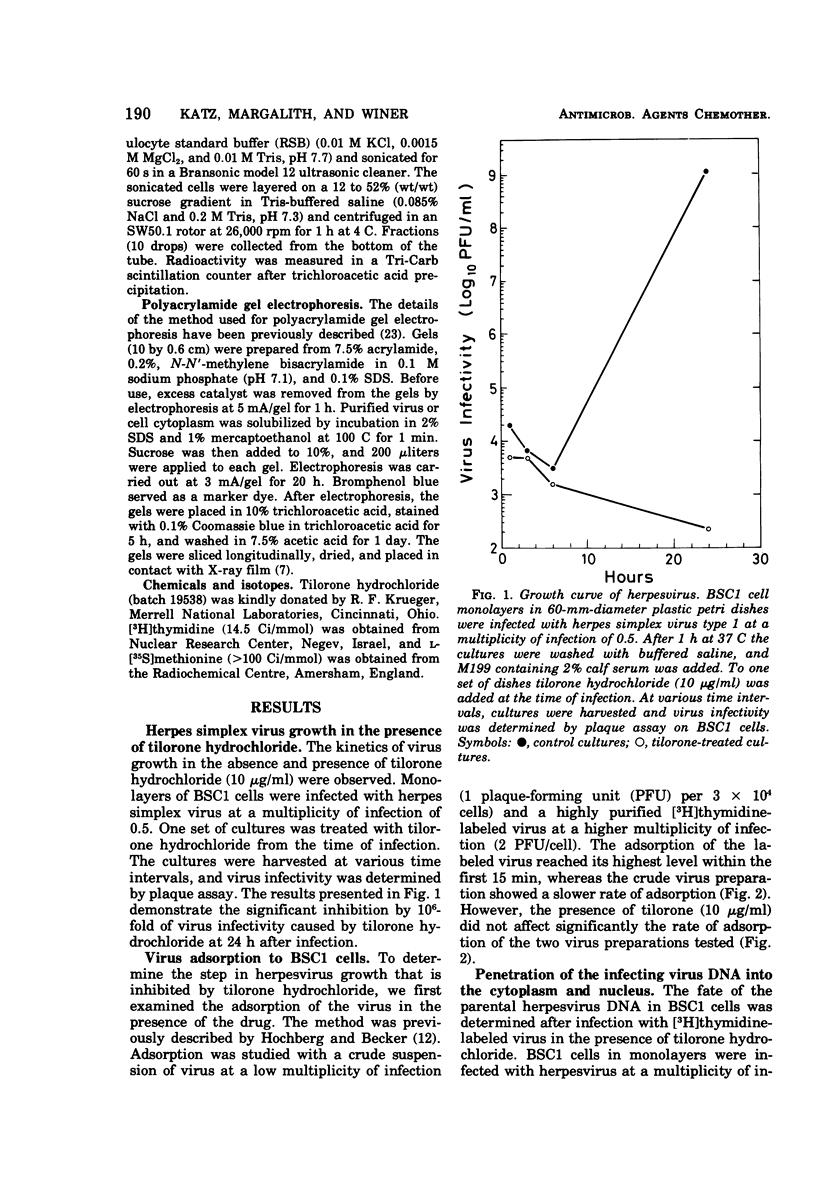
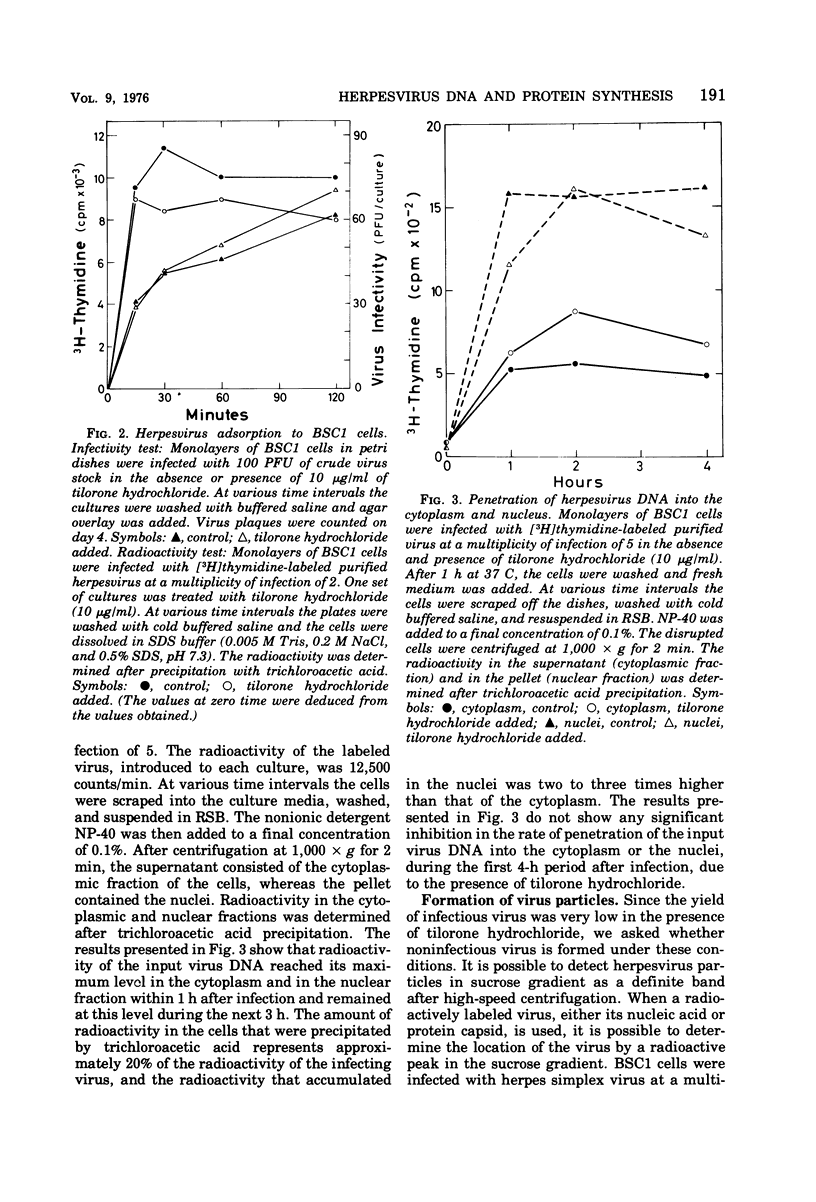
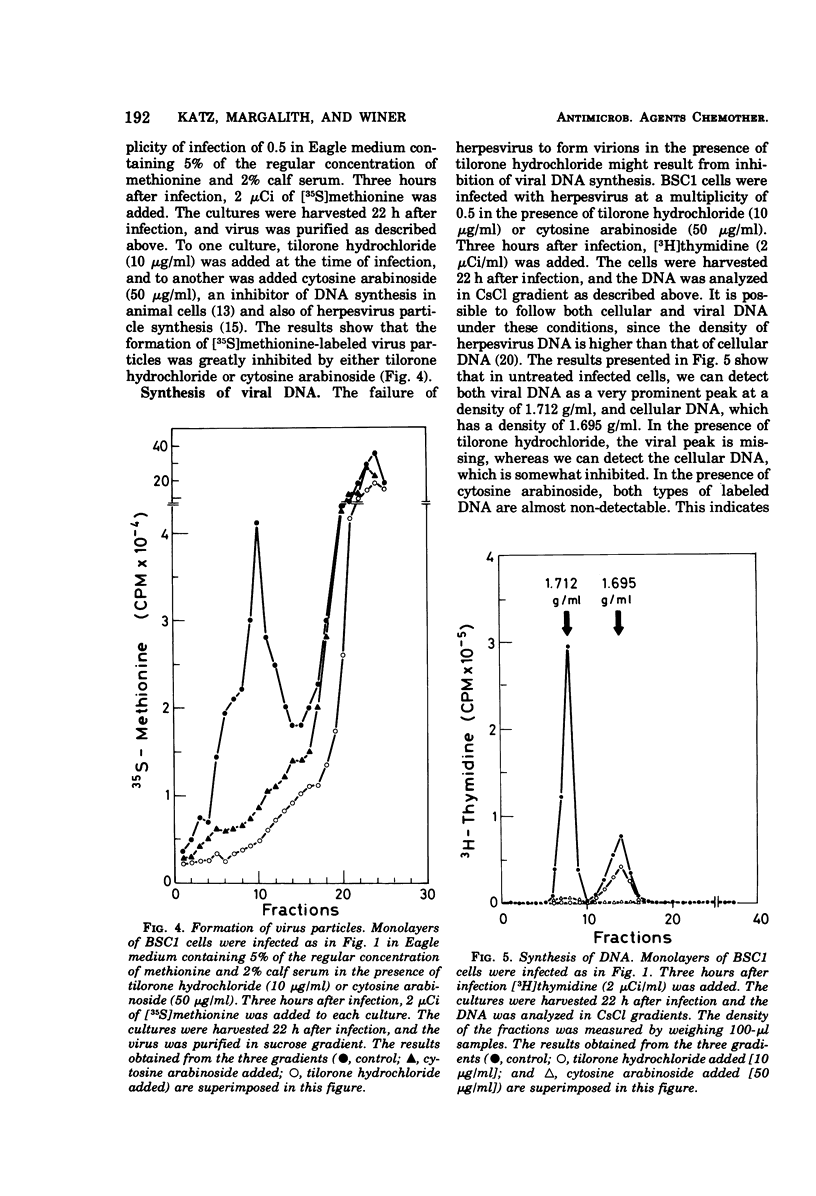
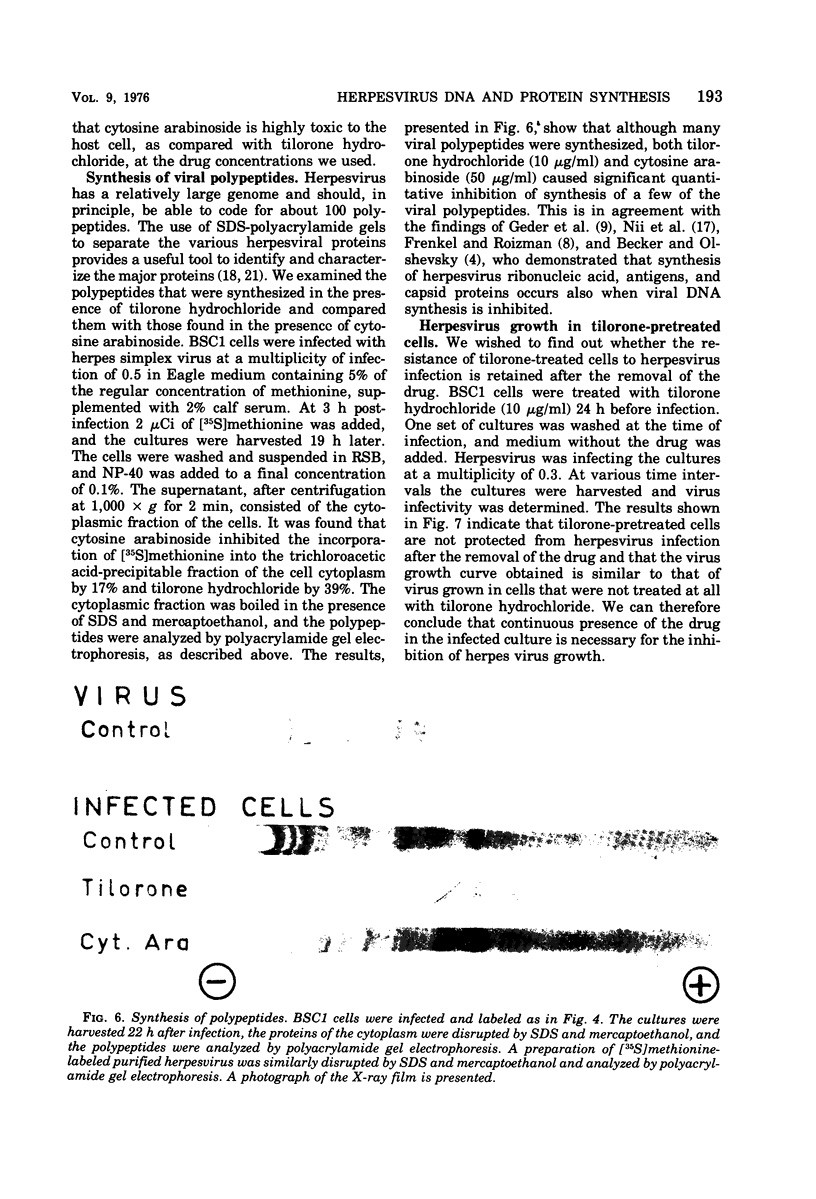
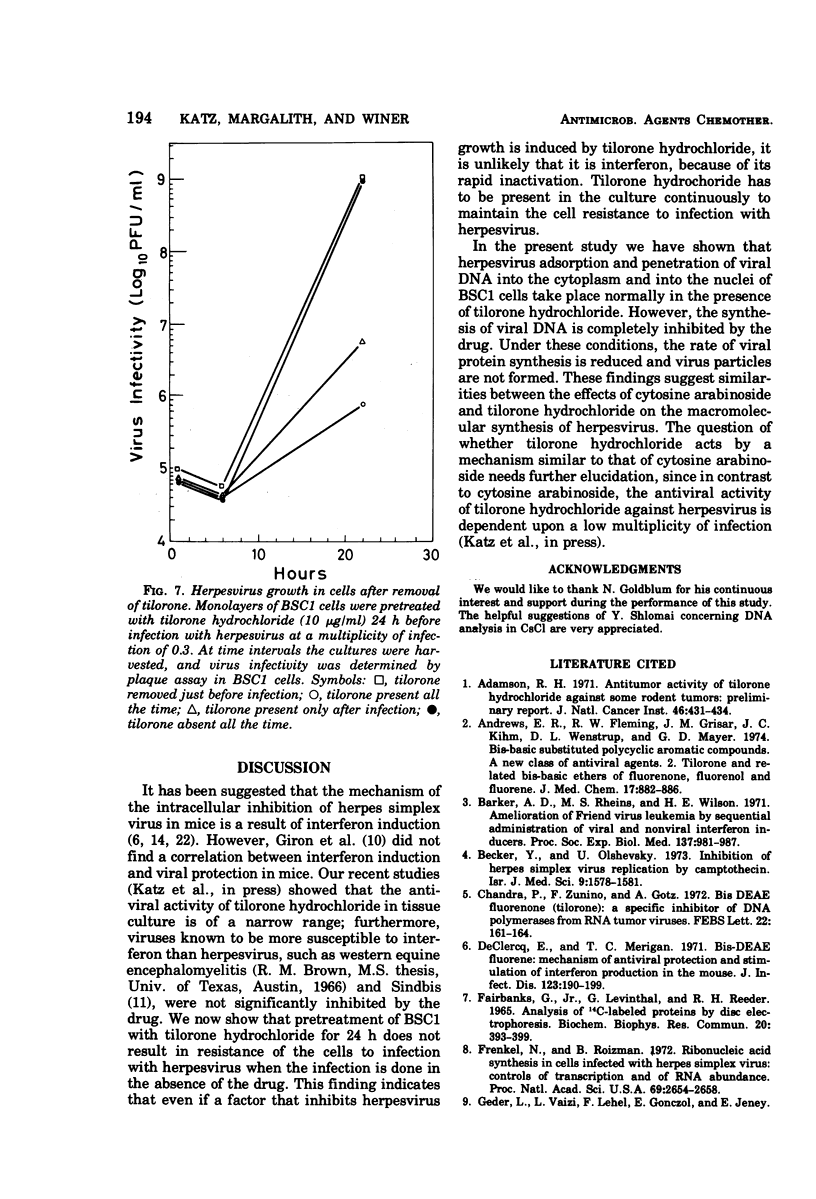
Tilorone hydrochloride at a concentration of 10 μg/ml very efficiently inhibited herpes simplex virus growth in BSC1 cells when the virus is infected at a low multiplicity of infection. The adsorption of the virus was not affected by the drug, and the penetration of the deoxyribonucleic acid of the input virus into the cytoplasm and nuclei proceeded normally when tilorone hydrochloride was present. However, newly synthesized viral deoxyribonucleic acid was not detectable under these conditions, there was a remarkable decrease in the rate of viral polypeptide synthesis, and virus particles were not formed. The inhibition of herpesvirus growth by tilorone hydrochloride was absolutely dependent on the presence of the drug in the cultures. Pretreatment of the cells with the drug did not result in resistance to herpesvirus infection after the removal of the drug.
Full text
PDF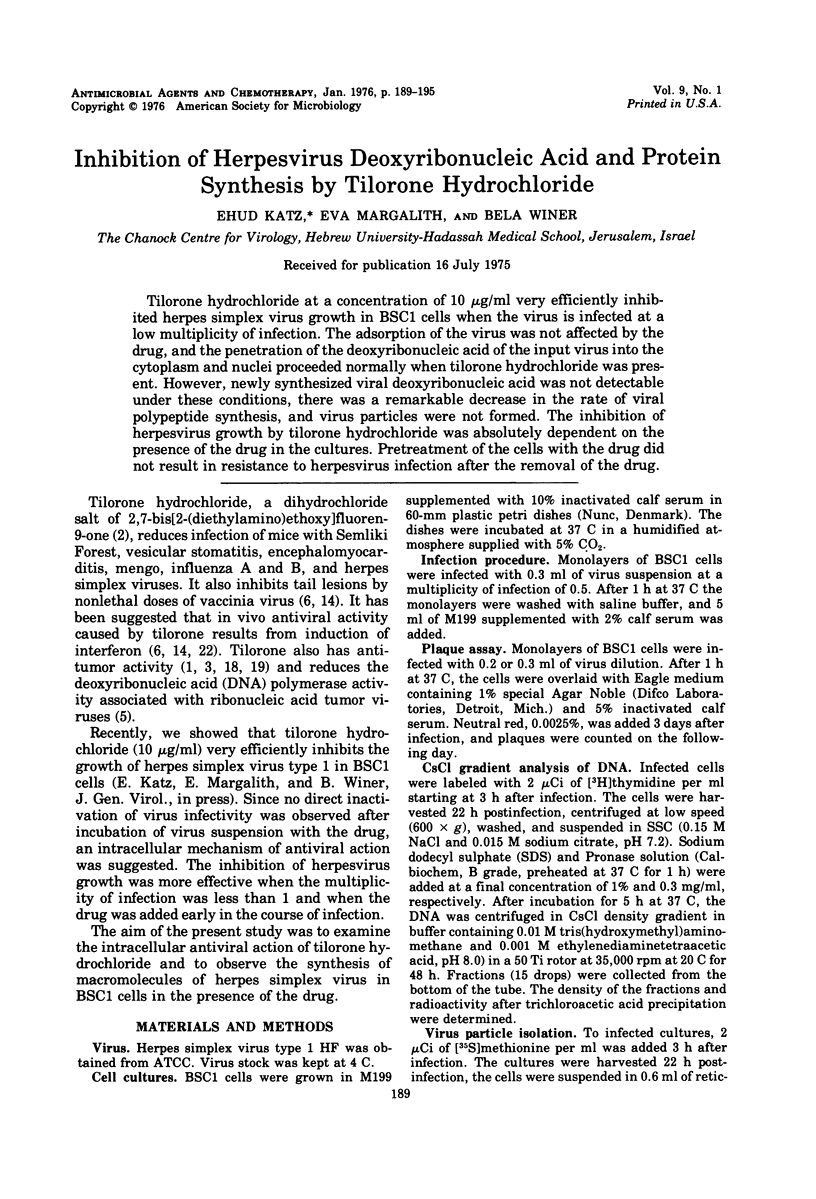
Images in this article
Selected References
These references are in PubMed. This may not be the complete list of references from this article.
- Adamson R. H. Antitumor activity of tilorone hydrochloride against some rodent tumors: preliminary report. J Natl Cancer Inst. 1971 Feb;46(2):431–434. [PubMed] [Google Scholar]
- Andrews E. R., Fleming R. W., Grisar J. M., Kihm J. C., Wenstrup D. L., Mayer G. D. Bis-basic-substituted polycyclic aromatic compounds. A new class of antiviral agents. 2. Tilorone and related bis-basic ethers of fluorenone, fluorenol, and fluorene. J Med Chem. 1974 Aug;17(8):882–886. doi: 10.1021/jm00254a020. [DOI] [PubMed] [Google Scholar]
- Barker A. D., Rheins M. S., Wilson H. E. Amelioration of friend virus leukemia by sequential administration of viral and nonviral interferon inducers. Proc Soc Exp Biol Med. 1971 Jul;137(3):981–987. doi: 10.3181/00379727-137-35710. [DOI] [PubMed] [Google Scholar]
- Becker Y., Olshevsky U. Inhibition of Herpes simplex virus replication by camptothecin. Isr J Med Sci. 1973 Nov-Dec;9(11):1578–1581. [PubMed] [Google Scholar]
- Chandra P., Zunino F., Götz A. Bis-deae-fluorenone: A specific inhibitor of DNA polymerases from RNA tumor viruses. FEBS Lett. 1972 May 1;22(2):161–164. doi: 10.1016/0014-5793(72)80034-6. [DOI] [PubMed] [Google Scholar]
- De Clercq E., Merigan T. C. Bis-DEAE-fluorenone: mechanism of antiviral protection and stimulation of interferon production in the mouse. J Infect Dis. 1971 Feb;123(2):190–199. doi: 10.1093/infdis/123.2.190. [DOI] [PubMed] [Google Scholar]
- Fairbanks G., Jr, Levinthal C., Reeder R. H. Analysis of C14-labeled proteins by disc electrophoresis. Biochem Biophys Res Commun. 1965 Aug 16;20(4):393–399. doi: 10.1016/0006-291x(65)90589-9. [DOI] [PubMed] [Google Scholar]
- Frenkel N., Roizman B. Ribonucleic acid synthesis in cells infected with herpes simplex virus: controls of transcription and of RNA abundance. Proc Natl Acad Sci U S A. 1972 Sep;69(9):2654–2658. doi: 10.1073/pnas.69.9.2654. [DOI] [PMC free article] [PubMed] [Google Scholar]
- Giron D. J., Schmidt J. P., Pindak F. F. Tilorone hydrochloride: lack of correlation between interferon induction and viral protection. Antimicrob Agents Chemother. 1972 Jan;1(1):78–79. doi: 10.1128/aac.1.1.78. [DOI] [PMC free article] [PubMed] [Google Scholar]
- Glasgow L. A., Hanshaw J. B., Merigan T. C., Petralli J. K. Interferon and cytomegalovirus in vivo and in vitro. Proc Soc Exp Biol Med. 1967 Jul;125(3):843–849. doi: 10.3181/00379727-125-32220. [DOI] [PubMed] [Google Scholar]
- Hochberg E., Becker Y. Adsorption, penetration and uncoating of herpes simplex virus. J Gen Virol. 1968 Mar;2(2):231–241. doi: 10.1099/0022-1317-2-2-231. [DOI] [PubMed] [Google Scholar]
- KIM J. H., EIDINOFF M. L. ACTION OF 1-BETA-D-ARABINOFURANOSYLCYTOSINE ON THE NUCLEIC ACID METABOLISM AND VIABILITY OF HELA CELLS. Cancer Res. 1965 Jun;25:698–702. [PubMed] [Google Scholar]
- Krueger R. E., Mayer G. D. Tilorone hydrochloride: an orally active antiviral agent. Science. 1970 Sep 18;169(3951):1213–1214. doi: 10.1126/science.169.3951.1213. [DOI] [PubMed] [Google Scholar]
- Levitt J., Becker Y. The effect of cytosine arabinoside on the replication of herpes simplex virus. Virology. 1967 Jan;31(1):129–134. doi: 10.1016/0042-6822(67)90016-5. [DOI] [PubMed] [Google Scholar]
- Munson A. E., Munson J. A., Regelson W., Wampler G. L. Effect of Tilorone hydrochloride and congeners on reticuloendothelial system, tumors, and the immune response. Cancer Res. 1972 Jul;32(7):1397–1403. [PubMed] [Google Scholar]
- Nii S., Rosenkranz H. S., Morgan C., Rose H. M. Electron microscopy of herpes simplex virus. 3. Effect of hydroxyurea. J Virol. 1968 Oct;2(10):1163–1171. doi: 10.1128/jvi.2.10.1163-1171.1968. [DOI] [PMC free article] [PubMed] [Google Scholar]
- Olshevsky U., Becker Y. Herpes simplex virus structural proteins. Virology. 1970 Apr;40(4):948–960. doi: 10.1016/0042-6822(70)90141-8. [DOI] [PubMed] [Google Scholar]
- RUSSELL W. C., CRAWFORD L. V. SOME CHARACTERISTICS OF THE DEOXYRIBONUCLEIC ACID FROM HERPES SIMPLEX VIRUS. Virology. 1963 Nov;21:353–361. doi: 10.1016/0042-6822(63)90196-x. [DOI] [PubMed] [Google Scholar]
- Spear P. G., Roizman B. Proteins specified by herpes simplex virus. V. Purification and structural proteins of the herpesvirion. J Virol. 1972 Jan;9(1):143–159. doi: 10.1128/jvi.9.1.143-159.1972. [DOI] [PMC free article] [PubMed] [Google Scholar]
- Stringfellow D. A., Glasgow L. A. Tilorone hydrochloride: an oral interferon-inducing agent. Antimicrob Agents Chemother. 1972 Aug;2(2):73–78. doi: 10.1128/aac.2.2.73. [DOI] [PMC free article] [PubMed] [Google Scholar]
- Summers D. F., Maizel J. V., Jr, Darnell J. E., Jr Evidence for virus-specific noncapsid proteins in poliovirus-infected HeLa cells. Proc Natl Acad Sci U S A. 1965 Aug;54(2):505–513. doi: 10.1073/pnas.54.2.505. [DOI] [PMC free article] [PubMed] [Google Scholar]