



Abstract
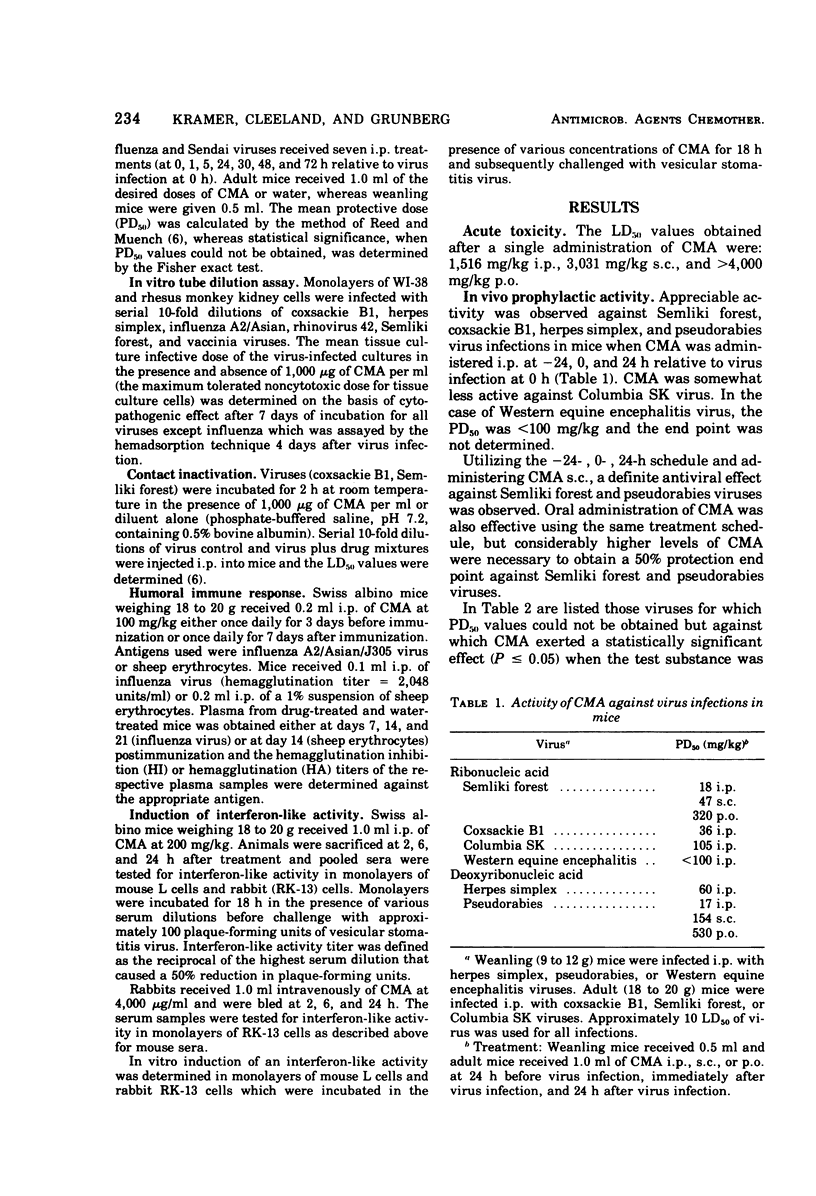
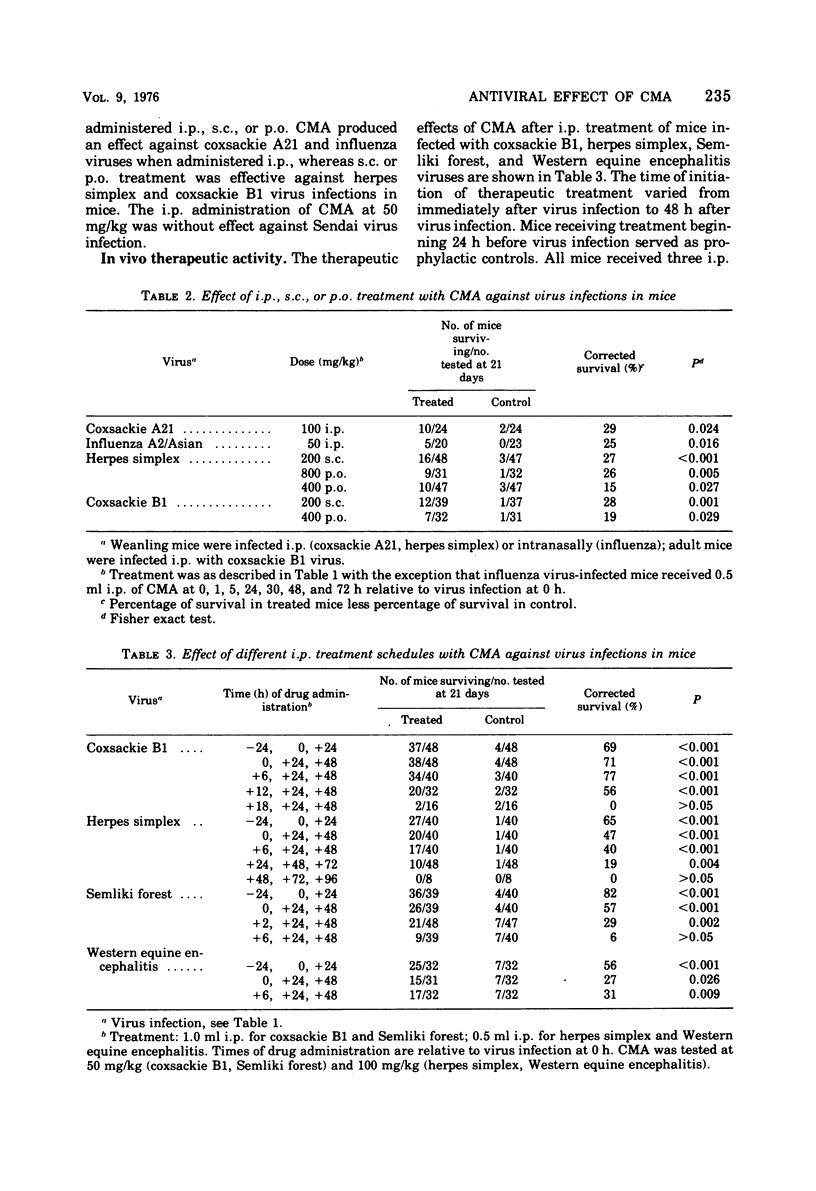
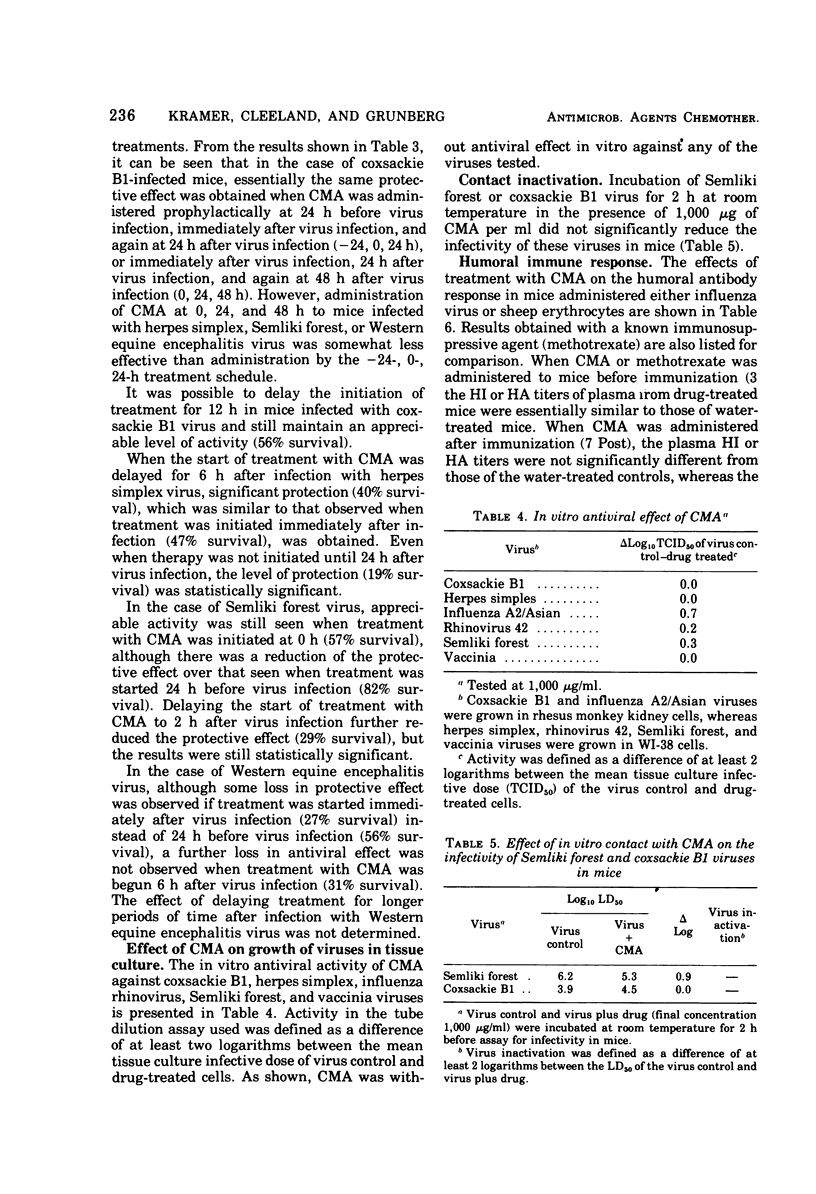
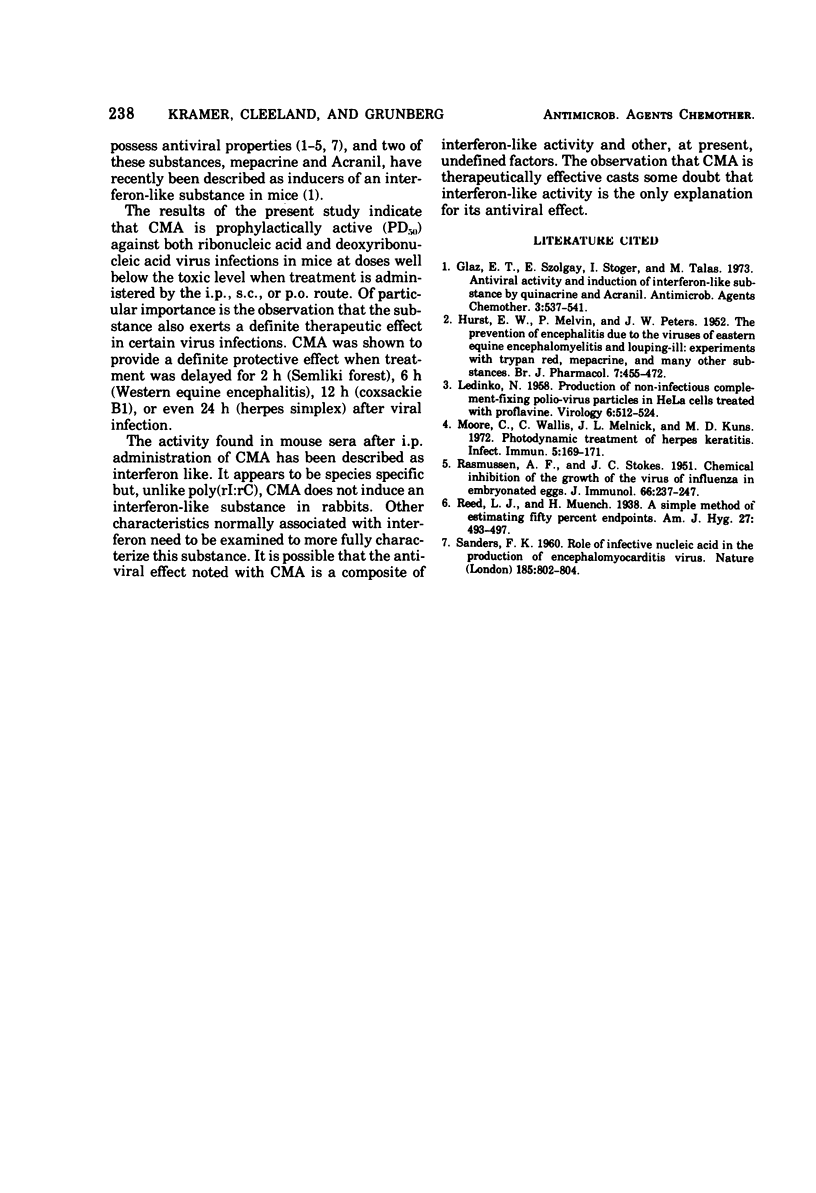
Intraperitoneal administration of 10-carboxymethyl-9-acridanone sodium salt (CMA) protected at least 50% of mice tested from otherwise lethal infections with Semliki forest, coxsackie B1, Columbia SK, Western equine encephalitis, herpes simplex, and pseudorabies viruses. The protective effect against influenza A2/Asian/J305 and coxsackie A21 viruses was less but was statistically significant. When administered either subcutaneously or orally, CMA protected at least 50% of mice against Semliki forest and pseudorabies viruses; the effect against coxsackie B1 and herpes simplex viruses was less but was statistically significant. Initiation of treatment could be delayed from 2 to 24 h after infection of mice with coxsackie B1, herpes simplex, Semliki forest, and Western equine encephalitis viruses without loss of an antiviral effect. CMA did not inactivate Semliki forest or coxsackie B1 viruses on contact and was without effect against any of the viruses tested in tissue culture by the tube dilution assay. The humoral antibody response in mice to both influenza virus and sheep erythrocytes was unaffected by CMA. After administration of CMA, an interferon-like substance was induced in mice or mouse cell culture but not in rabbits or rabbit cell culture.
Full text
PDF

Selected References
These references are in PubMed. This may not be the complete list of references from this article.
- Gláz E. T., Szolgay E., Stöger I., Tálas M. Antiviral activity and induction of interferon-like substance by quinacrine and acranil. Antimicrob Agents Chemother. 1973 May;3(5):537–541. doi: 10.1128/aac.3.5.537. [DOI] [PMC free article] [PubMed] [Google Scholar]
- HURST E. W., MELVIN P., PETERS J. M. The prevention of encephalitis due to the viruses of eastern equine encephalomyelitis and louping-ill: experiments with trypan red, mepacrine, and many other substances. Br J Pharmacol Chemother. 1952 Sep;7(3):455–472. doi: 10.1111/j.1476-5381.1952.tb00713.x. [DOI] [PMC free article] [PubMed] [Google Scholar]
- LEDINKO N. Production of noninfectious complement-fixing poliovirus particles in HeLa cells treated with proflavine. Virology. 1958 Oct;6(2):512–524. doi: 10.1016/0042-6822(58)90098-9. [DOI] [PubMed] [Google Scholar]
- Moore C., Wallis C., Melnick J. L., Kuns M. D. Photodynamic treatment of herpes keratitis. Infect Immun. 1972 Feb;5(2):169–171. doi: 10.1128/iai.5.2.169-171.1972. [DOI] [PMC free article] [PubMed] [Google Scholar]
- RASMUSSEN A. F., Jr, STOKES J. C. Chemical inhibition of the growth of the virus of influenza in embryonated eggs. J Immunol. 1951 Feb;66(2):237–247. [PubMed] [Google Scholar]
- SANDERS F. K. Role of infective nucleic acid in the production of encephalomyocarditis virus. Nature. 1960 Mar 19;185:802–804. doi: 10.1038/185802a0. [DOI] [PubMed] [Google Scholar]