



Mary Jo Kreitzer, PhD, RN, Faan
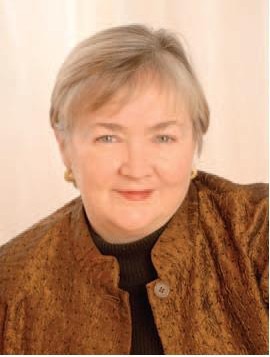
Over the past 20 years, my work at the University of Minnesota has focused on creating opportunities and venues where faculty and clinicians escape the disciplinary silos that have dominated the landscape of academic institutions and healthcare for perhaps centuries to collaborate on education, research, and innovative and holistic ways of caring for people and communities. The global growth of integrative health and medicine comes at a time when there is also a growing understanding of the necessity of team-based, collaborative care and interprofessional education. This is due in part to a recognition that no single discipline alone can provide care to patients who have complex, chronic disease and that health professionals are better prepared to work in teams if they have been educated in settings where they have learned together as students. The shift away from the solo principal investigator to team-based research is another reflection of the phenomena of silos breaking down into circles of collaboration. Diverse perspectives create stronger teams whether in the classroom, laboratory, or clinical settings.
When I was invited to become the co–editor-in-chief of Global Advances in Health and Medicine (GAHMJ), I saw the opportunity in many ways as being a natural extension of my work and passion. Our vision at GAHMJ is to draw together a worldwide community dedicated to improving health and wellbeing through whole-person and whole-systems care and healing. To achieve that, we are creating a multimedia communications platform with the journal being a cornerstone. I feel incredibly fortunate to be leading this endeavor with a good friend and colleague, Rob Saper, MD, MPH. The idea of having having two leaders from two different backgrounds and disciplines provide the editorial leadership resonated with both Rob and me. It is an immense field that will benefit, we believe, by having thought leadership come from two co–editors-in-chief as well as from a very talented and diverse group of editors. Please take a few minutes to review the bios of our editors on page 5. We are also grateful to have individuals on our editorial board—whose names appear on the masthead—who are pioneers and leaders in the field; we welcome their guidance and input. Critical to any journal's success is visionary leadership and the capacity to execute. Michele Mittelman, RN, MPH, founder and chief executive officer of Global Advances, brings tremendous vision, wisdom, courage, and tenacity that are complemented by the knowledge and skills of president and publisher Avery Stirratt. Avery, a veteran of prestigious publications including Newsweek and Forbes, brings a depth of experience in business and journalism. Rounding out the team are two talented and committed veterans of GAHMJ, creative director Lee Dixson and managing editor Suzanne Snyder.
Robert Saper, MD, MPH

As a medical student at Harvard in the mid 1980s, I was impressed and inspired by the exciting advances in medical knowledge and technology. Simultaneously, I was struck by how, despite these advances, patients continued to suffer. As we relied more on our technology than our patients' words, we lost sight of the whole person and his or her illness experience. With this realization, I began a journey asking the simple question, “What else may help this person?” Asking this question as a student, resident, practicing family physician, and for the last 10 years as an academic clinician-investigator at Boston University, I have learned about many traditions and tools, including yoga, massage, Ayurveda, shiatsu, meditation, and herbal supplements. I have observed both benefit and harm. Moreover, I have also witnessed that relationship and community can be powerful catalysts of healing, often as important as the tools themselves, whether it be medications, the surgeon's knife, or the acupuncture needle. Seeing the patient as a whole person with multiple interconnected domains—physical, emotional, cognitive, social, cultural, and spiritual—is the foundation of a strong therapeutic relationship. The patient is at the center of a whole system—the therapeutic community—consisting of a team of interdisciplinary health professionals and lay-people, family, friends, and others.
I feel very fortunate to have the opportunity to serve as co–editor-in-chief with Mary Jo Kreitzer, RN, PhD, FAAN. We envision Global Advances as a unique forum to host an international, interdisciplinary community where we can continue to ask together, “What else may help this person?” The question comes from “the heart”—compassion for suffering, a desire to be of service, and the inherent human drive toward health and wellbeing. The answers to the question, however, must come from the heart and mind—intellectually curious, unbiased, and scientifically rigorous.
Editorial Vision for Global Advances in Health and Medicine
When you open the journal or visit the website (www.gahmj.com), we want you to experience access to information that is compelling, rigorous, and relevant and that stretches your worldview. Research papers will remain the core of the journal, and we invite submissions that include qualitative as well as quantitative data, meta-analyses, and systematic reviews. Research studies in this issue include the influence of expectation on outcomes in a randomized controlled clinical trial on yoga for low back pain by Tran and et al1 and a study by Evans et al of the facilitators and barriers of using integrative care approaches in long-term care facilities.2 A review by McCraty and Shaffer3 is an excellent synthesis of the field of heart rate variability and self-regulatory capacity with significant implications for reducing health risk and improving health and wellbeing. A new feature will be brief research reports (no more than 1500 words), an excellent format for publishing small or pilot studies. Information for authors appears on our website. We are committed to making the process of manuscript submission and review timely and personalized, whether you are a novice or a veteran author.
GAHMJ will continue its tradition of publishing case reports and case series. GAHMJ collaborated on the development of the CARE guidelines, a standardized template for capturing case report data. These reports capture unusual findings that are timely and may be relevant to other clinicians. Often case reports or case series will raise clinical questions that may lead to subsequent research. In this issue, Virdee et al discuss the clinical course of two patients with asthma who eliminated foods from their diet based on food-specific IgG antibody testing.4
A goal we have is to share with our global community timely information and news. We are very pleased to have John Weeks join us as a regular columnist. John, a veteran journalist, is well known in the United States for the Integrator Blog. In this issue, John reflects his insights and views on the role integrative health can play in the movement to reduce the harm of excessive or inappropriate opiate use for pain.5 We are also excited about a new feature from John: the Global Integrator Blog, which appears on our new website. The Global Landscape: Organization and Association News will also appear in each issue. This issue brings highlights from eight major organizations leading integrative health and medicine efforts around the world (page 11). In addition, Scanning the Global Literature features concise summaries with editorial commentary on research published elsewhere that is relevant to our community (page 76).
With the desire to hear diverse voices, we have added two new features: Viewpoints and In My Own Words. Viewpoints are commentaries you may submit discussing important problems, challenges, or controversies related to advancing global health and wellbeing through whole-person and whole-systems care. In My Own Words provides an opportunity for patients or people close to them—caregivers, clinicians, and others—to submit a narrative about a personal experience of whole-person and whole-system care and healing.
Finally, recognizing the importance of the arts in healing, we invite submissions of images of healing and poems. Images (photographs, illustrations, artistic renditions) should reflect some dimension or aspect of healing, and both images and poems may appear in the journal and/or on the website. Adding this feature reflects our desire to highlight the importance of the arts and to disseminate broadly healing images and words. Contributors who submit images and poems agree to allow others to access them from our website and to use them with appropriate attribution.
We are very excited about the new website and encourage you to visit it often. The website will provide the ability for continuous publishing. An article that has high relevance and critical timing may be published on the website first and subsequently in the journal. Authors are welcome to submit video to complement their papers. We envision, for example, that author interviews or demonstrations may greatly enhance the written text. There will also be opportunities for online discussion and forums about articles and other issues relevant to the field. The website will also feature blogs and breaking news and will be a rich archive of past articles and case reports.
For this global community to flourish, we need and welcome your partnership and collaboration. We invite you to subscribe and become an active user, and we welcome your submissions. We are committed to not imposing publication charges and to providing you with strong helpful editorial support from submission through publication.
Lastly, we welcome your feedback! Please drop us a note and let us know what you think of the new format and content and offer any suggestions you may have to improve Global Advances in Health and Medicine.
REFERENCES
- 1.Tran HH, Weinberg J, Sherman KJ, Saper RB. Preference and expectation for treatment assignment in a randomized controlled trial of once versus twice weekly yoga for chronic low back pain. Global Adv Health Med. 2015;4(1):34–9. [DOI] [PMC free article] [PubMed] [Google Scholar]
- 2.Evans R, Vihstad C, Westrom K. Complementary and integrative care in long-term care: a feasibility study. Global Adv Health Med. 2015;4(1):18–27. [DOI] [PMC free article] [PubMed] [Google Scholar]
- 3.McCraty R, Shaffer F. Heart rate variability: new Perspectives on physiological mechanisms, assessment of self-regulatory capacity, and health risk. Global Adv Health Med. 2015;4(1):46–61. [DOI] [PMC free article] [PubMed] [Google Scholar]
- 4.Virdee K, Uwase J, Baral M, Cronin C, Langland JO. Food-specific IgG Antibody-guided exclusion diets followed by resolution of asthma symptoms and reduction in pharmacological interventions in two patients: a case report. Global Adv Health Med. 2015;4(1):62–6. [DOI] [PMC free article] [PubMed] [Google Scholar]
- 5.Weeks J. Never Only Opioids and the Joint Commission: toward a conservative, whole-system treatment standard for pain. Global Adv Health Med. 2015;4(1):8–10. [DOI] [PMC free article] [PubMed] [Google Scholar]