



Abstract
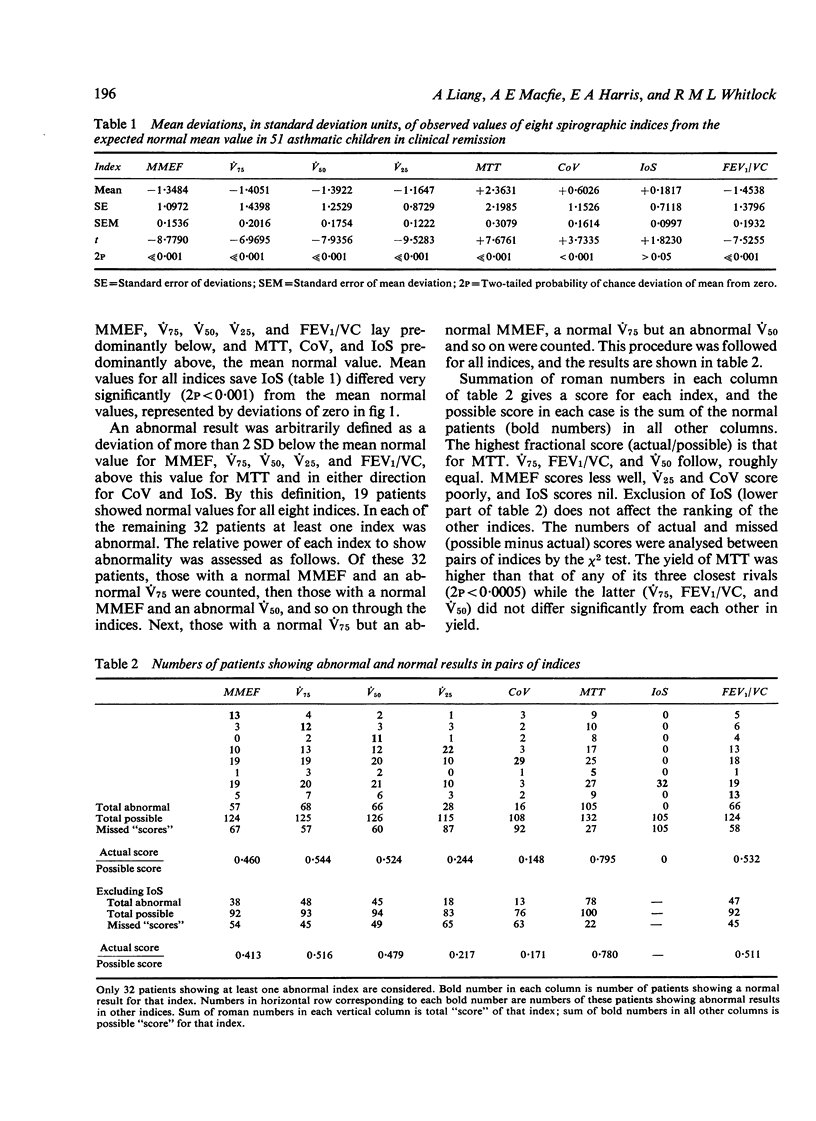
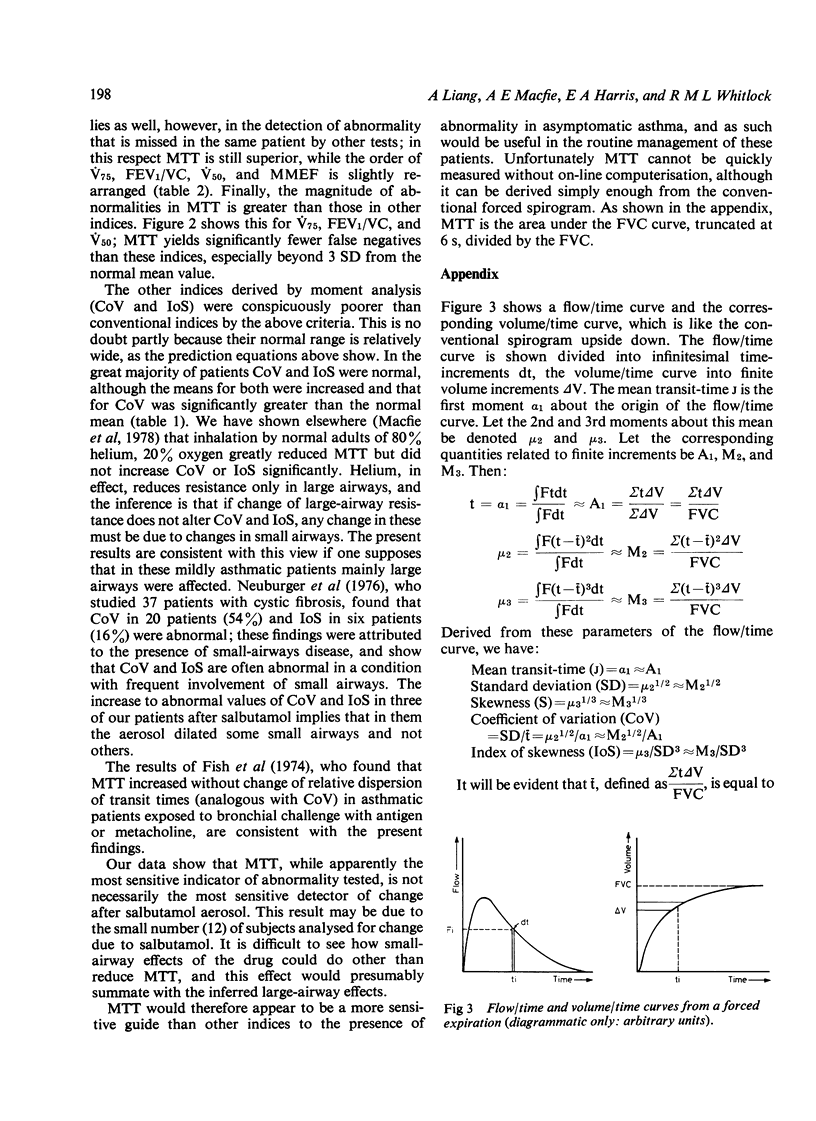
The mean transit time (MTT), coefficient of variation (CoV), and index of skewness (IoS) of transit times of the forced expiratory flow/time curve have been compared with maximal mid-expiratory flow (MMEF), flow at 75, 50, and 25% of vital capacity (V75, V50, and V25), and the ratio of forced expiratory volume in 1 second (FEV1) to vital capacity (VC) in 51 asthmatic children judged on clinical grounds to be in remission. In 19 children all eight indices were normal. Of the remaining 32, MTT was normal in 5, V50 in 11, V75 in 12, and FEV1/VC and MMEF in 13 each. MTT was significantly more sensitive in detecting abnormality when other indices were normal, and abnormalities in MTT were of significantly greater magnitude when present. In 12 patients with at least one abnormal index given salbutamol aerosol, MTT was not more sensitive than MMEF, V25, FEV1/VC, or V50 in detecting change.
Full text
PDF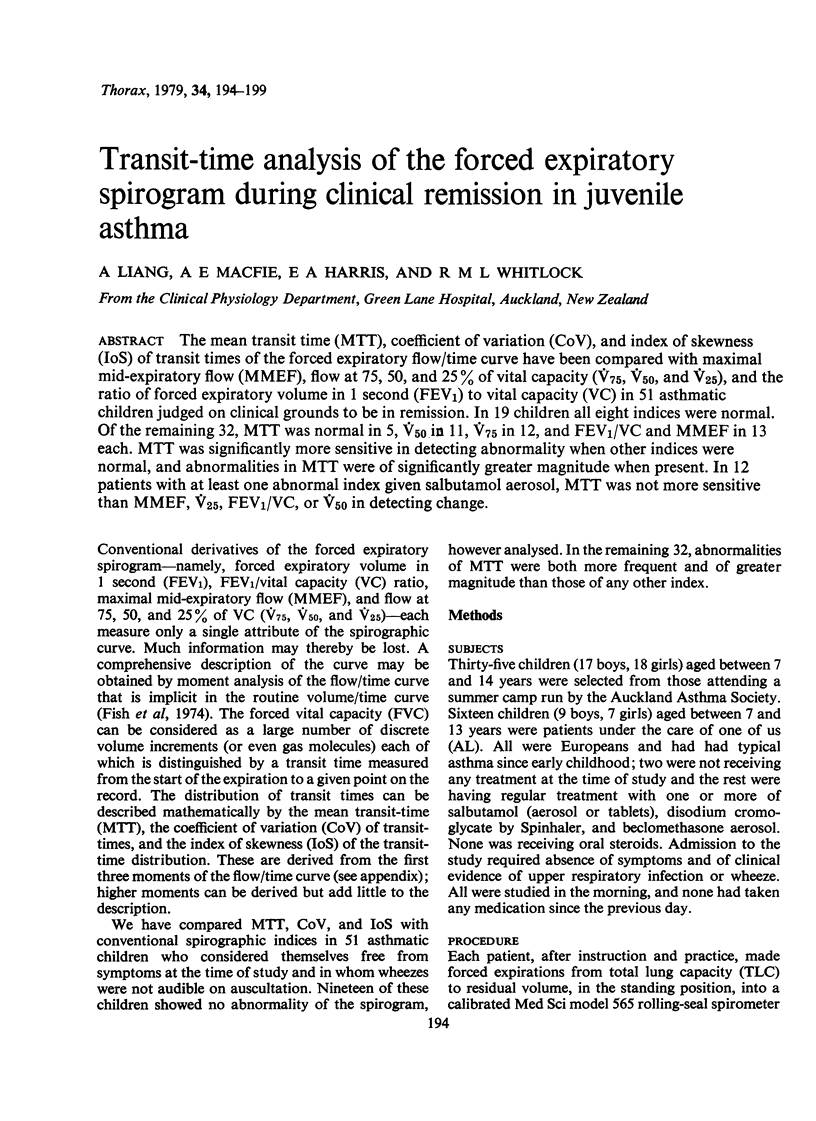


Selected References
These references are in PubMed. This may not be the complete list of references from this article.
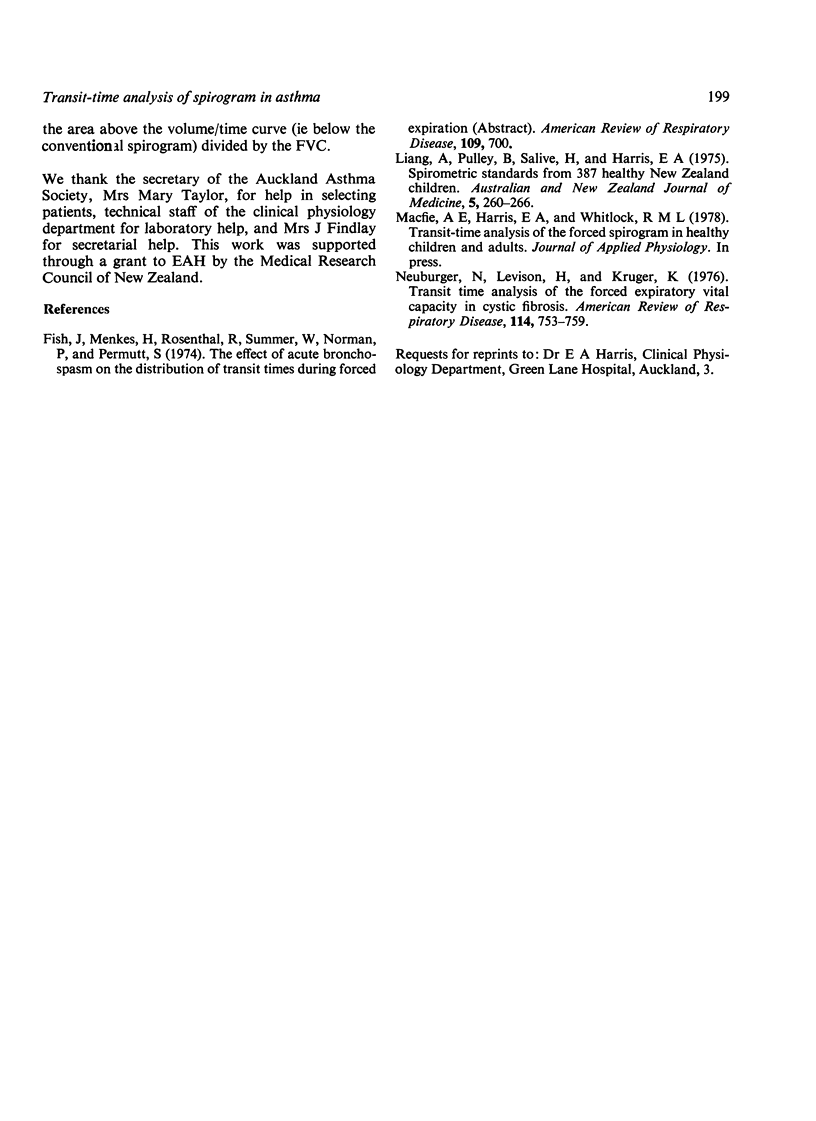
- Liang A., Pulley B., Salive H. T., Harris E. A. Spirometric standards from 387 healthy New Zealand children. Aust N Z J Med. 1975 Jun;5(3):260–266. doi: 10.1111/j.1445-5994.1975.tb04579.x. [DOI] [PubMed] [Google Scholar]
- Neuburger N., Levison H., Kruger K. Transit time analysis of the forced expiratory vital capacity in cystic fibrosis. Am Rev Respir Dis. 1976 Oct;114(4):753–759. doi: 10.1164/arrd.1976.114.4.753. [DOI] [PubMed] [Google Scholar]