



Abstract
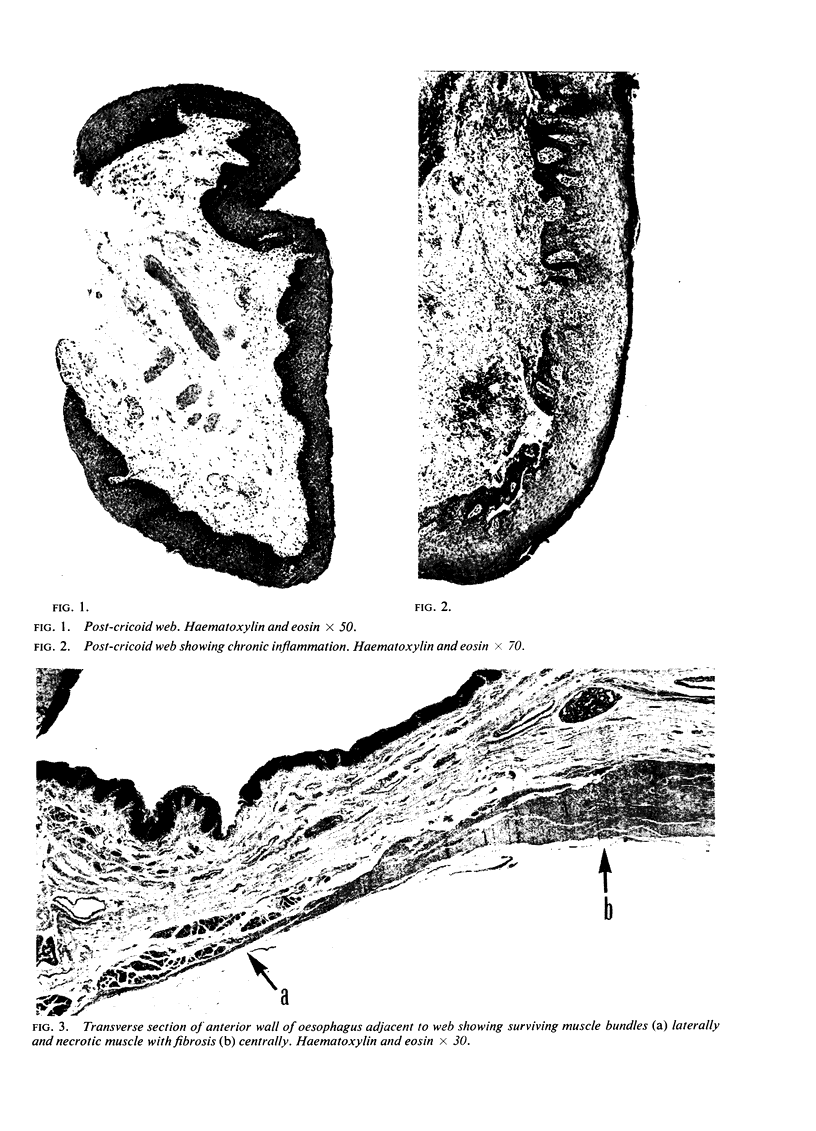
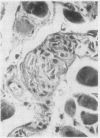
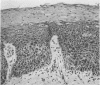
Forty-one specimens taken from lesions in the post-cricoid region of patients with the Paterson-Kelly syndrome have been examined. Most webs consist of normal oesophageal mucosa which may be associated with underlying muscle and nerve lesions. Strictures also show a chronic non-specific inflammation often with epithelial changes and sometimes squamous carcinoma. Other lesions observed clinically have also shown malignant change.
Full text
PDF


Images in this article


Selected References
These references are in PubMed. This may not be the complete list of references from this article.
- BAIRD I. M., DODGE O. G., PALMER F. J., WAWMAN R. J. The tongue and oesophagus in iron-deficiency anaemia and the effect of iron therapy. J Clin Pathol. 1961 Nov;14:603–609. doi: 10.1136/jcp.14.6.603. [DOI] [PMC free article] [PubMed] [Google Scholar]
- BRAIN R., HENSON R. A. Neurological syndromes associated with carcinoma: the carcinomatous neuromyopathies. Lancet. 1958 Nov 8;2(7054):971–975. doi: 10.1016/s0140-6736(58)90471-9. [DOI] [PubMed] [Google Scholar]
- JACOBS A. The buccal mucosa in anaemia. J Clin Pathol. 1960 Nov;13:463–468. doi: 10.1136/jcp.13.6.463. [DOI] [PMC free article] [PubMed] [Google Scholar]
- JONES R. F. The Paterson-Brown Kelly syndrome. Its relationship to iron deficiency and postcricoid carcinoma. I. J Laryngol Otol. 1961 Jun;75:529–543. [PubMed] [Google Scholar]