



Abstract
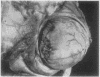
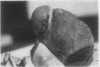
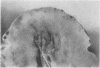
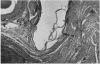
The morbid anatomy and histopathology is described as found at necropsy on a 7-year-old coloured girl who suffered from partial defect of the pericardium with prolapse and partial incarceration of the cardiac apex. Because of the absence of any history of illness during life the defect is considered to have been congenital, and because of the lack of any other significant necropsy findings, it is considered to have been the cause of death.
Full text
PDF


Images in this article
Selected References
These references are in PubMed. This may not be the complete list of references from this article.
- Ronka E. K., Tessmer C. F. Congenital Absence of the Pericardium: Report of a Case. Am J Pathol. 1944 Jan;20(1):137–141. [PMC free article] [PubMed] [Google Scholar]
- SHAFIROFF B. G. P. Congenital absence of the pericardium; a case report. J Thorac Surg. 1951 Jan;21(1):30–33. [PubMed] [Google Scholar]
- Sunderland S., Wright-Smith R. J. CONGENITAL PERICARDIAL DEFECTS. Br Heart J. 1944 Oct;6(4):167–175. doi: 10.1136/hrt.6.4.167. [DOI] [PMC free article] [PubMed] [Google Scholar]