



Abstract
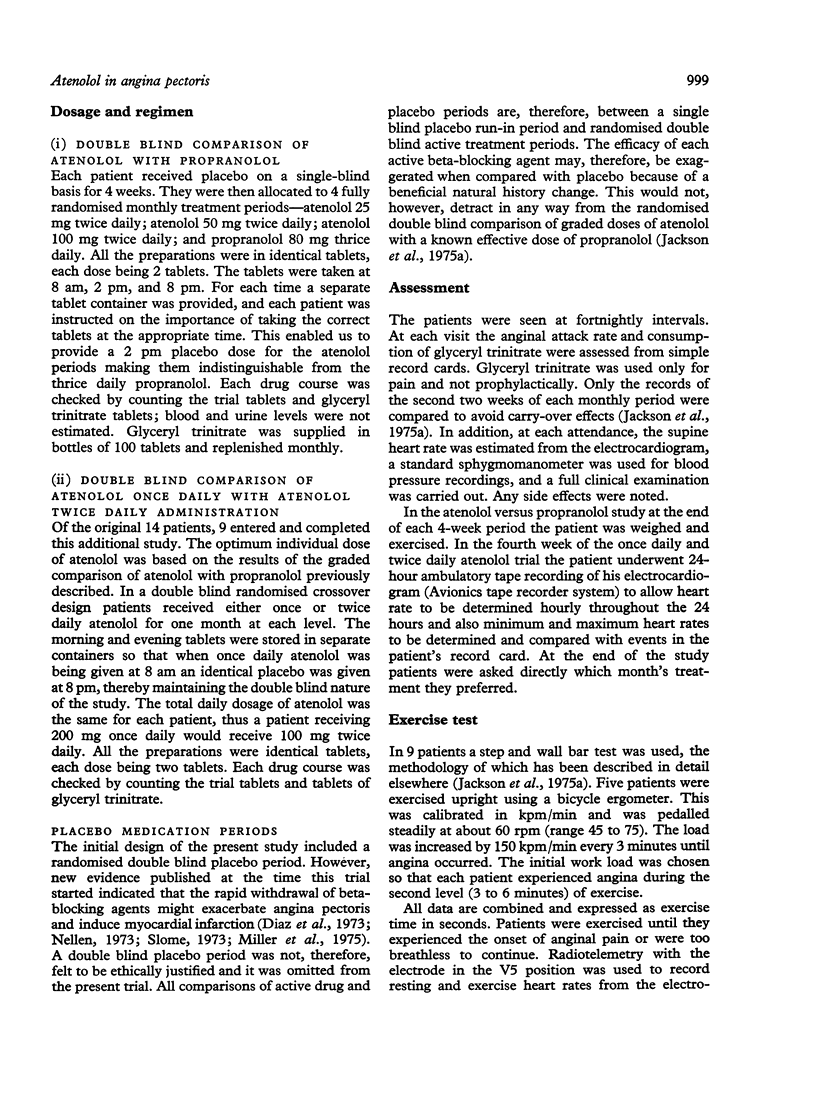
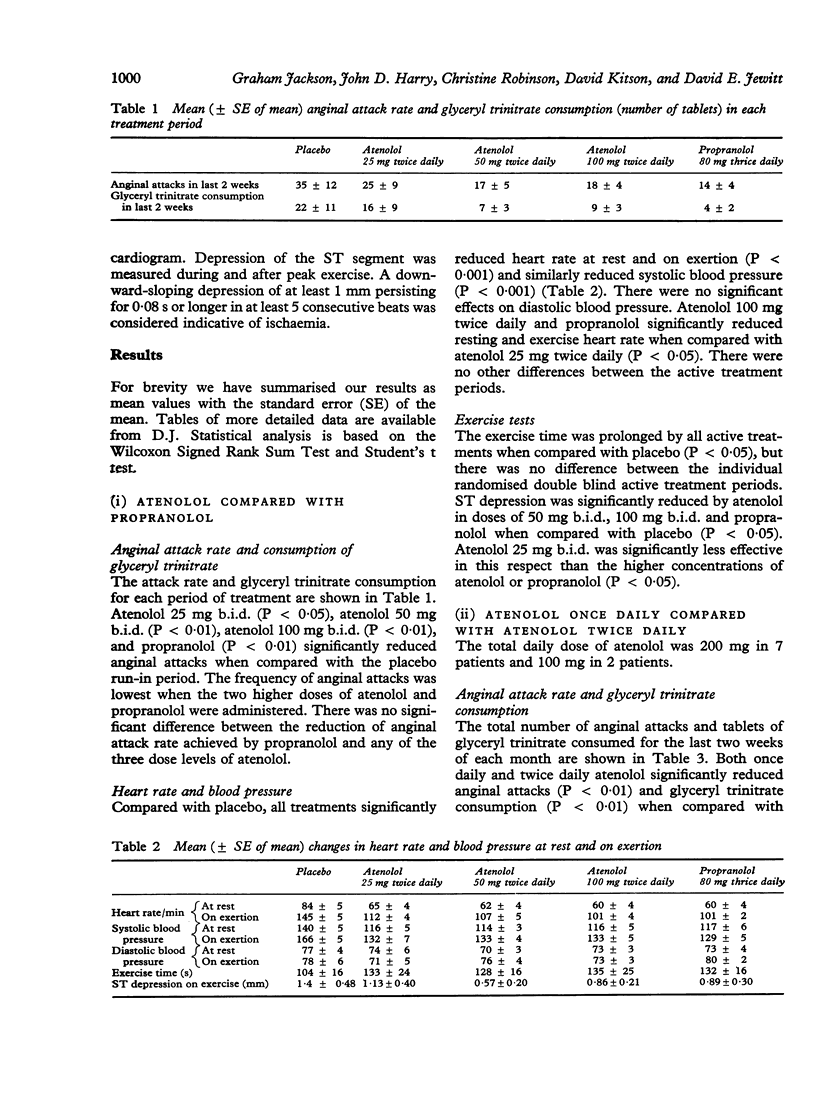
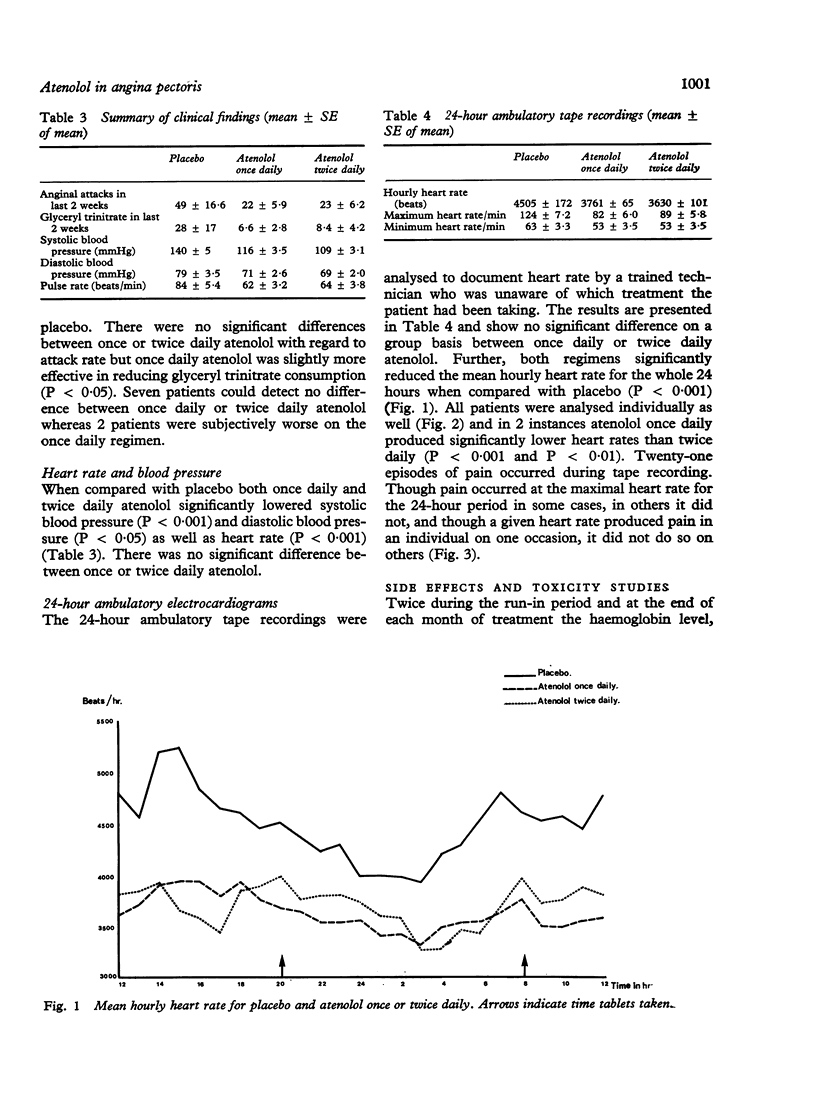
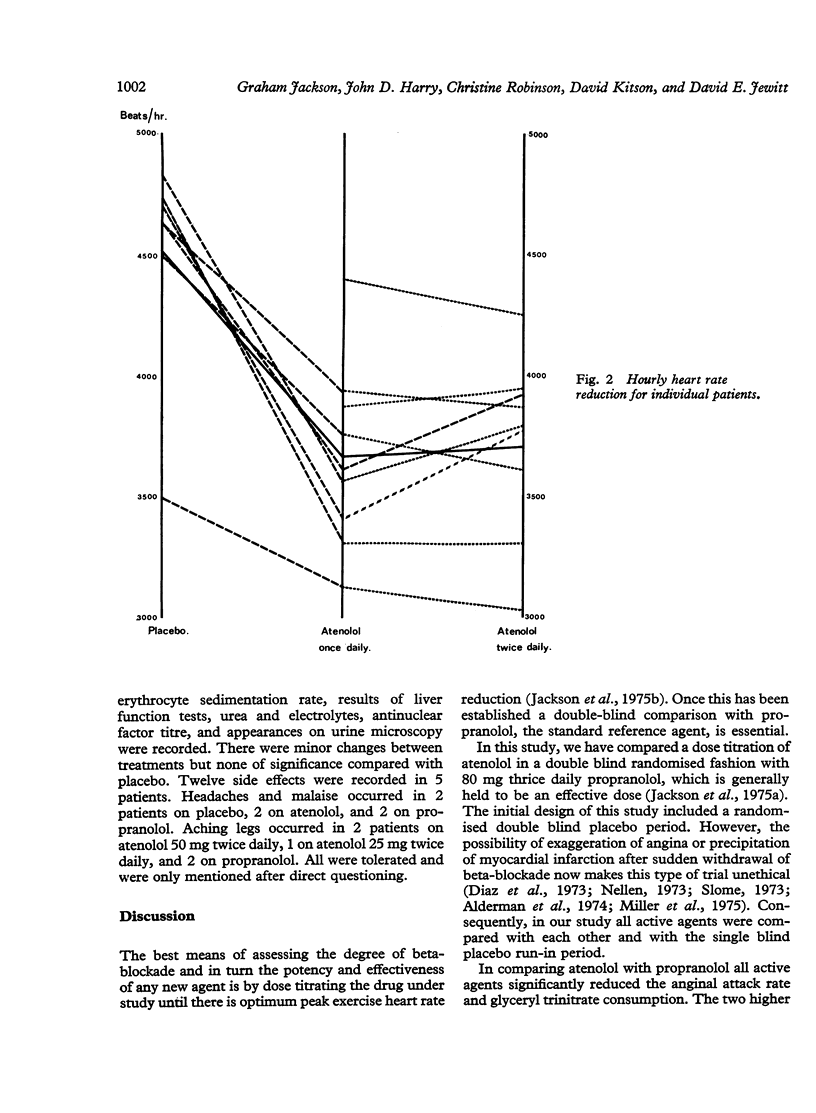
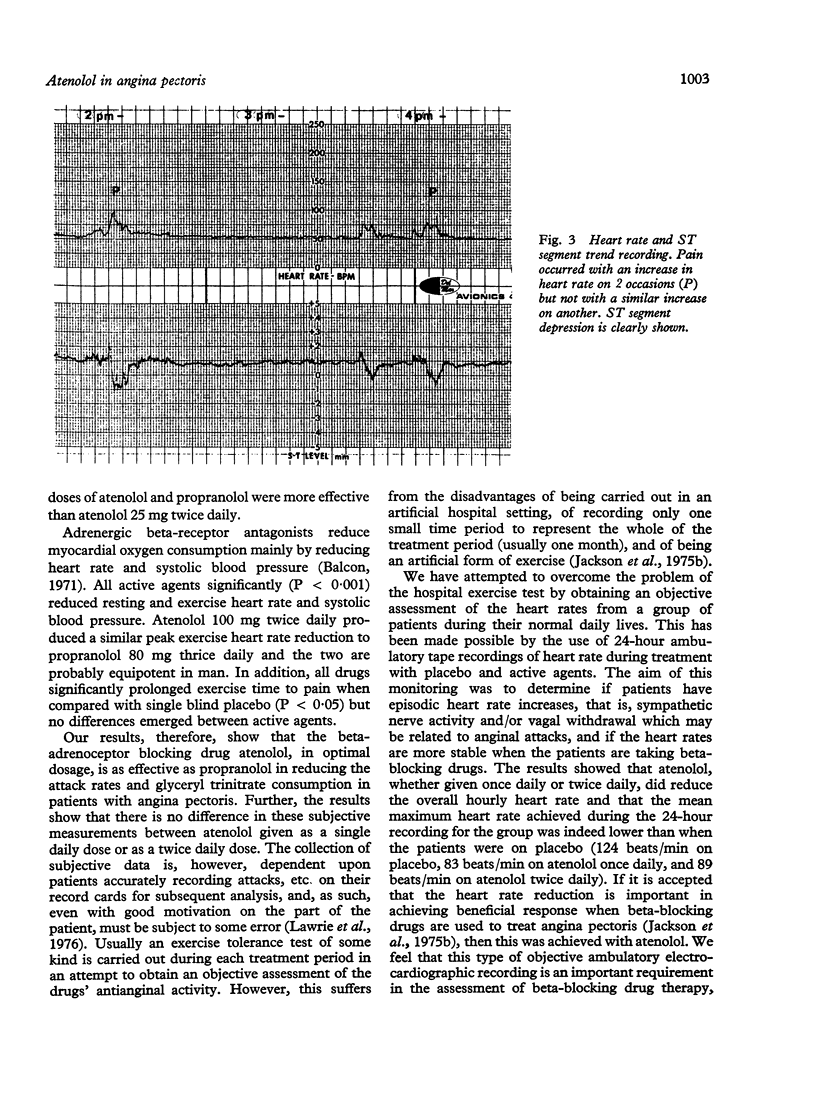
Fourteen patients with angina pectoris completed a double blind trial of atenolol 25 mg, 50 mg, and 100 mg twice daily and propranolol 80 mg thrice daily. In comparison with placebo, all active treatments significantly reduced anginal attacks, consumption of glyceryl trinitrate, resting and exercise heart rate, resting and exercise systolic blood pressure, and significantly prolonged exercise time. There was no significant difference between the effects of propranolol and atenolol. Nine patients completed a further trial comparing atenolol given once or twice daily. Both regimens were effective and there was no significant difference between the reductions in anginal attacks, glyceryl trinitrate consumption, systolic blood pressure, or heart rate. Twenty-four-hour ambulatory electrocardiograms showed that atenolol consistently reduced heart rate throughout the 24-hour period whether given once or twice daily. Atenolol is a potent antianginal agent which, in most patients, is likely to be effective once daily.
Full text
PDF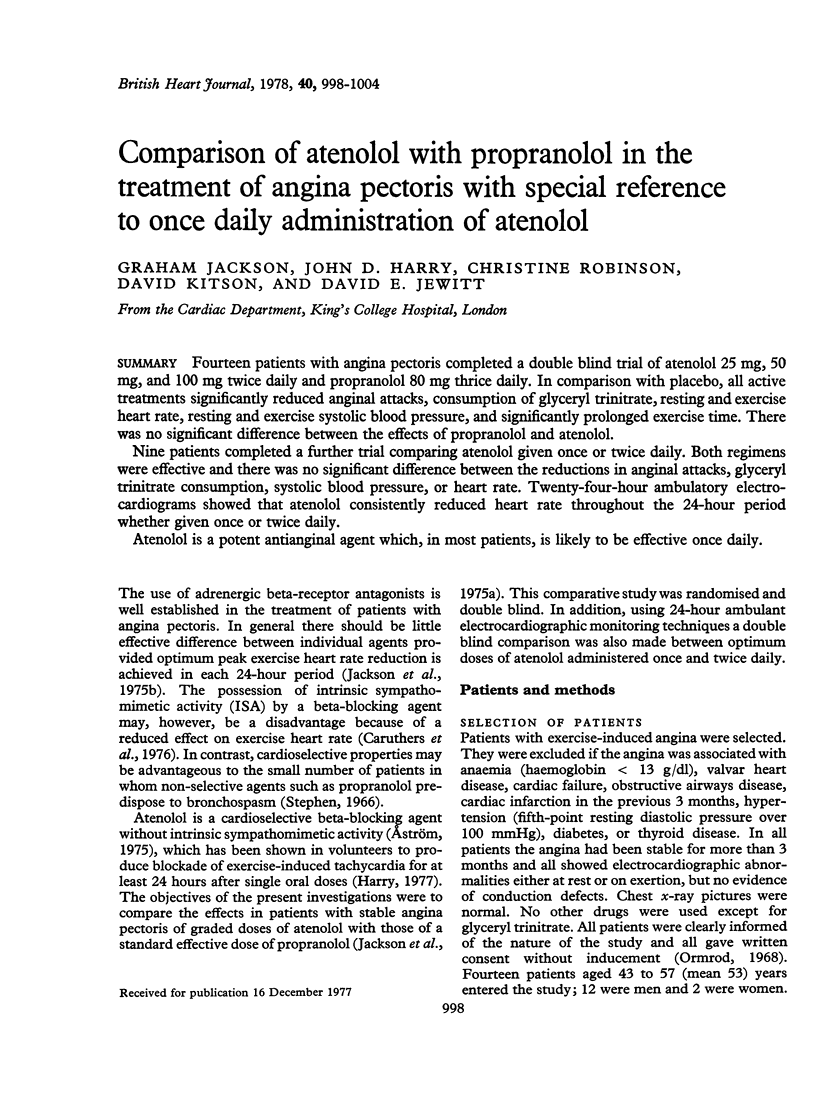
Selected References
These references are in PubMed. This may not be the complete list of references from this article.
- Alderman E. L., Coltart D. J., Wettach G. E., Harrison D. C. Coronary artery syndromes after sudden propranolol withdrawal. Ann Intern Med. 1974 Nov;81(5):625–627. doi: 10.7326/0003-4819-81-5-625. [DOI] [PubMed] [Google Scholar]
- Diaz R. G., Somberg J. C., Freeman E., Levitt B. Withdrawal of propranolol and myocardial infarction. Lancet. 1973 May 12;1(7811):1068–1068. doi: 10.1016/s0140-6736(73)90707-1. [DOI] [PubMed] [Google Scholar]
- Harry J. D. The demonstration of atenolol as a beta-adrenoceptor blocking drug in man. Postgrad Med J. 1977;53 (Suppl 3):65–69. [PubMed] [Google Scholar]
- Jackson G., Atkinson L., Oram S. Double-blind comparison of tolamolol, propranolol, practolol, and placebo in the treatment of angina pectoris. Br Med J. 1975 Mar 29;1(5960):708–712. doi: 10.1136/bmj.1.5960.708. [DOI] [PMC free article] [PubMed] [Google Scholar]
- Jackson G., Atkinson L., Oram S. Reassessment of failed beta-blocker treatment in angina pectoris by peak-exercise heart rate measurements. Br Med J. 1975 Sep 13;3(5984):616–618. doi: 10.1136/bmj.3.5984.616. [DOI] [PMC free article] [PubMed] [Google Scholar]
- Miller R. R., Olson H. G., Amsterdam E. A., Mason D. T. Propranolol-withdrawal rebound phenomenon. Exacerbation of coronary events after abrupt cessation of antianginal therapy. N Engl J Med. 1975 Aug 28;293(9):416–418. doi: 10.1056/NEJM197508282930902. [DOI] [PubMed] [Google Scholar]
- Nellen M. Withdrawal of propranolol and myocardial infarction. Lancet. 1973 Mar 10;1(7802):558–558. doi: 10.1016/s0140-6736(73)90379-6. [DOI] [PubMed] [Google Scholar]
- Ormrod R. Medical ethics. Br Med J. 1968 Apr 6;2(5596):7–10. doi: 10.1136/bmj.2.5596.7. [DOI] [PMC free article] [PubMed] [Google Scholar]
- Slome R. Withdrawal of propranolol and myocardial infarction. Lancet. 1973 Jan 20;1(7795):156–156. doi: 10.1016/s0140-6736(73)90235-3. [DOI] [PubMed] [Google Scholar]
- Stephen S. A. Unwanted effects of propranolol. Am J Cardiol. 1966 Sep;18(3):463–472. doi: 10.1016/0002-9149(66)90071-3. [DOI] [PubMed] [Google Scholar]