



The rediscovery of Mendel’s work in the early 20th century sparked heated debate about the inheritance of continuously variable “size” traits (e.g., East 1916). But, although evidence accumulated in support of Mendelian models of quantitative trait inheritance, for most of the century it was rare for geneticists to be able to link such traits to specific Mendelian factors. The principles of mapping quantitative traits to qualitative characters had been well understood since Sax (1923) established the linkage of seed size to pigmentation in beans. What was missing was a systematic method to identify the specific factors underlying quantitative traits, to estimate their effects, and to characterize their interactions.
The foundation for change began with a proposal to develop genome-wide maps of restriction fragment length polymorphism (RFLP) markers in humans (Botstein et al. 1980). In principle, RFLP markers fell close enough together that the whole genome could be efficiently scanned for linkage to a trait of interest. But it was the landmark article of Lander and Botstein (1989) that brought together the power of model organism crosses with genome-wide RFLP maps and provided a systematic strategy for mapping the long sought factors or quantitative trait loci (QTL). The key innovation—known as interval mapping—is a statistical algorithm to use all of the information available in the genome-wide markers. This increased the power and precision of mapping in comparison to older methods that evaluated linkage one marker at a time. By bridging the gaps between markers, the log-likelihood profiles obtained from interval mapping provided the first genome-wide view of the QTL landscape.
Lander and Botstein (1989) is rich with ideas and open questions that fueled methodological research, including the problem of multiple testing in genome-wide searches (Churchill and Doerge 1994). Lander and Botstein (1989) also addressed practical questions of study design that inspired and empowered hundreds of applications of their method in agricultural, biomedical, and basic research in the decades that followed.
Researchers were soon faced with new questions and challenges, however. QTL were numerous and the effort of isolating the causal genes and variants often proved to be daunting. Studies of blood pressure in the laboratory rat, for example, identified QTL on almost every chromosome (Rapp 2000). QTL could encompass multiple tightly linked variants; they were often dependent on genetic background or environmental contexts; their effects could be small or large, pleiotropic, additive, or epistatic. In an early and innovative application, Damerval and colleagues (1994) applied QTL mapping to the quantitative expression of proteins (Damerval et al. 1994). QTL mapping of molecular phenotypes has since revealed elaborate networks of genetic regulation. Application of Lander and Botstein’s method for isolating Mendelian factors has revealed the true magnitude of quantitative genetic complexity, confirming an expectation set forth a century ago by the first geneticists.
Footnotes
Communicating editor: C. Gelling
ORIGINAL CITATION
Eric S. Lander and David Botstein
GENETICS January 1, 1989 121: 185–199
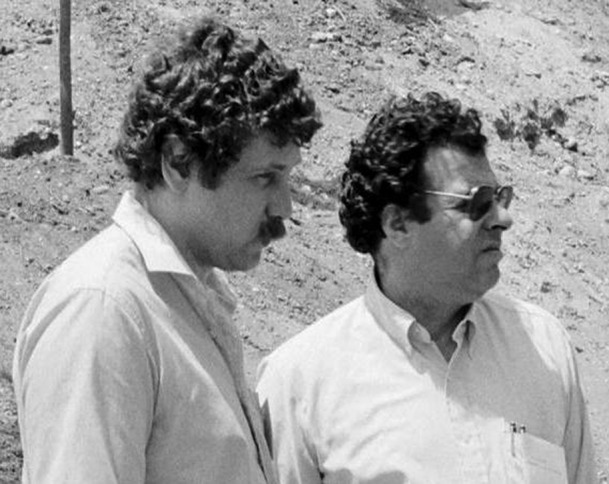
Image of Eric Lander (left) and David Botstein (right) courtesy of Cold Spring Harbor Laboratory Archives.
Literature Cited
- Botstein D., White R. L., Skolnick M., Davis R. W., 1980. Construction of a genetic linkage map in man using restriction fragment length polymorphisms. Am. J. Hum. Genet. 32: 314–331. [PMC free article] [PubMed] [Google Scholar]
- Churchill G. A., Doerge R. W., 1994. Empirical threshold values for quantitative trait mapping. Genetics 138: 963–971. [DOI] [PMC free article] [PubMed] [Google Scholar]
- Damerval C., Maurice A., Josse J. M., de Vienne D., 1994. Quantitative trait loci underlying gene product variation: a novel perspective for analyzing regulation of genome expression. Genetics 137: 289–301. [DOI] [PMC free article] [PubMed] [Google Scholar]
- East E. M., 1916. Studies on size inheritance in Nicotiana. Genetics 1: 164–176. [DOI] [PMC free article] [PubMed] [Google Scholar]
- Rapp J. P., 2000. Genetic analysis of inherited hypertension in the rat. Physiol. Rev. 80(1): 135–172. [DOI] [PubMed] [Google Scholar]
- Sax K., 1923. The association of size differences with seed-coat pattern and pigmentation in Phaseolus vulgaris. Genetics 8: 552–560. [DOI] [PMC free article] [PubMed] [Google Scholar]
Further Reading in GENETICS
- Dilda C. L., Mackay T. F. C., 2002. The genetic architecture of Drosophila sensory bristle number. Genetics 162: 1655–1674. [DOI] [PMC free article] [PubMed] [Google Scholar]
- Hill W. G., Mackay T. F. C., 2004. D. S. Falconer and introduction to quantitative genetics. Genetics 167: 1529–1536. [DOI] [PMC free article] [PubMed] [Google Scholar]
- Jansen R. C., 1996. A general Monte Carlo method for mapping multiple quantitative trait loci. Genetics 142: 305–311. [DOI] [PMC free article] [PubMed] [Google Scholar]
- Sen S., Churchill G. A., 2001. A statistical framework for quantitative trait mapping. Genetics 159: 371–387. [DOI] [PMC free article] [PubMed] [Google Scholar]
- Studer A. J., Doebley J. F., 2011. Do large effect QTL fractionate? A case study at the maize domestication QTL teosinte branched1. Genetics 188: 673–681. [DOI] [PMC free article] [PubMed] [Google Scholar]
- Weiss K. M., 2008. Tilting at quixotic trait loci (QTL): an evolutionary perspective on genetic causation. Genetics 179: 1741–1756. [DOI] [PMC free article] [PubMed] [Google Scholar]
- Zeng Z. B., 1994. Precision mapping of quantitative trait loci. Genetics 136: 1457–1468. [DOI] [PMC free article] [PubMed] [Google Scholar]
Other GENETICS Articles by E. S. Lander and D. Botstein
- Adams A. E., Botstein D., 1989. Dominant suppressors of yeast actin mutations that are reciprocally suppressed. Genetics 121: 675–683. [DOI] [PMC free article] [PubMed] [Google Scholar]
- Botstein D., 1992. 1992 Genetics Society of America Medal: Maynard V. Olson. Genetics 131: S11–S12. [PubMed] [Google Scholar]
- Botstein D., 2004. Ira Herskowitz: 1946–2003. Genetics 166: 653–660. [DOI] [PMC free article] [PubMed] [Google Scholar]
- Botstein D., Fink G. R., 2011. Yeast: an experimental organism for 21st century biology. Genetics 189: 695–704. [DOI] [PMC free article] [PubMed] [Google Scholar]
- Brandriss M. C., Soll L., Botstein D., 1975. Recessive lethal amber suppressors in yeast. Genetics 79: 551–560. [DOI] [PMC free article] [PubMed] [Google Scholar]
- Carlson M., Osmond B. C., Botstein D., 1981a Mutants of yeast defective in sucrose utilization. Genetics 98: 25–40. [DOI] [PMC free article] [PubMed] [Google Scholar]
- Carlson M., Osmond B. C., Botstein D., 1981b Genetic evidence for a silent SUC gene in yeast. Genetics 98: 41–54. [DOI] [PMC free article] [PubMed] [Google Scholar]
- Carlson M., Osmond B. C., Neigeborn L., Botstein D., 1984. A suppressor of SNF1 mutations causes constitutive high-level invertase synthesis in yeast. Genetics 107: 19–32. [DOI] [PMC free article] [PubMed] [Google Scholar]
- Caudy A. A., Guan Y., Jia Y., Hansen C., DeSevo C., et al. , 2013. A new system for comparative functional genomics of Saccharomyces yeasts. Genetics 195: 275–287. [DOI] [PMC free article] [PubMed] [Google Scholar]
- Chan C. S., Botstein D., 1993. Isolation and characterization of chromosome-gain and increase-in-ploidy mutants in yeast. Genetics 135: 677–691. [DOI] [PMC free article] [PubMed] [Google Scholar]
- Chan R. K., Botstein D., 1976. Specialized transduction by bacteriophage P22 in Salmonella typhimurium: genetic and physical structure of the transducing genomes and the prophage attachment site. Genetics 83: 433–458. [PMC free article] [PubMed] [Google Scholar]
- Dietrich W., Katz H., Lincoln S. E., Shin H. S., Friedman J., et al. , 1992. A genetic map of the mouse suitable for typing intraspecific crosses. Genetics 131: 423–447. [DOI] [PMC free article] [PubMed] [Google Scholar]
- Falco S. C., Botstein D., 1983. A rapid chromosome-mapping method for cloned fragments of yeast DNA. Genetics 105: 857–872. [DOI] [PMC free article] [PubMed] [Google Scholar]
- Falco S. C., Rose M., Botstein D., 1983. Homologous recombination between episomal plasmids and chromosomes in yeast. Genetics 105: 843–856. [DOI] [PMC free article] [PubMed] [Google Scholar]
- Gould K. A., Dietrich W. F., Borenstein N., Lander E. S., Dove W. F., 1996a Mom1 is a semi-dominant modifier of intestinal adenoma size and multiplicity in Min/+ mice. Genetics 144: 1769–1776. [DOI] [PMC free article] [PubMed] [Google Scholar]
- Gould K. A., Luongo C., Moser A. R., McNeley M. K., Borenstein N., et al. , 1996b Genetic evaluation of candidate genes for the Mom1 modifier of intestinal neoplasia in mice. Genetics 144: 1777–1785. [DOI] [PMC free article] [PubMed] [Google Scholar]
- Gresham D., Boer V. M., Caudy A., Ziv N., Brandt N. J., et al. , 2011. System-level analysis of genes and functions affecting survival during nutrient starvation in Saccharomyces cerevisiae. Genetics 187: 299–317. [DOI] [PMC free article] [PubMed] [Google Scholar]
- Heck J. A., Gresham D., Botstein D., Alani E., 2006. Accumulation of recessive lethal mutations in Saccharomyces cerevisiae mlh1 mismatch repair mutants is not associated with gross chromosomal rearrangements. Genetics 174: 519–523. [DOI] [PMC free article] [PubMed] [Google Scholar]
- Huisman O., Raymond W., Froehlich K. U., Errada P., Kleckner N., et al. , 1987. A Tn10-lacZ-kanR-URA3 gene fusion transposon for insertion mutagenesis and fusion analysis of yeast and bacterial genes. Genetics 116: 191–199. [DOI] [PMC free article] [PubMed] [Google Scholar]
- Hulbert S. H., Ilott T. W., Legg E. J., Lincoln S. E., Lander E. S., et al. , 1988. Genetic analysis of the fungus, Bremia lactucae, using restriction fragment length polymorphisms. Genetics 120: 947–958. [DOI] [PMC free article] [PubMed] [Google Scholar]
- Kleckner N., Barker D. F., Ross D. G., Botstein D., 1978. Properties of the translocatable tetracycline-resistance element Tn10 in Escherichia coli and bacteriophage lambda. Genetics 90: 427–461. [DOI] [PMC free article] [PubMed] [Google Scholar]
- Kleckner N., Steele D. A., Reichardt K., Botstein D., 1979. Specificity of insertion by the translocatable tetracycline-resistance element Tn10. Genetics 92: 1023–1040. [DOI] [PMC free article] [PubMed] [Google Scholar]
- Kruglyak L., Lander E. S., 1995. A nonparametric approach for mapping quantitative trait loci. Genetics 139: 1421–1428. [DOI] [PMC free article] [PubMed] [Google Scholar]
- Kunes S., Ma H., Overbye K., Fox M. S., Botstein D., 1987. Fine structure recombinational analysis of cloned genes using yeast transformation. Genetics 115: 73–81. [DOI] [PMC free article] [PubMed] [Google Scholar]
- Kunes S., Botstein D., Fox M. S., 1990. Synapsis-mediated fusion of free DNA ends forms inverted dimer plasmids in yeast. Genetics 124: 67–80. [DOI] [PMC free article] [PubMed] [Google Scholar]
- Lang G. I., Botstein D., Desai M. M., 2011. Genetic variation and the fate of beneficial mutations in asexual populations. Genetics 188: 647–661. [DOI] [PMC free article] [PubMed] [Google Scholar]
- Maurer R., Osmond B. C., Botstein D., 1984a Genetic analysis of DNA replication in bacteria: dnaB mutations that suppress dnaC mutations and dnaQ mutations that suppress dnaE mutations in Salmonella typhimurium. Genetics 108: 25–38. [DOI] [PMC free article] [PubMed] [Google Scholar]
- Maurer R., Osmond B. C., Shekhtman E., Wong A., Botstein D., 1984b Functional interchangeability of DNA replication genes in Salmonella typhimurium and Escherichia coli demonstrated by a general complementation procedure. Genetics 108: 1–23. [DOI] [PMC free article] [PubMed] [Google Scholar]
- Moir D., Botstein D., 1982. Determination of the order of gene function in the yeast nuclear division pathway using cs and ts mutants. Genetics 100: 565–577. [DOI] [PMC free article] [PubMed] [Google Scholar]
- Moir D., Stewart S. E., Osmond B. C., Botstein D., 1982. Cold-sensitive cell-division-cycle mutants of yeast: isolation, properties, and pseudoreversion studies. Genetics 100: 547–563. [DOI] [PMC free article] [PubMed] [Google Scholar]
- Novick P., Osmond B. C., Botstein D., 1989. Suppressors of yeast actin mutations. Genetics 121: 659–674. [DOI] [PMC free article] [PubMed] [Google Scholar]
- Ohya Y., Botstein D., 1994. Structure-based systematic isolation of conditional-lethal mutations in the single yeast calmodulin gene. Genetics 138: 1041–1054. [DOI] [PMC free article] [PubMed] [Google Scholar]
- Paterson A. H., Damon S., Hewitt J. D., Zamir D., Rabinowitch H. D., et al. , 1991. Mendelian factors underlying quantitative traits in tomato: comparison across species, generations, and environments. Genetics 127: 181–197. [DOI] [PMC free article] [PubMed] [Google Scholar]
- Poirier C., Qin Y., Adams C. P., Anaya Y., Singer J. B., et al. , 2004. A complex interaction of imprinted and maternal-effect genes modifies sex determination in Odd Sex (Ods) mice. Genetics 168: 1557–1562. [DOI] [PMC free article] [PubMed] [Google Scholar]
- Reavey C. T., Hickman M. J., Dobi K. C., Botstein D., Winston F., 2015. Analysis of polygenic mutants suggests a role for mediator in regulating transcriptional activation distance in Saccharomyces cerevisiae. Genetics 201: 599–612. [DOI] [PMC free article] [PubMed] [Google Scholar]
- Schatz P. J., Solomon F., Botstein D., 1988. Isolation and characterization of conditional-lethal mutations in the TUB1 α-tubulin gene of the yeast Saccharomyces cerevisiae. Genetics 120: 681–695. [DOI] [PMC free article] [PubMed] [Google Scholar]
- Sekiya-Kawasaki M., Botstein D., Ohya Y., 1998. Identification of functional connections between calmodulin and the yeast actin cytoskeleton. Genetics 150: 43–58. [DOI] [PMC free article] [PubMed] [Google Scholar]
- Singer J. B., Hill A. E., Nadeau J. H., Lander E. S., 2005. Mapping quantitative trait loci for anxiety in chromosome substitution strains of mice. Genetics 169: 855–862. [DOI] [PMC free article] [PubMed] [Google Scholar]
- Stearns T., Botstein D., 1988. Unlinked noncomplementation: isolation of new conditional-lethal mutations in each of the tubulin genes of Saccharomyces cerevisiae. Genetics 119: 249–260. [DOI] [PMC free article] [PubMed] [Google Scholar]
- Stearns T., Hoyt M. A., Botstein D., 1990. Yeast mutants sensitive to antimicrotubule drugs define three genes that affect microtubule function. Genetics 124: 251–262. [DOI] [PMC free article] [PubMed] [Google Scholar]
- Stuber C. W., Lincoln S. E., Wolff D. W., Helentjaris T., Lander E. S., 1992. Identification of genetic factors contributing to heterosis in a hybrid from two elite maize inbred lines using molecular markers. Genetics 132: 823–839. [DOI] [PMC free article] [PubMed] [Google Scholar]
- Thomas J. H., Botstein D., 1987. Ordered linear tetrads are produced by the sporulation of newly formed zygotes of Saccharomyces cerevisiae. Genetics 115: 229–232. [DOI] [PMC free article] [PubMed] [Google Scholar]
- Thomas J. H., Neff N. F., Botstein D., 1985. Isolation and characterization of mutations in the β-tubulin gene of Saccharomyces cerevisiae. Genetics 111: 715–734. [DOI] [PMC free article] [PubMed] [Google Scholar]
- Weinstock G. M., Susskind M. M., Botstein D., 1979. Regional specificity of illegitimate recombination by the translocatable ampicillin-resistance element Tn1 in the genome of phage P22. Genetics 92: 685–710. [DOI] [PMC free article] [PubMed] [Google Scholar]
- Wertman K. F., Drubin D. G., Botstein D., 1992. Systematic mutational analysis of the yeast ACT1 gene. Genetics 132: 337–350. [DOI] [PMC free article] [PubMed] [Google Scholar]