



Abstract
Background: The burden of obesity and diet-related chronic diseases is increasing in Iran, and prevention and treatment strategies are needed to address this problem. The aim of this study was to determine the outcome, cost, safety and cost-consequence of non-invasive weight loss interventions in Iran.
Methods: We performed a systematic review to compare non-invasive interventions (cryolipolysis and radiofrequency/ ultrasonic cavitation) with semi-invasive (lipolysis) and invasive (liposuction). A sensitive electronic searching was done to find available interventional studies. Reduction of abdomen circumference (cm), reduction in fat layer thickness (%) and weight reduction (kg) were outcomes of efficacy. Meta-analysis with random models was used for pooling efficacy estimates among studies with the same follow-up duration. Average cost per intervention was estimated based on the capital, maintenance, staff, consumable and purchase costs.
Results: Of 3,111 studies identified in our reviews, 13 studies assessed lipolysis, 10 cryolipolysis and 8 considered radiofrequency. Nine studies with the same follow-up duration in three different outcome group were included in meta-analysis. Radiofrequency showed an overall pooled estimate of 2.7 cm (95% CI; 2.3-3.1) of mean reduction in circumference of abdomen after intervention. Pooled estimate of reduction in fat layer thickness was 78% (95% CI; 73%-83%) after Lipolysis and a pooled estimate of weight loss was 3.01 kg (95% CI; 2.3-3.6) after lipousuction. The cost analysis revealed no significant differences between the costs of these interventions.
Conclusion: The present study showed that non-invasive interventions appear to have better clinical efficacy, specifically in the body shape measurement, and less cost compared to invasive intervention (liposuction)
Keywords: Radiofrequency, Cryolipolysis, Lipolysis, Liposuction, Cost, Consequence, Systematic review, Meta-analysis
Introduction
Obesity is commonly defined as the high accumulation of body fat due to imbalance between received and burnt calories (1). Over the past 20 years, obesity has been raised as a highly common nutritional disorder and the main risk factor for chronic and non-infectious diseases worldwide (2). The prevention and management of obesity are highly complicated because there is no clear and easy solution (3). A large proportion of obese individuals need help with their weight management (4). To prevent and treat obesity, there are currently different types of slimming and beauty systems of non-invasive intervention such as radiofrequency, Max-3, and cryolipolysis together with invasive and surgical interventions such as liposuction, and laser lipolysis. There are also preventive methods such as change of lifestyle and diet. The effectiveness, safety and cost- effectiveness of non-invasive and invasive interventions to treat obesity are still unclear.
Radio Frequency System is a non-invasive method, which uses ultrasound cavitation technology and radio frequency on fat tissue concurrently. This system focuses on sound waves with high energy content. In this system, heat is generated to turn the fat tissue into excessively small bubbles. As a result, the fat tissue is disposed of the body through lymphatic system. This system has significant effects on optimization of body metabolism, elimination of cellulite and contractions, and increased elasticity of the skin (5).
The Max-3 system offers a non-invasive method that is a combination of the three technologies of radio frequency, ultrasound cavitations, and LPG vacuum. The primary difference between this system and RF is the application of LPG vacuum method along with radio frequency and ultrasound methods. As a result, this system can offer increased metabolism, breakdown of fat and reduced size without applying any other method. Moreover, this method improves perfusion of blood, restores the health of the skin and stimulates fibroblast to produce collagen and elastin in the skin (5).
Cryolipolysis is a non-invasive method that can effectively eliminate fat and fat cells in a treated region. In this method, cold technology, vacuum and negative-pressure vacuum are used to reduce the size of fat and dispose of fat cells. In fact, the fat cells exposed to cold setting undergo apoptosis. Apoptosis is the programmed death of a fat cell. In this method, the thickness of fat layer decreases significantly (6).
Liposuction is an invasive surgical intervention used to treat surficial and deep subcutaneous fat, which was first used in the United States in 1982. It actually pulls out undesirable fat through small openings and without surgical incision (7).
Laser lipolysis is an invasive method. The term “lipolysis” means liquefying fat. If done by laser, this method would be called “Laser Lipolysis”. In this method, fat is liquefied, absorbed by the body, or disposed of by suction system (8).
The precise assessment of the outcome, safety and cost-consequence of these methods based on the evidence-based system is inevitable. The present study used the assessment of above-mentioned invasive and non-invasive methods to reduce the extent of local obesity and localized body fat through health technology in Iran.
Research Questions
In the present study, the authors intended to answer the following questions based on the health technology assessment protocol.
Q.1. How effective and safe are non-invasive methods in reducing weight and obesity (e.g., radio frequency and cryolipolysis) compared to semi-invasive methods (e.g., lipolysis) and invasive methods (liposuction)?
Q.2-. How much do the non-invasive methods of weight reduction and slimming (e.g., radio frequency and Cryolipolysis) cost compared to semi-invasive methods (lipolysis) and invasive methods (liposuction)?
Study Objective
The aim of this study was to analyze the cost-consequence of non-invasive methods used to reduce weight (radio frequency and cryolipolysis) compared to semi-invasive methods (lipolysis) and invasive methods (liposuction).
Methods
Literature Review
In the present study, a systematic review and search were done in different databases to find the evidence for the outcome of the mentioned technologies. The section of economic evaluation was offered to examine the cost and cost-consequence. A separate review section was devoted to works on radio frequency and cryolipolysis compared to invasive and surgical interventions such as liposuction and laser lipolysis. To ensure a comprehensive review, the comments of the related specialists were obtained and considered. We consulted with a sports medicine specialist to highlight the consequences, inclusion and exclusion criteria.
On May 5, 2014, the PubMed, EMBASE, ProQuest, Science Direct, and Springer databases were searched to find related papers without language restriction. PubMed was searched with the MeSH word for “Radio Frequency”,” Ultrasonic cavitations”,” Cryolipolysis”, “Lipolysis” and “Liposuction” and this strategy was applied to other databases to increase the extensiveness of the research and find comprehensive data in gray papers. In addition, some journals on cosmetic surgeries were manually searched. The related papers were also reviewed.
The following search strategy was used to find studies:
I. Radio Frequency
(((("radio"(MeSH Terms) OR "radio"(All Fields)) AND ("epidemiology" (Subheading) OR "epidemiology"(All Fields) OR "frequency"(All Fields) OR "epidemiology" (MeSH Terms) OR "frequency"(All Fields)) AND fat(All Fields)) OR ("weight loss"(MeSH Terms) OR ("weight"(All Fields) AND "loss"(All Fields)) OR "weight loss"(All Fields)))) OR cellulite(All Fields))) AND ((Clinical Trial (ptyp) OR Clinical Trial, Phase II(ptyp) OR Clinical Trial, Phase III(ptyp) OR Review (ptyp) OR systematic(sb)) AND "humans" (MeSH Terms))
II. Ultrasonic cavitations
(("ultrasonography"(MeSH Terms) OR "ultrasonography"(all fields) OR "ultrasonic"(All Fields) OR "ultrasonics"(MeSH Terms) OR "ultrasonics"(all fields)) AND cavitation (all fields)) AND Clinical Trial (ptyp) OR Clinical Trial, Phase I(ptyp) OR Clinical Trial, Phase II (ptyp) OR Review (ptyp) OR systematic(sb)) AND "humans" (MeSH Terms))
III. Cryolipolysis
Cryolipolysis (All Fields) AND Clinical Trial (ptyp) OR Clinical Trial, Phase I (ptyp) OR Clinical Trial, Phase II(ptyp) OR Review (ptyp) OR systematic(sb)) AND "humans"(MeSH Terms))
IV. Lipolysis
("lipolysis"(MeSH Terms) OR "lipolysis"(All Fields)) AND ((Case Reports(ptyp) OR Clinical Trial(ptyp) OR Clinical Trial, Phase I(ptyp) OR Clinical Trial, Phase II (ptyp) OR Review (ptyp) OR systematic (sb)) AND "humans"(MeSH Terms))
V. Liposuction
("lipectomy"(MeSH terms) OR "lipectomy" (All Fields) OR "liposuction"(All Fields)) AND ((Case Reports (ptyp) OR Clinical Trial(ptyp) OR Clinical Trial, Phase I (ptyp) OR Clinical Trial, Phase II (ptyp) OR Review(ptyp) OR systematic (sb)) AND "humans" (MeSH terms))
Inclusion and Exclusion Criteria
All studies that involved the intended criteria in the main intervention, such as studies on technologies of obesity reduction, the elimination of cellulite and body countering were included. The experimental studies on animal models and studies that used the associated technologies in cases different from the main problem of this study were excluded.
PICO Questions
In the present study, PICO was considered in the following manner: Overweight, obesity and cellulite were the main problems considered in this study. Because different systems use different radio frequency technologies the application of radio frequency alone or in combination with other technologies such as ultrasonic, vacuum and cryolipolysis were considered as radiofrequency. To offer a good comparison, the two interventions of laser lipolysis and liposuction were considered as alternative treatments for the existing technologies. With respect to the outcome, the mean reduction of thickness of fat layer was regarded as the primary outcome. Based on the clinical guide issued by the International Society for the Advancement of Kinanthropometry (9), the outcome of application of interventions associated with reduction of body fat was assessed through measuring the thickness of fat layer before and after intervention. In addition, the calculation of environmental changes in the treated sites was done to assess the outcome of slimming and progress in cellulite tissue through an instrument for grading cellulite removal. Of course, other outcomes such as satisfaction of the patient with progress of the treatment and the mean level of weight reduction and reduced body mass index were reviewed.
Synthesizing Method
Two individuals independently evaluated the titles and abstracts of all papers collected through the electronic and manual searching. Necessary measures were taken to obtain the full-text articles. The complete texts of the papers were reviewed, included or excluded based on the developed criteria. We considered “Critical Appraisal Skills Program” checklist (CASP) to quality the assessment. Although the majority of the selected studies for this review had moderate quality, the low quality of the papers was not considered as a criterion for their exclusion. To extract data, a data extraction form was designed by Excel. Two individuals extracted the data from the selected papers. In case of any disagreements, a third person evaluated the papers and made the final decision.
STATA Software (Version 10) was used to analyze the data on the consequences of reduction of abdomen circumference (cm), reduction in fat layer thickness (%) and weight reduction (kg) in studies that have the same follow-up duration.
Considering the high heterogeneity of the studies, the cumulative estimation of the effects was avoided in the economic evaluation, and cost- consequence method was used to present the result of the economic evaluation in which the outcomes were reported separately from the costs.
The analysis of the outcomes in cases where more than two studies on the outcomes existed was done by MetaINF order. In this analysis, the effect of each study on the pooled estimate of outcome was determined. In addition, the results of the meta-analysis showed the extent of modification of cumulative estimation in the case of exclusion of a study.
Costing Method
The costs of interventions and alternative methods were estimated in two groups of current expenses and capital expenses. In addition, two distinctive methods were used to analyze the costs from the perspective of health care providers (private health-care providing clinics) and that of the family and patients.
In the first approach, the total expenses of applying interventions were calculated in two groups of current expenses and capital expenses that service providers should pay for. In the second approach, the costs that the patients should pay to receive services were calculated. With regards to the capital expenses of the main and alternative interventions, the purchase prices for radiofrequency (THERMALIPO) were determined by the official response of Department of Medical Equipment of Iranian Ministry of Health. The prices of ultrasonic liposuction system (SmartLipo), lipolysis system (OSYRIS) and cryolipolysis (ZELTIQ) were determined by official correspondence with private clinics of cosmetic and plastic surgery. Considering the depreciation cost and the useful life of systems, the annual cost of purchasing them was calculated. In addition, the cost of a mean physical space was considered by assessing the mean rate of hiring essential space for fulfilling interventions as stated by associated physicians and clinics. The costs of maintaining systems, materials and supplied human forces (e.g., secretaries and technicians) as well as the overhead costs (e.g., water, electricity, etc.) were determined and included based on the specialists’ viewpoints and comments. From the patients and families’ perspective, the costs of receiving services were determined by considering the directly paid costs based on the announced tariffs of the private clinics of Iran. Considering the number of essential sessions in a complete treatment course, the total cost of this item was calculated. In addition, the indirect costs of the patients including traffic were estimated through interviews. With respect to surgical interventions, the costs of diagnostic tests and drugs as well as the mean costs of the operating room, anesthesia, visit, consultation and surgeon’s fee were calculated. It is noteworthy to mention that the costs of treating side effects were excluded due to the lack of sufficient data on the prevalence of complications after liposuction.
Economic Evaluation
As for the high heterogeneity of the outcome, the combination of cost and outcome may not be a valid ratio, so we used cost-consequence method for economic evaluation in which the outcomes were reported separately from the cost.
Results
Results of the Literature Search
Among the 3,111 papers found in systematic and manual search, 21 papers were redundant and after their exclusion, the remaining 3,090 papers were reviewed based on their titles and abstracts. Finally, 52 papers were selected for a complete text review, and 14 papers were excluded since they did not meet our inclusion criteria. The remaining 38 papers included two control studies and 36 non-randomized trial studies (i.e., comparative studies before and after intervention and without external control). Among the 36 trial studies, 10 studies examined different radiofrequency combinations (10-19) and 10 studies were about cryolipolysis intervention (20-28). Twenty-two studies out of 2,007 papers on lipolysis had the necessary conditions for further review, and finally 13 papers were included in the present study (17,29-40). With regards to liposuction, only five out of 26 studies were included in the complete text review (44-45). These studies were concerned with liposuction done by ultrasonic system and satisfied the inclusion criteria. In Flow diagram 1, the steps of systematic reviews of the main intervention are represented. The details of data extraction of the papers are represented in Tables 1-4 and Figure 1.
Table 1 . Characteristics of included Studies on Systematic Review for Radiofrequency .
| Radiofrequency | ||||||||||
| N | Author | Year | No. | Problem | Sex | Intervention Technology | System/Brand | Follow-up | Clinical Outcome | Side-effect |
| 1 | A. Weiss[10] | 2013 | 20 | Reduction of fat tissue in arms and sides | Female | Monopolar Radiofrequency | Exilis | 1 month | Average reduction of posterior fat in arms was 0.5 cm while in control group, it was 0.02 cm. | No side effect was observed. |
| 2 | C. Romero [11] | 2008 | 10 | Treating cellulite in lower extremities | Female | Bipolar radiofrequency plus suction | Vela Smooth TM | 2 months | All patients had one-degree reduction of cellulite. | No side effect was observed. |
| 3 | Inna Belenky [12] | 2012 | 27 | Treating cellulite and forming abdomen, thighs and lower extremities | Female | Bipolar radiofrequency | Viora’s Reaction TM | 1-3 months | The mean circumferential size reductions in hips, thighs and abdomen were 3.31, 2.94, and 2.14 cm respectively. | 13.9% of patients showed symptoms of edema. |
| 4 | R. K. Mlosek [13] | 2011 | 28 | Treating cellulite at the back of thighs | Female | Tripolar radiofrequency | BL | 4 weeks | . 71% of patients had single-degree reduction of cellulite | No side-effect was observed. |
| 5 | C .der Lugt [14] | 2009 | 50 | Treating cellulite in lower limb | Female | Bipolar radiofrequency | ThermaLipo | 2 months | 42-55% improvement of cellulite tissue was observed. | Red skin was only observed during treatment. |
| 6 | R.; Anolik [15] | 2009 | 12 | Shaping thighs and abdomen, weight reduction | Female | Monopolar radiofrequency | ThermaCol TC | 1-6 months | 11 patients showed improved state in regard to international | All patients showed red skin that disappeared immediately after treatment. |
| 7 | S. Boisnic [16] | 2010 | 24 | Shaping thighs and abdomen, weight reduction | Female | Tripolar radiofrequency | POSE TM | 6-12 Weeks | Significant improvement of skin laxity index was observed in 7 patients and the total index decreased from 1.4 to 0.8.. | No side-effect was observed. |
| 8 | R .Mulholland[17] | 2012 | 25 | Reduced fat and treatment of cellulite | 24 males and 1 female | Bipolar radiofrequency | TiteFX | 3 months | Mean circumferential size reduction of back and sides was 3.58 (-4.4-1.5). | Mild swelling, redness and flushing of skin |
| 9 | H. Leal [18] | 2010 | 24 | Reduction of fat thickness of abdomen | Female | Radiofrequency plus ultrasound | Radiation TM, VIORA | 14-28 days | Mean circumferential size reduction of abdomen was 2.8cm and mean weight reduction of the patients was 0.8%. | No side-effect was observed. |
| 10 | Berankova [19] | 2009 | 60 | Shaping abdomen, thighs and sides, weight reduction | 52 females and 8 males | Monopolar radiofrequency | Exilis | 2 months | The mean circumferential size reductions of abdomen, thighs and sides were 7.2, 5.8, and 6.1cm.. | No side-effect was observed. |
Table 4 . Characteristics of included Studies on Systematic Review for Lipousuction .
| Liposuction | |||||||||
| N | Author | Year | No. | Problem | SexIntervention Technology | System | Follow-up | Clinical Outcome | Side-effect |
| 1 | Eric Swanson [41] | 2012 | 301 | Local fat in abdomen, sides, thighs, and knees | Female and MaleLiposuction | UAL | 3 months-1 year | The mean variation of weight after liposuction in patients’ group was 2.2 pounds. | No mention to side-effect is made. |
| 2 | M.Omranifard [42] | 2003 | 20 | Overweight of type 2 in abdomen | Male and FemaleLiposuction | UAL | 6 months | The mean level of fat lost after intervention was equal with 2.22 kg. | 16 patients got Ecchymosis. 15 patients had serious low blood pressure for 3 or 4 days. One person had skin infection. |
| 3 | D. Dhami [43] | 2006 | 470 | Upper limb, breasts and arms | FemaleLiposuction | UAL | 6 months | 174 patients who had done liposuction experienced 3.2kg weight reduction after 6 months. | 2.4% of patients had necrosis. 1.7% of them had skin tightness and bumps. 5.7% of patient had contour disorder. In addition, 5.1 percent experienced urine syncope and drop of blood pressure. |
| 4 | K.WadeFoser [44] | 2008 | 5 | Thighs and abdomen | FemaleLiposuction | UAL | 9 weeks | The reduction of circumferential size of thighs was equal with 2.25 cm and for the remaining, it was 6.5 cm. | No side-effect is mentioned. |
| 5 | Ybarra J [45] | 2006 | 20 | Fat in abdomen | Female and MaleLiposuction | UAL | 4 months | The mean reduction of weight, body mass index and circumference of back were 4.6, 4.6, and 5.9%. | No side-effect was mentioned. |
Fig. 1 .
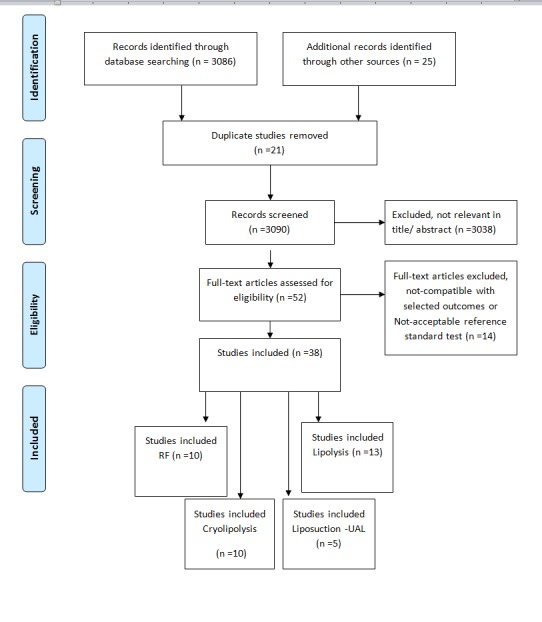
Systematic literature review based on PRISMA statement
Table 2 . Characteristics of included Studies on Systematic Review for Cryolipolysis .
| Cryolipolysis | ||||||||||
| N | Author | Year | No. | Problem | Sex | Intervention Technology | System | Follow-up | Clinical Outcome | Side-effect |
| 1 | Dierickx CC [20] | 2013 | 518 | Weight reduction and shaping abdomen, sides, front side of thigh, knees, and lower limbs | 378 females and 140 males | Cryolipolysis | ZELTIQ | 3 months | Each patient had averagely 23% reduction of fat layer thickness. | 9.8% of patients stated the existence of bruise and 0.04 announced sensitivity in treated area |
| 2 | F Bernstein [21] | 2012 | 2 | Reduction of fat layer thickness of sides | Male | Cryolipolysis | ZELTIQ | 2-5 Years | In the intended period, the total weight of patients reduced 10 pounds . | No side-effect was observed. |
| 3 | Dover [22] | 2011 | 32 | Weight reduction in sides and lower limbs. | Female | Cryolipolysis | ZELTIQ | 4 months | 22% reduction of fat layer thickness in the patients was observed. | No sider-effect was reportef. |
| 4 | Coleman [23] | 2011 | 10 | Reduction in thickness of fat layer | Female | Cryolipolysis | ZERONA | 7 months | 25.5% reduction of thickness of fat layer in all patients . | No side-effect was reported. |
| 5 | Gordon H [24] | 2014 | 6 | Reduced thickness of fat layer in different parts | 2 males and 4 females | Cryolipolysis plus Heat | ZELTIQ | 6 months | Mean reduced thickness of fat layer was 0.9cm. Mean weight of the patients didn’t reduce. | No side-effect was reported. |
| 6 | Sasaki GH [24] | 2014 | 112 | Reduced thickness of fat layer in different areas | Cryolipolysis | ZELTIQ | 6 months | Mean reduced thickness of fat layer (i.e. 21.5%) was observed among 85 patients as measured by Caliper. | No complicated side-effect was reported. | |
| 7 | G. A. Ferraro [25] | 2011 | 50 | Reduced thickness of fat layer in different areas | 37 females, 13 males | Cryolipolysis plus lipolysis shock | ZELTIQ | 12 months | Mean reduced thickness of fat layer was 3.08 cm. The mean circumferential size reduction of abdomen, arms, thighs, ankles and lower limb was 4.45cm.. | No side-effect was reported. |
| 8 | Kim J [26] | 2014 | 15 | Reduced thickness of localized fat | Female | Cryolipolysis | Micool TM, Hironic Co, Seongnam | 2 months | The post-intervention results showed significant progress in reducing thickness of fat layer. | No side effect was observed. |
| 9 | Garibyan L [27] | 2014 | 11 | Reduced thickness of localized fat in sides | Males and Females | Cryolipolysis | ZELTUQ | 2 months | Mean difference of the eliminated volume of fat tissue in intervention group compared with the control group was 29.6 cm. | No side-effect was reported. |
| 10 | Stevens WG [28] | 2013 | 528 | Reduced thickness of localized fat in different parts of body | Male and Female | Cryolipolysis | ZELTIQ | 2 year | Cryolipolysis was suggested as an effective and safe method. | Only little pain and neuralgia were reported. |
Table 3 . Characteristics of included Studies on Systematic Review for Lipolysis .
| Lipolysis | |||||||||
| N | Author | Year | No. | Problem | Sex | Intervention Technology | System | Follow-up | Clinical Outcome |
| 1 | Mulholland [17] | 2012 | 67 | Cellulite | Female | Lipolysis | Zerona Laser | 2 weeks | The mean difference of tissue circumference and reduced size of cellulite in the patients were 2.8 inch at the end of intervention. |
| 2 | Dibernardo [29] | 2008 | 3 | Additional fat tissue in thighs, lower limb and neck | Female | Lipolysis | Smartlipo MPX | 1 month | Increased softness and smoothness of skin surface was observed in all three patients in 1 month after intervention. |
| 3 | Badin AZ [30] | 2002 | 245 | Overweight and Obesity | Female | Lipolysis | Nd: YAG | 2 weeks | Contraction and shrinkage of skin in some areas of abdomen that were lax and downward. |
| 4 | Kim KH [31] | 2006 | 10 | Additional fat under chin, arm, abdomen and thighs | Female | Lipolysis | Nd: YAG | 3 weeks | M.R. I imaging results showedmean 17% reduction of fat volume in the treated areas. |
| 5 | Goldman A [32] | 2008 | 52 | Cellulite | Female | Lipolysis | Nd: YAG | 2 years | 84% of the patients reported very good and outstanding procedure of cellulite treatment. |
| 6 | Rho YK [33] | 2009 | 5 | Large local fat in breasts | Male | Lipolysis | Nd: YAG | 8 weeks | Variation of the circumferential size of breast in the patients after 8 weeks was significant. |
| 7 | Dudelzak J [34] | 2009 | 20 | Local fat in arms | Female | Lipolysis | Nd: YAG | 6 months | Improved clinical symptoms were evident. Contraction and hardness of skin along with mean 0.75cm reduction of circumference of arms were observed at the end of the treatment. |
| 8 | Sun Y [35] | 2009 | 35 | Local fat in face and arms | Female | Lipolysis | Nd: YAG | 2 weeks | Fat tissue was effectively divided and reduced. |
| 9 | Reynaud JP [36] | 2009 | 334 | Chin, arms, thigh, abdomen, lower limb | Female | Lipolysis | OSYRIS | 3 months | 58% of patients were completely satisfied with the treatment process. |
| 10 | Weiss RA [37] | 2009 | 19 | Neck, abdomen, arm, thigh, and sides | Female | Lipolysis | Diode Tumescent | 3 months | Reduced extend on undesired fat in different parts of body was reportedly 73%. |
| 11 | Woodhall KE [38] | 2009 | 20 | Fat and laxity of skin of arms | Female | Lipolysis | Nd: YAG | 3 months | 80% reduction of local fats in arms and 75% improvement in treatment of skin laxity was observed. |
| 12 | DiBernardo BE [39] | 2009 | 5 | Abdomen | Female | Lipolysis | Nd: YAG | 6 months | The mean reduction of fat tissue was equal with 17% and increase in skin flexibility was estimated to be 26%. |
| 13 | Sasaki GH [40] | 2009 | 75 | Abdomen | Female | Lipolysis | Nd: YAG | 3 months | The extent of the clinical improvement was reported to be 80%. |
Statistical Analysis
Consequence
Because of different follow-up duration among included studies in different outcome group, we performed meta-analysis on nine studies with three months follow-up duration among three studies of radiofrequency, lipolysis and liposuction intervention.
Based on result ,radiofrequency showed an overall pooled estimate of 2.7 cm (95% CI; 2.3-3.1) of mean reduction in circumference of abdomen after intervention ,our findings revealed a moderate heterogeneity among three studies (X2=5.4, p=0.02, I2=62%). Pooled estimate of reduction in fat layer thickness was 78% (95% CI; 73%-83%) after lipolysis , our findings revealed a moderate heterogeneity among three studies (X2=7.4, p=0.05, I2=72%).liposuction showed a pooled estimate of 3.01 kg (95% CI; 2.3-3.6) of wight loss ,our findings revealed a moderate heterogeneity among three studies (X2=8.1, p=0.000, I2=75%).
There is high heterogeneity of meta-analysis among all included studies in each intervention because of different follow-up duration. As a result, we performed descriptive analysis of outcome among included studies. As shown in Tables (1-4), nineteen papers reported the consequence of the mean circumferential size reduction of an organ (cm) as the main outcome. Among these papers, seven studies were related to
radiofrequency, five to cryolipolysis, two studies were about Exilis, two were about lipolysis, and three were about liposuction.
In general, the highest reduction of the circumferential size with 7.1cm belonged to lipolysis, and the highest value in the reduction of abdomen circumference belonged to cryolipolysis.
Eight papers reported circumferential size reduction of thighs as the main outcome. In this regard, four studies on radiofrequency, two on cryolipolysis and two on liposuction were conducted. The radiofrequency intervention with 5.8 reduction of circumferential size represented the highest extent of reduction.
Nine papers suggested weight reduction as the main outcome. Among these papers, three studies on radiofrequency, two on cryolipolysis and four studies on liposuction were conducted. The highest weight reduction with 4.5 kg after intervention belonged to cryolipolysis.
Eleven studies reported the highest percentage of reduction in thickness of fat layer as the main result of the intervention. In this regard, five studies were related to cryolipolysis and the other five ones were on lipolysis. Intervention by lipolysis with 83% reduction had the highest effect.
In association with the percentage of patients’ satisfaction, 15 studies reported this outcome as the main result of intervention. Eight studies on radiofrequency, two studies on cryolipolysis and four studies on lipolysis were conducted. It should be mentioned that 100% satisfaction after intervention was reported in one of the studies on lipolysis.
In association with the percentage of progress in treating cellulite tissue, five studies suggested this outcome as the main result of the intervention. All of these studies were conducted on the effects of radiofrequency intervention on treating cellulite tissue. Radiofrequency intervention with 100% treatment had reportedly highest level of influence as suggested in one of the studies.
The general results of the meta-analysis showed a high heterogeneity of the studies resulting from the lack of sufficient evidence on the interventions and different follow-up duration among studies. In the present study, the pooled estimation of the effects was not used in full economic evaluation analysis due to the high heterogeneity of the results, and we presented the results of the cost and outcome separately as cost- consequence analysis.
Safety
The other conclusion of the included studies was to determine the side effects of each method. In a study by Andrew on cryolipolysis (46), the patients usually observed a red color in the treated site, which disappeared in a few hours. In some cases, bruises may appear which could last for a week. A feeling of dumbness may occur in some of the treated areas. The decreased nerve sensation takes one to six weeks (mean 3.6 weeks), but it is eliminated after two months. This case of reduced sensation is temporary and it does not need any intervention. Mulholland and et al., suggested certain side effects such as red skin, mild edema and severe heat in the treated area in the case of using RF system, which disappeared six hours after treatment. Leal (18) did not distinctively suggest severe side effects but mild ones such as small blisters that were attributed to the malfunction of RF system. Berankova (19) reported negligible side effects such as mild red color of surficial skin tissue at the area of the treatment, which reduced in few minutes after the end of treatment.
Cost
The results of estimating the costs of non-invasive interventions with two perspectives (the perspective of health-care providers and that of the patients and their families) are represented in the following tables. From the viewpoint of the health care providers, the costs of service provision including total current and capital expenses are annually calculated. To estimate the costs, the viewpoints of the experts of Department of Medical Equipment of Iranian Ministry of Health, plastic and cosmetic surgeons and physicians were considered.
In addition, Interviews were conducted with some patients and directors of treatment centers and private clinics. The costs are presented in Table 5. The results of analyzing costs revealed that from the perspectives of service providers, and patients and their families, radiofrequency intervention had the least cost and lipolysis had the highest.
Table 5 . Summary of cost result .
| Average cost |
RF
THERMALIPO |
Cryolipolysis ZELTIQ |
Lipolysis OSYRIS |
Lipousuction SmartLipo |
| Healthcare provider perspective | 492.9$ | 493.3$ | 536.7$ | 521.4$ |
| Patient and family perspective | 289.2$ | 912.5 | 1029.6 | 800.3$ |
Discussion
The increasing demand for beauty and fitness drew the attentions to using non-invasive systems in the past decade. By aiming to assess the consequence and cost-consequence of non-invasive (i.e., RF and Cryolipolysis) and invasive technologies (i.e., liposuction and lipolysis), we found that 38 out of 3,111 papers had the criteria for exclusion in the present study. In this respect, 10 studies were on different models of RF systems, 10 studies were on cryolipolysis, 13 studies were related to lipolysis and only five studies examined liposuction method through ultrasonic system. The highest and lowest influence on the outcome of each intervention was defined based on the outcomes. The reviews of the outcomes showed that radiofrequency was more effective than semi-invasive and invasive methods in improving cellulite and reducing circumferential size of thighs. However, the alternative interventions offer better results in other factors of weight reduction and percentile thickness of fat layer.
The review of costs showed that among the interventions, radiofrequency had the least costs from the perspective of the health-care providers, and considering the acceptable consequence of this intervention in improving cellulite tissue and reducing the circumferential size of thighs, this intervention is acceptable considering cost and cost-consequence. Lipolysis had the highest cost compared to other interventions; however, it offered better results in the general outcome of reducing the circumferential size of the organs, thickness of fat layer, and satisfaction of patients than non-invasive methods. In addition, it can be concluded that compared to lipolysis, cryolipolysis is a good choice considering its acceptable results in reducing weight and circumference of abdomen and its lower costs.
Conclusion
Considering the significant attribution to the issue of beauty, the increasing demand of individuals to attain it, and the close association of health with interventions to achieve beauty, these systems should be used in certified medical centers and clinics. The application of these systems in bodybuilding clubs and beauty salons should be seriously prohibited. In addition, precise and proper training should be provided for using these systems, considering the exact functions of thermal settings and other essential factors. In addition, the selection of patients by health care providers should be done by certain indications because individuals whose body mass index is over 32 are not suitable for any type of intervention.
Cite this article as: Nojomi M, Moradi-Lakeh M, Velayati A, Naghibzadeh-Tahami A, Dadgostar H, Ghorabi Gh, Moradi-Joo M, Yaghoubi M. Health technology assessment of non-invasive interventions for weight loss and body shape in Iran. Med J Islam Repub Iran 2016 (3 April). Vol. 30:348.
References
- 1. Orlet fisher J. How important is it? Synthesis of expert's text. April 2012.
- 2. Canadian clinical practice guidelines on the management and prevention of obesity in adults and children 2007 April 10;176(8). [DOI] [PMC free article] [PubMed]
- 3.Frood S, Johnston LM, Matteson CL, Finegood DT. Obesity, Complexity, and the Role of the Health System. Curr Obes Rep. 2013;2(4):320–326. doi: 10.1007/s13679-013-0072-9. [DOI] [PMC free article] [PubMed] [Google Scholar]
- 4. Guidance on the prevention, identification, assessment and management of overweight and obesity in adults and children .National Institute for Health and clinical excellence. Dec 2006. [PubMed]
- 5. Exilis, the Latest Device for Non-Invasive Skin Tightening and Non-Surgical Fat Reduction, Aesthetic Solutions-Dermatology, Laser and Researc, PR Log - Global Press Release Distribution, 2011;.
- 6.Ray Jalian H, Avram MM, Cryolipolysis: Cryolipolysis:. A Historical Perspective and Current Clinical Practice. Semin Cutan Med Surg. 2013;32:31–34. [PubMed] [Google Scholar]
- 7.Shridharani SM, Broyles JM, Matarasso A. Liposuction devices: technology update. Med Devices (Auckl) 2014;7:241–251. doi: 10.2147/MDER.S47322. [DOI] [PMC free article] [PubMed] [Google Scholar]
- 8.Palm MD, Goldman MP. Laser lipolysis: current practices. Semin Cutan Med Surg. 2009 Dec;28(4):212–9. doi: 10.1016/j.sder.2009.10.002. [DOI] [PubMed] [Google Scholar]
- 9. Marfell-Jones M. Guidelines for Athlete Assessment in New Zealand Sport. Kinanthropometric Assessment. Available at: http://homepages.ihug.co.nz/~rip/Anthropometry.
- 10.Weiss RA. Noninvasive Radio Frequency for Skin Tightening and Body Contouring. Semin Cutan Med Surg. 2013;32:9–17. [PubMed] [Google Scholar]
- 11.Romero C, Caballero N, Herrero M, Ruíz R, Sadick NS, Trelles MA. Effects of cellulite treatment with RF, IR light, mechanical massage and suction treating one buttock with the contralateral as a control. Journal of Cosmetic and Laser Therapy. 2008;10:193–201. doi: 10.1080/14764170802524403. [DOI] [PubMed] [Google Scholar]
- 12.Belenky I, Margulis A, Elman M, Bar-Yosef U, Paun SD. Exploring Channeling Optimized Radiofrequency Energy: a Review of Radiofrequency History and Applications in Esthetic Fields. Adv Ther. 2012;29(3):249–266. doi: 10.1007/s12325-012-0004-1. [DOI] [PubMed] [Google Scholar]
- 13. Mlosek RK, Woz´ niak W, Malinowska S, Lewandowski M, Nowicki A. The effectiveness of anticellulite treatment using tripolar radiofrequency monitored by classic and high-frequency ultrasound. European Academy of Dermatology and Venereology. 2011. [DOI] [PubMed]
- 14.van der Lugt C, Romero C, Ancona D, Al-Zarouni M, Perera J, Trelles MA. A multicenter study of cellulite treatment with a variable emission radio frequency system. Dermatologic Therapy. 2009;22:74–84. doi: 10.1111/j.1529-8019.2008.01218.x. [DOI] [PubMed] [Google Scholar]
- 15.Anolik R. Radiofrequency Devices for Body Shaping: A Review and Study of 12 Patients. Semin Cutan Med Surg. 2009;28:236–243. doi: 10.1016/j.sder.2009.11.003. [DOI] [PubMed] [Google Scholar]
- 16.Boisnic S. Clinical and histopathological study of the TriPollar home-use device for body treatments. Eur J Dermatol. 2010;20(3):367–72. doi: 10.1684/ejd.2010.0938. [DOI] [PubMed] [Google Scholar]
- 17.Mulholland RS, Kreindel M. Non-Surgical Body Contouring: Introduction of a New Non-Invasive Device for Long-Term Localized Fat Reduction and Cellulite Improvement Using Controlled, Suction Coupled, Radiofrequency Heating and High Voltage Ultra-Short Electrical Pulses. J Clin Exp Dermatol Res. 2012;3:4. [Google Scholar]
- 18.Leal-Silva HG, Carmona-Hernández E, López-Sánchez N, González-Silva JA. Single Session of Focused Ultrasound Plus Radiofrequency in Fat Disruption. Dermatología Rev Mex. 2014;58(2) [Google Scholar]
- 19.Berankova B, Simotova P. Evaluation of non-invasive body sculpting method based on novel efficient application of high-frequency energy administered to human adipose tissue. Journal of Czecho-Slovak Association of Anti-Aging Medicine. 2009;2 [Google Scholar]
- 20.Dierickx CC. Safety, Tolerance, and Patient Satisfaction with Noninvasive Cryolipolysis. Dermatol Surg. 2013;39:1209–1216. doi: 10.1111/dsu.12238. [DOI] [PubMed] [Google Scholar]
- 21.Bernstein EF. Longitudinal evaluation of cryolipolysis efficacy: two case studies. Journal of cosmetic dermatology. 2013;12(2):149–152. doi: 10.1111/jocd.12036. [DOI] [PubMed] [Google Scholar]
- 22. Dover JA, Burns J, Coleman S, Fitzpatrick R, Garden J, Goldberg D, et al. A prospective clinical study of noninvasive cryolipolysis for subcutaneous fat layer reduction-interim report of available subject Data. In Lasers in Surgery And Medicine, Div John Wiley & Sons Inc, 111 River St, Hoboken, Nj 07030 Usa: Wiley-Liss, 2009:pp. 45-45.
- 23.Coleman SR, Sachdeva K, Egbert BM, Preciado J, Allison J. Clinical efficacy of noninvasive cryolipolysis and its effects on peripheral nerves. Aesthetic plastic surgery. 2009;33(4):482–488. doi: 10.1007/s00266-008-9286-8. [DOI] [PubMed] [Google Scholar]
- 24.Sasaki GH, Abelev N, Tevez-Ortiz A. Noninvasive Selective Cryolipolysis and Reperfusion Recovery for Localized Natural Fat Reduction and Contouring. Aesthetic Surgery Journal. 2014;34:420. doi: 10.1177/1090820X13520320. [DOI] [PubMed] [Google Scholar]
- 25.Ferraro GA, De Francesco F, Cataldo C. Synergistic Effects of Cryolipolysis and Shock Waves for Noninvasive Body Contouring. Aesth Plast Surg. 2012;36:666–679. doi: 10.1007/s00266-011-9832-7. [DOI] [PubMed] [Google Scholar]
- 26.Kim J, Kim DH, Ryu HJ. Clinical effectiveness of non-invasive selective cryolipolysis. Journal of Cosmetic and Laser Therapy. 2014;16(5):209–213. doi: 10.3109/14764172.2014.946050. [DOI] [PubMed] [Google Scholar]
- 27.Garibyan L. Three-dimensional volumetric quantification of fat loss following cryolipolysis. Lasers Surg Med. 2014 February;46(2):75–80. doi: 10.1002/lsm.22207. [DOI] [PMC free article] [PubMed] [Google Scholar]
- 28.Stevens WG, Pietrzak LK, Spring MA. Broad Overview of a Clinical and Commercial Experience with CoolSculpting. Aesthetic Surgery Journal. 2013;33:835. doi: 10.1177/1090820X13494757. [DOI] [PubMed] [Google Scholar]
- 29.Di Bernardo BE, Reyes J, Chen B. Evaluation of tissue thermal effects from 1064/1320-nm laser-assisted lipolysis and its clinical implications. J Cosmet Laser Ther. 2009;11:62––9. doi: 10.1080/14764170902792181. [DOI] [PubMed] [Google Scholar]
- 30.Badin A, Moraes L, Gondek L, Chiaratti M, Canta L. Laser lipolysis: flaccidity under control. Aesthetic Plast Surg. 2002;26:335–9. doi: 10.1007/s00266-002-1510-3. [DOI] [PubMed] [Google Scholar]
- 31.Kim KH, Geronemus RG. Laser lipolysis using a novel 1,064 nm Nd: YAG laser. Dermatol Surg. 2006;32:241–8, discussion 47. [PubMed] [Google Scholar]
- 32.Goldman A, Gotkin RH, Sarnoff DS, Prati C, Rossato F. Cellulite: a new treatment approach combining subdermal Nd: YAG laser lipolysis and autologous fat transplantation. Aesthet Surg J. 2008;28:656–62. doi: 10.1016/j.asj.2008.09.002. [DOI] [PubMed] [Google Scholar]
- 33.Rho YK, Kim BJ, Kim MN, Kang KS, Han HJ. Laser lipolysis with pulsed 1064 nm Nd: YAG laser for the treatment of gynecomastia. Int J Dermatol. 2009;48:1353–9. doi: 10.1111/j.1365-4632.2009.04231.x. [DOI] [PubMed] [Google Scholar]
- 34.Dudelzak J, Hussain M, Goldberg DJ. Laser lipolysis of the arm, with and without suction aspiration: clinical and histologic changes. J Cosmet Laser Ther. 2009;11:70–3. doi: 10.1080/14764170902984895. [DOI] [PubMed] [Google Scholar]
- 35.Sun Y, Wu SF, Yan S, Shi HY, Chen D, Chen Y. Laser lipolysis used to treat localized adiposis: a preliminary report on experience with Asian patients. Aesthetic Plast Surg. 2009;33:701–5. doi: 10.1007/s00266-009-9375-3. [DOI] [PubMed] [Google Scholar]
- 36.Reynaud JP, Skibinski M, Wassmer B, Rochon P, Mordon S. Lipolysis using a 980-nm diode laser: a retrospective analysis of 534 procedures. Aesthetic Plast Surg. 2009;33:28–36. doi: 10.1007/s00266-008-9262-3. [DOI] [PMC free article] [PubMed] [Google Scholar]
- 37.Weiss RA, Beasley K. Laser-assisted liposuction using a novelblend of lipid- and water-selective wavelengths. Lasers Surg Med. 2009;41:760–6. doi: 10.1002/lsm.20804. [DOI] [PubMed] [Google Scholar]
- 38.Woodhall KE, Saluja R, Khoury J, Goldman MP. A comparison of three separate clinical studies evaluating the safety and efficacy of laser-assisted lipolysis using 1,064, 1,320 nm, and a combined 1,064/1,320 nm multiplex device. Lasers Surg Med. 2009;41:774–8. doi: 10.1002/lsm.20859. [DOI] [PubMed] [Google Scholar]
- 39.DiBernardo BE, Reyes J. Evaluation of skin tightening after laser-assisted liposuction. Aesthet Surg J. 2009;29:400–7. doi: 10.1016/j.asj.2009.08.006. [DOI] [PubMed] [Google Scholar]
- 40.Sasaki GH. Quantification of human abdominal tissue tightening and contraction after component treatments with 1064-nm/1320-nm laser-assisted lipolysis: clinical implications. Aesthet Surg J. 2010;30:239–45. doi: 10.1177/1090820X10369373. [DOI] [PubMed] [Google Scholar]
- 41.Swanson E. Prospective Study of Lidocaine, Bupivacaine, and Epinephrine Levels and Blood Loss in Patients Undergoing Liposuction and Abdominoplasty. Plastic & Reconstructive Surgery: September 2012;130(3):702–722. doi: 10.1097/PRS.0b013e31825dc408. [DOI] [PubMed] [Google Scholar]
- 42.Omranifard M. Ultrasonic liposuction versus surgical lipectomy. Aesthetic plastic Surgery. 2003;27(2):143–145. doi: 10.1007/s00266-003-0085-y. [DOI] [PubMed] [Google Scholar]
- 43.Dhami LD. Safe Total Corporal Contouring with Large-Volume Liposuction for the Obese Patient Aesth Plast. Surg. 2006;30:574 588. doi: 10.1007/s00266-006-0050-7. [DOI] [PubMed] [Google Scholar]
- 44.Foster KW, Kouba DJ, Hayes J, Freeman V, Moy RL. Reductions in thigh and infraumbilical circumference following treatment with a novel device combining ultrasound, suction, and massage Journal of Drugs in Dermatology. JDD. 2008;7(2):113–115. [PubMed] [Google Scholar]
- 45.Ybarra J, Blanco-Vaca F, Fernandez S, Castellví A, Bonet R, Palomer X. et al. The Effects of Liposuction Removal of Subcutaneous Abdominal Fat on Lipid Metabolism are Independent of Insulin Sensitivity in Normal-Overweight Individuals. Obesity Surgery April. 2008;18(4):408–414. doi: 10.1007/s11695-007-9261-5. [DOI] [PubMed] [Google Scholar]
- 46.Nelson AA, Wasserman D, Avram MM. Cryolipolysis for Reduction of Excess Adipose Tissue. Semin Cutan Med Surg. 2009;28:244–249. doi: 10.1016/j.sder.2009.11.004. [DOI] [PubMed] [Google Scholar]