



Graphical abstract
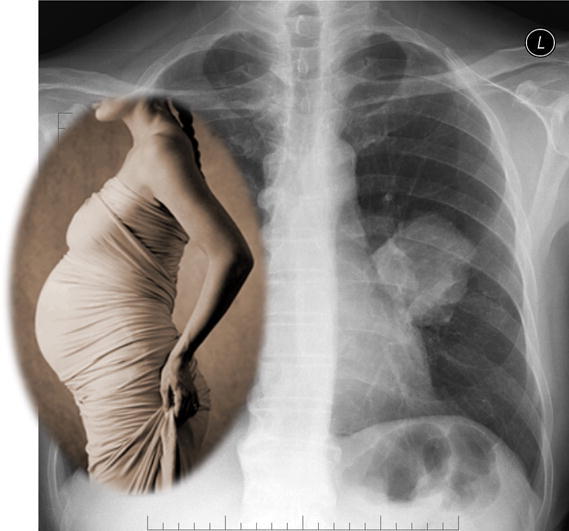
Keywords: Lung cancer, Pregnancy, Treatment, Prognosis, Fetal metastasis, Placental metastasis
Abstract
Lung cancer, the leading cause of cancer deaths in males for decades, has recently become one of commonest causes for women too. As women delay the start of their family, the co-existence of cancer and pregnancy is increasingly observed. Nevertheless, lung cancer during pregnancy remains a rather uncommon condition with less than 70 cases published in recent years. Non-small cell lung carcinoma is the commonest type accounting for about 85% of all cases. Overall survival rates are low. Chemotherapy and/or targeted treatment have been used with poor outcomes. The disease has been also found to affect the products of conception with no short- or long-term consequences for the neonate. This article is referring to a narrative review of lung cancers diagnosed in pregnant women around the world.
Introduction
Cancer complicates 1 in 1000 pregnancies. In the last few decades there has been a change in the socioeconomic, professional and cultural status of women, especially in the western world, that has shifted the age of women at first pregnancy in the third decade of their lives. Malignancies such as breast cancer, melanoma and lymphoma are likely to be diagnosed during this period and hence they are the commonest to complicate pregnancies [1], [2], [3].
Others, like lung cancer, usually present later in life, and therefore seldom coincide with pregnancy [4]. Lung cancer is the second most common cancer type in women but it is also the most lethal. Non-small cell lung cancer (NSCLC) is the most common histological type accounting for 80–85% of all gestations lung cancer, 10–15% are small cell lung cancer (SCLC) and fewer that 5% are carcinoids of the lungs [4]. It is estimated that over 105,000 new cases will be diagnosed in the USA with approximately 70,000 deaths in 2015. Smoking is linked to approximately 90% of lung cancer cases, however there are other well recognized causes such as radon, asbestos, chromium, family history, and dietary factors. The disease occurs in older people with a peak incidence after the age of 65 and only 2% of cases will affect people under the age of 45 [5].
The scope of this article is to provide a narrative review from the available data on diagnosis, treatment and prognosis of gestational lung cancer. In addition, special references are made to the rare phenomenon of placenta and fetus invasion.
Literature search
The authors searched the Medline and the International Cancer in Pregnancy registration study (CIP study; www.cancerinpregnancy.org registered with clinical/trials. Gov, number NCT 00330447).
Demographic data
The first case of lung cancer during pregnancy appeared in 1953 [6]. In total, 66 pathologically confirmed lung cancers have been reported.
Median age was 36 years old (17–45 years) while the median maternal gestational age was 27.3 months ranging from 8 to 38 weeks. Eighty-two percentage of the cases were NSCLC and 18% SCLC. At presentation, 97% of patients were diagnosed in advanced clinical stages (stages III–IV) probably indicating that gestational lung cancer follows an aggressive course. Regarding tobacco history, this was present in 35% of patients and absent in 27% and in the rest 38% of pregnant mothers there are no available information [4], [7], [8], [9], [10], [11], [12], [13] Table 1.
Table 1.
Demographics.
| Number of cases published | 66 |
| Median age (range) | 36 years (17–45) |
| Gestational week at cancers diagnosis (range) | 27.3 weeks (8–38) |
| Histopathology | |
| Non-small cell lung cancer | 5.4 (8%) |
| Small cell lung cancer | 12 (18%) |
| Smoking history | |
| Absent | 18 (27%) |
| Present | 23 (35%) |
| Unknown | 25 (38%) |
| Disease stage | |
| Early (I–II) | 1 (1.5%) |
| Advanced (III–IV) | 64 (97%) |
| Unknown | 1 (1.5%) |
Therapeutic management and prognosis
Almost half of patients (51.4%) were treated postpartum and the rest (24%) during pregnancy. Platinum-based chemotherapy was administered in 40 patients (60.5%) and targeted treatment with erlotinib or gefitinib (4 patients) and crizotinib (2 patients). All patients treated with targeted drug were found to be positive for EGFR or EML4-ALK mutations. Only three patients were managed with palliative radiotherapy. No major responses to systemic chemotherapy have been noticed, while targeted treatment offered disease stability for a period of several months. Nevertheless, not enough data are available to support the use of targeted therapy in gestational cancers.
Maternal survival was dismal. Twelve percentage of treated women died within one month during postpartum period and 70% had an overall survival of a few months. However, 12 patients diagnosed mainly with an early stage disease, experienced longer survival.
Concerning newborns’ outcome, 82% of them were born healthy. Metastatic invasion of the products of conception (placenta and fetus) was observed in 14 cases, 11 on the placenta and 3 of the fetuses [4], [7], [8], [9], [10], [11], [12], [13] Table 2.
Table 2.
Treatment and outcome.
| Treatment | |
| During gestation | 16 (24%) |
| Post-partum | 34 (51.5%) |
| No treatment | 9 (13.5%) |
| Unknown | 7 (11%) |
| Chemotherapy | 40 (60.5%) |
| Erlotinib/Gefitinib | 3 (4.5%) |
| Crizotinib | 2 (3%) |
| Radiotherapy | 3 (4.5%) |
| Maternal outcome (from diagnosis) | |
| Death 1 month post-partum | 8 (12%) |
| Alive in 3–5 months | 26 (39.5%) |
| Alive in 6–11 months | 20 (30.5%) |
| Alive in 12 months or more | 12 (18%) |
| Products of conception (outcome) | |
| Abortion (induced/spontaneous) | 6/1 |
| Healthy baby | 54 (82%) |
| Fetal metastases | 3 (4.5%) |
| Placental metastases | 11 (17%) |
| Unknown | 1 |
Discussion
Lung cancer mortality in women is still increasing in European countries. There is also adequate evidence that smoker women exhibit a double risk in developing lung cancer as compared to males [14], [15]. From the available data in the literature, it becomes obvious that less than 50% of gestational lung cancers carry a positive smoking history, indicating that tobacco doesn’t account as the only etiological factor in these young women. Possibly other carcinogenic mechanisms i.e. EGFR or ALK activating mutations could also be implicated [13].
NSCLC of adenocarcinoma type was the most frequent histology, accounting for 80% of pregnant women. More than 97% of the published cases are diagnosed with locally advanced or metastatic disease.
Almost 50% of patients have been treated with systemic treatment during the postpartum period of pregnancy. Platinum-based regimens were the most commonly combinations used. Response rates were reported to be poor and maternal survival short. Overall survival was between 3 and 9 months, with 12% of patients to be dead within the first month postpartum. However, survival was longer (12 months or more) in patients with early disease [4], [7].
The administration of systemic chemotherapy during the first trimester of pregnancy should be avoided due to the harmful or lethal effects on the fetus. However, certain chemotherapeutic drugs or combinations can be safely given during the second and third trimesters [16], [17], [18]. Tyrosine kinase inhibitors are generally not recommended during pregnancy. To date, there are six cases reported: two with erlotinib, one with gefitinib, one with erlotinib followed by gefitinib and two with crizotinib given either during an unrecognized pregnancy or after delivery. No major responses or fetus abnormalities have been observed [11], [12], [13].
Most of pregnant mothers with cancer are giving birth to healthy babies, although newborn prematurity including complications such as respiratory distress, seizures or ventricular hemorrhage has been noticed [1], [2]. In this review, 82% of deliveries gave birth to normal newborns.
The invasion of placenta or fetus is a rare complication in pregnant women with cancer. However, certain tumors are more commonly associated with involvement of products of conception such as melanoma (30%), cancer of unknown primary (22.5%), hematological malignancies (15%) or breast cancer (14%). Recently lung cancer has been recognized as an additional tumor with high predilection to the products of conception (13%) [19], [20], [21].
Conclusions
In conclusion, in this narrative review it is emphasized that lung cancer during pregnancy is becoming an emerging issue. Nowadays, oncologists and gynecologists should be informed of this coexistence. They should be aware that gestational lung cancer (a) is diagnosed in advanced stages having an aggressive behavior, (b) chemotherapy offers poor results, (c) overall survival is short and (d) placenta and fetus are often involved by transmitted cancer cells, requiring thorough examination of the products of conception. A retrospective as well as a prospective testing for EGFR and ALK activating mutations is of paramount importance in order to properly treat pregnant mothers with lung cancer.
Conflict of interest
The authors have declared no conflict of interest.
Compliance with Ethics Requirements
This article does not contain any studies with human or animal subjects.
Biographies

Sotirios Mitrou, MD, is a Senior obstetrician and gynecologist in REA Maternal Hospital, Athens, Greece.

Dimitrios Petrakis, MD, PhD, is a Senior Oncologist in Department of Medical Oncology, Ioannina University Hospital, Greece.

George Fotopoulos, MD, is a Senior Oncologist in Department of Medicine, Sotiria Hospital, University of Athens, Greece.

George Zarkavelis, MD, is a Fellow in Medical Oncology, Department of Medical Oncology, Ioannina University Hospital, Greece.

Nicholas Pavlidis, MD, PhD, FRCP Edin, is a Professor and Head of the Department of Medical Oncology, Ioannina University Hospital, Greece. He is a member of Scientific Committee and Coordinator of Master classes of European School of Oncology. He is also Member of Scientific Committee of ESMO/ASCO Global Curriculum and Editor in Chief for Cancer Treatment Reviews.
Footnotes
Peer review under responsibility of Cairo University.

References
- 1.Pentheroudakis G., Pavlidis N. Cancer and pregnancy: poena magna, not anymore. Eur J Cancer. 2006;42(2):126–140. doi: 10.1016/j.ejca.2005.10.014. [DOI] [PubMed] [Google Scholar]
- 2.Voulgaris E., Pentheroudakis G., Pavlidis N. Cancer and pregnancy: a comprehensive review. Surg Oncol. 2011;20(4):e175–e185. doi: 10.1016/j.suronc.2011.06.002. [DOI] [PubMed] [Google Scholar]
- 3.Pentheroudakis G, Pavlidis N. Gastrointestinal, urologic and lung malignancies during pregnancy. Recent results in cancer research, vol. 178; 2008. [DOI] [PubMed]
- 4.Boussios S., Han S.N., Fuscio R., Halaska M.J., Ottevanger P.B., Peccatori F.A. Lung cancer in pregnancy: report of nine cases from an international collaborative study. Lung Cancer. 2013;82:499–505. doi: 10.1016/j.lungcan.2013.09.002. [DOI] [PubMed] [Google Scholar]
- 5.Jemal A., Siegel R., Ward E., Murray T., Xu J., Smigal C. Cancer statistics 2006. CA Cancer J Clin. 2006;56:106–130. doi: 10.3322/canjclin.56.2.106. [DOI] [PubMed] [Google Scholar]
- 6.Barr J.S. Placenta metastases from a bronchial carcinoma. J Obstet Gynaecol Br Emp. 1953;60:895–897. doi: 10.1111/j.1471-0528.1953.tb07292.x. [DOI] [PubMed] [Google Scholar]
- 7.Azim H.A., Jr, Peccatori F.A., Pavlidis N. Lung cancer in the pregnant woman: to treat or not to treat, that is the question. Lung Cancer. 2010;67:251–256. doi: 10.1016/j.lungcan.2009.10.006. [DOI] [PubMed] [Google Scholar]
- 8.Hayama M., Chida M., Tamura M., Kobayashi S., Oyairy T., Honnas K. Unexpected rapid growth of estrogen receptor positive lung cancer during pregnancy. Ann Thorac Cardiovasc Surg. 2014;20:325–328. doi: 10.5761/atcs.cr.12.01934. [DOI] [PubMed] [Google Scholar]
- 9.Sariman N., Levent E., Yener N.A., Orki A., Saygi A. Lung cancer and pregnancy. Lung Cancer. 2013;79:321–323. doi: 10.1016/j.lungcan.2012.11.014. [DOI] [PubMed] [Google Scholar]
- 10.Ceausu M., Hostiuc S., Sajin M., Roman G., Nicodin O., Dermengiu D. Gestational lung adenocarcinoma: case report. Int J Surg Pathol. 2014;22(7) doi: 10.1177/1066896914531816. 6636-6. [DOI] [PubMed] [Google Scholar]
- 11.Kim J.W., Kim J.S., Cho J.Y., Lee D.H. Successful video-assisted thorocoscopic lobectomy in a pregnant woman with lung cancer. Lung Cancer. 2014;85:331–334. doi: 10.1016/j.lungcan.2014.05.022. [DOI] [PubMed] [Google Scholar]
- 12.Neves I., Mota P.C., Hespanhol V.P. Lung cancer during pregnancy: an unusual case. Rev Port Pneumol. 2014;20(1):46–49. doi: 10.1016/j.rppneu.2013.06.005. [DOI] [PubMed] [Google Scholar]
- 13.Gil S., Goetgheluck J., Paci A., Broutin S., Friard S., Couderc L.J. Efficacy and safety of gefitinib during pregnancy: case report and literature review. Lung Cancer. 2014;85:481–484. doi: 10.1016/j.lungcan.2014.06.003. [DOI] [PubMed] [Google Scholar]
- 14.Wang A., Kubo J., Luo J., Desai M., Hedlin H., Henderson M. Active and passive smoking in relation to lung cancer incidence in the Women’s Health Initiative Observational Study prospective cohort. Ann Oncol. 2015;26(1):221–230. doi: 10.1093/annonc/mdu470. [DOI] [PMC free article] [PubMed] [Google Scholar]
- 15.Lortet-Tieulent J., Soerjomataram I., Ferlay J., Rutherford M., Weiderpass E., Bray F. International trends in lung cancer by histological type: adenocarcinoma stabilizing in men but still increasing in women. Lung Cancer. 2014;84(1):13–22. doi: 10.1016/j.lungcan.2014.01.009. [DOI] [PubMed] [Google Scholar]
- 16.Azim H.A., Jr., Peccatori F.A., Pavlidis N. Treatment of the pregnant mother with cancer: a systematic review on the use of cytotoxic, endocrine, targeted agents and immunotherapy during pregnancy. Part I: Solid tumors. Cancer Treat Rev. 2010;36(2):101–109. doi: 10.1016/j.ctrv.2009.11.007. [DOI] [PubMed] [Google Scholar]
- 17.Azim H.A., Jr, Pavlidis N., PeccatorI F.A. Treatment of the pregnant mother with cancer: a systematic review of the use of cytotoxic, endocrine, targeted agents and immunotherapy during pregnancy. Part II: Hematologic tumors. Cancer Treat Rev. 2010;36(2):110–121. doi: 10.1016/j.ctrv.2009.11.004. [DOI] [PubMed] [Google Scholar]
- 18.Amant F., Han S.N., Gziri M.M., Dekrem J., Van Calsteren K. Chemotherapy during pregnancy. Curr Opin Oncol. 2012;24:580–586. doi: 10.1097/CCO.0b013e328354e754. [DOI] [PubMed] [Google Scholar]
- 19.Pavlidis N, Petheroudakis G. Metastatic involvement of placenta and foetus in pregnant women with cancer. Recent results in cancer research, vol. 178; 2008. p. 183–94. [DOI] [PubMed]
- 20.Pavlidis N., Peccatori F.A., Lofts F., Greco A.F. Cancer of unknown primary during pregnancy: an exceptionally rare coexistence. Anticancer Res. 2011;35(1):575–579. [PubMed] [Google Scholar]
- 21.Jackisch C., Louwen F., Schwenkhagen A., Karbowski B., Schmid K.W., Schneider H.P. Lung cancer during pregnancy involving the products of conception and a review of the literature. Arch Gynecol Obstet. 2003;268:69–77. doi: 10.1007/s00404-002-0356-x. [DOI] [PubMed] [Google Scholar]