



Obesity makes access to the femoral vessels more problematic for endovascular aortic aneurysm repair. An oblique cutdown on top of the pannus is common practice to avoid the infection risk associated with crossing the groin crease but this introduces the problem of the stent graft travelling too obliquely ((Fig 1). A useful aid is to make a separate 1cm horizontal incision below the groin cutdown, avoiding bending of the delivery system and bleeding at the puncture site.
Figure 1.
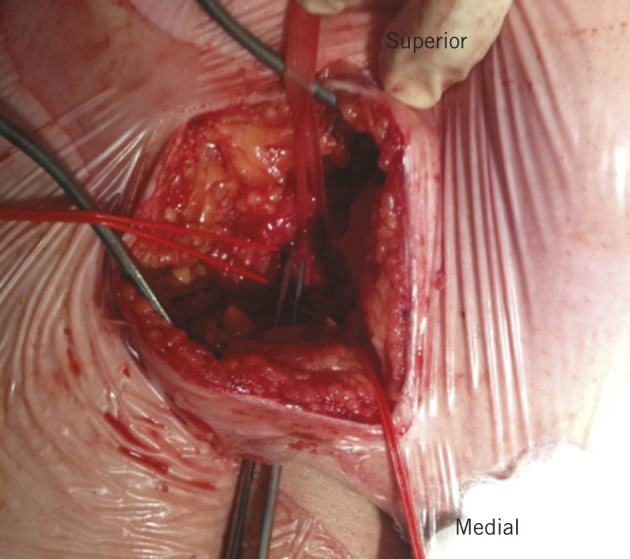
Intraoperative photograph illustrating the problem of an oblique entry to the common femoral vessels, putting the stent graft at risk of bending