



Abstract
Background
It is unclear if the use of hormone therapy (HT) in carriers of BRCA mutations improves the quality of life (QOL) without increasing the risk of breast cancer following a risk-reducing salpingo-oophorectomy (RRSO). Our objective was to assess the effect of HT on QOL and breast cancer risk, after RRSO.
Methods
We searched MEDLINE, EMBASE, CINHAL, and others, from inception to July 22, 2016, to identify relevant studies. Two reviewers independently screened identified records for controlled trials and observational studies that addressed the effect of HT on QOL and breast cancer risk in women with BRCA mutations, post RRSO. Two reviewers independently extracted data on populations, interventions, comparators, outcomes, and methodological quality. Studies addressing the same outcome were synthesized using written evidence summaries or tables.
Results
Of the 1,059 records identified, 13 met our inclusion criteria. All studies were observational. Six studies assessed the effect on QOL. Of these, 3 showed improvement in QOL with HT use. The risk of breast cancer was evaluated in 4 studies. The mean duration of follow-up was 2.6 years (range 0.1-19.1). The risk of breast cancer did not change with HT use in all 4 studies.
Conclusions
Cumulative evidence from our review suggests that short-term HT use following RRSO improves QOL. The effect on breast cancer risk is still unclear. There are too few long-term studies to draw any strong conclusions. The need for future well-designed RCTs for more established evidence is imperative.
Electronic supplementary material
The online version of this article (doi:10.1186/s12905-017-0370-6) contains supplementary material, which is available to authorized users.
Keywords: Hormone Therapy, BRCA1/2, RRSO, Breast cancer, QOL
Background
BRCA mutations are associated with an increased risk of breast and ovarian cancer. In women with mutations of BRCA1 genes, the average cumulative risk for breast cancer by age 80 years is 67% and for ovarian cancer 45% [1–4]. In BRCA2 carriers, the average cumulative risks are 66% and 12%, respectively [1–4]. Risk-reducing saplingo-oophorectomy (RRSO) offers reduction in the risk of ovarian cancer of approximately 80%, among BRCA1 and 2 carriers, and of 50% for breast cancer [5]. However, more recent evidence suggests that breast cancer-risk reduction with RRSO may not be significant, particularly for BRCA1 carriers [6, 7]. Since cancer risk estimates for BRCA carriers are age-dependent and tend to be higher in younger age populations, [7] current guidelines recommend RRSO for BRCA carriers before age 40 years or after completion of child-bearing [8–11].
An immediate consequence of RRSO in premenopausal women is surgical menopause. Surgical menopause is associated with symptoms that can significantly affect a woman's quality of life (QOL), including vasomotor and urogenital symptoms, sexual dysfunction, sleep disturbances, and mood changes [12]. Furthermore, these women are at risk of long-term sequelae such as osteoporosis, cardiovascular diseases, and cognitive impairment [13–15]. In women with early menopause, who have no contraindications to hormone therapy (HT), current guidelines recommend the use of HT until the average age of menopause [16–18]. As BRCA mutation carriers would ideally undertake RRSO at an earlier age than women who perform it for other benign reasons or who go through early natural menopause, guidelines specific to BRCA mutation carriers suggest the consideration of short-term HT use due to the unknown nature of long-term safety [10].
The concern in women with BRCA mutations is that HT may further increase breast cancer risk following a RRSO. The Women's Health Initiative (WHI) randomized trials found an increased risk of breast cancer with estrogen plus progestin, although not with estrogen alone [19]. Data from short-term observational studies assessing the risk of breast cancer with HT use after RRSO are inconsistent, and at this time it is unclear if HT increases breast cancer risk following a RRSO [20, 21].
Carriers of BRCA mutations and women at high risk for breast cancer are often challenged by the decision to undertake RRSO due to the health consequences associated with surgical menopause, and the need for HT that may further increase their breast cancer risk. In 2014, Marchetti et al addressed this important topic in a narrative review, but the lack of details of the literature review method lead to concern about the rigor and completeness of the review [22]. Similarly, in early 2016, Birrer et al published a review of evidence about the safety of HT in women with BRCA mutations [23]. Even though they reported in their title and methods that they conducted a systematic review, the study lacked the main elements of a systematic review, such as a comprehensive literature search, an assessment of the methodological quality of studies included, and transparency in reporting the methods and findings [23].
We, therefore, performed a systematic review to assess the effect of HT on QOL and breast cancer risk in women who have BRCA mutations and who also underwent RRSO for breast and ovarian cancer-risk reduction. The effect of HT on other short and long-term outcomes was also evaluated.
Methods
Our study was designed and conducted in accordance with the guidelines for Meta-Analyses and Systematic Reviews of Observational Studies (MOOSE) [24].
Eligibility criteria
Eligible studies included women who had BRCA1/2 mutations or who had a high risk of breast and ovarian cancer (as defined by the original study authors) but had not undergone genetic testing, and who had undergone RRSO for cancer-risk reduction. Studies comparing the effect of HT (with no restriction on type, dose, regimen, or route of administration) to placebo, non-exposed group or baseline, qualified for inclusion. All controlled trials and observational studies (including prospective and retrospective cohort studies, case-control studies, and cross-sectional studies) were included. Review papers were screened for cited articles. Exclusion criteria included qualitative studies, hypothetical decision analysis, editorials and studies that did not assess the effect of HT on outcomes of interest. Studies that included women with a personal history of breast cancer were not explicitly excluded.
Outcome measures
Primary outcomes were QOL (general and menopause-specific) and breast cancer risk. Secondary outcomes included: vasomotor symptoms, vulvovaginal atrophy (VVA), sexual function, mood, sleep disturbance, bone loss, cardiovascular disease, stroke, venous thromboembolism, and mortality.
Data sources and search strategy
A systematic literature search was conducted by a librarian (SC) to identify all relevant published and unpublished studies. Searches using both controlled vocabulary and natural language were performed in databases including MEDLINE (1946 to March 7, 2016), EMBASE (1974 to March 7, 2016), and CINHAL (inception to March 7, 2016) (Additional file 1). Natural language search terms were derived from three main concepts: 1) RRSO, 2) BRCA mutations or high risk of breast and ovarian cancer, and 3) HT. Grey literature searches were conducted in SCOPUS, Web of Science, Google Scholar, Proquest, Dissertations and Theses and clinical trials registries, from inception to July 22, 2016 (Additional file 2). Other searches included hand searches of the reference list of review papers; and citation search of studies included in the systematic review. To increase the sensitivity of our search no language or date restrictions of publications were applied.
Study selection
Two-step screening for eligibility was performed independently by 2 reviewers (TS and NY), with disagreements resolved by consensus. First, titles and abstracts were screened to select articles eligible for further review. Second, full-text of relevant articles was reviewed for eligibility. Reviewer agreement for confirmation of eligibility was 100%.
Data extraction and quality assessment
Data extraction was completed independently by two reviewers (TS, AB), and discrepancies resolved by a third reviewer (NY). Data elements extracted included: manuscript characteristics; study design and settings; population characteristics; interventions; comparators; outcomes; and adjustments for potential confounders. The risk of bias assessment was conducted independently by two reviewers (TS, NY) and discrepancies resolved by consensus. The quality of studies was evaluated using the Jadad scale for RCTs, [25] and relevant versions of the Newcastle-Ottawa scale (NOS) for observational studies [26]. Cut off scores of ≥ 4 for Jadad scale and ≥7 for NOS were used to distinguish study quality [27]. Quality assessment scores were used to inform sensitivity analyses to evaluate its effect on pooled measure(s) of effect. Corresponding authors were contacted when data on outcomes were not available.
Data synthesis
Outcome data were synthesized by tabulating together all studies reported on specific outcomes. For each study, the outcomes reported were grouped by HT users versus non-users, with mean differences or measures of association as relevant. Descriptive analysis was used for each outcome.
When sufficient homogeneity was demonstrated, outcome data were pooled quantitatively via a meta-analysis (as only two or three papers could be pooled for each outcome variable the details of the meta-analysis can be found in Additional file 3).
Results
Our search identified 1,059 records of which 51 full-text articles were retrieved and assessed for eligibility, and 13 were included (Fig. 1.) The most common reasons for exclusion are listed in Fig. 1. Additional file 4 lists all 51 studies reviewed for eligibility and the reason for exclusion whenever this may apply.
Fig. 1.
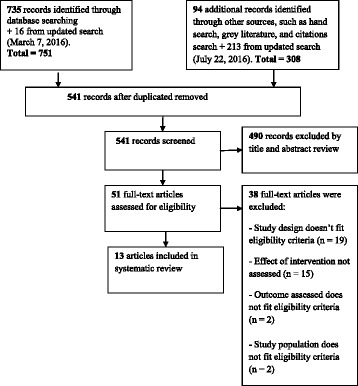
Flow chart for study identification and selection
Study characteristics
Table 1 lists the main characteristics of the studies and their methodological quality. No RCTs were identified. The mean age of women across studies was 49.87 years (range 33-83), however, 6 studies did not report the participants’ age [21, 28–32]. The mean age at RRSO surgery was 45.54 years (range 24-80). Studies included both BRCA1 and 2 carriers, except for 2, which included only BRCA1 carriers [21, 31]. In addition to BRCA mutation carriers, 6 studies included women who had high risk of breast and ovarian cancer with no confirmed genetic diagnosis [29, 32–36]. Other variables, such as time since RRSO, body mass index (BMI), smoking status, history of breast cancer and hysterectomy were reported in some but not all studies. No studies included women with personal history of breast cancer. Intervention characteristics are listed in Table 2.
Table 1.
Study characteristics
| First author, year of publication | Study design | Sample size | Sample size for RRSO | Age at time of studya, mean (range/SD)b | BRCA status (%) | Menopause status at time of RRSO (%) | Age at RRSO surgery, mean(range/SD)b | Comparator | Quality rating |
|---|---|---|---|---|---|---|---|---|---|
| Challberg, 2011 [33] | Cross-sectional survey design | 212 | 212 | 50(36-77) | BRCA1 & BRCA2 (58%) | Premenopausal (100%) | 41.20 (24-48) | Non-exposed and previous users | Low |
| Chapman, 2011 [37] | Cross-sectional survey design | 51 | 51 | 49 (36-54) | BRCA1 (63%) & BRCA2 (37%) | Premenopausal (47%) & Postmenopausal (53%) | 46 (31–68) | Non-exposed | Low |
| Eisen, 2008 [21] | Matched case control study | 472 | 136 | NS | BRCA1 (100%) | Premenopausal (100%) | 42.45 (28 – 52)c | Control (no outcome) | High |
| Finch, 2011 [38] | Prospective cohort study | 114 | 114 | 53(42-74) | BRCA1 (51%) & BRCA2 (49%) | Premenopausal (66%) & Postmenopausal (34%) | 47.50 (35-69) | Non-exposed, baseline | Low |
| Gabriel, 2008 [28] | Retrospective cohort study | 73 | 73 | NS | BRCA1 (64%) & BRCA2 (38%) | Premenopausal (NS) & Postmenopausal (NS) | 42 (29.5-59.2) | Non-exposed | Low |
| Garcia, 2015 [30] | Retrospective chart review | 225 | 225 | NS | BRCA1 & 2 (100%) | Premenopausal (NS) & Postmenopausal (NS) | 50 (31-80) | Non-exposed | Low |
| Heiniger, 2014 [29] | Matched prospective cohort design | 233 | 38 | NS | BRCA1 & 2 (16.7%) | Premenopausal (NS) & Postmenopausal (NS) | NS | Non-exposed and previous users | Low |
| Johansen, 2016 [36] | Retrospective cohort study | 1522 | 294 | 54(33-83) | NSd | Premenopausal (NS) & Postmenopausal (NS) | 48(31-76) | Non-exposed | Low |
| Kotsopoulos, 2016 [31] | Matched case control study | 864 | 210 | NS | BRCA 1 (100%) | Premenopausal (NS) & Postmenopausal (NS) | 42.75(28-53)c | Control (no outcome) | Low |
| Madalinska, 2006 [34] | Cross-sectional survey design | 450 | 450 | 46 ± 6 (range34-59) | BRCA1 & 2 (48%) | Premenopausal (100%) | 43 ± 6 | Non-exposed | High |
| Michelsen, 2009 [35] | Cross-sectional survey design | 1956 | 326 | 54.4(8.9) | BRCA1 & 2 (20%) | Premenopausal (NS) & Postmenopausal (NS) | 48 ± 7.8 | Non-exposed | High |
| Rebbeck, 2005 [20] | Prospective cohort study | 462 | 155 | 42.7(37-78) | BRCA1 (70%) & BRCA2 (30%) | Premenopausal (NS) & Postmenopausal (NS) | NS | Non-exposed | High |
| Tucker, 2016 [32] | Cross-sectional survey design | 119 | 119 | NS | BRCA1 (8.40%) & BRCA2 (11.70%) | Premenopausal (43%) & Postmenopausal (57%) | 50(33-69) | Non-exposed | Low |
NS Not specified, RRSO Risk-reducing salpingo-oophorectomy
afor RRSO cohort only; bbased on the measure of variance reported in the primary study; caverage age at surgery among cases and controls; dBRCA status is captured in the questionnaire but not reported in paper
Table 2.
Intervention characteristics
| First author | Type of HT | Dose of HT | Route of HT | Duration of HTa-mean (range/SD)b |
|---|---|---|---|---|
| Challberg [33] | ET, EPT and tibolone | NS | NS | 3.4 (0.1-19) |
| Chapman [37] | NS | NS | NS | 6 (0.75-9) |
| Eisen [21] | ET and EPT | NS | NS | 3.85c (NS) |
| Finch [38] | ET and EPT | NS | NS | NS |
| Gabriel [28] | ET and EPT | NS | NS | 2.79 ± 3.22 |
| Garcia [30] | NS | NS | Systemic HT (60%) | NS |
| Heiniger [29] | NS | NS | NS | NS |
| Johansen [36] | ET, EPT and tibolone | NS | Systemic HT (39.28%) & local/vaginal HT (6.54%) | NS |
| Kotsopoulos [31] | ET and EPT | NS | NS | 4.35(0.05-25)c |
| Madalinska [34] | EPT and tibolone | NS (standard) | Systemic HT (Oral/transdermal) | 3 ± 2.3 |
| Michelsen [35] | NS | NS | Systemic (Oral/transdermal) | NS |
| Rebbeck [20] | ET and EPT | NS | NS | NS |
| Tucker [32] | ET | NS | Systemic HT (20% - oral and transdermal) & local/vaginal HT (8%) | NS |
HT hormone therapy, ET estrogen therapy, EPT estrogen-progestogen therapy, NS not specified
ain years; bbased on the measure of variance reported in the primary study; caverage duration of use among cases and controls
Synthesis of results
The outcomes reported for individual studies are shown in Table 3.
Table 3.
Outcome data for individual studies: HT users versus non-users
| Outcome | First author | Tool of assessment | N of analysis | Mean differenceab | Measure of association (95% CI)c | P value | Duration of follow-up |
|---|---|---|---|---|---|---|---|
| General QOL | Tucker [32] | SF-36 – total | 108 | Systemic HT = 1.76 | - | 0.57 | NA |
| 93 | Local HT = 3.3 | - | 0.86 | ||||
| SF-36 – pain | 108 | Systemic HT = 14.64 | - | <0.01 | |||
| 93 | Local HT = 4.85 | - | 0.75 | ||||
| SF-36 – physical | 108 | Systemic HT = 7.15 | - | 0.38 | |||
| 93 | Local HT = 5.34 | - | 0.52 | ||||
| SF-36 – emotional | 108 | Systemic HT = -0.50 | - | 0.50 | |||
| 93 | Local HT = -5.5 | - | 0.27 | ||||
| SF-36 – social | 108 | Systemic HT = -3.67 | - | 0.82 | |||
| 93 | Local HT = 3.66 | - | 0.92 | ||||
| SF-36 – energy | 108 | Systemic HT = 0.6 | - | 0.42 | |||
| 93 | Local HT = 3.66 | - | 0.87 | ||||
| SF-36 – general health | 108 | Systemic HT = 4.55 | - | 0.55 | |||
| 93 | Local HT = 3.37 | - | 0.96 | ||||
| Menopause specific QOL | Challberg [33] | FACT-ESd – total | 141 | 3.1 | - | 0.09 | NA |
| Chapman [37] | MSLe – total | 51 | -1.1 | - | 0.06 | NA | |
| Finch [38] | MENQOL Interventione – total | 73 | -3.37f | - | <0.01 | 13.6 months (10.8–21.8) | |
| MENQOL – vasomotor | 73 | -3.4 | - | <0.01 | |||
| MENQOL – physical | 73 | -0.38 | - | 0.28 | |||
| MENQOL – psychosocial | 73 | -0.07 | - | 0.89 | |||
| MENQOL – sexual | 73 | -1.22 | - | 0.02 | |||
| Heiniger [29] | MRSe | 38 | NS | - | >0.05 | 3 yearsg | |
| Madalinska [34] | FACT-ESd – total | 164 | 3.4 | - | 0.03 | NA | |
| Tucker [32] | MENQOLe – total | 108 | Systemic HT = -2.76f | - | <0.01 | ||
| 93 | Local HT = -2.23f | - | <0.01 | ||||
| MENQOL – vasomotor | 108 | Systemic HT = -1.08 | - | 0.02 | |||
| 93 | Local HT = -1.04 | - | 0.22 | ||||
| MENQOL – physical | 108 | Systemic HT = -0.74 | - | 0.03 | |||
| 93 | Local HT = -0.54 | - | 0.38 | ||||
| MENQOL – psychosocial | 108 | Systemic HT = -0.1 | - | 0.36 | |||
| 93 | Local HT = -0.1 | - | 0.91 | ||||
| MENQOL – sexual | 108 | Systemic HT = -0.84 | - | 0.03 | |||
| 93 | Local HT = -0.55 | - | 0.74 | ||||
| Breast cancer | Eisen [21] | Self-reportedh | 124 | - | OR = 0.48(0.19-1.21) | 0.12 | NA |
| Kotsopoulos [31] Same study as Eisen but an updated analysis | Self-reported | 210 | - | OR = 1.06(0.58-1.96) | 0.85 | NA | |
| OR = 1.06(0.52-2.18) - Breast cancer risk with HT use of ≤3 years vs. never use | 0.87 | ||||||
| OR = 1.06 (0.41-2.71) - Breast cancer risk with HT use of >3 years vs. never use | 0.91 | ||||||
| Gabriel [28] | Self-reportedh | 60 | - | OR = 0.31(0.09-1.04)f | >0.05 | NS | |
| OR = 0.48(0.1-2.1) - Breast cancer risk with ET only (no cases with EPT) | >0.05 | ||||||
| Rebbeck [20] | Medical records, operative notes, and pathology reports | 155 | - | HR = 3.93(0.51-30.50)i | >0.05 | 2.6 years (0.1-19.1) | |
| HR = 2.56(0.08-78.13) Breast cancer risk with EPT vs. ET | >0.05 | ||||||
| Vasomotor symptoms | Challberg [33] | FACT-ESj | 141 | - | Hot flashes OR = 0.55(0.23-1.28)f | >0.05 | NA |
| Night sweats OR = 0.28(0.11-0.76)f | <0.05 | ||||||
| Finch [38] | Self-reported | 73 | - | Hot flashes OR = 0.27(0.09-0.80)f | 0.03 | 13.6 months (10.8–21.8) | |
| Madalinska [34] | FACT-ESj | 164 | - | Hot flashes OR = 0.34(0.17-0.70)f | <0.01 | NA | |
| Night sweats OR = 0.51(0.26-1.00)f | 0.04 | ||||||
| Sexual function | Finchk [38] | SAQd | 61 | Pleasure = 1.22 | 0.50 | 13.6 months (10.8–21.8) | |
| Discomfort = 1.92 | 0.03 | ||||||
| Habit = 0.19 | 0.10 | ||||||
| Heiniger [29] | SAQd | 38 | NS for all 3 dimensions | - | >0.05 | ||
| Johansen [36] | SAQl | 157 | Pleasure systemic HT (both ET and EPT) = 0.9 | - | >0.05 | ||
| 102 | Pleasure local HT = -1.5 | - | >0.05 | ||||
| 116 | Pleasure systemic ET = 0.8 | >0.05 | |||||
| 111 | Pleasure systemic EPT = 0.5 | >0.05 | |||||
| 112 | Pleasure systemic tibolone = 1.5 | >0.05 | |||||
| 157 | Discomfort systemic HT (both ET and EPT) = -1.2 | <0.01 | |||||
| 102 | Discomfort local HT = -0.7 | 0.2 | |||||
| 116 | Discomfort systemic ET = -1.1 | 0.04 | |||||
| 111 | Discomfort systemic EPT = -1.2 | 0.02 | |||||
| 112 | Discomfort systemic tibolone = -1.39 | <0.01 | |||||
| Madalinska [34] | SAQd | 164 | Pleasure = 0.4 | 0.70 | NA | ||
| Discomfort = 0.4 | 0.17 | ||||||
| Habit = 0.1 | 0.45 | ||||||
| Tucker [32] | FSFIdm – total | 108 | Systemic HT 5.36 | OR = 0.40(0.12-1.31); P = 0.130 Risk of FSD with systemic HT | 0.14 | NA | |
| 93 | Local HT 7.61 | OR = 0.22(0.05-0.95); P = 0.043 Risk of FSD with local HT |
0.07 | ||||
| FSFI – desiren | 108 | Systemic HT 0.09 | OR = 0.77(0.23-2.52) P = 0.66 Risk of HSDD with systemic HT | 0.83 | |||
| 93 | Local HT 0.52 | OR = 0.29(0.07-1.28); P = 0.10 Risk of HSDD with local HT | 0.25 | ||||
| FSFI – arousal | 108 | Systemic HT 0.57 | - | 0.63 | |||
| 93 | Local HT 1.35 | - | 0.09 | ||||
| FSFI – lubricationo | 108 | Systemic HT 1.39 | OR = 0.38(0.12-1.19); P = 0.10 Risk of lubrication difficulty with systemic HT | 0.04 | |||
| 93 | Local HT 1.84 | OR = 0.29(0.05-1.53); P = 0.14 Risk of lubrication difficulty with local HT | 0.03 | ||||
| FSFI – paino | 108 | Systemic HT 1.97 | OR = 0.16(0.03-0.81); P = 0.03 Risk of dyspareunia with systemic HT |
<0.01 | |||
| 93 | Local HT 1.55 | OR = 0.99(0.22-4.47); P = 0.99 Risk of dyspareunia with local HT | 0.05 | ||||
| FSFI – orgasmo | 108 | Systemic HT 0.71 | OR = 0.35(0.10-1.21); P = 0.10 Risk of orgasm difficulty with systemic HT | 0.40 | |||
| 93 | Local HT 1.47 | OR = 0.57(0.10-3.15); P = 0.52 Risk of orgasm difficulty with local HT | 0.13 | ||||
| FSFI – satisfactiono | 108 | Systemic HT 0.62 | OR = 0.36(0.11-1.14); P = 0.08 Risk of dissatisfaction with sex life with systemic HT | 0.25 | |||
| 93 | Local HT 0.86 | OR = 0.88(0.19-4.06); P = 0.87 Risk of dissatisfaction of sex life with local HT | 0.36 | ||||
| FSDS-Rp | 108 | Systemic HT -4.07 | OR = 0.36(0.16-1.13); P = 0.08 Risk of sexual distress with systemic HT | 0.07 | |||
| 93 | Local HT -2.34 | OR = 1.28(0.30-5.41); P = 0.74 Risk of sexual distress with local HT | 0.94 | ||||
| Loss of interest in sex | Challberg [33] | FACT-ESj | 141 | OR = 0.68(0.34-1.37)f | >0.05 | NA | |
| Madalinska [34] | FACT-ESj | 164 | OR = 0.66(0.30-1.47)f | 0.35 | NA | ||
| Vaginal dryness | Challberg [33] | FACT-ESj | 141 | OR = 0.48(0.20-1.16)f | >0.05 | NA | |
| Finch [38] | MENQOL Interventione | 73 | -1.22 | 0.02 | 13.6 months (10.8–21.8) | ||
| Madalinska [34] | FACT-ESj | 164 | - | OR = 0.47(0.21-1.07)f | >0.05 | NA | |
| Tucker24 | MENQOL – sexual | 108 | Systemic HT = -0.84 | - | 0.03 | ||
| 93 | Local HT = -0.55 | - | 0.74 | ||||
| FSFI – lubricationo | 108 | Systemic HT 1.39 | OR = 0.38(0.12-1.19); P = 0.10 Risk of lubrication difficulty with systemic HT | 0.04 | |||
| Bone loss prevention | Challberg[33] | 93 | Local HT 1.84 | OR = 0.29(0.05-1.53); P = 0.14 Risk of lubrication difficulty with local HT | 0.03 | NA | |
| Chapman [37] | DXA scan | 31 | - | OR = 0.41(0.07-2.41)fi | >0.05 | NA | |
| Garcia [30] | DXA scan | 198 | OR = 0.84(0.26-2.74) | >0.05 | NA | ||
| Cardiovasc-ular disease | Michelsen [35] | Physical measurements, blood samples and self-administered questionnaire | 326 | - | NS | >0.05 | NA |
Bold values indicate statistical significance; CI confidence interval, QOL Quality of life, SF-36 FACT-ES 18-item functional assessment of cancer therapy-endocrine score, NA Not applicable (due to cross-sectional nature of data), MSL menopause symptoms list, MENQOL menopause-specific quality of life, MRS Menopause rating scale, SAQ Sexual activity questionnaire, FSFI Female Sexual Function index, FSD Female sexual dysfunction, FSDS-R Female sexual distress scale- revised, HSDD Hypoactive sexual desire disorder
amean score of users minus the mean score of non-users; bcontinuous outcome; cdiscrete outcome; dhigher score indicates improvement of symptoms; ehigher score indicates worsening of symptoms; fmeasures of effect not reported in primary study but calculated from reported data(unadjusted); g menopausal symptoms and sexual activity were measured only once in the follow-up interview, no baseline assessment for these variables were performed; hdiagnosis confirmed through medical records and pathology reports; iauthors contacted for measure of effect and 95% CI as not reported in published paper; jindividual symptoms of the FACT-ES scale were dichotomized (symptom present was considered to be a response in either of the two highest categories, “very much” and “quite a bit”); kstandard deviation for sexual activity questionnaire domains was not reported in study, values were imputed from Madalinska et al. for meta-analysis[59]; la higher pleasure score indicates high pleasure and a higher discomfort score indicates higher discomfort; mFSFI- total score is dichotomized to identify risk of FSD with those scoring ≤26.55 considered likely to have FSD; nFSFI-desire sub-score is dichotomized to identify the risk of HSDD with those scoring ≤5 having a high likelihood of HSDD; odichotomization criterion of these sub-scores was not reported in the primary study; pa cutoff score of ≥11 on the FSDS-R was used to indicate high levels of sexual distress
Quality of life
Six studies assessed the effect of HT on menopause-specific QOL [29, 32–34, 37, 38]. Tools of QOL assessment varied and included Functional Assessment of Cancer Therapy-Endocrine Score (FACT-ES) [33, 34]; Menopause Symptoms List (MSL) [37], Menopause-Specific Quality of Life-Intervention tool (MENQOL-I), [32, 38] and Menopause Rating Scale (MRS) [29]. Where reported, the mean age of women was 46 years or older in these studies [33, 34, 37, 38]. Studies differed with respect to the menopausal status at the time of RRSO surgery: 4 included pre and postmenopausal women, [29, 32, 37, 38] 2 included only pre-menopausal women [33, 34]. In one study including both pre and postmenopausal women, QOL was analyzed in the pre-menopausal group only [38]. Of the 6 studies evaluating QOL, 3 studies showed improvement in QOL, [32, 34, 38] and 3 showed no change [29, 33, 37]. One study evaluated the effect of HT on general QOL using the Short-form Health Survey (SF-36) [32]. The use of systemic HT improved only the pain domain of the SF-36 survey but none of the other domains.
Breast cancer
Four studies looked at breast cancer risk with HT use [20, 21, 28, 31]. One study was an update of a previous analysis done by Eisen et al [21, 31]. All 4 studies included women, with confirmed BRCA mutations, of comparable mean age at the time of RRSO surgery and with no personal history of breast cancer. Two studies included BRCA1 and 2 mutations, with BRCA1 carriers, represented ≥60% in both [20, 28]. The remaining 2 studies included only BRCA1 carriers [21, 31]. All studies included ET and EPT users. The mean duration of HT use was 3.83 years (range 0.05-25). The mean duration of follow-up for the only prospective study was 2.6 years (range 0.1-19.1) [20]. Breast cancer risk did not change with HT use in any of the 4 studies.
Only 2 studies reported the effect of HT regimen on breast cancer risk [20, 28]. In Gabriel et al, 3 women on ET developed breast cancer (OR 0.48; 95% CI, 0.1-2.1), with no cases in women on EPT [28]. Rebbeck et al. reported that compared to ET users the risk of breast cancer with EPT was higher but not significant (HR 2.56; 95% CI, 0.08-78.13) [20]. The effect of HT duration of use on breast cancer was reported in one study [31]. Compared to never use, breast cancer risk did not change with greater than 3 years of HT use post RRSO.
Other outcomes
Vasomotor symptoms
Vasomotor symptoms were assessed in 4 studies [32–34, 38]. HT reduced the prevalence and/or severity of hot flashes in all studies.
Sexual function
Sexual function was measured in 5 studies as part of the QOL instruments (MENQOL, and FACT-ES), or using the Sexual Activity Questionnaire (SAQ), Female Sexual Function index (FSFI) or Female Sexual Distress Scale – revised (FSDS) [29, 32, 34, 36, 38]. Two studies showed an improvement in sexual function with HT, using the sexual domain of MENQOL (Table 3) [32, 38]. The only aspect of sexual activity that consistently improved with HT use across studies was discomfort/pain [32, 36, 38]. Other aspects of sexual activity, such as pleasure, habit, satisfaction and libido showed no improvement.
Vulvovaginal Atrophy (VVA)
Four studies measured the effect on VVA [32–34, 38]. In 2 studies, vaginal dryness was included as a component of sexual function: taking HT improved vaginal dryness and lubrication difficulty with intercourse [32, 38]. Two studies measured the effect of taking HT on VVA, separate from sexual function, and did not find improvement [33, 34].
Prevention of bone loss
Three studies evaluated the effect of HT on bone loss [30, 33, 37]. Two studies included the time frame of DXA screening post-RRSO (6.3 years [33] and 1.25 years [30]). HT users had less bone loss compared to non-users in 2 studies [33, 37].
Discussion
In our rigorously conducted systematic review, women with BRCA mutations who had RRSO had improvements in overall menopause-specific QOL with the use of HT, as well as reduction in vasomotor symptoms and VVA. The association of HT with breast cancer risk is still unclear due to the lack of long-term quality studies.
QOL after RRSO is an important consideration for women who elect to have RRSO. QOL in this population is comparable with the general population, [39, 40] though menopause-specific QOL may be compromised [34, 40–43]. Several studies show that HT improves menopause-specific QOL in symptomatic women who have gone through natural or surgical menopause [44–46]. Our cumulative results are consistent with these findings, as HT improved menopause-specific QOL following RRSO. Although 3 of the studies that assessed QOL showed no change with HT use, findings from these studies were more prone to bias due to confounding than studies that showed improvement in QOL [29, 33, 37].
The risk of breast cancer is the greatest concern women in the general population have when considering HT [47, 48]. This fear stems from the results of the WHI, which showed an increased risk of breast cancer in women on EPT for 5 or more years [19, 49]. These results are often extrapolated to younger surgically menopausal women, even though the WHI participants mean age was 63 years at the time of study recruitment. In contrast, the use of ET alone in the WHI in younger women who have had a hysterectomy showed no increase in breast cancer risk [19, 50, 51]. Unfortunately we were unable to further explore the relative impact of ET versus EPT on breast cancer or other outcomes, as few studies reported the outcomes by specific treatment [20, 21] and not all specified the type of HT [29, 30, 35, 37].
Several recently published narrative reviews evaluated whether HT counteracts the breast cancer risk-reducing effects of RRSO [12, 22, 23, 52]. However, with newer evidence suggesting the lack of breast cancer risk-reducing benefits from RRSO, the clinical inquiry that rather needs to be addressed is whether HT further increases the risk of breast cancer following a RRSO. These review papers concluded that HT seems to be safe in the short-term. We argue that given the scarcity and methodological limitations of the available evidence, no firm conclusions can be drawn, in the short or long term. None of the reviews critically appraised the included studies to assess their risk of bias. In our systematic review, we identified several limitations in the studies assessing breast cancer risk. All studies were affected by recall bias as HT was self-reported. Three of the studies were not designed to capture breast cancer incidence [21, 28, 31]. The only prospective study that captured this outcome had a relatively short follow-up (mean 2.6 years) [20], as well there was selection bias due to lost to follow-up [20]. Furthermore, in this study, breast cancer events within each group were relatively small which may have limited the estimate’s precision and validity. Of note, all studies we identified were in women who had no personal history of breast cancer; we cannot comment on whether the results of our study could be applied to such women.
Among the other outcomes we studied, our systematic review found that HT was associated with a reduction in vasomotor symptoms. The benefits of HT on vasomotor symptoms is already well established [53]. VVA was also shown to improve with systemic HT in the pooled findings from the two relevant studies in our meta-analysis (Additional file 3). This aligns with established evidence in the literature [54]. However, in the individual studies, there was no significant improvement in VVA with HT. Unfortunately information on vaginal estrogen use was not provided in these studies. The one study that reported and evaluated the effect of vaginal estrogen use on vaginal dryness showed a reduction in the severity of the symptom and its risk [32]. Sexual discomfort improved for women taking systemic or local HT, while other sexual dimensions were not found to be significantly different between groups [32, 36, 38]. Sexual function is more complex than hormone levels alone, and other factors such as emotional satisfaction, psychological status, physical health and relationship status also need to be considered [55]. Androgen levels are reduced in surgical menopause [56], and may contribute to low libido [57, 58]. However, in the studies that looked at sexual function in our review, only one study analyzed the effect of androgen levels on sexual desire and arousal and found no association [32]. The effect of testosterone on sexual function was outside the scope of this review.
There are several limitations associated with our study, mainly related to the limitations of the included studies. First, all of the studies included in this review were observational with a small sample size. Evidence from these studies cannot be considered as robust as those from RCTs. Second, very few studies provided sufficient outcome data suitable for meta-analysis limiting the value of these analyses (Additional file 3). Third, several studies in this review did not control for the effect of baseline QOL score and menopause status at the time of RRSO which are considered confounders. The only study that controlled for baseline score showed a significant improvement in QOL with HT [38]. Fourth, we could not assess the effect of HT regimens (ET vs. EPT) on different outcomes as these were poorly reported in most studies. Conclusions from our systematic review may also be affected by publication bias. The preferential publication of studies, with statistically significant treatment effects, may overestimate the effect of HT. Our search strategy aimed to locate both published and unpublished work. We were unable to locate any unpublished efforts.
Despite the limitations, our systematic review possesses several strengths that differentiate it from previous less-structured reviews on this topic [12, 22, 23]. Our review was executed in compliance with MOOSE guidelines (Additional file 5) and based on a pre-specified protocol (PROSPERO registration number: 42014012997). We believe that the rigorous protocol and clear description of our method allow clinicians and RRSO patients to be confident that our findings are as rigorous as they can be based on the relative paucity of good evidence to answer the important questions that RRSO patients are asking.
Conclusion
Cumulative evidence from our review highlights the benefits of HT in improving QOL and managing common menopausal symptoms induced by RRSO. However, no conclusions can be drawn about the safety of HT, as far as breast cancer risk is concerned. There are too few well-designed long-term studies to draw firm conclusions to guide women and their clinicians in their decision-making about HT. Future well-designed RCTs are needed. In the absence of clear evidence to inform the use of HT post RRSO, clinicians and patients must carefully discuss the potential benefits of HT as well as non-hormonal therapies in improving QOL, in the context of the unknown risk of breast cancer in this population. However, this may not be of concern for women who opt for risk-reducing bilateral mastectomy since the risk of breast cancer in this population is negligible.
Acknowledgments
We would like to acknowledge with much appreciation the role of Arianne Bayot, BScPharm, in this project which involved abstracting data from primary studies for data synthesis. We also would like to thank the authors of primary studies included in the review who responded to our requests for additional study data.
Funding
The study was not supported by any funding. DTE is supported by a Population Health Investigator Award from Alberta Innovates Health Solutions and holds a Canada Research Chair.
Availability of data and material
Datasets produced and/or analyzed during the current study is presented in the main paper or as additional supporting files.
Authors’ contributions
TS: Study concept and design, acquisition of data, analysis and interpretation of data, drafting of the manuscript, critical revision of the manuscript for important intellectual content, statistical analysis, administrative, technical or material support, approval of final version, and accountable for accuracy and integrity of the work. SR: Study concept and design, interpretation of data, critical revision of the manuscript for important intellectual content, study supervision, approval of final version, and accountable for accuracy and integrity of the work. SC: Study concept and design, acquisition of data, critical revision of the manuscript for important intellectual content, technical or material support, and approval of final version. DTE: Analysis and interpretation of data, critical revision of the manuscript for important intellectual content, and approval of final version. NY: Study concept and design, acquisition of data, analysis and interpretation of data, drafting of the manuscript, critical revision of the manuscript for important intellectual content, and administrative, technical or material support, study supervision, approval of final version, and accountable for accuracy and integrity of the work.
Competing interests
The authors declare that they have no competing interests. NY has provided continuing education and/or participated in Advisory Boards/Consult Meetings for Warner-Chillcott, Teva and Pfizer Canada.
Consent for publication
Not applicable for this study.
Ethics approval and consent to participate
Not applicable for this study. This article does not contain any studies with human participants or animals performed by any of the authors.
Publisher’s Note
Springer Nature remains neutral with regard to jurisdictional claims in published maps and institutional affiliations.
Abbreviations
- BMI
Body mass index
- EPT
Estrogen-progestogen therapy
- ET
Estrogen therapy
- FACT-ES
Functional Assessment of cancer therapy – endocrine score
- FSD
Female sexual dysfunction
- FSDS-R
Female sexual distress scale-revised
- FSFI
Female sexual function index
- HR
Hazard ratio
- HSDD
Hypoactive sexual desire disorder
- HT
Hormone therapy
- MENQOL-I
Menopause-specific quality of life – intervention
- MRS
Menopause rating scale
- MSL
Menopause symptoms list
- OR
Odds ratio
- QOL
Quality of life
- RCTs
Randomized controlled trials
- RRSO
Risk-reducing salpingo-oophorectomy
- SAQ
Sexual activity questionnaire
- SF-36
Short-form health survey
- VVA
Vulvovaginal atrophy
- WHI
Women’s health initiative
Additional files
A Search Strategy for Electronic Bibliographic Databases. The document provides a detailed account of the search strategy implemented by an expert searcher (SC) in a variety of electronic databases including MEDLINE, EMBASE, CINAHL, Proquest Dissertations and Theses, SCOPUS, LILACS, PsycINFO, and Cochrane Library. The search was initially performed in February/March 2014 and updated in March 2016. (DOCX 354 kb)
A Search Strategy for Grey Literature: An Update. The document provides an update of the grey literature search performed in July, 2016, on SCOPUS, Proquest Dissertations and Theses, Clinical trial registries, Web of Science, and Google Scholar. (DOCX 22 kb)
The Effect of Hormone Therapy on Quality of Life and Breast Cancer Risk After Risk-Reducing Salpingo-oophorectomy: Meta-analyses of Pooled studies. The document provides a written description of the methods and the results of the meta-analyses conducted in our study. (DOCX 39 kb)
The results of full-text screening of eligible articles and the reason for exclusion whenever this may apply. (DOCX 19 kb)
A Checklist summarizing compliance with MOOSE guidelines. The attached document is a checklist highlighting the compliance of our systematic review with the quality criteria specified by MOOSE guidelines. (DOC 27 kb)
Contributor Information
Tasneem Siyam, Email: tsiyam@ualberta.ca.
Sue Ross, Email: Sue.Ross@albertaheatlhservices.ca.
Sandra Campbell, Email: sandra.campbell@ualberta.ca.
Dean T. Eurich, Email: deurich@ualberta.ca
Nesé Yuksel, Phone: (780)492-4442, Email: nese.yuksel@ualberta.ca.
References
- 1.Hartmann LC, Lindor NM. The role of risk-reducing surgery in hereditary breast and ovarian cancer. N Engl J Med. 2016;374(5):454–468. doi: 10.1056/NEJMra1503523. [DOI] [PubMed] [Google Scholar]
- 2.Antoniou AC, Cunningham AP, Peto J, Evans DG, Lalloo F, Narod SA, Risch HA, Eyfjord JE, Hopper JL, Southey MC, et al. The BOADICEA model of genetic susceptibility to breast and ovarian cancers: updates and extensions. Br J Cancer. 2008;98(8):1457–1466. doi: 10.1038/sj.bjc.6604305. [DOI] [PMC free article] [PubMed] [Google Scholar]
- 3.Mavaddat N, Peock S, Frost D, Ellis S, Platte R, Fineberg E, Evans DG, Izatt L, Eeles RA, Adlard J, et al. Cancer risks for BRCA1 and BRCA2 mutation carriers: results from prospective analysis of EMBRACE. J Natl Cancer Inst. 2013;105(11):812–822. doi: 10.1093/jnci/djt095. [DOI] [PubMed] [Google Scholar]
- 4.Brohet RM, Velthuizen ME, Hogervorst FB, Meijers-Heijboer HE, Seynaeve C, Collee MJ, Verhoef S, Ausems MG, Hoogerbrugge N, van Asperen CJ, et al. Breast and ovarian cancer risks in a large series of clinically ascertained families with a high proportion of BRCA1 and BRCA2 Dutch founder mutations. J Med Genet. 2014;51(2):98–107. doi: 10.1136/jmedgenet-2013-101974. [DOI] [PubMed] [Google Scholar]
- 5.Rebbeck TR, Kauff ND, Domchek SM. Meta-analysis of risk reduction estimates associated with risk-reducing salpingo-oophorectomy in BRCA1 or BRCA2 mutation carriers. J Natl Cancer Inst. 2009;101(2):80–87. doi: 10.1093/jnci/djn442. [DOI] [PMC free article] [PubMed] [Google Scholar]
- 6.Kotsopoulos J, Huzarski T, Gronwald J, Singer CF, Moller P, Lynch HT, Armel S, Karlan B, Foulkes WD, Neuhausen SL, et al. Bilateral oophorectomy and breast cancer risk in BRCA1 and BRCA2 mutation carriers. J Natl Cancer Inst. 2017;109:1. doi: 10.1093/jnci/djw177. [DOI] [PMC free article] [PubMed] [Google Scholar]
- 7.Heemskerk-Gerritsen BA, Seynaeve C, van Asperen CJ, Ausems MG, Collee JM, van Doorn HC, Gomez Garcia EB, Kets CM, van Leeuwen FE, Meijers-Heijboer HE, et al. Breast cancer risk after salpingo-oophorectomy in healthy BRCA1/2 mutation carriers: revisiting the evidence for risk reduction. J Natl Cancer Inst. 2015;107:5. doi: 10.1093/jnci/djv033. [DOI] [PubMed] [Google Scholar]
- 8.Walker JL, Powell CB, Chen LM, Carter J, Bae Jump VL, Parker LP, Borowsky ME, Gibb RK. Society of gynecologic oncology recommendations for the prevention of ovarian cancer. Cancer. 2015;121(13):2108–2120. doi: 10.1002/cncr.29321. [DOI] [PubMed] [Google Scholar]
- 9.Paluch-Shimon S, Cardoso F, Sessa C, Balmana J, Cardoso MJ, Gilbert F, Senkus E. Prevention and screening in BRCA mutation carriers and other breast/ovarian hereditary cancer syndromes: ESMO Clinical Practice Guidelines for cancer prevention and screening. Ann Oncol. 2016;27(suppl 5):v103–v110. doi: 10.1093/annonc/mdw327. [DOI] [PubMed] [Google Scholar]
- 10.Daly MB, Pilarski R, Axilbund JE, Berry M, Buys SS, Crawford B, Farmer M, Friedman S, Garber JE, Khan S, et al. Genetic/Familial High-Risk Assessment: Breast and Ovarian, Version 2.2015. J Natl Compr Canc Netw. 2016;14(2):153–162. doi: 10.6004/jnccn.2016.0018. [DOI] [PubMed] [Google Scholar]
- 11.Daly MB, Axilbund JE, Buys S, Crawford B, Farrell CD, Friedman S, Garber JE, Goorha S, Gruber SB, Hampel H, et al. Genetic/familial high-risk assessment: breast and ovarian. J Natl Compr Canc Netw. 2010;8(5):562–594. doi: 10.6004/jnccn.2010.0043. [DOI] [PubMed] [Google Scholar]
- 12.Finch A, Narod SA. Quality of life and health status after prophylactic salpingo-oophorectomy in women who carry a BRCA mutation: A review. Maturitas. 2011;70(3):261–265. doi: 10.1016/j.maturitas.2011.08.001. [DOI] [PubMed] [Google Scholar]
- 13.Gallagher JC. Effect of early menopause on bone mineral density and fractures. Menopause. 2007;14(3 Pt 2):567–571. doi: 10.1097/gme.0b013e31804c793d. [DOI] [PubMed] [Google Scholar]
- 14.Parker WH, Broder MS, Chang E, Feskanich D, Farquhar C, Liu Z, Shoupe D, Berek JS, Hankinson S, Manson JE. Ovarian conservation at the time of hysterectomy and long-term health outcomes in the nurses' health study. Obstet Gynecol. 2009;113(5):1027–1037. doi: 10.1097/AOG.0b013e3181a11c64. [DOI] [PMC free article] [PubMed] [Google Scholar]
- 15.Rocca WA, Grossardt BR, Shuster LT. Oophorectomy, estrogen, and dementia: a 2014 update. Mol Cell Endocrinol. 2014;389(1-2):7–12. doi: 10.1016/j.mce.2014.01.020. [DOI] [PMC free article] [PubMed] [Google Scholar]
- 16.Gass ML, Heights M, Manson JE, Cosman F, Hayes H, Grodstein F, Lab C, Jordan V, Karas RH, Kaunitz AM, Maki PM, Schmidt PJ, Shifren JL, Stuenkel CA, Utian WH, Wisch KJ, Bilancini AM, Clarkson TB, Gass ML, Heights M, Goldstein SR, Kagan R, Kaunitz AM, Maki PM, Manson JE, Pace DT, Schiff I, Meigs JV, Obstetrics V, Schnatz PF, Shapiro M, Shifren JL, Obstetrics V, Sievert LL, Utian WH, Warren MP. The 2012 hormone therapy position statement of: The North American Menopause Society. Menopause. 2012;19(3):257–71. [DOI] [PMC free article] [PubMed]
- 17.Reid R, Abramson BL, Blake J, Desindes S, Dodin S, Johnston S, Rowe T, Sodhi N, Wilks P, Wolfman W, et al. Managing menopause. J Obstet Gynaecol Can. 2014;36(9):830–8. doi: 10.1016/S1701-2163(15)30487-4. [DOI] [PubMed] [Google Scholar]
- 18.de Villiers TJ, Gass ML, Haines CJ, Hall JE, Lobo RA, Pierroz DD, Rees M. Global Consensus Statement on menopausal hormone therapy. Maturitas. 2013;74(4):391–392. doi: 10.1016/j.maturitas.2013.02.001. [DOI] [PubMed] [Google Scholar]
- 19.Manson JE, Chlebowski RT, Stefanick ML, Aragaki AK, Rossouw JE, Prentice RL, Anderson G, Howard BV, Thomson CA, LaCroix AZ, et al. Menopausal hormone therapy and health outcomes during the intervention and extended poststopping phases of the Women's Health Initiative randomized trials. JAMA. 2013;310(13):1353–1368. doi: 10.1001/jama.2013.278040. [DOI] [PMC free article] [PubMed] [Google Scholar]
- 20.Rebbeck TR, Friebel T, Wagner T, Lynch HT, Garber JE, Daly MB, Isaacs C, Olopade OI, Neuhausen SL, Van’t V, et al. Effect of short-term hormone replacement therapy on breast cancer risk reduction after bilateral prophylactic oophorectomy in BRCA1 and BRCA2 mutation carriers: the PROSE Study Group. J Clin Oncol. 2005;23(31):7804–7810. doi: 10.1200/JCO.2004.00.8151. [DOI] [PubMed] [Google Scholar]
- 21.Eisen A, Lubinski J, Gronwald J, Moller P, Lynch HT, Klijn J, Kim-Sing C, Neuhausen SL, Gilbert L, Ghadirian P, et al. Hormone therapy and the risk of breast cancer in BRCA1 mutation carriers. J Natl Cancer Inst. 2008;100(19):1361–1367. doi: 10.1093/jnci/djn313. [DOI] [PMC free article] [PubMed] [Google Scholar]
- 22.Marchetti C, Iadarola R, Palaia I, di Donato V, Perniola G, Muzii L, Panici PB. Hormone therapy in oophorectomized BRCA1/2 mutation carriers. Menopause. 2014;21(7):763–768. doi: 10.1097/GME.0000000000000126. [DOI] [PubMed] [Google Scholar]
- 23.Birrer N, Chinchilla C, Del Carmen M, Dizon DS. Is Hormone Replacement Therapy Safe in Women With a BRCA Mutation?: A Systematic Review of the Contemporary Literature. Am J Clin Oncol. 2016. doi:10.1097/COC.0000000000000269. [DOI] [PubMed]
- 24.Stroup DF, Berlin JA, Morton SC, Olkin I, Williamson GD, Rennie D, Moher D, Becker BJ, Sipe TA, Thacker SB. Meta-analysis of observational studies in epidemiology: a proposal for reporting. Meta-analysis Of Observational Studies in Epidemiology (MOOSE) group. JAMA. 2000;283(15):2008–2012. doi: 10.1001/jama.283.15.2008. [DOI] [PubMed] [Google Scholar]
- 25.Jadad AR, Moore RA, Carroll D, Jenkinson C, Reynolds DJ, Gavaghan DJ, McQuay HJ. Assessing the quality of reports of randomized clinical trials: is blinding necessary? Control Clin Trials. 1996;17(1):1–12. doi: 10.1016/0197-2456(95)00134-4. [DOI] [PubMed] [Google Scholar]
- 26.Nolan JP, Hazinski MF, Billi JE, Boettiger BW, Bossaert L, de Caen AR, Deakin CD, Drajer S, Eigel B, Hickey RW, et al. Part 1: Executive summary: 2010 International Consensus on Cardiopulmonary Resuscitation and Emergency Cardiovascular Care Science with Treatment Recommendations. Resuscitation. 2010;2010(81 Suppl 1):e1–25. doi: 10.1016/j.resuscitation.2010.08.002. [DOI] [PMC free article] [PubMed] [Google Scholar]
- 27.Myung SK, Ju W, McDonnell DD, Lee YJ, Kazinets G, Cheng CT, Moskowitz JM. Mobile phone use and risk of tumors: a meta-analysis. J Clin Oncol. 2009;27(33):5565–5572. doi: 10.1200/JCO.2008.21.6366. [DOI] [PubMed] [Google Scholar]
- 28.Gabriel CA, Tigges-Cardwell J, Stopfer J, Erlichman J, Nathanson K, Domchek SM. Use of total abdominal hysterectomy and hormone replacement therapy in BRCA1 and BRCA2 mutation carriers undergoing risk-reducing salpingo-oophorectomy. Fam Cancer. 2009;8(1):23–28. doi: 10.1007/s10689-008-9208-6. [DOI] [PubMed] [Google Scholar]
- 29.Heiniger L, Butow PN, Coll J, Bullen T, Wilson J, Baylock B, Meiser B, Price MA. Long-term outcomes of risk-reducing surgery in unaffected women at increased familial risk of breast and/or ovarian cancer. Fam Cancer. 2015;14(1):105–115. doi: 10.1007/s10689-014-9759-7. [DOI] [PubMed] [Google Scholar]
- 30.Garcia C, Lyon L, Conell C, Littell RD, Powell CB. Osteoporosis risk and management in BRCA1 and BRCA2 carriers who undergo risk-reducing salpingo-oophorectomy. Gynecol Oncol. 2015;138(3):723–726. doi: 10.1016/j.ygyno.2015.06.020. [DOI] [PubMed] [Google Scholar]
- 31.Kotsopoulos J, Huzarski T, Gronwald J, Moller P, Lynch HT, Neuhausen SL, Senter L, Demsky R, Foulkes WD, Eng C, et al. Hormone replacement therapy after menopause and risk of breast cancer in BRCA1 mutation carriers: a case-control study. Breast Cancer Res Treat. 2016;155(2):365–373. doi: 10.1007/s10549-016-3685-3. [DOI] [PubMed] [Google Scholar]
- 32.Tucker PE, Bulsara MK, Salfinger SG, Tan JJ, Green H, Cohen PA. The effects of pre-operative menopausal status and hormone replacement therapy (HRT) on sexuality and quality of life after risk-reducing salpingo-oophorectomy. Maturitas. 2016;85:42–48. doi: 10.1016/j.maturitas.2015.12.004. [DOI] [PubMed] [Google Scholar]
- 33.Challberg J, Ashcroft L, Lalloo F, Eckersley B, Clayton R, Hopwood P, Selby P, Howell A, Evans DG. Menopausal symptoms and bone health in women undertaking risk reducing bilateral salpingo-oophorectomy: significant bone health issues in those not taking HRT. Br J Cancer. 2011;105(1):22–27. doi: 10.1038/bjc.2011.202. [DOI] [PMC free article] [PubMed] [Google Scholar]
- 34.Madalinska JB, van Beurden M, Bleiker EM, Valdimarsdottir HB, Hollenstein J, Massuger LF, Gaarenstroom KN, Mourits MJ, Verheijen RH, van Dorst EB, et al. The impact of hormone replacement therapy on menopausal symptoms in younger high-risk women after prophylactic salpingo-oophorectomy. J Clin Oncol. 2006;24(22):3576–3582. doi: 10.1200/JCO.2005.05.1896. [DOI] [PubMed] [Google Scholar]
- 35.Michelsen TM, Tonstad S, Pripp AH, Trope CG, Dorum A. Coronary heart disease risk profile in women who underwent salpingo-oophorectomy to prevent hereditary breast ovarian cancer. Int J Gynecol Cancer. 2010;20(2):233–239. doi: 10.1111/IGC.0b013e3181ca5ff4. [DOI] [PubMed] [Google Scholar]
- 36.Johansen N, Liavaag AH, Tanbo TG, Dahl AA, Pripp AH, Michelsen TM. Sexual activity and functioning after risk-reducing salpingo-oophorectomy: Impact of hormone replacement therapy. Gynecol Oncol. 2016;140(1):101–106. doi: 10.1016/j.ygyno.2015.11.016. [DOI] [PubMed] [Google Scholar]
- 37.Chapman JS, Powell CB, McLennan J, Crawford B, Mak J, Stewart N, Chen LM. Surveillance of survivors: follow-up after risk-reducing salpingo-oophorectomy in BRCA 1/2 mutation carriers. Gynecol Oncol. 2011;122(2):339–343. doi: 10.1016/j.ygyno.2011.04.004. [DOI] [PubMed] [Google Scholar]
- 38.Finch A, Metcalfe KA, Chiang JK, Elit L, McLaughlin J, Springate C, Demsky R, Murphy J, Rosen B, Narod SA. The impact of prophylactic salpingo-oophorectomy on menopausal symptoms and sexual function in women who carry a BRCA mutation. Gynecol Oncol. 2011;121(1):163–168. doi: 10.1016/j.ygyno.2010.12.326. [DOI] [PubMed] [Google Scholar]
- 39.Elit L, Charles C, Gold I, Gafni A, Farrell S, Tedford S, Dal Bello D, Whelan T. Women's perceptions about treatment decision making for ovarian cancer. Gynecol Oncol. 2003;88(2):89–95. doi: 10.1016/S0090-8258(02)00090-2. [DOI] [PubMed] [Google Scholar]
- 40.Robson M, Hensley M, Barakat R, Brown C, Chi D, Poynor E, Offit K. Quality of life in women at risk for ovarian cancer who have undergone risk-reducing oophorectomy. Gynecol Oncol. 2003;89(2):281–287. doi: 10.1016/S0090-8258(03)00072-6. [DOI] [PubMed] [Google Scholar]
- 41.Elit L, Esplen MJ, Butler K, Narod S. Quality of life and psychosexual adjustment after prophylactic oophorectomy for a family history of ovarian cancer. Fam Cancer. 2001;1(3-4):149–156. doi: 10.1023/A:1021119405814. [DOI] [PubMed] [Google Scholar]
- 42.Madalinska JB, Hollenstein J, Bleiker E, van Beurden M, Valdimarsdottir HB, Massuger LF, Gaarenstroom KN, Mourits MJ, Verheijen RH, van Dorst EB, et al. Quality-of-life effects of prophylactic salpingo-oophorectomy versus gynecologic screening among women at increased risk of hereditary ovarian cancer. J Clin Oncol. 2005;23(28):6890–6898. doi: 10.1200/JCO.2005.02.626. [DOI] [PubMed] [Google Scholar]
- 43.Ozdemir S, Celik C, Gorkemli H, Kiyici A, Kaya B. Compared effects of surgical and natural menopause on climacteric symptoms, osteoporosis, and metabolic syndrome. Int J Gynaecol Obstet. 2009;106(1):57–61. doi: 10.1016/j.ijgo.2009.03.016. [DOI] [PubMed] [Google Scholar]
- 44.Limouzin-Lamothe MA, Mairon N, Joyce CR, Le Gal M. Quality of life after the menopause: influence of hormonal replacement therapy. Am J Obstet Gynecol. 1994;170(2):618–624. doi: 10.1016/S0002-9378(94)70239-X. [DOI] [PubMed] [Google Scholar]
- 45.Kotz K, Alexander JL, Dennerstein L. Estrogen and androgen hormone therapy and well-being in surgically postmenopausal women. J Womens Health (Larchmt) 2006;15(8):898–908. doi: 10.1089/jwh.2006.15.898. [DOI] [PubMed] [Google Scholar]
- 46.Buzgova R, Kaniokova J. The influence of hormone replacement therapy on the quality of life of women in menopause. Ceska Gynekol. 2013;78(5):420–426. [PubMed] [Google Scholar]
- 47.Zimmerman VL, Smeltzer SC. Hormone therapy and breast cancer. Clin Excell Nurse Pract. 2000;4(1):30–34. [PubMed] [Google Scholar]
- 48.Gerend MA, Aiken LS, Erchull MJ, Lapin A. Women's use of hormone therapy before and after the Women's Health Initiative: a psychosocial model of stability and change. Prev Med. 2006;43(3):158–164. doi: 10.1016/j.ypmed.2006.04.008. [DOI] [PubMed] [Google Scholar]
- 49.Rossouw JE, Anderson GL, Prentice RL, LaCroix AZ, Kooperberg C, Stefanick ML, Jackson RD, Beresford SA, Howard BV, Johnson KC, et al. Risks and benefits of estrogen plus progestin in healthy postmenopausal women: principal results From the Women's Health Initiative randomized controlled trial. JAMA. 2002;288(3):321–333. doi: 10.1001/jama.288.3.321. [DOI] [PubMed] [Google Scholar]
- 50.Stefanick ML, Anderson GL, Margolis KL, Hendrix SL, Rodabough RJ, Paskett ED, Lane DS, Hubbell FA, Assaf AR, Sarto GE, et al. Effects of conjugated equine estrogens on breast cancer and mammography screening in postmenopausal women with hysterectomy. JAMA. 2006;295(14):1647–1657. doi: 10.1001/jama.295.14.1647. [DOI] [PubMed] [Google Scholar]
- 51.Beral V. Breast cancer and hormone-replacement therapy in the Million Women Study. Lancet. 2003;362(9382):419–427. doi: 10.1016/S0140-6736(03)14065-2. [DOI] [PubMed] [Google Scholar]
- 52.Guidozzi F. Hormone therapy after prophylactic risk-reducing bilateral salpingo-oophorectomy in women who have BRCA gene mutation. Climacteric. 2016;1–4. [DOI] [PubMed]
- 53.Maclennan AH, Broadbent JL, Lester S, Moore V. Oral oestrogen and combined oestrogen/progestogen therapy versus placebo for hot flushes. Cochrane Database Syst Rev. 2004;4 doi: 10.1002/14651858.CD002978.pub2. [DOI] [PMC free article] [PubMed] [Google Scholar]
- 54.Suckling J, Lethaby A, Kennedy R. Local oestrogen for vaginal atrophy in postmenopausal women. Cochrane Database Syst Rev. 2006;4:CD001500. doi: 10.1002/14651858.CD001500.pub2. [DOI] [PubMed] [Google Scholar]
- 55.Dennerstein L, Alexander JL, Kotz K. The menopause and sexual functioning: a review of the population-based studies. Annu Rev Sex Res. 2003;14:64–82. [PubMed] [Google Scholar]
- 56.Hughes CL, Jr, Wall LL, Creasman WT. Reproductive hormone levels in gynecologic oncology patients undergoing surgical castration after spontaneous menopause. Gynecol Oncol. 1991;40(1):42–45. doi: 10.1016/0090-8258(91)90083-H. [DOI] [PubMed] [Google Scholar]
- 57.Shifren JL. Androgen deficiency in the oophorectomized woman. Fertil Steril. 2002;77(Suppl 4):S60–62. doi: 10.1016/S0015-0282(02)02970-9. [DOI] [PubMed] [Google Scholar]
- 58.Sherwin BB, Gelfand MM. The role of androgen in the maintenance of sexual functioning in oophorectomized women. Psychosom Med. 1987;49(4):397–409. doi: 10.1097/00006842-198707000-00009. [DOI] [PubMed] [Google Scholar]
- 59.Higgins JPT, Green S. Cochrane Collaboration.: Cochrane handbook for systematic reviews of interventions. Chichester, England. Hoboken: Wiley-Blackwell; 2008. [Google Scholar]