



Abstract
This paper provides a comprehensive review of the existing literature surrounding cosmetic contact lens infections. In this paper, lens-related, dispensing-related and patient-related factors are examined in detail.
Subject terms: Risk factors, Education
摘要
本文对现有的关于美瞳隐形眼镜引起的 (眼部) 感染的文献进行了全面综述。本文就感染的危险因素, 如晶状体相关因素、配药相关因素及患者相关因素进行了详细讨论。
Introduction
Cosmetic contact lenses, although originally developed for patients with disfiguring abnormalities of the iris and cornea (Fig. 1), are also used by healthy individuals for cosmetic enhancement (Fig. 2) [1, 2]. These lenses can either modify or augment the appearance of an individual’s eye and are commonly referred to as circle, decorative or “big-eye” lenses [3, 4]. Novelty lenses are also available and frequently used by patients for fancy dress events [5].
Fig. 1.
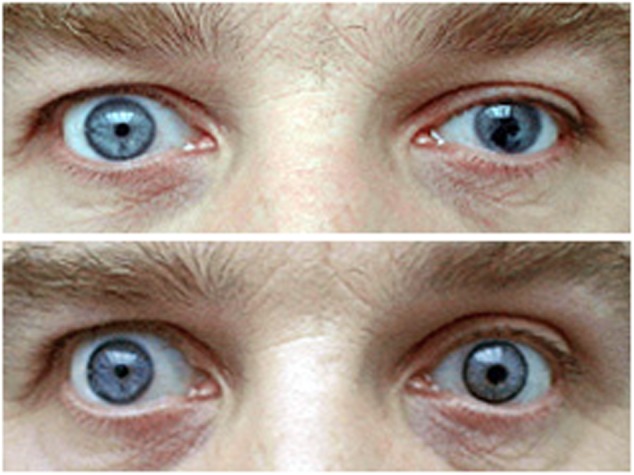
Use of a prosthetic contact lens in a patient with an iris coloboma to achieve a more natural appearance. Images courtesy of Orion Vision Group
Fig. 2.
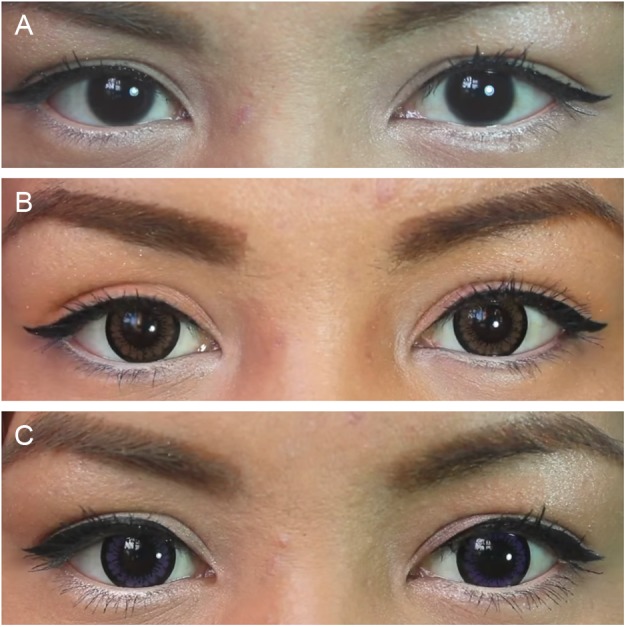
Use of brown (b) and blue (c) cosmetic contact lenses to achieve a varied cosmetic effect in an individual. Panel (a) demonstrates the appearance prior to lens wear
Cosmetic contact lens wearers make up a significant and growing proportion of the contact lens wearing population in Asian countries, such as Taiwan, Korea, Singapore, Malaysia, Thailand, Hong Kong and China, ranging from 24% in Taiwan to 39% in Singapore of contact lens wearers surveyed [6, 7]. The increased use of cosmetic lenses has been reported particularly, in young emmetropic individuals [8, 9]. These lenses are often used by females, with industry-led surveys reporting up to 88 percent of women surveyed expressing an interest in changing the appearance of their eyes with coloured contact lenses [10].
Complications associated with the use of cosmetic contact lenses are similar to those associated with conventional contact lens use [11]. Of these, contact lens-related microbial keratitis represents the most feared complication. Microbial keratitis can be a visually devastating disease and is associated with significant personal and societal costs [12, 13]. The incidence of disease has yet to be reported due to difficulties in estimating penetrance of wear within the community. However, a case control study has established that cosmetic contact lens wearers are at a 16.5 fold increased risk of infection compared with wearers of lenses used for refractive correction [14]. Cosmetic contact lens wearers made up 12.5% of corneal infections presenting to 12 university hospitals in France while also appearing to be overrepresented in a South Korean study, comprising 42.1% of cases presenting to 22 institutions and clinics [8].
This review aims to explore the lens, patient and dispensing-related factors that may contribute to the risk of microbial keratitis in cosmetic contact lens wearers (Table 1). We will also examine the microbiological characteristics of microbial keratitis associated with cosmetic contact lens wear.
Table 1.
Comparison of various factors between cosmetic and conventional contact lenses
| Factors | Cosmetic contact lenses | Conventional contact lenses |
|---|---|---|
| Dispensing factors | ||
| Unlicensed vendors | Plano cosmetic contact lenses may still be perceived as cosmetic devices in certain countries and can be sold through unlicensed vendors [43, 44, 59–61]. Patients may neither be provided with adequate assessments or appropriate counselling [26, 46–50]. | Only licensed eye care professionals can prescribe conventional contact lenses for refractive purposes in many countries. They are able to instruct and counsel lens wearers regarding appropriate lens wear habits. |
| Counterfeit lenses | Counterfeit cosmetic contact lenses have found their way into conventional supply routes. These lenses possess different lens properties [34]. Microbial contamination of unused lenses and lens solution within the original packaging has also been described [35, 36]. | |
| Lens factors | ||
| Lens tinting | Tinting applied to lenses through various techniques may result in visual disturbances [16–20]. | Light handling tints are often incorporated into lenses to provide increased user visibility. Handling tints have not been shown to affect vision or colour perception. |
| Exposed pigments and surface roughness | Exposed pigments may induce toxic reactions, result in systemic absorption of chemicals and greater bacterial adherence [22, 24, 25]. Increased surface roughness, particularly in contact lenses with surface pigment may result in discomfort and mechanical trauma, decrease lens wettability, and facilitate adherence and proliferation of microorganisms and protein deposits [27–33]. | |
| Patient-related factors | ||
| Demographics | Users are more likely to be younger, female and emmetropic [3, 8, 9, 32, 62]. | |
| Lens wear experience | Cosmetic contact lens wearers are likely to be contact lens naïve and may incorrectly assume that cosmetic lenses are accessories that do not require proper lens evaluation, fitting and care [2] | Contact lens users using lenses for refractive purposes are more likely to have undergone assessment by licensed eye care professionals. |
| Cosmetic agents | Similar findings would be expected. | Cosmetic agents used may adhere to the lens surface and alter lens properties despite cleaning. This may contribute to bacterial adherence and proliferation [63, 64]. |
| Non-compliance with recommended lens wear habits | Patients are less likely to adhere to recommended safe lens wear practices and scheduled follow-up consultations [3, 44, 62, 65]. | |
| Wear frequency | Infrequent disinfection and replacement of contact lens solutions and lenses due to less frequent lens wear [2]. | |
Lens-related Factors
The production of cosmetic contact lenses involves a range of methods used to achieve realistic colouring effects [15]. These methods include dye dispersion tinting, vat-dye tinting, dye printing and chemical bond tinting techniques for translucent tints, while opaque tints may be achieved with dot-matrix printing, laminate, or opaque backing techniques (Fig. 3) [15]. These characteristics have been associated with visual disturbances, which may include visual field limitations, blurring of peripheral vision and increased higher-order aberrations resulting in a reduction in contrast sensitivity [16–20].
Fig. 3.

An illustration of dot-matrix (a), opaque backing (b) or laminate construction (c) techniques to apply opaque tints to cosmetic contact lenses
Exposed pigments on the surface of cosmetic contact lenses can predispose wearers to a host of complications [21–23]. Although specifics surrounding materials used to achieve these coloured effects are limited, chlorine, titanium and iron elements have been retrieved [22]. Dye pigments used in the manufacturing process may induce toxic reactions, with resultant corneal epithelial trauma and possible long-term implications on systemic health [22]. Systemic iron absorption for instance, may result in secondary hemochromatosis and immune mediated organ dysfunction secondary to cellular iron toxicity [24, 25]. The use of cosmetic contact lenses during procedures, such as intense pulsed-light therapy, may also result in corneal deposition of pigments [21]. Laminate technologies have been developed as a more stable and safe method to generate coloured patterns. This method permits encapsulation of dyes and tints within layers of the lens polymer, thus limiting exposure of the ocular surface to these substances [15]. In a study performed by Chan et al., moistened cotton buds were used to apply a gentle rubbing force to the surface of cosmetic contact lenses [26]. Following which, the tip of this cotton bud was inspected for the presence of any pigments. Only 2 out of 15 brands of commercially available cosmetic contact lenses tested demonstrated permanency of pigments with a gentle rubbing force applied to the surface of lenses using moistened cotton buds [26]. Pigments were retrieved in 6 out of 8 of the included lenses where manufacturers had reported embedded or sandwich designs for their lenses. Lenses which failed this test further demonstrated higher levels of bacterial adherence [26]. A separate study performed on tinted contact lenses using a variety of imaging techniques including light microscopy, atom force microscopy, focused ion beam milling, scanning electron microscopy, and anterior segment fourier-domain optical coherence tomography did not identify disparities between reported manufacturing techniques and imaging findings [27]. These findings taken together would suggest there is considerable variability in manufacturing quality even within laminate designs.
In addition, increased surface roughness of cosmetic contact lenses compared to conventional contact lenses has also been demonstrated [27, 28]. The extent of this characteristic has been described to be dependent on the manufacturing technique applied, with no differences identified by Jung et al. in contact lenses where colourants were buried in contact lenses [27]. However, in contact lenses with surface pigment, a considerable difference was noted between the roughness of front and back surfaces [27]. The undulating lens surface and uneven application of pigments may not only be associated with discomfort, but can also result in mechanical trauma to the palpebral conjunctiva or corneal surface [26, 29, 30]. This has been suggested as a possible mechanism underlying bilateral diffuse lamellar keratitis following cosmetic contact lens wear in a post-laser-assisted in-situ keratomileusis patient [31]. Surface roughness may further decrease lens wettability and facilitate adherence and proliferation of microorganisms and protein deposits [26, 32, 33]. These factors may be relevant in the development of microbial keratitis.
Given the popularity of these lenses, counterfeit and unapproved cosmetic contact lenses (Fig. 4) have made their way into various supply routes worldwide [34, 35]. This is of concern, as the quality and safety of these products are not established. A significant proportion of unused counterfeit and unapproved decorative, non-corrective contact lenses tested by the United States Food and Drug Administration demonstrated microbial contamination with pathogenic organisms isolated from both the lenses and lens solution within the packaging [35, 36]. These lenses have also been demonstrated to possess altered lens properties; including lower water content and increased lens thickness compared to the original products [36]. These findings increase the risks of developing complications such as hypoxic related complications, and contact lens-related discomfort and dryness.
Fig. 4.

Comparison in packaging between counterfeit (a, c) and authentic (b, d) and coloured contact lenses. Images courtesy of Health Sciences Authority Singapore
Cosmetic contact lenses are also more likely to be worn occasionally compared to conventional lenses used for refractive correction [2]. These lenses may be stored in contact lens solutions for prolonged periods [2]. The lack of frequent disinfection and replacement of contact lens solutions decreases the antimicrobial efficacy of the solutions and may encourage microorganism adhesion, proliferation and possible formation of biofilms on both contact lenses and contact lens cases [37, 38]. The development of biofilms not only provides potential areas of attachments for microorganisms, but also protects bacteria from disinfectants [39–41]. These factors may contribute to a higher bacterial load inoculated on the ocular surface and increase retention time, which in-turn increases the risks of developing microbial keratitis [42].
Dispensing-related Factors
Challenges exist in the regulation of cosmetic contact lenses [2]. Regulation of the supply and distribution of medical devices is important in ensuring their quality and safety [35]. Plano cosmetic contact lenses were, until recent times, perceived as novelty items or cosmetic devices [43]. Their sale through unlicensed vendors such as flea markets and street-side stalls, video stores, hair salons and gas stations, in addition to internet retailers has been documented [44]. These lenses are often sold in colourful, eye-catching packaging to appeal to a younger audience [3]. However, increased exposure to these products may result in an increased number of infections [32].
The internet offers an attractive method of retailing products, as transactions are completed virtually without a need for consumers to be physically present. This also obviates the need for a physical store, hence reduces overheads, which increases profit margins and reduces costs passed on to consumers. However, internet purchase of contact lenses is an independent risk factor in the development of microbial keratitis [45].
Wearers purchasing contact lenses from these supply routes are often not adequately assessed, counselled or instructed on safe contact lens wear practices or potential complications [26, 46–50].. These users are also less likely to be compliant with safe lens wear practices [51]. A survey of medical students who were contact lens wearers demonstrated that only 2% of respondents were adequately counselled about complications associated with contact lens wear [52].
In response to increasing reports of complications, cosmetic contact lenses were reclassified as medical devices by the Food and Drug Administration in the United States [53]. A warning was issued against the use of such lenses without proper fitting and counselling in 2006 [53]. Unlicensed imports were also seized, whilst warnings were issued regarding improper marketing and distribution of such lenses by distributors. While many non-licensed distributors voluntarily withdrew products, contact lens manufacturers have also been actively assisting the regulation of this industry. For instance, CIBA Vision sent cease-and-desist letters to multiple vendors in the United States distributing cosmetic lenses illegally, and proceeded with legal action against recalcitrant companies [54].
Cosmetic contact lenses have since been gradually classified as medical devices in countries such as Malaysia, China and Korea [26, 55–57]. Supply of contact lenses to wearers has also been restricted to licensed eye care professionals in countries such as Singapore [58]. While efforts have been made by various authorities to educate and prosecute offenders, regulation of this industry remains tenuous and unlicensed vendors are often able to circumvent existing regulations to reach out to potential customers without provision of prerequisite professional advice or supervision through internet and makeshift stalls [59–61]. Counterfeit cosmetic contact lenses are also sold through conventional supply routes such as optical shops, with licensed merchants purchasing these lenses through third parties at reduced cost [34].
Patient-related factors
These problems are further exacerbated by the demographics of the population likely to utilise cosmetic contact lenses. Cosmetic contact lens wearers are more likely to be young, female, emmetropic and contact lens naïve [3, 8, 9, 32, 62].
Up to 6% of contact lens wearers surveyed in Hong Kong were emmetropes, who were likely to be cosmetic contact lens wearers, while 15% of asymptomatic cosmetic contact lens wearers surveyed in Thailand were emmetropes [3, 9]. Emmetropic cosmetic contact lens wearers may perceive lenses as cosmetic accessories and incorrectly assume that proper lens evaluation, fitting and care is not required [2]. Cosmetic and novelty lenses may be more commonly used in conjunction with cosmetics for attendance at events. It has been demonstrated that cosmetic agents such as hand creams, make-up removers and mascara may adhere to the lens surface and alter lens properties despite subsequent cleaning [63, 64]. This may further contribute to bacterial adherence and proliferation. In a Korean survey of contact lens-related complications, 62.2% of patients who presented with cosmetic contact lens complications were emmetropic individuals [8].
Steinmann et al. have reported that up to 50% of all decorative lens wearers are first-time contact lens wearers, while Abbouda et al. who examined the attitude and practice of teenage contact lens wearers have suggested that younger contact lens wearers do not adequately comply with contact lens care practices and are less likely to be involved in their own care [44, 65]. For instance, in a study by Mahittiokorn et al., 42% of cosmetic contact lens wearers reported considering using lenses that had fallen on the floor without prior cleaning or rinsing [3]. Patients presenting with cosmetic contact lenses related microbial keratitis are typically younger and less experienced contact lens wearers [32]. This group of patients who presented to healthcare institutions with cosmetic contact lens-related complications were also less likely to adhere to scheduled follow-up consultations compared to counterparts wearing conventional contact lenses [62]. The findings by Abbouda et al, mirror findings of the Contact Lens Assessment in Youth (CLAY) study, which has demonstrated the greatest risk of developing corneal infiltrates in patients was between the age of 15–25 [65, 66]. It was further found that patients younger than 15 years of age were more compliant with recommended lens wear habits [66].
Multiple studies have demonstrated high rates of non-compliance amongst conventional contact lens wearers [8, 67–70]. Even when lenses are dispensed by eye care professionals, large proportions of patients are non-compliant with safe lens wear practices [8, 67, 69, 70]. A study surveying 500 healthcare workers in Pakistan further corroborated these results [68]. This is likely to be worse in the cosmetic contact lens population. Cosmetic contact lens wearers have been reported to delay presenting to an eye care specialist compared to conventional contact lens wearers, which has been identified as a risk factor for poorer visual outcomes [13, 32, 46, 71]. As a greater proportion of cosmetic contact lens wearers purchase lenses from non-conventional and unregulated routes, these individuals are less likely to have received adequate contact lens safety advice and may not be connected to eye care providers, which can contribute to their delayed presentation for treatment [46, 71]. A study by Singh et al. found that all 13 patients in their case series who developed microbial keratitis from cosmetic contact lens wear, were from lower socioeconomic classes [2]. While this has not been confirmed in an epidemiological study, conceivably this factor may act as a barrier to accessing healthcare and contribute to delayed presentations with resultant increased disease severity.
Causative organisms
A range of pathogens have been implicated in the development of contact lens-related microbial keratitis. Bacterial keratitis typically predominates in temperate climates, while rates of fungal keratitis make up a larger proportion of microorganisms in tropical regions [72, 73]. It has been suggested that severe contact lens-related microbial keratitis is more likely to occur in warmer, humid weather compared to cooler conditions [74–76]. Commonly implicated bacteria include Pseudomonas, Staphylococcus and Streptococcus spp [2, 44, 70, 77–82]. Pseudomonas aeruginosa is the most common species, accounting for up to 60% of culture proven infections in contact lens wearers. Pseudomonas spp. was the most commonly isolated organism in a series of cosmetic contact lens wearers with microbial keratitis reported in India, Malaysia, Hong Kong, Australia and New Zealand [2, 79, 80, 83].
Microorganisms use a variety of techniques to increase their adherence and virulence [38, 84]. Bacteria have been shown to possess varied ability to adhere to various contact lens materials and grow on tear film components adsorbed on the surface of worn lenses [39] Other mechanisms include formation of biofilms on either contact lenses or lenses by microorganisms such as Pseudomonas aeruginosa, Staphylococcus aureus, and Elizabethkingia species [29, 39, 42, 84].
In patients with contact lens-related fungal keratitis, Fusarium, Aspergillus and less frequently Candida spp. have been reported [80]. These organisms are of greater significance in subtropical and tropical climate, such as in the south-eastern Asian region.
Of significance, Acanthamoeba keratitis is a challenging condition to treat and has been increasingly reported in recent years, with case reports from the United States, New Zealand and Korea identifying cases of Acanthamoeba keratitis related to the use of cosmetic contact lenses [46, 85–87]. It has been suggested in a multicentre survey in the United Kingdom that up to 93% of patients presenting with a diagnosis of Acanthamoeba keratitis are contact lens wearers [88]. A more recent survey demonstrated similar findings, with 93.5% of patients presenting with Acanthamoeba keratitis reporting contact lens wear [89]. In these individuals, domestic water sources and subsequent contamination of contact lenses and associated lens care products have been identified as possible sources of contamination [90]. Kilvington et al. using mtDNA testing confirmed identical isolates recovered from the cornea and bathroom tap water in six out of eight contact lens wearers with Acanthamoeba keratitis [90]. In Korea, 4.2% of contact lens storage cases and 7.7% of domestic tap water samples recovered Acanthamoeba [91, 92]. A study involving Scottish patients with Acanthamoeba keratitis demonstrated higher rates of recovery (54 vs. 31%) of Acanthamoeba in their home water supply compared to healthy contact lens wearing controls [93]. A larger proportion of cases were also identified to have used tap water in their contact lens care regime compared to controls, including the use of tap water for rinsing lens storage cases (79 vs 43%) or contact lenses (21 vs 13%) [93]. A study from Thailand by Mahittikorn et al. also demonstrated retrieval of Acanthamoeba-like trophozoites from 2% of cosmetic contact lenses obtained from healthy volunteers [3]. However, the contamination rates of domestic water sources reported in Asia are still comparatively lower compared to studies performed in other parts of the world.
Recommendations
This is a challenging situation requiring greater oversight of the licensing, manufacturing and distribution of cosmetic contact lenses. The main difficulty however is the unregistered manufacture, distribution and sale of these products. The discrepancies between manufacturing claims of laminated construction techniques and reported findings of pigments on lens surfaces are of concern [26]. Reporting channels for complications associated with cosmetic contact lenses to regulatory authorities should also be established and promoted amongst eye care and health professionals, while recognising that these practitioners are generally not part of the supply chain and may not see these wearers until they present with a problem. Other potential aspects include establishment of a regional registry to assist with information sharing and tracking of unlicensed vendors.
While a number of case reports have identified risks associated with these products, the size of the problem is still unknown. The magnitude of the population wearing these lenses in the community remains unclear due to the presence of non-traditional supply routes. Population based studies may allow estimates of incidence rates and potential risk factors [94]. This may in turn help to guide informed strategies to limit the risk associated with these products.
Compliance with ethical standards
Conflict of interest
The authors declare that they have no conflict of interest.
References
- 1.Abdelkader A. Cosmetic soft contact lens associated ulcerative keratitis in southern Saudi Arabia. Middle East Afr J Ophthalmol. 2014;21:232. doi: 10.4103/0974-9233.134677. [DOI] [PMC free article] [PubMed] [Google Scholar]
- 2.Singh S, Satani D, Patel A, Vhankade R. Colored cosmetic contact lenses: an unsafe trend in the younger generation. Cornea. 2012;31:777–9. doi: 10.1097/ICO.0b013e31823cbe9c. [DOI] [PubMed] [Google Scholar]
- 3.Mahittikorn A, Kittichathanakul T, To-Im J, Nacapunchai D. Knowledge, behavior, and free-living amoebae contamination of cosmetic contact lens among university wearers in Thailand: a cross-sectional study. Eye Contact Lens. 2017;43:81–88. doi: 10.1097/ICL.0000000000000246. [DOI] [PubMed] [Google Scholar]
- 4.Park SH, Kim SR, Park M. The effect of circle lens and soft contact lens with identical material in clinical application on the eyes. J Opt Soc Korea. 2011;16:147–57. [Google Scholar]
- 5.Cassel M. Colored contact lens update. Contact Lens Spect. 2002;31:32–4.
- 6.Multi-sponsor Surveys International LLC. The 2010 Study of the International Contact Lens Market 2010. http://multisponsorinternational.com/wp-content/uploads/2012/10/10503-International-Contact-Lens-Market.pdf.
- 7.Contact lens market in Asia booming. Singapore Press Holdings Digital News. http://www.asiaone.com/health/contact-lens-market-asia-booming. Accessed 9 July 2018.
- 8.Kim JH, Song JS, Hyon JY, Chung SK, Kim TJ. A survey of contact lens-related complications in Korea: the Korean Contact Lens StudySociety. J Korean Ophthalmol Soc. 2014;55:20–31. [Google Scholar]
- 9.Charm J, Cheung SW, Cho P. Practitioners’ analysis of contact lens practice in Hong Kong. Cont Lens Anterior Eye. 2010;33:104–11. doi: 10.1016/j.clae.2010.02.001. [DOI] [PubMed] [Google Scholar]
- 10.Joseph T, Barr LS, Color your contact lens practice. Contact Lens Spect. 2003. https://www.clspectrum.com/issues/2003/july-2003/color-your-contact-lens-practice.
- 11.Lim Chris H. L., Stapleton Fiona, Mehta Jodhbir S. Review of Contact Lens–Related Complications. Eye & Contact Lens: Science & Clinical Practice. 2018;44:S1–S10. doi: 10.1097/ICL.0000000000000481. [DOI] [PubMed] [Google Scholar]
- 12.Keay L, Edwards K, Naduvilath T, Taylor HR, Snibson GR, Forde K, et al. Microbial keratitis: predisposing factors and morbidity. Ophthalmology. 2006;113:109–16. doi: 10.1016/j.ophtha.2005.08.013. [DOI] [PubMed] [Google Scholar]
- 13.Keay L, Edwards K, Naduvilath T, Forde K, Stapleton F. Factors affecting the morbidity of contact lens–related microbial keratitis: A population study. Invest Ophthalmol Vis Sci. 2006;47:4302–8. doi: 10.1167/iovs.06-0564. [DOI] [PubMed] [Google Scholar]
- 14.Bourcier T, Sauer A. Cosmetic contact lenses related microbial keratitis as a foreseeable disaster: a prospective study. Invest Ophthalmol Vis Sci. 2010;51:2884–2884. [Google Scholar]
- 15.Efron N. Contact lens practice. 3 ed. Elsevier, Netherlands 2017.
- 16.Ortiz C, Jiménez R. Optical quality and vision with iris-coloring soft contact lenses. Optom Vis Sci. 2014;91:564–9. doi: 10.1097/OPX.0000000000000212. [DOI] [PubMed] [Google Scholar]
- 17.Spraul CW, Roth HJ, Gäckle H, Lang GE, Lang GK. Influence of special-effect contact lenses (Crazy Lenses) on visual function. CLAO J. 1998;24:29–32. [PubMed] [Google Scholar]
- 18.Gauthier C, Grant T, Holden B. Clinical performance of two opaque, tinted soft contact lenses. J Am Optom Assoc. 1992;63:344–9. [PubMed] [Google Scholar]
- 19.Diego CA, Montes-Mico R, Pons A, Artigas J. Influence of the luminance level on visual performance with a disposable soft cosmetic tinted contact lens. Ophthalmic Physiol Opt. 2001;21:411–9. doi: 10.1046/j.1475-1313.2001.00603.x. [DOI] [PubMed] [Google Scholar]
- 20.Özkagnici A, Zengin N, Kamis Uuml, Gündüz K. Do daily wear opaquely tinted hydrogel soft contact lenses affect contrast sensitivity function at one meter? Eye Contact Lens. 2003;29:48–49. doi: 10.1097/00140068-200301000-00012. [DOI] [PubMed] [Google Scholar]
- 21.Hong S, Lee JR, Lim T. Pigment deposition of cosmetic contact lenses on the cornea after intense pulsed-light treatment. Korean J Ophthalmol. 2010;24:367–70. doi: 10.3341/kjo.2010.24.6.367. [DOI] [PMC free article] [PubMed] [Google Scholar]
- 22.Hotta F, Eguchi H, Imai S, Miyamoto T, Mitamura-Aizawa S, Mitamura Y. Scanning electron microscopy findings with energy-dispersive x-ray investigations of cosmetically tinted contact lenses. Eye Contact Lens. 2015;41:291. doi: 10.1097/ICL.0000000000000122. [DOI] [PMC free article] [PubMed] [Google Scholar]
- 23.Stergiopoulou T, Meletiadis J, Sein T, Papaioannidou P, Tsiouris I, Roilides E, et al. Isobolographic analysis of pharmacodynamic interactions between antifungal agents and ciprofloxacin against Candida albicans and Aspergillus fumigatus. Antimicrob Agents Chemother. 2008;52:2196–204. doi: 10.1128/AAC.00735-07. [DOI] [PMC free article] [PubMed] [Google Scholar]
- 24.Walker EM, Walker SM. Effects of iron overload on the immune system. Ann Clin Lab Sci. 2000;30:354–65. [PubMed] [Google Scholar]
- 25.Eaton JW, Qian M. Molecular bases of cellular iron toxicity12. Free Radic Biol Med. 2002;32:833–40. doi: 10.1016/s0891-5849(02)00772-4. [DOI] [PubMed] [Google Scholar]
- 26.Chan KY, Cho P, Boost M. Microbial adherence to cosmetic contact lenses. Cont Lens Anterior Eye. 2014;37:267–72. doi: 10.1016/j.clae.2013.12.002. [DOI] [PubMed] [Google Scholar]
- 27.Jung Ji Won, Han Sun Hyup, Kim Sang ah, Kim Eung Kweon, Seo Kyoung Yul, Kim Tae-im. Evaluation of pigment location in tinted soft contact lenses. Contact Lens and Anterior Eye. 2016;39(3):210–216. doi: 10.1016/j.clae.2016.01.008. [DOI] [PubMed] [Google Scholar]
- 28.Ji YW, Cho YJ, Lee CH, Hong SH, Chung DY, Kim EK, et al. Comparison of surface roughness and bacterial adhesion between cosmetic contact lenses and conventional contact lenses. Eye Contact Lens. 2015;41:25–33. doi: 10.1097/ICL.0000000000000054. [DOI] [PubMed] [Google Scholar]
- 29.Szczotka-Flynn L, Lass JH, Sethi A, Debanne S, Benetz BA, Albright M, et al. Risk factors for corneal infiltrative events during continuous wear of silicone hydrogel contact lenses. Invest Ophthalmol Vis Sci. 2010;51:5421–30. doi: 10.1167/iovs.10-5456. [DOI] [PMC free article] [PubMed] [Google Scholar]
- 30.Steffen RB, Barr JT. Clear versus opaque soft contact lenses: initial comfort comparison. Int Contact Lens Clin. 1993;20:184–6. [Google Scholar]
- 31.Chung MS, Pepose JS, Al-Agha S, Cavanagh HD. Confocal microscopic findings in a case of delayed-onset bilateral diffuse lamellar keratitis after laser in situ keratomileusis. J Cataract Refract Surg. 2002;28:1467–70. doi: 10.1016/s0886-3350(01)01353-0. [DOI] [PubMed] [Google Scholar]
- 32.Sauer A, Bourcier T. Keratitis FSGfCLRM. Microbial keratitis as a foreseeable complication of cosmetic contact lenses: a prospective study. Acta Ophthalmol. 2011;89:e439–42. doi: 10.1111/j.1755-3768.2011.02120.x. [DOI] [PubMed] [Google Scholar]
- 33.Butrus SI, Klotz SA. Contact lens surface deposits increase the adhesion of Pseudomonas aeruginosa. Curr Eye Res. 1990;9:717–24. doi: 10.3109/02713689008999566. [DOI] [PubMed] [Google Scholar]
- 34.Health Sciences Authority. HSA alerts public to counterfeit coloured contact lenses sold in local optical shops. Available at: http://www.hsa.gov.sg/content/hsa/en/News_Events/Press_Releases/2011/hsa_alerts_public3.html. Accessed 8 August 2018.
- 35.Land AD, Penno KL, Brzezinski JL. Identification of microorganisms isolated from counterfeit and unapproved decorative contact lenses. J Forensic Sci. 2018;63:635–9. doi: 10.1111/1556-4029.13553. [DOI] [PubMed] [Google Scholar]
- 36.Health Sciences Authority. Counterfeit coloured contact lenses sold in Singapore. Available at: http://www.hsa.gov.sg/content/hsa/en/Health_Products_Regulation/Safety_Information_and_Product_Recalls/Product_Safety_Alerts/2011/counterfeit_coloured.html. Accessed 8 August 2018.
- 37.Marshall K, Stout R, Mitchell R. Mechanism of the initial events in the sorption of marine bacteria to surfaces. Microbiology. 1971;68:337–48. [Google Scholar]
- 38.Dutta D, Cole N, Willcox M. Factors influencing bacterial adhesion to contact lenses. Mol Vis. 2012;18:14. [PMC free article] [PubMed] [Google Scholar]
- 39.Willcox M, Harmis N, Cowell B, Williams T, Holden B. Bacterial interactions with contact lenses; effects of lens material, lens wear and microbial physiology. Biomaterials. 2001;22:3235–47. doi: 10.1016/s0142-9612(01)00161-2. [DOI] [PubMed] [Google Scholar]
- 40.Lechevallier MW, Cawthon CD, Lee RG. Inactivation of biofilm bacteria. Appl Environ Microbiol. 1988;54:2492–9. doi: 10.1128/aem.54.10.2492-2499.1988. [DOI] [PMC free article] [PubMed] [Google Scholar]
- 41.Szczotka-Flynn LB, Imamura Y, Chandra J, Yu C, Mukherjee PK, Pearlman E, et al. Increased resistance of contact lens related bacterial biofilms to antimicrobial activity of soft contact lens care solutions. Cornea. 2009;28:918. doi: 10.1097/ICO.0b013e3181a81835. [DOI] [PMC free article] [PubMed] [Google Scholar]
- 42.McLaughlin-Borlace L, Stapleton F, Matheson M, Dart J. Bacterial biofilm on contact lenses and lens storage cases in wearers with microbial keratitis. J Appl Microbiol. 1998;84:827–38. doi: 10.1046/j.1365-2672.1998.00418.x. [DOI] [PubMed] [Google Scholar]
- 43.Sindt C. Cosmetic or decorative contact lenses. Contact Lens Update. 2014.
- 44.Steinemann TL, Pinninti U, Szczotka LB, Eiferman RA, Price Jr FW. Ocular complications associated with the use of cosmetic contact lenses from unlicensed vendors. Eye & Contact Lens. 2003;29:196–200. doi: 10.1097/00140068-200310000-00002. [DOI] [PubMed] [Google Scholar]
- 45.Stapleton F, Keay L, Edwards K, Naduvilath T, Dart JK, Brian G, et al. The incidence of contact lens–related microbial keratitis in Australia. Ophthalmology. 2008;115:1655–62. doi: 10.1016/j.ophtha.2008.04.002. [DOI] [PubMed] [Google Scholar]
- 46.McKelvie J, Patel D, McGhee C. Cosmetic contact lens‐related Acanthamoeba keratitis. Clin Exp Ophthalmol. 2009;37:419–20. doi: 10.1111/j.1442-9071.2009.02052.x. [DOI] [PubMed] [Google Scholar]
- 47.Park SJ, Lee SM, Kim MK, Han YK, Wee WR, Lee JH. Cosmetic contact lens-related complications: 9 cases. J Korean Ophthalmol Soc. 2009;50:927–35. [Google Scholar]
- 48.Connell B, Tullo A, Morgan P, Armstrong M. Pseudomonas aeruginosa microbial keratitis secondary to cosmetic coloured contact lens wear. Br J Ophthalmol. 2004;88:1603–4. doi: 10.1136/bjo.2004.049387. [DOI] [PMC free article] [PubMed] [Google Scholar]
- 49.Sankaridurg P, Willcox M, Sharma S, Gopinathan U, Janakiraman D, Hickson S, et al. Haemophilus influenzae adherent to contact lenses associated with production of acute ocular inflammation. J Clin Microbiol. 1996;34:2426–31. doi: 10.1128/jcm.34.10.2426-2431.1996. [DOI] [PMC free article] [PubMed] [Google Scholar]
- 50.Tseng SSY, Yang WWC, Hsiao JCJ. Bilateral corneal erosion due to retail purchase of unfitted prescription contact lenses: a case report. Cornea. 2008;27:1179–81. doi: 10.1097/ICO.0b013e318173140e. [DOI] [PubMed] [Google Scholar]
- 51.Fogel J, Zidile C. Contact lenses purchased over the Internet place individuals potentially at risk for harmful eye care practices. Optometry. 2008;79:23–35. doi: 10.1016/j.optm.2007.07.013. [DOI] [PubMed] [Google Scholar]
- 52.Roberts A, Kaye A, Kaye R, Tu K, Kaye S. Informed consent and medical devices: the case of the contact lens. Br J Ophthalmol. 2005;89:782–3. doi: 10.1136/bjo.2004.062315. [DOI] [PMC free article] [PubMed] [Google Scholar]
- 53.U.S. Food & Drug Administration. United States Food & Drug Administration Guidance for industry. FDA staff, eye care professionals, and consumers: decorative, non-corrective contact lenses. Washington, DC: U.S. Food & Drug Administration; 2006. Available at: https://www.fda.gov/downloads/MedicalDevices/DeviceRegulationandGuidance/GuidanceDocuments/ucm071578.pdf. Accessed 8 August 2018.
- 54.Garvey M. Health concerns tinge use of cosmetic lenses. Los Angeles Times (26 August 2002). 2002.
- 55.China Food and Drug Administration. SFDA specifies requirements for the supervision of decorative plano colored contact lenses. Vol. 66. China Food and Drug Administration. 2012. Available at: http://eng.sfda.gov.cn/WS03/CL0757/69552.html. Accessed on 8 August 2018.
- 56.Ministry of Health Singapore. Optometrists and opticians act. Singapore: Ministry of Health Singapore. Ch 213A; Attorney-General's Chambers, 2008.
- 57.Sathasivam S. Medical device (declaration) o rder 2017. Malaysia. Malaysia: Attorney General’s Chambers of Malaysia; 2017.
- 58.Ministry of Health Singapore. Legislative division. In: Optometrists and Opticians Act. Ch. 231A. Singapore: Attorney General’s Chambers; 2007.
- 59.Ministry of Health Singapore. Cosmetic Contact Lenses. 2009. Available at: https://www.moh.gov.sg/content/moh_web/home/pressRoom/Parliamentary_QA/2009/Cosmetic_Contact_Lenses.html. Accessed 9 July 2018.
- 60.Chu MM. Cheap contact lens from pasar malam and online shops could make you go blind. SAYS, 2015. Available at: http://says.com/my/news/cheap-contact-lens-from-pasar-malam-and-online-shops-could-make-you-go-blind. Accessed 9 July 2018.
- 61.Office of Public Affairs. Owner of major online colored contact lens business pleads guilty in largest-ever investigation of counterfeit and misbranded contact lenses in the United States. Nevada, USA: Department of Justice, United States of America; 2016.
- 62.Choi HJ, Yum JH, Lee JH, Lee DH, Kim JH. Clinical features and compliance in patients with cosmetic contact lens-related complications. J Korean Ophthalmol Soc. 2014;55:1445–51. [Google Scholar]
- 63.Luensmann D, Srinivasan S The impact of eye cosmetics on contact lens wear: Lab-based research results. http://contactlensupdate.com/2014/12/17/the-impact-of-eye-cosmetics-on-contact-lens-wear-lab-based-research-results/. Accessed 9 July 2018.
- 64.Srinivasan S, Otchere H, Yu M, Yang J, Luensmann D, Jones L. Impact of cosmetics on the surface properties of silicone hydrogel contact lenses. Eye Contact Lens. 2015;41:228–35. doi: 10.1097/ICL.0000000000000101. [DOI] [PubMed] [Google Scholar]
- 65.Abbouda A, Restivo L, Bruscolini A, Pirraglia MP, De Marco F, La Cava M, et al. Contact lens care among teenage students in Italy: A cross-sectional study. Semin Ophthalmol. 2016;31:226–32. doi: 10.3109/08820538.2014.962155. [DOI] [PubMed] [Google Scholar]
- 66.Chalmers RL, Wagner H, Mitchell GL, Lam DY, Kinoshita BT, Jansen ME, et al. Age and other risk factors for corneal infiltrative and inflammatory events in young soft contact lens wearers from the Contact Lens Assessment in Youth (CLAY) study. Invest Ophthalmol Vis Sci. 2011;52:6690–6. doi: 10.1167/iovs.10-7018. [DOI] [PubMed] [Google Scholar]
- 67.Dumbleton K, Woods C, Jones L, Richter D, Fonn D. Comfort and vision with silicone hydrogel lenses: effect of compliance. Optom Vis Sci. 2010;87:421–5. doi: 10.1097/OPX.0b013e3181d95aea. [DOI] [PubMed] [Google Scholar]
- 68.Khan MH, Mubeen SM, Chaudhry TA, Khan SA. Contact lens use and its compliance for care among healthcare workers in Pakistan. Indian J Ophthalmol. 2013;61:334. doi: 10.4103/0301-4738.97552. [DOI] [PMC free article] [PubMed] [Google Scholar]
- 69.Ky W, Scherick K, Stenson S. Clinical survey of lens care in contact lens patients. CLAO J. 1998;24:216–9. [PubMed] [Google Scholar]
- 70.van Zyl L, Cook C. Bacterial keratitis and corneal scarring secondary to cosmetic contact lens wear. S Afr Med J. 2010;100:37–8. [PubMed] [Google Scholar]
- 71.Young G, Young AG, Lakkis C. Review of complications associated with contact lenses from unregulated sources of supply. Eye Contact Lens. 2014;40:58–64. doi: 10.1097/ICL.0b013e3182a70ef7. [DOI] [PubMed] [Google Scholar]
- 72.Liesegang TJ, Forster RK. Spectrum of microbial keratitis in South Florida. Am J Ophthalmol. 1980;90:38–47. doi: 10.1016/s0002-9394(14)75075-5. [DOI] [PubMed] [Google Scholar]
- 73.Leck A, Thomas P, Hagan M, Kaliamurthy J, Ackuaku E, John M, et al. Aetiology of suppurative corneal ulcers in Ghana and south India, and epidemiology of fungal keratitis. Br J Ophthalmol. 2002;86:1211–5. doi: 10.1136/bjo.86.11.1211. [DOI] [PMC free article] [PubMed] [Google Scholar]
- 74.Stapleton F, Keay LJ, Sanfilippo PG, Katiyar S, Edwards KP, Naduvilath T. Relationship between climate, disease severity, and causative organism for contact lens–associated microbial keratitis in Australia. Am J Ophthalmol. 2007;144:690–8. e691. doi: 10.1016/j.ajo.2007.06.037. [DOI] [PubMed] [Google Scholar]
- 75.Hoddenbach JG, Boekhoorn SS, Wubbels R, Vreugdenhil W, Van Rooij J, Geerards AJ. Clinical presentation and morbidity of contact lens–associated microbial keratitis: a retrospective study. Graefes Arch Clin Exp Ophthalmol. 2014;252:299–306. doi: 10.1007/s00417-013-2514-1. [DOI] [PubMed] [Google Scholar]
- 76.Green M, Apel A, Stapleton F. A longitudinal study of trends in keratitis in Australia. Cornea. 2008;27:33–39. doi: 10.1097/ICO.0b013e318156cb1f. [DOI] [PubMed] [Google Scholar]
- 77.Larkin D, Leeming J. Quantitative alterations of the commensal eye bacteria in contact lens wear. Eye. 1991;5:70. doi: 10.1038/eye.1991.14. [DOI] [PubMed] [Google Scholar]
- 78.Fong CF, Hu FR, Tseng CH, Wang IJ, Chen WL, Hou YC. Antibiotic susceptibility of bacterial isolates from bacterial keratitis cases in a university hospital in Taiwan. Am J Ophthalmol. 2007;144:682–9. doi: 10.1016/j.ajo.2007.06.038. [DOI] [PubMed] [Google Scholar]
- 79.Houang E, Lam D, Fan D, Seal D. Microbial keratitis in Hong Kong: relationship to climate, environment and contact-lens disinfection. Trans R Soc Trop Med Hyg. 2001;95:361–7. doi: 10.1016/s0035-9203(01)90180-4. [DOI] [PubMed] [Google Scholar]
- 80.Norina T, Raihan S, Bakiah S, Ezanee M, Liza-Sharmini A, Wan Hazzabah W. Microbial keratitis: aetiological diagnosis and clinical features in patients admitted to Hospital Universiti Sains Malaysia. Singap Med J. 2008;49:67–71. [PubMed] [Google Scholar]
- 81.Lim C, Carnt N, Farook M, Lam J, Tan D, Mehta J, et al. Risk factors for contact lens-related microbial keratitis in Singapore. Eye. 2016;30:447. doi: 10.1038/eye.2015.250. [DOI] [PMC free article] [PubMed] [Google Scholar]
- 82.Hovding G. The conjunctival and contact lens bacterial flora during lens wear. Acta Ophthalmol. 1981;59:387–401. doi: 10.1111/j.1755-3768.1981.tb03004.x. [DOI] [PubMed] [Google Scholar]
- 83.Stapleton F, Alves M, Bunya VY, Jalbert I, Lekhanont K, Malet F, et al. TFOS DEWS II Epidemiology Report. Ocul Surf. 2017;15:334–65. doi: 10.1016/j.jtos.2017.05.003. [DOI] [PubMed] [Google Scholar]
- 84.Kodjikian L, Casoli-Bergeron E, Malet F, Janin-Manificat H, Freney J, Burillon C, et al. Bacterial adhesion to conventional hydrogel and new silicone-hydrogel contact lens materials. Graefes Arch Clin Exp Ophthalmol. 2008;246:267–73. doi: 10.1007/s00417-007-0703-5. [DOI] [PubMed] [Google Scholar]
- 85.Kerr NM, Ormonde S. Acanthamoeba keratitis associated with cosmetic contact lens wear. N Z Med J. 2008;121:1286. [PubMed] [Google Scholar]
- 86.Lee JS, Hahn TW, Choi SH, Yu HS, Lee JE. Acanthamoeba keratitis related to cosmetic contact lenses. Clin Exp Ophthalmol. 2007;35:775–7. doi: 10.1111/j.1442-9071.2007.01622.x. [DOI] [PubMed] [Google Scholar]
- 87.Snyder RW, Brenner MB, Wiley L, Yee RW, Gradus MS, Mackman GS. Microbial keratitis associated with plano tinted contact lenses. CLAO J. 1991;17:252–5. [PubMed] [Google Scholar]
- 88.Radford CF, Lehmann OJ, Dart JK. Acanthamoeba keratitis: multicentre survey in England 1992–6. Br J Ophthalmol. 1998;82:1387–92. doi: 10.1136/bjo.82.12.1387. [DOI] [PMC free article] [PubMed] [Google Scholar]
- 89.Carnt N, Robaei D, Minnasian D, Dart J. Presentation and outcomes of acanthamoeba keratitis at moorfields eye Hospital, 1991–2012. Cont Lens Anterior Eye. 2015;38:e35. [Google Scholar]
- 90.Kilvington S, Gray T, Dart J, Morlet N, Beeching JR, Frazer DG, et al. Acanthamoeba keratitis: the role of domestic tap water contamination in the United Kingdom. Invest Ophthalmol Vis Sci. 2004;45:165–9. doi: 10.1167/iovs.03-0559. [DOI] [PubMed] [Google Scholar]
- 91.Jeong HJ, Yu HS. The role of domestic tap water in Acanthamoeba contamination in contact lens storage cases in Korea. Korean J Parasitol. 2005;43:47. doi: 10.3347/kjp.2005.43.2.47. [DOI] [PMC free article] [PubMed] [Google Scholar]
- 92.Watanabe R, Ishibashi Y, Hommura S, Ishii K. Acanthamoeba isolation from contact lens solution of contact lens wearers without keratitis. Nippon Ganka Gakkai Zasshi. 1994;98:477–80. [PubMed] [Google Scholar]
- 93.Seal D, Kirkness C, Bennett H, Peterson M. Acanthamoeba keratitis in Scotland: risk factors for contact lens wearers. Cont Lens Anterior Eye. 1999;22:58–68. doi: 10.1016/s1367-0484(99)80004-6. [DOI] [PubMed] [Google Scholar]
- 94.Khor Wei-Boon, Prajna Venkatesh N., Garg Prashant, Mehta Jodhbir S., Xie Lixin, Liu Zuguo, Padilla Ma. Dominga B., Joo Choun-Ki, Inoue Yoshitsugu, Goseyarakwong Panida, Hu Fung-Rong, Nishida Kohji, Kinoshita Shigeru, Puangsricharern Vilavun, Tan Ai-Ling, Beuerman Roger, Young Alvin, Sharma Namrata, Haaland Benjamin, Mah Francis S., Tu Elmer Y., Stapleton Fiona J., Abbott Richard L., Tan Donald Tiang-Hwee. The Asia Cornea Society Infectious Keratitis Study: A Prospective Multicenter Study of Infectious Keratitis in Asia. American Journal of Ophthalmology. 2018;195:161–170. doi: 10.1016/j.ajo.2018.07.040. [DOI] [PubMed] [Google Scholar]