



A special collection of articles on Alzheimer's disease (AD), previously published in STEM CELLS and STEM CELLS Translational Medicine, comes hot on the heels of new figures from the Centers for Disease Control and Prevention that indicate that the death rate from AD in the United States is slowly creeping up. The rise from 29 to 31 deaths per 100,000 people this past year will translate to thousands more deaths and vast amounts of additional health care costs with each passing year 1. Furthermore, it is likely that statistics from other countries around the world will also display this same unfortunate trend.
However, as can be appreciated by the sheer number of high‐quality studies, stem cell therapy may represent an important treatment option for AD and other dementia‐related diseases and disorders. STEM CELLS and STEM CELLS Translational Medicine have held a long interest in potential stem cell therapies for AD, and we hope that you enjoy reading the excellent collection of 11 well‐cited recent articles that encompass the breadth of research performed by stem cell scientists in the field.
We thank all of the authors for their commitment to their research and the Journals and look forward to publishing new research on furthering this progress.
Featured Articles
BM‐MSC Rescues Memory Deficits in AD Mice
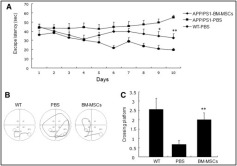
Research from the group of Hee Kyung Jin and Jae‐sung Bae at Kyungpook National University, South Korea, demonstrates that bone marrow‐derived mesenchymal stem cell (BM‐MSC) treatment may represent an exciting new therapy for AD 2. Amyloid‐β peptide (Aβ) plaques and the formation of neurofibrillary tangles characterize AD; however, Lee et al. discovered that intracerebral transplantation of BM‐MSCs into AD model mice reduces Aβ deposition, modulates immune/inflammatory responses, ameliorates pathophysiology, and improves associated cognitive decline.
Figure 1.
C9orf72 Neurons Recapitulate Features of ALS/FTD
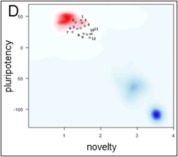
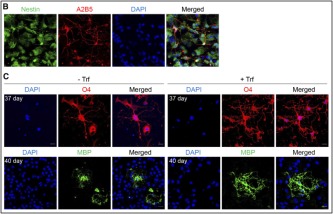
Researchers working for Kevin Talbot (John Radcliffe Hospital, Oxford, UK) and Sally A. Cowley (University of Oxford, UK) sought to understand just how alterations to the C9orf72 gene lead to the development of two common neurodegenerative diseases (frontotemporal dementia and amyotrophic lateral sclerosis). To do this, Dafinca et al. created induced pluripotent stem cells (iPSCs) from patient samples and differentiated them into motor neurons and cortical neurons finding multiple interesting disease‐specific alterations and providing potential pharmacological targets for the treatment of neurodegenerative diseases related to AD 3.
Figure 2.
Isogenic iPSC Model of Mosaic Down Syndrome
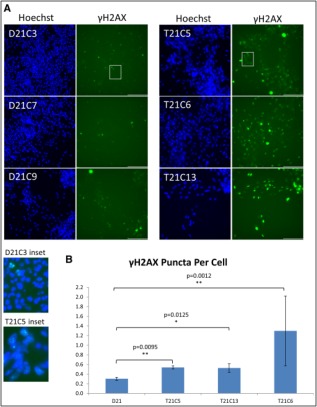
Induced pluripotent stem cells (iPSCs) generation also plays a role in a study from Dean Nizetic (Nanyang Technological University, Singapore) and Jurgen Groet (The Blizard Institute, Barts & The London School of Medicine, UK) concentrating on Down syndrome, the most common genetic cause of dementia and intellectual disability 4. Murray et al. created and neuronally differentiated non‐integration‐reprogrammed isogenic human iPSCs in the hope of modeling mechanisms of developmental, accelerated ageing, and neurodegenerative pathologies.
Figure 3.
Increased BMP Signaling Inhibits Neurogenesis with Aging
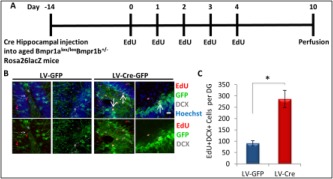
A decline in hippocampal neurogenesis, mediated by resident neural stem cell proliferation and differentiation, may contribute to age‐related decline in cognitive function and dementia, and a team from the group of David V. Schaffer (University of California Berkeley, USA) sought to tease apart why this decline transpires 5. Yousef et al. suggest that increased BMP signaling may be behind reduced neural stem cell proliferation in mice, and more interestingly, the team discovered that the in vivo attenuation of BMP signaling increases neurogenesis in old mouse hippocampi. The authors note that this may serve as the starting point for a treatment for age‐related cognitive decline.
Figure 4.
Regenerative Potential of Adipose‐Derived SVF
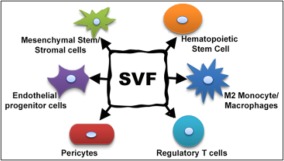
Treatment with the stem‐cell enriched stromal vascular fraction of human adipose tissue has garnered attention as a regenerative therapy, given its ability to secrete paracrine factors that accelerate endogenous repair, the ease of accessibility, and the lack of identified major adverse effects. The therapeutic potential of these cells includes the treatment of neurodegenerative diseases such as AD. A review article from the laboratory of Daniel J. Kota (Sanford Research, South Dakota, USA) provides an overview of the current knowledge driving this phenomenon and its regulatory issues and existing studies and proposes potential unmapped applications 6.
Figure 5.
Effects of Protein‐iPSCs on AD Pathogenesis
Cha et al. report that treatment with iPSCs generated via the exposure of mouse skin fibroblasts to protein extracts of embryonic stem cells may also represent a relevant therapeutic option for AD 7. In this study, from Inhee Mook‐Jung and Hyo‐Soo Kim (Seoul National University Hospital, Republic of Korea), the authors demonstrate that iPSCs transplanted into a mouse AD model differentiate into glial cells, reduce plaque depositions, and mitigate observed cognitive dysfunction.
Figure 6.
Neural Stem Cell Grafts and Aged Hippocampus
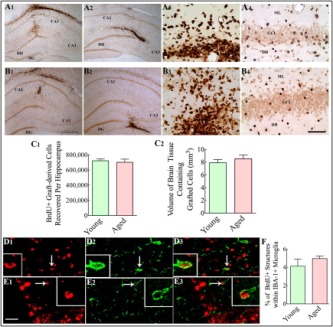
Research from Ashok K. Shetty and Hattiangady Bharathi (Texas A&M Health Science Center College of Medicine, Temple, Texas, USA) assessed the capability of neural stem cells (NSCs) to graft and survive in the aged hippocampus as a possible means to treat neurodegenerative disorders. They discovered that both young and aged hippocampi permitted NSC engraftment, migration, and differentiation and that NSCs established new neurogenic niches. This research suggests that the hippocampi of elderly patients are receptive to NSCs transplants, so providing encouragement for the demographic most likely to suffer from neurodegenerative disorders 8.
Figure 7.
Neural Stem Cells and Induced IGF‐I Expression
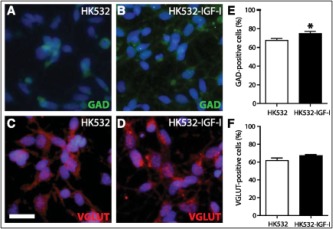
Previous studies from Eva L. Feldman (University of Michigan, Ann Arbor, Michigan, USA) had demonstrated the potential for NSCs for the treatment of the neurodegenerative disease ALS. As a means to extend this strategy to treat AD, McGinley et al. modified NSCs to overexpress insulin‐like growth factor‐I (IGF‐I) to promote neurogenesis and synaptogenesis in vivo 9. Interestingly, this study suggests that IGF‐I promotes differentiation of NSCs to the neuronal cell types dysregulated in AD and enhances neuroprotection and so may represent a disease‐modifying intervention for AD.
Figure 8.
Phenotypic Screening of Human Astrocytes
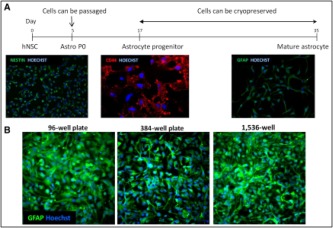
Astrocyte dysfunction has been implicated in the pathogenesis of many neurodegenerative diseases, including Alzheimer's disease, and so glia represent an attractive new target for drug discovery. Researchers from the laboratories of Natasha Thorn and Zheng Wei (National Institutes of Health, Bethesda, Maryland, USA) differentiated embryonic stem cells (ESCs) into vast amounts of astrocytes for drug screening purposes. Thorne et al. identified 22 compounds that support cytoprotection of astrocytes in a large‐scale high‐throughput screen, so demonstrating the relevancy and utility of employing astrocytes differentiated from ESCs as a disease model for drug discovery and development 10.
Figure 9.
Activation of Neurogenesis by Nicotinic Agonist
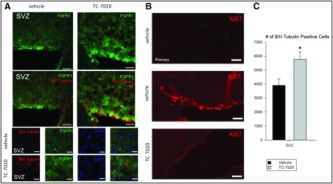
The reactivation of neurogenesis by endogenous neural progenitor and stem cells (NSPCs) in the brain and spinal cord may represent an alternative strategy to combat neurodegenerative disorders. Research from the laboratory of Michal K. Stachowiak (State University of New York at Buffalo, USA) indicates that targeting the α7 nicotinic acetylcholine receptors (α7nAChRs) activates integrative nuclear fibroblast growth factor receptor 1 (FGFR1) signaling and promotes the differentiation of NSPCs of the subventricular zone (SVZ) into new neurons. Narla et al. suggest that targeting α7nAChR may offer a new strategy to treat brain injuries, neurodegenerative diseases, and neurodevelopmental diseases 11.
Figure 10.
Defeating Dementia through Research
Alzheimer's Research U.K. has focused on defeating dementia through research for over 20 years, and in this final manuscript, Dr. Eric Karran, the director of research for the charity, shares the organization's accomplishments to date and future goals 12.
References
- 1. Thielking M. Morning Rounds Tuesday, August 8, 2017: Alzheimer's deaths are creeping up in number. Available at http://us11.campaign-archive2.com/?u=f8609630ae206654824f897b6&id=6711a0ccd0. Accessed August 22, 2017.
- 2. Lee JK, Jin HK, Endo S et al. Intracerebral transplantation of bone marrow‐derived mesenchymal stem cells reduces amyloid‐beta deposition and rescues memory deficits in Alzheimer's disease mice by modulation of immune responses. Stem Cells 2010;28:329–343. [DOI] [PubMed] [Google Scholar]
- 3. Dafinca R, Scaber J, Ababneh Na et al. C9orf72 hexanucleotide expansions are associated with altered endoplasmic reticulum calcium homeostasis and stress granule formation in induced pluripotent stem cell‐derived neurons from patients with amyotrophic lateral sclerosis and frontotemporal dementia. Stem Cells 2016;34:2063–2078. [DOI] [PMC free article] [PubMed] [Google Scholar]
- 4. Murray A, Letourneau A, Canzonetta C et al. Brief Report: Isogenic induced pluripotent stem cell lines from an adult with Mosaic Down Syndrome Model accelerated neuronal ageing and neurodegeneration. Stem Cells 2015;33:2077–2084. [DOI] [PMC free article] [PubMed] [Google Scholar]
- 5. Yousef H, Morgenthaler A, Schlesinger C et al. Age‐associated increase in BMP signaling inhibits hippocampal neurogenesis. Stem Cells 2015;33:1577–1588. [DOI] [PMC free article] [PubMed] [Google Scholar]
- 6. Dykstra JA, Facile T, Patrick RJ et al. Concise Review: Fat and furious: Harnessing the full potential of adipose‐derived stromal vascular fraction. Stem Cells Translational Medicine 2017;6:1096–1108. [DOI] [PMC free article] [PubMed] [Google Scholar]
- 7. Cha MY, Kwon YW, Ahn HS et al. Protein‐induced pluripotent stem cells ameliorate cognitive dysfunction and reduce Aβ deposition in a mouse model of Alzheimer's disease. Stem Cells Translational Medicine 2017;6:293–305. [DOI] [PMC free article] [PubMed] [Google Scholar]
- 8. Shetty AK, Hattiangady B. Grafted subventricular zone neural stem cells display robust engraftment and similar differentiation properties and form new neurogenic niches in the young and aged hippocampus. Stem Cells Translational Medicine 2016;5:1204–1215. [DOI] [PMC free article] [PubMed] [Google Scholar]
- 9. McGinley LM, Sims E, Lunn JS et al. Human cortical neural stem cells expressing insulin‐like growth factor‐I: A novel cellular therapy for Alzheimer's disease. Stem Cells Translational Medicine 2016;5:379–391. [DOI] [PMC free article] [PubMed] [Google Scholar]
- 10. Thorne N, Malik N, Shah S et al. High‐throughput phenotypic screening of human astrocytes to identify compounds that protect against oxidative stress. Stem Cells Translational Medicine 2016;5:613–627. [DOI] [PMC free article] [PubMed] [Google Scholar]
- 11. Narla ST, Klejbor I, Birkaya B et al. Activation of developmental nuclear fibroblast growth factor receptor 1 signaling and neurogenesis in adult brain by α7 nicotinic receptor agonist. Stem Cells Translational Medicine 2013;2:776–788. [DOI] [PMC free article] [PubMed] [Google Scholar]
- 12. Karran E. Alzheimer's research U.K.: Defeating dementia through research. Stem Cells Translational Medicine 2012;1:449–450. [DOI] [PMC free article] [PubMed] [Google Scholar]