



Abstract
Previous research has shown that urban slums are hostile environments for the growth of infants and young children (IYC). Flooding is a hazard commonly found in Dhaka slums (Bangladesh) which negatively impacts IYC's nutritional and health status. This paper aims 1) to identify the impact of flooding on IYC's feeding practices, and 2) to explore the coping strategies developed by caregivers. Qualitative data (participant observation and semi‐structured interviews) and quantitative data (household questionnaire and anthropometric measurements) collected in slums in Dhaka (n = 18 mothers, n = 5 community health workers, and n = 55 children) were analysed. The subjects of the interviews were mothers and Bangladesh Rural Advancement Committee (BRAC) community health workers living and working in the slums. Research findings showed that breastfeeding and complementary feeding practices for IYC were poor and inappropriate due to lack of knowledge, time, and resources in normal times and worse during flooding. One coping strategy developed by mothers purposely to protect their IYC's nutritional status was to decrease their personal food intake. Our research findings suggest that mothers perceived the negative impact of flooding on their IYC's nutritional health but did not have the means to prevent it. They could only maintain their health through coping strategies which had other negative consequences. The results suggests a holistic approach combining 1) provision of relief for nutritionally vulnerable groups during flooding, 2) support to mothers in their working role, 3) breastfeeding counseling and support to lactating mothers with difficulties, and 4) preventing malnutrition in under 2 year old children.
Keywords: Bangladesh, Dhaka slums, Infant and Young children, Nutritional Status, Flood, Feeding practices
Introduction
Flooding has a downward spiralling impact on vulnerable populations and increases vulnerability to outcomes like malnutrition in affected households (Khan 1994; Chambers 1995). Bangladesh, one of the most disaster prone countries in the world is frequently affected by floods with the last two severe floods occurring in 1998 and 2004.
Infants and young children's (IYC's) nutritional health is negatively impacted by floods as previous research conducted in Bangladesh has shown. Indeed, women and IYC are the most vulnerable groups to flood impacts (Akter 2004). Choudhury & Bhuiya (1993) showed that there was an adverse effect of flood on nutrition, the effect was dependent on sex of a child and intake of vitamin A, using data collected before, during and after the 1987 flood in Bangladesh. After the flood the proportion of severely malnourished children was significantly higher among those children who had not taken vitamin A. The proportion of severely malnourished boys increased after the flood while girls were affected to a much lesser extent. Later, del Ninno & Lundberg (2005) showed based on the International Food Policy Research Institute dataset collected after the 1998 flood that the children exposed to the flood were systematically smaller than those who were not exposed, and that this pattern held during the one year timeframe of the survey (del Ninno & Lundberg 2005). Helen Keller International, a non‐governmental relief organization (NGO), in their countrywide longitudinal study showed that the percentage of wasted children aged 6–59 months (z‐score Weight‐For‐Height <−2 SD) in the sub‐districts severely affected by the flood increased during and in the aftermath of the flood (Bloem et al. 2003).
This paper uses quantitative and qualitative data collected in slums in Dhaka, Bangladesh to explore feeding practices for IYC in slums during the flood time and compares this to a non‐flood (normal) time. Our research does not focus on one specific flood but rather on experience developed by caretakers over years of living with floods as Bangladesh is a country recurrently affected by floods on a yearly cycle. Flooding in the slums of Dhaka is not an exceptional disaster and this paper is not about response to disaster. Rather, the focus of this paper is about the kinds of adaptations that families routinely make over the course of a year. In this context, we hypothesize that caregivers develop coping strategies in relation to feeding practices during flooding. This study aims to establish whether flooding is perceived to have a negative impact on the nutritional health of IYC living in the slums. The related objectives are: (1) to identify the impact of flooding on IYC's feeding practices and (2) to explore the coping strategies developed by caregivers.
Background
The urban poor in Dhaka, the capital of Bangladesh were estimated at around 12 million in 2007, or 37% of the total Dhaka population (World Bank 2007). Dhaka is the fastest growing mega‐city in the world attracting an estimated 300 000–400 000 new migrants per year (Vosika 2005). It is predicted that by 2010, the number of urban poor could reach 17.6 million, with 60% of them living in slums (Podymow et al. 2002). These slums, often located in flood‐prone areas, provide appalling living conditions.
Slums are known to be extremely hostile environments for the growth of infant and young children (IYC), resulting in high prevalences of malnutrition and mortality (Hussain et al. 1999; Pryer 2003). Many children in the slums are born with a low birth weight, an important risk factor for later malnutrition and developmental delays (Arifeen et al. 2000). Poor women often adopt inadequate breastfeeding and complementary feeding practices, resulting in growth faltering and malnutrition of their IYC aged between 6 and 24 months old (Baqui et al. 1993; Pryer 2003). A study by Baqui et al. (1993), conducted in old slum settlements in Dhaka, showed that about 30% of the infants did not receive colostrum within 3 days of birth. The prevalence of breastfeeding was high (82.4% of children 0–23 months) however the prevalence of exclusive breastfeeding was low (36% of infants 0–2 months, and 10% of infants 3–5 months). More than half of the 3–5 month old infants received semi‐solid foods. Arifeen et al. (2001) confirmed these results. A little more than half of the infants in their sample were exclusively breastfed at 1 month of age, declining to about a quarter at 3 months. Widespread use of pre‐lacteal feeds explained the low prevalence of exclusive breastfeeding at enrollment (Arifeen et al. 2001).
Previous research in Dhaka shows that food insecurity levels for slum‐dwellers were high. About 61.8% of households were categorized as ‘severely food insecure’. This prevalence was higher than the level found in similar studies among food insecure populations in other areas of Bangladesh (Hassan & Ahmad 1991; Benson 2006).
Key messages
-
•
We found that numerous limiting factors and barriers to appropriate feeding practices for infants and young children (IYC) exist in normal times which are escalated during flooding resulting in extremely poor IYC nutritional health in Dhaka slums.
-
•
There are extremely limited coping strategies developed by food insecure households during flooding and their resilience capacity is low to external shocks such as floods.
-
•
Gender discrimination increases difficulties encountered by women during flooding.
-
•
A particular focus should be placed upon working mothers and the inabilities of the alternate caregiver in order to improve IYC's nutritional health in Dhaka slums.
-
•
It is important for policy makers to consider a holistic and creative approach to interventions that combine preventive actions during normal times and emergency response during floods.
Materials and methods
Research methodology
The present analysis uses qualitative data (participant observation and semi‐structured interviews) and quantitative data (a household profile determination questionnaire, a food security assessment and anthropometric measurements of height/length and weight) collected from mothers and their IYC in ten bosti (slums) in Dhaka, Bangladesh. The purpose of collecting quantitative data was to support the qualitative data by defining a detailed profile of the participants' household. The data were collected for 7 months during the period from November 2008 to May 2009.
The participant‐observations were key to comprehending the lives of the slum‐dwellers and the resilience mechanisms they adopted. Field notes were used to develop an understanding of constraints, strengths, weaknesses and forces driving the community. The semi‐structured interviews took place in four bostis (Begunbari, Kunibara, Mohammedpur and Kamrangir Char). These bostis were all recurrently affected by floods. The participant observations took place in these as well as another six additional bostis (Korai, Shadinata Sorony Bada, Arichpur, Railwaystaff, Sabujbag and Arjur). The participant observations were conducted in more bostis in order to obtain an overall view of the various slum situations in Dhaka.
The semi‐structured interviews were conducted using a question guide and took place at the households. Most were conducted around lunch time in order to observe meal preparation, food intake and leftovers. The question guide was designed with the help of qualitative researchers and anthropologists in Bangladesh, pre‐tested and modified before being used. As the work progressed, the guide was revised and expanded since new areas of interest emerged. It consisted of three parts: (1) diet and care in normal time, (2) experience with floods and (3) diet and care in flooding time. It was important to understand the baseline feeding practices and care of IYC in ‘normal time’ before exploring the impact that flooding may have on these. The approach undertaken was to define what ‘normal time’ was and to discuss feeding practices and care during this timeframe. Then ‘flooding time’ was defined and discussed. Topics were not discussed for one specific flood. Rather an overall experience developed over years of exposure to flooding was investigated. Finally, IYC feeding practices for the two periods were compared. Each interview lasted approximately 1–2 h and participants were interviewed four times on average depending on their availability.
A systematic literature review was used to find ‘best practices’ for interventions and to identify policy recommendations relevant to the study findings.
Participants' identification and selection
The participants of the interviews were mothers and Bangladesh Rural Advancement Committee 1 (BRAC) community health workers living and working in the slums with children (n = 18 mothers, n = 5 BRAC community health workers and n = 55 children). The first inclusion criterion was previous exposure to floods which means they have lived in a flooded area, but had not necessarily had their house flooded. Then mothers were selected based on the number of children (two or more children vs. only one child), age of the children (having at least one child under 3 years old), mother's age (from 19 to 41 years old) and household socio‐economic status assessed based on possession of assets. This selection was done in order to obtain a wide range of profiles. An exception was made for the profile of ‘old mothers’; where none of them had children under 3 years old. It was important to change this criteria to include older mothers in the study in order to explore whether feeding practices and coping strategies have changed over time. BRAC community health workers were selected based on two criteria: (1) having children; and (2) previous exposure to flooding. BRAC community health workers or Shastho Shebikas are women living in the slum who have been chosen as volunteers and trained by BRAC to take part in the Manoshi 2 program. They refer pregnant women to the BRAC delivery centre and provide antenatal and postnatal advice to pregnant and lactating mothers.
Household profile determination
A structured questionnaire was completed to determine the profile of the households. The questionnaire was administered after having gained the trust of the respondent, usually after 2–3 visits. It consisted of questions on: (1) household composition, migration and education; (2) housing; (3) household assets; (4) environment water and sanitation; (5) diarrhoea and other illnesses; (6) Household food insecurity: Food Access Survey Tool (FAST) (Coates et al. 2003) and (7) measurements of height/length and weight. Anthropometric measurements of the mother or community health worker and all her child(ren) were taken based on standard procedures and guidelines (Cameron 1984; Cogill 2003).
Data analysis
The transcripts of interviews were coded by extracting concepts and using a constant comparison of the data to draw out themes. The concepts and themes were validated in discussions with the translator and participants in the field to ensure that misconceptions and important concepts were not missed. The software ATLAS.ti (ATLAS.ti® Release 5.2.0 Muhr, T 1993–2009) was used to code and manage the data and compare themes/codes across the different profiles. Open coding included selection of phrases, sentences and paragraphs of common as well as unique themes. In addition, the automatic coding function in Atlas Ti was used to identify words and phrases and to confirm and tabulate these throughout all transcripts. To ensure objectivity of coding, two transcripts (one coded by the researcher, one coded by the translator) were compared and any differences were discussed and corrected until they reached a consensus.
The quantitative data were coded in SPSS v14 and analyzed using descriptive statistics; frequencies, mean and standard errors. As the sample was not randomly selected, none of the statistics produced can be used to infer findings to the general population. Rather these statistics describe only the types of participants included into the qualitative studies to further help understand the context in which they reside.
Ethical approval
Approval for the study was obtained from the Loughborough University Ethical Committee.
Results
Participant profile
The children were on average 67 months old and 50.9% were girls (Table 1). The malnutrition prevalences for the IYC of the participants were high. Stunting (% of children z‐score Height‐For‐Age < −2 SD) was noted in 48.9% of children of all ages (n = 55), and 56.3% of children <5 years old (n = 23). Underweight (% of children z‐score Weight‐For‐Age < −2 SD) was noted for 50.0% and 60.9% of these same age groups. Wasting (% of children z‐score Weight‐For‐Height < −2 SD) was noted for 35.1% and 43.8% of children in these age groups (Table 1).
Table 1.
Comparison of percentage of HAZ, WAZ, WHZ, BMIZ in the children of the selected sample per age group and breastfeeding rates in the study slums (Dhaka, Bangladesh)
| Selected sample | |||
|---|---|---|---|
| All (n = 51) | Children <5 years old (n = 23) | ||
| HAZ | Severely malnourished* (%) | 17.8 | 18.8 |
| Moderate malnourished † (%) | 31.1 | 37.5 | |
| Global chronic malnutrition (%) | 48.9 | 56.3 | |
| Mean (SE) | −1.92 (0.21) | −2.41 (0.35) | |
| WAZ | Severely malnourished* (%) | 30.8 | 39.1 |
| Moderate malnourished † (%) | 19.2 | 21.7 | |
| Global underweight malnutrition (%) | 50.0 | 60.9 | |
| Mean (SE) | −2.34 (0.20) | −2.55 (0.34) | |
| WHZ | Severely malnourished* (%) | 13.5 | 18.8 |
| Moderate malnourished † (%) | 21.6 | 25.0 | |
| Global acute malnutrition (%) | 35.1 | 43.8 | |
| Mean (SE) | −1.70 (0.17) | −1.90 (0.31) | |
| BMIZ | Severely malnourished* (%) | 10.3 | 10.0 |
| Moderate malnourished † (%) | 17.9 | 10.0 | |
| Global malnutrition (%) | 28.2 | 20.0 | |
| Mean (SE) | −1.49 (0.18) | −1.31 (0.45) | |
| Children age in months, mean (SE) | 67.1 (50.3) | ||
| Girls (%) | 50.9 | ||
| Breastfeeding children <1 year (%) ‡ | 100.0 | ||
| Breastfeeding children <2 year (%) ‡ | 92.3 | ||
| Breastfeeding children <3 year (%) ‡ | 66.7 | ||
| Breastfeeding children <4 year (%) ‡ | 60.9 | ||
| Breastfeeding children <5 year (%) ‡ | 53.8 | ||
Percentage of children <−3SD from the median of the 2000 CDC International Reference Population.
Percentage of children <−2SD and ≥−3SD from the median of the 2000 CDC International Reference Population.
‡ nb of children breastfed under 1,2,3,4,5 year old / total nb of children under 1,2,3,4,5 years old.
The reported breastfeeding practices at the time of the study were very good, 100% and 92.3% of the children under, respectively, 1 and 2 years old were breastfed. However the exclusive breastfeeding rate for the under 6 months old (28.5%) was low. Only 44% of the children aged over 5 years old were going to school (Table 2). The mothers of the selected sample were on average 28 years old with only 34.8% of them being literate and 55% of the mothers stayed at home. The husbands' occupation was most commonly recorded as being a rickshaw‐puller (31.6%). During the time of the study, less than 20% of the families moved to another house in the same slum or another slum.
Table 2.
Household descriptive data of the selected sample (age, employment status, mobility, house structure, health, water, sanitation and hygiene)
| Selected sample | |
|---|---|
| All households (n = 23, household members, n = 115) | |
| Mother age, mean (SE) | 28.4 (6.7) |
| Mother literacy (%) | |
| Can read only | 4.3 |
| Can sign name only | 39.1 |
| Can read and write | 34.8 |
| Can neither read nor write | 21.7 |
| Mother employment (%) | |
| Garment worker | 13.0 |
| Plastic factory worker | 5.0 |
| Beggar | 5.0 |
| Community health worker | 13.0 |
| Housekeeper | 9.0 |
| At home | 55.0 |
| Father employment (%) | |
| Garment worker | 10.5 |
| Rickshaw puller | 31.6 |
| Beggar | 5.3 |
| Construction labor | 15.8 |
| Seller | 15.8 |
| Farm worker | 10.5 |
| Other | 10.5 |
| Move to a new house during study (%) | 17.4 |
| Rain water leaking into the house (%) | 57.1 |
| Feeling safe inside the house during storm (%) | 33.3 |
| Garbage disposal (%) | |
| Dispose in a designated area | 36.4 |
| Under bamboo basement ‘pataton’ | 36.4 |
| In front of bamboo basement ‘pataton’ | 9.1 |
| Next to the river | 18.2 |
| Purification process for drinking water (%) | |
| None | 66.7 |
| Boil | 28.6 |
| Chemical | 4.8 |
The food insecurity level according to the analysis of FAST was very high for the household participants (Table 2) (Coates et al. 2003). A total of 81.9% of the households were food insecure, with 36.4% being food insecure with hunger. Participant families also suffered from poor health status (Table 2). In 100% of the households, one member was reported to be sick in the past 30 days of the study. 86.4% of households, failed to get proper medical care because of lack of money. Living conditions were poor; 57.1% had rain coming into their house during the rainy season, 77.3% did not feel safe during storms, and 36.4% of the households consistently disposed their garbage directly under their house's basement (Table 2). Only 28.6% boiled water before drinking. On average, six families shared one latrine that was commonly a sanitary water sealed pit latrine for the households living on the ground, and a hanging latrine for the households living on the pataton (elevated structure of several meters high, Fig. 1).
Figure 1.
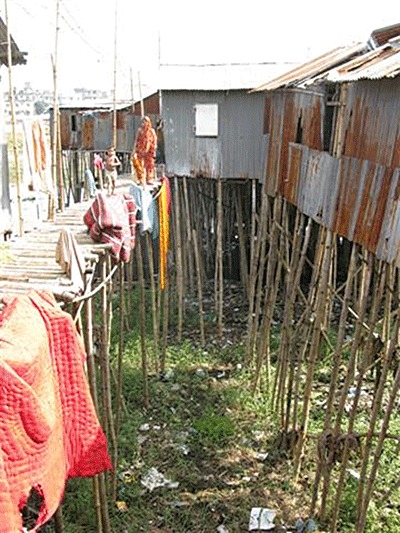
Pataton structure in Dhaka slums (bamboo, elevated structure 3–6 mters high over wasteland/water).
The feeding practices for IYC during ‘normal time’ are presented and their severe deterioration during flooding can be observed. ‘Normal time’ was defined as the period in between the usual rainy season, which occurs July to September. It is during the yearly rainy season that flooding takes place. A ‘flood’ and its severity were defined by participants by the length of time water stayed inside the house and the depth of the water in the house. A flood was considered a ‘big’ flood when water remained inside the home for 2 months at minimum knee height. For example, the 2008 flood was not considered a big flood as one mother living in Mohammedpur described it, ‘last year the flood was not big, the room was only inundated under 2 ft of water and water stayed only 2–3 days in the room’. Another woman reported on last year's flood, ‘it was not a big flood . . . our room was 2 feet under water and water stayed for only 1 month!’
IYC feeding practices in ‘normal time’
Breastfeeding practices: ‘If I eat more . . . I would have more breast milk!’
The breastfeeding practices for infants were inappropriate as recommended by WHO (Dewey 2003); colostrum was not commonly given to infants and exclusive breastfeeding was not a widespread practice. A community health worker reported ‘They [the mothers] give colostrum. But very often they do not understand, they feed suji 3 , or water of rice to the baby. They feed milk vita (pasteurized cow's milk) when the baby is only 2–3 days old.’ Mothers reported insufficient maternal milk and believed it was due to their underweight status. One mother stated ‘Apa 4 (sister), my husband is sick. He can not go for work! That's why we don't have sufficient food in our house now. I can not eat enough food . . . That's why I have less breast milk. If I eat more, I would have more breast milk.’ As a replacement for maternal milk, they had to feed their infants other milk‐based drinks at an early age. These preparations were often improper as they were either extremely diluted and/or based on cow's milk with sugar. One mother explained ‘I have started to give her suji when she was one and a half month old because I had no breast milk. What else could I do? She cried. When I gave her suji she stopped her crying . . . I made it with packet milk, sugar (tal misri), rice powder and water’.
Working mothers had to stop breastfeeding during the day but did not have the financial means to provide appropriate infant formula milk to their infant (<6 months old). As a result, improper milk‐based drinks (cow's milk, full cream powdered milk) or liquid suji were fed to the infant by the alternate caregiver 5 . One mother working in a garment factory for the entire day reported, ‘I breastfed only at night. So I provided packet milk during the day . . . How else could I manage? I had no other way’. Alternate caregivers didn't have the skills nor the knowledge to feed infants correctly; instead they often fed them biscuits or sweets. One caregiver (7 years old) used to feed her little brother (4 months old) biscuit mixed with water. She would also from time to time buy some processed fruit juice (intake high in sugar and water) when the child cried too much.
Seventy‐eight per cent of the working mothers had an alternate caregiver for their children; of whom 71% were considered inadequate because they were under 12 years 6 . The mean age of these underage caregivers was 8 years. In 40% of the cases, the caregiver was the mother's daughter and in 30% their own mother. In addition to child care, young girls are also involved in domestic chores (firewood collection, food preparation and cooking, clothes washing) when their mother is at work. They are not given the choice of going to school. When working mothers do not have a young daughter, they frequently ask their own mother to come and live with them in the slums. Typically these grand‐mothers are not happy in the slums and miss their village life. Eventually many will go back to their village with their grand child. Mothers will then see their child once to twice a year.
Breastfeeding duration was good as most of the mothers breastfed until 2–4 years. Predominant breastfeeding often lasted too long compared with the WHO recommendations as some children were fed predominantly maternal milk in addition to other drinks until two years of age (Dewey 2003). In a small number of cases, weaning from breastfeeding happened too quickly (at 1 year of age) with no appropriate weaning food available; the child's diet was reported to go from maternal milk directly to the family meal.
Complementary feeding practices: ‘I gave suji at one year; then a little bit of rice at one and half years and at 2 years what we eat’
Complementary feeding practices for infants and young children were also inappropriate. Complementary feeding was often introduced too early (before the child is 6 months old), and reasonable quality complementary feeding was introduced at a late age (1–3 years old). IYC were fed empty calorie snacks (sweets, ice creams made of water and sugar) as a replacement of appropriate complementary foods. One mother explained that she could feed her 2 year old ‘only breast milk and biscuits’. She said she could not prepare suji or khichuri 7 ‘because I don't have time’. Non‐working mothers did not have the means to cook a separate meal for their children as the cooking time was limited in the community kitchen. A good quality complementary food, called khichuri that is prepared with rice, dal (lentils), vegetable, oil and salt, was mentioned to be prepared by some mothers but was never seen prepared, cooked or fed to IYC during the participant observations. While some mothers reported buying fruits, such as apples, oranges and grapes once a month for their IYC, fruits were never seen to be consumed during participant observations.
Working mothers (45% of the participants) did not have time to cook appropriate complementary food for their children, as they left early and came back late from work. One mother had to leave her 3 children by themselves while she worked as a housekeeper. The mother could eat at her working place while the children had to manage with the food left in the house: ‘If there is rice they can eat . . . otherwise they remain hungry!’ The eldest daughter confirmed not eating anything during the day ‘My mother brings rice for us at night from work’. Alternate caregivers were either too young (elder brother or sister) or too old (grand‐mother) to cook appropriate complementary food. The youngest child (11 months old) of one working mother was severely wasted (z‐score Weight‐For‐Height < −3 SD) because he was fed only biscuits in addition to breast milk at night. His caregiver, the eldest sister (11 years old), bought with the 10 BDT 8 (0.1 GBP 9 ) given by her mother in the morning, some candies and ice cream for him as ‘he did not eat much’ of the family meal.
Food insecurity: ‘We eat what we earn!’
IYC feeding practices were affected when the household became ‘food insecure with hunger’. While the majority of the households were assessed to be food insecure, they became ‘food insecure with hunger’ when one of the income generators became sick, or handicapped and could no longer work (Table 3). As their initial health status was poor and the exposure to diseases was high, this happened frequently.
Table 3.
Examples of household food insecurity
| Kobita stopped working because she felt weak and sick. Three of her four children were sleeping at the time of the household visit. They had not eaten since last night because she had no money to buy food. She was waiting for her husband to come back with money later in that afternoon. Then she would be able to go to the market and buy food. |
| Aforoza said that she did not have any food at home. Her daughter cried and she said that she would buy biscuits for her from the nearest shop on credit. Biscuits are considered as special treats for children. They are often bought for IYC because they are available for a low cost in all local shops, are packaged in a small packet and are ‘ready to eat’. |
To cope with food insecurity, some of the participants borrowed money and relied on neighbours' solidarity for their children. A mother explained ‘Apa, today I will not eat (Na khye thaki)! There is no rice in my house now . . . but my neighbours will give my daughter food’.
IYC feeding practices during flooding and impact of flooding
Flooding experience: ‘Then four people eat one person's food!’
The difficulties encountered by slum‐dwellers illustrate the living conditions during flooding. The major reported problems were related to the lack of environmental cleanliness (smell of bad water, dirty water with human waste floating everywhere, spread of cockroaches, rats and snakes). Further problems resulted from the restriction of movement, in particular for women and IYC, such as difficulty to use latrines and to travel to work. Finally, participants faced issues due to a decrease in food security and an increase in domestic burden (e.g. food collection and preparation, washing clothes and child care). All usual domestic tasks became extremely difficult to carry out and took 2–3 times longer compared with the normal time because of the restriction of movement and the non‐availability of cooking gas.
During flooding, the decrease in food security resulted from the combined effect of lack of access to food and limited availability of food in the market. The household resources also declined and limited the purchasing power. This was essentially due to the inability of the income generators to work; especially the rickshaw‐pullers who could not work due to the roads being inundated with flood waters. One mother reported on her husband who is a rickshaw‐puller, ‘He works half day. Sometimes he cannot work because of water.’ Food quantity and quality were affected too. Slum‐dwellers reported eating 50% less food than usual, and a limited diet (potatoes, rice, and dry food). They suffered from hunger and ate once a day. A mother narrated, ‘Apa, the cooked dal was so transparent (diluted)! We could wash our hands in it.’ Another mother recounted, ‘People could not bring food to the market. So the price was high. We bought half KG of rice instead of one.’
Breastfeeding practices during flooding: ‘I had no breast milk!’
Breastfeeding mothers reported a decrease and cessation of maternal milk supply as they ate less in quantity and a limited variety of food. A mother recounted, ‘During flood I ate less fish and vegetables. That's why I had less breast milk’. The options for replacement of maternal milk were limited or non existent. Liquid suji or diluted powdered milk was given as replacement when the mother could afford it. A mother explained, ‘When the baby could not suck I understood then [that I had no more milk].’ She added further that she could not afford providing any replacement food for her baby.
Complementary feeding practices during flooding: ‘We cannot afford special food . . . children eat what we eat’
A deterioration in complementary feeding occurred during flooding. Mothers and alternate caregivers did not have the money nor the time due to an increase in domestic burden to cook complementary foods for their children (Table 4). Mothers had difficulties in food preparation, as cooking stoves were either under water or gas lines were disconnected. They often had to cook with a matir chula (clay stove) on top of their bed which was time consuming and costly due to the price of wood. A mother reported, ‘Apa, if we cook one day then we couldn't cook another day. There was no wood (lakri). We tried to find leaves and branches (lata pata) on the road and cooked with those. Most of time we ate dry food. Kitchen was a bit far away. It was difficult. I felt disgusted to go over dirty water. There were small animals (rats) and insects in the water.’ Dry foods such as puffed rice (muri), flattened rice (chira) and unrefined sugar (gur) were provided by relief organisations to vulnerable households. Most participants reported eating dry food once or twice a day.
Table 4.
Everyday life of Sumi, a garment factory woman during normal time vs. flooding time a
| Normal time |
| 5:00 – Wake up |
| 5:00–7:00 – Hygiene, preparation of family food for breakfast and lunch, breakfast |
| 7:30 – Travel to work |
| 8:00–13:00 – Work at the factory |
| 13:00 – Lunch time (at the factory or at home if close by) |
| 14:00–20:00 – Work at the factory (until 22:00 if overtime) |
| 20:00 – Stop at the market to buy one day supply of food |
| 20:30 – Return home and start cooking |
| 21:30–22:00 – Dinner |
| 22:00–24:00 – Visit neighbours or watch TV at a neighbours' home. |
| Flooding time compared with normal time |
| 5:00 – Wake up |
| 5:00–7:00 – Difficult to go to the latrine (the path and the latrine are under flood water; the alternative is to defecate into flood water within the home), impossible to cook (gas lines are disconnected), eat dry food for breakfast (mother eats last – whatever is left after her husband and children eat) |
| 7:00–13:00 – Stay at home (impossible to go to work because of flood water), cook on a matir chula for several hours (cooking is done on the bed as flood water is in the house), watch that children don't fall in the water, search for clean water (the usual water supply is polluted), wood for cooking and food (usual market often does not exist anymore due to flood water; the household relies mainly on food distribution by relief organizations) |
| 13:00 – Lunch time (eat rice and dal, or dry food, or nothing) |
| 14:00–20:00 – Stay at home, wash clothes on the bed, search for water, wood, food |
| 21:30–22:00 – Dinner (eat remaining food from lunch time, or dry food, or nothing) |
See Table 5 for coping strategies.
As a result, IYC ate the same meal as the rest of the family; this was either too spicy or did not have the appropriate nutritional density and value. One mother narrated, ‘We provide the baby what we eat.’ When asked how it affected the baby's health, she answered, ‘The baby becomes thin (sukae jae).’ Participants perceived that during flooding the IYC lost weight, became thin and suffered from poor health (sastho kharap hoe jeto). They also reported more morbidity episodes, e.g. diarrhoea, scabies, acute respiratory infection, fever and cold (patla pai kanna, chulkani, shash tontrer prodaho, jor, tanda laga). Recovery from such episodes usually took 1–4 months after the flood as reported by the mothers.
Coping strategies
Food insecure households: ‘Sometimes I had to beg money with my sons’
The usual coping strategies developed by food insecure households with adequately nourished or malnourished children during flooding were: (1) finding ‘cash’ by various means (borrowing money, buying on credit, depositing for loan their jewellery as collaterals, selling their assets, begging on the roads); (2) spending less by decreasing their food intake and by decreasing their resources allocated to other expenditures; (3) dealing with the flood environment by buying a raised bed and a matir chula and (4) migrating to higher ground (a school or a relative's house). These coping strategies were developed by the household to survive in extremely hard living conditions. Although they were not meant specifically to deal with IYC's feeding practices during flooding, their indirect impact on children's survival is hard to evaluate and in some cases may have negative consequences.
The coping strategy developed by mothers to purposely protect their children's nutritional health was to reduce their own food intake. Priority and intra‐household food allocation between members favoured the fathers as they were income generators, and then the children in the households. Mothers always ate last even when food was remaining but frequently skipped meals. A mother narrated that ‘Mothers often pass the day by drinking a glass of water.’
Comparison between food insecure household with adequately nourished or malnourished children and food secure household with adequately nourished children: ‘I had some savings . . . I used all of them!’
The coping strategies for food secure households (FSHs) with adequately nourished children and food insecure households (FIHs) with adequately nourished or malnourished children were compared with understand the differences in vulnerability and resilience capacity (Table 5). The coping strategies developed and their experiences during flooding were different. FSHs with adequately nourished children had more resilience capacity consisting of savings, food stock and assets. They were also able to develop successful strategies to prepare for the flood such as having a raised bed, a matir chula, a stock of combustible fuel (cow dung) or moving back to their home village before the flood. On the contrary, FIHs with adequately nourished or malnourished children were forced to develop negative coping strategies during the flood; thus increasing their vulnerability and poverty level.
Table 5.
Coping strategies developed during flooding for food secure households (FSH) vs. food insecure households (FIH)
| Coping strategies related to: | Food secure with adequately children | Food insecure with adequately nourished or malnourished children |
|---|---|---|
| Money | There was no business then. We had to spend our savings. | In rainy season nobody gives us loan! |
| My husband borrowed money from village in preparation for the flood. | We borrowed money from our relatives. Sometimes I had to beg money with my sons. | |
| We could not work at that time and we had no income. I worked as a house keeper then. I had some savings . . . I used all of them! | My husband borrowed money from the neighbors . . . We had to sell the bed, the fan and a mirror to get the money for the rent. | |
| No, we don't sell things rather then we buy. People sell things at a very low rate. It is easy to buy then. But many people mortgage gold chain and earrings and cannot get it back again because they can not pay the interest of the loan. | I sold our cooking pot, bucket, dish, and clothes like good sari too. | |
| Food | We could not work, and could not eat properly. Through we had food in our house but we could not cook. There was no way! We only ate then chira (flattened rice) with water because we couldn't cook. | Very often, we did not eat. |
| There is always rice in my house [during flooding]. | ||
| Now we cook 1 kg of rice but that time we cooked half a kg of rice. | I cooked half kg instead of 1 kg. | |
| At the moment we eat fish, meat and vegetables but during flooding only cooked dal, potato and rice. | Now we eat rice with potato and fish. At that time we had to eat rice only with salt. | |
| Now we eat two items but then we ate only dal, rice and ruti (flat bread). | In normal time we eat fish and vegetables. But during flooding, we ate only potatoes and shak (leaves). | |
| No [we did not cook different food for children in flooding compared with normal time], we smashed rice with vegetables and fed him. | We fed our children what we ate during flooding. We [mothers] took less food. If fathers are not given much, how would they work? | |
| My husband ate less and he suffered the most. He had to go to the market through water. I did not go there. We felt shy to put the cloth upon the knee. | My husband ate the most as he worked outside home, then me. My children ate less food. | |
| Environment | Many people suffered to buy wood. But I made cow dung fuel before the flood as a preparation. I used it to cook with the matir chula. | Last year flood water came in to room. I had to buy this bed on credit during flood. We were sleeping at night and then everything went under water. |
| We had to cook with a matir chula because the kitchen was under water. | ||
| Migration | Every year when flood hits this area, I go to Jatrabari [hometown of the participant]. |
FSHs were more likely to have savings, or to have borrowed money before the flood while FIHs had to borrow money (if they were able to find someone to lend them money), or were forced to beg for money or even sell valuable assets during flooding (which were often bought by the FSH group). FSHs were more likely to have food available during flooding however they faced the same difficulties in cooking as the FIHs. The decrease in food security was important for the FIHs as they reported not eating dal during flooding. However, the reduction in rice intake (50% less) was reported to be the same between the two groups. There was also a difference in intra‐household food allocation; for the FSHs, the fathers were eating less while in the second group it was the mothers or the children. In food insecure families, 71% of men work as rickshaw‐puller, construction or farm labourers. In food secure families, only 25% of them are involved in such physically demanding jobs. It is likely that the calories needed for physical work leads to a larger share of food for men in food insecure families.
The complementary feeding practices were different; the FSH group managed to cook complementary foods for their IYC during flooding as in normal time, whereas the FIH group had to feed IYC the same food as the rest of the household. The FSHs were more prepared for flooding than the FIHs as all of the FSHs already had a raised bed and a matir chula before the flood. Some of the FSHs had also prepared cow dung as combustible fuels to be used during flooding. Finally some participants of the FSHs were able to move back to their hometown to avoid the difficult living conditions imposed by the floods whereas the members of the FIHs did not have the financial capacity to do this and were limited to move to a school or a relative's house in Dhaka.
All of the BRAC community health workers were part of the FSH with adequately nourished children. They also managed to develop successful coping strategies before the flood that were either living on higher ground or going back to their home village.
Discussion and policy implications
There is hardly any evidence from previous research of flood impact on feeding practices for IYC in the slums. Data from the interviews with caregivers about their practices in flood compared with non‐flood conditions reveals that flooding causes deterioration in feeding practices for IYC. These deteriorate from poor and inappropriate during normal times to worse and even non‐existent during floods. The findings also confirm results of a few previous studies showing that inappropriate and poor feeding practices for IYC living in Dhaka slums are typical in normal times (Baqui et al. 1993; Arifeen et al. 2001; Vosika 2005). Our new findings provide sharper focus on the limiting factors for appropriate feeding in the slum environment, namely perceived insufficiency of maternal milk, food insecurity with hunger, difficulty in IYC food preparation, the demands of the working mother and the inabilities of alternate caregivers in this environment. During flooding, the same limiting factors were found to be more escalated and grave resulting in a deterioration of IYC feeding practices.
Findings suggest that participants perceived the deterioration in the IYC's nutritional health through weight loss and morbidity episodes. These results corroborate the quantitative findings that revealed a negative impact of flooding on the nutritional health of IYC and an increase in malnutrition (Choudhury & Bhuiya 1993; Bloem et al. 2003; del Ninno & Lundberg 2005). Mothers were however constrained to starve themselves to prevent the IYC's nutritional deterioration. By decreasing their food intake, mothers allowed the income generator to continue working and prevented their children from total nutritional deterioration. During flooding, it has been demonstrated that mothers are the ones who typically take on the burden of food insecurity in a household by giving food to other family members first (Maxwell 1996; Rashid 2000; Rashid & Michaud 2000). This coping strategy called by Maxwell ‘maternal buffering’ resulting in lower maternal body mass index (BMI) after the flood is intended to protect infants and young children (Bloem et al. 2003). However, it exposes mothers to undernutrition and to a decrease or cessation of milk if they were breastfeeding. This has the counter productive effect of weakening their child's health when maternal milk is likely to be essential for the child's survival. The fact that mothers in this study were undernourished, may also influence negatively the level of care they were able to provide to their children. Previous research has shown evidence of an association between maternal deficiencies and maternal caregiving capacities resulting in malnourished mothers being less active and responsive to the children's needs (McCullough et al. 1990; Rahmanifar et al. 1992). In Kenya, one study demonstrated that mothers cared significantly less for their children during a time of famine (McDonald et al. 1994). These findings suggest that maternal nutritional status should be considered during flooding as a key criterion to assess the level of vulnerability of households in future interventions (Goudet et al. 2009).
The research highlighted the increased difficulties encountered by women during flooding to complete their daily domestic tasks (Table 4). Gender has been noted by Wisner et al. (2004) as an important factor that influences the impact of the flood on individuals. Women often carry a heavier burden than men during recovery because of their pre‐flood lower nutritional status and their lower socio‐economic status. According to 2001a, 2001b), women of all ages in Bangladesh are more calorie‐deficient than men, and the prevalence of chronic energy deficiency among women is the highest in the world. In addition, women also receive less and poorer quality healthcare in comparison with men. These figures summarise the situation of women in Bangladesh: it is one of the few countries in the world where men live longer than women, and where the male population outnumbers the female (ADB 2001). In addition to starting out more vulnerable, flooding requires women to perform heavy tasks, such as protecting their houses, children, livestock and belongings. In Bangladesh, men will not help women where tasks are gender specific (e.g. carrying water, cooking, caring for children and animals). In some cases, women could put their lives in danger to carry on their duties without any help (Nasreen 2004). According to a study by BRAC regarding the 1998 and 2004 floods in Bangladesh, ‘women and children are often the most vulnerable groups during floods suffering from personal hygiene and domestic violence problems’ (Akter 2004:P12). The lack of work for men and the future uncertainties led usually to increased tensions within the family resulting in women being the ones to suffer from their husband's violence. Further research should be conducted on how to positively change the position of women in a gender discriminated environment and how to promote a fairer task sharing with their husbands during flooding.
A limitation of our study is due to the fact that neither observations nor interviews were able to be conducted during the last rainy season. Additional research is planned to be conducted during and after the next rainy season to be able to directly observe lives of slum‐dwellers during flooding.
Our study leads to the following policy recommendations (Table 6): (1) provision of relief for nutritionally vulnerable groups during flooding, (2) support to mothers in their working role, (3) breastfeeding counselling and support to mothers with difficulties and (4) preventing malnutrition in under 2 years old IYC.
Table 6.
Policy recommendations
| 1. Provision of relief for nutritionally vulnerable groups during the rainy season |
| Distribution of ORS and dry food |
| Distribution of Ready to Use Supplementary Food (RUSF) |
| Distribution of cooking fuels |
| 2. Support to mothers in their working role |
| Child care policy |
| Factory day care centres |
| 3. Breastfeeding counselling and support to lactating mothers with difficulties |
| Mothers and peer counselling |
| Supply of micro‐fortified food |
| Improving the household food security level |
| Conditional cash transfer program |
| 4. Preventing malnutrition in under 2 years old IYC |
| Educational program to promote appropriate complementary food before 2 years old |
| Supply of appropriate complementary food, micro‐fortified food or Sprinkles |
| Research on improved complementary food recipes based on locally available food |
Provision of relief for nutritionally vulnerable groups during the rainy season
Interventions during flooding typically consist of distribution of dry food, oral rehydration solutions and eventually water to households living in flooded areas. Our research suggests that there is a need to plan for further provisions during the rainy season for nutritionally vulnerable groups. The focus should be on the commonly‐defined nutritionally vulnerable group, e.g. IYC, lactating mothers and pregnant women. However, as our research demonstrated, undernourished mothers with children under 2 years old should also be considered as vulnerable. As part of an intervention, ready to use supplementary food such as fortified biscuits are suggested to be distributed to vulnerable families as they do not require cooking facilities. Distribution of zinc and Vitamin A tablets would be particularly appropriate for IYC in order to reduce prevalence of persistent diarrhoea and dysentery (Rahman et al. 2001; Osendarp et al. 2002; Salgueiro et al. 2002; Brooks et al. 2005). Finally, distribution of combustible fuels could help mothers to cook with a matir chula as mothers reported difficulties in finding and buying wood during flooding.
Flooding only intensifies existing problems that should be addressed on a long‐term basis. The recommendations during flooding are significant only if the root causes of poor IYC feeding practices are tackled through a holistic approach combining improvement in mothers working conditions, promotion of appropriate breastfeeding and prevention of malnutrition.
Support to mothers in their working role
Factory day care centres for infants of working mothers are a legal requirement under the Bangladeshi Factories act of 1965. In practice these have been largely ignored by many industries. Some NGOs such as Phulki 10 have made a difference in changing the childcare policy in garment factories (Thomas et al. 2003; Barrientos & Kabeer 2004; Kabeer 2004). Factory day care centres for IYC have been created to keep breastfeeding mothers close to their infants during working hours. Employers and employees were involved in making the day care centres sustainable resulting in a win‐win situation; healthier children due to better care and feeding practices and increased productivity for the factory.
Breastfeeding counselling and support lactating mothers with difficulties
Educational programmes through home‐based peer counselling have a significant impact in increasing the initiation and duration of exclusive breastfeeding (Morrow et al. 1999; Haider et al. 2000). Incorporating traditional beliefs and practices as well as including elders and husbands into the counselling session on optimal breastfeeding are recommended and have proved to be successful in other developing countries (Semega‐Janneh et al. 2001). Providing mothers with micro‐fortified food supplementation during flooding while working on improving the household food security level on a longer term are likely to improve maternal health status. Conditional cash transfer programs would be particularly appropriate in these circumstances and effective in raising household food security levels. The poorest households are targeted by these programs and the cash transfer is conditioned on attendance for example at school or health clinics (Behrman & Hoddinott 2001; Maluccio & Flores 2005).
Preventing malnutrition in under 2 years old IYC
Promotion through educational programmes is effective to change feeding practices when the household is food secure (Caulfield et al. 1999; Guldan et al. 2000; Santos et al. 2001; Penny et al. 2005). For food insecure households, supply of appropriate complementary food or of micronutrient‐fortified food in addition to promotion is necessary to be of benefit to the child's nutritional status (Lartey et al. 1999; Bhandari et al. 2001; Schroeder et al. 2002; Obatolu 2003; Oelofse et al. 2003; Adu‐Afarwuah et al. 2007; Lutter et al. 2008). A suitable intervention in the case of inadequate caregivers, caregivers with limited resources and/or food insecure households, is the supply of appropriate pre‐prepared complementary food, either at a low cost or without cost. In Haiti, research has shown the success of integrating the distribution of micronutrient Sprinkles through an overall behavioural change communication intervention to achieve appropriate utilization by the caregiver for the targeted child (Loechl et al. 2009).
Conclusion
Our findings reveal the problem of malnutrition and many barriers that mothers face in providing adequate nutrition to their IYC in both normal and flood conditions. Local and international policy makers may use these findings to plan more effective nutrition interventions in the slums of Dhaka. A holistic approach to intervention is suggested combining: (1) provision of relief for nutritionally vulnerable groups during flooding, (2) support to mothers in their working role, (3) breastfeeding counselling and support to lactating mothers with difficulties and (4) preventing malnutrition in under 2 year old children. Further research is required so that study findings can be generalized.
Source of funding
The authors would like to acknowledge and extend their gratitude to Action Contre la Faim (ACF) for providing financial support to the qualitative research in Dhaka, Bangladesh.
Conflicts of interest
The authors declare that they have no conflicts of interest.
Acknowledgements
We thank the BRAC staff working in the slums for their constant support. We are also grateful to the mothers, their children and the BRAC community health workers living in the slums for their time, understanding and their willingness to share their knowledge.
Footnotes
Bangladeshi Non Governmental Organisation, the largest NGO in Bangladesh.
The Manoshi project was developed by BRAC to establish a community‐ based health programme targeted at reducing maternal and child mortality in the urban slums of Bangladesh. The program is funded by the Bill and Melinda Gates Foundation under the Community Health Solutions initiative aiming at strengthening and leveraging community organizations and participants to scale up proven interventions in community settings (Khan & Ahmed 2006; BRAC 2009).
Suji is prepared with rice flour or wheat flour (more expensive), sugar, water or milk. It is usually two spoons of flour, two spoons of water or milk and one table spoon of sugar. It's introduced from 1 month of age. For a less than 6 month old child, half a glass is fed. It's very quick (5–10 min) and easy to prepare. The older the child gets, the more solid suji is prepared.
Apa, meaning sister is commonly used by Bangladeshi women when talking to each other in a courteous way.
Throughout this paper, the term ‘alternate caregiver’ is used for a sibling, a relative, or a grand‐mother who provide care for the child.
According to LaMontagne et al. (1998), an alternate caregiver is considered inadequate when the care is provided by a child under 12 years old.
Khichuri is prepared with rice mixed with double proportion of lentils and vegetables.
BDT: Bangladesh Taka.
GBP: United Kingdom Pounds.
A Bangladeshi organization.
References
- ADB ( 2001. ) Women in Bangladesh . Country briefing profile. Asian Development Bank .
- Adu‐Afarwuah S. , Lartey A. , Brown K.H. , Zlotkin S. , Briend A. & Dewey K.G. ( 2007. ) Randomized comparison of 3 types of micronutrient supplements for home fortification of complementary foods in Ghana: effects on growth and motor development . American Journal of Clinical Nutrition 86 , 412 . [DOI] [PubMed] [Google Scholar]
- Akter N. ( 2004. ) BRAC's Experience on Flood Disaster Management .
- Arifeen S. , Black R.E. , Antelman G. , Baqui A. , Caulfield L. & Becker S. ( 2001. ) Exclusive breastfeeding reduces acute respiratory infection and diarrhea deaths among infants in Dhaka slums . Pediatrics 108 , E67 . [DOI] [PubMed] [Google Scholar]
- Arifeen S.E. , Black R.E. , Caulfield L.E. , Antelman G. , Baqui A.H. , Nahar Q. et al . ( 2000. ) Infant growth patterns in the slums of Dhaka in relation to birth weight, intrauterine growth retardation, and prematurity . American Journal of Clinical Nutrition 72 , 1010 . [DOI] [PubMed] [Google Scholar]
- ATLAS.ti® Release 5.2.0 Muhr, T. ( 19932009. ) Scientific Software Development: Berlin .
- Barrientos , S. & Kabeer , N. ( 2004. ) Enhancing Female Employment in Global Production . Global Social Policy 4 , 153 – 169 . [Google Scholar]
- Baqui A.H. , Paljor N. , Nahar Q. & Silimperi D. ( 1993. ) Infant and Child Feeding Practices in Dhaka Urban Slums . International Centre for Diarrhoeal Disease Research (ICDDR) : Dhaka . [Google Scholar]
- Behrman J. & Hoddinott J. ( 2001. ) An evaluation of the impact of PROGRESA on child height . International Food Policy Research Institute; : Washington, DC . [Google Scholar]
- Benson T. ( 2006. ) Study of Household Food Security in Urban Slum Areas of Bangladesh .
- Bhandari N. , Bahl R. , Nayyar B. , Khokhar P. , Rohde J.E. & BhanH M. ( 2001. ) Food Supplementation with Encouragement to Feed It to Infants from 4 to 12 Months of Age Has a Small Impact on Weight Gain 1 4 . Journal of Nutrition 131 , 1946 – 1951 . [DOI] [PubMed] [Google Scholar]
- Bloem M.W. , Moench‐Pfanner R. & Panagides D. ( 2003. ) Health & Nutritional Surveillance for Development . Helen Keller International, Asia Pacific Regional Office; : Dhaka . [Google Scholar]
- BRAC ( 2009. ) Manoshi: urban MNCH . Available at: http://www.brac.net/index.php?nid=162
- Brooks W.A. , Santosham M. , Naheed A. , Goswami D. , Wahed M.A. , Diener‐West M. et al . ( 2005. ) Effect of weekly zinc supplements on incidence of pneumonia and diarrhoea in children younger than 2 years in an urban, low‐income population in Bangladesh: randomised controlled trial . Lancet 366 , 999 – 1004 . [DOI] [PubMed] [Google Scholar]
- Cameron N. ( 1984. ) The Measurement of Human Growth . Routledge Kegan & Paul; : London . [Google Scholar]
- Caulfield L.E. , Huffman S.L. & Piwoz E.G. ( 1999. ) Interventions to improve intake of complementary foods by infants 6 to 12 months of age in developing countries: impact on growth and on the prevalence of malnutrition and potential contribution to child survival . Food and Nutrition Bulletin 20 , 183 – 200 . [Google Scholar]
- Chambers R. ( 1995. ) Poverty and livelihoods: whose reality counts? Environment and Urbanization 7 , 173 . [Google Scholar]
- Choudhury A.Y. & Bhuiya A. ( 1993. ) Effects of biosocial variables on changes in nutritional status of rural Bangladeshi children, pre‐ and post‐monsoon flooding . Journal of Biosocial Science 25 , 351 – 357 . [DOI] [PubMed] [Google Scholar]
- Coates J. , Webb P. & Houser R. ( 2003. ) Measuring food insecurity: Going beyond indicators of income and anthropometry . Food and Nutrition Technical Assistance Project, Academy for Educational Development; : Washington, DC . [Google Scholar]
- Cogill B. ( 2003. ) Anthropometric Indicators Measurement Guide (revised edition) . Food and Nutrition Technical Assistance Project, Academy for Educational Development; : Washington, DC . [Google Scholar]
- Dewey K. ( 2003. ) Guiding principles for complementary feeding of the breastfed child . PAHO/WHO; : Washington DC . [Google Scholar]
- Goudet S. , Griffiths P. & Bogin B. ( 2009. ) Mother's BMI as a determinant of infant and young children's nutritional status in the post‐emergency phase of a flood . Disasters ( in press ). [DOI] [PubMed]
- Guldan G.S. , Fan H.C. , Ma X. , Ni Z.Z. , Xiang X. & Tang M.Z. ( 2000. ) Culturally Appropriate Nutrition Education Improves Infant Feeding and Growth in Rural Sichuan, China 1 2 3 4 5 . Journal of Nutrition 130 , 1204 – 1211 . [DOI] [PubMed] [Google Scholar]
- Haider R. , Ashworth A. , Kabir I. & Huttly S.R.A. ( 2000. ) Effect of community‐based peer counsellors on exclusive breastfeeding practices in Dhaka, Bangladesh: a randomised controlled trial . The Lancet 356 , 1643 – 1647 . [DOI] [PubMed] [Google Scholar]
- Hassan N. & Ahmad K. ( 1991. ) The nutrition profile of the slum dwellers: a comparison with the rural poor . Ecology of Food and Nutrition 26 , 203 – 214 . [Google Scholar]
- Hussain A. , Ali K. & Kvale G. ( 1999. ) Determinants of mortality among children in the urban slums of Dhaka city, Bangladesh . Tropical Medicine & International Health 4 , 758 . [DOI] [PubMed] [Google Scholar]
- Kabeer N. ( 2004. ) Labor Standards, Women's Rights, Basic Needs . In Global Tensions: Challenges and Opportunities in the World Economy ( eds. Beneria L. & Bisnath S. ) New York and London : Routledge; , 173 – 192 . [Google Scholar]
- Khan A. ( 1994. ) Interrelationships between demographic factors, development and the environment in the ESCAP region . Asia-Pacific Population Journal / United Nations 9 , 37 – 54 . [PubMed] [Google Scholar]
- Khan M.A. & Ahmed S.M. ( 2006. ) Preliminary Exploration of Birthing Hut Facilities of MANOSHI Programme. Dhaka, Bangladesh: BRAC Research Report on Health .
- LaMontagne J.F. , Engle P.L. & Zeitlin M.F. ( 1998. ) Maternal employment, child care, and nutritional status of 12–18‐month‐old children in Managua, Nicaragua . Social Science & Medicine 46 , 403 – 414 . [DOI] [PubMed] [Google Scholar]
- Lartey A. , Manu A. , Brown K.H. , Peerson J.M. & Dewey K.G. ( 1999. ) A randomized, community‐based trial of the effects of improved, centrally processed complementary foods on growth and micronutrient status of Ghanaian infants from 6 to 12 mo of age . American Journal of Clinical Nutrition 70 , 391 . [DOI] [PubMed] [Google Scholar]
- Loechl C.U. , Menon P. , Arimond M. , Ruel M.T. , Pelto G. , Habicht J.P. et al . ( 2009. ) Using programme theory to assess the feasibility of delivering micronutrient Sprinkles through a food‐assisted maternal and child health and nutrition programme in rural Haiti . Maternal & Child Nutrition 5 , 33 – 48 . [DOI] [PMC free article] [PubMed] [Google Scholar]
- Lutter C.K. , Rodriguez A. , Fuenmayor G. , Avila L. , Sempertegui F. & Escobar J. ( 2008. ) Growth and micronutrient status in children receiving a fortified complementary food . Journal of Nutrition 138 , 379 . [DOI] [PubMed] [Google Scholar]
- McCullough A. , Kirksey A. , Wachs T. , McCabe G. , Bassily N. , Bishry Z. et al . ( 1990. ) Vitamin B‐6 status of Egyptian mothers: relation to infant behavior and maternal‐infant interactions . American Journal of Clinical Nutrition 51 , 1067 – 1074 . [DOI] [PubMed] [Google Scholar]
- McDonald M.A. , Sigman M. , Espinosa M.P. & Neumann C.G. ( 1994. ) Impact of a temporary food shortage on children and their mothers . Child development 65 , 404 – 415 . [PubMed] [Google Scholar]
- Maluccio J. & Flores R. ( 2005. ) Impact evaluation of a conditional cash transfer program: The Nicaraguan Red de Protección Social . International Food Policy Research Institute; : Washington DC . [Google Scholar]
- Maxwell S. ( 1996. ) Food security: a post‐modern perspective . Food Policy 21 , 155 – 170 . [Google Scholar]
- Morrow A. , Guerrero M. , Shults J. , Calva J. & Lutter C. ( 1999. ) Efficacy of home‐based peer counselling to promote exclusive breastfeeding: a randomised controlled trial.[Eficacia del asesoramiento entre pares basado en el hogar para la promoción de la lactancia materna exclusiva: un estudio clínico controlado aleatorizado] . Lancet 353 , 1226 – 1231 . [DOI] [PubMed] [Google Scholar]
- Nasreen M. ( 2004. ) Disaster research: exploring sociological approach to disaster in Bangladesh . Bangladesh e-Journal of Sociology 1 , 1 – 8 . [Google Scholar]
- del Ninno C. ( 2001a. ) The 1998 Floods in Bangladesh: Disaster Impacts, Household Coping Strategies, and Response . Intl Food Policy Research Inst; : Washington DC . [Google Scholar]
- del Ninno C. ( 2001b. ) Averting a food crisis: private imports and public targeted distribution in Bangladesh after the 1998 flood . Agricultural Economics 25 , 337 – 346 . [Google Scholar]
- del Ninno C. & Lundberg M. ( 2005. ) Treading water. The long‐term impact of the 1998 flood on nutrition in Bangladesh . Economics and human biology 3 , 67 – 96 . [DOI] [PubMed] [Google Scholar]
- Obatolu V.A. ( 2003. ) Growth pattern of infants fed with a mixture of extruded malted maize and cowpea . Nutrition 19 , 174 – 178 . [DOI] [PubMed] [Google Scholar]
- Oelofse A. , Van Raaij J. , Benade A. , Dhansay M. , Tolboom J. & Hautvast J. ( 2003. ) The effect of a micronutrient‐fortified complementary food on micronutrient status, growth and development of 6‐to 12‐month‐old disadvantaged urban South African infants . International journal of food sciences and nutrition 54 , 399 – 407 . [DOI] [PubMed] [Google Scholar]
- Osendarp S.J.M. , Santosham M. , Black R.E. , Wahed M. , van Raaij J. & Fuchs G.J. ( 2002. ) Effect of zinc supplementation between 1 and 6 mo of life on growth and morbidity of Bangladeshi infants in urban slums . American Journal of Clinical Nutrition 76 , 1401 . [DOI] [PubMed] [Google Scholar]
- Penny M.E. , Creed‐Kanashiro H.M. , Robert R.C. , Narro M.R. , Caulfield L.E. & Black R.E. ( 2005. ) Effectiveness of an educational intervention delivered through the health services to improve nutrition in young children: a cluster‐randomised controlled trial . The Lancet 365 , 1863 – 1872 . [DOI] [PubMed] [Google Scholar]
- Podymow T. , Turnbull J. , Islam M. & Ahmed M. ( 2002. ) Health and Social Conditions in the Dhaka Slums .
- Pryer J. ( 2003. ) Poverty and Vulnerability in Dhaka Slums: The Urban Livelihood Study . Ashgate Publishing, Ltd; : Hampshire . [Google Scholar]
- Rahman M.M. , Vermund S.H. , Wahed M.A. , Fuchs G.J. , Baqui A.H. & Alvarez J.O. ( 2001. ) Simultaneous zinc and vitamin A supplementation in Bangladeshi children: randomised double blind controlled trial . British medical journal 323 , 314 – 318 . [DOI] [PMC free article] [PubMed] [Google Scholar]
- Rahmanifar A. , Kirksey A. , Wachs T. , McCabe G. , Bishry Z. , Galal O. et al . ( 1992. ) Diet during lactation associated with infant behavior and caregiver interaction in a semi‐rural Egyptian village . Journal of Nutrition 123 , 164 – 175 . [DOI] [PubMed] [Google Scholar]
- Rashid S.F. ( 2000. ) The urban poor in Dhaka city: their struggles and coping strategies during the floods of 1998 . Disasters 24 , 240 – 253 . [DOI] [PubMed] [Google Scholar]
- Rashid S.F. & Michaud S. ( 2000. ) Female adolescents and their sexuality: notions of honour, shame, purity and pollution during the floods . Disasters 24 , 54 – 70 . [DOI] [PubMed] [Google Scholar]
- Salgueiro M.J. , Zubillaga M.B. , Lysionek A.E. , Caro R.A. , Weill R. & Boccio J.R. ( 2002. ) The role of zinc in the growth and development of children . Nutrition (Burbank, Los Angeles County, Calif.) 18 , 510 – 519 . [DOI] [PubMed] [Google Scholar]
- Santos I. , Victora C.G. , Martines J. , Goncalves H. , Gigante D.P. , Valle N.J. et al . ( 2001. ) Nutrition Counseling Increases Weight Gain among Brazilian Children 1 . Journal of Nutrition 131 , 2866 – 2873 . [DOI] [PubMed] [Google Scholar]
- Schroeder D.G. , Pachon H. , Dearden K.A. , Ha T.T. , Lang T.T. & Marsh D.R. ( 2002. ) An integrated child nutrition intervention improved growth of younger, more malnourished children in northern Viet Nam . The Positive Deviance Approach to Improve Health Outcomes: Experience and Evidence from the Field 23 , 50 . [PubMed] [Google Scholar]
- Semega‐Janneh I.J. , Bohler E. , Holm H. , Matheson I. & Holmboe‐Ottesen G. ( 2001. ) Promoting breastfeeding in rural Gambia: combining traditional and modern knowledge . Health policy and planning 16 , 199 – 205 . [DOI] [PubMed] [Google Scholar]
- Thomas D. , Sarker A.H. , Khondker H. , Ahmed Z. & Hossain M. ( 2003. ) Citizen Participation and Voice in the Health Sector in Bangladesh . Report to Department for International Development (DFID), Dhaka: DFID . [Google Scholar]
- Vosika M. ( 2005. ) Bangladesh 2004: Results from the Demographic and Health Survey . [DOI] [PubMed]
- Wisner B. , Blaikie P. , Cannon T. & Davis I. ( 2004. ) At Risk: Natural hazards, people's vulnerability and disasters , 2nd edn. Routledge; : London . [Google Scholar]
- World Bank ( 2007. ) Dhaka: Improving Living Conditions for the Urban Poor . World Bank; : Dhaka . no. Bangladesh Development Series 17 . [Google Scholar]