



Abstract
A History of the Pan American Society for Clinical Virology
‘Table of Contents’
Part I.
| 1. | Introduction — The Editors (G.D. Hsiung, M.A.Chernesky, S.S. Specter and J.L. Waner) |
| 2. | The Organizational Meeting for the Pan American Groups for Rapid Viral Diagnosis (PAGRV) and the first 10 years (1977–1987), Max Chernesky |
| 3. | History of the Annual Clinical Virology Symposium (1985–1999), Steven Specter |
| 4. | Establishment of the Pan American Society for Clinical Virology (1995), Joseph Waner |
| 5. | History of Internet Communication at PASCV, David Myerson |
Part II
Scientific Sessions: Clinical Virology Symposium (1985–1999)
Part III
| 1. | Lists of officers and council members (1978–2000) |
| 2. | By-laws of the Pan American Society for Clinical Virology |
Part IV
Appendix — Portraits
| 1. | Editors |
| 2. | Presidents of the PAGRVD-PASCV |
| 3. | Diagnostic Virology Awardees |
| 4. | Clinical Virology Awardees |
| 5. | Edith Hsiung Lecturerships |
| 6. | DuPont Young Investigator Awardee |
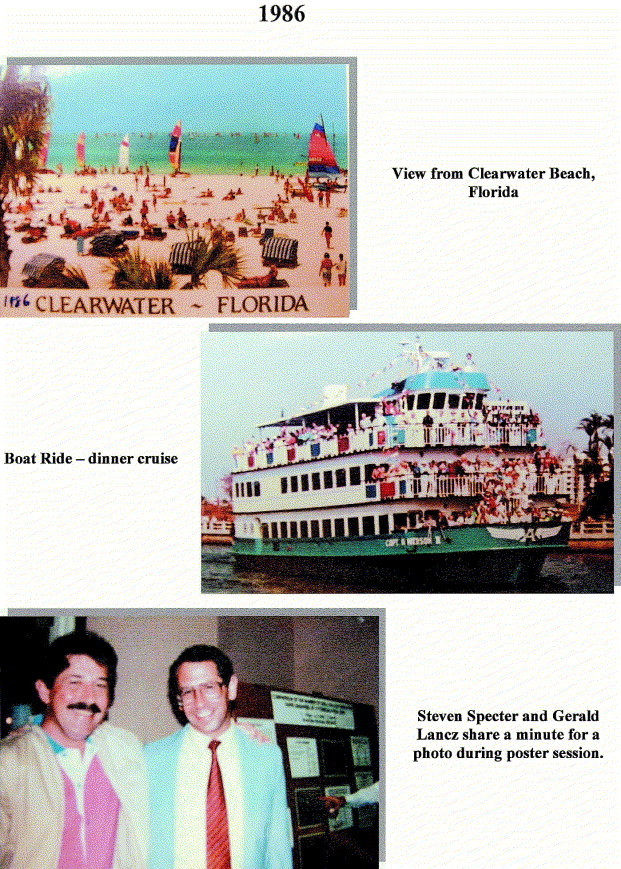
| 7. | Glimpses of selected activities during Clinical Virology Symposium Annual Meetings in Clearwater Beach, Florida (1986–1998) |
Part I
1. A History of the Pan American Society for Clinical Virology
Introduction
In this booklet we have attempted to meet the need for readily accessible information about the development of the Pan American Society for Clinical Virology (PASCV). In order to provide a brief review of the two groups, i.e. the Pan American Group for Rapid Viral Diagnosis (PAGRVD) and the Clinical Virology Symposium (CVS) joining together, the readers are referred to the following three chapters. We hope this booklet will provide useful information for those interested in Clinical Virology, including physicians, medical students, interns, and residents as well as laboratory and research investigators.
The PAGRVD had been established for seven years when Steven Specter, in the Fall of 1984, extended an invitation to the PAGRVD to co-sponsor the CVS annual meeting in Clearwater, Florida. Stanley Plotkin, the president of the PAGRVD, suggested to have the two groups join together for their annual meetings in Clearwater, Florida. (see Stanley Plotkin memorandum to officers and council members of PAGRVD on April 25, 1986). Support for the concept was indicated by John Sever’s letter to Stanley Plotkin (dated April 29, 1986). On May 7, 1986, a letter from Steven Specter and Gerald Lancz was sent to Stanley Plotkin agreeing with the above suggestions. Joseph Waner was the newsletter editor and ensured that the news regarding PAGRVD and the CVS would have joint annual meetings in Florida for the coming years, (Joseph Waner’s letter to Steven Specter on May 28, 1987).
The first CVS was held in Clearwater, Florida April 22–24, 1985. Edith Hsiung was more than enthusiastic to support the idea to have a Clinical Virology Meeting in the Eastern USA to balance the annual meeting of Medical Virology in California, organized by Luis de la Maza and Elena Patterson of the University of California at Irvine. For a long time, many investigators involved in the clinical virology field were looking for a place to call ‘home’ since the field was made up of scientists from a wide range of disciplines.
During the early CVS meetings some of the delegates commented that for the first time they felt that Clinical Virologists were not lost in the crowd as in other big meetings including annual meetings of the ASM (American Society for Microbiology) or ICAAC, (Interscience Conference on Antimicrobial Agents and Chemotherapy), Infectious Diseases Society of America (IDSA), or the American Pediatrics Society (APS). Thus, a permanent home for Clinical Virologists was established since 1987.
The official name of ‘The Pan American Society for Clinical Virology’ was not used until 1995 when the annual meeting approved the change. In order to illustrate the relationship between clinical and diagnostic virology (Fig. 1 ), ‘Clinical Virology’ was conceived as the bridge between the clinicians and the laboratory investigators. The meeting was an opportunity to get together, understand each other and complement each other in order to have better individual patient care and population management. Attendance at the CVS has increased. Each year an excellent program is developed in aspects of clinical, diagnosis and treatment providing informative, state of the art information about clinical virology that fully meets the needs of the attendants. As the PASCV has grown, it forms a network through which knowledge is exchanged, new ideas are generated and collaborations established through these annual meetings.
Fig. 1.

CVS’s first logo appeared in 1987, and was introduced by Edith Hsiung.
In addition, the journal of ‘Clinical and Diagnostic Virology’ (Elsevier) was initiated in 1993. Its name was changed to the ‘Journal of Clinical Virology’ in 1998 and is now the official journal of the PASCV.
The Editors
2. The Organizational Meeting for the Pan American Group for Rapid Viral Diagnosis (PAGRVD) and the first 10 years (1977–1987) Max Chernesky, PhD
In 1976 Dr. Kenneth McIntosh was at the Royal Victoria Infirmary in Newcastle Upon Tyne, learning fluorescent methodology with Dr. Phillip Gardner and Joan McQuillin. Gardner had been instrumental in helping to organize the European Group for Rapid Laboratory Viral Diagnosis (EGRLVD). In August of 1976 McIntosh phoned Dr. Stanley Plotkin in Philadelphia to discuss the concept of forming a North American Provisional Group for Rapid Viral Diagnosis. Plotkin discussed the concept with Dr. Max Chernesky and a few others working in diagnostic virology and decided to convene an informal meeting during the Infectious Diseases Society of America (IDSA) meeting in Chicago in October. The discussions were favorable so McIntosh decided to send letters to the following people, inviting them to attend an organizational meeting to be held on January 19, 1977, 1:00–6:00 PM in Room 8, Building 31-C, 6th floor at the National Institutes of Health in Bethesda, Maryland: C. Brandt; M. Chernesky; J. Cherry; W. Clyde; F. Denny; F. Forrester; H. Friedman; P. Glezen; J. Gwaltney; C. Hall; W. Jordan; E. Lennette; K. McIntosh; P. Middleton; P. Ogra; S. Plotkin; G. Ray; L. Spence; C. Wilfert; P. Wright. Phillip Gardner was invited from the United Kingdom. This meeting preceded a meeting on swine influenza vaccines.
The minutes of the inaugural meeting as submitted by Dr. Wilfert are recorded here:
The assembled group accepted the definition of rapid viral diagnosis as relating to the applicability of patient care rather than the laboratory time necessary to perform the tests. The diagnosis established must be specific.
Doctor Kenneth McIntosh was nominated by Dr. Stanley Plotkin and unanimously elected Chairman of the group. Drs. Stanley Plotkin and Pearay Ogra were nominated for Vice-Chairman and Dr. Plotkin was elected. Drs. Max Chernesky and Catherine Wilfert were nominated for treasurer and Dr. Chernesky was elected. Drs. Glezen and Wilfert were nominated for secretary and Dr. Wilfert was elected. These four persons constitute the provisional organizational Executive.
2.1. Aims of the group
-
1.
Development of new techniques and application of them to rapid viral diagnosis.
-
2.
Encouragement of the development of new techniques by holding scientific meetings and symposia on the subject at 6 monthly intervals.
-
3.
Promotion of quality control reagents and their utilization in rapid diagnostic virology.
-
4.
Provision of a means of communication and dissemination of relevant information on rapid viral diagnosis.
-
5.
Promotion of training programs in techniques for rapid diagnosis.
-
6.
Coordination of activities with other organizations concerned with rapid viral diagnosis.
-
7.
Provision of a potential forum for collaborative research projects in rapid viral diagnosis.
2.1.1. The ultimate membership of this group remains to be determined
As a provisional ‘council’ those participating are presently considered as representatives. A working group of 20–25 is small enough to promote efficiency in operation. It may be helpful to request assistance in each of the provisional representatives by asking for other individuals in (1) geographic proximity to the member, and (2) those working in related areas of investigation. In addition, the CDC has a listing of diagnostic laboratories in the USA.
Access to information generated by this group is one of the goals of the group and representatives are responsible for dissemination of the information in their geographic area. A News Letter has been proposed as a means of informing the group. It would include minutes of meetings, techniques, perhaps the abstracts of work to be published and bibliographies of members to teach others the areas of expertise of the constituents. Also, meetings and symposia will be announced and abstracts reproduced. A minimal charge of 5.00–$10.00 to defray costs may be necessary. Dr. Forrester suggested that the group could possibly obtain help with printing from the CDC.
The commercial organizations can communicate through the Executive or the secretary with the organization. This should allow optimal mutual participation in the development and standardization of reagents for use. A note of thanks was given to Flow, Microbiological Associates and Gibco Laboratories for funds to support Dr. Gardner’s travel and an initial $500.00 in the treasury of the Provisional Group. Dr. Harvey Friedman had been acting treasurer in Philadelphia and will leave the account there until the Executive makes a decision on moving it.
Precedent for an organization of this type exists in the EGRLVD. Professor Phillip Gardner participated in the organizational meeting of the North American group giving his invaluable assistance gained from their working group. The European group is founded on country representation with two persons per country participating at meetings. The group functions as a working party and accepts responsibility for keeping the others in their country informed. The European group meets at 6 monthly intervals for a 2 day period of time. The meetings consist of formal business sessions but also a scientific symposium with contributions from members and invited guests. The organization is now coordinating symposia with other groups. Members attend regularly. Symposia are successful. Collaboration has allowed successful standardization of reagents and their acceptance by industry. Technical training has been exchanged between members and possibilities for collaboration with WHO are being explored.
Considerable discussion of the purpose of the group demonstrated a mutual interest in clinical diagnostic virology and its attendant problems of financial support, certification of technicians, education of physicians, and the need for a strong group of proponents. For initial organization, it was agreed to accept the plan of narrowing the approach to rapid viral diagnosis as a defined need and subsequently a way to gain credibility and to earn support. The applicability of the answers will produce a marketable product. No area of concern is to be excluded from the future focus by the group.
2.1.2. Specific areas of potential focus by the group were listed as:
-
1.
Fluorescence antibody for antigen detection
-
2.
Peroxidase
-
3.
Electronmicroscopy (Immuno-EM)
-
4.
Antigens, specific IgM
-
5.
Radioimmunoassay (RIA)
-
6.
Immune adherence
-
7.
(Gas chromatography)
-
8.
Countercurrent immunoelectrophoresis (CIE)
2.2. Consideration of fluorescence — direct versus indirect and standardization
The European group has had experience collaborating to ensure quality control of reagents. Members have produced individual antisera, tested for sensitivity and specificity by each of two laboratories. Cooperation with industry then allows production of a defined quality controlled product which will be in demand.
Individual investigators have worked with indirect immunofluorescence (IFA) to utilize fewer conjugates. On the other hand, industry can produce direct fluorescent antibody (DFA) reagents consisting of a single conjugated antiserum and sell it as the one reagent. Production of indirect reagents has necessitated a ‘kit’. The antiserum plus anti-antiserum conjugates standardized as a unit. Apparently, the FDA now requires that reagents used as human diagnostic reagents meet the following requirements:
-
1.
The history of manufacture
-
2.
The efficacy (trials with tissue culture cells, trials with clinical materials, involving a variety of human cells and viruses
-
3.
Marketing
-
4.
Acceptable levels of toxicity
A subcommittee meeting of the FDA will occur January 24 and 25th 1977 discussing standards of biological reagents. It was suggested that this group needs a representative from our provisional group. The Division of the FDA is the Bureau of Medical Devices and Diagnostic Reagents.
In the past, industry has collaborated with the CDC but the new regulations mean that the clinical applicability will require INDs and interested investigators. In order to keep rapid viral diagnosis respectable, the reagents have to be quality controlled. At this point, Dr. Plotkin proposed a comparative study of IFA and DFA by the Provisional Group. This raises the question of what reagents are available.
Microbiological associates have: Herpes simplex-1 (HSV-1); HSV-2; HSV 1&2; Mumps, CMV; parainfluenza 1; adenovirus group; LCM and these will be supplied for investigational purposes. Flow has HSV-1, HSV-2, Influenza A and Influenza B, parainfluenza 1, 2, 3, adenovirus (? Group), CMV, mumps (?), measles (?), RSV (in near future). Wellcome Research Labs has RSV bovine antiserum (indirect), influenza A bovine antiserum (indirect), herpes (? 12) rabbit antiserum.
Dr. Lennette expressed the need to avail ourselves of these existing reagents. Thus, standardization of them in comparison to those volunteered by Dr. Gardner from the European group should assume priority. The NIH reference reagents materials are not to be excluded but considerable testing is necessary. There is in existence an International Standardization group which has a liaison with the European group.
2.3. Laboratory-competence control
Training of responsible persons is as essential as quality control of reagents. The CDC has developed several courses which are available to hospital technicians, university lab technicians and the state laboratories.
Several individuals of the group volunteered their materials and mentioned them as illustrations of possible collaboration. Dr. C. Brandt has rotavirus EM grids (positive and negative) available. Dr. K. McIntosh has respiratory syncytial virus positive and negative slides.
It was felt that collaborative teaching with the ASM, CDC and in individual laboratories should be a serious goal of the group.
The ASM meeting in New Orleans in May, 1977 is to be the next projected meeting of the Executive. A symposium on rapid viral diagnosis is scheduled to take place at the meeting. This was organized prior to the meeting of this provisional group and is an independent effort. The ICAAC meeting in October in New York may be the logical place for the next meeting of the Provisional Rapid Viral Diagnostic Group.
2.3.1. The Executive has been charged with the following responsibilities:
-
1.
To form a written conceptualization of membership which will be considered by the entire group.
-
2.
To ascertain either the benefits or the need to ‘incorporate’ the group.
-
3.
To become informed with regard to the developing FDA policies for reagents in order to contribute in their formation and be informed of the requirements.
-
4.
To investigate the possibility of forming a subgroup of the ASM. Potential advantages would include the use of existing publication to announce meetings, circularize members, etc.
-
5.
To informally publish the work by the group members.
-
6.
To consider a specific project for the group which may be a trial to establish the sensitivity and specificity of existing reagents or to compare direct versus indirect immunofluorescence.
The second meeting of the Provisional Rapid Viral Diagnosis Group (PRVDG) was held in New York City as part of the joint IDSA-ICAAC meeting on October 12, 1977. Additional interested persons were invited to participate in the group merely by indicating their interest and signing a list providing their names and addresses. Those attending the meeting agreed to support the concept of $10.00 dues to assist with mailing and Xerox costs, etc.
One of the functions of the group was to help exchange information. The suggestion was made that preprints could be distributed to interested members. Dr. George Ray suggested that circulation of ‘newsletters’ from individual institutions could be distributed to members of PRVDG. Dr. George Galasso from NIH stated that Newsletters were produced at the NIH to provide updated collation of reference materials and that perhaps a newsletter could be started which related to viral diagnosis or material included in an existing newsletter.
Dr. Rasmussen, President of ASM and Dr. E.H. Lennette, President-elect, supported the group. Dr. Rasmussen stated that support of a workshop is possible through the ASM and it should be possible to have a clinical Virology Section at the ASM meeting. This was explored for the Spring of 1978.
Tentative plans for a Laboratory Course at Aspen, Colorado to be held August 14–18, 1978, were made. The course would teach methods in fluorescence and enzyme linked assays.
An important function of this group was to help standardize reagents for rapid viral diagnosis. Dr. Goldfield spoke to the need for development of reagents and wanted this to be a working group. This may mean development of reagents in individual labs or stimulation of production by the commercial groups. Dr. David Lennette expressed concern over failure of individual investigators to use standard conditions and Dr. G.D. Hsiung expressed concern over ‘lot’ variation in presently available materials.
On January 12 and 13 of 1978 Robert Edelman at the NIH convened a Workshop on New and Useful Methods in Viral Diagnosis (McIntosh et al., 1978). Many of the members of the North American Group for Rapid Viral Diagnosis attended to discuss traditional and Newer Techniques for the Laboratory Diagnosis of viral gastroenteritis, congenital infections, VZV, enteroviruses, respiratory viruses and herpes viruses. The future directions at that Workshop were RIA for antigens, nucleic acid hybridization and cellular immunological analyses.
On April 27, 1978 members of the executive including Ken McIntosh, Max Chernesky, Stan Plotkin, and Catherine Wilfert met with Harvey Friedman in New York City. The Executive met to consider several points relevant to the rapid viral diagnosis group. Consideration was given briefly to the name of the organization and it was decided that a change in name to the Pan American Group for Rapid Viral Diagnosis (PAGRVD) would be more appropriate in view of the requests for membership from persons in Mexico, Central and South America.
Dr. Friedman volunteered to assemble a newsletter to be distributed to the membership of the organization. The newsletter would contain preprints of papers of the group, methods which might be helpful, and notification of planned meetings or workshops. It was also suggested that since many members compiled a listing of viral isolates and serological conversions that these might be forwarded directly to the Center for Disease Control to enhance reporting. Similarly, these individual reports could be made available to any member of the rapid diagnostic group if the interested party contacted the author of these listings.
The International Virology Congress in August of 1978 at the Hague was discussed briefly and Dr. McIntosh was asked to contact Dr. Gardner concerning a mutually agreeable time for a joint meeting by members of the European and Pan American groups. Contact was to be made with Dr. John Nelson, the program organizer of the ICAAC meetings for 1978 to see if papers could be grouped according to a category such as Clinical Virology to include rapid viral diagnosis.
Dr. Wilfert discussed her recent visit with the members of the EGRLVD as they conducted a workshop in electron microscopy and immunofluorescence. The meeting was in Oslo, April 14–18, 1978. In August of 1978 the first of three Aspen workshops was convened and taught 20 students the technologies of immunofluorescence and enzyme immunoassay.
In November of 1978, Steven Specter, David Lennette and Kenneth Thompson convened a Symposium on Diagnosis of Viral Infections: The Role of the Clinical Laboratory in Philadelphia. Many of the PAGRVD members were in attendance and the proceedings were published by University Park Press in 1979 (Lennette et al., 1979).
In December of 1978 the World Health Organization (WHO) convened an informal consultation on Rapid Viral Diagnosis at the CIBA Foundation in London, England. The PAGRVD was represented by Max Chernesky and in 1979 the WHO published a Manual for Rapid Laboratory Viral Diagnosis (Almeida et al., 1979). Contributions were from both RVD groups and included the following: J. Almeida; P. Atanasiu; D. Bradley; P. Gardner; J. Maynard; A. Schuurs; A. Voller and R. Yolken. This booklet covered electron microscopy, IF for respiratory viruses and rabies, ELISA and IgM RIA for HAV.
A logo contest 1 was held in 1979 and the current logo as a ‘p’ or ‘d’ was chosen from a submission made by Marta Zapata and the late Américo Márquez from Córdoba, Argentina.
In the spring of 1980 Dr. G.D. Hsiung convened an ASM Symposium in Miami entitled ‘Clinical Virology Experiences with New and Standard Methods for Isolation and Characterization of Viruses’. Several members of PAGRVD participated. The second Aspen Workshop on IFA and EIA techniques was held in August of that year.
In the autumn of 1980 a WHO Scientific Group on Rapid Laboratory Techniques for the Diagnosis of Viral Infection met in Geneva. Novel techniques for detection of viral antigens, IgM responses and microscopy were discussed and published as a WHO Technical Report number 661 (Chernesky et al., 1981). International representation included M. Chernesky (Canada), M. Grandien (Sweden), I. Imam (Egypt), K. Lam (Malaysia), M. Khin Daw (Burma), J. Maynard (USA), L. Tamfum (Zaire), Q. Zhang ( China), J. Almieda (UK) and P. Gardner (UK). This meeting stimulated the subsequent formation of the Asian Group for Rapid Viral Diagnosis (AGRVD) by Ken Lam.
Also in 1980, the second Workshop on New and Useful Techniques in Rapid Viral Diagnosis sponsored jointly by the National Institute of Allergy and Infectious Diseases (NIAID) and the PAGRVD was held at NIH in Bethesda, Maryland. The program consisted of invited speakers and submitted abstracts. This meeting focused on problems in creating sold phase immunoassays, the role of monoclonal antibodies and serological diagnosis. A summary was published in JID (McIntosh et al., 1980).
During the early 1980s workshops were held in Canada, United States, Argentina, Chile, Columbia, Brazil and Guatemala. These were often sponsored by the Pan American Health Organization (PAHO), universities, industry and PAGRVD.
The third Aspen workshop was held in August of 1982 and covered respiratory IFA, IgM testing and Chlamydia diagnosis. In the same year Dr. Hsiung convinced ASM to hold another symposium on ‘Diagnosis with Emphasis on Respiratory Viruses and Chlamydia trachomatis’.
In September of 1983, the third Workshop on New and Useful Methods in Rapid Viral Diagnosis was held at NIH. This meeting was well attended and focused on nucleic acid hybridization, isotype specific serological tests, new techniques for detecting immunological reactions and monoclonal antibodies. A summary was published in JID in 1984 (Richman et al., 1984). Also during 1983 Elsevier Publishing offered subscriptions to ‘Journal of Virological Methods’ to PAGRVD members at a reduced rate.
The noteworthy accomplishments during 1984 were as follows: (1) The publication of the PAGRVD By-laws and incorporation of the group in the state of Massachusetts; (2) A 2 week workshop cosponsored by PAHO and convened by Dr. Edmundo Kraiselburd at the University of Puerto Rico, which covered all Methods of Diagnostic Virology and their application to Viral Infections; (3) Participation in the annual International Symposium of Medical Virology in Anaheim California convened by Drs. Luis de la Maza and Elena Peterson and the conduct of the annual PAGRVD meeting in California.
For at least 6 years NIAID funded RFP contracts for ‘Application of Biophysical, Biochemical, Immunologic, and Molecular Virologic Techniques to Rapid Viral Diagnosis’. These were held by four well known investigators who contributed to the Group: John Herrmann; Ken McIntosh; Bob Yolken and Doug Richman.
The Wellcome PAGRVD Award was originated in 1985 and the first recipient was Phillip Gardner.
During 1986 Stan Plotkin convened a Molecular and EIA workshop in Plattsberg NY taught by Drs. Bob Yolken and Pat Cleveland.
The original president of the Group Ken McIntosh was succeeded by Stan Plotkin, Peter Middleton, Max Chernesky, George Ray, John Sever, Steven Specter, Tom Smith and Joe Waner. Kathy Wilfert was secretary and Max Chernesky was treasurer for the first 11 years. Eventually the position was combined and Jim Mahony took on that roll and was recently replaced by Marie Landry. Harvey Friedman was editor of the newsletter for the first seven years and was replaced by Joe Waner, who gave way to Sheryl Johnston.
By 1986 many PAGRVD members were regularly attending the Clinical Virology Symposium (CVS) organized by Steve Specter and Gerry Lancz in Clearwater, Florida. This became a very successful arrangement and members of the Group have contributed substantially to the diverse program.
The first formal annual meeting associated with CVS took place in 1987. That same year PAGRVD also convened an HIV course in Puerto Rico and a 2 week workshop in Hamilton Canada, on the ‘Diagnosis of HIV and Opportunistic Infections’. Both courses were oversubscribed and profitable. In August of 1987 the first meeting of the three continental rapid diagnosis groups took place during the International Virology Congress in Edmonton, Canada and subsequent meetings have taken place internationally during the IVC.
WORKSHOPS CONDUCTED DURING 1978–1990 BY THE PAN AMERICAN GROUP FOR RAPID VIRAL DIAGNOSIS
| January 12, 13, 1978 | ‘New and Useful Methods in Viral Diagnosis’, NIAID, Bethesda |
| August 14–18, 1978 | ‘New Methods in Viral Diagnosis’, Aspen, Colorado |
| Organized by Kenneth McIntosh | |
| Guest faculty, Philip S. Gardner, University of Newscastle, Upon-Tyne, England | |
| May 8–9, 1980 | ‘New and Useful Techniques in Rapid Viral Diagnosis’, NIAID, Bethesda |
| August 18–22, 1980 | Summer Workshop on Viral Diagnosis, Aspen, Colorado |
| March 19–30, 1984 | ‘Diagnosis of Viral and Chlamydial Infections’ |
| University of Puerto Rico Medical School | |
| Organized by Max Chernesky, Hamilton, Ontario, Canada | |
| August 11–15, 1986 | ‘Viral Nucleic Acids and Antigens’, Miner Institute, Plattsburg NY |
| Patrick Cleveland, University of California at San Diego | |
| Robert Yolken, Johns Hopkins School of Medicine | |
| June 8–12, 1987 | ‘Use of Electron Microscopy in Diagnostic Virology’, Toronto, Canada |
| Organized by Peter J. Middleton | |
| September 19–29, 1988 | ‘The Diagnosis and Treatment of HIV and Opportunistic Infections’ |
| Hamilton, Canada | |
| October 8–11, 1990 | ‘Polymerase Chain Reaction’ |
| Arizona State University, Phoenix, Arizona | |
| Organized by Jim Mahony, George Ray, Linda Minnich, and Wesley Press |
3. History of the annual Clinical Virology Symposium (1985–1999)
Steven Specter, Ph.D.
3.1. Introduction
The concept for a clinical virology symposium in Florida was first conceived by John L. Sever, M.D., Ph.D., who at the time was at the National Institutes of Health. Dr. Sever had suggested in early 1984 to Steven Specter, Ph.D., that he consider organizing a symposium similar to the Medical Virology Symposium organized by Dr. Luis de la Maza and colleagues, that was held in California. Dr. Sever indicated that there was a need for such a meeting in the East since the Medical Virology meeting was mostly individuals from the Western USA. Dr. Sever had participated in three previous meetings in clinical virology that Dr. Specter had helped to organize and indicated that he would be a good person to begin such a meeting. After some additional coaxing from Dr. Sever and a conversation with Dr. de la Maza, Dr. Specter decided to pursue organization of the meeting. In the fall of 1984 Dr. Specter attended the ICAAC meeting and while there, attended the annual meeting of the Pan American Group for Rapid Viral Diagnosis (PAGRVD). At that session Dr. Specter invited the society to co-sponsor the meeting and to honor their Wellcome Diagnostics award recipient Edwin Lennette, M.D., Ph.D. at the symposium banquet. The invitation was accepted by Stanley Plotkin, the President of the PAGRVD, on a trial basis.
The Annual Clinical Virology Symposium series was initiated in 1985 as part of an International Symposium in the Biomedical Sciences series that was hosted as a Continuing Medical Education program by the University of South Florida College of Medicine and was co-sponsored by the PAGRVD. This first symposium entitled ‘Clinical Virology’ was held on April 22–24, 1985. The symposium adopted its current title, ‘Annual Clinical Virology Symposium (CVS)’ in its second year (when it became clear it would last beyond 1 year). The symposium was held at the Holiday Inn-Surfside, Clearwater Beach. Clearwater Beach has been the site for the symposium each year and the Holiday Inn site has hosted the meeting each year with the exception of 1989, when it was held at the Clearwater Beach Hilton. In 1996 the Holiday Inn became the DoubleTree Resort Surfside and in 1998 the hotel changed affiliation to become the Hilton Clearwater Beach Resort.
3.2. Leadership
The first symposium was co-chaired by Steven Specter, Ph.D. and Andor Szentivanyi, M.D., the Dean of the College of Medicine. Gerald Lancz, Ph.D. joined Dr. Specter as the co-chairman of the symposium in 1986 and remained co-chair until 1993 when he retired. Drs. G.D. ‘Edith’ Hsiung, Stanley Plotkin, C. George Ray, and John L. Sever became members of the organizing committee in 1986. Drs. Hsiung, Ray, and Sever have continued in this capacity throughout the 14 years of the meeting. In subsequent years the other organizing committee members have included Drs. Thomas Smith, Joseph Waner, Marie Landry, Max Chernesky, James Mahony, and the current council members of the PAGRVD/PASCV. After chairing the meeting alone in 1994, Dr. Specter invited Richard Hodinka, Ph.D., Director of the Clinical Virology Laboratory, Children’s Hospital of Philadelphia, Philadelphia, PA, and Stephen Young, Ph.D., Director of the Clinical Virology Laboratory, University of New Mexico, Albuquerque, NM to co-chair the meeting. Dan Wiedbrauk, Ph.D., Director of the Clinical Virology Laboratory, William Beaumont Hospital, Royal Oak, MI joined the group of co-chairmen of the CVS in 1998.
3.3. Scientific program
The basic format for the series was established with the first CVS, in that one plenary session was devoted to Rapid Diagnosis, another session was Clinical Aspects of Viral Infections, and the third was Prevention of and Therapy for Virus Infections. There were six presentations in the first session and five in each of the next two sessions. This basic format covering these three areas of clinical virology has been perpetuated for the entire length of the series; although, the number of presentations per session has decreased so that from 1995 and later there have been four per session. This has allowed more in-depth presentations and discussions to be held. Each presentation also has been accompanied by a printed synopsis that has been distributed in a printed program along with submitted abstracts.
There has been an evolution of the symposium format over the intervening years; some major developments are detailed below. A one-half day workshop was added in 1987 on the Sunday afternoon prior to the full meeting, a Tuesday afternoon session for oral presentations of submitted abstracts was added as well as a second evening poster session. The Clinical Aspects session was changed to day 1 and the Diagnostic session was switched to day 2 so that the second day would be all Diagnostic Virology. In 1990 the Sunday Workshop was our first on PCR and was held for a full day; it returned to the one-half day format the next year but was discontinued in 1992. In 1991 the oral presentation of abstracts was replaced by a panel discussion, which was very well received and has continued. Panel Discussions were expanded in 1992 and two panel discussions replaced the Workshop that had been held on Sunday afternoon. In 1994, the 10th CVS, we replaced one of the panel discussions with a series of clinical case presentations. These were highly praised and have been included as part of the symposium on an annual basis. In 1997 we lost a dear friend and active participant in the case presentations, Phil Hanff. Beginning in 1998 the presentations were recognized as the Phil Hanff Memorial case presentations.
The scientific program for the meeting, while maintaining its basic format, has been diverse and inclusive of virtually every important area of clinical virology. The programs for 14 years (see listing enclosed) have included more than 200 presentations including didactic lectures and panel discussions. The presentations were well received by all.
3.4. Logistics
A feature that has helped facilitate the meeting each year is the characteristic yellow and green brochure that has been mailed to potential participants each January prior to the meeting, containing program and registration information. This was supplemented in 1998 by on-line registration via the PASCV web site (www.virology.org). The symposium introduced its first logo in 1987 at the third CVS. This was designed and introduced by Edith Hsiung during a talk at the second CVS and adopted the following year (Fig. 1). The design was significantly modified to represent a viral particle in 1989 for the fifth CVS (Fig. 2 ) and was again slightly modified in 1997 (Fig. 3 ) to reflect the growing impact of molecular biology on clinical virology. The theme of the logo has been the concept of connection between clinical and diagnostic virology.
Fig. 2.

Adopted in 1989, this logo reflected the areas of Clinical and Diagnostic Virology addressed at the CVS.
Fig. 3.

The present version of the logo was changed in 1997 to reflect the growing use of molecular biology.
Another feature that has been developed to help facilitate the meeting include the utilization of a travel agency to help participants. Additionally, 1991 saw the addition of the CVS ‘T-shirt’, which has become an annual tradition. Since 1994 each of the presentations has been audiotaped and made available to participants and others interested in the program.
3.5. Attendance and participation
In addition to the outstanding scientific presentations and posters the symposium has provided a forum for interaction among clinical virologists throughout the world. Attendance has included about 10% participation from individuals outside the USA This has not been limited to Pan American countries but has included attendees from all seven continents. The largest non-USA contingent each year is from Canada. There has been participation from 44 states and Washington, DC. In the USA, eight Canadian provinces, 16 additional Pan American countries, 13 European nations, four Middle East nations, three Asian countries, Australia, and New Zealand. In all, 40 nations have been represented at the CVS over the 14 years. The CVS has been a site for initiation of both clinical trials and research collaborations, as well as a forum for interchange of information with the FDA and other regulatory agencies.
There were 140 in attendance at the first meeting and 18 poster abstracts that were presented in one evening session. In the second year the number of attendees dropped to about 100 and there were only seven poster abstracts presented. After struggling in the second year the symposium attained stability with the third CVS, mainly due to the institution of some new ideas, mostly generated by Jerry Lancz. The number of submitted abstracts returned to 18 and attendance was ≈200. Attendance and submitted abstracts have increased annually since the 3rd CVS so that in 1998 at the 14th CVS the attendance was 521 and 111 posters were presented.
3.6. Commercial support
Commercial exhibits have been part of the meeting since its inception and commercial support has grown to the point where all available exhibit space has been filled each year since 1996. The first CVS included four commercial exhibits, the exhibits increased to seven in the second year and the number of exhibits grew to 15 in 1987; from 1996 to 1998 there have been 38 exhibits. Bion Enterprises and Virion are the two longest continuous exhibitors, having exhibited annually since 1986 (second CVS).
In 1989 the symposium obtained its first commercial sponsorship of ‘Lectureships’ and these have provided funding to allow both nationally and internationally renowned speakers to participate. In 1993 sponsorship of the Diagnostic Virology award for the PAGRVD was transferred to Murex, and Bion Enterprises began sponsorship of a second PAGRVD award, this one in Clinical Virology. In addition, in 1993 the PAGRVD began sponsoring four travel awards to the meeting for outstanding abstracts submitted by students, fellow, or technologists. In 1996 the PAGRVD awards were expanded to include the duPont Young Investigator award, which was given to Rick Hodinka; the award was subsequently dropped thereafter by duPont. In 1997 the PAGRVD changed its name to the Pan American Society for Clinical Virology (PASCV) to reflect the broader scope of its interests, similar to the symposium. At the 13th CVS Becton Dickinson replaced Murex as the sponsor of the Diagnostic Virology award and a fifth Travel award was added in memory of Mario Escobar, a good friend, colleague, and speaker at the first CVS.
The social program has featured an opening evening mixer, a Monday night banquet where the PAGRVD/PASCV awards are presented, and in the early years a dinner cruise on the Gulf of Mexico on Tuesday evenings. In 1998 a new tradition was begun the Saturday night between the Workshop and the CVS. A softball game and barbecue was held at a near by park. There were 85 in attendance and this was a most enjoyable experience, that suggests this will be an annual occurrence.
3.7. Molecular virology workshop
In 1994 the PAGRVD decided to sponsor a Diagnostic Molecular Virology Workshop on the two days prior to the CVS at the same location. This practice has been maintained for the past 5 years. Richard Hodinka, Dan Wiedbrauk, and Curt Gleaves have organized the sessions. Attendance at these workshops has grown from approximately 50 the fisrt year to about 130 in 1998. Registration for the Workshop has been available on-line via the PASCV website 2 since 1997.
4. Establishment of the Pan American Society for Clinical Virology (1995) Joseph L. Waner, PhD
In 1977, it was clear to those in the field that viral infections could be diagnosed sufficiently fast to affect patient care. Improved reagents were being made and used by the comprehensive diagnostic laboratories, and commercial companies were beginning to put resources into making products available to all laboratories. Additionally, the National Institutes of Health was beginning to consider rapid viral diagnosis as a potential discipline worthy of support. In that atmosphere, The Pan American Group for Rapid Viral Diagnosis (PAGRVD) was founded in 1977 by a small group of forward-thinking virologists with clinical and basic science interests. The salient mission of the Group was to promote the development and application of techniques that would make the diagnosis of viral infections rapid. The nature of viral diagnosis at the time was such that the Group was small in number and thereby able to communicate experiences and to exchange reagents more readily. PAGRVD was not only a vehicle that focused technology but the Group also provided an educational resource to a skeptical clinical community. This was accomplished through a program of workshops and symposia and NIH-funded contracts that went to members of the Group. An important event in the evolution of the PAGRVD occurred in 1987 when the annual general meeting of the PAGRVD began convening in conjunction with the Clinical Virology Symposium held in Clearwater Beach, Florida each year. This occasion is described in an accompanying article.
The relationship with the Symposium was and continues to be eminently successful. New members came into the Group and non-member attendees were exposed to the tenets of the PAGRVD. However, within a few years changes in the culture of the PAGRVD were beginning to be evident. Retrospectively, it seems that the success of the PAGRVD was a major factor in influencing the changes. By the early 1990s, rapid viral diagnosis was a reality and new technologies were being adapted to achieve ever more rapid and sensitive detection of viruses. There were good commercial sources of reagents and diagnostic kits, and the emerging biotech industry had become an important adjunct to the clinical laboratory. As is customary with the passage of time, a younger generation of virologists that had not experienced the formative years was also emerging.
During 1991 and 1992, Paul Taylor from Elsevier Publishing, which had been supporting the Clinical Virology meeting, discussed the creation of a new journal with several members of PAGRVD. This new journal called ‘Clinical and Diagnostic Virology’, was launched in 1993. The first editors-in-chief were Max Chernesky (for the Americas) and Pauli Leinikki (for Europe and Asia). The journal grew in volumes for the next 5 years and, as American and European societies of Clinical Virology evolved, the journal was renamed Journal of Clinical Virology. Max Chernesky served 6 years as editor-in-chief and was replaced in 1999 by Larry Drew in San Francisco. Edith Hsiung was appointed Editor Emeritus to the journal in 1997.
Discussions at the Symposium focused on the application of newer and faster techniques rather than justifications for doing viral diagnosis. Concurrently, studies were being published and work was being presented at the Florida meeting that contributed new insights into the pathogenesis and natural history of viral infections because of the use of rapid technologies to identify viruses. At the Annual General Meeting held April 30, 1991, there was discussion about the possibility of broadening the mission of the Group and possibly changing the name to include other non-viral pathogens, such as chlamydia and mycoplasma. The majority of the members felt that they would prefer to maintain the name Pan American Group for Rapid Viral Diagnosis (Newsletter, V.17, No. 2, 1991).
Discussions regarding the future of the PAGRVD resurfaced at the Annual Meeting in Clearwater Beach in 1993 and continued throughout the year. A viewpoint developed that the focused aims of the PAGRVD were fading into the broader scope of clinical virology. Defining clinical virology was more difficult than one might suppose, particularly in relation to the defined mission of the PAGRVD. Although never formalized or articulated per se, in hindsight, it seems that the working definition became synonymous with the content of the Virology Symposium and the heterogeneous backgrounds and interests of the attendees.
Max Chernesky, one the founders of the PAGRVD and the Group’s fourth President, wrote an article for the March, 1994 issue of the PAGRVD Newsletter that discussed the history and aims of the PAGRVD. Chernesky’s article put the PAGRVD in perspective relative to the issues that other members believed could more appropriately be dealt with in a society with a new name. He further suggested that if a new name was instituted, the PAGRVD could be retained as a subgroup within a new society.
The Executive Council of the PAGRVD discussed a possible name change for the PAGRVD at a meeting held prior to the Annual General Meeting, April 24, 1994. The President of the PAGRVD was John Sever and the other members attending the Executive Council meeting were George Ray, James Overall, Steve Specter, Ada DeForest, Joseph Waner, James Mahony and guests Curt Gleaves and Richard Hodinka. The proposed new name was Pan American Society for Clinical Virology (PASCV). At the subsequent Annual General Meeting a few hours later, the President recommended that the membership consider the new name to reflect the inclusion of all aspects of clinical virology. Max Chernesky reviewed the history of the PAGRVD following the Executive Council’s recommendation and suggested that a new mandate with specific objectives should be drafted. These events were reported in the Minutes of the Annual General Meeting, April 24, 1994.
Stanley Plotkin, another of the founding fathers of the PAGRVD and the Group’s second President, wrote to Max Chernesky on May 16, 1994 citing Max’s article and offering his opinion that PAGRVD should be retained as the Group’s name. Plotkin’s further comments stated that the Group’s emphasis should remain ‘rapidity of diagnosis’ and that clinical virology was implied in the term diagnosis. Chernesky forwarded Stan Plotkin’s letter to Steve Specter, the president-elect of the PAGRVD at the time, and to the PAGRVD Council. He included a covering letter with constructive suggestions for new organizational arrangements that could retain an identity for the PAGRVD and expand the designated interests of an altered entity. To summarize, the salient issue appeared to be whether the traditional mission of the PAGRVD and the name should persist while expanding the scope of the Group to deal with new issues or whether rapid diagnosis would be submerged into a more encompassing society of clinical virology. Similarly, in 1994 the European Group for Rapid Viral Diagnosis (EGRVD) was discussing its own history and evaluating future aims (article by Dick Madeley, Chairman EGRVD, to the EGRVD, April 22, 1994). Since publication of that article, the EGRVD has become the European Society for Clinical Virology and the Journal of Clinical and Diagnostic Virology has become the Journal of Clinical Virology.
In accordance with the by-laws of the PAGRVD for amending the by-laws, notification to change the name of PAGRVD to PASCV was published in the January, 1995 Newsletter. A motion to change the name of the Group was made at the Annual General Meeting, May, 1, 1995 by the President, Steven Specter. The motion was seconded and carried with only one vote in opposition. The next issue of the Newsletter communicated the name change to the membership by reporting the minutes of the Annual General Meeting. The name PASCV was used officially for the first time in the title of the Newsletter (V.21 No. 2) published in August, 1995.
5. History of internet communication at PASCV David Myerson, MD, PhD
In 1993, David Myerson mentioned at the PAGRVD meeting that he could set up a listserver and explained that all members could get email if it was sent through the listserver. Actually that was quite a bit more than David could do, but the Fred Hutchinson Cancer Research Center computer people were up to the task, and he just requested that the appropriate server be set up. It was set up as pagrvd@mule.fhcrc.org in May 1994, and David emailed everyone who had addresses with instructions on how to sign up. Pretty soon he had more than 100 members, as email access increased. The name was changed in July 1995 to pascv@mule.fhcrc.org when the organization’s name changed, and pascv@pony.fhcrc.org in 1998 when the server was changed. The listserver is used for rapid communication about reagents, first isolates, unusual isolates, and problems in the virology laboratory. Any member may join.
The web site was started by Steve Specter in May 1995, and included a short history of PAGRVD, with an application form to be printed out, and the agenda of the Clinical Virology Symposium. The site was hosted at the University of South Florida. In 1996 David reserved www.virology.org for the organization’s handle and in February 1997 transferred the site to FHCRC servers in Seattle. He added the on line registration via web forms, added the web version of the newsletter which was emailed from the PASCV secretary, and added the molecular virology workshop agenda and registration. In 1998, Danny Weidbruck made up some very colorful html for the Molecular Virology Workshop which he emailed to David to be set up on the server.
In 1998, Steve Specter and USF set up a site to perform registration by Internet, as well as taking payment via credit card from a secure server. The www.virology.org site links to it. On occasion, it still links to other items put up by Steve on the USF server. The site serves a history of PASCV, the list of current officers, and an announcement for the annual Clinical Virology Symposium and Molecular Virology Workshop, as well as the newsletter.
PART II SCIENTIFIC SESSIONS 1985–1999 CLEARWATER, FLORIDA FIRST CLINICAL VIROLOGY SYMPOSIUM (CVS)-APRIL 22–24, 1985
| Day 1 | (April 22, 1985) Session I-Rapid Diagnosis |
| ‘Rapid Viral Diagnosis; Its Role in Patient’s Care’, G.D. Hsiung, Yale University School of Medicine and VA Medical Center, West Haven, Connecticut | |
| ‘Immunofluorescence Assays’, C. George Ray, University of Arizona | |
| ‘Immunoenzyme Assays in the Diagnosis of Enteric Viruses’ | |
| Robert Yolken, Johns Hopkins University | |
| ‘Diagnosis of Hepatitis Viruses’ | |
| Mario Escobar, Medical College of Virginia | |
| ‘Biotin–Avidin for Enhancing Viral Diagnosis’ | |
| John Sever and Lata Neuurka, National Institute of Health | |
| ‘DNA and RNA Probes’ | |
| Charles van der Horst, University of North Carolina at Chapel Hill | |
| Day 2 | (April 23, 1985) Session II-Clinical Aspects of Viral Infections |
| ‘Diarrhea Viruses in Infants, Children and their Families’ | |
| Carl B. Brandt, Children’s Hospital, National Medical Center and George Washington University | |
| ‘HTLV’, Leukemia, and AIDS | |
| Phyllis Kanki, Harvard School of Public Health | |
| ‘Human Parvoviruses’ | |
| John Kelleher, Baystate Medical Center, Springfield, MA | |
| ‘Papillomaviruses’ | |
| Keerti Shah, John Hopkins University, School of Hygiene and Public Health | |
| Day 3 | (April 24, 1985) Session III-‘Prevention and Therapy in Virus Infections’ |
| ‘Antiviral Chemotherapy for Herpesviruses’ | |
| Richard Whitley, University of Alabama in Birmingham | |
| ‘Interferon’s as Antiviral Agents’ William E. Stewart II, University of South Florida, College of Medicine | |
| ‘Herpesvirus Vaccine (CMV, VZV, HSV)’ | |
| Stanley Plotkin, Children's Hospital of Philadelphia and University of Pennsylvania | |
| ‘Hepatitis Viruses’ | |
| James Maynard, Center for Disease Control | |
| ‘Development of a Rotavirus Vaccine for Infant Gastroenteritis’ | |
| Albert Kapikian, National Institute of Health |
2ND ANNUAL CLINICAL VIROLOGY SYMPOSIUM (APRIL 21–23, 1986)
| Day 1 | (April 21, 1986) Session I-Diagnosis of Viral Infections |
| ‘Introduction’ G.D. Hsiung, Yale University School of Medicine and VA Medical Center, West Haven CT | |
| ‘Clinical Virology: How to Bridge Laboratory and Physician’ | |
| Marie L. Landry, VA Medical Center, West Haven CT | |
| ‘Arbovirus Diagnosis’ | |
| James P. Luby, University of Texas Health Science Center at Dallas | |
| ‘Clinical Applications of Molecular Virology to Viral Diagnosis’ | |
| Douglas D. Richman University of California at San Diego and VA Hospital, San Diego | |
| ‘Rapid Detection of Viral Infections Using Low Speed Centrifugation of Shell Vials and Monoclonal Antibodies’ | |
| Thomas F. Smith, Mayo Clinic, Rochester MN | |
| ‘Serologic Tests for AIDS’ | |
| John L. Sever, National Institute of Health | |
| Day 2 | (April 22, 1986) Session II-Clinical Aspects of Viral Diseases |
| ‘Respiratory Infections’ | |
| Kenneth McIntosh, Harvard Medical School | |
| ‘Reye’s Syndrome: The Aspirin Connection’ | |
| Eugene Hurwitz, Center for Disease Control | |
| ‘Understanding Non-A, Non-B Hepatitis’ | |
| Robert J. Gerety, Merck, Sharp and Dohm. Research Laboratories | |
| ‘Epstein-Barr Virus: Chronic Syndromes, Unusual Syndromes’ | |
| Stephen E. Straus, National Institute of Health | |
| ‘Immunopathogenesis of AIDS’ | |
| Alain H. Rook, National Institute of Health | |
| Day 3 | (April 23, 1986) Session III-Prevention and Therapy for Viral Infections |
| ‘Potential Targets for Antiviral Chemotherapy’ | |
| William Prusoff, Yale University School of Medicine | |
| ‘Utilizing Molecular Virology in Vaccine Development’ | |
| Jeffrey Ostroff, National Institute of Health | |
| ‘Anti-viral Chemotherapy for Herpes Viruses’ | |
| Kenneth Croen, National Institute of Health | |
| ‘Aerosol Use of Ribavarin for RSV and Influenza’ | |
| Russell Van Dyke, Tulane University Medical Center | |
| ‘Prevention and Therapy of AIDS’ | |
| Prem Sarin, National Institute of Health | |
| Closing Remarks | |
| Stanley A. Plotkin, Children’s Hospital of Philadelphia and University of Pennsylvania |
3RD ANNUAL CLINICAL VIROLOGY SYMPOSIUM (APRIL 26–29, 1987)
| Sunday | Workshop-Rapid Viral Diagnosis Using the Shell Vial Technique |
| Thomas F. Smith and Mark J. Espy, Mayo Clinic, Rochester MN | |
| Day 1 | (April 27, 1987) Session I-Clinical Aspects of Viral Diseases |
| ‘Introduction’ | |
| G.D. Hsiung, Yale University School of Medicine and VA Medical Center, West Haven CT | |
| ‘Viral Myocarditis’ | |
| Sally Huber, University of Vermont, Burlington VT | |
| ‘Hemorrhagic Fevers’ | |
| Karl Johnson, Private Consultant, Bozeman MT | |
| ‘Clinical Correlations: Cytomegalovirus in the Immunocompromised Host | |
| Joseph Waner, Oklahoma Children’s Hospital, Oklahoma City OK | |
| ‘Diseases of Possible Viral Etiology’ | |
| Peter Southern, Scripps Clinic and Research Foundation, LaJolla CA | |
| ‘Pediatric AIDS’ | |
| Gwen Scott, University of Miami School of Medicine | |
| Day 2 | (April 28, 1987) Session II-Diagnosis of Viral Infections |
| ‘Rapid Detection of Enterovirus Infections‘ | |
| Myron Levin, University of Colorado Health Sciences Center, Denver CO | |
| ‘Alteration of Immunologic Parameters During Virus Infections’ | |
| Mary Ann South, Meharry Medical College, Nashville TN | |
| ‘Serologic and Molecular Diagnosis of Epstein-Barr Virus Infection’ | |
| David Purtilo, University of Nebraska Medical Center, Omaha NE | |
| ‘AIDS: Antigen Detection for HIV’ | |
| Deborah Paul, Abbott Laboratories, North Chicago IL | |
| Day 3 | (April 29, 1987) Session III-‘Prevention of and Therapy for Viral Infections’ |
| ‘Clinical Trails with Live Attenuated Varicella Vaccine’ | |
| Anne A. Gershon, College of Physicians and Surgeons of Columbia University, New York NY | |
| ‘Immunotherapy of Viral Infections’ | |
| James C. Overall, Jr., University of Utah, School of Medicine, Salt Lake City UT | |
| ‘DHPG Treatment of Cytomegalovirus Infection’ | |
| Eskild Petersen, University of Arizona Health Sciences Center, Tucson AZ | |
| ‘Antiviral Susceptibility Testing’ Clyde Crumpacker, Beth Israel Hosp., Boston MA | |
| ‘AIDS: Update on Antiviral Development’ | |
| Sandra Nusinoff-Lehrman, Burroughs Wellcome, Research Triangle Park NC | |
| ‘Perspective and Insights’ | |
| C. George Ray, University of Arizona Health Center, Tucson AZ |
4TH ANNUAL CLINICAL VIROLOGY SYMPOSIUM (MAY 22–25, 1988)
| Sunday | Workshop — ‘Retroviruses: Assays for Antigen, Antibodies and Reverse Transcriptase’ |
| Deborah Paul and George Dawson, Abbott Laboratories, North Chicago IL | |
| Day 1 | (May 23, 1988) Session I-Clinical Aspects of Viral Diseases |
| ‘Introduction’ | |
| G.D. Hsiung, Yale University School of Medicine and VA Medical Center, West Haven CT | |
| ‘HTLV- I and Neurologic Disease’ | |
| Clarence J. Gibbs, Jr., National Institutes of Health, Bethesda MD | |
| ‘Pathogenesis of Cellular Injury by Viruses’ | |
| J. Lindsay Whitton, Scripps Institute, La Jolla CA | |
| ‘Clinical Correlation -Human Coronavirus and Coronavirus-like Agents’ | |
| C. George Ray, University of Arizona Health Sciences Center, Tucson AZ | |
| ‘Effects of Stress on Viral Infections in Humans’ | |
| Ronald Glaser, The Ohio University, Columbus OH | |
| ‘Cytomegalovirus as a Co-factor in AIDS/KS’ | |
| Leonard Rosenthal, Georgetown University, Washington DC | |
| Day 2 | (May 24, 1988) Session II-Diagnosis of Viral Infections |
| ‘Effective Utilization of Cell Culture’ | |
| Linda Minnich, University of Arizona Health Sciences Center, Tucson AZ | |
| ‘Rapid Viral Diagnosis Using Electron Microscopy and Immune Electron Microscopy’ | |
| Peter J. Middleton, Ministry of Health, Vancouver, BC Canada | |
| ‘Development of a Laboratory for HIV Recovery from AIDS Patients’ | |
| Frank Michalski, Metpath, Teterboro NJ | |
| ‘Importance of the Viral Laboratory for Diagnosis and Management of Viral Meningitis’ | |
| Susan Wilden, Austin TX | |
| Day 3 | (May 25, 1988) Session III-Prevention of and Therapy for Viral Infections |
| ‘FDA Review Process of Antiviral Drugs’ | |
| Ellen Cooper, Food and Drug Administration, Bethesda MD | |
| ‘Influenza Control in the 1990s | |
| Alan Kendal, Centers for Disease Control, Atlanta GA | |
| ‘Receptor Blockade for Preventing Human Viral Infections’ | |
| Kuo Horn Lee Hsu, Hahneman Medical College, Philadelphia, PA | |
| Polio Vaccination: Myths and Realities | |
| Philip Minor, National Institute for Biological Standards and Control, Hertfordshire, England. | |
| ‘New Developments in Antivirals for AIDS’ | |
| John McGowen, National Institutes of Health, Bethesda, MD | |
| Summary: Max Chernesky, St. Joseph's Hospital and McMaster University, Hamilton, Ontario, Canada |
5TH ANNUAL CLINICAL VIROLOGY SYMPOSIUM (APRIL 30–MAY 1, 1989)
| Sunday | Workshop: Cell Culture Methods |
| ‘Practical Laboratory Methods for Detection of Viruses’ | |
| Patricia Harris, Bartels Immunodiagnostics, Bellevue WA and | |
| Holly Alexander, HCA Wesley Medical Center, Wichita KS. | |
| Day 1 | (May 1, 1989) Session I-Clinical Aspects of Viral Diseases |
| ‘Introduction’ | |
| Max Chernesky, St. Joseph’s Hospital and McMaster University, Hamilton, Ontario, Canada | |
| ‘Clinical Correlations: Parvoviruses’ | |
| Larry J. Anderson, Centers for Disease Control, Atlanta GA | |
| ‘Human Herpesvirus 6: Diagnosis and Disease | |
| Philip E. Pellet, Centers for Disease Control, Atlanta GA | |
| ‘Autoimmune Diseases of Probable Viral Origin’ | |
| John Craighead, University of Vermont, College of Medicine, Burlington, VT | |
| ‘Clinical Correlations: Human Papillomavirus Infections’ | |
| Attila Lorincz, Life Technologies, Gaithersburg MD | |
| ‘New Aspects of Genital Herpes and Herpes Virus Infection of the Newborn’ | |
| Andre Nahamias, Emory University School of Medicine, Atlanta GA | |
| Day 2 | (May 2, 1989) Session II-Diagnosis of Viral Infections |
| ‘Polymerase Chain Reaction’ | |
| John Rossi, Beckman Research Institute of City of Hope, Duarte CA | |
| ‘Troubleshooting in the Clinical Virology Laboratory’ | |
| Ann Warford, Kaiser Permanente Regional Laboratory, North Hollywood CA | |
| ‘Automated In-SituHybridization’ | |
| David Brigati, Milton S. Hershey Medical Center, Hershey PA | |
| ‘Detection of Non-A, Non-B Hepatitis Virus’ | |
| Qui-Lim Choo, Chiron Corporation, Emeryville CA | |
| Day 3 | (May 3, 1989) Session III-Prevention of and Therapy for Viral Infections |
| Anti-idiotypic Antibodies: Definition and Implications for Vaccine Development | |
| Ronald Kennedy, Southwest Foundation for Biomedical Research, San Antonio TX | |
| ‘Cold Recombinant Vaccines vs. Rimantidine for Influenza A Therapy and Prophylaxis | |
| Richard Clover, University of Oklahoma Health Sciences Center, Oklahoma City OK | |
| ‘Effects of Antivirals on Infection with Retroviruses’ | |
| M. Lynn Smiley, Burroughs Wellcome Co., Research Triangle Park NC | |
| ‘Therapeutic Potential of Interferons for Human Viral Infections’ | |
| Phillip Weck, E.I. duPont de Nemours and Co., Wilmington DE | |
| Anti-HIV Combination Therapy | |
| Victoria Johnson, Massachusetts General Hospital, Boston MA | |
| Summary | |
| C. George Ray, the University of Arizona Health Sciences Center, Tucson AZ |
6TH ANNUAL CLINICAL VIROLOGY SYMPOSIUM (APRIL 29–MAY 2, 1990)
| Sunday | Workshop — Polymerase Chain Reaction-State of the Art |
| John Sninsky, Cetus Corporation, Emeryville CA | |
| Day 1 | (April 30, 1990) Session I-Clinical Aspects of Viral Diseases |
| ‘Introduction’ | |
| Max Chernesky, St. Joseph’s Hospital and McMaster University, Hamilton, Ontario, Canada | |
| ‘Measles Vaccine-The Need for Repeat Vaccination’ | |
| Philip Brunell, Cedars Sinai Medical Center, Los Angeles CA | |
| ‘Investigations of Outbreaks of Viral Gastroenteritis: The Search for Novel Agents’ Stephan Morse, Centers for Disease Control, Atlanta GA | |
| ‘Newer Hepatitis Viruses: HCV and HEV’ | |
| Kris Krawczyski, Centers for Disease Control, Atlanta GA | |
| ‘The HIV Epidemic in the United States’ | |
| John Ward, Centers for Disease Control, Atlanta GA | |
| ‘A Global Perspective of Acute Viral Disease’ | |
| Cedric A. Mims, United Medical Schools of Guy’s and St. Thomas’s Hospitals, London, England | |
| Day 2 | (May 1, 1990) Session II-Diagnosis of Viral Infections |
| ‘Diagnostic Approaches to Viral Encephalitis/Encephalopathy’ | |
| Diane Griffin, Johns Hopkins University School of Medicine, Baltimore, MD | |
| ‘Computerization of the Clinical Virology Laboratory’ | |
| James Mahony, St. Joseph’s Hospital and McMaster University, Hamilton, Ontario, Canada | |
| ‘The Significance of Culturing Blood for Virus Isolation’ | |
| Harvey Friedman, University of Pennsylvania, Philadelphia, PA | |
| ‘Genetically Engineered Cell Lines for Viral Diagnosis: Implications for the future’, Barbara Felber, NCI- Frederick Cancer Research Facility, Frederick MD | |
| Day 3 | (May 2, 1990) Session III-Prevention of and Therapy for Viral Infections |
| ‘Stress and Virus Infections’ | |
| James Jones National Jewish Medical Center, Denver CO | |
| ‘Potential for Immune Manipulation for Treatment of HIV’ Robert Coombs, Children’s Hospital, Seattle WA | |
| ‘Anticancer Activity of Parvoviruses’, Jean Rommelaere, Free University of Brussels, Rhode-Saint-Genese, Belgium | |
| ‘Mechanism of Action of Amantadine and Rimantadine on Influenza A Viruses’ Robert Belshe, St. Louis University School of Medicine, St. Louis MO | |
| Summary | |
| John L. Sever, Children’s Hospital National Medical Center, Washington DC |
7TH ANNUAL CLINICAL VIROLOGY SYMPOSIUM (APRIL 28–MAY 1, 1991)
| Sunday | (April 28th) Workshop-Viral Diagnosis Using Immunoblotting |
| Jerome A. Mattingly, American Bionetics, Inc., Hayward CA | |
| Day 1 | Monday (April 29, 1991) Session I-Clinical Aspects of Viral Diseases |
| ‘Introduction’ | |
| Max Chernesky, St. Joseph’s Hospital and McMaster University, Hamilton, Ontario, Canada | |
| ‘HTLV-I, HTLV-II and Others?’ | |
| Elaine DeFreitas, Wistar Institute/University of Pennsylvania, Philadelphia PA | |
| ‘Chlamydia: Clinical Correlations’ | |
| Julius Schachter, San Francisco General Hospital and University of San Francisco, San Francisco CA | |
| ‘Adenoviruses: A Spectrum of Diseases’ | |
| John Hierholzer, Centers for Disease Control, Atlanta GA | |
| ‘STDs: Clinical Impact of a Longitudinal Cohort Study’ | |
| William Reeves, Centers for Disease Control, Atlanta GA | |
| ‘Newer Approaches to Understanding Maternal/Fetal and Perinatal Viral Infections?’ John L. Sever, Children’s Hospital National Medical Center and George Washington University, Washington DC | |
| Day 2 | Tuesday (April 30, 1991) Session II-Diagnosis of Viral Infections |
| ‘Safety in the Clinical Virology Laboratory’ | |
| Paul Feorino, Emory University School of Medicine, Atlanta GA | |
| ‘Spectrum of EBV Diagnosis’ | |
| Geoffrey Thiele, University of Nebraska Medical Center, Omaha NE | |
| ‘Where to Send Unusual Virology Specimens’ | |
| Bruce Kleger, Pennsylvania Department of Health, Lionville PA | |
| ‘Practical Applications of PCR in the Clinical Laboratory’ | |
| Thomas F. Smith, Mayo Clinic, Rochester MN | |
| Panel Discussion: ‘Problem Solving in the Diagnostic Laboratory’ | |
| Day 3 | Wednesday (May 1, 1991) Session III-Prevention of and Therapy for Viral Infections |
| ‘AIDS Education: Impact on the HIV Epidemic in the Next Century’ | |
| Gary Noble,Centers for Disease Control, Atlanta GA | |
| ‘Prospects for an HSV Vaccine’ | |
| Philip Krause, National Institutes of Health, Bethesda MD | |
| ‘Plants as a Source of Antivirals’ | |
| James Hudson, University of British Columbia, Vancouver, BC, Canada | |
| ‘Interferon Therapy for Chronic Hepatitis’ | |
| Mary C. Kuhns, Abbott Laboratories, Abbott Park IL | |
| ‘Progress Toward an HIV Vaccine’ | |
| Robert C. Gallo, National Institutes of Health, Bethesda MD |
8th Annual Clinical Virology Symposium (May 17–20, 1992)
| Sunday | (May 17, 1992) Interactive Discussions |
| Session I-‘Troubleshooting Cell Culture Problems’ | |
| Linda Minnich, Charleston Area Medical Center, Charleston WV | |
| Thomas Smith, Mayo Clinic, Rochester MN | |
| Ella Swierkosz, St. Louis University, St. Louis MO | |
| Session II-‘Reporting and Interpretation of Virology Laboratory Findings’ | |
| Joseph L. Waner, Oklahoma Children’s Memorial Hospital, Oklahoma City OK | |
| James Luby, University of Texas Health Sciences at Dallas, Dallas TX | |
| Marilyn Menegus, University of Rochester School of Medicine and Dentistry, Rochester NY | |
| Day 1 | Monday (May 18, 1992) Session I-Clinical Aspects of Viral Diseases |
| ‘Cytomegalovirus Infections: Problems and Solutions’ | |
| Raleigh Bowden, Fred Hutchinson Cancer Center, Seattle WA | |
| ‘Human Herpesvirus 6: Disease and Diagnosis’, Steven F. Josephs, Baxter Health Care Corporation, Round Lake IL | |
| ‘Prions, Amyloid Plaque and Central Nervous System Diseases’ | |
| David Westaway, University of California at San Francisco, San Francisco CA | |
| ‘Immunopathogenesis of AIDS: A Skewed View’ | |
| Kenneth Rosenthal, McMaster University, Hamilton, Ontario, Canada | |
| ‘Human Immunodeficiency Virus and Health Care Professionals: Medico-Legal Consideration’ | |
| Joline Miceli-Mullen, University of South Florida College of Medicine, Tampa FL | |
| Day 2 | Tuesday (May 19, 1992) Session II-Diagnosis of Viral Infections |
| ‘Hepatitis C Virus; Diagnosis for Acute and Chronic Infections’ | |
| Miriam Alter, Centers for Disease Control, Atlanta GA | |
| ‘Transport Media Formulation and the Preservation of Clinical Specimens’ | |
| James Brinker, University of Massachusetts Medical Center, Worcester MA | |
| ‘Utility and Effectiveness of Direct Detection Methods in Viral Diagnosis’ | |
| Lawrence Drew, Mt. Zion Hospital, San Francisco CA | |
| ‘Applications of Flow Cytometry to Viral Diagnosis’ | |
| James McSharry, Albany Medical College, Albany NY | |
| Panel Discussion: General Topics in Virology | |
| Day 3 | Wednesday (May 20, 1992) Session III-Prevention of and Therapy of Viral Infections |
| ‘Cytokine and Biological Response Modifier Therapy for Viral Infections’ | |
| Robert T. Schooley, University of Colorado Health Sciences Center, Denver, CO | |
| ‘Applications of a Chimeric Vaccine for Respiratory Syncytial Virus’ | |
| Michael Wathen, The Upjohn Company, Kalamazoo MI | |
| ‘Effectiveness of High Affinity Monoclonal Antibodies for Prophylaxis Against Viral Diseases’, Abner Louis Notkins, National Institutes of Health, Bethesda, MD | |
| ‘Testing and Development of Anti-HIV Drugs’ | |
| Erik De Clercq, Catholic University of Leaveu, Belgium | |
| ‘Newer Applications for Acyclovir Therapy’ | |
| Gray Davis, Burroughs Wellcome Company, Research Triangle Park NC |
9th CLINICAL VIROLOGY SYMPOSIUM (APRIL 25–28, 1993)
| Sunday | (April 25, 1993) Workshop-Discussions |
| Session I-‘What Should be the Boundaries/Limitations of Testing in the Diagnostic Virology Laboratory’ | |
| Joseph L. Waner, Oklahoma Children’s Memorial Hospital, Oklahoma City OK | |
| James C. Overall, Jr., University of Utah College of Medicine, Salt Lake City UT | |
| Thomas F. Smith, Mayo Clinic, Rochester NM | |
| Session II-‘Kit Evaluations: How to Design an Appropriate Study’ | |
| Max Chernesky, St. Joseph’s Hospital, Hamilton, Ontario, Canada; | |
| James Mansour, Becton Dickinson Co., Cockeysville MD | |
| Julius Schachter, University of California at San Francisco, San Francisco CA | |
| Day 1 | (April 26, 1993) Session I-Clinical Aspects of Viral Diseases |
| ‘Introduction’, Gerald Lancz, University of South Florida | |
| ‘Acute Viral Respiratory Infections’ | |
| Maurice A. Mufson, Marshall University, Huntington WV | |
| ‘Nosocomial Viral Infections’ | |
| Ronald Turner, Medical University of South Carolina, Charleston SC | |
| ‘Significance and Diagnosis of JC/BK Viruses’ | |
| Eugene O. Mijor, National Institutes of Health, Bethesda MD | |
| ‘Viral Infections in the Day Care Setting’ | |
| Larry Pickering, Children’s Hospital of the King’s Daughters, Norfolk VA | |
| ‘Multiple Viral Infections in the Immunocompromised Host:Recognition and Interpretation’ Marie Landry, Yale University, New Haven Connecticut and VA CT Healthcare System, West Haven CT | |
| Day 2 | (April 27, 1993) Session II — Diagnosis of Viral Infections |
| ‘PCR in Enterovirus Diagnosis’ | |
| Harley Rotbart, University of Colorado School of Medicine, Denver CO | |
| ‘Human Papillomaviruses: To Type or Not’ | |
| Keerti Shah, Johns Hopkins University School of Hygiene and Public Health, Baltimore MD | |
| ‘The Value of and Problems with IgM Detection’ | |
| John Stewart, Centers for Disease Control, Atlanta GA | |
| ‘Defining Viral Serology for the 1990s and Beyond’ | |
| Donald Mayo, State Health Laboratory, Hartford CT | |
| Panel Discussion: Regulatory Issues Affecting the Diagnostic Virology Laboratory | |
| Day 3 | (April 28, 1993) Session III – Prevention of and Therapy for Viral Infections |
| ‘Antiviral Resistance and Susceptibility Testing: State of the Art’ | |
| Curt A. Gleaves, Providence Medical Center, Portland OR | |
| ‘Lessons Learned from Smallpox Eradication’ Donald Hopkins | |
| ‘Global Eradication of Poliomyelitis’ | |
| Stanley Lemon, University of North Carolina School of Medicine, Chapel Hill NC | |
| ‘Hyperimmune Globulins in the Prevention and Treatment of RSV Infections’ | |
| Val Hemming, Uniformed Services University of Health Sciences Center, Bethesda MD | |
| ‘Rotavirus Vaccine: How Soon a Reality?’ | |
| Albert Z. Kapikian, National Institutes of Health, Bethesda MD |
10TH ANNUAL CLINICAL VIROLOGY SYMPOSIUM (APRIL 24–27, 1994)
| Sunday | (April 24, 1994) Panel Discussions |
| Session I-‘Cost Containment in the Current (Regulatory) Environment’ | |
| Joseph L. Waner, Oklahoma Children’s Memorial Hospital, Oklahoma City OK | |
| Gregory Storch, St. Louis Children’s Hospital, St. Louis MO | |
| Christine Robinson, Children’s Hospital, Denver CO | |
| Session II-‘Clinical Cases Presentation and Discussion’ | |
| Richard Hodinka, Children’s Hospital of Philadelphia, Philadelphia PA | |
| Philip Hanff, Beth Israel Hospital, Boston MA | |
| James Overall, University of Utah College of Medicine, Salt Lake City UT | |
| Susan Coffin, Children’s Hospital of Philadelphia, Philadelphia PA | |
| Day 1 | (April 25, 1994) Session I-Clinical Aspects of Viral Diseases |
| ‘Hantaviruses: Pathogenesis and Diagnosis’ | |
| Thomas Ksiazek, Centers for Disease Control, Atlanta GA | |
| ‘Viruses in Troops Returning from Desert Wars: Lessons Learned’ | |
| Mark Wallace, US Naval Hospital, San Diego CA | |
| ‘Chlamydia pneumoniae: Is It a Significant Cause of Respiratory Disease?’ | |
| LeeAnn Campbell, University of Washington, Seattle WA | |
| ‘HHV-6: Disease and Pathogenesis’ | |
| Richard Cone, University of Washington, Seattle WA | |
| ‘Viruses and Mental Illness’ | |
| Robert Yolken, The Johns Hopkins University School of Medicine, Baltimore MD | |
| Day 2 | (April 26, 1994) Session II-Diagnosis of Viral Infections |
| ‘Monitoring the Quality of Specimens’ | |
| Ann Warford, Stanford University Hospital, Stanford CA | |
| ‘Evolution of the Diagnostic Virology Laboratory’ | |
| Edwin Lennette, California Public Health Foundation, Berkeley CA | |
| ‘Practical Applications of Nucleic Acid Probes and PCR in the Diagnostic Virology Laboratory’ | |
| Thomas Smith, Mayo Clinic and Foundation, Rochester MN | |
| ‘Methods of Amplification (Other than PCR) for Detection of Viruses’ | |
| Judith Wilber, Chiron Corporation, Emeryville CA | |
| Panel Discussion: Regulation and Licensing of Diagnostic Virology Laboratories | |
| Day 3 | (April 27, 1994) Session III-Prevention of and Therapy for Viral Infections |
| ‘Gene Therapy for HIV Infection: Progress and Prospects’ | |
| Nava Sarver, National Institutes of Health, Bethesda MD | |
| ‘Use of Cloned Patient CTL in Antiviral Therapy’ | |
| Mark Gilbert, Fred Hutchinson Cancer Center, Seattle WA | |
| ‘Chemotherapy for HIV and Drug Resistance’ | |
| Richard D’Aquila, Massachusetts General Hospital, Boston MA | |
| ‘Naked DNA Vaccines’ | |
| Frederick Vogel, National Institutes of Health, Bethesda MD | |
| ‘Subunit and Oral Vaccines for Respiratory Viruses’ | |
| Richard Compans, Emory University School of Medicine, Atlanta, GA |
11th ANNUAL CLINICAL VIROLOGY SYMPOSIUM (APRIL 30–MAY 3, 1995)
| Sunday | (April 30, 1995) Panel Discussions |
| Session I-‘Algorithms for Clinical Virology’ | |
| Ella Swierkosz, St. Louis University Medical Center, St Louis MO | |
| Lorraine Clark, SUNY Health Science at Brooklyn, Brooklyn NY | |
| C. George Ray, St. Louis University Medical Center, St. Louis MO | |
| Thomas Smith, Mayo Clinic & Foundation, Rochester MN | |
| Session II-‘Standardization of Reagents for Use in the Clinical Virology Lab.’ | |
| Joseph L. Waner, Children’s Hospital of Oklahoma, Oklahoma City OK | |
| James Mahoney, St. Joseph’s Hospital, Hamilton, Ontario, Canada | |
| Linda Minnich, Charleston Area Medical Center, Charleston WV | |
| Day 1 | (May 1, 1995) Session I-Clinical Aspects of Viral Diseases |
| ‘Virology of Transplantation’ | |
| Henry H. Balfour, Jr., University of Minnesota Health Center, Minneapolis MN | |
| ‘Enteroviral Infections: Disease Spectrum’ | |
| Marilyn Menegus, University of Rochester Medical Center, Rochester NY | |
| ‘Emerging Viruses’ | |
| Karl M. Johnson, Private Consultant, Bozeman MT | |
| ‘Update on Hepatitis C: Clinical Correlations’ | |
| Leonard Seeff, Washington DC, Veterans Administration Hospital, Washington DC | |
| Day 2 | (May 2, 1995) Session II-Diagnosis of Viral Infections |
| ‘Applications of Antiviral Assays in the Clinical Laboratory’ | |
| W. Lawrence Drew, Mount Z Medical Center and University of California, San Francisco | |
| ‘Detection and Significance of Antiviral Antibodies in Oral Secretions’ | |
| Jerry Mestecky, University of Alabama at Birmingham, Birmingham AL | |
| ‘Use of Genetically Engineered Cell Lines in Viral Diagnosis’ | |
| Paul Olivo, Washington, University, St. Louis MO | |
| ‘Quantitative Detection Methods for Viral Diagnosis’ | |
| Stephen A. Spector, University of California, San Diego CA | |
| Panel Discussion: Clinical Case Presentation and Discussion | |
| Day 3 | (May 3, 1995) Session III-Prevention of and Therapy for Viral Infections |
| ‘Antivirals Directed at Viral Proteases’ | |
| John M. Leonard, Abbott Laboratories, Abbott Park IL | |
| ‘Application of Reverse Genetics to the Development of a Live Attenuated Vaccine for Influenza Virus’ | |
| Kanta Subbarao, NIAID, NIH, Bethesda MD | |
| ‘Varicella Zoster Virus Vaccine: Is Licensing a Reality?’ | |
| C. Jo White, Merck Sharp and Dohme Research Laboratories, West Point PA | |
| ‘Hepatitis Vaccines-An Update’ | |
| Stephen Feinstone, Food and Drug Administration, Bethesda MD. |
12TH ANNUAL CLINICAL VIROLOGY SYMPOSIUM (APRIL 28-MAY 1, 1996)
| Sunday | (April 28, 1996) Panel Discussions |
| Session I: ‘Algorithms for Clinical Virology’ | |
| Lorraine M. Clarke, University Hospital of Brooklyn and SUNY Health Sciences Center at Brooklyn, Brooklyn NY | |
| Richard Buller, Washington University School of Medicine, St. Louis MO | |
| Evelyn T. Lennette, Virolab, Inc., Berkeley CA | |
| Ella Swierkosz, Cardinal Glennon Hospital and St. Louis University School of Medicine, St. Louis MO | |
| Session II-‘Practical Aspects of Virus Detection’ | |
| Linda Minnich, Charleston Area Medical Center, Charleston WV | |
| Wallace Greene, Penn State University College of Medicine, Hershey PA; | |
| Sheryl Johnston, St. Vincent’s Hospital, Green Bay WI | |
| Stephen Young, The University of New Mexico, Albuquerque NM | |
| Day 1 | (April 29, 1996) Session I-‘Clinical Aspects of Viral Diseases’ |
| ‘Parvovirus Infections’, Stanley Naides, University of Iowa, Iowa City IA | |
| ‘Disease Associated with Non-A-E Hepatitis Viruses’ | |
| Isa Mushahwar, Abbott Laboratories, North Chicago IL | |
| ‘Newer Herpesviruses’ | |
| Philip E. Pellet, Centers for Disease Control and Prevention, Atlanta GA | |
| ‘Pediatric AIDS: How Ideas About Pathogenesis Can Guide Prevention and Treatment’, Kenneth McIntosh, Children’s Hospital of Boston, Boston MA | |
| Day 2 | (April 30, 1996) Session II-‘Diagnosis of Viral Infections’ |
| ‘Beyond PCR: Emerging Molecular Diagnostic Methods’ | |
| Danny L. Wiedbrauk, William Beaumont Hospital, Royal Oak MI | |
| ‘Quality Assurance in Diagnostic Virology’ | |
| Alice Weissfeld, Microbiology Specialists Inc., Houston TX | |
| ‘Diagnosis of Non-cultivatable Gastroenteritis Viruses’ | |
| Robert Atmar, Baylor College of Medicine, Houston TX | |
| Panel Discussion: Clinical Case Presentation and Discussion | |
| Day 3 | (May 1, 1996) Session III-‘Prevention of and Therapy for Viral Infections’ |
| ‘Progress Toward Respiratory Syncytial Virus and Parainfluenza Virus Vaccines’ | |
| Ruth Karron, School of Hygiene and Public Health, Johns Hopkins University, Baltimore MD | |
| ‘Development of Human Retrovirus Vaccines’ | |
| David Weiner, University of Pennsylvania, Stellar Chance Labs, Philadelphia PA | |
| ‘New Anti-Herpesvirus Drugs’ Steven Sacks, Viridae Clinical Sciences, Inc., Vancouver, BC, Canada | |
| ‘Viruses as Therapeutic Agents’ | |
| William S. M. Wold, St. Louis University School of Medicine, St. Louis MO |
13th ANNUAL CLINICAL VIROLOGY SYMPOSIUM ( APRIL 27–30, 1997)
| Sunday | (April 27, 1997) Panel Discussions |
| Session I-‘Impact of Managed Care on Virology Testing’ | |
| Joseph Waner, Childrens’ Hospital of Oklahoma, Oklahoma City OK | |
| William Altemeier, Children’s Hospital, University of Missouri, Columbia MO | |
| Ella Swierkosz, Cardinal Glennon Hospital, St. Louis University, St. Louis MO | |
| Ses7sion II-‘Direct Detection for Viral Diagnosis’ | |
| Stephen A Young, The University of New Mexico, Albuquerque NM | |
| Sheryl Johnston, St. Vincent’s Hospital, Green Bay WI | |
| Diane Leland, Indiana University, Indianapolis IN | |
| Linda Minnich, Charleston Area Medical Center, Memorial Division, Charleston WV | |
| Day 1 | (April 28, 1997) Session I-‘Clinical Aspects of Viral Diseases’ |
| ‘Re-emergence of Dengue in the Americas’ | |
| Francisco Pinheiro, Pan American Health Organization, Washington DC | |
| ‘Neurodegenerative of Prion Diseases’ | |
| Richard Bessen, Creighton University, Omaha NE | |
| ‘Rabies Virus-A Natural History’ | |
| Jean S. Smith, Centers for Disease Control and Prevention, Atlanta GA | |
| ‘Endogenous Retrovirus and Human Disease’ | |
| Howard B. Urnovitz, Calypte Biomedical Corporation, Berkeley CA | |
| Day 2 | (April 29, 1997) Session II-‘Laboratory Diagnosis of Viral Infections’ |
| ‘FDA’s Role in Assays for Clinical Virology’ | |
| John Ticehurst, Food and Drug Administration, Rockville MD | |
| ‘Quantitation of Viral Nucleic Acid’ | |
| Charles R. Rinaldo, Jr., University of Pittsburgh, School of Medicine and Graduate School of Public Health, Pittsburgh PA. | |
| ‘Diagnosis of Chlamydia Trachomatis in Genitourinary Infections’ | |
| Max Chernesky, St. Joseph’s Hospital, Hamilton, Ontario, Canada. | |
| ‘The Importance of HCV Genotyping’ | |
| Nizar N. Zein, Mayo Clinic, Rochester MN | |
| Panel Discussion: Clinical Case Presentation and Discussion | |
| Day 3 | (April 30, 1997) Session III-Prevention of and Therapy for Viral Diseases |
| ‘HIV Protease Inhibitors in Antiretroviral Therapy’ | |
| Ian Frank, University of Pennsylvania, Philadelphia, PA | |
| ‘Pre-emptive Therapy for CMV Infection in Solid Organ Transplant Recipients’ | |
| Robin Patel, Mayo Clinic and Foundation, Rochester MN, | |
| ‘Herpesvirus Vaccines Where Are We’ | |
| RaeLyn Burke, Chiron Corp., Everyville CA. | |
| ‘Efficacy of Routine Vaccine for Controlling Viral Diseases’ | |
| Larry Anderson, Centers for Disease Control and Prevention, Atlanta GA |
14th ANNUAL CLINICAL VIROLOGY SYMPOSIUM (APRIL 26–29, 1998)
| Sunday | (April 26, 1998) FDA Open Forum: Panel Discussions |
| Session I-‘Antiviral Resistance Testing: Quantitation, Phenotyping and Genotyping’ Tom Smith, Mayo Clinic and Mayo Foundation, Rochester MN | |
| Lisa Demeter, University of Rochester, Rochester NY | |
| Ella Swierkosz, Cardinal Glennon Children’s Hospital, St. Louis University, St. Louis MO | |
| Belinda Yen-Lieberman, Cleveland Clinic Foundation, Cleveland OH | |
| Session II-‘Should the Clinical Laboratory Type Human Papillomaviruses-Point-Counterpoint’ | |
| William Reeves, Centers for Disease Control and Prevention, Atlanta GA; | |
| Walter Kinney, Kaiser Permanente, Sacramento CA | |
| Day 1 | (April 27, 1998) Session I-Clinical Aspects of Viral Diseases |
| ‘Viral Etiology of Asthma’ | |
| David Skoner, University of Pittsburgh, Pittsburgh PA | |
| ‘Post Transplant Lymphoproliferative Disease’ | |
| Timothy Greiner, University of Nebraska Medical Center, Omaha NE | |
| ‘Role of Chemokines in Human Viral Diseases’ | |
| Dennis D. Taub, National Institute of Aging, Baltimore MD | |
| ‘Nosocomial Spread of Viral Diseases’ | |
| Don Jeffries, The Medical College of Saint Bartholomew’s Hospital, University of London, London, United Kingdom | |
| Day 2 | (April 28, 1998) Session II-Laboratory Diagnosis of Viral Infections |
| ‘Update: Useful and Useless Viral Serologies’ | |
| Linda Minnich, Charleston Area Medical Center Memorial Division, Charleston WV | |
| ‘Clinical Virology and Modern Health Care’ | |
| Angela Caliendo, Massachusetts General Hospital, Boston MA | |
| ‘The Changing Role of Cell Culture’ | |
| Danny Wiedbrauk, William Beaumont Hospital, Royal Oak MI | |
| ‘Chip-Based Molecular Virology’ Tom Gingeras, Affymetrix, Inc., Santa Clara CA | |
| Phil Hanff Memorial Clinical Case Presentations: Panel Discussion | |
| Day 3 | (April 29, 1998) Session III — Prevention of and Therapy for Viral Infections |
| ‘Rotavirus Vaccines: How Soon a Reality?’ | |
| Paul Offitt, Children’s Hospital of Philadelphia, Philadelphia PA | |
| ‘Using Foods for Administration of Genetically Engineered Vaccines’ | |
| Liz Richter, Cornell University, Ithaca NY | |
| ‘Novel Cytomegalovirus Antivirals’ | |
| William Britt, University of Alabama-Birmingham, Birmingham AL | |
| ‘Impact of Combination Therapy on HIV Progression’ | |
| Martin Hirsch, Massachusetts General Hospital, Boston MA |
15th ANNUAL CLINICAL VIROLOGY SYMPOSIUM (MAY 9–12, 1999)
| Sunday | (May 9, 1999) Panel Discussions |
| Session I: ‘How to Select a Reference Lab’ | |
| Joseph Waner, Children’s Hospital of Oklahoma, Oklahoma City OK | |
| Danny Wiedbrauk, William Beaumont Hospital, Royal Oak MI | |
| Angela Caliendo, Massachusetts General Hospital, Boston MA | |
| Karen Carroll, University of Utah, Salt Lake City UT | |
| Wayne Hogrefe, MRL Pharmaceuticals, Cypress CA | |
| Session II: ‘Improving Specimen Quality’ | |
| James Mahony, St. Joseph’s Hospital, Hamilton, Ontario, Canada | |
| Day 1 | (May 10, 1999) Session I — Clinical Aspects of Viral Diseases |
| ‘TTV—A Virus Searching for Disease’ | |
| Prof. Yvonne Cossart, University of Sydney NSW, Australia | |
| ‘Nutrition and Viral Disease’ | |
| Melinda Beck, University of North Carolina, Chapel Hill NC | |
| ‘Adenovirus Disease in the Immunocompromised Host’ | |
| Christine Robinson, Denver Children’s Hospital, Denver CO | |
| ‘Is Viral Disease Influenced by El Niño? The Hantavirus Model’ | |
| Stephen A. Young, The University of New Mexico, Albuquerque NM | |
| Day 2 | (May 11, 1999) Session II – Laboratory Diagnosis of Viral Infections |
| ‘Testing for Proficiency and Competence in the Viral Diagnostic Laboratory’ | |
| Ann Warford, Stanford University Hospital, Stanford CA | |
| ‘Positioning Your Laboratory to Adapt to Modern Health Care’ | |
| Jan Steiner, Chi Laboratory Systems, Ann Arbor MI | |
| ‘Clinical Utility of Laboratory Methods for Detection of CNS Viral Infections’ | |
| Gregory Storch, St. Louis Children’s Hospital, St. Louis MO | |
| ‘Automation of Diagnostic Virology’ | |
| Curt A. Gleaves, Providence Portland Medical Center, Portland OR | |
| Phil Hanff Memorial Clinical Case: Presentations and Discussion | |
| Marie L. Landry, Yale University School of Medicine, New Haven CT | |
| C. George Ray, St. Louis University Medical Center, St. Louis MO | |
| Day 3 | (May 12, 1999) Session III – Prevention of and Therapy for Viral Infections |
| ‘Antivirals for Enterovirus Infections’ | |
| Daniel J. Pevear, Viropharma Inc., Exton PA | |
| ‘Anti-neuraminidase Treatment for Influenza’ | |
| Fred Hayden, University of Virginia Health Sciences Center, Charlottesville VA | |
| ‘Antivirals for the Treatment of Hepatitis B and Hepatitis C’ | |
| Christopher O’Brien, University of Miami School of Medicine, Miami FL | |
| ‘Nucleic Acid-based Anti-viral Approaches to HCV Infection’ | |
| Jack R. Wands, MGH Cancer Center, Charlestown MA |
PART III
PAGRVD
OFFICERS AND COUNCIL MEMBERS
PAGRVD officers and council members 1978–1983
| President: |
| Kenneth McIntosh |
| Division of Infectious Diseases |
| Children’s Hospital, Boston MA |
| Vice President: |
| Stanley Plotkin |
| The Joseph Stokes Jr. Research Inst. |
| Children’s Hospital of Philadelphia |
| Philadelphia, PA |
| Treasurer: |
| Max Chernesky |
| Regional Virology Laboratory |
| St. Joseph’s Hospital |
| 50 Charlton Avenue East |
| Hamilton, Ontario |
| Canada |
| Secretary: |
| Catherine Wilfert |
| Department of Pediatrics |
| Duke University Medical Center |
| Durham, NC |
| Editor: |
| Harvey Friedman |
| Virology Laboratory |
| Children’s Hospital of Philadelphia |
| Philadelphia, PA |
| Officers-at-large: |
| Américo Márquez |
| Instituto de Virología |
| Ciudad Universitaria |
| Córdoba, Argentina |
| Peter Middleton |
| Virology Section, |
| Ministry of Health |
| Vancouver, BC |
| Canada |
| Natalie Schmidt |
| Viral and Rickettsial Disease Laboratory |
| California Department of Health |
| Berkeley, CA |
| Thomas F. Smith |
| Department of Laboratory Medicine |
| Mayo Clinic |
| Rochester, MN |
PAGRVD officers and council members 1984–1986
| President: |
| Stanley Plotkin |
| The Joseph Stokes Jr. Research Inst. |
| Children’s Hospital of Philadelphia |
| Philadelphia, PA |
| Vice President: |
| Peter Middleton |
| Virology Section, |
| Ministry of Health |
| Vancouver, BC |
| Canada |
| Past President: |
| Kenneth McIntosh |
| Division of Infectious Diseases |
| Children’s Hospital |
| Boston, MA |
| Treasurer: |
| Max Chernesky |
| Regional Virology Laboratory |
| St. Joseph’s Hospital |
| Hamilton, Ontario |
| Canada |
| Secretary: |
| Catherine Wilfert |
| Department of Pediatrics |
| Duke University Medical Center |
| Durham, NC |
| Editor: |
| Harvey Freidman |
| Virology Laboratory |
| Children’s Hospital of Philadelphia |
| Philadelphia, PA |
| Councillors: |
| G.D. Edith Hsiung |
| Virology Laboratory |
| VA Medical Center |
| West Haven, CT |
| Robert H. Yolken |
| Department of Pediatrics |
| The Johns Hopkins University |
| School of Medicine |
| Baltimore, MD |
| Caroline B. Hall |
| Department of Pediatrics |
| University of Rochester Medical Center |
| Rochester, NY |
| Américo Márquez |
| Instituto de Virología |
| Ciudad Universitaria |
| Córdoba, Argentina |
| Natalie Schmidt |
| Viral and Rickettsial Disease Laboratory |
| California Department of Health |
| Berkeley, CA |
| Thomas F. Smith |
| Microbiology Section |
| Mayo Clinic |
| Rochester, MN |
PAGRVD officers and council members 1986–1988
| President: |
| Peter J. Middleton |
| Virology Section Ministry of Health |
| Vancouver, BC |
| Canada |
| President-elect and Treasurer |
| Max A. Chernesky |
| Regional Virology Laboratory |
| St. Joseph’s Hospital |
| Hamilton Ontario |
| Canada |
| Past President: |
| Stanley Plotkin |
| The Joseph Stokes Jr. Research Inst. |
| Children’s Hospital of Philadelphia |
| Philadelphia, PA |
| Secretary |
| Catherine Wilfert |
| Department of Pediatrics |
| Duke University Medical Center |
| Durham, NC |
| Editor: |
| Joseph L. Waner |
| Department of Pediatrics |
| Oklahoma Children’s Memorial Hospital |
| Oklahoma City, OK |
| Councillors: |
| Caroline B. Hall |
| Department of Pediatrics |
| University of Rochester Medical Center |
| Rochester, NY |
| Américo Márquez |
| Instituto de Virología |
| Ciudad Universitaria, |
| Córdoba, Argentina |
| Thomas F. Smith |
| Microbiology Section |
| Mayo Clinic |
| Rochester, MN |
| Anne A. Gershon |
| Department of Pediatrics |
| Columbia Presbyterian Medical Center |
| New York, NY |
| C. George Ray |
| Department of Pathology |
| Arizona Health Sciences Center |
| Tucson, AZ |
| Douglas Richman |
| Infectious Diseases Division |
| VA Hospital |
| San Diego, CA |
PAGRVD officers and council members 1988–1990
| President |
| Max A. Chernesky |
| Regional Virology Laboratory |
| St. Joseph’s Hospital |
| Hamilton, Ontario |
| Canada |
| Vice President and President-elect |
| C. George Ray |
| Department of Pathology |
| Arizona Health Sciences Center |
| Tucson, AZ |
| Past President |
| Peter J. Middleton |
| Virology Section, Ministry of Health |
| Vancouver, BC |
| Canada |
| Secretary/Treasurer |
| James Mahoney |
| Department of Pathology |
| McMaster University |
| Hamilton, Ontario |
| Canada |
| Editor |
| Joseph L. Waner |
| Dept. of Pediatrics |
| Children’s Hospital of Oklahoma |
| Oklahoma City, OK |
| Councillors |
| Anne A. Gershon |
| Department of Pediatrics |
| Columbia Presbyterian Medical Center |
| New York, NY |
| C. George Ray |
| Dept. of Pathology |
| Arizona Health Sciences Center |
| Tucson, AZ |
| Caroline B. Hall |
| Department of Pediatrics |
| University of Rochester Medical Center |
| Rochester, NY |
| Américo Márquez |
| Instituto de Virología |
| Ciudad Universitaria |
| Córdoba, Argentina |
| Thomas F. Smith |
| Microbiology Section |
| Mayo Clinic |
| Rochester, MN |
| Douglas Richman |
| Infectious Diseases Division |
| VA Hospital |
| San Diego, CA |
| C. Wilfert |
| Dept. of Pediatrics |
| Duke Univ. Medical Center |
| Durham, NC |
| Marilyn Menegus |
| Clinical Microbiology Laboratories |
| University of Rochester Medical Center |
| Rochester, NY |
| Steven Specter |
| Department of Medical Microbiology |
| and Immunology |
| College of Medicine |
| University of South Florida |
| Tampa, FL |
PAGRVD officers and council members 1990–1992
| President |
| C. George Ray |
| Department of Pathology |
| Arizona Health Sciences Center |
| Tucson, AZ |
| Vice-President |
| John L. Sever |
| Children’s National Medical Center |
| Washington, DC |
| Past President |
| Max Chernesky |
| Regional Virology Laboratory |
| St. Joseph’s Hospital |
| Hamilton, Ontario |
| Canada |
| Secretary |
| James B. Mahony |
| Regional Virology Laboratory |
| St. Joseph’s Hospital |
| Hamilton, Ontario |
| Canada |
| Editor |
| Joseph L. Waner |
| Dept. of Pediatrics |
| Children’s Hospital of Oklahoma |
| Oklahoma City, OK |
| Councillors |
| James P. Luby |
| Dept. of Internal Medicine |
| University of Texas |
| Dallas, TX |
| Steven Specter |
| Dept. of Medical Microbiology |
| & Immunology |
| College of Medicine |
| University of South Florida |
| Tampa, FL |
| Thomas F. Smith |
| Department of Laboratory Medicine |
| Mayo Clinic |
| Rochester, MN |
| Anne A. Gershon |
| Department of Pediatrics |
| Columbia Presbyterian Medical Center |
| New York, NY |
| Douglas Richman |
| Infectious Diseases Division |
| VA Hospital |
| San Diego, CA |
| Marilyn Menegus |
| Clinical Microbiology |
| University of Rochester Medical Center |
| Rochester, NY |
| Catherine M. Wilfert |
| Department of Pediatrics |
| Duke University Medical Center |
| Durham, NC |
| Robert H. Yolken |
| The Johns Hopkins University |
| School of Medicine |
| Baltimore, MD |
PAGRVD officers and council members 1992–1994
| President |
| John L. Sever |
| Children’s National Medical Center |
| Washington, DC |
| Past President |
| C. George Ray |
| Program in Infectious Diseases |
| Fred Hutchinson Cancer Research Center |
| Seattle, WA |
| Previous President |
| Max Chernesky |
| Regional Virology Laboratory |
| St. Joseph’s Hospital |
| Hamilton, Ontario |
| Canada |
| Secretary/Treasurer |
| James B. Mahony |
| Regional Virology Laboratory |
| St. Joseph’s Hospital |
| Hamilton, Ontario |
| Canada |
| Editor |
| Joseph L. Waner |
| Department of Pediatrics |
| Children’s Hospital of Oklahoma |
| Oklahoma City, OK |
| Councillors |
| James P. Luby |
| Department of Internal Medicine |
| University of Texas |
| Health Science Center at Dallas |
| Dallas, TX |
| Thomas F. Smith |
| Department of Laboratory Medicine |
| Mayo Clinic |
| Rochester, MN |
| Robert H. Yolken |
| Department of Pediatrics |
| The Johns Hopkins University |
| School of Medicine |
| Baltimore, MD |
| James C. Overall, Jr. |
| Dept. of Pediatrics |
| University of Utah Medical Center |
| Salt Lake City, UT |
| Adamadia Deforest |
| Department of Pediatrics-Virology Section and Temple Univ. School of Medicine |
| St. Christopher’s Hospital for Children |
| Philadelphia, PA |
| Mario Escobar |
| Professor of Pathology |
| Medical College of Virginia |
| Richmond, VA |
| South American Correspondent |
| Guillermo R. Muchinik |
| IDEFI, Sección de Virolgía |
| Buenos Aires, Argentina |
PASCV officers and council members 1994–1996
| President |
| Steven Specter |
| Dept. of Medical Microbiology |
| and Immunology |
| College of Medicine |
| University of South Florida |
| Tampa, FL |
| Past President |
| John L. Sever |
| Children’s National Medical Center |
| Washington, DC |
| Secretary/Treasurer |
| James B. Mahony |
| Regional Virology Laboratory |
| St. Joseph’s Hospital |
| Hamilton, Ontario |
| Canada |
| Editor |
| Joseph L. Waner |
| Department of Pediatrics |
| Children’s Hospital of Oklahoma |
| Oklahoma City, OK |
| Councillors |
| Richard Hodinka |
| Clinical Virology Laboratory |
| Children’s Hospital of Philadelphia |
| Philadelphia, PA |
| Max Proffitt |
| Department of Clinical Pathology |
| Cleveland Clinic Foundation |
| Cleveland, OH |
| Marie L. Landry |
| Department of Laboratory Medicine |
| Yale University School of Medicine |
| New Haven, CT |
| Adamadia Deforest |
| St. Christopher’s Hospital |
| for Children |
| Philadelphia, PA |
| Ella Swierkosz |
| Clinical Microbiology & Virology |
| Laboratories |
| Cardinal Glennon Children’s Hospital |
| St. Louis, MO |
| James C. Overall, Jr. |
| Division of Infectious Diseases |
| Department of Pediatrics |
| University of Utah College of Medicine |
| Salt Lake City, UT |
| South American Correspondents |
| Marta Zapata |
| Facultad de Ciencias Médicas |
| Universidad Nacional de Córdoba |
| Córdoba, Argentina |
| Guillermo R. Muchinik |
| IDEFI, Sección de Virología |
| Buenos Aires, Argentina |
PASCV officers and council members 1996–1998
| President |
| Thomas F. Smith |
| Department of Laboratory Medicine |
| Mayo Clinic and Mayo Foundation |
| Rochester, MN |
| President-Elect |
| Joseph L. Waner |
| Department of Pediatrics |
| Children’s Hospital of Oklahoma |
| Oklahoma City, OK |
| Past President |
| Steven Specter |
| Dept. of Medical Microbiology |
| And Immunology |
| College of Medicine |
| University of South Florida |
| Tampa, FL |
| Secretary/Treasurer |
| Marie L. Landry |
| Department of Laboratory Medicine |
| Yale University School of Medicine |
| New Haven, CT |
| Editor |
| Sheryl L.G. Johnston |
| Virology/Immunology Laboratory |
| St. Vincent Hospital |
| Green Bay, WI |
| Councillors |
| W. Lawrence Drew |
| Mount Zion Medical Center |
| University of CA-San Francisco |
| San Francisco, CA |
| Richard Hodinka |
| Clinical Virology Laboratory |
| Children’s Hospital of Philadelphia |
| Philadelphia, PA |
| Linda Minnich |
| Charleston Area Medical Center |
| Charleston, WV |
| Max Proffitt |
| Department of Clinical Pathology |
| Cleveland Clinic Foundation |
| Cleveland, OH |
| Steve Young |
| University of New Mexico |
| Department of Microbiology |
| Albuquerque, NM |
| South American Correspondent |
| Marta Zapata |
| Facultad de Ciencias Médicas |
| Universidad Nacional de Córdoba |
| Córdoba, Argentina |
PASCV officers and council members 1999–2000
| President |
| Joseph Waner |
| Department of Pediatrics |
| Children’s Hospital of Oklahoma |
| Oklahoma City, OK |
| Secretary/Treasurer and President-Elect |
| Marie L. Landry |
| Department of Laboratory Medicine |
| Yale University School of Medicine |
| New Haven, CT |
| Past President |
| Thomas F. Smith |
| Department of Laboratory Medicine |
| Mayo Clinic and Mayo Foundation |
| Rochester, MN |
| Editor |
| Sheryl L.G. Johnston |
| Virology/Immunology Laboratory |
| St. Vincent Hospital |
| Green Bay, WI |
| Councillors |
| W. Lawrence Drew |
| Mount Zion Medical Center |
| University of CA – San Francisco |
| San Francisco, CA |
| Linda Minnich |
| Charleston Area Medical Center |
| Charleston, WV |
| Steve Young |
| Department of Microbiology |
| University of New Mexico |
| Albuquerque, NM |
| Danny Wiedbrauk |
| Department of Pathology |
| William Beaumont Hospital |
| Royal Oak, MI |
| Diane Leland |
| Indiana University |
| Indianapolis, IN |
| Richard Jamison |
| LSU Medical Center |
| Shreveport, LA |
| South American correspondent |
| Marta Zapata |
| Facultad de Ciencias Médicas |
| Universidad Nacional de Córdoba |
| Córdoba, Argentina |
Glimpses of selected activities during annual meeting of Clinical Virology Symposium in Clearwater Beach, Florida 1986–1998
1. 1986
-
1.
View from Clearwater Beach, Florida.
-
2.
Boat ride-dinner cruise.
-
3.
Steven Specter and Gerald Lancz share a minute for photo during poster session.
2. 1990 monday evening board meeting
-
1.
George Ray, John Sever, Max Chernesky, Steve Specter, and Marilyn Manegus (left to right).
-
2.
Peter Middleton, Edith Hsiung, G. Lancz (left to right).
-
3.
J. Waner, M. Manegus, P. Middleton (left to right).
-
4.
G. Lancz, C. Mins, George Ray, J. Sever (left to right).
3. 1991–1992
-
1.
Bion Enterprise Exhibit, J. McCormick, Edward Nowakowski, and Dorothy Scott (left to right).
-
2.
Bion Enterprises Exhibit, Dorothy Scott, Edward Nowakowski, Judy McCormick, and Mary Johnson (left to right).
4. 1992
-
1.
George Ray and the student travel awardee in front of the student’s poster.
-
2.
J. Warner and G. Ray share a minute of conversation in front of exhibit hall.
5. 1992
-
1.
Cooking out-speaker Lawrence Drew at the serving line.
-
2.
Picnic gathering outdoors.
6. 1994
-
1.
Poster gathering, James Overall looking at poster
7. 1994–1995
-
1.
Dr. and Mrs. H. Freidman,. Chairman of the Department of Medical Microbiology, University of South Florida, share a moment for photograph in front of the registration desk.
-
2.
Colleagues at University of South Florida helping at registration.
8. 1998 — Softball game
-
1.
Belinda Yeu-Lieberman (center), photographer for the game.
-
2.
David Scholl — player in the field.
-
3.
Steve Specter (center) ready to go.
-
4.
The crowd for the game.
PAGRVD BY-LAWS
BY-LAWS OF PAN AMERICAN GROUP FOR RAPID VIRAL DIAGNOSIS
ARTICLE I — THE CORPORATION
-
1.
Name. The name by which the Corporation shall be known as is PAN AMERICAN GROUP FOR RAPID VIRAL DIAGNOSIS, INC. (the ‘Corporation’).
-
2.
Purpose. The Corporation is a nonprofit organization incorporated under Chapter 180 of the Massachusetts General Laws and is formed for the purposes enumerated in its Articles of organization, as they may be amended from time to time.
ARTICLE II — MEMBERSHIP
-
1.
Members. The members of the Corporation (the ‘Members’) shall consist of those persons (including individuals, corporations and unincorporated associations) elected as Members by the vote of a majority of-all Members. Any number of persons may be elected as members, however, that membership is only open to those who are actively interested in or engaged in rapid viral diagnosis and reside in North, Central or South America
-
2.
Rights and Obligation of Members. The Members shall have the right to vote for the election of both their Council and the Officers. Except as otherwise limited by the Articles of Organization on By-Laws of the Corporation, they shall have such additional rights, including (without limitation) the right to make, amend and repeal By-Laws and to authorize an amendment or restatement of the Articles of Organization and to authorize a consolidation or merger, as are conferred upon the Members by statute.
-
3.Termination of Membership.
-
3.1.Any Member may resign from the Corporation upon written notice to the Council or to the Clerk of the Corporation.
-
3.2.Membership in the Corporation may be terminated at any time and for any reason by a two-thirds (2/3) vote of the Members.
-
3.1.
ARTICLE III — MEETINGS OF CORPORATION MEMBERS
-
1.
Annual meetings. An Annual Meeting of the Members shall be held on the next to last Monday in October at a time and place to be determined by the Council and stated in the notice of the meeting. If no Annual Meeting is held in accordance with the foregoing provision, a special meeting may be held in lieu thereof and any action taken at such meeting shall have the same effect as if taken at the Annual Meeting.
-
2.
Special meetings. Special meetings of the Members may he called by the President, or by any three (3) Council members (Council members to be hereinafter referred to as ‘Councillor’), and shall be called by the Clerk, or in the case of death, absence, incapacity, or refusal of the Clerk, by any other officer, upon written application of three or more members stating the time, place and purpose of the meeting.
-
3.
Notice of meetings. A written notice of every meeting of Members stating the place, day and hour thereof, and the purpose for which the meeting is called shall be qiven to each member by the Clerk or other person calling the meeting at least seven days before the meeting. Notice shall be given in the regular Newsletter published by the Corporation, and notice is deemed given when the Newsletter is deposited in the mail. postage paid and properly addressed to the Members at the Member’s address as it appears in the records of the Corporation.
-
4.
Waiver of notice. Whenever notice of a meeting is required to be given a Member under any provision of the Articles of Organization or By-Laws: of the Corporation, a written waiver thereof, executed before or after the meeting by such Member, or his or her attorney thereunto duly authorized, shall be deemed equivalent to such notice.
-
5.
Quorum of members. Fifty of the Members present either in person or represented by proxy shall constitute a quorum of the Members for all purposes, unless the representation of a larger number shall be required by law, and, in that case the representation of the number so required shall constitute a quorum.
-
6.
Adjournments. Any meeting of the Members may be adjourned to any other time and to any other place permitted by these By-Laws by the Members present or represented at the meeting, although less than a quorum. Or by any officer entitled to preside or to act as Clerk of such meeting, if no Member is present or represented. it shall not be necessary to notify any Member of any adjournment. Any business which could have been transacted at any meeting of the Members as originally called may be transacted at an adjournment thereof.
-
7.
Voting and proxies. Each Member shall have one vote in any matter of the corporation during any such meeting. A simple majority of the total votes present and voting at the meeting shall decide any question presented except as hereinafter provided. All Members may vote eitber in person or by written proxy dated not more than 6 months before the meeting named therein. Proxies shall be filed with the Clerk of the meeting, or of any adjournment thereof, before being voted. Except as otherwise limited therein, proxies shall entitle the persons named therein to vote at any adjournment of such meeting, but shall not be valid after final adjournment of such meeting, Proxies need not be sealed or attested and a proxy purported to be executed for or on behalf of a Member entitled to vote shall be deemed valid unless challenged at or prior to its exercise.
-
8.
Action of Members without a Meeting. Any action required or permitted to be taken at any meeting of the Members may be taken without a meeting if all Members consent to the action in writing and the written consents are filed with the records of the meetings of Members. Such consent shall be treated for all purposes as a vote at a meeting.
ARTICLE IV — COUNCIL
-
1.
Powers. The Council may exercise all the powers of the Corporation except such as are required by law or the Articles of organization or the By-Laws to be otherwise exercised. The Council shall have the general direction, control, and management of the activities of the Corporation. Except as otherwise provided by the by-laws, the council shall have the power to purchase, lease, and sell such property, and to make such contracts and agreements as it deems advantageous. They may determine their own compensation and duties in addition to those prescribed by the By-laws, of all officers, agents, and employees of the Corporation. In the event of a vacancy in the Council, the remaining Councilors, except as otherwise provided by law, may exercise the power of the full Council until the vacancy is filled.
-
2.
Composition. The Council shall consist of twelve (12) Councillors (exclusive of the South American Corresponding Councillor referred to in Section 13, below), namely, the current officers of the Corporation; the immediate past-President, the Editor of the Corporation's Newsletter and six additional Councillors as elected by the Members. The Council shall have all of the powers and duties of a Board of Directors.
-
3.
Tenure. The current officers of the Corporation shall serve on the Council for a term equivalent to their terms in office, as set forth in Article V, below. The immediate past-President shall serve on the Council for 2 years. The Editor of the Corporation’s Newsletter shall be appointed by the Council and shall serve for a term of 4 years. Six additional members of the Council shall be elected by the Members at the first Annual Meeting, three to serve for a two (2) year term and three to serve for a four (4) year term. Thereafter, the Members shall elect three members of the Council every two years to serve for a four (4) year term.
-
4.
Removal. A Councillor may be removed from office at any time (a) with or without cause. by vote of a majority of the Members or (b) for cause, by vote of two-thirds of the Council. A Councillor may be removed for cause only if notice of such action shall have been given to the Council or the Members, as the case may be, prior to the meeting at which such action is to be taken and if the Councillor so to be removed shall have been given reasonable notice and opportunity to be heard before the body proposing to remove him or her.
-
5.
Vacancies. Any vacancy in the Council, unless and until filled a Members, may be filled by vote of a majority of the remaining Councillors present at a meeting of the Council at which a quorum is present or by appointment of all of the Councillors if less and a quorum shall remain in office.
-
6.
Enlargement of the Council. The number of Councillors may be increased or decreased at any annual or special meeting by vote of Members representing a majority of all votes which all Members are entitled to cast or by vote of a majority of the Council present at any meeting of the Council at which a quorum is present or by appointment by all of the Councillors if less than a quorum shall remain in office.
-
7.
Notice of meeting and waiver of notice. Notice of each regular or special meeting of the Council shall be mailed to each Councillor at the address appearing on the books of the Corporation for the purpose of notice, at least 10 days before the day on which the meeting is to be held. Every such notice shall specify the time of the meeting, place, day, and hour of the meeting and the general nature of the business to be transacted. A waiver of notice of any meeting in writing signed by the Councillor entitled to such notice, whether before or after the time stated therein, shall be deemed equivalent to the giving of such notice.
-
8.
Telephone conference meetings. Any meeting of the Council may be held by conference telephone provided that each Councillor participating in the meeting is able to hear each other participating Councillor at the same time.
-
9.
Special meetings of the council. Special meetings of the Council may be called on written notice stating the exact time, date, and place thereof and delivered at least 48 h prior to such meeting and signed by the President or any three (3) Councillors. At Special meetings only the business specified in the notice shall be transacted.
-
10.
Quorum. At any meeting of the Council, a majority of the Councillors then in office shall constitute a quorum. A lesser number than a quorum may adjourn any meeting from time to time without further notice. Each Councillor shall have one (1) vote. If a quorum is present, a majority of the Councillors present may take any action on behalf of the Council. except to the extent that a larger number is required by law, the By-Laws or the Articles of Organization of the Corporation.
-
11.
Organization of council meetings. At all meetings of the Council, the President, or in his or her absence, the President-Elect, or in their absence a Temporary Chairman chosen by a majority of the Councillors present, shall act as Chairman of such meeting and preside the reat. The Clerk, or in his or her absence, a Temporary Clerk appointed by the Chairman shall act as Clerk at meetings of the Council. A copy of the minutes of all meetings shall be supplied to each member of the Council.
-
12.Special duties of the Council. The Council shall have special financial advisory and nominating duties. In addition the Council holds ultimate responsibility for the Newsletter.
-
12.1.The financial advisory duties of the Council will consist of reviewing the budget of the Treasurer at the time of its submission and considering on a regular basis the finances of the Corporation and its relationship to possible sources of funds, such as government, industry, the Pan American Health Organization and others.
-
12.2.The nominating duties of the Council will be to function as a Nominating Committee. These functions are to nominate candidates for elective offices; such candidates to include President-Elect, members of the Council, Clerk and Treasurer. Nominations are to be made after due consideration of suggestions of members.
-
12.3.The Council, acting through the Editor, is responsible for the publication of a Newsletter. The Council will periodically review the policies of the Newsletter and recommend future directions to the Editor.
-
12.1.
-
13.
South American Corresponding Councillor. A Corresponding Councillor to represent South American members shall be appointed for 4 year terms by the Council. The Corresponding Councillor will keep in communication with other members of the Group from South and Central America and represent their views to the Council.
-
14.
Removal and vacancies. Once a Councillor has been elected to the Council, that Councillor can be removed prior to the end of his or her normal term of office only for cause, by vote of a two-thirds of the present and voting Members at a Special Meeting called for that purpose under Article III, Section 2. The Council can remove a Councillor only for cause by a vote of two-thirds of the Councilat a Special Meeting called for that purpose under Article IV, Section 9. When a vacancy occurs on the Council, through resignation or involuntary removal, the new Councillor selected to fill the unexpired term shall be elected by the Members or if an institutional representative, shall be appointed by the appropriate institution.
-
15.
Action of the Council without a Meeting. Any action required or permitted to be taken at any meeting of the Council may be taken without a meeting, if all the Councillors, consent to the action in writing and the written consent are filed with the records of the meetings of the Council. Such consents shall be treated for all purposes as a vote at a meeting.
-
16.
Compensation. Councillors shall receive no compensation for performance of their duties as Councillors of the Corporation.
ARTICLE V — OFFICERS
-
1.
Enumeration. The officers of the Corporation shall consist of a President, who shall also be the Chairperson of the Council, a President-Elect, a Clerk and a Treasurer, each of whom shall also serve as a Councillor. Any two (2) or more offices may be held by the same person, except the offices of President and Clerk, President and President-Elect or President and Treasurer.
-
2.
Election. The President-Elect shall be elected for a two (2) year term by a simple majority of the Members. The Treasurer and Clerk shall be elected for four (4) year terms by a simple majority of the Members.
-
3.Tenure. Except as otherwise provided by law, by the Articles of Organization or by these By-Laws, the President, President-Elect, Treasurer and Clerk named in the Corporationts Articles of Organization shall hold office until the first Annual Meeting of Members and thereafter the tenure of the officers of the Corporation shall be as follows:
-
3.1.The President shall serve for two (2) years and thereafter until his or her successor is duly elected and qualified. Thereafter, the President shall serve for two (2) further years as an Ex-Officio member of the Council.
-
3.2.The President-elect shall serve for two (2) years and thereafter until his or her successor is duly elected and qualified, at which time the President-Elect shall commence his or her two (2) year term as President, in accordance with subparagraph a, above.
-
3.3.The Clerk and Treasurer shall each serve for four (4) years and thereafter until their successors are duly elected and qualified. Any officer may resign by delivering his or her written resignation to the President or Clerk and such resignation shall be effective upon receipt unless it is specified to be effective at some other time or upon the happening of some other event.
-
3.1.
-
4.
Re-election. After serving his term, a President will not be eligible for re-election as President-Elect for four (4) years. All other officers may be re-elected an indefinite number of times with no waiting period between terms of office.
-
5.
Removal. The members may remove any officer with or without cause by a vote of a majority of the Members, provided that an officer may be removed for cause only after reasonable notice and opportunity to be heard by the Council prior to action thereon,
-
6.
Vacancy. A vacancy in any office may be filled for the unexpired balance of the term by vote of a majority of the Councillors present at any meeting of the Council at which a quorum is present or by appointment by all of the Councillors if less than a quorum shall remain in office.
-
7.
President. The President shall be the chief operating officer and the chief executive officer of the Corporation and shall serve as Chairperson of the Council. The President shall subject to the direction of the Councillors, have general supervision and control of the business of the Corporation. The President shall, when present, preside at all meetings of the Councillors and shall have such other powers and duties as may be vested in him or her by the Council, including, (but not by way of limitation). the power to appoint all committees not otherwise provided for in the By-laws and to fill all vacancies in appointed positions. At the Annual Meeting the President shall submit a report of the operations of the Corporation for such year and a statement of its affairs, and shall from time to time report to the Council all matters within his or her knowledge which the interests of the Corporation may require to be brought to its notice.
-
8.
President-elect. The President-Elect shall, in the absence or disability of the President, perform the duties and exercise the powers of the President, but this shall not affect his or her succession to the office of President in the third year following his or her election as President-Elect: and he or she shall perform such other duties and shall have such other powers as the Councillors may from time to time prescribe.
-
9.
Treasurer. The Treasurer shall, subject to the direction of the Council, have general charge of the financial affairs of the Corporation, including its long-range financial planning, and shall cause to be kept accurate books of account. The Treasurer shall prepare a yearly report on the financial status of the Corporation to be delivered at the Annual Meeting.
-
10.
Clerk. The Clerk shall be a resident of the Commonwealth of Massachusetts, unless the Corporation has designated a resident agent in the manner provided by law. The Clerk shall attend all meetings of the Members and the Council, and shall record upon the record book of the Corporation minutes of the proceedings at such meetings. He or she shall have custody of the record books of the Corporation and shall have such other powers and shall perform such other duties as the Council may from time to time prescribe. In the absence of the Clerk from any meeting, a temporary clerk shall be appointed by the meeting.
-
11.
Other powers and duties. Each officer shall. subject to these By-Laws, have in addition to the duties and powers specific ally set forth in these By-Laws, such duties and powers as are customarily incident to his or her office, and such duties and powers as the Council may from time to time designate.
-
12.
Compensation. Officers shall be receive no compensation for performance of their duties as Officers of the Corporation.
ARTICLE VI — COMMITTEES
-
1.
General Committees. The Council by resolution adopted by a majority of its members in office may designate and appoint one or more committees, each of which shall consist of two or more members of the Council, which committees shall have and exercise the authority of the Council in the management of the corporation to the extent that such authority is conferred by the Council in the particular case. The only standing committee shall be the Executive Committee of the Council.
-
2.Executive committee of the council
-
2.1.Membership: The President, immediate Past President, President-Elect, Clerk and Treasurer shall constitute an Executive Committee.
-
2.2.Duties:
-
-During the intervals between meetings of the Council to exercise all the powers of the Council in the management and direction of the corporation and conduct the affairs of the corporation except that it shall not have the powers to regulate annual dues.
-
-To receive and study reports of such committees as the Council may direct.
-
-To act as an advisory body to the President.
-
-To keep a record of its proceedings and report same to the Council at the next succeeding meeting for its approval and disapproval.
-
-At its discretion to appoint such subcommittees or ad hoc committees as it may deem necessary or desirable for the proper transaction of the business of the corporation.
-
-To adopt rules and regulations for the conduct of its meetings and activities, not inconsistent with the try-laws of the corporation and the laws of the Commonwealth of Massachusetts, the jurisdiction under which the Corporation is incorporated.
-
-To hold its meetings at such place or places as it may from time to time determine, a majority of the Executive Committee constituting a quorum for the transaction of business meetings: meetings of the Executive Committee may be called by the President or by any three members of the Committee.
-
-
-
2.1.
ARTICLE VII — MISCELLANEOUS provisions
-
1.
Fiscal Year. Except as otherwise determined by the Council, the fiscal year of the Corporation shall begin on October 1 and end on September 30.
-
2.
Seal. Subject to change by the Council, the Corporation shall have a seal which shall bear its name, the word, ‘Massachusetts’, and the year of its incorporation, and such other device or inscription as the Council may determine.
-
3.
Execution of Instruments. All checks, deeds, leases, transfers, contracts, bonds, notes and other obligations authorized to be executed by an officer of the Corporation in its behalf shall be signed hy the President or the Treasurer except as the Council may generally or in particular cases otherwise determine.
-
4.
Corporate Records. The original, or attested copies, of the Articles of Organization, By-Laws and records of all meetings of the members shall be kept in Massachusetts at the principal office of the Corporation or at an office of the Corporation’s Clerk or resident agent. Said copies and records need not all be kept in the same office. They shall be available at all reasonable times to the inspection of any Member for any proper purpose, but not to secure a list of Members for a purpose other than in the interest of the applicant, as a Member, relative to the affairs of the Corporation.
-
5.
Evidence of Authority. A certificate by the Clerk or an Assistant Clerk, or a temporary Clerk, as to any action taken by the Members, the Council or any officer or representative of the Corporation shall as to all persons who rely thereon in good faith be conclusive evidence of such action.
-
6.
Articles of Organization. All references in these By-Laws to the Articles of Organization shall be deemed to refer to the Articles of Organization of the Corporation, as amended and in effect from time to time.
-
7.
Transactions with interested parties. In the absence of fraud, no contract or other transaction between this Corporation and any other corporation or any firm, association, partnership or person shall be affected or invalidated by the fact that any Councillor or officer of this Corporation is pecuniarily or otherwise interested in or is a director, member or officer of such other corporation or of such firm, association or partnership or is a party to or is pecuniarily or otherwise interested in such contract or other transaction or is in any way connected with any person or persons, firm, association, partnership, or corporation pecuniarily or otherwise interested therein; provided that the fact that he individually or as a Concillor, member or officer or such corporation, firm, association or partnership is such a party or is so interested shall be disclosed to or shall have been known by the Council or a majority of such members thereof as shall be present at a meeting of the council at which action upon any such contract or transaction shall be taken; any Councillor may be counted in determining the existence of a quorum and may vote at any meeting of the council for the purposes of authorizing any such contract or transaction with like force and effect as if he were not so interested, or were not a director, member or officer of such other corporation, firm, association or partnership, provided that any vote with respect to such contract or transaction must be adopted by a majority of the Councillors then in office who have no interest in such contract or transaction
-
8.
Tax Exemption. It is intended that the Corporation be treated as an organization described in Section 501(c)(3) of the Internal Revenue Code of 1954, as amended, and notice shall be given to the Secretary of the Treasury or his delegate as provided in Section 508(a) of said Code. Notwithstanding any other provision in these By-Laws to the contrary, for so long as the Corporation constitutes a private foundation as defined under Section 509 of said Code, all requirements and prohibitions described in Section 508(e)(1) of said Code are incorporated herein by reference and hereby made applicable to the Corporation; and, without limitation of the foregoing, the Corporation shall act or refrain from acting so as not to subject itself to the taxes imposed by the following sections of the Code, to wit: 4941 (relating to taxes on self-dealing), 4942 (relating to taxes on failure to distribute income), 4943 (relating to taxes on excess business holdings), 4944 (relating to taxes on investments which jeopardize charitable purpose), and 4945 (relating to taxable expenditures).
ARTICLE VIII — INDEMNIFICATION
The Members shall indemnify and hold the Council harmless in accordance with he provisions set forth in the Articles of Organization.
ARTICLE IX — DISSOLUTION
In the event of the termination, dissolution or winding up of this Corporation in any manner or for any reason whatsoever, its remaining assets, if any, shall be distributed in accordance with the provisions set forth in the Articles of organization.
ARTICLE X — FINANCIAL
-
1.
Dues. Annual assessments shall be determined by majority vote of the Council.
-
2.
Penalty for non-payment of dues. A member who has not paid dues within one year after billing shall, upon being billed for the succeeding year, and receiving appropriate notice, cease to be a member of the Corporation unless all indebtedness to the Corporation is met within 60 days.
-
3.
Expenditures. No expenditures from the general funds of the Corporation, except those required in the performance of ordinary official duties, shall be made except by vote of the Council.
-
4.
Checks, etc. All checks, drafts and orders for payment of money shall be signed in the name of the Corporation by the Treasurer of the Corporation and/or such other officer of the Corporation as the Council may provide.
ARTICLE XI — AMENDMENTS
These By-Laws may be amended by vote of two-thirds of the votes cast by Members of the Corporation attending any meeting of Members at which a quorum is present, provided that the substance of any proposed amendment is stated in the notice of such meeting. If authorized by the Articles of Organization, the Council, by a majority of their number then in office, may also make, amend or repeal these By-Laws. in whole or in part, except with respect to (a) the provisions of these By-Laws governing (i) the removal of Councillors; (ii) the indemnification of Councillors and (iii) the amendment of these By-Laws and (b) any provisions of these By-Laws which by law, the Articles of Organization or these By-Laws, requires action by the Members.
Upon written request of at least twenty-five (25) members, the Council will submit to the next meeting of the Members any proposed amendment of the By-laws.
No later than the time of giving notice of the meeting of Member next following the making, amending or repealing by the Council of any By-Law, notice thereof stating the substance of such change shall be given to all members, and any By-Law adopted by the Council may be amended or repealed by the Members.
Any By-Law adopted by the Council may be amended or appealed by the Members entitled to vote on amending the By-Laws.
A true record.
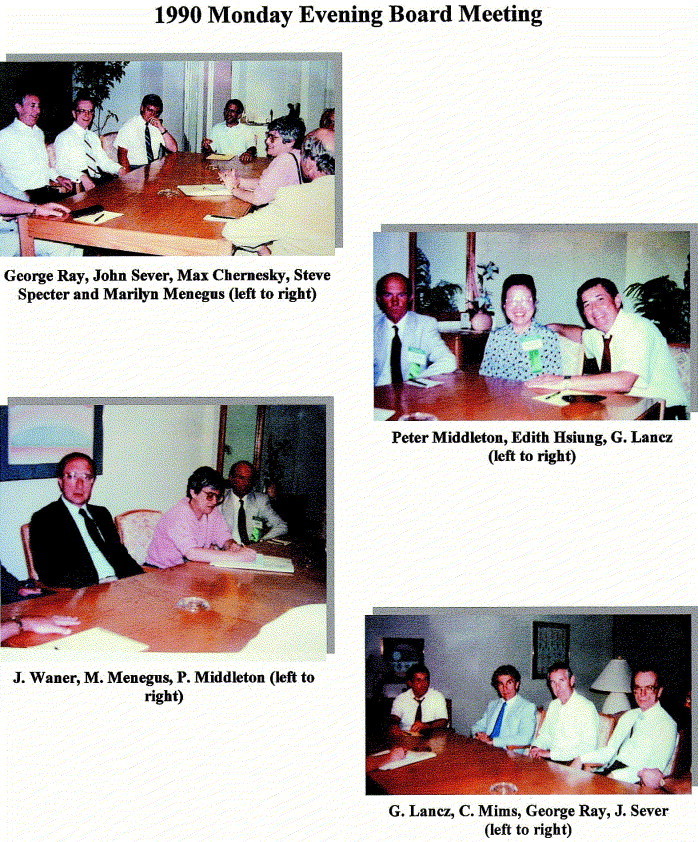


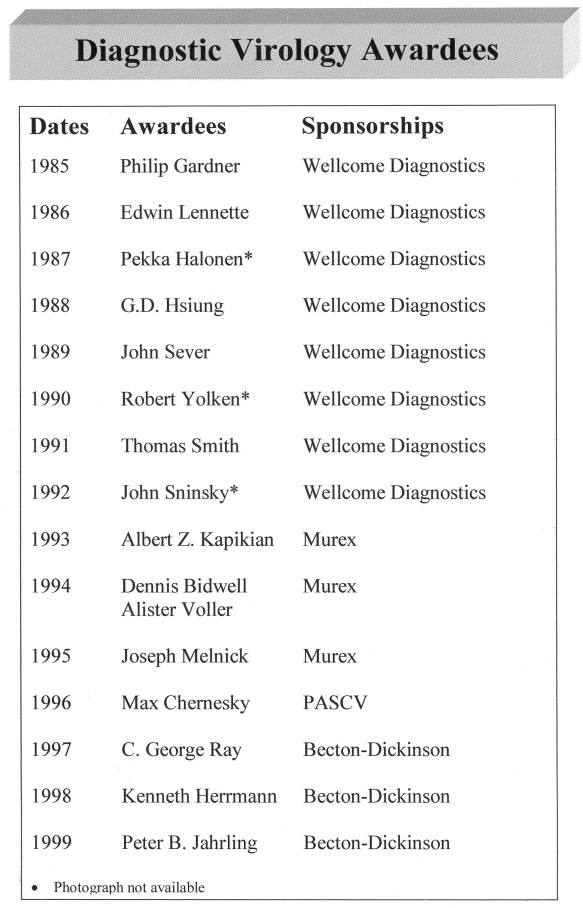


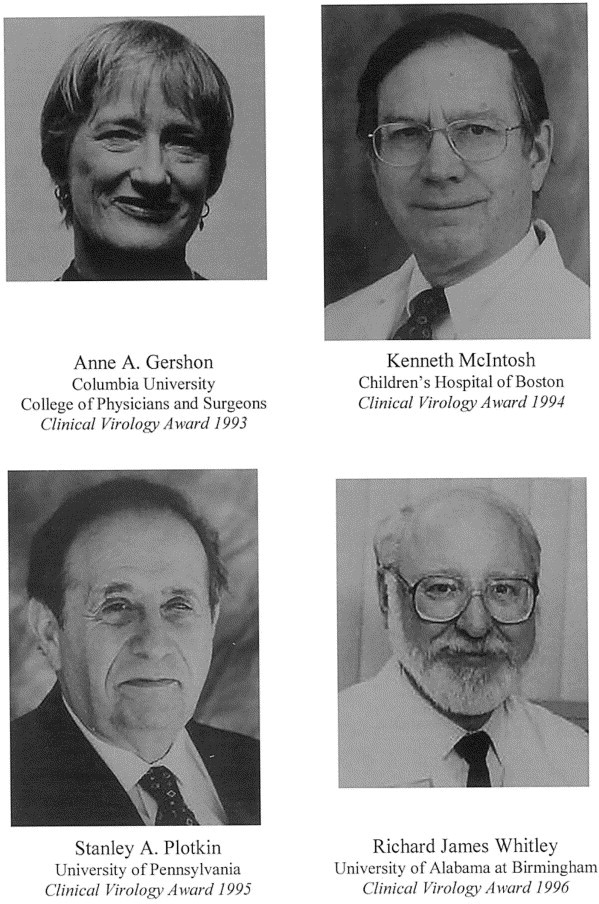


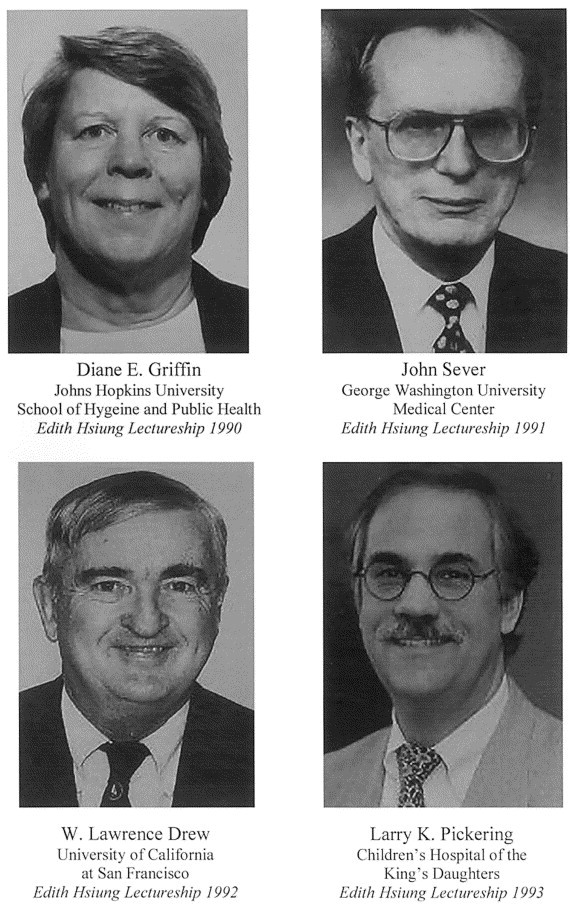


Acknowledgements
The authors are grateful for the thorough review of the manuscript by M. Landry, M.D. Photograph reproduction by L. Wallmark and composite photos by Dr. David Scholl of Diagnostic Hybrid Company are greatly appreciated. The typing and retyping of the entire manuscript by María Hernández is also appreciated.
Footnotes
‘p’ for Pan American, ‘d’ for diagnostic.
Website: http://www.virology.org
References
- McIntosh K., Wilfert C, Chernesky M., Plotkin S. From the National Institutes of Health: Summary of a workshop on new and useful methods in viral diagnosis. J. Infect. Dis. 1978;138(3):414–419. doi: 10.1093/infdis/138.3.414. [DOI] [PubMed] [Google Scholar]
- Lennette D, Specter S, Thompson K. Diagnosis of Viral Infections: The Role of the Clinical Laboratory. Baltimore: University Park Press, 1979.
- Almeida JD, Atanasiu P, Bradley DW, Gardner PS, Maynard J, Schuurs AW, Voller A, Yolken R. Manual for Rapid Laboratory Viral Diagnosis. Geneva: World Health Organization, 1979.
- Chernesky MA, Grandien M, Imam Z, Lam K et al. Rapid Laboratory Techniques for the Diagnosis of Viral Infections. Report of a WHO Scientific Group, Technical Report Series 661: World Health Organization, Geneva, 1981. [PubMed]
- McIntosh K, Wilfert C, Chernesky M, Plotkin S, Mattheis MJ. Summary of a workshop on new and useful techniques in rapid viral diagnosis. NIAID News, J Infect Dis 1980;793–802. [DOI] [PubMed]
- Richman D., Schmidt N., Plotkin S., Yolken R., Chernesky M., McIntosh K., Mattheis M. From the national institutes of health: Summary of a workshop on new and useful methods in rapid viral diagnosis. J. Infect. Dis. 1984;150(6):941–951. doi: 10.1093/infdis/150.6.941. [DOI] [PubMed] [Google Scholar]