



Abstracts
Background
The widely used Hand Injury Severity Score (HISS) has intrinsic drawbacks like inability to score vascular status and questionable correlation with Disability of Arm, shoulder and Hand. We compared it with the Strickland score which is easier to calculate and has provision for evaluation of vascular status. We assessed correlation of both the scores with the Michigan Hand Outcome Questionnaire (MHQ).
Methods
In a prospective study of 1574 patients admitted with hand injuries, we recorded their HISS and Strickland scores and followed them up for a year and later interviewed for MHQ score. Statistical correlation was done comparing the HISS and Strickland score with the MHQ using the SPSS package.
Results
Majority of these injuries were in manual labourers (47.5%) with agricultural or industrial background with a mean age of 25 years (18–26 years). Using the One-way ANOVA test we found a significant correlation between the HISS and MHQ (P Value < 0.001). Using the Unpaired T-test, statistically significant association (P < 0.001) was seen between the Strickland score and MHQ. The correlation between HISS and Strickland Score done by One-way ANOVA Test was also found to be significant (P Value < 0.001). On evaluating the group of patients with a Strickland score >10, we observed that the MHQ was almost similar between those who underwent amputation with those who underwent a successful salvage, though not statistically significant.
Conclusion
HISS and Strickland score correlated significantly with each other and with the MHQ. Strickland score was easy and quicker to determine the salvagability of hand injury. However, small group of patients who may benefit from salvage in spite of a high Strickland score where factors like patient’s age, occupation, comorbid health condition, motivation, expenses, and social environment needs to be taken into account in decision making.
Keywords: HISS score, Strickland score, MHQ, DASH score, Hand injury
1. Introduction
The goal of treatment of hand injuries is not only to recover hand functions, but also the ability to perform vocational activities and engage in society again. In this respect scoring and outcomes studies should be able to assess physical, mental and social functions. These should also include the influence of injury severity, personal factors like age, motivation, compliance and external factors, such as complications, delayed care and social problems. Currently several scoring systems are in vogue to guide surgical decision-making of trauma patients. They include the Mangled Extremity Severity Score (MESS), Mangled Extremity Syndrome Index (MESI), the Predictive Salvage Index (PSI) and the Limb Salvage Index (LSI). They were developed to guide us on decisions whether the injury of extremity should be salvaged apart from assessing the prognosis.1,2) With development of recent advances in the reconstructive microsurgery literature reviews have questioned the utility of these scores in predicting outcome independently.3, 4, 5) Campbell and Kay developed the ‘Hand Injury Severity Score’ (HISS) to quantify injury severity and allow treatment results to be compared with a common baseline.6) It’s use has been tested and validated in multiple studies in the last two decades.2,7, 8, 9, 10, 11) Though there has been strong correlation of HISS with physical sensorimotor outcome studies like grip and pinch strength, the same was not found to be in comparison with functional outcome studies.2,7,9).
We correlated the HISS score with the Michigan Hand Outcome Questionnaire (MHQ) which has been exhaustively tested and found to correlate well with hand trauma.12) The MHQ is a patient reported outcome measure with six domains including activities of daily living (ADLs), work performance, pain, aesthetics, satisfaction and overall hand function.13) It has been extensively studied, validated and correlated with assessment scores like Disability of Arm Shoulder and Hand (DASH).13, 14, 15) However, its correlation with HISS score has not been assessed.
Vascularity of digits is not considered in the HISS scores and this has been quoted as a drawback of this scoring system.2) This prompted us to assess the Strickland score which has not been evaluated in literature. Strickland score is a simple score which accounts for the vascularity of the digits and suggests an objective method to assess the salvagability of digits.16) Hence the study aimed to compare and check the usefulness of HISS and Strickland’s score in open hand injuries and to determine their correlation with each other and also the MHQ.
2. Methods
We evaluated all patients with open hand injuries presenting primarily to our outpatient department and trauma centre during the period 2016–2019. A prospective study was designed to evaluate correlations between the HISS and Strickland scoring system and with final functional outcome analysis by MHQ obtained one year after hand injury. The study was approved by the Institute ethics committee. We selected only those patients primarily presenting with open hand injuries to the trauma centre and the outpatient department of our hospital. Patients presenting after definitive treatment given outside our hospital were excluded.
The data from all the patients were documented using a standard comprehensive proforma and the severity of injury was rated and scored according to Hand Injury Severity Score and Strickland digital score index.
In the HISS scoring system each ray of the hand is assessed separately by allocating values to the integument (skin), skeleton (bone), motor (tendon), and nerves.6) Each ray’s score is then multiplied by a weighting factor for that ray and added to the scores of the other rays to obtain a total score for injury which ranges from 0 (no injury) to 826 (maximum possible severity); The score is categorized as minor (0–20), moderate (21–50), severe (51–100), and major (>100).3) (Table 1).
Table 1.
Hand injury severity score (HISS).
| T | IF | MF | RF | LF | ||
|---|---|---|---|---|---|---|
| Integument | ||||||
| Skin loss | ||||||
| Absolute values (hand) | ||||||
| Dorsum <1 cm | 5 | |||||
| Dorsum >1 cm | 10 | |||||
| Dorsum >5 cm | 20 | |||||
| Palm dorsum X2 | ||||||
| Weighed values (digit) | ||||||
| Dorsum <1 cm | 2 | |||||
| Dorsum >1 cm | 3 | |||||
| Pulp <25% | 3 | |||||
| Pulp >25% | 5 | |||||
| Skin laceration | ||||||
| <1 cm | 1 | |||||
| >1 cm | 2 | |||||
| Nail damage | 1 | |||||
| If extends across more than one ray, include in both ray scores | ||||||
| Subtotal (dirty X2) | ||||||
| Skeletal | ||||||
| Fracture | ||||||
| Simple shaft | 1 | |||||
| Comminuted shaft | 2 | |||||
| Intra-articular DIPJ | 3 | |||||
| Intra-articular PIP/IPJ of thumb | 5 | |||||
| Intra-articular MCPJ | 4 | |||||
| Open fracture X2 | ||||||
| Dislocation | ||||||
| Open | 4 | |||||
| Closed | 2 | |||||
| Ligament injury | ||||||
| Sprain | 2 | |||||
| Rupture | 3 | |||||
| Subtotal | ||||||
| Motor | ||||||
| Extensor tendon | ||||||
| Proximal to PIPJ | 1 | |||||
| Distal to PIPJ | 3 | |||||
| Flexor profundus | ||||||
| Zone 1 | 6 | |||||
| Zone 2 | 6 | |||||
| Zone 3 | 5 | |||||
| Flexor superficialis | 5 | |||||
| Intrinsics | 2 | |||||
| Subtotal | ||||||
| NEURAL | ||||||
| Absolute values | ||||||
| Recurrent branch of the median nerve | 30 | |||||
| Deep branch of the ulnar nerve |
30 |
|||||
| T |
IF |
MF |
RF |
LF |
||
| Weighted values | ||||||
| Digital nerve X1 (simple) | 3 | |||||
| Digital nerve X2 (multiple) | 4 | |||||
| Subtotal | ||||||
| Grade | ||||||
| Total | ||||||
| Weighting factor | 6 | 2 | 3 | 3 | 2 | |
| HISS score | ||||||
Strickland digital scoring system is used to assess the degree of damage to each of six major digital tissues; 1) Skin and subcutaneous,2) Bones,3) Joint,4) Tendon,5) Nerve,6) Vessel. It provides a numeric rating for each tissue, which is then added to provide an indicator of the degree of damage and functional potential of that digit.6) A digit with a score of 10 or more should be strongly considered for amputation rather than salvage (Table 2).
Table 2.
Strickland digital scoring system.
| Skin, Subcutaneous tissue | |
|---|---|
| No involvement | 0 |
| Simple laceration | 1 |
| Compound laceration or crush | 2 |
| Extensive | 3 |
| Bone (Stability) | |
| No involvement | 0 |
| Simple fracture, undisplaced | 1 |
| Displaced fracture, no communition | 2 |
| Displaced with communition | 3 |
| Joint (Motion) | |
| No involvement | 0 |
| Mild crush or adjacent undisplaced fracture | 1 |
| Severe crush or articular fracture | 2 |
| Both arteries irreparable | 3 |
| Tendon (Motion) | |
| No involvement | 0 |
| One tendon, repairable | 1 |
| Two tendons, either one repairable | 2 |
| Two tendons, both irreparable | 3 |
| Nerve (Sensation) | |
| No involvement | 0 |
| One nerve, repairable | 1 |
| Both nerves, repairable | 2 |
| One or both nerves irreparable | 3 |
| Vessels (Circulation) | |
| No involvement | 0 |
| Single artery injury | 1 |
| Both arteries, one or both repairable | 2 |
| Both arteries irreparable | 3 |
| Total Score | |
All patients underwent hand therapy after treatment for a variable period depending on the severity of their injuries. They were followed up for over a period of one year and were interviewed and evaluated with the MHQ. This was prepared at the University of Michigan in 1998, using psychometric principles.13) It measures six domains including 37 questions for:1) overall hand function, 2) activities of daily living,3) work performance,4) pain,5) aesthetics and 6) patient satisfaction with hand function. Both the right and left hand can be assessed separately.
Statistical analysis was done using the SPSS statistical package (version 22).
3. Results
3.1. Demographic data
There were totally 19,470 trauma admissions between 2016 and 2019 of which 1574 patients suffered from open hand injuries. This constituted 8% of the total number of trauma patients leading to an average of 10 patients per week. The mean age was 25 (18–26) years. The frequency of hand injuries was highest among manual workers at 47.5% (n = 743) followed by professional workers at 28.7% (n = 449), students 17.5% (n = 17) and the least incidence was seen among elderly patients 2% (n = 31) and children at 1.5% (n = 23). Agriculture contributed to majority of hand injuries (39%) and industrial accidents were the second most common mode of injury (28%). Injury to distal phalanx was most common with 29% of hands involved followed by proximal phalanx injury at 17%. The dominant right hand was affected in 98% of our patients.
3.2. Functional outcome
3.2.1. HISS score compared with MHQ (Table 3)
Table 3.
Correlation of HISS score with MHQ.
| HISS score (grade) | N | % | Mean MHQ score (mean ± SD) | P value |
|---|---|---|---|---|
| Mild | 536 | 34% | 95.4 ± 4.7 |  |
| Moderate | 435 | 28% | 80.5 ± 12.6 | |
| Severe& Major | 603 | 38% | 59.1 ± 15.1 | |
| Total | 1574 | 77 ± 19.46 |
The mean HISS score was 77(SD ± 19.4). We correlated the HISS Score with the MHQ using the One-way ANOVA test and found a significant correlation between the two scores. All grades of HISS Score had a statistically significant correlation with MHQ, (P Value < 0.001).
3.2.2. Strickland score compared with MHQ (Table 4)
Table 4.
Correlation of Strickland’s score with MHQ.
| Strickland Score | N | mean ± SD | P Value |
|---|---|---|---|
| <10 | 1243 | 83.8 ± 15.12 | |
| >10 | 331 | 53.1 ± 13.79 | |
| Total | 1574 |
There was a statistically significant association (P < 0.001) between the salvagability (Strickland score) of injury and the functional outcome (MHQ) as done by Unpaired T-test, where 1243 patients with score of <10 had a good functional outcome (Mean MHQ: 83.8 ± SD 15.12) and 331 patients with a score of more than 10 had a functional outcome of 53.1.
3.2.3. Relation of HISS compared to strickland digital score (Table 5)
Table 5.
Correlation of grades of HISS score with Strickland’s score.
| HISS Score |
Strickland Score |
P Value |
|
|---|---|---|---|
| <10 >10 | |||
| Mild | 535 | 1 | |
| (n = 536) | (99%) | (1%) | |
| Moderate | 434 | 1 | |
| (n = 435) | (99%) | (1%) | |
| Severe and Major | 272 | 331 | |
| (n = 603) | (45.1%) | (54.9%) | |
All grades of HISS Score correlated with salvagability as depicted by Strickland score by One-way ANOVA Test which was statistically significant (P Value < 0.001).
3.2.4. Sub-analysis of patients whose strickland score was more than 10 (Table 6)
Table 6.
Comparison of Outcomes of Patients with Strickland’s Score more than 10.
| Procedure | N | Mean (MHQ)±SD | P Value |
|---|---|---|---|
| Amputation | 197 (59.5%) | 51.5 ± 13.6 | 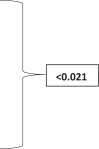 |
| Salvage with secondary amputation | 85 (25.7%) | 56.4 ± 16.3 | |
| Salvage and survived | 49 (14.8%) | 54.5 ± 11.3 | |
| Total | 331 | 53.1 ± 14.14 |
331 patients whose Strickland score was more than 10 were further analyzed. Even though a score of more than 10 mean a low threshold for amputation this group showed varied outcomes. Based on the treatment records, 59.5% (n = 197) of the patients had primary amputation. 25.7% (n = 85) patients underwent salvage procedures such as revascularization or replantation and subsequently secondary amputation. In 14.8% (n = 49) patients salvage procedure was done and the finger was successfully saved. In all these three groups whether it was primary or secondary amputation or salvage and successful outcome, the mean functional score by MHQ was almost similar in all the cases which was not statistically significant.
4. Discussion
A scoring system to predict the outcome of hand injury should be able to correlate both objectively and subjectively to gain wider acceptance. The HISS score has been widely evaluated in various studies in the last two decades and has shown acceptable correlation in relation to objective measurements like grip and pinch strength.9) However assessment of functional outcome should also include validated and reliable patient reported subjective questionnaires which concentrates on issues most relevant to the patient satisfaction.7) The most popular among such scores have been the Disability Arm Shoulder and Hand (DASH) and the MHQ scores. Both these scores have shown to be reliable, consistent and valid in evaluating various conditions involving upper limb and hand respectively.17) The HISS score has been correlated extensively using the DASH score for functional outcome.7,8,10,18) However, Hovius et al. in two separate studies have consistently shown absence of correlation between HISS and DASH scores in spite of good correlation between HISS score and impairment assessment using the American Medical Association’s (AMA) impairment guidelines.7,18) In a 7.5 year follow up study they also showed poor correlation between AMA and DASH scores.7) Similar lack of strong correlation was observed by other workers.8,14) In our opinion DASH is a useful score but evaluates the disability of the patient which involves use of both the affected and unaffected hands. It may not accurately reflect the clinical function of the involved hand. Horng et al. showed in their study that MHQ was more sensitive to clinical changes when compared to the DASH scores.14) Since it has six domains assessing both the hands separately the clinician can more easily detect a patient’s problem with the injured hand.14) We also observed that the HISS has not been evaluated by MHQ in literature. This prompted us to test the HISS with the MHQ in our study and we found that for all grade of HISS score, a statistically significant correlation with MHQ was observed (P Value < 0.001).
A major criticism of the HISS score has been that it is complex and hence ‘time consuming and tedious’.2) Scores are given for injury to the integument, skeleton, tendons, and nerves but not for the vessels. Besides, each finger’s value is multiplied by a constant that is said to be proportional to its function followed by summing values for each injured digit to get the overall score. However, the usefulness of these constants has been questioned.10) Saxena et al. have pointed out the lack of association between the integument component and the outcome in their study.2).
In this regard we decided to test the Strickland score which has not been studied and compared in literature. It is simple, can be documented quickly and has a segment for evaluation of vessels (Table 1). In our study, patients showed a statistically significant association between the salvagability of an injury and the functional outcome. Besides we observed that all grades of HISS Score also correlated with salvagability as depicted by Strickland score. 85.2% of our patients with score more than 10 did undergo amputation either primarily or secondarily after a few days or weeks which shows that Strickland score is indeed highly reliable in predicting the salvagability of an injured hand.
It was interesting to note that among patients with Strickland score of more than 10, all the three procedures of either primary amputation, revision amputation after salvage and successful salvage showed similar functional outcome. The satisfactory function outcome in a small number of 49 patients where salvage was successful with Strickland score above 10 raises a number of questions. Are these scores reliable independently? If not are there other factors that needs to be looked into? Prospective studies using the various scores like the MESS score including the LEAP group and other systematic analysis for lower limb have questioned its independent use as none of them demonstrated utility for guidance requiring primary or secondary amputation or to prognosticate functional outcome after successful limb salvage.3,19) Larsons et al. reported on the clinical factors on the decision to replant major upper limb amputations.20) Out of the 20 patients among 62 who underwent replantation, they pointed out the presence of factors like a guillotine injury, distal amputations, Injury Severity Score less than 16. They also showed in addition, absence of avulsion, significant contamination and multilevel involvement respectively.20) They demonstrated a survival rate of 70% but with increased rates of secondary procedures, complications and longer hospital stay.20) In our study, majority of those who were successfully salvaged with Strickland score above 10 were either of younger age, had relatively clean wounds, with no history of smoking and had arrived in the hospital within the time recommended for vascular emergencies. We agree with the opinion given by Schiro et al. where they advocate caution on the use of such scores alone in the initial evaluation.3).
El Diwany et al. showed no statistical difference with respect to outcomes between 17 patients with successful single digit replantation compared with 14 patients undergoing revision amputation in zone II digital amputations.21) However, they observed that in spite of longer hospital stay and higher levels of pain or cold intolerance, significantly more patients in the replantation group would still repeat the replantation than those patients who underwent revision amputation. They suggested that revision amputation was not superior to replantation in zone II single digit amputations.21) This gives us an important information for both the patient and the hand surgeon about the need for counselling in relation to the pros and cons of any surgical procedures, its alternatives, complications and the functional outcome and costs. A shared decision based on sound evidence based medicine including status of wound, Strickland Score, socio-economic condition, experience of the surgeon and interdepartmental consultations would be in the best interest of the patient. Strickland score would also help in counselling as well as medico legal documentation tool in guiding the management of the injury.
In our opinion Strickland score is easy and quick to calculate and predicts the salvagability of the digit but there does exist a select group of patients where even a high score suggesting amputation may still be salvaged. A good example would be a young patient with zone two guillotine amputation of Index finger without co-morbid risk factors. In such situation the need for saving the limb vs amputation would require a well informed consent with active participation of the patient in making decisions. Here factors like age, socioeconomic condition and co-morbid condition plays an important role in the decision making for surgery.
The limitations of our study was although the sample size was optimal with adequate representation of all the categories it was a single centre study involving a tertiary referral institute. A multicenter study would have added more validity to our study. The strength of our study was that the HISS score being reliably assessed by the operating surgeons who were blinded from the resident surgeon who was interviewing the patients for MHQ.
We conclude from our study that the HISS score and Strickland score correlated significantly with functional outcome as measured by MHQ. There was also significant correlation between the HISS score and Strickland score of an injured hand. The Strickland score was easy and quicker to calculate with closer correlation with MHQ. However, on further analysis of salvagability, there exist a small group of patients who may benefit from salvage in spite of a Strickland score above 10 where factors like patient’s age, occupation, comorbid health condition, type of injury, motivation, expenses, and social environment should be considered in shared decision making.
CRediT authorship contribution statement
Anil K. Bhat: Conceptualization, Visualization, Supervision. A.M. Acharya: Methodology, Investigation, Writing - review & editing, Data curation, Writing - original draft. Deepankar Mishra: Writing - original draft, Validation, Methodology, Investigation.
Declaration of competing interest
None Declared.
Contributor Information
Anil K. Bhat, Email: anilbhatortho@gmail.com.
A.M. Acharya, Email: anmacharya@gmail.com.
Deepankar Mishra, Email: dr.deepankar@hotmail.com.
References
- 1.Bueno R.A., Neumeister M.W. Outcomes after mutilating hand injuries: review of the literature and recommendations for assessment. Hand Clin. 2003;19(1):193–204. doi: 10.1016/s0749-0712(02)00142-7. [DOI] [PubMed] [Google Scholar]
- 2.Saxena P., Cutler L., Feldberg L. Assessment of the severity of hand injuries using "hand injury severity score", and its correlation with the functional outcome. Injury. 2004;35(5):511–516. doi: 10.1016/S0020-1383(03)00211-0. [DOI] [PubMed] [Google Scholar]
- 3.Schirò G.R., Sessa S., Piccioli A., Maccauro G. Primary amputation vs limb salvage in mangled extremity: a systematic review of the current scoring system. BMC Muscoskel Disord. 2015;16:372. doi: 10.1186/s12891-015-0832-7. [DOI] [PMC free article] [PubMed] [Google Scholar]
- 4.Loja M.N., Sammann A., DuBose J. AAST PROOVIT Study Group. The mangled extremity score and amputation: time for a revision. J Trauma Acute Care Surg. 2017;82(3):518–523. doi: 10.1097/TA.0000000000001339. [DOI] [PMC free article] [PubMed] [Google Scholar]
- 5.Fochtmann A., Binder H., Rettl G. Third degree open fractures and traumatic sub-/total amputations of the upper extremity: outcome and relevance of the Mangled Extremity Severity Score. Orthop Traumatol Surg Res. 2016;102(6):785–790. doi: 10.1016/j.otsr.2016.04.004. [DOI] [PubMed] [Google Scholar]
- 6.Campbell D.A., Kay S.P. The hand injury severity scoring system. J Hand Surg [Br] 1996;21(3):295–298. doi: 10.1016/s0266-7681(05)80187-1. [DOI] [PubMed] [Google Scholar]
- 7.van Oosterom F.J., Ettema A.M., Mulder P.G., Hovius S.E. Impairment and disability after severe hand injuries with multiple phalangeal fractures. J Hand Surg Am. 2007;32(1):91–95. doi: 10.1016/j.jhsa.2006.05.017. [DOI] [PubMed] [Google Scholar]
- 8.Kovacs L., Grob M., Zimmermann A. Quality of life after severe hand injury. J Plast Reconstr Aesthetic Surg. 2011;64(11):1495–1502. doi: 10.1016/j.bjps.2011.05.022. [DOI] [PubMed] [Google Scholar]
- 9.Lin D.C., Chang J.H., Shieh S.J., Tsai F.H., Lee Y.L. Prediction of hand strength by hand injury severity scoring system in hand injured patients. Disabil Rehabil. 2012;34(5):423–428. doi: 10.1016/j.jhsa.2009.02.009. [DOI] [PubMed] [Google Scholar]
- 10.Matsuzaki H., Narisawa H., Miwa H., Toishi S. Predicting functional recovery and return to work after mutilating hand injuries: usefulness of Campbell’s Hand Injury Severity Score. J Hand Surg Am. 2009;34(5):880–885. doi: 10.1016/j.jhsa.2009.02.009. [DOI] [PubMed] [Google Scholar]
- 11.Chang J.H., Shieh S.J., Kuo L.C., Lee Y.L. The initial anatomical severity in patients with hand injuries predicts future health-related quality of life. J Trauma. 2011;71(5):1352–1358. doi: 10.1097/TA.0b013e318216a56e. [DOI] [PubMed] [Google Scholar]
- 12.Shauver M.J., Chung K.C. The Michigan hand outcomes questionnaire after 15 years of field trial. Plast Reconstr Surg. 2013;131(5) doi: 10.1097/PRS.0b013e3182865d83. 779e-87e. [DOI] [PMC free article] [PubMed] [Google Scholar]
- 13.Chung K.C., Pillsbury M.S., Walters M.R., Hayward R.A. Reliability and validity testing of the Michigan hand outcomes questionnaire. J Hand Surg. 1998;23A(4):575–577. doi: 10.1016/S0363-5023(98)80042-7. [DOI] [PubMed] [Google Scholar]
- 14.Horng Y.S., Lin M.C., Feng C.T., Huang C.H., Wu H.C., Wang J.D. Responsiveness of the Michigan hand outcomes questionnaire and the disabilities of the Arm, shoulder, and hand questionnaire in patients with hand injury. J Hand Surg Am. 2010;35(3):430–436. doi: 10.1016/j.jhsa.2009.11.016. [DOI] [PubMed] [Google Scholar]
- 15.Kotsis S.V., Lau F.H., Chung K.C. Responsiveness of the Michigan Hand Outcomes Questionnaire and physical measurements in outcome studies of distal radius fracture treatment. J Hand Surg. 2007;32A(1):84–90. doi: 10.1016/j.jhsa.2006.10.003. [DOI] [PubMed] [Google Scholar]
- 16.Strickland J.W. A rationale for digital salvage. In: Strickland J.W., Steichen J.B., editors. Difficult Problems in Hand Surgery. CV Mosby Co; 1982. pp. 243–252. [Google Scholar]
- 17.Hoang-Kim A., Pegreffi F., Moroni A., Ladd A. Measuring wrist and hand function: common scales and checklists. Injury. 2011;42(3):253–258. doi: 10.1016/j.injury.2010.11.050. [DOI] [PubMed] [Google Scholar]
- 18.Mink van der Molen A.B., Ettema A.M., Hovius S.E. Outcome of hand trauma: the hand injury severity scoring system (HISS) and subsequent impairment and disability. J Hand Surg Br. 2003;28(4):295–299. doi: 10.1016/s0266-7681(03)00082-2. [DOI] [PubMed] [Google Scholar]
- 19.Ly T.V., Travison T.G., Castillo R.C., Bosse M.J., MacKenzie E.J. Ability of lower extremity injury severity scores to predict functional outcome after limb salvage. J Bone Joint Surg Am. 2008;90(8):1738–1743. doi: 10.2106/JBJS.G.00136. [DOI] [PMC free article] [PubMed] [Google Scholar]
- 20.Larson J.V., Kung T.A., Cederna P.S., Sears E.D., Urbanchek M.G., Langhals N.B. Clinical factors associated with replantation after traumatic major upper extremity amputation. Plast Reconstr Surg. 2013;132(4):911–919. doi: 10.1097/PRS.0b013e31829f4a49. [DOI] [PubMed] [Google Scholar]
- 21.El-Diwany M., Odobescu A., Bélanger-Douet M. Replantation vs revision amputation in single digit zone II amputations. J Plast Reconstr Aesthetic Surg. 2015;68(6) doi: 10.1016/j.bjps.2015.02.033. 859-3. [DOI] [PubMed] [Google Scholar]