


Abstract
Vitamin C (ascorbic acid, AA) is an essential nutrient in humans. It is vital to a multitude of metabolic pathways, including those affecting mental health, stress response, and pain perception. This paper provides a review of the literature and a theoretical perspective on the potential roles of AA in the treatment of pain and opioid use disorder (OUD).
A powerful antioxidant and anti-inflammatory agent involved in glutathione recycling, AA is a cofactor in adrenal steroidogenesis and catecholamine biosynthesis. AA supports the synthesis of serotonin, modulates synaptic dopamine and glutamate, and may also enhance the synthesis of endomorphins and endorphins. In animal models, AA reduces and prevents opioid drug tolerance and physical dependency. It irreversibly inactivates opioid stereospecific binding, while increasing the antinociceptive effects of pain medications.
In clinical trials, AA has been proven safe and effective in acute and chronic pain relief, including ambulatory, surgical, and oncological settings. AA may temper the need for opioids, which raises the question of whether it can help reduce the risk of OUD onset. High, frequent doses of AA may also abort cravings and opioid withdrawal symptoms in those with OUD and has better tolerability than other OUD treatments. Further clinical trials on the potential of AA in the prevention and treatment of OUD are warranted.
Introduction
Vitamin C (ascorbic acid, AA) plays vital roles in a multitude of metabolic pathways, with effects in virtually every organ system of the body. Along with primates, bats, and guinea pigs, humans cannot synthesize L-gulonolactone oxidase (GLO), the enzyme required for the last step in the biosynthesis of ascorbate.1–3 This “inborn error of carbohydrate metabolism,” as American biochemist Irwin Stone (1907–1984) described it, makes us dependent upon exogenous AA as an essential nutrient.
Vitamin C is primarily appreciated in medicine for its immune-system effects – such as reducing the severity and duration of the common cold,4 supporting the health of those with HIV/AIDS,5–8 treating sepsis,9 and helping to reduce cancer risk.10 AA is also found throughout the central nervous system (CNS),11 where it exerts important actions in analgesia and stress adaptation.12–15
AA has been shown to temper the need for painkillers after surgery and reduce the risk of chronic pain conditions arising after acute injury.16,17 These benefits of AA allow individuals taking the vitamin via oral and parenteral routes to use lower doses of opiates in the management of pain, and may even stave off complex regional pain syndrome (CRPS).18 The analgesic benefits of AA have also been demonstrated in the contexts of acute pain after surgery, cancer-related pain, and chronic pain not related to cancer.18–22 These benefits of AA beg the question of whether or not the vitamin can spare those in pain from developing OUD.
As animal studies, clinical trials, and case reports have also demonstrated, vitamin C interrupts the neurochemistry of opioid tolerance and dependency and mitigates the horrific symptoms of opioid withdrawal.23–26 Consequently, we must ask if vitamin C can both prevent and treat OUD.
Epidemiological Context: The Opioid Crisis
Drug overdose is the leading cause of death among Americans under the age of 50.27 Opioids are implicated in overdose deaths more than any other drug class, ending more lives than guns, breast cancer, or car accidents.28 Salmond and Allread capture the grim situation of the opioid epidemic in their 2019 paper on the subject, explaining that OUD is the deadliest drug crisis in American history.29,30
Not all victims of the opioid epidemic are accounted for in these statistics, however. Two million people in 2018 alone survived opioids overdoses,31 and countless others suffered the myriad consequences of addiction to opioid drugs like oxycodone, hydrocodone, morphine, heroin, codeine, and fentanyl. Once a person develops OUD, any disruption in their opioid use can lead to intense cravings and severely unpleasant symptoms of withdrawal. These symptoms may include severe body pains, abdominal cramping, diarrhea, nausea and vomiting, sweating, lacrimation, agitation, insomnia, hypertension, and tachycardia.32 This makes it very difficult for those with OUD to stop their drug use.
While heroin addiction was once associated with “rough” inner cities, a retrospective analysis reveals that the condition has now spread into the suburbs and rural areas. The practices of healthcare providers are implicated in the spread of heroin addiction: 75% of heroin users in treatment report that their opioid misuse began with the use of legal prescription painkillers.33
Simply put: the situation has gotten out of hand. It is time to examine and reexamine potential therapies for preventing and treating OUD.
Studies in Animal Models
Studies performed in animal models may offer insights into the value of AA in the treatment of OUD in humans. In a 2014 study by Alaei et al exploring morphine addiction,34 rats could self-administer morphine by pressing a lever. Compared to the rats that did not obtain AA, those that did receive AA took fewer “hits” of morphine on average over the 12-day exposure period. They also demonstrated fewer morphine withdrawal signs when the drug was discontinued.
These findings echo those of similar rat studies by Khanna and Sharma,35 Alaei et al,36 and Kulkarni et al,23 in which mice injected with morphine twice daily were found to be significantly less likely to develop tolerance and dependence to the drug if they were pre-treated with AA (400-1600 mg/kg). The authors report that the benefit of AA was dose dependent and hypothesize that both dopaminergic and glutamatergic mechanisms mediate AA’s protective actions.
Studies performed in guinea pigs further elucidate the potential mechanisms by which vitamin C may prevent and/or treat opioid tolerance and dependency. Like humans, guinea pigs cannot synthesis AA, and thus serve as better animal models than rats and mice in AA studies. Johnston and Chahl observed that treatment with ascorbic acid inhibited the morphine withdrawal response in guinea pigs,37 and Dunlap et al38 found that AA irreversibly inactivated opioid stereospecific binding in the guinea pig brain homogenate. This inactivation manifested primarily as a reduction in the number of opioid binding sites via two steps: a rapid phase that destroyed up to 50% of opioid binding within 60 seconds, and a second slower phase.
These animal studies suggest that vitamin C supplementation may reduce and possibly prevent opioid drug tolerance, drug craving, and physical dependence.
Human Clinical Trials: Analgesia
Overall, vitamin C has proven a safe and effective adjunctive therapy for acute and chronic pain relief in various settings. Considering that opioid tolerance and dependency often originate in the medication or self-medication of pain,39 natural analgesics like AA may be of great value in both preventing and mitigating OUD in humans. This is consistent with the fact that animals vested with the ability to synthesize AA increase endogenous production of the nutrient when under disease burden, in pain, and stressed. Interestingly, these animals also enhance their AA synthesis when administered a variety of drugs, including analgesics.40 This reaction echoes in human biochemistry: AA blood levels fall after trauma and surgery.41
As explored in Fukushima and Yamazaki’s review, the body’s increased demand for AA in surgical contexts is likely due to oxidative stress. Perhaps unsurprisingly, patients require doses greater than the recommended daily allowance (RDA) of vitamin C after surgery, and the administration of exogenous vitamin C is associated with better surgical outcomes.41
Surgical Contexts
Studies have shown that the administration of vitamin C is also associated with a decreased requirement for opioid analgesics in surgical settings.19 In a randomized double-blind placebo-controlled clinical trial? conducted by Kanazi et al,16 80 patients were assigned to receive either a single 2-g dose of oral vitamin C or placebo one hour prior to undergoing anesthesia for laparoscopic cholecystectomy. In the first 24 hours after surgery, those who received vitamin C required significantly less morphine to manage their pain than those who received placebo. Intravenous vitamin C was shown to have similarly beneficial outcomes on postoperative pain in trials by Jeon et al and Ayatollahi et al.19,42
These clinical trials echo those of a preceding murine study by Zeraati et al,43 in which AA was shown to interact positively with tramadol and morphine, yielding additive antinociceptive effects.
When we consider some of the risk factors for OUD, the potential impact of these findings is significant. According to a 2014 retrospective analysis, 75% of heroin users in treatment report that their opioid misuse began with legal prescription painkillers.33 Those undergoing both major and minor surgery—including low pain, outpatient, and elective procedures—are at increased risk of persistent opioid use.44
Vitamin C also has positive effects on collagen synthesis and wound healing, making it further valuable in surgical contexts.45–47
Cancer-Related Pain
High doses of AA have been shown to mitigate cancer-related pain and contribute to enhanced patient quality of life in a number of studies.20,48–51 As reported by Cameron and Campbell in 1974, AA has been used successfully to help relieve fibrosarcoma-related pain (10 g/d oral vitamin C for 19 days yielded better control by opiates). AA also helped relieve severe pain in breast cancer patients with skeletal metastases (5 g/d IV vitamin C for 7 days resulted in no further need for opiates after the fourth day, and was followed by 8 g/day oral vitamin C for 70 days without need for opiates. AA administration reduced opiate reliance in patients with bladder cancer who were also living with skeletal metastases and pain previously inadequately controlled by morphine. The patients received 10 g/day IV vitamin C for 10 days, followed by 10 g/day oral vitamin C for 24 days, resulting in no further need for opiates.52
Pinkerton et al’s open-label pilot study of patients with chronic pain secondary to cancer and/or cancer treatment failed to demonstrate any clinically significant benefit from vitamin C, however.53 The findings may be explained by the dosing protocol employed: patients already suffering from pain and taking opioid medications received a mere 1 g of vitamin C twice daily in addition to their opioid medications over a brief 3-day study period. While a short burst of treatment may help in acute settings, higher doses of vitamin C for longer periods of time may be necessary when it comes to managing chronic pain in opiate users.
Chronic Pain
Individuals living with chronic, non-cancer pain are also at risk of developing OUD.54 According to a 2007 literature review by Højsted and Sjøgren, up to 50% of patients who take opioids for chronic, non-cancer pain will become addicted.55 Over 40% of older adults live with chronic pain, representing a substantial percentage of the population.56
Several recent clinical trials have demonstrated vitamin C’s analgesic properties at high doses in a variety of chronic pain conditions. Vitamin C (primarily in intravenous administration form) has been shown in numerous trials to mitigate the pain of both acute and post herpetic neuralgia.57–61 Vitamin C also has considerable analgesic benefit in complex regional pain syndrome (CRPS),18,21,22 and may help prevent the development of CRPS in the setting of acute fracture:17 In Zollinger et al’s trial of over 400 patients with recent wrist fracture, vitamin C (500 mg daily) was found to reduce the risk of developing subsequent CRPS.21
Clinical Trials of Vitamin C to Decrease Opioid Withdrawal in OUD
Large doses of AA have also been reported to suppress the signs and symptoms of opiate withdrawal in those with OUD.25
In a 2000 study by Evangelou et al conducted in humans with heroin addiction, oral supplementation with vitamin C and vitamin E ameliorated withdrawal symptoms in both inpatients (30 males) and outpatients (10 males).24 Those in the experimental group were administered oral vitamin C (300 mg/kg) and vitamin E (5 mg/kg) daily for a minimum of 4 weeks, while those in the control group received diazepam and an analgesic daily during the same time period. Fifty seven percent of the patients in the vitamin C and E group experienced significant reductions in withdrawal symptoms, whereas only 7% of the control group could say the same.
In another trial, conducted at the Haight-Ashbury Free Clinic in San Francisco by Newmeyer et al,62 1 to 3 g of buffered vitamin C taken daily was found to significantly offset symptoms in patients withdrawing from stimulants and opiates. One-third of the 60 patients reported that 70% or more of their acute withdrawal symptoms abated when taking buffered vitamin C during the active detox phase of the program; half reported at least 60% relief of symptoms. Aftercare clients (those already finished with active detox phase at the start of the study) reported even greater benefits, with relief in 90% of their symptoms.
Case reports: Tapering Down and Quitting Opioids Schauss’ Observations
A protocol for using high doses of vitamin C to help those with OUD abruptly discontinue opiates (“quit cold turkey”) was developed in 1969 by Alexander G. Schauss, PhD.26
Upon reading Beckett and Casey’s 1954 findings that vitamin C can occupy specific opioid receptor sites and thus block their neuromodulatory effect,63 Schauss tested the concept first in guinea pigs and then in humans. The trial was performed at a heroin treatment facility in Harlem, a neighborhood in New York with a high rate of heroin addiction at the time. The study participants, all of whom were addicted to heroin and had attempted cold turkey withdrawals prior to enrolling, were instructed to drink a glass of diluted fruit juice containing sodium ascorbate (SA) throughout the day. SA was observed to abort the signs and symptoms of heroin withdrawal in all subjects. The SA dosing protocol, as developed and reported by Schauss, is outlined in Table 1.26
Table 1.
Schauss' Protocol
| Day 1 (3 days prior to day of withdrawal) | 500 - 1,000 mg SA every 2 hours until bedtime |
| Day 2 | 1,000 - 2,000 mg SA every 2 hours until bedtime |
| Day 3 | 5,000 - 7,000 mg SA every 3 hours until bedtime. Begin withdrawal at bedtime. |
| If withdrawal symptoms occur during the night | 5,000 - 7,000 mg SA upon waking, and every 2 hours until symptoms abate |
| Day 4 | 2,500 - 5,000 mg SA every two hours until bedtime |
| If withdrawal symptoms occur during the night | 2,500 - 5,000 mg SA upon waking, and every 2 hours until symptoms abate |
| Day 5 | 1,000 - 2,500 mg SA every two hours until bedtime |
| If withdrawal symptoms occur during the night | 1,000 - 2,500 mg SA upon waking, and every 2 hours until symptoms abate |
| Day 6 | 1,000 mg SA every 2 hours until symptoms abate |
| If withdrawal symptoms occur during the night | 1,000 mg SA upon waking, and every 2 hours until symptoms abate |
Note: This protocol was developed by Alexander Schauss, PhD. In his 1969 study, Schuass used sodium ascorbate (SA) to help those with heroin addiction quit cold turkey without withdrawal side effects. Reprinted with permission.
Schauss was only an undergraduate student when he first authored this study, and it may have been a lesson for him in the hidden politics of research. His observations caught the attention of other scientists and clinicians, many of whom published their successes in treating OUD with this or similar protocols. These include two-time Nobel Laureate Linus Pauling, PhD and Vic Pawlack, MD, both of whom added niacin to the protocol.64 Others included Jordan Scher, MD, an addiction psychiatrist who paired high doses of vitamin C with methadone;65 and Janis Keller-Phelps, MD,66 who administered SA at an addiction treatment facility in King County, Washington. Keller-Phelps invited a fact-finding team at the National Institute for Drug Abuse and Alcoholism (NIDAA) at the National Institutes of Health (NIH) to interview her patients and observe the protocol in action. Although NIDAA representatives noted that the efficacy of the protocol seemed “irrefutable,” for undisclosed reasons the agency stopped short of endorsing the treatment.26 Schauss speculates that this may have been due to a conflict of interest, claiming that the sister of one of the NIH reviewers owned and operated a large addiction center in New Orleans, Louisiana at the time (A. Schauss, personal communication, April 7, 2020). Keller-Phelps is unavailable for comment, as she is deceased.
Libby and Stone’s Case Reports
According to case reports presented by Drs. Alfred F. Libby and Irwin Stone in 1977,25 “full correction” in those with heroin addiction was achieved by taking 25 to 85 g sodium ascorbate (SA) daily in divided doses along with other vitamins, essential minerals, and high levels of predigested proteins. Like Schauss, Libby and Stone observed SA’s effects in people quitting cold turkey. They note that on average appetite returned in 2 or 3 days and that patients experienced restful sleep and generally reported feeling well while on SA. After 4 to 6 days, the dose of SA was gradually reduced to a holding dose of 10 to 30 g per day. At that time, the doses of the other vitamins and minerals were reduced, and the predigested proteins were discontinued if the patients were eating well.
The authors report that 30 out of 30 patients were successfully treated in their pilot study with this protocol. They present 3 compelling cases in their paper, including that of a 24-year-old male with a 9-year history of heroin use. Prior to enrolling in the study, the patient had been hospitalized 7 times for detoxification and had been on methadone maintenance for 3 years but still took heroin to manage methadone-induced gastrointestinal upset. The authors report that despite this patient’s initial skepticism, he experienced profound benefit from the SA protocol:
On a Sunday, he first took 45 g of sodium ascorbate and then in the space of five hours he “shot-up” $300-$400 worth of heroin, and he felt no effect from this large amount of heroin. He continued on the ascorbate 45 g per day for 10 days, along with the vitamins, minerals, and protein supplement. Then the dosage was reduced to 10 g sodium ascorbate and continued for another 30 days. The patient has moved out of the area, but when last seen, he was drug-free and had an extreme sense of well-being and a good attitude.
Millar’s Contemporary Experiences
Trevor Millar, who works in Vancouver Canada’s Downtown Eastside, primarily supports patients wishing to taper down on their opioid usage over time, as opposed to quit cold turkey. In an adaptation of Schauss’ protocol, Millar advises patients to take SA at a dose of 2 g every 2 waking hours for 3 days prior to stepping down on their opioid dosage. The dose of SA may then be increased to mitigate opioid withdrawal symptoms as needed. (T. Millar, personal communication, April 19, 2020).
Millar’s case reports are not yet published, but he has shared with this author the case of a 45-year-old male who wanted to taper his use of opiates. The man presented with a baseline daily opiate regimen of 12 mg of buprenorphine. Within 3 weeks of taking 2 g SA every 2 waking hours, the man was stable on 2 mg of buprenorphine per day. He experienced no symptoms of withdrawal or other unwelcomed side effects and reports dramatic improvements in a variety of quality of life metrics.
Another of Millar’s clients, “Lucy,” first tried heroin at age 14 while living in a group home for children. At age 38, Lucy found herself on a prescription of 1800 mg of extended release morphine sulfate once daily plus 170 mL injectable hydromorphone twice daily. This regimen failed to control her symptoms of withdrawal, however, and she thus also used about 300 mg of street fentanyl daily. She had tried to quit using opioids many times before and had even completed a seven-day hospital detox, followed by living in a group home, before relapsing. When Lucy could no longer afford to procure street fentanyl, she hit a crisis point and presented to a health clinic in the throes of withdrawal, “so sick I was blacking out.” A nurse connected Lucy with Millar, at which time Lucy began taking 2 g of SA every 2 waking hours. “The next morning, I woke up and I had no withdrawal symptoms,” she reported, “I felt better than I had in years… I’m still stunned.” (Personal communication, April 6, 2020).
Since beginning the SA regimen, Lucy has worked closely with her physician to steadily drop her morphine sulfate dosage by about 100 mg every three days and her dose of hydromorphone by 10 mL every 3 or 4 days, though there have been some increases in her opioid doses during the process. As of her interview with this author on April 6, 2020, Lucy is stable on 200 mg of morphine sulfate (compared to 1800 mg at baseline), 30 mL hydromorphone twice daily (compared to 170 mL twice daily at baseline), and is completely off street drugs (compared to using about three points, or 300 mg, of fentanyl daily at baseline). Lucy’s MD confirmed the speed of Lucy’s opioid taper in a conversation with the author. Lucy feels confident that the day on which she discontinues using opioids altogether is within reach.
Proposed mechanisms of action for vitamin C in OUD
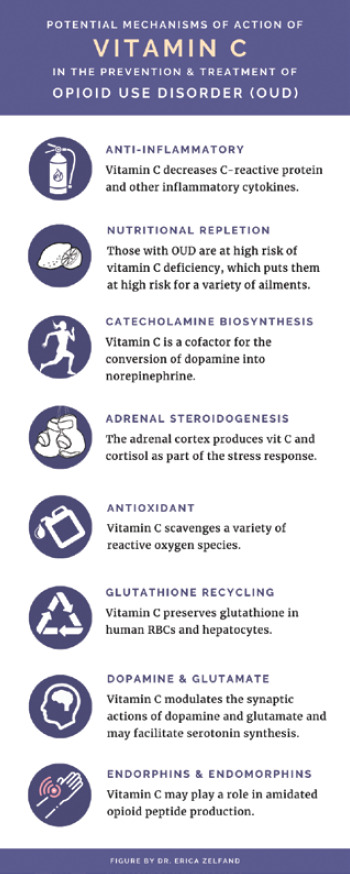
A summary of vitamin C’s proposed mechanisms of action within the contexts of pain management and OUD care is illustrated in Figure 1.
Figure 1.
Vitamin C to Correct Nutritional Deficiency
While severe hypoascorbemia can lead to scurvy,67 milder deficiencies of vitamin C can also wreak havoc on the biochemical reactions within the human body.68
Chronic substance abuse affects nutritional intake and is associated with vitamin, mineral, and amino acid deficiencies.69 Patients with major depressive disorder (MDD) as well as those entering therapy for drug addiction have been shown to have low plasma AA levels.70 Over 74% of individuals entering treatment for drug addiction had clinical signs of nutrient deficiency in one study by Nazrul et al.,71 with the most pronounced risk for deficiency being in the antioxidant vitamins A, E, and C and in amino acids.72
Deficiency in vitamin C may predispose individuals to OUD, but chronic substance abuse likewise undermines nutritional intake and thus compromises nutritional status. This is especially true of opiate drugs, which inhibit gastric motility, delay gastric emptying, inhibit intestinal secretions, and slow bowel transit, thus predisposing users to nausea, constipation, and anorexia.73 Subsequent poor dietary intake exacerbates underlying nutritional deficiencies, thereby driving addictive behavior and in turn reinforces the cycle.
In their summary of cases from a 1977 pilot study, Drs. Libby and Stone explain that they abandoned baseline testing their opiate-addicted subjects for nutritional deficiencies, because: “The results were so consistently low… that we no longer go to the expense or bother of these tests.” They go on to describe OUD as a “Hypoascorbemia-Kwashiorkor type of syndrome.”25
Vitamin C as an Antioxidant
Vitamin C largely supports immune health by serving as an essential antioxidant and enzyme cofactor in the body, scavenging a variety of reactive oxygen species (ROS) and protecting human cells (including those of the CNS) against oxidative damage.74,75
Oxidative damage compromises normal neurological function by altering the fluidity of cellular membranes, leading to mitochondrial dysfunction and compromised ATP production. A variety of psychiatric disorders–including anxiety,76,77 depression,78–80 bipolar disorder,81,82 panic disorder,83,84 obsessive-compulsive disorder (OCD),85 and schizophrenia–are unsurprisingly associated with excess oxidative stress.86,87 Antioxidants are crucial for mental health.88–90
A study of 137 individuals addicted to heroin revealed that this population experiences a high rate of oxidative injury as compared to healthy controls. The balance between the production of oxidation products and antioxidant activity was skewed in those with heroin addiction, and a lack of exogenous vitamin C and vitamin E significantly correlated with the severity of DNA damage.91 Another study found that the longer a person had been using heroin, the more oxidative stress injury their body endured. This damage was also correlated with decreased levels of vitamin C and various other antioxidants.92
Multiple animal studies show that ascorbic acid decreases oxidative stress and reduces depressive behavior.93,94 In humans, vitamin C has been shown in multiple randomized, double-blind, placebo-controlled trials to help with both depression and anxiety in patients of various ages as well as with opioid addiction.95–97 It is also worth noting that individuals with mental health conditions like anxiety and depression are three times more likely to use opioids than the general population.29 Of the 115 million opioid prescriptions given each year, 51.4% (60 million) were written for adults with mental health conditions.98 Any treatment of OUD that may also be of benefit in anxiety or depression is therefore likely to be of great value.
Vitamin C as an Anti-Inflammatory Agent
Oxidative stress goes hand-in-hand with inflammation, and higher levels of inflammatory markers like C-reactive protein (CRP) have unsurprisingly been observed in those with mood disorders.99–102
Vitamin C has been demonstrated to markedly decrease not only CRP levels, but also to reduce pro-inflammatory cytokines like tumor necrosis factor (TNF), interferon, and interleukins.103 Conventional pharmaceutical antidepressant drugs are understood to work sometimes by means of their anti-inflammatory and antioxidant effects as well,104,105 further validating the deleterious effects of inflammation on mood.
Vitamin C as Glutathione Recycler
The pharmacokinetics of opiates cause glutathione depletion; this is a likely mechanism by which drug dependency is fomented and perpetuated.106 As confirmed by increased reduced glutathione/oxidized glutathione (GSH/GSSG) ratios, those with opioid dependency have aberrant oxidation-reduction activity.107
Vitamin C positively influences glutathione concentrations in the blood mainly by preserving glutathione in human red blood cells and hepatocytes. In a clinical trial, 500 mg of vitamin C daily increased mean red blood cell glutathione levels by almost 50% after just two weeks.108 In rats, both vitamin C and glutathione have been shown to completely reverse opiate-induced hepatocellular injury. The authors of the study conclude that “blocking oxidative damage may be a useful strategy for the development of a new therapy for opiate abuse.”109
Vitamin C in Cortisol Response
If we understand substance use disorder as having its origins, at least in part, in a maladaptation to trauma and stress,110 adrenal health becomes paramount in both the prevention and treatment of OUD.
As mentioned earlier, most other mammals produce vitamin C endogenously, at a baseline rate of about 10 to 20 g per 70 kg of body weight per day. Stress, disease, and other shocks to the system increase an animal’s hepatic synthesis of AA,40 driving production up by a factor of three- to five-fold to ensure homeostasis.2,3 Rats, for example, synthesize AA at a rate of about 70 mg/kg of body weight per day at baseline versus 215 mg/kg per day when stressed.111
Although AA is stored in many tissues throughout the human body, the highest concentrations are found the adrenal glands.12 Because adrenal vitamin C paracrine secretion is part of the human stress response,12,14 and because humans cannot endogenously synthesize the nutrient, our AA stores are rapidly taxed in stressful situations. This makes the exogenous replacement of AA crucial during times of stress.13
Adrenocorticotropic hormone (ACTH) is produced by the anterior pituitary gland in response to stress. In response to stimulation by ACTH, the adrenal glands secrete both cortisol and AA,14 likely because vitamin C is essential for cortisol normalization in times of stress adaption.13 A strong inverse correlation has been observed between an animal’s ability to endogenously produce vitamin C and that animal’s cortisol response.112,113 In humans, a similar inverse relationship between cortisol and vitamin C has been noted, suggesting that high cortisol levels–and the poorer health outcomes associated with them–are a function of vitamin C deficiency.114
Supplementation of vitamin C in humans and animals alike is associated with a decreased cortisol response after exposure to psychological or physical stress. In guinea pigs, adrenal AA has been observed to exert a modulating role over the production of adrenal steroids during stress,115 and AA deprivation is associated with a sharp rise in plasma corticosteroid concentrations.116 According to a literature analysis, low vitamin C intake has also been correlated with fatigability in humans.117
Supplementation with 1 g of vitamin C for eight days has been shown to reduce post-race serum cortisol levels in ultramarathon runners by an average of 30%.118,119 In another study, however, AA taken before and during workout failed to affect cortisol levels, though it did raise antioxidant capacity and lower post-exercise oxidative stress markers.120
A randomized, placebo-controlled clinical trial performed in regular runners found that those who took 3 g of vitamin C daily had lower blood pressure, enjoyed faster cortisol recovery, and generally reported feeling less “stressed” than those who didn’t take the vitamin.13
Vitamin C and Catecholamine Metabolism
AA also influences neuromodulation through its role in catecholamine biosynthesis within the adrenal medulla.121,122 Specifically, AA is a cofactor for dopamine β-hydroxylase, the enzyme that converts dopamine into norepinephrine.123–126 Mutant mice lacking the AA transporter SVCT2 have low adrenal tissue catecholamine levels,12 and AA deficiency in humans is associated with listlessness and decreased epinephrine response.127
Vitamin C and Other Neurotransmitters
Vitamin C may also facilitate the synthesis of dopamine and serotonin by recycling tetrahydrobiopterin, which is required for normal tyrosine hydroxylase activity.128,129 Of note, serotonin and norepinephrine reuptake inhibitors (SSRIs and SNRIs, respectively) have shown efficacy in pain management,130 and ascorbate-deficient animals have been observed to have lower norepinephrine concentrations than controls.131–13 Vitamin C supplementation may thus support the endogenous synthesis of these neurotransmitters, engender analgesia, and potentially temper the need for SSRIs and SNRIs in the settings of pain management.
The glutamatergic and dopaminergic systems are also involved in opiate tolerance and withdrawal.134 Vitamin C has been shown to modulate the actions of these neurotransmitters in the rat brain, offering yet another mechanism by which AA may offset addictive behavior.135 AA is released from glutamatergic neurons and modulates the synaptic actions of dopamine and glutamate.36
Vitamin C and Opioid Peptides
Finally, vitamin C may also help with OUD via its analgesic effects. While the pharmacokinetics of vitamin C are complex,136 one mechanism suggested by Carr and McCall in their 2017 paper involves the potential role of AA in the synthesis of amidated opioid peptides.15 They explain that vitamin C is a cofactor for the enzyme peptidylglycine α-amidating monooxygenase (PAM),137 the only known enzyme in humans capable of making essential modifications to peptide hormone precursors.138 Several amidated neuropeptides have potent opioid activity, and administration of AA to animals has been shown to enhance the production of PAM-derived hormones.139
Calcitonin is another amidated peptide hormone requiring activation by PAM and thus possibly requiring vitamin C as a cofactor.140 Calcitonin has been shown to have a direct analgesic effect on bone pain and complex regional pain syndrome (CRPS).141
Vitamin C repletion may consequently directly influence analgesia through the enhanced synthesis of endomorphins and indirectly by the calcitonin-dependent modulation of endorphins. Vitamin C depletion may, conversely, lead to inadequate biosynthesis of analgesic neurotransmitters and neuropeptide hormones, resulting in pain.
Safety of High-Dose AA
Buffered Vitamin C/Sodium Ascorbate (SA) vs Regular Ascorbic Acid (AA)
High doses of oral AA can induce osmotic diarrhea as an inconvenient side effect. In his study of heroin addiction in the late 1960s, however, Alexander Schauss, PhD, found that those heavily addicted to heroin could tolerate higher doses of vitamin C before exceeding bowel intolerance (diarrhea).26 Nevertheless, sodium ascorbate (SA), or buffered vitamin C, is a well-tolerated and suitable substitute to AA that does not induce gastrointestinal upset,142,143 and was the form of vitamin C used in Schauss’ 1969 study and in Libby and Stone’s case reports.25,26
It has also been suggested that alkalinizing substances–like the high levels of ionized calcium or magnesium packed within buffered vitamin C supplements to neutralize pH–may play a role in promoting health and detoxification.144 This strengthens the case for using buffered preparations in lieu of AA.
Risks of High Dose Vitamin C Supplementation
The risks of exogenous vitamin C supplementation are few, but worth mentioning: Large doses of AA are generally contraindicated in those with renal insufficiency, in chronic hemodialysis patients, in those with iron overload conditions, and in oxalate stone formers.145
While studies evaluating the influence of AA on lithogenesis have yielded contradictory findings,146 a 2016 prospective cohort analysis by Ferraro et al found that total and supplemental vitamin C intake was associated with a higher risk of urolithia in men, but not in women.147
It is well established that AA significantly enhances intestinal absorption of non-heme iron.148 Patients in a variety of contexts are thus often advised to concurrently take vitamin C with their iron supplements for improved efficacy.149,150 Patients with hemochromatosis and other forms of iron overload, however, may be at risk of exacerbating their condition with high doses AA supplementation.151
Although the focus of this review is on oral supplementation with SA, it is nevertheless worth mentioning that the administration of high doses of intravenous (IV) vitamin C in those with glucose-6-phosphate dehydrogenase (G6PD) deficiency is controversial,152 as it may pose the risk of triggering hemolysis.
Comparative Risk
As with any medical intervention, the risks and benefits of high dose AA supplementation must be measured with consideration to the unique requirements of each patient. The potential risks of vitamin C must also be weighed against those of methadone, buprenorphine, naltrexone, and naloxone—the prescription medications commonly used in the management of OUD.153
Methadone commonly causes abdominal pain and carries the risk of cardiac arrhythmias. Like all opioids, methadone and buprenorphine may cause sedation, lightheadedness, respiratory depression, orthostatic hypotension, sleep apnea, sexual dysfunction, and withdrawal if discontinued too rapidly.154,155 These opioid agonists also disrupt the endocrine system: methadone has been shown to disturb the hypothalamic pituitary gonadal axis,156,157 and buprenorphine “has not been adequately studied in respect to its long-term effects on the hypothalamic-pituitary-adrenal (HPA) axis” as noted in a 2018 literature review by Varma et al.158
The common side effects of naltrexone include insomnia, anxiety, dizziness, fatigue and somnolence, headache, nausea, vomiting, constipation, anorexia, abdominal pain, and myalgia. Serious reactions include depression, suicidality, and hepatotoxicity.159
Although there is a growing body of literature supporting the long term efficacy of these drugs, most of the evidence is focused on short-term outcomes.160,161 As opioid agonists, furthermore, methadone and buprenorphine do not abort opioid tolerance or dependency so much as they offer safer, more sustainable and humane options for addiction maintenance than other opioid preparations. A large number of those in OUD recovery thus find themselves on opioid substitution treatment for the long term,162,163 while others fall between the cracks of this model of treatment entirely.
Conclusion
The highest concentrations of vitamin C in the human body are found in the nervous and neuroendocrine tissues – the sites of cortisol, monoamine neurotransmitter, and amidated neuropeptide hormone synthesis.164 It is likely no coincidence that this versatile, antioxidant, anti-inflammatory, analgesic, and neuromodulatory nutrient is essential to these biochemical functions.15
Vitamin C may help mitigate OUD and the opioid crisis through at least three applications:
By mitigating pain and preventing opioid tolerance and dependency when administered before surgery, immediately after injury, during other stressors, or during convalescence.
By helping opioid-dependent patients comfortably taper off opioids.
By making abrupt opioid discontinuation (quitting cold turkey) more comfortable and more successful.
Unlike many of the other interventions currently used in the battle against America’s deadliest drug crisis (OUD), vitamin C is affordable, widely available, well tolerated (particularly in SA form), and may be safely administered at home via oral administration in most contexts. Considering that the side effects are minimal and the collateral health benefits numerous, SA supplementation is more likely to benefit patients than cause them harm. Special precautions may be necessary, however, in oxalate stone formers, in patients with renal insufficiency, and in those with iron overload conditions.
In the opinion of this author, the treatment of OUD requires an interdisciplinary approach focused on supporting the patient through withdrawal, extinguishing dependency, addressing the underlying causes of addiction (be they biochemical, nutritional, physical structural, socioeconomic, situational, and/or mental/emotional), and preventing relapse. Vitamin C may be an important component of a comprehensive care plan, with the potential to mitigate cravings, reduce withdrawal symptoms, and address a common nutritional/metabolic etiology of illness. AA may or may not cure an individual of OUD as a monotherapy, but it may very well serve as a powerful catalyst for healing within the context of a comprehensive treatment plan.
With the death toll from opioid overdose being what it is, there is no excuse for leaving good medicine unused. More clinical trials are warranted on this safe, affordable, and widely available nutrient and its potential to mitigate pain, battle OUD, and help people take back their lives. Until then, two low-cost, low-risk interventions (in the estimation of this physician-author) include: (1) routinely administering AA or SA to patients before surgical procedures, and (2) using high dose SA as an adjuvant in OUD treatment.
References
- 1.Yang H. Conserved or lost: Molecular evolution of the key gene GULO in vertebrate vitamin C biosynthesis. Biochem Genet. 2013;51(5-6):413-425. doi:10.1007/s10528-013-9574-0 [DOI] [PubMed] [Google Scholar]
- 2.Stone I. Hypoascorbemia, the genetic disease causing the human requirement for exogenous ascorbic acid. Perspect Biol Med. 1966;10(1):133-134. doi:10.1353/pbm.1966.0037 [DOI] [PubMed] [Google Scholar]
- 3.Stone I. The natural history of ascorbic acid in the evolution of the mammals and primates and its significance for present-day man. J Orthomol Psychiatry. 1972;1(2):82-89. http://orthomolecular.org/library/jom/1972/pdf/1972-v01n02&03-p082.pdf. [Google Scholar]
- 4.Pauling L. How to Live Longer and Feel Better. New York: W.H. Freeman and Company; 1986. [Google Scholar]
- 5.Cathcart RF. Vitamin C in the treatment of acquired immune deficiency syndrome (AIDS). Med Hypotheses. 1984;14(4):423-433. doi:10.1016/0306-9877(84)90149-X [DOI] [PubMed] [Google Scholar]
- 6.Levine MA, Pollard HB. Hydrocortisone inhibition of ascorbic acid transport by chromaffin cells. FEBS Lett. 1983;158(1):134-138. doi:10.1016/0014-5793(83)80693-0 [DOI] [PubMed] [Google Scholar]
- 7.Hatch G. Asthma, inhaled oxidants, and dietary antioxidants. Am J Clin Nutr. 1995;61(3 Suppl):625S-630S. doi:10.1093/ajcn/61.3.625S [DOI] [PubMed] [Google Scholar]
- 8.Bielory L, Gandhi R. Asthma and vitamin C. Ann Allergy. 1994;73(2):89-96. https://pubmed.ncbi.nlm.nih.gov/8067602/. [PubMed] [Google Scholar]
- 9.Marik PE. Vitamin C for the treatment of sepsis: The scientific rationale. Pharmacol Ther. 2018;189:63-70. doi:10.1016/j.pharmthera.2018.04.007 [DOI] [PubMed] [Google Scholar]
- 10.Block G. Epidemiologic evidence regarding vitamin C and cancer. Am J Clin Nutr. 1991;54(6 Suppl):1310S-1314S. doi:10.1093/ajcn/54.6.1310s [DOI] [PubMed] [Google Scholar]
- 11.Stamford JA, Kruk ZL, Millar J. Regional differences in extracellular ascorbic acid levels in the rat brain determined by high speed cyclic voltammetry. Brain Res. 1984;299(2):289-295. doi:10.1016/0006-8993(84)90710-8 [DOI] [PubMed] [Google Scholar]
- 12.Patak P, Willenberg HS, Bornstein SR. Vitamin C is an important cofactor for both adrenal cortex and adrenal medulla. Endocr Res. 2004;30(4):871-875. doi:10.1081/ERC-200044126 [DOI] [PubMed] [Google Scholar]
- 13.Brody S, Preut R, Schommer K, Schürmeyer TH. A randomized controlled trial of high dose ascorbic acid for reduction of blood pressure, cortisol, and subjective responses to psychological stress. Psychopharmacology (Berl). 2002;159(3):319-324. doi:10.1007/s00213-001-0929-6 [DOI] [PubMed] [Google Scholar]
- 14.Padayatty SJ, Doppman JL, Chang R, et al. Human adrenal glands secrete vitamin C in response to adrenocorticotrophic hormone. Am J Clin Nutr. 2007;86(1):145-149. doi:10.1093/ajcn/86.1.145 [DOI] [PubMed] [Google Scholar]
- 15.Carr AC, McCall C. The role of vitamin C in the treatment of pain: New insights. J Transl Med. 2017;15(1):1-14. doi:10.1186/s12967-017-1179-7 [DOI] [PMC free article] [PubMed] [Google Scholar]
- 16.Kanazi GE, El-Khatib MF, Yazbeck-Karam VG, Hanna JE, Masri B, Aouad MT. Effect of vitamin C on morphine use after laparoscopic cholecystectomy: A randomized controlled trial. Can J Anesth. 2012;59(6):538-543. doi:10.1007/s12630-012-9692-x [DOI] [PubMed] [Google Scholar]
- 17.Stevermer JJ, Ewigman B. Give vitamin C to avert lingering pain after fracture. J Fam Pract. 2008;57(2):86-89. http://www.ncbi.nlm.nih.gov/pubmed/18248727. [PMC free article] [PubMed] [Google Scholar]
- 18.Besse JL, Gadeyne S, Galand-Desmé S, Lerat JL, Moyen B. Effect of vitamin C on prevention of complex regional pain syndrome type I in foot and ankle surgery. Foot Ankle Surg. 2009;15(4):179-182. doi:10.1016/j.fas.2009.02.002 [DOI] [PubMed] [Google Scholar]
- 19.Jeon Y, Park J, Moon S, Yeo J. Effect of intravenous high dose vitamin C on postoperative pain and morphine use after laparoscopic colectomy: a randomizedcontrolledtrial. PainResManag. 2016;2016doi:10.1155/2016/9147279 [DOI] [PMC free article] [PubMed] [Google Scholar]
- 20.Murata A, Morishige F, Yamaguchi H. Prolongation of survival times of terminal cancer patients by administration of large doses of ascorbate. Int J Vitam Nutr Res Suppl. 1982;23:103-113. http://www.ncbi.nlm.nih.gov/pubmed/6811475. [PubMed] [Google Scholar]
- 21.Zollinger PE, Tuinebreijer WE, Breederveld RS, Kreis RW. Can vitamin C prevent complex regional pain syndrome in patients with wrist fractures? A randomized, controlled, multicenter dose-response study. J Bone Jt Surg - Ser A. 2007;89(7):1424-1431. doi:10.2106/JBJS.F.01147 [DOI] [PubMed] [Google Scholar]
- 22.Cazeneuve JF, Leborgne JM, Kermad K, Hassan Y. [Vitamin C and prevention of reflex sympathetic dystrophy following surgical management of distal radius fractures]. Acta Orthop Belg. 2002;68(5):481-484. http://www.ncbi.nlm.nih.gov/pubmed/12584978. [PubMed] [Google Scholar]
- 23.Kulkarni S, Deshpande C, Dhir A. Ascorbic acid inhibits development of tolerance and dependence to opiates in mice: Possible glutamatergic or dopaminergic modulation. Indian J Pharm Sci. 2008;70(1):56-60. doi:10.4103/0250-474X.40332 [DOI] [PMC free article] [PubMed] [Google Scholar]
- 24.Evangelou A, Kalfakakou V, Georgakas P, et al. Ascorbic acid (vitamin C) effects on withdrawal syndrome of heroin abusers. In Vivo (Brooklyn). 2000;14(2):363-366. [PubMed] [Google Scholar]
- 25.Libby AF SI. The hypoascorbemia - kwashiorkor approach to drug addiction therapy: a pilot study. Australas Nurses J. 1978;7(6):4-13. https://pubmed.ncbi.nlm.nih.gov/418764/. [PubMed] [Google Scholar]
- 26.Schauss AG. Attenuation of heroin withdrawal syndrome by the administration of high-dose vitamin C. J Orthomol Med. 2012;27(4):189-197. https://www.isom.ca/wp-content/uploads/2013/01/Attenuation-of-Heroin-Withdrawl-Syndrome-by-the-Administration-of-High-Dose-Vitamin-C-27.4.pdf. [Google Scholar]
- 27.Cullen T. Opioid overdoses kill more people in U.S. than guns or breast cancer - New York Daily News. New York Daily News. https://www.nydailynews.com/news/national/opioid-overdoses-kill-people-u-s-car-accidents-article-1.3713354. Published 2017 Accessed June 8, 2020.
- 28.Overdose Death Rates | National Institute on Drug Abuse (NIDA). https://www.drugabuse.gov/related-topics/trends-statistics/overdose-death-rates. Accessed June 8, 2020.
- 29.Salmond S, Allread V. A Population Health Approach to America’s Opioid Epidemic. Orthop Nurs. 2019;38(2):95-108. doi:10.1097/NOR.0000000000000521 [DOI] [PMC free article] [PubMed] [Google Scholar]
- 30.Short Answers to Hard Questions About the Opioid Crisis - The New York Times. https://www.nytimes.com/interactive/2017/08/03/upshot/opioid-drug-overdose-epidemic.html. Accessed June 8, 2020.
- 31.Salmond S, Allread V, Marsh R. Management of Opioid Use Disorder Treatment: An Overview. Orthop Nurs. 2019;38(2):118-126. doi:10.1097/NOR.0000000000000522 [DOI] [PubMed] [Google Scholar]
- 32.Case-Lo C, Legg TJ. Opioid and Opiate Withdrawal: Symptoms and Treatments. https://www.healthline.com/health/opiate-withdrawal. Published 2019. Accessed June 8, 2020.
- 33.Cicero TJ, Ellis MS, Surratt HL, Kurtz SP. The changing face of heroin use in the United States a retrospective analysis of the past 50 years. JAMA Psychiatry. 2014;71(7):821-826. doi:10.1001/jamapsychiatry.2014.366 [DOI] [PubMed] [Google Scholar]
- 34.Alaei H, Ramshini E, Talkhooncheh M, Shahidani S. The effect of vitamin C on morphine self-administration in rats. Adv Biomed Res. 2014;3(1):178 doi:10.4103/2277-9175.139524 [DOI] [PMC free article] [PubMed] [Google Scholar]
- 35.Khanna NC, Sharma SK. Megadoses of vitamin C prevent the development of tolerance and physical dependence on morphine in mice. Life Sci. 1983;33(SUPPL. 1):401-404. doi:10.1016/0024-3205(83)90527-1 [DOI] [PubMed] [Google Scholar]
- 36.Alaei H, Esmaeili M, Nasimi A, Pourshanazari A. Ascorbic acid decreases morphine self-administration and withdrawal symptoms in rats. Pathophysiology. 2005;12(2):103-107. doi:10.1016/j.pathophys.2005.03.004 [DOI] [PubMed] [Google Scholar]
- 37.Johnston PA, Chahl LA. Chronic treatment with ascorbic acid inhibits the morphine withdrawal response in guinea-pigs. Neurosci Lett. 1992;135(1):23-27. doi:10.1016/0304-3940(92)90127-S [DOI] [PubMed] [Google Scholar]
- 38.Dunlap C, 3rd, Leslie F, Rado M, Cox B. Ascorbate Destruction of Opiate Stereospecific Binding in Guinea Pig Brain Homogenate. Mol Pharmacol. 1979;16(1):105-119. https://pubmed.ncbi.nlm.nih.gov/39241/. [PubMed] [Google Scholar]
- 39.Vadivelu N, Kai AM, Kodumudi V, Sramcik J, Kaye AD. The Opioid Crisis: a Comprehensive Overview. Curr Pain Headache Rep. 2018;22(3):1-7. doi:10.1007/s11916-018-0670-z [DOI] [PubMed] [Google Scholar]
- 40.Nakano K, Suzuki N. Stress-induced Change in Tissue Levels of Ascorbic Acid and Histamine in Rats. J Nutr. 1984;114(9):1602-1608. doi:10.1093/jn/114.9.1602 [DOI] [PubMed] [Google Scholar]
- 41.Fukushima R, Yamazaki E. Vitamin C requirement in surgical patients. Curr Opin Clin Nutr Metab Care. 2010;13(6):669-676. doi:10.1097/MCO.0b013e32833e05bc [DOI] [PubMed] [Google Scholar]
- 42.Ayatollahi V, Dehghanpour Farashah S, Behdad S, Vaziribozorg S, Rabbani Anari M. Effect of intravenous vitamin C on postoperative pain in uvulopalatopharyngoplasty with tonsillectomy. Clin Otolaryngol. 2017;42(1):139-143. doi:10.1111/coa.12684 [DOI] [PubMed] [Google Scholar]
- 43.Zeraati F, Araghchian M, Farjoo MH. Ascorbic acid interaction with analgesic effect of morphine and tramadol in mice. Anesthesiol Pain Med. 2014;4(3). doi:10.5812/aapm.19529 [DOI] [PMC free article] [PubMed] [Google Scholar]
- 44.Brummett CM, Waljee JF, Goesling J, et al. New persistent opioid use after minor and major surgical procedures in us adults. JAMA Surg. 2017;152(6). doi:10.1001/jamasurg.2017.0504 [DOI] [PMC free article] [PubMed] [Google Scholar]
- 45.Ringsdorf WM, Cheraskin E. Vitamin C and human wound healing. Oral Surgery, Oral Med Oral Pathol. 1982;53(3):231-236. doi:10.1016/0030-4220(82)90295-X [DOI] [PubMed] [Google Scholar]
- 46.Danielski LG, Walczewski E, de Jesus CR, et al. Preoperative vitamin C supplementation improves colorectal anastomotic healing and biochemical parameters in malnourished rats. Int J Colorectal Dis. 2016;31(11):1759-1766. doi:10.1007/s00384-016-2647-x [DOI] [PubMed] [Google Scholar]
- 47.MacKay D, Miller AL. Nutritional Support for Wound Healing. Altern Med Rev. 2003;8(4):359-377. https://pubmed.ncbi.nlm.nih.gov/14653765/. [PubMed] [Google Scholar]
- 48.Carr AC, Vissers MCM, Cook JS. The effect of intravenous vitamin C on cancer- and chemotherapy-related fatigue and quality of life. Front Oncol. 2014;4(October). doi:10.3389/fonc.2014.00283 [DOI] [PMC free article] [PubMed] [Google Scholar]
- 49.Yeom CH, Jung GC, Song KJ. Changes of Terminal Cancer Patients’ Health-related Quality of Life after High Dose Vitamin C Administration. J Korean Med Sci. 2007;22(1):7 doi:10.3346/jkms.2007.22.1.7 [DOI] [PMC free article] [PubMed] [Google Scholar]
- 50.Takahashi H, Mizuno H, Yanagisawa A. High-dose intravenous vitamin C improves quality of life in cancer patients. Pers Med Universe. 2012;1(1):49-53. doi:10.1016/j.pmu.2012.05.008 [Google Scholar]
- 51.Mercadante S, Fulfaro F. World Health Organization guidelines for cancer pain: a reappraisal. Ann Oncol. 2005;16:132-135. doi:10.1093/annonc/mdi922 [DOI] [PubMed] [Google Scholar]
- 52.Cameron E, Campbell A. The orthomolecular treatment of cancer II. Clinical trial of high-dose ascorbic acid supplements in advanced human cancer. Chem Biol Interact. 1974;9(4):285-315. doi:10.1016/0009-2797(74)90019-2 [DOI] [PubMed] [Google Scholar]
- 53.Pinkerton E, Good P, Gibbons K, Hardy J. An open-label pilot study of oral vitamin C as an opioid-sparing agent in patients with chronic pain secondary to cancer. Support Care Cancer. 2017;25(2):341-343. doi:10.1007/s00520-016-3472-z [DOI] [PubMed] [Google Scholar]
- 54.Volkow ND, McLellan AT. Opioid Abuse in Chronic Pain — Misconceptions and Mitigation Strategies. Longo DL, ed N Engl J Med. 2016;374(13):1253-1263. doi:10.1056/NEJMra1507771 [DOI] [PubMed] [Google Scholar]
- 55.Højsted J, Sjøgren P. Addiction to opioids in chronic pain patients: A literature review. Eur J Pain. 2007;11(5):490-518. doi:10.1016/j.ejpain.2006.08.004 [DOI] [PubMed] [Google Scholar]
- 56.Johannes CB, Le TK, Zhou X, Johnston JA, Dworkin RH. The Prevalence of Chronic Pain in United States Adults: Results of an Internet-Based Survey. J Pain. 2010;11(11):1230-1239. doi:10.1016/j.jpain.2010.07.002 [DOI] [PubMed] [Google Scholar]
- 57.Schencking M, Vollbracht C, Weiss G, et al. Intravenous vitamin C in the treatment of shingles: Results of a multicenter prospective cohort study. Med Sci Monit. 2012;18(4). doi:10.12659/MSM.882621 [DOI] [PMC free article] [PubMed] [Google Scholar]
- 58.Chen JY, Chang CY, Feng PH, Chu CC, So EC, Hu ML. Plasma vitamin C is lower in postherpetic neuralgia patients and administration of vitamin C reduces spontaneous pain but not brush-evoked pain. Clin J Pain. 2009;25(7):562-569. doi:10.1097/AJP.0b013e318193cf32 [DOI] [PubMed] [Google Scholar]
- 59.Kim MS, Kim DJ, Na CH, Shin BS. A study of intravenous administration of Vitamin C in the treatment of acute herpetic pain and postherpetic Neuralgia. Ann Dermatol. 2016;28(6):677-683. doi:10.5021/ad.2016.28.6.677 [DOI] [PMC free article] [PubMed] [Google Scholar]
- 60.Schencking M, Sandholzer H, Frese T. Intravenous administration of vitamin C in the treatment of herpetic neuralgia: two case reports. Med Schi Monit. 2010:CS58-61. https://pubmed.ncbi.nlm.nih.gov/20424557/. [PubMed]
- 61.Chen JY, Chu CC, So EC, Hsing CH, Hu ML. Treatment of postherpetic neuralgia with intravenous administration of vitamin C. Anesth Analg. 2006;103(6):1616-1617. doi:10.1213/01.ane.0000246396.64010.ee [DOI] [PubMed] [Google Scholar]
- 62.Newmeyer J, Inaba D, Smith DE, Waldorf GE, Levine SA. Efficacy of Buffered Ascorbate Compound (BAC) in the Detoxification and Aftercare of Clients Involved in Opiate and Stimulant Abuse.; 1983. [Google Scholar]
- 63.Beckett AH, Casy AF. Synthetic analgesics: stereochmical considerations. J Pharm Pharmacol. 1954;6(1):986-1001. doi:10.1111/j.2042-7158.1954.tb11033.x [DOI] [PubMed] [Google Scholar]
- 64.Pawlack V. Megavitamin Therapy and the Drug Wipeout Syndrome: An Introduction to the Orthomolecular Approach as a Treatment for after-Effects of Drug Use/Abuse. San Francisco: Bolerium Books; 1975. [Google Scholar]
- 65.Scher J, Rice H, Kim S-O, Dicamelli R, O’connor H. Massive Vitamin C as an Adjunct in Methadone Maintenance and Detoxification. J Orthomol Psych. 1976;5:191-198. [Google Scholar]
- 66.Keller-Phelps J, Nourse A. The Hidden Addiction and How to Get Free. New York, NY: Little, Brown, and Company; 1986. [Google Scholar]
- 67.Carpenter KJ. The discovery of vitamin c. Ann Nutr Metab. 2012;61(3):259-264. doi:10.1159/000343121 [DOI] [PubMed] [Google Scholar]
- 68.Pearson JF, Pullar JM, Wilson R, et al. Vitamin C status correlates with markers of metabolic and cognitive health in 50-year-olds: Findings of the CHALICE cohort study. Nutrients. 2017;9(8). doi:10.3390/nu9080831 [DOI] [PMC free article] [PubMed] [Google Scholar]
- 69.Ross LJ, Wilson M, Banks M, Rezannah F, Daglish M. Prevalence of malnutrition and nutritional risk factors in patients undergoing alcohol and drug treatment. Nutrition. 2012;28(7-8):738-743. doi:10.1016/j.nut.2011.11.003 [DOI] [PubMed] [Google Scholar]
- 70.Khanzode SD, Dakhale GN, Khanzode SS, Saoji A, Palasodkar R. Oxidative damage and major depression: The potential antioxidant action of selective serotonin-re-uptake inhibitors. Redox Rep. 2003;8(6):365-370. doi:10.1179/135100003225003393 [DOI] [PubMed] [Google Scholar]
- 71.Nazrul Islam SK, Hossain KJ, Ahmed A, Ahsan M. Nutritional status of drug addicts undergoing detoxification: prevalence of malnutrition and influence of illicit drugs and lifestyle. Br J Nutr. 2002;88(5):507-513. doi:10.1079/bjn2002702 [DOI] [PubMed] [Google Scholar]
- 72.Nazrul Islam S, Jahangir Hossain K, Ahsan M. Serum vitamin E, C and A status of the drug addicts undergoing detoxification: influence of drug habit, sexual practice and lifestyle factors. Eur J Clin Nutr. 2001;55(11):1022-1027. doi:10.1038/sj.ejcn.1601263 [DOI] [PubMed] [Google Scholar]
- 73.Bueno L, Fioramonti J. Action of opiates on gastrointestinal function. Baillieres Clin Gastroenterol. 1988;2(1):123-139. doi:10.1016/0950-3528(88)90024-3 [DOI] [PubMed] [Google Scholar]
- 74.Buettner GR. The Pecking Order of Free Radicals and Antioxidants: Lipid Peroxidation, α-Tocopherol, and Ascorbate. Arch Biochem Biophys. 1993;300(2):535-543. doi:10.1006/abbi.1993.1074 [DOI] [PubMed] [Google Scholar]
- 75.Carr A, Frei B. Does vitamin C act as a pro-oxidant under physiological conditions? FASEB J. 1999;13(9):1007-1024. doi:10.1096/fasebj.13.9.1007 [DOI] [PubMed] [Google Scholar]
- 76.Vaváková M, Ďuračková Z, Trebatická J. Markers of Oxidative Stress and Neuroprogression in Depression Disorder. Oxid Med Cell Longev. 2015;2015:898393 doi:10.1155/2015/898393 [DOI] [PMC free article] [PubMed] [Google Scholar]
- 77.Bouayed J, Rammal H, Soulimani R. Oxidative stress and anxiety: Relationship and cellular pathways. Oxid Med Cell Longev. 2009;2(2). doi:10.4161/oxim.2.2.7944 [DOI] [PMC free article] [PubMed] [Google Scholar]
- 78.Maria Michel T, Pulschen D, Thome J. The Role of Oxidative Stress in Depressive Disorders. Curr Pharm Des. 2012;18(36):5890-5899. doi:10.2174/138161212803523554 [DOI] [PubMed] [Google Scholar]
- 79.Black CN, Bot M, Scheffer PG, Cuijpers P, Penninx BWJH. Is depression associated with increased oxidative stress? A systematic review and meta-analysis. Psychoneuroendocrinology. 2015;51:164-175. doi:10.1016/j.psyneuen.2014.09.025 [DOI] [PubMed] [Google Scholar]
- 80.Moylan S, Berk M, Dean OM, et al. Oxidative & nitrosative stress in depression: Why so much stress? Neurosci Biobehav Rev. 2014;45:46-62. doi:10.1016/j.neubiorev.2014.05.007 [DOI] [PubMed] [Google Scholar]
- 81.Berk M, Kapczinski F, Andreazza AC, et al. Pathways underlying neuroprogression in bipolar disorder: Focus on inflammation, oxidative stress and neurotrophic factors. Neurosci Biobehav Rev. 2011;35(3):804-817. doi:10.1016/j.neubiorev.2010.10.001 [DOI] [PubMed] [Google Scholar]
- 82.Andreazza AC, Kauer-Sant’Anna M, Frey BN, et al. Oxidative stress markers in bipolar disorder: A meta-analysis. J Affect Disord. 2008;111(2-3):135-144. doi:10.1016/j.jad.2008.04.013 [DOI] [PubMed] [Google Scholar]
- 83.Ersoy MA, Selek S, Celik H, et al. Role of oxidative and antioxidative parameters in etiopathogenesis and prognosis of panic disorder. Int J Neurosci. 2008;118(7):1025-1037. doi:10.1080/00207450701769026 [DOI] [PubMed] [Google Scholar]
- 84.Gul IG, Karlidag R, Cumurcu BE, et al. The effect of agoraphobia on oxidative stress in panic disorder. Psychiatry Investig. 2013;10(4):317-325. doi:10.4306/pi.2013.10.4.317 [DOI] [PMC free article] [PubMed] [Google Scholar]
- 85.Kandemir H, Abuhandan M, Aksoy N, Savik E, Kaya C. Oxidative imbalance in child and adolescent patients with obsessive compulsive disorder. J Psychiatr Res. 2013;47(11):1831-1834. doi:10.1016/j.jpsychires.2013.08.010 [DOI] [PubMed] [Google Scholar]
- 86.Ng F, Berk M, Dean O, Bush AI. Oxidative stress in psychiatric disorders: Evidence base and therapeutic implications. Int J Neuropsychopharmacol. 2008;11(6):851-876. doi:10.1017/S1461145707008401 [DOI] [PubMed] [Google Scholar]
- 87.Smaga I, Niedzielska E, Gawlik M, et al. Oxidative stress as an etiological factor and a potential treatment target of psychiatric disorders. Part 2. Depression, anxiety, schizophrenia and autism. Pharmacol Reports. 2015;67(3):569-580. doi:10.1016/j.pharep.2014.12.015 [DOI] [PubMed] [Google Scholar]
- 88.Allen J, Romay-Tallon R, Brymer KJ, Caruncho HJ, Kalynchuk LE. Mitochondria and mood: Mitochondrial dysfunction as a key player in the manifestation of depression. Front Neurosci. 2018;12(June). doi:10.3389/fnins.2018.00386 [DOI] [PMC free article] [PubMed] [Google Scholar]
- 89.Jou S-H, Chiu N-Y, Liu C-S. Mitochondrial Dysfunction and Psychiatric Disorders. Chang Gung Med J. 2009;32(4):370-379. https://pubmed.ncbi.nlm.nih.gov/19664343/. [PubMed] [Google Scholar]
- 90.Tsuboi H, Shimoi K, Kinae N, Oguni I, Hori R, Kobayashi F. Depressive symptoms are independently correlated with lipid peroxidation in a female population: Comparison with vitamins and carotenoids. J Psychosom Res. 2004;56(1):53-58. doi:10.1016/S0022-3999(03)00567-1 [DOI] [PubMed] [Google Scholar]
- 91.Zhou J, Si P, Ruan Z, et al. Primary Studies on Heroin Abuse and Injury Induced by Oxidation and Lipoperoxidation. Chin Med J. 2001;114(3):297-302. https://pubmed.ncbi.nlm.nih.gov/11780318/. [PubMed] [Google Scholar]
- 92.Zhou J, Yan X, Ruan Z, et al. Heroin Abuse and Nitric Oxide, Oxidation, Peroxidation, Lipoperoxidation. Biomed Env Sci. 2000;13(2):131-139. https://pubmed.ncbi.nlm.nih.gov/11055015/. [PubMed] [Google Scholar]
- 93.Moretti M, Colla A, De Oliveira Balen G, et al. Ascorbic acid treatment, similarly to fluoxetine, reverses depressive-like behavior and brain oxidative damage induced by chronic unpredictable stress. J Psychiatr Res. 2012;46(3):331-340. doi:10.1016/j.jpsychires.2011.11.009 [DOI] [PubMed] [Google Scholar]
- 94.Moretti M, Budni J, Dos Santos DB, et al. Protective effects of ascorbic acid on behavior and oxidative status of restraint-stressed mice. J Mol Neurosci. 2013;49(1):68-79. doi:10.1007/s12031-012-9892-4 [DOI] [PubMed] [Google Scholar]
- 95.de Oliveira IJL, de Souza VV, Motta V, Da-Silva SL. Effects of oral vitamin C supplementation on anxiety in students: A double-blind, randomized, placebo-controlled trial. Pakistan J Biol Sci. 2015;18(1):11-18. doi:10.3923/pjbs.2015.11.18 [DOI] [PubMed] [Google Scholar]
- 96.Amr M, El-Mogy A, Shams T, Vieira K, Lakhan SE. Efficacy of vitamin C as an adjunct to fluoxetine therapy in pediatric major depressive disorder: A randomized, double-blind, placebo-controlled pilot study. Nutr J. 2013;12(1). doi:10.1186/1475-2891-12-31 [DOI] [PMC free article] [PubMed] [Google Scholar]
- 97.Mazloom Z, Ekramzadeh M, Hejazi N. Efficacy of supplementary vitamins C and E on anxiety, depression and stress in type 2 diabetic patients: A randomized, single-blind, placebo-controlled trial. Pakistan J Biol Sci. 2013;16(22):1597-1600. doi:10.3923/pjbs.2013.1597.1600 [DOI] [PubMed] [Google Scholar]
- 98.Davis MA, Lin LA, Liu H, Sites BD. Prescription opioid use among adults with mental health disorders in the United States. J Am Board Fam Med. 2017;30(4):407-417. doi:10.3122/jabfm.2017.04.170112 [DOI] [PubMed] [Google Scholar]
- 99.Kim YK, Jung HG, Myint AM, Kim H, Park SH. Imbalance between pro-inflammatory and anti-inflammatory cytokines in bipolar disorder. J Affect Disord. 2007;104(1-3):91-95. doi:10.1016/j.jad.2007.02.018 [DOI] [PubMed] [Google Scholar]
- 100.Vogelzangs N, Beekman ATF, De Jonge P, Penninx BWJH. Anxiety disorders and inflammation in a large adult cohort. Transl Psychiatry. 2013;3(4). doi:10.1038/tp.2013.27 [DOI] [PMC free article] [PubMed] [Google Scholar]
- 101.Dowlati Y, Herrmann N, Swardfager W, et al. A Meta-Analysis of Cytokines in Major Depression. Biol Psychiatry. 2010;67(5):446-457. doi:10.1016/j.biopsych.2009.09.033 [DOI] [PubMed] [Google Scholar]
- 102.Pasco JA, Nicholson GC, Williams LJ, et al. Association of high-sensitivity C-reactive protein with de novo major depression. Br J Psychiatry. 2010;197(5):372-377. doi:10.1192/bjp.bp.109.076430 [DOI] [PubMed] [Google Scholar]
- 103.Mikirova N, Casciari J, Rogers A, Taylor P. Effect of high-dose intravenous vitamin C on inflammation in cancer patients. J Transl Med. 2012;10(1). doi:10.1186/1479-5876-10-189 [DOI] [PMC free article] [PubMed] [Google Scholar]
- 104.Dinan TG. Inflammatory markers in depression. Curr Opin Psychiatry. 2009;22(1):32-36. doi:10.1097/YCO.0b013e328315a561 [DOI] [PubMed] [Google Scholar]
- 105.Caiaffo V, Oliveira BDR, de Sá FB, Evêncio Neto J. Anti-inflammatory, antiapoptotic, and antioxidant activity of fluoxetine. Pharmacol Res Perspect. 2016;4(3):1-9. doi:10.1002/prp2.231 [DOI] [PMC free article] [PubMed] [Google Scholar]
- 106.Jairaj M, Watson DG, Grant MH, Skellern GG. The toxicity of opiates and their metabolites in HepG2 cells. Chem Biol Interact. 2003;146(2):121-129. doi:10.1016/S0009-2797(03)00091-7 [DOI] [PubMed] [Google Scholar]
- 107.Mannelli P, Patkar A, Rozen S, Matson W, Krishnan R, Kaddurah-Daouk R. Opioid use affects antioxidant activity and purine metabolism: Preliminary results. Hum Psychopharmacol. 2009;24(8):666-675. doi:10.1002/hup.1068 [DOI] [PMC free article] [PubMed] [Google Scholar]
- 108.Johnston C, Meyer C, Srilakshmi J. Vitamin C Elevates Red Blood Cell Glutathione in Healthy Adults. Am J Clin Nutr. 1993;58(1):103-105. doi:10.1093/ajcn/58.1.103 [DOI] [PubMed] [Google Scholar]
- 109.Zhang Y-T, Zheng Q-S, Pan J, Zheng R-L. Oxidative Damage of Biomolecules in Mouse Liver Induced by Morphine and Protected by Antioxidants. Pharmacol Toxicol. 2004;95(2):53-58. doi:10.1111/j.1742-7843.2004.950202.x [DOI] [PubMed] [Google Scholar]
- 110.Maté G. In the Realm of Hungry Ghosts: Close Encounters with Addiction. Toronto: Knopf Canada; 2008. [Google Scholar]
- 111.Conney AH, Bray GA, Evans C, Burns JJ. Metabolic interactions between L-ascorbic acid and drugs. Ann N Y Acad Sci. 1961;92(1):115-127. doi:10.1111/j.1749-6632.1961.tb46111.x [DOI] [PubMed] [Google Scholar]
- 112.Barton BA. Stress in Fishes: A Diversity of Responses With Particular Reference to Changes in Circulating Corticosteroids. Integr Comp Biol. 2002;42(3):517-525. doi:10.1093/icb/42.3.517 [DOI] [PubMed] [Google Scholar]
- 113.Enwonwu CO, Sawiris P, Chanaud N. Effect of marginal ascorbic acid deficiency on saliva level of cortisol in the guinea pig. Arch Oral Biol. 1995;40(8):737-742. doi:10.1016/0003-9969(95)00030-S [DOI] [PubMed] [Google Scholar]
- 114.Hooper MH, Carr A, Marik PE. The adrenal-vitamin C axis: From fish to guinea pigs and primates. Crit Care. 2019;23(1). doi:10.1186/s13054-019-2332-x [DOI] [PMC free article] [PubMed] [Google Scholar]
- 115.Odumosu A. Ascorbic Acid and Cortisol Metabolism in Hypovitaminosis C Guineapigs. Int J Vitam Nutr Res. 1982;52(2):176-185. https://pubmed.ncbi.nlm.nih.gov/7129799/. [PubMed] [Google Scholar]
- 116.Hodges JR, Hotston RT. Ascorbic acid deficiency and pituitary adrenocortical activity in the guinea-pig. Br J Pharmacol. 1970;40(4):740-746. doi:10.1111/j.1476-5381.1970.tb10651.x [DOI] [PMC free article] [PubMed] [Google Scholar]
- 117.Cheraskin E, Ringsdorf WM, Medford FH. Daily Vitamin C Consumption and Fatigability. J Am Geriatr Soc. 1976;24(3):136-137. doi:10.1111/j.1532-5415.1976.tb04284.x [DOI] [PubMed] [Google Scholar]
- 118.Peters EM, Anderson R, Nieman DC, Fickl H, Jogessar V. Vitamin C supplementation attenuates the increases in circulating cortisol, adrenaline and anti-inflammatory polypeptides following ultramarathon running. Int J Sports Med. 2001;22(7):537-543. doi:10.1055/s-2001-17610 [DOI] [PubMed] [Google Scholar]
- 119.Peters EM, Anderson R, Theron AJ. Attenuation of increase in circulating cortisol and enhancement of the acute phase protein response in vitamin C-supplemented ultramarathoners. Int J Sports Med. 2001;22(2):120-126. doi:10.1055/s-2001-11364 [DOI] [PubMed] [Google Scholar]
- 120.Davison G, Gleeson M. The effects of acute vitamin C supplementation on cortisol, interleukin-6, and neutrophil responses to prolonged cycling exercise. Eur J Sport Sci. 2007;7(1):15-25. doi:10.1080/17461390701197734 [Google Scholar]
- 121.Harrison FE, May JM. Vitamin C function in the brain: vital role of the ascorbate transporter SVCT2. Free Radic Biol Med. 2009;46(6):719-730. doi:10.1016/j.freeradbiomed.2008.12.018 [DOI] [PMC free article] [PubMed] [Google Scholar]
- 122.Kawai K, Ito H, Kubota H, Takemori K, Makino S, Horio F. Changes in catecholamine metabolism by ascorbic acid deficiency in spontaneously hypertensive rats unable to synthesize ascorbic acid. Life Sci. 2003;72(15):1717-1732. doi:10.1016/S0024-3205(02)02481-5 [DOI] [PubMed] [Google Scholar]
- 123.Levine M. Ascorbic Acid Specifically Enhances Dopamine Beta-Monooxygenase Activity in Resting and Stimulated Chromaffin Cells - PubMed. J Biol Chem. 1986;261(16):7347-7356. https://pubmed.ncbi.nlm.nih.gov/3711090/. [PubMed] [Google Scholar]
- 124.Menniti F, Knoth J, Diliberto Jr. E. Role of Ascorbic Acid in Dopamine Beta-Hydroxylation. The Endogenous Enzyme Cofactor and Putative Electron Donor for Cofactor Regeneration - PubMed. J Biol Chem. 1986;261(36):16901-16908. https://pubmed.ncbi.nlm.nih.gov/3097015/. [PubMed] [Google Scholar]
- 125.May JM, Qu Z chao, Nazarewicz R, Dikalov S. Ascorbic acid efficiently enhances neuronal synthesis of norepinephrine from dopamine. Brain Res Bull. 2013;90(1):35-42. doi:10.1016/j.brainresbull.2012.09.009 [DOI] [PMC free article] [PubMed] [Google Scholar]
- 126.Fleming P, Kent U. Cytochrome b561, Ascorbic Acid, and Transmembrane Electron Transfer. Am J Clin Nutr. 1991;54(6):1173S-1178S. doi:10.1093/ajcn/54.6.1173s [DOI] [PubMed] [Google Scholar]
- 127.Dayton PG, Weiner M. Ascorbic acid and blood coagulation. Ann N Y Acad Sci. 1961;92(1):302-306. doi:10.1111/j.1749-6632.1961.tb46130.x [DOI] [PubMed] [Google Scholar]
- 128.May JM, Qu ZC, Meredith ME. Mechanisms of ascorbic acid stimulation of norepinephrine synthesis in neuronal cells. Biochem Biophys Res Commun. 2012;426(1):148-152. doi:10.1016/j.bbrc.2012.08.054 [DOI] [PMC free article] [PubMed] [Google Scholar]
- 129.Ward MS, Lamb J, May JM, Harrison FE. Behavioral and monoamine changes following severe vitamin C deficiency. J Neurochem. 2013;124(3):363-375. doi:10.1111/jnc.12069 [DOI] [PMC free article] [PubMed] [Google Scholar]
- 130.Mochizucki D. Serotonin and noradrenaline reuptake inhibitors in animal models of pain. Hum Psychopharmacol. 2004;19(SUPPL. 1). doi:10.1002/hup.620 [DOI] [PubMed] [Google Scholar]
- 131.Hoehn S, Kanfer J. Effects of Chronic Ascorbic Acid Deficiency on Guinea Pig Lysosomal Hydrolase Activities. J Nutr. 1980;110(10):2085-2094. doi:10.1093/jn/110.10.2085 [DOI] [PubMed] [Google Scholar]
- 132.Deana R, Bharaj BS, Verjee ZH, Galzigna L. Changes relevant to catecholamine metabolism in liver and brain of ascorbic acid deficient guinea-pigs. Int J Vitam Nutr Res. 1975;45(2):175-182. http://www.ncbi.nlm.nih.gov/pubmed/809379. [PubMed] [Google Scholar]
- 133.Bornstein SR, Yoshida-Hiroi M, Sotiriou S, et al. Impaired adrenal catecholamine system function in mice with deficiency of the ascorbic acid transporter (SVCT2). FASEB J. 2003;17(13):1-13. doi:10.1096/fj.02-1167fje [DOI] [PubMed] [Google Scholar]
- 134.Aghajanian GK, Kogan JH, Moghaddam B. Opiate withdrawal increases glutamate and aspartate efflux in the locus coeruleus: an in vivo microdialysis study. Brain Res. 1994;636(1):126-130. doi:10.1016/0006-8993(94)90186-4 [DOI] [PubMed] [Google Scholar]
- 135.Garcia MM, Anderson AT, Edwards R, Harlan RE. Morphine induction of c-Fos expression in the rat forebrain through glutamatergic mechanisms: Role of non-N-methyl-D-aspartate receptors. Neuroscience. 2003;119(3):787-794. doi:10.1016/S0306-4522(02)00975-2 [DOI] [PubMed] [Google Scholar]
- 136.Lykkesfeldt J, Tveden-Nyborg P. The pharmacokinetics of vitamin C. Nutrients. 2019;11(10). doi:10.3390/nu11102412 [DOI] [PMC free article] [PubMed] [Google Scholar]
- 137.Prigge ST, Mains RE, Eipper BA, Amzel LM. New insights into copper monooxygenases and peptide amidation: Structure, mechanism and function. Cell Mol Life Sci. 2000;57(8-9):1236-1259. doi:10.1007/PL00000763 [DOI] [PMC free article] [PubMed] [Google Scholar]
- 138.Merkler DJ. C-Terminal amidated peptides: Production by the in vitro enzymatic amidation of glycine-extended peptides and the importance of the amide to bioactivity. Enzyme Microb Technol. 1994;16(6):450-456. doi:10.1016/0141-0229(94)90014-0 [DOI] [PubMed] [Google Scholar]
- 139.Giusti-Paiva A, Domingues V. Centrally administered ascorbic acid induces antidiuresis, natriuresis and neurohypophyseal hormone release in rats. Neuro Endocrinol Lett. 2010;31(1):97-91. https://www.researchgate.net/publication/41425280_Centrally_administered_ascorbic_acid_induces_antidiuresis_natriuresis_and_neurohypophyseal_hormone_release_in_rats. Accessed June 21, 2020. [PubMed] [Google Scholar]
- 140.Yabuta M, YUJI S, Magota K, et al. Production of Recombinant Human Calcitonin in Escherichia coli. Ann N Y Acad Sci. 1994;721(1):82-84. doi:10.1111/j.1749-6632.1994.tb47379.x [DOI] [PubMed] [Google Scholar]
- 141.Mehta N, Malootian A, Gilligan J. Calcitonin for Osteoporosis and Bone Pain. Curr Pharm Des. 2005;9(32):2659-2676. doi:10.2174/1381612033453622 [DOI] [PubMed] [Google Scholar]
- 142.Heuser G, Vojdani A. Enhancement of natural killer cell activity and T and B cell function by buffered vitamin C in patients exposed to toxic chemicals: The role of protein kinase - C. Immunopharmacol Immunotoxicol. 1997;19(3):291-312. doi:10.3109/08923979709046977 [DOI] [PubMed] [Google Scholar]
- 143.Padayatty SJ, Levine M. Vitamin C: the known and the unknown and Goldilocks. Oral Dis. 2016;22(6):463-493. doi:10.1111/odi.12446 [DOI] [PMC free article] [PubMed] [Google Scholar]
- 144.Minich DM, Bland JS. Acid-alkaline Balance: Role in Chronic Disease and Detoxification. Altern Ther Heal Med. 2007;13(4):62-65. https://pubmed.ncbi.nlm.nih.gov/17658124/. [PubMed] [Google Scholar]
- 145.Rivers J. Safety of High-Level Vitamin C Ingestion - PubMed. Int J Vitam Nutr Res Suppl. 1989;30:95-102. https://pubmed.ncbi.nlm.nih.gov/2507711/. [PubMed] [Google Scholar]
- 146.Traxer O, Pearle Margaret Sue, Gattegno B, Thibault P. [Vitamin C and Stone Risk. Review of the Literature]. Prog Urol. 2003;13(6):1290-1294. https://pubmed.ncbi.nlm.nih.gov/15000301/. [PubMed] [Google Scholar]
- 147.Ferraro PM, Curhan GC, Gambaro G, Taylor EN. Total, dietary, and supplemental Vitamin C intake and risk of incident kidney stones. Am J Kidney Dis. 2016;67(3):400-407. doi:10.1053/j.ajkd.2015.09.005 [DOI] [PMC free article] [PubMed] [Google Scholar]
- 148.Hallberg L, Hulthén L. Prediction of Dietary Iron Absorption: An Algorithm for Calculating Absorption and Bioavailability of Dietary Iron. Am J Clin Nutr. 2000;71(5):1147-1160. doi:doi: 10.1093/ajcn/71.5.1147 [DOI] [PubMed] [Google Scholar]
- 149.Lynch SR, Cook JD. Interaction of Vitamin C and Iron. Ann N Y Acad Sci. 1980;355(1):32-44. doi:10.1111/j.1749-6632.1980.tb21325.x [DOI] [PubMed] [Google Scholar]
- 150.Simonson, PharmD, BCGP, FASCP W. Should vitamin C routinely be given with oral iron supplements? Geriatr Nurs (Minneap). 2019;40(3):327-328. doi:10.1016/j.gerinurse.2019.05.007 [DOI] [PubMed] [Google Scholar]
- 151.Gerster H. High-dose vitamin C: A risk for persons with high iron stores? Int J Vitam Nutr Res. 1999;69(2):67-82. doi:10.1024/0300-9831.69.2.67 [DOI] [PubMed] [Google Scholar]
- 152.Marik PE. Is intravenous vitamin C contraindicated in patients with G6PD deficiency? Crit Care. 2019;23(1). doi:10.1186/s13054-019-2397-6 [DOI] [PMC free article] [PubMed] [Google Scholar]
- 153.Approach to treating opioid use disorder - UpToDate. https://www-uptodate-com.nunm.idm.oclc.org/contents/approach-to-treating-opioid-use-disorder?search=Approach to treating opioid use disorder&source=search_result&selectedTitle=1~150&usage_type=default&display_rank=1. Accessed June 21, 2020.
- 154.Methadone Adult Dosing - Epocrates Online. https://online.epocrates.com/drugs/52/methadone. Accessed June 21, 2020.
- 155.Buprenorphine Adult Dosing - Epocrates Online. https://online.epocrates.com/drugs/1671/buprenorphine. Accessed June 21, 2020.
- 156.Schoofs N, Riemer T, Bald LK, et al. Methadon und Levomethadon - Dosierung und Nebenwirkungen. Psychiatr Prax. 2014;41(2):82-87. doi:10.1055/s-0033-1349627 [DOI] [PubMed] [Google Scholar]
- 157.Ortman HA, Siegel JA. The effect of methadone on the hypothalamic pituitary gonadal axis and sexual function: A systematic review. Drug Alcohol Depend. 2020;207 doi:10.1016/j.drugalcdep.2019.107823 [DOI] [PubMed] [Google Scholar]
- 158.Varma A, Sapra M, Iranmanesh A. Impact of opioid therapy on gonadal hormones: Focus on buprenorphine. Horm Mol Biol Clin Investig. 2018;36(2). doi:10.1515/hmbci-2017-0080 [DOI] [PubMed] [Google Scholar]
- 159.Naltrexone Adult Dosing - Epocrates Online. https://online.epocrates.com/drugs/53/naltrexone. Accessed June 21, 2020.
- 160.Painkiller abuse treated by sustained buprenorphine/naloxone | National Institutes of Health (NIH). https://www.nih.gov/news-events/news-releases/painkiller-abuse-treated-sustained-buprenorphine-naloxone. Accessed June 21, 2020.
- 161.Fischer B, Rehm J, Kim G, Kirst M. Eyes wide shut? - A conceptual and empirical critique of methadone maintenance treatment. Eur Addict Res. 2005;11(1):1-9. doi:10.1159/000081410 [DOI] [PubMed] [Google Scholar]
- 162.Lingford-Hughes AR, Welch S, Peters L, Nutt DJ. BAP updated guidelines: Evidence-based guidelines for the pharmacological management of substance abuse, harmful use, addiction and comorbidity: Recommendations from BAP. J Psychopharmacol. 2012;26(7):899-952. doi:10.1177/0269881112444324 [DOI] [PubMed] [Google Scholar]
- 163.Amato L, Davoli M, Perucci CA, Ferri M, Faggiano F, Mattick RP. An overview of systematic reviews of the effectiveness of opiate maintenance therapies: Available evidence to inform clinical practice and research. J Subst Abuse Treat. 2005;28(4):321-329. doi:10.1016/j.jsat.2005.02.007 [DOI] [PubMed] [Google Scholar]
- 164.Hornig D. Distribution of ascorbic acid, metabolites and analogues in man and animals. Ann N Y Acad Sci. 1975;258(1):103-118. doi:10.1111/j.1749-6632.1975.tb29271.x [DOI] [PubMed] [Google Scholar]