



Abstract
A 61-year-old male patient was admitted to our hospital with frequent urination, urgency, and increased nocturia for more than 3 months, and the symptoms were aggravated for 1 week. Prostate biopsy revealed prostatic adenocarcinoma. After 5 months, the patient developed dysphagia and gastroscopy showed a middle and lower esophageal cancer (squamous cell carcinoma). 12 months later, he returned to the hospital because of dysphagia. He was examined by gastroscopy which showed the cardia to have low-grade adenocarcinoma. The patient was given Casodex + Zoladex endocrine therapy, zoledronic acid inhibiting bone destruction, concurrent chemoradiotherapy, capecitabinen tablets at a dose of 1000 mg bid, 3 cycles of intravenous paclitaxel at 180 mg/d1 plus cisplatin 60 mg/d1-2, 4 cycles of intravenous paclitaxel at 150 mg/d1 plus cisplatin at 60 mg/d1 as systemic chemotherapy. The curative effect is was considerable after treatment, and the patient’s condition was stable. Since the onset of the disease in March 2018, the patient’s condition had not progressed significantly for 27 months. The diagnosis and treatment of this patient with ternary cancer in the hospital improved the clinician’s understanding of multiple primary cancers. Multidisciplinary treatment improved the patient’s prognosis and quality of life. We reviewed similar case reports and retrospective studies of multiple primary cancers and found that there is no specific treatment for multiple primary cancers, but a corresponding treatment program can be formulated for each tumor to control progression while screening for possible other primary tumors.
Keywords: Ternary cancer, multidisciplinary treatment, prostatic adenocarcinoma, esophageal cancer, cardiac cancer, quality of life
Introduction
Ternary cancer refers to 3 primary cancers. Multiple primary cancers are tumors that occur simultaneously or sequentially in the same organ or different organs, independent of each other, are discontinuous, and are of different pathologic types.
Ternary cancer is very rare; we describe the diagnosis and treatment of a male patient with ternary cancer. The patient was diagnosed with prostatic adenocarcinoma, esophageal squamous cell carcinoma, and gastric cardiac low-grade adenocarcinoma. The intervals between the three primary cancers were 5 months and 12 months, respectively. He received endocrine therapy, concurrent chemoradiotherapy, and systemic chemotherapy. We hope that clinicians can be alert to the occurrence of multiple primary cancers, to reduce the possibility of missing a diagnosis.
Because of the low incidence of multiple primary cancers and minimal research, this article not only describes the treatment process, but also reviews similar cases, and the results of retrospective studies related to multiple primary cancers. Their treatment is mainly based on the relevant surgery, chemotherapy, and biological treatment for each tumor. Lengthening the tumor screening time should prevent the occurrence of multiple primary cancers.
Case report
The patient, male, 61 years old, was treated in the urology department of our institute in March 2018 due to frequent urination, urgency, and increased nocturia for more than 3 months and these symptoms were aggravated for 1 week. The ultrasound scan showed a roughened bladder wall, residual urine 464 ml, grade 2 prostatic hyperplasia, left renal hydronephrosis, and left ureteral dilatation. In March 2018 a prostatic biopsy (sampling 12 cores including left 1-left 6 and right 1-right 6) showed prostatic adenocarcinoma (Figure 1), Gleason grade 4 + 4 = 8 with perineural invasion. An ECT scan showed multiple bone metastases in the body. Besides, it was shown that prostate specific antigen (PSA) was > 100 ng/ml and free PSA (FPSA) was 41.370 ng/ml. The patient received regular Casodex + Zoladex endocrine therapy and Zoledronic Acid inhibiting bone destruction. After the treatment, the testosterone was less than 0.1 ng/ml, TPSA and FPSA were restored to normal, PPSA/TPSA and was in the low-normal range. In August 2018, the patient developed dysphagia. Gastroscopy showed an irregular bulge 25-32 cm from the incisors on the posterior wall, fragile and bleeding. There was esophageal stenosis, but the gastroscope could still pass. Diagnosis was middle and lower esophageal cancer. Biopsy demonstrated squamous cell carcinoma (Figure 2). CT of the chest and abdomen showed distant metastases of the esophageal cancer to bilateral ribs, scapula, cervical, thoracic and lumbar vertebrae, iliac crest, right humeral head, sternum multiple metastases, multiple mediastinal lymph nodes in the mediastinum, a filling defect area in the middle part of the esophagus, local luminal stenosis, mucosal destruction, esophageal wall stiffness, and middle esophageal cancer. Squamoid cell-associated antigen was 3.7 ng/ml, alkaline phosphatase 136 μ/L. Because of previous prostate cancer with multiple bone metastases, there were no surgical indications, so from November 2018 in our hospital radiotherapy department, the patient had 7 rounds of concurrent radiotherapy and chemotherapy, target dose: 95% PTV = 5040.9cGy/28fx, and concurrent capecitabinen tablets at the dose of 1000 mg bid. In August 2019, because of swallowing difficulties for one month, the patient came to the oncology department of our hospital, and gastroscopy showed cardiac cancer, esophageal cancer, and chronic atrophic gastritis. Biopsy showed cardia low-grade adenocarcinoma (Figure 3). In September 2019, a CT showed multiple lymph nodes in the bilateral neck. A tumor in the middle and lower esophagus and multiple small lymph nodes in the mediastinum were found. In September 2019, the patient received the regimen of intravenous paclitaxel 180 mg/d1 plus cisplatin 60 mg/d1 as systemic chemotherapy. Neuron specific enolase was at 20.67 ng/ml, with FPSA/TPSA of 0.11. After chemotherapy, the white blood cell count decreased (1.19 * 10^9/L), and neutrophil count decreased (0.26 * 10^9/L). These were improved after whitening and ceftazidime anti-infective treatment. In Oct. to Nov., the patient received 2 cycles of intravenous paclitaxel at 180 mg/d1 plus cisplatin at 60 mg d1-2. In Dec. 2019, Mar. 2020, Apr. 2020, and Jun. 2020, the patient received 4 cycles of intravenous paclitaxel for 150 mg/d1 plus cisplatin 60 mg/d1. This patient’s situation was stable according to CT. The levels of TPSA, FPSA, CA125, CA199, CEA, SCC-Ag were as follows (Figures 4, 5). Since the onset of the disease in March 2018, the patient’s condition has not progressed significantly, and it has been 27 months.
Figure 1.

Prostatic adenocarcinoma (10×10).
Figure 2.

Esophageal squamous cell carcinoma (10×10).
Figure 3.
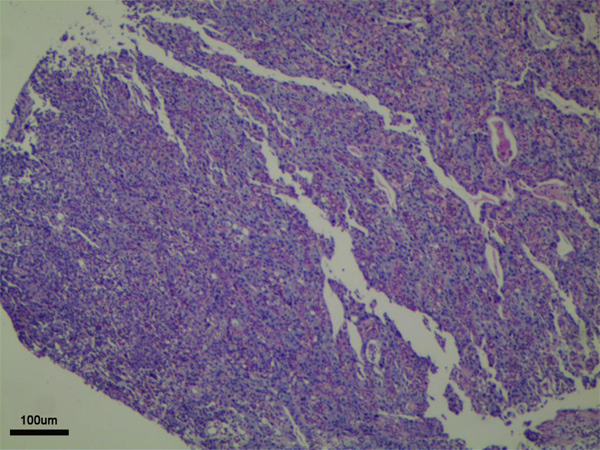
Gastric cardiac low-grade adenocarcinoma (10×10).
Figure 4.

Levels of TPSA and FPSA.
Figure 5.

Levels of CA125, CA199, CEA, SCC-Ag.
Discussion
With the development of medical diagnosis and treatment technology, the survival period of cancer patients has been prolonged, but the incidence of multiple primary cancers has been correspondingly increased [1]. The criteria for multiple primary cancer diagnosis were proposed by Warran: (1) all tumors have malignant pathologic changes in histology and pathological features are not alike; (2) tumors are not consecutive and occur in different parts or organs; (3) possible recurrence or metastasis is ruled out for the second or third tumors [2].
Multiple primary cancers can be divided into simultaneous multiple primary cancers and metachronous multiple primary cancers according to chronological order. Simultaneous multiple primary cancers refers to the occurrence of tumors within 6 months of each other. Metachronous multiple primary cancers refers to the occurrence of tumors at intervals of more than 6 months. The proportion of multiple primary cancers in cancer patients is about 0.73% to 11.7% [3]. In multiple primary cancers, 6.5% are binary cancers, 0.5% are ternary cancers, and 0.05% are quaternary or more primary cancers [4]. In a retrospective study in Turkey, the most common female primary tumors in 10 years at the institution were found in the breast (21%), gynecologic tract (9%), and gastrointestinal tract (8%). Male primary tumors were most commonly in the head and neck (22%), the gastrointestinal tract (12%), and the genitourinary system (8%). The most common female second primary tumors were gynecologic (15%), breast (11%), andgastrointestinal tract (8%). The common male second primary tumors were in the lung (20%), gastrointestinal tract (14%) and genitourinary system (7%) [5]. Some scholars selected multiple primary cancers cases related to non-small cell lung cancer as research objects, suggesting that the older age and chronic obstructive pulmonary disease may be related to the incidence of multiple primary cancers accompanying non-small cell lung cancer. It was suggested that the functional status of other organs should be checked periodically five years after the treatment of the first primary cancer [6]. There are also studies that selected tumors of digestive system as the first primary cancer, showing that if the first primary cancer was located in the digestive system, the second primary cancers were more common in the digestive system and respiratory system, and the 5-year follow-up of patients is particularly important for prognosis [7]. Patients with esophageal squamous cell carcinoma are at higher risk for multiple primary cancers [8]. Relevant retrospective studies have shown that the occurrence of multiple primary cancers may be related to a history of alcohol and tobacco use [9]. Regarding heredity, about 100 gene mutations can lead to one or more types of cancer [10]. Therefore, environmental factors, genetic factors, and even nuclear radiation [11] may contribute to the occurrence and development of multiple primary cancers. Since the occurrence of multiple primary cancers cannot be predicted, early diagnosis and timely treatment are especially important to improve the cure rate and survival rate [12]. After the treatment of the first primary cancer, the screening time for a second primary cancer should be appropriately extended [13].
Similarly, there are some case reports about multiple primary cancers. Pathologic types of multiple primary cancer were adenocarcinoma and signet-ring cell carcinoma (in cardia and gastric antrum respectively). The time span was 13 years, and the patient experienced the proximal gastrectomy and two rounds of endoscopic submucosal dissection (ESD) surgery and other related auxiliary treatment (including three adjuvant chemotherapy (interrupted by the side effects seriously). Therapy for the first 3 years after proximal gastrectomy includedlymphokine-activated killer cells therapy (LAK) and cytokine-induced killer cells therapy (CIK), but after ESD, the patient was not treated with chemotherapy and biologic therapy. After treatment, the situation of this patient was stable [14]. There were simultaneous ureteral/bladder/urethral transitional cell carcinomas and prostatic adenocarcinoma. The patient received right nephroureterectomy, cystoprostatectomy, and urethrectomy. The clinical symptoms of the patient were relieved after the surgery. The study suggested that effective cancer treatments and aging populations have increased the incidence of multiple primary tumors, and that multiple male primary cancers may be related to the high frequency of prostate cancer [15]. There are also patients with squamous cell carcinoma of the pharynx, esophageal squamous cell carcinoma, and esophageal adenocarcinoma. Esophageal squamous cell carcinoma as a new diagnosis would result in receiving neoadjuvant chemotherapy for esophageal squamous carcinoma, and esophagectomy, then dealing with the pharyngeal squamous cell carcinoma by endoscopic submucosal dissection. The above three kinds of cancers are associated with smoking. In ternary carcinomas with this etiology, DNA methylation is a common risk mechanism [16]. There was a patient with metachronous ternary urinary tract tumors, that were moderately differentiated adenocarcinomas of the prostate, non-muscle invasive bladder cancer, and clear cell renal cell carcinoma. The related surgical treatment and follow-up treatment were performed separately [17]. Some scholars counted the relevant information of 2109 patients with gastric cancer and found that 99 of the 2109 patients with gastric cancer had multiple primary cancers, among whom 77.8% had the second cancer about 5 years after the occurrence of gastric cancer and 34.3% had the second cancer within 1 year after the diagnosis [18].
Nowadays, dual cancer are more common but there are relatively few reports of ternary cancer. This article mainly introduces a ternary cancer with concurrent and metachronous coexistence. In this case, the time interval between the first prostate cancer and the second primary tumor (esophageal squamous cell carcinoma) was 5 months, and the time interval between the second primary tumor (esophageal squamous cell carcinoma) and the third primary tumor (gastric cardia adenocarcinoma) was 12 months. The patient had been treated in our departments of urology, gastroenterology, radiotherapy, and oncology, and had gotten prostatic endocrine therapy, synchronous chemoradiotherapy, and systemic chemotherapy. At present, some studies suggest that the pathogenesis of such patients is related to cell proliferation rate, anti-apoptotic stability, poor prognosis of receptor expression, lack of good prognostic markers, and genetic susceptibility [19]. There are also studies suggesting that survival rates were not significantly affected by having multiple primary cancers [20]. The authors believe that such patients may also be weakened due to having multiple tumors. Early detection, early diagnosis, and early treatment are important. The multiple primary cancers in early stages can be treated by surgery, and the treatment of advanced multiple primary cancers is mainly symptomatic treatment and chemotherapy. In the future, improving the patient’s immunity needs more attention in the endeavor to inhibit the occurrence of binary cancer and ternary cancers.
Acknowledgements
This study was supported by National Natural Science Foundation of China (No. 81770212).
Disclosure of conflict of interest
None.
References
- 1.Cohn AM, Peppard SB. Multiple primary malignant tumors of the head and neck. Am J Otolaryngol. 1980;1:411–417. doi: 10.1016/s0196-0709(80)80022-6. [DOI] [PubMed] [Google Scholar]
- 2.Noguchi M, Naruki Y, Matsuo K, Yoshida M, Ohhashi K, Mizuochi K, Furuhashi F, Ohtsuka S, Akima M. A case report of triple malignant tumor including early gastric carcinoma--multiple primary malignant tumors, a survey of the literatures and a statistical study (author’s transl) Nihon Shokakibyo Gakkai Zasshi. 1978;75:71–79. [PubMed] [Google Scholar]
- 3.Jin B, Zhang S, Chuang X, Yu P, Chen Y, Teng Y, Che X, Fan Y, Zheng C, Li X. Breast cancer and synchronous multiple primary lung adenocarcinomas with heterogeneous mutations: a case report. BMC Cancer. 2018;18:1138. doi: 10.1186/s12885-018-5011-4. [DOI] [PMC free article] [PubMed] [Google Scholar]
- 4.Markakis C, Marinis A, Dikeakos P, Grivas P, Voultsos M, Liarmakopoulos E, Zervogiannakou P, Rizos S. Multiple synchronous primary neoplasms of the breast, colon and rectum after surgery for endometrial cancer: a case report. Int J Surg Case Rep. 2013;4:493–495. doi: 10.1016/j.ijscr.2013.01.001. [DOI] [PMC free article] [PubMed] [Google Scholar]
- 5.Etiz D, Metcalfe E, Akcay M. Multiple primary malignant neoplasms: a 10-year experience at a single institution from Turkey. J Cancer Res Ther. 2017;13:16. doi: 10.4103/0973-1482.183219. [DOI] [PubMed] [Google Scholar]
- 6.Fumihiro S, Koji Y, Naoko M, Masakazu K, Yuka O, Sadanori T, Yoshihiko M. Postoperative management of multiple primary cancers associated with non-small cell lung cancer. Anticancer Res. 38:3773–3778. doi: 10.21873/anticanres.12660. [DOI] [PubMed] [Google Scholar]
- 7.Lyu JM, Xiong HC, Wu B, Zhou XQ, Hu J. Clinical analysis of 138 multiple primary cancers diagnosed of digestive system malignant tumor initially. Zhonghua Zhong Liu Za Zhi. 2018;40:147. doi: 10.3760/cma.j.issn.0253-3766.2018.02.013. [DOI] [PubMed] [Google Scholar]
- 8.He S, Liu Y, Liu X, Dou L, Wang G. Clinical characteristics of multiple primary cancer associated with esophageal squamous carcinoma. Zhonghua Yi Xue Za Zhi. 2015;95:2868–2870. [PubMed] [Google Scholar]
- 9.Baba Y, Yoshida N, Kinoshita K, Iwatsuki M, Yamashita YI, Chikamoto A, Watanabe M, Baba H. Clinical and prognostic features of patients with esophageal cancer and multiple primary cancers: a retrospective single-institution study. Ann Surg. 2018;267:478–483. doi: 10.1097/SLA.0000000000002118. [DOI] [PubMed] [Google Scholar]
- 10.Cybulski C, Nazarali S, Narod SA. Multiple primary cancers as a guide to heritability. Int J Cancer. 135:1756–1763. doi: 10.1002/ijc.28988. [DOI] [PubMed] [Google Scholar]
- 11.Nakashima M, Kondo H, Miura S, Soda M, Sekine I. Incidence of multiple primary cancers in Nagasaki atomic bomb survivors: association with radiation exposure. Cancer Sci. 2008;99:87–92. doi: 10.1111/j.1349-7006.2007.00657.x. [DOI] [PMC free article] [PubMed] [Google Scholar]
- 12.Liu YH, Dong C, Chen L. The clinicopathological features of second primary cancer in patients with prior breast cancer. Medicine (Baltimore) 2017;96:e6675. doi: 10.1097/MD.0000000000006675. [DOI] [PMC free article] [PubMed] [Google Scholar]
- 13.Artac M, Bozcuk H, Ozdogan M, Demiral AN, Savas B. Different clinical features of primary and secondary tumors in patients with multiple malignancies. Tumori. 2005;91:317–320. doi: 10.1177/030089160509100406. [DOI] [PubMed] [Google Scholar]
- 14.Song Y, Zhao N, Jiang K, Zheng Z, Wang B, Kong D, Li S. Occurrence of metachronous multiple primary cancers occurred in different parts of the stomach with 2 pathologic features: a case report. Medicine (Baltimore) 2018;97:e10803. doi: 10.1097/MD.0000000000010803. [DOI] [PMC free article] [PubMed] [Google Scholar]
- 15.Demandante CG, Troyer DA, Miles TP. Multiple primary malignant neoplasms: case report and a comprehensive review of the literature. Am J Clin Oncol. 2003;26:79–83. doi: 10.1097/00000421-200302000-00015. [DOI] [PubMed] [Google Scholar]
- 16.Kataoka S, Omae M, Horiuchi Y, Ishiyama A, Yoshio T, Hirasawa T, Yamamoto Y, Tsuchida T, Fujisaki J, Yamada K. Synchronous triple primary cancers of the pharynx and esophagus. Clin J Gastroenterol. 2017;10:208–213. doi: 10.1007/s12328-017-0734-3. [DOI] [PubMed] [Google Scholar]
- 17.Okumura A, Tsuritani S, Takagawa K, Fuse H. A case of heterochronous triple urogenital cancer (renal cell carcinoma, bladder cancer, prostatic cancer) Nihon Hinyokika Gakkai Zasshi. 2013;104:702–705. doi: 10.5980/jpnjurol.104.702. [DOI] [PubMed] [Google Scholar]
- 18.Wu CW, Lo SS, Chen JH, Hsieh MC, Lui WY. Multiple primary cancers in patients with gastric cancer. Hepatogastroenterology. 2006;53:463–467. [PubMed] [Google Scholar]
- 19.Romaniuk А, Lyndin M, Smiyanov V, Sikora V, Rieznik A, Kuzenko Y, Budko H, Moskalenko Y, Karpenko L, Sikora V. Primary multiple tumor with affection of the thyroid gland, uterus, urinary bladder, mammary gland and other organs. Pathol Res Pract. 2017;213:574–579. doi: 10.1016/j.prp.2017.01.003. [DOI] [PubMed] [Google Scholar]
- 20.Warren S, Ehrenreich T. Multiple primary malignant tumors and susceptibility to cancer. Cancer Res. 1944;4:554–570. [Google Scholar]