
PLOS One logoLink to PLOS One
. 2021 Jan 28;16(1):e0245848. doi: 10.1371/journal.pone.0245848

Evaluation of the practicability of a finger-stick whole-blood SARS-Cov-2 self-test adapted for the general population

Thierry Prazuck 1,*, Jean Phan Van 2, Florence Sinturel 3, Frederique Levray 3, Allan Elie 3, Denise Camera 4, Gilles Pialoux 4
Editor: Sanjai Kumar5
PMCID: PMC7842899  PMID: 33508007

Abstract

Background

COVID-19 (COronaVIrus Disease 2019) is an infectious respiratory disease caused by the novel SARS-CoV-2 virus. Point of Care (POC) tests have been developed to detect specific antibodies, IgG and IgM, to SARS-CoV-2 virus in human whole blood. They need to be easily usable by the general population in order to alleviate the lockdown that many countries have initiated in response to the growing COVID-19 pandemic. A real-life study has been conducted in order to evaluate the performance of the COVID-PRESTO® POC test and the results were recently published. Even if this test showed very high sensitivity and specificity in a laboratory setting when used by trained professionals, it needs to be further evaluated for practicability when used by the general public in order to be approved by health authorities for in-home use.

Methods

143 participants were recruited between March 2020 and April 2020 among non-medical populations in central France (nuclear plant workers, individuals attending the Orleans University Hospital vaccination clinic and Orleans University Hospital non-medical staff). Instructions for use, with or without a tutorial video, were made available to the volunteers. Two separate objectives were pursued: evaluation of the capability of participants to obtain an interpretable result, and evaluation of the users’ ability to read the results.

Results

88.4% of the test users judged the instructions for use leaflet to be clear and understandable. 99.3% of the users obtained a valid result and, according to the supervisors, 92.7% of the tests were properly performed by the users. Overall, 95% of the users gave positive feedback on the COVID PRESTO® as a potential self-test. Neither age nor education had an influence.

Conclusion

COVID-PRESTO® was successfully used by an overwhelming majority of participants and its use was judged very satisfactory, therefore showing promising potential as a self-test to be used by the general population. This POC test can become an easy-to-use tool to help detect whether individuals are protected or not, particularly in the context of a second wave or a mass vaccination program.

Introduction

In Wuhan, China, the end of the year 2019 marked the emergence of a new type of pneumonia caused by a then-unknown agent. Shortly after the first reports of the disease, the Chinese health authorities and the World Health Organization announced that a newly-discovered type of coronavirus was responsible for the disease. This new virus was named SARS-CoV-2 (Sever Acute Respiratory Syndrome-CoronaVirus-2). This virus is a new member of the coronavirus family that already includes SARS-CoV and MERS-CoV responsible for the SARS outbreak in 2003, and an ongoing outbreak that started in 2012 in the Middle East, respectively.

The disease caused by the SARS-CoV-2 virus is called COVID-19 (COronaVIrus Disease-2019). The site of infection is located on the upper/lower respiratory tract [1]. The mean incubation period is approximatively 5.2 days and the most common symptoms are dry cough, fever and fatigue. Other symptoms include anosmia (loss of smell), ageusia (loss of taste), headache, sore throat and in the most severe cases, acute respiratory distress syndrome.

Within the last 6 months, according to the Johns Hopkins University Coronavirus resource center, the COVID-19 pandemic has spread over 188 countries; leaving very few regions of the world untouched. At the end of January 2020, the WHO declared this outbreak to be a global health emergency. The mark of 100,000 deaths was reached on April 12th, leading to a little less than 350,000 deaths on May 26th for a total of 5 519,878 confirmed cases. Governments have taken extreme measures to try to slow the spreading of the virus by imposing strict social distancing rules and it is estimated that 1.7 billion people have been confined at home worldwide.

In most countries, these measures have been effective in slowing down virus transmission. In May 2020, several governments started easing the confinement rules but questions remain with regards to testing, controlling and tracking every case in a large population at least until an effective treatment or vaccine can be found. To this end, the development of new testing tools that could be distributed to the population on a large scale is crucial. Serological tests able to detect the specific antibodies against the SARS-CoV-2 in people seem to be particularly good candidates because they are fairly easy to use without extensive training.

An extensive list of tests available worldwide can be found on the FIND foundation website [2]. As of October 10th 2020, around 50 COVID-19 serological tests are commercially available in the US through the Emergency Use Authorization (EUA) which has been granted to the test manufacturers by the Food and Drug Administration (FDA) [2]. The FDA has provided guidance for manufacturers of serological tests in order to promote and facilitate rapid market access on the basis that such tests could help provide crucial information about the prevalence of COVID-19 infections in different communities [3]. However, an NIH independent evaluation has shown that a concerning number of commercial serological tests are not being appropriately promoted or show poor performance [3]. In Europe, according to regulations, manufacturers should submit data regarding “handling suitability of the device in view of its intended purpose for self-testing” for assessment by notified bodies before making it available to the public [4]. The European Centre for Disease Prevention and Control reports that several COVID-19 Rapid Diagnostic Tests (RDTs) or Point of Care tests (POCs) are being marketed with incomplete and even sometimes fraudulent documentation and unsubstantiated claims, some of these tests being sold as self-tests. Consequently, several European countries have banned the marketing of such tests until further notice [5]. There is, therefore a crucial need for more documented studies regarding those tests [6, 7].

From a regulatory standpoint, "self-testing" is a more stringent regulatory category of in vitro diagnosis tests compared to the regular kind, intended for professional use only. The French health authority (Haute Autorité de Santé, HAS) estimates that, in absence of reliable data regarding the available self-tests, it is premature to promote their use [8]. COVID-PRESTO® aims to be one of the first SARS-CoV-2 serological tests to be officially approved as a reliable and accurate self-test in order to offer a viable option for large-scale testing. It is important to bear in mind that these tests are not designed to detect an ongoing infection but rather a prior infection which would provide intelligence about the true prevalence of the virus. However, a positive test will not mean that the tested individual is no longer infectious but will give the information that he/she was infected at some point in the past. Currently, there is no solid evidence that a prior infection will offer strong immunity towards a second exposure and if so for how long [9]. Nevertheless, a pre-published study demonstrated that most of the patients having presented a mild form of the COVID-19, developed neutralizing antibodies [10].

The AAZ COVID-PRESTO® is an easy-to-use Point of Care (POC) test, device based on a lateral flow chromatographic immunoassay from a single drop of blood (Fig 1). Briefly, a lancet needle included in the kit is used to draw a drop of blood from the fingertip. The blood sample is then collected with a capillary micropipette and deposited in the appropriate well of the test cassette. COVID-PRESTO®’s performance has been evaluated in a recent clinical study, and the test showed a specificity of 100% and a sensitivity ranging from 10% (when the test was done 0–5 days after symptoms onset) to 100% (when performed ≥15 days after experiencing the first symptoms) [11]. Those results were obtained in a controlled setting where the test was performed by trained professionals. In order to be suitable as a self-test for the general population, COVID-PRESTO® has to be evaluated for practicability, i.e. its capacity of being correctly performed by untrained individuals. The aim of this study was to evaluate the COVID-PRESTO® test in terms of participants’ capability to obtain a valid test, and the users’ ability to interpret the results.

Fig 1. Interpretation of results for COVID-PRESTO®.
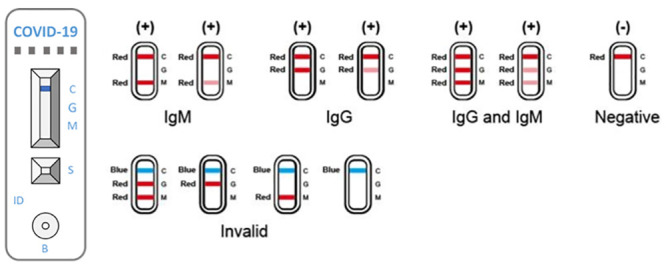
Fig 1

COVID-PRESTO® uses anti-human immunoglobulin (Ig) M antibody (test line M), anti-human IgG antibody (test line G) and rabbit IgG (control line C) immobilized on a nitrocellulose strip. The Conjugate (recombinant COVID-19 antigens labeled with colloidal gold) is also integrated into the strip. A specimen is added to the sample well (S) followed by addition of assay buffer to the buffer well (B), IgM and/or IgG antibodies if present, will bind to COVID-19 conjugates forming antigen-antibody complexes. These complexes migrate through the nitrocellulose membrane by capillary action. When the complex meets the line of the corresponding immobilized antibody (anti-human IgM and/or anti-human IgG), the complex is trapped forming a burgundy colored band which confirms a reactive test result. The absence of a colored band in the test region indicates a non-reactive test result. To serve as a procedural control, a colored line always changes from blue to red in the control line region, indicating that the proper volume of specimen has been added and membrane wicking has occurred. If the control line does not switch colors, then the test is deemed invalid.

Methods and materials

Ethical approval

The study was approved by the Regional Orléans Research and Ethics Committee on March 17th 2020. Each participant was given an information leaflet and oral consent was obtained directly by the attending physician. Participants were given the choice to opt out of the study at any time. Participation in the study did not alter the treatment given to the subject (if any). All participants were treated according to the standard of care.

Study population

Study volunteers were selected from four different locations in Central France from March 20th to May 5th, 2020: two nuclear plants (Dampierre-en-Burly and Saint Laurent-des-Eaux), individuals visiting the vaccination clinic of Orleans Regional Hospital and non-medical staff from Orleans Regional Hospital. The decision of recruiting non-medical staff exclusively was made in order to avoid bias due to previous or current experience in blood drawing. A total of 143 volunteers participated to the study. Two were excluded from the analysis because they did not fill in the questionnaire.

A 2-step design, similar to the design used to validate a HIV self-test, was used for this study [12].

Substudy 1: Usage of the self-test

Two different instructional media were available: written Instructions for Use and an instructional video. Each volunteer was invited to use either one or both, in order to get a clear understanding of how to perform the test.

The instructions were as follows (Table 1):

Table 1. Instructions for use.
Autotest COVID® instructions for use
Summary and description of the test
Autotest COVID® is a screening test for IgG and IgM antibodies against SARS-CoV-2 based on a blood sample taken from the tip of the finger.
Autotest COVID® allows for the determination of immunization against SARS-CoV-2 which makes it possible to assert, even in the absence of symptoms, contact with the virus and a supposed acquired protective immunity.
Autotest COVID® is a one-time use in-vitro diagnostic test.
Autotest COVID® is intended for use by a layperson in a private setting.
The test takes about 5 minutes to perform and the waiting time before reading the result is 10 minutes.
You will need a watch, clock, or other timing device. Please carefully read all of the following instructions prior to using the test.
Content of the kit
 - Foil pouch containing the test device and a desiccant packet.
 - One disinfectant wipe
 - 1 vial of buffer
 - 1 safety lancet
 - 1 capillary blood pipette (10μl)
Test procedure:
Step 1: Clean the fingertip with the disinfectant wipe and let it dry
Step 2: Prick the fingertip using the safety lancet
Step 3: Press the fingertip to form a drop of blood
Step 4: Collect the blood sample using the capillary pipette
Step 5: Discharge the pipette into the Sample well “S”
Step 6: Put 2 drops of buffer into Buffer well “B”
Step 7: Read the result of the test after 10 minutes

Every volunteer had to use the lancet needle to prick the side of the fingertip to let a large drop of suspended blood form, collect the drop with a 10 μl capillary micropipette that filled automatically, transfer the blood into the sample well and finally, add two drops of buffer in the buffer well.

Each participant was asked to fill in a satisfaction questionnaire regarding the suitability of COVID-PRESTO® as a future self-test intended for the general population (Table 2).

Table 2. Satisfaction questionnaire.
Satisfaction Questionnaire
1. Did you find the test’s instructions for use provided to be clear and comprehensible?
☐ Yes ☐ No
2. Did you find the instructional video to be clear and comprehensible?
☐ Yes ☐ No
3. Did you manage to collect the recommended amount of blood?
☐ Yes ☐ No
4. Did you manage to fill the pipette?
☐ Yes ☐ No
5. Did you manage to deposit the blood and buffer in the wells without mistake?
☐ Yes ☐ No
6. Did you obtain a valid result (at least one band)?
☐ Yes ☐ No
7. What is your opinion regarding the use of this test as a self-test?
☐ Bad ☐ Mediocre ☐ Good ☐ Very good ☐ Excellent
8. What is your opinion regarding the readability and the interpretation of this test?
☐ Bad ☐ Mediocre ☐ Good ☐ Very good ☐ Excellent

The test user was monitored by an observer (occupational health physician at the nuclear plants, trained nurse or physician at the Orleans Regional hospital) who could assist the user, if asked to, and evaluate the execution of the different tasks. This evaluation could be different from the user’s personal feedback (Table 3).

Table 3. Supervisor’s feedback.
Supervisor’s Feedback
1. Was the supervisor’s assistance requested by the participant?
☐ Yes ☐ No
2. What is your opinion regarding the execution of this test by the participant?
☐ Bad ☐ Mediocre ☐ Good ☐ Very good ☐ Excellent

Substudy 2: Reading and interpretation of results

Each participant was shown a basket containing 6 standardized test results (2 positives, 2 negatives and 2 invalids). The participant had to randomly choose three out of the six standardized tests and write down the results for each test. A supervisor was in charge of collecting the responses and assessing their accuracy.

Data analysis

The population was described in terms of percentages. The influence of demographic characteristics such as age and education level, on the response to the questionnaire, users’ satisfaction and ability to correctly perform and interpret the test were evaluated using univariate and stratified analyses and the Cochran-Mantel-Haenszel test. In case of overall differences between groups, post hoc Fisher or χ2 tests with Bonferroni correction were applied for two-group comparisons.

Results

Overall, 143 volunteers were selected to participate in the study, among those, 2 did not fill in the Satisfaction questionnaire and 96 participated in Sub-study 2. The distribution of gender was biased towards men, who represented two thirds of the population. Four different age categories were defined: 20–29, 30–39, 40–49 and ≥50. Three education level categories were defined according to the International Classification of Education (2011 version): Level 3 or below, Level 4 or 5, and Level 6 or above.

The demographic characteristics are provided in Table 4.

Table 4. Demographic characteristics of the study population.

Substudy 1 Substudy 2
Characteristics N = 141 N = 96
N (%) % N (%) %
Study Site:
Dampierre Nuclear Plant 44 31.2 23 24.0
St Laurent Nuclear Plant 39 27.7 15 15.6
Orleans Regional Hospital 58 41.1 58 60.4
Age
20–29 32 22.7 25 26.0
30–39 45 31.9 30 31.3
40–49 45 31.9 29 30.2
≥ 50 19 13.5 12 12.5
Gender
Male 97 68.8 56 58.3
Female 44 31.2 40 41.7
Education Level*
Level 3 or below 24 17 18 18.8
Level 4 or 5 75 53.2 48 50.0
Level 6 or above 42 29.8 30 31.3

*According to the International Standard Classification of Education 2011.

Substudy 1

A total of 104 participants read the instructions for use provided with the test. Among those, 70 volunteers read the instructions and watched the video. 92 participants (88.5%) found the written instructions to be clear and comprehensible. 107 participants watched the video and among those, 37 volunteers watched the video as the only instruction medium. 97/107 participants (90.7%) found the video to be clear and comprehensible (Table 5). A subgroup analysis showed that there was no difference on the instructions’ comprehension for use when age or education level was considered. However, there was a statistical difference in the comprehension of the instructional video among the groups. Indeed the video was judged comprehensible by only 77.8% of the participants aged 29 or less compared to 91.7% (30–39), 96.7% (40–49) and 100.0% (≥50) by the other groups (Cochran-Mantel-Haenszel test’s overall p = 0.0465). However, post hoc Fisher’s tests with Bonferroni correction revealed that the proportion of users that found the video comprehensible in the 20–29 range was not significantly lower when groups were compared by pairs, meaning that age has little influence on the comprehension of the instructional video. There was also an overall statistical difference in the comprehension of the video when education level was considered as an influencing factor (Cochran-Mantel-Haenszel test’s overall p = 0.0235). Nevertheless, when two-group comparisons were performed using a Fisher’s t test or a χ2 with a Bonferroni correction, no difference was observed. These results show that education level did not have an effect on the understanding of the instructional video. Taken together these results show that the instructions were well received and understood by all participants with little to no impact of age or education level on their comprehension.

Table 5. Instructions’ comprehension.

Written instructions comprehensible Video comprehensible
N = 104 N = 107
Yes No Yes No
Total 92 12 97 10
Age
20–29 22 3 21 6
30–39 27 5 33 3
40–49 29 1 29 1
50+ 14 3 14 0
Cochran-Mantel-Haenszel test 0.3766 0.0465
Education Level
3 or below 21 1 16 4
4/5 40 8 53 1
6 or above 31 3 28 5
Cochran-Mantel-Haenszel test 0.2848 0.0235

The COVID-PRESTO® technical practicability was assessed by analyzing the participants’ responses to the satisfaction questionnaire. 130 out of the 141 participants (92.2%) who filled in the questionnaire, were able to draw enough blood using the lancet needle on their fingertips. However, the ten participants that could not collect the recommended quantity of blood were able to proceed with the subsequent steps. 128 participants (90.8%) succeeded in filling up the pipette with blood on the first try and without assistance. 135 testers (95.7%) were able to correctly deposit both the blood and the buffer in their respective wells. Among those, 7 participants needed assistance to fill the pipette. At the end of the procedure, nearly all participants (139/141, 98.6%) declared that they had been able to get a valid result (defined by a pink band in the control lane).

In terms of overall satisfaction, 133/141 participants (94.3%) rated the COVID-PRESTO® positively (defined as “Good”, “Very Good” or “Excellent”), based on the ease of execution of the test’s procedures. 45.4% of the participants rated the test as good and 49.6% as “Very Good” or “Excellent” (Fig 2). A subgroup analysis revealed that age and education had no impact whatsoever on the overall satisfaction with the COVID-PRESTO® test.

Fig 2. User satisfaction regarding the use of COVID-PRESTO® as a self-test.
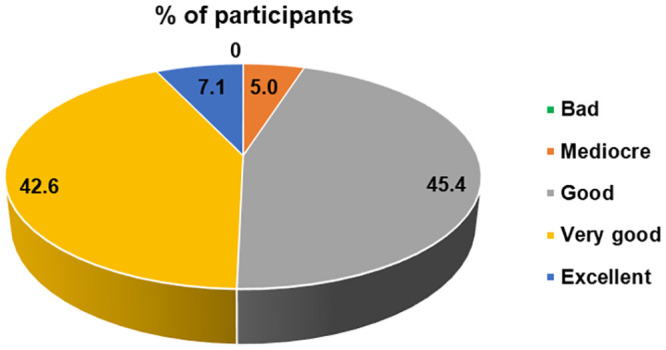
Fig 2

Percentages of participants for each choice of response to the question no.7 of the satisfaction questionnaire.

Supervisors were also asked to answer a survey after each participant was done with the test’s procedures. It is, however, important to point out that only 122 answers to the supervision survey were collected. During these supervised sessions, 92/122 (76.4%) participants did not ask for the supervisor’s assistance. Only 30 participants requested assistance mainly for tips on how to take off the cap of the needle as well as on how to use the pipette. The subgroup analysis showed that almost half of the participants (43.8%) with an education level of 4 or 5 requested assistance and this proportion was statistically higher when compared to the proportion of participants having requested assistance in the other groups (Fig 3, overall Cochran-Mantel-Haenszel test’s p = 0.0004; χ2 p value of 0.009 and 0.006 vs. level ≤ 3 and ≥ 6 respectively). The supervisors’ opinion on the execution of the procedures by the participants was collected and the execution was rated as good or better for 113/122 (92.7%) volunteers. 45.9% of the volunteers were rated as “Good”, 36.1% as “Very Good” and 10.7% as “Excellent”. When age and education parameters were considered during a subgroup analysis, no difference was observed between the categories in terms of execution ratings (Fig 4A and 4B).

Fig 3. Participants with an education level 4 or 5 requested assistance more frequently.
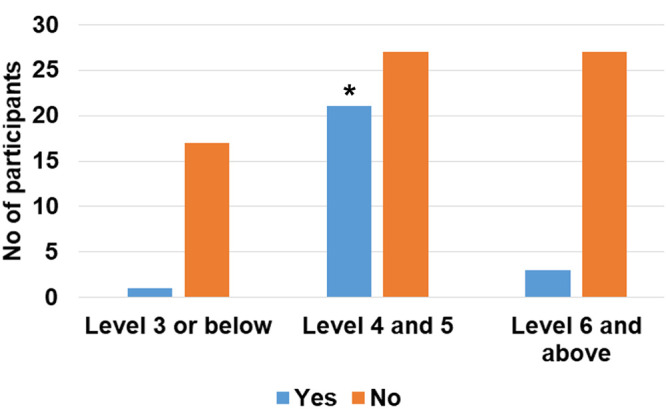
Fig 3

Number of participants having asked for a supervisor’s assistance according to education level (* χ2 p<0.05 vs. education level 3 and below or level 6 and above).

Fig 4. Description of the execution ratings according to the supervisors.
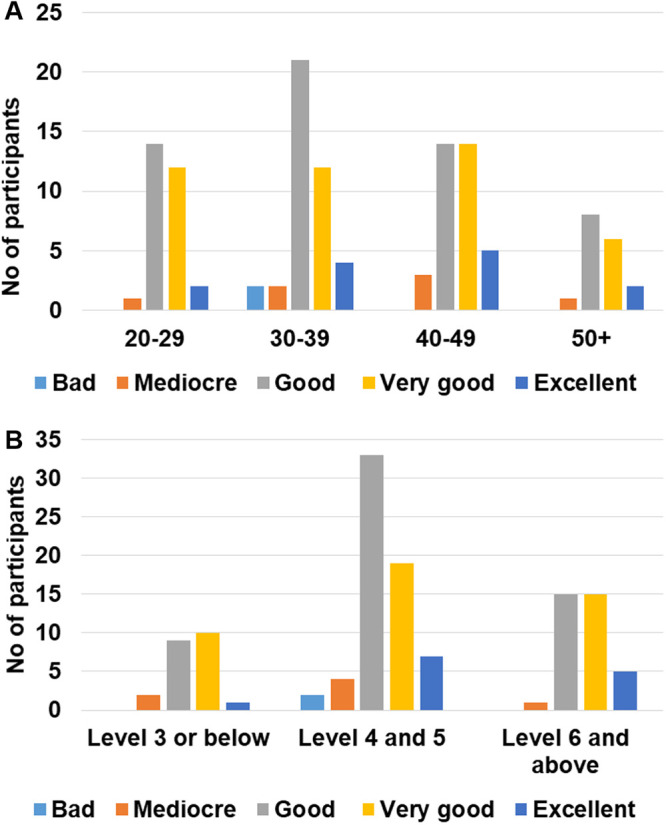
Fig 4

Number of participants in each rating category according to age (A) or education level (B).

Substudy 2

96 volunteers out of the 141 participants in the first phase took part in this second phase. The volunteers had to randomly choose three tests and write down the results. A supervisor was in charge of collecting and assessing their responses. Among these 96 participants, 94 (97.9%) judged the readability of the test to be good or better (“very good” or “excellent”). 41.2% of the volunteers rated the test legibility as “Good”, 41.7% as “Very Good” and 14.5% as “Excellent”. Only two individuals incorrectly interpreted the test by judging an invalid test as valid. The confusion originated from the fact that they had not understood that the control lane had to be pink instead of blue. Overall, 288 tests were read and only 2 were not interpreted correctly, resulting in a 99.3% success rate. These two participants were 26 and 42 years old and with an educational level of 3 and 4 respectively. A subgroup analysis considering the age and education level showed that these two parameters don’t have any influence on the ability of the participant to correctly interpret the test results (Fig 5A and 5B).

Fig 5. Description of the readability of the test results according to the participants.
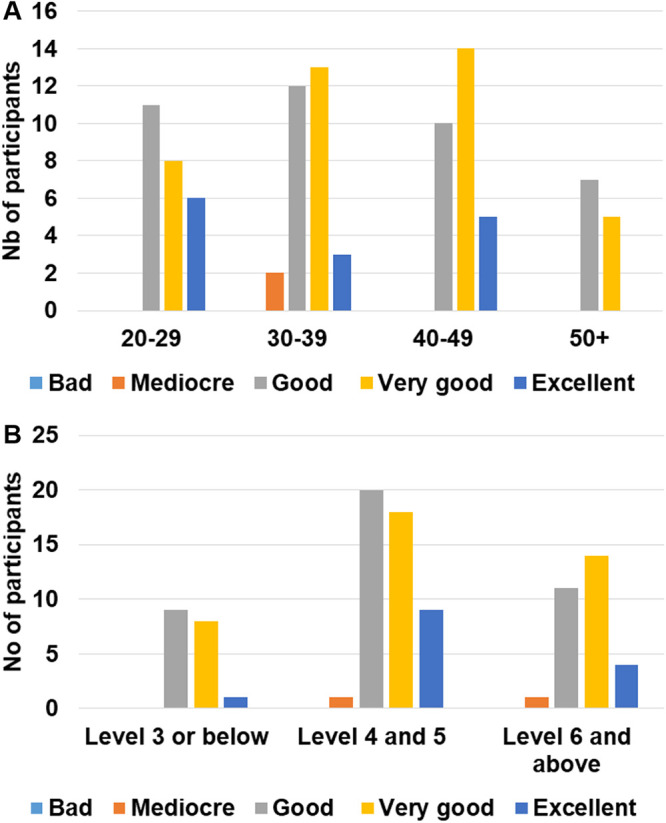
Fig 5

Number of participants in each rating category according to age (A) or education level (B).

Discussion

The objective of this study was to test the adequacy of one Rapid Diagnosis Test for Covid-19 in regard to a potential release for the general population. This test was developed to detect the presence of antibodies targeted against the SARS-CoV-2 as an indirect marker of prior infection.

The use of such tests, with the help of appropriate instructions and interpretation guidelines, could prove to be essential in supporting the current public health effort. Indeed, these tests would provide data on the dissemination of virus across the population and would therefore be a valuable tool to help comprehend the epidemic. The use of such tests will also be essential to know the immune status of patients in view of a second wave or a possible mass vaccination program [10].

COVID-PRESTO® has recently been evaluated for performance and showed sensitivity ranging from 69% for patients with symptoms that occurred from 11 to 15 days before the date of test to 100% in patients who experienced first symptoms more than 15 days before the test [13]. However, for the test to be approved as a self-test, a practicability study was needed in order to assess the feasibility of the test for use by untrained individuals with different education levels. This study showed that the instruction materials provided with the test are clear and comprehensible regardless of the user’s age or education level. However, our results showed that age or education level may slightly influence the comprehension of non-written instructions, i.e. instructional video. This finding indicates that it may be necessary to include a variety of instruction media along with the test to ensure its comprehension by a broader audience. These media may include written instructions, cartoons or videos.

The practicability of an assay is determined by the ability of the end user to obtain a valid result and interpret it. Regarding both of these criteria, the COVID-PRESTO® performed well. Indeed our results showed that 92% of the participants performed the test correctly as assessed by trained supervisors, and randomly-chosen tests were interpreted correctly by 99% of the participants. The study revealed that neither age nor the education level had an influence on either the ability to correctly read the test or the ability to execute the procedures. This strongly suggests that the execution of the test is accessible to a wide range of persons. Nevertheless, we observed that the education level influenced whether or not the participant asked for assistance. Finally, this study revealed that the COVID-PRESTO® is judged practical with a global satisfaction rate of 95% and is favorably seen as a potential self-test by the users. Taken together, these results are in favor of the COVID-PRESTO®’s potential to be considered as a self–test.

Data are scarce regarding the performance of the existing serological COVID-19 tests, and to our knowledge this is the first practicability study regarding a COVID-19 POC test, making it difficult to compare our results with other devices. However, this kind of study is necessary before making a self-test available to the general public in order to, on the one hand, avoid confusion about false positive results thus leading to unnecessary demands on health services and, on the other hand, avoid false negative results potentially leading to an underestimation of the virus’ presence across the population.

The ease of understanding the instructions is always a challenge when designing a self-test, but our study shows that the COVID-PRESTO® test procedures fare well in that regard. However, feedback from users showed that there is still room for improvement regarding the instructions and video. Indeed, some of the volunteers had legitimate questions on technical procedures such as the handling of the lancet needle, and the use of the pipette. This was shown by the fact that almost a quarter of the participants asked for assistance from a supervisor. It is important to point out that in our study, socio-demographic parameters, such as age and education, did not influence any of the tested parameters. This suggests that the instructions as well as the procedures are sufficiently clear and simple to be executed by the general public.

The next step for a person that has been tested positive for the Covid-19 is knowing if he/she is still contagious and whether he/she has to isolate his/herself from others. It has been recently demonstrated that individuals who have recovered form a mild form of the COVID-19 possess neutralizing antibodies [10], however, based on the currently available data we can only assume without certainty that infection with the virus might generate protective immunity [14]. It is therefore important that the test instructions include clear and understandable guidance regarding the actions that need to be taken in case of a positive or negative result, in order to avoid a relaxation of safety measures. To this end, the instructions for use of the COVID-PRESTO® test will recommend seeking care from a Primary Care provider and undergoing further testing (PCR) to confirm/invalidate the presence of an active infection in case of a positive test.

Conclusion

These 2 substudies indicate that the finger-stick COVID PRESTO® self-test is practical and that test users correctly read the results. The COVID-PRESTO® should be considered as a suitable candidate for a public release in order to provide an additional tool to gather information about the dissemination of the virus across the population.

Supporting information

S1 Dataset

(XLSX)

Acknowledgments

The authors would like to thank the technical staff of the Department of Infectious diseases for their excellent assistance. Furthermore, the authors thank Thibaut de Sablet of Clinact, France for providing medical writing support/editorial support in accordance with Good Publication Practice (GPP3) guidelines.

Data Availability

All relevant data are within the paper and its Supporting information file.

Funding Statement

This study was funded by AAZ-LMB who provided the Presto rapid test but did not have a role in study design, data collection and analysis, decision to publish, or preparation of the manuscript. Électricité de France (EDF) provided support for this study in the form of salaries for authors [JPV, FS, FL, AE, DC] but did not have any additional role in study design, data collection and analysis, decision to publish, or preparation of the manuscript. The specific roles of these authors are articulated in the ‘author contributions’ section. No additional external funding was received for this study.

References

Decision Letter 0

Sanjai Kumar

24 Sep 2020

PONE-D-20-21033

Evaluation of the Practicability of a Finger-Stick Whole-Blood SARS-Cov-2 Self-Test Adapted for the General Population.

PLOS ONE

Dear Dr. Prazuck,

Thank you for submitting your manuscript to PLOS ONE. After careful consideration, we feel that it has merit but does not fully meet PLOS ONE’s publication criteria as it currently stands. Therefore, we invite you to submit a revised version of the manuscript that addresses the points raised during the review process.

Your manuscript was seen by two experts in the field. Both reviewers have raised several issues and concerns that should be fully addressed in a revised manuscript. 

Please submit your revised manuscript by Nov 08 2020 11:59PM. If you will need more time than this to complete your revisions, please reply to this message or contact the journal office at plosone@plos.org. When you're ready to submit your revision, log on to https://www.editorialmanager.com/pone/ and select the 'Submissions Needing Revision' folder to locate your manuscript file.

Please include the following items when submitting your revised manuscript:

  • A rebuttal letter that responds to each point raised by the academic editor and reviewer(s). You should upload this letter as a separate file labeled 'Response to Reviewers'.

  • A marked-up copy of your manuscript that highlights changes made to the original version. You should upload this as a separate file labeled 'Revised Manuscript with Track Changes'.

  • An unmarked version of your revised paper without tracked changes. You should upload this as a separate file labeled 'Manuscript'.

If you would like to make changes to your financial disclosure, please include your updated statement in your cover letter. Guidelines for resubmitting your figure files are available below the reviewer comments at the end of this letter.

If applicable, we recommend that you deposit your laboratory protocols in protocols.io to enhance the reproducibility of your results. Protocols.io assigns your protocol its own identifier (DOI) so that it can be cited independently in the future. For instructions see: http://journals.plos.org/plosone/s/submission-guidelines#loc-laboratory-protocols

We look forward to receiving your revised manuscript.

Kind regards,

Sanjai Kumar

Academic Editor

PLOS ONE

Journal Requirements:

When submitting your revision, we need you to address these additional requirements.

1. Please ensure that your manuscript meets PLOS ONE's style requirements, including those for file naming. The PLOS ONE style templates can be found at

https://journals.plos.org/plosone/s/file?id=wjVg/PLOSOne_formatting_sample_main_body.pdf and

https://journals.plos.org/plosone/s/file?id=ba62/PLOSOne_formatting_sample_title_authors_affiliations.pdf

2. Please provide additional details regarding participant consent. In the ethics statement in the Methods and online submission information, please ensure that you have specified (1) whether consent was informed and (2) how oral consent was documented and witnessed. If your study included minors, state whether you obtained consent from parents or guardians.

3. In your methods section, please provide the names of the four different locations volunteers were selected from.

4. Please discuss whether participants were able to opt out of the study and whether individuals who did not participate received the same treatment offered to participants.

5.We note that you have indicated that data from this study are available upon request. PLOS only allows data to be available upon request if there are legal or ethical restrictions on sharing data publicly. For information on unacceptable data access restrictions, please see http://journals.plos.org/plosone/s/data-availability#loc-unacceptable-data-access-restrictions.

In your revised cover letter, please address the following prompts:

a) If there are ethical or legal restrictions on sharing a de-identified data set, please explain them in detail (e.g., data contain potentially identifying or sensitive patient information) and who has imposed them (e.g., an ethics committee). Please also provide contact information for a data access committee, ethics committee, or other institutional body to which data requests may be sent.

b) If there are no restrictions, please upload the minimal anonymized data set necessary to replicate your study findings as either Supporting Information files or to a stable, public repository and provide us with the relevant URLs, DOIs, or accession numbers. Please see http://www.bmj.com/content/340/bmj.c181.long for guidelines on how to de-identify and prepare clinical data for publication. For a list of acceptable repositories, please see http://journals.plos.org/plosone/s/data-availability#loc-recommended-repositories.

We will update your Data Availability statement on your behalf to reflect the information you provide.

6. We note you have included a table to which you do not refer in the text of your manuscript. Please ensure that you refer to Table 1 in your text; if accepted, production will need this reference to link the reader to the Table.

[Note: HTML markup is below. Please do not edit.]

Reviewers' comments:

Reviewer's Responses to Questions

Comments to the Author

1. Is the manuscript technically sound, and do the data support the conclusions?

The manuscript must describe a technically sound piece of scientific research with data that supports the conclusions. Experiments must have been conducted rigorously, with appropriate controls, replication, and sample sizes. The conclusions must be drawn appropriately based on the data presented.

Reviewer #1: Partly

Reviewer #2: Yes

**********

2. Has the statistical analysis been performed appropriately and rigorously?

Reviewer #1: Yes

Reviewer #2: I Don't Know

**********

3. Have the authors made all data underlying the findings in their manuscript fully available?

The PLOS Data policy requires authors to make all data underlying the findings described in their manuscript fully available without restriction, with rare exception (please refer to the Data Availability Statement in the manuscript PDF file). The data should be provided as part of the manuscript or its supporting information, or deposited to a public repository. For example, in addition to summary statistics, the data points behind means, medians and variance measures should be available. If there are restrictions on publicly sharing data—e.g. participant privacy or use of data from a third party—those must be specified.

Reviewer #1: Yes

Reviewer #2: Yes

**********

4. Is the manuscript presented in an intelligible fashion and written in standard English?

PLOS ONE does not copyedit accepted manuscripts, so the language in submitted articles must be clear, correct, and unambiguous. Any typographical or grammatical errors should be corrected at revision, so please note any specific errors here.

Reviewer #1: No

Reviewer #2: Yes

**********

5. Review Comments to the Author

Please use the space provided to explain your answers to the questions above. You may also include additional comments for the author, including concerns about dual publication, research ethics, or publication ethics. (Please upload your review as an attachment if it exceeds 20,000 characters)

Reviewer #1: The manuscript “Evaluation of the Practicability of a Finger-Stick Whole-Blood SARS-CoV-2 Self-Test Adapted for the General Population” describes the results of a usability study conducted to evaluate the suitability of use of the COVID-PRESTO rapid test by the general population. The COVID-PRESTO test is a lateral flow chromatographic immunoassay that has been developed to detect and differentiate IgG and IgM antibodies to SARS-CoV-2 in human fingerstick whole blood. The study aims to assess the practicability of the test when used in non-laboratory settings. The study included 142 participants with no experience in blood drawing, whose capability to obtain an interpretable result and ability to read the results were evaluated. 88.4 % of the users judged the instructions for use to be clear and understandable. 99.3 % of the users obtained a valid result and, according to the supervisors, 92.7% of the tests were properly performed by the user. The results suggest that the test shows a potential to be used as a self-test.

Major comments:

1. The authors refer to the test used in the study as a “rapid diagnostic test”. However, generally, a diagnostic test is a test that detects an acute infection, i.e. an RT-PCR or an antigen test. Antibody assays identify individuals with an adaptive immune response, which indicates prior rather than acute infection.

2. Lines 230 – 233: it is stated that “Around a hundred of COVID-19 serological tests are currently commercially available in the US through the Emergency Use Authorization (EUA) granted to the US Centers for Disease Control and Prevention by the Food and Drug Administration (FDA)”. This statement is not correct. In fact, an EUA is granted by FDA to every manufacturer of a test, not to CDC, and as of 08/09/2020, there are 35 FDA-authorized serological tests (https://www.fda.gov/medical-devices/coronavirus-disease-2019-covid-19-emergency-use-authorizations-medical-devices/vitro-diagnostics-euas#individual-serological).

3. In Discussion (lines 275 – 276), a conclusion is made that the COVID-PRESTO is judged practical with a global satisfaction rate of 95% by the users and is favorably seen as a potential self-test. I believe that users’ satisfaction rate is not an indicator of a test’s suitability to be used outside professional healthcare facilities. The practicability of an assay as a self-test should be determined by the ability of the end user to correctly perform the test, as evaluated by a trained professional. A satisfaction questionnaire can be used to evaluate the ease of understanding the instructions for use.

4. The main conclusion that the authors make is that the COVID-PRESTO assay “should be considered as a suitable candidate for a public release”. I think it should also be noted that improvements need to be made to the test’s instructions for use (or other mitigating measures need to be put in place) because 24.6% of participants asked for assistance when administering the test.

5. In addition, although the study results seem to suggest that the test may be suitable as a self-test for the general population, the authors have to keep in mind that there may be different regulatory requirements in different parts of the world that need to be met in order for the test to be approved for this specific use.

Minor comments:

Consulting a professional editor will improve the manuscript’s readability by minimizing grammatical inaccuracies.

Reviewer #2: SUMMARY

In this study, the authors evaluate the practicability of the AAZ COVID-PRESTO® test, a Rapid Diagnostic Test (RDT), easy-to-use device to detect specific antibodies to SARS-CoV-2 in human whole blood.

In late 2019 the emergence of SARS-CoV-2, which causes COVID-19, initiated a pandemic that has been associated with over 500,000 deaths globally as of July 2020. The original outbreak that started in Wuhan, China, rapidly expanded into other continents.

AAZ COVID-PRESTO® is a lateral flow immunochromatographic assay that can be conducted using a single drop of blood. The test uses anti-human IgM antibody (test line IgM), anti-human IgG antibody (test line IgG) and rabbit IgG (control line C) immobilized on a nitrocellulose strip. The Conjugate (recombinant COVID-19 antigens labeled with colloidal gold) is also integrated into the strip.

When a specimen is added to the sample well (S) followed by assay buffer added to the buffer well (B), IgM &/or IgG antibodies if present, will bind to COVID-19 conjugates forming immunocomplexes. These complexes migrate through the nitrocellulose membrane by capillary action. When complexes meet the line of the corresponding immobilized antibody (anti-human IgM &/or anti-human IgG), they are captured forming a burgundy colored band which confirm a reactive test result. Absence of a colored band in the test region indicates a non-reactive test result. If the proper volume of specimen has been added, a colored line will change from blue to red in the control line region.

The authors describe a study conducted in 142 volunteers selected from four different locations in Central France from March 20th through May 5th, 2020. Each volunteer had to perform the following tasks:(i) read test’s instructions or watch instructional video, (ii) use the lancet to prick the fingertip and extract a drop of blood, (iii) conduct the test, (iv) read and interpret test results and (v) fill out a questionnaire.

Finally, the authors concluded that the COVID-PRESTO® assay was successfully used by most participants and showed a promising potential as a self-test to be used by the general population.

MERITS

In late 2019 the emergence of SARS-CoV-2, which causes COVID-19, initiated a pandemic that has been associated with over 500,000 deaths globally as of July 2020. The original outbreak that started in Wuhan, China, rapidly expanded into other continents. In United States, novel coronavirus has spread to nearly every state and territory, accounting for at least 192,000 deaths since February 2020.

The topic of this manuscript is extremely relevant in the current stage of the pandemic.

Containment strategies have focused on travel restrictions, isolation, use of masks, and contact tracing. As governments start easing these rules, and citizens return to daily but restricted activities, health and research authorities are searching for effective ways to test, control and track every case in large populations.

In this context, the development of new easy-to-use tests that could be accessible and distributed to everyone is imperative to help control the spread of SARS-CoV-2. After a week from the first clinical manifestations, the sensitivity of RT-PCR tests diminishes gradually, due to the decreasing amount of virus particles in the respiratory tract epithelium. In such cases, patients may have false negative results, despite the ongoing infection. IgG and IgM antibodies against the virus can be detected with 1-3 weeks after exposure.

Serological self-administered tests are of great interest, to assess the degree of immunization, to detect asymptomatic cases, to trace contacts, and to support decisions to re-admit people at work, schools and universities. Indeed, these tests could become crucial in supporting public health efforts to track virus spread and to develop containment strategies.

This work has several strengths:

• It provides additional studies of the suitability of the COVID-PRESTO® test needed to show its performance in untrained individuals as a self-administered assay. These studies are required by the European Centre for Disease Prevention and Control, before a test can be made available to the public.

• The assay was tested in non-medical volunteers, to avoid bias due to (i) previous or

current experience in blood drawing and (ii) familiarity with interpretation of diagnostic tests.

• The test’s instructions can be followed in two different formats (printed or video), which expands accessibility to materials.

• The results showed that the execution of the test was easily conducted by a wide range of individuals independently of age or education level without the need of previous training.

• This rapid test has the potential to be used for screening in low resource or emergency settings, such as evacuation or refugee centers.

CRITIQUE

1. Introduction

a. This section provides a generalized background of the topic. The authors may wish to provide a brief description of the AAZ COVID-PRESTO®, how it’s executed and indicate some of its characteristics, including specificity and sensitivity.

b. The paper that you reference on Page 3, line 92, has been published. The sentence starting “It has been evaluated …” (Line 90) will need to be edited to reflect that.

c. Interpretation of Figure 1 will benefit of a caption with a brief explanation. In addition, please define all abbreviations used.

d. Minor edits

Please correct the following sentences:

(d1) Line 75: add a coma between resource center and the COVID-19 pandemics.

(d2) Line 77: add a stop after health emergency and start the next sentence as “The mark of…”

(d3) Line 81: change the sentence from “In most countries these measures have been effective in slowing down the transmission of the virus” to “In most countries these measures have been effective in slowing down virus transmission”.

(d4) Line 96: change the sentence from “The aim of this study was to evaluate the COVID-PRESTO® test in terms of participants’ capability to obtain an interpretable result, and the users’ ability to interpret the results” to “The aim of this study was to evaluate the COVID-PRESTO® assay in terms of participants’ capability to obtain a valid test, and the users’ ability to interpret the results”.

2. Methods

e. The first sentence of the Data Analysis section needs clarification. It’s not possible to understand how the authors described the statistical analysis of the populations.

f. Minor edits

Please correct the following:

(f1) Table 1 needs formatting. Please move the title to the empty row and add a section header (Summary and explanation of the test) so that it aligns with the format you used in subsequent sections of your table.

(f2) Section 1, Table 1: capitalize the first word of each sentence.

(f3) Sub-study 2 section: the last two sentences need editing. Please consider changing them to “The participant had to randomly choose three tests and write down the results. A supervisor was in charge collecting and assessing their responses”.

(f4) Table 2, question 3: change to “Did you manage to collect the recommended amount of blood?”

(f5) Table 2, question 6: change to “Did you obtain a valid result (at least one band)?”

(f6) Table 3: please change the title to “Supervisor’s Feedback”.

3. Results

The results overall support the finding that the COVID-PRESTO® assay is an easy-to-use test and has promising potential to be used by the general population.

g. Table 4

(g1) Please explain what’s the difference between N(%) and % (under characteristics) and add a legend to the table.

(g2) In Sub-study 1, you indicate that N=142. However, only in the age category you have 142 volunteers while under study site, age and education level you have a sample of 140. Please explain the reason for this discrepancy and make changes to the totals if needed.

(g3) Sub-studies 1 and 2: Although the results are explained in the next, it is difficult to follow the outcomes related to the different groups and tasks you tested. Bar graphs, pie charts or additional tables could be helpful to better illustrate the findings and help the reader follow the analysis.

h. Minor edits

Please correct the following:

(h1) Line 147: change “to Sub-study 2” to “in Sub-study 2”.

(h2) Lines 148 and 149: change “classes” to categories”.

(h3) Line 149: the sentence should read “... level categories were defined according to the International Classification of Education …”.

(h4) Line 195: change “assistance to the supervisor” to “supervisor’s assistance”.

(h5) Line 216: change “…any influence of the ability of the participant…” to “…any influence in the ability of the participant…

4. Discussion

Findings are discussed in the context of the published literature and the references cited are relevant to the study. The data supports the conclusions of the work.

The discussion is long. The paragraphs related to the impact that the serology tests can have in fighting the current epidemic, regulations imposed by FDA, CDC and European health authorities and the need to assess the practicability of self-administered assays before promoting their use, belongs to the introduction of the paper.

g. Minor edits

(g1) Line 262: delete “These results are currently…” and add the reference after the previous sentence.

**********

6. PLOS authors have the option to publish the peer review history of their article (what does this mean?). If published, this will include your full peer review and any attached files.

If you choose “no”, your identity will remain anonymous but your review may still be made public.

Do you want your identity to be public for this peer review? For information about this choice, including consent withdrawal, please see our Privacy Policy.

Reviewer #1: No

Reviewer #2: No

[NOTE: If reviewer comments were submitted as an attachment file, they will be attached to this email and accessible via the submission site. Please log into your account, locate the manuscript record, and check for the action link "View Attachments". If this link does not appear, there are no attachment files.]

While revising your submission, please upload your figure files to the Preflight Analysis and Conversion Engine (PACE) digital diagnostic tool, https://pacev2.apexcovantage.com/. PACE helps ensure that figures meet PLOS requirements. To use PACE, you must first register as a user. Registration is free. Then, login and navigate to the UPLOAD tab, where you will find detailed instructions on how to use the tool. If you encounter any issues or have any questions when using PACE, please email PLOS at figures@plos.org. Please note that Supporting Information files do not need this step.

PLoS One. 2021 Jan 28;16(1):e0245848. doi: 10.1371/journal.pone.0245848.r002

Author response to Decision Letter 0


1 Dec 2020

PONE-D-20-21033

Evaluation of the Practicability of a Finger-Stick Whole-Blood SARS-Cov-2 Self-Test Adapted for the General Population.

Dear PLoS one editors and reviewers,

The authors would like to thank you all for your time and expertise you brought into this review. Please find below our responses (in blue) to every of your remarks and editing requests.

We hope that, following this revision, you will find that this manuscript reaches the scientific standards of publication in PLoSOne.

PLOS ONE

1. Please ensure that your manuscript meets PLOS ONE's style requirements, including those for file naming. The PLOS ONE style templates can be found at

https://journals.plos.org/plosone/s/file?id=wjVg/PLOSOne_formatting_sample_main_body.pdf and

https://journals.plos.org/plosone/s/file?id=ba62/PLOSOne_formatting_sample_title_authors_affiliations.pdf

We have amended the manuscript following this editorial guidelines

2. Please provide additional details regarding participant consent. In the ethics statement in the Methods and online submission information, please ensure that you have specified (1) whether consent was informed and (2) how oral consent was documented and witnessed. If your study included minors, state whether you obtained consent from parents or guardians.

A sentence was added (line 150) to specify how consent was obtained. This study did not include minors.

3. In your methods section, please provide the names of the four different locations volunteers were selected from.

The names of the nuclear plants were added (line 157), the other two (Vaccination clinic of the CHR Orleans and The CHR Orleans) were already mentioned.

4. Please discuss whether participants were able to opt out of the study and whether individuals who did not participate received the same treatment offered to participants.

Most of the patients were healthy volunteers as this study is not about treatment. However, when applicable, participants were treated according to the standard of care.

5.We note that you have indicated that data from this study are available upon request. PLOS only allows data to be available upon request if there are legal or ethical restrictions on sharing data publicly. For information on unacceptable data access restrictions, please see http://journals.plos.org/plosone/s/data-availability#loc-unacceptable-data-access-restrictions.

The Database is made available as a supplementary information file

6. We note you have included a table to which you do not refer in the text of your manuscript. Please ensure that you refer to Table 1 in your text; if accepted, production will need this reference to link the reader to the Table.

Reference to Table 1 was added line 168

Reviewers' comments:

Comments to the Author

Reviewer #1:

The manuscript “Evaluation of the Practicability of a Finger-Stick Whole-Blood SARS-CoV-2 Self-Test Adapted for the General Population” describes the results of a usability study conducted to evaluate the suitability of use of the COVID-PRESTO rapid test by the general population. The COVID-PRESTO test is a lateral flow chromatographic immunoassay that has been developed to detect and differentiate IgG and IgM antibodies to SARS-CoV-2 in human fingerstick whole blood. The study aims to assess the practicability of the test when used in non-laboratory settings. The study included 142 participants with no experience in blood drawing, whose capability to obtain an interpretable result and ability to read the results were evaluated. 88.4 % of the users judged the instructions for use to be clear and understandable. 99.3 % of the users obtained a valid result and, according to the supervisors, 92.7% of the tests were properly performed by the user. The results suggest that the test shows a potential to be used as a self-test.

Major comments:1. The authors refer to the test used in the study as a “rapid diagnostic test”. However, generally, a diagnostic test is a test that detects an acute infection, i.e. an RT-PCR or an antigen test. Antibody assays identify individuals with an adaptive immune response, which indicates prior rather than acute infection.

Agreed, we changed the nature of test to “Point of Care test, POC” throughout the document. This is consistent with the published performance paper as well.

2. Lines 230 – 233: it is stated that “Around a hundred of COVID-19 serological tests are currently commercially available in the US through the Emergency Use Authorization (EUA) granted to the US Centers for Disease Control and Prevention by the Food and Drug Administration (FDA)”. This statement is not correct. In fact, an EUA is granted by FDA to every manufacturer of a test, not to CDC, and as of 08/09/2020, there are 35 FDA-authorized serological tests (https://www.fda.gov/medical-devices/coronavirus-disease-2019-covid-19-emergency-use-authorizations-medical-devices/vitro-diagnostics-euas#individual-serological).

This reference has been cross checked and we have modified this statement in the text to reflect the reviewer’s comment in (lines 83 – 100)

3. In Discussion (lines 275 – 276), a conclusion is made that the COVID-PRESTO is judged practical with a global satisfaction rate of 95% by the users and is favorably seen as a potential self-test. I believe that users’ satisfaction rate is not an indicator of a test’s suitability to be used outside professional healthcare facilities. The practicability of an assay as a self-test should be determined by the ability of the end user to correctly perform the test, as evaluated by a trained professional. A satisfaction questionnaire can be used to evaluate the ease of understanding the instructions for use.

This point has been added in the discussion (lines 343 – 350). The ability of the user to correctly interpret the results has been tested in our study (sub-study 2) and the outcome was clearly positive (99% of correct answers).

4. The main conclusion that the authors make is that the COVID-PRESTO assay “should be considered as a suitable candidate for a public release”. I think it should also be noted that improvements need to be made to the test’s instructions for use (or other mitigating measures need to be put in place) because 24.6% of participants asked for assistance when administering the test.

This point is discussed in the paper (lines 366 – 375), and we acknowledge that changes need to be made in the instruction materials to increase their comprehension. The instruction leaflet and video will be amended to address the points that were considered not clear by the users.

5. In addition, although the study results seem to suggest that the test may be suitable as a self-test for the general population, the authors have to keep in mind that there may be different regulatory requirements in different parts of the world that need to be met in order for the test to be approved for this specific use.

The conclusion of the paper is that COVID-PRESTO should be considered as a candidate for self-testing. Currently, this test is intended for the French market only. The French competent authority considers that it is premature to promote the use of SARs CoV-2 self-test due to a lack or published data regarding the reliability of these tests in real life conditions. Cf below (document in French):

https://www.has-sante.fr/upload/docs/application/pdf/2020-05/rapport_tests_serologiques_rapides_covid-19_vd.pdf

We hope that the results presented here will help fill that void and fuel the discussion about these tests.

Minor comments: Consulting a professional editor will improve the manuscript’s readability by minimizing grammatical inaccuracies.

The manuscript has been reviewed by a native English speaker in order to correct the grammatical inaccuracies

Reviewer #2: SUMMARY

In this study, the authors evaluate the practicability of the AAZ COVID-PRESTO® test, a Rapid Diagnostic Test (RDT), easy-to-use device to detect specific antibodies to SARS-CoV-2 in human whole blood.

In late 2019 the emergence of SARS-CoV-2, which causes COVID-19, initiated a pandemic that has been associated with over 500,000 deaths globally as of July 2020. The original outbreak that started in Wuhan, China, rapidly expanded into other continents.

AAZ COVID-PRESTO® is a lateral flow immunochromatographic assay that can be conducted using a single drop of blood. The test uses anti-human IgM antibody (test line IgM), anti-human IgG antibody (test line IgG) and rabbit IgG (control line C) immobilized on a nitrocellulose strip. The Conjugate (recombinant COVID-19 antigens labeled with colloidal gold) is also integrated into the strip.

When a specimen is added to the sample well (S) followed by assay buffer added to the buffer well (B), IgM &/or IgG antibodies if present, will bind to COVID-19 conjugates forming immunocomplexes. These complexes migrate through the nitrocellulose membrane by capillary action. When complexes meet the line of the corresponding immobilized antibody (anti-human IgM &/or anti-human IgG), they are captured forming a burgundy colored band which confirm a reactive test result. Absence of a colored band in the test region indicates a non-reactive test result. If the proper volume of specimen has been added, a colored line will change from blue to red in the control line region.

The authors describe a study conducted in 142 volunteers selected from four different locations in Central France from March 20th through May 5th, 2020. Each volunteer had to perform the following tasks:(i) read test’s instructions or watch instructional video, (ii) use the lancet to prick the fingertip and extract a drop of blood, (iii) conduct the test, (iv) read and interpret test results and (v) fill out a questionnaire.

Finally, the authors concluded that the COVID-PRESTO® assay was successfully used by most participants and showed a promising potential as a self-test to be used by the general population.

MERITS

In late 2019 the emergence of SARS-CoV-2, which causes COVID-19, initiated a pandemic that has been associated with over 500,000 deaths globally as of July 2020. The original outbreak that started in Wuhan, China, rapidly expanded into other continents. In United States, novel coronavirus has spread to nearly every state and territory, accounting for at least 192,000 deaths since February 2020.

The topic of this manuscript is extremely relevant in the current stage of the pandemic.

Containment strategies have focused on travel restrictions, isolation, use of masks, and contact tracing. As governments start easing these rules, and citizens return to daily but restricted activities, health and research authorities are searching for effective ways to test, control and track every case in large populations.

In this context, the development of new easy-to-use tests that could be accessible and distributed to everyone is imperative to help control the spread of SARS-CoV-2. After a week from the first clinical manifestations, the sensitivity of RT-PCR tests diminishes gradually, due to the decreasing amount of virus particles in the respiratory tract epithelium. In such cases, patients may have false negative results, despite the ongoing infection. IgG and IgM antibodies against the virus can be detected with 1-3 weeks after exposure.

Serological self-administered tests are of great interest, to assess the degree of immunization, to detect asymptomatic cases, to trace contacts, and to support decisions to re-admit people at work, schools and universities. Indeed, these tests could become crucial in supporting public health efforts to track virus spread and to develop containment strategies.

This work has several strengths:

• It provides additional studies of the suitability of the COVID-PRESTO® test needed to show its performance in untrained individuals as a self-administered assay. These studies are required by the European Centre for Disease Prevention and Control, before a test can be made available to the public.

• The assay was tested in non-medical volunteers, to avoid bias due to (i) previous or current experience in blood drawing and (ii) familiarity with interpretation of diagnostic tests.

• The test’s instructions can be followed in two different formats (printed or video), which expands accessibility to materials.

• The results showed that the execution of the test was easily conducted by a wide range of individuals independently of age or education level without the need of previous training.

• This rapid test has the potential to be used for screening in low resource or emergency settings, such as evacuation or refugee centers.

CRITIQUE

1. Introduction

a. This section provides a generalized background of the topic. The authors may wish to provide a brief description of the AAZ COVID-PRESTO®, how it’s executed and indicate some of its characteristics, including specificity and sensitivity.

Added: lines 114 to 121

b. The paper that you reference on Page 3, line 92, has been published. The sentence starting “It has been evaluated …” (Line 90) will need to be edited to reflect that.

Corrected: lines 118 to 121

c. Interpretation of Figure 1 will benefit of a caption with a brief explanation. In addition, please define all abbreviations used.

An explanation has been added in lines 130 to 143

d. Minor edits

Please correct the following sentences:

(d1) Line 75: add a coma between resource center and the COVID-19 pandemics.

Corrected

(d2) Line 77: add a stop after health emergency and start the next sentence as “The mark of…”

Corrected

(d3) Line 81: change the sentence from “In most countries these measures have been effective in slowing down the transmission of the virus” to “In most countries these measures have been effective in slowing down virus transmission”.

Corrected

(d4) Line 96: change the sentence from “The aim of this study was to evaluate the COVID-PRESTO® test in terms of participants’ capability to obtain an interpretable result, and the users’ ability to interpret the results” to “The aim of this study was to evaluate the COVID-PRESTO® assay in terms of participants’ capability to obtain a valid test, and the users’ ability to interpret the results”.

Done

2. Methods

e. The first sentence of the Data Analysis section needs clarification. It’s not possible to understand how the authors described the statistical analysis of the populations.

We rephrased this section in order to clarify our methods.

f. Minor edits

Please correct the following:

(f1) Table 1 needs formatting. Please move the title to the empty row and add a section header (Summary and explanation of the test) so that it aligns with the format you used in subsequent sections of your table.

Corrected

(f2) Section 1, Table 1: capitalize the first word of each sentence.

Corrected

(f3) Sub-study 2 section: the last two sentences need editing. Please consider changing them to “The participant had to randomly choose three tests and write down the results. A supervisor was in charge collecting and assessing their responses”.

Corrected

(f4) Table 2, question 3: change to “Did you manage to collect the recommended amount of blood?”

Corrected

(f5) Table 2, question 6: change to “Did you obtain a valid result (at least one band)?”

Corrected

(f6) Table 3: please change the title to “Supervisor’s Feedback”.

Corrected

3. Results

The results overall support the finding that the COVID-PRESTO® assay is an easy-to-use test and has promising potential to be used by the general population.

g. Table 4

(g1) Please explain what’s the difference between N(%) and % (under characteristics) and add a legend to the table.

It was a mistake, there was no difference, the table has been corrected accordingly.

(g2) In Sub-study 1, you indicate that N=142. However, only in the age category you have 142 volunteers while under study site, age and education level you have a sample of 140. Please explain the reason for this discrepancy and make changes to the totals if needed.

The entire table has been corrected. Errors were spotted after initial submission of the manuscript to PLoSOne. We addressed them in the revised manuscript. Proportions changed a little but nothing significant was observed.

(g3) Sub-studies 1 and 2: Although the results are explained in the next, it is difficult to follow the outcomes related to the different groups and tasks you tested. Bar graphs, pie charts or additional tables could be helpful to better illustrate the findings and help the reader follow the analysis.

Bar graphs and a pie chart were added in the results section to increase clarity.

h. Minor edits

Please correct the following:

(h1) Line 147: change “to Sub-study 2” to “in Sub-study 2”

Corrected

(h2) Lines 148 and 149: change “classes” to categories”.

Corrected

(h3) Line 149: the sentence should read “... level categories were defined according to the International Classification of Education …”.

Corrected

(h4) Line 195: change “assistance to the supervisor” to “supervisor’s assistance”.

Corrected

(h5) Line 216: change “…any influence of the ability of the participant…” to “…any influence in the ability of the participant…

Corrected

4. Discussion

Findings are discussed in the context of the published literature and the references cited are relevant to the study. The data supports the conclusions of the work.

The discussion is long. The paragraphs related to the impact that the serology tests can have in fighting the current epidemic, regulations imposed by FDA, CDC and European health authorities and the need to assess the practicability of self-administered assays before promoting their use, belongs to the introduction of the paper.

The entire paragraph and the following has been moved to the introduction (lines 83 – 113)

g. Minor edits

(g1) Line 262: delete “These results are currently…” and add the reference after the previous sentence.

Corrected

Attachment

Submitted filename: Reviews PONE rebuttal.docx

Decision Letter 1

Sanjai Kumar

15 Dec 2020

PONE-D-20-21033R1

Evaluation of the Practicability of a Finger-Stick Whole-Blood SARS-Cov-2 Self-Test Adapted for the General Population.

PLOS ONE

Dear Dr. Prazuck,

Thank you for submitting your manuscript to PLOS ONE. After careful consideration, we feel that it has merit but does not fully meet PLOS ONE’s publication criteria as it currently stands. Therefore, we invite you to submit a revised version of the manuscript that addresses the points raised during the review process.

Your manuscript was seen by the same reviewers who had reviewed the earlier version. While you claim that the grammatical and editorial errors have been fixed the reviewers remain concerned that the manuscript is still not ready for publication. I urge you to make serious efforts to fix the outstanding issues so that a decision can be made regarding the suitability of your paper for publication.

Please submit your revised manuscript by Jan 29 2021 11:59PM. If you will need more time than this to complete your revisions, please reply to this message or contact the journal office at plosone@plos.org. When you're ready to submit your revision, log on to https://www.editorialmanager.com/pone/ and select the 'Submissions Needing Revision' folder to locate your manuscript file.

Please include the following items when submitting your revised manuscript:

  • A rebuttal letter that responds to each point raised by the academic editor and reviewer(s). You should upload this letter as a separate file labeled 'Response to Reviewers'.

  • A marked-up copy of your manuscript that highlights changes made to the original version. You should upload this as a separate file labeled 'Revised Manuscript with Track Changes'.

  • An unmarked version of your revised paper without tracked changes. You should upload this as a separate file labeled 'Manuscript'.

If you would like to make changes to your financial disclosure, please include your updated statement in your cover letter. Guidelines for resubmitting your figure files are available below the reviewer comments at the end of this letter.

If applicable, we recommend that you deposit your laboratory protocols in protocols.io to enhance the reproducibility of your results. Protocols.io assigns your protocol its own identifier (DOI) so that it can be cited independently in the future. For instructions see: http://journals.plos.org/plosone/s/submission-guidelines#loc-laboratory-protocols

We look forward to receiving your revised manuscript.

Kind regards,

Sanjai Kumar

Academic Editor

PLOS ONE

[Note: HTML markup is below. Please do not edit.]

Reviewers' comments:

Reviewer's Responses to Questions

Comments to the Author

1. If the authors have adequately addressed your comments raised in a previous round of review and you feel that this manuscript is now acceptable for publication, you may indicate that here to bypass the “Comments to the Author” section, enter your conflict of interest statement in the “Confidential to Editor” section, and submit your "Accept" recommendation.

Reviewer #1: (No Response)

Reviewer #2: (No Response)

**********

2. Is the manuscript technically sound, and do the data support the conclusions?

The manuscript must describe a technically sound piece of scientific research with data that supports the conclusions. Experiments must have been conducted rigorously, with appropriate controls, replication, and sample sizes. The conclusions must be drawn appropriately based on the data presented.

Reviewer #1: Yes

Reviewer #2: Yes

**********

3. Has the statistical analysis been performed appropriately and rigorously?

Reviewer #1: Yes

Reviewer #2: No

**********

4. Have the authors made all data underlying the findings in their manuscript fully available?

The PLOS Data policy requires authors to make all data underlying the findings described in their manuscript fully available without restriction, with rare exception (please refer to the Data Availability Statement in the manuscript PDF file). The data should be provided as part of the manuscript or its supporting information, or deposited to a public repository. For example, in addition to summary statistics, the data points behind means, medians and variance measures should be available. If there are restrictions on publicly sharing data—e.g. participant privacy or use of data from a third party—those must be specified.

Reviewer #1: Yes

Reviewer #2: Yes

**********

5. Is the manuscript presented in an intelligible fashion and written in standard English?

PLOS ONE does not copyedit accepted manuscripts, so the language in submitted articles must be clear, correct, and unambiguous. Any typographical or grammatical errors should be corrected at revision, so please note any specific errors here.

Reviewer #1: No

Reviewer #2: No

**********

6. Review Comments to the Author

Please use the space provided to explain your answers to the questions above. You may also include additional comments for the author, including concerns about dual publication, research ethics, or publication ethics. (Please upload your review as an attachment if it exceeds 20,000 characters)

Reviewer #1: Authors state that the revised version of the manuscript was proofread by a native English speaker, but the paper still contains multiple grammatical errors and missing/extra words.

I suggest authors check the references: after several paragraphs were moved from discussion to introduction, the references are out of order. In addition, the reference to the FIND foundation website is not formatted as a reference (line 79).

Methods and Materials:

Substudy 1 (lines 157 – 158): It is not clear from the sentence whether the volunteers read the test’s Instructions for Use, watched an instructional video, or both.

Results: Authors indicate that 142 volunteers were selected to participate, and 140 of those filled in the satisfaction questionnaire. All sections of Table 4 therefore include 140 participants, with the exception of the Age section, which lists 142 participants, and the N in the Substudy 1 table heading. Please revise the table so that the numbers are consistent.

Substudy 1 (lines 223 and 232): the number of participants who filled in the questionnaire is 141 in this section of the text, which contradicts the previous paragraphs and Table 4, and it appears that this number was used in all percentage calculations in these two paragraphs. Please revise the numbers so that the number of participants who filled in the questionnaire is consistent throughout the manuscript.

Substudy 2 (line 260): the description of the study specifies that the number of participants who filled in the questionnaire is 141. Please revise the numbers so that the number of participants who filled in the questionnaire is consistent throughout the manuscript.

Discussion (lines 303 – 306): The order of these two sentences seems to suggest that the first sentence (“Nevertheless, we observed…”) supports the conclusion in the second sentence (“This strongly suggests that the execution...”). Since it doesn’t appear that the authors intended for these two sentences to be logically linked, I suggest revising the passage or at least changing the order of the sentences.

Although seropositivity typically occurs later in the course of disease, as authors correctly noted, based on the currently available data it is not clear whether the antibody positivity confers immunity. In addition, infection status cannot be inferred from a result of a serological test. To this end, the COVID-PRESTO test IFU will recommend further molecular testing to diagnose acute infection; however, this instruction seems to only apply in case of a positive IgM test. It has been shown that for SARS-CoV-2 IgM and IgG seroconversion times are not significantly different, and some studies reported that up to 60% of patients were positive for IgG within the first seven days since onset of symptoms (PMID: 32964627). Therefore, I would suggest not excluding IgG positive patients from this recommendation in cases where acute infection is suspected.

Reviewer #2: MERITS

The manuscript has improved substantially after the authors edited the text, added graphs and addressed reviewers’ comments. However, there are still several changes/edits that need to be included. I mentioned several examples (see minor edits), but I strongly encourage the authors to consult a scientific editor.

MAJOR ISSUES

1. Table 4: Although the authors explained that there is no difference between N(%) and % (under characteristics) and that they state that the table was updated, Table 4 as it stands in the revision, looks identical to the one submitted in the original manuscript. In addition, no changes to the totals or proportions were made. Please update Table 4 accordingly.

2. The comparisons conducted to determine whether there was a difference in participants’ comprehension when instructions were delivered in writing or by video, are not clear. Addition of a table (including groups and results) may facilitate readers’ understanding.

3. Figure 3: what does the asterisk over the column indicate? Please add this information in the figure legend.

MINOR EDITS

4. Line 117: delete easy-to-use device

5. Line 118: replace “In summary” by “Briefly”

6. Line 136: delete “when” and capitalize “A”.

7. Line 137: replace “followed by assay buffer added to the buffer well” with “followed by addition of assay buffer to the buffer well”.

8. Line 138: delete the “s” in “migrates” (complexes is plural).

9. Line 155: Add a stop after “(if any)”.

10. Line 158: delete “the” before study. Start sentence with “Study volunteers…”

11. Lines 168-169: the sentence needs further editing for clarity. Replace “information” by “instructions”.

12. Line 170: sentence should read “The instructions WERE as follows…”

13. Line 177: delete “on the test”.

14. Line 184: change title to “Reading and interpretation of results”.

15. Line 188: replace “their correctness” to “accuracy”.

16. Please revise reference # 2. The citation is incomplete.

17. Table 2, question 3. I suggested the authors to change this question to “Did you manage to collect the recommended amount of blood?” In their response, they state that they made the requested modification. However, Table 2 as it stands in the revision, does not reflect the change.

18. Table 2, question 6. I suggested the authors to change this question to “Did you obtain a valid result (at least one band)?” In their response, they state that they made the requested modification. However, Table 2 as it stands in the revision, does not reflect the change.

19. Table 3. I suggested the authors to change the title and table heading to “Supervisor’s Feedback”. In their response, they state that they made the requested modification. However, Table 2 as it stands in the revision, does not reflect the change.

20. Line 199: delete the word “their”.

21. Line 205: add a comma after “among those”.

22. Line 208: add “:” after defined (…categories were defined:…).

23. Line 211: number “6” is missing.

24. Line 220: replace “on the 221 comprehension of the instructions notice” with “ on comprehension’s instruction”.

25. Line 222: add a comma after “However”.

26. Line 223: add a comma after “Indeed”.

27. Line 258: delete the word “classes” after age and education.

28. Line 273: same as in line 258.

**********

7. PLOS authors have the option to publish the peer review history of their article (what does this mean?). If published, this will include your full peer review and any attached files.

If you choose “no”, your identity will remain anonymous but your review may still be made public.

Do you want your identity to be public for this peer review? For information about this choice, including consent withdrawal, please see our Privacy Policy.

Reviewer #1: No

Reviewer #2: No

[NOTE: If reviewer comments were submitted as an attachment file, they will be attached to this email and accessible via the submission site. Please log into your account, locate the manuscript record, and check for the action link "View Attachments". If this link does not appear, there are no attachment files.]

While revising your submission, please upload your figure files to the Preflight Analysis and Conversion Engine (PACE) digital diagnostic tool, https://pacev2.apexcovantage.com/. PACE helps ensure that figures meet PLOS requirements. To use PACE, you must first register as a user. Registration is free. Then, login and navigate to the UPLOAD tab, where you will find detailed instructions on how to use the tool. If you encounter any issues or have any questions when using PACE, please email PLOS at figures@plos.org. Please note that Supporting Information files do not need this step.

Decision Letter 2

Sanjai Kumar

11 Jan 2021

Evaluation of the Practicability of a Finger-Stick Whole-Blood SARS-Cov-2 Self-Test Adapted for the General Population.

PONE-D-20-21033R2

Dear Dr. Prazuck,

We’re pleased to inform you that your manuscript has been judged scientifically suitable for publication and will be formally accepted for publication once it meets all outstanding technical requirements.

Within one week, you’ll receive an e-mail detailing the required amendments. When these have been addressed, you’ll receive a formal acceptance letter and your manuscript will be scheduled for publication.

An invoice for payment will follow shortly after the formal acceptance. To ensure an efficient process, please log into Editorial Manager at http://www.editorialmanager.com/pone/, click the 'Update My Information' link at the top of the page, and double check that your user information is up-to-date. If you have any billing related questions, please contact our Author Billing department directly at authorbilling@plos.org.

If your institution or institutions have a press office, please notify them about your upcoming paper to help maximize its impact. If they’ll be preparing press materials, please inform our press team as soon as possible -- no later than 48 hours after receiving the formal acceptance. Your manuscript will remain under strict press embargo until 2 pm Eastern Time on the date of publication. For more information, please contact onepress@plos.org.

Kind regards,

Sanjai Kumar

Academic Editor

PLOS ONE

Additional Editor Comments (optional):

Reviewers' comments:

Acceptance letter

Sanjai Kumar

20 Jan 2021

PONE-D-20-21033R2

Evaluation of the Practicability of a Finger-Stick Whole-Blood SARS-Cov-2 Self-Test Adapted for the General Population.

Dear Dr. Prazuck:

I'm pleased to inform you that your manuscript has been deemed suitable for publication in PLOS ONE. Congratulations! Your manuscript is now with our production department.

If your institution or institutions have a press office, please let them know about your upcoming paper now to help maximize its impact. If they'll be preparing press materials, please inform our press team within the next 48 hours. Your manuscript will remain under strict press embargo until 2 pm Eastern Time on the date of publication. For more information please contact onepress@plos.org.

If we can help with anything else, please email us at plosone@plos.org.

Thank you for submitting your work to PLOS ONE and supporting open access.

Kind regards,

PLOS ONE Editorial Office Staff

on behalf of

Dr. Sanjai Kumar

Academic Editor

PLOS ONE

Associated Data

    This section collects any data citations, data availability statements, or supplementary materials included in this article.

    Supplementary Materials

    S1 Dataset

    (XLSX)

    Attachment

    Submitted filename: Reviews PONE rebuttal.docx

    Attachment

    Submitted filename: Reviews PONE rebuttal 2nd revision.docx

    Data Availability Statement

    All relevant data are within the paper and its Supporting information file.


    Articles from PLoS ONE are provided here courtesy of PLOS

    RESOURCES