



The Musculoskeletal Tumor Society’s (MSTS) 43rd Annual Meeting in Portland, OR, USA from October 2-4, 2019 was a scientific success; selected proceedings from that meeting are in this issue of our society’s official journal, Clinical Orthopaedics and Related Research®.
Editors, society members, and content experts worked tirelessly to review, critique, and polish our original papers, which aim to improve both our specialty’s focus to cure life-threatening disease and to advance our understanding of cancer.
As we were producing this year’s meeting proceedings in CORR®, the coronavirus disease 2019 (COVID-19) pandemic erupted. Although clinical medicine (and life as we know it) was turned upside down, our patients still needed care and our academic missions continued. Professional obligations were not suspended, and all involved felt strongly the need to disseminate new knowledge and create a permanent record of the best papers from our meeting. The extra challenge was to do so while balancing our professional obligations during the pandemic.
Rather than wait until the print edition is ready, this commentary is being rolled out early, online, as manuscripts are still being prepared for the symposium. It serves as a tribute to the oncologists and surgeons whose work continues even as we confront the public-health crisis.
The MSTS meeting had two focused symposia. The first included a stimulating multidisciplinary discussion on how young adult patients are often lost between the pediatricians and adult oncologists. The differences in medical practice are captured in stark relief when transitioning from the children’s hospital to the general hospital. Young people go through the turbulent “coming of age” while isolated from their peers and often struggle to gain the self confidence needed to support them as young adults. Different strategies, such as young adult clinics, infrastructure to encourage peer support, and vocational counseling were advocated to help these young survivors. It was a timely, consciousness-raising session with practical application. The second symposium’s focus was on metastatic bone disease, generally the greatest source of pain and morbidity for our patients, dwarfing sarcoma and management of benign tumors. The presenters challenged orthopaedic oncologists to dissect out the pathophysiology of metastasis, while we practice the maxim of “cure some, help most, and comfort all” for patients with bone metastases.
Oncologic surgical specialists generally are willing to tackle big surgery to try to defeat a formidable adversary like cancer. But COVID-19 is creating a new normal for orthopaedic practice, including my own. In the COVID-19 world, I must triage patients based on their known or suspected diagnosis—how essential is their operation? How urgent is it? How narrow is the time window when surgery can still be curative? More upsetting are questions like what is the chance for cure? Who takes priority—the young adult with a sarcoma or the older patient with a pathological fracture?
We and the patients are put in a bind: the Scylla and Charybdis of using scarce resources for the desperate and not having the operating room access, support staff, and even personal protective equipment to care for all of the patients who depend on us to be their advocates. The “Right to try” new, non-FDA approved drugs legislated May 30, 2018 [2], is a thing of the past. There is a moratorium on clinical trials, taking away sustaining hope for patients looking for the latest scientific breakthrough [1]. We are forced to recommend the “best available treatment,” and sadly this treatment is not always as good as we wish. Our patients with cancer need our help to survive and maintain quality of life, yet we now have fewer resources to address those needs. Patients are left to confront their cancer without the tools to vanquish it. The faith that the patients and we have vested in modern medicine has come up short. In many instances, we cannot save our patients, and because of isolation restrictions in place during the COVID-19 pandemic, we cannot even allow our patients the solace of family, leaving them to die alone [3].
The tragedy for the patient and family translates into a profound emptiness for the practitioner. Placed in a situation with limited options and no satisfactory outcome, doctors may succumb to existential guilt, a feeling that is predicated on the idea that we could or should have done more. In this context, we feel powerless at the most-critical moment for our patients. Our sense of failure may manifest as anxiety, anger, shame, or frank depression.
The solution to existential guilt is self-forgiveness. As we love ourselves in these stressful times, we will be better able to love our neighbors. We will be able to harness our professional commitment, take the knowledge presented in proceedings like those of the MSTS in this issue of CORR, and translate it into better care. A key prerequisite for the orthopaedic oncologist is optimism in our ability to overcome a powerful foe—be it cancer or COVID-19. Do not despair. Hope springs eternal.
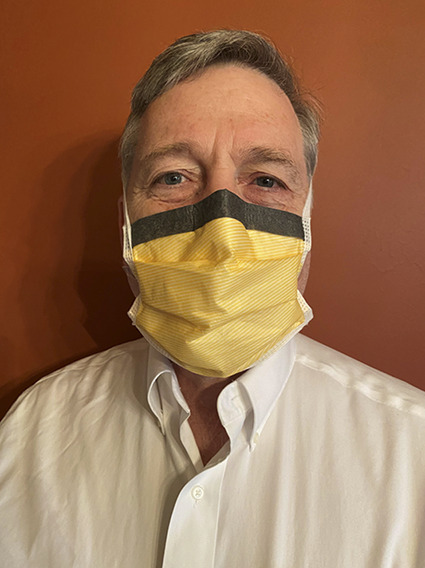
John H. Healey MD
Footnotes
The author certifies that he or she has no commercial associations (e.g. consultancies, stock ownership, equity interest, patent/licensing arrangements, etc.) that might pose a conflict of interest in connection with the submitted article.
All ICMJE Conflict of Interest Forms for authors and Clinical Orthopaedics and Related Research® editors and board members are on file with the publication and can be viewed on request.
The opinions expressed are those of the writer, and do not reflect the opinion or policy of CORR® or The Association of Bone and Joint Surgeons®.
References
- 1.Ledford H. Coronavirus shuts down trials of drugs for multiple other diseases. Available at: https://www.nature.com/articles/d41586-020-00889-6. Accessed May 19, 2020. [DOI] [PubMed]
- 2.US Food and Drug Administration Right to try. Available at: https://www.fda.gov/patients/learn-about-expanded-access-and-other-treatment-options/right-try. Accessed May 19, 2020.
- 3.Wakam GK Montgomery JR Biesterveld BE, and Brown CS. Perspective. Not dying alone — Modern compassionate care in the Covid-19 pandemic. N Engl J Med. [Published online ahead of print April 14, 2020]. DOI: 10.1056/NEJMp2007781. [DOI] [PMC free article] [PubMed]