



Abstract
Glutinous rice flour (GRF) was prepared using three milling process (wet milling, low temperature impact milling (dry milling), and roller milling (dry milling)) to investigate their effects on the physicochemical properties of glutinous rice flour and sweet dumplings prepared with that flour. Results revealed that a method of grinding used in the milling process had a significant (P < 0.05) effect on the properties of GRF and the resulting sweet dumplings. Dry milling (low temperature impact milling and roller milling) resulted in higher damaged starch content and coarser particle size than wet milling. Dry-milled flour exhibited a significantly lower hunter whiter value, apparent viscosity, pasting temperature, enthalpy value, and degree of crystalline compared to the wet-milling method. Dry milling significantly decreased the smoothness of the surface, whiteness value, transmittance of soup, resilience of dumplings, as well as increased the cracking rate and water loss during the fast-freeze. The obtained results could be used as reference for improving sweet dumpling made from dry-milled GRF.
Keywords: Glutinous rice flour, Milling, Physicochemical properties, Quality, Sweet dumpling
Introduction
Rice is the staple food for about 3.5 billion people in the world. Glutinous rice cultivated throughout in Asia and which is widely used in various staple foods, including sweet dumplings, which are one of the most popular traditional foods in China, being the requisite food during the Lantern Festival celebrations. Glutinous rice contains high amylopectin content, has opaque appearance, and is soft in texture (Lian et al. 2014). Glutinous rice flour (GRF) is the product of glutinous rice and is the main ingredient in dumplings, in fact, with most of it being processed into sweet dumplings. Since GRF has lower retrogradation and good freeze–thaw stability (Li et al. 2018a), GRF is a good raw material for producing fast-frozen foods. By 2018, annual production of frozen in China dumplings has increased to two million tons.
The milling process is widely used in grain processing. Whole cereal grains are milled into fine particles or fragments through a grinding process. Frictional heat and force generated during the grinding cause damage to the ingredients, which further influences flour’s physicochemical and functional properties (Asmeda et al. 2016). The grain industry uses various milling methods, with wet milling and dry milling being the two major processes used to in the rice flour producing. The wet milling method consists of five steps of grinding the kernel: soaking in water, draining, grinding with excess water added, filtering and drying. Wet milling requires intensive energy and water consumption, which not only wastes water but also generates serious pollution. Furthermore, it is difficult to soak grain for a long time without creating bacterial growth, which affects food quality and safety (Tong et al. 2017). Dry milling involves the production of flour under dry conditions using various grinding machines. Dry milling methods require less energy consumption, do not lead to a waste of water, and cause fewer health risks (Asmeda et al. 2016).
Frictional heat and mechanical force generated during grinding cause damage to the ingredients, influencing the microstructure, as well as the physicochemical and functional properties of the cereal flour (Lee et al. 2019). The degree of crystallization, polymerization, and the damage to the starch depends on the conditions, breaking mechanism, and the intensity of grinding. In particular, the final particle size can vary greatly depending on the condition and the type of grinding (Silva et al. 2012). Many researchers have shown that flour displays different physicochemical properties after different grinding methods. Hasjim et al. (2013) found that rice flour produced by cryogenic milling has better hydration properties than that produced by hammer milling. Yan et al. (2020) investigated the effects of different milling methods on the physicochemical properties of brown rice and showed that low-temperature impact milling can retain nutrients in brown rice better than the colloid milling and dry high-speed milling. Furthermore, grinding method is an important factor in defining the quality of the final products. Rao et al. (2016) reported that biscuits made with the sorghum flour produced by traditional milling methods have better quality. Wu et al. (2019) found that wet-milled rice flour is more suitable for making gluten-free rice bread than ultrafine-milled rice flour.
A grinding method influences the final quality of the product through micronization that alters the physicochemical properties of the cereal flour. Therefore, studying the influence of the grinding methods on the physicochemical properties of glutinous rice flour is important for the development and utilization of glutinous rice. However, the effects of the different milling methods on the structure and physicochemical properties of glutinous rice flour and its final product—the sweet dumplings have not been thoroughly examined. This study aimed to use different milling methods, such as roller milling, low temperature impact milling, and wet milling in preparation of glutinous rice flour and investigate their effects on the structural, physicochemical, pasting, and thermal properties of the flour. Additionally, sweet dumplings were prepared using the GRF produced by the different milling methods to determine their relative cooking qualities and texture profiles.
Materials and methods
Materials
Dehusked glutinous rice of Hoa-Vang rice variety (98.42% amylopectin) and wet-milled rice flour (WMF) was purchased from Tianshun Co. Ltd. (Jiangsu, China). There are two type of machines are used in dry grinding. For roller-milled rice flour (RMF), glutinous rice kernels were ground into rice flour using a roller mill (880,511, Brabender GmbH & Co. KG, Germany). For another milling method, the rice grains were ground with a lower temperature impacted mill (SES-01, Hepu Co. Ltd, China), the sample named as low temperature impact milled flour (LTF). Before starting grinding, cooling system was started. This is done to attain the 10 °C inside the grinding chamber. The temperature of the grinding chamber was control in real time by − 40 °C cold air and kept at 10 °C. The speed of the classifier and rotor was set at 1000 rpm and 1500 rpm, respectively. All of samples were passed through a 120 mesh sieve, packed in sealed plastic bags and stored at 4 °C until further analysis. Moisture, protein, ash and lipid determinations were performed by AACC methods (2000a, b) 44–15A, 46–11A and 08–01, 30–10 respectively. The chemical composition (% of dry flour) of the WMF, low temperature impact milled GRF (LTF) and roller-milled GRF (RMF) were moisture (11.55, 10.15, 11.73), protein (7.5, 8.4, 8.2), starch (80.45, 80.39, 79.00), ash (0.19, 0.35, 0.38) and crude fat (0.31, 0,71, 0.69), respectively.
Physicochemical properties of glutinous rice flour
Water solubility index (WSI), water absorption index (WAI) and swelling power index (SPI)
The WSI, WAI and SPI of glutinous rice flour were investigated previous reported method with minor modification (Heo et al. 2013). GRF (0.5 g) were suspended in 5 mL of distilled water and then heated in water bath at desired temperatures (25 °C and 90 °C) at 200 rpm for 30 min, the heated samples were cooled in an ice water bath for 10 min. The mixture was centrifuged (4000 rpm, 20 min) at 25 °C. The supernatants were evaporated at 105 °C until the constant weight was obtained and the sediment was weighted. The hydration properties of glutinous rice flour were calculated according to the following formula.
Particle size distributions
The particle size distribution of glutinous rice flour was examined by a laser particle size. (S3500, Microtrac Inc., USA) using dry method.
Starch damage content
The damaged starch content of different glutinous rice flour was measured by the damage starch Assay kit (ZZK-K-SDAM, Megazyme International Ltd. Wick-low, Ireland).
Color assessment
The color of the glutinous rice flour and sweet dumpling samples were determined by using a Hunter UltraScan Pro1166 Spectrocolorimeter (HunterLab, Reston, VA, USA), as previously reported method (Li et al. 2018b).
Gelatinization properties of glutinous rice flour
Thermal properties were measured by X-DSC7000 differential scanning calorimeter (SII Nano Technology Inc., Japan). The samples (3.0 mg) with 6.0 mg of distilled water were accurately sealed into stainless steel pan hermetically and kept at 4 °C for 12 h. An empty stainless steel pan was used as reference. The specimen were heated from 20 °C to 90 °C at 10 °C/min. The DSC parameters including the onset temperature (To), enthalpy change (ΔH), peak temperature (Tp) and conclusion temperature (Tc) were recorded.
Pasting properties
The pasting properties of glutinous rice flour was determined with a Rapid Visco -Analyzer (4500, Perten Instruments, Australia) according to AACC approved method 76–21.01(2000b). The samples (approximately 3 g, on 14 g/100 g moisture basis) was mixed with 25 mL distilled water. Suspensions were stirred at 960 rpm for 10 s, and then at 160 rpm until the end of the test. The temperature was heated at 50 °C for 1 min and raised to 95 °C at a rate of 12 °C/min, held at 95 °C for 2.5 min, cooled to 50 °C at the same rate and maintained at 50 °C for 2 min.
X-ray diffraction (XRD) analysis
The X-ray pattern of GRF was performed using a D8-Advance XRD instrument (Bruker AXS Inc, Germany) operating at 40 kV and 30 mA. The scanning region was 5° to 35° of 2θ at scanning rate of 6°/min. Degree of crystalline was analyzed by plotting baseline of the peaks on the diffractograms and calculating the area using jade 6.5 (Materials Data Inc., Livermore, CA, USA).
Scanning electron microscopy (SEM) analysis
The GRF samples were placed on aluminum stubs with double adhesive tape and coated with gold palladium. The microstructure of GRF samples was observed at magnifications of × 500 and × 2,000 with SEM (SU-8100, Hitachi, Japan) operating at an accelerating voltage of 5 kV.
Method of making and cooking sweet dumpling
The WMF, LTF and RMF were mixed with distilled water (85%, 65%, 70%, respectively, dry basis) to form a dough. The mixed dough was wrapped in a plastic film to rest for 20 min and then divided into 10 g pieces and rounded by hand to make a fresh dumpling. The fresh dumplings were frozen at − 40 °C for 30 min. The frozen sweet dumplings were wrapped separately with plastic film and stored at − 18 °C for 7 days.
Evaluation of sweet dumpling quality
Transparency of the sweet dumpling soups after boiling
Five sweet dumplings were boiled with 500 mL distilled water for 6 min. After cooling to the room temperature, the soup was poured into a 500 mL volumetric flask and adjusted to 500 mL. Transmittance was measured at 650 nm with distilled water as a blank.
Cracking rate and water loss rate of uncooked sweet dumplings
The crack on the surface can be used to determine crack rate of the frozen dumplings. The cracking rate and water loss rate were determined by the method of Wang et al. (2019) with some modifications. If the surface of the sweet dumping was intact and smooth, 0 was recorded; 1 represented the apparent cracks. In order to get accurate results. The surface morphology of the dumpling was between crack and un-cracked, 0.5 was recorded.
The water loss rate of the dumpling was determined by the difference between the weight of dumpling before and after freezing. The crack rate and water loss rate were calculated as following formula:
Textural properties of cooked sweet dumpling
The sweet dumplings were cooked in boiling water (10 times the weight of the sweet dumpling) for 6 min. The dumplings were cooled to 43 °C for textual profile analysis (TPA). Sweet dumplings texture were measured using a TA-XT plus analyzer (Stable Micro-systems, Surrey, UK) with a cylindrical probe of P/35. The test parameters were performed following the method used by Li et al. (2018a) with slightly modifications. pre-test speed, test speed, post-test speed, trigger force and compression strain were set at 2 mm/s, 1 mm/s, 1.0 mm/s, 5 g and 50%, respectively, and there were 5 s between two compression. Five replications were performed for each sample.
Statistical analysis
The results were expressed as means value of triplicate determinations. The SPSS 25.0 (SPSS Inc., Chicago, USA) was used for statistical analysis. Tukey multiple range test was used to assess significant differences among samples. p < 0.05 was considered to be statistically significant.
Results and discussion
Effects of different milling methods on physiochemical properties of GRF
Damaged starch content and hydration properties
The study investigated the degree of starch damage in the glutinous rice flour resulting from the different grinding methods. The results are presented in Table 1. The content of damaged starch in WMF, LTF, RMF was 1.22%, 10.64%, and 7.24%, respectively. RMF and LTF exhibited a higher level of starch damage than the wet-milled flour. A similar result was reported in previous studies (Heo et al. 2013). Grinding generates a great deal of heat energy and intensive mechanical force, which leads to the formation of damaged starch. In wet-milling, soaking in water leads the structure of endosperm to become soft. This allows the water to absorb heat during grinding (Chiang and Yeh 2002). Therefore, WMF has less damaged starch, while producing the finest particles. Starch damage in LTF was higher than in RMF, probably because the conversion of rice flour into smaller particle size requires more energy, which results in higher damage to the starch. This demonstrates that mechanical force is the main factor in starch damage.
Table 1.
Effects of different milling methods on physiochemical properties of GRF
| WMF | LTF | RMF | |
|---|---|---|---|
| Starch damage (%) | 1.22 ± 0.04c | 10.64 ± 0.16a | 7.24 ± 0.30b |
| WAI (g/g) | |||
| 25 °C | 1.24 ± 0.02b | 1.49 ± 0.08a | 1.66 ± 0.11a |
| 90 °C | 14.33 ± 0.15a | 7.37 ± 0.19b | 7.00 ± 0.27b |
| WSI (g/100 g) | |||
| 25 °C | 0.63 ± 0.06c | 5.63 ± 0.08a | 2.18 ± 0.02b |
| 90 °C | 5.12 ± 0.09b | 19.86 ± 0.97a | 20.28 ± 0.73a |
| SPI | |||
| 25 °C | 2.24 ± 0.04b | 2.49 ± 0.08a | 2.66 ± 0.11a |
| 90 °C | 14.42 ± 0.58a | 8.37 ± 0.19b | 8.00 ± 0.27b |
| D3.2 (μm) | 41.94 ± 1.56c | 49.20 ± 1.16b | 86.21 ± 1.10a |
| D4.3 (μm) | 67.06 ± 0.28c | 78.34 ± 4.28b | 109.10 ± 0.57a |
| D50 (μm) | 52.53 ± 2.61c | 78.90 ± 0.14b | 108.10 ± 1.13a |
| H | 96.61 ± 0.03a | 94.33 ± 0.06b | 92.46 ± 0.03c |
aGRF, glutinous rice flour; WMF, wet-milled glutinous rice flour; LTF, low temperature impact milled glutinous rice flour; RMF, roller-milled glutinous rice flour; WAI, water absorption index; WSI, water solubility index; SPI, swelling power index; H, hunter whiteness
bValue were expressed by mean ± standard deviation. Different letters within the same line of values indicate significantly different (p < 0.05)
The water hydration properties of differently-milled GRFs were measured at two different temperatures, and the results are shown in Table 1. A significant difference in WAI, WSI, and SPI was noted between the wet-milled and dry-milled GRF at 25 °C. The water hydration properties of WMF were significantly lower than those of the dry-milled glutinous rice flour. The WSI of the flour might be associated with the degree of damaged starch as suggested by Abebe et al. (2015) who reported a positive correlation between WSI and damaged starch. The destruction of the α-(1–6) double helix structure during the grinding of the grains likely leads to the degradation of the starch molecules, producing a soluble fragment and giving rise to an increase in the water solubility (Morrison and Tester 1994, Devi et al. 2009). Higher WAI and SPI in the dry-milled GRF could be explained by the fact that higher damaged starch can lead to a looser starch structure, allowing for rapid absorption. When the GRF was heated, WMF had higher WAI and SPI than dry-milled flour. The difference in WAI and SPI was small between LTF and RMF as compared to WMF. The highest SPI was found in WMF, which may be ascribed to its low content of damaged starch. Protonotariou et al. (2014) reported that the damaged starch can restrain the swelling of starch granule during gelatinization. The result from this study indicated that the WMF with lowest damaged content had the highest granules swelling power during gelatinization. A similar result was observed by Heo et al. (2013).
Particle size distribution and color of GRF
Particle size distribution (PSD) is an important factor affecting product quality. PSD of different types of glutinous rice flour is shown in Table 2. PSD is presented as a volume-median diameter (D4,3), surface area mean diameter (D3,2), D50 representing a diameter below which 50% of all particles by volume, respectively. The three samples used in the study showed significantly different value of D(3,2), D(4,3), and D50. D(3,2), D(4,3), and D50 values of WMF (41.94 μm, 67.06 μm, and 52.53 μm, respectively) were the lowest, indicating that WMF has the finest particle size likely due to the rice grains being softened and easily broken after soaking. The same phenomenon was observed by researchers (Chiang and Yeh 2002, Ngamnikom and Songsermpong 2011). The D(4,3), D(3.2), and D50 of the LTF(78.34 μm, 49.20 μm, and 78.90 μm, respectively) were significantly lower than those of RMF(109.1 μm, 86.21 μm, and108.1 μm, respectively), indicating that low temperature impact milling (LT) produced a smaller particle size of GRF than roller milling (RM). This could be explained by the fact that different grinding equipment exerts different mechanical forces during the grinding process. The shear and impact forces produce smaller particles than the compression forces (Barbosa-Cánovas et al. 2005).
Table 2.
Pasting and thermal properties GRF with different milling methods
| WMF | LTF | RMF | |
|---|---|---|---|
| PV (cP) | 2844 ± 12a | 1846 ± 28b | 1688 ± 23c |
| TR (cP) | 1491 ± 11a | 865 ± 18b | 612 ± 8c |
| BD (cP) | 1352 ± 2a | 981 ± 44c | 1075 ± 17b |
| FV (cP) | 1853 ± 15a | 1118 ± 26b | 813 ± 13c |
| SB (cP) | 361 ± 7a | 253 ± 8b | 201 ± 5c |
| PT(°C) | 70.95 ± 0.10a | 69.33 ± 0.02b | 67.75 ± 0.09c |
| To (°C) | 63.76 ± 0.23a | 63.15 ± 0.10b | 63.34 ± 0.30b |
| Tp (°C) | 69.53 ± 0.22a | 68.21 ± 0.21b | 68.52 ± 0.16b |
| Tc (°C) | 73.23 ± 0.15a | 71.96 ± 0.28b | 72.26 ± 0.25b |
| ΔH(J/g) | 7.19 ± 0.19a | 5.06 ± 0.12b | 5.19 ± 0.14b |
aWMF, wet-milled glutinous rice flour; LTF, low temperature impact milled glutinous rice flour; RMF, roller-milled glutinous rice flour;
bValue were expressed by mean ± standard deviation. Different letters within the same line of values indicate significantly different (p < 0.05)
cPV, peak viscosity; TR, trough viscosity; BD, breakdown value; FV, final viscosity; SB, setback value; PT, pasting temperature; To, onset temperature; Tp, peak temperature; Tc, conclusion temperature. ΔH, enthalpy of gelatinization
The effects of different milling methods on the color of GRF are shown in Table.1. H value (hunter whiteness) reflects the whiteness of the flour. The H value of GRF differed significantly (ranging between 92.46 and 96.61) with different milling methods. WMF had the highest hunter whiteness. The results revealed that GRF with smaller PSD had higher whiteness and brightness. The whiteness of the WMF was significantly higher than that of the LTF and RMF, which might be correlated with ash content and particle size. Protonotariou et al. (2014) reported that the whiteness is influenced by brightness and yellowness of the flour, and brightness is affected by the particle size, milling process, and ingredients of the flour. Yu et al. (2018) reported that small particles have a larger surface area than large particles and can reflect more light to achieve higher flour whiteness values. Moreover, it is well known that the content of ash is related to the whiteness of GRF (Oliver et al. 1993). The ash content of dry-milled GRF was significantly higher than that of WMF and resulted in a low H value.
Glutinous rice flour microstructure
The morphology of GRF that resulted from the different grinding method is shown in the SEM images (Fig. 1). Figure 1 demonstrates the important impact that grinding methods have on the microstructure of the glutinous rice flour particles. Grain particle size and morphology are determined by different sets of milling forces. The morphology of LTF (Fig. 1 B, B`) is similar to that of RMF (Fig. 1 C, C`), and it is evident that both of them had a coarse surface and larger particles of irregular shapes in the form of aggregates. Moreover, the starch structure of LTF was destroyed more than that of RMF. As shown in Fig. 1A, A`, the glutinous rice granules resulting from the wet-milled process appeared small, polygonal shaped, with defined edges, and a relatively smooth surface. Comparison of dry and wet milled GRF showed a difference in the particle morphology. Dry milling methods seemed to have altered the starch particles and protein bodies more severely. The dry-milling methods led to larger flour particles and increased the damage extent of the GRF compared to wet milling method. A similar result has been reported by Kumar et al. (2008) for rice samples.
Fig. 1.

scanning electron microscope images of the microstructure of glutinous rice flour (left: × 500, right: × 2000). Note: A, B and C show glutinous rice flour from wet-milling (WF), low temperature impact milling (LTM) and roller-milling (RM), respectively
Analysis of pasting properties
The investigation of the pasting properties of glutinous rice flour processed with different grinding methods is reflected in Fig. 2 and Table 2. The pasting properties of GRF were significantly affected by the grinding methods. The WMF had higher peak viscosity (PV), trough viscosity (TR), breakdown value (BD), final viscosity (FV), setback value (SB), and pasting temperature (PT) than those of the dry-milled samples. The results also showed that the PV, TR, FV and SB of the LTF were higher than those of the RMF.
Fig. 2.

Pasting properties of WMF, LTF, and RMF, WMF, wet-milled glutinous rice flour; LTF, low temperature impact milled glutinous rice flour; RMF, roller-milled glutinous rice flour
RVA measures the change in apparent viscosity of the GRF samples during the cooling and heating in sufficient water. Pasting viscosity is related to the state of starch during gelatinization. The degree of swelling of the starch granules greatly affects the apparent viscosity of starch in water. The extent of swelling depends on the rigidity of the starch granules (Dhital et al. 2010). The dry-milled GRF exhibited lower pasting viscosity during gelatinization. The reduction in the pasting viscosity could be attributed to the difference in the extent of damage to the granules. Since dry-milled flour has more damaged starch, its starch granules are less rigid and are, therefore, less resistant to swelling. This is in agreement with the study by Kumar et al. (2008) who reported that wet-milled rice flour has higher values on all gelatinization characteristics than dry-milled rice flour. Furthermore, the swelling ability of the rice flour granules is enhanced not only by the damage in starch, but also by the protein in the rice flour. Protein can restrict the swelling of starch granules during heating (Debet and Gidley 2006). LTF was found to have a higher overall pasting viscosity (PV, TR, and FV) than RMF, which is probably due to the shear and impact forces that might have caused a greater disruption of protein structures on the surface of GRF, allowing the starch particles to swell to a greater extent during heating. A similar result was reported by Hasjim et al. (2013). Based on the information presented above, it can be concluded that grinding methods have a significant effect on pasting characteristics of glutinous rice flour.
Thermal properties of glutinous rice flour analysis
The semi-crystalline structure of the native starch granules converts into an amorphous structure during the starch gelatinization process. In this study, the gelatinization properties of GRF produced by different grinding methods were determined by a differential scanning calorimeter (DSC), and the results are shown in Table 2. The WMF demonstrated a significantly higher onset temperature (To), peak temperature (Tp), conclusion temperature (Tc) and gelatinization enthalpy than the dry-milled glutinous rice flour.
The To of GRF reflected the heat stability of the crystalline structure in the native starch granules. WMF exhibited a markedly higher To in comparison with RMF and LTF, which suggests that the crystalline structure of the starch granules in dry-milled flour is more severely disrupted in the grinding process because the starch in the dry-milled glutinous rice flour is more severely damaged. It has been reported that the damage of starch granules is accompanied by the destruction of their crystalline structure (Chen et al. 2003; Dhital et al. 2011). Damaged starch granules have a more disrupted crystalline structure and a lower gelatinization temperature than the intact starch granules.
The enthalpy change (ΔH) during starch gelatinization is the energy required to convert the crystalline structure into an amorphous structure in the native starch granules, so it reflects the degree of crystallinity of the starch granules (Cooke and Gidley 1992). In the study, the enthalpy change of the GRF samples ranged from 5.06 to 7.19 J/g. The WMF had significantly higher ΔH than the dry-milled samples, indicating that wet milling causes less disruption to the crystalline structure than dry milling.
XRD pattern analysis
The XRD patterns of glutinous rice flour produced by different grinding methods are shown in Fig. 3. The glutinous rice flour displayed reflection peaks at 2θ close to 14.9, 17.0, 17.9, and 23.1°. The diffraction peaks showed a connected doublet at 17 and 18°. The diffraction peaks of the A-type starch primarily appeared at 15, 17, 18, and 23.5°. The results demonstrate that GRF is a typical A-type cereal, which is in good agreement with previous results of Qiu et al. (2015). The degree of crystallinity of WMF, RMF, and LTF was 22.63%, 17.65%, and 18.13%, respectively. The degree of crystallinity in WMF was significantly higher than that in the dry-milled GRF. This result indicates that the crystalline structure of starch in the dry-milled flour has a less relative ordered crystal structure, which could be attributed to the structural damage of rice flour resulting from the different grinding conditions. Physical force is sufficient to disrupt the crystalline structure of clustered amylopectin. In this study, it was clearly shown that the dry milling process caused more damage to the crystalline structure of starch than the wet milling process. This offers further proof to the conclusion attained from the DSC experiment described above.
Fig. 3.

X-ray diffraction patterns of WMF, LTF and RMF samples, WMF, wet-milled glutinous rice flour; LTF, low temperature impact milled glutinous rice flour; RMF, roller-milled glutinous rice flour
Characteristics of fast-frozen sweet dumplings
Appearance and color evaluation of fast-frozen sweet dumpling
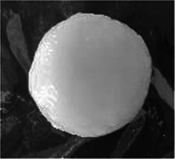
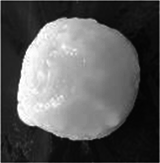
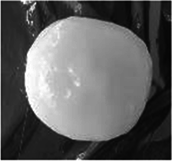
The appearance and color of the cooked sweet dumplings is shown in Table 3. Dumplings made with wet-milled GRF (DWMF) had a smoother surface than those made with dry-milled GRF. It should be pointed out that dumplings made with LTF (DLTF) had the roughest surface of the three kinds of dumplings, which seriously affected sensory quality of the dumplings. DWMF had higher whiteness and brightness. The results are consistent with the color of GRF. This may be related to the content of protein and ash of GRF. Li et al. (2018b) reported that an increase in the level of protein in GRF correlated with a decrease of in the lightness of dumplings.
Table 3.
Characteristic of sweet dumpling with different grinding methods
| WMF | LTF | RMF | |
|---|---|---|---|
| Appearance |
|
|
|
| H | 65.20 ± 0.06a | 64.63 ± 0.10b | 64.29 ± 0.09c |
| L | 65.59 ± 0.08a | 64.91 ± 0.07b | 64.52 ± 0.09c |
| Water loss (%) | 1.26 ± 0.01b | 1.48 ± 0.12a | 1.56 ± 0.03a |
| Cracking rate (%) | 46.46 ± 5.78b | 100 ± 0.00a | 100 ± 0.00a |
| Transmittance of the soup | 79.40 ± 0.63a | 66.50 ± 0.72b | 69.20 ± 1.91b |
| Hardness/g | 287.05 ± 8.27b | 446.85 ± 16.03a | 304.78 ± 9.67b |
| Adhesiveness/g.s | − 10.15 ± 1.37a | − 61.45 ± 1.68b | − 76.19 ± 3.54c |
| Resilience | 0.446 ± 0.004a | 0.322 ± 0.002b | 0.253 ± 0.001c |
aWMF, wet-milled glutinous rice flour; LTF, low temperature impact milled glutinous rice flour; RMF, roller-milled glutinous rice flour;
bValue were expressed by mean ± standard deviation. Different letters within the same line of values indicate significantly different (p < 0.05)
Water loss and cracking rate of fast-frozen sweet dumplings
The cracking rate and water loss are important parameters in measuring the quality of frozen dumplings. High-quality dumplings should have a low crack rate and water loss. The water loss in DWMF, DLTF, as well as in the dumplings made with roll-milled glutinous rice flour (DRMF) was 1.26, 1.48, and 1.56, respectively. These results revealed that dry-milling methods could increase the water loss of dumplings during freezing. During the fast-frozen process, the surface temperature of the dumplings is higher than the temperature of the air in the freezer. Therefore, the difference in water vapor pressure cause the sublimation of the ice crystals on the surface of the dumplings, resulting in loss of water (Rhim et al. 2011). DWMF (46.46) showed a lower cracking rate than DLTF (100) and DRMF (100).The formation of ice crystals leads to an increase in volume, which destroys the structure of the dumplings and causes cracks. The formation of ice crystals is related to the free water in the system. Reducing the free water in the dumplings can reduce the rate of ice crystal formation and prevent the formation of large ice crystals (Li et al. 2018a).
Transmittance of the soup and texture properties of fast-frozen dumplings
The consumers favoring dumpling soup with high transmittance. The transmittance of the soup is a measure of the rate of cooking damage inflicted on the dumplings. It represents solubility of starch and the ability of the dumplings to maintain structural integrity during boiling. As shown in Table 3, different milling methods had significantly different effects on the transmittance of the soup, registering at 79.4%, 66.5%, and 69.2% for the dumplings prepared with WMF, LTF and RMF, respectively. The presence of low transmittance in the dry-milled GRF was also reported in previous studies (Tong et al. 2016). One of the primary factors affecting the transmittance of soup seems to be associated with the level of damaged starch (which facilitates solubility). In addition, the damaged starch of GRF causes the weakened gel structure after gelatinization, making it difficult to maintain the integrity of dumplings (Wang et al. 2019).
The texture of dumplings is a critical parameter of quality and acceptance by consumers. The effect of grinding methods on the textural properties of dumpling is shown in Table 3. Dumplings made with different GRF exhibited obvious change in their texture. Adhesiveness, gumminess, cohesiveness, resilience and chewiness were all significantly different between dumplings made with WMF, LTF and RMF. A clear sensory preference for sweet dumplings is a soft (but not sticky) feeling in the mouth. The TPA results showed DLTF had the highest hardness, while DWMF had the lowest adhesiveness and the highest resilience. It indicated that dumplings made with dry-milled GRF were more sticky than those made with wet-milled GRF. This phenomenon might be due to the release of soluble starch, which retrogrades on the surface of the dumplings during the cooling process, increasing their adhesiveness.
Conclusion
This study investigated the effects of different grinding methods on the physicochemical properties of GRF and the sweet dumpling made with it. The results showed that different grinding methods (wet-milling, low temperature impact milling, and roller milling) used in the production of flour have a substantial impact on the GRF and the resulting dumplings. Compared with the wet-milling method, the dry-milling methods showed a negative impact on the physicochemical characteristics of rice flour, the pasting properties and the extent of starch damage. Moreover, the quality of fast-frozen sweet dumplings made with dry-milled GRF exhibited unacceptable properties (such as rough appearance, high water loss, cracking rate, transmittance, hardness, and adhesiveness). These differences may be attributed to the difference in particle size, damaged starch, or other components of flour. In summary, wet-milled method produce higher quality GRF and fast-frozen dumplings than the dry milling methods. However, dry milling methods are more cost-effective and better for the environment than wet milling method. Therefore, obtaining high-quality sweet dumpling made with dry-milled GRF is also important. Based on the results of this study, we put forward some suggestions to improve the quality of sweet dumpling made with dry-milled flour: (1) Reduce the particle size of dry-milled GRF to the same level as wet ground flour; (2) Reduce the damage to glutinous rice starch during the dry grinding process; (3) Add some additives, such as pregelatinized starch and polysaccharide gum, to reduce the cracking rate of fast-frozen sweet dumpling made from dry-milled GRF.
Acknowledgements
This work was supported by the National “Thirteenth Five-Year” Plan for Science & Technology Support of China (No. 2018YFD0400604).
Footnotes
Publisher's Note
Springer Nature remains neutral with regard to jurisdictional claims in published maps and institutional affiliations.
References
- American Association of Cereal Chemists (2000) Approved methods of the AACC (10thed.). St. Paul, MN: The American Association of Cereal Chemists. Method 44–15A, 46–11A, 08–01, and 30–10.
- American Association of Cereal Chemists . Approved methods of AACC (10thed) St. Paul, MN: American Association of Cereal Chemists. Method; 2000. pp. 61–2. [Google Scholar]
- Abebe W, Collar C, Ronda F. Impact of variety type and particle size distribution on starch enzymatic hydrolysis and functional properties of tef flours. Carbohydr Polym. 2015;115:260–268. doi: 10.1016/j.carbpol.2014.08.080. [DOI] [PubMed] [Google Scholar]
- Asmeda R, Noorlaila A, Norziah MH. Relationships of damaged starch granules and particle size distribution with pasting and thermal profiles of milled MR263 rice flour. Food Chem. 2016;191:45–51. doi: 10.1016/j.foodchem.2015.05.095. [DOI] [PubMed] [Google Scholar]
- Barbosa-C Novas GV, Ortega-Rivas E, Juliano P, Yan H. Food powders: physical properties, processing, and functionality. New York: Kluwer Academic/Plenum Publishers; 2005. p. 86. [Google Scholar]
- Chen J-J, Lii C-Y, Lu S (2003) Physicochemical and morphological analyses on damaged rice starches. J Food Drug Anal 11
- Chiang PY, Yeh AI. Effect of soaking on wet-milling of rice. J Cereal Sci. 2002;35:85–94. doi: 10.1006/jcrs.2001.0419. [DOI] [Google Scholar]
- Cooke D, Gidley MJ. Loss of crystalline and molecular order during starch gelatinisation: origin of the enthalpic transition. Carbohydr Res. 1992;227:103–112. doi: 10.1016/0008-6215(92)85063-6. [DOI] [Google Scholar]
- Debet MR, Gidley MJ. Three classes of starch granule swelling: Influence of surface proteins and lipids. Carbohydr Polym. 2006;64:452–465. doi: 10.1016/j.carbpol.2005.12.011. [DOI] [Google Scholar]
- Devi A, Fibrianto K, Torley P, Bhandari B. Physical properties of cryomilled rice starch. J Cereal Sci. 2009;49:278–284. doi: 10.1016/j.jcs.2008.11.005. [DOI] [Google Scholar]
- Dhital S, Shrestha AK, Flanagan BM, Hasjim J, Gidley MJ. Cryo-milling of starch granules leads to differential effects on molecular size and conformation. Carbohydr Polym. 2011;84:1133–1140. doi: 10.1016/j.carbpol.2011.01.002. [DOI] [Google Scholar]
- Dhital S, Shrestha AK, Gidley MJ. Effect of cryo-milling on starches: functionality and digestibility. Food Hydrocolloids. 2010;24:152–163. doi: 10.1016/j.foodhyd.2009.08.013. [DOI] [Google Scholar]
- Hasjim J, Li E, Dhital S. Milling of rice grains: effects of starch/flour structures on gelatinization and pasting properties. Carbohydr Polym. 2013;92:682–690. doi: 10.1016/j.carbpol.2012.09.023. [DOI] [PubMed] [Google Scholar]
- Heo S, Lee SM, Shim J-H, Yoo S-H, Lee S. Effect of dry- and wet-milled rice flours on the quality attributes of gluten-free dough and noodles. J Food Eng. 2013;116:213–217. doi: 10.1016/j.jfoodeng.2012.11.017. [DOI] [Google Scholar]
- Kumar CS, Malleshi NG, Bhattacharya S. A comparison of selected quality attributes of flours: effects of dry and wet grinding methods. Int J Food Prop. 2008;11:845–857. doi: 10.1080/10942910701657686. [DOI] [Google Scholar]
- Lee YT, Shim MJ, Goh HK, Mok C, Puligundla P. Effect of jet milling on the physicochemical properties, pasting properties, and in vitro starch digestibility of germinated brown rice flour. Food Chem. 2019;282:164–168. doi: 10.1016/j.foodchem.2018.07.179. [DOI] [PubMed] [Google Scholar]
- Li Y, Ding G, Yokoyama W, Zhong F. Characteristics of annealed glutinous rice flour and its formation of fast-frozen dumplings. J Cereal Sci. 2018;79:106–112. doi: 10.1016/j.jcs.2017.09.016. [DOI] [Google Scholar]
- Li Z, Wang L, Chen Z, Yu Q, Feng W. Impact of protein content on processing and texture properties of waxy rice flour and glutinous dumpling. J Cereal Sci. 2018;81:30–36. doi: 10.1016/j.jcs.2018.03.005. [DOI] [Google Scholar]
- Lian X, Wang C, Zhang K, Li L. The retrogradation properties of glutinous rice and buckwheat starches as observed with FT-IR, 13C NMR and DSC. Int J Biol Macromol. 2014;64:288–293. doi: 10.1016/j.ijbiomac.2013.12.014. [DOI] [PubMed] [Google Scholar]
- Morrison W, Tester R. Properties of damaged starch granules. IV. Composition of ball-milled wheat starches and of fractions obtained on hydration. J Cereal Sci. 1994;20:69–77. doi: 10.1006/jcrs.1994.1046. [DOI] [Google Scholar]
- Ngamnikom P, Songsermpong S. The effects of freeze, dry, and wet grinding processes on rice flour properties and their energy consumption. J Food Eng. 2011;104:632–638. doi: 10.1016/j.jfoodeng.2011.02.001. [DOI] [Google Scholar]
- Oliver J, Blakeney A, Allen H. The colour of flour streams as related to ash and pigment contents. J Cereal Sci. 1993;17:169–182. doi: 10.1006/jcrs.1993.1017. [DOI] [Google Scholar]
- Protonotariou S, Drakos A, Evageliou V, Ritzoulis C, Mandala I. Sieving fractionation and jet mill micronization affect the functional properties of wheat flour. J Food Eng. 2014;134:24–29. doi: 10.1016/j.jfoodeng.2014.02.008. [DOI] [Google Scholar]
- Qiu C, Cao J, Xiong L, Sun Q. Differences in physicochemical, morphological, and structural properties between rice starch and rice flour modified by dry heat treatment. Starch-Stärke. 2015;67:756–764. doi: 10.1002/star.201500016. [DOI] [Google Scholar]
- Rao BD, Anis M, Kalpana K, Sunooj K, Patil J, Ganesh T. Influence of milling methods and particle size on hydration properties of sorghum flour and quality of sorghum biscuits. LWT-Food Sci Technol. 2016;67:8–13. doi: 10.1016/j.lwt.2015.11.033. [DOI] [Google Scholar]
- Rhim J-W, Koh S, Kim J-M. Effect of freezing temperature on rehydration and water vapor adsorption characteristics of freeze-dried rice porridge. J Food Eng. 2011;104:484–491. doi: 10.1016/j.jfoodeng.2010.08.010. [DOI] [Google Scholar]
- Silva GGD, Couturier M, Berrin J-G, Bul On A, Rouau X. Effects of grinding processes on enzymatic degradation of wheat straw. Biores Technol. 2012;103:192–200. doi: 10.1016/j.biortech.2011.09.073. [DOI] [PubMed] [Google Scholar]
- Tong L-T, Zhu R, Zhou X, Zhong K, Wang L, Liu L, Hu X, Zhou S. Soaking time of rice in semidry flour milling was shortened by increasing the grains cracks. J Cereal Sci. 2017;74:121–126. doi: 10.1016/j.jcs.2017.01.011. [DOI] [Google Scholar]
- Tong LT, Gao X, Zhou X, Zhong K, Liu L, Wang L, Zhou S. Milling of glutinous rice by semidry method to produce sweet dumplings. J Food Process Eng. 2016;39:330–334. doi: 10.1111/jfpe.12223. [DOI] [Google Scholar]
- Wang H, Xiao N, Wang X, Zhao X, Zhang H. Effect of pregelatinized starch on the characteristics, microstructures, and quality attributes of glutinous rice flour and dumplings. Food Chem. 2019;283:248–256. doi: 10.1016/j.foodchem.2019.01.047. [DOI] [PubMed] [Google Scholar]
- Wu T, Wang L, Li Y, Qian H, Liu L, Tong L, Zhou X, Wang L, Zhou S. Effect of milling methods on the properties of rice flour and gluten-free rice bread. Lwt. 2019;108:137–144. doi: 10.1016/j.lwt.2019.03.050. [DOI] [Google Scholar]
- Yan X, Liu C, Huang A, Chen R, Chen J, Luo S (2020) The nutritional components and physicochemical properties of brown rice flour ground by a novel low temperature impact mill. J Cereal Sci 102927
- Yu D, Chen J, Ma J, Sun H, Yuan Y, Ju Q, Teng Y, Yang M, Li W, Fujita K, Tatsumi E, Luan G. Effects of different milling methods on physicochemical properties of common buckwheat flour. Lwt. 2018;92:220–226. doi: 10.1016/j.lwt.2018.02.033. [DOI] [Google Scholar]